Articles by admin

No Image

Premature Births Rise Once Again, Despite Efforts To Prevent Them

Premature birth is the leading cause of infant death in the U.S. and also can cause lifelong disabilities. Anthony Saffery/Getty Images hide caption

toggle caption

Anthony Saffery/Getty Images

The number of preterm births in the United States rose in 2015 for the first time in eight years, according to data presented Tuesday by the March of Dimes. Babies born too early face a risk of health complications that can last a lifetime.

The organization also reported that racial minorities continue to experience early labor at higher rates.

Preterm births increased from 9.57 to 9.63 percent of births in 2015, an additional 2,000 babies born prematurely in the U.S., the report found.

Seven states — Arkansas, Connecticut, Idaho, Nebraska, New Mexico, Utah and Wisconsin — had higher preterm birth percentages than in 2014. Four states — Vermont, Oregon, New Hampshire and Washington — earned the highest marks from the organization for having a preterm birth rate at 8.1 percent or below.

Overall, the national uptick earned the U.S. a C rating on an A to F scale. The March of Dimes researchers used data compiled by the National Center for Health Statistics and assigned grades using a formula that compared the state’s current prenatal birth rate to the national average in 2014 and the organization’s goal of 8.1 percent.

Article continues after sponsorship

Despite its wealth and medical prowess in saving the lives of premature newborns, the U.S. lags behind the majority of industrialized countries and some less developed ones in preventing their early arrival. According to the latest data available from the World Health Organization, the U.S in 2010 ranked in the middle of the pack, falling behind Somalia, Afghanistan and Thailand.

Lowering the rate of preterm births to 8.1 percent would place the U.S. among countries with the lowest rates of preterm births. The March of Dimes says the U.S. should reach this goal by 2020, but the lack of progress signals to Edward McCabe, the chief medical officer of the organization, that new responses are needed. “We feel that this is a recognition that we need to work harder as a nation, that we need to focus,” he says.

Preterm birth is defined as a child born before 37 weeks of pregnancy. It’s the leading cause of neurological disorders such as cerebral palsy, according to the Centers for Disease Control and Prevention, and also can cause blindness, hearing problems and developmental delays. It’s the single largest cause of infant death.

Preterm births cost society more than $26 billion a year, according to a 2005 report from the National Academy of Medicine.

Disparities continue across geographic, ethnic and racial lines, McCabe said. Asians and Pacific Islanders fared best, with a preterm birth rate of 8.5 percent, a full percent lower than the national average. Preterm birth rates in Hispanics and whites hovered at about 9 percent.

African-American women were most likely to give birth prematurely, with 13 percent of births affected, according to the report. States with large African-American populations and a lack of access to health care, such as Louisiana, Mississippi and Alabama, had the highest percentages of preterm births.

“We want every baby, no matter where they’re born, no matter their birth ethnicity, to be born with the best start in life,” McCabe says.

Vermont officials agree. The state boasts a 7.3 percent birth rate, the lowest rate in the U.S. It runs the Vermont Regional Perinatal Program, which allows smaller medical facilities to transfer high-risk pregnant women to larger tertiary hospitals. It also supports nurse home visits to help new mothers.

Breena Holmes, maternal and child health director at the Vermont Department of Health, says though she is proud of the state’s low rate, she still worries that there are too many preterm babies born there. “I’m still aware that every time a baby comes early, there was a system problem that we could have worked on,” she says.

The racial and ethnic divides reveal an overemphasis on medical intervention and a lack of knowledge among women, says Claire Brindis, director of the Philip R. Lee Institute for Health Policy Studies at the University of California, San Francisco. Planning for pregnancy does not start with prenatal care, she says, but with understanding risk factors and a woman’s wishes regarding family planning.

The causes of preterm birth aren’t clear, but risk factors include high blood pressure, diabetes, smoking and having had a previous premature birth.

While not every preterm birth can be prevented, McCabe acknowledges, a woman should be able to have the best pregnancy possible.

“Every woman is trying to do the best that she can,” he says. “We need to show her what can be done.”

Kaiser Health News is an editorially independent program of the Henry J. Kaiser Family Foundation, a nonprofit, nonpartisan health policy research and communication organization not affiliated with Kaiser Permanente.

Let’s block ads! (Why?)


No Image

Today in Halloween Movie Culture: 'Guardians of the Galaxy' Halloween Special, Horror Icons Assembled and More

Here are a bunch of little bites to satisfy your hunger for movie culture:

Weirdified Trailer of the Day:

Aldo Jones’s latest Weird Trailer reworks the new spot for Guardians of the Galaxy Vol. 2, and it’s a Halloween special:

[embedded content]

Horror Character Assembly of the Day:

The latest brilliant mashup from Antonio Maria da Silva brings all the icons of horror movies together for “Boogeymen’s Anthology”:

[embedded content]

Poster Mashup of the Day:

The latest great redo of the iconic poster for The Breakfast Club celebrates the cult favorite sequel Halloween III: Season of the Witch (via Kindertrauma):

Supercut of the Day:

For Fandor Keyframe, Daniel Mcilwraith compiled “looks of fear” from movies in an appropriate montage:

[embedded content]

Celebrity Cosplay of the Day:

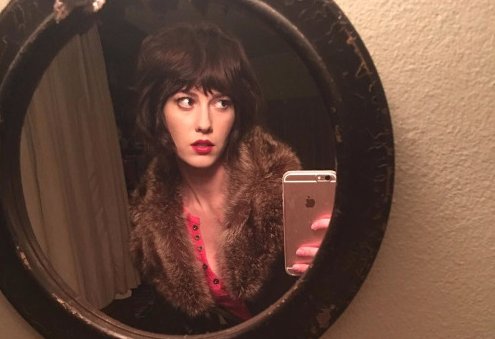
Actress Mary Elizabeth Winstead dressed up for Halloween as Scarlett Johansson’s character from Under the Skin. Also check out a video reenactment on her Instagram.

Child Actor Cosplay of the Day:

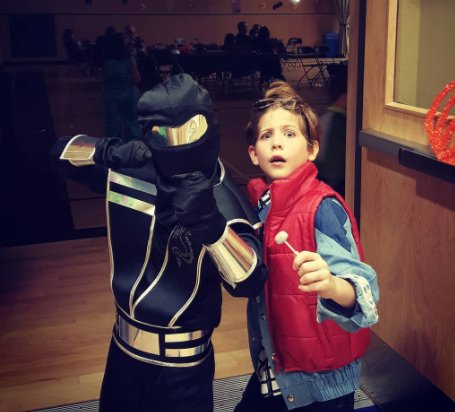
And here’s another celebrity Halloween costume we need to share: it’s little Jacob Tremblay as Marty McFly in Back to the Future (via Collider):

Animal Cosplay of the Day:

Halloween is never complete without some great pet costumes, like this dog dressed up as Jareth from Labyrinth (via Fashionably Geek):

Vintage Image of the Day:

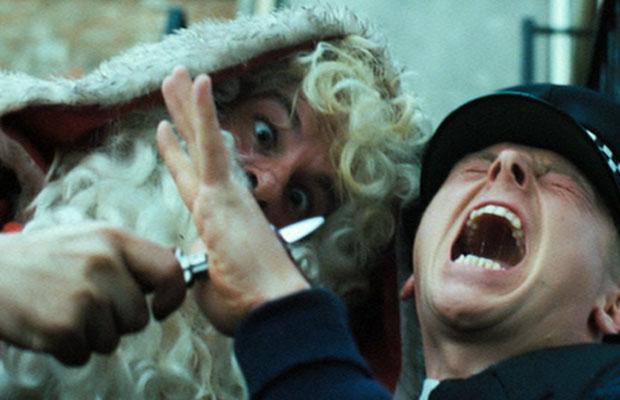
Peter Jackson, who turns 55 today, dressed as a stabby Santa Claus for his cameo opposite Simon Pegg in 2007’s Hot Fuzz:

Movie Trivia of the Day:

Beetlejuice is a great movie to watch on Halloween, so here’s CineFix with a bunch of trivia about Tim Burton’s classic:

[embedded content]

Classic Trailer of the Day:

Everyone’s favorite non-horror Halloween classic these days is Hocus Pocus. Watch the original trailer for the 1993 movie below.

[embedded content]

and

Let’s block ads! (Why?)


No Image

Peter Thiel Stands Out In Silicon Valley For Support Of Donald Trump

While much of Silicon Valley has supported Hillary Clinton, billionaire investor Peter Thiel is backing Donald Trump. “We’re voting for Trump because we judge the leadership of our country to have failed,” Thiel says. Bloomberg via Getty Images hide caption

toggle caption

Bloomberg via Getty Images

Silicon Valley is a politically liberal place — and that is reflected in where people are sending their money this election season. Ninety-five percent of contributions from tech employees to the presidential campaigns have gone to Hillary Clinton, according to Crowdpac, a group that tracks political donations.

But one well-known outlier has caused a lot of friction in the Valley.

Peter Thiel is part of what many people in the Valley call “the PayPal mafia,” a group of investors who got very rich by helping to fund PayPal. Thiel was also an early investor in Facebook and he continues to fund startups. In the left-leaning Silicon Valley, he’s a self-identified Libertarian who supported Rand Paul.

Thiel’s outside-the-box thinking is part of what many thought made him a smart investor. Then he came out in support of Donald Trump, and that was a bridge too far for some.

Ellen Pao, who runs Project Include, an organization aimed at diversity, stopped working with the startup incubator Y Combinator because Thiel is a part-time partner. Facebook CEO Mark Zuckerberg faced calls to get Thiel off of his board, though he has refused.

Rachel Payne, a serial entrepreneur who is currently the CEO of FEM Inc., supports those who want to cut off Thiel because Trump is no ordinary candidate. “[Trump] is inciting what I like to call thrashers — violent opposition to the gains that are being made by the formerly dispossessed or the minority populations that are finally gaining rights,” she says.

Thiel once lamented the negative impact of women getting the vote and wrote that democracy and freedom are not compatible in a blog post for the libertarian Cato Institute. In a book he co-authored in 1999, Thiel said a “multicultural rape charge may indicate nothing more than a belated regret.”

Article continues after sponsorship

Thiel has since walked back on his comments about the vote and they were updated on the blog post. He also apologized for being insensitive about rape.

But, Payne says, if you have someone like Thiel involved in a startup incubator like Y Combinator it can discourage participants.

“So if you have a challenge of getting more women in tech, for example, and attracting more women as startup founders, if women believe that he is hostile to them they wouldn’t be inclined to go there,” she says.

On Monday at the National Press Club in Washington, D.C., Thiel defended his position. “It’s not a lack of judgment that leads Americans to vote for Trump,” he said. “We’re voting for Trump because we judge the leadership of our country to have failed.”

It’s failed, Thiel said, by getting the U.S. into major costly conflicts around the world and by allowing bubbles that seriously harm the economy. Thiel went on to criticize Hillary Clinton for her hawkishness and took aim at those in Silicon Valley who have made Trump supporters feel unwelcome.

“Many people have learned to keep quiet if they dissent from the coastal bubble,” Thiel said. “Louder voices have sent a message that they do not intend to tolerate the views of one half of the country.”

And while many still don’t agree with Thiel, they see no reason to kick him off a board or refuse to work with him. “I definitely have my own strong opinions about Trump,” says Minnie Ingersoll, a founder and chief operating officer of Shift, a company that uses the Internet to help people get the best prices for their used car. “But I don’t believe that we should say that we wouldn’t have someone on our board who we disagree with politically.”

Ingersoll says supporting Trump may be the minority view in Silicon Valley, but all opinions should be welcome. “There are 300 people who work at Shift,” she says. “And some of them are going to support Trump and I need to find a way to make sure that they feel comfortable having a different opinion than I do. We still need to respect one another and respect differences of opinions.”

Thiel says his political views haven’t cost him financially or cost him any business relationships. In the end, it may be money, not politics, that matters most in Silicon Valley.

Let’s block ads! (Why?)


No Image

More Children Are Being Poisoned By Prescription Opioids

Teenagers are most at risk for opioid poisoning, but the rate more than doubled for toddlers from 1997 to 2012. Hero Images/Getty Images hide caption

toggle caption

Hero Images/Getty Images

Young children and teenagers are increasingly likely to be poisoned by opioid painkillers that are often prescribed for other family members, a study finds.

The rate of children hospitalized for opioid poisoning increased 165 percent from 1997 to 2012, from about 1.40 per 100,000 kids to 3.71 per 100,000.

“Opioids are ubiquitous now,” says Julie Gaither, a postdoctoral fellow at Yale School of Public Health and the study’s lead author. “Enough opioids are prescribed every year to put a bottle of painkillers in every household. They’re everywhere, and kids are getting into them.”

The study, which was published Monday in JAMA Pediatrics, examined more than 13,000 hospital-discharge records from 1997 to 2012 for opioid poisonings and used census data to extrapolate rates. The discharge data was collected by the Agency for Healthcare Research and Quality.

The data stops in 2012, so it may not reflect more recent trends in opioid prescribing and public awareness. But the findings track with adult rates of abuse and addiction, which have dropped since 2012 but remain troublingly high, experts say.

The rate of toddlers hospitalized more than doubled, going from 0.86 per 100,000 to 2.62 per 100,000. It’s likely that these very young patients take the drugs because they think they are candy or a treat. Opioids can be dispensed as pills, patches or a flavored lollipop.

Article continues after sponsorship

Teens are also at risk of overdosing on their parents’ meds. Of all children, this age group is most likely to be hospitalized for opioid poisoning, and teens are more likely to do be poisoned deliberately — likely, the researchers wrote, because teenagers are at a particularly high risk of depression and suicide. In 2012, 10.17 per 100,000 teenagers were hospitalized for opioid poisoning.

The findings, Gaither and her co-authors say, indicate a need for public health approaches that not only address overprescribing, but also try to raise awareness about the need for safe storage of these painkillers.

Doctors need to to talk to patients about ways to store drugs safely, especially if children are in the household, Gaither says.

That’s a good idea in theory, says Jonathan Chen, a physician at Stanford Medicine who has researched how guidelines for prescribing opioids affect primary care. But doctors already face a lengthy list of sensitive subjects they should discuss with patients. And they aren’t always conditioned to consider how a patient’s medications could affect other family members.

“Conceptually, yes, of course that should be part of the conversation,” Chen says. But he notes that doctors have a long list of things to discuss with patients, and “there’s a lot of things we should discuss.” Chen was not involved with the study.

Pediatricians could also play a role by asking parents at well-child and well-baby visits about whether there’s a risk of children being exposed to opioids. But that sort of screening hasn’t traditionally been drilled into doctors the same way as discussing other risks, such as safe storage of cleaning supplies, whether the family has a swimming pool and whether there are guns in the home.

Doctors also may not be conditioned to considering toddlers as particularly at risk of opioid poisoning.

“This is largely seen as an adolescent problem or an adult problem,” says Sharon Levy, who directs the adolescent substance abuse program at Boston Children’s Hospital and is an associate professor of pediatrics at Harvard Medical School. “But this paper really highlights that this really knows no age boundaries.” Levy was also not involved with the study.

It’s also unclear, Levy says, what the long-term health effects, including addiction, are for children who ingest opioids they weren’t prescribed.

And there are serious short-term risks, including death. “Opioids cause respiratory suppression,” she said. “If you are a 30-pound person and getting into the medication that was supposed to be for a 150-pound person, it’s going to be a whopping dose for you.”

The findings also suggest doctors should be more thoughtful in prescribing to children, especially teenagers. About 1 in 10 high school students reports having taken opioids for a nonmedical reason, and close to 40 percent of them say they got those drugs through their own prior prescriptions.

The American Academy of Pediatrics notes that the rate of young patients being prescribed opioids almost doubled between the 1990s and 2000s.

The Centers for Disease Control and Prevention has been pushing doctors to prescribe opioids more safely by prescribing for just a few days. That could help reduce the number of leftover pills. Large prescriptions — coupled with the fact that many people don’t know how to dispose of drugs when they no longer need them — can make it easier for children and teens to get ahold of them, Gaither says.

That’s an important factor to consider, Chen says. “Leftover pills aren’t used, but do they get returned to the pharmacy, or thrown in the trash? Nope. They’re stored in the medicine cabinet.”

Smaller prescriptions will likely help, but they won’t solve everything, Chen notes. After all, there are situations where a larger opioid dosage makes sense. For instance, someone suffering long-term cancer probably needs a larger amount of heavy duty painkillers, even if he or she has children in the house.

But the risk to children must be a part of the conversation, Gaither says. “We’ve got to pay attention to children and the toll the opioid crisis is taking on them,” she says. “Kids make up about a fourth of the U.S. population, and they’re suffering from this crisis, too.”

Let’s block ads! (Why?)


No Image

Would You Want To Know The Secrets Hidden In Your Baby's Genes?

Doctors are studying whether sequencing a newborn's genome has any impact on the child's future health.

Scott Bakal for NPR

Just about every day, genetic counselor Shawn Fayer heads to the maternity ward at Brigham and Women’s Hospital in Boston and tries to convince new parents to give him a blood sample.

Fayer is offering gene sequencing for newborns. It gives parents a tantalizing look at their baby’s genetic information.

New parents Lauren and Ian Patrick, from Marion, Mass., were excited when they were first approached earlier this month.

“My initial reaction — why wouldn’t someone do this? Why wouldn’t they want the information?” Ian Patrick says as he cradles his newborn son, Finn. “For me, more information is better, even if it’s not always good.”

If his parents sign him up, Finn would join the BabySeq project, an NIH-funded study led by Dr. Robert Green, a medical geneticist at Brigham and Women’s Hospital. With genetic testing getting cheaper and cheaper, Green wants to figure out what happens when parents know their child’s genetic blueprint from day one.

Half of the babies who join the study will have their protein-coding genes sequenced and screened for variants that are associated with diseases of childhood, with a method called whole-exome sequencing. The other half will get the regular heel-prick blood test offered to all newborns which screens for major genetic disorders like cystic fibrosis.

Article continues after sponsorship

Researchers will follow both sets of babies to figure out how genetic sequencing impacts them. They want to find out if knowing a child’s genetic makeup could actually make them healthier, or if it could increase their health care costs, or even change their relationship with their parents.

“We are looking for all sorts of unanticipated variations in DNA,” Green says. “And we say right up front we don’t know what they all mean. We don’t know what they’re all going to mean for your baby,”

Green is particularly interested in a list of 1,514 genes where there are good reasons to reveal a mutation because a disease might be treated or prevented. But there are so many changes in everyone’s DNA, he says he’s finding something to report in every baby he sequences.

Right now, that’s a pretty small number of babies. Green has sequenced the genes of 51 newborns so far, and he’s found five who have genetic mutations families wouldn’t have known about otherwise. Two babies have pharmacogenetic variants — mutations that mean certain drugs might not work as well on them. Three have heart conditions they inherited from a parent who appears to be totally healthy.

One of those babies is Kai Gracia. His parents, Alyssa and Jason Gracia, agreed to the test when Kai was just a few days old. They didn’t expect to find much. Alyssa had her own genome sequenced a few years before, and the information she got was mostly trivial — she learned she metabolized caffeine particularly quickly and she discovered she didn’t have the photic sneeze reflex, meaning she wasn’t likely to sneeze when suddenly exposed to bright light. So when the results on her baby came back,she was shocked. Right there in Kai’s genetic report was this: supravalvular aortic stenosis.

Alyssa and Jason Gracia agreed to have their son Kai’s genes sequenced when he was just a few days old. Mary Harris/WNYC hide caption

toggle caption

Mary Harris/WNYC

It turns out Kai has a mutation in a gene that codes for a protein called elastin. Elastin helps heart muscles bend and stretch. Not producing enough of it can cause the aorta to narrow. People can die from this, or need multiple surgeries as they grow.

Now that she knew her baby might get sick, Alyssa Gracia had lots of questions. Would Kai be able to play sports when he got older? Did he need surgery? Could crying too much be dangerous?

She made appointments with pediatric cardiologists and brought in Kai’s genetic report. One doctor said he looked fine, and only needed to be monitored every few years. Another said his parents should bring him back after just a few months. Usually, a condition like Kai’s isn’t diagnosed until a child is showing symptoms. That means doctors still aren’t quite sure how to treat Kai.

This is the kind of story that both thrills and terrifies the observers of this new technology, according to Green.

“There’s no consensus on how to manage these findings,” he says. And it’s unclear if the follow-up is worth it, or if it might actually do harm.

And gene sequencing reveals medical information not just about one person, but potentially a whole family. So all that follow-up is being done not just on Kai, but on his dad and his grandmother — all people who might be carrying this gene and might be at risk themselves.

So what can families do with all this information? Dr. Green says that for one family, this genetic report was potentially lifesaving.

It showed an inherited mutation in the baby’s BRCA2 gene, which increases the risk of breast, ovarian, prostate and pancreatic cancers. This means not only is the baby at risk, but the child’s mother or father could be, too.

Before they told the family, the researchers had to deal with “a really pernicious ethical problem,” says Green. He and his colleagues had agreed they would only tell parents about genetic variants that could impact babies in childhood, since the children weren’t able to decide for themselves whether they wanted to know their genetic risks. BRCA2 causes cancer in adults, not children.

But this information was so important, Green decided to break protocol.

“You know what the first four words were out of the mother’s mouth when she was told?” Green asks. ” ‘Oh, that explains it.’ “

It turns out the mother knew distant relatives who had died from cancer, but she hadn’t thought it meant anything for her. Without her baby’s test, she might never have learned about her own risk.

Not every mutation is actionable like this. Green is also finding a lot of single recessive mutations for conditions like cystic fibrosis, Tay-Sachs, and sickle cell. Since it takes two mutations, one each from mother and father, to cause the disease, it becomes an issue only when these babies grow up and decide to have children themselves.

One thing Green hadn’t anticipated is how hard it has been to convince new parents to do this screening in the first place. Early research showed the majority of parents were interested in the medical information. But 94 percent of parents Green and his team are approaching are saying no.

Lauren and Ian Patrick, the parents of baby Finn, are a good case study.

Initially, they were convinced they wanted the screening. But after an hour talking to a genetic counselor about all the ways this sequencing could go wrong, they decided against it.

They learned that any genetic sequencing would go in their son’s medical record, and it wouldn’t be able to be removed. And while federal law prohibits genetic discrimination by health care providers and in the workplace, life insurers can still use genetic information to pick and choose who they’ll sell policies to. By the time the meeting was over, the Patricks’ excitement had been replaced with concern.

“It really gave me pause that this would be part of the medical record that private companies would have access to,” Lauren Patrick says. “That was my full stop in the end.”

After all, for the first time she’s making a decision for someone who has no say, she says. “That’s the biggest thing on my mind, this new dynamic.”


Let’s block ads! (Why?)


No Image

Cubs Stay Alive With A Win Over The Indians

Chicago Cubs fans cheer after their team won Game 5 of the World Series against the Cleveland Indians by a score of 3-2 on Sunday. Nam Y. Huh/AP hide caption

toggle caption

Nam Y. Huh/AP

The Chicago Cubs kept alive their World Series hopes by beating the Indians 3-2 in Game Five at Wrigley Field on Sunday to send the best-of-seven Major League Baseball championship back to Cleveland.

The Indians lead the series 3-2 ahead of Game Six on Tuesday.

Chicago’s quiet bats came to life in the fourth inning with three runs, sparked by a home run from Kris Bryant and four more hits that followed that allowed the Cubs to hold on to the dream of winning their first World Series in 108 years.

On the brink of elimination, Cubs ace starter Jon Lester turned in a strong six innings to reignite roars from the home crowd and flame-throwing reliever Aroldis Chapman did a yeoman’s job in registering the last eight outs to preserve the must win.

“It didn’t feel like an elimination game,” said 24-year-old third baseman Bryant. “Jon (Lester) doing his thing, Chapman coming in for eight outs. That was an unbelievable win.”

Cubs first baseman Anthony Rizzo, who followed Bryant’s blast with a double off the wall in right and came around to score, had a different take on the mounting tension in the win-or-go-home thriller.

Article continues after sponsorship

Chicago Cubs relief pitcher Aroldis Chapman celebrates with catcher Willson Contreras after winning Game 5. The Cubs won 3-2 as the Indians lead the series 3-2. Nam Y. Huh/AP hide caption

toggle caption

Nam Y. Huh/AP

“High anxiety and a lot of deep breaths,” Rizzo said about dealing with the pressure. “Every pitch gets bigger and bigger as the game goes on.

“Great win, to set these fans off with a win. Now we get to go back to Cleveland and take care of business.”

Chapman, whose longest outing this season was 2 1/3 innings, was asked to go one out longer when Cubs manager Joe Maddon brought him in with out in the seventh and a man on first and the score 3-2.

But the Cuban-born reliever poured his 100 mph-plus fastballs in to overpower the Indians, striking out four on his way to the critical save.

Lester, who yielded two runs on four hits while striking out five, registered the victory. Cleveland starter Trevor Bauer took the loss, his second of the Series.

Before the game, spirits did not seem as high among fans compared to the first two games played in Chicago, as revelers seemed subdued, wary of a third straight loss at Wrigley.

But by the end, the crowd was roaring and after Jose Ramirez struck out to end the game, fans inside and outside Wrigley stood and sang the team song with the title dream still alive.

“I’m feeling amazing,” Nicole Herrington, who lives a few blocks from the stadium with her husband and four-month-old boy, told Reuters. “We can’t believe that they are not (going to win).

“It’s been unbelievable. One hundred and three wins in the regular season. They got to take it in Cleveland. They have to take it in Cleveland.

“How can we not win it now?”

Chicago’s Jake Arrieta, the Game Two winner for the Cubs, is scheduled to start Game Six on Tuesday against Josh Tomlin, with a Game Seven to be played in Cleveland on Wednesday if needed.

Let’s block ads! (Why?)


No Image

Indians Beat Cubs 7-2 To Lead World Series 3-1

Cleveland Indians starting pitcher Corey Kluber throws against the Chicago Cubs during the first inning of Game 1 of the MLB World Series Tuesday. Matt Slocum/AP hide caption

toggle caption

Matt Slocum/AP

One more win and baseball fans everywhere might finally believe in these Cleveland Indians.

That’s all it will take for Corey Kluber & Co. to clinch this World Series.

Kluber pitched six sparkling innings on short rest to win again, Jason Kipnis hit a three-run homer in his hometown and the Indians beat the Chicago Cubs 7-2 Saturday night to take a 3-1 lead.

Carlos Santana also connected for the first of his three hits as Cleveland moved closer to its first championship since 1948. Trevor Bauer gets the ball Sunday night at Wrigley Field in Game 5 when the Indians try for the franchise’s third World Series title against Jon Lester and the faltering Cubs.

Not bad for a team that seemed like an underdog all year long. The Indians beat the defending champion Royals and star-studded Tigers for the AL Central title, and then eliminated David Ortiz and the Red Sox and the heavy-hitting Blue Jays on their way to the AL pennant.

Then much of the talk centered on the major league-leading Cubs and their 108-year championship drought. But it’s been mostly Indians once more, with manager Terry Francona pushing all the right buttons while improving to 11-1 in the World Series.

Article continues after sponsorship

The Indians will try to bring another crown to Cleveland, adding to the one LeBron James and the Cavaliers earned earlier this year.

Dexter Fowler doubled and scored in the first for the Cubs, and then homered against Andrew Miller in the eighth. Fowler’s drive to left-center was the first homer for Chicago in the World Series since Phil Cavaretta connected in Game 1 in 1945 and the first run allowed by Miller during his dominant postseason.

In between Fowler’s two hits, the Cubs came up empty every time they had a chance to put any pressure on the Indians.

Pitching on three days’ rest for the second time, Kluber allowed five hits, struck out six and walked one. The steady, stoic right-hander, who struck out nine in a dominant performance in Game 1, improved to 4-1 with a 0.89 ERA in five playoff starts this year.

Let’s block ads! (Why?)


No Image

Will Self-Driving Trucks, Now A Reality, Unseat Truck Drivers?

NPR’s Scott Simon speaks with New York Times technology columnist Farhad Manjoo about self-driving trucks — and whether we’re ready for their arrival.

SCOTT SIMON, HOST:

For all the talk about self-driving cars, it was a self-driving truck that may drive us a little faster into the future. This week, a big rig, carrying 2,000 cases of Budweiser beer, made a shipment in Colorado with no driver at the wheel. Anheuser-Busch calls it the world’s first commercial delivery by a self-driving truck. Farhad Manjoo is a technology columnist for The New York Times, and he’s also been in a driver-free truck. Thanks very much for being with us.

FARHAD MANJOO: Hey, good to be here.

SIMON: What’s it like to be in one of these trucks?

MANJOO: Well, surprisingly normal. The trucks so far – the ones that they’re running so far – have a driver sitting at the seat, then he flips a button and the truck just kind of takes over. It’s basically like looking at someone flip on cruise control, except here, you know, when the driver took his hands off the wheel, the wheel kept turning as the road moved ahead.

SIMON: I mean this question utterly seriously because I gather there were some tweets about it this week. We’re talking about a beer truck delivery. Is it possible that some fraternity at the University of Wisconsin could hack into a beer truck and (laughter) get it delivered to their frat house instead of the market?

MANJOO: You know, this is one of the concerns with both self-driving trucks, self-driving cars and generally more of our kind of national infrastructure becoming digital, becoming automated. You know, this is one of the questions I think looming over the whole sector is the security both from hacking but also from mishap, you know, just sort of inadvertent bugs in the system that could cause it, you know, real problems in the real world.

SIMON: And will this ultimately throw human truck drivers out of business?

MANJOO: This company Otto, which Uber recently purchased, they argue that the human truck driver, at least in the foreseeable future, in the next, perhaps, 10 to 20 years, the human truck driver won’t be completely eliminated from the truck. So on residential streets, on other streets where it’s both more difficult to drive a truck, the human truck driver might still be necessary at that point. And the truck driver does other things like unload the vehicle, perhaps, fill out the paperwork, you know, do a lot of white-collar type work in the cab.

Their sort of vision for this is that if you get this technology in your truck, you can make your truck twice as efficient and your job perhaps slightly easier. Now of course, this is the – they’re making the technology so they’re sort of putting the best face on this. Truck drivers I spoke to weren’t as enthusiastic about this whole proposition.

So I would say that there are both sort of technological changes here but also social changes. And those social dynamics – the idea of a truck driving down the road and no one is in it might be so alien to people that we might – it might take a very long time before we’re comfortable with that.

SIMON: Well, but – let me point out, Mr. Manjoo, people used to be that way about elevators. We think nothing of it now in the tallest buildings in the world.

MANJOO: It’s true. I mean, it’s hard to – I think I’ve been in one elevator that had an operator. So it’s possible we’ll be that way with trucks and cars at some point. My own feeling is that it’s probably going to be at least 20 years until that happens, perhaps longer.

SIMON: Farhad Manjoo is technology columnist at The New York Times. Thanks for being with us.

MANJOO: Thanks so much.

Copyright © 2016 NPR. All rights reserved. Visit our website terms of use and permissions pages at www.npr.org for further information.

NPR transcripts are created on a rush deadline by Verb8tm, Inc., an NPR contractor, and produced using a proprietary transcription process developed with NPR. This text may not be in its final form and may be updated or revised in the future. Accuracy and availability may vary. The authoritative record of NPR’s programming is the audio record.

Otto developed technology to allow big-rig trucks to drive themselves. Uber, another transportation company working on self-driving technology, acquired Otto in August. Tony Avelar/AP hide caption

toggle caption

Tony Avelar/AP

Self-driving cars have been getting a lot of attention lately: Uber’s self-driving taxis in Pittsburgh, Tesla’s semi-autonomous Model S and the driverless Google rides that look like a cross between a Cozy Coupe and a golf cart. But quietly and without much fanfare, researchers and entrepreneurs are working on self-driving trucks — big rigs, tractor trailers.

Trucker Rusty Todd has heard a bit about them. He paused to consider a future of self-driving trucks while taking a break at a truck stop in Jessup, Md. “Well then, I’m going to be without a job,” Todd said with a laugh.

He’s joking. Kinda, sorta. Todd’s not worried about losing his job to a robot driver anytime soon. But he said what he’s hearing about self-driving trucks makes him a bit nervous.

” ‘Cause not all systems are perfect. I mean not all computers are perfect,” Todd said. “They’re doing it with the cars, yeah, I can agree with that ’cause a car doesn’t weigh as much as these things do. These things are heavy.”

Todd’s right that self-driving cars can be seen here and there, but the big shift to self-driving vehicles may happen first on America’s interstates, in big rigs, not in fancy electric cars.

“It could likely be that it would happen en masse faster in trucks than it would in cars,” says Alain Kornhauser.

Kornhauser, who heads the Autonomous Vehicle Engineering program at Princeton University, says long-haul trucks are well suited for self-driving technology. Trucks log most of their miles on highways, where the lanes are well marked, where the roadways are smooth and where there are no pedestrians, no bicyclists and no kids playing ball.

Article continues after sponsorship

Don Burnette, senior staff engineer at Otto, checks the software on a computer in the back of the self-driving, big-rig truck. Self-driving trucks could make the lives of truckers safer and less stressful. Tony Avelar/AP hide caption

toggle caption

Tony Avelar/AP

“The self-driving is easy,” Kornhauser says.

Kornhauser says he expects to see plenty of self-driving trucks within a decade. But he points out that self-driving doesn’t mean driverless. It’s likely a trucker will still be in the cab, probably in the driver’s seat, ready to take control if something goes wrong. He thinks this change will make the lives of truckers safer and less stressful.

“They can have all sorts of screens in front of them to do whatever things they need to do,” Kornhauser said. “And instead of being stuck in some cubicle in some building with no windows to look out, they have a perfect view of the world as they’re traveling down the road.”

Kornhauser is optimistic about the future of self-driving trucks, which makes sense since he has a company that’s working on automation for trucks. His company, along with others working to develop this technology, are sending the same message to truckers: The jobs will be less dangerous and won’t go away.

As the technology improves and expands for self-driving cars, Alain Kornhauser says that does not mean the trucks will be driverless. It’s likely a trucker will still sit in the driver’s seat ready to take control should something go wrong. Tim Boyle/Getty Images hide caption

toggle caption

Tim Boyle/Getty Images

That’s the foreseeable future, but eventually, the technology that makes them safer could make truckers’ jobs obsolete.

Fred Rush has been a trucker for two years and he’s enjoying life on the road.

During a trip hauling a load of yogurt from Tucumcari, N.M., to Allentown, Pa., Rush, 30, spoke with NPR. He said he likes the job because he gets to travel a lot — something he didn’t do much before.

“I’ve seen every state now,” he said. “Every time I finish a load I have no idea where I’m going next. It keeps things different.”

Rush is watching the automation of driving with mixed emotions.

“I’m all for it. It’d save lives, it’d save pollution. Wouldn’t be a lot of wasted time, but it would suck,” Rush said. “I really think I’m probably one of the last generations of truckers. I don’t think it will be around for my kids or my grandkids, but fun to try it while it’s still here.”

And just in case the driverless future arrives sooner than expected, Rush said he’s thinking about a plan B. Maybe something in computers, like information technology. Those jobs are safe, right?

Let’s block ads! (Why?)


No Image

Maine Insurance Co-Op Drops Coverage For Elective Abortion Services

Community Health Options founders COO Robert Hillman (left) and CEO Kevin Lewis seen in 2013 when the co-op began offering coverage. Gordon Chibroski/Portland Press Herald/Getty Images hide caption

toggle caption

Gordon Chibroski/Portland Press Herald/Getty Images

The largest provider of health coverage on the Affordable Care Act’s online marketplace in Maine has dropped coverage of elective abortion services.

Community Health Options, an insurance co-op, decided to eliminate the coverage as it tries to dig itself out of a $31 million financial hole that it accumulated in 2015. (It’s one of six co-ops remaining of the 23 initially created by the Affordable Care Act.)

“This decision was really driven by economic considerations,” says CEO Kevin Lewis, “as well as the construction of the Affordable Care Act and how it regards essential health benefits in the individual marketplace.”

Elective abortions aren’t considered an essential health benefit under the federal health care law. Neither is adult vision care, which Community Health Options also dropped. Both services were included in all of the 56,291 policies the co-op sold on the individual market in 2015.

Lewis says he can’t pinpoint exactly how much the co-op will save, but eliminating elective abortion coverage is one of several changes the co-op made to rein in an already steep premium hike of 25 percent. Without the changes, Lewis says, the average increase would have been 33 percent.

Article continues after sponsorship

While Community Health Options describes the change in abortion coverage as one piece of an overall strategy to contain costs, abortion services providers in Maine are calling it a major decision that erects barriers to women’s health care.

“It further stigmatizes a normal procedure that we’re trying to help people understand is part of the comprehensive experience of women’s health care,” says Andrea Irwin, executive director of the Mabel Wadsworth Health Center in Bangor, one of three main providers of abortion services in the state.

Though Community Health Options says it provides coverage for birth control above and beyond the requirements of the Affordable Care Act, Irwin says sometimes birth control doesn’t work and women need another option. Most people buying insurance in the online marketplace “are by definition working people with low to moderate income who need help buying health coverage,” she says.

A spokeswoman for Planned Parenthood of Northern New England, Nicole Clegg, says she appreciates the financial issues Community Health Options is facing but is skeptical that cutting coverage of abortion services will do much to help buoy the co-op. The cost for a first trimester abortion is about $550, she says. Community Health Options says 33 women in Maine used their elective abortion coverage in 2015.

Clegg says Community Health Option’s decision can’t be viewed in isolation. “You kind of need to look at the larger strategies that have been deployed by Congress, by legislators, to restrict access to safe and legal abortions,” she says. “And one of the tools that they use is to make it harder for insurance to cover it.”

Abortion is the only service under the Affordable Care Act that is explicitly allowed to be banned, says senior policy analyst Laurie Sobel of the Kaiser Family Foundation. Twenty-five states ban it, she says, and “six of the remaining states that have no ban on abortion coverage did not have any plans that offered coverage in 2016.”

For plans that do provide coverage, there is administrative complexity. Funds for abortion services must be segregated, and insurance companies are subject to extra reporting and audit requirements.

Even though the state of Maine doesn’t ban marketplace coverage, Sobel says Community Health Options’ decision is “a reflection of abortion coverage being extremely restricted in the country as a whole.”

This story is part of a reporting partnership with NPR, local member stations and Kaiser Health News.

Let’s block ads! (Why?)


No Image

Best of the Week: 'Doctor Strange' Reviewed, 'Deadpool 2' Changed Direction and More

The Important News

X-Men Universe: Deadpool 2 lost director Tim Miller. Fans petitioned for Quentin Tarantino to direct Deadpool 2. David Leitch is the real top choice for Deadpool 2.

Marvel Cinematic Universe: Taika Waititi confirmed Miek is in Thor: Ragnarok.

DC Extended Universe: Ben Affleck says he is trying really hard not to fail with The Batman.

Star Wars: The solo Han Solo movie will be about him winning the Millennium Falcon. Rogue One will feature a familiar kind of relationship.

Indiana Jones: The fifth movie will have a proper quest and won’t have George Lucas involved.

Sherlock Holmes: The third movie has compiled an impressive writers’ room.

James Bond: Mexico City is starting a Day of the Dead parade inspired by Spectre.

Godzilla-Kong Universe: Michael Dougherty will direct Godzilla 2.

Horror: Friday the 13th producers want the franchise to have its own Force Awakens.

Sci-fi: Peter Jackson will direct Mortal Engines. Alien: Covenant revealed a new name for its creatures. God Particle was revealed to be a Cloverfield movie. The Cosmere books are being turned into a mega-franchise.

Comedy: The makers of Bad Moms teased up to 10 sequels.

Action: Gerard Butler will return for the sequel Angel Has Fallen.

Biblical Epics: Joachim Ronning will direct Tom Cruise in Methuselah.

Biopics: Jennifer Lawrence will star in a Zelda Fitzgerald movie. Scarlett Johansson will also star in a Zelda Fitzgerald movie. Mel Gibson says there’s an hour of unseen Braveheart footage. Jack O’Connell will star in an Alexander McQueen biopic.

Family Films: Margot Robbie joined the voice cast of Peter Rabbit. Shaun the Sheep Movie is getting a sequel. The Incredibles 2 is coming sooner than expected. Kevin Hart will play Santa Claus for Disney.

Video Game Movies: Shawn Levy will direct Uncharted.

Box Office: Madea beat Jack Reacher in their opening weekend.

The Videos and Geek Stuff

New Movie Trailers: Billy Lynn’s Long Halftime Walk, Split, Rules Don’t Apply, I Am the Pretty Thing That Lives in the House, Man Down, Always Shine and Kill Command.

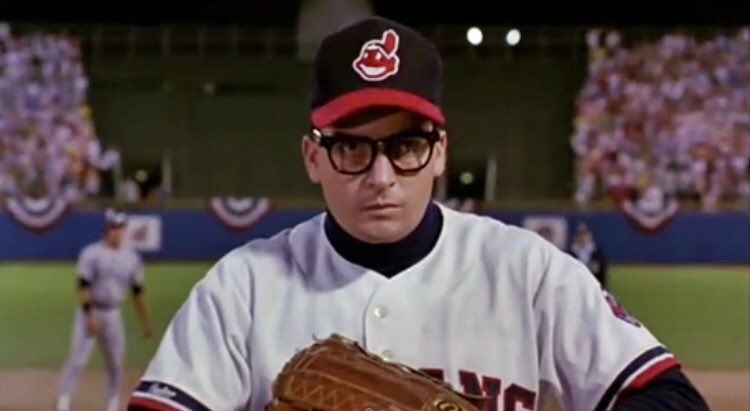
See: The 2016 World Series depicted via baseball movies.

Watch: Dwayne Johnson sings a new Lin-Manuel Miranda song in Moana. And they both tell theater audiences to silence their cell phones.

See: Tom Hanks revisits scenes from Big. And his David S. Pumpkins character invades classic horror movies.

Watch: The Logan trailer redone with X-Men animated series footage.

See: Early test footage for the original Halloween. And Halloween redone in video game graphics.

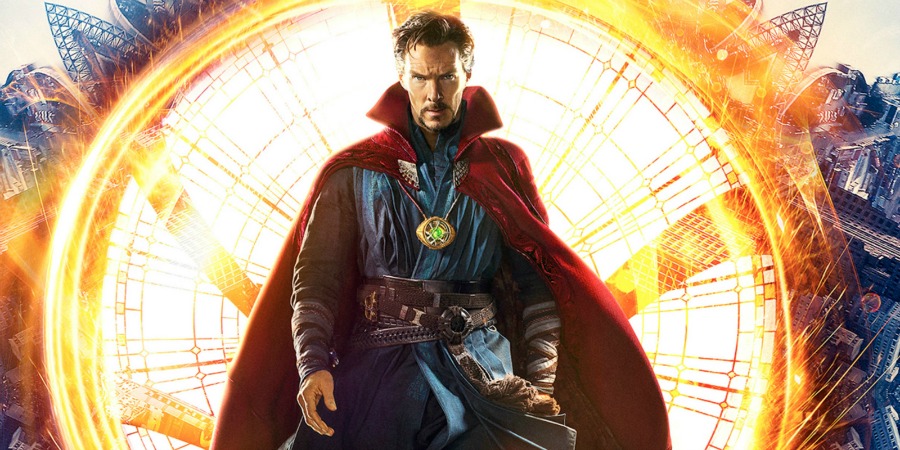
Watch: A weird version of the Doctor Strange trailer.

See: All the live-action Batmans in one movie.

Watch: Donald Glover talks about Star Wars on Ellen.

See: Andrew Garfield as Spider-Man again.

Watch: Sausage Party redone as a Pixar movie.

See: All of this week’s best new posters. And Jar Jar Binks takes over the Rogue One poster.

Our Features

Movie Reviews: Doctor Strange proves Marvel movies are evolving.

Interviews: Andrew Garfield on why he’s glad he’s no longer Spider-Man.

Comic Book Movie Guide: The discord of Deadpool 2 tells us about the sequel.

Studio Preview: Our guide to Paramount’s upcoming movies as previewed this week.

Movie Theater Preview: Our tour of the new Alamo Drafthouse Brooklyn.

Home Viewing: Our guide to everything hitting VOD this week.

and

MORE FROM AROUND THE WEB:

Let’s block ads! (Why?)