NPR’s Nina Totenberg says a Red Sox hat like this one helped the Chicago Cubs win the 2016 World Series. Michael Dwyer/APhide caption
toggle caption
Michael Dwyer/AP
When you root for a cursed sports team, you learn heartbreak — and superstition.
I am a Bostonian and therefore spent most of my youth and middle age rooting with futility for the Red Sox, and pining for the day when the Curse of the Bambino would finally be purged.
Most of my most acute memories of rooting for the Sox involve not disappointment, but decimation.
I watched from an airport en route home from an assignment during what may have been the worst of these awful moments, the sixth game of the 1986 World Series against the Mets. I had a bad feeling in the pit of my stomach in the ninth inning (cursed-team fans always have these feelings) when we were one strikeout from victory. Then the Sox blew the lead, only to face ignominy in the 10th after Bill Buckner let an easy grounder escape through his legs. Poor Buckner is now in witness protection.
In 2004 when the Sox were down three games to none in the American League playoff with the Yankees, my husband, David, got so mad at the end of the third game that he threw his Red Sox hat downstairs, and it fell on the landing. The Sox then won four straight against the Yanks, and went on to win the Series and break the curse — yes, there is a God and she is a Red Sox fan!
Soooooo … when the Chicago Cubs were down three games to one last week, I said to David, “Throw your hat on the landing.” He did, and, well, you know the rest. The Cubs went on to win the Series in a historic comeback.
So — along with the Cubs’ president for baseball operations, Theo Epstein, who helped the Sox break their curse before he worked that magic in Chicago — I am taking credit for breaking the Cubs’ Billy Goat Curse.
I am sure there are thousands of other superstitious baseball fans who are doing the same.
Intensive home-visits by physical, occupational and speech therapists have been “a lifesaver,” for little Haylee Crouse, her mom Amanda (left) told Shots. Haylee, who is now 2, developed seizures and physical and intellectual disabilities after contracting meningitis when she was 8 days old. Wade Goodwyn/NPRhide caption
toggle caption
Wade Goodwyn/NPR
Last year, the Texas legislature approved a $350 million cut in Medicaid reimbursement rates to early childhood intervention therapists and providers. The cuts, made to help balance a billion dollars in property tax relief, affect the most vulnerable Texas children — those born extremely prematurely or with Down syndrome or other genetic conditions that put them at risk for developmental delay.
For months, providers of in-home physical, speech and occupational therapies have continued to serve children who have disabilities, despite mounting financial losses. Now some have had to shut their doors, curtail services or halt their home-visit programs, leaving many children without treatments their parents feel are crucial to the kids’ well-being.
That’s what’s happened to 2-year-old Haylee Crouse, who lives with her three brothers and sisters in the small town of Whitehouse, in East Texas. When she was just 8 days old, Haylee contracted newborn meningitis. It left her with some mental and physical deficits, and she started having periodic seizures.
But at the age of 9 months, Haylee started getting home visits and treatments from physical, occupational and speech therapists, several days a week. The therapists worked for the non-profit Andrews Center, in Tyler, Texas. Amanda Crouse, Haylee’s mother, said the therapists have made all the difference in the world for her baby girl.
“They were a lifesaver to her and to our family,” Crouse said. “They worked her hard. For example, she was not rolling over. They taught her how to roll over. They then taught her how to crawl, pull up on the couch and then, finally, she learned how to walk.”
Today, Haylee walks and laughs and is learning to talk. But all this progress is now at risk, her mother says. The state’s cuts to its Texas Medicaid Acute Care Therapy Programs have meant that the one provider of early childhood intervention treatment in Tyler — which has provided in-home therapy to hundreds of families in five East Texas counties — can no longer do so. And so, that’s it.
On the 2-year-old’s last day of therapy, Crouse said, “her therapist actually cried. Gave her a hug, said goodbye. We took a picture, just to kind of document that moment. And it was an emotional day.”
As news of the cuts became public, parents and grandparents of children who have disabilities flocked to Austin in March to implore the state Senate not to do this. Mothers wept in frustration as they testified before the Texas Senate Finance Committee about the vital these early interventions play in their children’s quality of life.
“This is Elijah,” Mary Castro told the committee members that day, holding up a photo of her 2-year-old son. “When my son was born, my husband and I found out eight days later that he has Down syndrome. He’s medically fragile and developmentally delayed.”
Without the support of early childhood intervention therapists that Medicaid provided, Castro told the lawmakers, “Elijah would not be walking, signing, doing word approximations, dancing to music, or interacting with his peers. With that said he is delayed. Quite delayed. But we love him, and he loves people.”
Republican Sen. Jane Nelson, who heads the Texas Senate’s finance committee, tried to reassure Castro and other anguished parents that the state would make sure there would be no interruption of services, whatsoever.
“Every eligible child for these services will continue to receive them,” she told the parents. “And we’re going to monitor it and we’re going to make sure that happens.”
But that’s been a promise the state has not been able to keep, and it’s in the rural parts of Texas where collapse of service has already begun.
“Sometimes you need to come out to these rural areas and see how things are done — and how they have to be done — and even talk to some of the parents before you just decide to cut a program,” said Waymon Stewart, the executive director of the Andrews Center in Tyler.
Stewart predicts that children with profound disabilities will suffer most from the closure of his program and others like it, especially in rural regions. It’s not uncommon for early childhood intervention therapists to have to drive an hour each way to get to far-flung patients. For children who are prone to seizures, or who have to be connected to machines for daily living, long trips in the car several days a week for treatment in other clinics are simply not going to happen, he says.
The cuts made in the state capital took a $312,000 bite out of his center’s budget, forcing him to terminate 20 employees.
“It really hit us hard,” Stewart said. So we were really digging into reserves to try to make this program last, and we did for a year.”
But after that, he said, “we just decided to give our notice. We couldn’t continue to do it unless the rates were changed.”
In Wichita Falls, 235 miles away, the same thing has transpired at the North Texas Rehabilitation Center, which serves 10 North Texas counties. Mike Castles, the center’s president, said they hung on for a year, but it cost them more than $200,000 in losses. So, after 30 years of service to thousands of North Texas families, that’s it for them too.
“It’s all about money,” he said, “and it created some internal problems financially with our other programs as well. There’s just so much money to make this all work. We tried to for a year; it got worse instead of better with even more bad news coming for this fiscal year.”
The state is actively hunting for new therapy providers. But the trick is finding new providers who can make work the same difficult financial circumstances that drove previous health providers out of the program.
Here are a bunch of little bites to satisfy your hunger for movie culture:
Movie Recap of the Day:
Revisit the plot of Deadpool in rap form with this NSFW recap of the phenomenally successful X-Men spinoff:
[embedded content]
Scene Re-creation of the Day:
CineFix sweded the power loader scene from Aliens, and it’s still one of the coolest moments in any movie ever:
[embedded content]
Cosplay of the Day:
A boy battling brain cancer got an awesome TIE Fighter wheelchair to go with his Darth Vader cosplay (via Geek Tyrant):
Fan Art of the Day:
Cool posters designed by artist Jordan Bolton showcase objects appearing in movies, including The Royal Tenenbaums. See more, including a few others for Wes Anderson movies plus Amelie and Carol at Sploid.
Video List of the Day:
Cracked spotlights movies that conveniently forgot about certain plot points, including Back to the Future, The Dark Knight Rises and The Wizard of Oz:
[embedded content]
Vintage Image of the Day:
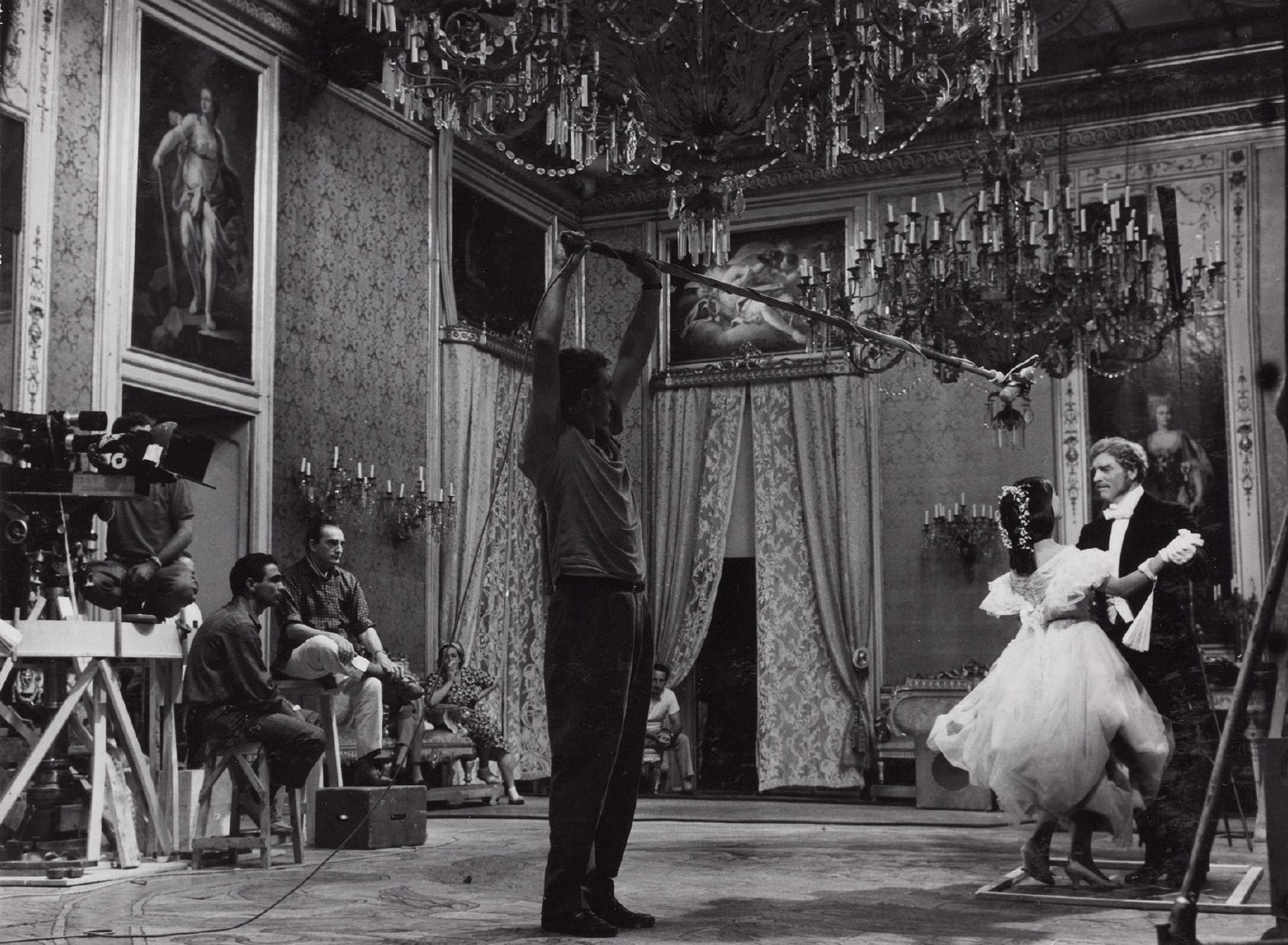
Luchino Visconti, who was born on this day in 1906, directs Burt Lancaster, who was born on this day in 1913, on the set of the 1963 Italian classic The Leopard:
Bad Film Analysis of the Day:
David Fincher’s Gone Girl is misunderstood and spoiled by an alien in the future in the latest Earthling Cinema:
[embedded content]
Actor in the Spotlight:
Burger Fiction chronicles the evolution of Tom Cruise from Endless Love to Jack Reacher: Never Go Back:
[embedded content]
Filmmaker in Focus:
Bits of Brad Bird’s commentaries for The Iron Giant, Ratatouille and The Incredibles are compiled for a video on his insights specifically about making animated features:
[embedded content]
Classic Trailer of the Day:
Speaking of Pixar movies, today is the 15th anniversary of Monsters, Inc. Watch the original trailer for the animated feature below.
Note: This episode originally aired inOctober 2012. Listen to part one of this serieshere.
As you heard last week, we’ve been creating a fake presidential candidate based on the best ideas economics has to offer, a dream candidate too perfect to exist in reality. We came up with a platform, with the help of a panel of economists. We hashed out the disagreement among the panel. We brought in political consultants who laughed at us, but also gave us some great messaging ideas.
Today, we take it to the people — or, at least, a focus group. We find out whether these economically sound ideas can get anyone’s vote. We even create a couple real ads for our fake candidate that you get to hear. Give a listen and tell us, would you vote for us?
The Chicago Cubs celebrate after Game 7 of the Major League Baseball World Series against the Cleveland Indians. Gene J. Puskar/APhide caption
toggle caption
Gene J. Puskar/AP
Updated at 1 a.m. ET
The Chicago Cubs, ending a championship drought that has lasted 108 years, beat the Cleveland Indians 8-7 in Game 7 of the 2016 World Series at Progressive Field in Cleveland.
They did it the hard way, too, coming back from a 3-1 game deficit, winning three straight games, including the last two on the road in Cleveland. And it took ten innings to win it all in Game 7.
The Cubs are the first team since the 1985 Kansas City Royals to claw back from a 3-1 deficit in the World Series. They won 103 games during the regular season.
The Cleveland Indians’ Jason Kipnis scores, evading a tag by the Chicago Cubs’ Jon Lester during the fifth inning of World Series Game 7 on Wednesday. David J. Phillip/APhide caption
toggle caption
David J. Phillip/AP
The Cubs took the lead early in the first inning and seemed in control of the game before almost letting this one get away. They were leading 6-3 when their hard-throwing closer Aroldis Chapman blew a save opportunity by giving up three runs in the eighth inning, two coming from a dramatic home run by the Indians’ Rajai Davis that tied the score at 6-6.
In the top of the rain-delayed tenth inning, the Cubs’ Kyle Schwarber opened the frame with a single and was replaced by pinch runner Albert Almora Jr., who took second base on a sacrifice fly by Kris Bryant that almost left the park. Anthony Rizzo was intentionally walked. Ben Zobrist doubled to score Almora and then pinch-hitter Miguel Montero singled to score Rizzo. The game stood at 8-6.
The Chicago Cubs’ Dexter Fowler reacts after hitting a home run during the first inning of Game 7 of the World Series against the Cleveland Indians Wednesday in Cleveland. David J. Phillip/APhide caption
toggle caption
David J. Phillip/AP
In the bottom of the tenth, the Indians threatened again. Cubs reliever Carl Edwards Jr. got two outs from the Indians before walking Brandon Guyer, who stole second base. That brought up Davis, the hero of the Indians’ eighth inning. He promptly singled, scoring Guyer. With the score at 8-7, Cubs reliever Mike Montgomery induced Michael Martinez to ground out.
The last time the Chicago Cubs won the World Series was 1908 back when Theodore Roosevelt was president.
By losing in extra innings in Game 7, the Indians fell short of their goal: to win Cleveland’s first championship since 1948.
The game had no shortage of stomach-tightening moments for both teams and their fans.
The Cubs struck quickly with a solo home run to center field by lead-off hitter Dexter Fowler, off Indians starter Corey Kluber in the first inning. Schwarber followed with a single, but Kluber then retired eight straight Cubs hitters over the first three innings. Schwarber collected his second single of the game but he was thrown out trying to stretch out a double to end the top half of the third inning.
The Indians tied the score at 1-1 when Coco Crisp led off the bottom of the third inning with a double to left, took third on a sacrifice bunt by Roberto Perez and scored on a single to right field by Carlos Santana. An error by Cubs second baseman Javier Baez put another runner on base. But the Indians failed to capitalize on what might have been a big inning.
The Cubs regained the lead in the top of the fourth inning, scoring two runs. Kris Bryant led off with a single and Rizzo was hit by a pitch. A sacrifice fly by Addison Russell scored Bryant, then a double by Willson Contreras brought in the Cubs’ second run of the frame.
The Indians went down quietly in the bottom of the fourth inning.
Chicago got two more runs in the fifth inning on a solo homer by Baez on the first pitch he saw from the Indians’ Kluber. The Indians brought in their ace reliever Andrew Miller. Two outs later, Bryant walked and scored on a base hit by Rizzo. Chicago led the game 5-1.
The Indians came back with two runs in the fifth. Cubs manager Joe Maddon pulled his starter Kyle Hendricks in the bottom of the fifth with two outs after he walked the Indians’ Santana. Hendricks left the game surrendering only one run and scattering four hits. The Cubs’ Jon Lester, typically a starter, came in to relieve. A throwing error by catcher David Ross put runners at second and third. They both scored on a wild pitch by Lester, cutting the Indians’ deficit to two runs, 5-3.
Ross reclaimed one of those runs with a solo home run to center off the Indians’ Miller in the top of the sixth inning, extending Chicago’s lead 6-3.
Chicago stayed in command until the improbable bottom of the eighth. They were never behind in this game.
Michael Weinstein is president of the AIDS Healthcare Foundation and a longtime maverick in gay activist circles. April Dembosky/KQEDhide caption
toggle caption
April Dembosky/KQED
When Mike Stabile first moved to Los Angeles in 2011, he was struck by a freeway billboard that showed a line of cocaine and an overturned shot glass. The caption read: “You know why. Free HIV test.”
“I literally pulled over the car and was like what’s going on?” Stabile remembers. “I was having a panic attack.”
He describes another billboard showing two men in bed, looking nervous, and posing this question: “Trust Him?”
A billboard sponsored in 2015 by the AIDS Healthcare Foundation made a lasting impression on Mike Stabile, who now opposes the group on a proposition to mandate condom use on porn sets. Courtesy of AIDS Healthcare Foundationhide caption
toggle caption
Courtesy of AIDS Healthcare Foundation
“As a gay man, you really have to fight against this idea that you’re constantly in danger,” says Stabile, who came of age during the height of the AIDS epidemic in the ’80s. “Fear and stigma actually works against people getting tested.”
Stabile is a documentary filmmaker, activist and a spokesperson for the Free Speech Coalition, the trade association for the adult entertainment industry, which is opposing Proposition 60.
He says he sees the same heavy-handed, moralistic attitude behind Proposition 60, the California ballot initiative that would require adult film performers to use condoms on porn sets. If the performers don’t comply, and state regulators fail to enforce the mandate in a timely manner, any Californian can sue the film producer.
“Its success depends on stigma around sex, stigma around porn,” says Stabile.
The man behind Proposition 60 — and all those billboards — is Michael Weinstein, president of the AIDS Healthcare Foundation and a longtime maverick in gay activist circles.
The nonprofit runs pharmacies and provides HIV care in 13 states and 37 countries, and it gave away 38.5 million condoms last year. It’s putting $4.5 million from its pharmacy sales into backing the Proposition 60 condom mandate. (It has also put $14.7 million behind Proposition 61, Weinstein’s initiative aimed at lowering prescription drug prices in California.)
Weinstein says he’s steadfastly promoting condoms when other groups seem to have forgotten them.
“It’s unfashionable,” he says. “I was on a panel discussion and one of the guys said, ‘You’re acting like our mother telling us to wear galoshes.’ And my reaction was ‘Yeah, somebody needs to do that!’ I mean, I’m not trying to win a popularity contest, obviously.”
For Weinstein, Proposition 60 is primarily about protecting adult film workers against sexually transmitted diseases — at a time when infection rates are at a 20-year high across California. But it’s also another large-scale condom campaign.
“A lot of people get their sex education through these films, and I think it’s sending a bad message,” Weinstein says. “I don’t want young people to be educated that the only kind of sex that’s hot is unsafe sex.”
Weinstein has long taken controversial positions, but he’s often landed on the right side of history. In the 1980s, he fought lawmakers in California who wanted to quarantine AIDS patients. When nurses were afraid to touch patients, leaving them languishing in the hallways of county hospitals, he helped set up one of the first AIDS hospices, where people could die with dignity and compassion. And when AIDS drug cocktails became available, Weinstein risked bankruptcy to provide the life-extending drugs to uninsured patients.
“We decided we had a moral obligation to give them, and we paid for them and those people lived,” he says.
One of Weinstein’s more recent and most unpopular stances is on pre-exposure prophylaxis, or PreP, the daily pill that can prevent people from contracting HIV. Many activists consider it a powerful tool for prevention.
Weinstein doesn’t see PreP that way. “It’s often taken in conjunction with crystal meth and other party drugs,” he says. “It’s really a get-out-of-jail-free card.”
He says it gives people a free pass to not use condoms and be reckless, driving a rise in other STDs, which recent studies bear out.
But other public health groups say PreP will reduce HIV transmission and save lives, which the studies also support. “It’s not helpful to have one of the largest HIV organizations in the world trivializing it or downplaying its importance,” says Courtney Mulhern-Pearson, director of state and local affairs at the San Francisco AIDS Foundation.
Her group, along with AIDS Project LA, is opposed to Proposition 60, in part, because it ignores PreP. Mulhern-Pearson says Weinstein’s singular focus on condoms is outdated and unrealistic.
Performers from the adult film industry protest Prop 60 outside the AIDS Healthcare Foundation in Los Angeles. April Dembosky/KQEDhide caption
toggle caption
April Dembosky/KQED
“Condom fatigue is real,” she says. “And I think that all of us are probably not realistic and not forthcoming about our condom use.”
History and opposition
Weinstein has been fighting to mandate condoms in adult films for years. While federal and state worker safety laws technically already require producers to protect performers against STDs with condoms, the law is largely ignored and poorly enforced. Weinstein has pushed California’s Division of Occupational Safety and Health, known as Cal/OSHA, to refine and clarify its regulations, without success. He’s backed local measures in Los Angeles County to require condoms, which passed, but enforcement has, again, been minimal.
At every turn, the adult film industry has fought the condom mandates. Some say it would force them to make products that won’t sell, or that it would drive the business underground or out of state.
In mid-October, more than a hundred adult film performers rallied outside Weinstein’s office in Los Angeles to protest Proposition 60. They chanted slogans like “Our Bodies, Our Choice!” and carried signs that read “Where is Weinstein?”
They say they prefer to rely on the industry’s bi-monthly testing protocol over condoms. Performer Ela Darling says condoms don’t work on porn sets; they’re uncomfortable and cause friction rashes.
“The sex you have on camera isn’t like the sex you have at home,” she says. “It’s like Olympic-level, athletic sex.”
She’s frustrated that Weinstein is ignoring performers’ concerns.
“He will not hear us, he will not speak to us, but he’s happy speaking for us,” she says. “And that’s the problem.”
Weinstein defends his refusal to meet with the adult film industry.
“I’m not going to put myself in a position of debating people where all they do is call me names,” he says.
Weinstein’s critics have called him bombastic, a bully. They compare him with Donald Trump. They post tweets that refer to him as the “Condom Nazi.”
“In case they haven’t noticed, I’m Jewish and I’m gay, OK?” he says. “It makes my skin curl.”
Weinstein says he’s never liked the limelight. He’s had to develop a thick skin to stay in this business, to stand up for what he believes is the moral thing to do, for what he believes is his responsibility toward young generations.
Yet it’s clear that the criticism bothers him.
“He’s been hurt,” says Sharon Raphael, an old friend and fellow activist. “I know that it hurts him.”
Still, she adds, everyone knows he’s a force to be reckoned with.
“When most people would be down and out, strike three, he’d get up again,” she says. “He never gives up. Ever.”
This story is part of a reporting partnership with NPR, KQED andKaiser Health News.
Here are a bunch of little bites to satisfy your hunger for movie culture:
Alternate Soundtrack Choice of the Day:
How It Should Have Ended substitutes “Sabotage” in Star Trek Beyond with what Mars Attacks! used, “Indian Love Call”:
[embedded content]
Mashup of the Day:
Who is more powerful, Hermione Granger or Eleven? See them both in this Harry Potter and Stranger Things mashup:
[embedded content]
Fan Art of the Day:
This retro poster for E.T. the Extra-Terrestrial is part of a new art exhibit called Super Science Fair – A Pop Culture Experiment. See others, mostly superhero-related, at /Film.
Movie Retelling of the Day:
Between Halloween and Christmas is The Nightmare Before Christmas territory, so just enjoy this retelling with emojis from Disney on a daily basis (via Geek Tyrant):
[embedded content]
Cosplay of the Day:
Watch a guy dressed as Silver Surfer (seen in the movie Fantastic Four: Rise of the Silver Surfer) navigating New York City and entertaining its Earthling citizens on his longboard (via Geek Tyrant):
[embedded content]
Vintage Image of the Day:
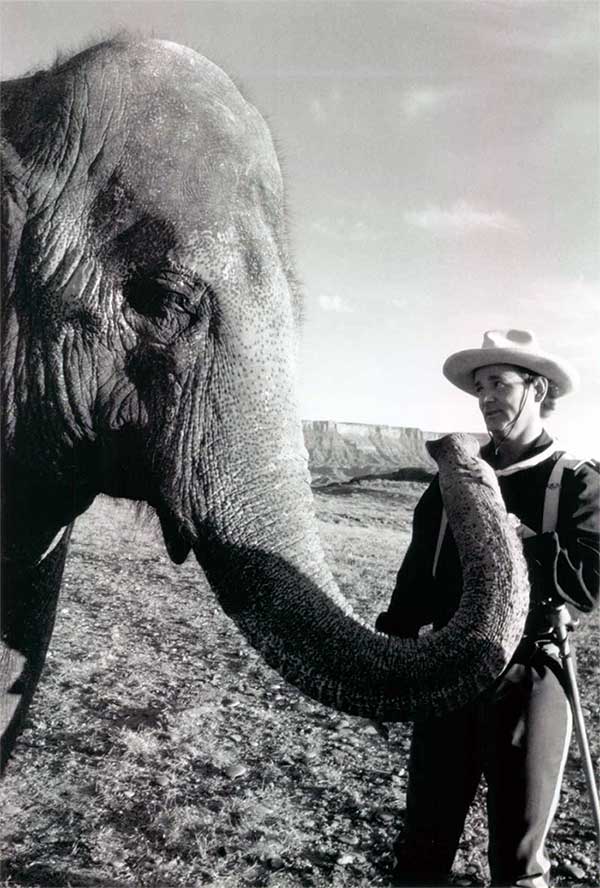
Bill Murray and co-star Tai the elephant on the set of Larger Than Life, which opened in theaters on this day 20 years ago:
Actor in the Spotlight:
Character actor showcase No Small Parts looks at the career of Peter Dinklage:
[embedded content]
Filmmaker in Focus:
Using animation, Cracked shows why Stanley Kubrick is the true villain of The Shining:
[embedded content]
Supercut of the Day:
Now You See It highlights the Hero’s Journey in a supercut including The Wizard of Oz, The Lord of the Rings and more:
[embedded content]
Classic Trailer of the Day:
Today is the 20th anniversary of the theatrical release of Baz Luhrman’s Romeo + Juliet, starring Leonardo DiCaprio and Claire Danes. Watch the original trailer below.
The 2018 Volkswagen Atlas is displayed at an unveiling event, in Santa Monica, Calif. Jae C. Hong/APhide caption
toggle caption
Jae C. Hong/AP
Near the entrance to Santa Monica pier stood a circle of Volkswagen Golfs, each with a driver. The purpose was to ferry attendees of a weeknight car unveiling to their own vehicles somewhere in the vast oceanfront parking lot. Perfectly framed by the pier’s roller coaster in the background is the Volkswagen Atlas. If you want the company’s answer to a year of scandal, this is it: what VW calls a mid-size SUV that has three rows that seat seven passengers.
The party for the launch of VW’s new SUV came just days after a judge agreed to the largest settlement in the history of the Federal Trade Commission. Despite the most recent controversy, the party was a cross between a Silicon Valley product launch and a Hollywood premiere.
On the perimeter, vintage VW buses stood in as photo booths. Caricature artists, hired for the event, turned engineers into jocks, and reporters into superheroes. You’d almost forget Volkswagen is a company going through a crisis. Renting out a tourist attraction for a day and flying executives from around the globe for a weeknight party show how intent VW is to turning the page and how much money they can spend doing it.
Classic Volkswagen Microbus and Beetle vehicles are featured at a show where Volkswagen unveiled a new mid-size SUV. Dan Steinberg/AP Images for Volkswagen of Americahide caption
That set off investigations here and around the globe. Just two days before this party, a federal judge had agreed to a settlement between V.W. and the government, reimbursing owners for the cost of their cars plus $5,000 to $10,000 depending on the vehicle. Now, ahead of the U.S. car show season and the end-of-the-year sales push, Volkswagen is trying to move on.
How does Volkswagen convince consumers to return after this year? “We did not make this one a diesel,” joked Mattias Erb, Volkswagen’s chief engineer. Erb stood next to the Volkswagen Atlas, which executives take pains to note will be built in the U.S. at the company’s Chattanooga plant.
“We are focusing on the engineering, the performance … the things we are known for. That is how we convince customers. We are getting back to our roots,” says Erb.
The SUV was shown in a color reminiscent of a yellow school bus. Brandy Schaffels, chief editor of AskPatty.com, a car advice site for women, says the vehicle succeeds at distinguishing itself from competitors. “They’ve done a good job of getting the existing Volkswagen DNA into it. It looks like a Volkswagen,” she says. Schaffels says with more and more consumers opting for SUVs, especially upscale consumers, VW saw a new SUV as a must.
“If you don’t give them the type of vehicle they want they’ll buy it from your competitor,” she says. “When they’re going down the freeway, people aren’t going to confuse it with [a Ford] Explorer.”
“They’re late to the party,” says Michelle Krebs, senior analyst with Autotrader. While the diesel scandal raged, a change happened in the car industry. SUV sales overtook sedan sales. Volkswagen only offers two SUVs under its Volkswagen badge and sales for both the Tiguan and Touareg (the two VW-brand SUVs available in the U.S.) are anemic. Krebs says “Better late than never and the mid-size [SUV] is where the growth is because millennials are starting families and opting for bigger utes.” Krebs says.
“The public has a short attention span for scandals like this,” says Mark Takahashi with Edmunds. He says the public is distracted from the emissions controversy by other news. Takahashi notes the rebound in sales for companies such as Toyota and General Motors after their recent scandals involving deaths.
Whether consumers do have a short attention span is irrelevant when it comes to regulators. The EPA is still suing VW for civil penalties under the Clean Air Act. There are still cases pending in Europe. The Justice Department has an ongoing investigation. Dan Becker, with the Center for Auto Safety, says one of the biggest hurdles Volkswagen has to face is how it will make the diesels that are on the road meet regulatory standards. “It isn’t entirely clear that VW knows how to fix it,” says Becker, “they know how to perpetrate a fraud. But they don’t know how to fix the problems they created.”
Becker says the financial cost of the diesel cheat is enough to deter Volkswagen and other carmakers from doing something like it in the near future: “Every one of those other automakers gets the lesson that they can’t perpetuate this kind of fraud. They can’t pollute too much, or they will be severely punished.” He adds that $15 billion in fines is not a slap on the wrist.
Volkswagen announced its October results for the U.S. Tuesday and sales were down 18.5 percent for the VW brand and 9.5 percent for the company overall.
Volkswagen is expected to slog through the rest of the year with sales down in the U.S. But if current trends keep going, despite slack U.S. sales, Karl Brauer, executive publisher of Cox Media, says VW will likely be the top global brand. “I think what you see here is the impact of the global economy that we all live in now,” Brauer says.
A company can have an issue in one market or even multiple markets, Brauer says, but can mitigate that problem with its performance in other markets. Volkswagen, despite slipping in the U.S., remains dominant in China and elsewhere. “If there is another lesson that comes out of this it’s … we are not the big dog anymore,” he says. If you are having success in China or India, Brauer says “the U.S., not that it doesn’t matter anymore, but it doesn’t have nearly the impact on you as a global automaker as it would have once upon a time.”
The Chicago Cubs’ Addison Russell celebrates after his grand slam against the Cleveland Indians during the third inning of Game 6 of the World Series Tuesday in Cleveland. Matt Slocum/APhide caption
toggle caption
Matt Slocum/AP
The Chicago Cubs beat the Cleveland Indians 9-3 in Game 6 of the World Series at Progressive Field in Cleveland. The best-of-seven Series is now even at three games each. The decisive Game 7 will be played Wednesday in Cleveland.
The Cubs were led by starter Jake Arrieta who gave up two runs and three hits in five-plus innings. He struck out nine and walked three Indians batters. He also had the luxury of watching teammate Addison Russell collect 6 RBIs, with a two-run double in the first inning and a grand slam in the third.
Chicago struck early, scoring three runs in the top of the first inning with a two-out solo home run by Kris Bryant, followed by Russell’s double on a fly ball that was mis-played by the Indians outfielders.
The Cubs blew the game open in the third inning when they loaded the bases on a walk and two singles, chasing Indians starter Josh Tomlin. Cleveland reliever Dan Otero promptly gave up a grand slam to Russell.
The Indians showed sporadic signs of life. They threatened to get back in the game in the fourth inning with a double by Jason Kipnis and an RBI single by Mike Napoli. They loaded the bases, but Cubs starter Jake Arrieta worked out of the jam.
The Cleveland Indians’ Jason Kipnis hits a home run during the fifth inning of Game 6 of the World Series. David J. Phillip/APhide caption
toggle caption
David J. Phillip/AP
The Indians got another run on a solo home run by Kipnis in the fifth inning.
Arrieta was pulled from the game after getting two outs in the sixth inning. Cubs reliever Mike Montgomery got the third out.
The Cubs appeared to slam the door shut in the ninth inning when Anthony Rizzo smacked a two-run homer to right field, making the score 9-2. But the Indians scored one more in the ninth when Roberto Perez hit an RBI single before getting thrown out at second base trying to stretch out a double.
Despite his team’s lead throughout the game, Chicago manager Joe Maddon made it clear he was taking no chances in allowing Chicago to stage a comeback. He brought in his flame-throwing reliever Aroldis Chapman in the seventh inning when the Indians were threatening again. Chapman induced a ground out by Indians Francisco Lindor. Chapman pitched into the ninth inning, giving up one run and one hit. He threw 20 pitches and the question many will ask is, how much does he have left for Game 7?
The final game will feature a showdown between Indians ace Corey Kluber, the winning pitcher of Games 1 and 4, and Cubs starter Kyle Hendricks.
Marcel Khalife performs in Carthage, Tunis in 2012. His new album, Andalusia Of Love, is an exploration of religious pluralism. Fethi Belaid/AFP/Getty Imageshide caption
toggle caption
Fethi Belaid/AFP/Getty Images
Marcel Khalife is a Lebanese composer, singer and innovator on his instrument, the lute-like oud. Khalife performed his first concerts amid the rubble of bombed-out buildings in Beirut during Lebanon’s civil war. Now, 40 years later, he is one of the most prolific figures in Arabic music. Khalife’s new album, Andalusia Of Love, combines classical, jazz and folk idioms with poetry to create a provocative new work.
Khalife sings with a kind of wistful optimism. He has lived and created amid some of the most terrible and intractable conflicts of our time, yet he continues to dream of peace and reconciliation. In this suite of 14 seamlessly linked pieces, Khalife returns to a touchstone of that dream: Andalusia.
Andalusia is a region in the southern parts of Spain and Portugal, where Muslims, Jews and Christians lived together for centuries during medieval times. For Khalife, that history is an enduring reminder that peaceful cohabitation is possible for people of these faiths. Khalife himself is a Christian, but throughout his career, he has set to music the words of a Muslim writer, the late Palestinian poet Mahmoud Darwish. On this album, the composer and poet conjure a world they can only imagine, but that burns within them like the memory of a first love.
Khalife performs this suite with his sons, Rami and Bachar, on piano and percussion, and Gilbert Yammine on the jangling, ethereal string instrument called the qanun. Their instrumental textures animate the yearning, nostalgic sentiments in Darwish’s poetry.
This brooding, beautiful, urgent music may call you to spend an hour in a world where peace is not a dream, but a hard-earned reality.