Articles by admin

No Image

Voters Backed Transit Funds. Will Congress OK Trump Infrastructure Plan?

San Francisco Bay area voters recently approved a sales tax increase to upgrade the aging BART system. Ben Margot/AP hide caption

toggle caption

Ben Margot/AP

On a night that the national election results had her discouraged, Seattle resident Anne Johnson had at least one ballot measure to celebrate: ST3, which will raise the local sales tax in the Seattle-Tacoma area to help pump $54 billion into expanding the region’s rail and bus systems. It passed by a wide margin.

“That is awesome, and we’ve put a lot of work into that, and I’m excited for the direction that that will take Seattle,” says Johnson, who adds that the transit improvements will help people get to their jobs, to school and will have environmental benefits, too.

And Seattle voters aren’t alone in approving new transit funding. San Francisco Bay area voters OK’d a tax increase to upgrade the aging BART system. Los Angeles County voters backed a tax increase to expand light rail, commuter rail and bus rapid transit service. And Atlanta voters approved expanding that city’s transit lines.

Article continues after sponsorship

One of the unheralded national stories from Election Day is just how well trains and buses did at the ballot box, as voters in dozens of cities approved local tax increases to expand and improve public transit.

“Election Day 2016 was historic for ballot measures that supported investment in public transportation,” says Jason Jordan, director of the Center for Transportation Excellence, which tracks such ballot initiatives.

“We saw a record number of measures on ballots,” Jordan says. “There were 77 measures nationwide; 71 percent of those passed. That accounts for almost $170 billion in new transit funding.”

That’s funding that would come directly out of local residents’ pockets, not from Washington.

Transit didn’t just win in big cities and blue states, Jordan adds. Voters approved referendums to boost spend more money on transit in more traditionally car-centric cities, too, including measures for new rail and bus rapid transit in Raleigh, N.C., public transportation projects in Charleston, S.C., and transit expansions in Columbus and Toledo, Ohio, and Indianapolis, among other cities.

“There’s an infrastructure deficit out there, and that’s existing everywhere, red state or blue state,” says Art Guzzetti of the American Public Transportation Association.

Seattle: Sound Transit 3, or ST3, is the third phase of a massive Puget Sound regional transit plan. It increases the sales tax primarily — but includes property and other taxes, too — to raise $27.7 billion over 25 years. All funding goes toward a $54 billion transit expansion plan that would add 62 miles of new light rail to areas that don’t have transit access. It also would add new bus rapid transit to the I-405 corridor, and it would fund other transit services.

San Francisco Bay Region: Bay Area Rapid Transit’s Measure RR is a property tax increase to raise $3.5 billion to update, repair and replace aging infrastructure, to allow for more frequent and reliable service across the BART system.

Los Angeles County: Measure M raises the sales tax a half cent and will generate $120 billion over 40 years to fund the county’s long-term transportation plan, including new light rail extensions, new bus rapid transit, some commuter rail and some will go to expanding roads and highways. About two-thirds of the funding overall goes to transit.

Atlanta: Voters approved a sales tax increase of 0.5 percent to raise $2.5 billion to fund expansion of the MARTA system, including several light rail extensions.

Indianapolis/Marion County: Voters approved a quarter-percent income tax increase to raise $1.68 billion over 30 years to fund the IndyGo Transit plan. Projects include three new bus rapid transit routes include the 35-mile electric BRT Red Line.

Raleigh/Wake County, N.C.: Voters approved a half-cent sales tax increase to raise $1 billion over 10 years to fund the Wake County Transit plan, including commuter rail between Durham and Raleigh and new bus rapid transit in four directions from downtown Raleigh.

Now transit advocates hope to capitalize on President-elect Donald Trump’s call to spend up to $1 trillion on infrastructure, a plan which Guzzetti says should now gain bipartisan support in Washington.

“Both sides have an inclination of getting this issue on the agenda early. Both sides believe in infrastructure, and it’s definitely going to be one of the first issues taken up by the next Congress,” Guzzetti says.

Trump’s call to spend big on infrastructure might be the only plan of his that congressional Democrats agree with, and many Republicans, who rejected most of the same kinds of infrastructure funding plans proposed by the Obama administration, now seem to be on board, too.

So what could go wrong?

“It very quickly gets to be much more difficult and complicated when we talk about how we’re gonna pay for this,” says Democratic Congressman Dan Lipinski of Chicago, who sits on the House Transportation and Infrastructure Committee.

He’s not so sure his Republican colleagues will go along with funding public transit in big Democratic-voting cities such as his, and even if they do, he’s skeptical about one of the possible funding sources.

Trump wants to create an infrastructure bank, using tax credits to leverage private investment in infrastructure projects. But Lipinski says those are essentially loans that would have to be paid back with revenue from something like tolls.

“We do not, first of all, want to make every road a toll road,” says Lipinski. “And there are things such as public transportation which would not ever get funded in this manner.”

Transportation consultant Steve Schlickman says infrastructure banks are good for toll roads, airports, port facilities and other projects that generate revenue from their users.

Schlickman, who is also former executive director of Chicago’s Regional Transportation Authority and the former director of the Urban Transportation Center at the University of Illinois-Chicago, says any project funded through an infrastructure bank must have the ability to generate enough revenue to pay back the loan.

“The vast majority of our public infrastructure can’t do that,” he says. “What about free roads, mass transit, pedestrian ways, bike ways. They don’t pay for themselves.”

Trump also suggests another funding source for infrastructure projects: repatriation of profits corporations hold overseas. But there are big disagreements over how much to tax those profits and how much money it would really bring in.

Plus, Schlickman says that’s just a one-time source of funds.

“That’s not the type of revenue stream that you would want to rely on,” he says. “But at this point, if that’s all that’s politically doable, then fine, let’s do it.”

Schlickman and other transportation experts say while a long-term funding source, like an increase in the gas tax, is still needed, now is not the time for transit advocates to quibble over such matters.

“I’m very, very happy that we have a president-elect that wants to do something big in infrastructure,” Schlickman says. “Now let’s try and take advantage of that enthusiasm and that leadership and let’s work with him and try to get the best deal we can for everyone.”

Let’s block ads! (Why?)


No Image

Pence Expanded Medicaid As Governor, Now He May Be Part Of Cutting It

In 2015, Indiana Gov. Mike Pence announced that the Centers for Medicaid and Medicare Services had approved the state’s waiver to try a different approach for Medicaid. Michael Conroy/AP hide caption

toggle caption

Michael Conroy/AP

Chris Cunningham was so thrilled with Indiana Gov. Mike Pence’s Medicaid expansion under the Affordable Care Act that she readily accepted his invitation to an event celebrating its first anniversary in January.

After eight years without health insurance, Medicaid coverage paid for treatment of her thyroid problem and lung disease and prescription drugs to help both. “It was a game changer for me,” the Indianapolis woman said.

Election Day’s results are on her mind now.

Indiana Gov. Mike Pence was one of 10 Republican governors to expand Medicaid under Obamacare, but as President-elect Donald Trump’s running mate, Pence is now calling for the health law’s repeal and replacement.

If that happens, millions of low-income people around the country added to the state-federal insurance program since 2014 under the health law are at risk of losing their health insurance. Thirty-one states and the District of Columbia have expanded Medicaid, extending coverage to at least 10 million Americans.

“I don’t see how a compassionate human being can rip health care away from millions of people,” Cunningham said.

Article continues after sponsorship

What Pence did with Indiana’s Medicaid program may place him in the middle ground of political battles to come over Obamacare’s future. He called for the law’s repeal even before joining Trump, but also pushed Medicaid’s expansion in a conservative direction by advocating for stricter eligibility requirements on low-income people receiving government-paid health care.

Neither Trump nor any other top Republican has spelled out what a replacement would look like. Trump has said he supports Medicaid block grants to states — a way of stabilizing federal funding that could ultimately raise states’ costs and force them to cut benefits or eligibility.

The health law allowed states to open Medicaid to all adults with incomes at or below 138 percent of the federal poverty level, with all the extra costs paid by the government for the first three years, 2014 through 2016.

Pence took the federal money but won the Obama administration’s approval to add features that set Indiana apart from other expansion states. For example, recipients are required to pay money — $1 a month for many — into special accounts that Pence contends will make them more conscious of the costs associated with health care.

Healthy Indiana Plan 2.0 pushed Medicaid’s traditional boundaries, which is why it has captured attention in conservative states. The plan demands something from all enrollees, even those below the poverty level. Individuals who fail to keep up their contributions lose dental and vision coverage and face copayments. Those above the poverty level can temporarily lose all coverage if they fall behind on contributions.

Proponents, including Pence, have said the strategy makes Medicaid recipients share financial responsibility for their care and that it will save Indiana money by reducing unnecessary services and inappropriate emergency room use.

Pence has said Indiana’s program has lowered ER use, led to recruitment of more physicians by paying them more and succeeded in getting most recipients to contribute monthly payments.

“This is an innovative, fiscally responsible program,” Pence said at the expansion’s first anniversary event that Cunningham attended in Indianapolis. “We are improving outcomes, improving lives and improving the fortunes of Hoosiers.”

Cunningham said last week she remembers that day well and the personal connection Pence made with her and other new enrollees.

“It does give me hope that Gov. Pence started Medicaid expansion here and talked highly of it,” she said. “When I met him that day, it gave me a sense that even though I didn’t agree with 75 percent of what he stood for, I found him to be a really good man [who] really wanted to improve the health situation for people of Indiana.”

Indiana hospitals are also hoping Pence will be an advocate for preserving the expansion.

The expanded Medicaid program pumped millions of dollars into the state’s hospital industry by providing them more paying patients and increasing their Medicaid reimbursements.

Brian Tabor, executive vice president of the Indiana Hospital Association, said the election results have him worried about the future of Medicaid and Obamacare. But knowing Pence will have Trump’s ear could make a difference.

Pence “understands that with some flexibility, states can be successful at expanding coverage and that bodes well for states like Indiana,” he said. “He is passionate about the health and security that Medicaid provides to Hoosiers. I am confident that he will have a significant policy role in the White House and will use that in a way to preserve what we have in Indiana.”

Tabor said that while block grants or a per capita limit for Medicaid would give states more autonomy in running the program, he worries it would mean cuts in federal funding that would hurt recipients and providers.

Medicaid’s expansion in Indiana has provided vital funding to hospitals, particularly those in rural areas that have struggled to stay open. “It’s been a lifeline to many rural providers,” he said.

Susan Jo Thomas, executive director of Covering Kids & Families of Indiana, an advocacy group, seems less hopeful for the future of Medicaid expansion and the program overall even with Pence as vice president.

“It’s scary to us,” she said of the prospect of losing Obamacare and Medicaid becoming a block grant program. While Republicans have proposed the block grant idea since the 1980s, she noted it could find stronger support because Congress has turned more conservative and most states have conservative governors.

For Cunningham, Medicaid expansion in 2015 came at the right time. She had been managing several group homes for the disabled in 2008 when she ended her career to care for her own disabled husband.

“I was in a desperate situation and I’ve been very grateful for the help,” she said.

For her at least, worries about not having insurance will fade next May.

That’s when she will turn 65 and enroll in Medicare.

This story was produced through a collaboration between NPR and Kaiser Health News, an editorially independent program of the Henry J. Kaiser Family Foundation, a nonpartisan health care policy research organization. You can follow Phil Galewitz on Twitter: @philgalewitz.

Let’s block ads! (Why?)


No Image

Women Take On Big-Wave Surfing, Once The Domain Of Men, At Mavericks

Sarah Gerhardt surfs Mavericks in northern California. Elizabeth Pepin Silva/otwfront.com hide caption

toggle caption

Elizabeth Pepin Silva/otwfront.com

Imagine a wave so big it darkens the horizon as it rolls in.

Just south of San Francisco, this surf spot is called Mavericks.

Sarah Gerhardt is the first women to surf this famously dangerous big-wave spot. She did that in 1999 when she was 24. Now, at 42, she’s one of six women comprising the first women’s heat in a surfing contest there.

The women will compete for $30,000 in the Titans of Mavericks, surfing waves that swell well beyond 30 feet.

“Mavericks is the best big wave spot in California, regularly 40 to 50 and sometimes 60 to 100 feet tall with huge rocks, and there’s a shark attack out there every year,” Gerhardt tells NPR. “People’s leashes have been caught in the mouths of sharks, and it is very cold. That water temperature gets down to 48 or 49 and then of course the air temperature in the winter can get be in the 30s or 40s. It’s terrifying — but I wanted to surf it anyway.”

Gerhardt started surfing as a teenager, and eventually was lured by big waves — even though, she says, they left her “trashed.” “I loved it, and I never looked back,” she says. “I always wanted to be out in bigger surf.”

Article continues after sponsorship

Paddling up to the top of that first Mavericks wave, she says, her brain told her “Don’t go!”

“And then … all of a sudden you’re going 30 miles an hour heading into oblivion,” she says. “And when I kicked out I was like, ‘Wow, I can’t believe that was so amazing. I want to do that again.’ “

As part of the first women’s heat in the Titans of Mavericks event, she hopes to inspire younger surfers. “Women surfing big waves has not peaked yet, and it’s just going to get better and better and better,” she says. “And it kind of feels almost like closure, and that I can pass the torch on to that next generation who’s coming after me.”

The event will be called when the conditions are right, anytime between now and March 31.

Let’s block ads! (Why?)


No Image

Today in Movie Culture: 'Sing' Will Make You a Star, the Gruesome Truth About 'Wall-E' and More

Here are a bunch of little bites to satisfy your hunger for movie culture:

Rising Star Contest of the Day:

In honor of the new animated musical Sing, you can audition to appear on the YouTube homepage or win a trip to Los Angeles as part of Illumination Entertainment’s Real Talent, From Real Life contest. Below is a lyric-filled video for the movie’s original song “Faith,” which you’ll need to enter.

[embedded content]

Alternate Movie Poster of the Day:

Speaking of animated features, in honor of today’s home video release of Kubo and the Two Strings, Mondo Prints unveiled this new poster by Cesar Moreno (via /Film):

Fan Theory of the Day:

And here’s something about another animated feature: MatPat of The Film Theorists tackles the theory that the humans in Pixar’s Wall-E are cannibals:

[embedded content]

Movie Recap of the Day:

Speaking of Disney animated movies specifically, here’s a recap of the plot of Frozen in rap song form, with “Let It Go” sample, of course:

[embedded content]

Cosplay of the Day:

Apparently it was only an accident that this dog is cosplaying as No-Face from Hayao Miyazaki’s Spirited Away, but who knows? (via Fashionably Geek):

Animated Remake of the Day:

If Doctor Strange had come out 30 years ago, it might have gotten a video game that looks like 8 Bit Cinema’s version of the movie:

[embedded content]

Vintage Image of the Day:

Terry Gilliam, who turns 76 today, directs Winston Dennis as the Samurai Warrior on the set of his 1985 film Brazil:

Screenwriting Lesson of the Day:

Lessons from the Screenplay focuses on obsessed artist characters and the structure used to portray them in both Black Swan and Whiplash:

[embedded content]

Reimagined Movie of the Day:

And get ready for Black Friday with a reworked trailer for Paul Blart: Mall Cop selling it as a serious action movie:

[embedded content]

Classic Movie Trailer of the Day:

Today is the 20th anniversary of the release of the Arnold Schwarzenegger holiday classic Jingle All the Way. Watch the original trailer below.

[embedded content]

and

Let’s block ads! (Why?)


No Image

Can Trump's International Business Dealings Violate The Constitution?

President-elect Donald Trump points to a reporter at Trump International Hotel in Washington. Alex Brandon/AP hide caption

toggle caption

Alex Brandon/AP

Donald Trump’s extensive business dealings around the globe have focused attention on an obscure provision of the Constitution most law professors barely look at – the Emoluments Clause. Now, one of the hottest legal debates around is whether the President-Elect is going to be violating the Constitution if he continues doing business with companies controlled by foreign governments.

Who even used the word “emolument” in an actual sentence before November 2016?

“Emolument” is defined by Merriam-Webster as “the returns arising from office or employment usually in the form of compensation or perquisites.”

The Foreign Emoluments Clause can be found in Article I, Section 9 of the Constitution. It provides that “no Person holding any Office of Profit or Trust under [the United States] shall, without Consent of Congress, accept … any present, Emolument, Office, or Title, of any kind whatever, from any King, Prince, or foreign State.”

The clause has been interpreted as an anti-bribery provision by constitutional scholars.

“The underlying concern of the clause is divided loyalties,” said Erik Jensen, a law professor at Case Western Reserve University. “The Founders wanted U.S. officials not to have any arrangements under which there could be questions about whether they were acting in the best interests of the United States, or in the interests of a foreign state.”

Article continues after sponsorship

Trump’s companies do deal with businesses that are controlled or influenced by foreign government officials. And legal experts say the potential for constitutional violations is high.

Take the Bank of China, for example. It’s a lender for one of Trump’s buildings in Midtown Manhattan. If the Bank of China were to offer Trump a lower interest rate on that loan after he takes office, it might raise an Emoluments Clause issue. Some legal scholars say it could be perceived as an attempt to curry favor with the President or influence policy.

So what is a violation of the Emoluments Clause?

Problem is, what constitutes a violation of the Emoluments Clause is a tangled conversation that very quickly involves lots of hypotheticals – because there is virtually no case law on the subject.

Not only have prior Presidents been careful to steer clear of any perceived violations of the clause, there’s never been a President like Trump whose companies have such vast global reach. And Trump hasn’t fully disclosed the full extent of his global business dealings.

So all legal experts can do now is pose possible scenarios.

Objects Versus Services

Richard Painter, who was chief White House ethics lawyer under President George W. Bush from 2005 to 2007, likes to use this example: Imagine the President sells a car to the Queen of England. If the Queen pays the President fair market value for the car, it’s not a violation of the Emoluments Clause. If the payment the President receives exceeds the fair market value of the car, there could be a violation. The amount of over-payment could be seen as a gift, or “present,” under the clause.

But let’s say we’re not talking about an object, like a car. What if the President renders services for a foreign government and receives compensation for those services? That would fall under the definition of “emolument.” And in that case, Painter says, it doesn’t matter if the compensation amounts to fair market value. It’s straight-up compensation for services rendered, so it’s banned as an emolument under the clause.

Here’s how a President Trump might one day render services for foreign government officials. Say a bunch of diplomats from a foreign country stay at Trump International Hotel in Washington, D.C. Painter says you could interpret that as services rendered by Trump – and under the Emoluments Clause, he can’t enrich himself from those rendered services.

“The services theory would be along the lines of, ‘Well, if Donald Trump himself as President could not perform services for the foreign government, he can’t have his hired help – people who work for him in that hotel – provide those services and then he receives the payment.’ That would be an end-run around the prohibition on any type of emolument,” said Painter.

The issue of whether a U.S. government official is violating the Emoluments Clause for services rendered actually does comes up in real life now, says Ken Gross, a government ethics lawyer in Washington, D.C. Sometimes government officials go on a foreign detail or sabbatical and want to earn compensation for teaching at a government-funded university in that foreign country. In those cases, Gross said, U.S. government officials have had to forego pay to avoid violations of the clause.

The role of Congress

Under the clause, Congress has the power to consent to any business dealings that raise questions. But if even legal experts are scratching their heads about what constitutes a violation of the Emoluments Clause, imagine how lawmakers would feel entering this legal morass.

“What this does is put Congress in an almost impossible situation of judging the fair market value of financial transactions between state-run entities and the Trump Organization,” said Zephyr Teachout, a law professor at Fordham University. She was a Democratic candidate for Congress in New York this year.

And if Congress dodges its duty under this clause – and refrains from ever voting to approve or reject possible Emolument Clause violations — Teachout says Congress will be acting unconstitutionally.

“This is an active obligation on the part of Congress,” said Teachout. “So if Trump goes forward with his plan to maintain a Trump Organization with relationships to state-controlled companies, it’s not just Trump, but it’s Congress that is in violation.”

Who can bring a legal claim against Trump for a violation?

Because there’s been no real litigation of the Emoluments Clause, legal experts say it’s hard to define who has legal standing to bring a claim for any possible violation.

Legal standing depends on how you articulate the injury. Here’s one theory of injury: Trump is enriching himself at the expense of companies that can’t compete for business the way the President of the United States can. So maybe a company that’s lost business because of some financial transaction between Trump Organization and a foreign government could articulate a legal claim.

Or, the perceived harm could be more nebulous. Here’s another theory of injury: Trump is opening himself up to attempts by foreign governments that want to influence U.S. policy. But who would have standing to bring a legal claim in that case? Legal experts say it’s not clear.

So how does Trump avoid any violations of the Emoluments Clause?

Painter says the best option for Trump is to simply liquidate his stake in his company – that is, take the company public, sell off all his shares and put the cash proceeds in a blind trust. That way, if there are any entanglements between the Trump Organization and foreign countries – he’ll be cleared of any conflicts.

But nobody’s holding their breath for that to happen anytime soon.

Jensen says he can already hear Trump’s counterargument. “He’s going to make at least two points. One, ‘You force somebody like me to do that, and you’re providing a tremendous disincentive for people who have been successful in business to enter the public sphere,'” said Jensen. “He also might say, ‘If I have to sell everything very quickly, in effect a fire sale, … I will end up getting a lot less than the real value.'”

Let’s block ads! (Why?)


No Image

U.S. Soccer Reaches Back To The Past To Kickstart Its Future

Bruce Arena has been rehired to coach the U.S. Men’s Soccer Team. He’s previously coached the team from 1998-2006 where he posted a record of 71 wins, 30 losses and 29 draws. Alex Gallardo/AP hide caption

toggle caption

Alex Gallardo/AP

Bruce Arena is getting his old job back.

Arena is the winningest coach in the history of the United States Men’s national team and is the only person to lead the U.S. team at two FIFA World Cups.

The announcement of Arena’s return to the team comes a day after U.S. Soccer President Sunil Gulati parted ways with former U.S. Men’s coach Jurgen Klinsmann.

“When we considered the possible candidates to take over the Men’s National Team at this time, Bruce was at the top of the list,” Sunil Gulati said in a statement Tuesday.

“His experience at the international level, understanding of the requirements needed to lead a team through World Cup qualifying, and proven ability to build a successful team were all aspects we felt were vital for the next coach.”

Arena first managed the team from 1998-2006, posting a record of 71 wins, 30 losses and 29 draws. Perhaps his most enduring achievement came during the 2002 World Cup where he led the U.S. team to the quarterfinals.

Article continues after sponsorship

During that tournament, Arena lead the U.S. team to a stunning upset over the heavily favored Portugal in the opening match, before advancing out of group play and notching a 2-0 victory over rival Mexico in the round of 16.

The German-born Klinsmann was supposed to ignite a spark in the U.S. squad when he was hired in 2011.

Initially he did.

In the 2014 World Cup, the men’s team showed promise by advancing to the knockout stage where the Americans fell eventually fell to Belgium in extra time.

A string of poor performances followed.

Earlier this month, the Americans fell to Mexico, 2-1, then days later suffered an embarrassing 4-0 defeat at the hands of Costa Rica in the most recent World Cup qualifiers. This seemingly brought an end to the Klinsmann era after 5 ½ years.

Arena, a Brooklyn native, is excited about taking back the job he lost a decade earlier.

“I’m looking forward to working with a strong group of players that understand the challenge in front of them after the first two games of the Hex,” he said. “Working as a team, I’m confident that we’ll take the right steps forward to qualify for the 2018 World Cup in Russia.”

The Hex, or Hexagonal, is a reference to final round of FIFA World Cup qualifiers in North and Central America as well as the Caribbean. The U.S. team is currently winless, according to ESPN.

“Arena takes over a team that lost its first two games in the final round of World Cup qualifying to Mexico and Costa Rica. The U.S. is at the bottom of the six-team CONCACAF group on goal differential.

“There are eight games remaining in the Hexagonal, with the next set of games taking place next March, including a home game against Honduras as well as an away encounter in Panama.”

Arena will officially start his new job on Dec. 1.

Let’s block ads! (Why?)


No Image

Chicago Orthopedic Surgeon Recalls Volunteer Work In War-Torn Syria

NPR’s Kelly McEvers speaks to Dr. Samer Attar, an orthopedic surgeon at Northwestern Medicine, who spent months in Aleppo, Syria, this past summer as a volunteer doctor.

KELLY MCEVERS, HOST:

More than a quarter million people on the eastern side of the Syrian city of Aleppo effectively have no access to hospital care. That’s after a government offensive targeted that part of the city, which is the part that’s controlled by rebels.

AUDIE CORNISH, HOST:

Over the weekend, at least two hospitals were hit by airstrikes, which means people there are finding it much harder to get surgery or treatment for trauma.

MCEVERS: Dr. Samer Attar is an orthopedic surgeon at Northwesten Medical in Chicago, and he spent months volunteering in Aleppo last summer. He’s with us now. Welcome to the show.

SAMER ATTAR: Thank you for having me.

MCEVERS: So you’ve been in touch with some medical professionals in Aleppo that you worked with while you were there. What are they telling you about the situation now?

ATTAR: I have. They’re my friends and colleagues, and they’re telling me that it’s – the situation’s really catastrophic. They’re desperate. They’re dying. One nurse I worked with had shrapnel penetrate his chest. Another surgeon had his hand so severely burned that he can’t operate; he can’t help anyone. And another nurse who I worked with – his head was hit by some shrapnel, and last I heard, he wasn’t talking. He was just responding to commands, moving his arms and legs. But the situation is dire, and they are threatened at every corner.

MCEVERS: Is it true that there are no longer any operating hospitals left in eastern Aleppo?

ATTAR: I would say that they’re not operating at full capacity. And the situation’s always very fluid. Hospitals get bombed. They shut down. They reopen. And they’re not hospitals that you and I think of. These are really just field hospitals. So they’re just basements or walk-up apartment buildings.

MCEVERS: Obviously civilians are also getting injured in these attacks, getting hurt. Where do they go? How do they know where to go? What are they going to do now?

ATTAR: Well, these hospitals are known. The local communities know where they are, but it just means that more people are dying. A lot of patients are afraid to go to the hospitals because they know the hospitals will be targeted.

And when I was in Aleppo this summer, it’s – nowhere else in the world could I imagine doing an amputation on somebody and then having them immediately leave the hospital. They wanted to leave as fast as they could.

There’s an obstetrician who I know who – she said that a lot of our patients have to have their children delivered at home, and some of them have bled to death at home because either they can’t get to the hospital because they’re afraid to or because they don’t have any fuel or gas for their car to drive them.

MCEVERS: How much longer do you think medical professionals there will be able to build up these makeshift hospitals?

ATTAR: I mean they’re very creative, and they’re very resilient. But they’re – they’ve been working around the clock under siege, under fire with very limited resources. And they’re running out of food and supplies, and it’s been this way since July.

I don’t know how much longer they can last. When you talk to them, they’re worried that there might be nothing left by next year if this sustained bombardment keeps up.

MCEVERS: Have things changed there since you were there?

ATTAR: I mean Syria teaches you that things can always get worse. And it’s just – it’s more people injured, more people being dismembered, burned, decapitated. One of the medical doctors in Aleppo described it as a horror movie. I mean even the sickest horror movie director couldn’t come up with the types of injuries that they’re seeing – just more people dying. You just get numb to the thought of 50 people dying in one day from airstrikes.

MCEVERS: Do you think you’ll go back?

ATTAR: I’d go back if I could. But the area’s cut off. It’s sieged, so nobody’s – no one’s been allowed in or out since July. And I’m not the only one. There are – I know Syrian doctors, nurses, rescue workers who are just – they’re waiting on the outskirts to get inside because they know people need help, and they just want to do their jobs.

MCEVERS: Dr. Samer Attar is an orthopedic surgeon in Chicago. Thanks for your time today.

ATTAR: Thank you.

Copyright © 2016 NPR. All rights reserved. Visit our website terms of use and permissions pages at www.npr.org for further information.

NPR transcripts are created on a rush deadline by Verb8tm, Inc., an NPR contractor, and produced using a proprietary transcription process developed with NPR. This text may not be in its final form and may be updated or revised in the future. Accuracy and availability may vary. The authoritative record of NPR’s programming is the audio record.

Let’s block ads! (Why?)


No Image

New Mix: Some Of The Best Songs We Missed This Year

(Clockwise from upper left) Africaine 808, D.D Dumbo, The Frightnrs, Chris Forsyth & The Solar Motel Band, Anthony Joseph. Courtesy of the artists hide caption

toggle caption

Courtesy of the artists

Bob Boilen and I, along with the rest of the NPR Music team, have been prepping for our year-end coverage by listening to hundreds of songs and albums in one big shared playlist. Along the way, we’ve all discovered stuff we hadn’t heard before — and even fallen in love with some of it.

On this week’s show, Bob and I share some of the artists and albums we missed before now, from Caribbean roots music by Anthony Joseph to the Boston-based funk group Lettuce and the idiosyncratic pop of D.D Dumbo.

NPR Music’s Tom Huizenga stops by to talk about his favorite discovery from our year-end playlist: The Frightnrs, a band that lovingly recreates the retro sounds of reggae.—Robin Hilton

Songs Featured On This Episode

Cover for Caribbean Roots

01Slinger

4:28

  • <iframe src="https://www.npr.org/player/embed/503000347/503015201" width="100%" height="290" frameborder="0" scrolling="no" title="NPR embedded audio player">

Anthony Joseph

  • Song: Slinger
  • from Caribbean Roots

Anthony Joseph makes Caribbean-based music and “Slinger” is a song that honors the classic calypso singer The Mighty Sparrow. The song comes from Anthony Joseph’s latest album, Caribbean Roots.

Cover for Nothing More To Say

02Nothing More To Say

4:11

  • <iframe src="https://www.npr.org/player/embed/503000347/503015495" width="100%" height="290" frameborder="0" scrolling="no" title="NPR embedded audio player">

The Frightnrs

  • Song: Nothing More To Say
  • from Nothing More To Say

This pick comes from guest DJ and Deceptive Cadence host Tom Huizenga. Though he’s a classical expert, Tom has some of the biggest ears on the staff, and will listen to and appreciate a wide swath of music. Tom heard The Frightnrs and enjoyed their music as comfort food and a safe haven from a stressful year. This Queens, N.Y. band lovingly recreates a retro rocksteady sound, down to the lo-fi quality, loving harmonies and delicate instrumentation.

Cover for Utopia Defeated

01Walrus

3:13

  • <iframe src="https://www.npr.org/player/embed/503000347/503015569" width="100%" height="290" frameborder="0" scrolling="no" title="NPR embedded audio player">

D.D Dumbo

  • Song: Walrus
  • from Utopia Defeated

Australian artist D.D Dumbo is influenced by pop and West African music, creating an interesting blend of two worlds. “Walrus” comes from his debut album, Utopia Defeated. The song is a commentary on the horrors of making foie gras; the entirety of Utopia Defeated is about animal rights and the importance of treating the planet right.

Cover for The Rarity Of Experience

01Anthem I

2:45

  • <iframe src="https://www.npr.org/player/embed/503000347/503015630" width="100%" height="290" frameborder="0" scrolling="no" title="NPR embedded audio player">

Chris Forsyth & The Solar Motel Band

  • Song: Anthem I
  • from The Rarity Of Experience

You might recognize Chris Forsyth from the Tiny Desk Concert he and The Solar Motel Band had back in July. “Anthem I” is from Forsyth’s double record, The Rarity of Experience. His anthemic music is informed by ’70s guitar rock, with a portion of the tracks on the album being purely instrumental.

Cover for Basar

02Ngoni

6:05

  • <iframe src="https://www.npr.org/player/embed/503000347/503015949" width="100%" height="290" frameborder="0" scrolling="no" title="NPR embedded audio player">

Africaine 808

  • Song: Ngoni
  • from Basar

Don’t let their name deceive you — Africaine 808 is a duo from Germany fusing global music with danceable beats. Their name is derived from the familiar Roland 808 drum machine they use. “Ngoni” is from Basar, Africaine 808’s debut album. We featured them in our First Listen series in February.

Cover for Mt. Crushmore

01The Love You Left Behind (feat. Alecia Chakour)

3:42

  • <iframe src="https://www.npr.org/player/embed/503000347/503015995" width="100%" height="290" frameborder="0" scrolling="no" title="NPR embedded audio player">

Lettuce

  • Song: The Love You Left Behind (feat. Alecia Chakour)
  • from Mt. Crushmore

A funk band from Boston, Lettuce has been making music for 25 years. They formed in 1992 after meeting at the Berklee College of Music and released their first album a decade later. “The Love You Left Behind” comes from their most recent release, Mt. Crushmore.

Let’s block ads! (Why?)


No Image

Today in Movie Culture: 'Fantastic Beasts' Easter Eggs, 'Rogue One' Set Up and More

Here are a bunch of little bites to satisfy your hunger for movie culture:

Easter Eggs of the Day:

Mr. Sunday Movies is here to explain all the Harry Potter references and point out the Easter eggs in Fantastic Beasts and Where to Find Them:

[embedded content]

Movie Set Up of the Day:

Get ready for Rogue One: A Star Wars Story by learning 51 things revealed in the new book Catalyst: A Rogue One Novel (via /Film):

[embedded content]

Cosplay of the Day:

This Darth Talon cosplay is pretty amazing, but we’re betting on little Rey to win this battle. See more of Darth Talon at Fashionably Geek.

Supercut of the Day:

Get ready for Thanksgiving with the family by watching this supercut of dinner table conflicts (via Film School Rejects):

[embedded content]

Mashup of the Day:

Find your favorite sci-fi characters, including RoboCop and the Predator, in this mashup illustration by artists Josan Gonzalez and Laurie Greasley (via /Film):

Movie Comparison of the Day:

See parts of The Thing side by side with similar shots and scenes from The Hateful Eight in this video from Kino:

[embedded content]

Vintage Image of the Day:

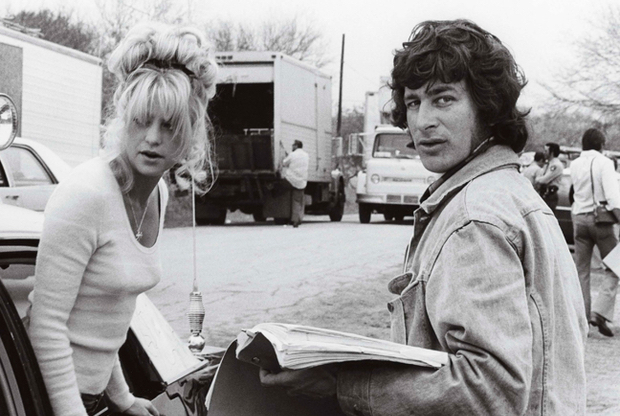
Goldie Hawn, who was born on this day in 1945, with director Steven Spielberg on the set of The Sugarland Express in 1973:

Movie Homages of the Day:

Candice Drouet is the master of finding homages in movies, and here’s her latest video showing master works of art side by side with the movie shots they clearly inspired:

[embedded content]

Movie Meme of the Day:

The latest trailer meme is to rework other movies “Logan style,” as seen with the moody Iron Man rework titled “Stark” below. See it done for Superman and Batman at Geek Tyrant.

[embedded content]

Classic Movie Trailer of the Day:

Today is the 40th anniversary of the release of Rocky. Watch the original trailer for the Best Picture winner below.

[embedded content]

and

Let’s block ads! (Why?)


No Image

Trump Airs Grievances, Fields Questions In Meeting With Top TV News Figures

Media executives and anchors met from the top five TV networks met with the president-elect at Trump Tower on Monday. Mark Lennihan/AP hide caption

toggle caption

Mark Lennihan/AP

Earlier Monday at Trump Tower in New York City, President-elect Donald Trump, top aides and advisers including Kellyanne Conway, Reince Priebus and Sean Spicer met with executives and anchors from five major television networks. Trump used the opportunity to admonish the network’s journalists and executives for what he said was the networks’ unfair coverage of him. But he also said he wanted to re-frame his relationship with the press and took extensive questions about policy and his intentions in office.

This account is largely based on an interview with an attendee who took detailed notes.

Among the participants from the news side were ABC’s George Stephanopoulos and David Muir, NBC’s Lester Holt and NBC news president Deborah Turness, CBS’s John Dickerson, Gayle King, and Norah O’Donnell, Fox News’ Bill Shine and Jay Wallace, MSNBC’s Phil Griffin, and CNN’s Wolf Blitzer and Jeff Zucker. The meeting’s content was to be off-the-record but many participants were photographed as they entered through the Trump Tower lobby. The New York Post’s Page Six gossip site had a detailed version that appeared to put the event in the most contentious light possible.

Article continues after sponsorship

Trump started the meeting by saying how great it was for so many network news anchors to be there, calling it unprecedented and citing it as a reflection of the importance of his election. Ultimately, Blitzer noted that such meetings were a fairly common annual ritual between presidents and anchors ahead of State of the Union addresses. Trump then said the presence of the executives made the meeting unprecedented.

Trump lit out after Zucker, criticizing his former business partner (Zucker was head of NBC during Trump’s Apprentice franchise on the network) for CNN. He turned then to NBC, saying it was the worst, criticizing its reporters, and saying it could not even come up with a flattering picture to broadcast. His complaint: the network’s photographs showed him with multiple chins. NBC President Deborah Turness replied that wasn’t true – NBC right now is using a photograph that shows Trump in very flattering way, she said. Trump also criticized a reporter who he said was in the room who had moderated a debate but who he had been told was very upset when Clinton lost. Presumably that was a reference to ABC’s Martha Raddatz or NBC’s Lester Holt.

Conway interceded to say that the new Trump administration appreciated the press corps’s hard work during the campaign and wanted a reset on its relationship to the press. Trump concurred and repeated the point, though he said he disliked the phrase “reset” because it reminded him of Hillary Clinton’s initial outreach to the Russians when she was starting as Secretary of State.

Trump said he wanted a relationship with the press that was “cordial and productive.” CBS’s Gayle King asked what would constitute such a relationship but it wasn’t clear what that meant beyond off the record meetings such as that one.

After that first 10 to 15 minutes, according to this attendee, Trump invited questions about his policies, appointments, and intentions, showing an interest in detail and implications.

The participant who spoke to NPR said Trump appeared as though he was irritated but working the refs, as when then President George W. Bush complained the press was acting as the filter of his remarks and policies. However a second source – a network official debriefed by colleagues who attended – said it did not feel like a reset of the relationship to them.

The off-the-record meeting lasted about an hour. And Trump posted a video on social media – bypassing the conventional press – to explain to the public, on the record, how the presidential transition was proceeding.

Let’s block ads! (Why?)