Articles by admin

No Image

Scientists Battle In Court Over Lucrative Patents For Gene-Editing Tool

Emmanuelle Charpentier (left) and Jennifer Doudna have a case for being the inventors of CRISPR-cas9, a transformative tool for gene editing. Miguel Riopa/AFP/Getty Images hide caption

toggle caption

Miguel Riopa/AFP/Getty Images

The high-stakes fight over who invented a technology that could revolutionize medicine and agriculture heads to a courtroom Tuesday.

A gene-editing technology called CRISPR-cas9 could be worth billions of dollars. But it’s not clear who owns the idea.

U.S. patent judges will hear oral arguments to help untangle this issue, which has far more at stake than your garden-variety patent dispute.

“This is arguably the biggest biotechnology breakthrough in the past 30 or 40 years, and controlling who owns the foundational intellectual property behind that is consequentially pretty important,” says Jacob Sherkow, a professor at the New York Law College.

The CRISPR-cas9 technology allows scientists to make precise edits in DNA, and that ability could lead to whole new medical therapies, research tools and even new crop varieties.

“Part of what makes it such a fun spectator sport is the amount of money that’s at stake,” says Robert Underwood, at the Boston law firm McDermott Will & Emery. “These could potentially be the most valuable biotech patents ever.”

The dispute pits high-prestige universities and well-regarded scientists against one another.

On one side of the dispute are research collaborators Jennifer Doudna at the University of California, Berkeley and her European colleague Emmanuelle Charpentier (currently at the Max Planck Institute for Infection Biology in Berlin).

Article continues after sponsorship

Feng Zhang, of the Broad Institute, is one of the contenders vying for royalties from CRISPR patents. Anna Webber/Getty Images for The New Yorker hide caption

toggle caption

Anna Webber/Getty Images for The New Yorker

“When they filed their patent application [in 2012], they did a great job disclosing how to use CRISPR for bacteria, but were a little lighter on details about how to use CRISPR in the cells of higher organisms” such as human cells, Sherkow says.

“Later in 2012, Feng Zhang at the Broad Institute at MIT and Harvard files his patent application that gives a pretty detailed description about how to use CRISPR in the cells of higher organisms,” Sherkow continues.

And since the most important use of the technology is its ability to edit DNA in higher organisms, the real battle is over who can claim that invention.

Zhang’s patent went through the process faster, so it was issued first. But when the Berkeley patent came up for a decision, that created what’s known in patent parlance as an “interference.” So now the patent office needs to sort out exactly what the invention is and who invented it first.

“The dispute largely does appear like a winner-take-all affair,” Sherkow says.

But the patent court could decide that there are distinct inventions, each meriting its own patents.

Or it could decide that it’s not patentable at all, for various reasons.

“The other thing that could happen is the patents could be made moot by other discoveries,” says Anette Breindl, senior science editor at the trade journal BioWorld. “I’m sure the existing patents are written to be broad, but there could be new discoveries that just get around those patents.”

The stakes are enormous. Breindl says three companies built around these patents already have a billion dollars of investment behind them, and a fourth company has a stake in the technology that could be worth $2 billion.

The scientists themselves stand to gain a great deal — and so do their universities, which are listed on the patents as well.

Robert Cook Deegan, at Arizona State University’s School for the Future of Innovation in Society, says regardless of how this legal battle comes out, academic researchers can still use the CRISPR technology without worrying about ownership rights, “but if you’re doing any research that might eventually be commercially valuable well, then you’ve got a problem.”

Those researchers would need to license the technology’s rightful owner, whoever that ends up being, “and the concern is how many licenses you’re going to have to pick up, and if there’s going to be one dominant patent that everybody has to license from a particular firm,” he says.

Some companies have already placed their bets, and they’ve licensed the right to use CRISPR from one or the other of the companies involved in the patent battle. If that patent evaporates, Underwood says, “I don’t think you’d get your money back.”

And any inventions based on the patent wouldn’t be protected, or possibly legal to sell. So companies in this field are anxiously awaiting the outcome of the patent dispute. Tuesday’s hearing is just one step in a process that’s likely to last through 2017.

In court, the two sides are expected to give brief answers to questions from the patent judges and jockey for position, trying to get the case framed in the way most favorable to their interests.

“Whatever the resolution is, if there’s no settlement, we can expect appeals that will last for years,” he says.

And, on top of the patent dispute, scientists widely assume that CRISPR will earn Nobel Prizes for the scientists who are ultimately recognized as the inventors of this transformative technology.

You can email Richard Harris at rharris@npr.org.

Let’s block ads! (Why?)


No Image

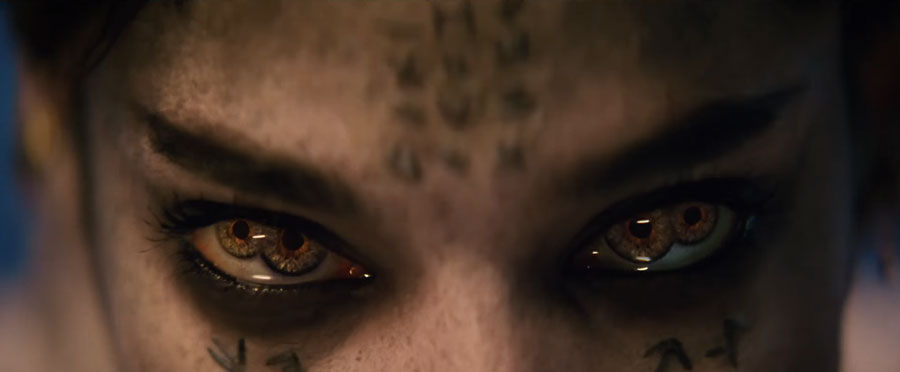
Tom Cruise Faces an Ancient Evil In First 'The Mummy' Trailer

The Mummy 2017

When most people think of The Mummy, they likely think of the tongue-in-cheek, Brendan Fraiser-starring reboot from the late ’90s that was less a horror movie and more of a family adventure that went for laughs instead of scares. But when The Mummy first emerged back in 1932 it was unmistakably a horror movie about a young woman stalked by the reanimated corpse of an ancient Egyptian prince.

So when a reboot of The Mummy hits theaters on June 9, 2017, it’s already got the difficult task of bridging the expectations of those who want an adventure movie and those who want a fantasy-filled horror movie. Thankfully the team behind it seems up to the task. For starters, it’s got a screenplay from Doctor Strange and Passengers writer Jon Spaihts and is directed by Star Trek writer-producer Alex Kurtzman. And that’s just behind-the-camera.

In front of it we’ve got Tom Cruise, Annabelle Wallis and Sofia Boutella, who just killed it in Star Trek Beyond, as the titular mummy. And as if that wasn’t enough, we’re also getting Russell Crowe thrown in as a one Doctor Jekyll, which should be an interesting piece of a larger Universal monster movie puzzle that is expected to bring in the Wolfman, the Invisible Man, the Bride of Frankenstein and maybe more.

Here’s the full trailer for The Mummy. Check it out.

[embedded content]

The Mummy hits theaters on June 9, 2017.

Let’s block ads! (Why?)


No Image

NFL Targets Kids In Outreach Campaign

Sports writer George Dohrmann discusses the NFL’s efforts to replenish its viewership and player pipeline with a campaign targeting children, which he compares to the efforts of the tobacco industry.

MICHEL MARTIN, HOST:

Let’s talk football for a few minutes. If you are like millions of other Americans, then football is a part of your weekend. Whether you’re catching a game or jumping on the computer to check on your fantasy team, you are the reason football remains the most watched sport in the country and the most profitable sports enterprise in the world. So you might not have noticed that the sport is actually facing some stress. There’s more attention to the health effects than ever before. The number of kids participating is dropping, and this season ratings have actually dropped.

But the NFL is not taking this lying down. The league is fighting back with a massive effort to replenish its fan base by focusing on drawing kids into the game and reassuring their parents it is safe. But according to our next guest, they’re doing that by sometimes using questionable tactics, including fuzzy facts. Our guest is Pulitzer Prize-winning sportswriter George Dohrmann. He wrote a lengthy piece about this for Huffington Post. It’s called “Hooked For Life.” And he’s going to tell us more about it. Joining us from Jefferson Public Radio in Ashland, Ore. George, thanks so much for joining us.

GEORGE DOHRMANN: Thank you for having me.

MARTIN: So just to set the stage here, you know – I talked a little bit about this in the introduction. What place does football hold in America compared to other forms of entertainment, other sports?

DOHRMANN: It just doesn’t compare. It is the most popular sport by, you know, a measure of 10. With the exception of when the Cubs are in the World Series, usually a throwaway NFL game will outdraw a World Series game. It just has such penetration. It is such a part of the American fabric. We call baseball America’s pastime, and it’s just not true. Football is America’s pastime.

MARTIN: And yet you say in your piece – and it’s been reported in a number of places – that Americans are starting to get a little skeptical about the sport, that the number of young people participating is actually on the decline, a number of high-profile public figures – I’m thinking Terry Bradshaw, for example, of the great, you know, Pittsburgh Steelers has said that he wouldn’t let his children play. Do you think that that is what is behind the fact that people are turning away from the sport even a little bit?

DOHRMANN: Yeah. It’s playing a big role. I mean, the participation in football is down, you know, 17, 20 percent over the last five years. These are the young kids that are playing. And even more important – young people 18 to 34 are not watching football as they used to. These are two bright, red flags that the NFL has known about for a few years now and then has started reacting to.

MARTIN: So what is the NFL doing in response?

DOHRMANN: Oh, my. So, you know, in the article, we compare it to, you know, the – sort of the tactics by Big Tobacco. What the NFL is doing is they’re doing everything. And what they’re doing is they are going after your kids. I mean, they’ve even talked publicly – executives there talked about trying to get to kids and really that, you know, 6 to 12 year olds – they have put together so many initiatives to try to get kids. They created a fantasy football league game which was essentially gambling for kids. They created all these digital properties, including a virtual world to get after kids. And they’ve infiltrated schools. They’ve put together sponsored education materials that are just a joke, and they’re getting those into classrooms.

MARTIN: What about that, though? I mean, American sports have always been marketed to kids – I mean, like baseball cards. So why is that so terrible?

DOHRMANN: You know, on the face of it, you know, marketing your product – and if you think of football as just a product, you know, that’s OK. That’s what corporations do. But I think most people would say, number one, this is not something that professional sports enterprise has ever done before. We have not seen things like the NFL is doing like that fantasy game that I talked about where, you know, there were cash prizes for kids if they picked the right team and it scored the most points each week. That’s not something that we’ve ever seen before from the NBA or Major League Baseball…

MARTIN: Wait a minute – so they actually – tell me about this game – that they actually created a kid’s version of fantasy football and that they actually gave kids cash?

DOHRMANN: Yes. It was a fantasy game marketed directly to kids between 6 and 12. They went on, and they would pick a team each week just like I do in my fantasy team, just like so many millions of Americans do. And if they happen to pick the best team that week, if they picked the right quarterback and it scored the most points and down the line with each position, they could win an X-Box. They could win a thousand dollars. If they were the best kid over the course of a season to do that, they could win $10,000. They could win tickets to a game. I don’t know how this isn’t gambling. And I think they drew a lot of criticism for this. And just recently changed the rules, but it went on for years and years where they were incentivizing football.

MARTIN: You also make the point that they’re focusing on parents, like these kind of clinics for parents to educate them about the steps that they’re taking to make the game safer. What’s so terrible about that?

DOHRMANN: So, you know, what they do is they have these clinics. They’re called mom’s clinics or they’re called family football clinics, and they bring people in to talk about the game. And what they really do is they bring them in to talk about how football is safer. And they tout a program called Heads Up Football that they claim is making football safer.

The data does not suggest that at all. It is not making the game safer at least in terms of head trauma. They say things at these clinics like you’re as likely to get a concussion riding a bike as you are playing football if you’re a kid. Well, that’s true if you include girls and only up until age 10. If you exclude girls, it’s football. After the age of 10 overall, it’s football.

So they do these little things where they sort of muddy the waters when it comes to what we know about football and about head trauma, and then they make an emotional play to moms. They bring in famous football moms, you know, whose husband played in the NFL, and they talk about all that football did for their family. They make an emotional sort of plea to these moms. And so it just feels like, you know, to me – and when I witnessed it, it feels a little bit dirty.

MARTIN: Well, because you are a good reporter, you presumably approached the NFL about your findings. What did they say?

DOHRMANN: You know, they didn’t really say much. They gave us a couple of statements that just said, you know, essentially we’re concerned about the health and safety of people, and, you know, we’re a responsible organization, I guess. I mean, that’s not their exact words, but that’s essentially what they conveyed, so they didn’t say much.

MARTIN: What should they be doing in your view? As you’ve pointed out, this is a multibillion dollar industry. They have an enormous foothold on American culture and millions of people legitimately love it, and they want to participate. So what should they do?

DOHRMANN: Well, I think they’re doing one thing that I – in the story I sort of applaud them for which is they’re emphasizing flag football more. They’re growing flag football nationally, incentivizing it by giving footballs and really reduced gear to recreation departments. So that’s a good thing because we know the reality is is that the NFL at some point is going to have to acknowledge that this game is not safe for young kids, and it is not a good idea for 6, 7, 8, 9, 10 year olds to be playing that kind of a contact sport. High school on that may be a different argument, but at some point here, the NFL is going to have to admit that, you know, maybe we shouldn’t be in the youth football business, and maybe we should encourage flag and non-contact football over, you know, collisions amongst 6 and 8 year olds.

MARTIN: That’s George Dohrmann. He’s a Pulitzer Prize-winning journalist. He focuses on sports. His latest article “Hooked For Life” is on the Huffington Post’s Highline website now. He was kind enough to join us from Jefferson Public Radio in Ashland, Ore. George Dohrmann, thanks so much for speaking with us.

DOHRMANN: Thank you.

Copyright © 2016 NPR. All rights reserved. Visit our website terms of use and permissions pages at www.npr.org for further information.

NPR transcripts are created on a rush deadline by Verb8tm, Inc., an NPR contractor, and produced using a proprietary transcription process developed with NPR. This text may not be in its final form and may be updated or revised in the future. Accuracy and availability may vary. The authoritative record of NPR’s programming is the audio record.

Let’s block ads! (Why?)


No Image

2016 Philanthropy Trends: Americans Donate Record $373 Billion

It’s not GoFundMe or Crowdrise but megadonors who are behind the rise in charitable giving. NPR’s Ailsa Chang hears from Chuck Collins of the Institute for Policy Studies about the downside to this.

AILSA CHANG, HOST:

It’s that time of year when mailboxes are full of letters from charities asking for money. And people are also giving so they can take that end-of-year charitable tax deduction. And according to the latest figures, Americans gave a record $373 billion to charities last year. We’re going to talk more about this with Chuck Collins. He’s with the Institute for Policy Studies, and he has a new report that takes a close look at who is doing the giving.

Thanks so much for joining us.

CHUCK COLLINS: Thanks, Ailsa. Great to be with you.

CHANG: So Americans are giving away nearly $400 billion to charity. That sounds phenomenal to me. What’s the problem with that?

COLLINS: Well, it is good news. And it’s up, like, 10 percent in the last two years. But what it does is it masks a little bit of a troubling trend, which is a lot of the growth in giving is coming from very wealthy donors and their foundations. And there’s a decline of low and middle-income givers over the last 10 years, almost a 25 percent steady decline. So put those two things together, and we’re seeing what we call a top-heavy philanthropy sector emerging.

CHANG: Why is top-heavy giving bad?

COLLINS: Well, you know, when I first did fundraising, there used to be a rule of thumb. They called it the 80-20 rule, which was that 80 percent of your donations would come from 20 percent of your donors. We are now kind of moving toward, like, a 98-2 percent, you know, where 98 percent of your money comes from 2 percent of your donors. So that means there’s more volatility and unpredictability for the independent sector. It means that they’re thinking about oh, how do we cater and maintain and get those big donors? And it could lead to the risk of mission drift, meaning those big donors have a lot of say and a lot of power with the nonprofit organizations. And they may be saying, well, this is what I’m interested in, and those organizations start to morph their missions.

CHANG: I’m just thinking about back to the days of the Vanderbilts and Carnegies and Rockefellers, sort of, you know, those very, very rich people donating. Was it different than it is now in terms of the causes that were supported, the buildings that were built in their names?

COLLINS: The first Gilded Age 100 years ago plus, we have benefited from that – the Rockefeller investments in public health, Carnegie’s libraries that are in a lot of our towns. Then we – you know, really over the last century, we’ve seen the rise of mass giving, a broader set of stakeholders helping lift up this vibrant independent sector we have. And that’s my concern, is we’re sort of going back in the – toward the Gilded Age again. And I think one really important thing to remember, though, is that philanthropy is not a substitute for an adequately funded tax system in a public sector. You and I have a stake in this because every time a billionaire gives money to a foundation, you and I are chipping in 40 to 50 cents in the form of lost tax revenue.

CHANG: I get that we lose tax revenue if the mega-rich move chunks of their money into charities. But isn’t the tradeoff then that causes or arts, organizations are being funded in places where the government isn’t willing to fund?

COLLINS: Taxes and philanthropy pay for different things. Like, I was recently in New Haven, and there’s, you know, this huge nonprofit tax-exempt building boom around Yale. You know, they’re – you know, they’re running out of projects to put wealthy people’s names on. You walk three blocks away and look at the public infrastructure in New Haven around the Yale campus, and you’ll see, you know, deteriorating streets and public infrastructure. So charity does a good job building hospitals, educational institutions, but it’s not a substitute – you know, no foundation is funding to address the the water infrastructure problem in Flint. Only federal and state taxpayer-funded projects can really address some of those deeper needs.

CHANG: So what would you do? How would you discourage wealthy people from siphoning off their assets into charities and instead reroute it into our tax system?

COLLINS: One possible reform is we create an annual cap on the amount of money that can be given while taking a charitable deduction. People can give all they want, but the question is should we as taxpayers subsidize that up to a certain amount? So we could cap the deduction at, say, $200,000 a year, which is something that Donald Trump has said he wants to explore. So that would actually create an incentive to give to charity, but also to not avoid paying taxes.

CHANG: Chuck Collins is with the Institute for Policy Studies. Thanks so much for joining us.

COLLINS: Thanks, Ailsa.

Copyright © 2016 NPR. All rights reserved. Visit our website terms of use and permissions pages at www.npr.org for further information.

NPR transcripts are created on a rush deadline by Verb8tm, Inc., an NPR contractor, and produced using a proprietary transcription process developed with NPR. This text may not be in its final form and may be updated or revised in the future. Accuracy and availability may vary. The authoritative record of NPR’s programming is the audio record.

Let’s block ads! (Why?)


No Image

Study: Older Smokers Can Still Significantly Lower Risk Of Death If They Quit

Researcher Sara Nash tells NPR’s Ailsa Chang why it’s never to late to quit smoking. She’s one of the authors of a new NIH-AARP study.

AILSA CHANG, HOST:

People who have smoked most of their lives may think it’s too late to quit, but a new NIH-AARP study finds that even smokers over 60 can lengthen their lives if they kick the habit. Dr. Sarah Nash, the main author of the study, joins us today from Alaska Public Media in Anchorage. Thank you so much for speaking with us.

SARAH NASH: Thank you for having me.

CHANG: So how old were the smokers you studied, and when did they quit?

NASH: We looked at people who are aged over 70 years, and we looked at current smokers and people who had quit throughout the life course. So we had never-smokers. We had people who had quit in their 30s, 40s, all the way up to the 60s.

CHANG: And for the people who quit smoking in their 60s, how did you measure the benefit to their health? Was it just in terms of extra years that they lived?

NASH: So what we did is we compared the risk of dying among people who had quit in each decade of life and people who had never smoked to the risk of death in people who are still smoking in the 70s. So we basically compared the mortality among those groups.

CHANG: Right.

NASH: And what we found was that people who quit during the 60s had a lower risk of death than people who continued to smoke into their 70s.

CHANG: What about benefits of quitting on things like preventing smoke-related diseases, like heart disease or lung cancer?

NASH: Well, we know that there’s definitely a benefit to those diseases from smoking, so what we were looking at was deaths from those diseases. So we actually looked at mortality from a whole bunch of different causes. We looked at death from lung cancer, death from other smoking-related cancers, death from respiratory infection, death from heart disease and death from stroke.

CHANG: And found that the mortality rates were lower for people who quit in their 60s compared to those who quit in their 70s or 80s.

NASH: Exactly.

CHANG: But I would assume the earlier you quit smoking, the better for your health, right? Like, what did you find on that point?

NASH: That’s exactly what we found. So we found that the risk of death, obviously, was lower in people who had quit earlier in life. But what was really surprising to us was that even the people, as you say, who had quit during the 60s – it was 23 percent less likely to die during the study than those who continued to smoke. So that’s a fairly substantial reduction in mortality risk.

CHANG: I feel like I meet a lot of smokers who – you know, who have counter examples to a study like this in their head. Like, well, I knew Joe so and so, and he never quit smoking, and he lived till he was 93 years old. How do you control for things like genetics?

NASH: So I think we all know some of those people are, right? But I think the important thing is that we’re looking at – rather than just taking an anecdote in one person, we’re looking at this – we looked at this in 160,000 people.

CHANG: Did you factor in how much, how often the subjects smoked?

NASH: Yes, we did. What we do is we calculate what we call pack years? It’s the cumulative exposure over the life course, and that was one of the factors that we adjusted for in our analysis.

CHANG: Did anything surprise you about these findings in the study?

NASH: So we know the risk of mortality is lower among those who quit smoking, so that in itself wasn’t surprising.

CHANG: Right.

NASH: But the magnitude of the observed benefit of quitting in one’s 60s – that that was remarkable, I think.

CHANG: Dr. Sarah Nash was co-author of a study published in the American Journal of Preventive Medicine. Thank you so much for joining us, Sarah.

NASH: Thank you for having me.

Copyright © 2016 NPR. All rights reserved. Visit our website terms of use and permissions pages at www.npr.org for further information.

NPR transcripts are created on a rush deadline by Verb8tm, Inc., an NPR contractor, and produced using a proprietary transcription process developed with NPR. This text may not be in its final form and may be updated or revised in the future. Accuracy and availability may vary. The authoritative record of NPR’s programming is the audio record.
Let’s block ads! (Why?)


No Image

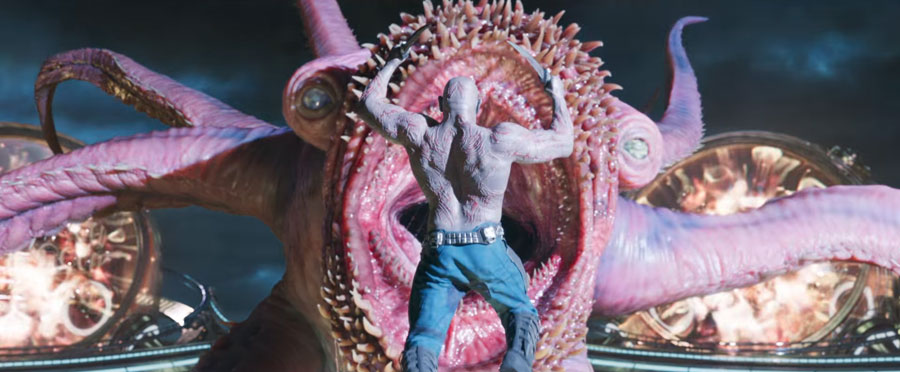
New 'Guardians of the Galaxy Vol. 2' Trailer Is All About a Giant Space Monster and Adorable Baby Groot

guardians of the galaxy vol 2 space monster

Guardians of the Galaxy Vol. 2 may be the world’s most anticipated entry in a franchise that most people didn’t even know was a thing just two years ago. Before hitting the big screen, the Guardians of the Galaxy were a pretty niche team confined to comic books and animated kids shows. But then writer-director James Gunn came along and made a movie about them; a movie that very, very quickly became one of the most beloved Marvel movies and a box office phenomenon to boot, raking in even more money than even Captain America: The Winter Soldier.

Star-Lord, Gamora, Drax, Rocket Raccoon and Groot have become a very big deal to Marvel and Disney, not to mention millions of fans all over the planet. So to say that there’s probably a bit of pressure on Gunn’s shoulders to meet everyone’s expectations for the sequel is a massive, massive understatement. So how’s Gunn going to top it?

With ease, it looks like. This incredible new teaser trailer barely even shows off a ton of stuff we know is in the movie, including returning cast like Karen Gillan’s Nebula or newcomers like Kurt Russell as Ego the Planet. But it’s still a perfect tease, full of glorious visuals and hilarious character moments.

Check it out.

[embedded content]

Guardians of the Galaxy Vol 2. hits theaters on May 5, 2017.

Follow @PeterSHall Follow @MoviesDotCom

Let’s block ads! (Why?)


No Image

Barbershop: Kellogg's, Breitbart And Self-Tying Shoes

Republican consultant Puneet Ahluwalia, consultant Jolene Ivey, and Farajii Muhammad of Listen Up! radio take on “rage donations,” corporations getting political and Nike’s new self-tying shoe.

MICHEL MARTIN, HOST:

Now it’s time for a trip to the Barbershop. That’s where we gather a group of interesting folks to talk about what’s in the news and what’s on our minds. Joining us for a shape-up this weekend are Jolene Ivey. She’s a former Democratic state lawmaker from Maryland. She’s now a public relations consultant. Puneet Ahluwalia is a businessman. He’s active in the local Republican Party in northern Virginia, and he’s serving on the Trump Asian Advisory Committee. And Farajii Muhammad is the host of Listen Up! That’s a radio show on member station WEAA in Baltimore. He’s also director of a youth organization called Peace By Piece. Welcome back, everybody. Thank you all so much for joining us.

FARAJII MUHAMMAD: Thank you.

JOLENE IVEY: Hey, Michel.

PUNEET AHLUWALIA: Thank you.

MARTIN: No newbies here. So let me start with this whole question about corporations and political statements. And we’re talking about this now because of Kellogg’s – you know Kellogg’s. If you had cereal or a Fiber Bar for breakfast this morning, chances are Kellogg made it for you. Now, the company pulled its ads from the news outlet Breitbart earlier this week. Kris Charles, a spokeswoman for Kellogg’s said, quote, “we regularly work with our media-buying partners to ensure our ads do not appear on sites that are not aligned with our values as a company,” unquote.

Now, Breitbart reacted furiously to this and has started a campaign against the company. They say they want you to l’eggo your Eggos because they say that that is disrespectful to their readers. And, of course, some background here – former Breitbart News executive Steve Bannon will be appointed chief strategist in the new Trump White House, and his company, Breitbart – his former company – has been much criticized for featuring content that many people consider racist and anti-Semitic and misogynistic, a platform for the so-called alt-right. So, Jolene, you want to start this off? What do you think about this whole thing?

IVEY: Well, I think that both sides have a right to their their position. I think it’s great when people, you know, use their wallets to speak. And I find it kind of hilarious that Breitbart wants to say that they’re this pro-family organization, and they have all this positive content and how dare Kellogg say this about them. I mean, I’m just kind of shocked that they have the nerve to come up with any of that. I’m glad that Kellogg is doing what they’re doing. And, although, I haven’t done it for years, I want to go out and stock up on Pop-Tarts right now.

(LAUGHTER)

MARTIN: Right this minute. Puneet, what about you?

AHLUWALIA: I think Kellogg is at fault. What has America’s food habits got to do with your social and political leaning? Why are you getting into that? And especially when Breitbart has 45 million readers and…

MARTIN: Well, so they say.

AHLUWALIA: Well, still…

MARTIN: So they say.

AHLUWALIA: Well, again, claims are made by Kellogg also which is…

MARTIN: …(Unintelligible) publicly traded company.

AHLUWALIA: I respect that, but still at the same time, you are trying to push your opinion on the listeners and the readers. And Breitbart responded back rightfully.

MARTIN: Farajii?

MUHAMMAD: It doesn’t make sense. It’s like get over it. This is like spilled milk for Breitbart. I think at this point, I mean – you have 45 million readers. You can find other sponsors, but it’s the simple fact that, you know, you have these conservatives right now that feel like they actually have an exclusive license on the brand of America.

And that’s the problem at this point, and so if Breitbart doesn’t respond, well then so be it. It is what it is. Breitbart, get over it. This is just – this is absolute nonsense. Kellogg’s has over 30-something products on the marketplace at this point. So you’re going to tell everybody to just stop eating cereal and stop eating Pop-Tarts. And – come on, come on. It’s ridiculous.

AHLUWALIA: And that’s exactly what I said. What does America’s food habit got to do with the political and social leaning?

MARTIN: So it’s my understanding that this is generated in part both internally and externally – that there are employees who felt that this was offensive. What about the Chick-Fil-A on the other side of it when progressives didn’t want to eat at Chick-Fil-A? Did you think that was ridiculous, too?

AHLUWALIA: Again, Chick-Fil-A is, again, a great organization giving great food. And they are run by Christian values, and that’s what is important to them and that’s what they follow. But, again, they serve people from all backgrounds and all ethnicities. Kellogg made a very important decision not to serve and not to market on Breitbart’s publication.

MARTIN: So let’s go to the other way. There’s another sort of related story here that a number of progressive non-profits – progressive non-profits Planned Parenthood, the ACLU, a number of others – are now reporting a surge in donations. These are the opposite of a boycott. And there’s even a website called Rage Donate, and some are getting cars along with these donations saying that they are encouraging family and friends to donate to these progressive organizations instead of exchanging gifts.

And some are even saying that they’re – they are donating in the name of family members who voted for President-elect Donald Trump, and that’s the way that they are translating their rage and disappointment. So, Puneet, why don’t I start with you on this? What do you think about that?

AHLUWALIA: Michel, I feel giving is a personal choice. And if people feel that’s what they’re calling is, they should do that, and they feel that they should give to Rage and Planned Parenthood – that’s their calling. But, at the same time, I would rather give my dollars going to making somebody’s life better enhanced in education. Whatever is you’re calling – I think giving is a personal thing. That’s what I stick at.

MARTIN: Jolene, what do you think?

IVEY: Well, I think that what we just said. It’s the same thing. I mean, giving is a personal thing – well, so is what kind of cereal you buy. The Rage donations – I think it’s awesome when people give to Planned Parenthood in the name of Mike Pence. It’s like the best thing. I want them to also give to the Whitman-Walker Clinic in his name also. I think it would be wonderful, but I don’t think that we should do it kind of in anger at your family member. I think that that would be wrong because your relationship with your mother or your sister or your brother is going to last a long, long time and hopefully it will at least outlast this administration.

MARTIN: Do you think it’s spiteful? I mean, if someone were to say, for example – let’s turn it around, Jolene, and someone were to donate to a cause that they know that you disagree with.

IVEY: Like the NRA, for example.

MARTIN: In your – even though you actually shoot and actually are quite a good shot.

IVEY: I do shoot.

MARTIN: So would that offend you? If a family member said, you know what? I’m donating to the NRA in your name, Jolene…

IVEY: Yes. It would…

MARTIN: Would you consider that spiteful?

IVEY: I would find that very spiteful, and, fortunately, no one in my family would do that. I’m so glad to say that.

MARTIN: (Laughter). OK.

IVEY: I think that really people should consider their personal relationships and put them in a separate category, but, politically, I think it’s great when you use that way to protest and give to wonderful organizations like Planned Parenthood of which I’m on the board for the Planned Parenthood of Metro Washington…

MARTIN: OK. Just Getting that in there. Farajii?

MUHAMMAD: Like, you know, the ACLU – they saw a nearly 1,000 percent increase on – leading up to Giving Tuesday, the Trevor Project – they work with LGBTQ community. They saw $85,000 over there in two weeks. The – I think it’s a great idea. But the biggest challenge was – it’s not going to be raising money, but for these organizations to really be on the forefront of accountability and watch-dogging because those who gave this are now going to be expecting something to happen at this point.

They’re going to be expecting Planned Parenthood, ACLU and all these groups to really be on top of the Trump administration. And the concern is if they don’t…

MARTIN: Why is that wrong? What’s wrong with that?

MUHAMMAD: No, no – that’s what I’m saying. That’s not wrong. But I know that working in the nonprofit sector – I’ve done it for many years – there’s been a lot of political red tape. There’s a lot of “staffing,” quote, unquote. There’s a lot of programming and then sometimes, unfortunately, there are a lot of folks who are just working in a nonprofit field just managing change and not really impacting or affecting change. So it’s going to be important that, you know, folks are giving money like this. I mean, ACLU saw $1.7 million. If they’re giving money like this, we need to see these folks really out and about and really, you know, putting the Trump administration to the fire.

MARTIN: OK. And finally today – and this is a little different – so switching gears here, speaking of giving money, a lot of money, to something you believe in, Nike announced earlier this week that their new self-tying shoe…

MUHAMMAD: Yes…

MARTIN: …Is ready to hit shelves. The HyperAdapt 1.0 is a battery-powered shoe that ties itself and – wait for it – it goes for $720. I’m going to go with my guys first on this because I will mention that some of our male colleagues here accused me of a double-standard when I kind of dropped my coffee. And I heard that price, and they said what about all those Manolos and Jimmy Choos? That…

(LAUGHTER)

MARTIN: So, Farajii, I’ll go to you first on this.

MUHAMMAD: First thing – why?

MARTIN: Is that on your Christmas list?

MUHAMMAD: No, not at all. Not at all. But why? Why is this – here’s the big irony about technology – that we put so much effort and time and work into advancing technology and then…

MARTIN: (Unintelligible)…

MUHAMMAD: …We’re making technology to make…

MARTIN: …Your list because I wasn’t giving it to you…

MUHAMMAD: …Us lazier.

MARTIN: I’m – go ahead.

MUHAMMAD: It just makes us lazier. I mean, now we’re at a point where we’re instead of opening a book, we’re downloading. We have a device now where instead of you walking to turn your lights on, you could just say lights. And now you have a shoe where you – look, hey, man, if you’re having a problem bending over, just get the self-tying shoe. Nike, why? Why? $720 for this? Yeah. I could see people in my neighborhood really wearing this – not. Sorry, not sorry.

MARTIN: (Laughter) Puneet, what about you?

AHLUWALIA: I’m still a Ferragamo guy. I would rather spend a few hundred bucks or six, 700 bucks on Ferragamos.

MUHAMMAD: …Ferragamos.

AHLUWALIA: But, as you know, the whole…

MARTIN: Oh, and Ferragamos. Oh, I see. Note to Santa.

AHLUWALIA: Yeah.

MARTIN: OK. Got it.

AHLUWALIA: Not the Nike 750, but, at the same time, I guess you heard the saying about fire’s a good servant but a bad master. What we’re making technology is a bad master which is basically, as my friend said here, is it’s just ruining our life. And it’s become a master of everything. And the next thing we know, we’re going to have flying shoes and walking – self-walking shoes, so you don’t have to do anything. So I…

MARTIN: Nobody thinks this is awesome? This is fascinating. I…

MUHAMMAD: Jolene – I know Jolene…

MARTIN: Jolene, go ahead. Well, let me just say with your five boys…

MUHAMMAD: Five boys.

MARTIN: …And your husband, if that was on the Christmas list, I think you’d probably – what? – move out of your house? I don’t know. But…

IVEY: No…

MARTIN: What do you think?

IVEY: Actually, my boys wear it as a badge of honor that they grew up wearing Payless shoes because there is no way I was ever going to spend even $100 on somebody’s tennis shoes. I mean, I really don’t spend a lot of money on my own shoes.

MARTIN: Now, wait a minute. You wore it as a badge of honor that they grew up wearing Payless shoes ’cause…

IVEY: No, no, no. You can ask my boys today. OK? They’re not wearing Payless today – I will admit that – but they’re also not buying $200 tennis shoes. And they will tell you themselves that they are glad that they grew up with that kind of value because now they have their heads on straight.

MARTIN: Well – but I do have to ask you, Jolene, because, as I said, some of my male colleagues here accuse me of being sexist when they said, well, why are you talking about this price tag when surely some of those brands made famous by “Sex And The City” and so forth are equally pricey? What do you think – fair or unfair?

IVEY: Well, it’s probably fair, but I’m not one of those people that ever wore shoes like that. And I really cannot wear high heels, so I’m just – that’s just not my thing. And I just don’t wear expensive clothes at all.

MARTIN: OK. No comment on my end.

(LAUGHTER)

MARTIN: That’s Jolene Ivey, Puneet Ahluwalia and Farajii Muhammad, and they were all kind enough to join us here in our studios in Washington, D.C. Thank you all so much for joining us. Happy holidays. And you can privately slip me your list to Santa.

AHLUWALIA: Thank you.

MUHAMMAD: Thank you, Michel.

IVEY: Thanks, Michel. You, too.

AHLUWALIA: Thanks for having us.

Copyright © 2016 NPR. All rights reserved. Visit our website terms of use and permissions pages at www.npr.org for further information.

NPR transcripts are created on a rush deadline by Verb8tm, Inc., an NPR contractor, and produced using a proprietary transcription process developed with NPR. This text may not be in its final form and may be updated or revised in the future. Accuracy and availability may vary. The authoritative record of NPR’s programming is the audio record.

Let’s block ads! (Why?)


No Image

The Latest In Sports

NPR’s Scott Simon talks with Howard Bryant of ESPN.com and ESPN the magazine about the return of two of America’s great football teams and baseball’s new collective bargaining agreement.

SCOTT SIMON, HOST:

Time now for sports.

(SOUNDBITE OF MUSIC)

SIMON: And did you hear? B.J. Leiderman writes our theme music. LeBron James played his friend and former teammate Dwyane Wade last night, and he walked in wearing a Cubs jersey. Here’s a man who lives by his word. Howard Bryant of ESPN joins us now. Howard, thanks so much for being with us.

HOWARD BRYANT: Good morning, Scott.

SIMON: How did this…

BRYANT: I know that made you really happy to say that about LeBron wearing that jersey (laughter).

SIMON: Yeah, yeah. Look, if he wants to try – you know, wants to try and play in the offseason, I’m willing, too – his offseason. OK. Why was he wearing the jersey? He really did make good on a promise, didn’t he?

BRYANT: Yes, he did. Yes, he did. And, of course, the Cubs winning and beating Cleveland, as well – I think that a – quite a year for both cities, for Cleveland, especially, having won being down 3-1 earlier. So it was a bit of payback for the city, but I don’t think it was a bet LeBron had a problem paying for because it was quite a pretty good season for the Indians, as well.

SIMON: Yeah. Back to baseball in a minute, but I want to ask about football at this part of the season. The Dallas Cowboys and the Oakland Raiders are two of the signature franchises of the NFL – America’s team and, if you please, America’s bad boys. Neither have won a Super Bowl in years, but the Cowboys are 11-and-1 this season, including 11 victories in a row. The Raiders are 9-and-2. What’s brought them back?

BRYANT: Yeah. I love it actually. I think it’s great. Well, one – it’s a quarterback league. You’ve got the young kid – the rookie Dak Prescott – playing for Dallas, and Ezekiel Elliott, the running back from Ohio State, who – these two are the – two of the greatest rookies that we’ve ever seen, in terms of, obviously, first single season. And I think that that has brought this back. You’ve got Derek Carr over in Oakland. It’s a quarterback league, so when you’ve got someone at the front there, good things can happen.

I think this is one of the things that drives me crazy about the NFL. There is a fine line, as I always say, between parity and mediocrity, and the NFL can be mediocre. Everybody’s 8-and-8, and there are really no signature teams outside of the Patriots and maybe the Packers when they’re good and a couple of others.

But if you’re of a certain age, watching the history of the NFL, the Dallas Cowboys mean something. The Oakland Raiders mean something. The Oakland Raiders haven’t had a winning season since 2002. The Dallas Cowboys haven’t been to the Super Bowl since they won it back in 1995. So you’re looking at a generation. You’re looking at 20 years of the signature team not even being on the stage. They haven’t even been to the Super Bowl.

So this is good news. This is really something, and I think it’s fun. I think it’s something that – you need games to circle. You need bad guys. You need villains. You need great teams. And I think that’s one of the reasons that the NFL actually has a great chance to sort of recover from low ratings this year.

SIMON: It’s one of the fundamental features of drama, right? You’ve got to have good guys and bad guys.

BRYANT: Absolutely. Who cares if every team has the same record?

SIMON: Yeah. Back to baseball – new collective bargaining agreement – what do you notice in this one?

BRYANT: Well, I think the biggest thing obviously was billionaires versus millionaires, as always. The minimum salary went up to $535,000 a year for the (laughter) – for the players. But I think the big deal here is the players and the owners are going to fight over money, and you’ve got luxury tax now, obviously. The players do not want a salary cap, but it seems like they’re going to have one because teams can’t spend over a certain amount. But the biggest deal is that that idiotic rule from Bud Selig back in 2002 – no longer will the All-Star Game decide who gets home field.

SIMON: Yeah.

BRYANT: Finally, we have a meritocracy. Best team gets home field. It’s about time.

SIMON: Yeah. Excellent idea. Howard Bryant of ESPN, thanks very much for being with us, my friend.

BRYANT: Thank you.

Copyright © 2016 NPR. All rights reserved. Visit our website terms of use and permissions pages at www.npr.org for further information.

NPR transcripts are created on a rush deadline by Verb8tm, Inc., an NPR contractor, and produced using a proprietary transcription process developed with NPR. This text may not be in its final form and may be updated or revised in the future. Accuracy and availability may vary. The authoritative record of NPR’s programming is the audio record.
Let’s block ads! (Why?)


No Image

How A Psychedelic Drug Helps Cancer Patients Overcome Anxiety

Psychedelic drugs could provide relief for anxiety and depression among advanced cancer patients.

Katherine Streeter for NPR

The brilliantly-colored shapes reminded Carol Vincent of fluorescent deep-sea creatures, and they floated past her languidly. She was overwhelmed by their beauty — and then suddenly, as if in a dream, she was out somewhere in deep space instead. “Oh, wow,” she thought, overwhelmed all over again. She had been an amateur skydiver in her youth, but this sensation didn’t come with any sense of speeding or falling or even having a body at all. She was just hovering there, gazing at the universe.

Vincent was having a psychedelic experience, taking part in one of the two studies just published that look at whether cancer patients like her could overcome their death-related anxiety and depression with a single dose of psilocybin.

It turned out they could, according to the studies, conducted at New York University and Johns Hopkins and reported this week in the Journal of Psychopharmacology. NYU and Hopkins scientists gave synthetic psilocybin, the hallucinogenic component of “magic mushrooms,” to a combined total of 80 people with advanced cancer suffering from depression, anxiety, and “existential angst.” At follow-up six months or more later, two-thirds of the subjects said their anxiety and depression had pretty much disappeared after a single dose.

Article continues after sponsorship

And about 80 percent said the psilocybin experience was “among the most personally meaningful of their lives,” Roland Griffiths, a professor of psychiatry and leader of the Hopkins team, said in an interview.

That’s how it was for Vincent, one of the volunteers in Griffiths’ study. By the time she found her way to Hopkins in 2014, Vincent, now 61, had been living for six years with a time bomb of a diagnosis: follicular non-Hodgkin’s lymphoma, which she was told was incurable. It was asymptomatic at the time except for a few enlarged lymph nodes, but was expected to start growing at some undefined future date; when it did, Vincent would have to start chemotherapy just to keep it in check. By 2014, still symptom-free, Vincent had grown moderately anxious, depressed, and wary, on continual high alert for signs that the cancer growth had finally begun.

“The anvil over your head, the constant surveillance of your health — it takes a toll,” says Vincent, who owns an advertising agency in Victoria, British Columbia. She found herself thinking, “What’s the point of this? All I’m doing is waiting for the lymphoma. There was no sense of being able to look forward to something.” When she wasn’t worrying about her cancer, she was worrying about her son, then in his mid-20s and going through a difficult time. What would happen to him if she died?

Participating in the psilocybin study, she says, was the first thing she’d looked forward to in years.

The experiment involved two treatments with psilocybin, roughly one month apart — one at a dose high enough to bring on a markedly altered state of consciousness, the other at a very low dose to serve as a control. It’s difficult to design an experiment like this to compare treatment with an actual placebo, since it’s obvious to everyone when a psychedelic experience is underway.

The NYU study used a design similar to Hopkins’ but with an “active placebo,” the B vitamin niacin, instead of very-low-dose psilocybin as the control. Niacin speeds up heart rate but doesn’t have any psychedelic effect. In both studies it was random whether a volunteer got the dose or the control first, but everyone got both, and the order seemed to make no difference in the outcome.

Vincent had to travel from her home in Victoria to Baltimore for the sessions; her travel costs were covered by the Heffter Research Institute, the New Mexico nonprofit that funded both studies. She spent the day before each treatment with the two Hopkins staffers who would be her “guides” during the psilocybin trip. They helped her anticipate some of the emotional issues — the kind of baggage everyone has — that might come to the fore during the experience.

The guides told Vincent that she might encounter some hallucinations that were frightening, and that she shouldn’t try to run away from them. “If you see scary stuff,” they told her, “just open up and walk right in.”

They repeated that line the following day — “just open up and walk right in” — when Vincent returned to Hopkins at 9 a.m., having eaten a light breakfast. The treatment took place in a hospital room designed to feel as homey as possible. “It felt like your first apartment after college, circa 1970,” she says, with a beige couch, a couple of armchairs and some abstract art on the wall.

Vincent was given the pill in a ceramic chalice, and in about 20 minutes she started to feel woozy. She lay down on the couch, put on some eye shades and headphones to block out exterior sights and sounds, and focused on what was happening inside her head. The headphones delivered a carefully-chosen playlist of Western classical music, from Bach and Beethoven to Barber’s “Adagio for Strings,” interspersed with some sitar music and Buddhist chants. Vincent recalled the music as mostly soothing or uplifting, though occasionally there were some brooding pieces in a minor key that led her images to a darker place.

With the music as background, Vincent started to experience a sequence of vivid hallucinations that took her from the deep sea to vast outer space. Listening to her describe it is like listening to anyone describe a dream — it’s a disjointed series of scenes, for which the intensity and meaning can be hard to convey.

She remembered seeing neon geometric shapes, a gold shield spelling out the name Jesus, a whole series of cartoon characters — a fish, a rabbit, a horse, a pirate ship, a castle, a crab, a superhero in a cape — and at some point she entered a crystal cave encrusted with prisms. “It was crazy how overwhelmed by the beauty I was,” she says, sometimes to the point of weeping. “Everything I was looking at was so spectacular.”

At one point she heard herself laughing in her son’s voice, in her brother’s voice, and in the voices of other family members. The cartoon characters kept appearing in the midst of all that spectacular beauty, especially the “comical crab” that emerged two more times. She saw a frightening black vault, which she thought might contain something terrifying. But remembering her guides’ advice to “just open up and walk right in,” she investigated, and found that the only thing inside it was herself.

When the experience was over, about six hours after it began, the guides sent Vincent back to the hotel with her son, who had accompanied her to Baltimore, and asked her to write down what she’d visualized and what she thought about it.

Griffiths had at first been worried about giving psychedelics to cancer patients like Vincent, fearing they might actually become even more afraid of death by taking “a look into the existential void.”

But even though some research participants did have moments of panic in which they thought they were losing their minds or were about to die, he said the guides were always able to settle them down, and never had to resort to the antipsychotic drugs they had on hand for emergencies. (The NYU guides never had to use theirs, either.)

Many subjects came away feeling uplifted, Griffiths says, talking about “a sense of unity,” feeling part of “an interconnected whole.” He adds that even people who are atheists, as Vincent is, described the feeling as precious, meaningful or even sacred.

The reasons for the power and persistence of psilocybin’s impact are still “a big mystery,” according to Griffiths. “That’s what makes this research, frankly, so exciting,” he says. “There’s so much that’s unknown, and it holds the promise for really understanding the nature of human meaning-making and consciousness.”

He says he looks forward to using psilocybin in other patient populations, not just people with terminal diagnoses, to help answer larger existential questions that are “so critical to our experience as human organisms.”

Two and a half years after the psychedelic experience, Carol Vincent is still symptom-free, but she’s not as terrified of the “anvil” hanging over her, no longer waiting in dread for the cancer to show itself. “I didn’t get answers to questions like, ‘Where are you, God?’ or ‘Why did I get cancer?’ ” she says. What she got instead, she says, was the realization that all the fears and worries that “take up so much of my mental real estate” turn out to be “really insignificant” in the context of the big picture of the universe.

This insight was heightened by one small detail of her psilocybin trip, which has stayed with her all this time: that little cartoon crab that floated into her vision along with the other animated characters.

“I saw that crab three times,” Vincent says. The crab, she later realized, is the astrological sign of cancer — the disease that terrified her, and also the sign that both her son and her mother were born under. These were the three things in her life that she cared about, and worried over, most deeply, she says. “And here they were, appearing as comic relief.”

Science writer Robin Marantz Henig is a contributing writer for The New York Times Magazine and the author of nine books.

Let’s block ads! (Why?)


No Image

Best of the Week: First Look at 'The Mummy,' a Surprise From Wes Anderson and More

The Important News

Star Wars: Rogue One: A Star Wars Story will not get any kind of sequel of its own.

Jurassic Universe: Justice Smith joined Jurassic World 2.

Indiana Jones: Indy 5 is still in the thinking stages.

Lego Movies: Billy Dee Williams will voice Two-Face in The Lego Batman Movie.

Ghost Corps: Ivan Reitman says more Ghostbusters will be made.

Pokemon Universe: Rob Letterman will direct Detective Pikachu.

Disney Remakes: Kevin Smith wants to redo Bedknobs and Broomsticks.

Disney Sequels: Robert Zemeckis says Roger Rabbit 2 would feature a digital Bob Hoskins.

Reboots: The Escape From New York “remake” will actually be a prequel to the original.

Spinoffs: Rodney Rothman will direct a female 21 Jump Street spinoff.

Musicals: Valley Girl is being redone as a musical.

Biopics: Daniel Trachtenberg is making a movie about Harry Houdini.

War Movies: Bradley Cooper will star in the WWII film Atlantic Wall.

Box Office: Disney’s Moana had a great holiday opening.

Awards: Moonlight was the big winner at the Gotham Awards. Manchester by the Sea was named best film by the National Board of Review. La La Land, Moonlight and Arrival lead Critics’ Choice nominations.

Festivals: Sundance announced the 2017 fest’s competition and Next titles.

Ways of Watching: Netflix now lets you watch movies offline.

The Videos and Geek Stuff

New Movie and TV Trailers: The Mummy, Rogue One: A Star Wars Story, The Belko Experiment, Eloise, Fences, Sleight, Beauty and the Beast, Death Standing, Spectral, The Shack, Mad Sheila: Virgin Road and Incarnate.

TV Spots: Rogue One: A Star Wars Story.

Behind the Scenes Featurettes: Florence Foster Jenkins and Jackie.

Movie Clips: Assassin’s Creed and Rogue One: A Star Wars Story.

Movie Images: Elizabeth Banks as Rita Repulsa in Power Rangers, Ridley Scott on the set of Alien: Covenant and Steven S. DeKnight on the set of Pacific Rim: Maelstrom.

Concept Art: Arrival‘s original alien designs.

Reunions: Napoleon Dynamite and Pedro reteam for Burger King and Bugs Bunny recruits another NBA star for Foot Locker.

Short Films: Wes Anderson’s Come Together for H&M.

Music Videos: Imagine Dragons “Levitate” from Passengers.

Easter Eggs: Disney cameos in Moana.

Viral Trends: Star Wars Mannequin Challenge.

Redone Trailers: Guardians of the Galaxy Vol. 2 with Legos, The Witch as a Wes Anderson movie and Harry Potter as a forbidden love story.

Expert Opinions: A dialect coach rates accents in movies and Kyle Hill discusses the Star Wars double sun idea.

Mashups: The first 2016 movies recap.

Tributes: Damien Walters performs a history of movie stunts.

Movie Posters: All of this week’s best new posters.

Our Features

Movie Calendar: See above for everything coming out or celebrating an anniversary in December.

Interviews: Frank Marshall on why there won’t be any Amblin movie reboots. Brad Peyton on the special relationship in Rampage.

Comic Book Movie Guide: We list the five best versions of Two Face in the movies.

R.I.P.: We remember all the reel-important people we lost in November.

Home Viewing: Our guide to everything hitting VOD this week. And our guide to the essential holiday movies new to DVD and Blu-ray.

and

MORE FROM AROUND THE WEB:

Let’s block ads! (Why?)