Articles by admin

No Image

University of Minnesota Football Players Boycott After 10 Teammates Suspended

The University of Minnesota Golden Gophers, whose home stadium is pictured, are scheduled to play in the Holiday Bowl on Dec. 27. Paul Sancya/AP hide caption

toggle caption

Paul Sancya/AP

Days after 10 of its members were suspended as part of the University of Minnesota’s response to a sexual assault allegation, the rest of the team has declared a boycott. The team is scheduled to play in the Holiday Bowl on Dec. 27.

Announcing the boycott at the Golden Gophers’ practice facility Thursday night, the players said the suspended athletes, four of whom had already served team suspensions over the case, have now seen their reputations destroyed without the benefit of due process.

“We’re concerned that our brothers have been named publicly with reckless disregard in violation of their constitutional rights,” senior wide receiver Drew Wolitarsky said, according to student-run newspaper Minnesota Daily. “This effort is by players, and for players.”

As the players took their stand against the university, head coach Tracy Claeys tweeted his support: “Have never been more proud of our kids. I respect their rights & support their effort to make a better world!”

Have never been more proud of our kids. I respect their rights & support their effort to make a better world! ???

— GoldenGopherHFC (@GoldenGopherHFC) December 16, 2016

The coach struck a markedly different tone than university president Eric W. Kaler, who had said one day earlier that Claeys had made the decision to suspend 10 players indefinitely, in consultation with the school’s athletics director Mark Coyle.

Article continues after sponsorship

Along with a demand that the players be reinstated, the team is seeking a private meeting with members of the Board of Regents. Wolitarsky said the team wants Kaler and Coyle to apologize, adding that the players “demand that these leaders are held accountable for their actions.”

The suspensions followed a Title IX investigation into a case that had already resulted in a police inquiry and several players being punished. As Minnesota Daily reports:

“A woman reported to police that she was sexually assaulted after midnight Sept. 2, on the same night after the Gophers beat Oregon State in the home-opener. Claeys suspended four of the players — [Ray] Buford, [KiAnte] Hardin, Dior Johnson and Tamarion Johnson — on Sept. 10 for three games for team rule violations.

The Minneapolis Police Department investigated the four players’ involvement in the alleged Sept. 2 sexual assault, but the Hennepin County Attorney’s Office later declined to pursue charges against the players on Oct. 3. No player was arrested, and Claeys lifted the suspensions the following day.”

The case took a new direction Tuesday, when the school’s Office of Equal Opportunity and Affirmative Action recommended suspending those four players and six others.

School president Kaler said it was “incredibly disappointing” to suspend the players. He then cited privacy restrictions that kept him from providing details about the decision, which he said “is based on facts and on our University’s values.”

The dispute comes one year after the University of Minnesota enacted its affirmative sexual consent policy, which is more stringent than policies that require consent to be “mutually understood.”
Let’s block ads! (Why?)


No Image

Today in Movie Culture: Retro 'Spider-Man: Homecoming' Trailer, 'Fantastic Beasts' Holiday Special and More

Here are a bunch of little bites to satisfy your hunger for movie culture:

Trailer Remake of the Day:

Here’s your obligatory redo of the Spider-Man: Homecoming trailer by Darth Blender using footage from old TV shows and movies:

[embedded content]

Holiday Special of the Day:

Learn about Hanukah with characters from Fantastic Beasts and Where to Find Them in this animated short by Leigh Lahav and Oren Mendez:

[embedded content]

Scene Remake of the Day:

Watch a couple of musical fans in Austin recreate the “A Lovely Night” song and dance number from La La Land (via /Film):

[embedded content]

Alternate Ending of the Day:

With Rogue One out this week, How It Should Have Ended made up a new alternate ending for the first Star Wars:

[embedded content]

Video Essay of the Day:

For Fandor Keyframe, Dominick Nero looks at the sense of humor of the Star Wars franchise:

[embedded content]

Movie Science of the Day:

Why is Chewbacca’s Bowcaster from the Star Wars movies more powerful than blasters? Kyle Hill explains the physics:

[embedded content]

Vintage Image of the Day:

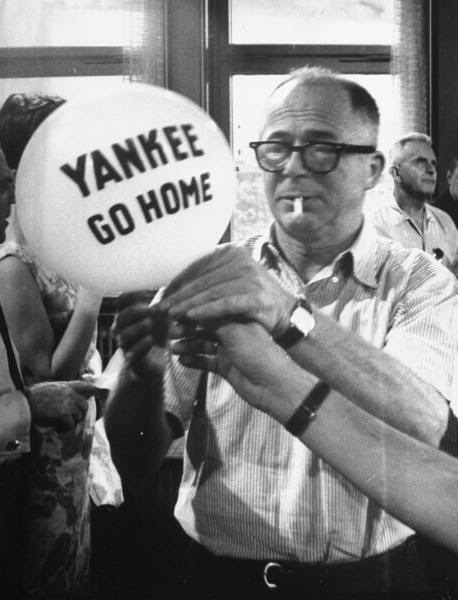
Billy Wilder with a prop from his movie One Two Three, which opened in theaters on this day in 1961:

Fake Commercial of the Day:

If good guy Terminators existed, they’d be the hot gift item this holiday season. CineFix imagines the created the commercial for the man-size toy:

[embedded content]

Movie Comparison of the Day:

Are all Steven Spielberg productions alike? Couch Tomato shows 24 reasons why Gremlins and Transformers are the same:

[embedded content]

Classic Trailer of the Day:

Today is the 40th anniversary of the theatrical release of The Pink Panther Strikes Again. Watch the original trailer for the sequel below.

[embedded content]

and

Let’s block ads! (Why?)


No Image

Turner Sports Broadcaster Craig Sager Dies At 65

Turner Sports NBA court side reporter Craig Sager died Thursday at age 65.

AUDIE CORNISH, HOST:

Craig Sager, the longtime NBA courtside reporter for Turner Sports, has died. He was known for his sense of humor, his public battle with cancer and, it must be said, for his style.

ROBERT SIEGEL, HOST:

Here’s how he described that style in an interview with NPR in 2012.

(SOUNDBITE OF ARCHIVED RECORDING)

CRAIG SAGER: Well, let’s see. I’m looking right here. I’ve got a pair of black alligator shoes that actually have the eyeballs in them. I’ve got another pair next to them. These are crocodile, and then I got a pair of ostrich. I don’t know. It’s just something – my personality. I just like lively colors.

SIEGEL: And garish suits, gigantic lapels, clashing patterns – no suit was too loud.

CORNISH: He told us it was a practical decision.

SAGER: I like to wear bright colors. It helps out to spot me in the audience when my camera guys are looking for me to do interviews.

CORNISH: But underneath those clothes was a reporter remembered for his craft. Here’s his former TNT colleague Rachel Nichols remembering him today on her show “The Jump” on ESPN 2.

(SOUNDBITE OF TV SHOW, “THE JUMP”)

RACHEL NICHOLS: I think the suits and the crazy persona sort of hints, in fact, how good he was. I remember so clearly so many times watching Craig do his job and think, that’s what I want to do.

CORNISH: Sager had a long sports reporting career before his courtside gig. He slept in the stall with Seattle Slew before that horse won the Triple Crown.

SIEGEL: He interviewed Hank Aaron after he broke Babe Ruth’s home run record – technically before he broke it. Sager was by Hank Aaron’s side with a microphone as Aaron ran from third base to home plate. When Sager was diagnosed with leukemia in 2014, he continued to work as his health allowed.

CORNISH: He was open about his illness. This year, he received an ESPY Award. Here he is accepting it on ABC, remembering his life and encouraging fellow cancer patients.

(SOUNDBITE OF ARCHIVED RECORDING)

SAGER: I’ve wrestled gators in Florida. I have sailed the ocean with Ted Turner. I have swam with the oceans in the Caribbean. And I have interviewed Gregg Popovich…

(LAUGHTER)

SAGER: …Mid-game, Spurs down seven. If I’ve learned anything through all of this, it’s that each and every day is a canvas waiting to be painted.

SIEGEL: In a statement, David Levy, the president of Turner, praised Sager’s talent, work ethic and commitment. There will never be another Craig Sager, he said. Craig Sager died today. He was 65 years old.

Copyright © 2016 NPR. All rights reserved. Visit our website terms of use and permissions pages at www.npr.org for further information.

NPR transcripts are created on a rush deadline by Verb8tm, Inc., an NPR contractor, and produced using a proprietary transcription process developed with NPR. This text may not be in its final form and may be updated or revised in the future. Accuracy and availability may vary. The authoritative record of NPR’s programming is the audio record.

Let’s block ads! (Why?)


No Image

States Accuse Generic Drugmakers Of Price Fixing

In an emailed statement, Mylan told NPR, “To date, we know of no evidence that Mylan participated in price fixing.” Jeff Swensen/Getty Images hide caption

toggle caption

Jeff Swensen/Getty Images

Twenty states are accusing a group of generic drug makers of conspiring to keep the prices on an antibiotic and a diabetes medication artificially high. And the state attorneys general say the lawsuit filed in federal court in Connecticut Thursday may be just the beginning of a much larger legal action.

The lawsuit alleges that the companies, led by New Jersey-based drug maker Heritage Pharmaceuticals, identified competitors and tried to reach agreements on how they could avoid competing for customers on price.

“While the principal architect of the conspiracies addressed in this lawsuit was Heritage Pharmaceuticals, we have evidence of widespread participation in illegal conspiracies across the generic drug industry,” Connecticut Attorney General George Jepsen said in a written release. “We intend to pursue this and other enforcement actions aggressively.”

The other companies accused of price-fixing were Aurobindo Pharma USA, Inc., Citron Pharma, LLC, Mayne Pharma (USA), Inc., Mylan Pharmaceuticals, Inc. and Teva Pharmaceuticals USA, Inc.

The complaint describes Heritage and other drug-company executives meeting at industry conferences and company-sponsored dinners where they would share information about the pricing. It also alleges that, to avoid having to lower prices, the companies would divvy up customers — such as pharmaceutical wholesalers, for example — rather than compete for the business.

Article continues after sponsorship

The two drugs — a delayed release version of the antibiotic doxycycline hyclate and the diabetes drug glyburide — saw enormous price increases during the time of the alleged conspiracy, the legal complaint says.

A separate congressional investigation into generic drug prices shows that the price of doxycycline rose more than 8,000 percent from October 2013 to April 2014.

The Centers for Disease Control and Prevention, as well as several industry trackers also noted shortages of various types of doxycycline during 2013.

The states’ lawsuit comes a day after the U.S. Justice Department filed criminal charges against Jeffrey Glazer, Heritage’s former CEO and Jason Malek, the company’s former president. It accuses the two men of conspiring with companies to manipulate drug prices.

Heritage fired the two men in August after an internal investigation, the company said in an email to NPR Thursday. The company also sued the men last month, accusing them of embezzlement.

A Heritage spokeswoman says the company is cooperating with both the federal and state investigations.

Mylan reported, in an emailed statement, “To date, we know of no evidence that Mylan participated in price fixing.” A Teva spokeswoman told NPR, “We have not found evidence that would give rise to any civil or criminal liability.”

In a filing Nov. 4 at the Securities and Exchange Commission, Mayne said it had received subpoenas from the Justice Department regarding doxycycline and potassium chloride powders, and said the company is cooperating with the investigation and “continues to believe these investigations will not have a material impact on its future earnings.” Mayne did not immediately comment on the states’ lawsuit.

Aurobindo and Citron did not immediately respond to requests from NPR for comment.

Let’s block ads! (Why?)


No Image

Facebook Details Its New Plan To Combat Fake News Stories

Facebook users will be warned before sharing a story that’s actually fake news, the social media giant says. Bogus news sites — such as these stories from “USA Daily News 24,” a site that’s registered in Veles, Macedonia — have been blamed for the spread of misinformation online. Raphael Satter/AP hide caption

toggle caption

Raphael Satter/AP

Providing new details about how it’s trying to counter the spread of fake news on its services, Facebook says it’s working with fact-checking groups to identify bogus stories — and to warn users if a story they’re trying to share has been reported as fake.

Facebook also says it will let users report a possible hoax by clicking the upper right hand corner of a post and choosing one of four reasons they want to flag it — from “It’s spam” to “It’s a fake news story.”

If a story is deemed false, it will be tagged with an alert message saying it’s been “disputed by 3rd party fact-checkers.”

A mockup provided by Facebook shows the screens it will use to allow users to report a potential hoax or fake news story. Facebook hide caption

toggle caption

Facebook

The social media giant was sharply criticized after the Nov. 8 election, as false stories were blamed for adding confusion to a dynamic campaign season. Since then, fake news and conspiracy theories were also identified as a motivating factor in a man’s assault on a pizza restaurant in Washington, D.C.

In the wake of that and other stories, some called for Facebook to hire editors to vet news stories; in today’s update from Facebook’s vice president in charge of its News Feed feature, Adam Mosseri, the company could be seen to be effectively outsourcing that job to third-party groups that it says have signed on to Poynter’s International Fact Checking Code of Principles.

Article continues after sponsorship

The update to Facebook’s plan to cope with bogus information comes nearly one month after CEO Mark Zuckerberg acknowledged that Facebook had “much more work” to do in how it handles false stories.

Today’s news touches on four of the seven areas that Zuckerberg listed as part of his company’s fight against misinformation. It remains to be seen whether the moves will satisfy Facebook’s critics — both inside and outside the company’s ranks — who’ve faulted the way it deals with controversial, offensive and/or fake posts. As NPR’s Aarti Shahani reported in November, that effort has grown to include thousands of overseas subcontractors.

In a news release outlining how Facebook’s new reporting and flagging process will work, Mosseri said the company will rely on its users to report a story as potentially bogus, “along with other signals.” The story would then be sent to fact-checkers.

“If the fact-checking organizations identify a story as fake,” Mosseri said, “it will get flagged as disputed and there will be a link to the corresponding article explaining why. Stories that have been disputed may also appear lower in News Feed.”

Mosseri added, “It will still be possible to share these stories, but you will see a warning that the story has been disputed as you share.”

The flagged story will also be rejected if anyone tries to turn it into a promoted ad, Facebook says.

While fake news created a stir because of its intersection with U.S. politics, many of the people behind the sites say they’re mainly in it for the money.

Here’s how Craig Silverman of BuzzFeed News described what he found in researching the phenomenon, Wednesday’s Fresh Air:

“Facebook directly doesn’t really earn them a lot of money. But the key thing about Facebook — and this is true whether you’re running a politics site out of Macedonia or whether you run a very large website in the U.S. — Facebook is the biggest driver of traffic to, you know, news websites in the world now. You know, 1.8 billion people log into Facebook every month.”

Today, Facebook says it has “found that a lot of fake news is financially motivated” — and that it’s taking steps to remove some of that incentive.

“On the buying side we’ve eliminated the ability to spoof domains, which will reduce the prevalence of sites that pretend to be real publications,” Mosseri says. “On the publisher side, we are analyzing publisher sites to detect where policy enforcement actions might be necessary.”

Let’s block ads! (Why?)


No Image

Watch Angélique Kidjo Perform 'Shango Wa' Live For KCRW

Angélique Kidjo is a force to be reckoned with. She is one of Africa’s most internationally celebrated female musicians and continues to break new ground with each release. For her Morning Becomes Eclectic session, she lit up our studio with her tireless energy — and her dance moves.

SET LIST
  • “Shango Wa”

Photo: Larry Hirshowitz/KCRW.

Watch Angélique Kidjo’s full Morning Becomes Eclectic session at KCRW.com.

Let’s block ads! (Why?)


No Image

Today in Movie Culture: Han Solo vs. Jar-Jar Binks, 'Harry Potter' Inspires Spider Scientists and More

Here are a bunch of little bites to satisfy your hunger for movie culture:

Character Battle of the Day:

Wonder what ever happened to Jar-Jar Binks? It turns out Han Solo took care of him, as shown in this Star Wars mashup from Darren Wallace:

[embedded content]

Genre Study of the Day:

For Fandor Keyframe, Philip Brubaker highlights the ways Rogue One: A Star Wars Story is properly bringing back the space opera:

[embedded content]

New Animal Species of the Day:

Check out this newly discovered spider, the name of which was inspired by the Harry Potter movies (via Geekologie):

@jk_rowling We named a spider, after the sorting hat, from the films! 🙂 Meet Eriovixia gryffindori. Link to paper: https://t.co/XpGcCy4TO6 pic.twitter.com/Qwf1fid7W7

— Javed Ahmed (@curiocritters) December 10, 2016

Year-End Recap of the Day:

We’ve got another video highlighting the year in film to share, this one focused on the best of cinema from The Moviejerk (via Cinematic Montage Creators):

[embedded content]

Supercut of the Day:

This video doesn’t just highlight the appearance of books in movies. These are books that look great in movies (via Cinematic Montage Creators):

[embedded content]

Vintage Image of the Day:

Dee Wallace, who was born on this day in 1948, poses with her co-star for a promotional photo on the set of E.T. the Extra-Terrestrial:

Actress in the Spotlight:

Margot Robbie is having a moment this year, and Rachel Dratch has to escape it through an obstacle course highlighting the Suicide Squad star’s amazing year with guidance from Billy Eichner:

MARGOT ROBBIE had a big year – now watch Rachel Dratch try to escape it in this huge new obstacle course, ESCAPE MARGOT ROBBIE’S MOMENT! pic.twitter.com/Czcp0qoaIm

— billy eichner (@billyeichner) December 14, 2016

Filmmaker in Focus:

Want to direct movies like David Fincher? The Film Guy shows us some of his signatures if you’re out to imitate his style:

[embedded content]

Video Essay of the Day:

The Nerdwriter is frustrated by how many not good, not bad, just “passable” movies there are lately and explores why that is:

[embedded content]

Classic Trailer of the Day:

Today is the 15th anniversary of the theatrical release of The Royal Tenenbaums. Watch the original trailer for the Wes Anderson classic below.

[embedded content]

and

Let’s block ads! (Why?)


No Image

Carrier Got Cut A Deal, But Can Other Companies Expect The Same?

It’s been a few weeks since President-elect Donald Trump celebrated Indiana’s Carrier company’s decision to keep some factory jobs from moving to Mexico. Other manufacturers are wondering what the deal might mean for them. Darron Cummings/AP hide caption

toggle caption

Darron Cummings/AP

It’s been a few weeks since President-elect Donald Trump celebrated the Carrier company’s decision to keep some factory jobs in Indiana instead of moving them to Mexico. The deal hinged on $7 million in state tax credits — some of which came from a rarely used fund for job retention. And now it has manufacturers wondering what the deal might mean for them.

Indiana doles out tens of millions of dollars in tax incentives to companies like Carrier every year — but usually those are for creating new jobs, not retaining existing ones.

The Indiana Economic Development Corporation caps its credits for job retention at $10 million a year — and it’s only actually awarded $15 million total since 2005. Compare that to the IEDC awarding $1.2 billion in job creation credits.

Andrew Berger, a lobbyist with the Indiana Manufacturers Association, says that’s because it’s easier to measure the economic benefit of a new job than one that was already there.

Article continues after sponsorship

“The overall goal is to grow the income base, not just maintain it,” Berger says.

Berger says there won’t be much to stop companies, feeling emboldened by Carrier, from asking for more of that money — but with the spectacle around Carrier, and uncertainty around other reforms, most businesses seem cautious.

“My guess right now is that people are kind of in a wait-and-see mode, particularly if they haven’t committed to an investment overseas — whether that’s in Mexico or anyplace else,” Berger says.

Employees are waiting, too. At Rexnord’s Indianapolis factory, which Trump also has criticized for plans to shift jobs to Mexico, production worker Tim Mathis has his hopes up.

“We’re tickled to death that President-elect Trump was potentially able to save Carrier’s jobs,” Mathis says. “But we also want our jobs, and all the other jobs that are being sent out of this country.”

As the shift changes at a ZF TRW factory in Lafayette, Ind., most workers are already inside for their 5:30 p.m. start time. They’re going to be making commercial steering equipment for big-rig trucks until about 3 a.m. There are two TRW factories in Lafayette, but the other one is going to be closing in just a few weeks. Some of the workers will come here, and some of them are going to be laid off.

Larry DeBoer, an economist at Purdue University, says companies like ZF TRW don’t really face penalties for offshoring jobs. The company wouldn’t comment on the role its overseas businesses played in the 65 layoffs it’s planning in Lafayette, but workers did get a federal certification saying the jobs were impacted by global trade as positions move to China.

DeBoer says the company could have asked the state for retention money, or for incentives to expand its factories or teach workers new skills instead of firing them — all breaks Carrier got. He says companies need more than just incentives to keep jobs here — they’re watching to see if Trump will impose the kinds of offshoring penalties he campaigned on.

“Eventually there’s got to be some nationwide policy — passed by Congress, presumably — that addresses this problem,” DeBoer says. “But you can’t possibly have the president occupy himself, business by business by business, every time there’s a report that somebody’s going to move offshore.”

Expectations like DeBoer’s haven’t seemed to limit the president-elect so far, and he has pledged to make some big trade and regulatory reforms in his first 100 days in office.

Let’s block ads! (Why?)


No Image

Obama Administration Moves To Protect Planned Parenthood's Federal Funding

Planned Parenthood’s president, Cecile Richards, addresses the Democratic National Convention in July. Republicans in Congress have repeatedly threatened to cut off federal funding for Planned Parenthood because the family planning group performs abortions at some clinics. J. Scott Applewhite/AP hide caption

toggle caption

J. Scott Applewhite/AP

The Obama administration is trying to protect Planned Parenthood’s federal funding before the president turns over the reins of government to Republicans who have historically been hostile to the family planning group.

The Department of Health and Human Services finalized a regulation Wednesday that says states that award federally funded grants for women’s health programs can’t discriminate against Planned Parenthood. The regulation doesn’t name Planned Parenthood, but it was clear the rule was written with the organization in mind.

Republicans in Congress have repeatedly threatened to cut off federal funding for Planned Parenthood because the family planning group performs abortions at some clinics.

“President Obama has cemented his legacy as a champion for women’s health,” said Planned Parenthood President Cecile Richards in a written release. “This rule protects birth control, cancer screenings, [sexually transmitted infection] testing and treatment and other health care for millions of people.”

Planned Parenthood and other clinics that provide family planning services to women get federal funding through the Public Health Service Act.

The group says 1.5 million of its patients benefit from the money provided by the federal government.

Article continues after sponsorship

Planned Parenthood gets more than $500 million a year from the federal government. About 75 percent of that comes from Medicaid, for medical care provided to patients with low incomes.

The new HHS rule reinforces federal law that says the agency cannot discriminate against qualified organizations in granting federal funds.

Still, the rule could be overturned in 2017 when President-elect Donald Trump takes office. Federal lawmakers are allowed to roll back regulations under the Congressional Review Act. Or they could go through a formal rule-making process to reverse Wednesday’s action.

Let’s block ads! (Why?)


No Image

Wake Forest Finds Football Radio Analyst Provided Game Plans To Opponents

Wake Forest University has fired one of its football team’s radio analysts, who the school says provided game plans to its opponents. Tommy Elrod is a former player for the Wake Forest Deacons. He had also been doing radio analysis at Wake Forest games, until a school investigation concluded that Elrod had provided play sheets to rival teams.

ROBERT SIEGEL, HOST:

A little sports espionage story now from North Carolina – a scandal at Wake Forest University that is nicknamed…

SCOTT HAMILTON: Wakeyleaks.

AUDIE CORNISH, HOST:

That was Scott Hamilton. He’s a sports columnist with The Winston-Salem Journal. He says the leaks in Wakeyleaks came from one of the football team’s radio broadcasters, a color analyst named Tommy Elrod.

SIEGEL: This week, the university accused Elrod of betraying the team.

HAMILTON: He was divulging details about the game plan to the opponent prior to games.

CORNISH: Yesterday, Wake Forest said they found evidence that he had been sharing game plans as far back as 2014, and they fired Elrod.

SIEGEL: Now, before calling Wake Forest games as a broadcaster, Elrod worked as an assistant coach for the team for more than a decade. And Hamilton says Elrod even played quarterback for the black and gold Wake Forest Demon Deacons.

HAMILTON: He’s from Florida, but he was baptized in black and gold.

CORNISH: Hamilton says the irony in all of this is that Wake Forest has actually had a decent football season.

SIEGEL: And later this month, Wake Forest will play in the Military Bowl in Annapolis.

HAMILTON: People aren’t talking about the ball game. Twenty-four hours ago, that was the buzz. Now it’s Wakeyleaks. Go figure.

CORNISH: So far, Tommy Elrod has not publicly commented on the story, and sports columnist Scott Hamilton only reached Elrod’s lawyer.

SIEGEL: Hamilton says there are a lot of unanswered questions, like what’ll happen to the schools that received the leaked plays? And if the university’s accusations are true, what could have been the motive?

CORNISH: Hamilton says he knows Elrod personally, and so he’s puzzled himself.

HAMILTON: It’s just a bizarre, bizarre story that gets more bizarre by the minute.

SIEGEL: Scott Hamilton, sports columnist at The Winston-Salem Journal and radio host.

CORNISH: He says there’s a lot of speculation about why this might have happened. In a statement, the head football coach called the news simply incomprehensible.

Copyright © 2016 NPR. All rights reserved. Visit our website terms of use and permissions pages at www.npr.org for further information.

NPR transcripts are created on a rush deadline by Verb8tm, Inc., an NPR contractor, and produced using a proprietary transcription process developed with NPR. This text may not be in its final form and may be updated or revised in the future. Accuracy and availability may vary. The authoritative record of NPR’s programming is the audio record.

Let’s block ads! (Why?)