Articles by admin

No Image

Today in Movie Culture: Superman v. J. Jonah Jameson, 'La La Land' Opening Number Test Run and More

star_wars_019

Here are a bunch of little bites to satisfy your hunger for movie culture:

Mashup of the Day:

The way movies are shot and edited today, putting J.K. Simmons as J. Jonah Jameson in the Daily Planet with Man of Steel‘s Clark Kent and Lois Lane seems easy, but it’s also perfect (via ComicBook.com)

[embedded content]

Alternate Poster of the Day:

Speaking of Amy Adams, here’s a beautiful poster for Arrival by Oksana Grivina. See more fan art and posters inspired by this year’s Oscar nominees, including La La Land and Rogue One: A Star Wars Story, at Design Culture.

Awards Show Takedown of the Day:

Speaking of the Oscars, Honest Trailers rips through all of this year’s Best Picture nominees with help from the president:

[embedded content]

Oscars Montage of the Day:

And here’s a timely supercut of the final scenes of the last 45 Best Picture winners (via Film School Rejects):

[embedded content]

Behind the Scenes Video of the Day:

Okay, one more Oscars-related item, here’s a Damien Chazelle’s iPhone footage of a rehearsal of the opening number from La La Land (via /Film):

[embedded content]

Vintage Image of the Day:

Apparently Anthony Daniels, who turns 71 today, could wear regular pants while playing C-3PO when his legs weren’t in the shot, as evidenced in this photo from the set of The Empire Strikes Back in 1979:

Random Group of Celebrities of the Day:

For Josh Gad’s latest attempt to get Star Wars secrets out of Daisy Ridley, he’s gathered various stars and filmmakers to do his bidding:

And so it ends. #DaisyRidley #StarWars Give us the truth pic.twitter.com/o4d429ydzL

— Josh Gad (@joshgad) February 20, 2017

Filmmaker in Focus:

Daniel Clarkson Fisher highlights the theme of surveillance in Steven Spielberg movies in this thoughtful video essay:

[embedded content]

Cosplay of the Day:

In addition to being Black History Month, February is also the annual #28DaysOfBlackCosplay. Here’s a woman who fills the month up with lots of great looks (via Rob Liefeld):

#28DaysOfBlackCosplay#colorful

I love my face paint. It’s the easiest & most annoying way to raise the bar on your #cosplay. pic.twitter.com/92NX36IVGz

— TaLynn Kel (@TaLynnKel) February 18, 2017

Classic Trailer of the Day:

Today is the 50th anniversary of the U.S. release of One Million Years B.C. starring Raquel Welch. Watch the original trailer for the classic fantasy film below.

[embedded content]

and

Let’s block ads! (Why?)


No Image

Researchers Failed To Tell Testosterone Trial Patients They Were Anemic

Anemic patients did not know about their condition during a testosterone trial.

Renphoto/Getty Images

hide caption

toggle caption

Renphoto/Getty Images

There’s a lesson about one of the testosterone studies released this week that has nothing to do with testosterone: The study on how testosterone affects anemia was designed with an ethical lapse that nobody noticed until the study was complete.

That’s surprising because it was designed and carried out by a couple of dozen of well-regarded scientists. Their protocols were reviewed by 12 university institutional review boards, whose job is to evaluate the ethics of an experiment. It was funded by the National Institutes of Health, and the trial was overseen by a watchdog data safety and monitoring board.

But all of those safety features fell short this time.

A reviewer at JAMA, the journal of the American Medical Association, noticed that participants who were diagnosed with anemia (low iron in the blood) at the outset of the study were not told of that fact.

“Abnormal results on this simple blood test could have been an early warning sign of a serious illness which, if diagnosed and treated early could have greatly improved patient outcomes,” says Dr. Bernard Lo, a bioethicist who runs the Greenwall Foundation.

Article continues after sponsorship

Lo says low iron levels could be an early sign of colorectal cancer, which is quite treatable if it’s caught early. Lo noted that 126 of the 788 study participants had low iron in the blood, but nobody thought to inform them.

Scientists do not know whether this lack of information actually harmed any of the participants. “But my own feeling is if it happened once, despite all these safeguards, it could happen again” in another major study, Lo says. “It’s a warning sign that there’s a major problem in the system that needs to be addressed.”

Lo and Dr. Deborah Grady at the University of California-San Francisco wrote an editorial about the ethical lapse in JAMA Internal Medicine that accompanied articles about anemia and other studies that showed some benefits and some downsides to prescribing testosterone supplements to older men with low levels.

Testosterone supplements have been controversial for some time, and the Food and Drug Administration increased its warnings about the potential cardiac side effects of taking the hormone in 2015.

Dr. Peter Snyder, a professor of medicine at the University of Pennsylvania who organized the anemiastudy, readily admits this was an oversight. He says the scientists and review boards had focused their attention on potential harms from the testosterone treatment.

“We put an enormous amount of time and effort into attempting to protect the participants [from the side effects of testosterone], and that’s where our focus was,” he says.

Testosterone can affect the prostate and the heart, so the study was designed to watch for those health risks.

Men with severe anemia were excluded from the trial to begin with, Snyder says. “Men who had a mild degree of anemia weren’t informed because we just didn’t think of that,” he tells Shots. “It didn’t occur to anybody until this review pointed it out.”

Snyder says scientists followed up by sending a letter to all 788 participants, informing of them of their iron levels at the start of the trial as well as at the end.

He says since the trial has now ended, there is no plan to systematically study the men who had mild anemia. “At this point we have not been notified of any problem.”

Ethical lapses like this are not often recognized or highlighted. Lo says this occasion provides an opportunity to trouble-shoot a system that should not fail like this.

Lo says the ethical lapse was not enough to prevent publication of the study.

Let’s block ads! (Why?)


No Image

Toy Fair Shows Off What's New As Toys R Us Cuts 250 Corporate Jobs

At the International Toy Fair, TOMY International and PlayFusion announced Toys R Us as the exclusive in-store retail launch partner for Lightseekers, the next generation of connected play featuring smart figures, trading cards and more.

Adam Hunger/AP Images for TOMY

hide caption

toggle caption

Adam Hunger/AP Images for TOMY

The 114th North American International Toy Fair boosts a chance for industry players to see “hundreds of thousands of innovative new toys and games before they hit store shelves.”

To attend the four-day event in New York City must be a lot like being a kid in a candy store — er — make that toy store.

At the Jacob K. Javits Convention Center, hundreds of thousands of square feet are dedicated to the “hottest new toys and trends.”

“Many of the toys and games displayed here are being seen for the very first time — and are likely to top kids’ birthday and holiday wish lists throughout the coming year,” said Steve Parierb, president and CEO of the U.S. Toy Industry Association.

In a statement, industry officials said, “Last year, U.S. toy sales grew 5% and are estimated to be $26 billion. The industry supports more than half a million American jobs and has a total U.S. economic impact of more than $80 billion.”

But not everything is bright and shiny for toy retailers — toy shopping is shifting from brick-and-mortar stores to online retailers.

Article continues after sponsorship

Toys R Us is one retailer struggling with that change. The company last week laid off between 10 and 15 percent of its corporate employees.

The Wall Street Journal reports:

“About 250 jobs were eliminated at the Wayne, N.J.-based company, people familiar with the matter said. The layoffs were announced Friday, a day before the toy industry’s annual convention kicked off in New York.”

Amy Von Walter, a spokeswoman for Toys R Us told news organizations:

“The recent changes are not just about cost-containment — our growth plans require us to have the right structure, talent and determination to transform our business and achieve the financial objectives we’ve set for the company.”

Forbes magazine reports that “multiple factors are contributing to the problems at Toys “R” Us or TRU:

People simply aren’t trekking to the malls that previously helped the toy chain dominate. Plus, savvy competitors like Walmart and Target have tripled their toy aisles & seasonal offerings during holiday season, allowing customers to cross TRU off the store list.

Amazon also cuts into sales as a major competitor, but it’s particularly painful as Toys “R” Us has historically had trouble getting products to customers. In 2015, they ran out of on-site goods which prompted TRU to try a new inventory algorithm, but ecommerce fulfillment issues were created as they underestimated holiday volume.

Other toy companies, and retailers in general, didn’t do as well as expected during the holiday season.

Toy’s R Us CEO David Brandon told The Wall Street Journal, “Like other primarily brick-and-mortar retailers, Toys “R” Us had trouble attracting enough shoppers to stores during the critical holiday season as e-commerce sales continued to pick up speed.”

The International Toy Fair closes later today. By the time the 2018 show opens, the industry will have a better idea of how retailers adjusted to the lessons learned from this past holiday season’s disappointing sales.

Let’s block ads! (Why?)


No Image

Presidents' Day in Movie Culture: 'Hillary Gump,' Channing Tatum As Teddy Roosevelt, Spielberg's 'Obama' and More

Here are a bunch of little bites to satisfy your hunger for Presidents’ Day-related movie culture.

Brad Neeley‘s NSFW animated short Washington is still hilarious after a thousand viewings:

[embedded content]

The Impatient Lincoln takes one part of Steven Spielberg’s Lincoln a long way:

[embedded content]

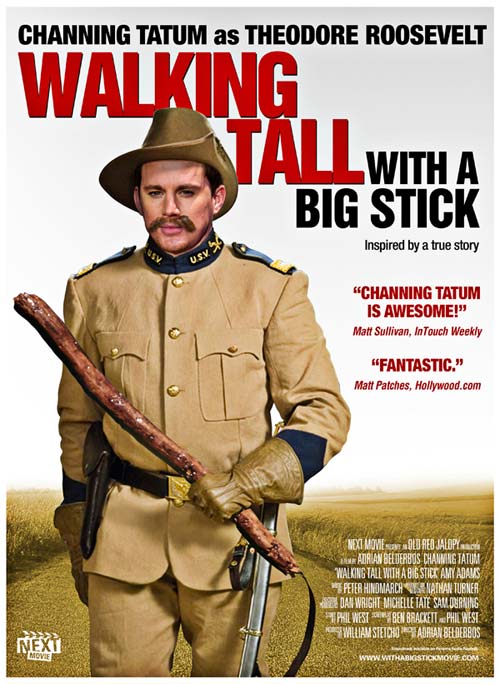
This poster parodying Walking Tall and starring Channing Tatum as Teddy Roosevelt was made in response to the Abraham Lincoln: Vampire Hunter movie. I still want to see this one more.

Ronald Reagan may have been the first Hollywood actor to become president, but he wasn’t the first movie star. We can count Dwight D. Eisenhower, who starred in the classic feature documentary The True Glory due to his World War II hero status. Watch the whole feature below.

[embedded content]

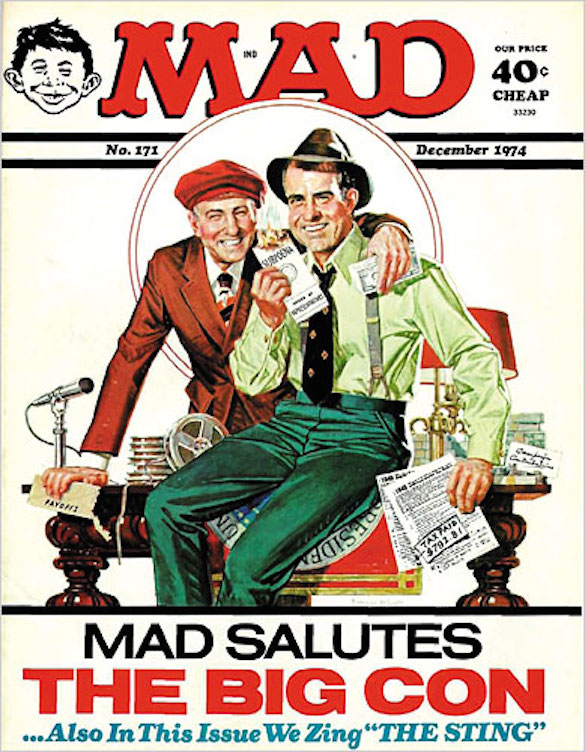
Richard Nixon and Vice President Spiro Agnew are lampooned in this classic Mad magazine spoof of the poster for The Sting:

This collection of classic movie bloopers is filled with Ronald Reagan flubbing his lines:

[embedded content]

Twenty years ago, Hillary Clinton parodied Forrest Gump with a brief appearance from Bill Clinton at the end:

[embedded content]

“Sir” Mike Tyson helps George W. Bush with his pronunciation in the following The King’s Speech parody:

[embedded content]

Here’s another parody of The King’s Speech, also titled The President’s Speech, but this one targets Barack Obama:

[embedded content]

Barack Obama pretends to be Daniel Day-Lewis portraying Barack Obama in a new Lincoln-inspired biopic from Steven Spielberg;

[embedded content]

and

MORE FROM AROUND THE WEB:

Let’s block ads! (Why?)


No Image

Uber Orders Investigation Into Sexual Harassment Claims

A former engineer for the ride-hailing app Uber published a blog post this weekend claiming that she faced sexual harassment while working at the company. Uber says it’s investigating the allegations.

ARI SHAPIRO, HOST:

There’s a new scandal facing the ride-hailing app Uber. Over the weekend, a former employee published a blog post that went viral. The employee, who is a software engineer, made a number of allegations about Uber, including that she faced sexual harassment from her manager. Now Uber says former Attorney General Eric Holder is joining the independent investigation requested by the company’s CEO. NPR’s Hansi Lo Wang has more.

HANSI LO WANG, BYLINE: In almost 3,000 words, Susan Fowler details, quote, “a strange, fascinating and slightly horrifying story.” She writes that on her first day working with an engineering team at Uber, her manager sent her chat messages saying he was looking for women to have sex with. So, she says, she took a screenshot of those messages and filed a report to Uber’s human resources department.

JOAN WILLIAMS: So this employee did exactly what employees are supposed to do if they are propositioned on the job.

WANG: That was Joan Williams, director of the Center for WorkLife Law at the University of California Hastings College of the Law. She read Fowler’s blog post, and says if Fowler’s allegations are true, Uber’s HR department did not follow the law. According to Fowler, HR and upper management at Uber told her that they wouldn’t feel comfortable beyond giving her manager a warning and a stern talking to. The reason, she writes, was because he was a, quote, “high performer” and this was his, quote, “first offense.” So, Fowler says, she was given two choices – to join another team at Uber or stay with the manager and risk a poor performance review.

WILLIAMS: Giving people a choice between transfer out of your area of expertise or get a poor performance evaluation, that’s an adverse employment action based on her sex. That is so illegal. If true, that is just so illegal.

WANG: In her blog posts, Fowler goes on to describe how she tried to bring her complaint higher up the management chain, while later learning that other women at the company had also reported the same manager for inappropriate behavior. That manager, she writes, eventually parted with Uber. And Fowler transferred within the company, but she claims she faced other incidents of gender discrimination and retaliation before she finally left.

Uber declined NPR’s interview requests. But in a written statement, its CEO Travis Kalanick says he was unaware of Fowler’s allegations until he read her blog post and that, quote, “what she describes is abhorrent and against everything Uber stands for and believes in.” An internal investigation is underway. As for Susan Fowler, her next steps are unclear. She has not responded to NPR’s interview requests. But John Winer, an attorney in Oakland, Calif., who specializes in sexual harassment lawsuits, says she has a strong case.

JOHN WINER: If I was in her position and the evidence is as strong as she presents it, I definitely think that she should bring a case. It is the only way Uber’s going to learn their lesson.

WANG: Uber has faced its share of controversy. Earlier this month, Travis Kalanick resigned from President Donald Trump’s economic advisory council after a consumer campaign to boycott Uber. That came after the company dropped its prices during a strike by New York City taxi drivers who are protesting Trump’s travel ban.

Uber’s CEO was also criticized for joking during a GQ Magazine interview published three years ago that women on demand are called, quote, “Boober” (ph). Freada Kapor Klein is an Uber shareholder through her investment fund. She helped start Project Include, a campaign to bring more diversity to the tech industry.

FREADA KAPOR KLEIN: Tech in particular has patted itself on the back and said, we’re post-racial, we’re post-discrimination, and that’s not the case at all. Things that I see going on by 20-somethings and 30-somethings in tech companies are as bad as anything that ever went on in the ’70s and ’80s.

WANG: Kapor Klein says startups need to make sure there are safe and effective channels for employees to report discrimination internally. Otherwise, there may be more posts on blogs and social media for the public to see. Hansi Lo Wang, NPR News.

Copyright © 2017 NPR. All rights reserved. Visit our website terms of use and permissions pages at www.npr.org for further information.

NPR transcripts are created on a rush deadline by Verb8tm, Inc., an NPR contractor, and produced using a proprietary transcription process developed with NPR. This text may not be in its final form and may be updated or revised in the future. Accuracy and availability may vary. The authoritative record of NPR’s programming is the audio record.

Let’s block ads! (Why?)


No Image

NBA Players More Confident To Speak Out On Political Issues Than Other Sport Leagues

Recently the players, coaches and staff from the NBA have been politically and socially outspoken. Dave Zirin, sports editor of The Nation, talks about the activist culture of national sports leagues.

MICHEL MARTIN, HOST:

Basketball’s biggest stars take the court tonight for the NBA All-Star Game in New Orleans. Now, you might remember that the game was supposed to have been in Charlotte, N.C., this year, but the league moved the festivities because of North Carolina’s controversial state law known as HB2 that limits anti-discrimination protections for LGBTQ people. It was, perhaps, the most visible example of the NBA’s willingness to be outspoken on political and social issues, especially when compared to other sports leagues like the NFL.

Now, that league faced questions of its own when San Francisco 49ers quarterback Colin Kaepernick refused to stand for the national anthem. We wanted to get a better sense of this so we called Dave Zirin. He’s sports editor at The Nation and the host of the Edge of Sports podcast. And I asked him why NBA players seemed so much more willing to speak out than their NFL counterparts.

DAVE ZIRIN: It’s such a terrific question, Michel, and I’ve been asking players, former players, coaches and sportswriters over the last several weeks why the NBA? Why is the breadth and width of speaking out in the National Basketball Association so much broader and deeper than other sports? And what I’ve come up with is that it’s a perfect storm of factors.

First and foremost, it’s the influence of the Black Lives Matter movement over the last several years. It’s made players more confident to speak out. Second of all – social media, the fact that players can reach directly to their fans with how they feel. That’s been a huge factor in the NBA. Another factor, Gregg Popovich, without question the most respected coach in the NBA, LeBron James, Steph Curry – these are the platinum standards for NBA players. And the fact that they’re speaking out has given cover to a lot of players that I bet many of your listeners have never even heard of who have also been very outspoken on these issues.

Another issue that people bring up all the time is the global question of the NBA. The NBA has players from roughly 36 different countries. So this idea that somebody in the White House is saying that immigrants are the problem or Muslims are the problem, that is going to rankle players who, you know, that’s just not part of their lived experience. So that is very important. But there’s another aspect, too, and it has to do with the league’s corporate reaction to Colin Kaepernick’s anthem protest.

When Colin Kaepernick took that knee, and when it spread in what is the traditionally very conservative, very locked down National Football League, the question across the sports world was, like, whoa, if this is happening in NFL games, what are NBA games going to look like? And so Adam Silver, who’s the commissioner of the National Basketball Association and a very committed politically liberal person – he made a strategic move to say to players, look, we want you to speak out all you want. We’ll even do public service announcements about the importance of bringing people together and standing up to not just police violence, but gun violence, violence in the community. The NBA can be the peacemakers league.

We don’t want racial radicalism, but we’ll give you political liberalism, basically. Just don’t kneel during the anthem. Don’t pull a Colin Kaepernick, and we will make sure that no one says to you just shut up and play. We will make sure that there will be no blowback on you for speaking out. We will make sure that the NBA is the, quote, unquote, “woke league” for you. And then a funny thing happened on the way to this political liberal kumbaya, and that was the election of Donald Trump.

And all of a sudden, these players, who have been empowered to speak out, they’re speaking out about Trump. And they feel like they have cover from the league. I think it’s making the league offices very nervous, the sheer number of players who are taking to the mike and speaking out about this presidency. But it’s sort of like you can’t put that wine back in the bottle. You can’t undunk that basketball. So I would describe all of this as the unintended consequences of attempting to head-off the racial radicalism of Colin Kaepernick. That’s how I would describe it.

MARTIN: That was Dave Zirin. He is sports editor of The Nation magazine. He’s also the host of the Edge of Sports podcast. He was kind enough to join us in our studios in Washington, D.C. Dave Zirin, thanks so much for speaking with us.

ZIRIN: Thank you.

Copyright © 2017 NPR. All rights reserved. Visit our website terms of use and permissions pages at www.npr.org for further information.

NPR transcripts are created on a rush deadline by Verb8tm, Inc., an NPR contractor, and produced using a proprietary transcription process developed with NPR. This text may not be in its final form and may be updated or revised in the future. Accuracy and availability may vary. The authoritative record of NPR’s programming is the audio record.

Let’s block ads! (Why?)


No Image

Facebook Wants Great Power, But What About Responsibility?

Facebook claims to have 1.23 billion daily users globally. Mark Zuckerberg recently announced that he wants that number to grow and for users to conduct their digital lives only on his platform.

bombuscreative/iStock

hide caption

toggle caption

bombuscreative/iStock

This week the chief of Facebook made an ambitious announcement, though it would have been easy to miss. It came Thursday afternoon – around the same time that President Donald Trump held his press conference. While the reality-TV icon is a genius at capturing our attention, the technology leader’s words may prove to be more relevant to our lives, and more radical.

Mark Zuckerberg posted a nearly 6000-word essay to his page, entitled “Building Global Community.” Many are calling it a “manifesto.” His ambitions are global and his tone, altruistic. Zuckerberg writes: “Our greatest opportunities are now global — like spreading prosperity and freedom, promoting peace and understanding, lifting people out of poverty, and accelerating science. Our greatest challenges also need global responses — like ending terrorism, fighting climate change, and preventing pandemics.”

Zuckerberg speaks to people who dream of global citizenship, a borderless utopia that many political leaders around the world don’t seem to be offering. “In times like these, the most important thing we at Facebook can do is develop the social infrastructure to give people the power to build a global community that works for all of us.”

Article continues after sponsorship

And to build this global community, he encourages us to shift how we think about Facebook: stop looking at the app as a means of recreation. Instead, think of it as the way you connect to others – for work or for play. You can use it as a medium to let the world know about your startup or to recruit parishioners to your church or to announce your presidential campaign or to manage a multinational disaster relief effort. “Going forward, we will measure Facebook’s progress with groups based on meaningful groups, not groups overall,” he writes. He adds that the strengthening of “meaningful online communities” will “strengthen our social fabric.”

It sounds noble, but behind that alluring vision is a profound power grab delivered by a savvy politician, say critics. At its core, Zuckerberg’s essay reads like a call to give up our open access to the Internet and the freedom that exists in a marketplace with real competition. Rather, Facebook wants us to step into its walled garden – where a handful of company chieftains set the rules – and live our social, economic, and religious lives inside it.

What he doesn’t address in his essay, however, are the responsibilities that come with this power.

Take for example, disaster relief. A well-intentioned non-profit could try to use Facebook to let refugees fleeing conflict know about safe places to go to for food and water. Now, a group of human traffickers, posing as well-meaning citizens, could do the same. What kinds of resources will Facebook invest in verifying what’s real versus fake?

Zuckerberg’s lofty goals require profound trust in his platform. And there are two industries – journalism and small advertisers – whose recent experiences with Facebook illustrate the dangers of over-trusting.

Journalists have been surprised to learn that Facebook is concerned with driving engagement – not to be confused with civic engagement. The algorithm that determines what you see in your Newsfeed prioritizes content that people want to share and comment on, even if it’s a lie. Consider how fake news influenced the presidential campaign of 2016. One such story that went viral last fall claimed the Pope had endorsed Donald Trump.

If Facebook valued real journalism – where resources are poured into the expensive business of fact-checking – its corporate leaders could have decided to implement a simple solution to fake news: make the source for news stories more prominent (so I don’t have to strain my eyes to see if it’s the New York Times or the National Inquirer). Facebook already does that for celebrities, through the blue verification checkmark that tells you the platform has verified and confirmed the true identity of the person.

Imagine if Facebook had visually obvious verification for links that come from trusted news outlets. It would do an enormous public service. Facebook’s current corporate approach to fact-checking links is crowd-sourcing. Let the users flag suspicious content. It’s a system susceptible to warring factions sabotaging each other. And it’s not clear from the manifesto that Zuckerberg is willing to change the model to one that pays for essential human capital – far more expensive than software solutions.

Small advertisers have been discussed far less but probably have the best insight into Facebook’s volatility as a platform. Say I decide to start a page for my tire shop on the site. For the first year, I pay Facebook $5,000 to advertise and the Facebook algorithm shows my posts to all my “followers.” But the next year, the company decides to change the rules and say: for $5,000 we will show your posts to 20% of fans. If you want to reach the same number you did last year, you have to pay more.

These kinds of rule changes – some with dramatic financial implications – regularly occur on the platform. (See for example this change last April that severely limited which users are allowed to post commercial content.) They occur without a user vote and without a public comment period.

Right after CEO Zuckerberg posted his manifesto, NPR emailed the company to ask about the new responsibilities that will come with the hoped-for new power Facebook seeks. If Facebook wants people to rely on the platform as the tool to build important social ties online, what guarantees can Facebook give for its own accountability? Can it at least offersomething as basic as a customer service hotline, for example? Currently many users who are expelled without clear explanation or who have small business pages removed find it impossible to reach a human at the company for help. A spokesperson did not answer the question, and simply shared the company’s press release summarizing Zuckerberg’s points.


Let’s block ads! (Why?)


No Image

NPR Launches New Tool To Monitor President Trump's Ethical Promises

Senior Business Editor Marilyn Geewax talks about NPR’s newly-launched Trump Ethics Monitor, a tool that helps track conflicts of interest between President Trump’s businesses and the White House.

MICHEL MARTIN, HOST:

Now let’s talk about a new tool that NPR’s digital team created. It’s the Trump Ethics Monitor. It’s a digital project on npr.org that lets us and you keep an eye on President Trump’s business interests and what he’s doing to rid himself of conflicts of interest related to them. Here to talk about this tool is Marilyn Geewax, NPR’s senior business editor. Marilyn, welcome back. Thanks so much for joining us once again.

MARILYN GEEWAX, BYLINE: Hi, Michel.

MARTIN: So very quickly, remind us of what President Trump has said about these ethical issues. I mean, he reminds us often, as does the chairman of the House Oversight Committee, that presidents are not subject to the same conflict of interest rules that other government employees and even Cabinet secretaries are. So what has he said about this?

GEEWAX: Right. Even though he, on the one hand, says he’s exempt from those conflict rules – and he is – he has made a number of assertions. And we went through a bunch of transcripts of the debates and White House statements to look for what has he said he would do, and we came up with 10 claims. And then we set out to find the documentation that he actually has lived up to his own word.

And what we found is that there are these assertions. And sometimes he says he’s done them, but we are still not seeing any evidence of them. For example, he said he would sell all of his stock. He said he’s done that. But there’s no paperwork. We would like to be able to link to a document. Where’s the receipt? You know, just show us.

He also said that he would release his taxes when his audit is completed, but he has not released a letter from the IRS saying he is being audited. So – and, of course, there’s also the issue that the IRS says you don’t have to wait for an audit to be done.

MARTIN: So how does the tool work? Can you kind of walk us through it?

GEEWAX: Well, we just quote the promise, what he has said in his own words or his attorney, and then you can click on it to see – what is the conflict that’s potentially the problem? What is the latest development in this? And you can draw your own conclusions.

MARTIN: Are there any areas in which President Trump has made progress?

GEEWAX: Yeah. I think you could say – he has said that he would step back from daily management of the business, and we can find documents to show that. But at the same time, he has – all he’s done with the businesses is collect them all up together and put them into a revocable trust. But he’s the sole beneficiary of that trust. So even if his sons are running the businesses, the daily management, ultimately the money comes back to him. So ethics experts say that’s nowhere near what is enough to end the conflict of interest.

MARTIN: Now, before we let you go, Marilyn, we just heard from NPR’s Scott Horsley, who is at a Trump rally in Florida today. And this is actually a campaign event geared toward – wait for it – the 2020 election. So…

GEEWAX: Ooh (laughter). We’re all so excited to look forward to another cycle of…

MARTIN: Exactly. So I wanted to know if there are – people have raised ethics questions about these campaign events during the previous campaign. What are those questions?

GEEWAX: Well, it’s very unusual to have a president who has so many for-profit businesses. So when he was a candidate, for example, his companies made something like nearly $13 million in rental, you know, for staging an event, and then the campaign would actually pay his businesses. So it’s kind of unclear over the next four years – every time he shows up at one of his properties, will he call that a campaign event and collect rent for that? It’s a strange situation.

And he can also, you know, take in donations right now. He’s already collecting money for 2020. So it’s just unusual. Other people in the past have waited at least two years into their term before they started running for re-election.

MARTIN: That’s Marilyn Geewax, NPR’s business editor. You can check out the Trump Ethics Monitor at npr.org. Marilyn, thank you.

GEEWAX: You’re welcome.

Copyright © 2017 NPR. All rights reserved. Visit our website terms of use and permissions pages at www.npr.org for further information.

NPR transcripts are created on a rush deadline by Verb8tm, Inc., an NPR contractor, and produced using a proprietary transcription process developed with NPR. This text may not be in its final form and may be updated or revised in the future. Accuracy and availability may vary. The authoritative record of NPR’s programming is the audio record.

Let’s block ads! (Why?)


No Image

Saturday Sports: A Winning Streak And A Losing Streak

A weekly update on the world of sports! This week, a look at the women’s basketball team with the most wins, and the team that hasn’t won a single game all year.

SCOTT SIMON, HOST:

And now it’s time for sports.

(SOUNDBITE OF MUSIC)

SIMON: It’s the NBA’s All-Star Weekend, and once again, BJ Leiderman, who writes our theme music, has been left off of both teams. Will either team play defense in tomorrow’s game? Spoiler alert – no. Will former teammates and current adversaries Kevin Durant and Russell Westbrook – both playing for the Western Conference – pass to each other or will they hire lawyers to do it? NPR’s Tom Goldman is here to ignore those questions, but he’ll talk about some other real basketball stars. Tom, thanks for being with us.

TOM GOLDMAN, BYLINE: (Laughter) My pleasure, my pleasure.

SIMON: Tonight, UConn – University of Connecticut – women’s basketball team goes for win number 101 in a row. They hit that 100-straight victory milestone earlier this week – an extraordinary accomplishment, but there have been some dissonant voices, too, haven’t there?

GOLDMAN: There sure have because we’re talking about women’s sports. There always are. Those doubters minimize the streak, Scott, because the Huskies are so absurdly dominant. The average margin of victory for the 100 wins – 38 points. They minimize what head coach Geno Auriemma does because he has the best players. But like any great head coach with great players, it’s what he does with those players, right? He fits them into a system. He pushes them to be even greater. He’s a great coach, and he certainly got that message from his university with a reported new five-year contract worth at least 13 million bucks.

SIMON: I want to mention a women’s college team that’s – you know, it is as far away from UConn as you can get, except maybe in that indefinable element of character, and that’s Chicago State. The Cougars are in the midst of an epic losing streak, and I know you talked to their head coach this week.

GOLDMAN: Yeah, I did. We talked about her team being 0 and 24. We talked about the difficulties at Chicago State. It’s a public university that serves a lot of low-income students, and it’s been in dire straits recently. State funding is way down as it is with all public universities in Illinois. They’ve had a woeful graduation rate, but the Cougar – and the Cougars are struggling like their school. Zero and 24 is the longest current losing streak in Division I women’s basketball. But there are some positive things going on. That head coach, Angela Jackson, she’s now in her 14th year at Chicago State, and she’s impressed by her players’ attitudes as the losses have mounted. Here she is.

ANGELA JACKSON: That’s the amazing thing about this group. It hasn’t been, oh no, here we go again. You know, I don’t see the shoulders slumping. I don’t see the heads going down. They’re still up. They’re still clapping. They’re still fighting. We’ve just come out on the losing end of it.

GOLDMAN: Yeah, now Angela Jackson’s really proud of her players, but she doesn’t treat them like heroes. I asked her if she gets mad at her team. Here’s what she said.

JACKSON: Every day (laughter) – I’m still a coach, and I’m still competitive. You don’t, you know, go out there and come out on the short end and your competitive nature doesn’t kick in, so absolutely.

SIMON: Tom, why can’t they seem to win a game?

GOLDMAN: You know, you would think maybe it’s because they’re not talented. That’s not it. Coach Jackson says it’s mainly about numbers. The Cougars started the season with nine players, then one transferred, one blew out her knee, one got a concussion. So for 18 of their 24 games, they have played with six players. The coach says they’ve been close in a lot of games, but, you know, when the fourth quarter comes around, they simply run out of gas.

SIMON: Yeah. Coach Jackson has a lot of admirers. She could get a job at a lot of other places, right?

GOLDMAN: Yes, she could, yeah, but she really doesn’t think about that right now. See, she says if she gives up, her kids are going to give up. And she says they don’t want to, you know, they don’t deserve to be shortchanged, but it’s not all doom and gloom. She says the team has improved during the season, although the record doesn’t reflect that. She talks about individual players who’ve improved. Chicago State plays today, Scott, against Missouri-Kansas City. The Cougars will try to get that first win.

SIMON: Tom, I went on their website last night, and I ordered a sweatshirt.

GOLDMAN: (Laughter) All right.

SIMON: I got to tell you, Chicago State sweatshirt – had to, good colors…

GOLDMAN: The fan club grows, yeah, excellent.

SIMON: NPR’s Tom Goldman, thanks so much for being with us.

GOLDMAN: You’re welcome.

Copyright © 2017 NPR. All rights reserved. Visit our website terms of use and permissions pages at www.npr.org for further information.

NPR transcripts are created on a rush deadline by Verb8tm, Inc., an NPR contractor, and produced using a proprietary transcription process developed with NPR. This text may not be in its final form and may be updated or revised in the future. Accuracy and availability may vary. The authoritative record of NPR’s programming is the audio record.

Let’s block ads! (Why?)


No Image

GOP Leaders Urge Return To 'High-Risk Insurance Pools' That Critics Call Costly

Craig Britton once paid $18,000 a year in premiums for health insurance he bought through Minnesota’s “high risk pool.” He calls the argument that these pools can bring down the cost of monthly premiums “a lot of baloney.”

Mark Zdehchlik / MPR News

hide caption

toggle caption

Mark Zdehchlik / MPR News

Some Republicans looking to scrap the Affordable Care Act say monthly health insurance premiums need to be lower for the individuals who have to buy insurance on their own. One way to do that, GOP leaders say, would be to return to the use of what are called high-risk insurance pools.

But critics say even some of the most successful high-risk pools that operated before the advent of Obamacare were very expensive for patients enrolled in the plans, and for the people who subsidized them — which included state taxpayers and people with employer-based health insurance.

The argument in favor of high-risk pools goes like this: Separate the healthy people, who don’t cost very much to insure, from people who have pre-existing medical conditions, such as a past serious illness or a chronic condition. Under GOP proposals, this second group, which insurers fear might be expected to use more medical care, would be encouraged to buy health insurance through high-risk insurance pools that are subsidized by states and the federal government.

Article continues after sponsorship

Republican Speaker of the House Paul Ryan made the case for high-risk pools on public television’s Charlie Rose show in January.

“By having taxpayers, I think, step up and focus on, through risk pools, subsidizing care for people with catastrophic illnesses, those losses don’t have to be covered by everybody else [buying insurance], and we stabilize their plans,” Ryan told the TV host.

Minnesota’s newest congressman Jason Lewis (R-Minnesota) recently endorsed high-risk pools on CNN.

“Minnesota had one of the best … high-risk insurance pools in the country,” Lewis said. “And it was undone by the ACA.”

It’s true that the Affordable Care Act banned states’ use of high-risk pools, including the Minnesota Comprehensive Health Association, or MCHA. But that’s because the MCHA was no longer needed, the association’s website explains; the federal health law requires insurers to sell health plans to everybody, regardless of their health status.

Supporters of the MCHA approach tout a return to it as a smart way to bring down the cost of monthly premiums. But MCHA had detractors, too.

Craig Britton of Plymouth, Minn., once had a plan through the state’s high-risk pool. It cost him $18,000 a year in premiums.

Britton was forced to buy the expensive MCHA coverage because of a pancreatitis diagnosis. He calls the idea that high-risk pools are good for consumers “a lot of baloney.”

“That is catastrophic cost,” Britton says. “You have to have a good living just to pay for insurance.”

And that’s the problem with high-risk pools, says Stefan Gildemeister, an economist with Minnesota’s health department.

“It’s not cheap coverage to the individual, and it’s not cheap coverage to the system,” Gildemeister says.

MCHA’s monthly premiums cost policy holders 25 percent more than conventional coverage, Gildemeister points out, and that left many people uninsured in Minnesota.

“There were people out there who had a chronic disease or had a pre-existing condition who couldn’t get a policy,” Gildemeister says.

And for the MCHA, even the higher premiums fell far short of covering the full cost of care for the roughly 25,000 people who were insured by the program. It needed more than $173 million in subsidies in its final year of normal operation.

That money came from fees collected from private insurance plans –- which essentially shifted a big chunk of the cost of insuring people in MCHA program to people who get their health insurance through work.

Gildemeister ran the numbers on what a return to MCHA would cost. Annual high-risk pool coverage for a 40-year-old would cost more than $15,000, he says. The policy holder would pay about $6,000 of that, and subsidies would cover the more than $9,000 remaining.

University of Minnesota health policy professor Lynn Blewett says there is a better alternative than a return to high-risk pools. It’s called “reinsurance.” In that approach, insurers pay into a pool that the federal government administers, using the funds to compensate health plans that incur unexpectedly high medical costs. It’s basically an insurance program for insurers.

The big question is whether lawmakers will balk at the cost of keeping premiums down for consumers — whatever the approach, Blewett says.

“The rub is, where that funding is going to come from?” she says. “And is the federal government or the state government willing to put up the funding needed to make some of these fixes?”

The national plan Ryan proposes would subsidizehigh-risk pools with $25 billion of federal money over 10 years. The nonpartisan Commonwealth Fund estimates the approach could cost U.S. taxpayersmuch more than that — almost $178 billion a year.

Researchers at the consulting firm McKinsey & Company say reinsurance would likely cost about a third of what the high-risk pool option would.

This story is part of NPR’s reporting partnership with Minnesota Public Radio andKaiser Health News.

Let’s block ads! (Why?)