Articles by admin

No Image

17-Year-Old Transgender Boy Wins Texas Girls' Wrestling Championship

Trinity High School junior Mack Beggs waits for a signal from the referee in the final round of the 6A Girls 110 Weight Class match during the Texas Wrestling State Tournament on Saturday in Cypress, Texas. Beggs, a transgender boy, is required by state policy to compete against girls.

Leslie Plaza Johnson/Icon Sportswire via Getty Images

hide caption

toggle caption

Leslie Plaza Johnson/Icon Sportswire via Getty Images

The Texas state wrestling championships aren’t usually national news. But they made headlines this weekend when a 17-year-old transgender boy — barred by state rules from competing in the boys’ league — won his weight class, against girls.

Mack Beggs, the teenage boy in question, hasn’t sought the spotlight. By all accounts he just wants to wrestle.

But media attention found him anyway. In part, that’s because some parents of female wrestlers have vocally objected to the fact that Beggs, who has been taking testosterone as part of his gender transition, is wrestling girls. One parent even filed a lawsuit against the league that organizes public school sports.

The controversy has been heightened because his victory arrived on the heels of President Trump’s decision to rescind Obama administration guidelines on trans students’ rights in school.

Asa Merritt, a reporter in West Texas, spoke to NPR’s Michel Martin about the controversy, and also covered the championship for our Newscast division.

He says Beggs began transitioning about a year and a half ago.

“He wants to compete against boys,” Merritt says. But under Texas rules, boys can’t compete against girls, and students must compete as the gender marked on their birth certificate. That meant if Beggs wanted to wrestle, he had to do it in the girls’ league.

Article continues after sponsorship

Which he did, with great success — he had an undefeated season. His triumphs led to impassioned feelings in the Berry Center, just outside of Houston, on Saturday.

Merritt says that every time Beggs won a match in his 110-pound weight class, the audience “erupted in both boos and cheers.”

Family, friends, teammates and trans supporters celebrated Beggs’ wins. But at the same time, “there was jeering and jawing,” Merritt told Michel Martin. “And people said things like, you know, ‘He doesn’t belong there. He should be on a different mat.’ It was really intense.”

Beggs “didn’t speak to anyone during the event,” Merritt says. “He definitely avoided any kind of media presence.”

When he did speak publicly, after the championship was over, Beggs didn’t highlight the rules, the lawsuit or the controversy.

“I wouldn’t be here today if it weren’t for my teammates,” the wrestler said. “That’s honestly what the spotlight should have been on, is my teammates. … we trained hard every single day.”

Texas is considering legislation similar to North Carolina’s controversial HB2, that would require trans people in public schools and other government buildings to use the bathroom corresponding to the sex on their birth certificate. Powerful business interests are opposed to the bill, NPR’s Wade Goodwyn has reported, but it’s a priority of the state’s lieutenant governor.

As for the sports requirement that kept Beggs competing with girls, despite criticism from other parents, officials “don’t envision a change,” The Associated Press reports.

“Ninety-five percent of the school superintendents in Texas voted for the rule as it was proposed, which was to use birth certificates,” Jamey Harrison, the deputy director of Texas’ University Interscholastic League, told the AP. “So any rule can be reconsidered, but … given the overwhelming support for that rule, I don’t expect it to change anytime soon.”
Let’s block ads! (Why?)


No Image

The 2017 Oscar Winners: 'Moonlight' Wins Best Picture in Shocking Ending

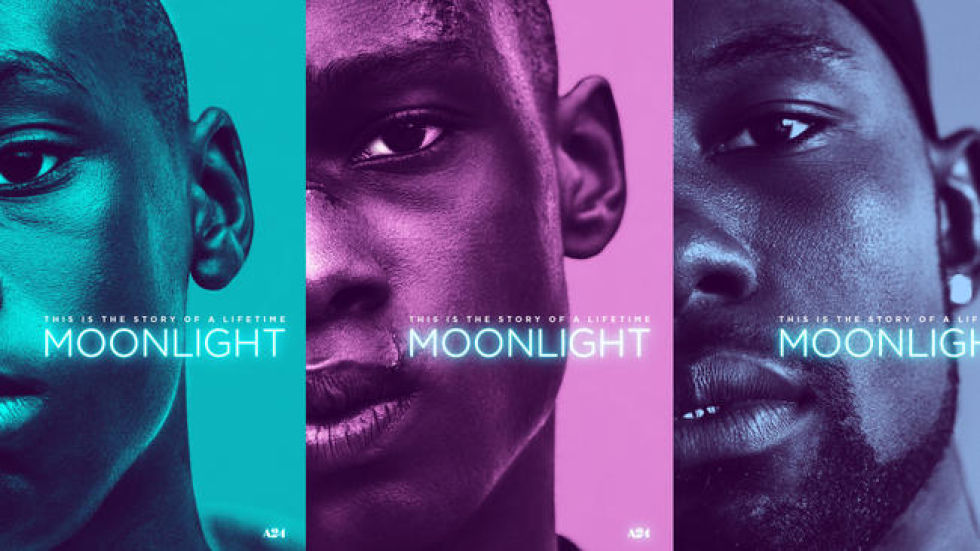
Congratulations to all the winners at the 89th Academy Awards! La La Land was the most-honored of the night, as expected, with six wins. But there were definitely some surprises. Like La La Land not winning even more. And the shocker that it was wrongly announced as Best Picture. Instead it was Moonlight that won the top award.

There were also many records broken. Damien Chazelle is now the youngest winner of the Best Directing Oscar, at age 32. O.J.: Made in America became the longest movie to win an Oscar at 467 minutes. Mahershala Ali is the first Muslim to win an acting Oscar. Soundman Kevin O’Connell finally won with his 21st nomination.

But how about that Moonlight ending?

And here are all the winners:

Best Picture: Moonlight

Best Director: Damien Chazelle (La La Land)

Best Actor: Casey Affleck (Manchester by the Sea)

Best Actress: Emma Stone (La La Land)

Best Supporting Actor: Mahershala Ali (Moonlight)

Best Supporting Actress: Viola Davis (Fences)

Best Original Screenplay: Manchester by the Sea

Best Adapted Screenplay: Moonlight

Best Cinematography: La La Land

Best Editing: Hacksaw Ridge

Best Production Design: La La Land

Best Costume Design: Fantastic Beasts and Where to Find Them

Best Makeup and Hairstyling: Suicide Squad

Best Sound Mixing: Hacksaw Ridge

Best Sound Editing: Arrival

Best Original Score: La La Land

Best Original Song: “City of Stars” (La La Land)

Best Animated Feature: Zootopia

Best Documentary Feature: O.J.: Made in America

Best Documentary Short: The White Helmets

Best Animated Short: Piper

Best Live-Action Short: Sing

Best Foreign Language Film: The Salesman

and

Let’s block ads! (Why?)


No Image

For Basketball Player Quinn Cook, A Big Step Closer To The Dream

Quinn Cook No.15 of the East Team drives to the basket during the NBA D-League All-Star Game as part of 2017 All-Star Weekend at the Mercedes-Benz Superdome on Feb. 18, 2017.

Chris Marion/NBAE/Getty Images

hide caption

toggle caption

Chris Marion/NBAE/Getty Images

The world of professional sports is a revolving door – athletes come and go.

Sunday, there was an arrival in the NBA that resonated a bit more.

Twenty-three-year-old Quinn Cook signed a 10-day contract with the Dallas Mavericks. For Cook, a personable and popular player, it’s his first regular season call up to the NBA. For the past season and-a-half, he’s been playing in the D League — pro basketball’s minor league.

NPR chronicled Cook’s season last year with the D League’s Canton Charge on the podcast “Embedded.”

Cook, a guard, became nationally known to basketball fans when he helped Duke win the 2015 men’s college basketball championship. He was a senior starter on that team. After winning the title, three members of Duke’s starting lineup were picked in the first round of the NBA draft. Cook wasn’t drafted. In “Embedded,” he talked about breaking down after watching the draft at his mom’s house and not hearing his named called.

But Cook has made the most of his D-League experience. Last year, he was named Rookie of the Year, an honor that earned Cook praise from Lebron James, the superstar for Canton’s parent club, the Cleveland Cavaliers. Cook also had some near, late season call up’s to the NBA. This season, Cook was second in scoring and, at the recent D League All-Star game, he won the Most Valuable Player award.

Speaking Sunday from Dallas, Cook said he “definitely” has played better this season – the result of hard work, a year of experience as a professional and the fact that he didn’t get called up to the NBA his first season. “I had the motivation of not getting where I wanted to,” he said, “and I trusted myself to go back to the D-League.”

Undrafted players like Cook often head overseas where they can make more money than a comparatively paltry D League salary.

But while the wallet gets fatter overseas, the exposure and chance of getting called up to the NBA isn’t as great.

Article continues after sponsorship

It was recently reported Cook turned down a $300,000 offer to play in Europe last summer, so he could stay in the D-League. Cook said the story was wrong. “I had [an offer] that was way bigger than that from a team in Russia,” he said, adding, “I didn’t take it because it’s not about the money. When you chase the money, you kind of get off track and lose focus. That’s not why I play the game. I play to have fun and I play for the dream.”

Cook’s NBA dream certainly is a lot closer after signing with the Mavs. But it’s not quite there. If he does well and the team likes him, they can sign him to a second 10-day contract. If, at the end of that, the team still feels the same way, it has to sign him for the rest of the season.

“That’s the main thing,” Cook said, “to make it all the way. So I just take it a day at a time and try to keep advancing. Just keep advancing.”

Cook will suit up for his first ever NBA regular season action Monday, when Dallas hosts the Miami Heat in a nationally televised game.

Let’s block ads! (Why?)


No Image

Indonesia Wakes And Up And Smells Its Own Coffee — Then Drinks It

Mirza Luqman Effendy of Brewphobia in South Jakarta prepares coffee for a cupping session.

Yosef Riadi for NPR

hide caption

toggle caption

Yosef Riadi for NPR

The Indonesian island of Java has long been synonymous with coffee. But it’s only in the past decade or so that Indonesians have begun to wake up and smell the coffee — their own, that is.

Big changes are brewing in the country’s coffee industry, as demand from a rising middle class fuels entrepreneurship and connoisseurship.

The trend is clear at places like the Anomali Coffee shop in South Jakarta. It roasts its coffee just inside the entrance on the ground floor.

If you walk into the roasting room at just the right moment, as the heat caramelizes the sugars in the coffee beans, it smells like someone is baking cookies.

Get close to the roasting machine, and you can hear the beans snap and pop. “It is the bean expanding because of the heat of the core,” explains Anomali’s founder Irvan Helmi.

Freshly roasted Indonesian coffee beans at the Anomali Coffee shop in South Jakarta.

Yosef Riadi for NPR

hide caption

toggle caption

Yosef Riadi for NPR

Anomali Coffee includes a trading company that wholesales to hotels and other businesses. It also has a barista training academy.

And upstairs from the roasting ovens is one of its seven cafes. On a table, bags of beans from a half-dozen single origins are on sale. A blackboard ranks the beans in terms of their acidity and body.

Article continues after sponsorship

“In Toraja, you also have a medium body, chocolaty and caramel, herbs,” Irvan says, picking up a bag of beans from Sulawesi Island.

Indonesia’s more than 17,000 islands teem with cultural diversity, and more plant and animal species than researchers can catalog.

Little wonder, then, that from Aceh in the west to Papua in the east, the archipelago has more coffees than Irvan’s tasters can get around to tasting.

“From Aceh alone, we have more than 100 samples each season,” Irvan says. “Can you imagine?”

Packaged Indonesian coffee beans for sale at the Anomali Coffee shop in South Jakarta.

Yosef Riadi for NPR

hide caption

toggle caption

Yosef Riadi for NPR

Anomali sells coffees from nine single origins at a time. Irvan reckons he has sourced coffee from about 100 single origins since founding his company a decade ago.

“We put a score on it for each season,” he says, “and we select which coffee we want to bring for our customers.”

Then comes a slew of different procedures and techniques, from the way the beans are dried and hulled to the time and temperature at which the they’re roasted, and the way they are ground and brewed to bring out their characteristic flavors.

Irvan notes that Indonesian coffees are known for their “earthiness” and body. Indonesians often drink these coffees black, and therefore, he says, they don’t need the dark roast and acidity needed to be tasted above all the milk and syrup added to them in Western-style cafes.

Colonialists started growing coffee in what was then the Dutch East Indies in the 17th century. After parasites decimated plantations of Arabica beans in the 1880s, the Dutch introduced the hardier Robusta variety, which continues to account for most of Indonesia’s crop today.

Indonesia is the world’s fourth-largest producer of coffee after Brazil, Vietnam and Colombia, and it exports more than it consumes.

Irvan Helmi, founder of Anomali Coffee, stands outside his South Jakarta shop, which specializes in single-source coffees from around the Indonesian archipelago.

Yosef Riadi for NPR

hide caption

toggle caption

Yosef Riadi for NPR

But Irvan explains that this has been changing in recent years, as demand from Indonesia’s growing middle class has taken off, and improved logistics have helped build a thriving, archipelago-wide market.

And that’s where Irvan saw his chance.

“The mission becomes clear,” he declares, “to promote Indonesian coffee as a curator.”

Irvan acknowledges the contribution of Starbucks to the Indonesian market. He jokingly calls the Seattle-based chain his “marketing department,” as it has the financial muscle to penetrate new and remote cities and give local consumers an introduction to authentic espressos, cappuccinos and the like.

Irvan says most coffee companies blend different coffees together to make a consistent product. But each of Anomali’s coffees comes from a single origin.

“We don’t care about consistency,” he sniffs. “If it’s a high quality, we want it.”

So you could say that each of their coffees is, well, an anomaly. “That’s the big difference between Anomali and the mass market,” he says. “And we’re very proud of it.”

Mirza Luqman Effendy, a friend and colleague of Irvan’s who runs a café called Brewphobia (something he got over a long time ago), explains to me that younger Indonesians have different tastes in coffee from their parents’ generation.

Mirza Luqman Effendy, founder of the Brewphobia coffee shop in South Jakarta, is seen through the window in his shop.

Yosef Riadi for NPR

hide caption

toggle caption

Yosef Riadi for NPR

“The fact is, my father is a coffee addict,” Mirza says. “He really likes very intense coffee, like Robusta, roasted very dark, and then basically he drinks coffee with putting some sugar and ginger.”

He says that recipe is way too old-school for him: “My father’s coffee is just like … coffee. You cannot taste any attributes besides the coffee taste.”

But Mirza tastes so much more in a cup than just coffee. He hones in on the attributes of each bean, the notes of citrus and spice, the feel on his palate and the lingering aftertaste.

Of course, it’s young people like Irvan and Mirza, sharing their passion for coffee, that drives the coffee scene in many countries.

But with its rich variety of beans and long history of cultivation, Indonesia is building a coffee culture — and a pride in it — that is truly homegrown.

Let’s block ads! (Why?)


No Image

Saturday Sports: Possible Changes In Baseball

NPR’s Scott Simon talks to Howard Bryant of ESPN about possible rule changes for Major League Baseball that are designed to make games shorter.

SCOTT SIMON, HOST:

Now it’s time for sports.

(SOUNDBITE OF MUSIC)

SIMON: It’s spring training time, and Major League Baseball owners say that without major changes in the game they fear the national pastime, it could be a thing of the past. Howard Bryant of espn.com and ESPN the Magazine joins us from Arizona. Howard, out there for that great book festival in Tucson?

HOWARD BRYANT: You know, I did the Tucson book festival a couple of years ago. But no, I’m just here for Giants and Cubs and A’s and Indians…

SIMON: Spring training.

BRYANT: …And all of the great spring training baseball from the Cactus League.

SIMON: The Cubs finally win the World Series and now the owners want to change all the rules. What’s going on?

BRYANT: (Laughter) Well, what’s going on is I can give you – Chicago Cubs general manager Jed Hoyer said it best, right? He said 100 years ago, the most popular sports in America were boxing, baseball and horse racing. And now nobody cares about boxing or horse racing, so we shouldn’t feel like we’re invincible. Baseball is in trouble even though revenues are at $12 billion.

They think – the owners, that is, think that the game is too slow. They think that in an era of people who have short attention spans with small screens that the game needs an interjection, shall we say, of a little bit of pace. And so what they want to do is they already got rid of the time on an intentional walk. No more four pitches…

SIMON: Yeah.

BRYANT: …Go down to first base when you get a signal from the dugout.

SIMON: That’ll save 15 seconds right there, yeah.

BRYANT: (Laughter) Exactly. And there’s a battle going on here. There’s a battle that’s taking place between the owners and the players. That’s something new in baseball, right? And so the – baseball’s not going to look the way we’ve seen it before. And I think that you’ve got the purists who are really upset about it. But the real question that a lot of the baseball people, that the players feel is that – do you want to watch baseball or do you want to watch something else? If – why are we rounding the bases if you want to save time when you hit a home run? Are you here to watch baseball or are you here because you – you know, you want to make dinner reservations after the game?

SIMON: Yeah. What about getting rid of, I don’t know, let’s say a quarter of the ads? That’d speed up the game, right?

BRYANT: That’s the battle, Scott. That’s the one – and it’s really interesting when you parse the words. When you listen to the owners, they’ll tell you that we don’t have a problem with time of game. We have a problem with pace of play. And when you frame it that way you can blame the players. If you frame it in terms of time of game, then you immediately say – which a lot of fans have said – well, why are the commercials so long?

Well, commercials cut into the money, and so far nobody has been willing to cut into the money. Obviously, you’ve got two and a half minutes in between – in between innings.

SIMON: Yeah.

BRYANT: You could shave 25 minutes off of a game, but then you’d also be shaving into profits, and you know what that does.

SIMON: Yeah. I have a problem almost more than the length of the game with how late the games start, particularly in the championship season. And I think it’s hard to get a new generation of fans if most of them have to go to bed before they can see the end of the game in the eighth or ninth inning.

BRYANT: No question. There hasn’t been a World Series day game since 1987. How about some postseason day games? How about making the game a little bit more accessible? But right now what you’re really going to see is battles over mound visits instead of cutting into commercials.

SIMON: Now, you mean you can’t – oh, the number – limiting the number of times that a manager or a coach can go to the mound.

BRYANT: Exactly. The famous scene in “Bull Durham” where they’re all sitting there talking about…

SIMON: Yeah.

BRYANT: …Having dinner and…

SIMON: Candlesticks.

BRYANT: And the rest of it.

SIMON: Yeah.

BRYANT: And candlesticks, they make a nice gift.

SIMON: Howard Bryant of espn.com, thanks so much for being with us.

BRYANT: Oh, my pleasure.

(SOUNDBITE OF RADIO CITIZEN SONG, “THE HOP”)

Copyright © 2017 NPR. All rights reserved. Visit our website terms of use and permissions pages at www.npr.org for further information.

NPR transcripts are created on a rush deadline by Verb8tm, Inc., an NPR contractor, and produced using a proprietary transcription process developed with NPR. This text may not be in its final form and may be updated or revised in the future. Accuracy and availability may vary. The authoritative record of NPR’s programming is the audio record.

Let’s block ads! (Why?)


No Image

Kuwait Celebration At Trump Hotel Raises Conflict Of Interest Questions

Kuwait is holding its National Day celebration at the Trump International Hotel in Washington.

Pablo Martinez Monsivais/AP

hide caption

toggle caption

Pablo Martinez Monsivais/AP

For more than a decade, Kuwait’s ambassador to the U.S., Salem al-Sabah, has held a gala event every Feb. 25 to celebrate his country’s national day. The annual holiday commemorates the tiny Gulf state’s independence from British rule in 1961. Traditionally, the event has been held at the Four Seasons Hotel, in the heart of Washington, D.C.

But Sabah says he feels his guests have wanted a change. Last year, he held the celebration at the Newseum. For this year, he and his wife, Rima, looked into the newly opened Trump International Hotel as another possibility.

“It’s like a new restaurant opens in your neighborhood and you want to try it, and you hear good reviews about it and you want to go and see it,” Sabah tells NPR.

He says he and his wife realized it was a great place for holding events. “We found that it’s a great venue for our national day reception,” he says.

The Kuwaiti embassy canceled a “save the date” reservation with the Four Seasons and booked instead with the Trump hotel, a few blocks from the White House, for 600 guests. The event was held, Wednesday, Feb. 22.

Article continues after sponsorship

Sabah says he has taken heat for moving the location, including suggestions that Kuwait is trying to curry favor with the new U.S. president, something he rejects.

“That is honestly absurd,” he says. “If people think that for us to rent a ballroom for two hours in a hotel is going to swing open the doors to the White House for us, it’s an absurd line of thinking.”

Sabah says he was under no pressure by the Trump administration to use the hotel. He says people should look at what Kuwait is doing for the U.S., rather than the other way around.

Ryan Crocker, a former U.S. ambassador to Middle Eastern countries including Kuwait, says that country is the linchpin in the U.S. Gulf security strategy.

“There are thousands of U.S. forces in that country,” he says. “We operate on two Kuwaiti air bases, and the headquarters for the entire anti-Islamic State campaign is in Kuwait.”

Crocker says the problem isn’t Kuwait’s national day celebration — instead, it’s that there are properties all over the world bearing President Trump’s name. And any time a foreign government holds a reception or rents rooms at a Trump hotel, it opens up speculation about conflicts of interest.

Norm Eisen, an ethics expert at the Brookings Institution, says Trump is also violating the Constitution — which says a president cannot accept gifts or benefits by a foreign country.

“That’s what the framers put in the Constitution in the emoluments clause, because they were so worried about swag, any kind of swag, coming to an American president just for the reasons … that it would distort presidential decision-making to benefit himself,” Eisen says.

Trump’s attorney, Sheri Dillon, said at a press conference last month that the president has a way around that.

“He is going to voluntarily donate all profits from foreign government payments made to his hotels to the United States Treasury,” she said.

NPR sent requests to the White House and the Trump Organization asking how they plan to account for the profits from events involving foreign governments, and how donation to the U.S. Treasury will be documented. The NPR requests received no response.

Let’s block ads! (Why?)


No Image

Best of the Week: Promising News for the DC Extended Universe, 'Alien: Covenant' Prologue and More


No Image

Episode 756: The Bees Go To California

A honeybee collects nectar from an almond blossom in an almond orchard near Bakersfield in Wasco, California, U.S.

Phil Hawkins/Bloomberg via Getty Images

hide caption

toggle caption

Phil Hawkins/Bloomberg via Getty Images

Every spring convoys of trucks arrive in the almond orchards of central California. They are carrying bees. Millions of them.

They arrive from all over the country, but especially southern states like Louisiana, and they have to get there at just the right time, when the almond trees start to flower so the bees can pollinate hundreds of acres of almond fields.

But why make the 2,000 mile trek from the South instead of raising bees right in the Central Valley? It comes down to comparative advantage. Louisiana has better conditions for bees. It’s warm, green and there are plenty of flowers for the bees. And California has the edge in almond growing.

The journey has it’s own set of challenges. Not least of which is, you can’t stop during the day or the bees try to escape.

Today on the show, how bees keep our produce sections stocked with fruit.

Music: “Turquoise Sun” and “Cheyenne Shuffle.” Find us: Twitter/ Facebook.

Subscribe to our show on iTunes or PocketCast.

NPR thanks our sponsors

Let’s block ads! (Why?)


No Image

Young Mexican Driver Rises To Top Of NASCAR Ranks

A young Mexican driver is making the leap to NASCAR’s top level this year, and he’s looking to bring more Latino fans with him. Along with the addition of Daniel Suárez, NASCAR is pursuing efforts to become more diverse.

ARI SHAPIRO, HOST:

NASCAR has been trying to broaden its appeal beyond the traditional base of Southern white men. One of its strategies is to put more people of color and women on the race track. Those efforts are starting to pay off. One of the hottest racers at the Daytona 500 this weekend will be Daniel Suarez. He’s from Mexico. And last year, he became the first foreign-born driver to win what is essentially a NASCAR minor league. From member station WFAE, Michael Tomsic has more.

MICHAEL TOMSIC, BYLINE: Daniel Suarez dominated the championship race last year in the series one step below NASCAR’s top circuit.

(SOUNDBITE OF ARCHIVED RECORDING)

UNIDENTIFIED SPORTSCASTER: As he comes out of turn number four, he will be the first ever international champion in NASCAR.

TOMSIC: Suarez was born in Mexico, and grew up racing there. Last year was only his second in what NASCAR calls its Xfinity Series. And now, at age 25, he’ll compete at the top level for Joe Gibbs’ racing team.

(SOUNDBITE OF ARCHIVED RECORDING)

DANIEL SUAREZ: It is hard to believe that I’m in this position. I feel like I – it’s just a perfect place to be for a rookie like me that is really hungry to learn and to go out there to perform well.

TOMSIC: He came up through NASCAR’s Drive for Diversity program, which helps develop minority and female talent. It’s already made a significant difference in the diversity on pit crews. This season, Suarez will become its second driver to make NASCAR’s top circuit. His success is helping NASCAR gain fans in the Latino community, says Ruben Garcia Jr., a 21-year-old from Mexico City.

RUBEN GARCIA JR: People are starting to look into the world of NASCAR way more than they used to.

TOMSIC: Garcia is now in Drive for Diversity, and says he’s trying to follow in Suarez’s footsteps. He says the sport’s popularity has also grown among Latinos because NASCAR started a series in Mexico about 10 years ago. NASCAR also has staff dedicated to creating Spanish-language content online and on social media. Jill Gregory is NASCAR’s chief marketing officer.

JILL GREGORY: Any brand that’s trying to make sure that they have growth in their sales or in their consumption, they need to get younger and more diverse. That’s where our country is going. And so that’s why you’ve seen us really make an investment in this area.

TOMSIC: She says Suarez’s success helps. But she emphasizes he does all the things NASCAR needs any successful driver to do, regardless of ethnicity. He’s skill on the track, charming with fans and great with sponsors. He’s also earned the respect of fellow competitors, including Matt Kenseth.

(SOUNDBITE OF ARCHIVED RECORDING)

MATT KENSETH: He’s a really hard worker. He asks a lot of questions. He always, you know, wants advice, wants help, puts a lot of time into it.

TOMSIC: Another driver, Kyle Busch, jokes that Suarez may ask too many questions.

(SOUNDBITE OF ARCHIVED RECORDING)

KYLE BUSCH: His rookie season at Xfinity, he came to me every single Thursday. I pretty much knew, it was set on the calendar – Daniel Suarez phone call, 3 o’clock. And we would talk about that weekend’s race track and about what to do and what to expect.

TOMSIC: Busch says it showed how eager Suarez is to succeed. NASCAR has had Latino drivers since its early days. But they’ve been a small minority. And only three have won races at NASCAR’s top level. Ruben Garcia Jr., says he’s heard some trash talk from fans.

GARCIA JR: There is some times where people will think that it’s better to have just American drivers in their sport because they feel like it’s their sport, like they really own the sport. But NASCAR has been growing so much that it – now it is a international sport.

TOMSIC: Garcia says the positive comments he’s heard vastly outnumber the negative ones. And Suarez takes pride in helping the sport grow.

(SOUNDBITE OF ARCHIVED RECORDING)

SUAREZ: It’s amazing to be able to be a role model for so many future new drivers or so many fans. I have seen how a lot of people from the entire Latin-American community follow the sport.

TOMSIC: They’ll see Suarez compete on one of NASCAR’s biggest stages this Sunday, The Daytona 500. For NPR News, I’m Michael Tomsic.

(SOUNDBITE OF JEFF BECK SONG, “ROY’S TOY”)

Copyright © 2017 NPR. All rights reserved. Visit our website terms of use and permissions pages at www.npr.org for further information.

NPR transcripts are created on a rush deadline by Verb8tm, Inc., an NPR contractor, and produced using a proprietary transcription process developed with NPR. This text may not be in its final form and may be updated or revised in the future. Accuracy and availability may vary. The authoritative record of NPR’s programming is the audio record.

Let’s block ads! (Why?)


No Image

GOP Health Bill Draft Would Cut Medicaid, Emphasize Tax Credits

Sen. Bill Cassidy, R-La., responds to constituents concerned about their coverage under the Affordable Care Act.

Jonathan Bachman/Getty Images

hide caption

toggle caption

Jonathan Bachman/Getty Images

In recent days, several Republican lawmakers have faced crowds of constituents at town hall meetings around the country who are angry that they may be in danger of losing their health coverage.

A GOP draft bill, recently obtained by Politico, would likely do little to assuage these concerns.

The Feb. 10 document follows the broad policy outline released by Republicans last week just before they went home for a Congressional recess. It proposes cuts to federal payments to states that have expanded Medicaid and offers tax credits for people to buy health insurance.

“This would mean fewer people could afford health insurance and that the health insurance would likely cover less,” says Larry Levitt, senior vice president at the Kaiser Family Foundation.

Under the plan, states that expanded eligibility for Medicaid would see their supplemental federal funding rolled back. The program would also be converted from a federal-state program that pays for all the health care beneficiaries get, to one where Washington sends a fixed amount of money to each state for each Medicaid enrollee.

Article continues after sponsorship

To help people who don’t get insurance through their employer buy coverage, the bill offers age-based tax credits that start at $2,000 for individuals under age 30. It would rise to $4,000 for those over 60. Those credits are unlikely to cover the full cost of a plan that pays for routine health care, but could potentially pay for insurance that protects against a catastrophic health event.

Levitt says those credits are less generous than the subsidies offered under Obamacare.

The draft bill is consistent with what Republicans have been saying they want to see in place of Obamacare, says Rodney Whitlock, vice president of health policy at ML Strategies.

“No surprises here,” says Whitlock, who was formerly the Republican health policy director for the Senate Finance Committee. “These are all ideas Republicans have championed. Now the Congressional Budget Office will decide if they agree.”

The Congressional Budget Office will “score” the ultimate bill, estimating how how many people it’s likely to cover and its impact on the federal budget.

Spokesmen for the House Energy and Commerce, and Ways and Means committees, which are drafting the legislation, declined to comment on the leaked bill.

It’s not clear that the details in the two-week-old draft bill, such as the size of the tax credits, are still being considered. One House staffer says lawmakers are testing different scenarios with the Congressional Budget Office, comparing cost and coverage levels, and fine tuning the legislation.

The draft bill would also get rid of the taxes created under the Affordable Care Act, including taxes on medical device makers and health insurers. Instead, it would limit how much employers can deduct for expensive insurance policies they give to their workers.

It would also eliminate the mandate for individuals to buy insurance.

The bill attempts to encourage healthy people to buy insurance by mandating that they cannot be charged more for existing medical conditions, or, once they get sick, if they maintain continuous coverage. People who elect not to buy insurance at the outset would pay a surcharge when they do, and could end up paying more if they’ve been ill.

Levitt is not convinced the Republican’s continuous coverage plan would work.

“Republicans are struggling to find the Holy Grail of how to get healthy young people to buy insurance,” he says. “I’m not sure they’ve found it here, but it’s a legitimate struggle.”

Senate Democrats denounced the proposal. “This isn’t a replacement, it’s a recipe for disaster,” says Senate Democratic Leader Charles Schumer, N.Y. “Republicans are determined to put insurance companies back in charge, make health insurance more expensive for millions of Americans, restrict women’s access to vital health services by by defunding Planned Parenthood, shift costs to states and dismantle Medicaid, while kicking millions more off of their plan.”

Let’s block ads! (Why?)