Articles by admin

No Image

PHOTOS: The Many Possible Shapes Of Trump's Border Wall

By the time bidding closed Tuesday, there was no lack of companies competing to build the wall President Trump has proposed for the border between the U.S. and Mexico. In fact, by The Associated Press’ count, upwards of 200 organizations had expressed interest in designing and building it for Customs and Border Protection.

Despite their common goal, the companies submitting bids have followed some radically different paths in their approach.

Among the submissions are walls with solar panels, wire mesh and sloped, slippery surfaces. There are even walls that are no walls at all — statements standing instead as protests of a policy that from the start has drawn a lot of resistance.

As NPR’s Richard Gonzales reports, the CBP plans to announce the finalists for the contract in June, at which point the companies still in the running would be expected to build a prototype roughly 30 feet long and anywhere from 18 to 30 feet tall. The AP notes the prototypes are expected to cost about $200,000 to $500,000 each; estimates for the cost of the wall covering the 2,000-mile border, however, range up to $38 billion.

Here’s a glimpse of just a few of the designs vying to stand between the U.S. and Mexico, complete with renderings and explanations of how they could take shape.


The WireWall

The WireWall fence now in place in California on the border with Mexico. Riverdale Mills says the fence is produced using the same manufacturing process as its “marquee marine wire mesh” designed for lobster traps used in New England.


Courtesy of Riverdale Mills
hide caption

toggle caption


Courtesy of Riverdale Mills

The proposal from Riverdale Mills Corporation employs wire mesh, which is already used along the Mexican border with California and Arizona. Riverdale says the material can be manufactured up to 20 feet tall and installed up to 6 feet below ground, to prevent tunneling.

“The configurations of the wire mesh make it virtually impossible to climb or cut,” Jane Meehan Lanzillo, director of corporate communications for Riverdale, tells NPR in an email.


Solar Panels

This rendering depicts solar panels snaking along the border. Gleason Partners, the company behind the proposal, believes that the energy provided by the panels would offer the U.S. a financial boon.

Gleason Partners via AP

hide caption

toggle caption

Gleason Partners via AP

“I like the wall to be able to pay for itself,” Thomas Gleason, managing partner of Gleason Partners LLC, tells the AP.

The company’s proposal sets solar panels on sections of the wall, generating what it says would be approximately 2.0 megawatts of electricity per hour, according to the wire service.


Maximum-Security Wire Mesh

The Penna Group rendering, which displays two groups on either side watching each other through the mesh.

Courtesy of the Penna Group

hide caption

toggle caption

Courtesy of the Penna Group

Composed of high-density steel packed into double wire mesh, the Penna Group’s proposed wall takes its cue from maximum security prisons. “Nearly impossible to climb,” it would also be built to withstand pick axes, acetylene torches and other handheld weapons, with the first 12 feet of its 30-foot height packed more densely.

Michael Evangelista-Ysasaga, CEO of the Penna Group, speaks to the aesthetics of the U.S.-facing side of the wall, telling NPR “the wire mesh panels will be emblazoned with the Seal of the United States.”


The Security Curtain Wall

Between its sloped surface and the walkway near the top, the security curtain wall aims to make climbing an impossible task for those seeking to cross the border.


Courtesy of San Diego Project Management
hide caption

toggle caption


Courtesy of San Diego Project Management

With its face pitched at an angle, the proposed wall put forth by San Diego Project Management, PSC, borrows medieval concepts to give to give guards a better view of possible “villains” approaching the wall — and with its walkway toward the top, it gives those guards a place to patrol from a height.

“The surface finish on the south side of the wall is of the same quality as the finish on a smooth floor slab,” Patrick J. Balcazar, principal and managing partner at SDPM, writes in his proposal. “Smooth surface on the glacis [sloped] and [vertical] surfaces make climbing harder, and there are no handholds.”


Hadrian’s Wall

Hadrian Construction Company’s wall, here modeled in miniature, would be paneled according to its Tridipanel system.


Courtesy of Hadrian Construction Company
hide caption

toggle caption


Courtesy of Hadrian Construction Company

It’s impossible to avoid: For a man bidding to build a massive wall, Rod Hadrian has a rather serendipitous name. Namesake of the Roman emperor who built the wall that once marked off the northernmost edge of the ancient empire — the wall that still stands in ruins in the U.K. today — Hadrian Construction Company has proposed a wall constructed in prefabricated panels.

Its Tridipanel design makes for something of a zig-zag shape, which he says would create a 30-foot wall that’s at once lightweight and strong.


Adorned With Decoration

This is a close-up rendering of the iCON Wall Solution by Concrete Contractors Interstate. Between the polish and the stones, the company behind this proposal wants to make it as easy on the eyes as it is hard to cross.

iCON Wall Solution by Single Eagle dba Concrete Contractors Interstate via AP

hide caption

toggle caption

iCON Wall Solution by Single Eagle dba Concrete Contractors Interstate via AP

The border wall should be “a piece of art,” Russ Baumgartner, CEO of Concrete Contractors Interstate of San Diego, tells the AP. The wire service says the company’s proposal calls for stones and artifacts set in polished concrete, reflecting the areas the wall wends through and rendering both sides “aesthetically pleasing” — unlike the CBP’s callout, which asks only that the U.S. side be pleasant to look at.

Above, you can see a detail of the kind of decorative stones Baumgartner has in mind.


The Wall To End All Walls

Quite unlike the other proposals on this list, the Otra Nation concept condemns barriers altogether. Rather than impede movement between regions, its hyperloop transit system would accelerate travel, effectively rendering the border moot.

Courtesy of Otra Nation

hide caption

toggle caption

Courtesy of Otra Nation

It is reasonable to conclude that this proposal is not exactly what Trump has in mind for his signature campaign promise.

“We propose a trans-national ‘New Deal’ to build an innovative shared co-nation based on local economic empowerment, energy independence and revolutionary infrastructure and transit,” says the MADE Collective, a cross-disciplinary team that argues for the creation of what it calls the Otra Nation — a “regenerative co-nation shared by citizens of both Mexico and the United Stated and co-maintained by respective governments.”

Far from a boundary between two states, the Otra Nation proposal envisions the construction of a hyperloop transit system and the rights to cross open borders of the three North American countries without impediment.


The Wall Of Sound

Imagine this.

A post shared by JENNifer meriDIAN (@jmeridian.studio) on Mar 28, 2017 at 5:01pm PDT

One of at least three protest proposals ginned up by J.M. Design Studio of Pittsburgh, this one calls for “a semi-continuous wall of nearly 10 million pipe organs.” The long line of 30-foot organs breaks in regular intervals, offering border-crossers the opportunity to walk straight through — but not before playing a ditty of their choosing.

Jennifer Meridian — an artist who says Trump’s actual border wall is “preposterous for so many reasons,” according to the Wall Street Journal — also proposes a wall of hammocks and a wall of refugees’ gravestones for passersby to “consider the danger, terror, and horror they must have faced in trying to cross.”

Let’s block ads! (Why?)


No Image

Wrestling Icon The Undertaker Retires In Wake Of Wrestlemania 33 Defeat

After nearly 30 years in the ring, pro-wrestler The Undertaker has retired. Or, at least, that’s what fans believe, after he laid down his iconic hat and overcoat at Wrestlemania 33 last weekend.

ROBERT SIEGEL, HOST:

This weekend, an impressive athletic entertainment career may have come to an end. For almost three decades, the pro wrestling icon The Undertaker has been a dominant presence with his 6-foot-10 frame and spooky, macabre character.

KELLY MCEVERS, HOST:

The undertaker once won at 21 WrestleManias in a row, and this year’s WrestleMania was going to be no different.

(SOUNDBITE OF ARCHIVED RECORDING)

THE UNDERTAKER: At WrestleMania, you will rest in peace.

MCEVERS: But that’s not what happened.

SIEGEL: The Undertaker’s opponent, Roman Reigns, hit the ‘Taker with multiple Superman punches, speared him through a table and pinned him for the three count.

(SOUNDBITE OF ARCHIVED RECORDING)

UNIDENTIFIED ANNOUNCER: Spear into the heart of The Undertaker, and Roman Reigns…

SIEGEL: The Undertaker was defeated.

MCEVERS: This was no ordinary defeat, though. A stunned crowd watched as The ‘Taker removed his duster coat, flat-brimmed hat and signature gloves, folded them neatly and left them in the center of the ring.

SIEGEL: The wrestling universe has taken all that to mean that after a storied career, Mark William Calaway, aka The Undertaker or Mean Mark, the Master of Pain, the Punisher or Texas Red is retiring.

GRAHAM SPEKTOR: That was all the confirmation that we really needed that, oh, this was 100 percent it.

MCEVERS: Graham Spektor is a brewer at a wrestling-themed brewery in Massachusetts. He was at WrestleMania in Florida this weekend, and he said the scene was emotional.

SPEKTOR: There was a person behind me crying, a grown man. There were people visibly emotionally upset. You know, he debuted in 1990. I was 4 years old. I’m a 31-year-old man now seeing someone that I grew up with kind of walk off into the sunset. There were definitely people rattled by that.

SIEGEL: Three decades is a long time to be active in any sport. In the bruising world of professional wrestling, it’s an eternity.

MCEVERS: Fans continue to talk about his retirement on social media, tweeting with the hashtag #ThankYouTaker, honoring the more-than-quarter-century career. Though, we should say professional wrestling is a little like a soap opera. Anyone who is, quote, “gone forever” could come back at any time for a little extra drama.

SIEGEL: We’ve reached out to The Undertaker for comment and have not heard back. Undertaker, if you’re listening, we challenge you to come into NPR’s ring to talk about your 27-year career. Congratulations.

(SOUNDBITE OF MF DOOM SONG, “COFFIN NAILS”)

Copyright © 2017 NPR. All rights reserved. Visit our website terms of use and permissions pages at www.npr.org for further information.

NPR transcripts are created on a rush deadline by Verb8tm, Inc., an NPR contractor, and produced using a proprietary transcription process developed with NPR. This text may not be in its final form and may be updated or revised in the future. Accuracy and availability may vary. The authoritative record of NPR’s programming is the audio record.

Let’s block ads! (Why?)


No Image

Today in Movie Culture: 'Jurassic World' Remade With Parkour, Bruce Wayne Meets Agent Smith and More

Here are a bunch of little bites to satisfy your hunger for movie culture:

Movie Homage of the Day:

Watch what happens when you add parkour to the Jurassic Park movies in this video using real Jurassic Park and Jurassic World sets for its stunts (via Geekologie):

[embedded content]

Movie Character Parody of the Day:

If Darth Vader’s pun in Rogue One: A Star Wars Story wasn’t enough for you, here he is with more dad jokes through the franchise courtesy of Nerdist:

[embedded content]

Mashup of the Day:

Bruce Wayne meets Agent Smith from The Matrix in this brief conversation clip:

[embedded content]

Alternate Ending of the Day:

Why does Superman seem so absent in Justice League? This animated post-credits scene for Batman v Superman: Dawn of Justice offers one possible reason:

[embedded content]

Remade Trailer of the Day:

Check out a sweded version of Spider-Man: Homecoming with CineFix’s shot-for-shot homemade trailer:

[embedded content]

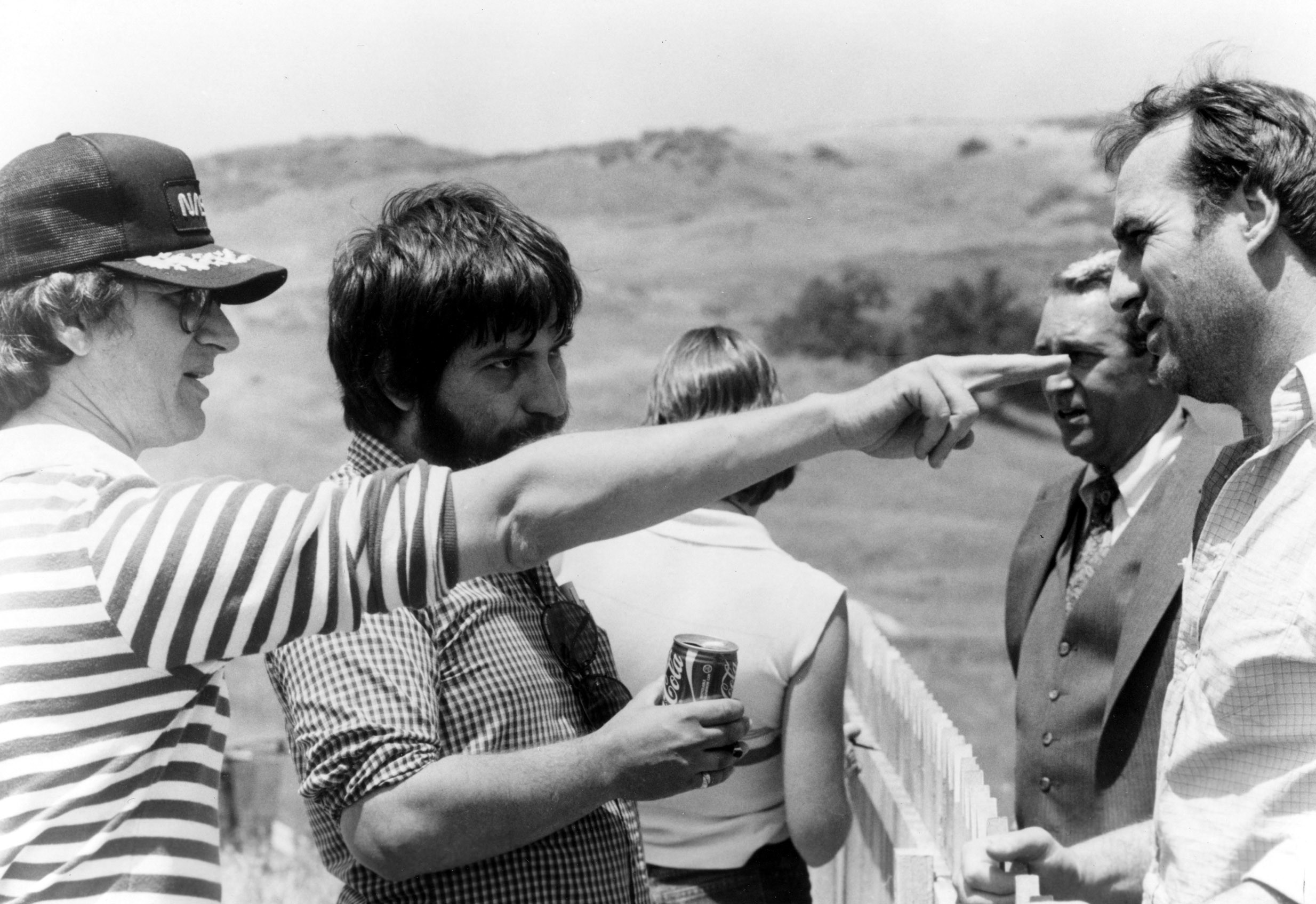
Vintage Image of the Day:

Craig T. Nelson, who turns 73 today, gets direction from Steven Spielberg and Tobe Hooper on the set of Poltergeist in 1981:

Filmmaker in Focus:

Alfred Hitchcock’s POV shots are highlighted in this video by Jorge Luengo showing characters and what they’re looking at side by side:

[embedded content]

Supercut of the Day:

Watch movie characters watching movies in this supercut of scenes in cinemas and screening rooms:

[embedded content]

Movie Takedown of the Day:

In anticipation of The Fate of the Furious, Honest Trailers roasts The Fast and the Furious: Tokyo Drift:

[embedded content]

Classic Trailer of the Day:

This week is the 40th anniversary of the release of Robert Altman’s 3 Women. Watch the original trailer for the classic thriller below.

[embedded content]

and

Let’s block ads! (Why?)


No Image

Pulse Check: Can The GOP Health Care Bill Be Saved?

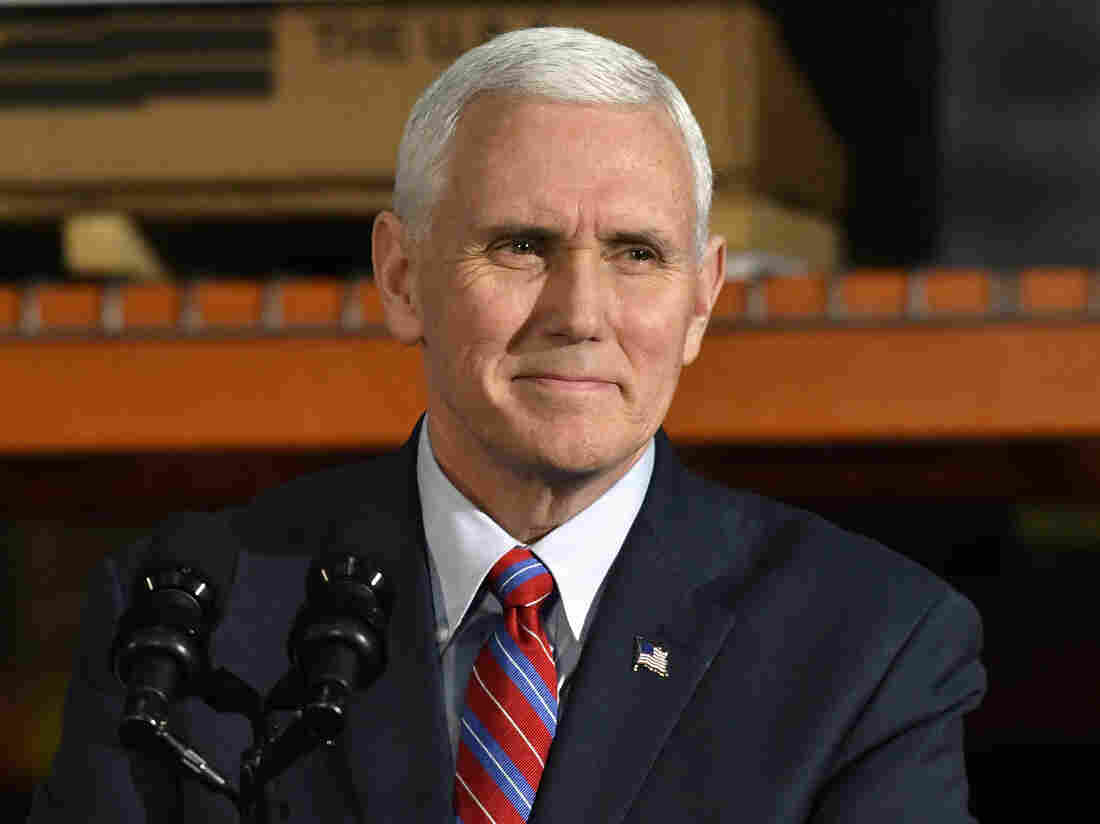
Vice President Pence is leading talks with House Republicans for the Trump administration to try to revive the failed health care bill.

Timothy D. Easley/AP

hide caption

toggle caption

Timothy D. Easley/AP

President Trump may have said he is ready to move on, but the House Freedom Caucus can’t let health care go.

The same firebrand conservatives who helped derail the GOP’s long-awaited legislation to repeal and replace key parts of the Affordable Care Act are now trying to breathe new life into the bill with a long shot effort to bring it back for a vote in May.

Or at least keep it on life support through the two-week April recess when they’ll otherwise have to explain the bill’s derailment back home. “We’re on the eve of going home and spending two weeks with our constituents … and they know they’re going to get questions about this,” said Rep. Steve Womack, R-Ark. “And for the people who were ‘no’ they’ll have justification to deal with.”

Womack, who was a “yes” on the GOP’s American Health Care Act, said despite encouraging talk from some corners of the House, a revival was not in sight.

“I did not get the message from our conference this morning that we’re nearing the finish on health care,” he said. “It’s obvious those negotiations continue to take place — and there might be some movement in some areas that give leadership some hope we can get closer to the finish line — but I’m not suggesting at all that we are right there and this thing could change on a dime.”

The 30-some members of the conservative House Freedom Caucus, led by Rep. Mark Meadows, R-N.C., are in active talks with the administration — in the aftermath of a skirmish between some of the group’s members and Trump over the failure of the health care bill. Those talks are being led by Vice President Pence, who spent Monday and Tuesday in the Capitol huddling with different factions of House Republicans.

According to lawmakers and aides briefed on the negotiations, conservatives are talking with the White House about tweaking AHCA to allow states to seek waivers of Obamacare’s requirements for “essential health benefits,” or basic health care services all insurance plans must offer, as well as restrictions on “community ratings,” or how much insurers can charge for premiums based on age and gender.

Originally, conservatives wanted to repeal those aspects of the law entirely to allow for health plans with lower premiums. Now there are talks about keeping them in place but allowing states to appeal to the Department of Health and Human Services to waive them on a state-by-state basis.

It’s far less than conservatives had hoped for in negotiations. “It perhaps is as much of a repeal as we can get done,” conceded Meadows, according to the Associated Press. “That’s the calculation we have to make.”

The talks have not so far publicly brought on board any of the moderate Republicans who already opposed rolling back essential health benefits or who worry that doing so would raise costs on people with pre-existing conditions. The talks also ignore the fact that many of the GOP’s “no” votes were based on the legislation’s sweeping changes to how Medicaid is funded, and the current negotiations don’t address those concerns at all.

It’s also unclear that including the updated proposal into the bill would even secure the votes of enough House Freedom Caucus members to pass it. Rep. Mo Brooks, R-Ala., is still a “no” and said his colleagues should not expect the conservative faction to vote as a bloc.

“For some reason, some in the media think that we vote lockstep with each other. That is categorically not the case. If you were to think of us more as an intellectual conservative think tank with a backbone, that’s what we are,” Brooks told reporters.

House Speaker Paul Ryan, R-Wis., spoke cautiously of the effort, describing talks as in “the conceptual stage” and saying that any action before the April recess was highly unlikely. “We want to make sure that when we go, we have the votes to pass this bill,” he said.

White House spokesman Sean Spicer was similarly cautious. “I’m not going to raise expectations, but I think that there are more and more people coming to the table with more and more ideas about how to grow that vote.”

The House is operating under a tight timeline. Republicans on all sides of this debate agree that May is a make-or-break deadline for the bill because of budgetary constraints. The health care bill is moving under a process protected by this year’s budget resolution. Once Congress begins moving on next year’s resolution, the budget protections for their health care bill expire.

Even if the House can muscle up the votes to revive the bill next month, it still must clear the Senate, which is expected to make significant changes to the House bill, and then the House would have to pass it again.

Politically, most Republicans say they do not want to drag out the health care debate longer than they have to if it’s clear it can’t pass. The only thing worse than failing once to deliver on a central campaign promise is failing twice.

“Let me just tell you what we can’t do — we can’t try again and fail,” Womack said. “So there will not be a try-again effort unless it is certain that we have the votes to pass it.”

Let’s block ads! (Why?)


No Image

AFL-CIO's Trumka Says Both Parties Have Lost Focus On U.S. Workers

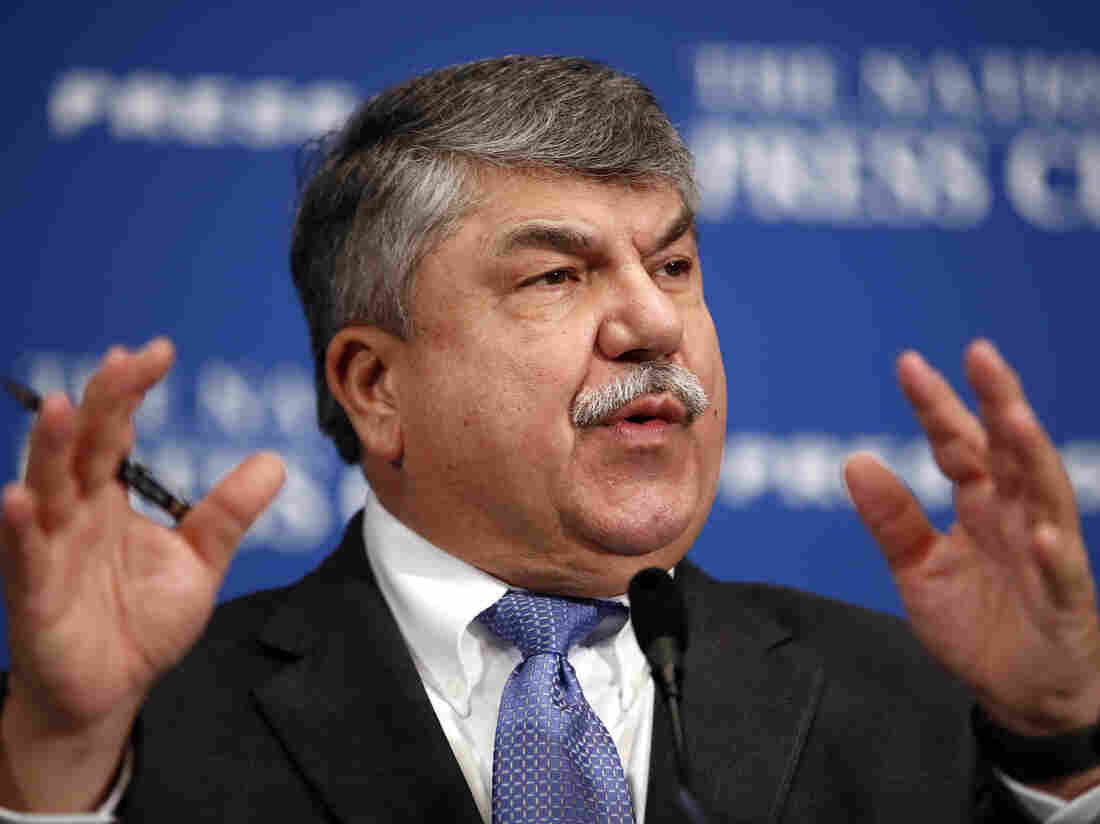
AFL-CIO President Richard Trumka speaks Tuesday at the National Press Club in Washington.

Alex Brandon/AP

hide caption

toggle caption

Alex Brandon/AP

AFL-CIO President Richard Trumka laid out his vision for organized labor Tuesday, taking on both political parties for catering to moneyed interests instead of focusing on the plight of American workers — the hallmark of the presidential campaign.

“Republicans, and too many Democrats, have rigged our economy to enrich a select few,” the union chief told an audience at the National Press Club.

“Give every worker out there the right to bargain with their employer for better wages, better working conditions whether you have a union or not,” he said.

[embedded content]
YouTube

Trumka’s cautionary messages about allowing corporations to enrich themselves at the expense of workers, and the dangers of deregulation struck a familiar theme for unions. But the speech was also notable for the way it veered from traditional party politics, calling attention to a growing rift in the once-solid relationship between unions and the Democratic Party.

“We’ll stand up to the corporate Republicans who attack working people and the neoliberal Democrats who take us for granted,” Trumka said. During the last election, 37 percent of the AFL-CIO’s membership voted for Trump. Both parties, he argued, are struggling with an identity crisis.

In the early days, Trumka and other union leaders supported the Trump administration’s position against the Trans-Pacific Partnership and its promise to renegotiate the North American Free Trade Agreement. But more recently, he said, the administration has lost its focus on workers in favor of relaxing rules on employers.

“There is a Wall Street wing that seeks to undermine Donald Trump’s promises to workers, and there’s a competing wing that could actually win some progress that working people need,” he said. “I’m concerned that the Wall Street wing of the White House is starting to hijack the agenda.”

Unions are not what they were during Trumka’s childhood in Pennsylvania coal country, when about a third of all American workers were members of unions. That declined to about 20 percent in the early 1980s. Now, it’s half that. Trumka himself referenced unions’ efforts to reverse that trend, including organizing efforts with white collar workers such as graduate students and technology professionals, as well as hotel and fast-food workers.

Trumka also called on workers to advocate for their interests with their employers, whether or not they can join a union.

Aparna Mathur, an economist at the American Enterprise Institute, said the message is a big departure from the decades-long emphasis unions have had on increasing membership.

“I think it is a recognition that, at some level, what unions did 50 years ago is not what they are able to do today,” she said.

Mathur said there are pragmatic realities facing unions. There is less interest in union membership among workers. Now, 28 states have right-to-work laws that prohibit unions from compelling the payment of dues or representation.

Unions are weaker, she said, and Trumka is trying to keep the worker movement going, with or without unions.

Let’s block ads! (Why?)


No Image

NCAA Returning To North Carolina After Partial Repeal Of 'Bathroom Bill'

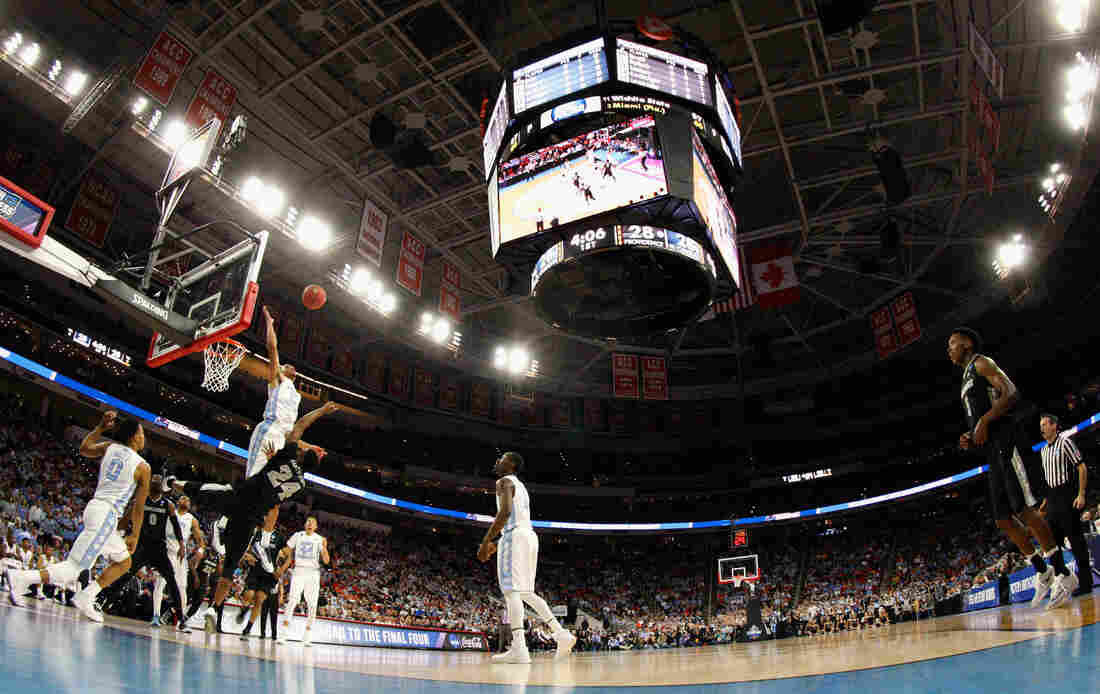
The second round of the 2016 NCAA men’s basketball tournament at PNC Arena in Raleigh, N.C. The NCAA pulled championship events from the state this year because of the controversial “bathroom bill”; the sporting events will now be returning.

Streeter Lecka/Getty Images

hide caption

toggle caption

Streeter Lecka/Getty Images

The NCAA is bringing sporting events back to North Carolina after state lawmakers repealed large portions of the controversial “Bathroom Bill” — although the collegiate sports organization isn’t exactly enthused about the deal.

In a statement on Monday, the group says its governors reached their decision “reluctantly.”

That law, which was passed more than a year ago, required transgender people to use bathrooms corresponding to the sex on their birth certificate and blocked cities and counties from passing protections for LGBT people, among other things.

In response, the NCAA pulled planned championship events from North Carolina, saying the law would make it “challenging” to promote an inclusive atmosphere at sporting events.

Last week, North Carolina lawmakers reached a compromise to repeal most of the effects of the law, known as House Bill 2 or HB2. The deal prohibits local communities from passing anti-discrimination ordinances for at least three years. That will block cities from imposing their own protections for LGBT people.

As we reported, the deal made a lot of people unhappy. Conservative supporters of HB2 saw it as a betrayal of principle. Supporters of LGBT rights, meanwhile, denounced the prohibition on LGBT protections.

The NCAA isn’t delighted either.

“As with most compromises, this new law is far from perfect,” the group said in a statement. The NCAA governors worried that by blocking cities from protecting “basic civil rights,” the state was sending “a signal that discriminatory behavior is permitted and acceptable.”

But the NCAA also noted that the situation in North Carolina now resembles that in other places where the group willingly holds championships. (In most states, it is legal to discriminate against lesbian, gay, bisexual and transgender people, and at least one other state bars local anti-discrimination ordinances.)

In short, the NCAA determined the compromise reached in North Carolina “has minimally achieved a situation where we believe NCAA championships may be conducted in a nondiscriminatory environment.”

Championships scheduled for 2017-2018 will be held as originally planned in North Carolina, and the state will be considered for future championship bids.

The NCAA reserves the right to “take necessary action” if it finds the environment in North Carolina prevents it from enforcing its own anti-discrimination policies.

Let’s block ads! (Why?)


No Image

North Carolina Tops Gonzaga In Messy NCAA Championship

North Carolina’s Joel Berry II drives around Gonzaga’s Przemek Karnowski during the first half of Monday’s NCAA college basketball tournament title game in Glendale, Ariz.

Mark Humphrey/AP

hide caption

toggle caption

Mark Humphrey/AP

Monday night’s national title game was expected to be a fast-paced, competitive showcase for North Carolina forward Justin Jackson and Gonzaga point guard Nigel Williams-Goss, two of the best players in college this season.

It was certainly competitive, but with both teams’ tough defenses locking up the main offensive options, the game turned into a foul-laden slog rather than a shootout. The Tar Heels were able to pin their opponent in the end, 71-65, winning the school’s sixth national title.

Fittingly it was empty possessions by Gonzaga in the final minute that put the game away, as North Carolina ended the game on a 9-2 run.

With Jackson struggling — he shot 6-19 and missed nine three-pointers — junior point guard Joel Berry II stepped up, scoring 22 and hitting the UNC’s only four three-point shots, and was named the tourney’s most outstanding player. Forward Isaiah Hicks added 13 points and 10 rebounds.

For North Carolina, it was a title to make up for a near-miss against Villanova in 2016, in which the Wildcats answered a last-second prayer with one of their own to win.

Tar Heels coach Roy Williams, who collected his third title in the 100th tournament game of his long career, said his players wanted redemption and were tough enough to take it. North Carolina had far more points in the paint than Gonzaga.

“Both teams played extremely hard,” Williams said. “I don’t think either team played very well.”

The Tar Heels got their first win this season while being out-rebounded, thanks to 14 turnovers by the Bulldogs. The two teams combined to shoot less than 35 percent from the field.

Gonzaga guard Josh Perkins drives past North Carolina guard Joel Berry II, right, Monday during the first half in the NCAA college basketball tournament finals in Glendale, Ariz.

David J. Phillip/AP

hide caption

toggle caption

David J. Phillip/AP

Gonzaga, hampered by both Williams-Goss’ 5-17 shooting and serious front-line foul trouble — wonder freshman Zach Collins fouled out with more than five minutes to go — the Bulldogs got an unexpected contribution from guard Josh Perkins, who scored 13 (all in the first half) after averaging five points in his earlier five tourney games.

Williams-Goss did get nine rebounds and six assists. Center Przemek Karnowski and forward Killian Tillie — pressed into service because of the foul trouble — both grabbed nine rebounds as well. The Bulldogs shot worse than their opponent for the first time all season, and went more than eight straight minutes in the second half without making a field goal.

For most of the first half of Monday’s game, Gonzaga — making the school’s first appearance in the Final Four — seemed to be playing to their strengths — and North Carolina’s.

The country’s best defensive team wasn’t just cutting off the Tar Heels’ fast break and forcing them into bad shots, they were also grabbing more rebounds than one of the best rebounding teams in the country. North Carolina had lost all three games in which they were out-rebounded this season.

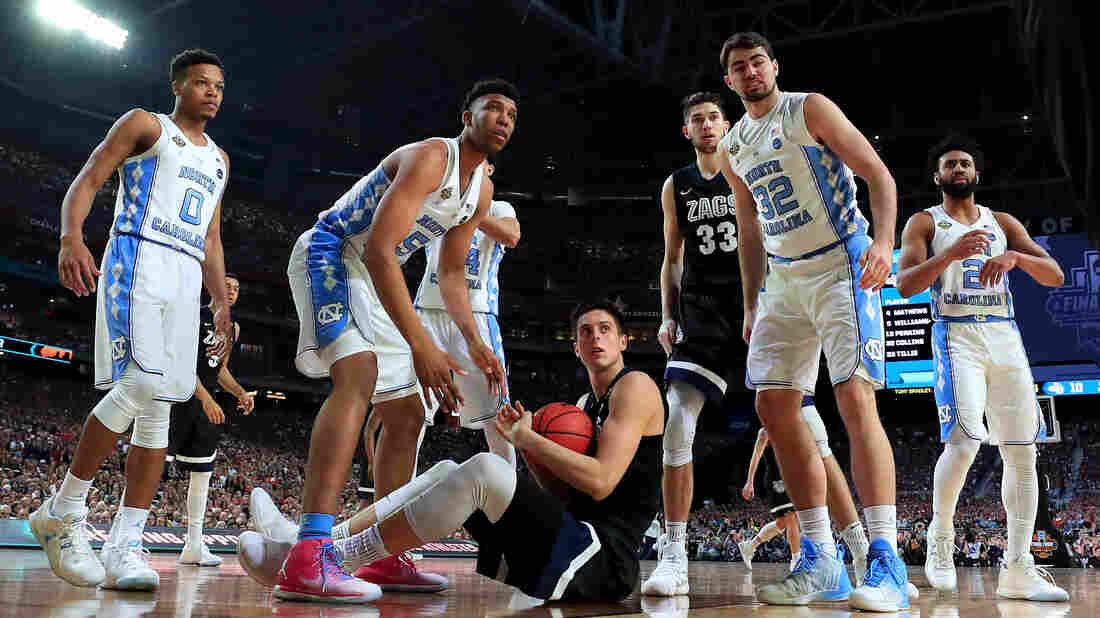
Forward Zach Collins the Gonzaga Bulldogs looks for a call from the referees first half during of the NCAA National Championship game. The freshman blocked three shots and got seven rebounds in the game, but also turned the ball over four times and fouled out with more than five minutes left to play.

Tom Pennington/Getty Images

hide caption

toggle caption

Tom Pennington/Getty Images

But in the last four minutes of the half, North Carolina evened out both the rebound margin and the score, cutting Gonzaga’s game-high seven-point lead to three at the half. Good three-point shooting by the Bulldogs (5-9, vs. 2-12 for the Tar Heels) helped give them the lead, but turnovers kept them from getting away.

As halftime ended, North Carolina coach Williams said his players weren’t moving enough on offense, and were settling for the shots Gonzaga wanted them to take. The Tar Heels drove the ball inside far more in the second half, getting easier shots, building up the fouls on Gonzaga and gaining an edge they needed to win.

Let’s block ads! (Why?)


No Image

Change To President Trump's Trust Lets Him Tap Business Profits

At a Jan. 11 news conference at Trump Tower on in New York City, President-elect Trump gestures at a stack of folders that he said contained documentation separating him from his businesses. That revocable trust was modified about a month later to let Trump withdraw from it at any time, ProPublica reports.

Spencer Platt/Getty Images

hide caption

toggle caption

Spencer Platt/Getty Images

With an oversized check for $78,333, written to the National Park Service, White House press secretary Sean Spicer on Monday took the first step in fulfilling President Trump’s pledge to give away his presidential salary.

Spicer said that the sum equaled Trump’s salary for the first quarter of 2017, and that similar charitable contributions will be made each quarter.

But a five-figure check is pocket change compared to the wealth of Trump’s business empire — businesses now held by the Donald J. Trump Revocable Trust, and a newly released document opens new holes in the ethics wall between the president and that wealth.

Trump lawyer Sheri Dillon said, at a January press conference, that the revocable trust would prevent conflicts of interest.

“President Trump wants there to be no doubt in the minds of the American public that he is completely isolating himself from his business interests,” she said.

This afternoon, however, after Spicer brought out the big check, he had to fend off questions as to just how isolated from the Trump empire the president is.

He said he didn’t know of any changes in the trust since January. “I’m not aware there was any change,” he said. “Just because a left-wing blog makes the point of something changing doesn’t mean it actually happened.”

It wasn’t a left-wing blog, but rather Pro Publica — a nonpartisan, nonprofit investigative journalism outfit — that first reported the change. A document dated Feb. 17 lets Trump draw out profits and principal from his businesses.

It says the trustees “shall distribute” funds to Trump at his request. It also requires them to send him money when appropriate and for “his maintenance, support or uninsured medical expenses.”

Essentially, the president can take money from his businesses whenever he wants.

Spicer dismissed a question of whether Trump already has done so, saying, “The idea that the president is withdrawing money at some point is exactly the purpose of why the trust — a trust — is set up regardless of the individual.”

But the purpose of presidential trusts has been to avoid conflicts of interest.

The new document also sheds new light on how the trust works. It’s run by two trustees, Donald Trump Jr. and an executive of the Trump Organization, who cannot give the president reports on the trust’s finances. But Trump’s second son, Eric, can do that as chair of the trust’s advisory board, and told Forbes magazine last month that he plans to give his father big-picture financial briefings every quarter or so.

Before Trump, recent presidents sold their assets or put them into a blind trust
when they took office.

“This is a ploy, okay?” said Kathleen Clark, a professor of law and ethics at Washington University in St Louis. “It’s a public relations ploy to give people the impression that Trump has done something meaningful about the massive conflicts of interest he faces.”

Those conflicts center mainly around his hotels and brands overseas, U.S. environmental laws that affect his golf courses, and his Washington, D.C., hotel.

Let’s block ads! (Why?)


No Image

Kishori Amonkar, Leading Indian Classical Vocalist, Dies At Age 84

The Indian vocalist Kishori Amonkar and tabla player Zakir Hussain posing at an awards ceremony in Mumbai, India in February 2016. Amonkar died on April 3, 2017 at age 84.

STRDEL/AFP/Getty Images

hide caption

toggle caption

STRDEL/AFP/Getty Images

One of India’s foremost classical singers, Kishori Amonkar, has died; she was one of the primary representatives of the Hindustani (North Indian) vocal tradition. The Times of Indiareported Amonkar died today at home in Mumbai after a brief illness, at age 84.

Kishori Amonkar was a musicians’ musician. In a 2011 documentary about the singer, Bhinna Shadja(a film commissioned by India’s Ministry of External Affairs), the internationally renowned tabla virtuoso Zakir Hussain placed her among the greatest Hindustani vocalists of all time, saying of her music: “It’s a painting that embodies every detail of someone’s life. In that, there is great happiness, great sadness, great anger, great frustration, desperation. Everything comes into focus in this one, concentrated little piece.” Using her nickname, “Tai,” Hussain continued: “That journey you can take in the world of art with so few. Kishoritai is one of those people.”

Along with her brilliant and deeply emotional improvisations in the khyal classical song style, in performances of single ragas that could last well over an hour, Amonkar — who usually sang cradling a small swaramandal zither to accompany herself — was particularly noted for her work in two other, more compact song genres: the “semi-classical” thumri style, and in bhajans, a kind of Hindu religious devotional song. In the recording below, Amonkar interprets a Meera bhajan, a song in honor of the god Krishna attributed to the 16th-century mystic and poet Meera (also known as Mira, Meerabai or Mirabai).

[embedded content]
YouTube

Born April 10, 1932, Amonkar trained with her mother, singer Mogubai Kurdikar, in the Jaipur Atrauli gharana (school, or tradition) founded by the 19th-century artist Ustad [Master] Alladiya Khan. In an interview with The Indian Express originally published in December, Amonkar recalled her mother as a stern taskmaster: “She would sing and I would repeat,” she said. “I would copy her without asking her anything. Aai [Mother] was so strict that she would sing the sthayi [refrain] and antara [stanza] only twice and not a third time. I had to get every contour of the piece in those two instances. That taught me concentration.” Later, she would accompany her mother onstage, playing the stringed tanpura drone as her mother sang.

After her professional career began to develop in her early twenties, Amonkar reportedly lost her voice totally. She said that she found no cure in Western-style doctors or physical therapy. Instead, she credited the return of her abilities — a process that took two years — to a holy person who aided her with Ayurveda. According to Amonkar, that two-year break from singing helped her find her own voice — and her own approach into the tradition. She finally felt free enough to locate her own connection to the music she was singing, rather than simply mimic what she had been taught.

Amonkar received two of the Indian government’s highest civilian awards: the third-highest, the Padma Bushan, in 1987 and the second-highest, the Padma Vibhushan, in 2002. Even so, she was less of a celebrity figure than some of her contemporaries, rarely performing internationally and loathe to give interviews.

She was also famously prone to chastising audiences and presenters for what she perceived as less-than-perfect attention to her performances. Amonkar attributed that acerbity to her need to service the music. “I want to get involved and focus on the abstract … For that I need my audiences’s help, not their interruptions,” she told The Indian Express. “People have to understand that music isn’t entertainment. It is not to be sung to attract the audience, which is why I never play to the gallery.”

[embedded content]
YouTube

Let’s block ads! (Why?)


No Image

Xi Jinping Seeks Cooperation With U.S. Ahead Of China's Leadership Transition

A look at what President Donald Trump’s first face-to-face meeting with Chinese President Xi Jinping looks like from Beijing.

MICHEL MARTIN, HOST:

Now we’re going to get a different view of the summit this time from Beijing. We turn to NPR’s Beijing correspondent Anthony Kuhn. Anthony, greetings. Thanks so much for talking with us.

ANTHONY KUHN, BYLINE: You’re very welcome, Michel.

MARTIN: So what does China want to get out of the summit?

KUHN: Well, remember, Michel, that this is a political transition year for China. President Xi Jinping is due to get a second five-year term this fall, so they do not want ties with Washington blowing up or getting in the way of that. They want high-level contacts with Washington to be regular, and they want more stability in their relationship than they’ve had so far under this administration.

Also remember Donald Trump was the candidate that I think most Chinese wanted to see win, and many Chinese like the fact that he’s a businessman. And they think they can negotiate with him. Some believe that he may even give China a chance to advance its global interests, perhaps, at the U.S.’s expense.

MARTIN: That actually leads me to where I wanted to go next. I mean, on the one hand, both Xi Jinping and Trump think of themselves as different from their predecessors. On the other hand, Trump had very strong language about China over the course of the campaign, and, you know, does any of that affect the chemistry at this meeting – or what do you think about that?

KUHN: Right. Well, you could, I suppose, argue that both of these men consider themselves sort of political strongmen, really stronger than men who came before them. They’ve both tried to increase the power of their offices and demanded loyalty from their subordinates. But I don’t think that’s necessarily enough to spark a budding bromance. Just because they have these ambitions it doesn’t mean that either of them will succeed in achieving them.

MARTIN: And Xi Jinping has made comments suggesting that China is poised to fill the vacuum that the U.S. says it wants to leave by pulling out of international commitments. What does he mean by that?

KUHN: Well, on a couple of occasions, you know, President Xi Jinping has spoken out for free trade, open markets, globalization, the Paris agreement on climate change, and Xi has been using these opportunities to show China as a heavyweight in global governance, providing public goods for the international community and defending the international order.

One thing I think that is pretty clear is that many people in China believe that the U.S. is losing soft power and moral high ground. So when the U.S. government hammers China over issues like torture, press freedoms, treatment of ethnic minorities, nepotism, corruption and conflict of interest in government, it rings pretty hollow. And we know this because we’ve been reading months worth of sort of crowing, jeering commentaries to that effect in China’s state-run media.

MARTIN: OK. So North Korea – nuclear weapons, wouldn’t that be a shared item of interest and a very pressing issue on the agenda for both countries? Is there anything that they can really hope to accomplish in this meeting?

KUHN: Well, they’ve got to do something about it because time is really running out before North Korea will get missiles with nuclear warheads capable of targeting U.S. territory. The problem is there is so much daylight between the U.S.’s and China’s positions. Both sides think the other side has to do the heavy lifting on this problem.

As far as Beijing is concerned, it wants the U.S. to provide North Korea with some sort of security guarantee in exchange for either freezing its nuclear programs or denuclearizing, as it’s already promised to do. The other problem is that both sides realize that the North Korean nuclear issue is tied into so many other things. So if Washington and Beijing get into a spat over trade, over Taiwan, over the South China Sea, the chances of cooperation on the North Korean nuclear issue will be very slim.

MARTIN: That was NPR’s Beijing correspondent Anthony Kuhn joining us from Beijing. Anthony, thanks so much for speaking with us.

KUHN: You bet, Michel.

Copyright © 2017 NPR. All rights reserved. Visit our website terms of use and permissions pages at www.npr.org for further information.

NPR transcripts are created on a rush deadline by Verb8tm, Inc., an NPR contractor, and produced using a proprietary transcription process developed with NPR. This text may not be in its final form and may be updated or revised in the future. Accuracy and availability may vary. The authoritative record of NPR’s programming is the audio record.

Let’s block ads! (Why?)