Articles by admin

No Image

A Baby With 3 Genetic Parents Seems Healthy, But Questions Remain

Mitochondrial diseases can be passed from mothers to their children in DNA.

JGI/Tom Grill/Getty Images/Blend Images

hide caption

toggle caption

JGI/Tom Grill/Getty Images/Blend Images

Last fall, the New York-based reproductive endocrinologist John Zhang made headlines when he reported the birth of the world’s first “three-parent” baby — a healthy boy carrying the blended DNA of the birth mother, her husband and an unrelated female donor.

The technique, called mitochondrial replacement therapy, allowed the 36-year-old mother to bypass a defect in her own genome that had led, twice before, to children born with Leigh syndrome, a devastating neurological disorder that typically culminates in death before age 3.

While heralded in many circles as a breakthrough, the news triggered numerous ethical and scientific questions, many of which remained unanswered at the time. Last week, Zhang and his colleagues at the New Hope Fertility Center provided some answers — and raised yet more concerns.

John Zhang of the New Hope Fertility Clinic in Manhattan performed the procedure that used DNA from three people to create a baby boy.

Courtesy of the New Hope Fertility Clinic

hide caption

toggle caption

Courtesy of the New Hope Fertility Clinic

Their new report, published in the journal Reproductive BioMedicine Online, describes both the technique and the participants in greater detail, something that fellow researchers had demanded in order to properly scrutinize Zhang’s methodology.

But in publishing the new material, the journal editors themselves also noted that Zhang’s report still contains “weaknesses and limitations in a number of areas,” including lingering questions about informed consent, the full risks of mitochondrial replacement therapy and the long-term health of the child.

“Although we were able to encourage the authors to include more details of their work in the submission,” journal editor and clinical embryologist Mina Alikani noted in an accompanying editorial co-written with her colleagues, “some uncertainties concerning methodologies and results still remain.”

In a statement provided by the New Hope facility, Zhang conceded that more work needs to be done. “There is always concern about any new procedure and innovation implemented on humans,” Zhang said. “We agree that there are still a lot of unknowns about this technique and will make every effort to monitor the boy’s ongoing progress and test for any adverse outcomes.”

A key weakness in Zhang’s work, according to critics, is that the procedure is not approved in the United States, which forced the team to undertake the procedure in Mexico. “This particular experiment is being done almost entirely outside the normal regulatory structure,” says bioethicist and pediatrician Jeffrey Botkin of the University of Utah, who participated in an Institute of Medicine committee last year that issued a call for more animal research on mitochondrial replacement therapy.

Without proper oversight, Botkin says, vital questions about the technique, as well as the impact of such experiments on resulting embryos, remain difficult to answer.

As it stands, Congress last year prohibited the Food and Drug Administration from considering applications for research in this area, but in December the U.K.’s Human Fertilization and Embryology Authority agreed to let clinics apply to try the procedure on a case-by-case basis. In March, it granted a license to carry out the first procedure to Doug Turnbull, director of the Wellcome Trust Center for Mitochondrial Research at Newcastle University.

“We’re going to look to those in Britain,” Botkin says, “to do careful trials and help us better understand how this technique works.”

In broadest terms, Zhang and his colleagues lifted the nucleus out of the egg of the original mother, leaving behind most — though not all — of her defective mitochondria, which would have led to the almost certain development of Leigh syndrome in the fetus. They then placed that nucleus inside a healthy donor woman’s egg, whose own nucleus had been removed. The result was a hybrid egg with the original mother’s nuclear genes and the donor mother’s cytoplasm and mitochondria. The hybrid egg was fertilized by the father’s sperm and implanted in the birth mother.

The technique could potentially prevent a wide range of mitochondrial diseases, ranging from hereditary blindness to progressive muscle wasting.

A key problem, however, is that not all of the defective mitochondria can be eliminated. The boy, Zhang reports in the new paper, currently carries between 2.36 and 9.23 percent of potentially defective DNA, according to sampling of his urine, hair follicles and circumcised foreskin.

“That’s not surprising,” says Doug Wallace, head of the Center for Mitochondrial and Epigenomic Medicine at the Children’s Hospital of Philadelphia, who was not involved in the study. “As far as I know, very few cases have been found where there is absolutely no carryover of mitochondria from the donor nucleus.”

Even at a 9 percent load of defective DNA, Wallace said, most people with Leigh Syndrome will appear normal. He added that while it is unlikely, levels could be higher in the boy’s other tissues, such as the brain or heart.

Zhang and his team report that physical examination of the boy has included detailed neurological investigation at regular waypoints, including at two weeks, four weeks, two months, three months and four months. All have proved normal, Zhang said, and the boy is still under close monitoring with “a long-term follow-up plan.”

Just what such a long-term plan might look like, however, is uncertain — particularly given that the parents have publicly said that they do not plan to have the boy regularly tested throughout his life to monitor levels of the errant DNA. University of California molecular biologist Patrick O’Farrell, who was not involved in the Zhang study, suggested that this was worrying, given that there could a rising load of mutations as the boy ages.

In this case, a total five eggs underwent the transfer and were fertilized, Zhang and his team reported. The embryo that was ultimately implanted carried about a 5 percent load of the defective DNA, but the researchers did not examine how much defective DNA was carried over in the embryos that were not used.

The remaining fertilized eggs are still available, says Zhang, but he has not tested them to see how much defective DNA each contains. Should the parents decide they’d like to have another baby, Zhang said he would test the others.

Still, without readily accessible data on the transfer of defective DNA in all of the fertilized eggs, O’Farrell argues that important insights are being overlooked. A three-parent baby, he said, offers the rare chance to study the “segregation and transmission of mitochondrial genomes.”

In a telephone interview, Zhang emphasized that analyses are ongoing. “This is new ground, so there are many questions to ask and more studies to come,” Zhang said. “With new tests in new studies, we will continue to learn more.”

For all of the lingering questions, Zhang’s groundbreaking research has sparked a flurry of similar research elsewhere. The editors of the journal carrying his new report credit Zhang with helping to nudge “cautious use” of mitochondrial replacement therapy in the U.K. Meanwhile, the fertility specialist Valery Zukin has used the three-parent technique in the Ukraine to help two infertile women who suffer from a syndrome known as embryo arrest, where their fertilized eggs stop growing before they can be implanted in the uterus.

Both women gave birth to apparently healthy babies this year.

Such news will surely be welcomed by desperate parents looking for new ways to conceive, but experts like O’Farrell continue to worry that the procedure is being deployed too quickly, and with too many question unanswered.

“I feel like extending this work into infertility cases is dangerous,” O’Farrell says. “For every gene that compromises fertility, we need to know whether it also is going to affect later aspects of development.

“If you only rescue fertility,” he adds, “the other defects that gene might cause will still be there.”

Jill Neimark is an award-winning science journalist and an author of adult and children’s books. Her most recent book is The Hugging Tree: A Story About Resilience.

A version of this articleoriginally appeared at Undark, a digital science magazine published by the Knight Science Journalism Fellowship Program at MIT.

Let’s block ads! (Why?)


No Image

Best of the Week: Arnold Schwarzennegger on the Future of His Franchises, Alternate Movie History and More

The Important News

DC Extended Universe: Arnold Schwarzenegger , Annabelle: Creation, Ingrid Goes West, King Arthur, Bang! The Bert Berns Story, Folk Hero & Funny Guy and All Eyez on Me.

Behind the Scenes: Michael Bay shows why we should see Transformers: The Last Knight in IMAX 3D and The Fate of the Furious gets three new featurettes.

Movie Clips: Rupture.

Movie Posters:This week’s best new posters.

Movie Parodies: Jurassic World with parkour and all the Wolverine movies rated R.

Movie Recaps: Rogue One: A Star Wars Story retold in Lego and all the Fast and the Furious movies recapped.

Mashups: It meets The Cat in the Hat, Batman meets The Matrix, Will Smith in The Matrix and Guardians of the Galaxy meets I Am Legend.

Reworked Trailers: Guardians of the Galaxy Vol. 2 in Lego, Spider-Man: Homecoming sweded.

Remade Movie Scenes:A teen recreated the opening to La La Land to ask Emma Stone to prom.

Dream Casting Depictions:Emma Stone as Batgirl.

Supercuts: Movie theater scenes in movies, the sounds of the Harry Potter franchise and the best cosplay of WonderCon.

Our Features

Monthly Movie Calendar: Our guide to all the new releases and anniversaries in April.

Geek Movie Guide: We highlighted everything geeks have to look forward to in April.

Comic Book Movie Guide: We examined whether Superman will come back to life in Justice League.

RIP: We remembered all the reel-important people we lost in March.

Home Viewing: Our guide to everything hitting VOD this week. And our guide to all the best new indies and foreign films on DVD.

and

MORE FROM AROUND THE WEB:

Let’s block ads! (Why?)


No Image

Trump Organization Settles Lawsuit With Chef José Andrés

The Trump Organization and celebrity chef José Andrés announced a settlement on Friday in the two-year legal dispute over a flagship restaurant in Trump’s Washington, D.C. hotel. Above, the Old Post Office building in July 2015 under renovation before the hotel’s opening.

Susan Walsh/AP

hide caption

toggle caption

Susan Walsh/AP

The Trump Organization has settled a legal battle with the chef José Andrés that had stretched on for two years. The lawsuit concerned a restaurant deal that Andrés pulled out of after Trump made comments disparaging Mexicans.

Andrés’ restaurant was to be in the Trump International Hotel in Washington, D.C., which operates inside the historic Old Post Office. Terms of the deal were not disclosed, and both parties declined comment beyond a joint statement from the Trump Organization and Andrés’ restaurant group, Think Food Group.

“I am glad that we are able to put this matter behind us and move forward as friends,” Donald Trump Jr. said in the statement. “Since opening in September 2016, Trump International Hotel, Washington, D.C. has been an incredible success and our entire team has great respect for the accomplishments of both José and TFG. Without question, this is a ‘win-win’ for both of our companies.”

“I am pleased that we were able to resolve our differences and move forward cooperatively, as friends,” said Andrés in the statement. “I have great respect for the Trump Organization’s commitment to excellence in redeveloping the Old Post Office. … Going forward, we are excited about the prospects of working together with the Trump Organization on a variety of programs to benefit the community.”

The Washington Post reports that Andrés had already planned a menu for the restaurant, which was to be called Topo Atrio, and that in the spring of 2015, “Andrés and Trump’s daughter Ivanka traded design ideas and advanced plans for the restaurant.”

But those plans fell apart in 2015, after Donald Trump made disparaging comments about Mexicans, calling them “rapists” and saying that they were bringing drugs and crime into the U.S. Andrés pulled out of the deal, and Trump sued for $10 million in a breach of contract suit.

Think Food Group countersued for $8 million, saying that Trump’s comments had hurt business:

“The perception that Mr. Trump’s statements were anti-Hispanic made it very difficult to recruit appropriate staff for a Hispanic restaurant, to attract the requisite number of Hispanic food patrons for a profitable enterprise, and to raise capital for what was now an extraordinarily risky Spanish restaurant.”

A few weeks before taking office in January, Trump sat for a videotaped deposition in the suit.

The General Services Administration said last month that the Trump Organizations is in “full compliance” with a lease that specifically says no “elected official of the Government of the United States … shall be admitted to any share or part of this Lease, or to any benefit that may arise therefrom[.]” That decision has been questioned by many ethics and contract experts.

The Trump Organization is reportedly looking to open a second hotel in Washington.

Let’s block ads! (Why?)


No Image

FDA Approves Marketing Of Consumer Genetic Tests For Some Conditions

23andMe is now allowed to market tests that assess genetic risks for 10 health conditions, including Parkinson’s and late-onset Alzheimer’s diseases.

Meredith Rizzo/NPR

hide caption

toggle caption

Meredith Rizzo/NPR

The U.S. Food and Drug Administration approved 23andMe’s personal genetic test for some diseases on Thursday, including Alzheimer’s, Parkinson’s and celiac diseases.

The tests assess genetic risk for the conditions but don’t diagnose them, the FDA says. The agency urges consumers to use their results to “help to make decisions about lifestyle choices or to inform discussions with a health care professional,” according to a press release about the decision.

Jeffrey Shuren, the director of the FDA’s Center for Devices and Radiological Health, wrote, “it is important that people understand that genetic risk is just one piece of the bigger puzzle, it does not mean they will or won’t ultimately develop a disease.” Other known factors that can play into the development of disease include diet, environment and tobacco use.

The FDA has previously scolded the company for marketing the personal genetic testing kits without the agency’s consent. In 2013, the agency told 23andMe to stop selling its personal genome kits in the United States until they gained FDA approval by proving they were accurate.

The company agreed to work with the FDA, as we reported, and a recent FDA review of peer-reviewed studies found more consistent links between certain gene variants and 10 diseases, the FDA says.

As a result, the FDA is now allowing 23andMe to market tests that assess genetic risks for the following 10 diseases or conditions:

The company’s $199 Health and Ancestry test is available directly to consumers, without seeing a physician or genetic counselor. Consumers’ DNA is extracted from a saliva sample. After mailing in their sample, people can see their results online.

“This is an important moment for people who want to know their genetic health risks and be more proactive about their health,” said Anne Wojcicki, the CEO and co-founder of 23andMe, in a company press release.

Sharon Terry, the CEO of the Genetic Alliance, a nonprofit organization that advocates for health care for people with genetic disorders, likens it to another consumer test. “Women learn they are pregnant using a test directly marketed to them and buy it off the shelf in a drugstore,” she told NPR. “In 10 years we will marvel that this is an ‘advance’ at all. Imagine pregnancy tests being only available through a doctor!”

Robert Green, a professor of medicine at Harvard Medical School, says people should be able to access genetic information in whatever way is best for them. “Some people really want this [genetic] information on their own, and others want it through their physician,” he said. “Both those channels are legitimate. People should just be aware that this information is complicated.”

But some are stillconcerned about whether the genes in question actually correspond to a higher risk of disease reliably enough to warrant direct-to-consumer marketing and testing, as opposed to genetic testing with the guidance of a professional.

Somehealth professionals worry that consumers will “take the results and run,” as Mary Freivogel put it. Freivogel, a certified genetic counselor and the president of the National Society of Genetic Counselors, added that genetics are just “one piece to the story when it comes to developing a disease.”

Freivogel said speaking with a genetic counselor before getting tested for disease is important. “Direct-to-consumer testing takes away a pre-test conversation,” she said, where counselors can help patients think about questions like: “What do you want to know? What are you going to do with this information? Is it something you’re prepared to know, or is it going to just make you anxious?”

And it isn’t clear what consumers should do with their newly calculated disease risk, especially for conditions like Alzheimer’s for which there isn’t a cure or even a course of action to prevent the disease.

What’s more, having the genes is not the same as having the diseases the genes are associated with. A person may have genes that are associated with Alzheimer’s, for example, but that doesn’t mean he or she will ever get the disease. Conversely, some people develop Alzheimer’s without the identified risk genes.

The Alzheimer’s Association does not recommend routine genetic testing for the disease in the general population because it can’t “productively guide medical treatment.”

A genetic test result for Alzheimer’s is “not going to provide useful information even if you’re at an increased risk,” said Keith Fargo, director of scientific programs at the Alzheimer’s Association. “It’s not like there’s a drug you can take right now [to prevent the disease] or a lifestyle change you can make that you shouldn’t make anyway,” such as exercising and eating right to keep your brain healthy.

John Lehr, the CEO of the Parkinson’s Foundation, says personal genetic tests can help identify risk for Parkinson’s disease. But, he wrote in a statement following the FDA’s announcement, the foundation recommends “that people who are interested in testing first seek guidance from their doctors and from genetic counselors to understand what the process may mean for them and their families.”

Let’s block ads! (Why?)


No Image

Today in Movie Culture: 'The Matrix' Recast With Will Smith, Mark Hamill Hilariously Redubs Han Solo Dialogue and More

Here are a bunch of little bites to satisfy your hunger for movie culture:

Recast Movie of the Day:

What if Will Smith hadn’t turned down the part of Neo in The Matrix? The Unusual Suspect shows us what that looks like in this terrific mashup:

[embedded content]

Redubbed Movie of the Day:

In the latest edition of Bad Lip Readings, Mark Hamill guest-voices Han Solo’s lines in a redub of Star Wars: The Force Awakens:

[embedded content]

Movie Franchise Parody of the Day:

Since Logan is so popular with its R rating, XVP Comedy added R-rated content to the other Wolverine movies:

[embedded content]

Movie Franchise Recap of the Day:

With The Fate of the Furious coming out in a week, Burger Fiction runs through the evolution of the Fast and the Furious franchise:

[embedded content]

Vintage Image of the Day:

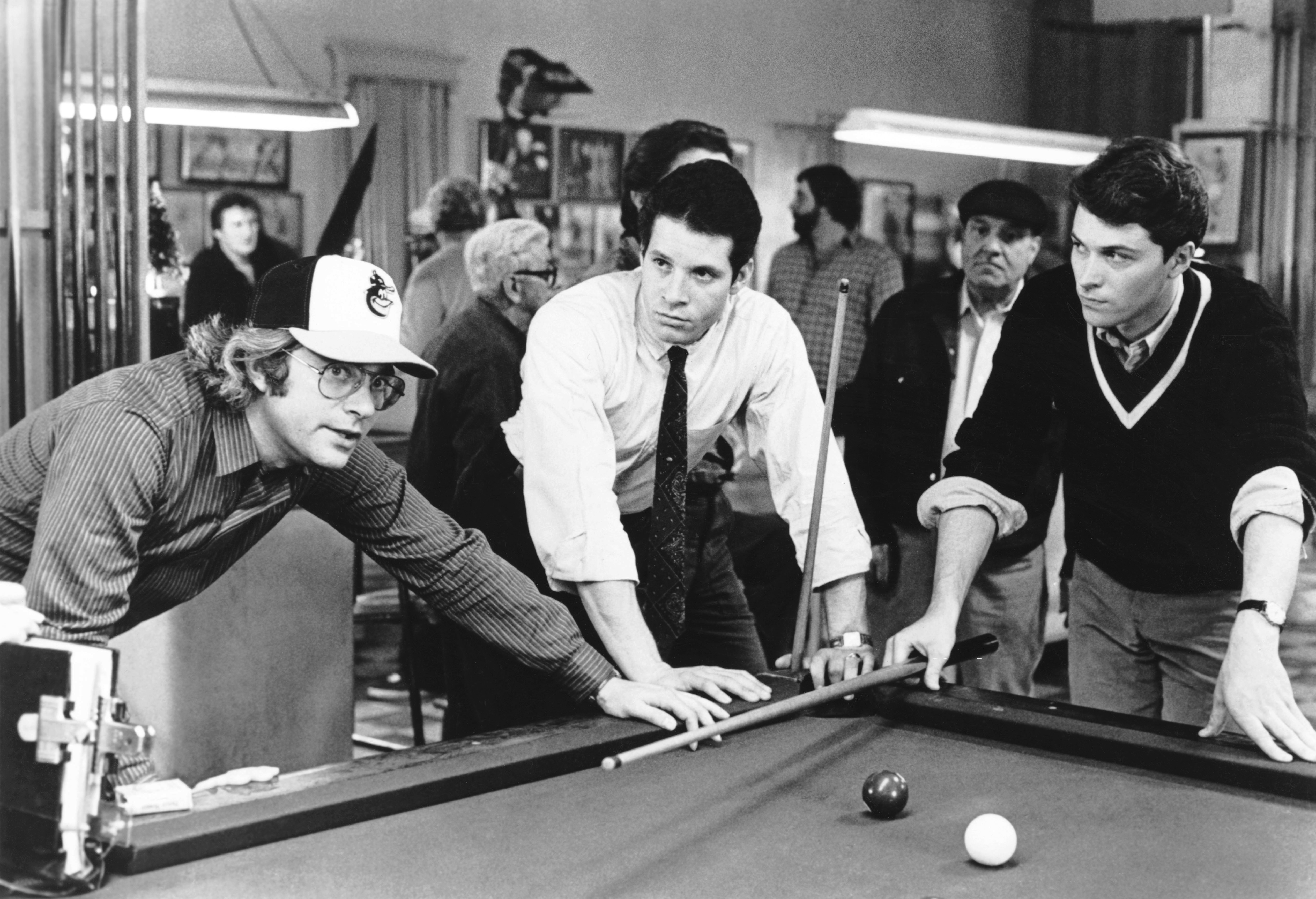
Barry Levinson, who turns 75 today, directs Steve Guttenberg and Tim Daly on the set of Diner in 1981:

Actor in the Spotlight:

While promoting the home video release of Rogue One: A Star Wars Story, Alan Tudyk reprises his voice roles from Zootopia, Frozen and more (via Geek Tyrant):

Movie Deconstruction of the Day:

This video by Zackery Ramos-Taylor shows the brilliant mirroring of shots in the two halves of Lion through side-by-side comparison:

[embedded content]

Fan Art of the Day:

Kong: Skull Island director Jordan Vogt-Roberts shared this tribute to both his movie and his beard:

This fan art of Kong with a beard cracks me up. pic.twitter.com/8XlQbnn8HE

— Jordan Vogt-Roberts (@VogtRoberts) April 6, 2017

Cross-Promotion of the Day:

Baby Groot and the Geico Gecko team up to sell car insurance and Guardians of the Galaxy Vol. 2 in this cute new ad (via Geek Tyrant):

[embedded content]

Classic Trailer of the Day:

With the remake of Going in Style opening this week, check out the trailer for the 1979 original starring George Burns, Art Carney and Lee Strasberg:

[embedded content]

and

Let’s block ads! (Why?)


No Image

Comcast Goes Mobile With Cellphone Service For Existing Customers

Comcast is calling its foray into wireless phone service Xfinity Mobile.

Jeff Fusco/AP Images for Comcast

hide caption

toggle caption

Jeff Fusco/AP Images for Comcast

In telecom circles, Comcast’s plans and efforts to wade into the mobile market go back years. On Thursday, the company finally revealed the specifics of what its new service will look like.

Comcast is calling its cellphone program Xfinity Mobile, expected to launch in the next few weeks. Its target audience is existing Comcast customers — the company hopes they’ll be drawn by the savings from adding mobile service to a home Internet service or bigger bundles.

Here’s a quick rundown of the offer from The Wall Street Journal:

“Unlimited talk, text and data is $65 per line. But if you have one of Comcast’s more expensive internet and cable bundles, which start at $150 a month, the price for each unlimited line drops to $45.

“Comcast will also offer a pay-as-you-go option for $12 per gigabyte — a very cheap option for people who don’t use much data. … The prices are generally lower than what the major carriers charge. … But unlike Verizon or AT&T, adding more wireless lines doesn’t bring the price down.”

Both the Journal and Bloomberg have really handy price-comparison charts. A couple of caveats include a prerequisite, for now, that customers must purchase a new phone (options include Apple, Samsung and LG) and a note that unlimited plans may face slower speeds after 20 gigabytes.

Comcast is the largest cable operator, but its competition includes AT&T-DirecTV and Verizon FiOS, both of which are part of large — and growing — telecom conglomerates. Bloomberg reports that Charter, which recently bought Time Warner Cable, plans to launch a wireless service in 2018. The entire industry is trying to figure out how to make money in new ways, as people’s TV-viewing and data-consumption habits keep changing.

Comcast’s new wireless service will rely on Comcast’s own Wi-Fi network and Verizon’s phone network, for which Comcast struck a resale contract years ago. (Charter has a similar deal.) Major wireless companies already rely on Wi-Fi hot spots to offload some wireless traffic to mitigate congestion, and some companies have tried to do a cellphone service fully based on Wi-Fi.

As The Associated Press points out, Comcast’s “pay-per-gigabyte approach is similar to what Google is doing with its wireless service, Google Fi. … But Google Fi hasn’t caught on, in part because it works with only a few Google-branded phones and uses networks from T-Mobile, Sprint and U.S. Cellular, which aren’t as robust as Verizon’s.”

Comcastwill benefit from access to Verizon’s network, and for now, Comcast says phone calls won’t travel over Wi-Fi. The company has 16 million hot spots around the country, a network built largely through consumer hot spots. Comcast says Xfinity Mobile users will automatically connect to hot spots and toggle between Wi-Fi and mobile broadband. Wi-Fi reliability remains a challenge for all companies attempting this.

Roger Entner of Recon Analytics says Comcast’s new wireless service might boost the company’s bottom line, while having a relatively low impact on competition.

“I just don’t see Xfinity Mobile being designed to be a market disrupter,” he says. “I think the rest of the wireless industry breathed a collective sigh of relief after this announcement.”

Let’s block ads! (Why?)


No Image

Fentanyl Adds A New Terror For People Abusing Opioids

Allyson and Eddie, clients at the AAC Needle Exchange and Overdose Prevention Program in Cambridge, Mass., say they carry naloxone and try to never use drugs alone to reduce the risk of overdosing.

Robin Lubbock for WBUR

hide caption

toggle caption

Robin Lubbock for WBUR

There’s a clear culprit in the rising drug overdose death count in Massachusetts, but it’s not heroin. It’s the synthetic opioid fentanyl.

Seventy-five percent of the state’s men and women who died after an unintentional overdose last year had fentanyl in their system, up from 57 percent in 2015. It’s a pattern cities and towns are seeing across the state and across the country, particularly in New England and the Rust Belt states.

Fentanyl may be especially lethal because it’s strong, it’s mixed with other drugs in varying amounts unknown to the user, and it can trigger an overdose within seconds. “It happens so fast, like instantly, as soon as you do the shot,” says Allyson, a 37-year-old woman who started using heroin in her late teens.

“In the past, it [an overdose] was something that you saw happening, like, you could see the person start to slow down, their color would start to turn blue, and then they would go out, within 10 minutes or so,” Allyson says. With fentanyl, there’s no progression. “Now it’s instant,” she says.

Allyson leans back in a chair at the AAC Needle Exchange in Cambridge, Mass., and tugs the hood of her gray sweatshirt down to her eyes. We’ve agreed not to use her full name or the full names of any people in this story who buy illegal drugs, so as not to harm their future job prospects.

Allyson is a regular client at the needle exchange, where manager Meghan Hynes urges everyone to carry naloxone, the drug that reverses an overdose. Hynes uses her own kit every few weeks.

“Recently we had a guy leave the bathroom and all the color just drained from his face, like immediately, and he just turned blue,” Hynes says, describing what’s become a typical fentanyl overdose. “I’ve never seen anyone turn blue that fast. He was completely blue and he just fell down and was out — not breathing.”

Hynes bent over the man turning blue to pump his heart, but she couldn’t. He was hit with “wooden chest,” a side effect of fentanyl that may be increasing the death toll.

“Your chest seizes up. You literally have paralysis and that’s obviously really dangerous, because if someone needs CPR, you can’t do it,” Hynes says. “And in this situation it spread, so he had lockjaw and his mouth was only open a tiny, tiny bit. And so I could hardly even do rescue breathing for him.”

Breathing for overdose patients is critical because brain cells can die after just five minutes without oxygen. Hynes revived the man on the floor. Because of the increasing overdoses she sees with fentanyl in the mix, she urges clients to stick to a dealer they know, and use with a buddy.

Many drug users also inject a small amount before they give themselves the full shot.

“But it’s really hard to tell these days, even if you do a tester shot,” Allyson says, because the grains of fentanyl that could kill you aren’t mixed uniformly in a bag. That’s a lesson she learned one death-defying night a few months ago.

Allyson, who is homeless, spent the night in a tent with a friend. She woke up and used the last of a bag from the day before to get herself going.

“And I actually said to my friend, I said, ‘Wow, I can’t believe I only saved myself this much.’ It was a very small amount, like a third of what I did the night before,” Allyson says, shaking her head. “I overdosed on it.”

The friend had enough naloxone in the tent, which was far from a road or hospital, to bring Allyson back from the dead.

Fentanyl is an opioid 50 times more powerful than heroin. There’s a legal, Food and Drug Administration-approved version. But labs in China are churning out cheap versions of fentanyl that dealers are selling on the streets mixed with fillers, heroin or other drugs.

Buyers have no idea how much fentanyl they are getting or how much risk they are taking with every injection. So, these days, drug users who frequent this needle exchange assume there’s fentanyl in every bag they buy.

“Most of us know that that’s what we’re getting,” says Sean, who started using heroin more than 20 years ago. “And if you don’t believe it, you’re living in a fairy tale world.”

There’s no reliable way for drug users to test the contents of bags bought on the street. Eddie relies on taste.

“It’s slightly bitter, but it’s mainly sweet if it’s fentanyl. If it’s heroin, you can tell right away because it’s got a bitter taste and it’s a long-lasting aftertaste,” Eddie says. “I will not put anything in my arm before I taste it.”

Eddie and Allyson say they try to avoid fentanyl. But when their last dose of drugs starts to wear off, they’ll take anything to avoid withdrawal, which they describe as the flu on steroids with fever, vomiting, diarrhea and high anxiety.

“It literally feels like your skin is crawling off. You’re sweating profusely,” Allyson says. “Your nose is running, your eyes are running. And that’s all you can focus on. You can’t think.”

Some drug users seek fentanyl because it’s a more immediate rush and intense high. But Allyson doesn’t like it. She says a fentanyl high fades much more quickly than heroin’s, which means she has to find more money to buy more drugs and inject more often, which leads to more risk.

When fentanyl fades, she and Eddie say, they are more likely to take other drugs. “You’re getting a fast rush but it doesn’t last, so people are mixing,” Allyson says.

At 37, Allyson is having experiences most Americans don’t face until much later in life. “As of two days ago, 30 people that I know have passed away. Basically my entire generation is gone in one year,” Allyson says. “It’s the fentanyl, definitely the fentanyl.”

Older drug users who have been through other epidemics say this moment with fentanyl is the worst they’ve seen. A man named Shug twists a towel in his hands.

“Addicts are dying, like, every day. It’s crazy, man,” Shug says, his eyes filling with tears. “Nobody seems to give a damn.”

Shug is grateful for the needle exchange, which hasn’t lost anyone to an overdose. But on the streets outside, the death toll keeps rising.

This story is part of a reporting partnership with NPR, WBUR and Kaiser Health News.

Let’s block ads! (Why?)


No Image

In 'Important Step,' U.S. Women's Soccer Team Reaches New Labor Deal

Crystal Dunn (left) celebrates with Alex Morgan after Morgan scored during a friendly match against Japan last year. The World Cup champion team and the U.S. Soccer Federation have settled on a wage deal, ratifying a contract that runs through 2021.

Jason Miller/Getty Images

hide caption

toggle caption

Jason Miller/Getty Images

The U.S. women’s national soccer team has agreed to terms on a new collective bargaining agreement with U.S. Soccer, concluding a protracted dispute over their union contract.

The deal will “continue to build the women’s program in the U.S., grow the game of soccer worldwide, and improve the professional lives of players on and off the field,” the federation and the players association announced in a joint statement.

U.S. Soccer and the USWNT Players Association ratify collective bargaining agreement through 2021.

More: https://t.co/ElVwpIlc4Jpic.twitter.com/3IfecnurYO

— U.S. Soccer WNT (@ussoccer_wnt) April 5, 2017

The collective bargaining agreement announced Wednesday runs through 2021, meaning that the union has committed to playing under the contract for the 2019 World Cup in France and the 2020 Tokyo Summer Olympics.

Neither the union nor U.S. Soccer has released the specific terms of the agreement, though The Associated Press reports the players will get better base pay, bonuses and travel provisions, as well as “some control of certain licensing and marketing rights.”

The New York Times places the boost to base pay at 30 percent, which when coupled with match bonuses could double some of the players’ incomes, according to the newspaper.

“We believe our continued partnership will ensure a bright future for our sport for years to come,” U.S. Soccer President Sunil Gulati said in a statement.

pic.twitter.com/G941W08UC8

— Sunil Gulati (@sunilgulati) April 5, 2017

For a while, that partnership appeared in danger of running aground.

As NPR’s Bill Chappell reported, the players’ previous CBA expired at the end of 2012, though it was extended by a memorandum of understanding while contract negotiations unfolded. But those talks were far from smooth, as players resorted to the courts to open the possibility of going on strike to protest a lack of progress at the negotiating table.

U.S. District Judge Sharon Johnson Coleman ruled against them last year.

The new deal represents a marked improvement in players’ financial terms, though the Times reports it falls short of complete pay equity with the men’s national team, a sticking point in both these negotiations and a separate complaint filed last year by five star players for the women’s team.

The latter wage-discrimination complaint is ongoing.

In the meantime, soccer officials and players alike cast the new CBA as a sign of progress to be celebrated.

“It felt very empowering,” national team player Alex Morgan told the AP. “Because there is a whole issue going on in the country as far as equal pay and the fight for the gender pay gap. And I felt really happy with the agreement that we reached and the fact that we can now do what we came for and play soccer.”

Let’s block ads! (Why?)


No Image

First Listen: Spoek Mathambo, 'Mzansi Beat Code'

Spoek Mathambo’s new album, Mzansi Beat Code, comes out April 14.

Kent Andreasen/Courtesy of the artist

hide caption

toggle caption

Kent Andreasen/Courtesy of the artist

Mzansi Beat Code is Spoek Mathambo’s fifth solo album, the latest salvo of a decade-plus-long career during which the rapper/producer has established himself as one of South Africa’s primary contributors to the global dance-music zeitgeist. It is also a far-flung, sociopolitical unification statement that, in one form or another, isn’t new to Spoek. But unlike prior attempts, Mzansi Beat Code doesn’t simply consider and curate the diverse sounds of South Africa’s nine provinces; it is a fully formed point of view that places the 34-year-old musician at the country’s creative center.

The focus, as it’s often been for Spoek (born Nthato Mokgata), is to “de-exoticize” South Africa’s post-Apartheid cultural history, its internal struggles, and its place in the global slipstream. In his music, such goals have rarely taken the form of straightforward political lyrics. Instead, as a product of the hip-hop/house era who in his teens created a music ‘zine that chronicled SA’s sonic networks, Mathambo has always been more focused on freeing and uniting posteriors. That’s appropriate, since in Mzansi, a widely adapted Xhosa word for the republic, there are more beat codes than tribal languages.

Throughout his career, Spoek has complemented his own recordings of rap-meets-dance music (“Township Tech” to some) with projects like 2009-10’s H.I.V.I.P. DJ mixes, 30-40-minute bursts of local kwaito/house/rap/electro from all over SA that became Internet sensations, and used the social paranoia of the country’s AIDS pandemic as its thematic jump-off point. Or there wasFuture Sound of Mzansi, the 2015 documentary Spoek directed with filmmaker Lebogang Rasethaba, profiling SA’s biggest electronic artists, DJs and dance-music styles, still segregated from one another 20 years after Apartheid’s end. The past two years found him partnering with musicians he met making Future Sound; in the bands/collectives Batuk and Fantasma, Mathambo brought together some of SA’s finest talents under the rhythmic ideals of the worldwide funkadelic.

Mzansi Beat Code reunites many of these collaborators back at Spoek’s house, building on his lifelong pursuit of a pan-Mzansi aesthetic while also widening the garden of SA’s delights to incorporate global vibes. House music being SA’s hometown sound, it is the album’s cornerstone. Yet in Mzansi, house is less a genre than an assortment of adjacent galaxies — and it’s the variety encompassed in this universe that provides the album’s best thrills.

At times, the music is extraordinarily catchy, direct without being obvious. “Want Ur Love” and “I Found U,” a pair of tracks that feature Kajama (the singing sisters, Nandi and Nongoma Ndlovu) and members of Fantasma (guitarist Andre Geldenhuys, multi-instrumentalist Bhekisenzo Cele and Bacardi house mastermind, DJ Spoko) are easily understood, popular attractions — deep house grooves, by turns ribald and soulful. Yet the former is a loud, sometimes coarse, proclamation in favor of same-sex love, while the latter is steeped in sexual melancholy that is almost spiritual.

More often, the fusion of sounds speaks directly to SA’s growing reputation as a prime electronic music melting pot, with Spoek as one of its most forward-thinking chefs. The tracks with Johannesburg singer/songwriter Loui Lvndon include a slice of over-sexed industrial soul (“Landed”) and a break-up pop-soul confection that sounds like an alternate-world R. Kelly production (“Nothing’s Ever Perfect”). “Volcan,” a Spanish-language collaboration with Mexican singer Ceci Bastida, spotlights the hyperactive kinship of punk rock, soca and shangaan electro. And then there’s “The Mountain,” with Mathambo orchestrating a meeting of rhythm giants — Spoko, Pretoria DJ Mujava (whose 2008 track “Township Funk” was one of SA dance-music’s biggest hits) and American jazz drummer Guillermo Brown in his soul-singing Pegasus Warning guise — into a martial-beat, Bacardi house stormer.

After all the hybrid futurism, it’s extraordinary and appropriate that “Pula,” the track which ends Mzansi Beat Code, opens with a groove that discerning Western listeners of a certain age will find quite familiar: the jaiva, or township jive, that was lifted for both Malcolm McLaren’s “Double Dutch” and much of Paul Simon’s Graceland. It is a reminder that Anglo artists have been biting parts of this beat code for quite a while, without unlocking it. Of course in Spoek’s house, such obvious reminders are only a gateway. By the end of its five minutes, “Pula” has brought back Spoko, but also added the young producer Mash.O, the chanting kids of the rural community of Platfontein, and contemporized that jive.

Mzansi Beat Code is out April 14 on Teka Records.

Spoek Mathambo: Mzansi Beat Code

Courtesy of the artist

hide caption

toggle caption

Courtesy of the artist

First Listen: Spoek Mathambo, ‘Mzansi Beat Code’

01Want Ur Love (feat. Kajama & Fantasma)

2:57

  • <iframe src="https://www.npr.org/player/embed/522604766/522624152" width="100%" height="290" frameborder="0" scrolling="no" title="NPR embedded audio player">

    02Black Rose (feat. Damao, Suga Flow & Tamar)

    6:36

    • <iframe src="https://www.npr.org/player/embed/522604766/522624162" width="100%" height="290" frameborder="0" scrolling="no" title="NPR embedded audio player">

      03Blast Fi Mi (feat. Loui Lvndn)

      5:17

      • <iframe src="https://www.npr.org/player/embed/522604766/522624240" width="100%" height="290" frameborder="0" scrolling="no" title="NPR embedded audio player">

        04Landed (feat. Loui Lvndn)

        3:58

        • <iframe src="https://www.npr.org/player/embed/522604766/522624284" width="100%" height="290" frameborder="0" scrolling="no" title="NPR embedded audio player">

          05The Mountain (feat. Pegasus Warning, DJ Mujava, DJ Spoko & Machepis)

          5:41

          • <iframe src="https://www.npr.org/player/embed/522604766/522624335" width="100%" height="290" frameborder="0" scrolling="no" title="NPR embedded audio player">

            06Volcan (feat. Ceci Bastida & Fantasma)

            2:24

            • <iframe src="https://www.npr.org/player/embed/522604766/522624363" width="100%" height="290" frameborder="0" scrolling="no" title="NPR embedded audio player">

              07Libalela (feat. Langa Mavuso) / Thapelo ea (feat. Morena Leraba)

              5:53

              • <iframe src="https://www.npr.org/player/embed/522604766/522624614" width="100%" height="290" frameborder="0" scrolling="no" title="NPR embedded audio player">

                08I Found U (feat. Kajama & Fantasma)

                5:32

                • <iframe src="https://www.npr.org/player/embed/522604766/522624964" width="100%" height="290" frameborder="0" scrolling="no" title="NPR embedded audio player">

                  09Nothing’s Ever Perfect (feat. Loui Lvndn)

                  3:38

                  • <iframe src="https://www.npr.org/player/embed/522604766/522624988" width="100%" height="290" frameborder="0" scrolling="no" title="NPR embedded audio player">

                    10Sifun’imali Yethu (feat. Jumping Back Slash)

                    3:47

                    • <iframe src="https://www.npr.org/player/embed/522604766/522625168" width="100%" height="290" frameborder="0" scrolling="no" title="NPR embedded audio player">

                      11No Congo No Cellphone

                      4:11

                      • <iframe src="https://www.npr.org/player/embed/522604766/522625216" width="100%" height="290" frameborder="0" scrolling="no" title="NPR embedded audio player">

                        12Spoek Mathambo International Airport (Border Patrol Dub)

                        3:03

                        • <iframe src="https://www.npr.org/player/embed/522604766/522625236" width="100%" height="290" frameborder="0" scrolling="no" title="NPR embedded audio player">

                          13Pula (feat. Mash.O, DJ Spoko, Thulasizwe, Andrea, Vukazithathe & Plaatfontein Youth)

                          5:01

                          • <iframe src="https://www.npr.org/player/embed/522604766/522625304" width="100%" height="290" frameborder="0" scrolling="no" title="NPR embedded audio player">

                            Let’s block ads! (Why?)


                            No Image

                            Today in Movie Culture: a Teen Remade 'La La Land' to Ask Emma Stone to Prom, a Nic Cage VR Experience and More

                            Here are a bunch of little bites to satisfy your hunger for movie culture:

                            Scene Re-creation of the Day:

                            A teen in Arizona remade the opening number from La La Land in order to ask Emma Stone to his prom (via IndieWire):

                            IM ASKING EMMA STONE TO PROM, and decided to recreate the opening scene from la la land @RyanGosling@LaLaLand@johnjayandrich#prompic.twitter.com/l28R2rv3I7

                            — Jacob Staudenmaier (@upsettrout) April 4, 2017

                            Virtual Reality Simulation of the Day:

                            You can now pretend you’re trapped inside a cage and forced to watch Nicolas Cage movies on all sides thanks to the Cage Cage. Here’s a glimpse at the experience (via The Huffington Post):

                            Movie Score Covers of the Day:

                            Watch a guy perform beat box versions of movie and TV themes, including Flash Gordon, Superman and Ghostbusters (via Geek Tyrant):

                            [embedded content]

                            Fan Theory of the Day:

                            MatPat of The Film Theorists offers up a theory for King Kong’s origin in Kong: Skull Island:

                            [embedded content]

                            Vintage Image of the Day:

                            Roger Corman, who turns 91 today, directs Peter Lorre, Vincent Price and William Baskin on the set of The Raven in 1962:

                            Actor in the Spotlight:

                            With Paterson now on video, Fandor looks at the aspects of Adam Driver:

                            [embedded content]

                            Reworked Movie of the Day:

                            And with Rogue One: A Star Wars Story now on video, Disney made an abridged version of the movie with Lego (via /Film):

                            [embedded content]

                            Cosplay of the Day:

                            Geek Tyrant debuted a new feature today called Tyrants of Cosplay with a spotlight on a Captain America and Judge Dredd mashup cosplayer:

                            [embedded content]

                            Supercut of the Day:

                            Art of the Film celebrates the sound design of the Harry Potter franchise, including Fantastic Beasts and Where to Find Them in this supercut:

                            [embedded content]

                            Classic Trailer of the Day:

                            Today is the 50th anniversary of the release of the Elvis movie Double Trouble. Watch the original trailer for the movie below.

                            [embedded content]

                            and

                            Let’s block ads! (Why?)