Articles by admin

No Image

The Daredevils Without Landlines — And Why Health Experts Are Tracking Them

For the first time in history, federal researchers report that a majority of U.S. homes rely only on cellphones for a telephone connection, without a landline.

The number of cellphone-only households predictably has been climbing over the years, surpassing the households with both a landline and a mobile phone and now reaching almost 51 percent. And it’s tracked by — of all agencies — the Centers for Disease Control and Prevention.

The CDC’s National Center for Health Statistics records all kinds of trends about the state of Americans’ health. One of its surveys traces the decline of landlines and what kinds of health habits are common to mobile-only homes. (Hint: the drinking and smoking kind.)

As a note, the CDC’s definition of a landline does account for Internet-connected phones — also known as Voice-over-IP or VoIP phones — because the question that is asked in the survey is, “Do you have a telephone in your home that is currently working and is not a cellphone?”

How did the CDC become the expert on the rise of cellphone use? In 2015, I spoke with Stephen Blumberg, who’s been leading this research. The interview below originally ran on Dec. 3, 2015, and had been edited for length and clarity.

So you’re the guy who’s basically monitoring the slow death of the landline.

Stephen Blumberg, associate director for science in the division of Health Interview Statistics at the CDC’s National Center for Health Statistics

Centers for Disease Control and Prevention

hide caption

toggle caption

Centers for Disease Control and Prevention

I guess I am.

Why does the CDC study this?

You’re definitely not the first one to ask that. Back in 2003, we recognized that the telephone-based surveys conducted by the CDC would be missing an ever-growing segment of the population (that didn’t have a landline phone). We looked to find a survey that would answer the questions about who this population is and what their health characteristics are.

The National Health Interview Survey is an in-person survey with more than 40,000 households annually. And because it’s conducted face-to-face by Census Bureau interviewers, it contacts landline households, wireless-only households, households that have no service at all. That made it an ideal vehicle for tracking the prevalence of the characteristics of the wireless-only population.

Since then, all of the major telephone surveys that CDC conducts now include cellphone numbers … but we’re the one survey in the federal statistical system that is tracking this estimate, and so we continue to do so.

In effect it started out of your own necessity?

That’s correct. For telephone surveys, at first we were able to make adjustments for the exclusion of the individuals, or what’s known as coverage bias — because we knew that they were younger, they were more likely to live in rented housing, they were more likely to be low-income. And so we could make adjustments.

What we started to recognize, however, fairly quickly, is that, in fact, their health characteristics were different, even when you controlled for all of those demographic differences. People who are wireless-only are more likely to smoke, they’re more likely to binge drink, they’re more likely to be uninsured. In effect, they are more likely to engage in risky behaviors.

(Editor’s Note: The latest report from May 2017 does, however, say that compared to adults in households with landlines, wireless-only adults were “more likely to have their health status described as excellent or very good.”)

All the daredevils are dropping their landlines!

You know, we can’t say for certain; perhaps at that time dropping the landline was in effect risky behavior.

It would make sense for it to be a factor of youth, no?

Well, except when we controlled for age, we still saw these differences. Essentially, if we just looked at young people, we still saw that those young people who were wireless-only were more likely to drink and more likely to smoke than young people who had landlines.

Somebody once suggested that it would be interesting to try to extend preventive health messages to wireless-only individuals and try to target them for health promotion activities, but I don’t know that anybody has actually done that.

So is it related to income?

We know that there’s an income effect; however, part of that, if not all of that, is a function of age and living status. So young adults living in rented housing are more likely to be wireless-only. Those people are also more likely to have lower incomes than older adults who own their home.

We certainly see that lower-income households are more likely to be wireless-only. We think that’s primarily the function of age and household tenure, but we also recognize that it costs money to have both a landline and a wireless phone, and those people who are looking to save money may recognize that a wireless phone gives them more functionality than a landline phone.

Are you still seeing that correlation with risky behavior, or are we maybe approaching a point where only having a cellphone is more of a factor of convenience?

We still see it in the general data, so if you take a look at the report, you can see that 29 percent of wireless-only adults are binge drinkers whereas only 18 percent of adults living in landline households drink heavily.

And what’s the value of this information to the CDC?

It’s a reminder to us that for our telephone surveys we still need to be vigilant to include proper proportions of wireless-only households. That’s the primary benefit at this point.

We continue to track (the information about wireless-only households) because it increases the accuracy of the health data we collect in our survey.

In the years that you’ve studied these households, has something about the data surprised you?

I don’t know that surprise is the word. But we’ve been tracking this for 12 years now. I think we had expected that by now we would see some leveling off in the prevalence of wireless-only households — we don’t see any evidence yet that that’s occurring.

So people are still dropping landlines?

That’s correct.

I would have actually thought that by now, we would only see a small percentage of people even having landlines.

I’m guessing you’re fairly young.

I haven’t had a landline in a very long time. Though I’m talking to you over a landline now.

And yet I’m talking to you on a cellphone!

Let’s block ads! (Why?)


No Image

House Republican Leaders Plan Vote On Revised Health Care Bill

House Republican leaders are planning a vote on the American Health Care Act on Thursday. The bill has been revised to provide options for states to opt out of some key Obamacare requirements.

ROBERT SIEGEL, HOST:

Republican leaders in the House of Representatives are planning a vote on their health care bill on Thursday. It’s been over a month since they abruptly pulled the original version of that bill from the House floor, which was a stark and early defeat for President Trump on one of his major campaign promises. NPR congressional correspondent Susan Davis joins us now from the Capitol. Hello, Sue.

SUSAN DAVIS, BYLINE: Hey, Robert.

SIEGEL: Speaker Paul Ryan has said that the Republicans wouldn’t bring this bill back until they had enough votes to pass it. Does that mean they have enough votes to pass it?

DAVIS: They believe they do. House Majority Leader Kevin McCarthy just a few moments ago told us that he believes they have the vote, and they will – they have the votes to pass it. And the vote will happen early tomorrow afternoon. It could be very close. They can only lose about 22 Republicans and still pass the bill because we know every Democrat’s going to go – going to vote against it.

And as of this evening, there had already been about 18 or 19 Republicans who were publicly against it and unexpected to change their positions. So that’s a really narrow margin, and it could be one of the toughest votes Republicans have faced since they won the majority back in 2010.

SIEGEL: What changes have been made to this bill in order to get more support for it?

DAVIS: The final push was an amendment by Fred Upton. He’s a Republican from Michigan, and he has a fair amount of health care expertise. He’s a former chairman of the Energy and Commerce Committee. And he was initially a no, and he got to yes because they’ve included a proposal of his that would add in another $8 billion in funding for states to create these things that are called high-risk pools to cover sick people.

There’s a lot we don’t know about how this proposal would specifically work. And in the past, high-risk pools have been very expensive, and they’ve not done a very good job of providing coverage for sick people. We also don’t know the economic impact of this bill at all. The House is going to vote on it without an official score from the nonpartisan Congressional Budget Office which weighs in on how much it’s going to cost and how many people it’s going to cover. So there’s a lot of questions we still have about the bill this evening, but we do know the vote will happen tomorrow.

SIEGEL: Sue, when the House Republicans walked away from the earlier version of the health care bill in March, Speaker Paul Ryan said that Obamacare was the law of the land for the foreseeable future. What kind of political pressure did they face to turn this around?

DAVIS: You know, that was part of the argument for this renewed push of it all – is it was the reminder that this was something that Republicans had campaigned on for the better part of the past decade. And there was increasingly a view that failing to not even have a vote on it really risked sort of depressing the party’s base. And there’s – one of the things they’re already talking about inside this building is the 2018 midterms and the need to keep the Republican base voter excited.

And I would also say that the president really engaged. In the – in this week, the president, Trump, and Vice President Mike Pence really decided they wanted this vote this week. The president was personally engaged in this. He was working the phones today. And they wanted a vote this week.

SIEGEL: Of course even if the House does approve this, Obamacare remains the law of the land because this bill would have to go to the Senate.

DAVIS: Right.

SIEGEL: What prospects would this have there?

DAVIS: Right. It’s always important remember that this is just one step of a process. They’re passing a bill tomorrow, not the law. And there is something in here for every senator to dislike. The House proposal is going to land with a bit of a thud on the Senate side. There’s conservative opposition to it over there. There’s a tremendous amount of skepticism among moderate senators like Susan Collins of Maine and Lisa Murkowski of Alaska.

Senate Majority Leader Mitch McConnell is going to face the same tricky balance that Speaker Paul Ryan did of trying to find a coalition of conservative and moderate Republicans who can vote for something. And we know every Democrat in the Senate’s going to vote against it. And Mitch McConnell has an even slimmer margin of error than the speaker does. He can only lose two Republicans and still pass a bill through the Senate.

SIEGEL: So even after tomorrow, we will not have heard the last of the debate over Obamacare and its future. That’s…

DAVIS: No, there’s a long way to go.

SIEGEL: …NPR’s Susan Davis with the news that House Republicans plan to vote on their health care bill tomorrow. Sue, thanks.

DAVIS: You bet.

Copyright © 2017 NPR. All rights reserved. Visit our website terms of use and permissions pages at www.npr.org for further information.

NPR transcripts are created on a rush deadline by Verb8tm, Inc., an NPR contractor, and produced using a proprietary transcription process developed with NPR. This text may not be in its final form and may be updated or revised in the future. Accuracy and availability may vary. The authoritative record of NPR’s programming is the audio record.

Let’s block ads! (Why?)


No Image

WATCH: Orioles' Adam Jones Receives Ovation At Fenway After Alleged Epithets

Adam Jones walks off the field during Tuesday night’s game at Fenway Park.

Tim Bradbury/Getty Images

hide caption

toggle caption

Tim Bradbury/Getty Images

Baltimore Orioles player Adam Jones received an extended ovation from fans at Boston’s Fenway Park on Tuesday night, one day after he says he heard racists taunts from fans at the same park.

Jones, who is African-American, also said someone in the stands threw a bag of peanuts at him Monday night.

At Tuesday’s game, many fans applauded and stood up as Jones went to bat in the first inning. Boston pitcher Chris Sale stepped off the mound to let Jones relish the moment and some Red Sox players also applauded.

Adam Jones was given a standing ovation before his first at bat on Tuesday at Fenway. ??? pic.twitter.com/LsGr71JzYz

— TotalProSports (@TotalProSports) May 3, 2017

Before the game, Red Sox player Mookie Betts encouraged fans to stand up for Jones with a tweet. “Fact: I’m Black too,” he tweeted.

Fact: I’m Black too ??Literally stand up for @SimplyAJ10 tonight and say no to racism. We as @RedSox and @MLB fans are better than this.

— Mookie Betts (@mookiebetts) May 2, 2017

“I just appreciate what they did,” Jones told reporters just outside the visitor’s clubhouse after the game. “I’ve never on the road gotten any ovations or anything like that, so it just caught me off guard a little bit. … I just wanted to get in the box and get on with the game.”

Jones called the heckling one of the worst experiences of his 12-year major league career. It was an unusually raucous night at the game — 34 fans, including the one who allegedly threw peanuts at Jones, were ejected from the park.

The incidents prompted the Red Sox to quickly apologize. “We take Adam Jones at his word,” team president Sam Kennedy said. “That is unacceptable what happened and we’re going to take steps to address it.” It’s unclear exactly what steps the Red Sox will take, but the team is considering a possible lifetime ban for anyone caught making racist remarks at the ballpark.

“It just shows that people live in their own world,” Jones said. “They still have their own views, obviously, and some people like to express hatred toward another person.”

Jones is not the first black professional athlete to experience racism in Boston. Even professional athletes who have called Boston home have dealt with racism during their careers. And despite efforts to change that reputation, it persists.

Gov. Charlie Baker said he didn’t think the incidents reflect a wider issue in the state. “I’ve lived here my whole life,” he said. “I take tremendous pride in the fact that Massachusetts is a state and a community that welcomes diversity.”

But Boston NAACP President Tanisha Sullivan said what Jones experienced was “a reflection of the worst of the city of Boston.”

“It illuminates this subculture that exists here in and around the city of Boston, where someone would believe that they could go to Fenway park in a crowded stadium and use this racially charged language and not be held accountable,” she said.

Let’s block ads! (Why?)


No Image

Today in Movie Culture: 'Wonder Woman' Gets Sweded, 'Guardians of the Galaxy' Strikes Back and More

Here are a bunch of little bites to satisfy your hunger for movie culture:

Remade Trailer of the Day:

CineFix swedes Wonder Woman in this shot for shot homemade remake of the trailer for the upcoming DC superhero movie:

[embedded content]

Alternate Poster of the Day:

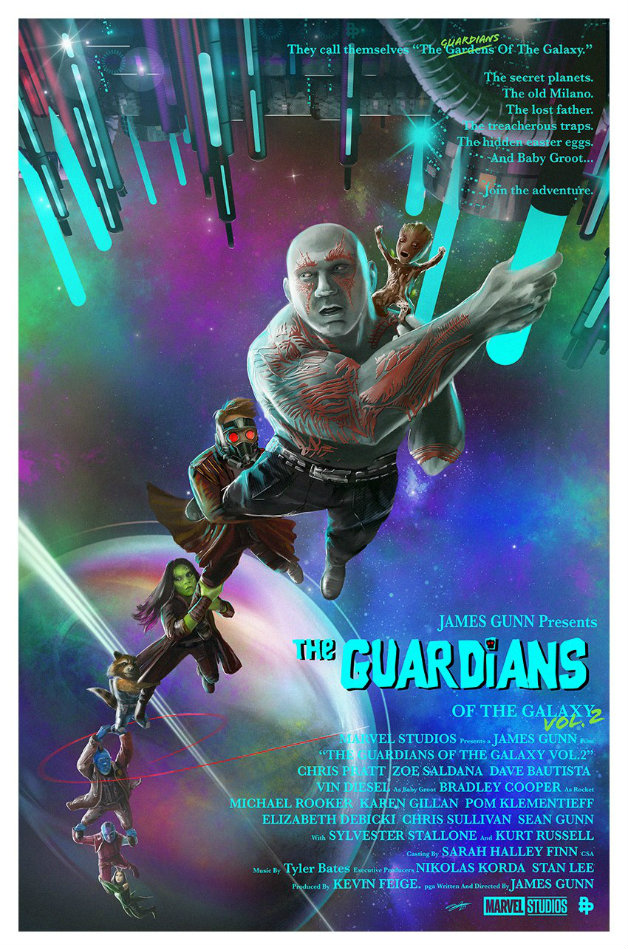
Artist Matt Ferguson created an alternate poster for the original Guardians of the Galaxy that paid homage to Star Wars, so now he’s got one for Guardians of the Galaxy Vol. 2 that pays homage to The Empire Strikes Back (via Geek Tyrant):

Just for fun & for you. The Star-Lord Saga Continues… my GOTG Vol. 2 poster inspired by Roger Kastel’s iconic Empire Strikes Back poster. pic.twitter.com/Hcn0X1Q30u

— Matt Ferguson (@Cakes_Comics) May 2, 2017

Behind the Scenes Video of the Day:

Speaking of Guardians of the Galaxy Vol. 2, watch Zoe Saldana’s three-hour makeup sitting to go green for Gamora in time-lapse:

3hrs in 38seconds #GotGVol2#Gamorapic.twitter.com/Yxrg6epzL6

— Zoe Saldana (@zoesaldana) April 29, 2017

Movie Takedown of the Day:

Honest Trailers trashes La La Land and this year’s Oscars snafu on the way to switching gears and paying a musical tribute to Moonlight:

[embedded content]

Video Essay of the Day:

For Fandor, Philip Brubaker looks at how movies present New York as a nightmare city:

[embedded content]

Vintage Image of the Day:

Dwayne ‘The Rock’ Johnson turns 45 today, so here’s his publicity photo for his first big movie role in 2001’s The Mummy Returns:

Filmmaker in Focus:

Here’s another video for yesterday’s birthday boy, Wes Anderson, focused on his title cards:

[embedded content]

Craftwork of the Day:

Kaptain Kristian showcases sound designer Ben Burtt, specifically his groundbreaking work on Star Wars:

[embedded content]

Cosplay of the Day:

Mineralblu’s video of the best cosplay of C2E2 2017 features cosplay based on Jurassic Park, Moana, Raiders of the Lost Ark, Good Burger, The Fifth Element, Star Wars and more (via Fashionably Geek):

[embedded content]

Classic Trailer of the Day:

Today is the 20th anniversary of the release of Austin Powers: International Man of Mystery. Watch the original trailer for the classic comedy below.

[embedded content]

Let’s block ads! (Why?)


No Image

WATCH: Surfer Rescued After 32 Hours Adrift And Alone Off Scotland's Coast

[embedded content]

After Matthew Bryce is spotted, footage rolls as a rescue worker is lowered from a helicopter to pull the surfer to safety.

YouTube

When Matthew Bryce paddled out into the cold surf off the west coast of Scotland, he was clad in a thick, neoprene wetsuit — gear that would stand him in good stead for a solid surf session Sunday. But at less than an inch thick, that material may not have seemed the most important bit of equipment the 22-year-old surfer brought with him.

As it turns out, that wetsuit helped save his life.

Bryce’s Sunday-morning surf spiraled into a life-threatening ordeal that lasted a day and a half in cold, choppy surf. By midday Monday, local coast guard teams had learned of his disappearance, and it was only after an hours-long search — involving a helicopter and roughly a half-dozen local coast guard teams — that Bryce was finally spotted and plucked from the sea.

“Hope was fading of finding the surfer safe and well after such a long period in the water and with nightfall approaching we were gravely concerned,” Dawn Petrie of the Belfast Coastguard Operations Centre said in a statement, “but at 7.30pm [Monday], the crew on the Coastguard rescue helicopter were delighted when they located the man still with his surf board and 13 miles off the coast.”

Rescue workers say they found Bryce when the surfer, who had miraculously remained conscious, slipped into the water and began waving the tip of his white board in the air. It was that movement and contrast of colors that caught the helicopter crew’s eyes — but at first they feared it was simply debris.

“We went around, dropped down the height a bit, came in and then that moment, when you go, ‘Oh! it is actually a surfboard and there is actually someone on it waving,’ ” Capt. Andy Pilliner, who had been piloting the helicopter, told NBC News. “It’s just a great feeling, it’s just what you’re hoping for, but daren’t.”

The team recorded the moment of the rescue as it happened. You can watch that footage from the Maritime and Coastguard Agency at the top of this page.

Even better news awaited when they found that after about 32 hours alone in the Irish Sea, Bryce was suffering from hypothermia but appeared no worse. Now hospitalized in stable condition, he celebrated his rescuers in a brief statement.

“I am so grateful that I am now receiving treatment in hospital. I can’t thank those enough who rescued and cared for me — they are all heroes,” Bryce said. “For now, I am not facilitating any interviews as I am exhausted. Please respect the privacy of myself and my family at this time as I recover.”

“The past 48 hours have been an absolute rollercoaster of emotions for our family and we are so grateful that Matthew has been found safe and well,” his father, John, told The Guardian. Bryce’s family had been the first to report him missing.

John Bryce added:

“To get that call from the police last night to say that he was alive was unbelievable. It was better than a lottery win — you just can’t describe it. Matthew means the world to us; he is such a strong character both mentally and physically, and we are looking forward to being reunited with him.”

What’s one other thing Bryce owes a debt of thanks? Why, that wetsuit, Petrie says. “He was kitted out with all the right clothing including a thick neoprene suit and this must have helped him to survive for so long at sea.”

Let’s block ads! (Why?)


No Image

As U.S. Retailers Struggle, The End Is Near For Malls

Christopher Leinberger, chair of the Center for Real Estate and Urban Analysis at George Washington University, says America’s malls aren’t just overbuilt, they’re under bulldozed. He explains one model for the how shuttered malls can reinvent themselves, and points to a new model of store as showroom.

ROBERT SIEGEL, HOST:

Here’s a number that gives you a better sense of how much shopping centers in the U.S. are overbuilt. For every person in America, there are 23 square feet of shopping center space. That’s the highest number for anywhere in the world. Runner-up is Canada at 16 square feet. Christopher Leinberger says that’s starting to change.

CHRISTOPHER LEINBERGER: The previous big transformation of retail was from walkable urban in the early 20th century – you know, the main streets – to regional malls. Well, we’re going back now to the 21st century version of main street.

SIEGEL: Leinberger is the chair of the Center for Real Estate and Urban Analysis at George Washington University. When the economy inevitably enters the next recession, he expects 30 percent of shopping malls, both strip malls and regional malls, will shut down.

LEINBERGER: It’s the middle-market malls that are in biggest danger of going dark. The fortress malls – those huge, you know, 1-and-a-half-, 2-million-square-foot malls like the King of Prussia Mall outside of Philadelphia – those are fine. But it’s the ones anchored by JCPenneys and Sears that are and will go increasingly dark.

SIEGEL: I want you to give us an idea of what the next phase in the life cycle of a shopping mall. It could be a mall that goes dark. You have pointed to an example in Colorado, in Denver.

LEINBERGER: The best national model right now is a project called Belmar. And it took the place of a regional mall called Villa Italia built back in the ’60s. And it was a conventional regional mall that was very profitable for 40 years then went dark in the late ’90s. And it was bulldozed in the early 2000s and replaced with a grid of streets that was imposed and a high-density, walkable urban place anchored by a movie theater, lots of great restaurants, housing on top, offices on top, the largest advertising agency west of Chicago located there. It’s a highly successful, high-density, mixed-use place.

SIEGEL: As we think about all of the kinds of retail that have fallen on hard times in recent years, I guess one of the glaring exceptions to that rule would be the story of the Apple Store. What’s so different about the Apple Store?

LEINBERGER: Apple Store demonstrates how retail transitions to the experience economy. That’s the next economy to layer on top of the knowledge economy. In retail, the highest sales per square foot retail category are jewelry stores that sell very small things that are very valuable in a very small space. And they can sell $1,500 per square foot per year as a measure of sales productivity. Apple comes out. They’re now doing on average between $7,000 and $10,000 per square foot.

SIEGEL: But can you imagine anybody else who could make a go of that model in retail?

LEINBERGER: Oh, yes – clothing. More and more, these retail stores like Bonobos – they aren’t selling clothing. They’re displaying clothing, and you go home and order it online. So they don’t have a warehouse connected with a store. It’s just a showroom. People come in. They may try it on. They may just touch the fabric. And then they go home and order. And the sales per square foot of those stores when you combine it with the online sales that they generate are huge. I think they will be approaching the Apple Store. So this is how the experience economy manifests itself in this new walkable, urban world which is the future of our metropolitan growth in this country. And it’s going to be very economically productive.

SIEGEL: That’s Christopher Leinberger of George Washington University. He walked over to the studio at the Brookings Institution where he’s a fellow. Thank you so much.

LEINBERGER: I’m so glad to be here. Thank you, Robert, for all your service.

Copyright © 2017 NPR. All rights reserved. Visit our website terms of use and permissions pages at www.npr.org for further information.

NPR transcripts are created on a rush deadline by Verb8tm, Inc., an NPR contractor, and produced using a proprietary transcription process developed with NPR. This text may not be in its final form and may be updated or revised in the future. Accuracy and availability may vary. The authoritative record of NPR’s programming is the audio record.

Let’s block ads! (Why?)


No Image

A Child's Suffering Drives A Mother To Seek Untested Treatments

Author Susannah Meadows sought alternative treatments for her son when traditional treatments failed.

Alberto Ruggieri/Illustration Works/Getty Images

Your child is diagnosed with a serious autoimmune disease and conventional treatments aren’t proving to be effective. Doctors prescribe powerful medications that don’t seem to work. Not only is your child not responding as hoped, he’s withering from the side effects. What do you do? Journalist Susannah Meadows found herself having to answer this question when her son, Shepherd, was diagnosed at age 3 with juvenile idiopathic arthritis, joint inflammation that can last a lifetime.

When the drugs didn’t work, Meadows was persuaded to look at his condition through a different prism and to consider the possibility that medications might not be the only answer. Meadows began speaking to parents who had sleuthed out alternative theories and tried things like radically changing their kids’ diets and giving them Chinese herbal medicines. Like many parents of sick children, Meadows grew increasingly willing to venture outside of the standard treatments.

Her experiences spurred her to seek other stories of people with illnesses ranging from multiple sclerosis to epilepsy to ADHD who pursued unproven methods of treating their diseases. Their stories, as well as an account of her son’s case, are compiled in The Other Side of Impossible: Ordinary People Who Faced Daunting Medical Challenges and Refused to Give Up, published Tuesday by Random House.

In addition to keeping him on the methotrexate, we took gluten, dairy and sugar out of his diet. We gave him high doses of omega-3s in fish oil and a probiotic. His arthritis started to get better six weeks to the day after we started the new diet, and we weaned him off the methotrexate. He’s now totally healthy, completely without pain, and has been off all arthritis medications for four years. It’s impossible to know what made him better, but there’s some science that suggests it could have been the diet.

Your book is a call to arms to think about diet and what we put in our bodies, whether you have serious illness or not. How did food play in the recovery of the people you wrote about?

Terry Wahls [had] multiple sclerosis and went from using a wheelchair to riding a bike again after she radically changed her diet to eat only nutritionally dense food. You can’t come away without thinking, if that can do that for her, what could it do for me?

The pioneers in your book weren’t the trained scientists or the doctors. They were the patients. What can you say about that?

Certainly doctors know more about disease than I ever will, but that doesn’t mean that their expertise is universal. Our own doctor was a good partner in our weighing things to try. We were able to have good conversations about risk, and what I liked about him was his openness — he made it clear to us that he didn’t have to understand it if it worked, which to me is a great quality in a doctor. The best doctors recognize that they don’t know everything.

Some key themes emerge in the book about the personality traits of those who seek different avenues of treatment. What are they?

One of the things that struck me about everybody in the book was extraordinary self-confidence, almost a stubbornness that they would find an answer. These people exhausted medicine’s answers and kept looking. Another thing was hope. I used to think of hope as being about the known possibility. You could have hope if even 1 out of 100 people got better. But what was amazing about these people was that they had hope even without an example of one. There was nothing to point to. A woman with multiple sclerosis who’s using a wheelchair, it’s unheard of to come back from that. And yet she believed she could find a solution for herself. And to me that’s extraordinary.

It seemed like many of the subjects of your book were financially comfortable, which gave them advantages such as moving across the country to be near a practitioner. How can people access experimental diets, supplements or interventions not covered by insurance?

To be sure, having resources helps, but one of the things that’s so exciting about food being a potential solution for some diseases is that it’s a lot cheaper than medication. Some medications for multiple sclerosis, for example, can be $80,000 a year. We have strong anecdotal evidence and in some cases, clinical evidence that food can improve symptoms for some chronic disease. The other virtue of food is that it’s open to all of us to experiment with. Until we have the data to say this diet will benefit this disease, we are free to see as individuals what might help us.

Finally, how has the experience of dealing with your son’s illness as well as meeting these other like-minded people changed you as a parent and as a person?

The biggest thing that I have learned is that when it seems as if there are no options, you can still look for them and maybe find them. That you have a choice to keep going when others say that you can’t. I don’t think I had that feeling when Shepherd was diagnosed, but I think his unlikely recovery taught me that.

Heather Won Tesoriero is a writer living in New York City. She’s currently working on a narrative nonfiction book. The Class will be published in 2018 by Ballantine Books.

Let’s block ads! (Why?)


No Image

Today in Movie Culture: 'Guardians of the Galaxy' Meets 'The Goonies,' the Whimsy of Wes Anderson and More

Here are a bunch of little bites to satisfy your hunger for movie culture:

Promo of the Day:

Ahead of the release of Guardians of the Galaxy Vol. 2, Chris Pratt shows off some props from the movie, and you’ll never guess which is his favorite:

[embedded content]

Poster Tribute of the Day:

Speaking of Guardians of the Galaxy Vol. 2, here’s a new poster for the movie paying homage to the poster for The Goonies:

Trivia of the Day:

Also speaking of Guardians of the Galaxy, here’s a bunch more trivia about the first movie and its sequel via CineFix:

[embedded content]

Cosplay of the Day:

We know thanks to Descendants that at least some Disney characters had children, so it’s about time we got a pregnant Disney princesses cosplay photoshoot. See their solo pics at Fashionably Geek.

Influential Movie of the Day:

For Fandor, Bill Rwehera showcases the influence of Seven Samurai on such movies as Star Wars, A Bug’s Life and Mad Max: Fury Road:

[embedded content]

Vintage Image of the Day:

In honor of Danielle Darrieux, who turns 100 today, here is one of her glamorous Universal Pictures publicity images circa 1938:

Filmmaker in Focus:

Today is also Wes Anderson’s birthday, so here’s a Fandor video essay by Philip Brubaker on the childhood whimsy of his films:

[embedded content]

Screenwriting Lesson of the Day:

Lessons from the Screenplay looks at the scripts for Star Wars: The Force Awakens and Rogue One: A Star Wars Story with focus on their flaws and imperfections and why the former is a better movie:

[embedded content]

Supercut of the Day:

Speaking of Rogue One, here’s a supercut of the sounds of the Star Wars spinoff edited by Zackery Ramos-Taylor:

[embedded content]

Classic Trailer of the Day:

Today is the 65th anniversary of the premiere of High Noon in England. Watch the original trailer for the classic Western below.

[embedded content]

and

Let’s block ads! (Why?)


No Image

Airbnb Settles Suit With San Francisco, Aims To Smooth Host Registration

Airbnb's logo displayed on a computer screen in Paris.
Enlarge this image

Lionel Bonaventure/AFP/Getty Images

The city of San Francisco has settled with Airbnb and HomeAway, concluding a lawsuit brought by the two short-term home rental companies by agreeing to new registration procedures for prospective hosts. The case, which had been heard in federal court, hinged on how the companies comply with a recently instituted city law.

“This agreement helps protect the city’s precious housing supply by obligating these companies to ensure that all their listings are legal and properly registered,” City Attorney Dennis Herrera said Monday in a statement. “This is a game changer.”

In Airbnb’s federal lawsuit — which the company filed in June last year, and which HomeAway later joined — the companies objected to the steep fines they faced if their hosts failed to register with the city as short-term rentals. The city’s board of directors had decided to introduce those fines as a means of adding teeth to a 2015 law mandating the registration.

Herrera’s office estimates that about 2,100 short-term rental hosts have registered in San Francisco — in other words, only about a quarter of the number of listings for Airbnb in the city.

But with the settlement, both sides have agreed to streamline the registration process, automatically sending new host applicants from the companies’ websites straight to the city’s Office of Short-Term Rentals. The agreement also requires the companies to provide the office with listings on a monthly basis, so that San Francisco officials can compare these listings with its own registration records.

“Similar to other agreements we have established with cities all around world, this agreement puts in place the systems and tools needed to help ensure our community is able to continue to share their homes,” Airbnb spokesman Christopher Nulty said in a statement, according to the San Francisco Chronicle. “Once fully implemented, every host in San Francisco will be registered and compliant with home-sharing rules the city put in place in 2014.”

The paper reports that “within six months, Airbnb and HomeAway will require all new hosts to be registered with San Francisco before they can post a rental listing on either site.”

Yet San Francisco is not the only city with whom Airbnb has shared some friction. TechCrunch notes the other cities the company has sued:

“In Anaheim, Airbnb filed a lawsuit, which has since been dismissed because Anaheim ‘pulled back their law,’ [Airbnb Head of Global Policy Chris] Lehane said. In Miami, a judge ruled last week in Airbnb’s favor and there’s a bit of a grey area in Santa Monica, Lehane said. Last year, Airbnb settled its lawsuit with New York City.”

Let’s block ads! (Why?)


No Image

President Trump Promotes Revised Version Of GOP Health Care Bill

President Trump is promising great things from the revised version of the Republican health care bill. He said it would lower premiums, increase competition and protect people with pre-existing conditions “beautifully.”

ROBERT SIEGEL, HOST:

President Trump is promising great things from this health care bill. He said it would lower premiums, increase competition and protect people with preexisting conditions beautifully, as he put it. Well, joining us to talk about what exactly the bill would do is NPR health policy correspondent Alison Kodjak. Good to see you.

ALISON KODJAK, BYLINE: Good to see you, too, Robert.

SIEGEL: The president promised an awful lot here. Can he deliver?

KODJAK: Well, probably not with this bill as it stands now. The basics of the bill are very similar to what they were in March when they didn’t pass in the House. And at that time, the Congressional Budget Office, which determines how much the bill costs, said that it could end up with 24 million fewer people having insurance after 10 years than would under the Affordable Care Act. And in addition, the way this bill is written – people’s benefits could also deteriorate.

SIEGEL: This bill is an update of the American Health Care Act that was proposed by Speaker Ryan and the White House a few weeks ago. Remind us what’s in it.

KODJAK: Yeah, so the bill first of all gets rid of the individual mandate, which is the thing that most Republicans hate most about the – about Obamacare – is that it requires people to buy insurance or pay a fine. It replaces the income-based subsidies that Obamacare has in place to help people buy insurance with age-based tax credits. And that means that lower-income people might get a little less help buying insurance, and higher-income people may get a little bit more. It also requires people to keep their coverage constantly, and if they drop their coverage, they’ll have to pay a big penalty to buy into the insurance system again. That’s a way of keeping healthy people in.

SIEGEL: It’s awfully close to the individual mandate, actually.

KODJAK: Very similar, yes. And then the last thing it does is it rolls back the expansion of Medicaid over time so that people who now got Medicaid under the Affordable Care Act may lose it over the next few years.

SIEGEL: Well, if so much in the new bill is the same as in that bill, why is the White House more optimistic about the current bill’s chance of passage?

KODJAK: Well, in the old bill, no one was really happy because the conservatives – they thought it kept too much of Obamacare. The more moderate Republicans thought too many people would lose insurance. So this was a deal to try to bring them together. And so what it ended up doing was sort of splitting the baby.

It allows states to opt out of the federal regulations by getting a waiver and so that they can offer insurance plans with fewer benefits and also get rid of protections for people with preexisting conditions. It allows insurance companies to charge them more or not cover them. But if they were to do that, then the states would have to come up with another plan that would cover those people. Most people think that they would go with high-risk pools, which is a way for the state to backstop the cost of their higher-cost patients so that they get that their coverage.

SIEGEL: Using public tax funds, in effect…

KODJAK: Yeah.

SIEGEL: …To pick up where the insurance company can no longer pay. If this were to become law and states were permitted to opt out of federal regulations and not offer all of the services that Obamacare mandated, would companies in those states be able to sell health insurance across state lines? Would that be a back door to deregulating all health insurance?

KODJAK: No, they don’t have that specifically in this bill – the across state lines. What they do have is this ability to waive the essential health benefits. They don’t have to include as many benefits in the policy. And that they can also get rid of what’s called community rating, which means they can charge people more based on their health status rather than just charge them based on where they live and their age.

SIEGEL: During the earlier debate in March, a lot of lawmakers were worried about people who gained coverage under the Medicaid expansion as part of Obamacare losing it. Do any of the changes in this bill address Medicaid?

KODJAK: Not the newer changes. The bill pretty much stands as it did in March, which means that there’s going to be an eventual rollback of the expansion of Medicaid, and millions of people could lose their coverage – their Medicaid coverage, which has a lot of more moderate Republicans worried.

SIEGEL: NPR’s Alison Kodjak, Thanks.

KODJAK: Thank you.

(SOUNDBITE OF SHARON JONES AND THE DAP-KINGS SONG “LET THEM KNOCK”)

Copyright © 2017 NPR. All rights reserved. Visit our website terms of use and permissions pages at www.npr.org for further information.

NPR transcripts are created on a rush deadline by Verb8tm, Inc., an NPR contractor, and produced using a proprietary transcription process developed with NPR. This text may not be in its final form and may be updated or revised in the future. Accuracy and availability may vary. The authoritative record of NPR’s programming is the audio record.

Let’s block ads! (Why?)