Articles by admin

No Image

Always Dreaming Wins The 143rd Kentucky Derby

Jockey John Velazquez sprays the winning connections with champagne as he celebrates his victory aboard Always Dreaming in the 143rd running of The Kentucky Derby at Churchill Downs on Saturday.
  • Jockey John Velazquez sprays the winning connections with champagne as he celebrates his victory aboard Always Dreaming in the 143rd running of The Kentucky Derby at Churchill Downs on Saturday.

    Matt Sayles/Invision for G.H. MUMM Champagne

  • John Velazquez rides Always Dreaming to victory.

    John Velazquez rides Always Dreaming to victory.

    Morry Gash/AP

  • John Velazquez pulled through the slop Always Dreaming to win his second Derby, following his 2011 victory riding Animal Kingdom.

    John Velazquez pulled through the slop Always Dreaming to win his second Derby, following his 2011 victory riding Animal Kingdom.

    John Minchillo/AP

  • Jockeys walk through the paddock in a race before the 143rd running of the Kentucky Derby horse race at Churchill Downs Saturday.

    Jockeys walk through the paddock in a race before the 143rd running of the Kentucky Derby horse race at Churchill Downs Saturday.

    John Minchillo/AP

1 of 4

The skies cleared just in time for Derby fans to trade out their ponchos for flamboyant hats when the jockeys assumed their posts. But intermittent rains posed a muddy challenge for the 20-horse field at Churchill Downs racetrack on Saturday.

In the end though, Always Dreaming, ridden by jockey John Velazquez, was able to pull ahead of Lookin at Lucky in the slop, to win the 143rd Kentucky Derby. The Battle of Midway finished third.

The win lands the thoroughbred’s owners a $1,635,800 first-place prize from a $2 million total purse. It’s the second Derby victory for both trainer Todd Pletcher, who won with Super Saver in 2010, and for Velazquez, who won atop Animal Kingdom in 2011.

Starting from the No. 5 post position and favored at 9-2 odds, Always Dreaming broke from the pack near the far turn. The 3-year-old colt finished by a clean two and three-quarters lengths ahead of long shot Lookin At Lee, who drew the unlucky first post. In 2010, his sire, Lookin at Lucky, hadn’t been so fortunate, and was pinned to the rail, finishing sixth that day.

Always Dreaming will have to defeat enormous odds in the next couple of races to snatch the coveted Triple Crown. Next stop is the Preakness Stakes, on May 20, before the final Belmont Stakes run on June 10. In the long history of horse racing — the Derby is America’s “oldest continuously held sporting event” — only 12 horses have been able to pull off the feat. Just in 2015, American Pharoah became the most recent Triple Crown champion.

Let’s block ads! (Why?)


No Image

Today in Movie Culture: Tommy Wiseau in 'Star Wars,' the Real Writer of 'Deadpool' and More

Here are a bunch of little bites to satisfy your hunger for movie culture:

Mashup of the Day:

PistolShrimps cut Tommy Wiseau from his cult movie The Room and inserted him into scenes from the Star Wars movies:

[embedded content]

Talk Show Appearance of the Day:

Speaking of Star Wars, watch how elated megafan Adam Scott is when Mark Hamill surprises him on Jimmy Kimmel Live:

[embedded content]

Fan Theory of the Day:

Deadpool breaks the fourth wall a lot in Deadpool, but is the character the writer of his own movie? MatPat argues that he is:

[embedded content]

Cosplay of the Day:

Marvel presents a video of cosplayer Sidney Cumbie becoming Yondu from Guardians of the Galaxy Vol. 2:

[embedded content]

Vintage Image of the Day:

In honor of his Guardians sequel’s release, here’s James Gunn on the set of his feature directorial debut, Slither, with cinematographer Greg Middleton in 2005:

Filmmaker in Focus:

Another filmmaker with a new sequel to his own great sci-fi movie is Ridley Scott. Here is a bunch of trivia about the Alien: Covenant director via ScreenCrush:

[embedded content]

Actor in the Spotlight:

Keanu Reeves says “whoa” a lot in his movies and early commercials, as seen in this supercut:

[embedded content]

Movie Food of the Day:

In Fandor’s latest Film to Table, Jason English shows us how to make a souffle inspired by Sabrina:

[embedded content]

Video Essay of the Day:

Pop Culture Detective explores a problematic trope labeled “Born Sexy Yesterday” as featured in such movies as Tron: Legacy, The Fifth Element and Splash (via /Film):

[embedded content]

Classic Trailer of the Day:

This weekend is the 20th anniversary of the Cannes premiere of The Fifth Element. Watch the original teaser trailer for the sci-fi classic below.

[embedded content]

and

Let’s block ads! (Why?)


No Image

Episode 769: Speed Dating For Economists

Economists have a yearly job market that works a little bit like speed dating.

Gary Waters/Getty Images/Ikon Images

hide caption

toggle caption

Gary Waters/Getty Images/Ikon Images

About 1,800 economics graduate students converged on the chilly Chicago streets in early January. Some of them ran through those streets, trying to get to the next hotel on time.

They were trying to find a job.

At some point in time, the economics profession decided it was going to create a job market unlike any other. They were going to create a system that is the most efficient job market imaginable.

Every year, universities and companies that want to hire a professional economist converge on Chicago in the dead of winter. They set up shop in hotel rooms across the city. Every young economist who wants their first job shows up, ready for a make or break weekend of intense questioning.

Interviews are squeezed back to back, often conducted in hotel rooms. Sometimes, interviewees have to run to make their next appointment.

And that’s just the start.

Today on the show, finding the perfect job takes a lot of time and a lot of money. And economists hate wasting both of those things. So they created their own hyper-efficient, optimized job market.

Music: “El Gringo,””Desperate Nights” & “Future Satisfaction.” Find us: Twitter/ Facebook.

Subscribe to our show on Apple Podcasts or PocketCast.

Let’s block ads! (Why?)


No Image

Would You Wear Lonzo Ball's $495 Shoes? 'Nah,' Twitter Says Politely

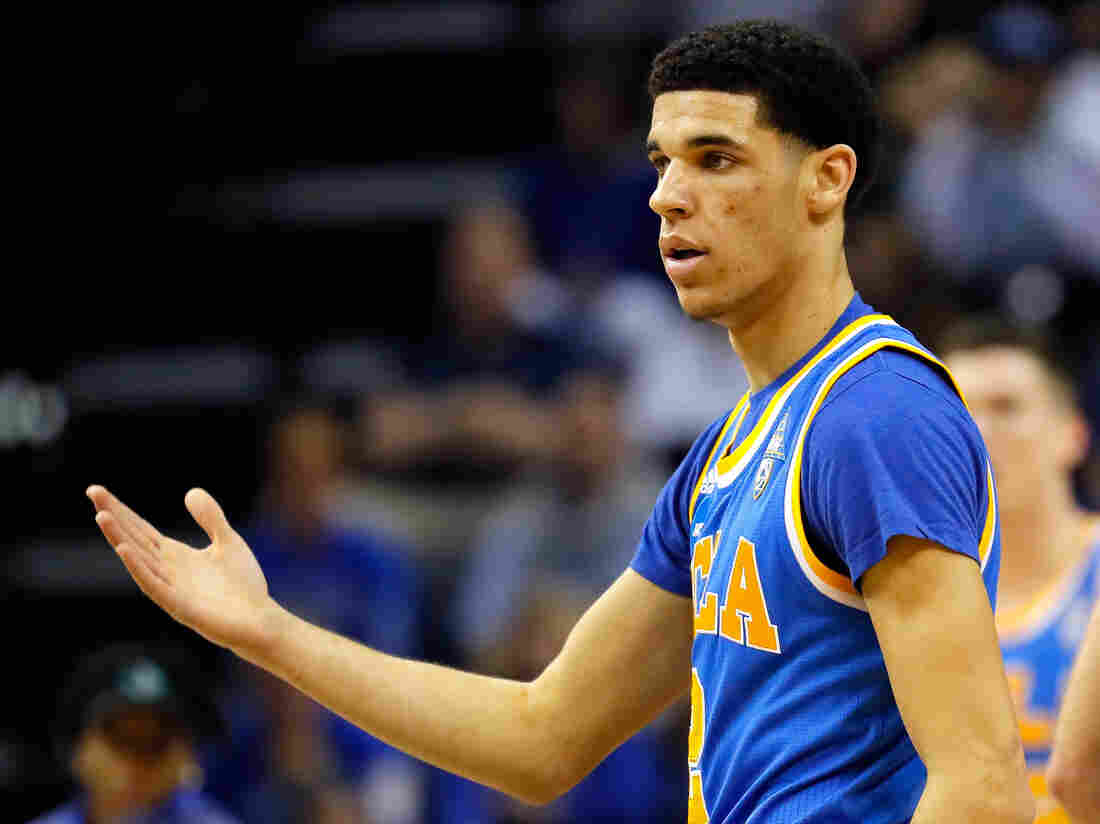
The soul behind the soles: former UCLA star — and potential NBA star — Lonzo Ball.

Kevin C. Cox/Getty Images

hide caption

toggle caption

Kevin C. Cox/Getty Images

Surely you’ve heard by now: Sports as we know it has changed forever.

Go on, take a second if you need it. We’ll wait here — but while we’re at it, we’ll leave this little reminder for the laggards who haven’t heard what struck the decisive blow.

The Sports World is Forever Changed. Introducing Lonzo’s 1st Signature Shoe: The ZO2 Prime. pic.twitter.com/5JN1OLxlZS

— Big Baller Brand (@bigballerbrand) May 4, 2017

Yup: a pair of shoes. A $495 pair of shoes. Fronted by a college freshman who helped lead his team to the Sweet 16 in the 2017 NCAA tournament.

Or, if you’d prefer, you can select the $995 pair and get Lonzo Ball’s John Hancock scrawled in gold right there on the shoe — though be forewarned, it remains unclear how much that pair changed the sports world, or for how long.

Independence is Beautiful. We are proud to present the ZO2 Wet.
.
.
.
Signed By Lonzo | LED Box Included pic.twitter.com/OnaUCLlLZQ

— Big Baller Brand (@bigballerbrand) May 4, 2017

The premium-priced footwear dropped Thursday afternoon, unveiled by his father LaVar Ball’s punningly named Big Baller Brand just about a month and a half before the NBA Draft, where the younger Ball is widely hyped to be one of the top selections.

It follows, then, that Ball also enjoys his fair share of hype as one of the NBA’s top rookies-to-be. His future at the professional level is so bright, it practically shines like polished hardwood. In fact, it’s possible he could very well be the next Lebron James or Stephen Curry (whose signature sneakers, by the way, top out at about $175 and $100, respectively).

When balanced against that future, $495 seems like a steal … right?

Right?

Guys?

Mike Brown says he won’t be buying LaVar Ball’s $500 signature LO2’s…or his $200 pair of flip flops pic.twitter.com/HZwhGchwBA

— KNBR (@KNBR) May 5, 2017

OK, well, sure — Mike Brown coaches the Golden State Warriors, a championship contender that’s not going to get the lofty draft position needed to nab Ball for its roster. Perhaps he’s just jealous.

What does everyone else have to say?

Hey @Lavarbigballer real big baller brands don’t over charge kids for shoes. pic.twitter.com/N2U0VPXXyt

— SHAQ (@SHAQ) May 4, 2017

Lonzo Ball’s shoes r $495/if he plays in the @NBA like he did vs BBN De’Aaron Fox they’ll go for $4.95 @darrenrovellhttps://t.co/hz6em0rqu1

— Dick Vitale (@DickieV) May 5, 2017

Lonzo Ball’s shoes in 6 months: pic.twitter.com/3WPDabYfuN

— Just Me. (@NoThoughtsHere) May 5, 2017

Lonzo Ball reveals his new shoe for $500 pic.twitter.com/0TH5o6j8YL

— Tom Brazy ?? (@Chuck__Says) May 4, 2017

Asked Friday why the shoe costs what it does, LaVar told ESPN Radio’s The Dan Le Batard Show the matter was simple: “I figure that’s what the shoe is worth,” he said. “When you are your own owner you can come up with any price you want.”

ESPN reports that the Balls, who marketed the shoes themselves, were turned down by Nike, Adidas and Under Armour after the elder Ball declined standard endorsement deals.

Still, they remain confident the shoes will earn a respectable return — and they’re not alone in thinking the prices aren’t as bad an idea as some on social media would have you believe. After all, if we discarded everything Twitter showered with snark, it’s tough to tell what in the world we’d even have left.

Probably not these $220 sandals, at least.

& Lastly, The ZO2 Slide. pic.twitter.com/gyzHscfA3w

— Big Baller Brand (@bigballerbrand) May 4, 2017

Let’s block ads! (Why?)


No Image

People With Pre-Existing Conditions Worry About Losing Health Coverage

As the American Health Care Act moves toward the Senate, many people around the country are reacting to it. Among them, people with pre-existing conditions who worry about losing their coverage.

ROBERT SIEGEL, HOST:

One of the biggest concerns about the House bill is its treatment of pre-existing conditions. Several lawmakers were worried it would leave sicker people in the lurch, so an additional $8 billion was negotiated to help that population. But that is not comforting to Bob Flood of Allen, Texas. He had kidney cancer about 15 years ago. His family had health insurance through one of the so-called high risk pools that states had before Obamacare.

BOB FLOOD: I think we were in it for about six years. And the cost was outrageous. We never met deductible. We had it for catastrophic incidents. And we didn’t feel more like customers. We felt more like we were prisoners. We were subjected to one insurance company.

SIEGEL: Bob Flood says he’s been happy with his current health insurance through healthcare.gov, and he wants to keep it.

FLOOD: It seems we’re stepping back again into a high-risk pool which did not work well for many people on it. And I’m just very sad that we don’t seem to be moving forward. We seem to be dancing back.

KELLY MCEVERS, HOST:

As Alison Kodjak just told us, another provision of the House bill allows insurers to possibly pull back on lifetime benefits and get rid of limits on out-of-pocket costs. David Mueller of St. Louis, Mo., has a daughter with a rare form of cystic fibrosis, and he has a plea for Missouri’s senators.

DAVID MUELLER: Please remember that my daughter’s life is worth as much as all of their other constituents.

MCEVERS: Surgeries in her first year of life could have cost the family $2 million without health insurance. Mueller’s terrified bankruptcy could be in the family’s future if the out-of-pocket limit disappears.

MUELLER: In this country we can afford for her to receive the medical treatment that she needs, and that to take it away would be a full rejection of her life’s value.

SIEGEL: But health insurance on the exchanges can be expensive, as it is for Jean Mattila of Hastings, Minn., and her husband.

JEAN MATTILA: We pay about $1,200 a month in premiums, and that’s with each of us carrying a $7,500 deductible.

SIEGEL: She’s happy to see President Trump take on health care.

MATTILA: He wants a result. That’s what he’s looking for. And that’s what I want. I want a result because anything is better than what we have now in the health care stuff. And I’m sticking with them.

MCEVERS: So is Frank Mutch, who lives in Polson, Mont. He’s frustrated by the promises he heard from President Obama.

FRANK MUTCH: You can keep your doctor. You can keep your health plan. You can keep your insurance. And we’re going to save you money. None of those were fulfilled, and that’s why people want something new.

MCEVERS: House Republicans say their something new will be more competitive and lower costs. But experts say those promises will also be hard to keep. Thanks to the reporting partnership with Kaiser Health News and NPR member stations for bringing us those voices.

Copyright © 2017 NPR. All rights reserved. Visit our website terms of use and permissions pages at www.npr.org for further information.

NPR transcripts are created on a rush deadline by Verb8tm, Inc., an NPR contractor, and produced using a proprietary transcription process developed with NPR. This text may not be in its final form and may be updated or revised in the future. Accuracy and availability may vary. The authoritative record of NPR’s programming is the audio record.

Let’s block ads! (Why?)


No Image

Today in Movie Culture: Star Wars Day Tributes, Josh Gad as The Penguin and More

Here are a bunch of little bites to satisfy your hunger for movie culture:

Prank of the Day:

The latest Omaze Force for Change video stars Mark Hamill as he surprises fans reenacting scenes from Star Wars movies:

[embedded content]

Movie Character Karaoke:

The Tonight Show with Jimmy Fallon presents this video of Star Wars characters singing Smashmouth’s “All Star”:

[embedded content]

Fake Audition of the Day:

Danny Trejo celebrated by sharing Machete’s audition for the role of Princess Leia in the original Star Wars:

#MayThe4ThBeWithYou! @elreynetworkpic.twitter.com/l9Kt3dnlyp

— Danny Trejo (@officialDannyT) May 4, 2017

Vintage Image of the Day:

For the occasion, here’s a photo of Harrison Ford, Carrie Fisher and Mark Hamill in a hotel room trying to replicate the poster for Star Wars:

“Naturally they became heroes.” from StarWars

Movie Takedown of the Day:

Not all is completely celebratory, as Mr. Sunday Movies chose today to offer how they’d fix the ending of Rogue One: A Star Wars Story:

[embedded content]

Cosplay of the Day:

Who protects swimmers at those beaches of Rogue One: A Star Wars Story? Why it’s Baywatch Scarif, of course (via Fashionably Geek):

Movie Science of the Day:

Guardians of the Galaxy Vol. 2 is out this week, so here’s scientist Kyle Hill explaining how long Star-Lord can survive unprotected in space:

[embedded content]

Rumor Rendering of the Day:

Josh Gad may have teased he’s playing The Penguin in the DC Extended Universe, so BossLogic shows us what that could look like:

Some break time fun – @joshgad Penguin pic.twitter.com/n5cEdaNXpK

— BossLogic (@Bosslogic) May 4, 2017

Reworked Movie of the Day:

CineFix cut a new trailer for the classic Bill Murray comedy What About Bob? so it looks like a stalker thriller:

[embedded content]

Classic Trailer of the Day:

Today is the 10th anniversary of the release of Sam Raimi’s Spider-Man 3. Watch the original trailer for the superhero sequel below.

[embedded content]

and

Let’s block ads! (Why?)


No Image

GOP Health Care Bill Would Cut About $765 Billion In Taxes Over 10 Years

The Affordable Care Act took money from the rich to help pay for health insurance for the poor. The repeal bill passed by House Republicans would do the opposite.

retrorocket/Getty Images/iStockphoto

hide caption

toggle caption

retrorocket/Getty Images/iStockphoto

The health care bill passed by the House on Thursday is a win for the wealthy, in terms of taxes.

While the Affordable Care Act raised taxes on the rich to subsidize health insurance for the poor, the repeal-and-replace bill passed by House Republicans would redistribute hundreds of billions of dollars in the opposite direction. It would deliver a sizable tax cut to the rich, while reducing government subsidies for Medicaid recipients and those buying coverage on the individual market.

Tax hikes reversed

The Affordable Care Act, also known as Obamacare, is funded in part through higher taxes on the rich, including a 3.8 percent tax on investment income and a 0.9 percent payroll tax. Both of these taxes apply only to people earning more than $200,000 (or couples making more than $250,000). The GOP replacement bill would eliminate these taxes, although the latest version leaves the payroll tax in place through 2023.

The House bill would also repeal the tax penalty for those who fail to buy insurance as well as various taxes on insurance companies, drug companies and medical device makers. The GOP bill also delays the so-called “Cadillac tax” on high-end insurance policies from 2020 to 2025.

All told, the bill would cut taxes by about $765 billion over the next decade.

The lion’s share of the tax savings would go to the wealthy and very wealthy. According to the Tax Policy Center, the top 20 percent of earners would receive 64 percent of the savings and the top 1 percent of earners (those making more than $772,000 in 2022) would receive 40 percent of the savings.

Help for the poor reduced

Over time, the GOP bill would limit the federal contribution to Medicaid, while shifting control of the program to states. Depending on what happens to costs, states may be forced to provide skimpier coverage, reduce their Medicaid rolls, or both. The Congressional Budget Office estimated that an earlier version of the bill would leave about 14 million fewer people covered by Medicaid by 2026. (The House voted on the current bill without an updated CBO report.)

CBO also anticipated fewer people would buy insurance through the individual market. With no tax penalty for going without coverage, some people would voluntarily stop buying insurance. Others would find coverage prohibitively expensive, as a result of changing rules governing insurance pricing and subsidies.

The GOP bill would allow insurance companies to charge older customers up to five times more than younger customers — up from a maximum 3-to-1 ratio under the current health law. The maximum subsidy for older customers in the GOP plan, however, is only twice what is offered to the young.

The bill also allows insurance companies to offer more bare-bones policies. As a result, young, healthy people could find more affordable coverage options. But older, sicker people would likely have to pay more.

In addition, because the subsidies offered in the Republican plan don’t vary with local insurance prices the way subsidies do in Obamacare, residents of high-cost, rural areas would also suffer. That could include a large number of Trump voters.

Let’s block ads! (Why?)


No Image

5 Things To Watch As GOP Health Bill Moves To The Senate

House Speaker Paul Ryan (center) walks to the House chamber ahead of a budget vote on Capitol Hill. Though Ryan was able to deliver 217 votes Thursday to get his GOP health plan through the House, there are still significant hurdles before the bill becomes law.

Eric Thayer/Getty Images

hide caption

toggle caption

Eric Thayer/Getty Images

After weeks of will-they-or-won’t-they tensions, the House managed to pass its GOP replacement for the Affordable Care Act on Thursday by a razor-thin margin. The vote was 217-213.

Democrats who lost the battle are still convinced they may win the political war. As the Republicans reached a majority for the bill, Democrats on the House floor began chanting, “Na, na, na, na … Hey, hey, hey … Goodbye.” They claim Republicans could lose their seats for supporting a bill that could cause so much disruption in voters’ health care.

Now the bill — and the multitude of questions surrounding it — moves across the Capitol to the Senate. And the job doesn’t get any easier. With only a two-vote Republican majority and likely no Democratic support, it would take only three GOP “no” votes to sink the bill.

Democrats have made clear they will unanimously oppose the bill. “Trumpcare” is just a breathtakingly irresponsible piece of legislation that would endanger the health of tens of millions of Americans and break the bank for millions more,” said Senate Minority Leader Chuck Schumer, D-N.Y.

It’s The Senate’s Turn

House passage of the American Health Care Act is just a first step. As this measure moves to the Senate, it will face a new set of political and policy challenges. Among them:

  • MEDICAID: The House-passed measure makes the most sweeping changes to the program since its inception in 1965. Some of these changes, such as capping federal funding, would provoke intraparty divisions in the upper chamber.
  • UNINSURED RATES: The Congressional Budget Office initially estimated that the House bill would mean the loss of coverage for 24 million people. Many analysts say this number is now likely higher.
  • TAX CREDITS: Some GOP senators are already on record opposing the bill’s age-based tax credits, charging that they will make coverage unaffordable for older constituents. Others, however, describe these credits as “Obamacare Lite.”
  • PLANNED PARENTHOOD FUNDING: The House would defund this reproductive health organization for a year — a step that draws opposition from a handful of Senate Republicans.

And Republicans in the Senate have their own internal disagreements, too.

Here are five of the biggest flashpoints that could make trouble for the bill in the upper chamber.

Medicaid

House leaders correctly point out that their bill represents the biggest changes to the federal-state health program for the poor since its inception in 1965 — a point that appeared to be drowned out during the most recent House debate that focused on coverage for people with preexisting health conditions.

For the first time, federal funding for low-income people on Medicaid would be limited, resulting in what House Speaker Paul Ryan, R-Wis., described at an event sponsored by the conservative National Review as “sending it back to the states, capping its growth rates.” It’s a longtime goal for many conservatives. “We’ve been dreaming of this since I’ve been around,” Ryan said.

But it is not a consensus position in the party. Some moderates support the current program, especially for children and people with disabilities. In addition, many GOP governors took the federal government’s offer in the ACA of near-complete federal funding to expand Medicaid to non-disabled, working-age adults, and they are worried about the impact on their residents and their budgets if the expansion goes away and the program’s funding is restricted.

The House bill, wrote the Republican governors of Ohio, Michigan, Arkansas and Nevada in a letter to House and Senate leaders, “provides almost no new flexibility for states, does not ensure the resources necessary to make sure no one is left out, and shifts significant new costs to states.”

That pushback has also created doubts in the minds of some GOP senators. Sens. Rob Portman, R-Ohio, Bill Cassidy, R-La., and Shelley Moore Capito, R-W.Va., are among those who have expressed concerns about the House bill, as has Dean Heller, R-Nev., It’s not clear if any of the House changes have satisfied those senators.

Increase In Number Of Uninsured People

The Congressional Budget Office’s initial estimate that the bill could lead to 24 million more Americans without health insurance within a decade spooked many lawmakers in the upper chamber. “You can’t sugarcoat it,” Cassidy told Fox News when explaining that “it’s an awful score.” The final House bill passed without the score being updated, although most outside analysts said the changes were likely to increase the number who would lose insurance.

And Democrats have been using those initial numbers to score rhetorical points, even if they lack the votes in either the House or Senate to stop the bill or change it.

“The CBO’s estimate makes clear that Trumpcare will cause serious harm to millions of American families,” said Schumer. “Tens of millions will lose their coverage, and millions more, particularly seniors, will have to pay more for health care.”

Tax Credits

On one hand, even with the additional $85 billion added by House leaders to help older people pay for their insurance premiums, many moderates feel the age-based tax credits in the bill replacing those in the Affordable Care Act are too small, particularly for people in their 50s and early 60s. The CBO estimated that under the original version of the House bill, premiums for a 64 year-old with an income of $26,000 a year could rise from $1,700 currently to more than $14,000.

That brought a strong rebuke from the powerful AARP, which was an outspoken ACA supporter. “Although no one believes the current health care system is perfect, this harmful legislation would make health care less secure and less affordable,” said a statement from the group.

Sen. Susan Collins, R-Maine, has said she could not support the House bill in its original form because of concerns about the effects on older constituents.

On the other hand, some conservatives in the Senate are ideologically opposed to offering any tax credits. Sens. Ted Cruz, R-Texas, Mike Lee, R-Utah, and Rand Paul, R-Ky., have all expressed concerns about the bill being too much like the ACA, with Paul referring to it as “Obamacare Lite.” They worry that the tax credits amount to a new entitlement.

“For me, it’s a big stumbling block still that there’s taxpayer money that’s being given to insurance companies,” Paul told reporters in late April. “And I’m just not in favor of taxpayer money going to insurance companies.”

Planned Parenthood

As Republicans have been vowing for years, the House-passed bill would defund Planned Parenthood, although only for a year. That’s likely because a permanent defunding would actually cost the federal government more money, according to the CBO, as some women who lose access to birth control would become pregnant, have babies and qualify for Medicaid. Birth control is vastly cheaper than health care for mothers and babies.

But while cutting funding for Planned Parenthood is overwhelmingly popular in the House, there are a handful of GOP senators, including Collins and Lisa Murkowski, R-Alaska, who have said they are likely to oppose a bill carrying this provision.

Procedural Problems

The budget process Republicans are using to avoid a Democratic filibuster in the Senate, called reconciliation, has very strict rules that require every piece of the bill to be directly related to the federal budget. It will be up to the Senate parliamentarian, a Republican appointee, to make those determinations.

That’s why the bill does not wipe away all the ACA’s private insurance regulations, including the requirement that insurers not discriminate against customers who have preexisting health conditions.

Some analysts have suggested that the House amendment sought by conservatives to allow states to waive some of the health law’s regulations might run afoul of Senate’s “Byrd Rule,” which limits what can be included in a budget reconciliation measure.

“It could be argued that any budgetary effects of the waiver are ‘merely incidental,’ ” said the Committee for a Responsible Federal Budget in a blog post.

Even Rep. Mark Meadows, R-N.C., who negotiated that amendment that won the backing of conservatives, conceded that it could prove problematic in the upper chamber. “There’s still a lot of work that needs to be done before we can celebrate and all go home,” he said in an interview outside the House chamber.

Democrats say it is one of several provisions in the House bill that might not pass parliamentary muster in the Senate.

For example, analysts have suggested that the GOP replacement for the much-disliked “individual mandate” requiring most people to have insurance or pay a fine might not pass Byrd Rule scrutiny either. That’s because the 30 percent premium penalty that people with a lapse in insurance would have to pay under the bill would go to the insurance company, not the federal government, so it would have no budget impact.

A third potentially problematic element of the original House bill would allow insurers to charge older adults five times more in premiums than younger adults — up from a ratio of 3-to-1 under the Affordable Care Act. That provision could be viewed as not directly affecting federal spending, some analysts predict.

Kaiser Health News (KHN) is a national health policy news service. It is an editorially independent program of the Henry J. Kaiser Family Foundation.

Let’s block ads! (Why?)


No Image

'Is That Your New Pink Leg?!': A Girl Is Embraced As She Shows Off Her Prosthesis

Schoolmates give Anu, 7, hugs after she wore her new prosthetic sports blade on the playground at her school in Birmingham, England.

BBC Midlands

hide caption

toggle caption

BBC Midlands

Anu is seven and goes to school in Birmingham. Look what happened when she showed her friends her new sports blade. It’s just gorgeous!???? pic.twitter.com/Aa1UlnhlQy

— BBC Midlands Today (@bbcmtd) May 3, 2017

Video of a little girl running onto the playground to show off her new sports blade prosthesis has gone viral — and we’ll warn you that the video may induce effects ranging from involuntary “Awwws” to spontaneous tears.

Anu, a cute and plucky 7-year-old, is at the heart of the video from BBC Midlands, which posted footage of the girl wearing her new prosthetic leg at her school in Birmingham, England, for the first time, in a version of show-and-tell on the playground.

“Look what happened when she showed her friends her new sports blade,” BBC Midlands said in a tweet that was liked thousands of times. “It’s just gorgeous!”

“Is that your new pink leg?” one girl can be heard asking Anu in the video, as kids gather around her. Anu’s friends give the girl hugs, and she’s the center of attention. But within seconds, she’s off and running with her schoolmates.

“I’m not crying, it’s just allergies,” reads the most popular reply to the posting.

“It makes me run faster and do my street dancing faster,” Anu tells BBC Midlands, describing the prosthetic blade that was customized for her.

“My favorite color’s pink,” Anu told the network — and because a child is allowed more than one opinion, she added, “but violet is my favorite color, too.”

[embedded content]

Anu has grown up using a regular prosthetic leg — her right leg had to be amputated shortly after she was born because her umbilical cord had wrapped tightly around her leg and cut off blood circulation, according to the Birmingham health foundation that worked with her.

But Anu — short for Anupurba — has survived and thrived, going from being on a respirator to help her heart and lungs to dancing and running with her school friends.

“We’ve never had such a wonderful reaction to something we’ve filmed,” BBC Midlands said in an update via Facebook, adding that it has received hundreds of messages about Anu.

One of those reactions came from Rozanne Brown, who wrote, “Kids give me hope!! This is beautiful.” She added, “We could really learn from them.”

The BBC spent time with Anu and her family as it reported on Britain’s program to aid children who need prosthetic limbs to pursue sports. The National Health Service got a grant of some $2 million for that effort after last summer’s Paralympics, but the money was split between research efforts and the “active limbs” program, and further funding is in doubt.

The cost of a new prosthetic leg can range from around $5,000 to tens of thousands of dollars, according to the Hospital for Special Surgery in New York, which specializes in orthopedic surgery.

While some prostheses can last 2-5 years or longer when worn by adults, children “need a change of socket every year to accord with their growing bodies,” according to the Comprehensive Prosthetics and Orthotics group in Illinois.

Let’s block ads! (Why?)


No Image

Today in Movie Culture: 'Star Wars' Meets 'Sgt. Pepper,' 'The Thing' Board Game and More

Here are a bunch of little bites to satisfy your hunger for movie culture:

Parody Album of the Day:

Every song from The Beatles’ Sgt. Pepper’s Lonely Hearts Club Band has been spoofed so it’s a plot song for Star Wars, and together they retell the whole movie. Start with “Princess Leia’s Stolen Death Star Plans”/”With Illicit Help From Your Friends” below (via Paste).

[embedded content]

Movie Franchise Parody of the Day:

Do the Fast and Furious movies all seem the same to you? Here’s an animated parody of the franchise explaining why:

[embedded content]

Board Game of the Day:

Here’s a look at the new The Thing board game Infection at Outpost 31 from Mondo and Project Raygun:

Cosplay of the Day:

The latest edition of Tyrants of Cosplay showcases an award-winning costume of Faun/Pan from Pan’s Labyrinth:

[embedded content]

Fan Theory of the Day:

Cracked presents a theory that makes The Dark Knight Rises better by arguing that Batman killed the Joker in The Dark Knight:

[embedded content]

Vintage Image of the Day:

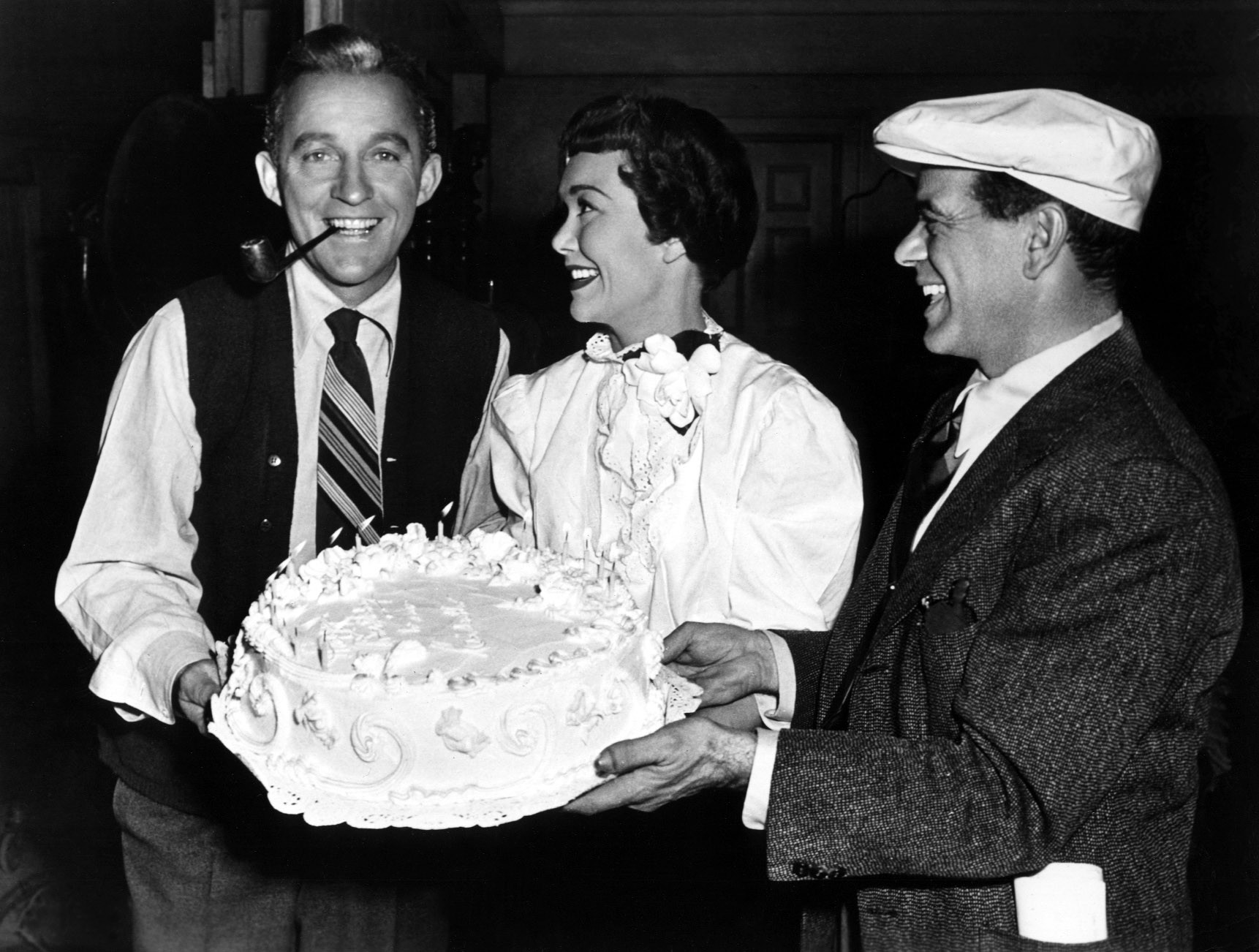
Bing Crosby, who was born on this day in 1903, with director Frank Capra, co-star Jane Wyman and a birthday cake on the set of 1951’s Here Comes the Groom:

Movie Comparison of the Day:

There are some similarities between Guardians of the Galaxy and Suicide Squad, but here’s Couch Tomato with 24 ways they’re different:

[embedded content]

Actor in the Spotlight:

With Guardians of the Galaxy Vol. 2 out this week, Burger Fiction chronicles the evolution of Chris Pratt’s career:

[embedded content]

Filmmaker in Focus:

Pratt is in Her, and speaking of Her, here’s a video by StudioBinder on how to make movies about loneliness like Spike Jonze does:

[embedded content]

Classic Trailer of the Day:

Today is the 15th anniversary of the release of Spider-Man, Sam Raimi’s first of three. Watch the original full trailer for the classic superhero movie below.

[embedded content]

and

Let’s block ads! (Why?)