Kareem Abdul-Jabbar Writes About His Friendship With Coach Wooden

NPR’s Lulu Garcia-Navarro talks to writer and sports legend Kareem Abdul-Jabbar about his book, Coach Wooden and Me, about his 50-year relationship with his UCLA basketball coach John Wooden.
LULU GARCIA-NAVARRO, HOST:
Kareem Abdul-Jabbar is a basketball legend…
(SOUNDBITE OF ARCHIVED RECORDING)
UNIDENTIFIED SPORTSCASTER #1: Three NCAA championships at UCLA. Six NBA titles with Milwaukee and Los Angeles.
Here’s Kareem, the sky hook.
UNIDENTIFIED SPORTSCASTER #2: He has scored well over 37,000 points, well over 3,000 blocked shots.
UNIDENTIFIED SPORTSCASTER #3: Kareem – swing left, right hand 12-footer good.
UNIDENTIFIED SPORTSCASTER #4: And you can just tell the way the big fellow was laughing, he thinks that’s it.
GARCIA-NAVARRO: …But his new book is a tribute to another legend, his coach at UCLA, John Wooden. Their 50-year-long friendship started on the court at Pauley Pavilion and grew over lunch at VIP’s Cafe in Tarzana and long afternoons of easy conversation in coach Wooden’s den. This week on Out of Bounds, Kareem Abdul-Jabbar, author of “Coach Wooden And Me.” He joins me now from NPR West. Welcome so much to the program.
KAREEM ABDUL-JABBAR: Thank you very much, nice to talk to you.
GARCIA-NAVARRO: At the beginning of the book, you write about how you and coach Wooden when you first met were an odd couple sitcom waiting to happen. Tell us about who you were then.
ABDUL-JABBAR: Well, you know, I was this cocky kid from New York City who felt that I would go to UCLA and do very well playing basketball, and that’s what it would be all about. And coach Wooden was able to make me become aware of so much more.
GARCIA-NAVARRO: You write in the book that you thought he was some white dude from the Midwest who might be close-minded, who just thought about farms, and you had some preconceptions about him as well.
ABDUL-JABBAR: Yeah. You know, when you’re – spent all your time in one section of the country, you get the little snippets and stereotypes of it and that’s all you know. So for me to come all this way across the country and go to Los Angeles, it was a brave new world a little bit.
And, you know, that’s really what I was trying to explain in writing “Coach Wooden And Me.” I wanted people to get an idea of just how out of place this was to put two people like this together and have them become lifelong friends.
GARCIA-NAVARRO: Yeah. This is a book about a 50-year-long friendship and mentorship, he mentored you. You credit coach Wooden with instilling some key values in you. There are a lot of anecdotes in this book, so I’m going to ask you to just sort of relay one of them. When was the moment that you really came to understand the impact he was having on your life?
ABDUL-JABBAR: The moment that I understood the impact that he had had on my life was after I became a parent and I had to deal with my kids, and I used his tactics. And I would think about it and laugh to myself.
So in putting everything together in writing “Coach Wooden And Me,” I really had to go back and think about these things. And it took me some time. You know, I had to really digest what he had meant to me, and then I had to figure out if I wanted to share it.
GARCIA-NAVARRO: But it feels more than a tribute to a great man. It’s more about the nature of friendship and how you navigate fundamental differences with people that you care about.
ABDUL-JABBAR: Yeah. What we had that we loved together so much, you know, the things that we shared, the loves that we shared, you know, for literature and for sports other than basketball. But, you know, he was an English teacher. I was an English major. So we had that, and that was a tremendous bond. And it enabled him to reach into my life and for me to have insight into his life.
GARCIA-NAVARRO: You write in this book though – and I’m quoting here – “he didn’t quite understand that when you are black in America, everything is about race.” You got to know him at a time when the civil rights movement was underway. You were finding your voice on race, but he disappointed you on that issue along the way at times.
ABDUL-JABBAR: Well, I don’t think coach disappointed me so much as sometimes he didn’t understand how race could affect somebody. And he didn’t see that until he was with me, and we went through incidents where he saw that geez, he wouldn’t like to have experienced that.
And he didn’t think that other Americans were that mean-spirited and cruel at times, the way that black people experience those emotions and sentiments from their fellow Americans. And he said he learned so much from what he saw me go through as his star player.
GARCIA-NAVARRO: Race is so divisive. What can we learn from your relationship with a white man from a different generation?
ABDUL-JABBAR: That’s what “Coach Wooden And Me” is about. It’s about the fact that despite all the differences here in America, we come together on so much that we agree on, you know, our love for sport. Basketball fans across all ethnicities and socioeconomic lines, everybody loves hoops. And that’s where we come together, within our country and with other countries of the world.
GARCIA-NAVARRO: When you talk about your friendship with coach Wooden in the book, you use the word accomplishment. Why that word? Is having an enduring friendship and accomplishment?
ABDUL-JABBAR: Yeah, I think so because it’s something that you have to work at. It just doesn’t come. Building up trust and love and affection with someone else, you’ve got to take some risks. You could fail. It is an accomplishment, you know, because it tests your judgment and, what is your commitment?
GARCIA-NAVARRO: You have to show your vulnerability to that person.
ABDUL-JABBAR: Yeah. It’s not just about I’m wonderful, here I am.
GARCIA-NAVARRO: That’s Kareem Abdul-Jabbar, the legend, the author, the mentor, the friend. His book out now is “Coach Wooden And Me.” Thank you so much.
ABDUL-JABBAR: Great talking to you. Thanks.
(SOUNDBITE OF TRIBECA’S “GET LARGE”)
Copyright © 2017 NPR. All rights reserved. Visit our website terms of use and permissions pages at www.npr.org for further information.
NPR transcripts are created on a rush deadline by Verb8tm, Inc., an NPR contractor, and produced using a proprietary transcription process developed with NPR. This text may not be in its final form and may be updated or revised in the future. Accuracy and availability may vary. The authoritative record of NPR’s programming is the audio record.


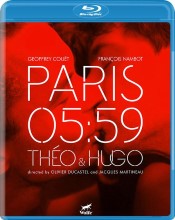 You’ve never quite seen a real-time romance like Paris 05:59 Théo & Hugo (Wolfe Video); for one thing, it starts in an underground sex club where our leads get to know each other very well before they even learn each other’s names. But this charming film segues from explicit to intimate, as they spend the wee hours exploring the City of Lights while dealing with a potential health emergency, getting to know each other in waiting rooms and on buses. Smart, sexy and passionate, this lovely French import doesn’t hold anything back.
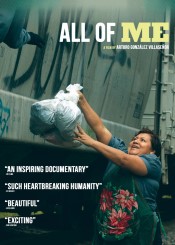 As politicians demonize our neighbors to the south and bloviate about building a wall, the powerful documentary All of Me (Strand Releasing Home Entertainment) puts a human face on those who risk their lives to cross the Mexican border in the hopes of improving conditions for themselves and their families. As migrants travel on a train known as The Beast, a group of women called the Patronas makes food and tosses it to the helpless each day as the train rushes by, bringing hope and love to circumstances that are utterly dire. It’s a gorgeous and inspirational look at people bringing their best selves to dark times.
 A hit at festivals, but barely released theatrically in the United States, the provocative British chiller The Girl with All the Gifts (Lionsgate) takes two narratives you never thought you wanted to see again – the “chosen one” YA heroine and the zombie apocalypse – and breathes fresh life into both. Young Sennia Nanua is the titular child, the first zombie who shows human tendencies and who might signal an end to the crisis. Glenn Close, Gemma Arterton and Paddy Considine lead a terrific ensemble in this smart, exciting genre film.
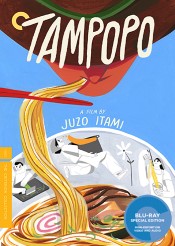 Tampopo (The Criterion Collection) will make you hungry for ramen, to be sure, but there’s more on writer-director Juzo Itami’s mind in this brilliantly hilarious comedy. Partially a parody of spaghetti Westerns (it’s definitely got noodles on its mind) but also a loving examination of the human obsession with food, this hilariously episodic film follows a widow who is trained in the art of soup by a nomadic trucker and his comrades. Interspersed throughout are wild and bawdy sketches involving gourmet gangsters, eating lessons and much more. Delicious in every way possible, Tampopo ranks among the great international comedies, and after a long absence from American DVD, this new release looks great and overflows with tasty extras.
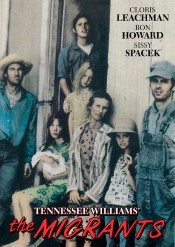 Whether it’s because of rights issues or other factors, made-for-TV movies remain very much under-represented on DVD and Blu-ray, with several classics (like Frank Perry’s adaptation of Truman Capote’s A Christmas Memory) still unavailable. All the more reason to celebrate the release of a title like The Migrants (CBS/Kino Lorber), an Emmy-nominated film written by playwright Lanford Wilson, adapting the Tennessee Williams story. Cloris Leachman, Ron Howard, Sissy Spacek and Cindy Williams star in this saga of an impoverished Dust Bowl family eking out an existence as migrant farm workers during the Great Depression, and it’s a network prestige item that well deserves another look.