Articles by admin

No Image

Flattening The 'Mummy Tummy' With 1 Exercise, 10 Minutes A Day

Women work on strengthening their core abdominal muscles in Leah Keller’s exercise class for new moms, inside a San Francisco clothing store called Monkei Miles.

Talia Herman for NPR

hide caption

toggle caption

Talia Herman for NPR

I admit it. I have a “mummy tummy,” also known as “mommy pooch.” You know, that soft, jelly belly you retain after having a baby — it makes you look a few months pregnant.

I’ve tried to convince myself that the pooch is a valiant badge of motherhood, but who am I kidding? The pooch bothers me. And it turns out it’s been causing me back pain.

So when I hear that a fitness coach and doctor have come up with a technique that can flatten the pooch quickly and easily, I think, “Why not?”

A few weeks, later I’m rolling out a yoga mat with a dozen other moms and pregnant women in San Francisco.

“We will see a dramatic change,” says Leah Keller, who leads the class. “You can easily expect to see 2 inches off your waist in three weeks of time,” Keller says. “That’s not an unrealistic expectation.”

Decked out in purple yoga pants and leather cowboy boots, Keller is a personal trainer from New York City. She has developed an exercise that allegedly shrinks the mommy pooch.

There’s science to back up the method, she says.

“A doctor at Weill Cornell and I did a study on the exact same program we’re going to do,” Keller says. “And we found 100 percent of women achieved full resolution.”

Keller measures the separation in a student’s abdominal muscles using her fingers as a guide.

Talia Herman for NPR

hide caption

toggle caption

Talia Herman for NPR

OK! Wait a second. Two inches off my belly in three weeks? That sounds too good to be true. I decide to do a little digging into the science of mummy tummy and Keller’s claim.

Putting the six-pack back together

It turns out the jelly belly actually has a medical term: diastasis recti, which refers to a separation of the abdominal muscles.

And it’s quite common. Last year, a study from Norway reported about a third of moms end up with diastasis recti a year after giving birth.

“This is such a ubiquitous issue,” says Dr. Geeta Sharma, an OB-GYN at Weill Cornell Medical Center-New York Presbyterian Hospital.

And it’s not just a cosmetic problem. Diastasis recti can cause another big issue for new moms: lower back pain.

“People can start feeling some back pain because the core is weakened,” Sharma says.

The Diastasis Recti

During pregnancy, the abdominal muscles responsible for a “six pack” stretch apart (left) to accommodate a growing fetus. After birth, the muscles don’t always bounce back, leaving a gap known as the mommy pooch.

distasis recti

Source: Nick Sousanis/Courtesy of Sustainable Fitness Incorporated

There’s a simple way to see if you have diastasis recti:

  1. Lie flat on your back with your knees bent.
  2. Put your fingers right above your belly button and press down gently.
  3. Then lift up your head about an inch while keeping your shoulders on the ground.
  4. If you have diastasis recti, you will feel a gap between the muscles that’s wider than an inch.

In rare occasions, the tissue in the abdomen isn’t just stretched, but it is also torn a bit. This can cause a hernia, Sharma says.

If there’s a defect in a layer of tissue called the linea alba, then the bowel can poke through,” Sharma says. “That’s going to be more dangerous.”

A hernia may require surgery. “So I will refer patients to a general surgeon to have a C.T. scan if there’s really a true concern about a hernia,” Sharma says.

Diastasis recti arises during pregnancy because the growing fetus pushes the abdominal muscles apart — specifically the rectus abdominal muscles.

“These are the muscles that give you a ‘six pack,’ ” says Dr. Linda Brubaker, an OB-GYN at the University of California, San Diego. “People think these muscles go horizontal across the belly. But they actually go vertical from head to toe.”

The rectus abdominal muscles should be right next to each other, on either side of the belly button, Brubaker says. “There shouldn’t be much of gap between them.”

But during pregnancy a gap opens up between the muscles, right around the belly button. Sometimes that gap closes on its own, but other times it stays open.

That leaves a spot in the belly where there’s very little muscle to hold in your stomach and other organs, a spot that can be one to two inches wide. That lets the organs and overlying tissue bulge out — and cause mommy pooch.

To flatten the area, women have to get those abdominal muscles to realign. And that’s where the exercises come into play.

If you search online for ways to fix diastasis recti, you’ll turn up a deluge of exercise routines, all claiming to help coax the abdominal muscles back together.

But the quality of much of that information isn’t good, Brubaker says. “Some of it is actually potentially harmful.”

Even some exercises aimed at strengthening the abdomen can exacerbate diastasis recti, says Keller, including simple crunches.

“You have to be very careful,” she says. “For example, please don’t ever again in your life do crossover crunches or bicycle crunches. They splay your abs apart in so many ways.”

That said, there are a few exercise programs for diastasis recti that many doctors and physical therapists support. These include the Tupler Technique, Keller’s Dia Method and the MuTu System in the U.K.

Most such courses, taught once a week for an hour in New York, San Francisco and at least a few other places, tend to run about four to 12 weeks and cost around $100 to $300. Some places offer online classes and videos, which are much less expensive.

The American College of Obstetricians and Gynecologists also recommends abdominal exercises for the perinatal period. But the organization’s guidelines don’t provide details — such which exercises work best, or how often women should do them and for how long.

Plus, ACOG focuses more on preventing diastasis than fixing the problem; it recommends strengthening the abdomen before and during pregnancy.

Keller (right) checks a student’s progress after the the final class. The fitness coach worked with an OB-GYN from Weill Cornell Medicine to standardize and evaluate her exercise program, which primarily targets abdominal muscles.

Talia Herman for NPR

hide caption

toggle caption

Talia Herman for NPR

“The best way is prevention,” says Dr. Raul Artal, an OB-GYN at St. Louis University, who helped ACOG write its exercise guidelines for the perinatal period. “The best way to do that is to exercise during pregnancy.”

But, as Sharma, the Cornell OB-GYN, points out, no one has really vigorously studied these various exercises to see if they actually fix diastasis recti.

“There’s a general knowledge that exercise is going to help,” Sharma says. “But no one has really tested them in a standardized way.”

In fact, the few studies that have been done haven’t been high enough quality to draw conclusions, researchers in Australia concluded a few years ago.

Sharma hopes to change that. A few years ago, she teamed up with Keller to start to gather some evidence on her technique.

“We did a pilot study to see if the method is helpful for women,” Sharma says.

The study was small — just 63 women. But the results were quite promising. After 12 weeks of doing Keller’s exercise — 10 minutes a day — all the women had fixed their diastasis recti, Sharma and Keller reported at ACOG’s annual meeting few years ago.

“We had patients that were even one year out from giving birth, and they still had such great benefit from the exercises,” Sharma says. “We love to see that there is something we can do to help women.”

The key exercise is typically performed while sitting crossed-legged, standing up or on all fours. But during Keller’s four-week class, she teaches many versions of the exercises. Here Tania Higham (left) and Maeve Clancy, do a version laying on their backs.

Talia Herman for NPR

hide caption

toggle caption

Talia Herman for NPR

Now Sharma says she’s working to put together a larger study to really nail down when the exercise works and how well.

Tight and tighter

Back at the class in San Francisco, Keller is taking us moms through the key exercise. It’s surprisingly simple to do.

“The exercise is a very small, very intense movement. That’s almost imperceptible,” Keller says. “OK. We’re going to do another set.”

Sitting on the floor cross-legged, with our hands on our bellies, we all take a big breath. “Let the belly fully expand,” Keller says.

And then as we exhale, we suck in our belly muscles — as far back as they’ll go, toward the spine. “Now we’re going to stay here near the spine. Hold this position,” she says.

Then we take tiny breaths. With each exhale, we push our stomachs back further and further.

“Tight, tighter,” Keller chants, rhythmically.

You can do the exercise in several different positions, Keller says: sitting crossed-legged, sitting on your knees, standing with knees slightly bent, on all fours or laying on your side in the fetal position.

The key is to be sure your back is flat. And that you do the exercise 10 minutes each day, changing positions every two minutes or so. For the rest of the time, your belly is pulled all the way back into the spine.

“The fingertips on the bellybutton are really important for this reason,” she says. “So you know that you’re squeezing tight, tighter with the belly, and you’re never bulging the bellybutton forward.”

This is our fourth week of class, and we’ve been doing this same exercise on our own every day for at least 10 minutes. So it’s judgement day. Time to see if we’ve flattened our bellies and resolved the diastasis recti.

Keller pulls out a measuring tape and starts wrapping it around women’s middles. She also has us lie down on the floor, so she can measure the separation in our abdominal muscles.

One by one, there’s success after success. Several moms completely closed up their abdominal separations. Many lost inches from their bellies.

One woman had amazing results. “Oh my goodness, you lost nearly four inches from your belly circumference,” Keller exclaims. “That’s amazing!”

How did I fare? Well, after three weeks, I didn’t completely close up the abdominal separation. My separation decreased from 1.2 inches to 0.8 inches.* But I did drop more than an inch from my belly circumference.

And I am quite happy with the results. My abs are definitely firmer. And regularly doing this exercise brought a bonus benefit: My lower back pain has almost completely gone away.


*I continued to do the exercises after the class had finished. I checked with in Keller three weeks later to have her measure my diastasis recti. At that point, the separation had dropped down to 0.6 inches, which meant technically I no longer have diastasis recti.

Let’s block ads! (Why?)


No Image

'Icarus' Filmmaker Talks Stumbling On International Doping Scandal

Amateur cyclist Bryan Fogel set out to make a film about doping in international sports. What he found was an international scandal over a state-run Russian doping program, with links to the Russian government.

STACEY VANEK SMITH, HOST:

Doping has been one of the biggest stories in sports over the past several decades. Nearly every sport out there has been hit with news of athletes using illegal performance-enhancing drugs. Perhaps the most famous example is cyclist Lance Armstrong, who denied doping allegations for years and then finally admitted to using performance-enhancing drugs in 2013. That is where a new documentary called “Icarus” begins.

Director and amateur cyclist Bryan Fogel decides to explore the subject by taking his own regimen of performance-enhancing drugs. But halfway through the film, what began as an experiment turns into something much bigger. One of the film’s main subjects blows the whistle on a massive Russian doping program with links to the highest levels of Russian government.

(SOUNDBITE OF DOCUMENTARY, “ICARUS”)

UNIDENTIFIED JOURNALIST #1: If this is true, it is an unimaginable level of criminality.

UNIDENTIFIED JOURNALIST #2: The International Olympic Committee calling the report very worrying.

UNIDENTIFIED JOURNALIST #3: We asked the World Doping Agency to investigate immediately.

UNIDENTIFIED JOURNALIST #4: The Justice Department is opening an investigation into Russian government officials, athletes, coaches and anti-doping authorities.

SMITH: I’m joined now by the film’s director, Bryan Fogel. He’s in our studios in New York. Bryan, thanks for joining us.

BRYAN FOGEL: I’m thrilled to be here.

SMITH: So, Bryan, this film begins as a very daring experiment. You decide to use performance-enhancing drugs yourself in a cycling race. The movie has all these really vivid images of you taking pills and injecting yourself with testosterone. I mean, like, at one point, you have needles lined up on the table. You’re giving yourself shots in the butt. You have blood running down your leg. What was that like?

FOGEL: Besides being almost an absurdist comedy? (Laughter) I mean, it was a little ludicrous. But for what I was doing, which was, you know, going on this very, very detailed mission of charting what I was taking and then getting blood tests done every single week and collecting my urine and, you know, there was a very, very large extent to which I was going. But, you know, I was out to make a film. And I was documenting that process. So to that extent, I mean, there was a method and a purpose to the madness.

SMITH: So you don’t go on this journey alone. You get this man Grigory Rodchenkov to oversee your steroid use and your training regime. And he has a very interesting position. He is the head of Moscow’s anti-doping laboratory. He is quite a character. What was your first impression of him?

FOGEL: Well, Grigory at the time oversaw the testing of all Russian athletes across all sports and all international competitions in Russia of all athletes coming to Russia to compete on top of the Sochi games. And this guy is just this incredibly likable, enigmatic, larger-than-life personality.

SMITH: And this is very striking because he is the head of Russia’s Anti-Doping Agency, and he’s making all these jokes. And he’s helping you beat doping tests. Did that strike you as strange that he agreed to do this?

FOGEL: Well, I mean, it was beyond strange. And it was jaw-dropping. And it was also why at that time before, you know, it pivoted, I felt like I still had a really interesting film. The fact that I’ve got this Russian scientist who was supposed to be catching athletes for doping breaking every single rule in the book to not only help me dope but to tell me what to do and then even go so far as to come to Los Angeles to collect all of my urine samples which I had been taking, to bring them back to Moscow to test them in his WADA-accredited lab. I mean, everything about what he was doing was against the rules.

SMITH: Right. WADA being the World Anti-Doping Agency?

FOGEL: That’s correct. They’re kind of like the United Nations of anti-doping.

SMITH: So you mentioned that things pivoted very quickly. As you’re filming your documentary, the Russian anti-doping lab starts to come under fire. What was happening?

FOGEL: So right as I’m starting the actual program to dope myself, a German documentary comes out, like, a “60 Minutes” TV doc. And it has these two Russian whistleblowers that have fled Russia, went to Germany and have told this story of a state-sponsored doping system in Russia. They run this television program, and there’s enough in it that sets off a WADA – World Anti-Doping Agency – investigation. So over the next year while I’m doping myself and Grigory’s advising me and he’s coming to Los Angeles and I’m going to Moscow and we’re talking and Skyping everyday, he’s also under investigation.

And November 2015, this 335-page report comes out basically saying that everything that the German documentary put forward is true. But not only that, that Grigory is the mastermind of this operation and that they believe that Russia is running a state-sponsored doping program. So suddenly, this is a crisis. And he’s forced to resign from the lab by Vitaly Mutko, who is the sports minister. And Vitaly Mutko answers to one person and one person only, and that’s Vladimir Putin.

SMITH: I mean, what are you thinking at this point when this report comes out?

FOGEL: It was a combination of, oh, my God, scared, shocked. Russia’s suspended from world track and field. And then Putin is on television – on Russia-1 – holding an official press conference not only denying all the allegations of this report but that if any of this proves to be true, that it will be the individuals that are held accountable and that punishment will be absolute.

SMITH: Right.

FOGEL: And at that point, Grigory has two FSB, KGB agents living in his apartment, quote, unquote, “guarding him.” And five days after the report, I’m on Skype with Grigory, and Grigory is telling me that he has got word from other of his friends within the KGB, the FSB that they have planned his suicide and that he needs to escape.

SMITH: And things get so bad that Grigory flees to the United States and, in fact, he comes to stay with you.

FOGEL: This happened so fast. I mean, this is – six days after this report, Russia for whatever reason didn’t have him on the do-not-fly list. And he’s somehow able to get out of the country. I bought the plane ticket. I put it on my credit card. He comes with just a backpack in his hand and three hard drives. And we put them up in a safe house in Los Angeles.

And over the next month, I discover that not only is Grigory involved, Grigory is the mastermind of a spectacular unbelievable scandal that calls into question every medal ever won in the Olympic Games. And not only that, he oversaw the Sochi Olympics, where Russia won 33 medals. And they did it through this elaborate “Ocean’s 11”-style scheme, where they had literally created holes in the laboratory to slip out the dirty urine samples of all the Russian athletes and swap out their urine with clean urine. And this guy was the only man on planet Earth who had this evidence. And he was able to prove it.

SMITH: Right. I mean, at one point in the documentary, he talks to a New York Times reporter. And there’s a huge story in The New York Times about this. Suddenly, you’re in the middle of a giant global conspiracy.

FOGEL: And a giant international scandal. And it was incredibly stressful. That six-month process between learning what I had learned to going to The New York Times was a daily crisis. Two of his friends died under mysterious circumstances in Russia, both of them. One, the head of the Russian Anti-Doping Agency, the other the former head of a Russian Anti-Doping Agency. Both die of heart attacks, age 52 and 59 within two weeks of each other.

Then, the Department of Justice and FBI show up and serve him with a subpoena. And eventually, bringing the story to The New York Times because we realized that if we didn’t, not only might the story be buried, but nobody in the sporting world really was going to want to do anything about this. They all just wanted to push it under the rug because of the ramifications to the business.

SMITH: Why do you think he talked?

FOGEL: What happened at Sochi he was incredibly upset about because he had went from being a scientist, meaning his whole life is – yes, it’s it’s doing the exact opposite of what he should be doing, but he was using science to beat the system. There was a differentiation that he made in his mind. But at Sochi, this wasn’t about science. This was just fraud.

This was literally like breaking into a bank vault and substituting real money for counterfeit money. It was spiraling out of control. And after Sochi, he was promised it would stop. Instead, he’s doing it for the swimming world championships. He’s doing it for the collegiate athletic world championships. And there’s essentially no end in this. And as you also see in the film, as you see that he’s disposable like so many others that betray the government or whatever…

SMITH: Right. He becomes very worried for his life and, in fact, goes into witness protection.

FOGEL: That’s right. He…

SMITH: Is that where he is now?

FOGEL: He is in protective custody. And the reason why is the Department of Justice and FBI has been sitting on this case for the last 14 months. And we’re very, very optimistic that our government is going to continue to protect him because regardless of the wrongs that he did, it was tremendous courage and honesty to come forward with this staggering amount of evidence and let the world know what had happened. And without him, we would still be in the dark about this.

SMITH: Bryan Fogel is a documentary filmmaker. His new film “Icarus” is out on Netflix this week. Bryan, thank you so much for speaking with us.

FOGEL: It has been a real pleasure.

Copyright © 2017 NPR. All rights reserved. Visit our website terms of use and permissions pages at www.npr.org for further information.

NPR transcripts are created on a rush deadline by Verb8tm, Inc., an NPR contractor, and produced using a proprietary transcription process developed with NPR. This text may not be in its final form and may be updated or revised in the future. Accuracy and availability may vary. The authoritative record of NPR’s programming is the audio record.

Let’s block ads! (Why?)


No Image

How The Dream Of America's 'Nuclear Renaissance' Fizzled

This June 13, 2014 file photo shows construction on a new nuclear reactor at Plant Vogtle power plant in Waynesboro, Ga.

John Bazemore/AP

hide caption

toggle caption

John Bazemore/AP

A decade ago, utility executives and policymakers dreamed of a clean energy future powered by a new generation of cheap, safe nuclear reactors. Projects to expand existing nuclear plants in South Carolina and Georgia were supposed to be the start of the “nuclear renaissance.”

But following the decision last week by two utilities to scrap the expansion at the Virgil C. Summer Nuclear Generating Station in South Carolina, that vision is in tatters. There’s now just one nuclear expansion project left in the country, its future is also uncertain.

That remaining project is an expansion at the Vogtle Electric Generating Plant in eastern Georgia. As recently as five years ago, then-Energy Secretary Steven Chu visited Plant Vogtle and declared the project the start of “the resurgence of America’s nuclear industry” and a critical part of President Obama’s energy strategy.

The two new reactors at Plant Vogtle were the first next-generation reactors in the country, and some of the first new reactors to be built in the U.S. in three decades. After the partial meltdown at Pennsylvania’s Three Mile Island in 1979, the U.S. nuclear industry went into hibernation for more than two decades.

But by the early 2000s, the Three Mile Island accident and the 1986 meltdown at Chernobyl were distant memories, says Paul Murphy, managing director in the energy group at the law firm Gowling WLG. “On top of that, people were projecting significant growth in power demand,” he adds.

The earlier generation of nuclear power stations are also starting to reach the end of their lifespans and some are being shuttered.

Building a nuclear reactor is expensive and time-consuming but once it’s up and running, it offers cheap and reliable electricity without generating the greenhouse gas emissions that contribute to climate change.

Recession, fracking, renewable energy

With encouragement from the federal government, utilities around the country began applying for permission to build new reactors. At Vogtle in Georgia and V.C. Summer in South Carolina, power companies got to work.

Loading…

“I thought it was going to be a very good thing for the Southern economy,” says Marilyn Brown, a public policy professor at Georgia Tech and board member of the Tennessee Valley Authority, which operates three older nuclear power plants in Alabama and Tennessee.

Then there were setbacks. First came the global financial crisis, which flattened the demand for electricity. Then fracking flooded the market with cheap natural gas. Renewable energy — especially wind power — also got more competitive.

According to Brown, “that meant if you went back to reappraise the nuclear investments, they probably would not have been approved, or might not have been approved.”

Both the Georgia and South Carolina nuclear projects racked up billions of dollars in cost overruns and delays. Then earlier this year, Westinghouse, which was building the reactors in both states, went bankrupt, blaming high construction costs for its problems.

Finishing the plant in South Carolina without Westinghouse didn’t make financial sense for the South Carolina utilities, so they scrapped the project.

Last kid on the block”

“Now Vogtle’s the last kid on the block,” says Stan Wise, the chairman of the Georgia Public Service Commission, which regulates local utility Georgia Power. The utility says it will propose later this month whether or not to complete the Vogtle expansion.

Wise says Georgia Power is in a better financial situation than the South Carolina utilities, since it has more ratepayers to support the project. Georgia Power’s customers have been paying for the new reactors in their monthly power bills since 2011.

“I’m still a proponent of nuclear,” says Wise. “I’m going to keep my powder dry in the coming weeks and months as we decide whether or not to continue this project.”

Marilyn Brown at Georgia Tech says she hopes the Plant Vogtle expansion is completed.

“I’m a person very concerned with climate change,” she says. “If these plants can’t be continued, then where would you build the next one? Is that the demise of the industry?”

But for now, Brown says the American nuclear renaissance appears to be stalled.

Let’s block ads! (Why?)


No Image

Fox News Host Eric Bolling Suspended Amid Claims Of Lewd Texting

Fox News host Eric Bolling has been suspended amid reports that he sent at least three female colleagues a lewd text message. Bolling’s lawyer calls the accusations untrue and says he and his client are cooperating with the investigation.

Richard Drew/AP

hide caption

toggle caption

Richard Drew/AP

High-profile Fox News host Eric Bolling has been suspended after HuffPost reported on Friday that he sent unwanted lewd texts with “an unsolicited photo of male genitalia” to at least three female colleagues.

Bolling co-hosts The Fox News Specialists, a daily news and talk showand is the sole host of Cashin’ In, a national business analysis program, which airs on Saturday mornings.

News: Fox News tells NPR that Fox has suspended star host Eric Bolling pending results of investigation, to be done by law firm Paul, Weiss

— David Folkenflik (@davidfolkenflik) August 5, 2017

According to HuffPost, the women are Bolling’s current and former Fox colleagues. The online news site reported that it spoke with 14 anonymous sources in reporting these allegations, and that recipients of the lewd photo confirmed its content.

The law firm Paul Weiss is investigating for Fox and parent company 21st Century Fox.

Bolling’s attorney, Michael J. Bowe, tells NPR that the allegations are untrue, that he sent no “unsolicited” communication — suggesting but not stating there were consensual exchanges.

Bowe sent NPR this statement:

“The anonymous, uncorroborated claims are untrue and terribly unfair. We intend to fully cooperate with the investigation so that it can be concluded and Eric can return to work as quickly as possible.”

Cashin’ In was taped Friday morning as usual but was pulled before its scheduled airtime Saturday 11 a.m. once Fox News Channel was made aware of the allegations via the HuffPost story. The show was replaced by an episode of America’s News HQ, alive half-hour of news.

Until further notice, rotating substitute hosts will be in place on Specialists (weekdays at 5 p.m.) and Cashin’ In.

Bolling’s suspension comes in the backdrop of ongoing sexual harassment lawsuits against Fox and the departures of the late Roger Ailes, former host Bill O’Reilly for similar claims, as well as a raft of departures of top executives. And just last Tuesday, a private investigator filed a defamation suit against Fox, accusing the network of falsifying quotes and promoting a story that favors President Trump. Both Fox and the Trump Administration have refuted these claims.

A Fox News spokesperson issued the following statement:

“Eric Bolling has been suspended pending the results of an investigation, which is currently underway.”

Bolling joined Fox in 2008 after a career as a commodities trader. During his tenure there, he’s been known to be a vocal supporter of Trump.

Let’s block ads! (Why?)


No Image

Former NBA Star Ray Allen Visits Holocaust History In Auschwitz

Ray Allen was serious about two things in life: his three-pointers and the Holocaust. NPR’s Stacey Vanek Smith speaks with Allen about his experience visiting Auschwitz and some of the unexpected backlash he received once he returned home.

STACEY VANEK SMITH, HOST:

Most of us know Ray Allen as a former NBA basketball player with the Milwaukee Bucks, the Seattle Supersonics, Boston Celtics Miami Heat. He’s also the NBA’s all-time leader in 3-point shots. What most people probably don’t know is that Ray has always been fascinated by the Holocaust. In fact, whenever his team would visit Washington, D.C., to play the Wizards, Ray would make a visit to the National Holocaust Museum.

Recently, Ray Allen decided to see the history in person. He visited the Auschwitz concentration camp in Poland, and he wrote about the experience this week in The Players’ Tribune. We called him at his home in Connecticut to hear more about his trip and some of the unexpected reactions he’s gotten. So you write in your essay that you have been fascinated by World War II and the Holocaust since you were a teenager. Why is that?

RAY ALLEN: Well, first, I grew up as a Air Force brat. My dad was a metals technician in the Air Force. And so I lived and grew up in Germany. I grew up in England. So I had opportunity to see things differently. So I’ve always had this curiosity about the world. And, you know, I had this ability to kind of think outside my own self and put myself in those people’s shoes. And, you know, so as I became of college age, I watched “Schindler’s List.” It was 1993. And it really, like, unearthed a lot in me. And it made me realize that, you know, how much good one person can do and vice versa, how much bad one person can do.

SMITH: And what made you want to visit Auschwitz specifically?

ALLEN: There’s so many different stories that have come out of the Holocaust, so many different movies that I’ve watched that really show the human condition, people’s will to survive. And, you know, I always ask myself, if I was in those situations, what would I do? Would I be brave? It’s easy for me to say I’m brave now, you know. I’m tall. I’m, you know, strong. I’ve played in the NBA for many years.

You know, I come from a good family. You know, it’s easy to talk about being brave Now in the position I’m in, but would I be brave if I was under those circumstances where, you know, I had to fight for my survival, having not eaten in days, weeks or months? Like, how tough would I have been then? How strong would I have been?

SMITH: Right. I mean, in your essay, you talk about people who hid Jewish families in their basements, risking their own lives to do that. And you ask yourself if you would have done the same. Would you have done the same?

ALLEN: The easy answer is yes. It’s easy to say, yeah, I’m going to fight for, you know, someone who can’t fight themselves. But, you know, I have five children. And would I put my 5-year-old in harm’s way? Like, it’s easy for me to say I want to help other people, but in helping other people, would I be killing my own family? Now, a lot of people made that choice. And a lot of people saved a lot of lives.

And I would like to think that I was – I would be that courageous. There’s obviously no way to be able to tell, but that is, I think, the ultimate question that we live with every day because there’s things that happen every single day now today. And it doesn’t result in maybe us losing our lives or family member losing their lives, but are we willing to fight for the next person when it doesn’t benefit us?

SMITH: In the piece, titled “Why I Went To Auschwitz,” Ray Allen writes about the overwhelming feelings he had as he stood in front of what he called the horror of the history.

ALLEN: (Reading) We walked through the barracks and gas chambers. And what I remember most is what I heard – nothing. I’ve never experienced silence like that.

SMITH: This is an excerpt where he describes visiting the gas chambers for the first time.

ALLEN: (Reading) Apart from footsteps, the complete lack of sound was almost jarring. It’s eerie and sobering. You’re standing in these rooms where so much death has taken place, and your mind is trying to come to terms with all that’s happened in this space. I stood outside for a while by myself, thinking about everything I experienced. Why do we learn about the Holocaust? Is it just so we can make sure nothing like this ever happens again? Is it because 6 million people died? Yes, but there’s a bigger reason I think. The Holocaust was about how human beings, real normal people like you and me, treat each other.

SMITH: Many questions, many reflections, many unexpected emotions – that’s what Ray Allen says this journey drummed up in him. The one thing he did not expect? Criticism. When Ray returned home and posted about his trip on social media, some people blasted back. They didn’t like the fact that he seemed to be raising awareness for what had happened in Poland to Jews and not using that time or energy to support people in the black community. You got quite a few really strong reactions to your visit to Auschwitz. Not all of them were positive. Why do you think there was that response?

ALLEN: Because, again, the way, you know, we get thrust into these situations in the first place is because people can’t see past their own color, past their own hate. And the reason that I brought that up was because people are looking at this as a color issue. You know, you want to talk about this issue and say, well, why are we still talking about this? And why is, you know, why are you supporting Jewish people? And my response has been consistent every time is that this is not about Jewish people. This is about people. You know, just because that’s their religion, look at what was done to them. You know, this is a lesson for us in all walks of life.

And there’s so many different atrocities that have taken place. This is just the atrocity that we are speaking about right now. We can talk about the genocide all over the world, you know, that’s taking place in so many different countries, but we just happen to be talking about the Holocaust. I’ve studied slavery just the same. And this is slavery just the same. I’m speaking on behalf of people, people who can’t speak for themselves, you know, atrocities. You know, teaching kids now – we got kids in school now that don’t know what the Holocaust is, you know, but yet, they’ll know – they know what a bully is. Bullies turn into dictators. Dictators end up bullying. You know, we can’t have that in this world that we live in. We know too much.

SMITH: That was Ray Allen. He played in the NBA for 18 years. His piece on his journey to Auschwitz ran this week in The Players’ Tribune.

Copyright © 2017 NPR. All rights reserved. Visit our website terms of use and permissions pages at www.npr.org for further information.

NPR transcripts are created on a rush deadline by Verb8tm, Inc., an NPR contractor, and produced using a proprietary transcription process developed with NPR. This text may not be in its final form and may be updated or revised in the future. Accuracy and availability may vary. The authoritative record of NPR’s programming is the audio record.

Let’s block ads! (Why?)


No Image

The Week in Movie News: Here's What You Need to Know

Need a quick recap on the past week in movie news? Here are the highlights:

BIG NEWS

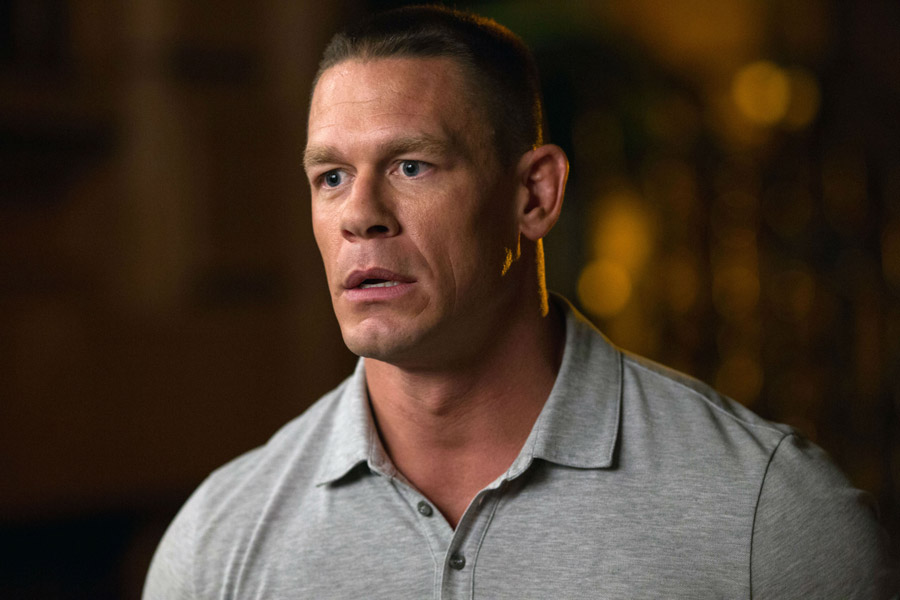
John Cena joins the Transformers movies: Could John Cena be the next wrestler to become a big blockbuster star? He’s joining the Transformers spin-off Bumblebee, so we think his time is now. Read more here.

SURPRISING NEWS

The Karate Kid returns: We’ve already gotten a remake of The Karate Kid, but the original movie will be resurrected for a new series called Cobra Kai that will bring back Ralph Macchio and William Zabka as still rivals in middle age. Read more here.

SUPERHERO BUZZ

Deadpool 2 shows off: We got a few updates on Deadpool 2 this week, including a first look at Zazie Beetz as Domino, got teased about Cable and the brawls of the movie and learned the sequel will be like Rush Hour. Read more here and here and here.

EXCLUSIVE SCOOP

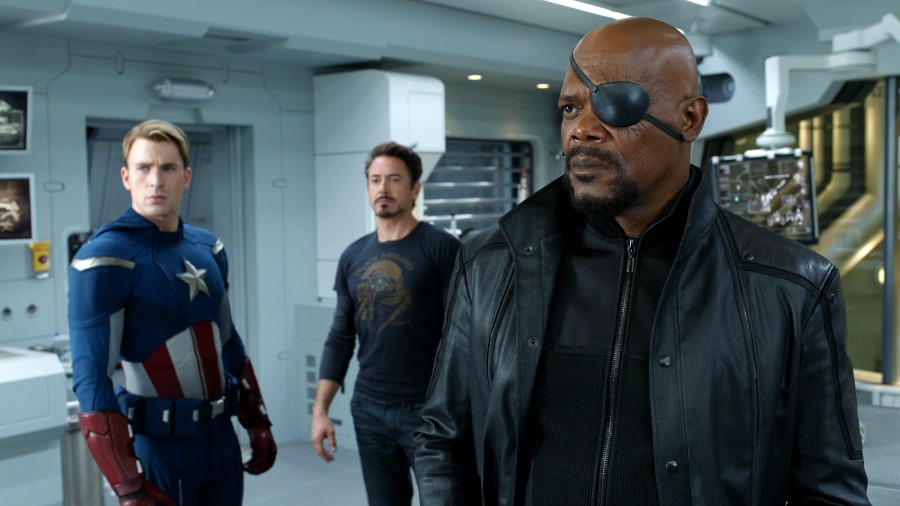
Samuel L. Jackson on Captain Marvel: We recently chatted with Samuel L. Jackson about The Hitman’s Bodyguard, but he also shared some thoughts on reprising his role as a younger Nick Fury in the upcoming Captain Marvel. Read all about it here.

MUST-WATCH TRAILERS

Call Me By Your Name reveals a Sundance sensation: One of the favorites of this year’s Sundance Film Festival, the romantic drama Call Me By Your Name finally has a trailer. Watch it here:

[embedded content]

Angelina Jolie presents First They Killed My Father: The new drama directed by Angelina Jolie, First They Killed My Father, focuses on the devastating Cambodian genocide in the 1970s? Check out the trailer here:

[embedded content]

Death Wish showcases a vengeful Bruce Willis: Joe Carnahan and Eli Roth’s remake of Death Wish has a new trailer with Bruce Willis going after the criminals who tore his family apart. Watch it below.

[embedded content]

and

Let’s block ads! (Why?)


No Image

Uber Knowingly Leased Unsafe Cars To Its Drivers In Singapore, Report Says

Uber leased cars it knew were unsafe to its drivers in Singapore, according to a report in The Wall Street Journal. Above, Uber’s San Francisco headquarters in June.

Eric Risberg/AP

hide caption

toggle caption

Eric Risberg/AP

Uber knowingly leased unsafe cars to its drivers in Singapore, The Wall Street Journalreported Thursday.

One of those cars, a recalled Honda Vezel with an Uber driver at the wheel, spouted flames from its dashboard in January, melting the car’s interior and cracking its windshield. The driver had just dropped off a passenger when he began smelling the smoke.

Uber had bought more than 1,000 of the defective cars, which were recalled by Honda in April 2016 due to an electrical component that can overheat and catch fire.

And though Uber knew the cars needed repairs to make them safe, the company continued to lease them to drivers unfixed, according to the Journal.

The newspaper says it reviewed internal Uber emails and documents, and interviewed people familiar with the company’s operations in Asia.

And those emails show executives knew the vehicles had been recalled, but didn’t want to take them off the roads. “Asking drivers to give up their keys with no suggested fix will send panic alarm bells to the mass market,” wrote Uber’s Singapore general manager in an email, the Journal reported.

Word of the fire apparently reached Uber’s executives in San Francisco shortly after the company’s insurer in Singapore said it wouldn’t cover the damage to the scorched Vezel due to the known recall.

When Uber launched in Singapore in early 2013, it marked the company’s first expansion into Asia.

It was a good market to enter: In addition to all the rain you might expect in a tropical climate with two monsoon seasons, owning a car in Singapore is extremely expensive. The government requires owners to buy a certificate of entitlement, which represents “a right to vehicle ownership and use of the limited road space for 10 years.” The certificates are released through competitive bidding, and recently they’ve fetched prices from $44,000 and up.

That kind of expense made it hard for Uber to find drivers, the Journal reports, and so the company created a unit, Lion City Rentals, that would lease cars to drivers. It represented a new approach for the company, which avoids owning assets.

Instead of buying cars from authorized Honda and Toyota dealers, the company reportedly began importing hundreds of used cars a month from small dealers in the “gray market”, where safety standards are hard to enforce. At least one of those dealers didn’t get the Vezels fixed before selling them to Uber. While Uber was aware of the problem and asked the dealer to hasten its repairs, the company continued to lease the defective vehicles to drivers without warning them of the safety issue.

Even after the fire, Uber told drivers that the Vezels needed “immediate precautionary servicing” — without mentioning the risk of fire and overheating.

In a statement to NPR, Uber says it took action, but “could have done more.”

“As soon as we learned of a Honda Vezel from the Lion City Rental fleet catching fire, we took swift action to fix the problem, in close coordination with Singapore’s Land Transport Authority as well as technical experts,” Uber said in the statement. “But we acknowledge we could have done more—and we have done so. We’ve introduced robust protocols and hired three dedicated experts in-house at LCR whose sole job is to ensure we are fully responsive to safety recalls. Since the beginning of the year, we’ve proactively responded to six vehicle recalls and will continue to do so to protect the safety of everyone who uses Uber.”

Uber lost nearly $3 billion in 2016 but is nevertheless is one of the largest privately held companies, valued at nearly $70 billion.

Let’s block ads! (Why?)


No Image

Usain Bolt's Final 100m Race: 'There He Goes'

Usain Bolt from Jamaica celebrates winning the gold medal in the men’s 200-meter final during the athletics competitions of the 2016 Summer Olympics at the Olympic stadium in Rio de Janeiro, Brazil.

David J. Phillip/AP

hide caption

toggle caption

David J. Phillip/AP

Saturday in London, Jamaican Usain Bolt will run a final 100 meters at track and field’s World Championships at approximately 4:45 p.m. ET. A week later, after a relay finale, he says he’ll retire. Bolt will leave with an eye-popping highlight reel that includes eight Olympic gold medals over the past three summer games.

Initially, there were nine golds – the hallowed Triple Triple – he won the 100 meters, 200 meters and 4 X 100 relay in three straight Olympic games – 2008, 2012 and 2016. But earlier this year, Bolt lost one of the medals when a teammate on the 2008 Jamaican relay team tested positive for a banned drug after his urine sample was re-analyzed by the International Olympic Committee in 2016.

Nine or 8, I was lucky enough to see all the races.

“Here I Am”

And I remember something he said after winning the last one. It was a year ago, in Rio de Janiero, Brazil. At his press conference, someone asked Bolt about growing up in a rural part of Jamaica, playing sports like cricket and soccer. And running. Did he start with big dreams?

Not really.

“I just started out in athletics and I was really good and I just continued,” Bolt said. “Over the years, I started making goals because I started getting better and I just continued running and pushing myself and working hard until … here I am.”

Here. I. Am.

Usain Bolt has announced his presence to the world so many times over the past nine years. But no hello was as big or gob-smacking as the first one. August 2008, in China. I remember the hazy Beijing night at the Bird’s Nest Stadium. The quiet before the gun – that moment of exquisite tension in any 100- meter race. But especially now. Bolt was the sport’s new phenom; the lanky 6- foot- 5 inch Jamaican giant among much smaller and more compact sprinters, had people buzzing about his potential.

Usain Bolt from Jamaica celebrates after crossing the line to win the gold medal in the men’s 200-meter final at the 2016 Summer Olympics at the Olympic stadium in Rio de Janeiro, Brazil, Thursday, Aug. 18, 2016.

Mark Baker/AP

hide caption

toggle caption

Mark Baker/AP

Those 100 meters in Beijing turned the buzz to awe. Four-time Olympic medalist Ato Boldon was part of the crew covering the race as track and field analyst for NBC.

“When he accelerated from about 30 to 70 [meters],” Boldon says, “I have never seen anything like it before. And I’ve never seen anything like it since.”

Indeed, none of us at the Bird’s Nest could fathom what we were watching. The world’s fastest men blazing down the track, and suddenly it was like they were all standing still.

Except for one.

A Tractor Wheel

Beijing was our introduction to the Bolt surge, and the most dramatic. But since 2008, we’ve seen it again and again. In the 100 meters and 200 meters, his preferred and best distance. Surging and winning without a cloud of doping hanging over him.

There is a physical explanation.

“Usain Bolt is a big wheel,” Boldon explains. “Think of a tractor wheel, able to turn over with the same speed as a smaller wheel. Once a big wheel gets going, it’s going to cover so much more ground that quite frankly, small wheels have no chance.”

“That’s why people ask me, how would you have done against Usain Bolt? Well, I’m 5 feet 9 inches. I’d have gotten out ahead of him and right about 40, 50 meters, he would’ve caught me and it wouldn’t have been pretty in the end.”

Speed And Charisma

Four-time Olympic medalist for Trinidad and Tobago and NBC Track and Field Ato Boldon says Usain Bolt is the greatest sprinter of all time.

Mike Ehrmann/Getty Images for IAAF

hide caption

toggle caption

Mike Ehrmann/Getty Images for IAAF

But for those of us who have simply watched, it’s always been pretty in the end. The joyous celebrations, the lightning bolt poses (which actually aren’t), the smiling and mugging to the cameras pre-race, when the tension is supposed to be highest.

This irresistible combo of speed and charisma let us overlook the few public blemishes – a sex romp in Brazil, selfies included, with the widow of a slain drug kingpin, or Bolt’s long time relationship with a controversial German sports doctor who’s known to inject patients with calves’ blood and the crests of cockerels.

In the end, they were minor speed bumps on the road to what should be a towering legacy.

“Jesse Owens was history’s most important sprinter, for obvious reasons,” Boldon says. “Carl Lewis made it profitable to be a sprinter. He sort of dragged track and field kicking and screaming into the professional era. But Usain Bolt is the greatest sprinter of all time. And I think he has been maybe the best thing that has happened to this sport in many generations.”

Which prompts the questions: who will fill the void? Will there ever by anyone as great?

“I have to be careful with that,” Boldon says. “I was on the podium for the Michael Johnson race [the 200 meters at the 1996 Summer Olympics], and I remember everyone being blown away by Michael running 19.32, when nobody had gotten close.”

“I felt that night that record would never be broken. That was 1996. Twelve years later, it was gone.”

Bolt, of course, smashed his 2008 Olympic world record times in boththe 100 meters and 200 meters, a year later.

“I think Bolt’s records [9.58 seconds in the 100; 19.19 seconds in the 200] are so good they won’t be gone in 12 years,” Boldon says. “I think they’ll last for a very, very long time. But I won’t be so bold as to say they’ll never be broken.”

Jamaica’s Usain Bolt celebrates after winning the “Salute to a Legend ” 100 meters during the Racers Grand Prix n Kingston, Jamaica, Saturday, June 10, 2017. Bolt is set to run his final 100 meters at the World Championships on Saturday in London.

Bryan Cummings/AP

hide caption

toggle caption

Bryan Cummings/AP

Last Bit Of Business

Bolt comes to London this weekend for the World Championships after a subpar season. His fastest time in the 100 meters this year ranks him seventh in the world. There’s talk about him being an underdog, to which he answers, “If I show up at a championship, I’m confident. I’m fully ready to go.”

Ato Boldon says it’s critically important to Bolt to finish with a win. Despite all that’s come before.

“He does not want to lose, he cannot lose, because he feels that’ll put a little bit of a dent in what otherwise has been a perfect vehicle.”

But Boldon thinks Bolt’s legacy is safe.

“If he doesn’t have a good race here in London, people will say well that’s too bad he couldn’t go out on top,” Boldon says. “But he does have eight Olympic gold medals, and I think most real track and field fans will remember the joy they felt watching him perform over the last nine seasons.”

On Saturday, one last time in the 100m, Bolt hopes to proclaim, “Here I Am.” When he’s done, probably in 9 point something seconds, the world will say, with a touch of sadness, “There he goes.”

NPR’s Maquita Peters produced this story for the Web.

Let’s block ads! (Why?)


No Image

Your ZIP Code Might Be As Important To Health As Your Genetic Code

Shannon McGrath, pictured with her son Rayder, says it has been a lot easier to make her medical appointments recently, thanks to help from a “patient navigator” — assigned to her by Kaiser Permanente — who arranged McGrath’s transportation.

Kristian Foden-Vencil/OPB

hide caption

toggle caption

Kristian Foden-Vencil/OPB

When a receptionist hands out a form to fill out at a doctor’s office, the questions are usually about medical issues: What’s the visit for? Are you allergic to anything? Up to date on vaccines?

But some health organizations are now asking much more general questions: Do you have trouble paying your bills? Do you feel safe at home? Do you have enough to eat? Research shows these factors can be as important to health as exercise habits or whether you get enough sleep.

Some doctors even think someone’s ZIP code is as important to their health as their genetic code.

That’s why Shannon McGrath was asked to fill in a “life situation form” this spring when she turned up for her first obstetrics appointment at Kaiser Permanente in Portland, Ore. She was 36 weeks pregnant.

“When I got pregnant, I was homeless,” she says. “I didn’t have a lot of structure. And so it was hard to make an appointment. I had struggles with child care for my other kids, transportation, financial struggles.”

The form asked about her rent, her debts, her child care situation and other social factors. On the strength of her answers, Kaiser Permanente assigned her what is called a “patient navigator.”

“She automatically set up my next few appointments and then set up the rides for them, because that was my No. 1 struggle,” McGrath says. “She assured me that child care wouldn’t be an issue and that it would be OK if they came. So I brought the kids and everything was easy, just like she said it would be.”

McGrath’s navigator helped her get in touch with local nonprofits that helped her with rent, a phone and essentials for the baby — such as diapers and bottles — all in the hope that making her life easier might keep her healthier and, in turn, keep Kaiser’s medical costs lower.

McGrath says her patient navigator, Angelette Hamilton, was a bureaucratic ninja, removing paperwork obstacles that kept her from taking care of herself and her family.

Angelette Hamilton works as a patient navigator at Kaiser Permanente Northwest, helping patients get social services. After Kaiser started offering patients this sort of support, one study found a 40 percent reduction in emergency room use.

Kristian Foden-Vencil/OPB

hide caption

toggle caption

Kristian Foden-Vencil/OPB

Patient navigators have been around for a while. What is new is the form that McGrath filled out and how hospitals are using the socioeconomic and other data the forms glean to serve patients. The details now go into a patient’s file, which means providers such as Dr. Sarah Lambert have more information at a glance.

“I find it incredibly helpful because it can be very hard to find out,” says Lambert, who is McGrath’s OB-GYN and works at Kaiser Permanente Northwest. “Having it coded right there — we have this problem list that jumps up — really can give you a much better understanding as to what the patient’s going through.”

Federal officials introduced new medical codes for the social determinants of health a few years ago, says Cara James, director of the Office of Minority Health at the Centers for Medicare and Medicaid Services.

“More providers are beginning to recognize the impact that the social determinants have on their patients,” she says.

Nicole Friedman, a regional manager at Kaiser Permanente Northwest, agrees. But she goes one step further.

She hopes giving doctors more information about the home life of each patient will push health care in a new direction — away from more high-priced treatments and toward providing the basics.

“My personal belief is that putting more money into health care is a moral sin,” she says. “We need to take money out of health care and put it into other social inputs like housing and food and transportation.”

Linking health organizations like Kaiser with nonprofit social services such as the Oregon Food Bank will help governments and medical providers see where their money can make the biggest difference, Friedman says.

For example, spending more on affordable housing for homeless people can also have health benefits, in turn saving the government money down the line.

Friedman says that when Kaiser started addressing people’s social needs, one study found a 40 percent reduction in emergency room use.

McGrath was initially skeptical when doctors offered to help her with things like rent and transportation.

“I didn’t want someone to see my situation and have it raise alarms,” she says.

But ultimately she was glad to have shared that information.

“I’m able to look at life and not feel overwhelmed or burdened,” she says, “or like I’ve got the whole world on my shoulders.


This story is part of NPR’s reporting partnership with Oregon Public Broadcasting and Kaiser Health News, which is an independent journalism organization and not affiliated with Kaiser Permanente.

Let’s block ads! (Why?)


No Image

Today in Movie Culture: 'The Disaster Artist' Redone in Lego, 'Atomic Blonde' Stunt Sequence Breakdown and More

Here are a bunch of little bites to satisfy your hunger for movie culture:

Remade Trailer of the Day:

Yes, even The Disaster Artist had its trailer redone in Lego, by a 14 year old. And the movie’s distributor, A24, just interviewed him.

[embedded content]

Stunt Showcase of the Day:

Watch Atomic Blonde stunt coordinator Sam Hargrave break down the movie’s best fight sequence (via /Film):

[embedded content]

Alternate Poster of the Day:

Netflix released a new poster for Season 2 of Stranger Things inspired by one of the posters for Stand By Me:

Check out this ‘Stand By Me’-inspired poster for @Stranger_Things! #StrangerThingsSeason2pic.twitter.com/1nCSDuJl4c

— One Minute Critic (@1MinuteCritic) August 3, 2017

Movie Trivia of the Day:

How much do you know about the best male superhero movie of the summer? ScreenCrush shares Spider-Man: Homecoming trivia:

[embedded content]

Movie Comaprison of the Day:

Speaking of great male superhero movies of this year, here’s Couch Tomato with 24 reasons Logan is the same movie as Looper:

[embedded content]

Vintage Image of the Day:

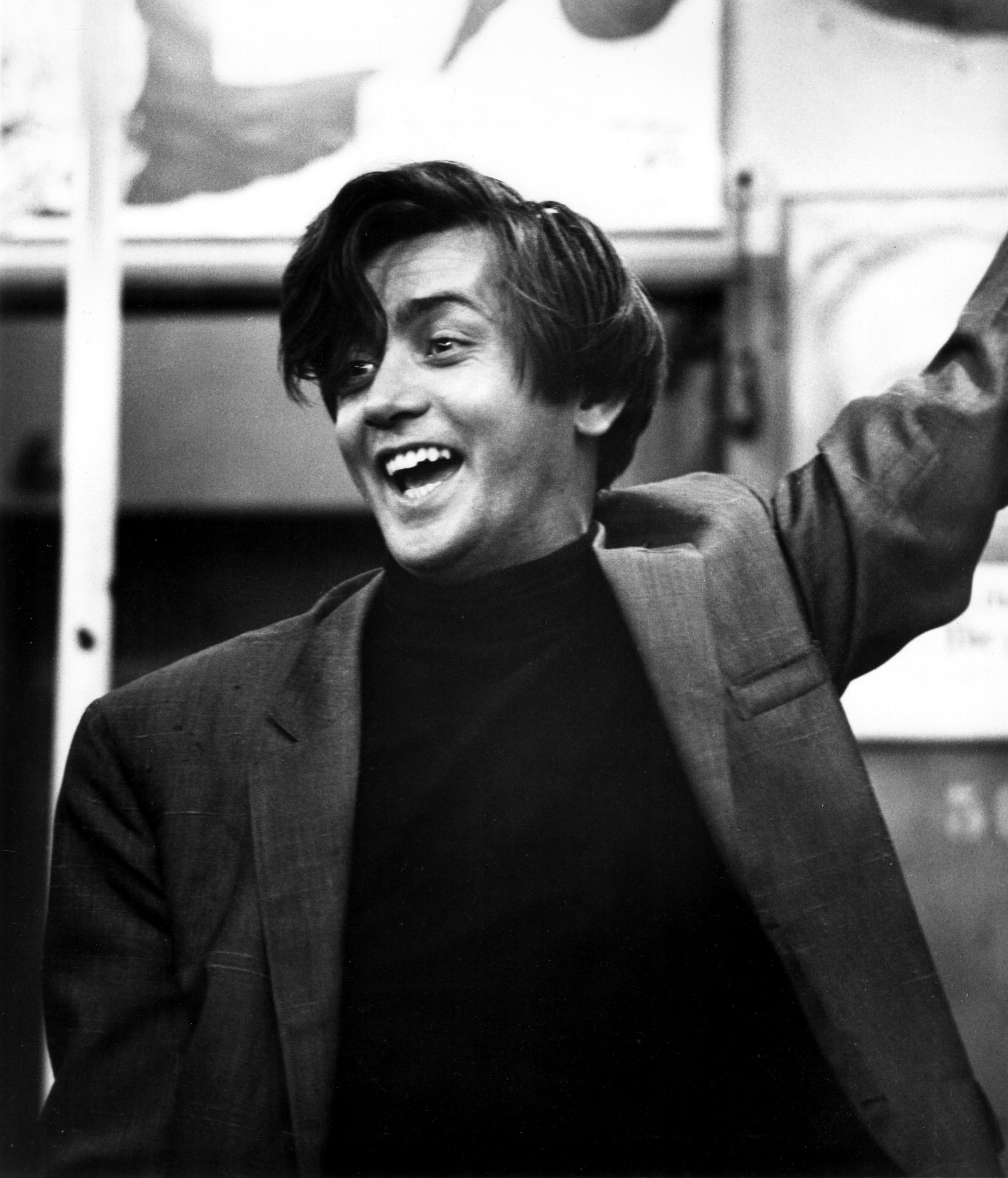
Martin Sheen, who turns 77 today, in a still from his movie debut, 1967’s The Incident:

Filmmaker in Focus:

The Discarded Image looks at the brilliant minimalism of the movies of Robert Bresson:

[embedded content]

Supercut of the Day:

Art of the Film highlights the best cinematography of the Harry Potter franchise in this montage:

[embedded content]

Cosplay of the Day:

Speaking of Harry Potter, check out this cosplayer’s amazing makeup work transforming her into Newt Scamander from Fantastic Beasts and Where to Find Them plus Moana, Elsa and more:

Some of my Makeup transformations, all together! pic.twitter.com/dyTLa79hqv

— Cosplay (@CosplayHeaven) August 3, 2017

Classic Trailer of the Day:

Today is the 10th anniversary of the release of The Bourne Ultimatum. Watch the original trailer for the action sequel below.

[embedded content]

and

Let’s block ads! (Why?)