Articles by admin

No Image

Disney Plans To End Netflix Contracts And Launch Its Own Streaming Services

Disney says that when current contracts expire it will no longer offer new movies and TV shows to Netflix. It’s also launching two new streaming services — one for movies and TV and the other an ESPN sports stream. Content creators such as Disney are increasingly questioning their relationships with streaming services like Netflix, as cord cutters erode profits for cable channels.

AUDIE CORNISH, HOST:

There’s a new summer blockbuster, a clash of titans. Two entertainment giants that have been allies are planning to go head to head. The Walt Disney Company says starting in 2019 it will stop making its new movies and TV shows available on Netflix. It’s going to set up its own streaming services, one for entertainment and one for sports. NPR media correspondent David Folkenflik joins us now from our studios in New York to help break all this down. And, David, first just tell us – what is Disney planning to do?

DAVID FOLKENFLIK, BYLINE: Well, so starting by calendar year 2019, Disney says it’ll be pulling movies and TV shows from two of its main movie and entertainment lines – that’s Walt Disney, you know, folks that created “Frozen” and “Moana,” as well as Pixar, the home of “Toy Story,” “Toy Story 2,” “Toy Story” someday 27 – and be pulling it from Netflix. And that’ll be an app for TV and movies. And there’ll be a separate app for its incredibly dominant sports brand, ESPN, where it promises an additional tens of thousands of hours of programming, much of which won’t be available on its shows. And they’ll be pulling stuff from, you know, several networks as well.

CORNISH: Is this also going include the ABC programming on TV?

FOLKENFLIK: That’s right. They’ll be television programs as well as films.

CORNISH: So why are they making this move now?

FOLKENFLIK: Well, there’s increasing concern, of course, about cable cutting and the question of erosion. For example, ESPN is a giant in cable. It gets a lot of revenue for ESPN. But advertising has been down, and there’s been erosion of how many households are having it. Disney Chairman Robert Iger spoke to investment analysts yesterday. He said that there were affirmative reasons to do this as well.

(SOUNDBITE OF ARCHIVED RECORDING)

ROBERT IGER: One of the reasons that we’re doing this is because of the trends that we’re seeing. But another reason that we’re doing it is because of the strength of the brand and the opportunity that this technology and the consumer trends that the technology has created are providing. It’s not just a defensive move. It’s an offensive move.

FOLKENFLIK: So Iger is saying there they want to be closer to their consumers. They want to cut out the middlemen to get the data, but also get their revenues, figure out what works for them. And, you know, they may someday, they say, add the films from Lucasfilm, which are the “Star Wars” franchise, as well as their Marvel Comics films. They’re trying to figure out how much of the audience they can keep and retain the revenue from directly themselves.

CORNISH: But speak to the larger trend. I mean, this can’t be good for Netflix as well.

FOLKENFLIK: Well, it’s been kind of amazing. You’ve seen both Netflix share price go down since that announcement and Disney prices go down. There is this tussle for control over content. You know, you think of the major cable companies now and they’ve sort of seemed to have a hold on this until the streamers came along. Netflix and Amazon provided a counterbalance to those things. And now you’re seeing almost everybody get into both the delivery and the content creation side of things. You’re seeing this tussle over who’s going to really control the consumer both in the creation of content that they want and the delivery of that content.

CORNISH: Finally, any risk for Disney here?

FOLKENFLIK: I mean, Disney, strictly speaking, isn’t a technology company, although it’s relied heavily on technology for all it’s done and will be more of a technology company in the future. In fact, it just invested a lot of money in a company that’ll help it stream a lot of these services. But if Disney can’t execute the technology, if it’s not at a price point that’s valid, and if they don’t have enough content that people want to pay separately for this service, then you could see them be as flummoxed on this end as they have been by the erosion of the support on cable for, you know, things that have been so profitable, so important to their company in years past such as ESPN.

CORNISH: That’s NPR’s David Folkenflik. Thanks for explaining it.

FOLKENFLIK: You bet.

Copyright © 2017 NPR. All rights reserved. Visit our website terms of use and permissions pages at www.npr.org for further information.

NPR transcripts are created on a rush deadline by Verb8tm, Inc., an NPR contractor, and produced using a proprietary transcription process developed with NPR. This text may not be in its final form and may be updated or revised in the future. Accuracy and availability may vary. The authoritative record of NPR’s programming is the audio record.

Let’s block ads! (Why?)


No Image

As NFL Preseason Gets Underway, Quarterback Colin Kaepernick Remains Unsigned

NFL quarterback Colin Kaepernick remains unsigned even as preseason is underway. Some believe the league is blackballing him for taking a knee before games to protest police violence.

AUDIE CORNISH, HOST:

There’s less than a month to go before the start of the NFL regular season, and quarterback Colin Kaepernick is still a player without a team. Last season he was with the San Francisco 49ers. Now, during the preseason, he began a silent protest of social injustice against minorities and police violence. Instead of standing during the national anthem before games, he would kneel. This sparked outrage among those who said he was being unpatriotic. He also had a lot of supporters, and now those supporters allege that NFL owners are freezing him out because of his political beliefs.

NPR’s sports correspondent Tom Goldman joins us to talk more about this controversy. Hey there, Tom.

TOM GOLDMAN, BYLINE: Hi Audie.

CORNISH: So is there any way to prove this idea of collusion to keep Kaepernick out?

GOLDMAN: It’s very hard to prove, Audie – no evidence of backroom deals being made. But it doesn’t look good as one quarterback after another gets signed and it’s not Colin Kaepernick. Jay Cutler this week signed with Miami, coming out of retirement and basically having to be talked into playing again. Baltimore signed a quarterback without NFL experience, a guy who played most recently in the Arena Football League. Now, NFL commissioner Roger Goodell said last week, no collusion. Although it is safe to say there are NFL owners who worry about signing Kaepernick and the message that would send.

CORNISH: Now, before we get to that, I want to ask about Kaepernick’s abilities on the field. I mean how does he compare to these other quarterbacks?

GOLDMAN: Excellent question. He led San Francisco to one Super Bowl following the 2012 season and to two conference championships. Of course that’s ancient history to teams that want to win now. A more important stat is last year. On arguably the worst team in the NFL, the San Francisco 49ers, Kaepernick threw 16 touchdown passes and had only four interceptions in 11 starts. So he showed he can still play. And when you consider there are 32 starters, 32 backups, 32 emergency quarterbacks who carry clipboards during games and Colin Kaepernick isn’t on a roster, it’s questionable.

CORNISH: The other thing that his defenders note is that when you look back at the controversies the NFL has had over the last couple of years, there are players who have done a lot worse than kneeling during the national anthem, and they’re still playing.

GOLDMAN: Yeah, players who have committed domestic violence, rape, vehicular homicide. They’ve been busted for drugs and brutal dogfighting. We remember that. You know, there are people, though, who consider what Colin Kaepernick did beyond the pale, taking a knee during the National Anthem, which really took on a life of its own. He says he was protesting overall treatment of people in black communities during a time of great tensions following shootings by police of African-Americans. Kaepernick said early on he was not against the military but wanted to help motivate social change. But for many fans, it was interpreted as un-American, unpatriotic. And some owners worry about that.

CORNISH: What is the NFL saying about all this?

GOLDMAN: Well, as I mentioned Roger Goodell denies collusion. He said recently that teams make decisions based on what’s in the best interest of their team, and they make these decisions individually. I talked to Dr. Harry Edwards today. He’s the well-known sociologist who’s really been at the intersection of sport and politics and activism for 50 years. He thinks the NFL needs to get out in front while it can. Here he is.

HARRY EDWARDS: I sent an email to the commissioner of the National Football League urging him in the strongest possible language not to make Colin Kaepernick a martyr. Let him play football. Let him do whatever he’s going to do, and manage it.

GOLDMAN: And Audie, you know, this isn’t going away. A protest was announced yesterday in front of NFL headquarters for later this month. Filmmaker Spike Lee is taking an active role in that, as are several protest groups. And there’s a petition circulating on change.org targeting the NFL, its teams and league sponsors and threatening boycotts of the NFL and sponsors’ products. The petition is hoping to get a million signatures by the start of the regular season next month.

CORNISH: That’s NPR’s sports correspondent Tom Goldman. Tom, thank you.

GOLDMAN: You’re welcome.

(SOUNDBITE OF ROANE NAMUH AND REVA DEVITO SONG, “SHOULD HAVE KNOWN”)

Copyright © 2017 NPR. All rights reserved. Visit our website terms of use and permissions pages at www.npr.org for further information.

NPR transcripts are created on a rush deadline by Verb8tm, Inc., an NPR contractor, and produced using a proprietary transcription process developed with NPR. This text may not be in its final form and may be updated or revised in the future. Accuracy and availability may vary. The authoritative record of NPR’s programming is the audio record.
Let’s block ads! (Why?)


No Image

Songhoy Blues On World Cafe

Songhoy Blues.

Josh Cheuse/Courtesy of the artist

hide caption

toggle caption

Josh Cheuse/Courtesy of the artist

  • “Bamako”
  • “Yersi Yadda”
  • “Voter”

Picture what would happen if Jimi Hendrix and Led Zeppelin met Ali Farka Touré in a garage in West Africa, and you’ve got an idea of what my guests today sound like. The band is Songhoy Blues. They’re from Mali, and their new album is titled Résistance.

I talked with the band’s lead singer, Aliou Touré. He is originally from the northern Mali city of Gao, but fled south after Islamist militants and rebels took over parts of northern Mali in 2012, causing a massive political crisis and banning music.

Aliou met his three bandmates (two of whom had also escaped crisis in the north) in Mali’s capital city of Bamako. They started playing music together to entertain and comfort their fellow refugees, making their way around Bamako’s club circuit. In 2015, they released a debut album as Songhoy Blues, called Music in Exile, and became something of an international sensation.

Songhoy Blues landed slots supporting bands like Alabama Shakes and Damon Albarn of Blur and Gorillaz, as well as festival appearances at Bonaroo and Glastonbury.

Hear Songhoy Blues perform live music off their new album, Résistance, in today’s World Cafe session.

Let’s block ads! (Why?)


No Image

'Avatar' Villain Stephen Lang Returning for All Four Sequels, Says James Cameron

Avatar

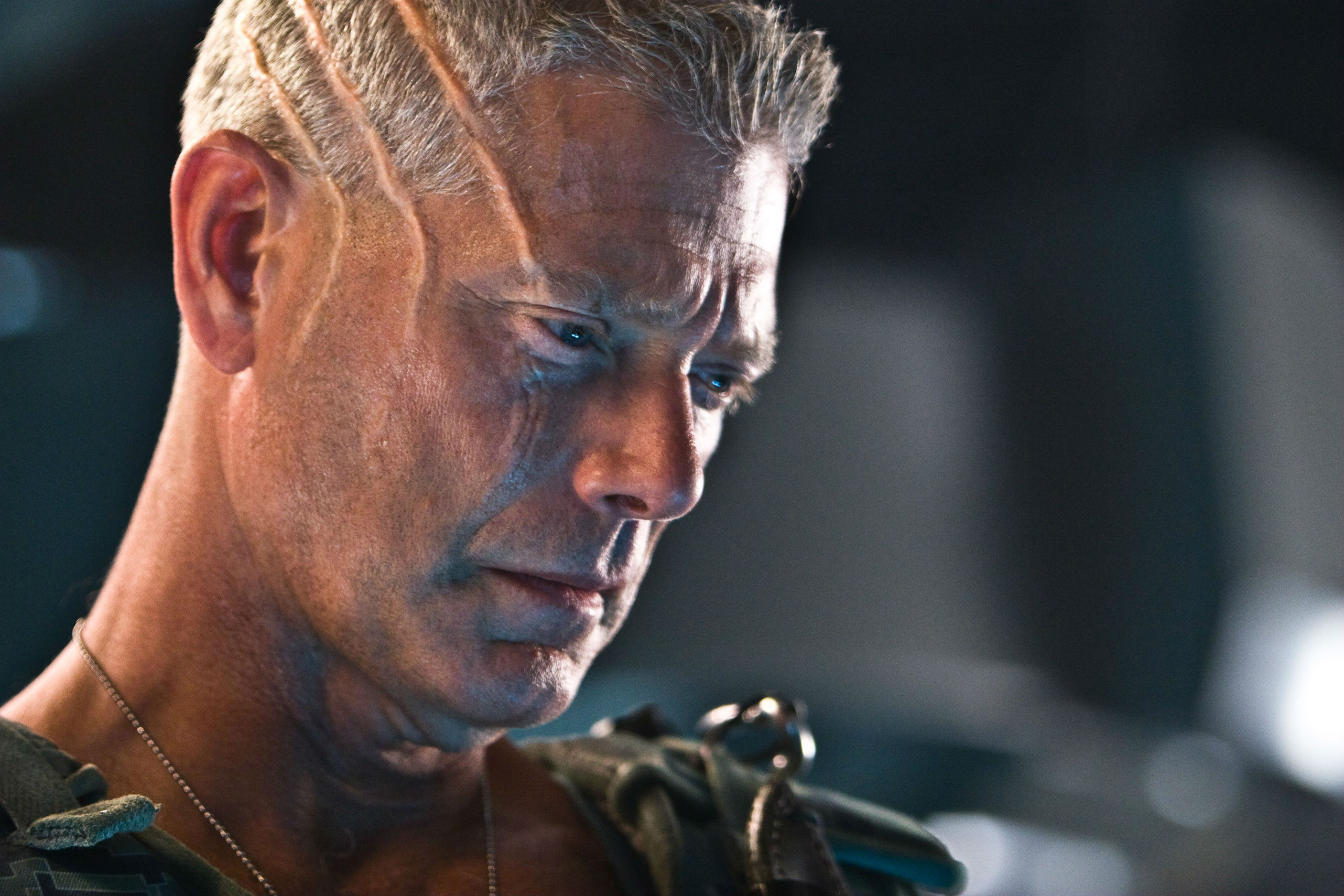
James Cameron’s Avatar was greatly enlivened by the presence of Stephen Lang (above). Millions of people saw the sci-fi adventure during its theatrical release and/or later on home video, but if you need a reminder, Lang portrayed Colonel Miles Quaritch, the leader of the military force on the planet Pandora.

Initially, Colonel Quaritch appears to be tough but fair. Eventually, though, he becomes quite a villainous character, never hesitating to kill anyone he views as a threat to his overall mission. After an epic battle with the heroic Jake Sully (Sam Worthington), he’s apparently left for dead.

Back in 2013, we heard that Lang had signed up for the three Avatar sequels planned at the time. Cameron said: “His character will evolve into really unexpected places across the arc of our new three-film saga.”

[embedded content]

The sequel plans have expanded to four installments and now director James Cameron confirms that Lang will appear in all of them. He tells Empire (via Collider): “The interesting conceit of the Avatar sequels is it’s pretty much the same characters. There are new characters and a lot of new settings and creatures, so I’m taking characters you know and putting them in unfamiliar places and moving them on this greater journey. But it’s not a whole bunch of new characters every time. There’s not a new villain every time, which is interesting. Same guy. Same motherf***** through all four movies.”

Cameron also credits director Peter Jackson for inspiration: “I said ‘It’s your fault I’m doing this, motherf*****!'” He recalls. “It’s one big story. But I would say a little bit different from The Lord Of The Rings, which you knew was a trilogy and that allowed you to accept a sort of truncated ending for movies one and two and then a fulfilment. This is a greater narrative broken up into four complete stories.”

The first of the four Avatar sequels is currently scheduled for release on December 18, 2020.

Let’s block ads! (Why?)


No Image

'Financial Times' Issues 103-Year-Old Correction

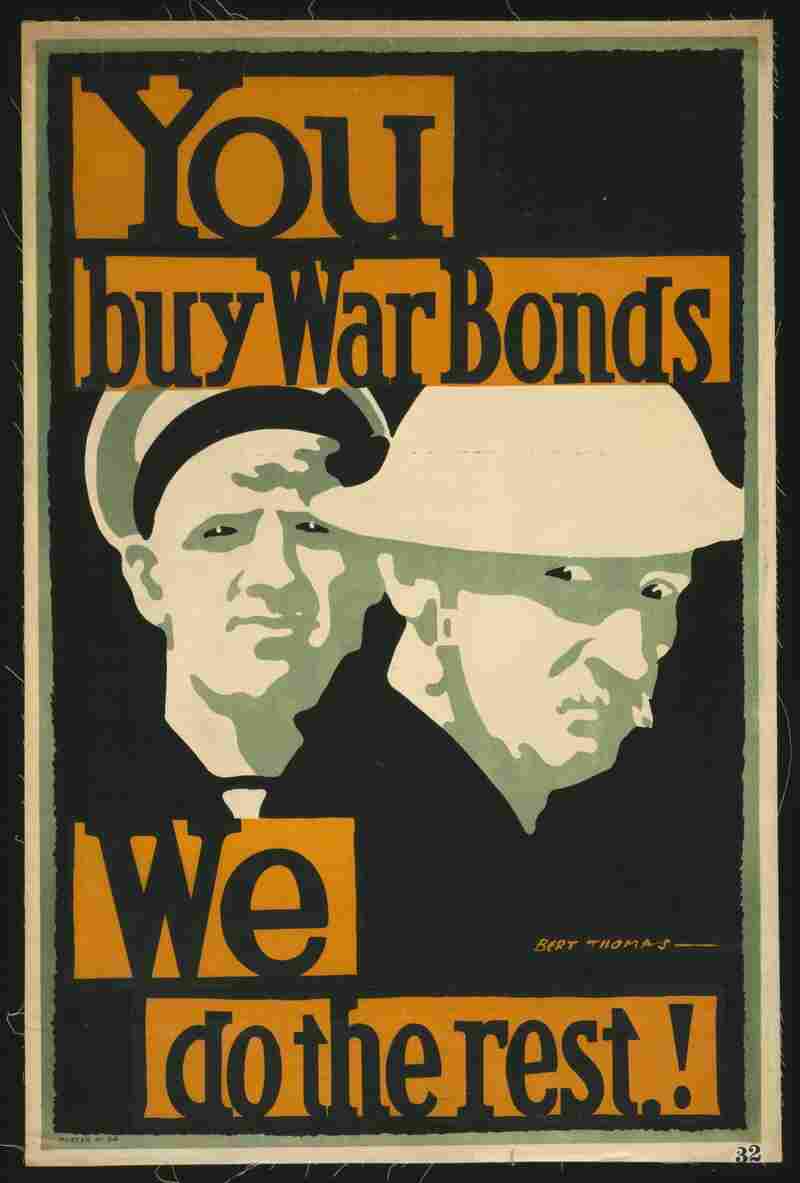
A 1915 poster urged the British public to buy war bonds. The previous year, the Bank of England had concealed the failure of the first round of bond-selling.


Thomas Bert/Library of Congress
hide caption

toggle caption


Thomas Bert/Library of Congress

On Nov. 23, 1914, the Financial Times ran a piece about the wild success of British efforts to fund World War I.

War Loans were “oversubscribed,” the paper said; applications were “pouring in”; the public “has offered the Government every penny it asked for — and more.” The “amazing result” showed “how strong is the financial position of the British nation.”

On Aug. 8, 2017, the paper had a follow-up. A “clarification.”

“We are now happy to make clear that none of the above was true,” the FT wrote.

The announcement came after researchers at the Bank of England, poring over aged ledgers, exposed a 103-year-old cover-up.

It turns out the first British effort to fund-raise for the war by selling bonds was not, in fact, wildly successful. It was “a spectacular failure,” the researchers wrote on a blog for Bank of England employees.

The government wanted to raise £350 million, but brought in less than a third of that. Officials worried that revealing the shortfall would hurt future capital-raising efforts, and help Germany.

So instead of allowing the disappointing truth to come out, the Bank of England secretly funneled money to hide the gap.

The cover-up was uncovered by an employee at the bank’s archive, along with a PhD. student and two faculty members at the Queen Mary University of London. They describe what they found in the old ledgers:

“To cover its tracks, the Bank made advances to its chief cashier, Gordon Nairn, and his deputy, Ernest Harvey, who then purchased the securities in their own names with the bonds then held by the Bank of England on its balance sheet. To hide the fact that the Bank was forced to step in, the bonds were classified as holdings of ‘Other Securities’ in the Bank of England’s balance sheet rather than as holdings of Government Securities.”

John Maynard Keynes, the economist who famously advocated for public spending to stimulate economies during recession, knew about the deception, the researchers say. In a memo marked “Secret” he called it “a masterly manipulation,” while also warning that it was not sustainable in the long run.

But it wasn’t the last time the Bank of England drew on its own reserves to fund the war, the researchers write: “The long-held laissez-faire principles of the Liberal and Conservative parties were thus sacrificed to raise the capital upon which the War’s outcome depended.”

The shock of the failed bonds sale, and the subterfuge that followed, drew attention to the complexity of the national debt and contributed to the eventual transition of the Bank of England from privately owned to centrally owned, the researchers suggest.

The Financial Times, for its part, notes that the original “piece” looks more like an ad than an article, while acknowledging that the publication “played a role in convincing the public that the sale was a success.”

Along with its correction, the paper adds this note:

“The same edition of the paper also demonstrated a good understanding of the FT’s readership, noting with ‘interest’ and ‘encouragement’ that champagne production had not been affected by the Great War effort.”

For the record, all of NPR’s corrections can be found here.

Let’s block ads! (Why?)


No Image

First Responders Spending More On Overdose Reversal Drug

Battalion Chief Mark St. Laurent, seen here at the Franklin Square firehouse in Washington, D.C., says sometimes multiple doses of naloxone are needed to stop an overdose.

Shelby Knowles/NPR

hide caption

toggle caption

Shelby Knowles/NPR

In Prince George’s County, Md., every first responder carries naloxone, the drug that can reverse an opioid overdose.

“We carry it in our first-in bags,” says Bryan Spies, the county’s battalion chief in charge of emergency services. “So whenever we arrive at a patient’s side, it’s in the bag, along with things like glucose, aspirin and oxygen.”

The first responders in Prince George’s County are pulling the drug out of the bag more than ever. Last year they administered 877 doses to people who had overdosed. This year, they’re on track to administer 1,230 doses, Spies says. That averages out to more than three doses a day in just one county.

In Washington, D.C., it’s the same story.

“Depending on the strength [of the opioid], you may see that we’d use two of these,” says Battalion Chief Mark St. Laurent, holding up a 2-milligram vial of naloxone.

If the patient has taken fentanyl — a particularly potent opioid — he says, “sometimes it takes 10 milligrams just to get them to breathe.”

Opioid addiction has reached crisis levels across the country. Overdose deaths from prescription painkillers and heroin totaled about 33,000 in 2015, according to the American Society of Addiction Medicine.

Naloxone reverses the progress of an overdose and revives the victim so they start breathing again. It’s been around since the 1960s but has become so ubiquitous in the emergency response arena in recent years that even the bomb squad in Prince George’s County carries it — to safeguard their bomb-sniffing dogs.

“Obviously, they’re sniffing a lot of things in a lot of different places,” Spies says. “So if they come across white powder or any type of the drug, the bomb team does have the naloxone readily available to give to the canines.”

Prince George’s County will spend about $45,000 of its $600,000 equipment budget this year on naloxone. Spies says the price of the drug had been rising but has leveled off in recent years.

The Washington, D.C., fire department confirms this. The city paid about $6 for a prefilled syringe of naloxone in 2010, says spokesman Vito Maggiolo. This year, that same syringe runs about $30. Maggiolo says the fire department spent about $170,000 on naloxone in the last 10 months.

That worries Sen. Claire McCaskill, D-Mo., who last week sent letters to four pharmaceutical companies that make naloxone, asking them to provide details about the discount programs they offer to emergency management and public health agencies. It’s part of an ongoing inquiry she launched last year with Sen. Susan Collins, R-Maine, into rising drug prices.

First responders in Washington, D.C., bring naloxone on every emergency call.

Shelby Knowles/NPR

hide caption

toggle caption

Shelby Knowles/NPR

“The rise in costs associated with acquiring naloxone has caused significant accessibility issues for those on the front lines of this epidemic,” she wrote in the letters. The letters were following up on an earlier request about naloxone costs, in which the companies responded by saying they had donated doses and offered discounts on naloxone to first responders.

The prices of some brands of naloxone have risen in recent years, according to an analysis by the investment research firm SSR Health for NPR. The price of a vial of generic naloxone made by the company Amphastar rose from about $4 in 2009 to about $16 this year, according to SSR.

McCaskill was particularly concerned about a naloxone auto-injector called Evzio, made by Kaleo Pharmaceuticals, whose price rose from $288 per dose when it hit the market in 2014 to more than $2,000 this year. McCaskill sent the company a separate letter asking it to justify its price in February.

Kaleo CEO Spencer Williamson said in a statement that no customers actually pay that much because of all the discounts and rebates the company offers.

The company says it has donated more than 250,000 of the devices to nonprofit groups, fire departments and public health agencies. It says 3,600 lives have been saved by those donated devices.

Not all prices are rising. Narcan is probably the best-known brand of naloxone. It’s made by Adapt Pharma and comes in a nasal spray. The list price has been $125 since it went on sale in 2015, according to the company and SSR. Company spokesman Thomas Duddy says Adapt sells Narcan to emergency responders and other public agencies for $75 for a two-pack.

“You get a sense of the premium being charged for the unique delivery mechanism,” says Richard Evans, general manager at SSR. But Evans says the higher prices for those specialty products have also driven up the price of generic naloxone.

Last week, President Trump’s opioid commission, chaired by New Jersey Gov. Chris Christie, issued a report that included a recommendation to declare the opioid epidemic a national emergency. Doing so would give the Department of Health and Human Services the power to negotiate lower prices for naloxone, the report said.

Today, HHS Secretary Tom Price said the administration believes they already have the resources and focus they need to tackle the problem without needing an emergency declaration, but he did add that “all things are on the table for the president.”

The report also asked the president to require every law enforcement officer in the country to carry naloxone.

Let’s block ads! (Why?)


No Image

Is The NFL Colluding Against Kaepernick?

NFL pre-season is halfway over and Colin Kaepernick still hasn’t been signed to a team.

Baltimore and Miami both passed on the quarterback, who gained attention outside of sports circles when he declined to stand in protest during the pre-game national anthem.

Now, the fact that Kaepernick remains without a team has raised questions about coaches’ and owners’ motives. Writing for the The Undefeated, William C. Rhoden called the situation “a disgrace.”

Kaepernick’s unemployment has been explained away — and, in some corners, justified — as a reaction to his political protests beginning last fall when he and others knelt during the playing of the national anthem.

But the issue here is not one player’s politics; it’s possible collusion among 32 NFL owners. Collusion, not politics, is what the players and the players’ association should vehemently be pushing back against.

Are NFL teams too afraid to take on an activist athlete?

Let’s block ads! (Why?)


No Image

The Future of 'The Dark Tower'

The Dark Tower

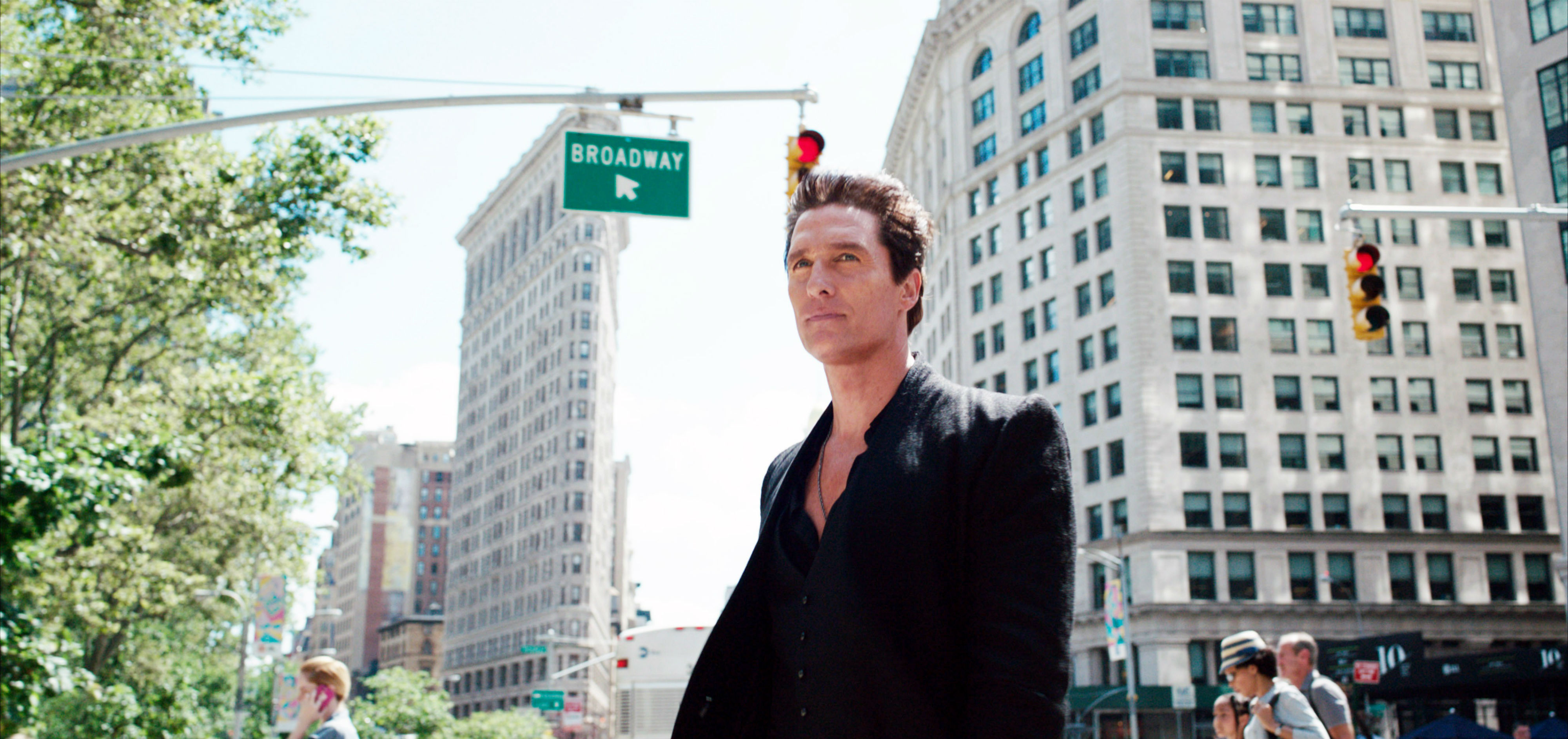
The big-screen adaptation of Stephen King’s The Dark Tower opened in theaters over the weekend, starring Idris Elba and Matthew McConaughey. It topped the box office charts, which reflects the high anticipation for the first screen version of King’s epic work.

Still, it fell short of expectations and did not fare particularly well with critics, as its Rotten Tomatoes score reflects. What does that mean for the future of The Dark Tower?

Is this first movie a total write-off?

Oh, no. Reportedly, the budget was a relatively modest $60 million and it’s made nearly $20 million so far just in the U.S. So the movie has a fair shot at recouping its costs through the international theatrical release and home video market.

What about the TV series?

As we’ve already noted, a television series is still moving forward. Glen Mazzara (The Walking Dead, Damien) will guide the series as showrunner. The idea is to feature the heroic Gunslinger in his younger years.

[embedded content]

What about more movies?

That’s not resolved yet. Interestingly, before the release of The Dark Tower, Stephen King told Cinema Blend: “I’d love to see the next picture be R. That’s sort of where we’re coming from now, and where the movie needs to go. PG-13 was the safe spot to go. When pictures were R, the studio execs would say, ‘Well, we know that this is going to make 20% or 30% less money because we’re going to exclude a prime tenderloin part of the moviegoing public.’ I think that movie’s like Deadpool have changed that.”

We’re not expecting any decision on more movies to be made quickly. It’s likely, in fact, that any sequel plans will be put on hold until the TV show debuts.

The show is heading to the Starz premium cable service, which means that it it can contain material intended for adults that would earn it an R-rating if it played in theaters. So the future of The Dark Tower may indeed be R-rated, as Stephen King wishes, but it may not return to the big screen for a while yet.

Let’s block ads! (Why?)


No Image

Trump Administration Revises Conservation Plan For Western Sage Grouse

Photographed in Walden, Colo., in 2013, greater sage grouse perform mating rituals. The Trump administration is revising a conservation plan for the imperiled species.

David Zalubowski/AP

hide caption

toggle caption

David Zalubowski/AP

A task force is recommending changes that could loosen protections for the greater sage grouse, a Western bird species renowned for its elaborate mating dance.

The report comes out of a review by the Trump administration of a massive Obama-era conservation plan for the bird which is imperiled by loss of habitat.

The administration says the revisions are aimed at giving states more flexibility. But critics argue that the changes favor mining and petroleum companies and could hurt the bird’s long-term prospects.

Interior Secretary Ryan Zinke ordered a review of current sage grouse management plans in June, saying he wanted to see improvement in the bird’s conservation while also taking into account “local economic growth and job creation.”

The review task force came back with a list of recommendations that could relax rules related to the sage grouse around mineral leasing areas and allow for more flexibility in grazing management. Noting President Trump’s executive order “Promoting Energy Independence and Economic Growth,” the task force’s review says: “A cooperative DOI and State effort can provide the flexibility for responsible economic growth and at the same time ensure conservation of [greater sage grouse] habitat.”

Zinke has ordered his agencies to being implementing the recommendations immediately.

Greater sage grouse, which live across 11 Western states, have seen their populations decline from the millions to fewer than 500,000.

In 2010, their numbers dipped to the point where the U.S. Fish and Wildlife Service deemed that the bird warranted protections under the Endangered Species Act, but limited resources and higher priorities precluded it.

Still, the finding put a scare into natural resource-dependent Western states. A listing under the Endangered Species Act would have severely limited development on tens of millions of acres of Western land. One study estimated that $5.6 billion in economic output would be lost if the bird was listed.

As a result, a broad and unlikely coalition of biologists, ranchers, environmental groups, extractive industries, federal agencies and state and local governments worked feverishly to create a management plan for the bird that would preempt a listing.

Finalized in 2015, the Greater Sage Grouse Conservation Plan was lauded as unprecedented and as one of the most complex and comprehensive conservation efforts in U.S. history. Then-Interior Director Sally Jewell described it as a “truly historic moment – one that represents extraordinary collaboration across the American West.” Given the efforts and an evaluation of the bird’s population status, the FWS decided to not list the greater sage grouse.

Not everyone was happy though. Some environmental groups argued that the plans didn’t go far enough and that the bird needed protections under the Endangered Species Act to survive.

A few Western states – Nevada, Idaho and Utah – argued that the plan was too restrictive and that it would impede economic development. Some oil, gas and coal companies agreed.

With the Trump administration touting energy independence, pushing for increased energy development on federal lands, and rolling back many Obama-era environmental policies, many expected the sage grouse plan to be reviewed.

In a memo posted with the task force’s recommendations, Zinke wrote that he issued the review in response to “concerns” he had heard regarding the plan.

The American Petroleum Institute applauded his efforts in a press release on Monday.

“The record shows that energy development and sage grouse populations can successfully coexist,” said API Upstream Director Erik Milito. “And the industry has been a leader in working with state governments and agencies to preserve Western habitats, while continuing to meet the needs of America’s energy consumers.”

Environmental and conservation groups are lambasting the decision to revise the current sage grouse management plan, saying that it’s a sign that the Trump administration can’t say ‘no’ to mining and petroleum companies.

“Weakening these plans puts the grouse at grave risk of further population declines,” says Steve Holmer, Vice President of Policy at American Bird Conservancy.

Let’s block ads! (Why?)


No Image

Hang 20: Abbie Girl Takes Top Pooch In World Dog Surfing Championship

In the World Dog Surfing Championships, dogs can compete solo or in tandem with another dog or person.

Laura Klivans/KQED

hide caption

toggle caption

Laura Klivans/KQED

Few things are more delightful than a dog running on the beach. Except, maybe, a dog surfing on a beach.

Dozens of dogs — and more than 1,000 people — showed up to the second annual World Dog Surfing Championships Saturday in Pacifica, Calif.

Dog surfing is relatively new — the first competition was in San Diego 12 years ago.

And while the event may seem silly, competitive dog surfing is growing quickly, with contests in Hawaii, Florida, Texas and as far away as Australia.

Dogs compete solo, just dog and board, or tandem, with either a person or with another dog.

The dogs are scored by a group of three judges.

“No. 1 is stay on the board and No. 2 is looking happy,” Sam Stahl, one of the judges explained. “No one wants to see a dog terrified at the end of a surfboard.”

At the event, an Australian kelpie named Abbie Girl not only stayed on her board, but maneuvered it, too.

Her board is custom built for a dog — it’s short and has a bright orange blaze down the bottom with her name on it.

Michael Uy is her owner. He started surfing with her after he adopted her from a rescue organization. He’d take her to the beach to mellow her out and socialize her.

“One time we put her on a surfboard to rest. And she stood up on the board and we thought, well, why don’t we put her on a wave and see what happens, and she just rode it all the way into shore,” Uy said.

Abbie Girl took home the prize for top dog — she’s now the two-time reigning champion of the event. After a push from her owner, she surfed maybe 20 feet, lifting a front leg to balance and then land on the beach. The judges noticed her footwork.

Top prize — a trophy for Abbie and a bottle of wine for her human.

Stahl, one of the judges, has a theory on why so many people get into the competition.

“There’s a lot going on in the world and a lot of things that have people kind of riled up and I think it’s important for some people to have something like this to look at and smile at,” he said. “And nothing’s more fun than watching dogs surf, honestly.”

Let’s block ads! (Why?)