Articles by admin

No Image

Former New York Yankee Derek Jeter Becomes Minority Owner Of Miami Marlins

Derek Jeter had a spectacular career playing shortstop for the New York Yankees, during which he managed to avoid scandal and embarrassment and kept his private life tastefully private. So, what might all that brilliance as a player mean for him as he now becomes an owner?

ROBERT SIEGEL, HOST:

Derek Jeter had a spectacular career playing shortstop for the New York Yankees. Over 20 years, he was on five World Series-winning teams. He was an All Star 14 times. And despite being the toast of the town in New York City, he managed to avoid scandal and embarrassment and kept his private life tastefully private.

So what might all that brilliance as a player mean for him as he now becomes an owner – a minority owner but still part of the group that’s buying the Miami Marlins of baseball’s National League? Have superstar athletes typically translated their superpowers to the front office?

We’ve called up sportswriter Jonah Keri of CBS Sports and Sports Illustrated to hear what he has to say. Jonah, welcome back to the program.

JONAH KERI: Thank you, Robert.

SIEGEL: And do we know what Derek Jeter’s actual job is going to be in Miami? And does the fact that he made more than 3,000 hits in the Major Leagues mean that he’s likely to be any good at it?

KERI: Well, he might become the most hardworking man in America, frankly, if the titles match what he might end up doing. What Jeter has expressed an interest in doing and what the reports are is that he plans to run both the business operations side and the baseball operations side. That does not happen anywhere in sports. You never, ever see that.

To run either of those departments would be a gigantic task. And obviously, in the case of Jeter, he doesn’t really have any experience in doing either one. So 3,000 hits are great. He has terrific baseball instincts. He has experience in the business world. But to run an entire franchise on both sides – that is a daunting task for anybody.

SIEGEL: Does he have any role models, great athletes who’ve gone on to ownership and big management positions and done exceptionally well? Or are there some who’ve done exceptionally poorly?

KERI: Well, it’s kind of a mixed bag. Mario Lemieux probably stands out as the best example of this. He owns a small share of the Pittsburgh Penguins and also does an excellent job of overseeing the hockey operations side of the Penguins, of course one of the most successful franchises in the NHL. But on the downside, Michael Jordan has not fared particularly well. And then the one maybe that we’re waiting on to see how it goes is Magic Johnson.

Magic Johnson has owned a small piece of the Los Angeles Dodgers. The Los Angeles Dodgers are a great team. But all reports from the baseball world are that his role is basically ceremonial. And now he’s getting more involved with the Los Angeles Lakers, and he certainly has experience in the basketball world. If the Lakers were to turn it around, you could go ahead and credit Johnson with that success, at least to some extent.

SIEGEL: Do you think that a great player who’s a leader of his team on the court or on the field or wherever – on the ice – are there some talents at work there, some skills of character that are just well-suited to making executive decisions?

KERI: It’s certainly possible. You know, you see that. You’ll see Fortune 500 companies bring in superstar athletes to come speak and to motivate and so on. But to me, what it comes down to is largely a credibility issue. The Marlins are about to be not owned by a gentleman named Jeffrey Loria, who is nobody’s favorite person. He has done all kinds of unsavory things during his time as a baseball owner.

Here comes Jeter, who has, as you said, pretty much an immaculate reputation. This is the kind of thing where maybe the Marlins just get taken more seriously as a franchise. I think the best-case scenario for the Marlins here is that Jeter kind of does no harm in his actual roles and that maybe the benefit here is that he’s Derek Jeter and people react to that.

SIEGEL: If Lemieux is a role model, can you see something that he did in Pittsburgh that another former star like Jeter might be able to do in Miami?

KERI: Well, Lemieux has this way of getting involved but only to a certain extent. He’s certainly in on it when it comes to hockey decisions. But he also has a staff that is empowered to make decisions on their own. So he can weigh in, but he’s not necessarily the absolute final word. He’s not necessarily the guy who’s doing everything on the micro. The best thing Jeter can do, if you’re thinking about the Lemieux book, is OK, you’re involved. You apply your expertise. But you hire really smart people, which is the lesson for a sports franchise and the lesson for literally any other company.

SIEGEL: You remind me of what John Elway, the great quarterback for the Denver Broncos, said when he signed on as being president of the club – not general manager, not head coach – said, I’m not interested in being a head coach or general manager. I don’t have that kind of experience to be able to pick those players day in, day out and such. He helped lead the Broncos to a Super Bowl victory.

KERI: Self-awareness is something that all of us could stand to have more of, and (laughter) kudos to John Elway for having some of it.

SIEGEL: Thank you very much. I’ve been talking with sportswriter Jonah Keri.

KERI: Thanks, Robert.

(SOUNDBITE OF J.S.T.A.R.S.’ “TRIPPING THE LIGHT FANTASTIC”)

Copyright © 2017 NPR. All rights reserved. Visit our website terms of use and permissions pages at www.npr.org for further information.

NPR transcripts are created on a rush deadline by Verb8tm, Inc., an NPR contractor, and produced using a proprietary transcription process developed with NPR. This text may not be in its final form and may be updated or revised in the future. Accuracy and availability may vary. The authoritative record of NPR’s programming is the audio record.

Let’s block ads! (Why?)


No Image

Robert Plant Announces New Album, 'Carry Fire'

Robert Plant’s new album, Carry Fire, is due out on Nonesuch Records Oct. 13.

Ed Miles

hide caption

toggle caption

Ed Miles

Robert Plant continues to explore his love of the blues and global music on a beautiful new single called “The May Queen.” The track, which will appear on a new album this fall called Carry Fire, is a sweetly innocent reflection on aging and the undying power of love to inspire and give life. “Out here the fire’s still burning so long into my night,” Plant sings. “Still captive and still yearning / Surrender to your light.”

[embedded content]
YouTube

The new song recalls Led Zeppelin’s classic acoustic work on tracks like “Going To California” and “Stairway To Heaven,” the latter of which also includes a reference to “the May Queen.”

“It’s about intention,” Plant said in a prepared statement announcing “The May Queen” and Carry Fire, his 11th solo album. “I respect and relish my past works but each time I feel the lure and incentive to create new work. I must mix old with new.”

Carry Fire is due out Oct. 13 on Nonesuch Records. It features the Sensational Space Shifters, the band that supported Plant on his previous 2014 album lullaby and…The Ceaseless Roar.

Let’s block ads! (Why?)


No Image

Today in Movie Culture: Josh Brolin Parodies 'Uncle Buck,' a Netflix MCU Recap and More

Here are a bunch of little bites to satisfy your hunger for movie culture:

Franchise Recap of the Day:

With Marvel’s The Defenders debuting tomorrow, ScreenCrush recaps the Netflix MCU series so far:

[embedded content]

Poster Parody of the Day:

For the 28th anniversary of Uncle Buck, Josh Brolin shared a mashup poster featuring his role (and other characters) from Avengers: Infinity War (via THR):

Remixed Movie of the Day:

Speaking of Brolin, The Goonies is the latest movie to be musically remixed by Eclectic Method:

[embedded content]

Mashup Toy of the Day:

Lee Hurley gave Baby Groot from Guardians of the Galaxy Vol. 2 a new look inspired by Deadpool (via Geek Tyrant):

Video Essay of the Day:

For his latest video essay, Channel Criswell looks at 12 Years a Slave and how the movie plays with time:

[embedded content]

Vintage Image of the Day:

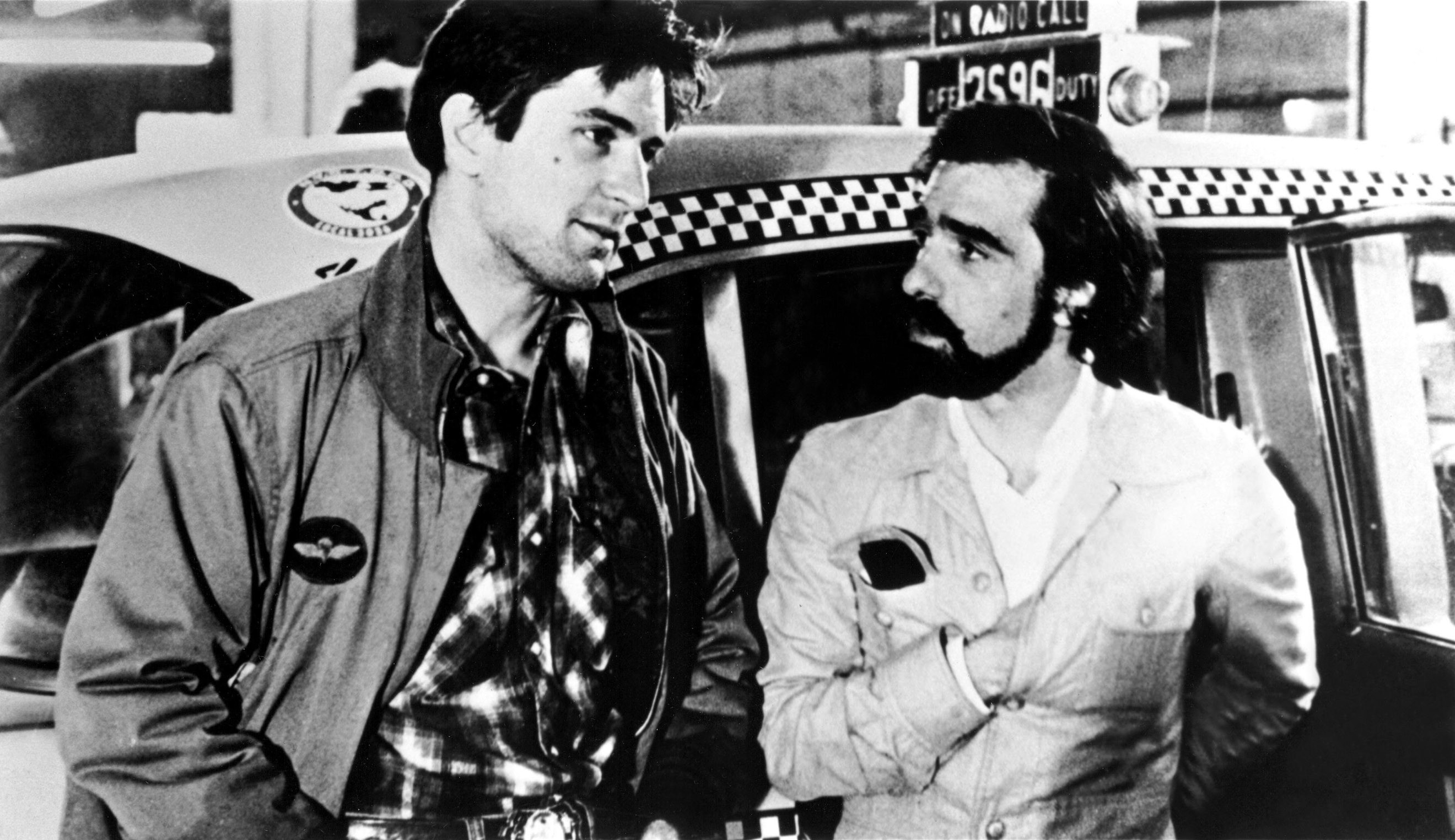
Robert De Niro, who turns 74 today, gets some direction from Martin Scorsese on the set of Taxi Driver in 1975:

Actor in the Spotlight:

In a sponsored video promoting Birth of the Dragon, Kyle Hill scientifically explores the physics behind Bruce Lee’s one-inch punch:

[embedded content]

Movie Trope of the Day:

Fandor highlights the prevalance of slides in movies of the ’80s and ’90s in this trend-spotting video (via /Film):

[embedded content]

Cosplay of the Day:

Here’s a Keanu Reeves cosplay trio, representing The Matrix, John Wick and a certain meme:

It;s always awesome when people come up with outside the box cosplay ideas. pic.twitter.com/yelkDq7ZhL

— ASmith | IGN | FGC (@Kapwan) August 17, 2017

Classic Trailer of the Day:

[embedded content]

and

Let’s block ads! (Why?)


No Image

Silicon Valley Fights Back Against Extremism Online

Companies are waging a broad attack against white supremacist groups, cutting off their ability to raise money, post content or register their sites online. These moves are not unprecedented, but this muscle flexing raises a lot of questions — not just about free speech, but also about due process and who controls the Internet.

KELLY MCEVERS, HOST:

Companies in Silicon Valley have been blocking white supremacists, stopping their ability to raise money online, removing them from Internet search engines and preventing websites from registering. The goal is to make it harder for hate groups to reach their audience. Here to talk about this and what it tells us about free speech and corporate power is NPR’s Aarti Shahani. Hello.

AARTI SHAHANI, BYLINE: Hi.

MCEVERS: So first of all, which companies are doing this, and what are they doing?

SHAHANI: Well, a bunch of Silicon Valley companies are blocking hate groups in one way or another, OK? There’s a site called The Daily Stormer. It’s basically this horrific neo-Nazi blog that decided to write an article making fun of, attacking the woman who was killed in Charlottesville by the man who plowed his car into protesters. Well, Facebook decided to use software to automatically zap any link to that offensive article unless the person who posted it put a caption that was critical of it, OK? Facebook and Twitter have also both deactivated the accounts of several white nationalists.

Beyond the social networks, you know, to exist on the worldwide web, You have to register your domain. So thedailystormer.com was using this well-known registrar called GoDaddy. GoDaddy kicked them off, so they then went to Google. And then Google kicked them off, too. And besides that, Spotify is removing so-called white power music.

MCEVERS: And is all this since the racial violence in Charlottesville, or has it been going on longer?

SHAHANI: No. I mean Charlottesville’s the turning point, exactly.

MCEVERS: Yeah, OK. So how significantly are groups like The Daily Stormer being harmed? I mean can they still raise money?

SHAHANI: Well, on the money side, PayPal is barring some users who were raising money for the white supremacist rally. Apple is suspending Apple Pay support if you try to buy far right merchandise like, say, swastika T-shirts. And so what you’re basically seeing is a lot of Internet companies – giant ones and smaller ones – stepping up after Charlottesville to say, we’re not going to facilitate the communication or the fundraising of these groups.

MCEVERS: And you’ve been in touch with a tech company that says it’s never censored any users before this week. Tell us about their decision.

SHAHANI: Yeah. This is actually fascinating. There’s the CEO of this one tech company called Cloudflare, and he decided to go ahead and block or stop providing security service to that site I mentioned, The Daily Storm (ph). And he did it in two moves. The first was to stop the service. So the headline around it is basically, hey, another tech company’s taking a stand against hate.

But then shortly thereafter, he wrote a blog post about why he did what he did, and he said it was actually unsettling. He described it as such because no court ordered it. It was his choice. You know, as a tech CEO, he can wake up one morning and just decide to flip the switch on someone, and it could be because he’s having a bad day for something arbitrary, you know, which isn’t great for democracy.

MCEVERS: Right.

SHAHANI: So what’s interesting about what he did – the CEO of Cloudflare – is admitting to something that many tech CEOs don’t want to admit, which is, you know, they’ve got tremendous power over speech and content.

MCEVERS: Right. And so I wonder. I mean has there been backlash to these decisions – not that, you know, masses of people are coming out and supporting white supremacists but saying this is a little – this makes me nervous that you guys can have this much power to do this kind of thing?

SHAHANI: Yeah, well, I mean what’s interesting is that first of all, the white supremacist sites that have been targeted – some of those leaders have spoken to me and said that this is not fair, and these companies are overstepping. And you know, ironically, (laughter) the same entities that are calling for the overthrow of government or the radical sort of reformation of it want them to step in and regulate. And that’s not so dissimilar from what some progressives have been saying as well about these companies.

I mean this is not at all the first time that Google and Facebook and others have stepped in to delist content, you know? Facebook has had campaigns against radical Islam and blocked those kinds of sites, and people have often questioned, well, are they using their corporate power legitimately?

MCEVERS: OK. That’s NPR’s Aarti Shahani. Thank you so much.

SHAHANI: Thank you.

Copyright © 2017 NPR. All rights reserved. Visit our website terms of use and permissions pages at www.npr.org for further information.

NPR transcripts are created on a rush deadline by Verb8tm, Inc., an NPR contractor, and produced using a proprietary transcription process developed with NPR. This text may not be in its final form and may be updated or revised in the future. Accuracy and availability may vary. The authoritative record of NPR’s programming is the audio record.

Let’s block ads! (Why?)


No Image

As Rain Keeps Falling, Sierra Leone Scrambles To Find Mudslide Survivors

Search and rescue team members and soldiers work near a mudslide site and a damaged building near Freetown, Sierra Leone, on Tuesday.

Mohamed Saidu Bah /AFP/Getty Images

hide caption

toggle caption

Mohamed Saidu Bah /AFP/Getty Images

Sierra Leone, a country that has been battered by Ebola, civil war and massive floods, suffered yet another tragedy this week. Government and international aid workers are racing the clock to find survivors after a mudslide struck capital city Freetown early Monday morning.

Some 600 people are still missing, and there are reports that some people are still alive, trapped in their homes underneath the mud.

At the same time, aid groups are trying to support roughly 9,000 people — who were injured, displaced, or found their lives disrupted by the devastation — and avert a potential public health crisis.

To make matters worse, rain keeps falling and it is not expected to slow down until next month, raising the risk for more mudslides. As it is, hospital morgues can’t keep up with the more than 200 victims’ bodies so far. Health facilities are also struggling to keep up with the hundreds of people treated for injuries related to the mudslide.

The Sierra Leonean government leads the response and is working with nonprofit organizations to fill in the gap. Groups like Oxfam and UNICEF are helping to determine what people who lost their homes to the mudslide need. And the government asked Catholic Relief Services to help with burials.

NPR spoke with Idalia Amaya, the deputy head of programs and the emergency response coordinator for CRS in Freetown, about the ongoing rescue effort, the challenges faced by aid groups on the ground and how the Ebola outbreak that struck Sierra Leone in 2014 helped prepare for the mudslide response. This interview has been edited for length and clarity.


Interview Highlights

What is the biggest challenge right now?

The rain. August is the peak of the rainy season in Sierra Leone. The timing of this is really horrible because every day it is raining and it will continue through the end of the month. It makes the emergency response slower.

We are getting reports that family members are receiving text messages and calls from people trapped in the mud. They are still inside their homes that were swept away by the mudslide. Attempts to reach them are hampered because there is not enough equipment to dig people out, and the continued rain makes the operation dangerous for the rescuers. There are concerns that people will get trapped themselves.

How are aid groups like Catholic Relief Services dealing with the response?

Floodwaters rage past a damaged building in Freetown, Sierra Leone, on Monday.

Mohamed Saidu Bah /AFP/Getty Images

hide caption

toggle caption

Mohamed Saidu Bah /AFP/Getty Images

Being that Ebola happened a couple of years ago, there is a big international presence in the country. So it’s a blessing in disguise because there are so many groups already here that can get the boots on the ground to get the immediate assistance of food, water, shelter, mattresses and more to people.

What lessons were learned from the Ebola response?

Instead of setting up a parallel system like was done during the Ebola outbreak, it is led and owned by the government. Of course, there have been some challenges, but the international community is ready to help. They identified the need for burial teams, so CRS stepped up and said we can fill that role.

Are there other problems caused by the mudslide?

Because the morgue and the central hospital has been overwhelmed with bodies, the bodies have been laying outside. The bodies are decomposing and fluids are streaming into public water areas. We need to do dignified burials as quickly as possible.

People are also trying to move the bodies themselves without the proper training, using regular gloves and aprons. Government health officials said cholera is a leading concern during an infection prevention control meeting, due to the fact that drinking water for thousands of people in Freetown is affected by the mudslide.

How do you balance dignity and urgency when performing the burials?

We don’t want to retraumatize the community. There was an outcry when the mass graves were done during the Ebola outbreak and it became a public health hazard when people blocked the burials.

We are balancing it with a lot of education saying that we need to bury the bodies in a timely fashion and in a dignified way. We do that by making sure there is a religious leader accompanying the burial team to give the final rights to the individuals buried. It is also important that the president is expected to lead a funeral procession where some of the caskets are draped in the country’s flag.

What makes you optimistic about Sierra Leone?

The people here have survived a civil war, Ebola, cholera outbreaks. Regardless of this tragedy and their religious beliefs, they are coming together as a community. People are waking up each morning and getting out to help each other each day since the mudslide. Here, they are strong and tall and they will survive.

Tom Murphy is a journalist focused on foreign aid and development. His work has appeared in Foreign Policy, GlobalPost, Humanosphere and the Guardian. Tweet him @viewfromthecave.

Let’s block ads! (Why?)


No Image

Today in Movie Culture: Lost 'Star Wars' Creatures, Movies That Influenced 'Raiders of the Lost Ark' and More

Here are a bunch of little bites to satisfy your hunger for movie culture:

Effects Showcase of the Day:

Tested pays a visit to Phil Tippett’s studio and showcase some of the unused holochess pieces made for Star Wars:

[embedded content]

Movie Comparison of the Day:

Many have likened Guardians of the Galaxy Vol. 2 to The Empire Strikes Back, but Couch Tomato shows 24 reasons why it’s most like Return of the Jedi:

[embedded content]

Movie Influences of the Day:

See the movies that influenced Raiders of the Lost Ark side by side with Steven Spielberg’s homage-heavy adventure movie:

[embedded content]

Cosplay of the Day:

Learn how to make a cheap and easy Captain Jack Sparrow getup from Pirates of the Caribbean from the DIY Costume Squad:

[embedded content]

Vintage Image of the Day:

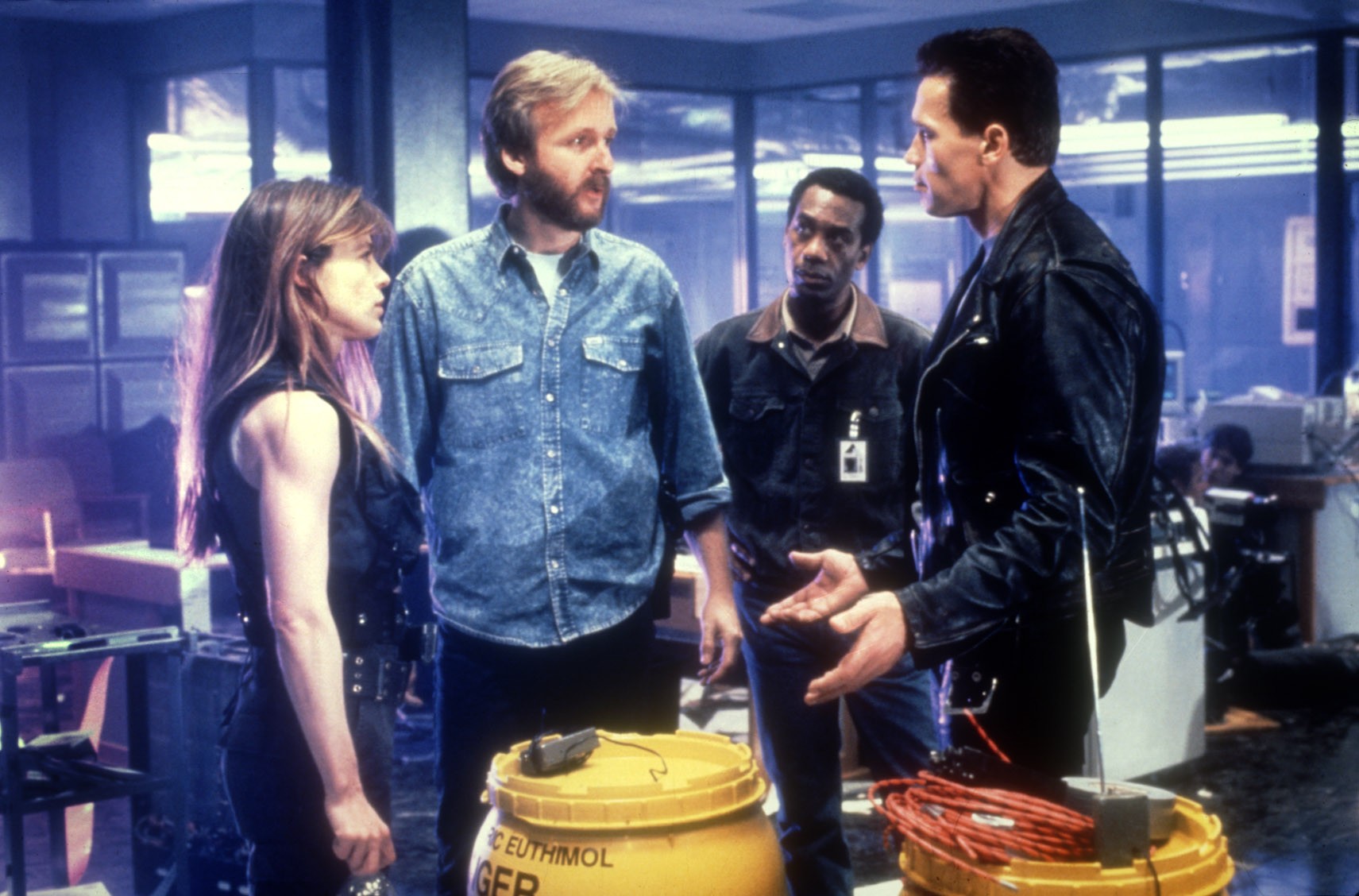
James Cameron, who turns 63 today, directs Arnold Schwarzenegger, Linda Hamilton and Joe Morton on the set of Terminator 2: Judgment Day, which is getting a 3D re-release this month:

Actor in the Spotlight:

Fandor honors the work of Lucille Ball on the big screen in this Women in Film video essay:

[embedded content]

Remixed Movie of the Day:

Pogo’s latest dance remix of a movie is “Boy & Bear,” featuring Disney’s Winnie the Pooh and Christopher Robin:

[embedded content]

Movie Food of the Day:

Speaking of Disney animated features, Oh My Disney shows how to make a tiny version of the stacked cake from Sleeping Beauty:

[embedded content]

Movie Takedown of the Day:

Cody Johnston of Cracked explains why The Wizard of Oz is a worse movie than you remember:

[embedded content]

Classic Trailer of the Day:

Today is the 35th anniversary of the release of The Beastmaster. Watch the original trailer for the classic fantasy film below.

[embedded content]

and

Let’s block ads! (Why?)


No Image

Federal Appeals Court Says Arkansas Can Block Medicaid Payments To Planned Parenthood

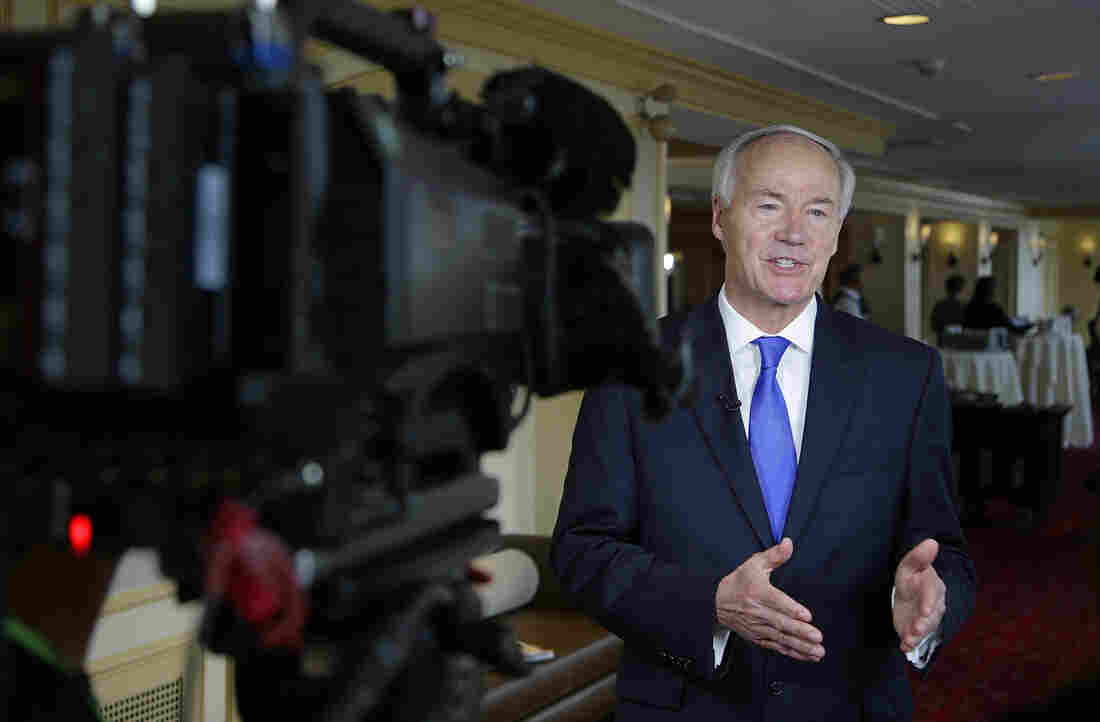
Arkansas Gov. Asa Hutchinson, pictured here during an interview last month, ended the state’s Medicaid contract with Planned Parenthood two years ago. He praised the circuit court’s decision.

Stephan Savoia/AP

hide caption

toggle caption

Stephan Savoia/AP

A federal appeals court has sided with the state of Arkansas against Planned Parenthood, saying it can block Medicaid payments to the medical provider. It reversed earlier injunctions that forbade the state from suspending the money in the wake of a controversial leaked video of Planned Parenthood staff.

That video, leaked by anti-abortion activists, purports to show Planned Parenthood staff outside Arkansas discussing fetal tissue sales. Planned Parenthood has said the tapes are fraudulent and multiple investigations have deemed the allegations as false.

In 2015, citing the video, Arkansas Gov. Asa Hutchinson terminated the state’s Medicaid provider agreements with Planned Parenthood’s local affiliate.

Then, three unnamed Planned Parenthood patients sued the director of the Arkansas Department of Human Services, saying that it was violating their federal right to choose any qualified provider offering the services they were seeking.

A district court then blocked the state from cutting off payments to Planned Parenthood for these three patients. A second injunction expanded that to an entire class of Medicaid beneficiaries in Arkansas who used Planned Parenthood services.

Today, in a 2-1 decision, the U.S. Court of Appeals for the Eighth Circuit vacated those injunctions. U.S. Circuit Judge Steven Colloton wrote that in the provision of the Medicaid Act cited by the plaintiffs, it is not clear that Congress intended to create a judicially-enforceable right for individual patients to choose any qualified provider that offers the services they seek.

He said that it would create a “curious system” to review a provider’s qualifications. “Under the Jane Does’ vision, while the provider is litigating its qualifications in the state courts, or after the provider unsuccessfully appeals a determination that it is not qualified, individual patients separately could litigate or relitigate the qualifications of the provider in federal court,” Colloton wrote.

At the same time, Colloton says “the lack of a judicially enforceable federal right for Medicaid patients does not mean that state officials have unfettered authority to terminate providers,” and notes that providers whose contracts are cancelled have the right to appeal.

In a dissenting opinion, Circuit Judge Michael Melloy notes that four other circuit courts and numerous district courts have ruled the opposite way, finding that there is a “private right of enforcement” to choose any qualified provider, such as Planned Parenthood.

The decision does not comment on the video as the rationale that Hutchinson provided for seeking to end the contract.

Planned Parenthood says it is “evaluating all options to ensure our patients receive uninterrupted care.”

“This is not over,” said Planned Parenthood Federation of America Chief Medical Officer Raegan McDonald-Mosley. “We will do everything in our power to protect our patients’ access to birth control, cancer screenings, and other lifesaving care. Extreme politicians are trying to defund and shut down Planned Parenthood — and this is not what Americans want.”

In a statement, Hutchinson described this as “a substantial legal victory for the right of the state to determine whether Medicaid providers are acting in accordance with best practices and affirms the prerogative of the state to make reasoned judgments on the Medicaid program.”

Jerry Cox, the executive director of the Family Council, an Arkansas-based conservative group, tells KUAR’s Michael Hibblen: “The videos aside, the question is should the state of Arkansas do business with an organization that aborts babies when they don’t need to.”

According to The Associated Press, “the state has said Planned Parenthood received $51,000 in Medicaid funds in the fiscal year before Hutchinson’s decision to terminate the contract,” and “none of the money paid for abortions.”

Let’s block ads! (Why?)


No Image

A Greek Summer Hit Fills A Generation With Hope

Marina Satti and dancers rehearsing for the music video to “Mantissa,” a “love song to yourself” that has become an anthem for young Greeks facing unemployment due to the debt crisis.

Courtesy of the artist

hide caption

toggle caption

Courtesy of the artist

Until last year, few Greeks had heard of Marina Satti.

The architecture student-turned-classically-trained singer had performed in musicals and ancient Greek plays, but her music career was largely under the radar. She played what she calls “blender” music — a combination of jazz, funk and rock — with musician friends at home.

“I grew up influenced by Björk and Moderat and the Berlin electronic scene,” Satti says. “And then, while I was studying at the Berklee College of Music, I looked to my roots.”

Satti’s father, a doctor, is from Sudan. Her mother, a chemical engineer, is from the Greek island of Crete. So she grew up biracial in a largely homogeneous Greece.

“I was afraid that I would stick out, ’cause I’m a little darker in the skin,” she says. “And sometimes, I remember myself being shy, and I remember I didn’t want my dad to come and pick me up from the school.”

At Berklee, she immersed herself in traditional Arabic and Greek music and realized the treasure of her heritage.

“What I loved about the States was that there, you can co-exist with something, someone, who is different than you,” Satti says. “It’s a state of mind I got into there that I carried back with me to Greece.”

When she returned home to Athens, she incorporated Greek and Arabic folk music into her jam sessions with friends.

Then, one night last year, after a pasta dinner at her apartment, they recorded a cover of “Koupes,” an old Greek rembetiko song, and uploaded it to YouTube. It went viral.

“YouTube can be a fair playing field for artists,” she says. “Your music is there, it’s free; whoever wants to listen to it can, and whoever doesn’t, that’s fine, too. I’m happy it was someone’s choice to listen to this song.”

So this summer, Satti offered an original song, “Mantissa” (“Seer”). She wrote the music and a friend wrote the lyrics.

[embedded content]
YouTube

“The whole song is about a fortune teller, basically, but it has its roots in ancient mythology, like Pythia,” Satti says. (In Greek mythology, Pythia is the high priestess of the Temple of Apollo in Delphi.) “Every verse is like an oracle: vague enough to be open for interpretation, like Pythia’s predictions. So, to me, it is a love song — but I like the fact that it doesn’t focus on the human pain; it’s not about being self-absorbed or self-pitying.”

The chorus is about taking charge, about spreading your wings and flying through winds and storms to find what you need.

“That’s the story of my life,” Satti says. “My dad had to come to Greece from Sudan to study and be who he is. And, me, I had to go to the States and embrace who I really am.”

“So,” she says, “it’s like a love song to yourself.”

Mantissa was released along with a music video featuring Satti and a posse of girlfriends dancing, flash mob-style, down Athinas, a street in Athens that’s seen better days.

“It’s one of my favorite streets,” she says. “There are people from Pakistan and Arabs who live there and work there. There’s a market or a bazaar. You can really see the Eastern influences, and then there’s the graffiti — and, in this video, a bunch of girls in our jeans and our jumpsuits, dancing.”

The video received more than 5 million views on YouTube in just a week. Fans made tribute videos. A male comedian in drag filmed a parody of it.

[embedded content]
YouTube

It also helped Satti, who describes herself as a D.I.Y. artist, get a deal with a record label in a country where the music industry, which hangs on to its aging stars, is hard to break into. She is signed to 314 Records.

“Mantissa” is the song of the summer in Greece: one of the most downloaded tracks and always on the radio. I hear it everywhere — in cafes, in taxis, on my balcony as my neighbors sing along while putting their washing on clotheslines to dry.

I meet a couple of thirtysomething statisticians dancing to “Mantissa” at a recent Satti concert at the gardens of the Athens Concert Hall. Savvas Giovanni and Giorgos Samaras sing the chorus so loudly they drown out the tweens next to them.

“I’m trying to remember the dance steps from the video,” Samaras says, hopping from side to side. “I’m a really good dancer.”

“I love this song,” Giovanni says. “It puts me in such a good mood. It makes me forget my problems.”

“Mantissa” is a love song, but one that “doesn’t focus on the human pain,” Marina Satti says. “It’s not about being self-absorbed or self-pitying.”

Kosmas Koumianos/Courtesy of the artist

hide caption

toggle caption

Kosmas Koumianos/Courtesy of the artist

The song has especially resonated with young Greeks, who face a grim future as the economy has yet to recover from the debt crisis and austerity.

“There are so many miserable people in my age, and that’s so bad,” says Melina Chronopoulou, a 21-year-old university student in French literature. She’s also one of Satti’s backup dancers, and performed in the “Mantissa” video. “It’s hard for many of us to just get out and enjoy being young. Many times, I wish I had been born in a different generation just so I could experience real optimism.”

Chronopoulou says she appreciates “Mantissa” for its optimism.

“Greek songs usually talk about being hurt, and being in love, but in a really negative way,” she says, “like suffering, and there is no hope anywhere. Not this song. It’s full of hope.”

Satti smiles a little when she considers that her runaway hit has lifted the spirits of other young Greeks.

“It’s hard out there,” she says, “but we are good at hope.”

Let’s block ads! (Why?)


No Image

Trump Announces End To Manufacturing Council After Multiple CEOs Resign

President Trump has ended both his manufacturing council and Strategic and Policy Forum, following the resignations of many CEOs who had served on them. Trump, who had promised to run government like a business, finds himself at odds with business leaders.

AUDIE CORNISH, HOST:

When Donald Trump was running for president, he said people should vote for him because of his great success in business. But this week, business leaders have been deserting him. They’ve quit White House advisory councils following the president’s comments on the racial violence in Charlottesville. So Trump says he’s disbanding the councils.

Joining us to talk about this is NPR business correspondent Jim Zarroli. Jim, I understand this was announced via tweet. Did the president give a reason for disbanding these business councils?

JIM ZARROLI, BYLINE: Yeah. He said he was dismantling these councils – you know, the Strategic Policy Forum and also his manufacturing council – because he wanted to take the pressure off the CEOs who sat on them. I think the real story is probably more like, you know, the councils weren’t going to survive anyway because too many of the chief executives were leaving.

You know, after the president’s response to Charlottesville, you had the CEO of Merck, Ken Frazier, leaving. And then one by one, a lot of the others left – Intel, Under Armour. Today the CEO of Campbell Soup left. And then The Wall Street Journal reported today that the Strategic and Policy Forum had a conference call this morning, and a majority of the members were ready to quit. So I think it was only a matter of time before the councils would have collapsed anyway.

CORNISH: Honestly, what did these boards do? I mean what role were they supposed to play in the administration?

ZARROLI: Yeah. Good question. The presidents have traditionally had advisory boards like this. And you know, sometimes they’ve been really – they’ve played a significant role. Under the – during the financial crisis, President Obama had financier Steve Rattner serve as the lead adviser on the presidential task force on the auto industry. And he actually became a pretty important voice on how to save the auto industry.

Now, under President Trump, the Strategic and Policy Forum, for example, was supposed to advise the president on how government policy affects job creation and economic growth. And it met once or twice. And you had, you know, these big photo ops with the president sitting down at a long table with people like, you know, the CEOs of IBM and Pepsi and so on and then, you know, pretty much the same thing with the manufacturing council.

I think from Trump’s perspective, they – you know, the White House wanted to send a message that, you know, they’re business friendly. They’re ready to listen to corporate leaders, to do business with them. And all this was part of their effort to make the economy grow faster. But of course, you know, they didn’t really have time to do very much, and now they’re not going to do anything.

CORNISH: What does the president’s disbanding of these councils suggest about his relationship with corporate leaders?

ZARROLI: Well, these councils don’t have any power to set policy. You know, you have to say the symbolism is pretty remarkable because you have this president who, you know, came to office talking about his business skills. But he wasn’t able to, you know, hold these boards together – you know, people that he picked to serve on them.

I think from the vantage point of the CEOs, a lot of them maybe don’t care much for Trump personally. They really haven’t from the beginning. But at the end of the day, they can’t afford not to work with him. He’s the president. He has a lot of power over policy. You know, yesterday, after Merck’s CEO quit, Trump sent out this tweet attacking him. And you know, when Trump is attacked, he attacks back. I think no corporate CEO wants to be in that position. And also, you know, they like Trump’s agenda – tax cuts and so on. And they want him to succeed even if they don’t like his rhetoric.

CORNISH: That’s NPR’s Jim Zarroli. Jim, thank you.

ZARROLI: You’re welcome.

Copyright © 2017 NPR. All rights reserved. Visit our website terms of use and permissions pages at www.npr.org for further information.

NPR transcripts are created on a rush deadline by Verb8tm, Inc., an NPR contractor, and produced using a proprietary transcription process developed with NPR. This text may not be in its final form and may be updated or revised in the future. Accuracy and availability may vary. The authoritative record of NPR’s programming is the audio record.

Let’s block ads! (Why?)


No Image

Today in Movie Culture: How to Market a Blockbuster, the Good and Bad of 'Guardians of the Galaxy Vol. 2' and More

Here are a bunch of little bites to satisfy your hunger for movie culture:

Trailer Parody of the Day:

Have a big tentpole movie to market? Follow this video on how to make a trailer for a blockbuster:

[embedded content]

Movie Trivia of the Day:

With Steven Soderbergh’s Lucky Logan out this week, ScreenCrush shares some trivia about his Ocean’s Eleven:

[embedded content]

Fight Scene of the Day:

Stunt doubles for Black Widow and Elektra choreographed an awesome fight scene that lets us imagine a battle between the Marvel characters (via Geek Tyrant):

Movie Franchise History of the Day:

The Dark Crystal is getting a sequel, so Distractotron traces the history of the franchise from its one existing movie through comics and more:

[embedded content]

Movie Food of the Day:

The latest episode of Binging with Babish shows how to make courtesan au chocolat from The Grand Budapest Hotel:

[embedded content]

Vintage Image of the Day:

Ben Affleck, who turns 45 today, and Liv Tyler and Billy Bob Thornton receive direction from Michael Bay on the set of Armageddon:

Filmmaker in Focus:

Fandor’s latest filmmaker-focused video essay celebrates “the enigma” of Werner Herzog:

[embedded content]

Cinematographer Showcase of the Day:

This supercut pays respect to the late Glen Campbell while also showcasing the work of cinematographer Henry Braham for Guardians of the Galaxy Vol. 2 (via Film School Rejects):

[embedded content]

Movie Takedown of the Day:

Speaking of Guardians of the Galaxy Vol. 2, Honest Trailers at least admits it’s better than most other Marvel sequels:

[embedded content]

Classic Trailer of the Day:

Today is the 20th anniversary of the release of Steel. Watch the original trailer for the DC superhero movie starring Shaquille O’Neal below.

[embedded content]

and

Let’s block ads! (Why?)