Articles by admin

No Image

Advertising Giant WPP Faces Slow Growth As Companies Cut Ad Spending

The world’s largest advertising company, WPP, is sometimes viewed as a bellwether for the health of the global economy. This week, it jolted the ad and media industries when it slashed the forecast for its own growth this year. WPP has blamed the unexpectedly steep decline in ad spending by some of the most influential consumer goods companies.

ARI SHAPIRO, HOST:

WPP is the world’s largest advertising company. It’s sometimes called an economic bellwether because it works with huge corporations like Procter & Gamble, Ford and Nestle. NPR’s Alina Selyukh reports that the British ad company is facing some surprisingly bad news.

ALINA SELYUKH, BYLINE: In the advertising world, WPP is a behemoth. It owns hundreds of ad agencies. Think classic Madison Avenue. Their clients are the who’s who of the Fortune Global 500. They sell all kinds of things – shampoo, mayonnaise, cars. And this reach has made WPP something of a proxy for the health of the world’s largest corporations.

BRIAN WIESER: They have some of the most insightful earnings releases of any – certainly any company I cover.

SELYUKH: Brian Wieser is a senior analyst at equity research company Pivotal.

WIESER: They have the most diverse assortment of marketers as clients across many different industries. And so they will have a better read certainly on the large marketers’ and large companies’ spending habits than anyone else.

SELYUKH: And this week, this read on ad spending habits was particularly pessimistic. Going into 2017, WPP was reasonably optimistic about revenue growth this year. Now the advertising powerhouse says it may not see any growth at all.

(SOUNDBITE OF ARCHIVED RECORDING)

MARTIN SORRELL: We started the year really around 3 percent. Then we moved down to 2 percent. And now we’re talking between 0 and 1 percent.

SELYUKH: That’s the CEO, Sir Martin Sorrell. He’s often described as the most powerful man in advertising. And this week on the earnings webcast, he blamed the decline in ad spending on cutbacks by the big consumer goods companies.

(SOUNDBITE OF ARCHIVED RECORDING)

SORRELL: The three key factors here were a trifecta of digital disruption, zero-based budgeting and activist investors.

SELYUKH: OK, to peel that back in the simplest terms, he’s saying the Internet is shaking up advertising, companies are cutting costs, and some shareholders are pushing for better profits. But let’s dig in a bit into the digital disruption.

(SOUNDBITE OF ARCHIVED RECORDING)

UNIDENTIFIED MAN: Gillette, the best a man can get.

SELYUKH: Take Procter & Gamble. They own huge brands like Gillette, Febreze, Crest, Pampers. And P&G has been slashing ad spending, especially calling out digital ads, saying they want real humans, not fake Internet bots, seeing their ads. And they don’t want their ads next to, quote, “objectionable content.” But more fundamentally, the stalwarts in consumer goods have been facing competition from Internet-powered newcomers.

WIESER: It is maybe best described as Gillette losing share to Dollar Shave Club.

SELYUKH: That’s a startup that sells razors, now a part of Unilever.

WIESER: And in every category, you could probably find a similar example.

SELYUKH: The new online rivals think differently about advertising – maybe talk to consumers directly or pay a YouTube star to plug your brand. That means the advertising giants like WPP are themselves rethinking how they work. And some analysts say maybe they aren’t good economic bellwethers after all. Alina Selyukh, NPR News.

Copyright Β© 2017 NPR. All rights reserved. Visit our website terms of use and permissions pages at www.npr.org for further information.

NPR transcripts are created on a rush deadline by Verb8tm, Inc., an NPR contractor, and produced using a proprietary transcription process developed with NPR. This text may not be in its final form and may be updated or revised in the future. Accuracy and availability may vary. The authoritative record of NPR’s programming is the audio record.

Let’s block ads! (Why?)


No Image

Racial Conflict Draws Boxing Fans To Mayweather-McGregor Fight

Almost everyone agrees that the much-hyped boxing match between Floyd Mayweather and MMA champ Conor McGregor will not be much of a fight. But fans will shell out an estimated half a billion dollars to watch. NPR’s Robert Siegel talks with sports columnist Adam Kilgore of The Washington Post about the fight.

ROBERT SIEGEL, HOST:

Two summers ago, a mixed martial arts champion named Conor McGregor was doing an interview with Conan O’Brien.

(SOUNDBITE OF ARCHIVED RECORDING)

CONAN O’BRIEN: What if you were in the ring with Floyd Mayweather? What do you think would happen? He’s obviously an incredibly – one of the greatest boxers anyone’s ever seen…

CONOR MCGREGOR: If you’re asking would I like to fight Floyd, I mean, who would not like to dance around the ring for $180 million?

O’BRIEN: Yeah.

(LAUGHTER, APPLAUSE)

SIEGEL: And the trash talk has been going on ever since.

(SOUNDBITE OF ARCHIVED RECORDING)

FLOYD MAYWEATHER: I’m not the same fighter I was 10 years ago. I’m not the same fighter I was five years ago. I’m not the same fighter I was two years ago. But I got enough to beat you.

SIEGEL: Well, now this spectacle of a matchup is actually happening. Floyd Mayweather Jr. and Conor McGregor will box Saturday night in Las Vegas and on Showtime pay-per-view. As sports columnist Adam Kilgore of The Washington Post has written, the racial difference between the two has been a selling point for this fight. Are there any other selling points?

Adam Kilgore, thanks for joining us today.

ADAM KILGORE: Thanks for having me.

SIEGEL: And first, tell us about the two fighters, starting with the 40-year-old Floyd Mayweather.

KILGORE: Floyd Mayweather is regarded as one of the greatest tactical fighters in boxing history. Outside of the ring he’s known for controversy. He’s twice been convicted of battery against women. And he has this sort of almost like pathological obsession with money. Is his nickname is Money. He has a lot of business interests outside of boxing, including a strip club in Las Vegas. So he’s quite a, you know, only-in-boxing character.

SIEGEL: OK. And in the other corner 29-year-old Conor McGregor.

KILGORE: Conor McGregor comes from a poor part of Dublin, Ireland, called Crumlin. He’s an incredible showman. He’s got an incredible left hook that’s taken him to the top of mixed martial arts in a promotion called UFC, Ultimate Fighting Championship. He trained as a boxer as a teenager. But, you know, as far as the highest level of the sport is concerned, he’s never boxed before. And no one really knows if he can box.

SIEGEL: Now, McGregor, as a mixed martial artist, can kick, grab, trip, wrestle. In a boxing match, all he’s allowed to do is punch above the belt. Does he have a prayer against Mayweather?

KILGORE: Conor McGregor has the proverbial almost definition of a puncher’s chance. There is a school of thought that if he comes out and just throws haymakers and is very aggressive early on, he has a prayer to connect and maybe knock Mayweather down. The problem is Mayweather’s been knocked down once in his entire career. And most boxing analysts – and I would agree with these folks – think that he’s not going to get a clean shot if he gets a shot at all.

SIEGEL: Now, you’ve written about the race angle in this fight. As the famed fight promoter Don King once said, if it’s a fight between a white boxer and a black boxer, you can play the race card tremendously and get an overwhelming return. Is that what’s selling this fight?

KILGORE: I think that’s part of what’s selling the fight. I do think that novelty is the primary selling point. But certainly the fighters have not shied away from using race as a selling point. In one of the first tour stops, McGregor twice told Floyd Mayweather…

(SOUNDBITE OF ARCHIVED RECORDING)

MCGREGOR: Dance for me, boy. Dance for me, sir. Dance for me.

KILGORE: In a subsequent tour stop, after there had been, you know, a bit of an uproar about those comments, McGregor said that he could not be racist because he was half-black from the bellybutton down, implying exactly what you think he’s implying there. Certainly boxing has a long tradition of promoting fights along racial lines, and both Mayweather and McGregor have sort of used that tactic.

SIEGEL: Adam Kilgore is a national sports columnist for The Washington Post. Thanks for talking with us.

KILGORE: Thank you.

Copyright Β© 2017 NPR. All rights reserved. Visit our website terms of use and permissions pages at www.npr.org for further information.

NPR transcripts are created on a rush deadline by Verb8tm, Inc., an NPR contractor, and produced using a proprietary transcription process developed with NPR. This text may not be in its final form and may be updated or revised in the future. Accuracy and availability may vary. The authoritative record of NPR’s programming is the audio record.

Let’s block ads! (Why?)


No Image

Today in Movie Culture: Lucas Till as The Joker, 'Guardians of the Galaxy Vol. 2' Song Parody and More

Here are a bunch of little bites to satisfy your hunger for movie culture:

Dream Casting of the Day:

BossLogic suggests Lucas Till as a young Joker in his newly announced origin movie, and he even shows us what that could look like:

Or someone young πŸ˜€ @lucastillpic.twitter.com/l35EmpGEG7

β€” BossLogic (@Bosslogic) August 23, 2017

Music Parody of the Day:

What if the Guardians of the Galaxy Vol. 2 soundtrack was more on the nose? Here’s a parody of Jay and the Americans’ “Come a Little Bit Closer” so it’s more of a plot song:

[embedded content]

Poster Homage of the Day:

This week’s official Stranger Things poster pays homage to Alien, which means they’re not just honoring ’80s movies:

This is Will Byers. Only survivor of The Upside Down. Signing on. #StrangerThursdays begins now. pic.twitter.com/o80kd7DKMA

β€” Stranger Things (@Stranger_Things) August 24, 2017

Supercut of the Day:

You might want to save this for Easter, but Fandor has compiled a supercut of rabbits in movies:

[embedded content]

Vintage Image of the Day:

Rupert Grint, who turns 28 today, receives direction from Alfonso Cuaron on the set of Harry Potter and the Prisoner of Azkaban in 2003:

Actor in the Spotlight:

The latest edition of No Small Parts highlights the chameleonic career of Giancarlo Esposito:

[embedded content]

Filmmaker in Focus:

This supercut highlights all the wonderful food found in the films of Hayao Miyazaki (via Film School Rejects):

[embedded content]

Cosplay of the Day:

Here are a whole bunch of very committed but anonymous Ghostbusters fans cosplaying as the logo:

Ghostbusters cosplay. pic.twitter.com/C5EayWVyX0

β€” Nick de Semlyen (@NickdeSemlyen) August 24, 2017

Studio Formula of the Day:

Couch Tomato presents 24 reasons all Pixar movies are the same:

[embedded content]

Classic Trailer of the Day:

Today is the 75th anniversary of the premiere of Disney’s Saludos Amigos. Watch the original trailer for the animated classic below.

[embedded content]

and

Let’s block ads! (Why?)


No Image

Benches Clear β€” Again And Again β€” During Brawls Between Yankees And Tigers

The Yankees and Tigers raise dust on the diamond after both benches cleared in Detroit on Thursday.

Gregory Shamus/Getty Images

hide caption

toggle caption

Gregory Shamus/Getty Images

Things got a little out of hand in Detroit on Thursday.

The way the game between the Tigers and the New York Yankees opened, though, you’d be forgiven for having thought it was going to be just another dog-day matinee. The two teams exchanged a pair of runs in the early innings, but for the most part, it was shaping up to be a low-scoring, modest affair.

Then, Tigers pitcher Michael Fulmer hit the Yankees’ Gary Sanchez with a fastball in the fifth inning. And in the sixth, Tigers star Miguel Cabrera stepped to the plate and promptly got a pitch thrown behind his back. In the hubbub afterward, both the Yankees pitcher, Tommy Kahnle, and his manager, Joe Girardi, were ejected.

But the dust briefly seemed to settle β€” until a few heated words between Cabrera and the Yankees catcher behind him, Austine Romine, exploded into a flurry of misplaced haymakers.

Matters devolved distressingly fast from there.

Benches clear, punches thrown in Yankees-Tigers game with Miguel Cabrera and Austin Romine at the center of it. https://t.co/g32ygLF1czpic.twitter.com/QMsJ5fEDQO

β€” MLB (@MLB) August 24, 2017

Within seconds both teams had leapt off their benches into the fray, players and managers alike grasping at jerseys, flailing at times to hit their opponents or hold their teammates back. Even the relievers ran in from the bullpen.

And at the center of the chaos, Cabrera and Romine kept at it.

“Wow!” the announcer on the game exclaimed, taken aback. “When was the last time you saw that?”

The answer: Quite a while, according to ESPN Stats & Info. The sports research service says the eight ejections by game’s end were the most seen in any game so far this season, and the five ejections earned by the Yankees alone β€” including both manager Girarand the guy who replaced him β€” were the most by a single team this season.

Both teams racked up so many because the bitterness didn’t end with the sixth inning brawl β€” nor did the dangerous pitches. The very next inning, the Tigers’ James McCann got beaned in the helmet with a fastball, and the inning after that, the Yankees’ Todd Frazier was hit with a pitch β€” both incidents prompting the benches to clear twice more.

we ain’t done yet #Yankees#tigerspic.twitter.com/nJPxO5gliK

β€” Batavia’s Best (@bataviasbest) August 24, 2017

After the game, Girardi laid the blame for the chaos squarely at the feet of the umpires, who he said sowed the seeds of the conflict by attempting β€” and failing β€” to eject some antagonists while leaving others in the game.

“Just a very poor job on their part,” Girardi told the media after the game. “Very, very poor.”

Luckily, though, there were no immediate reports of injuries from the series of brawls, though suspensions are likely to be forthcoming.

Oh, and the Tigers won, 10-6.

Let’s block ads! (Why?)


No Image

America's Credit Rating On The Line As Debt Ceiling Deadline Approaches

President Trump meets with Senate Majority Leader Mitch McConnell and House Speaker Paul Ryan during a budget discussion in March.

Chip Somodevilla/Getty Images

hide caption

toggle caption

Chip Somodevilla/Getty Images

With the federal government getting closer to running out of cash to cover all bills on time, companies that evaluate bonds are having to consider how to rate America’s creditworthiness.

And their job didn’t get any easier on Thursday when President Trump continued his attacks on congressional leaders over their failure to raise the federal debt ceiling.

Other U.S. officials have been trying reassure the financial markets that no default is imminent.

But in a morning tweet, Trump blamed the two top Republicans in Congress β€” House Speaker Paul Ryan and Senate Majority Leader Mitch McConnell β€” for not attaching the debt-ceiling legislation to a popular bill on veterans’ benefits. Whether that legislative strategy would have worked cannot be known. Further, attaching the debt ceiling to the veterans bill could have endangered one of the few legislative achievements Congress could claim in the midst of the GOP health care failure.

In any case, Congress now has just a few more weeks to raise the debt ceiling, which would enable the government to continue borrowing enough cash to pay all of its bills on time. If it doesn’t do so, the government will have to prioritize which of its bills it will pay. That would have enormous consequences in the financial markets.

…didn’t do it so now we have a big deal with Dems holding them up (as usual) on Debt Ceiling approval. Could have been so easy-now a mess!

β€” Donald J. Trump (@realDonaldTrump) August 24, 2017

Ryan and McConnell have tried to send a message that a debt default is highly unlikely.

“We will pass legislation to make sure we pay our debts and we will not hit the debt ceiling. We’ll do this before the debt ceiling,” Ryan said during a visit to a Boeing plant in Washington state Thursday. “There are many different options in front of us on how we achieve that.”

Treasury Secretary Steve Mnuchin has offered similar assurances.

“We’re going to get the debt ceiling passed,” Mnuchin said Monday at an event in Louisville, Ky. “Everybody understands this is not a Republican issue; this is not a Democrat issue. We need to be able to pay our debts.”

But Trump’s attacks on Ryan and McConnell have raised questions about whether the passage of debt-ceiling legislation will be as smooth as congressional leaders hope.

Under President Barack Obama, the White House and Congress often engaged in brinksmanship over whether to raise the debt ceiling, but they always managed to do so at the last minute.

“Clearly we’ve had dozens of occasions when the debt limit has been raised in the past, and we don’t expect this time to be any different,” says Charles Seville, senior director at Fitch Ratings.

This time, however, the stakes are higher, said Richard Bernstein, former chief investment strategist at Merrill Lynch, in an interview with Politico:

“Not passing a debt limit hike in time would have an even greater impact on financial markets because when we did this in the past you had a Democrat in the White House and Republicans controlling Congress and people could basically understand the political aspects of what was going on. There was a mating dance and a conclusion.

“This time it’s Republican versus Republican. I don’t know how anyone can interpret that. Is this some kind of mating dance again? Or is it some more critical failure of government? I don’t know how to answer that. There is a potential for more volatility this time around than there might have been in the past.”

Bernstein believes Congress will ultimately vote to raise the debt ceiling.

Moody’s Investors Service said Thursday it would consider stripping the United States of its top rating if it were to default on bondholders, but not if it merely skipped paying some of its nondebt obligations.

But Fitch Ratings took a tougher stand, warning that even a debt-ceiling standoff, short of a bond default, could cause it to reassess the credit rating of U.S. Treasury debt. That’s because it would raise questions about the ability of the U.S. political system to get its house in order, Seville said.

“One thing that we have in the back of our minds is how the U.S. deals with its fiscal challenges and whether the policymaking process works,” he added.

Let’s block ads! (Why?)


No Image

Today in Movie Culture: Christian Bale as The Joker, Conan O'Brien Parodies Tom Cruise's Stuntwork and More

Here are a bunch of little bites to satisfy your hunger for movie culture:

Dream Casting of the Day:

BossLogic proposes The Dark Knight trilogy’s Batman, Christian Bale, for the role of The Joker in the comic book villain’s newly announced movie and even shows us what he could look like:

Live long enough to become….. pic.twitter.com/aB2f7WmfY1

β€” BossLogic (@Bosslogic) August 23, 2017

Movie Parody of the Day:

Tom Cruise recently injured himself while making Mission: Impossible 6, so Conan lampooned an iconic scene from Risky Business in which the actor kept getting hurt:

[embedded content]

Reworked Movies of the Day:

Scenes from the Alien Vs. Predator movies are a lot better scored with classical music masterpieces, as seen in this video by Antonio Maria Da Silva:

[embedded content]

Remixed Movie of the Day:

Pogo’s latest dance remix of a Disney animated feature samples sounds from Aladdin:

[embedded content]

Cosplay of the Day:

Speaking of Disney animated features, here’s a great Nick Wilde frome Zootopia costume:

When you wake up and feel like you’re in a cartoon… #fursuit#cosplay#zootopiapic.twitter.com/C3QrkbavD3

β€” Don’t Hug Cacti LLC (@DontHugCacti) August 20, 2017

Movie Takedown of the Day:

Never mind that it made a bazillion dollars or has a 94% Rotten Tomatoes rating, Finding Dory didn’t even get an Oscar nomination and so Wisecrack looks into what’s wrong with the Pixar animated feature:

[embedded content]

Vintage Image of the Day:

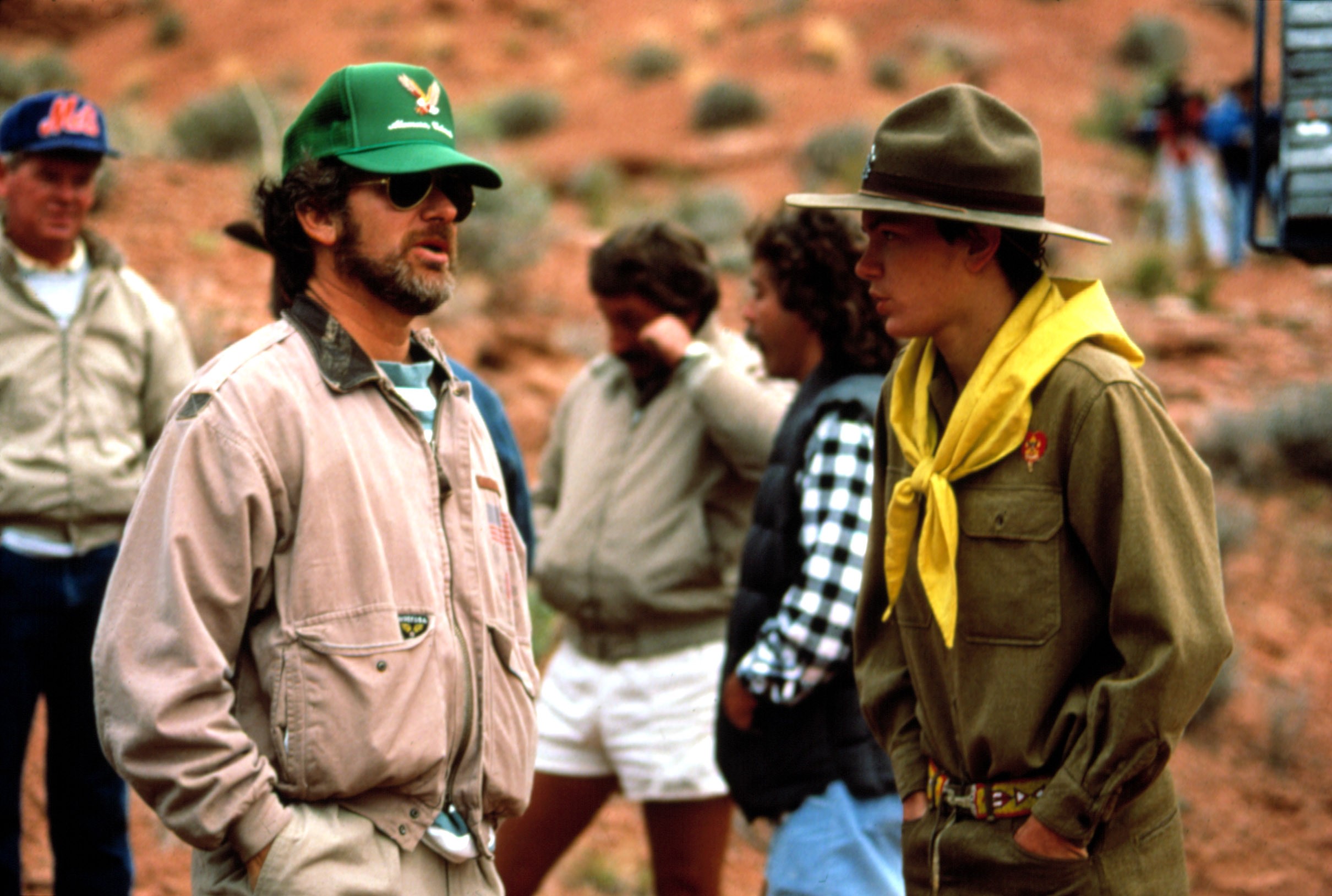
River Phoenix, who was born on this day in 1970, receives direction from Steven Spielberg on the set of Indiana Jones and the Last Crusade in 1988:

Actor in the Spotlight:

You’ve seen her this year in The Mummy and Atomic Blonde, now get to know Sofia Boutella care of Haroon Adalat for Fandor:

[embedded content]

Poster Comparison of the Day:

If the new poster for Darren Aronofsky’s Mother! looks familiar, this comparison to the Rosemary’s Baby poster confirms why:

I’ve been worried MOTHER! looks like a ROSEMARY’S BABY riff; this new poster doesn’t assuage that concern. pic.twitter.com/rXEcqGHqS5

β€” CinemaGrids (@CinemaGrids) August 23, 2017

Classic Trailer of the Day:

Today is the 50th anniversary of the release of Roger Corman’s The Trip. Watch the original trailer for the psychedelic classic below.

[embedded content]

and

Let’s block ads! (Why?)


No Image

Justice Department Narrows Request For Visitor Logs To Inauguration Protest Website

The Department of Justice has narrowed the scope of a warrant it served to web hosting company DreamHost. The government has demanded information about DisruptJ20.org, a website used to organize protests in Washington, D.C., during the Inauguration in January.

Spencer Platt/Getty Images

hide caption

toggle caption

Spencer Platt/Getty Images

The Justice Department is dropping the most controversial part of its demand for records relating to a website used to coordinate protests during the presidential inauguration.

In court filings submitted yesterday, ahead of a hearing Thursday in D.C. Superior Court, the government suggests modifications to the warrant it attained for files from web hosting company DreamHost, which hosted the website DisruptJ20.org.

The change in scope was made “in light of factual revelations since July,” the filings state.

“The government has no interest in records relating to the 1.3 million IP addresses that are mentioned in DreamHost’s numerous press releases and Opposition brief,” according to the filings, which were submitted by Assistant U.S. Attorneys Jennifer Kerkhoff and John Borchert.

The Justice Department goes on to say:

“The government values and respects the First Amendment right of all Americans to participate in peaceful political protests and to read protected political expression online. This Warrant has nothing to do with that right. The Warrant is focused on evidence of the planning coordination and participation in a criminal act – that is, a premeditated riot. The First Amendment does not protect violent, criminal conduct such as this.”

Last week, DreamHost revealed that the Justice Department had delivered it a warrant asking for “all files” related to DisruptJ20.org, a site the government says was used to organize a riot in downtown Washington, D.C., during the Inauguration. The Justice Department is pursing felony riot charges against nearly 200 people; 19 others have already pleaded guilty.

“This is a tremendous win for DreamHost, its users and the public,” DreamHost counsel Raymond Aghaian said in a statement to NPR. “There remains, unfortunately, other privacy and First and Fourth Amendment issues with the search warrant, which we will address in a separate filing and at the hearing Thursday morning.”

The DreamHost matter is complex, and not only because it involves Constitutional issues as well as a lot of technical jargon for all parties to wade through.

Among the “particular things to be seized” from DreamHost in the original warrant: HTML, CSS, JavaScript, image files, or other files; HTTP request and error logs; SSH, FTP, or Telnet logs; MySQL, PostgreSQL, or other databases related to the website.

As New York Times reporter Charlie Savage pointed out, Judge Ronald Wertheim, who granted the warrant, is in his eighties. He has been retired since 1992 but still hears cases occasionally.

A different judge, Robert Morin, will oversee tomorrow’s hearing.

One of the challenges of criminal investigations involving electronic evidence, the government said, “is that some of the evidence – particularly the full scope of the evidence – will be hidden from the government’s view unless and until the government obtains a court order or search warrant.”

In its brief, the Justice Department says it simply didn’t realize the depth of the information that DreamHost has, which includes” visitor data maintained by DreamHost that extends beyond the government’s singular locus in this case of investigating the planning, organization, and participation in the January 20, 2017 riot.”

But in earlier filings, the government had been indifferent to DreamHost’s objections, when it explained the extent of its data holdings.

DreamHost attorney Raymond Aghaian told the Justice Department in a July 21 email that the warrant for “all files” related to Disruptj20.org “seems overbroad,” and would include “the IP addresses of over 1,000,000 visitors to the website.”

In a motion filed a week later, the government said Aghaian’s concern about the warrant’s breadth was “simply not a sufficient basis for DreamHost to refuse to comply with the warrant.”

Mark Rumold, senior staff attorney at Electronic Frontier Foundation, which is advising DreamHost, says the government’s new, narrower warrant is an improvement β€” but problems remain.

“The new warrant excludes most visitor logs from the demand, and it also withdraws the demand for unpublished content, like draft blog posts and photos,” Rumold says in an email to NPR. “This was a sensible response on DOJ’s partβ€”both legally and politically.”

“But the new warrant is not without its flaws,” he adds. “Most critically, DOJ is still investigating a website that was dedicated to organizing and planning political dissent and protest. That kind of activity β€” whether online or off β€” is the cornerstone of the First Amendment, and DOJ’s ongoing investigation should be cause for alarm to anyone, no matter your political party or beliefs.”

DreamHost’s counsel provided NPR with the document below, showing the modifications to the warrant.

[embedded content]

Let’s block ads! (Why?)


No Image

Hope, Rebellion And Empowerment: The Multifaceted Appeal Of Mashrou' Leila's 'Roman'

“Roman” by Mashrou’ Leila is Lebanon’s song of the summer.

Courtesy of the artist

hide caption

toggle caption

Courtesy of the artist

Sometimes musicians write a song for a cause. Sometimes, the cause chooses the song.

That is what has happened with “Roman,” the latest release from Mashrou’ Leila, the Lebanese alternative rock band who toured the U.S. to huge acclaim this summer (and performed a spine-tingling Tiny Desk concert at NPR last summer).

When Mashrou’ Leila conceived “Roman” some five years ago, the band thought of it as a song about betrayal. Its opening lyrics are dark: “I don’t intend on swallowing your lies / The words will burn my throat.” Later, lead singer Hamad Sinno cries: “Worms carve my body and the earth embraces my skin / How could you sell me to the Romans?”

The music is slow, painful yet beautiful. Its chorus is a rebellion in a single word: “alehum,” which means “charge” in Arabic.

[embedded content]
YouTube

But upon its release this summer, “Roman” unexpectedly became an anthem for women’s empowerment.

“I definitely didn’t have that in mind when we were writing the song,” says Sinno. He says the meaning of the song was only transformed when the band met Jessy Moussallem, a film director, who pitched the idea that the music video should be about patriarchy.

In the video, a woman in a hijab contorts in a moderndancein an abandoned concrete building. She leads other women, many in brightly colored abayas β€”the conservative, loose-fitting robe worn by some Muslim women β€” to a beach. They hold hands and make kaleidoscope patterns through dance. Their expressions are defiant; they radiate self-respect. Later, a covered woman rides a galloping white steed.

The video and the song combined were a huge success; they’ve been described in Lebanon as being all but revolutionary. Blogs have written about “Roman,” and fans have left streams of adoring comments on Mashrou’ Leila’s Facebook page.

Sinno sees the video as an ode to self-realization: a rejection of the idea that Muslim women, especially in the Arab world, cannot be empowered unless they lose their adherence to tradition.

“The thing that kind of always drives me insane is that people are so quick to say stuff about Muslim women or veiled women,” he says. “And it’s like, dude, just come to one of our gigs, and you see all these women who are veiled, who are just celebrating other people’s diversity β€” who are clearly not without agency, right?”

Mashrou’ Leila headlined a festival in Ehden, a town nestled high in the mountains of north Lebanon, earlier this month. When Sinno introduces “Roman,” the crowd packing the stadium goes wild.

As the band performs the song, the video plays on a screen behind it β€” something Mashrou’ Leila hadn’t done before in Lebanon. The audience rises to its feet. Eyes closed, swaying, arms in the air, fans surrender to the music.

Afterwards, I meet Hazar Malab, a 16-year-old fan ecstatic about the song. I ask her: Was “Roman” her favorite song of the summer?

“Yes, yes, yes, yes,” she answers, almost breathless with excitement. “It is. It is.”

All her friends at school feel the same way, Malab says. She has forced her parents to listen to it, and even they “love it.”

Another fan, Jihad Saifi, says he believes the impact of “Roman” will go beyond a single summer. This is not just about making memories in the sun – the song and video together break important new ground for the portrayal of women in the Middle East, he says.

It’s a beautiful picture to paint Arab women in,” he says. “I’ve never seen Arab women dance like this. And it’s liberating to men and women.”

One of the reasons the song has become so successful in Lebanon is that it speaks to different people in different ways. Some Mashrou’ Leila fans tell me that for them, “Roman” is about more than women’s empowerment: It’s also a response to greater feelings of insecurity about the future of the Middle East and beyond.

Rima Sleiman Frangieh, the organizer of the Ehden festival, says she believes many people see the song as a response to the war in neighboring Syria, the rise of jihadist groups like ISIS and what they perceive as a rise in fanaticism “around the world.”

“We have seen nothing but ugliness and black and pain and sorrow,” she says. “So this song: It’s about liberation and everything that opens windows of hope. I think [it] has a direct positive effect on people.”

Some fans even tell me they think the song has especially caught fire this summer because people see it as a response to Donald Trump’s presidency.

Sinno and Haig Papazian, the band’s lead violinist, agree with this interpretation. And Sinno says the band agreed to Moussallem’s pitch for a political music video in part because of current events in the U.S. and Lebanon.

Sinno says it’s “very hard not to be thinking about this stuff with, you know, Trump being in office,” or, he says, with the fact that the Lebanese state minister for women’s affairs is a man.

The meaning “Roman” holds for both its listeners and its creators has definitely changed since it was first written, Papazian says. “You have certain intentions when you first write it,” he says, “but then everything around you is constantly changing and then new meaning is given to a song after a while.”

All those years ago, “Roman” started off as a song about betrayal, but now it has become a song about hope and empowerment. And for Mashrou’ Leila fans, it’s yet another reason to dance.

Let’s block ads! (Why?)


No Image

Intent On Reversing Its Opioid Epidemic, A State Limits Prescriptions

Across the state of Maine, the number of prescriptions for painkillers is dropping. But some patients who have chronic pain say they need high doses of the medication to be able to function.

Fanatic Studio/Getty Images

hide caption

toggle caption

Fanatic Studio/Getty Images

A year ago, Maine was one of the first states to set limits on opioid prescriptions. The goal in capping the dose of prescription painkillers a patient could get was to stem the flow of opioids that are fueling a nationwide epidemic of abuse.

Maine’s law, considered the toughest in the U.S., is largely viewed as a success. But it has also been controversial β€” particularly among chronic pain patients who are reluctant to lose the medicine they say helps them function.

Ed Hodgdon, who is retired and lives in southern Maine, was just that sort of patient β€” at least initially.

Name a surgery, and there’s a decent chance Hodgdon has had it.

“Knee replacement. Hip replacement. Elbows. I’ve got screws in my feet,” he says.

Dr. Don Medd, an internist in Westbrook, Maine, has found that working with patients to find alternatives to opioids has helped many taper their dose and reliance on the drugs β€” and reduce side effects.

Patti Wright/Maine Public Radio

hide caption

toggle caption

Patti Wright/Maine Public Radio

Hodgdon has rheumatoid arthritis. And along with each surgery came an opioid prescription for pain. At first he got some relief from the drugs, but it didn’t last.

“It just numbed it for a while,” he says, “and then I needed more.”

Though Hogdon keptincreasing the dose, the pain never went away.

“And then I found Dr. Medd. That’s my angel right there,” Hodgdon says, nodding toward Dr. Donald Medd, a general internist in Westbrook.

Medd had already started to taper high doses among patients like Hodgdon before Maine put a cap on new prescriptions for opioids last July. The new limit allows a maximum of 100 morphine milligram equivalents (the standard used to measure potency for all prescription opioids) for most patients per day β€” with certain exemptions for some cancer patients, those in hospice care, and some others. Patients with existing prescriptions were, by and large, given a year to meet the new restriction.

Medd was ahead of the game because he’d noticed that many of his patients on high doses of opioids grew increasingly angry about their pain as time wore on, and tended to demand ever more medication. At the same time, they were struggling to function in daily life because of the drugs’ side effects.

“You know, at some point the medications get in the way of some sort of recovery,” Medd says.

Opioids were affecting Hodgdon’s mood and his memory. Medd worked with him to cut the dose he was taking every day by two-thirds and helped him get in touch with a psychologist for further help. Though Hodgdon still lives with some pain, he says his life is infinitely better.

“I can remember things,” he says. “I get along better with people.”

Despite success stories like Hodgdon’s, Medd says he initially opposed Maine’s law. He didn’t want the legislature to interfere with medicine.

But now he thinks the law gave a necessary nudge to many doctors. Compared to a few years ago, Medd says, he and colleagues in his medical practice have cut the number of their chronic pain patients who are on opioids by almost half β€” from about 1,500 to 800.

In nearly all counties in the state, the number of prescriptions for painkillers is dropping. It’s a trend that Gordon Smith, executive vice president of the Maine Medical Association, says was underway even before the law took effect.

“We had the fourth largest drop in the country,” he says, citing a 21.5 percent reduction in opioid prescriptions from 2013 through 2016.

The data only include the first few months after Maine’s prescribing cap went into effect, Smith says; he expects the law will accelerate further reductions.

“Now having said that, it’s not been easy,” he says. “It’s been particularly difficult for patients,” he says β€” specifically for the 16,000 patients on high-dose opioids who were expected to taper to the 100 morphine milligram limit by July of this year.

Brian Rockett runs a wholesale lobster business in Maine, despite his chronic pain from past injuries. He needs high doses of opioids to be able to work, he says, and his doctor agrees.

Keith Shortall/Maine Public Radio

hide caption

toggle caption

Keith Shortall/Maine Public Radio

“I was about four times above that,” says Brian Rockett. He operates a wholesale business buying lobsters on the Maine coast. Rockett started taking opioids years ago to ease the pain of injuries from racing motorcycles and boats. When he tried to taper the dose, he says, he had unbearable pain. So, he filed a notice of intent to sue the state over its restrictions on how much he could be prescribed.

“I just knew that I was facing possibly losing my business,” he says.

Rockett wasn’t alone in his inability to taper his use of the drug, and Maine lawmakers β€” like Dr. Geoffrey Gratwick, a state senator who is also a rheumatologist β€” took notice.

“A certain group of people simply cannot come off [opioids],” Gratwick says.

He recently pushed through a change to Maine’s law that allows broader exemptions, so that people with incurable, chronic conditions can continue to take high doses.

It put the decision about that back in the hands of the doctor and patient, Gratwick says, “where it should be.”

Under the revised law, Rockett was able to increase his dose, and dropped his lawsuit.

Even though more patients could, potentially, seek exemptions, Maine’s law is seen by its advocates as an important step. Recent data from the federal Centers for Disease Control suggest that nationwide, despite an overall decrease in recent years, the number of opioids prescribed still triple what it was in 1999.

Let’s block ads! (Why?)


No Image

'What Carter Lost' Tells The True Story Of 'Friday Night Lights' Football Rivals

The 1988 Carter High School football team won that year’s Texas state championship. Filmmaker Adam Hootnick says, “For a lot of people, that’s the top.”

Courtesy of ESPN Films

hide caption

toggle caption

Courtesy of ESPN Films

A lot of people already know the story of Friday Night Lights, in which a West Texas high school fights for the state football title. It started as a nonfiction book, then it became a movie (with Billy Bob Thornton as the coach) and finally a TV series. In the film, Thornton tells his team that to win state, they’ll have to beat “a team of monsters” from Carter High School in Dallas (which they fail to do).

Carter High School is really an afterthought in Friday Night Lights β€” the evil, thug-like team that stole a championship. But if you look at the real team’s journey to the 1988 state title, you’ll find a story about race and the pressures young athletes face β€” a story Adam Hootnick explores in his documentary What Carter Lost.

“The number of scholarships they got, the number of guys who went on to play some form of professional football β€” by every measure this was one of the greats,” Hootnick says of the school’s reputation.

Carter served a black, middle-class neighborhood in Dallas. According to Hootnick, it was “mostly two-parent families, mostly professionals. … The joke was the student parking lot was a heck of a lot nicer than the teacher parking lot.”

But there was trouble during that season’s playoffs when questions arose about a Carter player’s algebra grade. The other, mostly white schools fought a legal battle to kick Carter out of the playoffs.

“There is no question that if Carter had been one of the predominantly white schools that was always there, everything would have been handled differently,” Hootnick says.

Parents, teachers and school officials fought back, and in the end Carter was allowed to play. Carter won the state title β€” but the story doesn’t end there.

“After the roller coaster of this season and postseason,” Hootnick explains, “you had a few guys on that team really, to my mind, inexplicably going and joining an armed robbery ring for pretty much no reason. You know, they were middle-class kids, they had cars, they had all the clothes they want. But I think they weren’t ready for the adventure to be done. … I think at some level they were chasing a rush.”

The players were arrested, tried and convicted.

“I don’t think you can fall much further,” Hootnick says, “and I say that in part because of the level of the pedestal that, as a Texas high school football star, that’s almost as big as it gets.”

In the film, Hootnick interviews Texas high school football stars who went on to play professionally. He says, “These guys talk about the fact that no matter how far they went after playing big time Texas high school football, there was no crowd that felt more intense, there was no game that felt bigger than their biggest games in their Texas high school careers. So the level of attention and adoration and intensity around that experience β€” for a lot of people, that’s the top. And so to fall from grace like that, that’s a long way down.”

In the end, five Carter players served time in prison. Many of them talk in the documentary about how much they lost and how they’ve tried to rebuild their lives.

Carter was ultimately stripped of its 1988 state title, and there’s no doubt that the Carter community’s fight to defend its reputation got a lot harder because of what those young men did. To Hootnick, some of the story’s unsung heroes are the parents who fought to keep the team in the playoffs.

“I think that fight for them was not just about wanting to see their football team win, but about resisting being caricatured in a way, and saying, ‘We’re not cheaters. We’re not thugs.’ … So the way that those parents were undercut after everything they did to keep that team on the field and to try to put forward their version of who they were β€” to have that all undone, you know, I think that’s the story that’s never been told.”

Emily Ochsenschlager and Jessica Smith produced and edited this interview for broadcast, and Nicole Cohen adapted it for the Web.

Let’s block ads! (Why?)