Articles by admin

No Image

Cancer Patient Says Condition Will Dictate Life Choices With ACA Repeal

At the age of 29, Molly Young was diagnosed with breast cancer. The Affordable Care Act has been paying for her treatments. NPR’s Michel Martin talks with Young about how she would fare under the new GOP plan.

MICHEL MARTIN, HOST:

We want to talk a bit more about this key question of how the proposed Republican health care bill could affect people who need health care, particularly people with chronic or life-threatening health problems.

Molly Grace Young is a self-employed singer and music teacher living in Baltimore. Last year, at the age of 29, Young was able to get insurance through the Affordable Care Act. Just a month later, she felt a lump in her breast and she was diagnosed with breast cancer.

Luckily, her cancer treatment was covered. But under the proposed Republican health care plan, the extent of her future coverage is uncertain. Molly Young came in a few days ago. And I started our conversation by asking her where she is in her cancer treatment.

MOLLY YOUNG: I’ve had two surgeries. And I am two doses away from being done with chemotherapy. But I will have immunotherapy for a year and six weeks of radiation and five years of hormone therapy. And, yeah, it’s a road. It’s process. But I’m getting there.

MARTIN: Do you have any sense of how much all this would have cost without insurance? Or like, I mean…

YOUNG: Yeah.

MARTIN: …I know, like, looking at those bills has to be traumatic…

YOUNG: (Laughter) yeah.

MARTIN: …But have you ever kind of figured out, like, what the costs of all this treatment would have been?

YOUNG: Yeah. We’re about six months into a treatment process. And so far, out-of-pocket would have been over $120,000. I have a friend who’s going through chemo who every single dose was $25,000. So that was $150 for her right off the bat without anything else. As hard as I might work, I’m not going to be making that much.

MARTIN: You don’t have $120,000 sitting around?

YOUNG: No, I really don’t (laughter).

MARTIN: And just to reiterate for people who are wondering, like, OK, well, what about an employer? What about, like, that – you’re self-employed. You didn’t have an employer who offered insurance.

YOUNG: Right. It’s not that I’m unemployed or that I don’t work. I work very hard. But no one single job is a full-time job for me. It’s kind of a patchwork of a lot of different employments.

MARTIN: You were telling us that one of the reasons that you decided to speak up and, you know, talk about this publicly was that you have been following the efforts to repeal and replace, you know, Obamacare. Like, how have you been following that and what has struck you about that?

YOUNG: I distinctly remember driving home from one of my scans – one of my MRIs, which they’re terrifying, especially if you already have cancer and you know they’re just excavating for more. And you’re wondering, not even will I die, but how fast.

And I was driving home from that and I was listening to live coverage of debate, and it was just horrifying. It sounded so inhumane to me that people were arguing about whether or not people in my position should be allowed to be cared for and be saved because without coverage, without this treatment, I would just die and that’s it.

And it’s terrifying to hear how little people like me can matter in these issues. We’re not really focusing on actual human lives. We’re just looking at dollars and cents, which is a very morbid way to go about it.

MARTIN: When you get through this stage, you will be considered a person with a pre-existing condition. Is that a concern? Because part of this new iteration of the GOP health care plan would not require insurance plans to cover pre-existing conditions. So is that a concern?

YOUNG: Oh, absolutely. Cancer is a lifelong sentence. No matter what – no matter if I get through the next year or the next five years and everything’s fine and I’m eventually, hopefully, pronounced with no evidence of disease, NED, I have many, many years to worry about, not only a recurrence of breast cancer, but any other type of cancer in my body is now an elevated risk because I have been a cancer patient. So I’m absolutely a walking pre-existing condition for the rest of my life.

And as my life changes, if I have to sign up for a new plan somewhere and it’s in a state that decides that they don’t need to protect me, I will be in a position where I need more care than most people, but I have less access to it, which is a little unfair (laughter) in my opinion, but yeah.

MARTIN: So you really see it as something that can dictate the future course of your life, like where you can move and what job opportunities you can take.

YOUNG: Oh, absolutely. To look at it being a state-by-state issue, for someone like me or people with diabetes – the list goes on of all sorts of health concerns. And access to essential health benefits – we know that mammograms are one of the biggest reasons we do catch breast cancer early on in many patients. So if we suddenly have groups of states in our country that won’t provide that, that’s really a death sentence for plenty of Americans.

MARTIN: So before we let you go, I did – I do feel I need to ask you, though, if the people who are the proponents of this new approach or this – the Republican approach, argue that it would create more choice and lower costs. And I just have to ask you whether you think that’s possibly true.

YOUNG: As I said before – trying to educate myself about it – to me, as a patient, from the outside looking in, that looks like a great way to drive up costs and create a profit-based market to make money off of people like me who are dying for no reason.

I didn’t do anything to earn breast cancer. It’s not in my family. They tested my genes. It’s just bad luck. And the same way we as a country can look to any kind of natural disaster that just sort of happens and we all want to reach out and help one another, I think that’s no different than wanting to create more of a community in terms of health insurance and not have it be based on who can afford it.

And it’s very frustrating to me to hear lawmakers discuss this knowing that they’re in a tax bracket that they could probably take these costs on themselves, if they had to, out of pocket and also knowing that they’re not subjecting themselves to the same plan that we have to take on.

MARTIN: That’s Molly Grace Young. She spoke with us from our Washington, D.C., studios. Tomorrow, we will have several more conversations with people with different perspectives and opinions about the American health care system, including a deep dive on how a single-payer health system would work.

Copyright © 2017 NPR. All rights reserved. Visit our website terms of use and permissions pages at www.npr.org for further information.

NPR transcripts are created on a rush deadline by Verb8tm, Inc., an NPR contractor, and produced using a proprietary transcription process developed with NPR. This text may not be in its final form and may be updated or revised in the future. Accuracy and availability may vary. The authoritative record of NPR’s programming is the audio record.
Let’s block ads! (Why?)


No Image

Airline Safety And Smaller Seats

Airlines are packing more and more seats onto planes, and Clive Irving, aviation correspondent for The Daily Beast, tells NPR’s Scott Simon he’s concerned FAA safety tests are outdated.

SCOTT SIMON, HOST:

Did you take a flight this summer? Have your knees recovered? Airline seats have grown smaller. The spaces between them have grown tighter, all while Americans have grown wider. It’s made flying feel cramped and crowded. But are airlines less safe? A flyer’s advocate group sued the Federal Aviation Administration, contending that the ever-tighter cabins are indeed unsafe. And a D.C. circuit court found they’re right. But what does that mean for fliers? Clive Irving is an aviation correspondent for The Daily Beast and joins us now. Mr. Irving, thanks for being with us.

CLIVE IRVING: It’s a pleasure to be with you, Scott.

SIMON: Is it just harder to evacuate cramped planes?

IRVING: After the Flyers Rights action that you referred to, I decided to check into the whole regime of evacuation because we’re specifically talking about how you get out of the plane alive. And I found out that the evacuation tests have been unchanged for, like, 40 or 50 years. So you have a system to test evacuation which bears no relation to the real world.

SIMON: I think a lot of coach passengers have discovered nowadays they can’t even bend over and pick up their briefcase in front of the seat in front of them.

IRVING: Yeah. Yeah.

SIMON: And how would passengers brace, as they’re supposed to, on impact?

IRVING: That’s a good question because the card in the back of the seat which tells you what to do in a crash situation does include that brace position where you put your hands over your head and lean forward. Well, I tried this out in the space where it was only 28 inches between the rows. And it’s basically impossible you can’t brace for the crash. Now, it’s interesting that I’ve found out in contrast to that that the regulations cover the space allowed for the flight attendants, who are obviously crucial in evacuating a plane in an emergency. Their seats have a specified what they call head strike space – in other words, a space that has to be left clear so that they don’t strike the heads on anything – of 35 inches. So, in fact, no coach-class seat at the moment meets the standard that is applied for the flight attendants themselves.

SIMON: Let me ask you about the ruling of the D.C. circuit court. Could it really lead to some plausible change?

IRVING: What you’ve got here, Scott, is a situation where the airlines and the FAA can claim that they are compliant with regulations. And they are compliant with regulations because travel regulations themselves are not fit for purpose. And I think this Flyers Rights case has brought this to attention in a way that it’s not been alerted before. So I hope that one result of this will be that we will now take a fresh look. And the first thing that should happen, I think, is there should be a moratorium on shrinking the seats and the space any further than it is.

SIMON: Clive Irving, who’s the author of “Wide-Body: The Triumph Of The 747,” thanks so much for being with us.

IRVING: It was a pleasure.

Copyright © 2017 NPR. All rights reserved. Visit our website terms of use and permissions pages at www.npr.org for further information.

NPR transcripts are created on a rush deadline by Verb8tm, Inc., an NPR contractor, and produced using a proprietary transcription process developed with NPR. This text may not be in its final form and may be updated or revised in the future. Accuracy and availability may vary. The authoritative record of NPR’s programming is the audio record.
Let’s block ads! (Why?)


No Image

The Week in Movie News: Here's What You Need to Know

Need a quick recap on the past week in movie news? Here are the highlights:

BIG NEWS

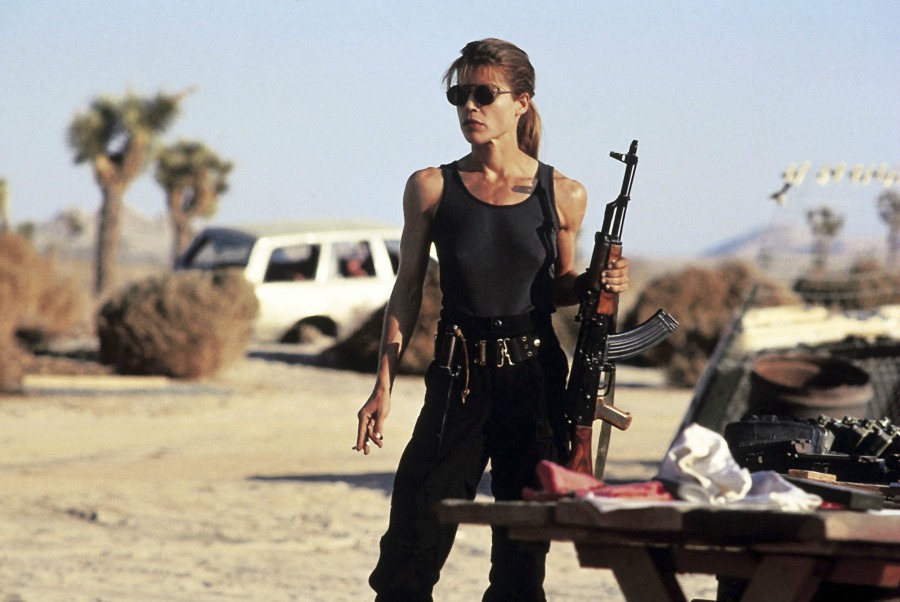
Linda Hamilton returns for Terminator 6: Linda Hamilton hasn’t really been a part of the Terminator franchise since Terminator 2: Judgment Day 26 years ago, but she’s finally reprising her role as Sarah Connor again for the next installment, which will be produced by James Cameron. Read more on the movie here.

GREAT NEWS

Taika Waititi might direct Akira: His upcoming Marvel movie, Thor: Ragnarok, is going to be one of the biggest and most fun movies of the year, and now director Taika Waititi is already seeing more blockbuster projects on the horizon. Warner Bros. is negotiating with him for the live-action Akira remake, for one. Read more here.

FESTIVAL BUZZ

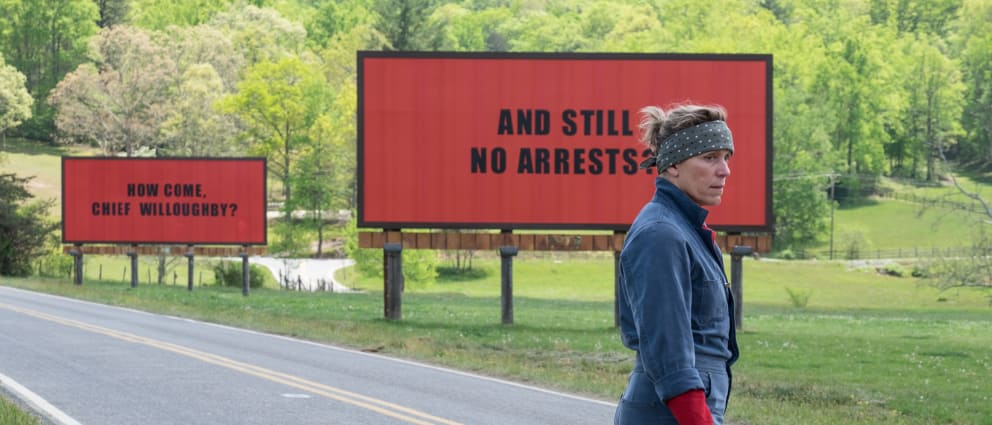
Best of the Toronto International Film Festival: TIFF 2017 is over, but the movies are now headed out into the world, and we compiled a list of the must-see features of the festival, including top pick Three Billboards Outside Ebbings, Missouri, pictured above. Read more here.

COOL CULTURE

IT scenes remade in Lego: If you can’t get enough of the new Stephen King adaptation, IT, then try seeing as much of it as possible redone in Lego. Watch recreations below of the opening sequence and the projector sequence:

[embedded content]

[embedded content]

MUST-WATCH TRAILERS

Tomb Raider looks thrilling: Alicia Vikander dominates as Lara Croft in the first trailer for the Tomb Raider reboot, which looks full of action and adventure. Watch it below.

[embedded content]

Isle of Dogs is our new best friend: The first trailer for Wes Anderson’s next movie, Isle of Dogs, is here, and it looks absolutely wonderful. The stop-motion animated feature has a star-studded voice cast and follows a pack of exiled dogs in a dystopian future. Check it out here:

[embedded content]

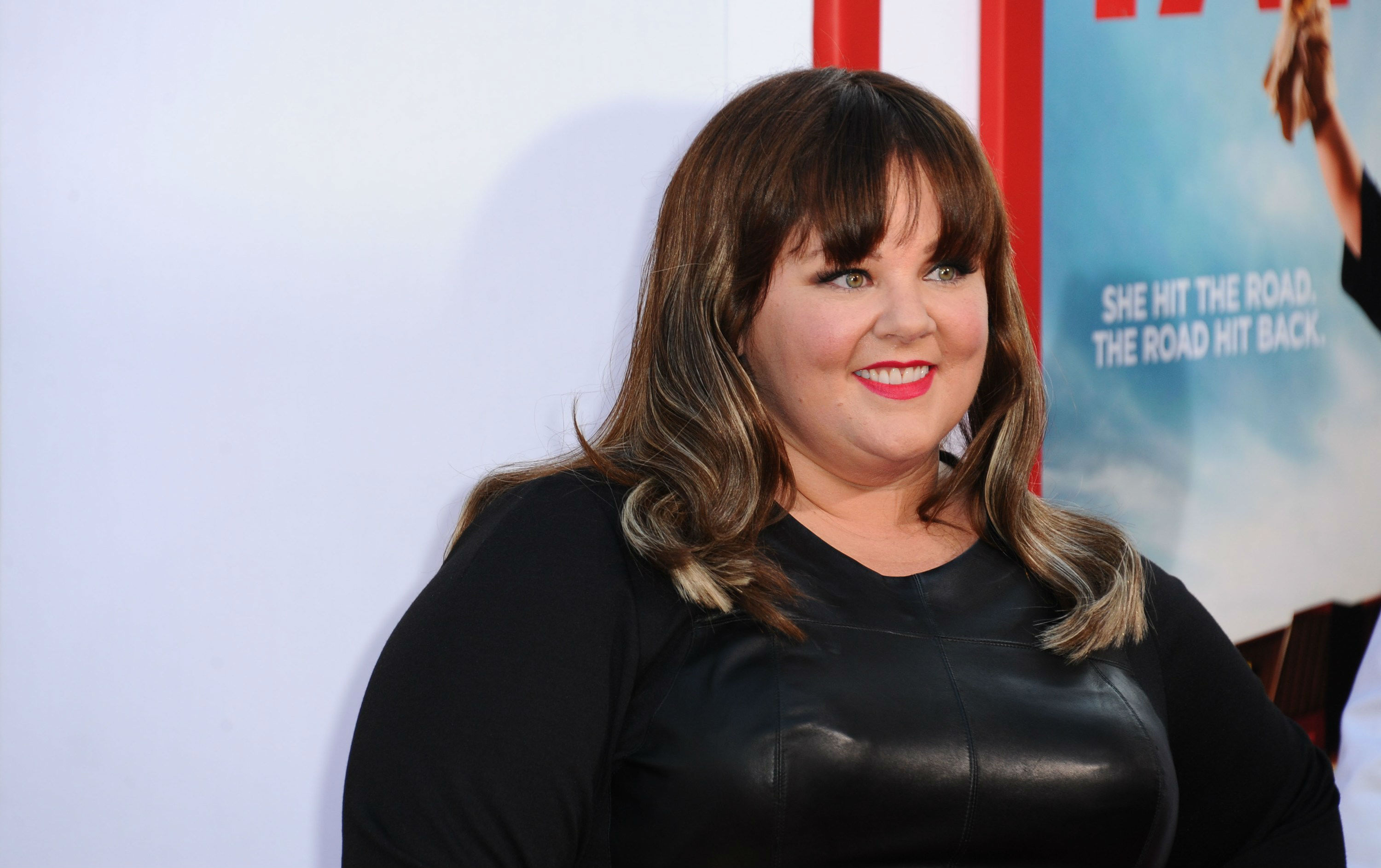
Cook Off! dishes up some tasty comedy: The new trailer for the mockumentary Cook Off! features Melissa McCarthy and many more funny people battling in a fake cooking competition. Check it out below:

[embedded content]

and

Let’s block ads! (Why?)


No Image

Major League Baseball Teams Look To Add Extra Netting After Yankee Stadium Accident

After a foul ball hit a young girl at Yankee Stadium this week, some Major League Baseball teams will be adding extra netting along the baselines to protect fans.

AILSA CHANG, HOST:

This week the big story in baseball is pretty sobering. It’s about the safety of fans at the ballpark.

KELLY MCEVERS, HOST:

On Wednesday, in the fifth inning of the game between the New York Yankees and the Minnesota Twins…

(SOUNDBITE OF ARCHIVED RECORDING)

UNIDENTIFIED ANNOUNCER: Look out. Oh, my goodness.

MCEVERS: …New York’s Todd Frazier hit a line drive foul ball into the stands behind the third base dugout.

(SOUNDBITE OF ARCHIVED RECORDING)

UNIDENTIFIED ANNOUNCER: That is scary. It was absolutely laced.

CHANG: The ESPN announcers reacted as the ball hit a young girl in the face.

(SOUNDBITE OF ARCHIVED RECORDING)

UNIDENTIFIED ANNOUNCER: A little too graphic for us to show you. And that…

CHANG: The game stopped. Some players cried. Frazier knelt down at home plate. And then medics evacuated the girl.

MCEVERS: The game did eventually continue. And after it was over, Frazier talked to reporters.

(SOUNDBITE OF ARCHIVED RECORDING)

TODD FRAZIER: It was terrible. Shaken up a little bit and, you know, I don’t know really what happened. I hope she’s all right. But it was just something that I wish never happened. It was – it was tough. It was tough to watch and tough to be a part of, to be honest.

MCEVERS: One of the girl’s relatives told the New York Post earlier today she’s in the hospital in stable condition. But the relative said it’s going to be a long process.

CHANG: Since Wednesday’s game, many people are saying teams need to extend the protective netting along the baselines where foul balls and broken bats can fly into the stands. Twins second baseman Brian Dozier was on the field Wednesday. He wants to see that.

(SOUNDBITE OF ARCHIVED RECORDING)

BRIAN DOZIER: Every stadium needs to have nets. That’s it. I don’t care about the damn view of a fan or what. It’s all about safety. I still have a knot in my stomach.

MCEVERS: Major League Baseball said back in 2015 that teams should extend the netting from behind home plate all the way to the dugouts. But it was a recommendation, not a requirement. And at the time, Commissioner Rob Manfred admitted some people wouldn’t like it.

(SOUNDBITE OF ARCHIVED RECORDING)

ROB MANFRED: We want our fans to be safe in the ballpark. But we also have lots of fans who are very vocal about the fact that they don’t like to sit behind nets.

CHANG: So far, only 11 ballparks have extended the nets. Yankee Stadium is not one of them. But after what happened this week, more teams are doing it. In the last two days, the Cincinnati Reds, San Diego Padres and Seattle Mariners announced that next season they will extend their netting.

(SOUNDBITE OF BOYISH SONG, “OBVIOUS”)

Copyright © 2017 NPR. All rights reserved. Visit our website terms of use and permissions pages at www.npr.org for further information.

NPR transcripts are created on a rush deadline by Verb8tm, Inc., an NPR contractor, and produced using a proprietary transcription process developed with NPR. This text may not be in its final form and may be updated or revised in the future. Accuracy and availability may vary. The authoritative record of NPR’s programming is the audio record.

Let’s block ads! (Why?)


No Image

London Officials Say Uber Is Unfit To Operate In City

The transport authority said Uber’s approach and conduct “demonstrate a lack of corporate responsibility in relation to a number of issues that have public safety and security implications.”

AILSA CHANG, HOST:

Uber may not be able to operate in London for much longer. The top transportation authority there says it will not renew Uber’s license. The ride-hailing service is appealing that decision. And in the meantime, Uber can keep operating. London’s move is being applauded by taxi drivers, as you might expect, but many Uber customers are not so happy. NPR’s Chris Arnold reports.

CHRIS ARNOLD, BYLINE: In London today, people are being forced to envision life without Uber cars. It’s a bleak vision for Yurr-Ann Chin and Svenya Tishmyer (ph).

UNIDENTIFIED WOMAN: Taxis are so expensive in London, so I usually rely on Uber at the moments during the night to get home from bars or clubs because the Tube doesn’t go at night.

ARNOLD: Of course people could try to grab one of those stately looking black cabs. Arun Sundararajan is a business professor at NYU who was born in the U.K.

ARUN SUNDARARAJAN: Of all the cities in the world, London’s taxi service is perhaps the most iconic – you know, black cabs driving around – and most closely tied to the identity of the city.

ARNOLD: And because of that, there could be some politics going on here to protect the taxi drivers. And Sundararajan says that the move could also be a part of a more general backlash against big tech companies from abroad.

SUNDARARAJAN: The fact that it is a non-European or non-British platform that is dominating what used to be a locally provided service.

ARNOLD: OK, but there is still a reason that Uber is popular in London.

JACOB KIRKEGAARD: Anybody who has taken a black cab in London knows that this is a pricey service that is not always available where you need it.

ARNOLD: That’s Jacob Kirkegaard, an economist with the Peterson Institute. He says London’s subway, or Tube system, is crowded.

KIRKEGAARD: London is a city whose infrastructure greatly benefits from the, in many ways, complimentary service of a company like Uber.

ARNOLD: But he says a series of glaringly bad missteps by the company has left it vulnerable. Perhaps the worst, the ride-hailing service angered regulators around the world with its so-called Greyball program which deceived officials by showing them fake Uber cars when they looked at the app.

KIRKEGAARD: There is a federal criminal investigation here in the United States that they used this Greyball software to basically trick local regulators so that they couldn’t identify individual drivers, so they couldn’t check the identity of these drivers. That is a serious charge.

ARNOLD: Traditional taxi companies have pointed to sexual assault complaints against Uber drivers to raise safety concerns, and the London regulators faulted the company’s approach to reporting, quote, “serious criminal offenses.” Uber says it complies with the same background checks that the cab drivers undergo in London and that it works closely with police. In the end, Kirkegaard thinks that London might force some changes on Uber, but he would be surprised if the city actually bans Uber cars.

KIRKEGAARD: The U.K. is voting for Brexit, and you know, they really want to send the signal, we’re still open for business. Banning a cheap source of transportation within the city is a step in the other direction.

ARNOLD: Meanwhile, today more than 300,000 people have already signed an online petition asking the mayor to reverse the decision to ban Uber in London. Chris Arnold, NPR News.

(SOUNDBITE OF MURS AND 9TH WONDER SONG, “FUNERAL FOR A KILLER”)

Copyright © 2017 NPR. All rights reserved. Visit our website terms of use and permissions pages at www.npr.org for further information.

NPR transcripts are created on a rush deadline by Verb8tm, Inc., an NPR contractor, and produced using a proprietary transcription process developed with NPR. This text may not be in its final form and may be updated or revised in the future. Accuracy and availability may vary. The authoritative record of NPR’s programming is the audio record.

Let’s block ads! (Why?)


No Image

Sen. Maggie Hassan Talks On The Future Of Health Care

NPR’s Ailsa Chang talks to Sen. Maggie Hassan, D-N.H., about what’s next in the health care debate after Sen. John McCain, R-Ariz., said he will not support the Graham-Cassidy proposal.

AILSA CHANG, HOST:

President Trump is vowing that any Republican who votes against the latest attempt to undo the Affordable Care Act will be known as the Republican who saved Obamacare. And that’s what Democrats are looking for – Republicans to save Obamacare both by voting against this new bill and by agreeing to bipartisan fixes to the ACA. New Hampshire Democrat Maggie Hassan sits on the Senate health committee, and she joins us on the line now. Welcome, senator.

MAGGIE HASSAN: Thanks for having me.

CHANG: First, I just want to catch up on where Republicans stand now on shoring up support for this latest bill. It’s called Graham-Cassidy. And this afternoon, Republican John McCain of Arizona announced he would not support it. Kentucky Senator Rand Paul said he’s a no. That leaves 50 Republicans left. Who else are you hoping to see peel off?

HASSAN: Well, first of all, I’m just really grateful to John McCain for his leadership. What he expressed in his statement was how important health care is for every single American and to about a sixth of our economy. So it’s really critical that as we go about looking to stabilize our health insurance markets, lower costs for Americans and businesses in health care and improve outcomes that we do it carefully, in a bipartisan way. And that’s really what a number of us are committed to.

We obviously know that there are still some unknowns out there on the Graham-Cassidy bill. I am hopeful that other of my Republican colleagues will join senators McCain and Paul and really get us back to the process that we have been engaged in – bipartisan talks involving experts and leaders from both parties, from many different perspectives – so that we can really make sure that what we do in terms of policy doesn’t hurt real people. It’s really important for us to understand how things really work on the ground.

CHANG: You know, even though – if Graham-Cassidy does fail, there still is another challenge ahead because there does need to be some legislative fixes to Obamacare. What are you willing to put on the table as possible fixes to strike a deal with Republicans?

HASSAN: Well, we – a number of us have been talking about the need to improve the Affordable Care Act and address certain weaknesses in it. The first thing…

CHANG: Like what?

HASSAN: Well, we’ve heard from experts and we all agree that we need to really commit to making those cost-sharing reduction payments that people may have heard about. That’s really a way to make sure that people who are buying insurance on the exchange can afford their out-of-pocket costs and their deductibles. There’s general consensus that we should be helping states with reinsurance programs so that we’re helping with the most expensive health care cases, people who have really serious illnesses that drive the cost of premiums and a plan up for everybody.

And then I’m also on a bill that would address what’s known as the income cliff in the Affordable Care Act, which would make the tax credits for premiums more available to more families. And those are the types of things that we’ve all been hearing testimony about and talking about. It’s the type of things a bipartisan group of governors have proposed as well.

CHANG: But I just want to take a – I just want a reality check. I mean, how possible is meaningful bipartisanship on this? Because on the very same day that senators Graham and Cassidy introduced their bill, almost a third of the Senate Democrats stood behind Bernie Sanders as he reintroduced Medicare for All, which obviously is a far more liberal idea than Obamacare ever was. So are the two parties just veering too far apart to find common ground on this?

HASSAN: Well, certainly every senator is free to introduce legislation that is important to them and that represents what they think we should do on something. But what I think is important is that you saw on our health committee over the last four weeks or so real bipartisan discussion in progress about how to stabilize the Affordable Care Act and how to improve outcomes, lower costs. One of the other things that I think we can find common ground on is how we lower the cost of prescription drugs, which are really squeezing a lot of families right now.

So overall, there is extraordinary common ground when you think about what the bipartisan group of governors have come forward with. And you also see enormous bipartisan opposition to Graham-Cassidy right now. I mean, 50 state Medicaid directors have expressed their opposition to it from red and blue states. So again – again, this is a…

CHANG: But on the fixes – you think that will be an easy lift on the fixes, the bipartisan fixes?

HASSAN: I think that whenever you have to actually get into policy nitty-gritty that affects every single American it is always a lot of work. But that’s what we’re elected to do. We have seen really good progress with Chairman Alexander and ranking member Murray, and I think we can do it.

CHANG: All right. Democratic Senator Maggie Hassan of New Hampshire, thank you very much for joining us.

HASSAN: Thank you.

Copyright © 2017 NPR. All rights reserved. Visit our website terms of use and permissions pages at www.npr.org for further information.

NPR transcripts are created on a rush deadline by Verb8tm, Inc., an NPR contractor, and produced using a proprietary transcription process developed with NPR. This text may not be in its final form and may be updated or revised in the future. Accuracy and availability may vary. The authoritative record of NPR’s programming is the audio record.

Let’s block ads! (Why?)


No Image

Amadou & Mariam On World Cafe

Amadou & Mariam

Hassan Hajjaj/Courtesy of the artist

hide caption

toggle caption

Hassan Hajjaj/Courtesy of the artist

  • “Bofou Safou”
  • “Filaou Bessame”

It’s always kind of a miracle when two people find each other and fall in love. And that’s what happened to my guests, the duo known as Amadou & Mariam. But their story is even more miraculous. They’re both from Mali; they both lost their eyesight as kids — Mariam was 5, and Amadou was 16. They met each other at the Bamako Institute for the Young Blind in the ’70s, fell in love with each other’s musicianship and went on to get married and become global Afropop sensations.

They also have a lot of fans in the rock universe — they’ve opened for U2; they’ve been championed by Coldplay and Damon Albarn of Blur. And Amadou has a surprising guitar hero: David Gilmour of Pink Floyd. Amadou will play guest DJ for a hot second, and pick his favorite David Gilmour guitar solo.

Today — with the help of a French translator — Amadou and Mariam will describe what each of them remembers about being able to see, and tell their love story. And, of course, we’ll hear the duo perform live music from its latest album, La Confusion, starting with the song “Bofou Safou.” Hear it all in the player above.

Let’s block ads! (Why?)


No Image

Aaron Hernandez's Brain Reveals Signs Of CTE, Says Lawyer

Former New England Patriots NFL football player Aaron Hernandez listens to testimony during his murder trial in February 2015.

Brian Snyder/AP

hide caption

toggle caption

Brian Snyder/AP

The brain of former New England Patriots star Aaron Hernandez showed severe signs of the degenerative brain disease chronic traumatic encephalopathy, referred to as CTE, according to doctors who conducted tests after he committed suicide in April while imprisoned for murder.

“We’re told it was the most severe case they had ever seen of someone of Aaron’s age,” said Hernandez’s attorney, Jose Baez, in a news conference announcing the filing of a lawsuit against the National Football League and the New England Patriots. Hernandez was 27 when he hanged himself in his prison cell.

The lawsuit was filed in federal court in Boston on behalf of his daughter, Avielle Hernandez, citing loss of companionship. It argues that the league and team knew of the damage caused by repetitive impact injuries to the brain, but that they “failed to disclose, treat or protect him from the dangers of such damage.”

The New England Patriots said the team had no comment on the suit.

A statement issued by the Boston University CTE Center says Dr. Ann McKee, chief of neuropathology at the VA Boston Healthcare System and director of the Center, examined Hernandez’s brain and found that “Mr. Hernandez had chronic traumatic encephalopathy (CTE), Stage 3 out of 4, (Stage 4 being the most severe). This diagnosis was confirmed by a second VABHS neuropathologist. In addition, Mr. Hernandez had early brain atrophy and large perforations in the septum pellucidum, a central membrane.”

McKee said, “CTE is associated with aggressiveness, explosiveness, impulsivity, depression, memory loss and other cognitive changes.”

In 2015, Hernandez was sentenced to life-without-parole for the 2013 murder of his friend, Odin L. Lloyd. He was acquitted earlier this year of two other murder charges stemming from a 2012 incident. He hanged himself five days after the acquittal.

His death brought to an end the controversial saga of a talented young player who couldn’t seem to escape trouble off the field.

Hernandez, raised in the hardscrabble town of Bristol, Conn., was a star at the University of Florida where his team won a national championship. But a failed drug test and his involvement in a bar fight caused many teams to pass him over until the fourth round of the NFL draft.

He played three seasons with the Patriots, earning a $40 million contract. About a year after signing it, he was implicated in the murder of Lloyd.

Hernandez stopped playing football at the age of 23. His lawyer, Jose Baez, said that his brain damage was indicative of a player with a median age of 67 years.

The Hernandez lawsuit and brain test results are likely to reignite the debate over contact sports, such as football, and potential brain injury.

In a separate study published earlier this year in the Journal of the American Medical Association, McKee found that 110 of 111 brains of deceased NFL players showed evidence of CTE.

Let’s block ads! (Why?)


No Image

A Tale Of Two States: How California And Texas May Fare Under GOP Health Plan

In the GOP’s attempt to repeal the Affordable Care Act, California would lose a lot of federal funding. Texas would gain a lot in the short term, but experts worry Texas would not use the money well.

AILSA CHANG, HOST:

The Senate is taking one more stab at repealing the Affordable Care Act. Republicans say they’ll vote on what’s known as the Graham-Cassidy bill next week. Among other things, it would dramatically redistribute federal funds to states. And generally, states that expanded Medicaid stand to lose billions of dollars. The rest would see a short-term influx of funds. We’re going to hear from one of those states, Texas, in a minute. First, from KQED in San Francisco, April Dembosky explains why California would be one of the hardest hit states.

APRIL DEMBOSKY, BYLINE: The new Graham-Cassidy legislation would take money from states that have invested heavily in the Affordable Care Act, then redistribute it to other states that haven’t. Aviva Aron-Dine is with the Center on Budget and Policy Priorities.

AVIVA ARON-DINE: For a state like California or a Massachusetts or a New York, exactly the states that might be most motivated to at least try to preserve the ACA coverage gains – those are the states that would face the deepest cuts to their federal resources.

DEMBOSKY: The bill’s authors say their plan gives states more flexibility to build their own health systems. But California would lose 35 percent of its funding by 2026. That means millions of people with Medicaid and exchange plans would lose their insurance. A lot of those people are entrepreneurs and their employees. The head of the Small Business Majority in California, Mark Herbert, says the health funding cuts are bad for the economy, too.

MARK HERBERT: It would be massively destabilizing to the ability of small employers to attract talent. It would be very difficult for entrepreneurs and self-employed folks to access some level of coverage.

DEMBOSKY: Under the Affordable Care Act in California, a million and a half small business owners and employees got health coverage, and the state’s overall uninsured rate dropped by more than half. For NPR News, I’m April Dembosky in San Francisco.

ASHLEY LOPEZ, BYLINE: I’m Ashley Lopez in Austin. At first glance, it looks like Texas comes out as one of the big winners. Texas will get a windfall of $35 billion to help replace Obamacare exchanges and other programs, more than any other state. State officials get to decide how they want to spend that money. But Stacey Pogue with the Center for Public Policy Priorities in Austin says that doesn’t necessarily mean this is an improvement.

STACEY POGUE: Regardless of the size of the block grant, there’s just no assurance that it would translate into good coverage or coverage that’s affordable as what we have today.

LOPEZ: Texas already has the highest number of uninsured folks, and Pogue says the state just doesn’t have the infrastructure in place to expand coverage to more people. It didn’t expand Medicaid, and the state didn’t set up its own exchange. They used healthcare.gov.

POGUE: There’s no planning and no thought put into, how would we create affordable coverage for low-income Texans unlike the 31 states that have expanded Medicaid, have done some central planning? And Texas would be starting from scratch.

LOPEZ: She says it will also take a lot of political will to make sure the state is expanding health care. Pogue says that has been lacking among state lawmakers for years. And in order to get the block grant, states need to create something workable by 2020. For comparison, it took Massachusetts four years to set up its pre-Obamacare insurance market.

STACY WILSON: We are very concerned.

LOPEZ: That’s Stacy Wilson. She’s the president of the Children’s Hospital Association of Texas. She says this pot of money from Cassidy-Graham also doesn’t solve problems for Medicaid, 70 percent of which covers children. Wilson says that’s because the federal government would pay a fixed amount per person per capita cap, which locks in how much the state gets per Medicaid enrollee.

WILSON: We have very low per-capita costs already, and we get locked into that forever.

LOPEZ: A conservative policy group in Texas is also not happy about the bill. However, their concern is that it actually doesn’t go far enough to repeal Obamacare. For NPR News, I’m Ashley Lopez in Austin.

CHANG: This story is part of a partnership with NPR, local member stations and Kaiser Health News.

Copyright © 2017 NPR. All rights reserved. Visit our website terms of use and permissions pages at www.npr.org for further information.

NPR transcripts are created on a rush deadline by Verb8tm, Inc., an NPR contractor, and produced using a proprietary transcription process developed with NPR. This text may not be in its final form and may be updated or revised in the future. Accuracy and availability may vary. The authoritative record of NPR’s programming is the audio record.
Let’s block ads! (Why?)


No Image

Fantastic Fest 2017 Preview: 'The Square,' 'Five Fingers For Marseilles,' 'Anna and the Apocalypse' and More

The Square

Known as a launch pad for fright flicks, sci-fi adventures, thrillers, intense dramas and all types of weird comedies from the U.S. and abroad, Fantastic Fest kicks off tonight in Austin, Texas. Here’s a preview of what’s on tap.

The Wild, the West, the Women, the Rap Battle

Let’s start with several international stunners that we have seen and can recommend highly.

The Square

Visually striking and profoundly unsettling, The Square is an act of provocation masquerading as an art house drama. Christian is a museum curator in Sweden who is preoccupied with preparing a new exhibition of modern art. One morning he loses his watch, wallet and cufflinks, which leads him on a wild pursuit to retrieve his possessions. Instead, events soon spiral out of control in ways he could not have imagined and his entire world is turned upside down.

The movie poses a series of questions that are not easily answered and is consistently thoughtful and compelling. Elisabeth Moss costars as an American journalist and Dominic West provides timely support as an artist. The Square will open in theaters on October 27.

[embedded content]

Five Fingers For Marseilles

It may start like many a Western — wide open vistas, good guys in a small town on the edge of nowhere, bad guys with evil intentions — but this brooding drama plays out unlike any Western you’ve seen before. Though it looks like the Old West, the setting is actually modern-day South Africa. We’re introduced to five young, steadfast friends who are torn apart by unexpected violence.

Years later, one of them returns to find his hometown and his friends have changed drastically. His former comrades have stepped up into leadership roles, yet they’re compromised by corruption. A new villain has arisen, posing a grave threat to everyone. Shorn of sentimentality and constantly brewing with tension, this movie is brutal, moving and unforgettable. We’re eagerly awaiting word on U.S. distribution plans.

[embedded content]

Professor Marston and the Wonder Women

The movie provides a peek into the life of the man who created the comic book character Wonder Woman, as well as the complicated relationships that informed it. Luke Evans, Rebecca Hall and Bella Heathcote star; look for it in theaters on October 13.

Rebecca Hall continues to crush every single performance she gives. Professor Marston & the Wonder Women may be her best yet#TIFF17pic.twitter.com/yQaG8GBbcw

— ErikDavis (@ErikDavis) September 9, 2017

[embedded content]

Bodied

The latest from director Joseph Kahn (Detention) follows a grad student who becomes obsessed with battle rap. Distribution plans are expected to be announced soon.

BODIED is like the WHITE MAN CAN’T JUMP of battle-rap movies. Really fun, crowd loved it.#TIFF17pic.twitter.com/hWww4YgjwH

— ErikDavis (@ErikDavis) September 8, 2017

Coming Soon: Tight Places, Intense Encounters, Violence Unleashed

Listed in release date order, here are seven slices of upcoming genre goodness.

Gerald’s Game

Carla Gallo stars as a woman who finds herself tied up on a bed, alone and many miles from anyone else. Bruce Greenwood also stars. The dramatic thriller debuts on Netflix on September 29.

[embedded content]

Brawl in Cell Block 99

Vince Vaughn stars as a former boxer who turns drug runner and ends up in prison, where he must fight for his life. The violent action-drama opens in theaters on October 6.

[embedded content]

Wheelman

In this thriller, Frank Grillo is a double-crossed getaway driver who seeks revenge. The movie debuts on Netflix on October 20.

[embedded content]

Blade of the Immortal

Celebrated Japanese filmmaker Takashi Miike follows a samurai who cannot be killed as he comes to the aid of a young girl whose family has been slaughtered. Expect wanton slaughter and many, many dead bodies in this action thriller, due in theaters on November 3.

[embedded content]

The Killing of a Sacred Deer

The life of a surgeon (Colin Farrell) begins to fall apart in this psychological horror movie. Nicole Kidman also stars; look for it in theaters on November 3.

[embedded content]

Thelma

A young woman discovers that she has fantastic powers, but this is anything but a typical super powered adventure. Instead, we’re anticipating a mysterious, slow-building drama from Danish director Joachim Trier (Louder Than Bombs). It opens on November 10.

[embedded content]

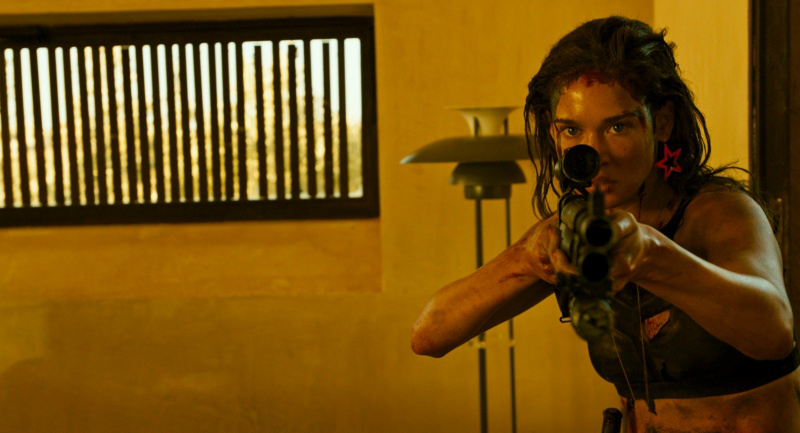
Revenge

A woman exacts revenge upon wealthy men for their heinous crimes. Matilda Lutz stars; the extreme horror thriller will open in theaters in early 2018 and then will be available exclusively on the Shudder streaming service

Revenge

Bonus Picks: Make Room for the Truly Weird and Disturbing

All three of these movies will be enjoying their world premieres at Fantastic Fest. We’re hoping to hear great things.

Anna and the Apocalypse

A musical? From Scotland? With zombies? At a high school? Yes, yes, yes and yes are the answers to those questions. Judging by the first trailer, we’re hoping for a truly unique experience about the power and meaning of true friendship.

[embedded content]

Applecart

A vacation in the snowy woods turns into a bloody nightmare of epic proportions. Barbara Crampton, Brea Grant and A.J. Bowen star.

[embedded content]

Tigers Are Not Afraid

A young girl ends up on the street after her mother disappears, finding refuge with a gang of children who are more dangerous than they look. The fantasy thriller hails from Mexico.

[embedded content]

Let’s block ads! (Why?)