
America's Cup Race Gets A Radical New Single-Hulled Boat

This undated concept drawing shows a radical fully foiling monohull, the AC75, for the 2021 America’s Cup, created by Emirates Team New Zealand.
Virtual Eye/AP
hide caption
toggle caption
Virtual Eye/AP
Emirates Team New Zealand, which took home the America’s Cup after swiping it from Larry Ellison’s Oracle Team USA in a duel of foiling catamarans off Bermuda this summer, has reinvented the boat that will next compete for the trophy.
After its win in June, Team New Zealand announced three months later that the 166-year-old competition — dominated by monohull boats until a switch to giant multihulls seven years ago — would return to single-hull designs.
On Monday, the kiwi syndicate and rivals Luna Rossa from Italy unveiled the broad outlines of the boats they will be racing in Auckland in 2021. They are unlike any monohull familiar to the weekend sailor.
Looking bow-to-stern, the new AC75 resembles as much the ancient creature that first ploddingly crawled from the sea as it does a high-tech craft that scoots over the water at 50 mph.
Like its multihull predecessors, the 75-foot-long craft is designed to “foil” on underwater skis that raise the hull clear of the surface, greatly reducing drag. The AC75 features twin foil-tipped articulating keels. On a given tack, one is underwater providing lift while the other juts to the side to provide balance.
Since monohulls are better turning through the wind, race organizers say the new boats are set to bring back the “tacking duels” of yore that have largely given way to flat-out drag-racing in recent years. “[Given] the speed and the ease at which the boats can turn the classic pre-starts of the America’s Cup are set to make an exciting comeback,” Team New Zealand said in the statement.
While the multihulls have their many advocates, they have also drawn scorn from some quarters — especially over safety concerns.
The new boats could mitigate one of the major complaints about the AC50 catamarans: their propensity to capsize or go end-over-end, Team New Zealand CEO Grant Dalton said in a statement released in Auckland.
That’s precisely what has happened several times in America’s Cup catamarans, both in training and in match racing. In 2013, during training, a sailor drowned in one such capsize in San Francisco. The new design is safer because it can “right itself,” he says.
Patrick Bertelli, chairman of Luna Rossa, says the decision to return to single-hulled boats “was a fundamental condition” for his team to participate in another America’s Cup.
“Our analysis of the performance of the foiling monohulls tells us that once the boat is up and foiling, the boat has the potential to be faster than an AC50 both upwind and downwind,” Dalton says.
For many sailors, used to seeing the superior speed of multihulls, that’s a claim likely to be hotly debated in harbor pubs until a working prototype – still months or years away – settles the question.
Today in Movie Culture: 'Star Wars: The Last Jedi' in Lego, Jake Gyllenhaal as Batman and More
Here are a bunch of little bites to satisfy your hunger for movie culture:
Remade Trailer of the Day:
We’re less than a month from the release of Star Wars: The Last Jedi, and Huxley Berg Studios presents a Lego remake of the movie’s trailer:
[embedded content]
Casting Rendering of the Day:
Rumor has it that Matt Reeves wants Jake Gyllenhaal for The Batman. BossLogic shows us what he could look like in the role (see here for an unmasked version):
Masked version pic.twitter.com/gw62DjqAGp
— BossLogic (@Bosslogic) November 19, 2017
Easter Eggs of the Day:
Now that Justice League has opened, Mr. Sunday Movies humorously details all its Easter eggs and more:
[embedded content]
Franchise Takedown of the Day:
Why did Justice League perform so poorly? OneMinuteGalactica jokes that it’s because all the heroes have depression in this fake pharmaceutical ad:
[embedded content]
Vintage Image of the Day:
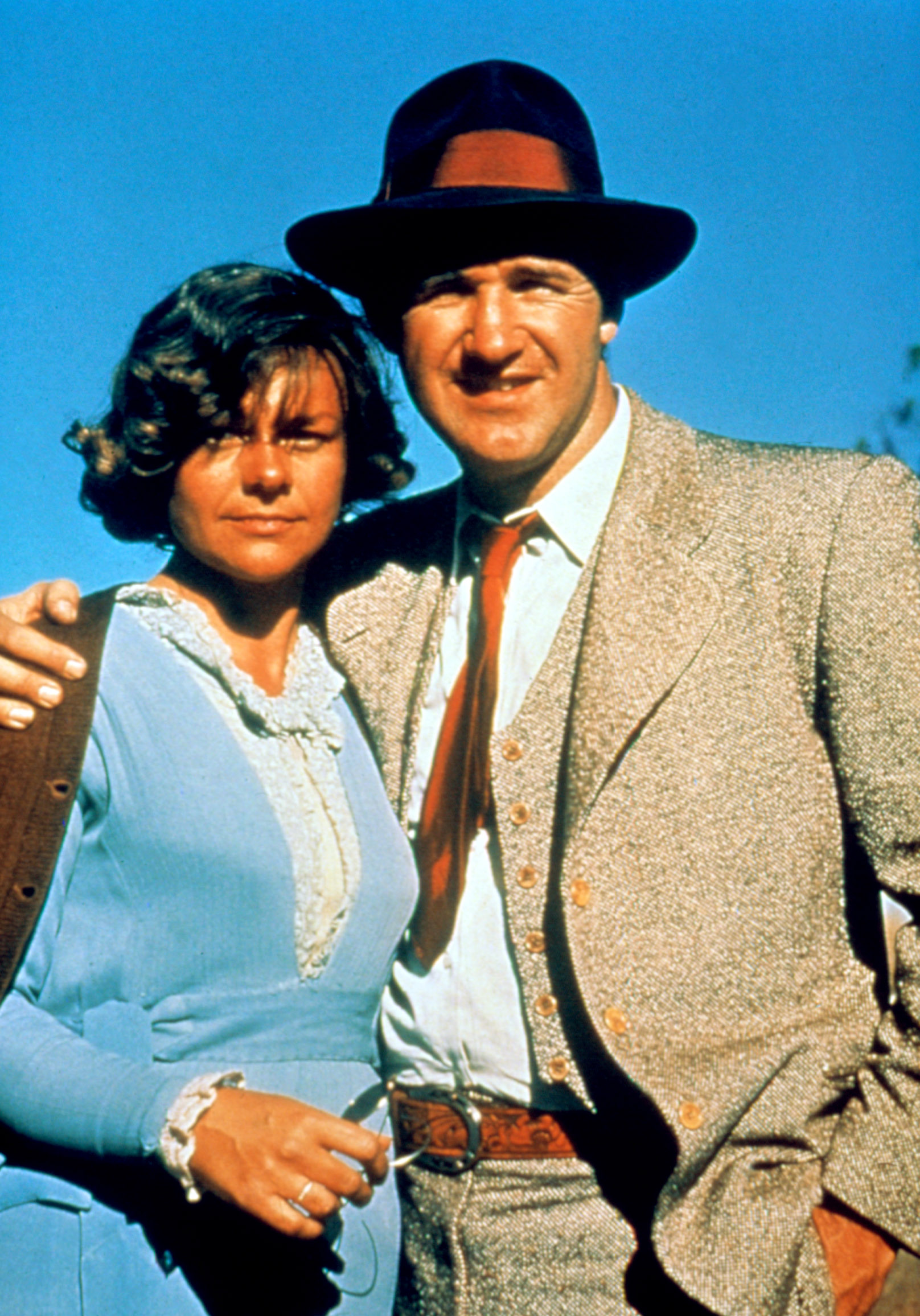
Estelle Parsons, who turns 90 today, poses with Gene Hackman for a promotional photo on the set of Bonnie and Clyde, for which she won an Oscar, in 1966:
Actor in the Spotlight:
In honor of Meg Ryan’s birhtday yesterday, IMDb presents a supercut of her career in movies and TV:
[embedded content]
Filmmaker in Focus:
It’s been awhile since we got a nice video tribute to David Fincher, so here’s one from editor Sergey Sidora:
[embedded content]
Video Essay of the Day:
In anticipation of Guillermo del Toro’s The Shape of Water and the new Broadway production of King Kong, Patrick Willems looks at how to create a monster protagonist:
[embedded content]
Cosplay of the Day:
We could use another Star Wars item today, so here’s a great female Darth Maul cosplayer:
Darth Maul on a beauty scale ???? PC: @aleestudios ??
_____#darthmaul#beauty#sfx#sfxmakeup#cosplay#darthmaulco… https://t.co/caswn3dLvApic.twitter.com/lvCsNqGQUD— JediManda@PorgWatch (@JediManda) November 15, 2017
Classic Trailer of the Day:
Today is the 25th anniversary of the release of Home Alone 2: Lost in New York. Watch the original trailer for the classic sequel below.
[embedded content]
and
Poll: Majority of LGBTQ Americans Report Harassment, Violence Based On Identity

More than half of lesbian, gay, bisexual, transgender and queer Americans say they have experienced violence, threats or harassment because of their sexuality or gender identity, according to new poll results being released Tuesday by NPR, the Robert Wood Johnson Foundation and the Harvard T.H. Chan School of Public Health.
Loading…
“There are very few nationally representative polls of LGBTQ people, and even fewer that ask about LGBTQ people’s personal experiences of discrimination,” says Logan Casey, deputy director of the survey and research associate in public opinion at the Harvard Chan School. “This report confirms the extraordinarily high levels of violence and harassment in LGBTQ people’s lives.”
Majorities also say they have personally experienced slurs or insensitive or offensive comments or negative assumptions about their sexual orientation. And 34 percent say they or an LGBTQ friend or family member has been verbally harassed in the bathroom when entering or while using a bathroom — or has been told or asked if they were using the wrong bathroom.
Loading…
The poll, conducted earlier this year, looked not only at violence and harassment but also at a wide range of discrimination experiences. We asked about discrimination in employment, education, in their interactions with police and the courts and in their everyday lives in their own neighborhoods. We’re breaking out the results by race, ethnicity and identity. You can find what we’ve released so far on our series page “You, Me and Them: Experiencing Discrimination in America.”
We asked whether people see discrimination more as a one-on-one personal-prejudice issue or whether discrimination in laws or government is the larger problem.
We found a sizable age gap. People born after about 1967 saw the world in mostly the same way, but older LGBTQ adults much more frequently said one-on-one prejudice is the larger problem, by a wide margin.
Loading…
“This finding highlights how life experiences and political socialization can really shape how an individual, or a generation of people, thinks about how to create change,” Casey says. “Older generations of LGBTQ people came of age at a time when legal protections were nearly unthinkable and activists agitated in mass scale social movements. But younger people have grown up in the era of gay marriage, ‘don’t ask, don’t tell,’ and employment protections, and more successfully petitioning for rights through judicial or legislative processes.”
The survey finds a big racial gap in the LGBTQ community — LGBTQ people of color reported substantially more discrimination because they are LGBTQ than whites when applying for jobs or interacting with the police.
Loading…
LGBTQ people of color are six times more likely to say they have avoided calling the police (30 percent) owing to concern about anti-LGBTQ discrimination, compared with white LGBTQ people (5 percent).
Loading…
Our survey found significant levels of discrimination against transgender adults as well. About 1 in 6 LGBTQ people says they’ve been personally discriminated against because of their LGBTQ identity when going to a doctor, and nearly 1 in 5 said they’ve avoided seeking medical care for fear they’d be discriminated against.
Loading…
“Research shows that experiencing discrimination has harmful effects on health,” Casey says. “That’s an implication all the more troubling because the poll also shows the serious barriers to health care for LGBTQ and especially transgender people in America.”
Indeed, some 31 percent of transgender people told us they do not have regular access to a doctor or health care. We will broadcast and publish a report later Tuesday on the difficulties transgender people face in seeking health care, particularly in the face of discrimination.
Our results also illustrate the great diversity in identities within what’s called the “LGBTQ community.” For example, to be queer does not necessarily mean one is gay or lesbian. Nor does being transgender mean someone is necessarily gay, lesbian or bisexual. In this chart, we compare cisgender and transgender people based on their self-identified sexual orientation.
Loading…
Additionally, our poll found that among all transgender and gender nonconforming people, 24 percent identify as transgender men, 52 percent identify as transgender women and 25 percent identify as genderqueer or gender nonconforming. More than half (56 percent) of the 86 transgender people in our survey say they are heterosexual.
Overall, our survey found 1.4 percent of Americans identify as transgender, genderqueer and gender nonconforming. A June 2016 survey by the Williams Institute found that 0.6 percent of the adult U.S. population identifies as transgender but did not establish estimates for genderqueer or gender nonconforming adults.
The overall poll results for LGBTQ adults are based on a nationally representative probability-based telephone (cell and landline) sample of 489 LGBTQ adults, including people who are genderqueer and gender nonconforming. The margin of error for total LGBTQ respondents is plus or minus 6.6 percentage points at the 95 percent confidence level.
Our ongoing series “You, Me and Them: Experiencing Discrimination in America” is based in part on a pollby NPR, the Robert Wood Johnson Foundation and the Harvard T.H. Chan School of Public Health. We have previously released results for African-Americans, Latinos, whites and Native Americans. In coming weeks, we will release results for Asian-Americans and women.
Charlie Rose Is Accused Of Sexual Harassment By 8 Women

The Washington Post says eight women have accused television host Charlie Rose of multiple unwanted sexual advances and inappropriate behavior.
Andy Kropa/Invision/AP
hide caption
toggle caption
Andy Kropa/Invision/AP
The list of prominent men accused of sexual harassment is growing.
Eight women have told The Washington Post that veteran television host Charlie Rose sexually harassed them between the late 1990s and 2011.
Three of the women spoke on the record, revealing their identities, says the Post. Five others spoke on the condition of anonymity for fear of retaliation. The Post says that all of the women were between the ages of 21 and 37 at the time of their unwanted encounters; had offered “striking commonalities” in their accounts; and all had confided with friends, family and colleagues about the incidents at the time.
Their allegations of Rose’s groping, lewd phone calls and his walking around naked in their presence are laid out in a lengthy article published Monday.
In the immediate aftermath of the Post‘s report, CBS News announced it is suspending Rose and PBS said that it would halt distribution of his show.
Rose is the second major media news figure to be suspended from work Monday in the face of allegations of sexual improprieties.
The New York Times, earlier in the day, announced that it has suspended one of its star reporters, White House correspondent Glenn Thrush, after several women accused him of unwanted kissing and touching.
The Charlie Rose show airs on PBS. Rose, 75, is also a co-host of CBS This Morning and a contributing correspondent for 60 Minutes.
The Post reports:
“Most of the women said Rose alternated between fury and flattery in his interactions with them. Five described Rose putting his hand on their legs, sometimes their upper thigh, in what they perceived as a test to gauge their reactions. Two said that while they were working for Rose at his residences or were traveling with him on business, he emerged from the shower and walked naked in front of them. One said he groped her buttocks at a staff party.”
In a statement provided to the Post, Rose apologized for his past behavior.
“It is essential that these women know I hear them and that I deeply apologize for my inappropriate behavior. I am greatly embarrassed. I have behaved insensitively at times, and I accept responsibility for that, though I do not believe that all of these allegations are accurate. I always felt that I was pursuing shared feelings, even though I now realize I was mistaken.”
The Post reports that they found additional female former employees of Rose’s who said they had been harassed. About two dozen spoke with the paper on the condition of anonymity.
“Six said they saw what they considered to be harassment, eight said they were uncomfortable with Rose’s treatment of female employees, and 10 said they did not see or hear anything concerning.
” ‘He was always professional with me,’ said Eleonore Marchand Mueller, a former assistant of Rose’s who worked for him from 2003 to 2005. ‘I never witnessed any unprofessional incidents.’ “
One woman, Kyle Godfrey-Ryan, described as one of Rose’s assistants in the mid-2000s, said that she had reported the talk show host’s unwanted advances to Rose’s longtime executive producer, Yvette Vega.
For her part, Vega, in a statement to the Post, said she should have protected the young women.
“I should have stood up for them,” said Vega, 52, who has worked with Rose since the show was created in 1991. “I failed. It is crushing. I deeply regret not helping them.”
WATCH: On Georgia Dome's Final Day, Atlanta Bids Farewell With A Bam

The Georgia Dome implodes during a scheduled demolition Monday. The stadium played host to the 1996 Olympic Games, two Super Bowls and Atlanta Falcons home games.
Mike Stewart/AP
hide caption
toggle caption
Mike Stewart/AP
As an icon, the Georgia Dome stood commandingly on the Atlanta skyline. Host to the 1996 Summer Olympics, two Super Bowls and countless Atlanta Falcons home games, the imposing stadium was a fixture for roughly 2 1/2 decades, since its completion in 1992 at a cost of $214 million.
Now, it’s little more than a massive heap of concrete, steel and fiberglass.
On Monday, city authorities brought the building down, executing a carefully planned implosion in the early morning light. The demolition took some 4,800 pounds of explosives, including about 4,500 pounds of dynamite, according to the Atlanta Journal-Constitution.
Huge blast walls set up around the stadium shielded its successor and next-door neighbor, the Mercedes-Benz Stadium. That dome opened already in August this year.
The Journal-Constitutionoffered a glimpse of the Georgia Dome’s storied past:
But hey, why not get another look at that implosion in slow-motion … and on loop.
GOODBYE GEORGIA DOME: Here is NewsChopper2 video of the @GeorgiaDome demolition: https://t.co/oILFX7EZuTpic.twitter.com/C8rRtzddgt
— WSB-TV (@wsbtv) November 20, 2017
Here at the Two-Way, we’re no strangers to a good planned implosion video. Indeed, blog co-founder (and current standards and practices editor) Mark Memmott probably put it best: “We like videos of bridges and buildings and other things being blown up on purpose.”
So, here are a few more for your viewing pleasure:
In all of the above cases, you can see how the planners took care of a crucial step — actually, you know, warning bystanders the building’s supposed to come down, unlike this remarkable instance in China earlier this year. Don’t worry, everyone, it appears no one was harmed in that mishap.
Special Report: A Cultural Turning Point On Sexual Harassment?

Victims of sexual harassment, sexual assault, sexual abuse and their supporters protest during a #MeToo march this month in Hollywood, Calif.
Mark Ralston/AFP/Getty Images
hide caption
toggle caption
Mark Ralston/AFP/Getty Images
It has been a little more than a year since President Trump, then candidate-Trump, faced furious criticism over the now-infamous Access Hollywood video featuring his comments about groping women. He subsequently faced a barrage of sexual harassment claims. While the moment sparked a national conversation about sexual harassment, it did not quash his presidential aspirations.
In the following months, sexual harassment remained in the news, with accusations at Fox News, lawsuits and the resignations of prominent TV personalities.
But this fall, the floodgates seemed to open. After revelations about movie mogul Harvey Weinstein, the hashtag #MeToowas born and more allegations surfaced in Hollywood, in sports, in business, in politics and at media organizations, including NPR. Accusations of sexual harassment are not new, but this year’s reactions and consequences have been different.
In a new hourlong special, “Sexual Harassment: A Moment of Reckoning,” Weekend Edition Sunday host Lulu Garcia-Navarro looks at the significance of this moment, as so many women and men go public with their stories. She explores why it’s happening now and whether it represents a cultural turning point.
Guests:
Wade Hankin, a 25-year-old man from Seattle who launched a partner hashtag to #metoo — #ihave — in a post in which he admitted his own inappropriate actions involving women and encouraged other men to do so as well.
Radio journalist Mary Beth Kirchner, who recently reported on Jackson Katz, an educator who has spent 27 years giving talks and workshops to boys and men on the dangers of “boys will be boys” attitudes.
Lin Farley, a journalist and author who helped popularize the term “sexual harassment” in the 1970s.
Kaitlin Prest, host of The Heart podcast, “an audio art project about intimacy and humanity.”
Cathy Young, contributing editor for Reason magazine, who wrote a recent Los Angeles Times column suggesting some offenders are being punished excessively.
Human resources consultant Laurie Ruettimann, who explains how organizations address sexual misconduct.
Out Of Bounds: From A Coma To 'Dancing With The Stars'

NPR’s Lulu Garcia-Navarro speaks with Victoria Arlen, who made it to the semifinals on Dancing with the Stars even though just two years ago she couldn’t walk.
(SOUNDBITE OF MUSIC)
LULU GARCIA-NAVARRO, HOST:
How do you dance when you can’t feel your legs?
(SOUNDBITE OF TV SHOW, “DANCING WITH THE STARS”)
UNIDENTIFIED SINGER: (Singing) Everybody dance now.
UNIDENTIFIED ANNOUNCER: Live from Hollywood, this is “Dancing With The Stars.”
UNIDENTIFIED WOMAN #1: “Dancing With The Stars” Season 25.
VICTORIA ARLEN: Hi, I’m Victoria Arlen, and I am an ESPN host.
TOM BERGERON: Next on the floor…
UNIDENTIFIED WOMAN #2: Victoria and Val.
BERGERON: Victoria and Val.
ARLEN: I’m ready to dance (laughter).
GARCIA-NAVARRO: This week in Out of Bounds, Victoria Arlen competed in the semifinals of “Dancing With The Stars.” The 23-year-old was diagnosed with two rare autoimmune conditions as a child. She was in a coma for four years and in a wheelchair for nearly a decade. She won a gold medal at the London Paralympics in 2012 before teaching herself how to walk and then dance again. Victoria Arlen joins me now from our studios in Culver City, Calif. Good morning.
ARLEN: Good morning.
GARCIA-NAVARRO: You were eliminated this past week. I’m sorry (laughter).
ARLEN: It’s OK. Yeah, I mean, obviously, that was not the plan. But all good things. And it was just an amazing ride for sure.
GARCIA-NAVARRO: You have an amazing story of recovery. You couldn’t walk until fairly recently. How do you go from being paralyzed to dancing on “Dancing With The Stars?”
ARLEN: I honestly – for me, when I was 10 years old, I wanted to be on the show. I fell in love with the show when it first premiered, and I’ve always just loved and been fascinated with dance. And my parents really made a promise that they would do everything they could to give me back all that was taken away from me when I got sick. And the biggest thing that was left were my legs.
And so we discovered a program called Project Walk that’s actually based out here in California. And my parents, being the epic humans they are, brought it to the East Coast, brought it to our hometown. And a year and a half ago, I took steps. And from there, you know, for me, with everything that I’ve gone through, when I started to walk, I was like, well, why not run? Why not dance?
GARCIA-NAVARRO: But did you know how to dance? I mean, was it something that you were like – did you have a natural ability? Because it seems like going, you know, walking to dancing as well as you dance – that’s, like, a big leap.
ARLEN: It’s pretty crazy. I did not have dance – much dance experience. When I was 2, I did ballet, tap and jazz. But I think that was the beauty of it. And that was what made the season so special for my partner and I, for Val and I – is because we went out there each time on the dance floor and kind of redefined what was possible. And it wouldn’t have been possible without Val.
I mean, Val took this incredible leap and believed in me and gave me these tools in the choreography that really showed me what I was capable of but so many other people, as well. And so it’s pretty – it’s still pretty mind-blowing. I mean, our first day, just me turning, I fell over. And so the fact that we went from there to the top five is pretty crazy.
GARCIA-NAVARRO: Val Chmerkovskiy, your partner in this, just in case people don’t know. So yeah. When you fell that first time, did you think maybe this was something that was going to be harder than you had thought?
ARLEN: I knew it was going to be challenging. I think (laughter) after our first day, I called my mom crying. And I said, it’s really hard to dance when you can’t feel your legs.
GARCIA-NAVARRO: Can I ask you just about the mechanics of dancing when you can’t feel your legs? Is there anything that you need to do differently, I imagine, to make that work?
ARLEN: It’s definitely challenging. I mean, I think for Val and I, we had a lot of keywords that we used and a lot of, like, tappings. So when we would be doing ballroom, he would kind of say, OK, left. OK, right. Yeah, we’re going to turn. We’re going to change. And so it was a lot of keywords. And it was a lot of repetition to the point where you’re not even thinking about – or I’m not even thinking about where my legs are.
GARCIA-NAVARRO: And who do you want to win?
ARLEN: Who do I want to win? I…
GARCIA-NAVARRO: (Laughter).
ARLEN: …You know, it’s, this whole season has been just absolutely spectacular. And, you know, for me…
GARCIA-NAVARRO: Come on (laughter).
ARLEN: …You know, I think it’s going to be a toss-up between Jordan Fisher and Lindsey Stirling. I think the two of them have been consistently amazing each and every week. I mean, everyone’s been amazing, but I really feel like it’s going to be a toss-up between the two of them.
GARCIA-NAVARRO: Victoria Arlen, who is also a host and reporter for ESPN as well as a contestant on “Dancing With The Stars,” thank you so much.
ARLEN: Thank you.
Copyright © 2017 NPR. All rights reserved. Visit our website terms of use and permissions pages at www.npr.org for further information.
NPR transcripts are created on a rush deadline by Verb8tm, Inc., an NPR contractor, and produced using a proprietary transcription process developed with NPR. This text may not be in its final form and may be updated or revised in the future. Accuracy and availability may vary. The authoritative record of NPR’s programming is the audio record.
The Many Forms, Faces And Causes Of PTSD

Joe Houghton /Getty Images
Post-traumatic stress disorder is often associated with combat, but trauma comes in many forms.
About 7 or 8 percent of people experience PTSD at some point in their lives, according to the Department of Veterans Affairs. The rate is higher for women than for men: about 10 percent compared with 4 percent. Experiencing sexual assault or child sexual abuse, or living through accidents, disaster or witnessing death can all be contributing factors, in addition to time in combat with the military.
NPR’s Weekend Edition wanted to hear from those people who have struggled with PTSD, but not because of the reasons we often hear about.
Michael Coleman says he faced stress on a daily basis as a social worker in North Carolina. He worked for the government investigating foster care in the state for 13 years.
“When you knock on someone’s door, they’re not happy to see you,” he tells NPR’s Lulu Garcia-Navarro.
“There’s physical abuse or sexual abuse,” he says. “There’s pretty severe neglect in cases.”
He’s shown up to houses with kids bleeding; he’s interviewed kids with bruises at school. He had to visit “known drug houses,” where his knees would start shaking before he even got out of his car.
Coleman didn’t notice any symptoms of PTSD until after he quit that job to become a vocational counselor.
If someone asked him about his old job, he’d get emotional, he says, even at the bar with friends. “When you’re crying into your beer, you’re like, ‘Why is this happening?’ “
His new supervisor suggested seeing an employee assistance counselor after he would get emotional at work and have to go home early some days.
The idea of having PTSD didn’t even cross his mind.
“My father is a Vietnam vet. My mother is a refugee. I have been around military veterans all my life and never would associate their PTSD the way I would with me,” he says.
“I’ve never been through things like that, so once again it just never occurred to me.”
The counselor asked if he’d worked with people who experienced domestic violence: yes. Did he work with people who were sexually and physically abused? Yes. Did they experience PTSD? Yes.
” ‘Well, they weren’t veterans,’ ” Coleman remembers the counselor telling him. “Then she kind of turned it around on me, she goes, ‘Then why not you?’ That just hit me really heavy.”
He says he’s doing better now — “I’m comfortable where I’m at.”
Some of the symptoms Coleman talked about matched the “classic symptoms” of PTSD, Sandro Galea of the Boston University School of Public Health says.
Re-experiencing traumatic events; feeling both jumpy and withdrawn at the same time; avoiding reminders of his “time around the traumatic event.”
Galea says having “post-traumatic” as part of the condition’s name can be a little misleading.
“We know now that the lifetime experience before the trauma, the nature of the trauma itself, and what happens to you after the trauma — even though unrelated to trauma — all matter for whether you are going to get PTSD,” he explains.
Unrelated stress afterward can have an effect on the symptoms, he says.
It’s possible for most people to recover from PTSD with treatment — both cognitive behavioral therapy (talking) and medications have been shown to be effective.
But fewer than a third of people who could benefit from help actually get it, Galea says.
If you don’t know where to turn, he says a good first step is reaching out to a primary care doctor, who can connect you with the right mental health professional.
The goal of treatment, he says, is “helping the person suffering these symptoms [to] recognize the physiological stimuli, adapt to them, and move on with what the person would like to do.”
As Native Americans Face Job Discrimination, A Tribe Works To Employ Its Own

Saturday Sports: Boston Celtics
Howard Bryant of ESPN The Magazine talks with Scott Simon about the Boston Celtics’ winning streak and how this Thanksgiving, a certain NFL team’s controversial name might draw some extra attention.
SCOTT SIMON, HOST:
And now it’s time for sports.
(SOUNDBITE OF MUSIC)
SIMON: The Boston Celtics are on a 14-game winning streak. They even beat the gold standard Golden State Warriors this week. And they’re doing it without one of their best players. Joined now by Howard Bryant of espn.com and ESPN the Magazine.
Howard, thanks so much for being with us.
HOWARD BRYANT: Good morning, Scott. How are you?
SIMON: I’m fine. Thank you. And of course…
BRYANT: (Laughter).
SIMON: …It’s still early in the – how should a Cavs fan be now?
BRYANT: (Laughter).
SIMON: This is my question. It’s still early in the season. But does this feel like there’s a changing of the guard in the NBA Eastern Conference?
BRYANT: Well, it was a lot of fun this offseason when you had the Cleveland Cavaliers and the Golden State Warriors play for the third straight time in the NBA finals. And then after Golden State wins the championship, you have Kyrie Irving – who hit the big shot the year before to give Cleveland their championship that they hadn’t had since 1964 in any sport – say, I don’t want to be here anymore. I want out. And so massive trade to Boston. And yeah, I think you see what happens when you have one of the best players in the league change teams.
And the guard has – I don’t think it’s changed yet because they still have to play head to head for a full season. Cleveland won the first game between them. But if you’re the Boston Celtics right now, you got so much better. And you’ve been knocking on the door for the last couple of years in terms of building your team the way Golden State builds their team. So to have that game Thursday night be as exciting as it was – to be down by 17 points twice, to come back and win that game – gives – it didn’t mean nearly as much to Golden State, but it meant a lot to the Boston Celtics.
SIMON: I mean, when Gordon Hayward comes back from that grisly injury – I mean, will the Celtics say – sorry, we don’t have a place for you in this lineup right now.
(LAUGHTER)
BRYANT: No.
SIMON: We’re doing too well.
BRYANT: No, I don’t think so. I think this is a talent league. And when you look at basketball – and that’s why it’s different from any other sport – it’s a best-player-wins league. If you have the best players, you win. It’s not baseball where, if you have the best pitcher, that player pitches every five days and you may not be the best team in the league. Basketball, because it’s a two-way game, if you’ve got the talent, chances are you’re going to be one of the top teams.
And I think that you’ve got a dual effect this year in the Eastern Conference. You’ve got Boston getting much, much better, and you have Cleveland not quite being as good as they were. We’ll see what happens when Isaiah Thomas comes back. And obviously, they’ve got the best player in the world. They’ve got LeBron James. So who would ever count them out?
SIMON: Yeah. Not me, let me tell you.
BRYANT: Not you. Certainly not you.
SIMON: Let’s go to football now. For the first time in franchise history, I gather, the team of football players from Washington, D.C. – whose mascot name I will not utter – is hosting a Thanksgiving Day game. Now, the team already gets a lot of heat for its name. To play a home game with this team name on Thanksgiving somehow seems especially insensitive.
BRYANT: Well, it’s insensitive and a lot of people feel that it sort of spits in the eye of the city because one of the negotiations – of course, the city of Washington wants their football team back – because they play in Maryland. But one of the negotiating points is they’ve got to change the name. And of course, Daniel Snyder – the owner of the team – is not going to change the name. So that’s a battle right there.
But I think one of the big things is that you’ve got the World Series earlier this year with Yuli Gurriel being suspended for making that racial gesture at Yu Darvish during the World Series. And you have people say in sports constantly – there’s no room for racism in sports. And yet, you have these Native American mascots throughout all sports – whether it’s college, pro, whatever. There’s plenty of room for racism in sports. You see it with the Cleveland Indians. You see it with the Chicago Blackhawks. You see it with Washington. You see it with all of these different teams. And you wonder why is…
SIMON: But the Blackhawks say they’re named after Chief Black Hawk.
BRYANT: (Laughter) And the Indians say that their name is for Chief Sockalexis and it’s a sign of respect. But in any event, we know that in 2017, these mascot names have to go. The logos have to go at the very least. Enough is enough, really.
SIMON: Howard Bryant of ESPN, thanks so much, my friend. Talk to you later.
BRYANT: My pleasure. Happy Thanksgiving.
Copyright © 2017 NPR. All rights reserved. Visit our website terms of use and permissions pages at www.npr.org for further information.
NPR transcripts are created on a rush deadline by Verb8tm, Inc., an NPR contractor, and produced using a proprietary transcription process developed with NPR. This text may not be in its final form and may be updated or revised in the future. Accuracy and availability may vary. The authoritative record of NPR’s programming is the audio record.
