
Trump Wine: Local Promotion Or Presidential Product Placement?

Trump brand wine is seen inside the Trump International Hotel in Las Vegas on February 23, 2016.
Josh Edelson/AFP/Getty Images
hide caption
toggle caption
Josh Edelson/AFP/Getty Images
President Trump has never been shy about promoting his businesses.
Even at a press conference after the racially tinged violence in Charlottesville, Va., he paused for a product placement:
“Charlottesville is a great place that’s been very badly hurt over the last couple of days. I own, I own actually one of the largest wineries in the United States. It’s in Charlottesville.”
It’s not one of the largest, although Trump’s 2017 financial disclosure statement put its value between $11 million and $52 million. But its bottles were on the racks of a gift shop at Shenandoah National Park, about midway between Charlottesville and Washington, D.C.
Some visitors saw the wine there last summer. They told one of their colleagues at the Center for Biological Diversity in D.C. The colleague is Bill Snape, a lawyer at the center.
“They had been at Shenandoah National Park, and seen a lot of Trump wine,” Snape told NPR. He drove down to see for himself, also to do some camping and birding.
“Y’know, I’m not going to drive out just to see Trump wine,” he said.
The wine was indeed there, but he didn’t buy any. Instead, he filed a Freedom Of Information Act request this week, seeking Interior Department records on wine sales at national parks.
This episode was first reported by E & E News, a news service that covers energy and environmental issues.
The National Park Service explained in a statement that, while it authorizes categories of products to sell, the contractors who run the gift shops get to choose the brands. Delaware North, the contractor at Shenandoah National Park, said Trump Wines was sold as a local brand before Delaware North dropped it in September.
Snape pointed out that Virginia has scores of other wineries that don’t raise questions of influence.
“There are so many different wines you could pick from Virginia to sell at Shenandoah National Park,” he said. “The fact that Trump wine is there raises a lot of questions.”
The White House declined NPR’s request for comment.
Former White House ethics counsel Richard Painter — now on the board of watchdog group Citizens for Responsibility and Ethics in Washington, which is involved in two corruption suits against Trump — said the gift shop contracts seem OK, but the larger context is troubling.
He said, “The Trump administration has sent the message that the promotion of the Trump brand name is critically important to the president.”
For Many Native Americans, Fall Is The Least Wonderful Time Of The Year

Frank Rumpenhorst/Getty Images
“Do Indians celebrate Thanksgiving?”
I am asked this question at least once every fall. Which, by the way, is too many times.
The answer is that my family (though I can’t speak for the other 5 million Indigenous people in America) doesn’t. Not the “brave-pilgrims-and-friendly-savages” version of the holiday, anyway. Twenty or 30 of us might gather under the same roof to share a meal. We’ll thank the creator for our blessings.
But that could be true of any Thursday night in a Wampanoag house.
Wish any of us a “Happy Thanksgiving” today and we’re liable to cut you off and say, “You mean the National Day of Mourning?”
In fact, there are quite a few autumn traditions that the Indigenous people of this country have to keep our distance from. Halloween, of course, means non-Natives dressed in tacky renderings of our traditional regalia. Then there’s football season, and hearing the name of the Washington, D.C., NFL team (which, among other meanings, refers to an Indian scalp sold for bounty.)
The whole hot mess that is “Columbus Day.”
“Fall is the annual middle finger this country gives Native Americans,” says Simon Moya-Smith, a journalist from the Oglala Lakota Nation who lives in New York City.
At the very least, it’s a disorienting time to be Indigenous. Images of Native people are everywhere: greeting cards, football helmets and elementary school pageants with paper-bag vests and historical imprecision.
At this time of year, it’s these long-haired, buckskin wearing presumptions of how Indians should look and behave that get mainstream exposure. Not our humanity.
For Moya-Smith, fall brings a steady stream of requests from media organizations for him to answer questions like, “What’s wrong with wearing a headdress on Halloween?”
“It’s an onslaught,” he says. “One thing after another.”
Come wintertime, though, Native issues and experiences fade back into the margins and Moya-Smith says he has to fight for the chance to publish his reporting on issues like police brutality in Native communities.
Adrienne Keene, a citizen of the Cherokee nation, who writes a blog about appropriations of Indigenous cultures and experiences, agrees.
“There’s kind of a running joke among folks who deal with representation that fall is the absolute worst,” she says. Web traffic on her blog picks up in the fall. Each year, she says, so does a flood of hostility into the comments section and her Twitter mentions.
“It’s the same arguments every time, which is frustrating,” Keene explains. Some commenters, for example, insist that they’re “honoring” Native people by wearing redface to tailgates and Halloween parties. Most often, she adds, they argue that Indians have “bigger problems” to worry about.
But for Keene, those “bigger” problems — poverty, environmental racism, the epidemic of sexual violence against Native women — can’t be separated from the way Indigenous people are portrayed and perceived.
“We’re asking our lawmakers in D.C. to engage with Native peoples on a nation-to-nation basis — to understand our sovereignty, to understand our treaty rights,” she says. “But the only image they see every day of Native peoples is this disembodied head accompanied by a racial slur.”
As a powerful example, she cites the standoff last year over the construction of the Dakota Access Pipeline on the Standing Rock reservation in North Dakota. There, she says, the Native activists who fought against the project were portrayed “like wild savages out on the plains on their horses, with their tipis … and they were met with a militarized police force and police brutality.”
To her, the link is obvious: “So when we’re fighting about mascots and Halloween costumes, it’s really a fight to be seen as human.”
At Dartmouth, my alma-mater, Native students gather at midnight on the second Monday of October to celebrate Indigenous Peoples Day.
We round dance. We thank our ancestors for surviving genocide. We tell the campus community that Columbus was the real savage.
Each year, I would think to myself, “Indians must be the most resilient people on Earth.” On that awful federal holiday, in the middle of such a miserable season, we found a way to be joyful. My junior year, we woke up the day after our celebration to find flyers scattered across campus advertising shirts, phone cases, thongs, flasks — all emblazoned with our school’s long-defunct Indian-head mascot.
The flyers read: “Hate Political correctness? Love Dartmouth? Don’t want the old traditions to fail? Celebrate Indigenous Peoples Day all year round with vintage Dartmouth Indian gear!”
To be Indigenous in fall is to feel hyper-exposed and, at the same time, invisible. It is wondering why your teacher is talking about Native Americans in the past tense when you’re sitting right in front of him. It is seeing a cartoon caricature of yourself on the T-shirt of a neighbor or classmate or co-worker, and wondering, “Is that what they really think of me?”
Take tomorrow: a federal holiday meant to honor Native people and, in theory, the perfect opportunity to rectify some of this harm. And yet, many Americans won’t be wishing one another “Happy Native American Heritage Day” while they fight over the last discounted flat screen at the mall.
“Black Friday?” My grandmother shouted at the TV in 2008 when we learned that President George W. Bush had chosen the Friday after Thanksgiving to celebrate us. “You’ve got to be kidding me!”
One last measure of insult heaped atop a season’s worth of injury.
Savannah Maher is an NPR news assistant and a citizen of the Mashpee Wampanoag Tribal Nation.
Today in Movie Culture: 'Pitch Perfect 3' Music Video, Thanksgiving With Batman and More

Here are a bunch of little bites to satisfy your hunger for movie culture:
Music Video of the Day:
One month out from the release of Pitch Perfect 3, here’s a music video for a mashup of “Freedom” and “90 x Cup” featuring the stars of the movie and TV’s The Voice:
[embedded content]
Trailer Redo of the Day:
Would Justice League have done better if it was sold as being more like the old Super Friends cartoon? Darth Blender shows us how it could have looked:
[embedded content]
Cosplay of the Day:
Speaking of DC superheroes, here’s more great Wonder Woman cosplay inspired by the new movie:
Wonder Woman #cosplay done by @KristyLeonie1pic.twitter.com/Fi8jOXBJX7
— Cosplay Girls (@CosplayGirIs) November 21, 2017
Holiday Sketch of the Day:
Also speaking of DC supeheroes, here’s a recent Saturday Night Live sketch depicting Thanksgiving with Bruce Wayne/Batman:
[embedded content]
Holiday Guide of the Day:
In honor of tomorrow’s holiday, here’s IMDb with a look at the dos and don’ts of Thanksgiving, according to movies and TV:
[embedded content]
Vintage Image of the Day:
Mark Ruffalo, who turns 50 today, with co-stars Rachel Weisz and Adrien Brody and filmmaker Rian Johnson on the set of The Brothers Bloom in 2007:
Actor in the Spotlight:
Why is Charlie Chaplin still revelant? Darren Foley of Must See Films explores the silent comedy icon’s life and legacy in this new video essay:
[embedded content]
Bad Movie Analysis of the Day:
Learn “the hidden meaning” of Christopher Nolan’s The Prestige from an alien in the future in the latest edition of Earthling Cinema:
[embedded content]
Alternative Poster of the Day:
Here’s a fantastic Ferrari logo-inspired print for Ferris Bueller’s Day Off by artist Matt Chase for Gallery 1988’s new Crazy4Cult series:
Here’s 1 of @doble_entendre 3 prints for CRAZY4CULT. They’re all so good. See the exhibit and pick up one his pieces online here: https://t.co/ECaAkXjvNp pic.twitter.com/UlaalwqcHa
— Gallery1988 (@Galleries1988) November 21, 2017
Classic Trailer of the Day:
Today is the 15th anniversary of the release of Die Another Day. Watch the original trailer for the James Bond movie below.
[embedded content]
and
Retailers To Online Shoppers: Be Patient With Delivery, Get Perks

Rewarding customers when they choose slower shipping options is one way online retailers are reacting to a recent decision by UPS to add a holiday surcharge during peak delivery days.
David Goldman/AP
hide caption
toggle caption
David Goldman/AP
After UPS announced that it would enact surcharges during peak holiday delivery times, online retailers have been considering their options carefully.
Now a few have arrived on a solution: Give that gift a few more days to arrive, and we’ll reward you!
As the Wall Street Journal reports, at least a few large purveyors are doling out perks to customers who can handle the idea of it taking a day or two extra for their package to arrive.
Macy’s Inc. offers shoppers “Macy’s Money,” if they choose the “no hurry shipping” option at check out, according to the Journal’s report. And the online coupon community is already talking about how to make hay.
One blogger instructs shoppers to choose a small clearance item or two totaling $5, choose the “no hurry shipping.” The result, the blogger claims, $5 in Macy’s Money, amounting to a free transaction. NPR could not verify this saver’s strategy.
Amazon has also committed to a similar “no rush” option and benefits, the Journal also reports.
As NPR’s Doreen McCallister reported at the time of UPS’s June 19 announcement, the surcharge won’t hit retailers every day of the holiday shopping season.
“Between Nov. 19 and Dec. 2 this year, UPS says it will add a 27-cent charge on all ground packages sent to homes. Those dates include Black Friday, which is Nov. 24, and Cyber Monday, which is Nov. 27.
“Consumers then get a two-week reprieve from the additional charge, but the fee makes a comeback to usher in the final holiday rush.”
Dawn Wotapka, a public relations manager at UPS, told NPR, the decision to increase cost during peak delivery season is not necessarily a money-making move for the company.
“This is designed to help smooth out the network,” Wotapka said. “What’s happened in the past, there’s been this surge of packages all at once. It isn’t the best thing for our customers, and it isn’t the best for our network.”

UPS’s chart displays the surcharges by date.
With permission of UPS
hide caption
toggle caption
UPS says it plans to deliver an estimated 750 million packages between Thanksgiving and New Years Eve this year – 30 million a day on the busiest shipping days. Wotapka notes that’s an expected 5 percent increase in total packages shipped this holiday season compared to last year’s.
It’s worth noting that theJournalalso reports that neither Fedex nor the United States Postal Service have added peak delivery surcharges this season.
And while the Two-Way can’t officially endorse any holiday shopping strategy, it can offer this warning: Those annoyingly early shoppers in your family might be a bit more smug around the Thanksgiving dinner table this year.
What Kind Of Future Should America's Favorite Spectator Sport Expect?

Tomorrow a holiday tradition — Thanksgiving and the NFL. Fans have three different games they can devour, but TV ratings are down as controversy has dogged America’s number one spectator sport. Is the future of the NFL at risk?
ELISE HU, HOST:
There are three NFL games on the schedule for tomorrow, a Thanksgiving tradition that millions of people will watch. And try as they might, fans can’t hide from the fact that the NFL is in the midst of a season filled with more controversy than usual. President Trump continues to assail players protesting during the national anthem. The inherent violence of the game has left key players injured. And as NPR’s Tom Goldman reports, it’s all raising new questions about the future of America’s favorite spectator sport.
TOM GOLDMAN, BYLINE: NFL waters are never calm. It’s the nature of a volatile game played by men at risk every play. But this season is roiling the waters even more. For every highlight…
(SOUNDBITE OF ARCHIVED RECORDING)
UNIDENTIFIED COMMENTATOR #1: Now he throws downfield, reaching up – Baldwin makes a catch. It’s on the 40, 30…
GOLDMAN: …There have been players protesting and hearing about it.
(SOUNDBITE OF ARCHIVED RECORDING)
UNIDENTIFIED CROWD: (Booing).
GOLDMAN: For every moment of violent ballet…
(SOUNDBITE OF NFL PLAYERS COLLIDING)
UNIDENTIFIED MAN #1: (Unintelligible).
UNIDENTIFIED MAN #2: There we go. There we go. There we go. There we go. There we go.
(SOUNDBITE OF WHISTLE BLOWING)
UNIDENTIFIED MAN #2: Whew. There we go.
GOLDMAN: …There’s been just violence.
(SOUNDBITE OF ARCHIVED RECORDING)
UNIDENTIFIED COMMENTATOR #2: Would have been a first down, and Rodgers is hurt.
GOLDMAN: Star players like Green Bay quarterback Aaron Rodgers and New York Giants wide receiver Odell Beckham Jr. have been carted off the field with broken bones. Dallas running back Ezekiel Elliott was suspended because of domestic violence allegations. And of course concussion is recognized as a constant, part of the game every season. It is, in the words of veteran sportscaster Bob Costas, football’s existential issue.
(SOUNDBITE OF ARCHIVED RECORDING)
BOB COSTAS: This game destroys people’s brains – not everyone but a substantial number.
GOLDMAN: Speaking this month at the same symposium, sports journalist Tony Kornheiser added to what Costas said with a bleak forecast for the future. The NFL, he said, may go the way of horse racing and boxing. They once dominated the American sports landscape.
(SOUNDBITE OF ARCHIVED BROADCAST)
TONY KORNHEISER: It’s not going to happen this year. It’s not going to happen in five years or 10 years. But if they don’t find a way to make it safe – and we don’t see how they will – as great as it is, as much fun as it is, the game’s not going to be around.
GOLDMAN: Is a slow exit beginning with a second straight year of declining TV ratings? On a conference call this week, NFL spokesman Joe Lockhart said ratings are down 5 to 6 percent from last season. Ticket sales are down, too.
(SOUNDBITE OF ARCHIVED RECORDING)
JOE LOCKHART: We’re not looking at a precipitous drop here that has a particular reason around it. But you know, it is something that we watch very closely.
GOLDMAN: I asked the NFL if there was someone I could talk to about strategy going forward, strategy to ensure the NFL’s future viability now being called into question. The league didn’t respond. But there are indications of forward thinking. For the past six years, the NFL has been partners with Whistle Sports. It’s a company that creates and distributes sports content and targets 13- to 34-year-olds, a next generation of sports consumers already consuming differently. They watch sports on multiple screens at the same time – TV, phones, laptops. And, says Whistle Sports creator Jeff Urban, they don’t care as much about sports news and scores.
JEFF URBAN: But we care about, how do you bring great stories to life or bring personalities from the NFL or take the helmet off and really bring a sense of humor and accessibility in a way that we can do it?
GOLDMAN: Dwindling TV ratings may tell one story about the NFL. But a joint survey by Whistle and The Nielsen Company tells another. The survey found for younger fans the favorite sport to follow is American football.
URBAN: The passion for the sport maybe isn’t wavering. I think that the kinds of passion that people are demonstrating for the sport just might be different.
GOLDMAN: That paints a bright future for the game. Of course evolving concussion research may spell a different, darker outcome. But for now, the NFL chugs along, hoping another Thanksgiving feast of football leaves fans full but still wanting more. Tom Goldman, NPR News.
(SOUNDBITE OF CINNAMON CHASERS’ “LUV DELUXE”)
Copyright © 2017 NPR. All rights reserved. Visit our website terms of use and permissions pages at www.npr.org for further information.
NPR transcripts are created on a rush deadline by Verb8tm, Inc., an NPR contractor, and produced using a proprietary transcription process developed with NPR. This text may not be in its final form and may be updated or revised in the future. Accuracy and availability may vary. The authoritative record of NPR’s programming is the audio record.
Questioning A Doctor's Prescription For A Sore Knee: 90 Percocets

Doctors often prescribe more opioid painkillers than necessary following surgery, for a variety of reasons.
Education Images/UIG via Getty Images
hide caption
toggle caption
Education Images/UIG via Getty Images
I recently hobbled to the drugstore to pick up painkillers after minor outpatient knee surgery, only to discover that the pharmacist hadn’t yet filled the prescription. My doctor’s order of 90 generic Percocet exceeded the number my insurer would approve, he said. I left a short time later with a bottle containing a smaller number.
When I got home and opened the package to take a pill, I discovered that there were 42 inside.
Talk about using a shotgun to kill a mosquito. I was stiff and sore after the orthopedist fished out a couple of loose pieces of bone and cartilage from my left knee. But on a pain scale of 0 to 10, I was a 4, tops. I probably could have gotten by with a much less potent drug than a painkiller like Percocet, which contains a combination of the opioid oxycodone and the pain reliever acetaminophen, the active ingredient found in over-the-counter Tylenol.
When I went in for my follow-up appointment a week after surgery, I asked my orthopedist about those 90 pills.
“If you had real surgery, like a knee replacement, you wouldn’t think it was so many,” he said. He told me the electronic prescribing system sets the default at 90. So when he types in a prescription for Percocet, that is the quantity the system orders.
Such standard orders can be overridden, but that is an extra step for a busy physician and takes time.
As public health officials grapple with how to slow the growing opioid epidemic — which claims 91 lives each day, according to federal statistics — the over-prescription of narcotics after even minor surgery is coming under new scrutiny.
While patients today are often given opioids to manage postoperative pain, a large supply of pills may open the door to opioid misuse, either by the patients themselves or others in the family or community who can access the leftovers.
Post-surgical prescriptions for 45, 60 or 90 pills are “incredibly common,” says Dr. Chad Brummett, an anesthesiologist and pain physician at the University of Michigan Medical School.
Last year, the Centers for Disease Control and Prevention released a general guideline saying that clinicians who prescribe opioids to treat acute pain should use the lowest effective dose and limit the duration to no longer than seven days.
But more detailed guidance is necessary, clinicians say.
“There really aren’t clear guidelines, especially for surgery and dentistry,” Brummett says. “It’s often based on what their chief resident taught them along the way or an event in their career that made them prescribe a certain amount.”
Or, as in my case, an automated program that makes prescribing more pills simpler than prescribing fewer.
Brummett is co-director of a Michigan program that has released recommendations for post-surgical opioid prescribing for a growing list of procedures.
To determine the extent to which surgery may lead to longer-term opioid use, Brummett and his colleagues examined the insurance claims of more than 36,000 adults who had surgery in 2013 or 2014 for which they received an opioid prescription. None of the patients had prescriptions for opioids during the prior year.
The study, published online in JAMA Surgery in June, found that three to six months after surgery, roughly 6 percent of patients were still using opioids, having filled at least one new prescription for the drug. The figures were similar whether they had major or minor surgery. By comparison, the rate of opioid use for a control group that did not have surgery was just 0.4 percent.
Some insurers and state regulators have stepped in to limit opioid prescriptions. Insurers routinely monitor doctors’ prescribing patterns and limit the quantity of pills or the dosage of opioid prescriptions.
At least two dozen states have passed laws or rules in just the past few years aimed at regulating the use of opioids.
Last year in my state of New York, Gov. Andrew Cuomo signed legislation that reduced the initial opioid prescription limit for acute pain from 30 days to no more than a seven-day supply.
As my experience demonstrated, however, a seven-day limit (those 42 pills in my case) can still result in patients receiving many more pills than they need. (For those who find themselves in a similar situation with excess pills, there is a safe and proper way to dispose of them.)
Still, some worry that all this focus on overprescribing may scare physicians away from prescribing opioids at all, even when appropriate.
“That’s my concern, that people are so afraid of things and taking it to such an extreme that patient care suffers,” says Dr. Edward Michna, an anesthesiologist and pain management physician at Brigham and Women’s Hospital in Boston. Michna is on the board of the American Pain Society, a research and education group for pain management professionals. Michna has been a paid consultant to numerous pharmaceutical companies, some of which manufacture narcotics.
But other doctors say that one of the reasons doctors call in orders for lots of pills is convenience.
“When you land on the front lines, you hear, ‘I like to write for 30 or 60 pills because that way they won’t call in the middle of the night’ ” for a refill, says Dr. Martin Makary, a professor of surgery and health policy at Johns Hopkins School of Medicine.
Makary is spearheading a consortium of Hopkins clinicians and patients that provides specific guidelines for post-surgical opioid use. The program, part of a larger effort to identify areas of overtreatment in health care, also identifies outlier prescribers nationwide to encourage them to change their prescribing habits.
The Hopkins group doesn’t have an opioid recommendation for my surgery. The closest procedure on their website is arthroscopic surgery to partially remove a torn piece of cartilage in the knee called the meniscus. The post-surgical opioid recommendation following that surgery: 12 tablets.
Kaiser Health News is an editorially independent news service that is part of the nonpartisan Henry J. Kaiser Family Foundation. Follow Michelle Andrews on Twitter @mandrews110.
Today in Movie Culture: Wonder Woman Meets Captain America, 'Justice League' vs. 'The Avengers' and More
Here are a bunch of little bites to satisfy your hunger for movie culture:
Mashup of the Day:
If you need more of Wonder Woman after Justice League, here’s a fun mashup of her remembering Steve Rogers, aka Captain America:
[embedded content]
Movie Comparison of the Day:
Speaking of DC and Marvel movies, ScreenCrush looks at all the similarities between Justice League and The Avengers:
[embedded content]
Cosplay of the Day:
After those two items, we might as well share some fantastic Wonder Woman cosplay:
Love our Cosplay & Disney expert Joanna Bert here as Wonder Woman #malibu#WonderWomanpic.twitter.com/GalEcTzYtK
— Barcelona (@BCLONA) November 21, 2017
Movie Primer of the Day:
With Coco out this week, Oh My Disney informs us on everything we need to know before seeing the new Pixar movie:
[embedded content]
Franchise History of the Day:
Also in anticipation of Coco, Burger Fiction presents a chronological evolution of Pixar from the early shorts to the new feature:
[embedded content]
Vintage Image of the Day:
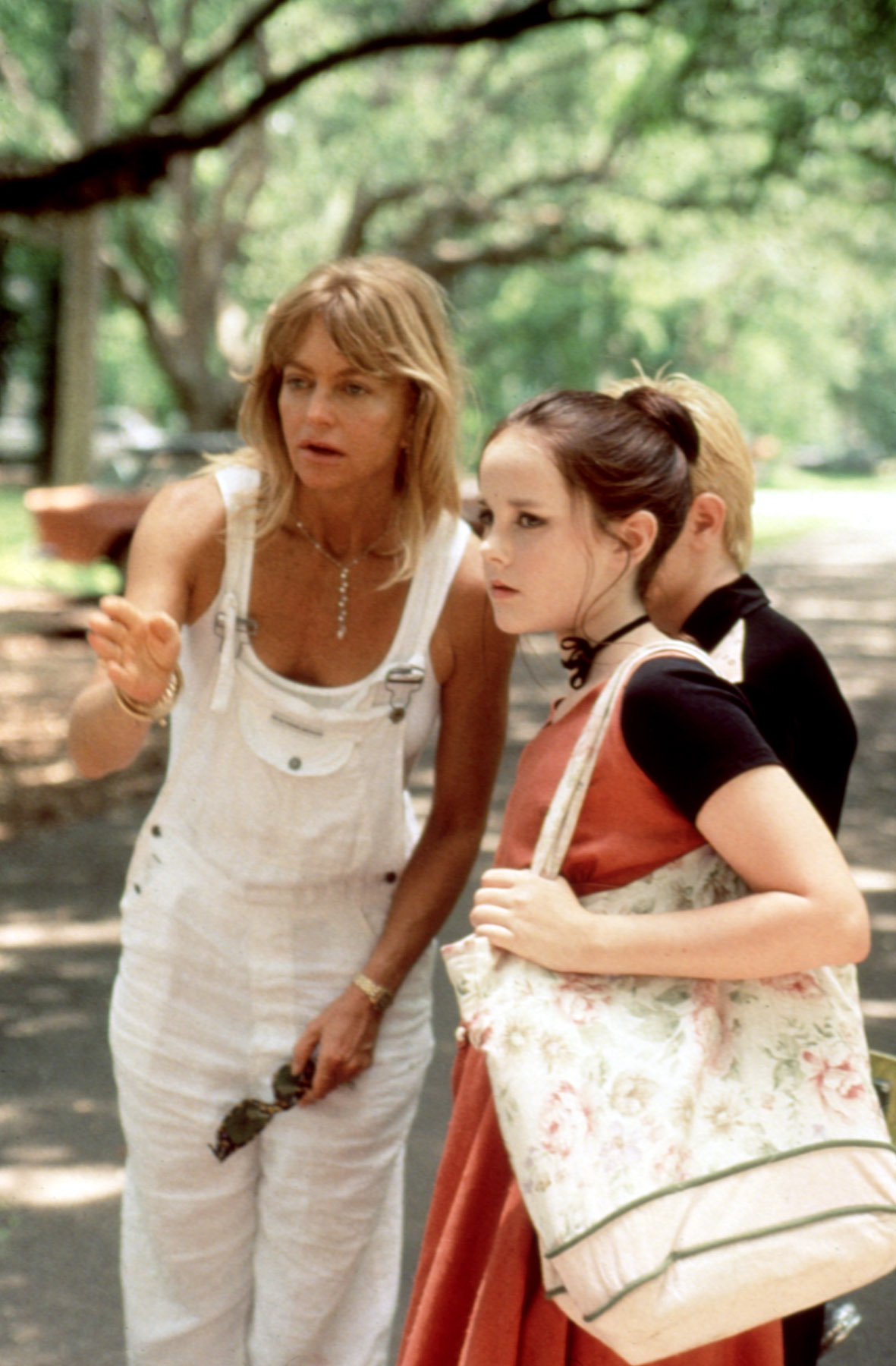
Goldie Hawn and Jena Malone, who share a birthday today, on the set of the Hawn-helmed movie Hope in 1997:
Actor in the Spotlight:
With Michelle Pfeiffer garnering raves for her performance in Murder on the Orient Express, Fandor celebrates her career and her return:
[embedded content]
VFX Breakdown of the Day:
One of the more curious creatures in the Star Wars: The Last Jedi trailer is the Vulptex, aka “crystal fox.” Here’s a look at the animatronics involved in bringing the animal to life (via Geek Tyrant):
Franchise Remix of the Day:
Speaking of Star Wars?, here’s the latest from Eclectic Method remixing sounds and dialogue from the Dark Side of the movies:
[embedded content]
Classic Clip of the Day:
Today is the 20th anniversary of the release of Don Bluth and Gary Goldman’s Anastasia. Watch a memorable clip from the classic animated feature below.
[embedded content]
and
Uber Data On 57 Million People Stolen In Massive Hack

Uber headquarters in San Francisco. The company acknowledged that the personal information of 57 million customers and drivers was hacked last year.
Eric Risberg/AP
hide caption
toggle caption
Eric Risberg/AP
The ride-hailing service Uber revealed that the personal information of 57 million people, customers and drivers, was hacked last year and that the company kept the massive theft secret for more than a year.
Uber also paid the hackers $100,000 to delete the stolen data and stay silent about it.
The hack, first reported by Bloomberg, was confirmed in a blog post by Uber CEO Dara Khosrowshahi. He said in 2016 the hackers obtained the names, email addresses and mobile phone numbers of 57 million Uber users. The driver’s licenses of about 600,000 Uber drivers in the US also were stolen.
Khosrowshahi said the company’s outside forensics experts see no evidence that the hackers got access to Uber users’ trip location history, credit card numbers, bank accounts, Social Security numbers or dates of birth.
The CEO said that he had “recently learned” of the massive hack, but he wasn’t more specific about what he knew and when.
A source close to the company confirmed to NPR that Uber officials paid hackers $100,000 to delete the data and keep the breach secret. The source also said that chief security officer Joe Sullivan and one of his lieutenants were terminated this week.
However, Uber declined to confirm how they knew that the data was, in fact, deleted by the hackers.
As NPR’s Aarti Shahani reported on All Things Considered, the out-going chief security officer Sullivan is the apparent mastermind of the cover up.
“He’s a former federal prosecutor — a former public servant — and he had an interesting approach to his job. For example, he felt it was OK for Uber to start using the sensors on drivers’ smartphones to track how they drive, how they perform on the job — even though many drivers were not aware of this practice and didn’t like it. Turns out he didn’t feel an obligation to disclose to them their data was taken either.”
In his post, Khosroshahi said that Uber is contacting all of the drivers whose drivers’ license numbers were downloaded and providing them with free credit monitoring and identity theft protection.
He also concluded with a contrite tone:
“None of this should have happened, and I will not make excuses for it. While I can’t erase the past, I can commit on behalf of every Uber employee that we will learn from our mistakes. We are changing the way we do business, putting integrity at the core of every decision we make and working hard to earn the trust of our customers.”
Health Care System Fails Many Transgender Americans

Ruby Corado (left) with her friend and Casa Ruby board member Consuella Lopez on the porch of one of the transitional group homes Corado runs in Washington, D.C., in 2015.
Lexey Swall/GRAIN for NPR
hide caption
toggle caption
Lexey Swall/GRAIN for NPR
On a recent weekday afternoon, Ruby Corado let herself into the drop-in center at the homeless shelter she founded for LGBTQ youth to make the rounds with new clients.
In the basement of Casa Ruby in Washington, D.C., transgender men and women in their late teens and 20s, mostly brown or black, shared snacks, watched TV, chatted or played games on their phones. Many of them, said Corado, are part of the 31 percent.
That’s 31 percent of transgender Americans who lack regular access to health care. The finding comes from a new poll by NPR, the Robert Wood Johnson Foundation and the Harvard T.H. Chan School of public health.
“I’m not surprised, because 31 percent — it’s a lot,” Corado said quietly. Her own experiences with homelessness, rape, assault have left her all too familiar with the vulnerabilities faced by many transgender people.
Corado pointed to one crucial word in the study that deserves extra emphasis. “What does regular health care mean?” she asked, then answered the question herself: “Preventable.”
Preventable problems, including HIV infection and some cancers, kill many people in this community. It’s harder for transgender people to find health care coverage, because it’s harder for them to find jobs. Social stigmas aside, consider the difficulty of getting hired if your gender does not appear to match the one on your legal ID. According to the 2015 U.S. Transgender Study, transgender people face an unemployment rate three times as high as the national average — 15 percent versus 5 percent.
Then there’s what might happen when seeking medical attention. In the NPR poll, 22 percent of transgender people said they’d avoided doctors or health care for fear of being discriminated against.
“Your trans status is on display and on parade for people to make fun of you,” Corado said, reflecting on insensitive medical professionals who have asked her such questions as, “What are you?”
“Right now, it’s very hard for a lot of people to even find a primary care provider who’s willing to work with them,” said Kellan Baker, a doctoral candidate at Johns Hopkins University who studies how health policies affect gay, lesbian, queer and transgender Americans. He said even if you regularly see a physician, a number of insurance companies will not cover care related to gender transition, such as hormones or surgery.
“Which, as you can imagine, is a huge barrier for transgender people in terms of mental health,” he said. “So you’re looking at yourself in the mirror, you’re not able to get health insurance coverage [and] you can’t get health care that you need to make sure that how you look aligns with who you are.”
Surgery on reproductive organs is expensive, so many people leave them alone. That means a trans man with a uterus — or a trans woman with a prostate — might have to endure embarrassing, awkward questions from health care providers when getting regular care, such as an annual physical.
Baker had no trouble providing examples.”What do you mean you need a cervical Pap test for a man or a prostate exam for a woman?” he asked. “How do we compute that? You shouldn’t have that part, so we don’t know what to do with you.”

Yee Won Chong (left) was diagnosed with stage 2 breast cancer, and in a strange coincidence his roommate, Brooks Nelson (right), discovered he had ovarian cancer.
Courtesy of Yee Won Chong
hide caption
toggle caption
Courtesy of Yee Won Chong
Those were the kinds of questions Yee Won Chong had to face when he was diagnosed with stage 2 breast cancer. He had undergone what’s known as top surgery, where breast tissue is removed and the chest is reconstructed to a more masculine appearance. However, he later developed cancer in the remaining breast tissue. His doctor didn’t know how to code him into the medical records system.
“I’m her first transgender patient,” Chong explained. But he was lucky. His oncologist, Dr. Tammy De La Melana, committed herself and her office team to the best possible care for Chong. And in a coincidence that Chong described as freaky, his roommate, who is also transmasculine, discovered he had ovarian cancer. They’re working now on a documentary about their experiences, called Trans Dudes with Lady Cancer.
It’s worth noting that Southern Comfort, an earlier documentary about a transgender man with ovarian cancer, won the Grand Jury Prize at the Sundance Film Festival in 2001. Back then, transgender people were even more likely to slip through the cracks of the health care system, but insurance companies and many medical professionals still treat them as though their bodies don’t make any sense.
All that said, there is a place for transgender people looking for high-quality and low-cost health care to go: Planned Parenthood.
Planned Parenthood trains its staff to be sensitive to transgender people. Many of its health centers offer trans people a wide array of services, including primary care, annual exams and STD screenings. Currently, Planned Parenthood offers hormone replacement therapy at health centers in 17 states, and its national headquarters reports an 80 percent increase in centers offering hormones to transgender patients from 2013 to 2015.
At the Virginia League for Planned Parenthood in Richmond, Va., a number of services for transgender people are available.
Afton Bradley, the center’s program manager for transgender health, ran through some questions he thinks about when providing care to trans patients. “Does our front desk know how to be affirming?” he asked. “Is our electronic health record affirming? Does it ask about pronouns and gender ID in addition to whatever legal sex is on their insurance or ID?”

Ryan Brazell (top left) has his vitals checked by Afton Bradley at the Virginia League for Planned Parenthood in Richmond, Va. Bradley makes sure the clinic is sensitive to the needs of trans patients.
Pat Jarrett for NPR
hide caption
toggle caption
Pat Jarrett for NPR
Bradley said this Planned Parenthood can handle trans-specific problems. What happens when a trans woman injects herself with building-grade silicone to get feminine curves? Or a trans man buys black market testosterone, or injures himself by binding his chest with duct tape?
Ryan Brazell, a trans man who gets his care here, remembered his first visit. “I went out to my car and was like, ‘I felt really weird,’ ” he said. “And it took me a few days to figure out why. It was the first time I had a health care experience I was happy with. And I didn’t know what that felt like until I had that experience at Planned Parenthood.”
That experience is wholly unfamiliar to many clients at the Casa Ruby LGBTQ shelter. “I’ve seen a lot of people die,” said its founder, Corado. “I’ve been to a lot of hospitals to recognize bodies that were dead from HIV or violence, or shot and stabbed and wounded.”
Dozens of trans people have been violently killed just this year across the country. Another tragic public health issue: Almost 20 percent of black transgender women are HIV-positive, compared with only 3 percent in the general population.
“It is very likely, if you are a transgender woman of color, that you will die from HIV,” Corado said, underscoring again the number of deaths suffered by transgender women of color that are potentially preventable. “That you will die from AIDS. That you die stabbed or killed. You’ll die from some kind of cancer, or suicide.”
The U.S. Transgender Survey found that 40 percent of transgender people have attempted suicide in their lifetimes. But that too, is potentially preventable, said Bradley at the Virginia League for Planned Parenthood.
“What we see is a dramatic reduction in those attempts when people have access to affirmative care,” he said. Affirmative care means treating trans people like people, Bradley says, adding that it’s not that hard.
Our ongoing series “You, Me and Them: Experiencing Discrimination in America” is based in part on a poll by NPR, the Robert Wood Johnson Foundation and the Harvard T.H. Chan School of Public Health. We have previously released results for African-Americans, Latinos, Native Americans and whites so far. In coming weeks, we will release results for Asian-Americans and women.
LADAMA On Mountain Stage

A blend of rhythms and styles from their varying backgrounds, the music of LADAMA crosses musical boundaries and cultural borders. Here they perform songs from their self-titled debut record, including the bombastic “Porro Maracatu” and a cover of the protest song “Compared To What,” most famously recorded by Les McCann and Roberta Flack.
LADAMA’s members — Lara Klaus, Daniela Serna, Mafer Bandola and Sara Lucas, along with bassist Pat Swoboda — hail from Brazil, Colombia, Venezuela and the United States. The four young women first collaborated through a U.S. State Department fellowship called OneBeat, where they decided to couple their musical passions with their desires to empower youth and women globally.
Recorded on the campus of Ohio University in Athens, Ohio, you’ll hear the group using traditional instruments like the stringed bandola, popular in Columbia and Venezuela, and hand drums such as the Brazilian pandeiro and the Colombian tambor alegre.
SET LIST
- “Porro Maracatu”
- “Night Traveler”
- “Confesión”
- “Compared To What”
- “Sin Ataduras”
