Articles by admin

No Image

Brexit Is One Step Closer As EU Agrees To Talk About U.K. Trade

European Union leaders have agreed to discuss the process by which the U.K. will leave the EU. The talks focus on the trade relationship Britain will have with the EU in the future. Guest host Ray Suarez speaks with NPR’s Frank Langfitt about whether Brexit has entered a point of no return.

RAY SUAREZ, HOST:

Last year, the United Kingdom kicked off an era of uncertainty in the Western world when it voted to leave the European Union. Yesterday, the U.K. took a major step forward on the road to Brexit when European leaders agreed to talks with the U.K. on a new trading relationship with the EU. To make sense of yesterday’s decision and how it fits with the turbulent last year and a half, we turn to NPR’s Frank Langfitt, who’s just returned to his post in London from Brussels, the headquarters city of the European Union. Hi, Frank.

FRANK LANGFITT, BYLINE: Hey, Ray.

SUAREZ: Why does the agreement to have trade talks matter so much?

LANGFITT: Well, one thing, it sort of tells the U.K. is continuing to move forward towards leaving the EU. This is continuing to go ahead. But, you know, if you look at the – kind of the big picture, it’s symbolic of changes that really started in the summer of 2016. And a big change has happened since then. You remember that Brexit vote? It was a big shock. Stocks dropped around the world. And one reason was seeing the U.K. actually walk away from something that it had helped build – this sort of Western post-World-War-II architecture for peace and prosperity in Europe. And seeing it walk away, really, and saying basically, you know, we’re better off on our own, that really rattled people here and elsewhere.

And then you had these right-wing populists in France and the Netherlands, they were pushing to leave the EU. And there was this fear in Brussels that, you know, this 28-nation trading bloc was actually going to fall apart and risk a lot more instability in this part of the world.

SUAREZ: I’ve been in Britain a couple of times since the vote and talked to people at each time who felt that there was still a chance that it might not happen. How does the decision look today and has it entered a sort of point of no return?

LANGFITT: Well, that’s a great question. I mean, first, it’s not going well at all. You know, U.K. Prime Minister Theresa May is much weaker than she was. So Brexit has ended up really kind of tearing up politics here. In terms of a point of no return, that’s an excellent question. There is a sense here that if they tried to do it, people would be so upset because this came out of a referendum, and they would feel that this was denying the democratic will of the people here in the United Kingdom.

On the other hand, you talk to people in the EU, they might welcome them back if they changed their mind. But they only have so much time. You know, this is all going to run out. They have to leave in March of 2019. But everybody’s going to be watching it very closely. And I think key to it also will be the economics of the United Kingdom, which has been suffering since the Brexit decision.

SUAREZ: Now to state the obvious, but it’s never a bad idea. The U.S. is not a member of the EU. Why should Americans be paying attention to Brexit? Does it mean anything on this side of the Atlantic?

LANGFITT: I think it does in a way that people wouldn’t necessarily imagine, and that’s that Brexit is weakening America’s closest ally abroad. You remember, you know, we fought a war with the Brits. We speak the same language, have these shared values. And with President Trump looking inward himself, you know, the U.S. influence is declining worldwide as well as this very important power of ours. Then if you look more broadly, you’ve got a more aggressive China, a more assertive Russia. And there is a sense that one thing the West doesn’t need right now is fragmentation.

SUAREZ: Once the British have managed to extricate themselves from the EU, will they be looking to make a deal with the United States?

LANGFITT: They do. And, you know, it’s really interesting. Theresa May keeps saying, oh, this is going to bail us out. We’re going to do really well with a deal with the U.S. The fact of the matter is trade barriers are already very low with the U.S. And you’re – she’s also going to be dealing with Donald Trump who’s not known for giving, you know, sweetheart deals to people. He crafts himself as a very, very tough negotiator. So the idea that the U.S. economy is going to really help out Britain, I think most people here – certainly, economists think that’s not very likely.

SUAREZ: That’s NPR’s Frank Langfitt in London. Thanks a lot, Frank.

LANGFITT: Happy to do it, Ray.

(SOUNDBITE OF ADAM BEN EZRA’S “CAN’T STOP RUNNING”)

Copyright © 2017 NPR. All rights reserved. Visit our website terms of use and permissions pages at www.npr.org for further information.

NPR transcripts are created on a rush deadline by Verb8tm, Inc., an NPR contractor, and produced using a proprietary transcription process developed with NPR. This text may not be in its final form and may be updated or revised in the future. Accuracy and availability may vary. The authoritative record of NPR’s programming is the audio record.
Let’s block ads! (Why?)


No Image

Weighing The Impact Of Repealing The Health Insurance Mandate

The tax bill being considered by Congress includes a repeal of the Affordable Care Act’s individual mandate. Julie Rovner of Kaiser Health News talks to guest host Ray Suarez about how that could affect the health insurance market.

RAY SUAREZ, HOST:

We’re going to continue our conversation about the Republican tax bill and focus on specific provisions in the bill affecting health care. As we just heard, the bill will repeal what’s called the individual mandate, a key part of the Affordable Care Act that requires people to buy health insurance or face a tax penalty. To understand what effect this could have on the insurance market, we’re joined now by Julie Rovner, Washington correspondent for Kaiser Health News. Good to have you with us, Julie.

JULIE ROVNER: Nice to be here.

SUAREZ: So what would be the most immediate effect of the repeal?

ROVNER: Well, the most immediate effect is that people will be confused because they’re actually repealing the penalties but not until 2019. So for next year, people will still be required to either have health insurance or pay a penalty. And, of course, yesterday was the end of open enrollment for most people in most states.

SUAREZ: Now, when people leave the insurance market, it must have some effect on the numbers that are very, very carefully balanced for this law to work.

ROVNER: That’s right. That’s the biggest concern that insurers have. Insurance – said when the Affordable Care Act was passed, that if you’re going to require us to accept sick people and not to charge them more, you’re going to have to have some way to get more healthy people into the pool. That’s what this mandate penalty was about. Insurers said at the beginning it wasn’t big enough. And, in fact, it hasn’t really driven that many healthy people to sign up. But there is a concern that if you take it away and don’t replace it with anything – and at the moment there is no replacement in this bill – that literally only sick people will buy insurance. The only response for insurers at that point is either to raise premiums dramatically or to drop out altogether.

SUAREZ: One senator for whom the repeal of the mandate had been a sticking point was Republican Susan Collins of Maine. Originally, she noted that repealing the mandate would have consequences for the future stability of the individual market. Now, she says she’ll back the tax bill if Congress acts on other health measures. What are they?

ROVNER: Well, there’s two. And one of them would restore these payments that the president cut off last fall that go to insurers to reimburse them for discounts they have to give to their lowest-income enrollees on the exchanges. They’re called cost-sharing reduction payments. But basically, the insurers have already figured out how to get that money back. They’ve raised premiums strategically, and that made premium subsidies higher. So basically, the federal government is giving them back the money in other ways. So most analysts think that it’s probably too late for that to help.

The other thing that Susan Collins asked for was a reinsurance pool. That would help insurers pay for their sickest customers. Most analysts think that would help but that the money that’s being talked about is probably not enough. Also, it’s not entirely clear that they could get this through the House even if they can get it through the Senate.

SUAREZ: The tax bill, it’s understood widely, will increase the deficit. The argument is about how much, but that means entitlement programs may be under some pressure. Do we know how the bill could affect Medicare?

ROVNER: Yes, we do. Medicare could be cut by billions of dollars. That can be waived by Congress but it takes 60 votes. The Republicans assume the Democrats will come along because they don’t want cuts to Medicare, which the Democrats don’t. But Democrats are warning that they may play hardball on this and that Republicans should not assume that they’re going to vote to waive these cuts which are automatic if the deficit is raised to the extent it would be by this tax bill.

SUAREZ: Julie Rovner is Washington correspondent for Kaiser Health News. Julie, thanks for joining us.

ROVNER: You’re most welcome.

Copyright © 2017 NPR. All rights reserved. Visit our website terms of use and permissions pages at www.npr.org for further information.

NPR transcripts are created on a rush deadline by Verb8tm, Inc., an NPR contractor, and produced using a proprietary transcription process developed with NPR. This text may not be in its final form and may be updated or revised in the future. Accuracy and availability may vary. The authoritative record of NPR’s programming is the audio record.
Let’s block ads! (Why?)


No Image

Remembering Bruce Brown, Whose 'Endless Summer' Documentary Boosted Surfing As A Sport

With his 1966 documentary The Endless Summer, surfer-filmmaker Bruce Brown created one of the most iconic expressions of the joy of surfing. Brown died this week at the age of 80.

RAY SUAREZ, HOST:

We’re going to take a moment now to remember a titan among the waves, and we’re not talking about Poseidon. We’re talking about documentary filmmaker Bruce Brown, who died last week at the age of 80. As NPR’s Alexi Horowitz-Ghazi reports, Brown’s 1966 surfing documentary “The Endless Summer” sealed his status as one of the sport’s greatest evangelists.

ALEXI HOROWITZ-GHAZI, BYLINE: Bergman of the boards and Follini (ph) of the foam – That’s how Time magazine and The New York Times respectively described surfer-turned-documentary-filmmaker Bruce Brown in 1966, the year “The Endless Summer” hit film screens across the country.

(SOUNDBITE OF DOCUMENTARY, “THE ENDLESS SUMMER”)

BRUCE BROWN: Many surfers ride summer and winter, but the ultimate thing for most of us would be to have an endless summer – the warm water and waves without the summer crowds of California.

HOROWITZ-GHAZI: That’s Bruce Brown himself narrating the film. On its face, “The Endless Summer” is the story of two young surfers on a search for the world’s tastiest waves. But as Matt Warshaw, author of “The Encyclopedia Of Surfing,” sees it, it was really more of a love letter to surfing itself.

MATT WARSHAW: Bruce Brown will be remembered in the world of surfing as the guy that essentially introduced what real surfing is to the rest of the world, the guy that kind of let everybody else in on our great secret.

HOROWITZ-GHAZI: Warshaw says that, in the early 1960s, popular depictions of surfing in movies like “Gidget” and “Beach Blanket Bingo” didn’t do the sport justice. Surfers were mostly depicted as goofball teenagers or juvenile delinquents. And many surfers felt the story of the sport deserved to be told by one of their own.

WARSHAW: Bruce Brown, first and foremost, was a surfer from Southern California.

HOROWITZ-GHAZI: Brown got his break in his early 20s, when he convinced a California surfboard manufacturer to fund his first feature-length documentary. He spent the next several years cutting his teeth as a filmmaker before his big hit, “The Endless Summer.”

WARSHAW: What people didn’t realize is that he’d been practicing to make that movie. He’d been doing essentially drafts of that movie for almost five years.

HOROWITZ-GHAZI: Warshaw says “The Endless Summer” captured something essential about the joy of surfing that made it both appeal to surfers and non-surfers alike, and that made it a genre-defining film.

(SOUNDBITE OF DOCUMENTARY, “THE ENDLESS SUMMER”)

BROWN: The ultimate thing to do in surfing is to be actually covered up by the wave. And here goes Wayne (doing) doing the ultimate thing.

WARSHAW: You know, if you were ever going to turn to someone who’s never surfed and say, this is why I surf and this is what it’s like, that intro to “Endless Summer,” I think, is still the finest thing you could give to somebody as an introduction.

(SOUNDBITE OF DOCUMENTARY, “THE ENDLESS SUMMER”)

BROWN: The thing you can’t show is the fantastic speed and that feeling you get in the pit of your stomach. I couldn’t help but think of the hundreds of years these waves must have been breaking here. But until this day, no one had ever ridden one.

HOROWITZ-GHAZI: Bruce Brown eventually stepped away from filmmaking after garnering an Oscar nomination for a later documentary about motorcycling. He spent the following decades pursuing his other passions – swordfishing, golfing and rally-car racing – chasing a different kind of “Endless Summer.” In many ways, he succeeded. And with his films, Bruce Brown brought countless others along for the ride. Alexi Horowitz-Ghazi, NPR News.

(SOUNDBITE OF THE SANDALS’ “THEME FROM THE ENDLESS SUMMER”)

Copyright © 2017 NPR. All rights reserved. Visit our website terms of use and permissions pages at www.npr.org for further information.

NPR transcripts are created on a rush deadline by Verb8tm, Inc., an NPR contractor, and produced using a proprietary transcription process developed with NPR. This text may not be in its final form and may be updated or revised in the future. Accuracy and availability may vary. The authoritative record of NPR’s programming is the audio record.
Let’s block ads! (Why?)


No Image

The Week in Movie News: Golden Globes Nominations, Disney Buys Fox and More

Need a quick recap on the past week in movie news? Here are the highlights:

BIG NEWS

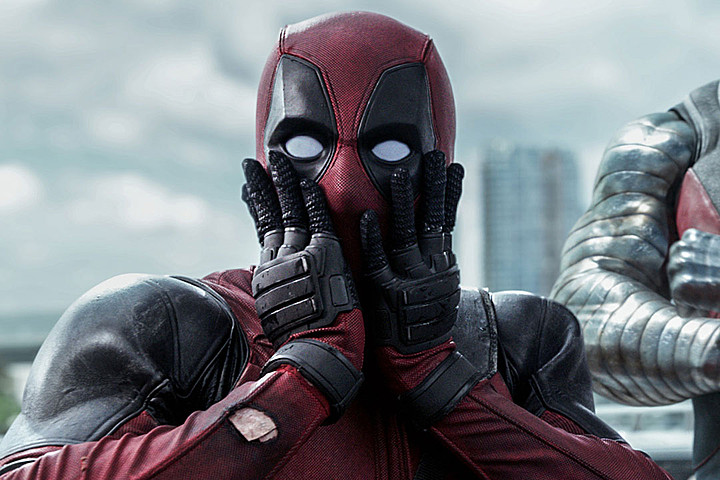
Disney bought Fox: Following rumored talks last month, Disney actually acquired 21st Century Fox, giving the Mouse House ownership of The Simpsons, Avatar and, most importantly, X-Men (including Deadpool) and Fantastic Four franchises, the last two of which can now be folded into the Marvel Cinematic Universe. Read more here.

GREAT NEWS

Jennifer Lawrence teams up with Luca Guadagnino: One of this year’s most celebrated filmmakers, Call Me By Your Name‘s Luca Guadagnino, will collaborate with one of the year’s least-honored best actresses, mother!‘s Jennifer Lawrence for the true-crime drama Burial Rites. Read more here.

AWARDS BUZZ

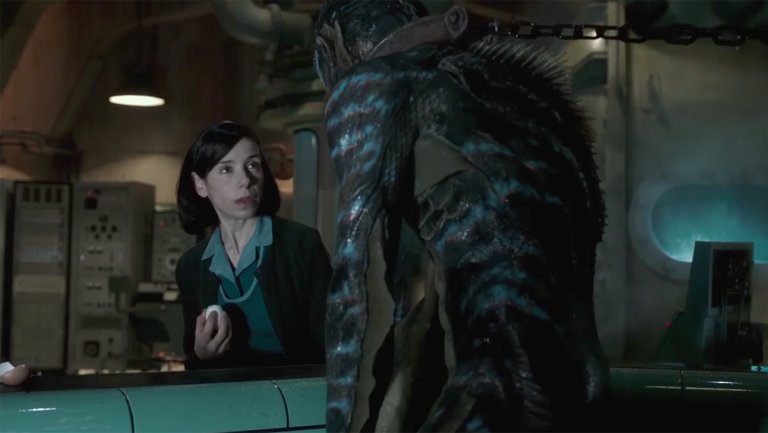
The Shape of Water leads Golden Globe nods: The biggest awards nominations of the year so far arrived this week with The Shape of Water leading the Golden Globes picks and Three Billboards Outside Ebbing, Missouri topping SAG Awards choices. Read more here and here.

EXCLUSIVE BUZZ

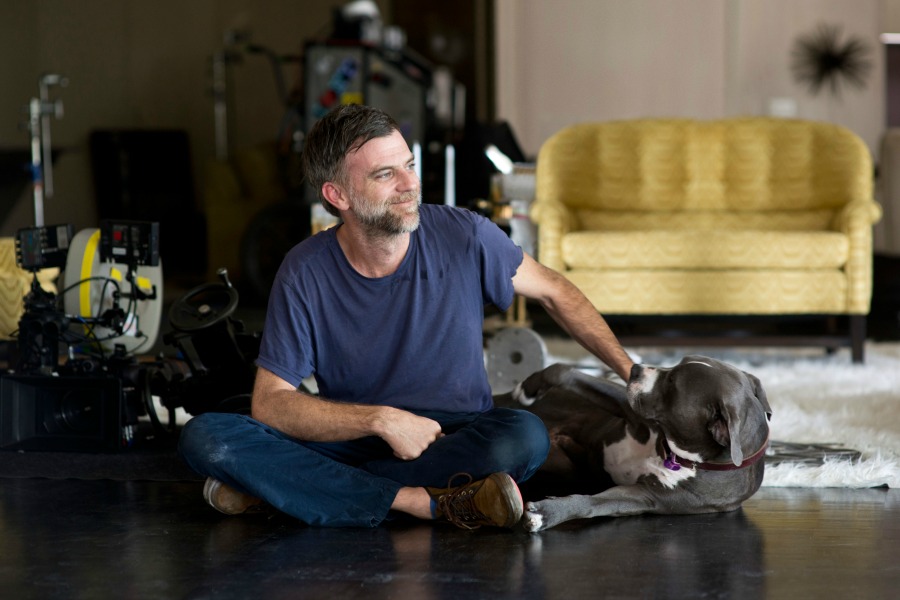
Paul Thomas Anderson talks Star Wars: We talked to Phantom Thread writer-director Paul Thomas Anderson about his new film, his excitement for Star Wars: The Last Jedi and what his own Star Wars movie would look like. Read the interview here.

COOL CULTURE

Star Wars: The Last Jedi preparation: In advance of the release of Star Wars: The Last Jedi, many videos were posted featuring guides, parodies and more tied to the franchise. Watch an alphabetical primer for the new movie below, and watch others here and here and here and here.

[embedded content]

MUST-WATCH TRAILERS

Ready Player One packs in the pop culture: The highly anticipated Ready Player One released its first full trailer, and it carries over tons of pop culture nostalgia from the bestselling novel. Watch it here:

[embedded content]

Spider-Man: Into the Spider-Verse teases a new animated franchise: The first teaser for the animated feature Spider-Man: Into the Spider-Verse has arrived, offering fans another movie franchise with another version of Marvel’s webslinging superhero. Watch it here:

[embedded content]

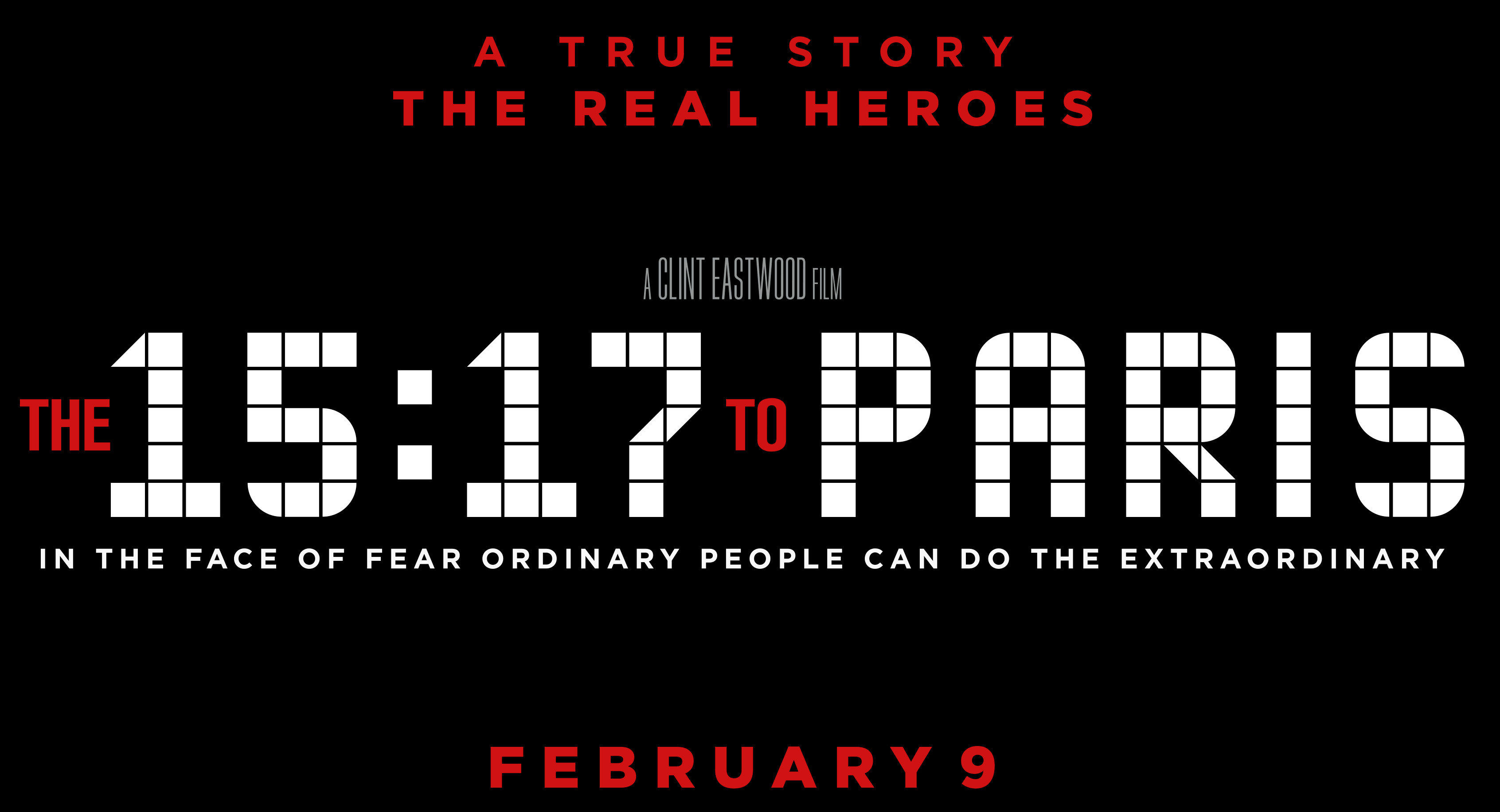
The 15:17 to Paris showcases the latest from Clint Eastwood: Three real-life heroes who thwarted a terrorist plot star as themselves in the movie about their lives, which is directed by Clint Eastwood. Check out the first trailer below:

[embedded content]

and

Let’s block ads! (Why?)


No Image

CHART: How The New Version Of The Republican Tax Bill Would Affect You

On Friday evening, congressional Republicans released the final version of their tax overhaul plan.

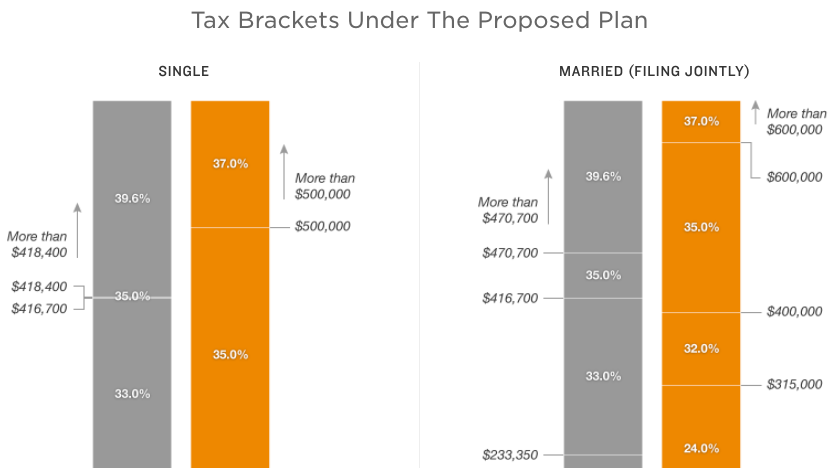
The new bill looks a lot like earlier versions from the House and Senate, with minor modifications — for example, it lowers the corporate tax rate from 35 to 21 percent, as opposed to the 20 percent in both the House and Senate bills. In other cases, it finds the middle ground between the two chambers’ previous bills — it limits taxpayers to deducting the interest on new mortgages up to $750,000, as opposed to $500,000 in the House bill and $1 million in the Senate bill, which is also the amount set under current law.

Below are two charts showing how individual filers could be affected if this bill is passed and signed into law.

The bar chart shows how the proposed tax brackets look, compared with the brackets under current law. The top rate would fall to 37 percent from 39.6 percent, and fewer households would pay that top rate.

The table below that chart spells out how different provisions in the tax code would affect different groups of Americans.

Loading…

Loading…

Let’s block ads! (Why?)


No Image

Want Help Explaining A Medical Procedure? Ask A 9-Year-Old

Getting ready for a hip replacement? You’ll fare better if you lose the extra weight and get exercise first.

British Medical Journal

hide caption

toggle caption

British Medical Journal

The average American reads at an 8th-grade level, but the patient information that doctors and hospitals provide often presumes that people have much more advanced reading skills.

So some researchers decided to see what happens when 9-year-olds write the patient guides.

Dr. Catrin Wigley at University Hospitals Coventry and Warwickshire NHS Trust and colleagues analyzed six National Health Service patient information leaflets from across England for total hip replacement and found that the average readability level was age 17, even though the average Brit reads at a 4th-grade level. You’d have to have the reading comprehension of a high school senior to understand from these brochures what a hip replacement is, why you need it and what complications might occur.

The researchers recruited 57 nearby elementary school children ages 8 to 10 to help revise the content.

Hey docs, be sure to ask the patient how it went.

British Medical Journal

hide caption

toggle caption

British Medical Journal

After a lesson about hip replacement, the children were asked to write their own leaflet and draw an image to illustrate it. They were given four headings: indications for surgery, complications of surgery, before the procedure, and the procedure.

What the children came up with was clear, concise and without sugarcoating.

“Your hip is old and rotten,” says Mohammed.

“It is past its sell-by date,” adds Jaime.

[embedded content]

What is not allowed before surgery? Coca Cola, fries, and chocolate, according to Lilly.

Of course, no one is suggesting we actually let children write the guides, but maybe we can learn something from their approach.

The authors write: “What better way to write a new leaflet than by engaging with 9-year-old children, so that we can begin to appreciate the disparity in the language we use to convey information through formal patient information leaflets.”

It’s a novel experiment, but can’t really work in practice, according to Cynthia Baur, director of the Horowitz Center for Health Literacy at the University of Maryland’s Public School of Health.

“While children may be able to say things simply, they don’t have the context and experience to recognize aspects of topics that might need more in-depth information or explanation, and they can’t anticipate adult concerns,” Baur says.

But it may shed fresh light on a problem that has been percolating for decades.

Low health literacy leads to poor outcomes for patients and millions of dollars in unnecessary health costs. Countless commissions and organizations have developed plans for improvement. In 2010, the U.S. Department of Health and Human Services published a 73-page action plan to improve health literacy and called for making it a public health priority.

The proliferation of computer-generated patient leaflets was supposed to help. Yet measurement tools with great names like Simple Measure of Gobbledygook (SMOG) and Gunning Fog (GFI) show that these patient education materials are often too complex for the average person.

“I definitely think patient materials have improved, but they are still far from where they need to be,” says Baur, who edited the HHS action plan and created the Centers for Disease Control and Prevention’s health literacy site prior to her appointment at Maryland. “These tools, along with audience testing, of the materials will make health materials much better much faster.”

So can we learn something from the experiment? Maybe simplicity. “Let’s take our cue from the children and begin speaking honestly and to the point with our patients in a language they understand,” Wigley and her colleagues write in their analysis.

What works, says Bauer, is involving the intended recipients. “Health care organizations that truly care about excellent patient experiences and well-being will find ways to involve patients, caregivers and others in the routine development of all types of health communication, even forms and facility signs,” she says.

Let’s block ads! (Why?)


No Image

Today in Movie Culture: Batman vs. Dracula Fan-Made Trailer, How 'Star Wars' Was Saved and More

Here are a bunch of little bites to satisfy your hunger for movie culture:

Mashup of the Day:

There have been many versions of both Batman and Dracula, but this fan-made retro version from Stryder HD pits Michael Keaton against Gary Oldman:

[embedded content]

Remade Trailer of the Day:

With Star Wars: The Last Jedi in theaters this weekend, here’s another sweded version of its trailer:

[embedded content]

Film Studies Lesson of the Day:

This video essay from RocketJump Film School looks at how Star Wars was saved in the editing:

[embedded content]

Movie Science of the Day:

For Nerdist, Kyle Hill scientifically explains why death by lightsaber would be much worse in real life:

[embedded content]

Movie Inspiration of the Day:

ScreenCrush looks at how Star Wars: The Force Awakens is inspired by the myth of King Arthur:

[embedded content]

Vintage Image of the Day:

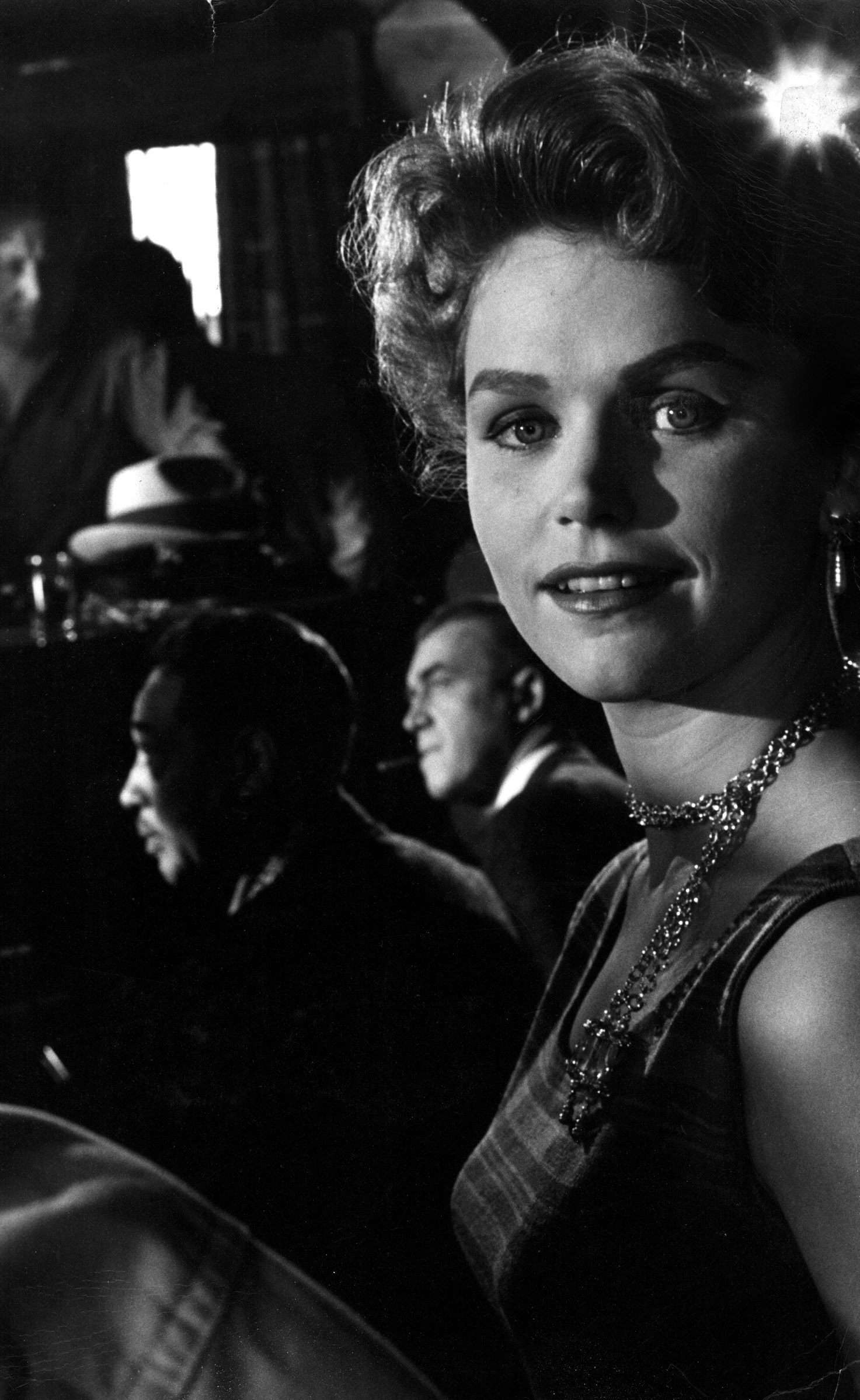
Lee Remick, who was born on this day in 1935, poses while Otto Preminger directs James Stewart and Duke Ellington on the set of Anatomy of a Murder in 1959:

End of the Year Recap of the Day:

Here’s another look at the movies of 2017, this one by Cinema Dream and focused on the blockbusters of the year:

[embedded content]

Movie Food of the Day:

Get warmed up this winter by making Ned Flanders’s hot cocoa from The Simpsons Movie with help from Binging with Babish:

[embedded content]

Cosplay of the Day:

NBC News did a story on the Cosplay Parents featuring this image of the couple as Nick Wilde and Judy Hopps from Zootopia:

Meet the ‘Cosplay Parents’ devoting retirement to costumes and conventions
“If you meet your soulmate or someone with your same interests, you have to go for it,” Millie Tani said. https://t.co/R1IJUIoiyk via @NBCNewspic.twitter.com/LRrv8t9Km0

— ??Cosplay in America?? (@cosplayamerica) December 14, 2017

Classic Trailer of the Day:

This weekend is the 30th anniversary of the release of Moonstruck. Watch the original trailer for the Oscar-winning classic below.

[embedded content]

and

Let’s block ads! (Why?)


No Image

What Are The Two Health Bills Sen. Susan Collins Wants Congress To Act On?

Maine Sen. Susan Collins voted for the Senate GOP tax plan despite its repeal of the individual mandate because GOP leadership promised her a vote on her reinsurance bill, and a vote on legislation to restore some payments to insurers. But it’s doubtful getting those provisions enacted would mitigate the damage to exchanges from the mandate repeal.

ROBERT SIEGEL, HOST:

Inside the latest version of the Republicans’ tax bill, the one hammered out by the Senate and the House, is a provision on health care. It amounts to a repeal of the Affordable Care Act’s individual mandate, something that could undermine the health care exchanges. It had seemed to be a sticking point for Maine Republican Senator Susan Collins. But Collins now indicates that she will back the tax bill if Congress acts on two other health measures. Maine Public Radio’s Patty Wight reports.

PATTY WIGHT, BYLINE: Senator Collins has never been a fan of the individual mandate.

(SOUNDBITE OF ARCHIVED RECORDING)

SUSAN COLLINS: Never the less, I recognize that repeal of the individual mandate would have consequences for the stability and the premiums in the individual market.

WIGHT: The nonpartisan Congressional Budget Office projects that repealing the mandate would hike premiums about 10 percent annually over the next decade and cause 13 million people to lose coverage. Collins says the solution is found in two proposed bills.

(SOUNDBITE OF ARCHIVED RECORDING)

COLLINS: Together, those two bills would more than offset the increase in premiums.

WIGHT: One bill sponsored by Republican Senator Lamar Alexander of Tennessee and Democratic Senator Patty Murray of Washington would restore payments President Trump recently ended. Those payments helped insurance companies reduce costs for people with low incomes. But Mitchell Stein, a health policy consultant, says that’s a separate issue from the mandate.

MITCHELL STEIN: To say that that will impact the negative effects of eliminating the mandate is like saying, to quote Senator Murray herself, it’s like saying you can fight a fire by giving someone a shot of penicillin.

WIGHT: The second bill that Collins wants passed is one she’s co-sponsoring with Democratic Senator Bill Nelson of Florida that would fund a reinsurance program.

STEVE BUTTERFIELD: You know, reinsurance isn’t a bad idea.

WIGHT: At least in theory, says Steve Butterfield, policy director for the Maine-based advocacy group Consumers for Affordable Health Care.

BUTTERFIELD: It’s something that you do, you know, to stabilize a market influx.

WIGHT: For example, if the individual mandate penalty goes away, younger, healthier people might forgo insurance, leaving older, sicker consumers in the market. Collins’ bill would give states funding to help pay their higher medical costs. But it’s only $10 billion over the next two years, says Butterfield.

BUTTERFIELD: You can’t permanently repeal a critical component of America’s current health care system forever and then say, well, you know, here’s a Band-Aid for two years. You guys can limp through until a future Congress fixes what we’re breaking.

WIGHT: But Collins points to an analysis by consulting firm Avalere, which found that the two bills would increase enrollment by 1.3 million people and lower premiums by 18 percent in 2019.

(SOUNDBITE OF ARCHIVED RECORDING)

COLLINS: And that is more than the 10 percent increase in premiums that would result from repealing the individual mandate.

CAROLINE PEARSON: The story’s much bigger than premiums.

WIGHT: That’s Avalere’s Caroline Pearson. She says the analysis Collins mentions did include a caveat. It did not examine the bills in the context of no individual mandate. No mandate, says Pearson…

PEARSON: Could create significant instability in the market. And it may cause some insurers to drop out of the market, which really could lead to a lack of coverage availability for some consumers.

WIGHT: Another question hanging over those bills is whether Congress will pass them. Senator Collins has a written commitment from Senate Majority Leader Mitch McConnell that he will support their passage before the end of the year. House leadership has not provided a written commitment, but Collins says she’s received assurance from the vice president. For NPR News, I’m Patty Wight.

SIEGEL: That story is part of a partnership of NPR, member stations and Kaiser Health News.

Copyright © 2017 NPR. All rights reserved. Visit our website terms of use and permissions pages at www.npr.org for further information.

NPR transcripts are created on a rush deadline by Verb8tm, Inc., an NPR contractor, and produced using a proprietary transcription process developed with NPR. This text may not be in its final form and may be updated or revised in the future. Accuracy and availability may vary. The authoritative record of NPR’s programming is the audio record.

Let’s block ads! (Why?)


No Image

The Most Important Economic Indicator That Everyone Ignored

This week on All Things Considered, we’re sharing a series of “Highly Specific Superlatives.” Cardiff Garcia from NPR’s podcast The Indicator talks about the most important economic indicator in 2017 that everyone ignored: global trade.

KELLY MCEVERS, HOST:

There are a few economic indicators that got a lot of play this year – the unemployment rate, the GDP the Dow. Now we’re going to talk about another economic indicator as part of our series Highly Specific Superlatives, in which we nerd out about the best, the worst, the least, the most of 2017. NPR’s Cardiff Garcia co-hosts NPR’s newest podcast The Indicator. It’s about the big ideas behind business news. And he is with us now. Hey.

CARDIFF GARCIA, BYLINE: Hi, Kelly.

MCEVERS: So hit me. What is your highly specific superlative from 2017?

GARCIA: My highly specific and also highly nerdy superlative is the most ignored indicator that actually says a lot about the economy – the global economy. It’s the pace of growth in global trade, the pace of growth in how much we buy and sell goods and services across borders to and from other countries.

MCEVERS: OK, global trade, yeah.

GARCIA: Yep.

MCEVERS: Tell me about it. Like, what’s – give me a little snapshot of what that indicator tells us.

GARCIA: I love this indicator. And the snapshot is that it’s growing a lot. The IMF projects that by the end of this year it will have grown 4.2 percent. That is a big acceleration on last year. And I think what I love most about this superlative is that it contrasts so starkly with the headlines that we’ve seen all year about the world turning inward and about protectionism and about countries becoming more self-reliant. I love that this just kind of goes so starkly against that narrative.

MCEVERS: Well, yeah so – OK, explain that because, I mean, you know, I think a lot of people think, like, we’re pulling out of trade deals. We’re tightening borders. We’ve you know, scrapped deals like the Trans-Pacific Partnership and threatened to tear up NAFTA and all of that stuff. So, like, how does this square with all that?

GARCIA: Yeah. So I guess the simple answer here is that so far at least, there’s been more talk than action. So yeah, we’ve threatened to pull out of NAFTA, but NAFTA is still in place. We did leave the Trans-Pacific Partnership, but keep in mind that the other 11 countries are still going ahead. And so what we’ve learned is also that the U.S. isn’t the only country that matters here, that this is global trade, not just U.S. trade with everybody else – and so…

MCEVERS: Right.

GARCIA: …More talk than action. And also, we’re learning that maybe the U.S. isn’t the only place that that counts here.

MCEVERS: OK. How do we want to think about this going forward?

GARCIA: Yeah. I mean, this is a – it’s a complicated narrative. If you think about it, it’s not like right now if you make a product in another country and then you send it to a country to be bought and sold, that that’s the way things still work. That’s sort of the old world, right? Now the way it works is that as a product gets made, it passes through a bunch of different countries, and each country has a process or a factory that adds a component or a new way of making it by the time it gets to its final destination to be sold.

And so even if you make it hard to do business with, say, Mexico, well, OK then, the factory and that process just shifts somewhere else. It’s like this big supply chain gets redirected. And so what we’re seeing now is that it’s just really, really hard to deconstruct that process. The world is very closely integrated, and it’s not easy for any one or two places to just turn that away.

MCEVERS: NPR’s Cardiff Garcia co-hosts The Indicator. It’s a podcast about the big ideas behind business news. Thanks a lot.

GARCIA: Thanks, Kelly.

Copyright © 2017 NPR. All rights reserved. Visit our website terms of use and permissions pages at www.npr.org for further information.

NPR transcripts are created on a rush deadline by Verb8tm, Inc., an NPR contractor, and produced using a proprietary transcription process developed with NPR. This text may not be in its final form and may be updated or revised in the future. Accuracy and availability may vary. The authoritative record of NPR’s programming is the audio record.
Let’s block ads! (Why?)


No Image

A Kind Of Chaos: The Science And Sport Of Bobsledding

A U.S. sled makes its way through curve 10 on the Lake Placid, N.Y. track during training runs.

John Tully for NPR

hide caption

toggle caption

John Tully for NPR

Imagine a minute of pure adrenaline: a race down a track of ice at speeds up to 90 miles an hour, enduring crushing gravitational forces around the curves.

Bobsled is one of the thrilling — and punishing — sports in the Winter Olympics. The U.S. hopes to repeat its recent medal-winning performances at the 2018 Olympics next February in Pyeongchang, South Korea.

Meantime, they’re competing on the World Cup circuit, including a stop in Lake Placid, N.Y., site of the 1932 and 1980 winter Olympics. High up on Mt. Van Hoevenberg, bobsledders from around the world launch into practice runs. The glistening track is about a mile long, with 20 sharply-banked curves. It’s beautiful, but terrifying.

“A good run, especially in Lake Placid, can feel like you’ve been shoved in a metal garbage can and kicked down a rocky hill,” bobsled pilot Elana Meyers Taylor says.

She’s a two-timeOlympic medalist (silver in Sochi in 2014; bronze in Vancouver in 2010).

“Yeah, it can hurt,” fellow driver Jamie Greubel Poser, who won bronze in Sochi, says. “We consider bobsled an impact sport. You’re hitting walls at 80 miles an hour. It can literally feel like a boxing match. I’ve ‘seen stars’ driving.”

“[When] we’re going down, the whole thing is just vibrating,” pilot Nick Cunningham says. “It’s loud, it’s cold, there’s no padding inside the sled. It’s very, very uncomfortable. But when you win a medal, it makes everything completely worth it.”

A bobsled (‘bobsleigh’ via the Olympics website) run starts with the all-important push: the initial burst of acceleration, as athletes run alongside the sled, propelling it down the first 50 meters of the course. The sleds themselves weigh hundreds of pounds, so explosive strength and speed in the push are critical. (It’s no accident that many bobsled athletes, Greubel Poser and Cunningham among them, come to the sport from the world of track and field).

After the push comes the load. In a two-person bobsled, the pilot jumps over the side into the front, while the brakeman vaults in from behind like a long jumper. They have to do it both quickly and delicately, so the sled doesn’t skid out. (Watch a video explainer here).

U.S. National team member, Carlo Valdes, left, and Codie Bascue, right, push off from the start for their training run in Lake Placid.

John Tully for NPR

hide caption

toggle caption

John Tully for NPR

In the four-man event, the choreography is even more intricate. The team must cram four massively muscular bodies into a narrow bobsled while sprinting at full speed. They need to perfectly coordinate who jumps in first, in what order they sit down, and where their legs go as they fold themselves in.

“It’s kinda chaos sometimes,” says Evan Weinstock, who sits in the second position, just behind the driver. Only the driver has an actual seat; the others sit on their heels,“tucked up in a little cannonball position,” Weinstock explains.

“It’s tough,” he says. “You definitely get a lot more flexible. If you weren’t before you got in the sport, you are now.”

Another peril is that bobsledders wear shoes studded with sharp spikes for traction on the ice. Bad things can happen when they jump in the sled and have to jam their feet under the teammate in front of them.

“We’re only wearing little layers of spandex,” Weinstock says.”So sometimes you get a spike in your thigh or your calf. It’s just part of it.”

Once they load, the athletes hunker down low to be as aerodynamic as possible. Bobsled racesare won or lost by hundredths of a second, so every tiny amount of drag or friction can spell trouble.

“Any single steer you do slows the sled down because it creates friction,” Elana Meyers Taylor says. “Who can slow the sled down the least wins the race.”

During the descent, it’s all in the hands of the pilot, who steers with two “D rings” attached to cables that turn the front axle.

Pilot Jamie Greubel Poser steers her sled out of a section known as ‘Benham’s Bend’ and onto ‘The Chicane’ straightaway during a training run in Lake Placid.

John Tully for NPR

hide caption

toggle caption

John Tully for NPR

“You’re pulling right to go right, and you’re pulling left to go left,” Cunningham says. “I look like I’m playing a little video game.”

The others in the bobsled keep their heads down, so they don’t actually see anything as they hurtle down the course. Pilot Nick Cunningham says that’s probably just as well.

“I don’t want them to realize some of the things I’ve seen in the front of that sled,” he laughs. “There’s been some hairy times goin’ down where I’m, like, ‘that was dangerous!'”

But even so, he won’t admit it to his teammates: “I’m just, ‘All right, guys, that was a good trip! Let’s go back to the top.’ And I’m sitting, going, ‘Oh man, that wasn’t good at all!'”

As the sleds speed around a curve, essentially vertical on a wall of ice, spectators can see the athletes’ bodies shaking from the intense pressures exerted on them. Bobsledders endure forces up to 5 Gs, which means they’ll feel force equal to five times their weight.

“It’s like the G forces are trying to suck you through the bottom of the bobsled,” Evan Weinstock says. “It forces our stomachs through our legs. It feels like you’re getting folded in half like a pancake.”

One tiny wrong move in a bobsled can mean disaster.

The Lake Placid track is known among athletes as one of the more technically challenging courses in the World Cup circuit.

John Tully for NPR

hide caption

toggle caption

John Tully for NPR

“Crashing is one of those things that it’s not a matter of if, it’s just a matter of when,” Elana Meyers Taylor says.

She’s crashed more times than she can count.

“There’s sharp things in the sled that’ll cut you up,” she says. “And the biggest thing is, it is very, very loud. It is scraping, and it is piercing.”

In the sport of bobsled, Meyers Taylor says, “we’re all playing with Newton’s laws. And whoever can navigate those laws the best, wins the race.”

“A lot of physics actually goes into it,” Cunningham adds with a grin. “Go figure, because in high school, I was always, ‘Ah, I don’t need this stuff, I’ll never use this stuff again.’ And now, that’s how I make a living.”

Let’s block ads! (Why?)