
Articles by admin

No Image

Small Breweries And Distilleries Are Winning With The New Tax Plan

Small breweries and distilleries will receive a big tax break under the new tax plan. NPR’s Ari Shapiro speaks with Lynne Weaver of Three Weavers Brewing Company.

ARI SHAPIRO, HOST:

Now we’re going to hear about another industry that benefits from this new tax law. Small craft breweries get a big tax cut. Lynne Weaver is the founder of Three Weavers Brewery in the Los Angeles area. Coincidentally, she also has a background in tax policy. She joins us now from the brewery. Welcome to the program.

LYNNE WEAVER: Thank you for having me.

SHAPIRO: Describe the change and how you’ll be taxed under this new law.

WEAVER: The excise tax is based on a per-barrel production. So it’s whatever we package and send out of our brewery. We pay $7 per barrel of beer. It ends up making up close to 15 to 20, sometimes even 25 percent of our total cost of our beer. So the reduction in that tax is going to be greatly beneficial to us because it reduces our overall cost of goods.

SHAPIRO: Reduction from $7 a barrel to about what?

WEAVER: The new reduction is down to $3.50 a barrel.

SHAPIRO: And that’s only for breweries that produce less than a certain amount of beer. So the big brewers don’t get as big of a cut, right?

WEAVER: That is correct.

SHAPIRO: So if the excise tax is basically cut in half for you, how much money will that mean for you in a typical year?

WEAVER: Next year when it’s actually going to take place, our goal is to produce 10,000 barrels, so it’s going to be quite a bit of money for us. It’s going to be close to $21,000. That’s a part-time person. It allows us to hire somebody else. It helps quite a bit.

SHAPIRO: You say it’s enough money to hire a part-time person. Is that what you plan to do with the money?

WEAVER: Yeah. I think that for most small breweries, the area in which is the most fluid in needing capital is really in labor. Once you buy equipment, the equipment is pretty much what it is. You have the capital outlay. But to fill those tanks requires a person to be able to brew.

I think a lot of craft breweries have to stretch their staff because they just don’t have the funds available to be able to bring on somebody else to alleviate the workload. But having, like, the additional funds from the excise tax reduction will allow us to be able to bring somebody else in.

SHAPIRO: Some people are critical of lawmakers choosing specific industries to benefit, choosing winners and losers. Obviously you have the advantage of being a winner here, but do you have any hesitation about certain industries getting a boost and other industries not?

WEAVER: Well, to be totally honest, the craft beer industry hasn’t had a boost in a very long period of time. If you look at how long the excise tax has been around for, there has never been a change. It’s always been at $7 a barrel for beer. So if anything, the craft beer industry has been at a disadvantage with this excise tax.

SHAPIRO: You say the craft beer industry has not had much relief lately, and yet it’s done very well. Five years ago, there were about 2,000 craft brewers in the U.S. Last year, there were 5,000. It doesn’t sound like an industry that needs a lot of tax relief.

WEAVER: Well, that’s skewed. So the vast majority of the breweries that are opening today or even are open are probably 3,000 barrels or less in production and really service a very small community. So you can’t really look at it in the sense of how many breweries are opening because it doesn’t necessarily mean that all of them are yet profitable. So if anything, those smaller breweries really do need this tax break just to be able to continue supporting their communities, creating those jobs.

SHAPIRO: One principle of taxation is that you should have higher taxes on things that you want people to do less. That’s why there are cigarette taxes and some places have soda taxes. By that rationale, could somebody argue that beer makers should be taxed more, not less?

WEAVER: We’re talking now about vices – essentially vices and the excise tax or luxury taxes, right? Well, one of the things about craft beer – it’s not just about beer. It’s about what we provide within our communities, the job creation – all of those things. So if those are tied to what somebody considers a vice, then, you know, it’s like, you’ve got to kind of balance those two items. And really, I really believe that it negates the negative side as long as we are always responsible.

SHAPIRO: Lynne Weaver is the founder of Three Weavers Brewery in Southern California. Thanks so much for joining us.

WEAVER: I appreciate it. Thank you.

(SOUNDBITE OF VAMPIRE WEEKEND SONG, “OXFORD COMMA”)

Copyright © 2017 NPR. All rights reserved. Visit our website terms of use and permissions pages at www.npr.org for further information.

NPR transcripts are created on a rush deadline by Verb8tm, Inc., an NPR contractor, and produced using a proprietary transcription process developed with NPR. This text may not be in its final form and may be updated or revised in the future. Accuracy and availability may vary. The authoritative record of NPR’s programming is the audio record.
Let’s block ads! (Why?)


No Image

Today in Movie Culture: 'Blade' vs. 'Underworld,' How Death Stars Are Constructed and More

Here are a bunch of little bites to satisfy your hunger for movie culture:

Mashup of the Day:

Wesley Snipes and Kate Beckinsale are brought together for a Blade and Underworld crossover in this fan-made trailer by Stryder HD:

[embedded content]

Cosplay of the Day:

Here’s a video of a bunch of French Star Wars fans getting ready to go see The Last Jedi in costume:

[embedded content]

Easter Eggs of the Day:

Speaking of The Last Jedi, here’s another look at the Easter Eggs spotted in the new movie via Screen Crush:

[embedded content]

Fan Build of the Day:

If you ever wanted to see how a Death Star from Star Wars is constructed in full, here’s a video imagining a timelapse chronicle of the project (via Geekologie):

[embedded content]

Remixed Movie of the Day:

Speaking of Star Wars, this video pays musical tribute to Tosche Station by remixing lines from the original movie (via Geek Tyrant):

[embedded content]

Vintage Image of the Day:

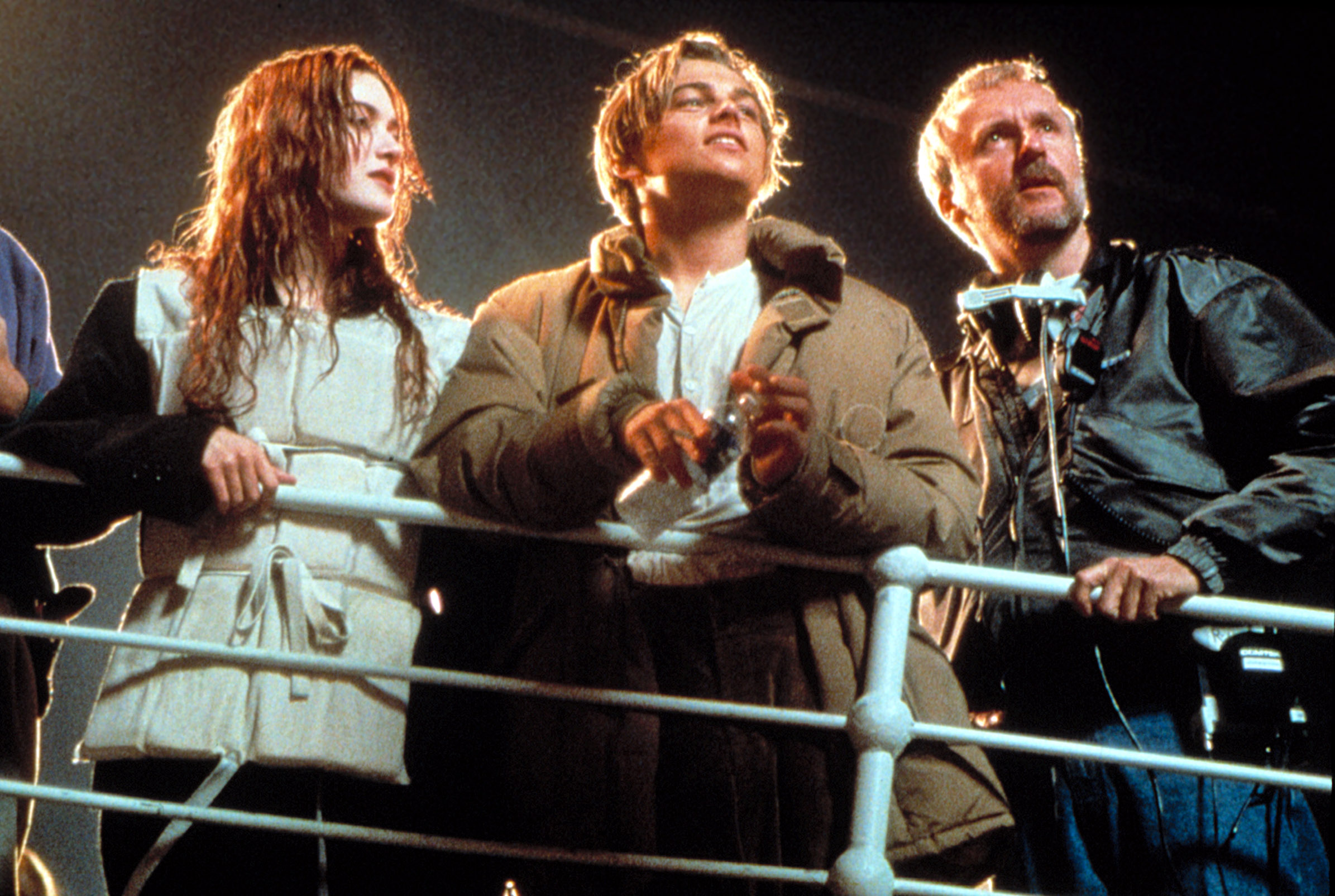
Today is the 20th anniversary of the release of Titanic, so here’s a photo of director James Cameron and stars Kate Winslet and Leonardo DiCaprio on the set of the movie:

Actors in the Spotlight:

For Fandor, Jacob T. Swinney showcases the intensity of The Shape of Water star Michael Shannon:

[embedded content]

Film History of the Day:

In the latest Academy Originals video, lyricist Carol Connors tells the story behind the theme to Rocky:

[embedded content]

Movie Scene Showcase of the Day:

For The New York Times, Christopher Nolan delivers a director commentary for one particular part of Dunkirk in the latest Anatomy of a Scene video:

[embedded content]

Classic Trailer of the Day:

Today is the 15th anniversary of Spike Lee’s 25th Hour. Watch the original trailer for the classic drama below.

[embedded content]

and

Let’s block ads! (Why?)


No Image

12 Dead After Crash Of Tourist Bus Headed For Mayan Ruins In Mexico

Police and paramedics at the scene of a tourist bus crash in eastern Mexico Tuesday. Most of the passengers on board were had arrived aboard cruise ships and were going to view Mayan ruins.

Manuel Jesus Ortega Canche/AFP/Getty Images

hide caption

toggle caption

Manuel Jesus Ortega Canche/AFP/Getty Images

A tour bus destined for Mayan ruins in eastern Mexico flipped over on a two-lane highway early Tuesday, leaving a dozen people dead and many more injured. Among them are some Americans.

In a statement from government officials in the Mexican state of Quintana Roo, where the accident occurred, report there were 12 passengers killed including one girl under 18, and 18 were injured. There were 31 passengers traveling on the bus.

The statement offered no information about what caused the crash.

A U.S. Embassy spokesman in Mexico City said officials were en route to the scene of the accident, about 100 miles from Tulum. But he could not confirm the number of Americans involved in the deadly incident. The official added that those in need of medical attention had been transferred to several nearby hospitals.

The embassy expected to “have eyes on the ground before the end of the day,” according to the spokesman.

Embassy officials issued a statement expressing condolences “to all those affected by this tragedy.”

It said, “We are in contact with local authorities and are working with them to determine if there were U.S. citizens on board. We will continue to monitor the situation.”

We’ve seen reports of an accident involving a bus contracted by Royal Caribbean in Quintana Roo, Mexico. We express our condolences to all those affected. We are working with local authorities to determine if there were U.S. citizens on board.

— Embajada EU en Mex (@USEmbassyMEX) December 19, 2017

Nearly all the passengers aboard the bus were also passengers on two Royal Caribbean cruises — the Celebrity Equinox and Serenade of the Seas — which set off from Miami. The cruise ship company contracted the local tour bus that was headed out on a day-long adventure to ancient Mayan ruins in Chacchoben.

Royal Caribbean’s corporate offices expressed their sadness over Twitter calling the loss of life “heartbreaking” and assured readers the company was assisting with medical care and transportation.

The news from Costa Maya about a bus accident involving #CelebrityEquinox & #SerenadeoftheSeas guests is heartbreaking. Our hearts go out to all those involved. We are doing all we can to care for our guests, including assisting with medical care and transportation.

— RCLcorp (@RCLcorp) December 19, 2017

Our 27 guests were on a bus tour to the Chacchoben Ruins. We are working with the local authorities to learn more about the accident. We are doing all we can to help our guests.

— RCLcorp (@RCLcorp) December 19, 2017

The company also said it had little information about the details of the accident. “Our 27 guests were on a bus tour to the Chacchoben Ruins. We are working with the local authorities to learn more about the accident. We are doing all we can to help our guests.”

Photos and video taken in the aftermath of the accident show the bus on its side, pushed up against a thick brush of trees. Beach towels and bottles of water are strewn across the road.

Costa Maya Mahahual, the bus company involved, told the AP in a statement that in addition to the tourists, a guide and driver were also aboard the bus.

Let’s block ads! (Why?)


No Image

What Happens To Obamacare If Individual Mandate Disappears?

Republicans’ tax overhaul gets rid of the tax penalty for people who fail to maintain insurance coverage. If it becomes law, what happens to the deficit and the number of uninsured?

RAY SUAREZ, HOST:

As the House and Senate vote to overhaul the tax code, they’re also voting to undo a key part of the Affordable Care Act, or Obamacare. The bill gets rid of the tax penalty for failing to maintain insurance coverage. It’s known as the individual mandate, and it’s probably been the most vilified part of the healthcare law. Joining us now is NPR health policy correspondent Alison Kodjak to talk about what happens to Obamacare without the individual mandate. Hi, Alison.

ALISON KODJAK, BYLINE: Hi, Ray.

SUAREZ: So is the assumption that lots of people will simply decide not to buy insurance if there will no longer be a penalty?

KODJAK: Well, some people will. The Congressional Budget Office did an estimate on this, and they say that in the first year that this goes into effect, which is 2019, about 4 million fewer people will have insurance than would if the mandate stayed in place. And by 2027, about 13 million fewer would. Some of those people are doing it by choice, some perhaps because they can’t afford insurance because the Congressional Budget Office also says that premiums will be about 10 percent higher. That also will cut the federal spending by $338 billion because the government will have to spend less on subsidies to help people buy insurance.

But if we talk about the purpose of the mandate, it’s to get people who don’t think they need to buy insurance to buy it for their protection but also to strengthen the market because the more people who buy in – whether they are ill or not, that lowers premiums for everybody.

SUAREZ: Let’s talk a little bit more about the assumptions being made here. The people who decide not to buy insurance because the mandate disappears are people who wouldn’t have wanted to buy insurance in the first place.

KODJAK: Well, yeah, there are definitely those people who just don’t think they need it. They think they’re healthy. They’re young. It’s not worth the money. But there are also people who want insurance but can’t afford the price or don’t believe they can afford the price. I talked to some people during my reporting of this who have really high premiums – over a thousand dollars a month for – you know, there was a young woman with two children who I talked to. And so she’s spending $13,000 a year already and not even necessarily needing a lot of healthcare. And then there are also the people who have just been priced out. It’s just too expensive, especially if they don’t qualify for subsidies. And especially if premiums go up, there might be more of them.

SUAREZ: So the pool of the insured will shrink. Premiums will go up. And I guess the people who are in the insurance market will likely be a little older, a little sicker. Is that the death spiral we’ve heard about for years since the inception of the Affordable Care Act?

KODJAK: Well, that’s a little bit hard to say. The expert opinions are really all over the place on this. The Congressional Budget Office says they think the markets will remain stable in most of the country, and that’s in part because there are still these very generous subsidies for people to buy insurance that will keep a lot of people in the market. If you have income that’s low enough to qualify for a subsidy, insurance actually is quite affordable, and you may decide you really want to have it.

Other analysts I’ve talked to aren’t so sure. They say a lot of young people may drop their Obamacare insurance and buy a policy outside of the ACA markets. President Trump earlier this year issued an executive order encouraging insurance companies to come up with these plans. They can be cheaper, but that’s often because they don’t cover all the things that an ACA-compliant plan has to cover.

SUAREZ: That’s NPR’s Alison Kodjak. Thanks a lot.

KODJAK: Thanks, Ray.

Copyright © 2017 NPR. All rights reserved. Visit our website terms of use and permissions pages at www.npr.org for further information.

NPR transcripts are created on a rush deadline by Verb8tm, Inc., an NPR contractor, and produced using a proprietary transcription process developed with NPR. This text may not be in its final form and may be updated or revised in the future. Accuracy and availability may vary. The authoritative record of NPR’s programming is the audio record.
Let’s block ads! (Why?)


No Image

Today in Movie Culture: Fan-Made 'Man of Steel 2' Trailer, Hugh Jackman's Live 'Greatest Showman' Spot and More

Here are a bunch of little bites to satisfy your hunger for movie culture:

Dream Sequel of the Day:

Supergirl (as played by Alexandra Daddario) is introduced to the DC Extended Universe in Alex Luthor’s trailer for the imagined sequel Man of Steel 2: Man of Tomorrow:

[embedded content]

Easter Eggs of the Day:

You probably went to see Star Wars: The Last Jedi over the weekend, so now you should watch this amusing obligatory guide to Easter eggs from Mr. Sunday Movies:

[embedded content]

Mashup of the Day:

Luke Skywalker travels 30 years ahead in time and winds up helping to blow up Starkiller Base in this Star Wars mashup:

[embedded content]

Cosplay of the Day:

The Last Jedi brought out a lot of Star Wars cosplayers, including the below trio dressed as Poe, Finn and Rose. Follow the link for more cosplay inspired by the new movie.

Here's Some Real Good Star Wars: The Last Jedi Cosplay https://t.co/N3SZf6iG64pic.twitter.com/ueZ4YPx4xd

— Cosplay (@Cosplay4u) December 18, 2017

Acting Lesson of the Day:

In this official Star Wars video, C-3PO performer Anthony Daniels teaches actors how to play droids:

[embedded content]

Fake Plot Song of the Day:

The Battle of Hoth from The Empire Strikes Back becomes a musical number in Bad Lip Reading’s new song “Hostiles on the Hill”:

[embedded content]

Vintage Image of the Day:

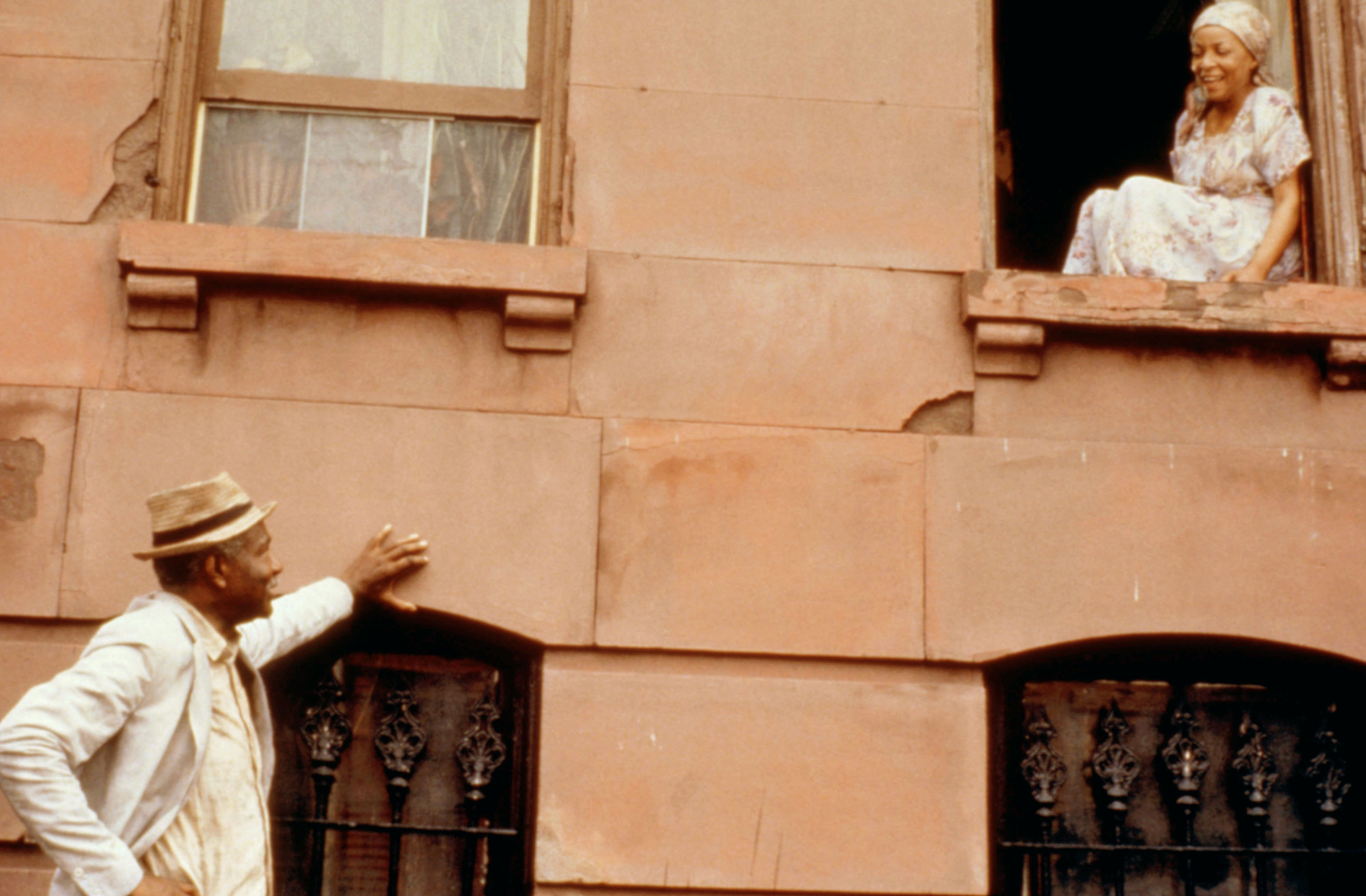
Ossie Davis, who was born 100 years ago today, with wife and co-star Ruby Dee on the set of Do the Right Thing in 1988:

Promo of the Day:

Last night during a break from A Christmas Story Live!, Hugh Jackman, Zendaya and Zac Efron performed this live TV spot for The Greatest Showman:

[embedded content]

Year-End Recap of the Day:

That latest great supercut of the movies of 2017 is this video of 50 movies in five minutes from Little White Lies and editor Luis Azevedo:

[embedded content]

Classic Trailer of the Day:

This week marks the 60th anniversary of the release of Billy Wilder’s Witness for the Prosecution. Watch the original trailer for the classic Agatha Christie adaptation below.

[embedded content]

and

Let’s block ads! (Why?)


No Image

Never Go To Vegas, And Other Unspoken Rules Of Being An A-Lister

Researcher Elizabeth Currid-Halkett says celebrity can be boiled down to a simple formula.

Caiaimage/Sam Edwards/Getty Images/Caiaimage

hide caption

toggle caption

Caiaimage/Sam Edwards/Getty Images/Caiaimage

All social classes have unspoken rules.

From A-list celebrities to teachers, doctors, lawyers, and journalists — there are social norms that govern our decisions, whether we realize it or not.

Researcher Elizabeth Currid-Halkett studies social networks, and has observed certain patterns across swaths of American culture. In her book Starstruck: The Business of Celebrity, she looks at the super elite: the celebrities who populate the Hollywood Hills and the tabloids in our grocery stores. She makes a distinction between fame and celebrity.

“Fame is simply people knowing who you are,” she says. “The sheer number of people who know who someone is, is very different from a public being fixated upon someone.” For example, we all know who Bill Gates is — but we aren’t all wondering what Bill Gates ate for breakfast today, the way we might wonder that about Beyoncé, or Barack Obama, or Jennifer Aniston.

This week on Hidden Brain, we look at the invisible qualities that all celebrities have in common, and how our interest in them builds because of cues we get from one another. Later in the episode, we look at another elite group: the yoga-loving, Whole Foods-shopping, highly-educated group that Elizabeth Currid-Halkett calls The Aspirational Class.

Hidden Brain is hosted by Shankar Vedantam and produced by Maggie Penman, Jennifer Schmidt, Rhaina Cohen, Parth Shah, and Renee Klahr. Our supervising producer is Tara Boyle. You can also follow us on Twitter @hiddenbrain, and listen for Hidden Brain stories each week on your local public radio station.

Let’s block ads! (Why?)


No Image

Food And Drug Administration Plans Crackdown On Risky Homeopathic Remedies

The Food and Drug Administration plans to take action against risky homeopathic remedies under a policy unveiled Monday.

Alexander Baumann/EyeEm/Getty Images

hide caption

toggle caption

Alexander Baumann/EyeEm/Getty Images

Updated at 4:17 p.m. ET to include comment from homeopathic pharmacists.

The Food and Drug Administration said it plans to crack down on the sale of some homeopathic products.

The agency unveiled a new, risk-based approach to regulating homeopathic treatments Monday that aims to protect the public from dangerous products.

“In recent years, we’ve seen a large uptick in products labeled as homeopathic that are being marketed for a wide array of diseases and conditions, from the common cold to cancer,” FDA Commissioner Scott Gottlieb said in a statement announcing the new policy.

“In many cases, people may be placing their trust and money in therapies that may bring little to no benefit in combating serious ailments, or worse — that may cause significant and even irreparable harm because the products are poorly manufactured, or contain active ingredients that aren’t adequately tested or disclosed to patients,” Gottlieb says.

Homeopathy is an ancient practice based on the idea that small traces of substances that cause diseases can actually be used to treat illness. But critics have long charged that there is no scientific evidence to support homeopathy and that some homeopathic products could be dangerous.

Critics have been especially concerned about products being contaminated with dangerous substances, or sold for serious conditions for which other, proven treatments work.

The FDA has issued warnings about specific products in the past, and the Federal Trade Commission has required better labeling of homeopathic products.

But over the past decade, the homeopathic drug market has grown “exponentially,” according to the FDA, becoming a nearly $3 billion industry in the United States.

The FDA has seen a “corresponding increase in safety concerns, including serious adverse events” resulting from homeopathic products, the FDA says.

In response to the growth and continuing concerns, the FDA convened a public hearing to revisit a 1988 decision not to regulate homeopathic products like standard medical treatments.

Under the new policy, the FDA will more carefully scrutinize these products, especially those sold to treat infants and children, those containing ingredients with significant safety concerns, such as belladonna, and those sold for serious conditions such as opioid addiction, heart disease and cancer.

“We respect that some individuals want to use alternative treatments, but the FDA has a responsibility to protect the public from products that may not deliver any benefit and have the potential to cause harm,” Gottlieb says.

Mark Land, president of the American Association of Homeopathic Pharmacists, said in an email that the group “shares the FDA’s commitment to protecting public health,” and noted the action “would not materially affect the vast majority of homeopathic drug products available in the United States.”

“As always, AAHP is committed to ensuring that consumers have access to natural, safe, homeopathic medicines in the United States and throughout the world,” Land said.

During a briefing for reporters about the proposed new policy, FDA officials stressed that the agency had no intention of requiring most homeopathic products that are on the market to undergo formal FDA review, however, or to remove most homeopathic products. So people who believe such products help them will still have access to many of them, the officials said.

The proposed policy will be open for public comment for 90 days. The agency will review the comments before making the policy final.

The agency’s move was praised by long-term critics of the industry.

“I think that it’s about time that these snake oil salesmen were held accountable for what they’re selling,” says Paul Offit, a pediatrician at the Children’s Hospital of Philadelphia. “The consumer will clearly benefit.”

Let’s block ads! (Why?)


No Image

Around The World In 42 Days: Frenchman Sets New Sailing Record

French skipper, François Gabart, waves aboard his 100-foot trimaran as he celebrates his world record off Brest harbor, western France, on Sunday.

Thibault Camus/AP

hide caption

toggle caption

Thibault Camus/AP

There is a new world record for sailing solo around the world: 42 days, 16 hours, 40 minutes and 35 seconds. If verified, it is more than 6 days faster than the previous record, set a year earlier.

Gabart reacts after his world record, in the Brest harbor, western France, on Sunday.

Thibault Camus/AP

hide caption

toggle caption

Thibault Camus/AP

French sailor François Gabart, aboard a 100-foot trimaran, set out on Nov. 4 to break the record held by countryman Thomas Coville. On Sunday, Gabart crossed the virtual finish between France’s northwest tip and Lizard Point in southwest England at 0145 GMT before turning homeward to Brest in northwestern France.

He reportedly averaged 27.2 knots (31.3 mph) over 27,859.7 nautical miles.

[embedded content]
YouTube

Making such a journey is a difficult feat. It involves tackling the cold and stormy Southern Ocean that rings Antarctica, all the while tending a high-performance sailing vessel at the edge of its performance envelope.

After reaching Brest, Gabart, 34, said he was “aching all over.”

“[It’s] been like that for weeks, weeks since a proper sleep – I can hardly go on,” he told reporters after making landfall at Brest.

“It was hard and I was on the very edge of things the whole time.”

Exhausted or not, Gabart managed to share a bottle of champagne with his shore crew.

?Les premières images de l’arrivée du #trimaranMACIF quai Malbert à @BrestFr ! ?? #RecordTourDuMondepic.twitter.com/KwGUORSlsQ

— trimaranMACIF (@trimaranMACIF) December 17, 2017

“It hasn’t sunk in yet but I know it’s a great time,” he said.

Britain’s Dame Ellen MacArthur won the title for fastest non-stop circumnavigation in 2005, but lost it to Francis Joyon of France. She regained it three years later.

Gabart’s record must be verified by the World Sailing Speed Record Council, which will scrutinize his vessel’s GPS data before signing off on the new record.

Let’s block ads! (Why?)


No Image

Carolina Panthers Owner Jerry Richardson Says He Will Sell Team

Carolina Panthers owner Jerry Richardson watches the action during the first half of an NFL football game between the Carolina Panthers and the Green Bay Packers in Charlotte, N.C., on Sunday.

Mike McCarn/AP

hide caption

toggle caption

Mike McCarn/AP

Carolina Panthers owner Jerry Richardson announced Sunday that he would put his team up for sale at the end of the season after the National Football League said it was opening an investigation into accusations of workplace misconduct against him.

“I believe that it is time to turn the franchise over to new ownership,” Richardson, 81, said in a statement on the team’s website. “Therefore, I will put the team up for sale at the end of this NFL season.”

Two days ago, the team said it was conducting an internal investigation into Richardson’s conduct, but did not specify the nature of the allegations. Sports Illustrated says they include sexual harassment of multiple female employees and a racial slur.

Hours before Richardson’s announcement on Sunday, NFL.com reported that the league was opening its own investigation into the allegations.

In the statement on Friday announcing the internal investigation, the Panthers said the team was “committed to ensuring a safe, comfortable and diverse work environment where all individuals, regardless of sex, race, color, religion, gender, or sexual identity or orientation, are treated fairly and equally.”

The Panthers announced that former White House chief of staff to President Clinton, Erskine Bowles — who is a minority owner of the team — would oversee the investigation by law firm Quinn Emanuel Urquhart and Sullivan.

SI, quoting unnamed sources, detailed what it claims were inappropriate comments made by Richardson about how female employees fit into their jeans, as well as “Multiple female employees [recalling] to SI that Richardson asked them if he could personally shave their legs,” the magazine said.

” … on multiple occasions when Richardson’s conduct has triggered complaints—for sexual harassment against female employees and for directing a racial slur at an African American employee—he has taken a leaf from a playbook he’s deployed in the past: Confidential settlements were reached and payments were made to complainants, accompanied by non-disclosure and non-disparagement clauses designed to shield the owner and the organization from further liability and damaging publicity,” according to SI.

Following Richardson’s announcement of the team’s impending sale, Sean “Diddy” Combs and Golden State Warriors star Stephen Curry both issued tweets saying they were interested in buying.

There are no majority African American NFL owners. Let’s make history.

— Diddy (@Diddy) December 18, 2017

I? want in! https://t.co/XvvC1vo7xI

— Stephen Curry (@StephenCurry30) December 18, 2017

ESPN writes: “Richardson was awarded the franchise in October 1993. The Panthers played their first season in 1995. Richardson previously had a plan in place that called for the team to be sold within two years of his death. Richardson reached a deal with Charlotte officials in 2013, when the city agreed to pay $87.5 million in upgrades to Bank of America Stadium that would keep the Panthers there through June 2019.”

Let’s block ads! (Why?)


No Image

Airport Power Restored In Atlanta But Thousands Are Stranded

Passengers wait after the lights went out at Hartfield-Jackson Atlanta International Airport on Sunday. Many travelers were stuck in grounded planes for hours.

Branden Camp/AP

hide caption

toggle caption

Branden Camp/AP

Updated 12:55 a.m. ET Monday

People traveling through Atlanta’s Hartsfield-Jackson International Airport struggled to get home Sunday after a power outage there forced hundreds of flight cancellations.

Officials announced that power had been fully restored to the airport shortly after midnight.

The power went out early Sunday afternoon and hundreds of flights at the world’s busiest airport ended up canceled. Many travelers were stuck in grounded planes for hours.

Power is back ON in Atrium and Concourses T, A and B!

— Atlanta Airport (@ATLairport) December 18, 2017

Shortly after 10 p.m., Atlanta Mayor Kasim Reed tweeted that all passengers “have been safely de-planed.”

Power was restored in some sections of the airport after 11 p.m.

Others, like Stephen Mack, were stranded in crowded terminals, Johnny Kauffman of member station WABE reported.

“We are all hungry, tired, frustrated,” Mack said.

After 10.5 hour-long international flight departing at 4:55 am ET, we now approach hour 5 on the tarmac at Atlanta. No food. But everyone is holding it together. pic.twitter.com/tcPkvGtdP9

— Ellen L. Carmichael (@ellencarmichael) December 18, 2017

According to airport officials, Georgia Power said the outage was tied to a fire that caused extensive damage to an underground electrical facility.

Delta Air Lines said about 900 of its flights were canceled Sunday and about 300 flights will be canceled Monday. Southwest Airlines cancelled all of its flights in and out of Atlanta. And the effects were felt at other airports around the country.

In Atlanta, traffic backed up around the airport, and people walked miles to their hotels. The City of Atlanta tweeted it would provide shuttles to the Georgia International Convention Center “for anyone who needs a place to stay for the night.”

Dr. Martha Brewer, an OB-GYN from Atlanta, and her wife were scheduled to fly to New York’s JFK Airport to catch a flight to Barcelona. When they arrived at the Atlanta airport just after 2 p.m., Brewer said, “somebody was screaming at us that the power was out.”

They made their way into a darkened terminal. “There were a ton of people in there and it was very dark except for a few emergency lights,” Brewer said. “People were standing in line. Nothing was going on. There were no Delta people. Nobody was telling anybody anything.

“We found out what was going on by calling a relative to see if anything was on TV or to look on the Internet,” Brewer said.

Finally, after waiting at the airport for about 90 minutes, they called a friend and asked her to hire an Uber to pick them up. After arriving back home, Brewer said the couple rebooked their flight to Barcelona for Monday.

They ended up taking an Amtrak train to New York.

Let’s block ads! (Why?)