
With One Billboard Inside Tuscaloosa, Ala., UCF Fans Drum Up A Little Drama

The University of Central Florida’s Dredrick Snelson gets a lift after a touchdown against Auburn in the Peach Bowl earlier this month. Not pictured: the Alabama Crimson Tide, targets of a trolling campaign by some very determined UCF fans.
Kevin C. Cox/Getty Images
hide caption
toggle caption
Kevin C. Cox/Getty Images
As you may have heard, the Alabama Crimson Tide just won the national college football championship. Again. In a feat of near-Groundhog Day repetition, the program has now taken home a whopping five of the past nine titles.
As you may not have heard, the University of Central Florida Knights also won the national championship … according to UCF fans, at least.
The team finished its season with a perfect record, unlike Alabama, but because its opponents were deemed too weak, the school missed the playoff to decide the official national champion. So instead, UCF went to the Peach Bowl and beat Auburn, the one team that beat Alabama all year.
By the little-known transitive property of college football, that means UCF won the title. Or something.
alabama is ‘national champs’
but they lost a gameUCF is ‘national champs’
but they didn’t lose all seasonalabama lost to auburn
UCF beat auburnUCF is the National Champion
— UCF probz ? (@ucf_problems) January 9, 2018
Anyway, that was enough for Florida Gov. Rick Scott, who declared them national champions by official proclamation. It was enough for UCF’s athletic director, too: Danny White confirmed that the school was paying the team’s assistant coaches bonuses for winning the title. (Head coach Scott Frost had already gotten all the bonuses he was contractually allowed, apparently.)
Some UCF fans, however, want more: They want to see their squad actually play the Crimson Tide. And they laid down cash in order to lay down their gauntlet.
Here’s the billboard now perched in Tuscaloosa, Ala., proud home of the Crimson Tide:
UCF with a message for @AlabamaFTBL on McFarland Blvd. in Tuscaloosa. @BamaOnLine247@Tide1029fmpic.twitter.com/J1ijRMywWq
— Travis Reier (@travisreier) January 10, 2018
“Congratulations!” it reads. “How about a home & home series with UCF?”
Now, it should be noted: The chances this will happen — this year or any year — teeter somewhere between slim and none. But that didn’t stop 37 UCF fans from pooling $1,665 on GoFundMe for the billboard, according to ESPN.
“We felt like this year’s team could run with anyone in the country, and the Peach Bowl win [over Auburn] proved that,” said Sean Barakett, who says he contributed $100, told the network. “All we needed was a chance to play harder opponents.”
They may be waiting a while before they get their response.
Today in Movie Culture: 'Star Trek' vs. 'Star Wars,' Fan-Made 'Alien' Roller Coaster Demo and More
Here are a bunch of little bites to satisfy your hunger for movie culture:
Mashup of the Day:
Captain Kirk has the Force in this fan-made Star Trek and Star Wars crossover from Styder HD (via Screen Rant):
[embedded content]
Dream Ride of the Day:
Now that Disney is going to own the Alien franchise, maybe they can add this awesome roller coaster idea to one of their parks (via Geekologie):
[embedded content]
Reworked Franchise of the Day:
Maybe the current DC movies would be more popular if Henry Cavill’s mustache wasn’t digitally erased for his portrayl of Superman:
[embedded content]
Filmmaking Tip of the Day:
For Filmmaker IQ, John P. Hess tells directors how to get their short films into festivals:
[embedded content]
Vintage Image of the Day:
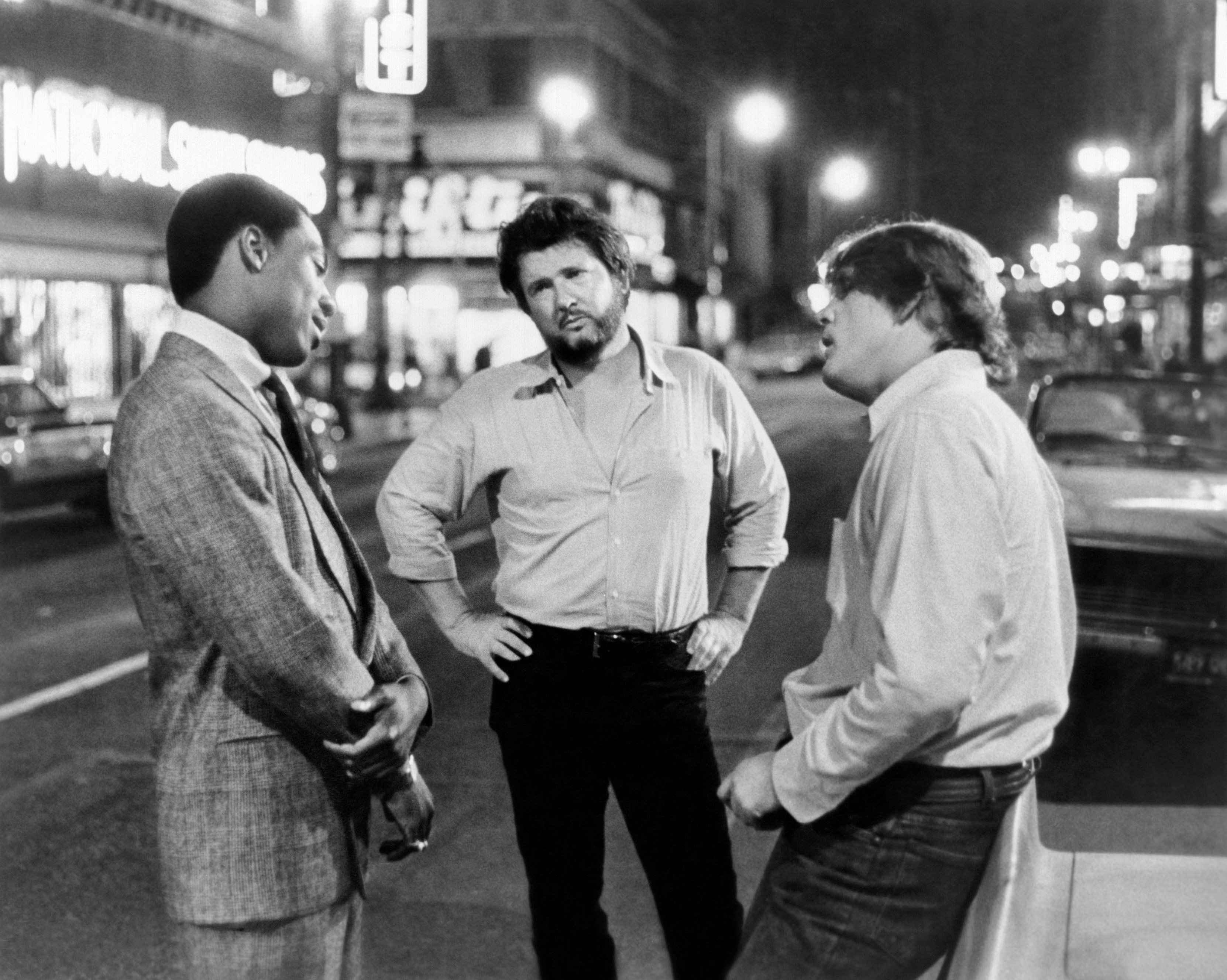
Walter Hill, who turns 76 today, directs Nick Nolte and Eddie Murphy on the set of 48 Hrs. in 1982:
Filmmaker in Focus:
Guillermo del Toro talks about his love of monsters in this new video essay from The Solomon Society:
[embedded content]
Theme Song Cover of the Day:
Survivor’s “Eye of the Tiger” from the Rocky movies performed by computer hardware (via Geekologie):
[embedded content]
Movie Trivia of the Day:
See how much you don’t know about Lethal Weapon with this list of trivia from CineFix:
[embedded content]
Cosplay of the Day:
Check out all the Freddy Krueger cosplay in this new trailer for the Nightmare on Elm Street fandom documentary FredHeads (via /Film):
[embedded content]
Classic Trailer of the Day:
The year is now 2018, which is also the time in which the 1975 movie Rollerball is set. Here’s the original trailer for the sci-fi classic:
[embedded content]
and
Top Fox News D.C. Reporter James Rosen Left Network After Harassment Claims

Former colleagues allege former Fox News reporter James Rosen was ousted after sexually harassing female co-workers.
Shannon Stapleton/Reuters
hide caption
toggle caption
Shannon Stapleton/Reuters
On the Friday before Christmas, Fox News confirmed that its chief Washington correspondent, James Rosen, had left the network. He had worked there for 18 years and become something of a legend. The U.S. Justice Department under the Obama administration was so frustrated by his reporting on U.S. intelligence about North Korea that it conducted a leak investigation into his sources.
The network cited no reason for Rosen’s exit and did not announce it on the air. According to Rosen’s former colleagues, however, he had an established pattern of flirting aggressively with many peers and had made sexual advances toward three female Fox News journalists, including two reporters and a producer. And his departure followed increased scrutiny of his behavior at the network, according to colleagues.
This story is based on interviews with eight of Rosen’s former colleagues at the Fox News bureau in Washington, D.C., just a few blocks from the U.S. Capitol. Rosen declined to comment to NPR after it set out in detail what it intended to report.
Rosen’s behavior was drawing attention from Fox News at a time when its controlling owner, Rupert Murdoch, declared there had been no allegations of sexual misconduct at the network since the ouster of the late Fox News chairman and CEO, Roger Ailes, in July 2016.
“There was a problem with our chief executive, sort of, over the years, isolated incidents,” Murdoch said in a mid-December interview with Sky News, another news outlet in which he has a controlling stake. He then said Ailes was gone in three or four days after complaints were made. (Murdoch actually ousted Ailes 13 days after former host Gretchen Carlson filed suit against Ailes on July 6, 2016. Five years earlier, Fox News had paid $3 million to settle allegations from a former network booker that Ailes had coerced sex from her. The Murdochs say they were not aware of the payment at the time.)
Murdoch went on: “There’s been nothing else since then. That was largely political because we’re conservative.”
Murdoch’s 21st Century Fox, Fox’s parent company, had to issue a statement cleaning up the damage caused by those remarks among outraged female employees. Many female former Fox News journalists other than Carlson had come forward to attest to sexual harassment by Ailes (all of which he denied through his lawyer before Ailes’ death in 2017).
Yet Ailes was not the only prominent Fox figure accused of sexual harassment. Top prime-time host Bill O’Reilly was bought out of his contract by Fox in the spring of 2017 after The New York Times detailed the scope of multiple sexual harassment allegations against him for which he agreed to pay settlements totaling approximately $45 million to quiet them; the host Eric Bolling was fired after being accused of sending unsolicited sexually explicit texts to several female colleagues; and other top executives were ushered out as having facilitated or tolerated such behavior. A midlevel Fox News executive, Francisco Cortes, was also fired in 2017 after being accused of sexually assaulting a former Fox News contributor.
O’Reilly, Bolling and Cortes have each denied any wrongdoing. A judge this week dismissed Cortes’ allegations contained in a lawsuit against 21st Century Fox that it fired him and leaked news of the accusation to scapegoat him as a public relations ploy.
21st Century Fox and Fox News say the removal of those executives and a raft of new procedures show the network’s commitment to offering a fair and welcoming workplace for women.
The Ailes and O’Reilly sexual harassment scandals inspired further revelations about related accusations against powerful figures across numerous media institutions, including NPR, which fired two male news executives last fall.
Current and former Fox News Washington journalists characterize the Washington bureau as retaining something of a Mad Men ethos, with some male reporters frequently sending racy “topline” notes through the network’s internal messaging service.
The accusations against Rosen, who is married with young children, are more severe than that. He developed a reputation as a talented and ambitious journalist called “the professor” on the air by former political anchor Brit Hume for his interest in Watergate (Rosen wrote a book focusing on the life of former Attorney General John Mitchell that argued for a kinder reassessment of his role in that Nixon-era scandal). Rosen has sent such messages, according to his former female co-workers. But in three instances he made overt physical and sexual overtures, according to the accounts of numerous former Fox News colleagues who heard about the incidents contemporaneously.
In the winter following the September 2001 terrorist attacks, a female Fox News reporter joined the bureau from New York. In a shared cab ride back from a meal, Rosen groped her, grabbing her breast. After she rebuffed his advance, Rosen sought to steal away her sources and stories related to his interests in diplomacy and national security. That’s according to four colleagues who say she relayed the episode as a warning about Rosen’s behavior. The reporter declined to comment for this story. (NPR has decided not to name the women in this article as they have not granted permission to do so.)
In a subsequent episode several years later, a female producer covering the State Department alleged that Rosen had directly sexually harassed her. A foreign national, she subsequently accepted a deal from Fox that enabled her to extend her stay in the U.S. in exchange for not making her complaint public, according to several of her former colleagues. The producer, who now works for a foreign-based news organization, is abroad with family and did not respond to several detailed messages left by email and phone seeking comment.
Late last spring, Rosen turned his attention to a younger female reporter, according to two colleagues who say she told them of the incident shortly afterward. Returning from a lunch together, Rosen physically tried to kiss her in the elevator ride back to the office, and once refused, attempted forcibly to kiss her again. According to a colleague, he then asked the reporter to keep the approach quiet and offered her unsolicited help in getting more time on Bret Baier’s nightly political newscast, Special Report. The female reporter declined to comment for this story.
Fox News executives say privately it takes time to reverse problems in a culture set from the top by Ailes.
Under a new top human resources executive, Fox News last summer placed a human resources employee in the bureau for the first time. In response to detailed questions, Fox News declined to comment on its Washington bureau or Rosen beyond affirming his departure.
Yet some female employees at Fox’s D.C. bureau say the company seemed late to turn its attention southward from its main headquarters in New York City, given the Ailes scandal. The bureau is a large outpost and a mainstay of the network’s coverage. Its reporters, producers and hosts serve up stories, segments and shows that help fuel Fox programming throughout the day and evening.
And employees interviewed pointed to earlier related incidents in D.C. The former Fox News correspondent Rudi Bakhtiar alleged that she was dismissed in 2007 after she made complaints that the new Washington bureau chief, Brian Wilson, had propositioned her. After she filed an internal complaint, Fox’s Ailes informed her she was being let go because of her performance. She was paid an undisclosed sum in a private settlement.
In another instance, Catherine Herridge, a former Fox weekend host who is now a Washington-based national security correspondent for the network, made a range of allegations in a November 2010 complaint filed with the U.S. Equal Employment Opportunity Commission — including sexual and age discrimination, unequal pay, and job retaliation for raising complaints internally. She alleged she had been subjected to a “glass ceiling.” She also said that Fox News general counsel Dianne Brandi had conducted the internal investigation even though she was one of the people identified in Herridge’s complaint.
The EEOC said it did not have sufficient evidence to support many of Herridge’s accusations but ultimately sued Fox News, alleging it had unlawfully retaliated against her. The suit was dismissed. Herridge and Fox signed a new contract and she remains on the air.
Brandi, then the network’s top lawyer, characterized the EEOC’s suit as “politically motivated.” Brandi is now on extended leave from Fox News, which is the focus of an ongoing criminal inquiry by federal prosecutors for its handling of payments to women who alleged sexual harassment there.
Rosen’s departure was a surprise — with no celebration of his achievements on the air, no announcement to viewers, nor much warning to colleagues. He had attended a holiday party for Baier’s show, Special Report, just a few days earlier.
Fallout From 'Nuclear Button' Tweets: Jump In Sales Of Radiation Drug

Pharmacist Donna Barsky measures potassium iodide at the Texas Star Pharmacy in 2011 in Plano, Texas.
Richard Matthews/AP
hide caption
toggle caption
Richard Matthews/AP
A Twitter battle over the size of each “nuclear button” possessed by President Trump and North Korea’s Kim Jong Un has triggered a surge in sales of a drug that protects against radiation poisoning.
Troy Jones, who runs the website www.nukepills.com, said demand for potassium iodide soared last week, after Trump tweeted that he had a “much bigger & more powerful” button than Kim – a statement that raised new fears about an escalating threat of nuclear war.
“On Jan. 2, I basically got in a month’s supply of potassium iodide and I sold out in 48 hours,” said Jones, 53, who is a top distributor of the drug in the United States. His Mooresville, N.C., company sells all three types of the over-the-counter product approved by the Food and Drug Administration. No prescription is required.
North Korean Leader Kim Jong Un just stated that the “Nuclear Button is on his desk at all times.” Will someone from his depleted and food starved regime please inform him that I too have a Nuclear Button, but it is a much bigger & more powerful one than his, and my Button works!
— Donald J. Trump (@realDonaldTrump) January 3, 2018
In that two-day period, Jones said, he shipped about 140,000 doses of potassium iodide, also known as KI, which blocks the thyroid from absorbing radioactive iodine and protects against the risk of cancer. Without the tweet, he typically would have sent out about 8,400 doses to private individuals, he said.
Jones also sells to government agencies, hospitals and universities, which aren’t included in that count.
Alan Morris, president of the Williamsburg, Va.-based pharmaceutical company Anbex Inc., which distributes potassium iodide, said he has seen a bump in demand, too.
“We are a wonderful barometer of the level of anxiety in the country,” Morris said.
A spokeswoman for a third company, Recipharm AB, which sells low-dose KI tablets, declined to comment on recent sales.
Jones said this isn’t the first time in recent months that jitters over growing nuclear tensions have boosted sales of the drug, which comes in tablet and liquid form and should be taken within hours of exposure to radiation.
It’s the same substance often added to table salt to provide trace amounts of iodine that ensure proper thyroid function. Jones sells his tablets for about 65 cents each, though they’re cheaper in bulk. Morris said he sells the pills to the federal government for about a penny apiece.
Yet, neither the FDA nor the Centers for Disease Control and Prevention recommends that families stockpile potassium iodide as an antidote against nuclear emergency.
“KI (potassium iodide) cannot protect the body from radioactive elements other than radioactive iodine — if radioactive iodine is not present, taking KI is not protective and could cause harm,” the CDC’s website states.
The drug, which has a shelf life of up to seven years, protects against absorption of radioactive iodine into the thyroid. But that means that it protects only the thyroid, not other organs or body systems, said Dr. Anupam Kotwal, an endocrinologist speaking for the Endocrine Society.
“This is kind of mostly to protect children, people ages less than 18 and pregnant women,” Kotwal said.
States with nuclear reactors and populations within a 10-mile radius of the reactors stockpile potassium iodide to distribute in case of an emergency, according to the Nuclear Regulatory Commission. An accident involving one of those reactors is far more likely than any nuclear threat from Kim Jong Un, Anbex’s Morris said.
Still, the escalating war of words between the U.S. and North Korea has unsettled many people, Jones said. Although some of his buyers may hold what could be regarded as fringe views, many others do not.
“It’s moms and dads,” he said. “They’re worried and they find that these products exist.”
Such concern was underscored last week, when the CDC announced a briefing on the “Public Health Response to a Nuclear Detonation.” One of the planned sessions is titled “Preparing for the Unthinkable.”
Hundreds of people shared the announcement on social media, with varying degrees of alarm that it could have been inspired by the presidential tweet.
Does 21st Century America realize the horror of all of this?
Remember duck-and-cover?
Time to watch “On The Beach” for a little wake-up reality.#VeteransAgainstTrump@TheDemocrats
RT
The #CDC Wants to Get People Ready for a Nuclear Detonation https://t.co/MP4h34p4IA— Jackson Steele (@askboomer1949) January 8, 2018
A CDC spokeswoman, however, said the briefing had been “in the works” since last spring. The agency held a similar session on nuclear disaster preparedness in 2010.
“CDC has been active in this area for several years, including back in 2011, when the Fukushima nuclear power plant was damaged during a major earthquake,” the agency’s Kathy Harben said in an email.
Indeed, Jones saw big spikes in potassium iodide sales after the Fukushima Daichii disaster, after North Korea started launching missiles — and after Trump was elected.
“I now follow his Twitter feed just to gauge the day’s sales and determine how much to stock and how many radiation emergency kits to prep for the coming week,” Jones said, adding later: “I don’t think he intended to have this kind of effect.”
Kaiser Health News is a nonprofit news service covering health issues. It is an editorially independent program of the Kaiser Family Foundationthat is not affiliated with Kaiser Permanente. Follow JoNel Aleccia on Twitter: @JoNel_Aleccia.
How Instant Replay Sucks The Fun From Football

Commentator Mike Pesca says watching football is no longer just glorious enjoyment of fantastic plays. With the NFL’s frequent use of instant replay, it’s become an exercise in scrutiny and doubt.
STEVE INSKEEP, HOST:
The Super Bowl is just weekends away – four of them. Commentator Mike Pesca is already anxious – not about which team will make the Super Bowl or which team will win but the referees will rule.
MIKE PESCA, BYLINE: To me, the word catch means the act of grasping and holding a projectile, but the NFL has expanded the definition. According to the official rulebook, if a player is thought to have caught the ball, he, quote, “must maintain control of the ball until after his initial contact with the ground. And if the ball touches the ground before he regains control, it is not a catch.” Jargony definitions of a simple act are not actually the problem here. The problem is this definition leaves open the possibility that a catch – regarded as a catch since the pioneer and coach Newt Rockne conceived of the forward pass – could actually become an un-catch (ph) when subjected to withering scrutiny.
In today’s NFL, we have the technology. We can scrutinize every play. We can observe, dissect, replay and debate every squirt and wiggle of the spheroid in the receiver’s hands. And what should be the most glorious moments of a football game are second-guessed before they’re even first experienced. Here’s Tony Romo, CBS announcer, analyzing the only touchdown of last weekend’s playoff game between Jacksonville and Buffalo.
(SOUNDBITE OF ARCHIVED RECORDING)
JIM NANTZ: He’s got his man for the touchdown.
TONY ROMO: It was good defense, and it was a great throw. I got to make sure he caught this, though. That ball looked like it may have moved in his hands.
PESCA: It didn’t move. It was a touchdown, and it was met by doubt when it should have been met by rapture. It’s not just catches, all plays in a sport that should be dictated by sinew and fast-twitch muscles are now mere excuses for cautious forensic videography. Here is Sean McDonough’s call on ESPN in what should have been the most interesting play of the game between the Titans and Chiefs.
(SOUNDBITE OF ARCHIVED RECORDING)
SEAN MCDONOUGH: It deflects back to him for a touchdown for the moment. But was he across the line of scrimmage?
PESCA: He wasn’t. That call should have gone – Mariota, pass deflected. He caught it. Mariota caught it himself, of all the crazy backwards inverted abaft plays. But no, instead of celebrating, we had to dwell on it. We had to stew in our own doubt. Baseball announcer Jack Buck, in one of the most famous home run calls ever, yelled, I don’t believe what I just saw. Now, announcers sheepishly dampen the marvel. Now, we don’t believe what we just saw. And this could be an explanation for the NFL’s modest decline in popularity, along with politics and head trauma.
We no longer know what we’ve just seen. We have to stop and debate what was once evident. We’re not an audience. We’re land surveyors or jewelers squinting through a loop. As with so many aspects of life, technology has promised clarity, but, in fact, it has muddied our experience. Referees were once the gatekeepers. They were sometimes wrong, but their word was final. And now that these arbiters have given way to ambiguity, we are finding ourselves unpleasantly awash in uncertainty.
INSKEEP: I don’t believe what I just heard. Mike Pesca, the author of the forthcoming book “Upon Further Review: The Great What-Ifs In Sports History’ and also the host of the Slate podcast “The Gist.”
Copyright © 2018 NPR. All rights reserved. Visit our website terms of use and permissions pages at www.npr.org for further information.
NPR transcripts are created on a rush deadline by Verb8tm, Inc., an NPR contractor, and produced using a proprietary transcription process developed with NPR. This text may not be in its final form and may be updated or revised in the future. Accuracy and availability may vary. The authoritative record of NPR’s programming is the audio record.
Today in Movie Culture: Imagining Vin Diesel as Bloodshot, Alternate 'Thor: Ragnarok' Endings and More
Here are a bunch of little bites to satisfy your hunger for movie culture:
Casting Rendering of the Day:
With Vin Diesel in talks to star in Bloodshot, BossLogic shows us what he could look like as the title character:
Worked with @ComicBook on @vindiesel as #bloodshot for the rumoured movie casting, I actually would like to see this.
Aaaaaand now sleep ?? pic.twitter.com/8vfV3isQsG
— BossLogic (@Bosslogic) January 9, 2018
Alternate Endings of the Day:
Thor: Ragnarok could have concluded a lot earlier, but then there wouldn’t have any Hulk or Valkyrie, per the latest edition of How It Should Have Ended:
[embedded content]
Cosplay of the Day:
Speaking of Marvel movies, here’s some great T’Challa cosplay in honor of tickets for Black Panther going on sale:
Here's Some A+ Black Panther Cosplay https://t.co/3kl5Bg4hMtpic.twitter.com/2bhH27zjsf
— Cosplay (@Cosplay4u) January 9, 2018
Impersonations of the Day:
Watch The Post stars Tom Hanks and Meryl Streep imitate each other’s characters on Ellen:
[embedded content]
Truthful Marketing of the Day:
If only the real trailers for Mother! were this honest, maybe it wouldn’t have gotten an ‘F’ grade on CinemaScore:
[embedded content]
Vintage Image of the Day:
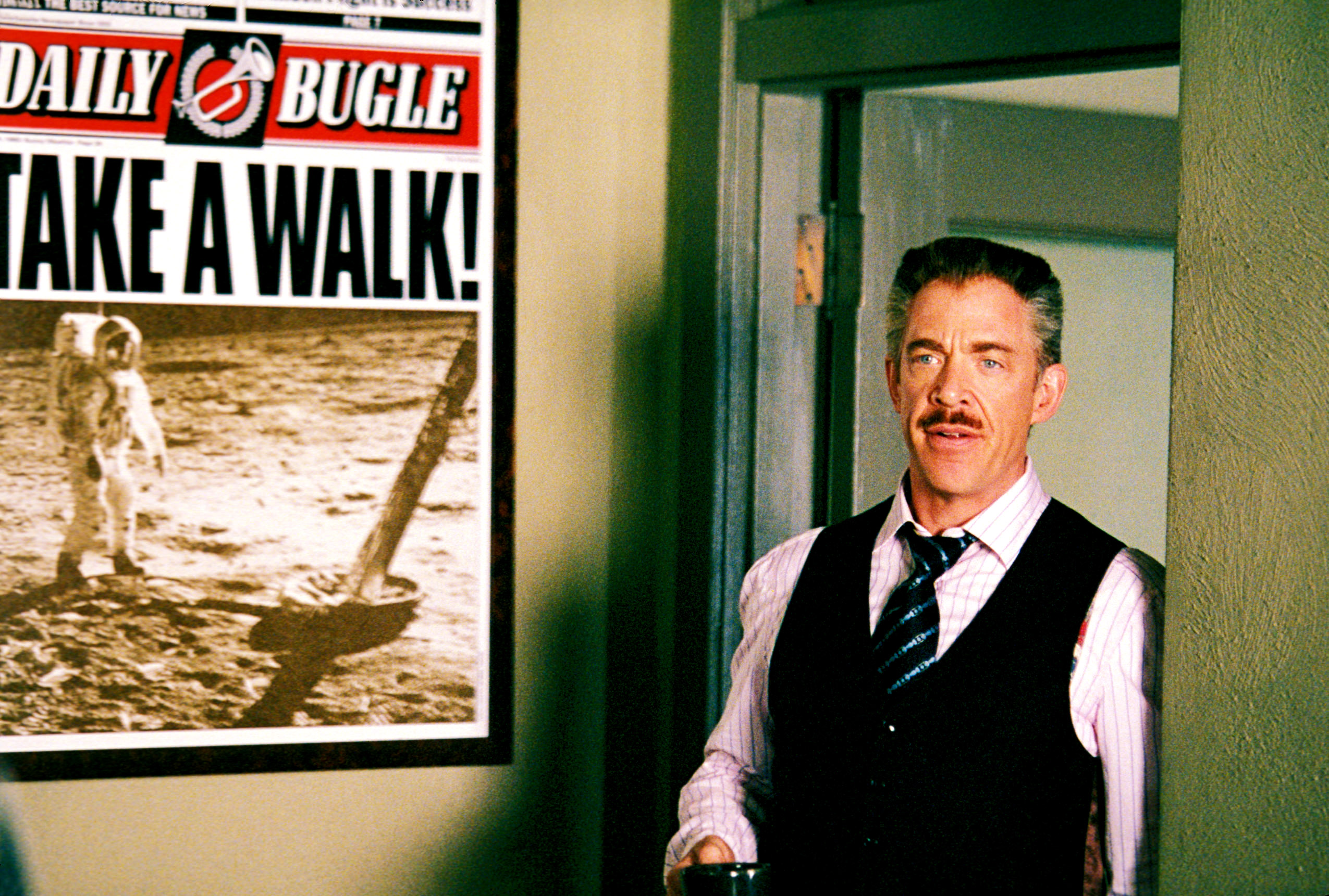
J.K. Simmons, who turns 63 today, had a breakthrough in his career with his scene-stealing turn as J. Jonah Jameson in the 2000 superhero movie Spider-Man, seen below.
Filmmaker in Focus:
Channel Criswell showcases the work of filmmaker Michael Haneke in this video essay on “cinematic truths and realities lies”:
[embedded content]
Movie Comparison of the Day:
Scenes from The Prince and the Showgirl are compared side by side with the redone versions for My Week with Marilyn in this video by Dimitri Blu:
[embedded content]
Rethought Movie of the Day:
In this video essay, Take Me To Your Cinema suggests that Stop Making Sense should be considered a musical rather than a concert film (via Little White Lies):
[embedded content]
Classic Trailer of the Day:
With Paddington 2 out in theaters this week, let’s look back at the original trailer for the first movie from 2014:
[embedded content]
and
Advocates Fear Tax Bill Will Worsen U.S. Affordable Housing Shortage

The U,S, faces a severe shortage of affordable housing, and housing advocates fear the recent tax bill and potential budget cuts will make matters worse.
ARI SHAPIRO, HOST:
Poor families in the United States are having a hard time finding affordable places to live. Tenant advocates worry that the problem could get worse under the new tax law, along with potential cuts in housing aid. NPR’s Pam Fessler recently went to Wisconsin, where the supply of affordable housing is getting squeezed.
HEINER GIESE: If you look at this huge vacant lot, this was all occupied at one time.
PAM FESSLER, BYLINE: Heiner Giese is driving around an old neighborhood on the north side of Milwaukee past modest single-family homes and duplexes. But almost every block also has a few empty lots, and many of the houses that are still standing are boarded up, waiting to be torn down or worse.
GIESE: Yeah. This place burned right here to the next. This place burned, I think.
FESSLER: Giese is a local landlord. He says in recent years, many other landlords have lost or abandoned houses here because they can’t pay their mortgage and other bills.
GIESE: I don’t know what this is here. This one says for sale.
FESSLER: He says it’s especially hard for landlords to maintain these houses if tenants get behind on their rent. And that’s a big problem around here. A recent census found that more than 50,000 families in Milwaukee County had to spend more than half their income on housing. And that’s increasingly the case for low-income families nationwide as the stock of affordable housing shrinks.
ROB DICK: There is no county in the U.S. where you can work a minimum wage job and afford a two-bedroom apartment.
FESSLER: Rob Dick runs the housing authority in nearby Dane County, home of Madison, the state capital. Average rent for a small apartment there is almost $1,100 a month. So he does the math.
DICK: Seven twenty-five times 40 times four…
FESSLER: And comes up with this.
DICK: Three minimum wage jobs full time can’t afford a two-bedroom in Dane County.
FESSLER: Dick says the county needs to build a thousand new affordable units a year to keep up with demand, but that there’s no way that’s going to happen. And he fears the new tax law will make matters worse. Lower tax rates mean credits used to encourage developers to build affordable housing are less attractive. On top of that, subsidies for renters are also at risk. House Speaker Paul Ryan has been eager to impose work requirements and time limits on federal housing aid, which he spoke about recently on Fox News.
(SOUNDBITE OF ARCHIVED RECORDING)
PAUL RYAN: People want able-bodied people who are on welfare to go to work. They want us to get people out of poverty, into the workforce. That’s good for them. That’s good for the economy. It’s good for the federal budget.
FESSLER: President Trump threw some cold water on that proposal this past weekend, saying that any welfare changes would need Democratic support, which is highly unlikely. Still, the Trump administration has proposed cutting billions of dollars in housing aid for low-income families, and Congress is under pressure to reduce spending because of growing deficits. Sue Popkin of the Urban Institute says as it is, there isn’t enough housing aid to go around.
SUSAN POPKIN: Only 1 in 5 households in the country who are eligible for assistance actually get it.
FESSLER: And Popkin thinks those numbers could get worse. She notes that most rental housing built today is for the high-end market, not for low and middle-income families. U.S. Housing Secretary Ben Carson has said that more affordable housing might be funded in a new infrastructure bill, but Popkin is not optimistic.
POPKIN: Everything that is coming out of this Congress and this administration is about cuts and shrinking and moving people off. And right now, I worry there’s nowhere for them to go.
FESSLER: Heiner Giese, the landlord, is also worried and thinks some government or nonprofit help is needed. He understands that some people just don’t have enough money to pay the rent, but he says all sides are being pressured.
GIESE: It’s obviously very difficult for the tenants. It’s very difficult for the landlords also because it’s stressful. And ultimately, the landlords lose money.
FESSLER: And if they lose enough, he says, that’s one less affordable place to live. Pam Fessler, NPR News.
Copyright © 2018 NPR. All rights reserved. Visit our website terms of use and permissions pages at www.npr.org for further information.
NPR transcripts are created on a rush deadline by Verb8tm, Inc., an NPR contractor, and produced using a proprietary transcription process developed with NPR. This text may not be in its final form and may be updated or revised in the future. Accuracy and availability may vary. The authoritative record of NPR’s programming is the audio record.
Hospitals Brace Patients For Pain To Reduce Risk Of Opioid Addiction

Michelle Leavy surrounded by her three sons. She became addicted to opioids when she was discharged from the hospital with doctors’ advice to use them for her pain after a cesarean section. She is now in recovery.
Courtesy of Michelle Leavy
hide caption
toggle caption
Courtesy of Michelle Leavy
Doctors at some of the country’s largest hospital chains admit they went overboard with opioids to make people as pain-free as possible.
Now the doctors shoulder part of the blame for the country’s opioid crisis. In an effort to be part of the cure, they’ve begun to issue an uncomfortable warning to patients: You’re going to feel some pain.
Even for those who’ve never struggled with drug use, studies are finding that patients are at risk of addiction anytime they go under the knife.
“I had the C-section, had the kiddo,” says Michelle Leavy. “And then they tell me, ‘It’s OK, you can keep taking the pain medications, it’s fine.’ “
Leavy, 30, is from Las Vegas. A mother of three and a paramedic, she has dealt with many people with addiction problems. She welcomed the high-dose intravenous narcotics while she was in the hospital and as she went home. She gladly followed doctors’ orders and kept ahead of the pain with her Percocet pills.
But then she needed stronger doses. And pretty soon, she realized she was no longer treating pain. “Before I went to work I took them, and to get the kids after school I had to take them,” she says. “Then I was taking them just to go to bed. I didn’t really realize I had a problem until the problem was something more than I could have taken care of myself.”
She said she was becoming like the patients with addiction problems that she transported by ambulance, lying to emergency room doctors to con a few extra doses.
She lost her job and her fiancé, before going to rehab through American Addiction Centers and stitching her life back together.

Michelle Leavy had emergency gallbladder surgery in June. She refused opioids before, during and after the operation. “It hurt,” she says, “but I lived.”
Courtesy of Michelle Leavy
hide caption
toggle caption
Courtesy of Michelle Leavy
An About-Face On Opioids
Opioid addiction is a reality that has been completely disconnected from where it often starts — in a hospital.
Anesthesiologist David Alfery says he was rarely stingy with opioids. “If I could awaken them without any pain whatsoever, I was the slickest guy on the block and it was a matter of enormous pride,” he says.
Alfery is part of a working group at the Nashville-based consulting firm Health Trust. It’s helping hospitals to set aside some of their competitive interests to swap ideas about a top priority — reducing opioid use.
“It starts with patient expectations, and I think over the years, patients have come to expect more and more in terms of, ‘I don’t want any pain after surgery,’ and it’s an unrealistic expectation,” Alfery says.
The expectation exists in part because pain treatment became an institutional priority. Hospitals are graded on how well they keep someone’s pain at bay. And doctors can feel pressure from the institution, and on a personal level, to minimize pain.
“I just wanted my patient not to be in pain, thinking I was doing the right thing for them and certainly not [being] an outlier among my colleagues,” says Dr. Mike Schlosser, chief medical officer for a division of HCA, the nation’s largest for-profit hospital chain.
Schlosser spent a decade as a spinal surgeon putting his patients at HCA’s flagship facility, Centennial Medical Center in Nashville, through some of the most painful procedures in medicine, like correcting back curvature. He says he genuinely just wanted to soothe the hurt he caused.
“But now looking back on it, I was putting them at significant risk for developing an addiction to those medications,” he says.
Using HCA’s vast trove of data, he’s found that for orthopedic and back surgeries, the greatest risk isn’t infection or some other complication — it’s addiction.
So the nation’s largest private hospital chain is rolling out a new protocol prior to surgery. It includes a conversation Schlosser basically never had when he was practicing medicine.
“We will treat the pain, but you should expect that you’re going to have some pain. And you should also understand that taking a narcotic so that you have no pain really puts you at risk of becoming addicted to that narcotic,” Schlosser tells patients.
Besides issuing the uncomfortable warning, sparing use of opioids also takes more work on the hospital’s part — trying nerve blocks and finding the most effective blend of non-narcotics. Then after surgery, the nursing staff has to stick to it. If someone can get up and walk and cough without doubling over, maybe they don’t need potentially addictive drugs, or at least not high doses of them.
There are potential benefits aside from avoiding addiction.
“I’ve had people tell me that the constipation was way worse than the kidney stone,” says Dr. Valerie Norton, medical director at the Scripps Health System in San Diego, which is also working with Health Trust.
“There are lots of other complications from opioids — severe constipation, nausea, itching, hallucinations, sleepiness. We really need to treat these drugs with respect and give people informed consent and let people know these are not benign drugs.”
Managing The Optics
Of course, from a business point of view, no one wants to run the hospital where it hurts more to be a patient.
You don’t want people to think that they’re being treated inappropriately, says John Young, national medical director of cardiovascular services for LifePoint Hospitals. But the Nashville-based hospital chain is putting special emphasis on how it handles people coming into the ER looking for pain medicine.
Young says tightening up on opioids becomes a delicate matter, but it’s the right thing to do.
“We really do have a lot of responsibility and culpability and this burden, and so we have to make sure we do whatever we can to stem this tide and turn the ship in the other direction,” he says.
While hospitals get their ship in order, some patients are taking personal responsibility.
Now that she’s in recovery, Michelle Leavy won’t touch opioids. That meant she had emergency gallbladder surgery in 2017 without any narcotics. She says it can be done.
“I mean, it hurt,” she says. “But I lived.”
Leavy says she was nervous about telling her doctors, but they were happy to find opioid alternatives.
This story is part of a reporting partnership with NPR, Nashville Public Radio and Kaiser Health News.
Kayaker Admits To Setting Up A Rival Who Was Banned For Doping

Yasuhiro Suzuki of Japan reacts after competing in the Canoe Sprint Men’s Kayak Single 1000m during the Guangzhou Asian Games on Nov. 25, 2010, in Guangzhou, China. Suzuki is now banned for eight years for spiking a fellow Japanese racer’s drink with an anabolic steroid.
The Asahi Shimbun via Getty Images
hide caption
toggle caption
The Asahi Shimbun via Getty Images
Japanese kayaker Yasuhiro Suzuki says his desperation to compete in the 2020 Tokyo Olympics led him to lace a fellow countryman’s drink with an anabolic steroid — and now he’s been banned for eight years. Before Suzuki admitted the plot, his rival Seiji Komatsu had been banned.
Komatsu’s ban was overturned on Tuesday, after the Japan Anti-Doping Agency found that Suzuki had laced Komatsu’s water bottle with a banned substance at the 2017 Canoe Sprint Japan Championships last fall. Komatsu failed a doping test at the event, part of the Olympics qualifying process.
The Japan Canoe Federation, which oversees kayaking, called the case unprecedented as it announced the results of JADA’s inquiry on Tuesday.
The canoeing federation says that in addition to spiking Komatsu’s drink, Suzuki, 32, was found to have repeatedly resorted to trickery at competitions, such as stealing other kayak racers’ tools or gear.
Suzuki confessed to officials after he felt guilty about Komatsu’s ban, Japanese media report.
“We apologize for causing trouble, not only to canoe athletes but also to those of all other sports,” JCF Director Osahiro Haruzono said, according to The Asahi Shimbun.
Suzuki’s doping set-up came after he and Komatsu had competed together as part of Japan’s delegation to the 2017 World Championships in the Czech Republic. Both athletes had been seen as strong contenders for Japan’s Olympic team.
To prevent a similar scheme from playing out, the canoeing federation said it will designate a spot to store athletes’ drinks at competitions.
The canoeing body also said it will invite lecturers to create a speaking program based around the ideas of justice in sports and the spirit of fair play in competitions.
Today in Movie Culture: The ABC's of 'Black Panther, the Philosophy of 'Wonder Woman' and More

Here are a bunch of little bites to satisfy your hunger for movie culture:
Future Superhero Movie Guide of the Day:
We’re just over a month away from the release of Black Panther, so get ready with Screen Rant’s alphabetical guide to the Marvel movie:
[embedded content]
Past Superhero Movie Guide of the Day:
Wisecrack keeps the discourse going on Wonder Woman with this discussion of the philosophy of the hit superhero movie:
[embedded content]
Poster Parodies of the Day:
Fandango created some poster parodies for Peter Rabbit lampooning Wonder Woman, The Greatest Showman and more:
Peter’s been catching up on movies before #GoldenGlobes weekend. Here are some of his favorite contenders. #PeterRabbitMovie ?? pic.twitter.com/J7c0tuyegg
— Silverspot Cinemas (@SilverspotFilms) January 5, 2018
Video Essay of the Day:
Another movie for families, Paddington 2, is out this week, so here’s an analysis of the original Paddington by Matt Draper:
[embedded content]
Vintage Image of the Day:
Elvis Presley, who was born on this day in 1935, jumps for joy with co-star Jennifer Holden, on the set of Jailhouse Rock in 1957:
Movie Comparison of the Day:
In his latest video, Couch Tomato shows 24 reasons why X-Men: Apocalypse is basically a rip-off of Star Wars: Episode III – Revenge of the Sith:
[embedded content]
Action Sequence Breakdown of the Day:
One of the most iconic action sequences in movie history gets a shot-by-shot analysis from Antonios Papantoniou:
[embedded content]
Supercut of the Day:
Here’s a supercut of tracking shots following characters in movies such as Goodfellas, Boogie Nights and 2001: A Space Odyssey:
[embedded content]
Cosplay of the Day:
Beauty and the Beast villain Gaston is trying to find a new princess to bother and it looks like Anna and Elsa from Frozen might be interested:
The Ultimate Cosplay Dream Team : Me and my biceps ??????
“OH!!! Hey ladies! ??”– Gaston : @Leon_Chiro
– Widowmaker : @AlysonTabbitha
– Elsa : @TheAnnaFaith
– Anna : @lexiegracelovePS : They are pure epicness, love and inspiration ??#Gaston#Cosplay#LeonChiro#Disneypic.twitter.com/0kqincWSHF
— Leon Chiro (@Leon_Chiro) December 18, 2017
Classic Movie Clip of the Day:
Today is the 25th anniversary of the release of Leprechaun, which starred a young, pre-fame Jennifer Aniston. Watch a clip featuring the actress and the title character from the classic horror movie below.
[embedded content]
and
