
All The Rules, None Of The Voting Rights: EU Lays Out Plan For Brexit Transition

Britain must accept all EU laws during a post-Brexit transition period, including those made after it leaves, says European Union Chief Negotiator Michel Barnier, under rules issued to him by the other European Union countries.
John Thys/AFP/Getty Images
hide caption
toggle caption
John Thys/AFP/Getty Images
Ever since the United Kingdom voted to leave the European Union, the big question has been what departure will actually look like in March 2019, when the breakup kicks in.
Hard Brexit? Soft Brexit? Delayed Brexit?
Now, Britain has asked for an extension of sorts, a “transition period” to ease out of the EU without an abrupt impact on businesses. And the European Union has agreed to a temporary plan that you might sum up as:
Brexit? What Brexit?
Under instructions for the EU negotiator just approved by the other member countries, the United Kingdom would spend March 2019 through December 2020 acting just like an EU member … minus the voting power.
All existing EU laws and policies would still apply. Any newEU laws would also apply (a provision the U.K. is objecting to). The U.K. would still answer to some European courts.
In short, the status quo would be enforced, except that the U.K. wouldn’t have any say in EU decisions.
“The U.K. must know these rules of the game and accept them in the first place,” EU negotiator Michel Barnier said on Monday, according to Politico Europe.
The instructions for the negotiator are not a final deal, but they seem likely to stick. The countries in the European Union voted to approve those guidelines in just two minutes, Reuters reports.
The British government has largely welcomed the plan, with a spokesman for Prime Minister Theresa May saying the proposal was well-aligned with the British position, the wire service reports. After all, a “transition period” was requested by the British in the first place.
Needless to say, though, fans of Brexit are not exactly pleased by the thought of giving up all power in the EU while remaining subject to all laws and limitations.
The Associated Press has more:
“In London, Brexit Secretary David Davis played down the impact on Britain’s status during the 21-month transition, saying that it’s ‘not exactly the same as membership — but it’s very, very similar.’
” ‘The existing regulatory structure will exist, the existing court structure will exist,’ Davis told a British parliamentary committee.
“He underlined that Britain would, however, be free during the bridging period to negotiate new trade deals with the wider world, which it is barred from doing while it is an EU member. …
“Britain is impatient to launch talks on future ties with the EU and in particular on trade, but more guidelines will have to be adopted at a summit of European leaders in March for that to happen, based on progress made by then.”
Idaho 'Pushing Envelope' With Health Insurance Plan: How Far Can It Go?

Critics say Idaho’s insurance department can’t unilaterally ignore federal law, including some of the Affordable Care Act’s protections for people with pre-existing conditions.
Otto Kitsinger/AP
hide caption
toggle caption
Otto Kitsinger/AP
For the past year, the Trump administration and Republicans in Congress have led a charge to roll back the Affordable Care Act, signaling an openness to changes at the state level.
Now, Idaho has jumped in, with the insurance department saying Wednesday it will allow insurers to ignore some ACA rules on plans not sold on the marketplace. The department aims to make these state-based plans less costly. Several of the changes are viewed by the health law’s supporters as hits to its core consumer protections.
Critics say Idaho can’t unilaterally skip provisions of federal law, including some of the ACA’s protections for pre-existing conditions and its limits on how much more insurers can charge older or sick people.
Idaho’s approach has national implications because of a key underlying question: Will the administration compel Idaho to follow the ACA or offer a green light that could prompt other states to take even more sweeping action?
Idaho argues its aim is to bring people back into the market, particularly the young, the healthy and those who can’t afford an ACA plan.
“Our goal is not to take away from the ACA, but to add to it or complement it,” said Dean Cameron, director of the state’s Department of Insurance. For instance, insurers could veer from the ACA rules in creating the new plans, so long as they offer other ACA-compliant policies.
Premiums for marketplace policies have risen sharply amid continuing GOP efforts to undermine the ACA. Middle-income Americans who don’t get subsidies are struggling to afford coverage.
“States are trying to figure out what they can do,” said Ed Haislmaier, a senior research fellow at the conservative Heritage Foundation. “How do you provide them with cheaper insurance?”
Idaho says the answer is to skip some of the ACA rules.
Here is a quick look at some of the questions that approach raises:
1. Can Idaho do this?
Many experts say no. Nicholas Bagley, a law professor at the University of Michigan and former attorney with the civil division of the U.S. Department of Justice, tweeted early Thursday that the move was “crazypants illegal.”
These Idaho guidelines for health insurers are crazypants illegal. It’s not even close. Does Idaho think the Supremacy Clause doesn’t apply to it? https://t.co/zexBGLAxQ3
— Nicholas Bagley (@nicholas_bagley) January 25, 2018
In a follow-up call, he explained that the ACA created rules that — among other things — prevent insurers from discriminating against people based on their health or excluding coverage for those conditions.
“I’m completely flummoxed,” he said. “Idaho appears to be claiming they do not have to adhere to federal law.”
But Idaho officials believe there’s precedent for what they are doing, pointing to actions taken by President Obama when he promised people that if they liked their health plans, they could keep them. Obama issued an executive order directing his agencies to allow the continuance of some plans purchased before the marketplaces opened— even though they fell short of ACA rules, Cameron noted.
Additionally, Cameron pointed to state laws that allow insurers to sell short-term policies that don’t meet all the ACA rules.
“We have tried to do everything we can to adhere to and follow the requirements,” said Cameron, who added that the state consulted with administration officials as it developed its plan.
“I recognize we are pushing the envelope a bit,” he said. “We think this is what is needed.”
2. What might happen?
A lawsuit challenging Idaho’s move seems likely, perhaps on behalf of someone with a pre-existing condition alleging harm because the state-based plans will cost the sick more or limit coverage in other ways.
Secondly, some experts say the argument might include concerns that the state-based plans could pull healthy people out of the ACA market and drive up premiums there.
Cameron expects the effect will be the opposite, helping stabilize those premiums by bringing more healthy people into insurers’ risk pools through the state-based plans. Insurers would have to pool their claims from both ACA and state-based plans.
3. How different are these plans from ACA coverage?
Sabrina Corlette, a research professor at Georgetown University’s Center on Health Insurance Reforms, said they are “in the middle in terms of the consumer protections they provide, but they’re not as good as the ACA.”
They’re better than some non-ACA compliant alternatives already on the market, such as limited-benefit plans, which can be really skimpy — paying paltry amounts or nothing at all toward hospital care or drugs, for example.
By contrast, Idaho’s directive says the new plans must cover outpatient services, emergency care, hospitalization, mental health and substance abuse treatment, drugs, rehabilitation, lab services and preventive care. Insurers must include maternity coverage in at least one state-based plan.
“Setting aside the question of whether a state can do this, it would not be a radical change,” said Haislmaier at Heritage.
But, unlike ACA plans, the state plans could cap coverage at $1 million annually. They could charge older people up to five times more than younger ones (the ACA limits the ratio to 3-to-1) and sick people could be charged up to 50 percent more for premiums than standard rates. On the flip side, very healthy people could have rates of up to 50 percent below standard rates.
On pre-existing conditions — which is among the ACA’s most popular provisions — the Idaho rules would require insurers to accept people with medical problems, but they could exclude coverage for those specific conditions if the person were uninsured within 63 days of the new plan taking effect.
Still, Cameron argues that the rules of the Idaho plan — in practice — would not be much different than what people face now.
Those who fail to sign up during the annual open enrollment period for the ACA then find out they have a health problem have few other options and would have to wait until the next ACA open enrollment, he noted.
Under Idaho’s plan, such consumers could buy a state-based plan and “have coverage on everything else, except for the ‘pre-ex’ [pre-existing condition], until the next open enrollment period,” Cameron said.
4. What could happen legally?
At a minimum, states must follow federal law, although they generally can set more stringent standards. Some states, for example, are considering putting in place their own “individual mandate” to replace the ACA tax penalty for those who are uninsured. The tax bill Congress passed in December removes that federal penalty as of 2019.
But states cannot create rules that fall short of federal law. If the state doesn’t enforce federal rules, the ACA grants the federal government authority to step in.
Idaho may be “banking on … the Trump administration [not enforcing] the ACA,” said Bagley.
This could be one of the first tests for new Health and Human Services Secretary Alex Azar.
“If HHS does not go in and enforce the federal floor… then Idaho can do whatever it wants. Any other state can do whatever it wants,” said benefits attorney Christopher Condeluci,who formerly served as the tax and benefits counsel to the Senate Finance Committee.
“If HHS declines to step in to enforce the law, the executive branch headed by the president is responsible for enforcing the law,” Bagley said. “Trump’s job is to make sure his agencies enforce federal law.”
5. Insurers have not said if they will offer such plans. What are their liabilities?
The ACA set fines of $100 per day, per enrollee, for violating provisions of the law. Multiplied by thousands of enrollees across several violations, that could quickly add up. The state may allow the plans, but “it’s not clear that a future administration could be prevented from looking back at past violations and imposing pretty significant penalties,” said Georgetown’s Corlette.
Kaiser Health News is a nonprofit news service covering health issues. It is an editorially independent program of the Kaiser Family Foundation that is not affiliated with Kaiser Permanente.
Cleveland Indians Will Remove 'Chief Wahoo' From Uniforms In 2019

The Cleveland Indians have agreed to remove the Chief Wahoo logo, which for decades has been publicly protested as racist and offensive “[T]he logo is no longer appropriate for on-field use in Major League Baseball,” said Commissioner Rob Manfred.
Patrick Semansky/AP
hide caption
toggle caption
Patrick Semansky/AP
The Cleveland Indians will be removing “Chief Wahoo,” the bright red caricature of a Native American the team uses as a logo, from players’ caps and uniforms starting in 2019.
The divisive logo, which has been publicly protested as a racist and offensive image for decades, will remain on official merchandise available for purchase by fans.
“The team must maintain a retail presence so that MLB and the Indians can keep ownership of the trademark,” The Associated Press reports.
The Indians announced the change on Monday. The team name — which has also been criticized as offensive — will not be changing.
“Major League Baseball is committed to building a culture of diversity and inclusion throughout the game,” MLB’s commissioner, Rob Manfred, said in a statement. “Over the past year, we encouraged dialogue with the Indians organization about the Club’s use of the Chief Wahoo logo. During our constructive conversations, [Indians CEO] Paul Dolan made clear that there are fans who have a longstanding attachment to the logo and its place in the history of the team.
“Nonetheless, the club ultimately agreed with my position that the logo is no longer appropriate for on-field use in Major League Baseball, and I appreciate Mr. Dolan’s acknowledgement that removing it from the on-field uniform by the start of the 2019 season is the right course,” Manfred said.
Ray Halbritter, a member of Oneida Nation and the leader of the “Change the Mascot” protest campaign, celebrated the change.
“The Cleveland baseball team has rightly recognized that Native Americans do not deserve to be denigrated as cartoon mascots, and the team’s move is a reflection of a grassroots movement that has pressed sports franchises to respect Native people,” Halbritter said in a statement.
Other Native activists expressed more skepticism.
“It’s a small step in the right direction, but it is just that — a small step,” Cleveland activist Sundance told NPR.
Sundance, a member of the Muskogee Creek Nation and the executive director of the Cleveland American Indian Movement, has been a long-standing critic of Chief Wahoo.
“The team is still going to be able to license Wahoo and make money off of that racist image,” he says. “The environment down at the stadium is not going to change for the better. … People are still going to wear Wahoo to the stadium, they are still going to dress in red face, they are still going to give war whoops, all under the rubric of being Indian.”
Sundance was involved in a lawsuit back in 1972, attempting to force the team to drop the logo.
As Indian Country Todayreports, Native resistance to the logo has continued ever since, including at annual opening day protests:
“Those Native American protesters who gather at the ironically named Progressive Field—some of them members of the Cleveland American Indian Movement (AIM) and the Committee of 500 Years of Dignity and Resistance—have not been met with open arms or friendly words. Cleveland’s baseball fans have hurled beer cans and spat on them. The protesters have been called stupid and ‘Custer-killers.’ Cleveland AIM calls the use of the Chief Wahoo mascot ‘bigoted, racist and shameful,’ and the Committee of 500 complains that the logo is a negative stereotype against indigenous people.”
Protesters have objected to the Cleveland Indians’ name as well as to the Chief Wahoo image.
And those protests will continue, Sundance says. “We’re still going to be out there on opening day, until that name is changed,” he says.
The National Congress of American Indians praised MLB for “setting the example for how professional sports leagues can and should respect Native peoples.”
Other sports teams — most conspicuously, Washington’s football team — have also faced decades of protest and criticism for their use of offensive racial stereotypes, caricatures or slurs as official names or mascots. But notably, the debate over the Cleveland Indians logo has resulted in visible changes, as The Associated Press notes:
“Under growing pressure to eliminate Chief Wahoo, the club has been transitioning away from the logo in recent years. The Indians introduced a block ‘C’ insignia on some of their caps and have removed signs with the Wahoo logo in and around Progressive Field, the team’s downtown ballpark.
“National criticism and scrutiny about the Indians’ allegiance to Chief Wahoo grew in 2016, when the Indians made the World Series and Manfred expressed his desire to have the team eradicate the symbol. Earlier in that postseason, a lawsuit was filed while the club was playing in Toronto to have the logo and team name banned from appearing on Canadian TV. That court case was dismissed by a judge.
“The Indians’ bid to host the 2019 All-Star Game, which it was ultimately awarded, further heightened debate over Wahoo.”
Supporters of the logo have expressed frustration and sorrow to see it go — and promised that it’s not disappearing from stands.
“Sadly, the Indians caved to the politically correct society that we are now all forced to live in,” Zach Sharon of Cleveland Sports Talk wrote. He said the logo is a representation of the team — one that reminds fans of the glory years of the ’90s, when “those great teams all sported the Chief Wahoo on their jerseys and those memories give myself and other fans goosebumps.”
“Thankfully, fans will continue to wear their Chief Wahoo apparel, probably even more now,” Sharon wrote. “I know I will. You’ll see it in the stands and around the city every Indians game. It’ll never truly go away.”
Cleveland lawyer and sportswriter Peter Pattakos, who opposes the logo, also predicted that the change will lead to more Chief Wahoo in stands, not less. For him, that was a cause for frustration, not celebration.
Here’s one of those times when the phrase “Only in Cleveland” is actually an understatement. #Cleveland#Indianspic.twitter.com/rFlzrqNz4q
— Peter Pattakos (@peterpattakos) April 4, 2014
Pattakos spoke to NPR in 2014, after he tweeted out a viral photo of a Native man confronting an Indians fan in red face. He described how he grew from a kid who “didn’t think of a Native American at all” when he saw the logo to an adult fan who says “the impact is so obviously racist and demeaning.”
Now he is frustrated with how MLB decided to implement this change.
“If they acknowledge that ‘the logo is no longer appropriate for on-field use in Major League Baseball,’ what’s the excuse for waiting until 2019?” he tweeted. And the name hasn’t changed, he noted, writing, “Cowardly half-measures won’t do.”
Adrienne King, a Cherokee writer who runs a blog about the appropriation of Native cultures, met the news with a celebratory word — “FINALLY!!!”
FINALLY!!! (This is not a culture jam, btw. The real deal.) ?? “The logo is no longer appropriate for on-field use in Major League Baseball” https://t.co/0z10JEd1SO
— Dr. Adrienne Keene (@NativeApprops) January 29, 2018
She celebrated the fact that instead of just quietly changing the logo, MLB said it was inappropriate to use.
“Important to note: Even with this decision, you can still buy Chief Wahoo merch in Ohio and at the stadium, and the name is still the Indians,” she wrote on Twitter. “Not done fighting, but BIG step.”
globalFEST: Highlights From A Concert Without Borders

Jupiter & Okwess
Courtesy of the artist
hide caption
toggle caption
Courtesy of the artist
- Jarlath Henderson, “Courting Is A Pleasure”
- La Dame Blanche, “Yo Quiero Trabajar”
- Delgres, “Lanme La”
- Jupiter & Okwess, “Hello”
globalFEST has been a staple of the New York City music scene for the last 15 years. The one-night global music showcase spotlights a dozen artists from around the world that even die-hard music fans likely haven’t seen with their own two eyes.
This year, globalFEST took place across two venues — BB King’s and the Liberty Theater in midtown Manhattan — and three stages. And to my ears, the most exciting artists were those who re-imagined traditional styles in stunning new ways. Two bands that brought this creative energy played consecutively — and could not have represented more of a sonic whiplash.
The Jarlath Henderson Band are from Glasgow. Henderson, the band’s singer, relocated there from Northern Ireland and found the musicians he needed to complete his vision. He sings traditional Celtic ballads — love and murder are major plot points, usually connected. He plays guitar and pipes, including wheezing bagpipes. But it was the band’s keyboard and electronics that brought something new and otherworldly, often quieting the crowd.
Meanwhile, across the street, Jupiter and Okwess, a seven-piece band from The Congo, took the stage in multi-colored ragamuffin style. Their take on subverting the traditional was much more in-your-face. Jupiter Bokondji led his band through a set that combined funk and rock with chiming soukous guitar and four-part harmonies. This was the freshest set of the night. It wasn’t surprising to learn after the fact that Bokondji’s latest album, Kin Sonic, featured Damon Albarn on keyboards.
Another highlight included Parisian band Delgres, which combined music from the Caribbean island Guadeloupe with New Orleans sousaphone and drums. The trio had the sweaty drive of a up-all-night Crescent City dance hall.
As straight-ahead as Delgres were, La Dame Blanche brought things back to the theatrical. Cuban singer and flautist Yaite Ramos Rodriguez took the stage in all white (and a cigar) and began the set with a somewhat-classical moment on her flute before steering the show toward dancehall and hip-hop.
Listen to clips from these four acts in the audio player at the top of this story.
American With Korean Heritage Will Play On Korea's Women Hockey Team At Olympics

Athletes from North and South Korea joined together for the Olympics. NPR’s Michel Martin talks with Randi Griffin, an American whose mom is South Korean, about playing on the women’s ice hockey team.
MICHEL MARTIN, HOST:
The Olympics are just a couple of weeks away now, so we’ve been taking some time to meet some of the athletes who will be competing at the Games. And one of the biggest stories that emerged even before the festivities begin is the evolving relationship between South Korea – the host country – and North Korea. After negotiations, it was agreed that North Korean and South Korean Olympic teams will march under a unified Korean flag at the opening ceremonies. And the biggest compliment of North Korean athletes will be joining the women’s ice hockey team, which will merge and play as one unified team.
Now that bit of sports diplomacy aside, you might have another reason to root for the Korean team. Her name is Randi Griffin. She was born and raised in North Carolina, and she joins us now from Jincheon, South Korea, where she is training for the upcoming Olympics. Welcome. Thanks so much for breaking away to talk to us for a little bit via Skype.
RANDI GRIFFIN: Yep, no problem.
MARTIN: I think a lot of people are used to watching professional players in the NHL take a break and go back and play for their countries of origin in the Olympics. I think people are used to that – in any Olympics – both summer or winter – people are used to that. But how is it that you, as an American citizen, are able to play for the Korean team?
GRIFFIN: Yeah, so this is obviously a very different situation. Back in 2014, I got an email from the Korean Ice Hockey Association, and they basically said, we just found out that we’re going to the Olympics. They gave us automatic entry as the host country, but we don’t have a lot of hockey players, so we’re looking for North American-raised, Korean-heritage athletes to join our team and help bring up our level for the Pyeongchang Olympics.
So I went over for the first time in the summer of 2015, and I was there along with an American, Marissa Brandt, and a Canadian, Danelle Im. And for all of us, it was our first time there, and we met the team, we played in this little summer league, which was just three teams. The age range was, like, 13 to 40. And this was literally all of the Korean hockey players in existence. And I think for all of us, it was this combination of a great hockey experience but also a really cool cultural experience.
MARTIN: So your mom is Korean, as I understand it. Your mom…
GRIFFIN: Yes.
MARTIN: …Immigrated from South Korea.
GRIFFIN: That’s correct.
MARTIN: And I understand that there was a little bit of trouble finding you. I don’t think that Griffin is a particularly common Korean name from what I understand. (Laughter) And I understand that when they first reached out to you, you actually ignored it because you thought it was a scam.
GRIFFIN: (Laughter) Yeah, that’s true, but I’m a little embarrassed to say that. I’m actually pretty good friends now with the guy who sent me those emails, so I feel kind of bad when I have told the press that.
MARTIN: So how did they actually finally get in touch with you?
GRIFFIN: Yeah, so what I heard was that it was actually a player named Caroline Park – and Park is a Korean name. Their initial kind of search involved just scouring college hockey rosters in the U.S. and Canada, and they were looking for Korean names. So they found Caroline Park, and they reached out to her and her family. And Caroline Park was actually a Princeton grad – 2009 – so we overlapped for three years, and we played against each other.
MARTIN: And you played for Harvard.
GRIFFIN: I played for Harvard, yes. And…
MARTIN: So she knew – she steered them toward you.
GRIFFIN: Well, I think it was actually her dad because he was in the stands, and my mom was in the stands for a game, and I think they noticed each other because they’re not used to seeing Korean people at a hockey game. And so they struck up a conversation, and that was how he found out that I was half Korean because I’m not sure if he would’ve known otherwise.
MARTIN: Here’s the elephant in the room here – is that when they decided to combine the teams, it’s been well reported in the South Korean press that some of the South Koreans aren’t particularly happy about this, and I wonder if any of that has been communicated to you there.
GRIFFIN: Yeah, I think all the players on our team are very aware of that. I mean, we sit in the dining hall. We look up, and we’re seeing ourselves on the news every night – like, us playing the North Koreans and they’re talking about it.
MARTIN: And how are you dealing with that?
GRIFFIN: Honestly, we’re trying not to pay too much attention to it because the way we’re looking at it is this is completely out of our control. And with two weeks to go before the Olympics, we want to just focus on the athletics side of things and try not to pay attention to this.
MARTIN: So what’s next for you after the Olympics? I know you’re trying to focus on the Games, but what after that?
GRIFFIN: Well, I’m actually working on my dissertation still while I’m here. So I’ve had a very understanding dissertation committee who basically said as long as you’re still working on your dissertation and progressing towards your degree, if you can manage that with your training schedule, then you can do it in Korea.
MARTIN: Well, then you obviously are very busy and so we’re going to let you get back to your day. So thank you for taking time to speak with us. Good luck to you at the Games. And do you have a number yet so we can at least know you who you are with your mask on?
GRIFFIN: I do. My number is 37, and I’m actually wearing my Korean name, Hisu (ph), on my jersey.
MARTIN: OK. Well, that is Randi Griffin Hisu. She will be representing the unified Korean women’s ice hockey team at the Olympic Games. She was kind enough to join us from training in Jincheon, South Korea. Randi, thanks so much for speaking with us. Good luck to you.
GRIFFIN: Yeah, thank you.
(SOUNDBITE OF DJ BOSS MAN’S “RUTHLESS”)
Copyright © 2018 NPR. All rights reserved. Visit our website terms of use and permissions pages at www.npr.org for further information.
NPR transcripts are created on a rush deadline by Verb8tm, Inc., an NPR contractor, and produced using a proprietary transcription process developed with NPR. This text may not be in its final form and may be updated or revised in the future. Accuracy and availability may vary. The authoritative record of NPR’s programming is the audio record.
Words You'll Hear: NAFTA Negotiations
Candidate Donald Trump promised to renegotiate NAFTA. Now, those talks are happening. Michel Martin talks with Chad Bown of the Peterson Institute for International Economics about Trump’s proposals.
MICHEL MARTIN, HOST:
And now it’s time for Words You’ll Hear. That’s where we dig into a story that will be in the news by focusing on a single word or phrase. Today, we’re going with an acronym, NAFTA, the North American Free Trade Agreement. It was signed during the Clinton administration, but President Trump vowed to renegotiate it during his presidential campaign. Now he’s making good on that promise. The U.S. has put forward a number of controversial changes, and negotiators from Canada, Mexico and the U.S. are meeting in Montreal to discuss the deal.
Their representatives are expected to make some kind of announcement about their progress tomorrow, so we thought this would be a good time to look at the State of the NAFTA talks. We called Chad Bown for that. He is a senior fellow at the Peterson Institute for International Economics. He previously served on President Obama’s Council of Economic Advisers, where he focused on international trade. He’s with us now in our Washington, D.C., studios. Sorry. I misspoke his name. It’s Chad Bown – like town. Thank you so much for being here.
CHAD BOWN: Thanks for having me.
MARTIN: A lot of people have heard President Trump, especially during the campaign, complaining about NAFTA. But what exactly is the U.S. trying to renegotiate and what are the major points of contention?
BOWN: Well, that is still a little bit unclear. President Trump’s primary concern seems to be with countries with which the United States has a bilateral trade deficit, so countries with which we export less to them than we import from them. But how it is that he’s going to try to rectify that imbalance through these negotiations is still a little bit up in the air. He has a number of controversial proposals that he’s put out there. I think…
MARTIN: What are they? I think people would like to know.
BOWN: So one of them is to introduce what’s called a sunset clause. And he’s proposed that after every five years, we should vote again as to whether the three countries – the U.S., Canada and Mexico – actually want to stay in the agreement or not. Now, most people would look at that and say the primary purpose of a trade agreement in the first place is to get rid of uncertainty, to lock in these low trade barriers. If I’m a company or I’m a worker trying to sell my goods and services into a foreign market, I want to know that that deal is going to be there five years from now. By introducing a sunset clause and having to go through this really contentious set of negotiations potentially every five years, that removes that. And so this is really kind of a nonstarter from Canada and Mexico’s perspective.
MARTIN: And what are the other two?
BOWN: The second really controversial one is for automobiles and what’s called rules of origin. So the concern from the Trump administration is too many cars are being produced in Mexico and not in the United States. And so they want to demand that more content of these cars that are getting zero tariffs when they cross the borders are actually American content. And so they’ve proposed that – a new rule that would demand that 50 percent of the value of any car that would be sold tariff-free within NAFTA should have to be American content.
MARTIN: What’s the final thing that’s particularly controversial?
BOWN: The third really big one is the Trump administration has proposed eliminating a lot of the legal enforcement protections that are in the agreement that are particularly important for Canada and Mexico especially because they’re smaller economies, smaller countries, much more reliant on the U.S. market. They can’t really bully their way around to getting things that they want when things don’t go their way, so they need to rely on the rule of law and courts to help enforce the provisions that are actually in these agreements. But the Trump administration – that’s not their general approach. They like to throw their weight around, and they’re proposing stripping out those courts from the agreement.
MARTIN: And President Trump has said that if he isn’t happy with the negotiations, he might pull the U.S. out of NAFTA. First of all, can he do that? Can he do that on his own authority without approval from Congress?
BOWN: So on the legal question, we don’t really know. There’s a big legal debate going on amongst the experts in this area. But there is a sense that President Trump likes to push the limits on executive authority. We have seen him do that on a number of occasions in his first year in office. And so we wouldn’t be surprised to see him try.
MARTIN: Chad Bown is senior fellow at the Peterson Institute for International Economics. He’s also cohost of a weekly podcast about international trade. It’s called “Trade Talks.” He was kind enough to join us here in our Washington, D.C., studios. Chad Brown, thanks so much for speaking with us.
BOWN: Thanks for having me.
Copyright © 2018 NPR. All rights reserved. Visit our website terms of use and permissions pages at www.npr.org for further information.
NPR transcripts are created on a rush deadline by Verb8tm, Inc., an NPR contractor, and produced using a proprietary transcription process developed with NPR. This text may not be in its final form and may be updated or revised in the future. Accuracy and availability may vary. The authoritative record of NPR’s programming is the audio record.
Nassar's Exploitation Of The Climate Of Fear At A USA Gymnastics Training Site
Olympic gold medalist Dominique Moceanu, an early critic of abusive behavior in the USA gymnastics program, talks to NPR’s Michel Martin about recent reporting on the sport’s widespread sexual abuse.
MICHEL MARTIN, HOST:
This week marked an important moment in the ongoing story about the sexual abuse inflicted upon some of the country’s elite female athletes. By now, you’ve probably heard that Larry Nassar, the former Michigan State and USA Gymnastics doctor, was handed a sentence of up to 175 years in prison for sexually abusing young patients, patients who were required to see him as part of their training. Others have been forced to resign or fired. USA Gymnastics recently announced that the gym run by Bela and Martha Karolyi, where the victims alleged some of the abuse took place, will no longer be used to train Olympic contenders.
In the wake of this, some are wondering how this could all have happened without anybody knowing or intervening. But some in the sport have spoken about the kind of environment that could allow this to happen. Dominique Moceanu is one of them. She is a former gymnast and the youngest American to win an Olympic gold medal. And she has long been a critic of the Karolyis and their training methods. She even wrote about all this back in 2012 in her memoir called “Off Balance.” She’s with us now via Skype from her home in Cleveland. Dominique Moceanu, thank you so much for speaking with us.
DOMINIQUE MOCEANU: Thank you so much for having me.
MARTIN: Forgive me, I do have to ask. Did you experience the kind of mistreatment – sexual misconduct under the guise of medical treatment that has now been revealed?
MOCEANU: No, I was not a victim of Dr. Nassar’s. And more importantly, now he’s inmate Nassar because I don’t consider him a doctor at all but more a master manipulator. So no, I was not a victim of his, but I applaud all the women who have come forward so courageously to share their stories. Because if the world did not hear them one by one by one, they may not have believed how egregious these acts of manipulation were and how vulnerable young children were in the arms of this really toxic environment and this prolific pedophile.
MARTIN: Well, I do want to ask you about the environment, specifically at the Karolyi Ranch, because you were coached by them intensely – personally by them. So could you talk a little bit about the environment that you described?
MOCEANU: Well, the environment at the Karolyi Ranch is a place where I know very well. And I lived there before the Summer Olympic Games in 1996, and it holds some of my darkest and worst memories of training. It was a very cold place. It’s not welcoming. The expectations I have no problem with – discipline and respect and hard work. I’m all for those things. But what they had there was fear, intimidation tactics, shaming tactics. If you didn’t go along with everything that they wanted you to and what wanted you to do, well, you were blacklisted immediately. You may not be put on an Olympic team.
And that fear is what did not allow so many young gymnasts to speak up when they were being abused because some of them didn’t even recognize it was abuse initially. So the abuse became normalized. And Nassar knew and saw the abuses take place not only with the Karolyis but at the gym with John Geddert in Michigan at Twist Stars. He knew the psychological abuses, and he took an oath to do no harm. And he was exploiting the abuses for his own personal pleasure on top of it.
MARTIN: Why do you think it’s taken so long, though, to get attention to this issue? Obviously, the sexual misconduct is a crime but also this kind of closed environment, this attitude of you can’t question authority. You can’t say anything. You’re not, you know, not allowed to speak about it. Why do you think it’s taken so long to get attention for this?
MOCEANU: It’s taken so long because it took countless courageous women to come forward for people to believe. It took Dr. Nassar – inmate Nassar, correctly speaking – it took his child pornography and for him to get arrested, first of all, to start getting more attention paid on this. We have to give credit to the investigative journalists at the Indy Star. They broke the story of abuse and they stayed on it. They got a lot of heat for it, but they stayed on it. And then the next step was kind of all of the women little by little coming forward and then all of them forward.
MARTIN: The practices that you described, the kind of the demeaning the athlete, you know, this kind of toxic environment, do you think that’s changing?
MOCEANU: I absolutely see it changing because it has to. Look at the attention worldwide this has received. I mean, right now, it’s an embarrassment to our sport. And it’s a humiliation to the powers that be and who ran our sport. And if any coach thinks they’re getting away with this in the future, you have another thing coming to you because it’s not going to happen. And a lot of eyes are going to be much more serious and watching the behavior of coaches. I mean, there wasn’t an inmate Nassar just because he was super clever.
Sure, he was a master manipulator, but there were also a lot of people who helped him. You have John Geddert, who allowed him a private room in his gym club. There was – the Karolyi Ranch was the perfect breed for a prolific pedophile. He got to go unchecked. And there is also the institutions who never reported any instances of sexual abuse. They brushed it under the rug. So that arrogance is what got us here. There were a lot of enablers. And now we have to hold people accountable. So for me, I just want the healing for these young women. I want everyone to heal. And I want to get rid of all of the abusers. So one by one, they better be careful because we’re coming after you.
MARTIN: That was Dominique Moceanu. She is the youngest American ever to win a gold medal in gymnastics, which she did in 1996. I want you to know that we reached out several times to the Karolyis for comment, but we have not heard back.
Copyright © 2018 NPR. All rights reserved. Visit our website terms of use and permissions pages at www.npr.org for further information.
NPR transcripts are created on a rush deadline by Verb8tm, Inc., an NPR contractor, and produced using a proprietary transcription process developed with NPR. This text may not be in its final form and may be updated or revised in the future. Accuracy and availability may vary. The authoritative record of NPR’s programming is the audio record.
Montana Pushes Back On FCC Ruling To Enforce Net Neutrality
NPR’s Michel Martin talks with Montana Gov. Steve Bullock, who signed an executive order requiring Internet service providers to follow net neutrality principles if they do business with the state.
MICHEL MARTIN, HOST:
We’re going to turn now to the ongoing debate over net neutrality. You may remember that in December, the FCC rolled back Obama-era legislation aimed at regulating Internet service providers, meaning providers don’t have to treat all online sites equally. They can speed up or slow down connections to sites at their discretion or charge fees for access. Now what looked like a done deal is getting pushback at the state level. Attorneys general from 21 states and the District of Columbia took legal action this week. They filed lawsuits to challenge the FCC decision on the grounds that it violates federal laws and agency protocols for protecting American consumers.
On Monday, Montana Governor Steve Bullock went a step further and became the first state official to sign an executive order imposing net neutrality in Montana. The order says that Internet service providers with state contracts must follow net neutrality principles. The governor of New York quickly became the second. Both are Democrats. And Governor Bullock is here with me now to talk more about this. Governor, thank you so much for speaking with us.
STEVE BULLOCK: It’s sure great to be with you, Michel.
MARTIN: So first, would you just tell us about your thought process in deciding to issue this executive order? And I’d particularly like to know why you think this is an important issue for Montana.
BULLOCK: Well, I think it’s an important issue for Montana and, indeed, our entire nation. The free and open exchange of information secured by an Internet has never been more essential to our modern, social, commercial and civic life. I see it through business that the state does. I see it through the activities of my children. So to sit back and say hopefully Washington will take some action to fix what was recently broken in December was unacceptable to me. So I wanted to take action and make sure that we can guarantee for Montanans and hopefully, then ultimately for the rest of the nation, that net neutrality will continue.
MARTIN: We need to point out that the FCC ruling says explicitly that states and city governments cannot create their own net neutrality laws. So is this a largely symbolic move or do you expect it actually to have force in the marketplace?
BULLOCK: We as governors, you know, we just don’t make statements. We actually try to make a difference and take action that will withstand. And from my perspective, I mean, we’re not regulating anything. Through this order, the state of Montana, we’re acting as a purchaser. I think that it’s legally sound. And the FCC can’t challenge the fact that what we’re doing is just as a market – I mean, the FCC chair even said that individual consumers, not the federal government, should be making these decisions. I, as overseeing an enterprise called state government in Montana, is making that individual decision that this is the expectation that I’m going to uphold if I’m going to be purchasing services from companies.
MARTIN: The president of the American Cable Association told The New York Times, quote, “following a patchwork of legislation or regulation is costly and makes it even harder to invest in networks.” You have some response to that?
BULLOCK: Yeah. I mean, internet service providers have always faced 50 sets of tort laws, consumer protection laws, property laws, tax laws. We’re not proposing any changes from what certainly existed on December 13 and what consumers expect even today.
MARTIN: So you see this almost like an RFP, which is that if you want to do business in my state, these are the guidelines that you have to follow?
BULLOCK: That’s exactly right. Montana alone, we purchase close to $50 million a year of Internet services. And just saying that if you want to provide those services, expectation is that you’ll disclose the provisions around net neutrality. And you’ll also adhere to the expectations that most Montanans and most Americans want, and that’s a free and open Internet.
MARTIN: You have any concern about a backlash which is that service providers saying, I mean, this is a different marketplace entirely but in the same way that, you know, health insurers are pulling out of certain states where they find the terms unfavorable to them?
BULLOCK: Not really for two reasons, one of which is that, again, this is what those service providers said even before the rollback in December is that they had no expectation or anticipation of changing their plans. And secondary, what we’re seeing is – well, some might say, oh, Montana is not big enough to influence the overall market. When other states like New York join in our effort, and I’m certainly hopeful that states across this country will join, then it really does become a market decision where certainly they may say, oh, we don’t want to play in Montana. But if they’re saying we don’t want play in New York and any additional other states, then it’s a business decision to block content or to slow things down that they would be making. But I don’t think it’s one that certainly their consumers in any of those states would be too happy about.
MARTIN: That is Governor Steve Bullock of Montana. We reached him in his office in Helena. Governor, thank you so much for speaking with us.
BULLOCK: Thanks for having me on today, Michel.
Copyright © 2018 NPR. All rights reserved. Visit our website terms of use and permissions pages at www.npr.org for further information.
NPR transcripts are created on a rush deadline by Verb8tm, Inc., an NPR contractor, and produced using a proprietary transcription process developed with NPR. This text may not be in its final form and may be updated or revised in the future. Accuracy and availability may vary. The authoritative record of NPR’s programming is the audio record.
No Car, No Care? Medicaid Transport Program Faces Cuts In Some States

Donavan Dunn is trained to drive fragile Medicaid patients like Maddie Holt of Everett, Wash., to health appointments.
Heidi de Marco/KHN
hide caption
toggle caption
Heidi de Marco/KHN
Unable to walk or talk, barely able to see or hear, 5-year-old Maddie Holt of Everett, Wash., waits in her wheelchair for a ride to the hospital.
The 27-pound girl is dressed in polka-dot pants and a flowered shirt for the trip, plus a red headband with a sparkly bow, two wispy blond ponytails poking out on top of her head.
Her parents can’t drive her. They both have disabling vision problems; and, besides, they can’t afford a car. When Maddie was born in 2012 with the rare and usually fatal genetic condition called Zellweger syndrome, Meagan and Brandon Holt, then in their early 20s, were plunged into a world of overwhelming need — and profound poverty.
“We lost everything when Maddie got sick,” says Meagan Holt, now 27.
Multiple times each month, Maddie sees a team of specialists at Seattle Children’s Hospital who treat her for the condition that has left her nearly blind and deaf, with frequent seizures and life-threatening liver problems.
The only way Maddie can make the trip, which is more than an hour each way, is through a service provided by Medicaid, the nation’s health insurance program started more than 50 years ago as a safety net for the poor.
Designed for Medicaid’s most fragile
Called non-emergency medical transportation, or NEMT, the benefit is as old as Medicaid itself. It requires the transport of certain people to and from medical services like mental health counseling sessions, substance abuse treatment, dialysis, physical therapy, adult day care and, in Maddie’s case, visits to specialists.
“This is so important,” says Holt. “Now that she’s older and more disabled, it’s crucial.”
However, citing runaway costs and a focus on patients taking responsibility for their health, Republicans have vowed to roll back the benefits, cut federal funding and give states more power to eliminate services they consider unaffordable.
More than 1 in 5 Americans — about 74 million people — now rely on Medicaid to pay for their health care. That includes nearly 104 million NEMT trips each year at a cost of nearly $3 billion, according to a 2013 estimate, the most recent.
Proponents of limiting NEMT say the strategy will cut escalating costs and more closely mirror private insurance benefits, which typically don’t include transportation.
They also contend that changes will help curb what government investigators in 2016 warned is “a high risk for fraud and abuse” in the program. In recent years, the Centers for Medicare & Medicaid Services (CMS) reported that a Massachusetts NEMT provider was jailed and fined more than $475,000 for billing for rides attributed to dead people. Two ambulance programs in Connecticut paid almost $600,000 to settle claims that they provided transportation for dialysis patients who didn’t have medical needs for ambulance transportation.
Last March, Rep. Susan Brooks, an Indiana Republican, introduced a resolution that would have revoked the federal requirement to provide NEMT in an effort to provide states with “flexibility.” That effort stalled.
Another Republican proposal in 2017 would have reduced federal funding for the NEMT program. It failed, but other efforts by individual states still stand.
Current flexibility through waivers
But there is some flexibility for states already. Former Health and Human Services Secretary Tom Price and CMS Administrator Seema Verma encouraged the nation’s governors to consider NEMT waivers, among other actions, in a March 2017 letter.
“We wish to empower all states to advance the next wave of innovative solutions to Medicaid challenges,” they wrote. The Trump administration has used state waivers to bypass or unravel a number of the Obama administration’s more expansive health policies, and has granted some states’ requests.
At least three states — Iowa, Indiana and Kentucky — have received federal waivers and extensions allowing them to cut Medicaid transportation services. Massachusetts has a waiver pending.
Critics of the cuts worry the trend will accelerate, leaving poor and sick patients with no way to get to medical appointments.
“I wouldn’t be surprised to see more of these waivers in the pipeline,” says Joan Alker, executive director of the Georgetown University Center for Children and Families.
Because medical transportation isn’t typically covered by the commercial insurance plans most Americans use, it’s unfamiliar to many people and could be seen as unnecessary, says Eliot Fishman, senior director of health policy for Families USA, a nonprofit, nonpartisan consumer health advocacy group.
Formerly a Medicaid official in the federal government, Fishman calls the transportation program “vital” not only for children with severe disabilities, but also for non-elderly, low-income adults.

Maddie Holt, 5, was born with a rare genetic condition called Zellweger syndrome and is unable to walk or talk and can barely see or hear.
Heidi de Marco/KHN
hide caption
toggle caption
Heidi de Marco/KHN
In a 2014 survey of Medicaid users, CMS found that lack of transportation was the third-greatest barrier to care for adults with disabilities, with 12.2 percent of those patients reporting they couldn’t get a ride to a doctor’s office.
“This is not something to be trifled with lightly,” Fishman says. “We’re talking about a lifesaving aspect of the Medicaid program.”
About 3.6 million Americans miss or delay non-emergency medical care each year because of transportation problems, according to a 2005 study published by the National Academy of Sciences.
That same study analyzed costs for providing NEMT to patients facing 12 common medical conditions and found that providing additional transportation is often cost-effective because patients who got to a health appointment stayed healthier.
Medicaid is required to provide NEMT services using the most appropriate and least costly form of transportation, whether that’s taxis, vans or public transit.
Proponents of revamping NEMT note that disabled children like Maddie and other people with serious disabilities are in little danger of losing services. In Iowa and Indiana, Medicaid transportation remains available to several groups of patients, including those classified as “medically frail,” though the definition of who qualifies can vary widely.
In addition, one managed-care provider, Anthem, continues to transport Indiana Medicaid patients, despite the waiver that was first enacted in 2007.
Left out and struggling
Still, some Medicaid clients struggle without transport services. Fallon Kunz, 29, of Mishawaka, Ind., has cerebral palsy, migraine headaches and chronic pain. She uses a power wheelchair. When she was a child, she qualified for door-to-door service to medical appointments, she says.
Kunz is studying psychology online at Southern New Hampshire University. She lives with her father, whose home is outside the route of a Medicaid transit van. Getting to and from medical appointments for her chronic condition is a constant struggle, she says. Taxis are too expensive: $35 each way for a wheelchair-enabled cab.
“The only way I can get rides to and from my doctor’s appointment is to ride the two miles in my wheelchair, despite all kinds of weather, from my home, across the bridge, to the grocery store,” she says. “Right outside the grocery store is the bus stop. I can catch the regular bus there.”
Sometimes, she’s in too much pain or the Indiana weather — warm and humid in the summer, frigid and windy in the winter — is too much to battle and she skips the appointment.
“Today I didn’t go because it was too cold and my legs hurt too much,” she says on a Tuesday in December. “I didn’t feel like getting blown off the sidewalk.”
In Maddie Holt’s case, she is one of hundreds of NEMT-eligible children transported to Seattle Children’s each month. Last September, for instance, more than 1,300 clients made more than 3,600 trips at a cost of more than $203,000, according to the Washington Health Care Authority, which oversees the state’s Medicaid program called Apple Health.

Dunn carefully loads Holt into the van as her mom, Meagan Holt, looks on.
Heidi de Marco/KHN
hide caption
toggle caption
Heidi de Marco/KHN
The need is so great, in fact, that the hospital created a transportation will-call desk to help organize the comings and goings.
“When we realized how much transportation is a barrier to getting to your appointment, we decided to do something about it,” says Julie Povick, manager of international exchanges and guest services at Seattle Children’s.
“The majority of our patients are in survival mode,” Povick adds. “You need a lot of handholding.”
But Verma, the architect of Indiana’s Medicaid overhaul plan, has suggested that too much handholding might be “counterproductive” for patients and bad for the country.
“[Ninety] percent of [Healthy Indiana Plan] members report having their own transportation or the ability to rely on family and friends for transportation to health care appointments,” Verma notes in a 2016 Health Affairs essay.
But there are some who can’t.
“I’m a college student, I have a cat,” says Kunz. “I’m just a regular human trying to do things, and the inaccessibility in this area is ridiculous.”
Kaiser Health News (KHN) is a nonprofit news service covering health issues. It is an editorially independent program of the Kaiser Family Foundation that is not affiliated with Kaiser Permanente.
The Week in Movie News: Oscar Nominations, Sundance Buzz, 'Jumanji' Sequel Plans and More

Need a quick recap on the past week in movie news? Here are the highlights:
BIG NEWS
The Shape of Water leads Oscar nominations with 13: Nominees for the 90th Academy Awards were announced this week, with Guillermo del Toro’s The Shape of Water earning the most at 13. Other movies represented well include Dunkirk, Darkest Hour and Three Billboards Outside Ebbing, Missouri. See the full list of nominees here. And read about the biggest snubs and surprises here, Logan‘s Oscar milestone here, and the winners of the SAG and PGA Awards here.

GREAT NEWS
Jumanji and Star Wars will compete again next year: After the surprising level of success Jumanji: Welcome to the Jungle has reached at the box office, holding its own against Star Wars: The Last Jedi after opening just five days later, Sony is planning for the next sequel to go head-to-head with Episode IX. Read more here.

SURPRISING NEWS
Ryan Reynolds is remaking Clue: We’ve been hearing about the possibility of a Clue remake for years, but now Deadpool star Ryan Reynolds has been revealed to be the latest person developing the board game adaptation. Read more here.

FESTIVAL BUZZ
Sundance 2018 reviews: We were at Sundance all this week, sharing buzz on our favorite movies screening at the film festival, including Eighth Grade. Read our review of the coming-of-age feature here and see some of the other topical buzz from Park City here.
EXCLUSIVE REPORT
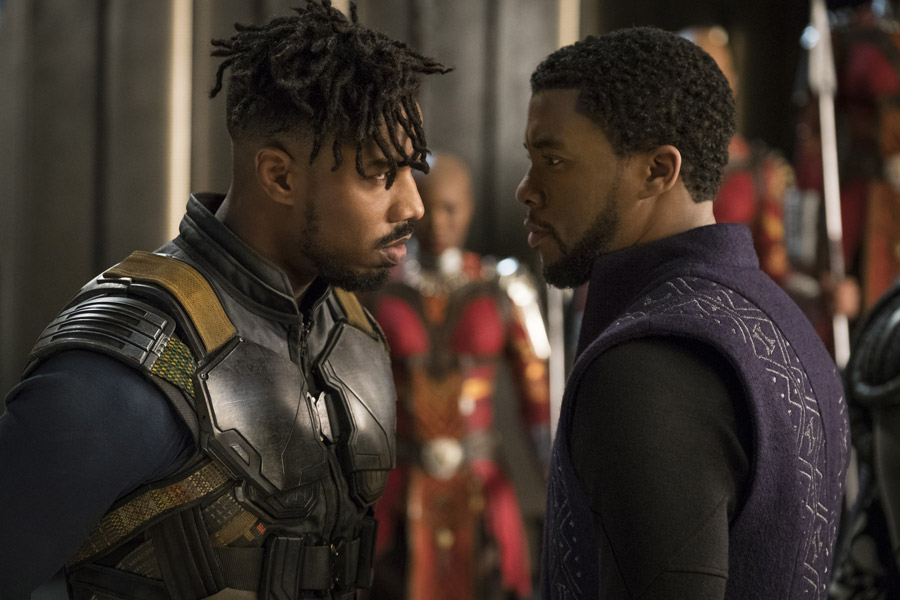
Black Panther character guide: We visited the set of Marvel’s Black Panther last year and have now shared our first-hand report, including an in-depth guide to the characters in the movie. Read our exclusive take here.
COOL CULTURE
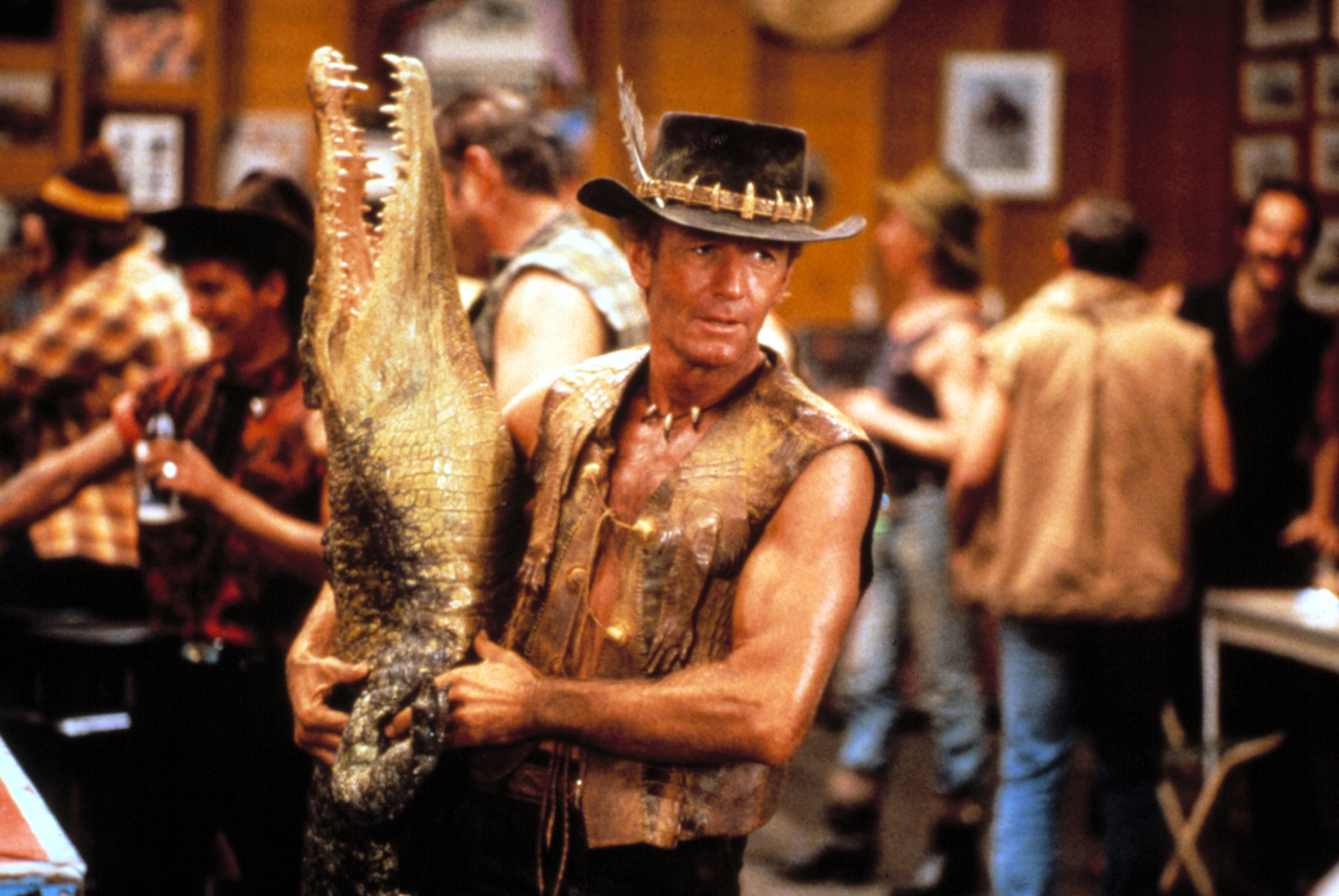
Crocodile Dundee got a pretend sequel: Many fans were fooled by fake teaser trailers that appears online for a Crocodile Dundee reboot/sequel starring Danny McBride and Chris Hemsworth. It turned out that the movie isn’t real and the videos are part of a Super Bowl ad campaign for Australia tourism. Watch one of the teasers below.
[embedded content]

MUST-WATCH TRAILERS
Pacific Rim Uprising cancels the apocalypse again: The second trailer for Pacific Rim Uprising arrived to get fans further excited about the sequel, which stars John Boyega in the lead this time. Watch it here:
[embedded content]
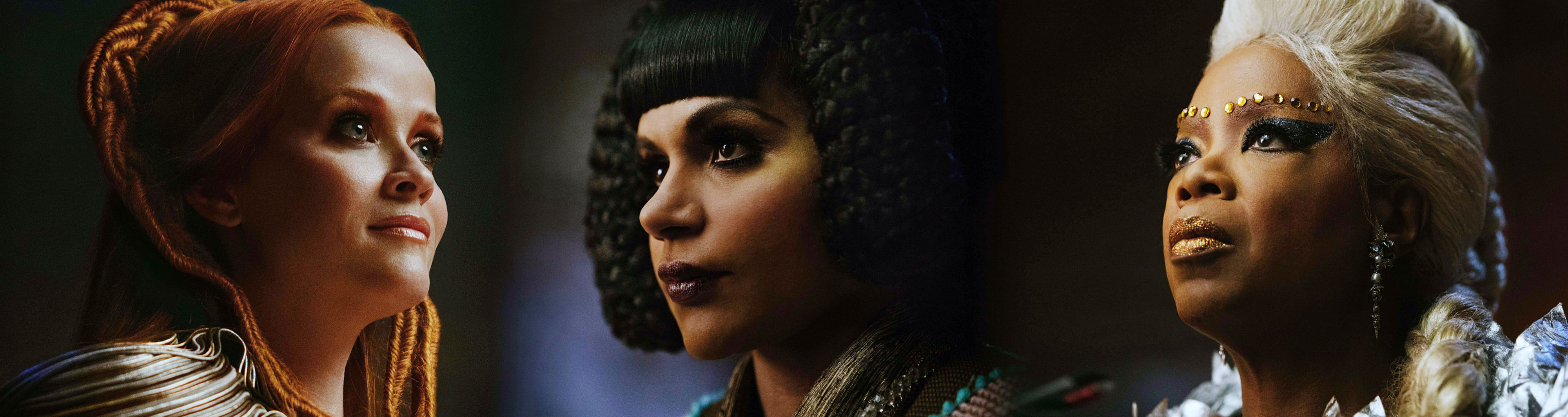
A Wrinkle in Time unleashes its warrior spirit: An international trailer for Ava DuVernay’s A Wrinkle in Time showcases its young star and a focus on the movie being an adventure story in need of warriors. Watch it here:
[embedded content]

Mamma Mia! Here We Go Again brings back the dancing queens: Mamma Mia! Here We Go Again also received a new international trailer, which focuses on the sequel’s characters in their younger years. Check it out here:
[embedded content]
and
