
Idaho Insurer Moves Ahead With Health Plans That Flout Federal Rules

Health and Human Services Secretary Alex Azar faced questions Wednesday from the House Ways and Means Committee about Idaho’s move.
Jacquelyn Martin/AP
hide caption
toggle caption
Jacquelyn Martin/AP
It’s barely been two weeks since Idaho regulators said they would allow the sale of health insurance that doesn’t meet all of the Affordable Care Act’s requirements — a controversial step some experts said would likely draw legal scrutiny and, potentially, federal fines for any insurer that jumped in.
And on Wednesday, Blue Cross of Idaho unveiled a menu of new health plans that break with federal health law rules in several ways, including setting premiums based on applicants’ health.
“We’re trying to offer a choice that allows the middle class to get back into insurance coverage,” said Dave Jeppesen, the insurer’s executive vice president for consumer health care.
The insurer filed five plans to the state for approval and hopes to start selling them as soon as next month.
The Blue Cross decision ups the ante for Alex Azar, the Trump administration’s new Health and Human Services secretary. Will he use his authority under federal law to compel Idaho to follow the ACA and reject the Blues plans? Or will he allow state regulators to move forward, perhaps prompting other states to take more sweeping actions?
At a congressional hearing Wednesday, even as Blue Cross rolled out its plans, Azar faced such questions. “There are rules,” Azar said. “There is a rule of law that we need to enforce.”
However, he didn’t specifically indicate whether the federal government would step in.
Robert Laszewski, a consultant and former insurance industry executive, says it should. “If Idaho is able to do this, it will mean other … states will do the same thing,” he said. “If a state can ignore federal law on this, it can ignore federal law on everything.”
Idaho’s move stirs up more issues about the stability of individual insurance markets.
Policy analysts say that allowing lower-cost plans that don’t meet the ACA’s standards to become more widespread will pull younger and healthier people out of Obamacare, raising prices for those who remain. Supporters say that is already happening, so the lower-cost plans provide more choices for people who earn too much to qualify for subsidies to help them purchase ACA coverage.
Idaho’s move to allow such plans, announced in January, drew harsh and swift criticism.
“Crazypants illegal,” tweeted Nicholas Bagley, a law professor at the University of Michigan and former attorney with the civil division of the U.S. Department of Justice, who said that states can’t pick and choose which parts of federal law to follow. Sabrina Corlette, a research professor at Georgetown University’s Center on Health Insurance Reforms, pointed out that health insurers could be liable for sharp fines if they are found to be in violation of the ACA.
But both Idaho regulators and Blue Cross officials say they aren’t worried.
Jeppesen said the ACA gives states regulatory authority “to make sure the market works and is stable,” and the insurer is simply “following what the state has given us guidance” to do.
Other insurers in Idaho are taking a much more cautious approach, telling The Wall Street Journal they aren’t stepping up immediately to offer their own plans.
Laszewski said they are likely waiting to see what legal challenges develop. “If I were running an insurance company, there’s no way I would stick my neck out until the high court has ruled in favor of this — and they’re not going to,” he said.
Jeppesen said his company has consulted with legal experts and is moving ahead with confidence. The aim is to bring people back into the market, particularly the young, the healthy and those who don’t get a tax credit subsidy and can’t afford an ACA plan.
For some people — especially younger or healthier applicants — the new plans, which the insurer has named Freedom Blue, cost less per month than policies that meet all ACA rules.
They accomplish that by limiting coverage. If they are allowed to be sold, consumers will need to weigh the lower premiums against some of the coverage restrictions and variable premiums and deductibles, policy experts say.
The plans, for example, will include a “waiting period” of up to 12 months for any pre-existing conditions if the applicant has been without coverage for more than 63 days, Jeppesen said.
Additionally, they cap total medical care coverage at $1 million annually. And premiums are based, in part, on a person’s health: The healthiest consumers get rates 50 percent below standard levels, while those deemed unhealthy would be charged 50 percent more.
All those conditions violate ACA rules, which forbid insurers from rejecting coverage of preexisting conditions or setting dollar caps on benefits or higher premiums for people with health problems.
But the rates may prove attractive to some.
Premiums for a healthy 45-year-old, for example, could be as low as $195 a month, according to a comparison issued by the insurer, while a 45-year-old with health problems could be charged $526. In that case, the 45-year old would find a lower price tag — $343 a month — for an ACA-compliant bronze plan.
While Freedom Blues plans cover many of the “essential health benefits” required under the ACA, such as hospitalization, emergency care and mental health treatment, they do not include pediatric dental or vision coverage. One of the five plans doesn’t include maternity coverage.
When compared with one of the Blues’ ACA-compliant plans — called the Bronze 5500 — the new standard Freedom Blue plan’s annual deductibles are a mixed bag.
That’s because it has two separate deductibles — one for medical care and one for drugs. If a consumer took only generic drugs, the new plan would be less expensive, according to details provided by the plan. But with a $4,000 deductible for brand-name drugs, the Freedom Blue plan requires more upfront money before full coverage kicks in than the ACA-compliant plan it was compared with.
Jeppesen said the insurer hopes to attract many of the “110,000 uninsured state residents who cannot afford [ACA] coverage.”
That’s the total number of uninsured people who earn more than 100 percent of the federal poverty level in the state, he said.
Sarah Lueck, senior policy analyst for the Center on Budget and Policy Priorities, cautioned that some of those residents might actually be eligible for subsidies under the ACA, which are available to people earning up to four times as much.
“Many … could be getting subsidies for more comprehensive coverage through the [ACA-compliant state exchange] and would be better off,” Lueck said.
Kaiser Health Newsis a nonprofit news service covering health issues. It is an editorially independent program of the Kaiser Family Foundation that is not affiliated with Kaiser Permanente.
'You Don't Hold Back': Mikaela Shiffrin Wins Gold At 2018 Winter Olympics

U.S. skier Mikaela Shiffrin won her second career gold medal and her first of the Pyeongchang Winter Olympics in the women’s giant slalom at the Yongpyong Alpine Center in South Korea.
Sean M. Haffey/Getty Images
hide caption
toggle caption
Sean M. Haffey/Getty Images
Mikaela Shiffrin overcame both delays and some of the best skiers in the world to claim her first gold medal at the 2018 Winter Olympics, winning the giant slalom. The weather finally cooperated, with sunny, clear skies over the Yongpyong Alpine Center in Pyeongchang.
Norway’s Ragnhild Mowinckel won silver, 0.39 behind Shiffrin’s combined time of 2:20.02.
It was a hard-won medal, on a day where 20 racers crashed out of the course. Shiffrin set herself up for a podium finish by turning in a time of 1:10.82 on her first run of the day, taking second place just 0.2 seconds behind Italy’s Manuela Moelgg. Another Italian racer, Federica Brignone, trailed Shiffrin by 0.09 seconds.
“The conditions are great, the weather is beautiful, and it’s a pleasure to be skiing today,” Shiffrin told reporters after her first run.
.@MikaelaShiffrin‘s dad’s reaction to her gold medal is everything. ???? pic.twitter.com/NOFetK7SjX
— U.S. Ski & Snowboard Team (@usskiteam) February 15, 2018
Shiffrin continued:
“But I also feel like I can go a little bit harder and you know, there’s nothing to hold back for in the second run. The nice thing about the Olympics is, you don’t hold back. And I’m excited to see what I can do.”
Shiffrin gave this rundown of the course, part of which was somewhat obscured by shadows from nearby trees:
“The top is kind of like a false flat. You just, you can push into it so hard it feels like, perfect. And then on the middle, it got a little bit more chattery. There’s some sort of micro-terrain that, especially when it’s a little darker, you can’t see it that well. It seems like it’s been tossing everybody around a little bit more.”
On her first run, Shiffrin had sped through the first half of the course, but she lost a little time on the bottom portion; in her second run, she started slightly slower than some of the other skiers — but she blazed through the rest of the course, turning in a time of 1:09.20 to put her atop the leader board. Only a handful of skiers were faster than Shiffrin in their second runs; none of them had top-five times in their first attempts.
“I don’t know when it was, at some point today after the first run I thought, like, ‘I can really win this’. I just tried to hang on to that feeling and then focus on my skiing a bit,” Shiffrin said, in remarks transcribed by the Olympics’ news service.
Like Shiffrin, Brignone went down the hill in under 1:10.00 on her second run – and Brignone’s combined time kept her in third place for a bronze medal. Her fellow Italian Moelgg lost her No. 1 spot, and a place on the podium, after a slow second run. She finished eighth.
After Shiffrin set the bar, her Olympic race turned into a waiting game, and she settled in at the scoring area at the bottom of the course to see if any other skier could beat her time.
As racers tried to carve tenths of a second out of the course, the number of DNF — did not finish — statistics piled up. They included two women who might have challenged Shiffrin: Austria’s Stephanie Brunner and Switzerland’s Lara Gut. France’s Tessa Worley, another contender, was undone by a slow first run that left her with too much time to recover.
The course in Pyeongchang comprised 49 turning gates and a vertical drop of 400 meters (1,312 feet). The race began at an altitude of 1365 meters (4,478 feet).
At the Sochi Games of 2014, Shiffrin finished in fifth place in the giant slalom. She won gold in the slalom – an event in which she’ll race tomorrow (Friday morning in Korea, and Thursday night in the continental U.S.).
Today in Movie Culture: The Best Couples and Kisses in Movies, Liam Neeson as Cupid and More

Here are a bunch of little bites to satisfy your hunger for movie culture:
Supercut of the Day:
In honor of Valentine’s Day, One Perfect Shot celebrates the best couples in the movies:
Whether you’re paired up or alone, we wish you a Happy #ValentinesDay. We’re celebrating our favorite cinematic couples. Which is yours? pic.twitter.com/BZ2L1obV6S
— One Perfect Shot (@OnePerfectShot) February 14, 2018
Movie Ranking of the Day:
Meanwhile, ScreenCrush celebrates the best kisses in the movies the below supercut and a ranked list on their site.
[embedded content]
Audition of the Day:
Watch Liam Neeson audition for the part of Cupid for a fake movie on The Late Show with Stephen Colbert:
[embedded content]
Film History of the Day:
Ahead of this year’s Oscars, Burger Fiction showcases every Academy Award winner for Best Cinematography:
[embedded content]
Vintage Image of the Day:
John Barrymore, whose birth certificate shows he was born on this day (though his family claimed February 15th), poses with one of his Valentines, third wife and co-star Dolores Costello, and some monkeys on the set of The Sea Beast in 1925:
Filmmaker in Focus:
Studio Binder explores the work of Akira Kurosawa and how the filmmaker mastered the color palette:
[embedded content]
Movie Comparison of the Day:
Dimitreze places clips from The Iron Lady side by side with the actual footage of Margaret Thatcher:
[embedded content]
Video Essay of the Day:
In the latest video essay from Likes Stories of Old, the philosophy of Cloud Atlas is explored through the lens of Fyodor Dostoevsky and Aleksandr Solzhenitsyn:
[embedded content]
Cosplay of the Day:
Spider-Man 3 isn’t very good, but Spider-Man 3 cosplay is pretty awesome:
AGGHHH!! IT’S TOBEY MAGUIRE! RUN!
Haha, props to Glasgow Spidey for this awesome cosplay. Best Sam Raimi Spider-Man look I’ve ever seen. pic.twitter.com/4WQ81wRewo
— Becky Morrison (@SpiderBecks) February 14, 2018
Classic Trailer of the Day:
Today is the 10th anniversary of the release of Definitely, Maybe. Watch the original trailer for the romance classic below.
[embedded content]
and
Stimulus Response

Jared Bernstein has a dilemma. He’s a liberal economist, and he’s been saying for years that the U.S. needs stimulus — some combination of higher spending and lower taxes — to drive up wages for workers.
Congress and the President recently passed bills to raise spending and cut taxes.
These weren’t sold as stimulus packages. They are not Jared Bernstein’s dream come true. But they are going to mean lower taxes and higher spending.
Today on the show: How is a liberal economist supposed to feel about these Republican bills that are — sort of — the thing he’s been saying we need?
Music: Drop Electric and Toccata and Fugue. Find us: Twitter/ Facebook.
Subscribe to our show on Apple Podcasts, PocketCasts and NPR One.
Medical Records May Finally Be Coming To Your Apple Smartphone

Richard Klein switched doctors last year. The new doctor put him on a new blood pressure drug.
But it didn’t help.
The failure was entirely predictable.
Klein, an associate professor at Florida International University in Miami, realized later that he had tried the same medicine unsuccessfully a few years before, but he hadn’t remembered that fact during the appointment.
It was an understandable mistake for Klein and his doctor.
An upcoming iOS update will allow Apple users to see their health records on their cellphones.
Apple
hide caption
toggle caption
Apple
Klein’s prescription history was hidden somewhere in the hundreds of pages of medical records his new doctor had to go through.
“If I had been able to go into an app sitting in his office and look through my prescription history, I would have known that, yeah, we tried that a couple years back and it didn’t work well,” he says.
A feature like that will soon be available for some patients with iPhones.
In the upcoming release of Apple’s iOS operating system for iPhones this spring, the Health app will include health records, so patients can take information about their immunizations, medications, lab results and more with them.
The feature will first be available to patients of medical providers who partnered with Apple, including Johns Hopkins Medicine; OhioHealth; Ochsner Health System in Jefferson Parish, La.; and Cedars-Sinai in Los Angeles. It won’t cost those patients anything to use this feature, assuming they’re already iPhone users.
Apple’s announcement says more medical facilities will offer this feature in the coming months.
Some doctors hail it as a big shift away from patients having to handle a big pile of paper records every time they see a new doctor. But Google offered a similar service before and it failed. The search giant shut it down in 2012.
Can Apple succeed where Google didn’t?
Dr. Jonathan Slotkin says yes; he is a medical director handling digital patient engagement at Geisinger Health System in Pennsylvania, one of Apple’s partners. Unlike even a few years ago, a lot more people now use smartphones and the phones are more secure. There’s now also a technical standard for transferring electronic medical records.
“Even if I get care at three different places and maybe they use three different electronic systems, now in one place that I possess in an encrypted way, I have all of that information at my fingertips,” he says.
He adds this will make transferring information easier for patients who have to move, or go to a specialist.
The health records feature could also change doctors’ habits in some ways, says Dr. Isaac Kohane, chair of the department of biomedical informatics at Harvard Medical School and a professor of pediatrics.
“For some reason, and I say this as a physician, most physicians, if they don’t actually know how a test was done, somehow imagine it was done wrongly, and therefore repeat a test, not only at a cost but at some pain to the patient,” Kohane says. “If you have a reliable authoritative description of the test and its results, that uncertainty goes away and that excuse to repeat tests goes away as well.”

Checking your prescription history or past medical tests should be easier soon if you have an iPhone.
Apple
hide caption
toggle caption
Apple
Kohane called Apple’s new feature a “tectonic shift” in a commentary for member station WBUR’s CommonHealth.
But Apple will have to address one big problem that Google had with Google Health, a similar health records service: It was popular with only a niche audience — tech-savvy patients and their caregivers, and fitness enthusiasts. The product didn’t attract a wide base of users.
This time will be different, says Dr. Ida Sim, a co-director of biomedical informatics at the University of California, San Francisco Clinical and Translational Sciences Institute. Why? Because unlike with Google Health, patients no longer have to do the heavy lifting of entering or scanning their own data. Also, the 21st Century Cures Act of 2016 pushed federal agencies and providers to use electronic health records, and now there is a data standard for personal health records, which wasn’t the case in 2011.
However, she writes in an email that wider adoption will still be an issue.
“We’ll probably see huge numbers of people getting their initial Health Records populated. The issue is, then what?… The value will come from third party apps that use Health Records to provide meaningful value to patients, and until this value is demonstrated, I think Health Records uptake will be large but retention and continued engagement of patients will be challenging.”
Alan Yu reports forThe Pulse, WHYY’s health and science show.
Today in Movie Culture: What You Need to Know About 'Black Panther,' Deleted 'Coco' Musical Number and More
Here are a bunch of little bites to satisfy your hunger for movie culture:
Movie Set Up of the Day:
Black Panther hits theaters in just a few days, so Slate shows us what we need to know before going to see it:
[embedded content]
Character History of the Day:
Speaking of back story on Black Panther, here’s Screen Rant with the character’s evolution from comics to the big screen:
[embedded content]
Music Video Parody of the Day:
Nerdist parodies Jaden Smith’s “Icon” and its music video themed to the plot of Black Panther:
[embedded content]
Truthful Marketing of the Day:
In anticipation of Black Panther, Honest Trailers reminds us of the ups and downs of the Blade trilogy:
[embedded content]
Vintage Image of the Day:
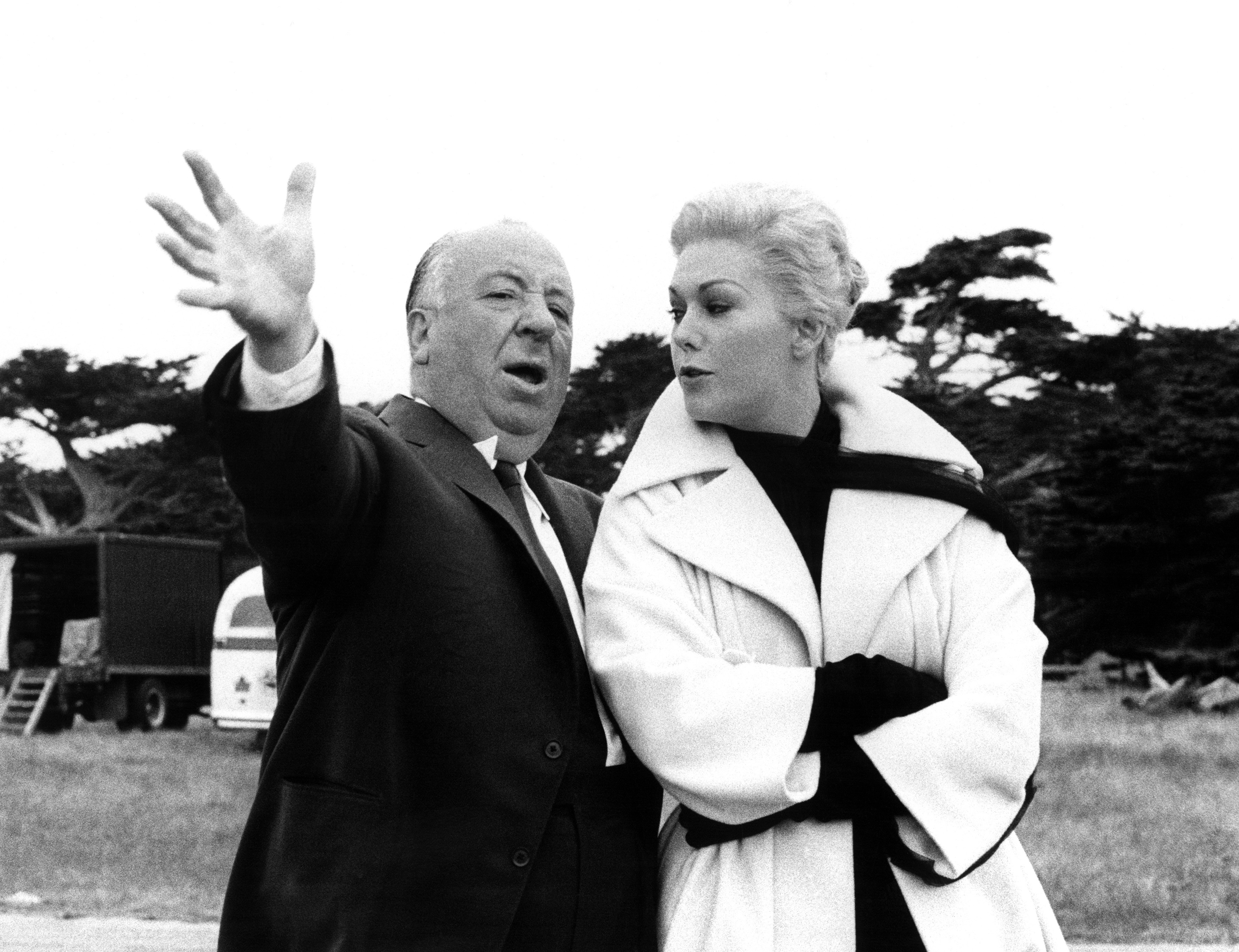
Kim Novak, who turns 85 today, receives direction from Alfred Hitchcock on the set of Vertigo in 1957:
Deleted Scene of the Day:
Coco directors Lee Unkrich and Adrian Molina introduce a rough-cut deleted scene from the movie showing how it used to be more of a musical:
Dream Casting of the Day:
Tommy Wiseau dreams of playing The Joker instead of Joaquin Phoenix after a fan showed us all what he would look like in the role (via Heroic Hollywood):
Yes ! I want to be THE JOKER !
Fan art by @aitesamfarooq02 pic.twitter.com/dteVXDikgm
— Tommy Wiseau (@TommyWiseau) February 11, 2018
Filming Locations of the Day:
In honor of this week’s 25th anniversary of Groundhog Day, Moon Film showcases the real locations from the movie and what they look like now:
[embedded content]
Cosplay of the Day:
What if there was a cartoon depicting horror movie icons as babies? Here’s a cosplaying infant to show what Pennywise would look like:
Baby Pennywise pic.twitter.com/3Lji7rUGu3
— Club Stephen King ?? (@ClubSTEPHENKING) February 13, 2018
Classic Trailer of the Day:
Today is the 20th anniversary of the release of Sphere. Watch the original trailer for the sci-fi classic below.
[embedded content]
and
Shaun White Wins Gold In Halfpipe At The Winter Olympics

Shaun White of the U.S. warms up ahead of the men’s final in the snowboard halfpipe at the Winter Olympics in Pyeongchang, South Korea.
David Ramos/Getty Images
hide caption
toggle caption
David Ramos/Getty Images
Updated at 10:15 p.m. ET
Shaun White pulled off a gold-medal comeback in the halfpipe, and Japan’s Ayumu Hirano won silver on the strength of a phenomenal second run.
CORRECTION: An early version of this story reported that White had won silver — that was reported after the second run had completed. On his third run, White won gold.
White missed out on a medal back in 2014, when he was hurt at the Sochi Games. He’s now the only snowboarder ever to win three gold medals at the Olympics. And he did it by winning the 100th gold medal for the U.S.
Held one day after American Chloe Kim dominated the women’s halfpipe, the men’s final was a contest between White, Hirano, and Australia’s Scotty James — who came out strong on his first run, scoring a 92.
SHAUN WHITE IS NOT HUMAN. #BestOfUS#WinterOlympicshttps://t.co/r5PfUbeROrpic.twitter.com/6MmQiSZGRh
— NBC Olympics (@NBCOlympics) February 14, 2018
White stepped up next with an incredible array of tricks, height and precision, soaring above the halfpipe and landing cleanly. The judges rewarded him with a 94.25 — and that was nearly his best score of the day, after a stumble marred his second run.
White began celebrating immediately, ripping his helmet off and throwing it, his arms raised above his head. But he would need another strong run to claim gold.
Back-to-back 1440s from Ayumu Hirano gave him the lead in men’s snowboard halfpipe in Run 2. #WinterOlympicshttps://t.co/r5PfUbwsFZpic.twitter.com/NyYWHWfPXo
— NBC Olympics (@NBCOlympics) February 14, 2018
He managed that in the third run, landing a score of 97.75 points.
Hirano, who’s just 19, turned in a fantastic second run for his best score of 95.25, getting 18 feet above the rim of the halfpipe and landing his tricks cleanly — including back-to-back tricks with 1440-degree spins.
White set a high bar in qualifying, posting a high score of 98.5. It turned out he needed that score to go into the finals on top – he beat James by less than two points.
That gave White the advantage of dropping in last, knowing what he had to do to match his rivals. In the end, he pulled off a gold-medal performance to complete his strong comeback from the Sochi Games.
Hirano had placed third in qualifying. With his second run, he staked a claim to the podium. It was an impressive comeback for Hirano, who had fallen on his first run and earned only 35.25 points — leaving him in 10th place.
After the Japanese snowboarder’s rousing run, the pressure shifted to James and White. James seemed to take a very deep breath before he set off on his second run. The first section was great — but he couldn’t get a clean landing on one of his final tricks. White came out with energy and speed — but he fell midway through, and mustered only 55 points.
The situation reversed in the third and final run, when White earned a 97.75 and both of his top rivals fell during their attempts.
A scary moment came early in the second run, when Japanese snowboarder Yuto Totsuka fell badly. For several minutes, the crowd looked on as a medical crew attended to him. Totsuka was taken from the course on a stretcher sled and taken to the medical center.
This is the second Olympic medal for Hirano; he won silver in Sochi. He is also the reigning X Games champion in the halfpipe, having won that title last month, in a competition that White skipped.
White led a group of four American snowboarders who qualified for the finals of the men’s halfpipe at Phoenix Snow Park in Pyeongchang; joining him were Ben Ferguson, Chase Josey, and Jake Pates.
Ferguson cleaned up his second run after a fall in the first. And after a strong final run earned him a 90.75, he finished 4th; Josey was 6th and Pates was 8th.
Josey was in third place after the first run, when he earned an 87.75. He fell toward the end of his second run. On that same run, Japan’s Raibu Katayama, cut his run short after landing awkwardly. Katayama had been flying: he soared more than 17 feet above the halfpipe’s rim on one trick.
Pates put down a strong second run, rebounding from a fall in his first attempt. He anxiously awaited the scoring, eyes glued on the board that would tell him if he had earned a shot at the podium. Pates got an 82.25 — not enough for a medal, but a result that made him smile, all the same.
Latino Business Group Leader Steps Down Amid Sexual Harassment Allegations

Javier Palomarez, shown here at an event in 2014, resigned amid allegations of sexual and financial misconduct.
Carolyn Kaster/AP
hide caption
toggle caption
Carolyn Kaster/AP
The head of a major Hispanic business association is stepping aside after allegations of improperly increasing his salary and sexual misconduct.
The United States Hispanic Chamber of Commerce said president and CEO Javier Palomarez and its board of directors “have mutually agreed to undergo a leadership transition for the organization effective immediately,” the organization said in a statement to NPR.
The statement did not refer to the allegations surrounding Palomarez, which were reported Monday by The New York Times:
“Mr. Palomarez, who has run the organization for close to a decade, was accused by a longtime board member last fall of paying himself hundreds of thousands of dollars more than he was entitled to under his contract, according to minutes from the board’s charitable foundation and a Texas court filing.
“In the Texas filing, Mr. Palomarez denied any financial impropriety. He said in a statement Friday that the claims against him sprang from a ‘retaliatory effort’ by Nina Vaca, the board member who flagged them first. Ms. Vaca declined to comment.
“Mr. Palomarez was also accused of sexually harassing his former chief of staff, Gissel Gazek Nicholas. In an interview with The New York Times, Ms. Nicholas said that at the end of a group meeting in a Chicago hotel suite in 2013, he asked her to stay behind after the others left, then asked if she had ever thought about ‘being’ with him and tried to kiss her. Her account was corroborated by an email she sent to a friend within hours of the incident and another friend in whom she confided afterward.”
Nicholas was fired from her job at the organization in November, the Times reports.
Palomerez did not immediately respond to a request for comment from NPR. He told the Times on Friday that, “I categorically deny these troubling allegations.”
In the announcement from the USHCC, Palomerez said he was extremely proud of his tenure as president and CEO of the organization.
Representing Hispanic businesses “is a mission too important for distractions and internal division and so I look forward to working with the Board and staff over the coming weeks to put in place a leadership team that can inspire more in our community to build businesses and achieve the American dream,” he said.
According to NBC News, Nicholas applauded the move by saying that the business organization had taken a “bold step forward and away from the leadership of Javier Palomarez.” She added: “While the USHCC accomplished a great deal under his leadership, it came at a high cost to me personally, and, I believe, to the organization as well.”
USHCC says it promotes 4.4 million Hispanic-owned businesses that contribute at least $700 billion annually to the U.S. economy. Palomerez previously worked at Sprint and Bank of America.
Doctors In Maine Say Halt In OxyContin Marketing Comes '20 Years Late'

Bottles of Purdue Pharma L.P. OxyContin medication sit on a pharmacy shelf in Provo, Utah, in 2016.
George Frey/Bloomberg via Getty Images
hide caption
toggle caption
George Frey/Bloomberg via Getty Images
The maker of OxyContin, one of the most prescribed and aggressively marketed opioid painkillers, will no longer tout the drug or any other opioids to doctors.
The announcement, made Saturday, came as drugmaker Purdue Pharma faces lawsuits for deceptive marketing brought by cities and counties across the U.S., including several in Maine. The company said it’s cutting its U.S. sales force by more than half.
Just how important are these steps against the backdrop of a raging opioid epidemic that took the lives of more than 300 Maine residents in 2016, and accounted for more than 42,000 deaths nationwide?
“They’re 20 years late to the game,” says Dr. Noah Nesin, a family physician and vice president of medical affairs at Penobscot Community Health Care.
Nesin says even after Purdue Pharma paid $600 million in fines about a decade ago for misleading doctors and regulators about the risks opioids posed for addiction and abuse, it continued marketing them.
“I think it’s similar to the tobacco industry learning they could sell tobacco without spending a lot of money on advertising. My guess is this decision is in their self-interest,” he says.
A nationwide lawsuit against Purdue Pharma for deceptive marketing continues to grow. Seven cities in Maine have joined, including Portland, Lewiston and Bangor, along with five counties, to recoup some of the costs of addressing the addiction crisis.
A spokesman for Purdue Pharma said in an email that the decision to stop marketing to prescribers is voluntary and independent of any litigation.
Nesin says that at the very least, the company’s decision to refrain from promoting opioids to doctors reinforces the need for caution when prescribing the drugs.
Maine Medical Association President Dr. Robert Schlager agrees that Purdue Phama’s move is a good, if small, step to fight the opioid epidemic. “I wouldn’t expect it to have a very large role in limiting opioids further,” he says. “Because most of us, as prescribers, do limit our information exchange with the drug representatives who have been marketing opioids.”
Since 2016, doctors in Maine have also adhered to prescribing limits enacted by the Legislature. As of December 2017, legislatures in 17 states had enacted prescribing limits and nine others had authorized other state entities to enact them.
Schlager says Purdue Pharma should go further and suspend opioid marketing worldwide. “It seems a little bit not honest to just limit it here in the United States,” he says.
In an email, Purdue Pharma’s spokesman says that the company operates only in the United States, and that an associated company, Mundipharma, has not marketed opioids in Europe since 2013.
A Los Angeles Timesinvestigation in 2016 found that the family that owns Purdue Pharma has a network of international companies that employ the same kinds of marketing practices that made OxyContin a blockbuster seller in the U.S.
This story is part of a reporting partnership with NPR, Maine Public Radio and Kaiser Health News.
Movie News: New 'Willy Wonka' on Its Way; Michael Fassbender to Star in 'Kung Fury'

Willy Wonka: A “re-imagining” of Roald Dahl’s Charlie and the Chocolate Factory is on its way. Paul King (Paddington, Paddington 2) is in final negotiations to direct Willy Wonka, based on a screenplay by Simon Rich (Inside Out). Reportedly, the hope is to launch “a new franchise that will stand out artistically.” First published in 1964, Dahl’s novel served as the basis for the beloved musical fantasy Willy Wonka and the Chocolate Factory (1971, above), starring Gene Wilder, as well as Tim Burton’s 2005 version, starring Johnny Depp. [THR]

Kung Fury: Michael Fassbender (above in The Snowman) will star in the action-comedy Kung Fury. It’s a sequel to the same-titled, outlandishly funny and entertaining short film, written and directed by David Sandberg, that paid homage to martial arts action and cop thrillers of the 1980s. Sandberg will costar in the feature version alongside Fassbender and David Hasselhoff, who also appeared in the original short. [Variety]
Mr. Columbus, are you ready for Freddy? #FiveNightsatFreddyspic.twitter.com/4F7QEnw16x
— Blumhouse (@blumhouse) February 12, 2018
Five Nights at Freddy’s: Chris Columbus, known for writing Gremlins and The Goonies, as well as directing Home Alone and the first two installments in the Harry Potter series, will write and direct Five Nights at Freddy’s for Blumhouse Productions (Get Out, Split). It’s based on Scott Cawthon’s popular video game featuring a security guard in combat against “animatronic robots that come to life in a Chuck E. Cheese-like venue.” [Deadline]

A Quiet Place Trailer: In the first trailer for A Quiet Place, something terrible has happened, leaving a desperate family alone in a world where they must stay quiet if they hope to survive. Emily Blunt and John Krasinski star; Krasinski directed. The thriller will open in theaters on April 6. [Movieclips]
[embedded content]
