
U.S. Women's Hockey Team Reaches Gold Medal Game At Winter Olympics

Gigi Marvin of the U.S., rear right, celebrates her goal in the first period of the women’s semifinal match against Finland on Sunday. The victory sends the Americans to the gold medal match at the Pyeonghang Winter Olympics
Brian Snyder/Reuters
hide caption
toggle caption
Brian Snyder/Reuters
The U.S. women’s ice hockey team dismantled Finland in their semifinals matchup at the Pyeongchang Winter Olympics on Monday, scoring goals early and often and claiming a spot in the gold medal game.
The U.S. team scored two goals in each of the first two periods; a pair of scores came in less than one minute in the second period.
Gigi Marvin set the tone just minutes into the game, scoring on assists from Meghan Duggan and Amanda Pelkey. Near the end of the first period, Dani Cameranesi scored unassisted — the first of her two goals today.
Another look at @GigiMarvin‘s second goal at #PyeongChang2018!
7:45 left in the 1st with #TeamUSA leading Finland, 1-0. https://t.co/1BtfiP7MGE
— USA Hockey (@usahockey) February 19, 2018
From there, the rout was on, with Jocelyne Lamoureux-Davidson scoring while the U.S. enjoyed a two-player advantage during a power play, and Hilary Knight adding another goal just 34 seconds later, during a one-player power play. It was the first goal of the tournament for Knight, a forward who’s one of the best American players; she had previously assisted on goals.
The U.S. took 38 shots, to 14 for Finland.
The Americans will play in the gold medal game on Thursday, Feb. 22. The final match start will start at 1:10 p.m. in Korea – 11:10 p.m. ET and 8:10 PT in the continental U.S.
With the win, the U.S. set up another possible showdown with Canada, the winners of every Olympic gold medal since the U.S. won the first women’s tournament back in 1998. The rivals have repeatedly faced off to decide Olympic and world championships over the past 20 years.
The Canadians play the Olympic Athletes from Russia team on Monday, at 9:10 p.m. Korean time 7:10 a.m. ET).
Canada defeated the U.S. 2-1 last Thursday, in group play. The Russian team bounced back from losses to both Canada and the U.S. to dismiss Switzerland, 6-2, in the quarterfinals. The loser of the Canada-OAR game will face Finland in the bronze medal match.
Black Women Gather In Atlanta To Harness Economic And Political Power

Michel Martin talks about the conference with Karen Finney, a former spokeswoman for Hillary Clinton, Nakisha Lewis, an organizer for Black Lives Matter, and New Jersey Congresswoman Bonnie Coleman.
MICHEL MARTIN, HOST:
Later this week, prominent black women from across the country will be heading to Atlanta, Ga., for a conference they call Power Rising. Now, it’s not unusual for black women to get together. Their sororities and social clubs are actually known for their under-the-radar powerhouse organizing. But this get-together might be different in that its sole purpose is to harness that organizing ability towards specific policy and political goals. To talk more about this, we’re joined in our studios in Washington, D.C., by Nakisha Lewis. She’s an organizer with the New York City chapter of Black Lives Matter, and she’s one of the organizers of the Power Rising conference. Also here with us in Washington, D.C., another organizer, Karen Finney. She’s a former senior adviser and spokesperson for Hillary Clinton’s 2016 presidential campaign. Welcome to you both.
KAREN FINNEY: Good afternoon.
NAKISHA LEWIS: Good afternoon.
MARTIN: And joining us from Ewing, N.J., is Congresswoman Bonnie Watson Coleman. She will be speaking at the conference. Congresswoman, thank you so much for joining us as well.
BONNIE WATSON COLEMAN: Thanks for having us.
MARTIN: And I’d like to start with you because I understand that this idea came out of a retreat by the women members of the Congressional Black Caucus last fall, where you all were brainstorming about next steps. And the Reverend Leah Daughtry, who chaired the Democratic National Convention in Philadelphia, said something like if I could wave a magic wand, then I’d have you all get together and say, you know, how do we leverage all of our kind of political and economic power to do something when we often are ignored? Is that about right? Does that conform with your memory of things?
WATSON COLEMAN: Yeah, absolutely. We recognized that we had really shown up in a big way in these various elections from 2016 and 2017. We recognized that people are suddenly recognizing that we are dependable. There’s very little necessary to get us going in doing the things that we do, and that we’re going to do the right, and that we have a collective power that just has not been appreciated. And so in talking to one another – the women in the Black Caucus and some other women – we talked about, let’s do something with this moment. So…
MARTIN: Could I just ask you to tell me – when you say that you feel often ignored, what do you mean by that?
WATSON COLEMAN: Well, secondarily considered I should say – marginalized. I don’t think that we have sufficient representation at the table when we’re discussing the agendas and futures. You know, we’re not just sort of unified behind one interest. We have lots of interests that, at the end of the day, are directed at ensuring that the right thing is happening in our respective communities and in this nation.
MARTIN: Nakisha, I’m going to go to you. I want to point out that Congresswoman Coleman, for example – she was in the state legislature. She was the majority leader. She was the chair of her state committee. A lot of activists in your generation have not found traditional politics to be particularly helpful. They feel that they haven’t served the needs of the African-American community. A lot of people don’t want to identify with traditional political organizations. And I just wonder, you know, has that been a bit of a struggle for you in any way?
LEWIS: Absolutely not. So the beauty of this summit is that it is not a political summit, right? I understand that when people look at the list of names of women who are organizing, many of them are, you know, Democratic operatives or, you know, very partisan people. And so what I’ve been able to do is talk with my communities about why I’m here. And this group of women has been really awesome in that they’ve been willing to also hear my critiques when I comment and say actually, we need to make sure that trans women see themselves front and center in this because that hasn’t always been the case when our people have organized. We need to make sure that young people see themselves. And the committee has been amazing because we are actually doing this work as sisters.
MARTIN: So I think – is the idea here that everything is not for everyone, and if you don’t feel that you’re a part of the sort of traditional political mechanisms, there’s still other work for you to do and that you want the people doing that work to be visible in this system?
LEWIS: Yes, absolutely. And the reality is that here we say – but on Audre Lorde’s birthday, and her words come to mind for me in that there is no such thing as a single-issue struggle because we don’t live single-issue lives. If that is not black women, then I don’t know what is.
MARTIN: Karen, what about you? What made this attractive to you?
FINNEY: A couple of things. I mean, you know, what makes this summit different is two things. Number one, we are trying to both leverage the work that has been done and really put some things on an agenda that say how do we move these issues forward? You know, by 2021, they estimate that black women will drive about $1.3 trillion of our economy, looking at the ways that black women have an impact on culture and music and fashion and Hollywood and the rate at which we’re starting businesses, and we are successful, and yet financial institutions aren’t marketing to this very successful sector.
MARTIN: Karen, can I ask you this, though? It is true that at the end of the day, at the end of the 2016 election, African-American women showed out in force for Clinton? But before that, there was a lot of tension between the elements who saw themselves as being more progressive than she. I mean, in some cases, even some of her rallies were disrupted by activists who felt that she needed to be held to account for policies, particularly around criminal justice, that they felt had been unhelpful. Is the idea here that your kind of common experience as black women overrides what have really been very serious policy differences – single-payer health care, for example, and various taxing strategies and things of that sort?
FINNEY: Yeah, I mean, there are places where, I mean, let’s be honest, in the black community – and I say this as a – you know, I am a Democrat. I am a progressive. But there are times when I don’t feel that the progressive movement always understands the intersectionality of how some of these issues affect black people. You know, I – give you an example. In Virginia during the election – right? – there was great reporting about how important health care was to the black community, particularly black women. And you saw high turnout among black women because people realized hey, we need to really speak to this issue in a way that is authentic to the black community. That’s part of what I would like to see come out of this – is a recognition when we’re talking on the policy level, there’s got to be authenticity around how we’re talking to the black community, and then making good on those promises.
MARTIN: And Congresswoman Coleman, if I can ask you, it’s been a long-standing struggle, at least since President Clinton’s presidency, between the so-called moderates and the so-called progressives. I mean, this is not a secret. And it has been a source of some kind of resentment, I would say, among African-American political leaders that they sometimes feel that their agenda items are considered – I don’t know how to put it – secondary or alienating to the kind of white moderates that you feel you need to sort of keep the Democratic Party together. And I’m just – this plays out in primaries, like, all the time. So how do you reconcile that within this kind of framework? I mean, is the feeling that your common concerns as African-American women supersede all that?
WATSON COLEMAN: You know, the exciting thing for me is this is an opportunity not about how to be a stronger Democrat, not even how to make the Democratic Party react to me in a more respectful manner, recognizing the work that we as African-American women do in their party. This is about me, the person, the African-American woman in the United States of America, who has value, who has contributions but who experiences structural barriers simply because of that intersectionality of race and sex. And we need to be able to define and develop agendas on our local level, state level and national level that take into consideration the diversity of our issues, our concerns, our challenges, our accomplishments. And what we do for that next generation?
MARTIN: All of you go to a lot of conferences, and all of you go to a lot of meetings. So I’d like to ask how you are going to know whether this one has been a success.
FINNEY: For me, it will be seeing women talking to each other and really digging in on issues. But also, I hope we can change the conversation a bit to understand that we are impacting this society and this culture, and we deserve – we’re not a backbone, right? Treat me as a swing voter. Treat me as someone who you have to come and court my vote and make your case to me. And I would like to see us as black women take that back to our communities and to the national conversation.
MARTIN: Nakisha.
LEWIS: It will be a success for me if, one, knowing that all who do come, regardless of where they sit on the gender spectrum and regardless of where they come from in background, understand that they are part of the large fabric that is black womanhood.
MARTIN: If I could just mention what’s on your T-shirt, it says elect black women, fund black women, believe black women, invest in black women, follow black women, defend black women, hire black women, promote black women.
LEWIS: Yes. And above all else, trust black women.
MARTIN: That is Nakisha Lewis. She’s an organizer of the Power Rising conference, which is meeting in Atlanta next week. Also with us, Karen Finney, former spokesperson for the Hillary Clinton presidential campaign and Congresswoman Bonnie Watson Coleman of New Jersey. We reached her at her home office in Ewing, N.J. Thank you all so much for speaking with us.
LEWIS: Thank you.
FINNEY: Thank you.
WATSON COLEMAN: Thank you for having us.
Copyright © 2018 NPR. All rights reserved. Visit our website terms of use and permissions pages at www.npr.org for further information.
NPR transcripts are created on a rush deadline by Verb8tm, Inc., an NPR contractor, and produced using a proprietary transcription process developed with NPR. This text may not be in its final form and may be updated or revised in the future. Accuracy and availability may vary. The authoritative record of NPR’s programming is the audio record.
Nick Goepper Wins Silver In Slopestyle, Gus Kenworthy Places 12th

Nick Goepper won a silver medal for the United States in the freestyle skiing men’s ski slopestyle.
David Ramos/Getty Images
hide caption
toggle caption
David Ramos/Getty Images
Gus Kenworthy and Nick Goepper were two of three American athletes on the slopestyle skiing podium four years ago in the Sochi Winter Games. Slopestyle, an event in which skiers perform a variety of tricks and jumps down a mixed-terrain course, made its debut as an Olympic game there.
Goepper gave another solid performance in Pyeongchang. After two shakey runs, Goepper earned a 93.60 and managed to reach the podium, winning silver. Kenworthy, who posted an Instagram video of a hematoma on his hip after falling on Friday, placed 12th. The field started with 30 skiers.
Goepper was joined at the podium by Norway’s Oystein Braaten, who won gold, and Canada’s Alex Beaulieu-Marchand, who took bronze.
Kenworthy, a 26-year-old British-born athlete from Telluride, Colo., who has also competed in the halfpipe, won silver in the 2014 slopestyle.
He is one of two openly gay men — the other is Adam Rippon — representing the United States at Pyeongchang. “I am more open with everyone in my life, and I think it just translates into me being able to ski a little bit more freely and not have so much to focus on and worry about,” the athlete told Reuters in January.

Gus Kenworthy of the United States competes during the freestyle skiing men’s ski slopestyle. He placed 12th.
Cameron Spencer/Getty Images
hide caption
toggle caption
Cameron Spencer/Getty Images
Days before the slopestyle event, Kenworthy broke his right thumb during practice. He quipped that the injury excused him from shaking Vice President Pence’s hand. The vice president led the U.S. delegation and visited Pyeongchang the previous weekend.
“To have someone leading the delegation that’s directly attacked the LGBT community … it just seems like a bad fit,” the athlete told Ellen DeGeneres on her talk show. “I feel like the Olympics is all about inclusion and people coming together.”
Broke my thumb yesterday in practice. It won’t stop me from competing (obvi) but it does prevent me from shaking Pence’s hand so… Silver linings! Will be giving my teammates (and literally everyone else) an enthusiastic “thumbs up!” of encouragement the rest of the trip. pic.twitter.com/XylPPGAq9P
— Gus Kenworthy (@guskenworthy) February 15, 2018
Goepper, a 23-year-old from Lawrenceburg, Ind., won bronze in 2014. He began skiing at age 5 and sold candy bars to pay for his ski passes.
The athlete told Peoplethis month about a battle with anxiety and depression after winning a bronze medal in Sochi. He said his decision to speak out about his mental health needs “really comes down to just me being comfortable with who I am.”
Contingent Of Teenagers Rock Pyeongchang

Vincent Zhou of Team USA reacts following his performance in the men’s free figure skating final. Zhou is one of many teenagers who made it to the Winter Games.
David J. Phillip/AP
hide caption
toggle caption
David J. Phillip/AP
The angst of teenage life can be overwhelming. The angst of being an adult and watching teenagers — some of whom aren’t old enough to vote in the U.S. — complete amazing feats of human strength and mental fortitude is … well, also overwhelming. An impressive number of adolescents are not only competing in the 2018 Winter Games. In some cases, they’re winning.
American Chloe Kim, 17, grabbed headlines and hearts with her outstanding gold medal performance in the women’s snowboarding halfpipe. NPR’s Bill Chappell reports that Kim is already considered one of the best snowboarders in history, and her tenacious commitment to scoring well, but also enjoying herself bodes well for her future Olympic prospects.
” ‘Going to my third run I knew I had the gold,’ Kim said. ‘But I also knew I wouldn’t be satisfied taking the gold and knowing that I hadn’t put down my best. That third run was for me — to put down the best run I could do.’ “
Kim also shared her humanity — and her high metabolism — in a few tweets.
Wish I finished my breakfast sandwich but my stubborn self decided not to and now I’m getting hangry
— Chloe Kim (@chloekimsnow) February 13, 2018
Could be down for some ice cream rn
— Chloe Kim (@chloekimsnow) February 12, 2018
Another American, speed skater Maame Biney, turned 18 a few weeks before arriving in South Korea. Biney came to the U.S. when she was 5 and is the first African-American woman to qualify for a U.S. Olympic speedskating team. Biney has an immensely positive spirit.
Smile. That’s the best you can do when you’re having a bad day. It won’t be bad forever. So just keep cheesin’?I’m excited for Saturday and I’m definitely going to give it my all! Thank you guys for all of the supportive messages, means a lot???? #teamusa?? pic.twitter.com/NLHkZswTUw
— Maame Biney (@BineyMaame) February 15, 2018
She had second and fourth place finishes in qualifying races earlier in the week. Biney is ranked second ahead of the 1,500 meter heat scheduled for Saturday night, Korea time.
The baby of Team USA is figure skater Vincent Zhou, who turns 18 in October. The California native had an exuberant performance on Saturday morning in South Korea. While he finished in sixth place, it was clear from his reaction that he was thrilled with his free skate performance. Social media responses highlighted great anticipation of American medal potential in Beijing 2022.
.@TeamUSA‘s 17-year-old @govincentzhou has been absolutely BRILLIANT in his first #WinterOlympics! https://t.co/fmMl0C4Amfpic.twitter.com/UNBhME38lh
— NBC Olympics (@NBCOlympics) February 17, 2018
Zhou and teammate Nathan Chen skated early and then waited anxiously through the men’s free skate on Saturday to see if they could hold their podium positions. Chen, 18, came in to the free skate after a disappointing 17th place in the men’s short program, and wowed the crowd with a historic six quad jumps. But after explosive programs from Japan’s Yuruzu Hanya and Shoma Uno and Spain’s Javier Fernandez, Chen and Zhou landed in fifth and sixth place, respectively.
Holding down the title of the youngest competitor across the Winter Games is Wu Meng, competing with the People’s Republic of China for the freestyle skiing competition in halfpipe. She’s one of many 15-year-olds who made it to Pyeongchang. Wu worked her way up through competitions in the U.S., New Zealand and China, ranking higher each time. The women’s ski halfpipe competition begins Monday.
Other teen Olympic titans include, via NBCSports:
- Jennie-Lee Burmansson (15) — Ski Slopestyle (Sweden)
- Zhang Kexin (15) — Ski Halfpipe (China)
- Alina Zagitova (15) — Figure Skating (Russia)
- Kim Hanul (15) — Figure Skating (South Korea)
- Hiroaki Kunitake (15) — Snowboard Big Air/Slopestyle (Japan)
- Reira Iwabuchi (16) — Snowboard Big Air/Slopestyle (Japan)
- Alice Robinson (16) — Alpine Skiing (New Zealand)
- Ayaulum Amrenova (16) — Moguls (Kazakhstan)
- Nico Porteous (16) — Ski Halfpipe (New Zealand)
The Week in Movie News: 'Black Panther' Starts Off Strong, 'Incredibles 2' Sneak Peek and More

Need a quick recap on the past week in movie news? Here are the highlights:
BIG NEWS
Black Panther broke its first box office records: Marvel has another huge hit on their hands, as Black Panther opens this weekend and already kicked things off with the MCU’s second-best preview screenings gross ever. Read more here.

GREAT NEWS
Another Willy Wonka movie is in the works: Normally remakes of classics aren’t immediately labeled “great news,” but a new take on Charlie and the Chocolate Factory is coming from Paddington and Paddington 2 director Paul King, and that’s pretty promising. Read more here.

SURPRISING NEWS
Solo revealed another cast member: With only a few more months before the release of Solo: A Star Wars Story, director Ron Howard confirmed that Jon Favreau is voicing an “important” character. Read more here, see Favreau’s later confirmation of which character he’s playing and check out the first look at new Solo toys here and find out which movies influenced the script here.
AWARDS BUZZ
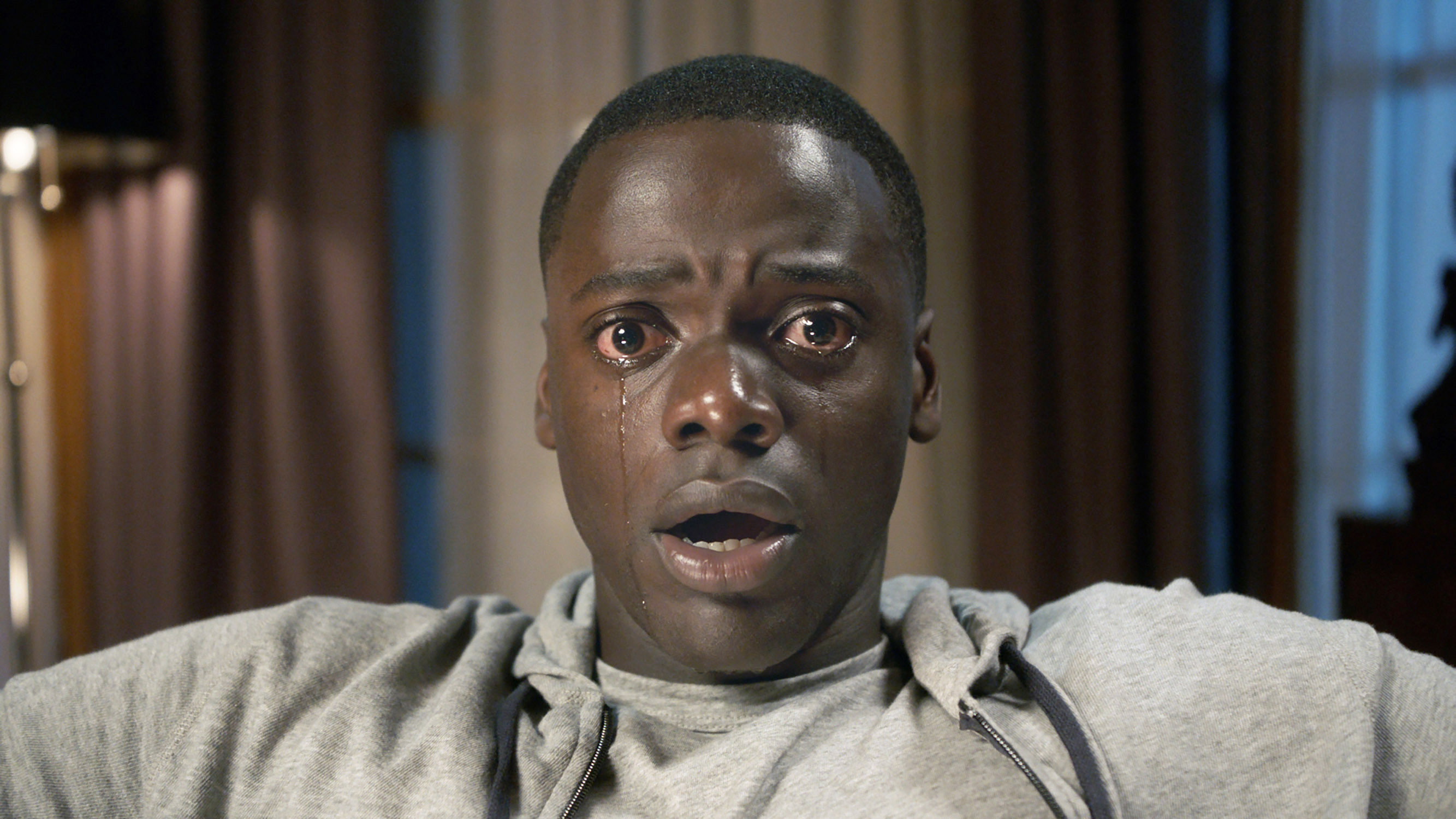
Get Out and Call Me By Your Name won more awards: With the Oscars still weeks away, Get Out and Call Me By Your Name upped their awards season game with Writers Guild Awards wins. Read more here and find out how to see Get Out for free in theaters this weekend here.
COOL CULTURE
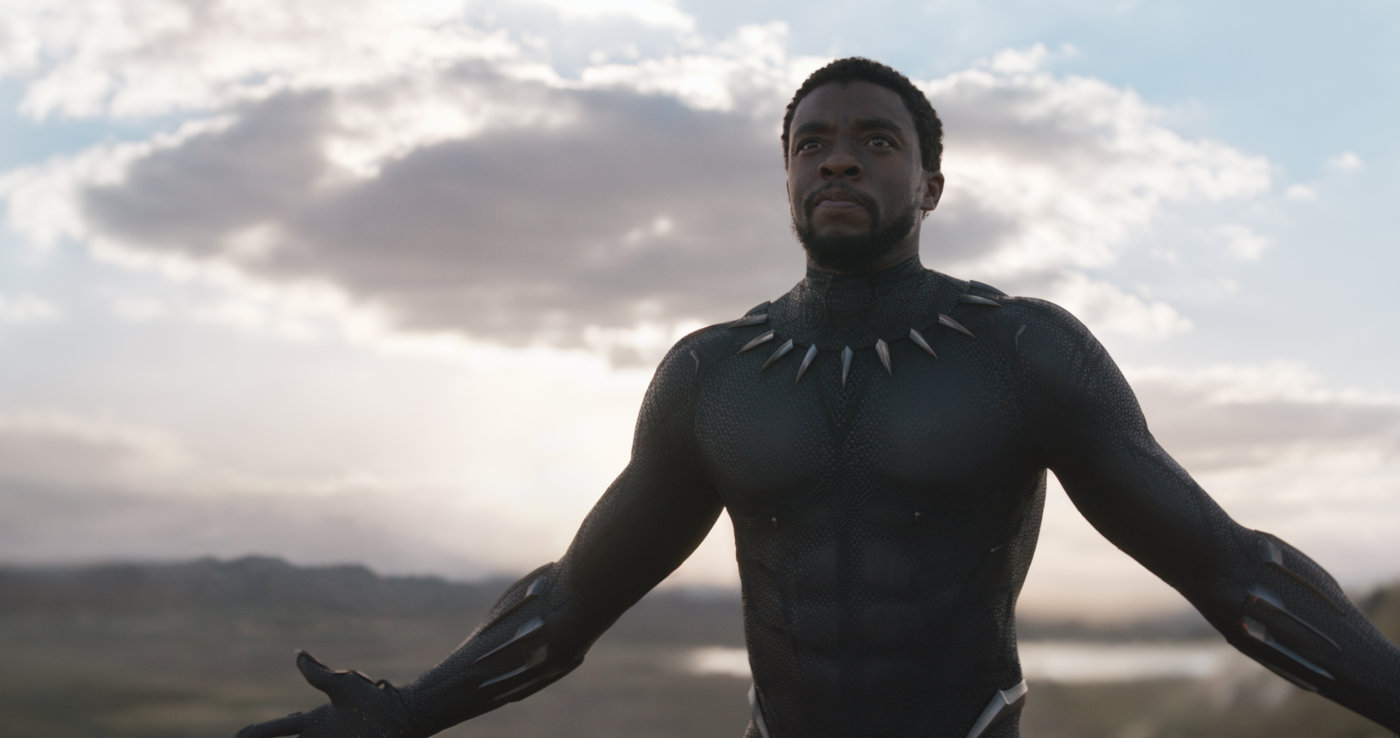
How to prepare for Black Panther: This week saw many primers for moviegoers heading out to see Black Panther in need of some background and set up. Below is a history of the character from comics to the new Marvel Cinematic Universe installment. And we shared more Black Panther-related culture here and here.
[embedded content]

MUST-WATCH TRAILERS
Incredibles 2 shares a peek: The first teaser with a lot of footage from Incredibles 2 arrived in the form of an Olympics sneak peek, and the Pixar sequel looks as good as the original. Watch it below.
[embedded content]
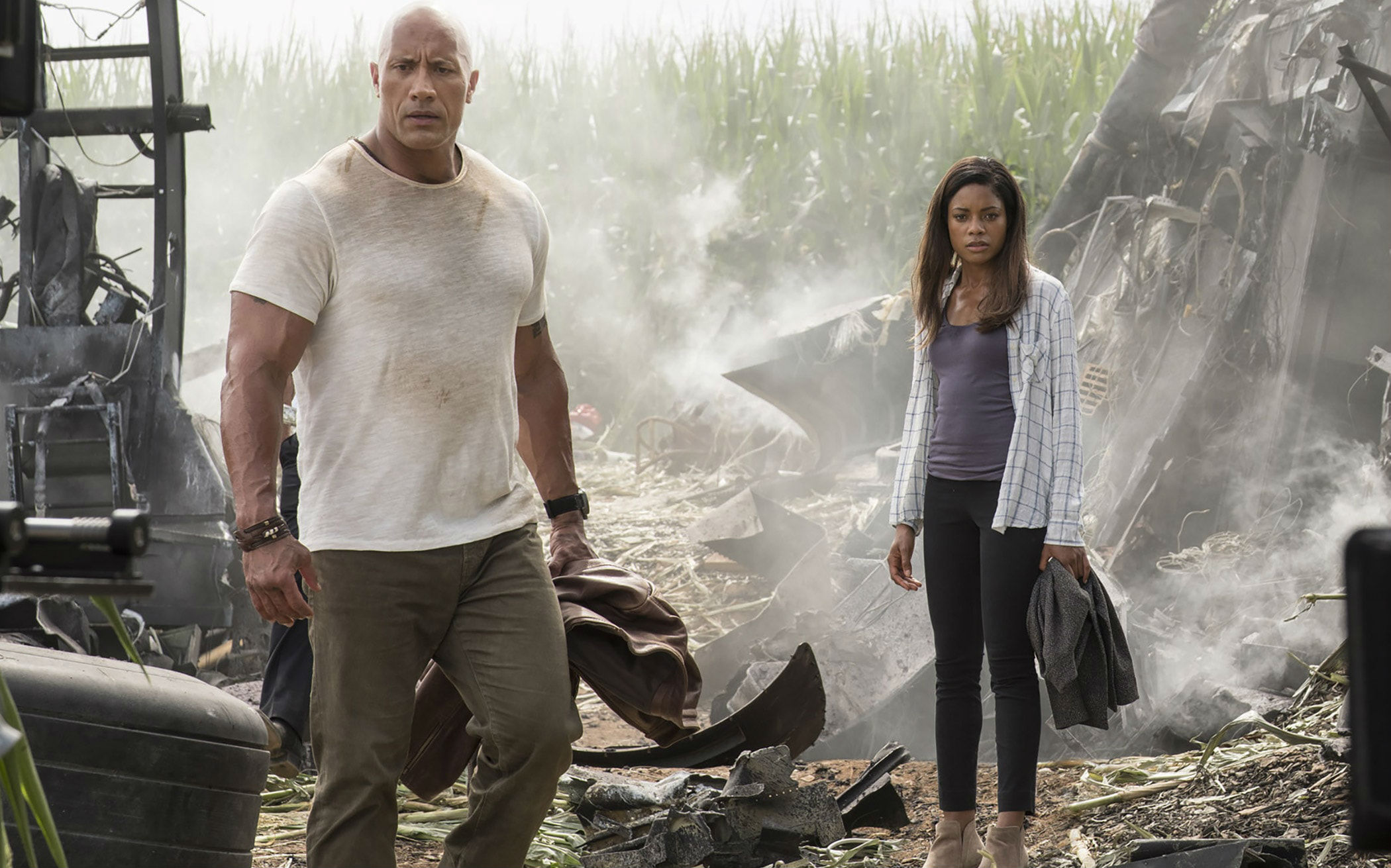
Rampage shows animal experimentation gone wrong: The second trailer for the arcade game adaptation Rampage features Dwayne Johnson and a number of giant animals created through experiments gone wrong. Watch it here:
[embedded content]

Ready Player One focuses on friendly competition: The new trailer for Steven Spielberg’s Ready Player One shows more of its main characters in love and war, in true reality and virtual reality. Check it out here:
[embedded content]
and
How D'Wayne Edwards Became A Sneaker Legend
D’Wayne Edwards created the Pensole Footwear Design Academy to try and diversify the sneaker business. Edwards was one of the first black designers in the business and created the academy, in part, because of how difficult it was for him to get started.
KELLY MCEVERS, HOST:
Lots of industries acknowledge they have a diversity problem. Maybe it’s with age or gender or race. Our Planet Money podcast wondered, how exactly does an industry begin to change itself? And reporter Kenny Malone says the answer is on your feet.
KENNY MALONE, BYLINE: D’Wayne Edwards was just out of high school – this was in the ’80s – and managed to get a job at LA Gear, the sneaker company, which was great.
D’WAYNE EDWARDS: But I’m in the accounts payable department, just filing papers.
MALONE: Which was not great because sneaker design was his dream job.
EDWARDS: And so I start asking around. And everyone’s saying, well, you have to go to design school, and you have to do this. You have to do that.
MALONE: Edwards couldn’t afford the normal, expensive paths to shoe design. But he did notice that the LA Gear company had these wooden suggestion boxes. And he thought, you know what? While I’m here, what the heck?
EDWARDS: So my suggestion was, hire me as a footwear designer. So I would – every morning before I started my filing-papers job, I would put a sketch in the box. So I did that for six months.
MALONE: He had no idea, but somebody was looking at these sneaker sketches.
ROBERT GREENBERG: The line work was very trendy, a little futuristic-looking.
MALONE: This is Robert Greenberg, president of LA Gear at the time.
GREENBERG: D’Wayne’s talent is to create what does not exist. You know you go to those car shows and they show the futuristic cars?
MALONE: Yeah.
GREENBERG: That’s what he did.
MALONE: Greenberg called Edwards into his office.
EDWARDS: And he had all 180 sketches on his desk. And he was like…
GREENBERG: Here, come in, and sit down. And let’s talk.
EDWARDS: I’ve heard you’re the one that’s been putting these (laughter) sketches in the box.
GREENBERG: You know, look at this – looks nice. What do you want to do?
EDWARDS: What do you want me to do with these things? You know, did you go to design school? What’s up? And I was like, well, no, I just graduated from Inglewood High School about seven months ago. And he was like, well, you have talent, and I like your ambition. And I’m going to offer you a entry-level design job if you want to take it.
MALONE: And that is the story of how D’Wayne Edwards became one of the first black designers in the sneaker industry. His career skyrocketed from there. Eventually he became the lead designer at Nike for the Air Jordan brand. But Edwards always wondered. Why did a kid like him even need this suggestion box miracle to launch his career in the first place? And so about 10 years ago, he quit his dream job to build a new way to launch careers. He built one of the first sneaker design schools.
EDWARDS: You see that white shoe with the navy midsole on the wall right there?
MALONE: Edwards is surrounded by about eight students trying to explain to them how sneaker color blocking can make a shoe stand out even from across the room.
EDWARDS: That’s why blocking’s important. And it started on basketball courts.
MALONE: The Pensole Footwear Design Academy in Portland, Ore., is some hybrid of a vocational school, a design college and an apprenticeship.
EDWARDS: But because I wasn’t able to go to school, I want to figure out a way to make it free so kids like me don’t get lost.
MALONE: So Edwards gets sneaker companies to fund scholarships for many students, and the sneaker companies get this pipeline of undiscovered talent.
EDWARDS: So the other thing that we – oh, Precious.
MALONE: Almost on cue, one of Edwards’ first students shows up to say hi.
EDWARDS: Precious is an alumni. She work at Jordan now. How are you doing?
PRECIOUS HANNAH: I’m good.
MALONE: Precious Hannah now works at Nike and still comes back as a mentor.
HANNAH: So I think it’s very important for others to understand, like, you know, you don’t have to go to this prestige school just to understand something. You could come somewhere where someone understands how to do things and just, like, give you the knowledge like D’Wayne gave me.
MALONE: In recruiting for the school, Edwards says he makes a special effort to find students who do not look like the industry looks right now. And there aren’t great statistics about diversity in the footwear design field, but the number of non-white designers does seem to be growing, and a big part of that is the Pensole Academy.
EDWARDS: Real quick, I’ll just show you a couple of things.
MALONE: Yeah, sure.
EDWARDS: So we keep a…
MALONE: Edwards walks over to a wall covered in different companies’ shoeboxes.
EDWARDS: And we put shoeboxes up on the wall when they get jobs at different places, for whatever said company…
MALONE: Every single one of these is a job.
EDWARDS: Yeah.
MALONE: One, two, three, four, five, six.
I’ll save you the counting. It’s more than 300 graduates who’ve wound up working at footwear companies.
EDWARDS: All the companies have a diversity agenda. Like, oh, we need more people of color. Oh, we need this. We need that. So in a lot of ways, with me starting this is to show the industry, this is what happens when you actually focus in on something.
MALONE: Kenny Malone, NPR News.
Copyright © 2018 NPR. All rights reserved. Visit our website terms of use and permissions pages at www.npr.org for further information.
NPR transcripts are created on a rush deadline by Verb8tm, Inc., an NPR contractor, and produced using a proprietary transcription process developed with NPR. This text may not be in its final form and may be updated or revised in the future. Accuracy and availability may vary. The authoritative record of NPR’s programming is the audio record.
An Out-Of-Network Lab, An Elaborate Urine Test And Then A Surprise Bill

Urine testing to diagnose illness or to detect the presence of drugs is generally routine. But a woman who gave her doctor a urine sample months after back surgery got socked with a huge bill.
SPL/Science Source
hide caption
toggle caption
After Elizabeth Moreno had back surgery in late 2015, her surgeon prescribed an opioid painkiller and a follow-up drug test that seemed routine — until the lab slapped her with a bill for $17,850.
A Houston lab had tested her urine sample for a constellation of legal and illicit drugs, many of which Moreno says she had never heard of, let alone taken.
“I was totally confused. I didn’t know how I was going to pay this,” said Moreno, 30, who is finishing a degree in education at Texas State University in San Marcos, and is pregnant with twins.
Her bill shows that Sunset Labs LLC charged $4,675 to check her urine for a slew of different types of opioids: $2,975 for benzodiazepines, a class of drugs for treating anxiety, and $1,700 more for amphetamines. Tests to detect cocaine, marijuana and phencyclidine, an illegal hallucinogenic drug also known as PCP or angel dust, added $1,275 more.
The lab also billed $850 to test for buprenorphine, a drug used to treat opioid addiction, and tacked on an $850 fee for two tests to verify that nobody had tampered with her urine specimen.
Total bill: $17,850 for lab tests that her insurer, Blue Cross and Blue Shield of Texas, refused to cover, apparently because the lab was not in her insurance network. The insurer sent Moreno an “explanation of benefits” that says it would have valued the work at just $100.92.
Moreno’s father, in a complaint to the Texas attorney general’s office about the bill, identified the Houston surgeon who ordered the costly test as Dr. Stephen Esses. His office told Kaiser Health News the surgeon would have no comment.
Sunset Labs is part of a network of pain clinics and other medical businesses founded by Houston anesthesiologist Phillip C. Phan, according to Texas secretary of state filings and court records. Court records say Phan’s companies also own the facility where Moreno had her operation.
Three experts contacted by KHN said the lab grossly overcharged; they also doubted the need for the test.
“This just blows my mind,” said Jennifer Bolen, a former federal prosecutor and lab and pain management consultant. “It’s very high and incredibly out of the norm.”
Dan Bowerman, a medical fraud expert, called the lab bill “outrageous” and “unconscionable” and said it should have prompted an investigation.
“Sounds real fishy,” added Charles Root, a veteran industry adviser. He wondered if the lab had “misplaced the decimal point,” because such a test should cost a few hundred dollars, tops.
The lab disagrees.
Sunset’s billings “are in line with the charges of competing out-of-network labs in the geographical area,” lab attorney Justo Mendez said in an emailed statement.
Mendez said pain doctors agree that extensive urine testing is “the best course of action” and that a lab “is not in the position” to question tests ordered by a doctor.
Testing Booms As Opioid Epidemic Rages
Urine testing for patients with chronic pain has grown explosively over the past decade amid a rising death toll from opioid abuse. Pain doctors say drug testing helps them make sure patients are taking the drugs as prescribed and not mixing them with illegal substances.
Yet the testing boom costs billions of dollars annually and has raised concerns that some labs and doctors run urine tests needlessly — or charge exorbitant rates — to boost profits.
Some insurers have refused to pay, which can leave patients like Moreno threatened with ruinously high bills they had no idea they had incurred.
“Surprise bills larded with unexpected expenses and little explanation inflict sticker shock on vulnerable patients,” said James Quiggle, communications director of the Coalition Against Insurance Fraud, whose members include insurers, consumer groups and government agencies. Quiggle said many “puffed-up bills straddle a fine line between abuse and outright fraud.”

Liz Moreno thought she was done paying for her back surgery in 2015 until a $17,800 bill for a urine drug test showed up nine months later. Her father, Paul Davis, a retired doctor from Ohio, settled the bill with the company for $5,000 to protect Liz’s credit rating.
Julia Robinson for KHN
hide caption
toggle caption
Julia Robinson for KHN
Moreno said her insurance covered the disc removal surgery in December 2015. She said the operation went well and she weaned herself off the hydrocodone pain pills. To her surprise, during a second appointment return about a month later, the surgeon’s office asked her to leave a urine sample.
“I didn’t think anything of it,” Moreno said of the test. “I said fine, whatever.”
More than a year later, she said, the lab phoned while she was driving and asked her to pay the $17,850 bill. The lab then sent her an invoice, dated March 10, 2017, which states: “based upon information from your health plan, you owe the amount shown.”
Luckily, her father, Dr. Paul Davis, was visiting her in Texas at the time. Davis, 66, is a retired family practice doctor from Findlay, Ohio.
Davis doubted the need for the test, not to mention what he thought was a sky-high price. He said the University of Findlay, where he helped train physician assistants, gave applicants a basic drug test at a cost of $174, while the local juvenile courts in Ohio paid $10 for a simple drug screen.
Fearing the bill would ruin his daughter’s credit scores, Davis said, he called Sunset and settled it in April 2017 by paying $5,000, which he said he now regrets. The lab sent Moreno a receipt that said it discounted her bill because of “financial need/hardship.”
Asked for comment, Blue Cross spokesman James Campbell said he couldn’t discuss a specific case but noted:
“We are disappointed as well as concerned about transparency whenever [any] member is surprised by an excessive charge for a seemingly routine service or received services that may not have been medically necessary.”
Campbell also said the lab was out-of-network and “we do not control how much they charge for services rendered.” The insurer encourages patients to confirm that all medical care they seek comes from medical providers in the Blue Cross network, he added.
Prices for urine tests can vary widely depending upon complexity and the technology used. Some doctors’ offices use a simple cup test, which can detect several classes of drugs on the spot. These tests rarely cost more than $200, and typically much less.
Bills climb higher when labs check for levels of multiple drugs and bill for each one, a practice insurers argue is seldom medically justified. But even labs sued by insurers alleging wildly excessive testing typically have billed $9,000 or less, court records show. One insurer sued a lab for charging $1,845 for a drug test, for instance.
Davis said Sunset Labs ignored his requests for a full explanation of the charges. In May, he filed a written complaint about the bill with the Texas attorney general’s office that included a copy of the bill and accused the lab of “price gouging of staggering proportions.”
“Young people just starting out, such as my daughter, may not have the ability to pay and this could result in damaged credit ratings or even bankruptcy,” he wrote.
Davis got a letter back from Attorney General Ken Paxton, who said the office would “review the information.” A spokesperson for Paxton told KHN: “We have received complaints about that business, but we can’t comment on anything else.” Sunset attorney Mendez said the lab is “not aware” of any such complaints.
In an interview, Davis also questioned the need for his daughter’s urine test because she received opioids only for a short period and the results would have had no impact on her treatment. In his complaint to the attorney general, Davis said the surgeon told him he ordered the tests because he feared possible retribution from the state medical licensing board for not testing patients who had been prescribed an opioid. The Texas Medical Board doesn’t require urine tests for patients receiving opioids for short-term pain, said spokesman Jarrett Schneider. That’s a “question of independent medical judgment as to whether the physician believes a drug test should be required,” he said.
Negative Reviews
Sunset Labs has an “F” rating with the Houston Better Business Bureau, which on its website posts an August 2017 complaint from a patient charged $16,150 for a urine test.
“This is not covered under my health insurance so I am expected to pay this excessive bill,” the complaint reads.
A second website that publishes government billing numbers of doctors and medical businesses includes a comment section with more than a dozen negative “reviews,” mostly complaints that the lab slammed patients with thousands of dollars in fees their insurers balked at paying.
In a pair of lawsuits filed in 2015, three doctors seeking to quit working at pain clinics operated by Phan accused the facilities of improper billing practices, including unnecessary urine testing. The doctors said they feared losing their medical licenses unless they severed their ties.
In one suit, Drs. Purvi Patel and Lance LaFleur also alleged that the pain clinics “pressured” doctors to overprescribe medical gear and genetic tests to insured patients “regardless of medical necessity.” The case did not go forward because the doctors did not pursue it. Neither doctor would comment.
In the second legal case, pain specialist Dr. Baominh Vinh said he resigned in April 2015 “based on certain questionable business practices … that are inconsistent with my ethical boundaries.” Vinh also alleged urine testing was overused. In a countersuit against Vinh, the pain clinics called his allegations a “falsehood” to justify violation of his employment contract.
The parties settled in March of last year. Terms are confidential, but a lawyer for the pain clinics said Vinh paid money to the company “and not vice versa.”
This is the debut of a monthly feature from Kaiser Health News and NPR that will dissect and explain real medical bills in order to shed light on prices in U.S. health care and to help patients learn how to be more active in managing costs. Do you have a medical bill that you’d like us to see and scrutinize? Submit it here and tell us the storybehind it.
Today in Movie Culture: How Black Panther's Suit Works, Taika Waititi's Superhero Rom-Com Idea and More
Here are a bunch of little bites to satisfy your hunger for movie culture:
Movie Science of the Day:
For Nerdist, Kyle Hill scientifically explains how Black Panther’s vibranium suit works:
[embedded content]
Custom Build of the Day:
Speaking of Black Panther, see the guys from Baltimore Knife and Sword forge a replica of Zuri’s spear from the movie:
[embedded content]
Movie Pitch of the Day:
Watch Taika Waititi on Entertainment Tonight pitching a mockumentary romantic comedy about Marvel’s Vision and Scarlet Witch:
[embedded content]
Movie Comparisons of the Day:
Couch Tomato shows 24 ways that all “hood” movies follow the same formula:
[embedded content]
Awards Criticism of the Day:
In this video essay, The Nerdwriter argues that The Florida Project should have been nominated for Best Picture at the Oscars:
[embedded content]
Vintage Image of the Day:
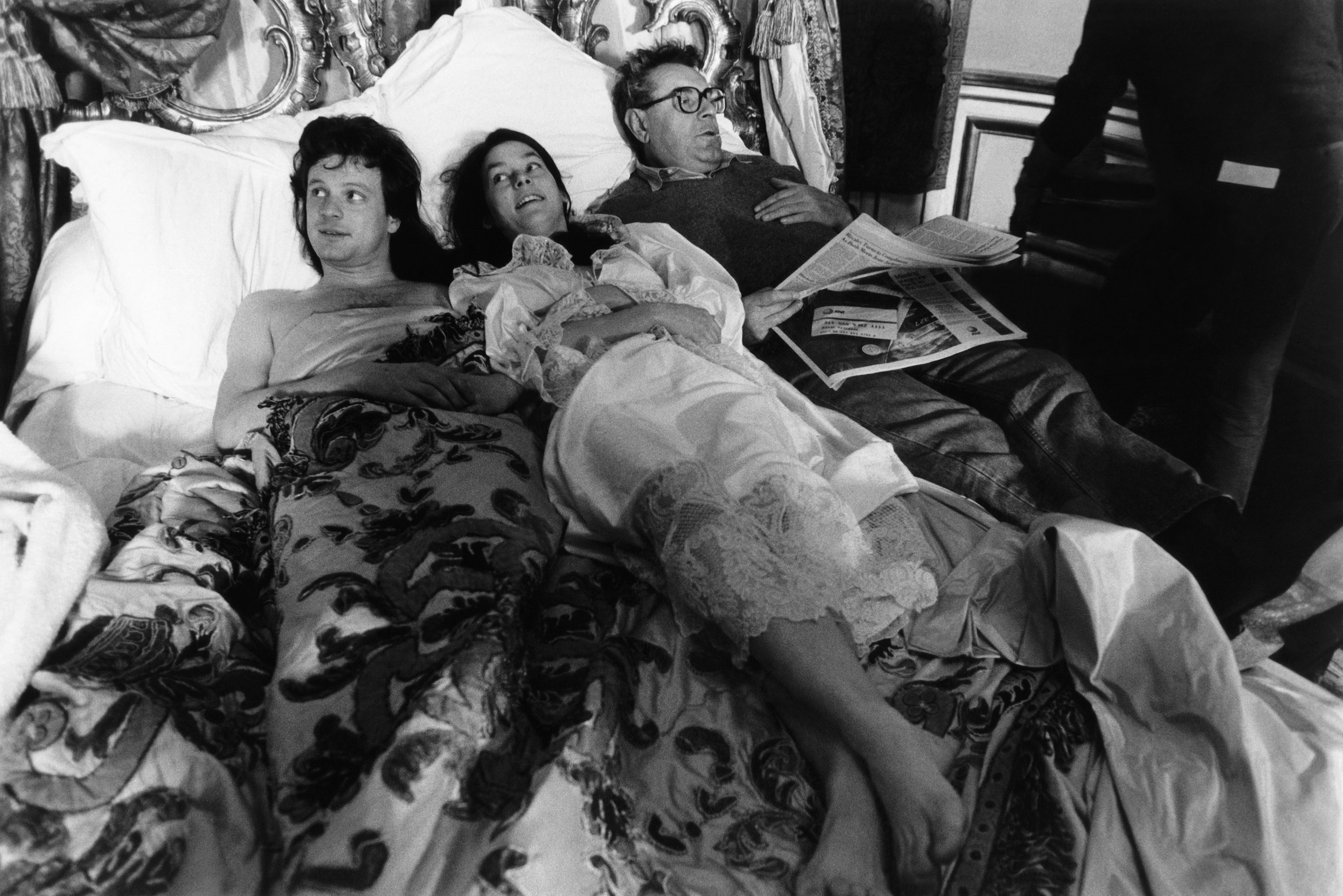
Milos Forman, who turns 86 this weekend, takes a rest with stars Colin Firth and Meg Tilly on the set of his 1989 movie Valmont:
Filmmaker in Focus:
Fandor looks at Alfonso Cuaron’s use of long takes in their latest “Found in Translation” video:
[embedded content]
Video Essay of the Day:
In his latest video essay, Matt Draper shows how Sleeping Beauty is the pinnacle of classic Disney animated features:
[embedded content]
Cosplay of the Day:
In honor of the new Incredibles 2 trailer, here’s some awesome Edna Mode cosplay:
Edna Mode- Box Turtle Cosplay pic.twitter.com/NNA7fEo316
— Cosplay (@CosplayHeaven) February 15, 2018
Classic Trailer of the Day:
Today is the 40th anniversary of the release of Coming Home. Watch the original trailer for the classic Oscar-winning drama below.
[embedded content]
and
Canada Hosts A Pride House At The Winter Olympics In South Korea

A rainbow button for Pride House Pyeongchang is seen at a display inside Canada House at the Winter Olympics in South Korea.
Bill Chappell/NPR
hide caption
toggle caption
Bill Chappell/NPR
It’s not the only Pride House in South Korea, but it’s the first in the world to be embraced by a national Olympic committee: Alongside poutine and beer, Canada Olympic House offers a message of inclusion and gender diversity by hosting a space for LGBTQ fans, athletes and friends.
The idea for this Pride House, organized in collaboration with South Korean activists, is based on the tradition of Olympic delegations opening hospitality houses to showcase their home nations’ culture and history and welcome fans. Rather than focusing on a particular nationality or team, the Pride House welcomes all.

In the Olympic Village, Canada House is hosting a Pride House.
Bill Chappell/NPR
hide caption
toggle caption
Bill Chappell/NPR
“The mission of Pride House,” says Keph Senett, a trustee with Scottish-based Pride House International, is to create a “place where people can go and watch games, and hang out and eat food and all that — sort of experience the games in a safe and welcoming way.”
As for Team Canada, Senett said, “They are saying very clearly, ‘We support this mission.’ “
Canada’s hospitality house — created out of a gateball clubhouse (a game similar to cricket) — has a ski-lodge vibe. It offers lounge chairs, fire pits and table hockey games outside. When we visited, a capacity crowd had gathered in a pub-like area inside to watch Team Canada play (and defeat) the U.S. women’s hockey team.
The Pride House team and activists from the Korean Sexual-Minority Culture and Rights Center created the welcome message that greets visitors:
“This is your house no matter who you are or where you come from.
You are at home, regardless of your sex, sexual orientation, race, marital or family status, gender identity or expression, sex characteristics, creed, age, color, disability, political or religious belief.”
The message concludes, “Be proud. Be you. Be Olympic!”
The Korean Sexual-Minority Culture and Rights Center started preparing to open a Pride House three years ago. The group is staffing a section of Canada House, with a representative on hand to talk with visitors — and a cutout rainbow house for people to pose with for selfies. The group is also operating a separate Pride House in Seoul, hosting Olympic watch parties and other events in the capital.
Senett’s group has helped local activists form a Pride House at all but one Olympics since 2010, when the first Pride House opened at the Vancouver Winter Games as an inclusive spot for sports fans to gather. Since then, there have been 13 Pride Houses at big sporting events from the World Cup to the Pan American Games.
A post shared by Pride House International (@pridehouse) on Feb 9, 2018 at 5:24pm PST
Pride House International is a Scottish charity, formed by a coalition of LGBT sports and human rights groups. Senett says local groups normally do their own fundraising that includes donations and some grants.
Until now, every Pride House has been held outside of the official bubble that surrounds mammoth events such as the Olympics, World Cup and other events. But this time, Team Canada offered to host it within its Canada House in Gangneung, site of the flat-ice events at the Pyeongchang Games.
In a statement, Chris Overholt of Canada’s Olympic Committee said that Canada “stands behind its commitment of inclusion and diversity in the global sport landscape. We recognize that diversity is our greatest strength… Team Canada is proud to embrace its diversity at Canada House … as a team, we are stronger when we celebrate our differences.”
“It’s super-exciting, because it’s the first time that a national Olympic committee has officially affiliated themselves,” Senett said, “so people are really excited about that, because it’s the organization and so forth.”
When it comes to social and cultural attitudes about LGBTQ issues in South Korea, a report by Gallup Korea last year found mixed results – including greater tolerance among people under 30 than among those who are older.

A wall in the foyer of Canada House greets visitors: “This is your house no matter who you are or where you come from.”
Bill Chappell/NPR
hide caption
toggle caption
Bill Chappell/NPR
In that survey, 34 percent of South Korean respondents said they support same-sex marriages, while 58 percent said they oppose it. Among people younger than 30, the number in favor rose to 66 percent.
“As far as the laws go, there’s no same-sex marriage here. You just don’t live out of the closet. There are no protections for losing your job or losing your housing, based on either sexual orientation or gender identity,” Senett said.
But, Senett says, things may be changing.
In 2017, Gallup also reported broad and strong support in South Korea for workplace protections, with 90 percent of the survey’s respondents — regardless of how they viewed homosexuality — saying sexual minorities should have the same chances to work.
As for the sporting environment around gender issues in South Korea, an ugly episode made international headlines a few years ago, when a female soccer player’s gender was questioned by rival coaches in her pro league. At the time, the player, Park Eun-seon, had competed for the national women’s team for more than a decade. She had also undergone a gender test before playing in the 2004 Athens Olympics.
The only time since 2010 that Senett’s group has been unable to create an Olympics Pride House was at Sochi in 2014, when their request to open a space was denied because of Russia’s anti-homosexuality laws.
Faced with that setback, the group responded by hosting smaller events elsewhere. And, Senett said, Pride House International sent letters to Russian authorities and to the International Olympic Committee that are now part of the record.
?”Things change little by little,” Senett said. “But we want to see sort of the entire sporting environment become friendlier in those ways, more open, more accepting — and not in a touchy-feely way, but in the sense of organizations taking steps to have some teeth when there is discrimination.”
She added, “These are these are groups that have such an incredible amount of money and influence and power in the world. And we want to see them using it for good.”
Overshooting, Tipping Points, and ABBA

We’re trying a new thing (for us): We ask guests to tell us about something they read that changed how they see the world.
Today, Diane Coyle — an economist who writes a blog about economics books — tells us about Micromotives and Macrobehavior by Thomas Schelling.
Coyle says it’s helped her understand everything from why it’s so hard to get the water temperature in the shower just right to why ABBA wore such ostentatious costumes on stage.
Music by Drop Electric. Find us: Twitter/ Facebook.
Subscribe to our show on Apple Podcasts, PocketCasts and NPR One.
