Articles by admin

No Image

Federal Fraud Case Could Put Several College Basketball Coaches In Prison

This year, a cloud hangs over the NCAA Division I Men’s Basketball Tournament. Documents from an ongoing federal probe into bribery and fraud allege a shadow-world involving big money, secret deals and marquee names from the world of college basketball. NPR’s Ari Shapiro speaks with Yahoo Sports journalist Pete Thamel about the documents he reviewed.

ARI SHAPIRO, HOST:

March Madness starts in just over a week. And this year, a cloud hangs over the NCAA Division I Men’s Basketball Tournament. Documents from an ongoing federal probe into bribery and fraud allege a shadow world involving big money, secret deals and marquee names from the world of college basketball. Journalists Pete Thamel and Pat Forde reviewed some of those documents and broke the story for Yahoo Sports. We asked Pete Thamel to unwind the story.

PETE THAMEL: On September 26, Ari, the FBI busted into the homes and hotel rooms of 10 men affiliated with basketball and arrested them for a variety of charges. They included bribery, wire fraud, money laundering. And what was found is they were illicitly either taking bribes to send young men to different financial planners and business managers or using money to steer players to different colleges and universities. It’s an intricate scheme that went from sneaker company executives to four college assistant coaches all the way down to AAU amateur coaches.

SHAPIRO: And you’ve uncovered ties to 20 Division I programs, more than 25 players. I mean, how pervasive was this?

THAMEL: It was essentially so pervasive and such an ingrained part of the system that they have addressed it in what I feel like is a nontraditional way. And there’s conversation. Larry Scott, the commissioner of the Pac-12, has come out and said, you know, rules need to change. In my 20 years of covering college sports, Ari, I’ve never seen one story elicit as much significant conversation for wholesale change as this story has.

SHAPIRO: Can you just tell us the story of one college athlete who you found out about as you were researching whose story really shocked you?

THAMEL: Ari, I think the story that – when you really look at it in the micro, and you look at it through the criminal complaints and the court documents that gave the best prism to the system was a young man by the name of Brian Bowen. His recruitment to Louisville, where the criminal complaints alleged he received a six-figure payment via Adidas to attend Louisville, led to the firing of Hall of Fame coach Rick Pitino. Bowen was a very good high school basketball player. But he was not what we would call a one and done. He was not guaranteed to just playing college for one year and then leave. And to see the market and to read the conversations in the federal documents about, essentially, the bidding and the behind the scenes maneuvering – OK. If there’s a market for the No. 21 player in the country or 19 player in the country, what’s the market like for the No. 3 player in the country?

SHAPIRO: Is this going to change March Madness, which kicks off in just over a week?

THAMEL: I don’t think it will significantly. But I do think by the next March Madness, because there’s a commission headed by Condoleezza Rice to change college basketball – the findings are expected to come after the Final Four – I do think we will see the sport be different. I just hesitate to think there is going to be three recommendations in a report, and it’s going to change decades of behavior.

SHAPIRO: So what will change decades of behavior? Or is this just the way it is and always will be, despite the fact that it’s illegal?

THAMEL: I do think we’re going to see some macro change that attempts, hopefully, to include the student athletes who are making the money and the reasons why people are watching March Madness. I mean, you have the coaches making up to $5 million a year in college basketball, some of them even more. And the players have long been due some type of slice for what they’re bringing. But I think it’s naive to say there’s going to be changes, and there’s going to be no more under-the-table payments and no more corruption.

SHAPIRO: Pete Thamel, senior writer for Yahoo Sports, thanks for joining us today.

THAMEL: Ari, thank you.

(SOUNDBITE OF THE BLACK KEYS’ “BLACK MUD”)

Copyright © 2018 NPR. All rights reserved. Visit our website terms of use and permissions pages at www.npr.org for further information.

NPR transcripts are created on a rush deadline by Verb8tm, Inc., an NPR contractor, and produced using a proprietary transcription process developed with NPR. This text may not be in its final form and may be updated or revised in the future. Accuracy and availability may vary. The authoritative record of NPR’s programming is the audio record.

Let’s block ads! (Why?)


No Image

Time Running Short For Congress To Stabilize Individual Insurance Market

Sen. Patty Murray, D-Wash., the ranking member, and Sen. Lamar Alexander, R-Tenn., chairman of the Senate Health, Education, Labor, and Pensions Committee, meet before the start of a hearing on Capitol Hill in Washington, Wednesday, Oct. 18, 2017, the morning after they reached a deal to resume federal payments to health insurers that President Donald Trump had halted.

J. Scott Applewhite/AP

hide caption

toggle caption

J. Scott Applewhite/AP

A bipartisan group of senators and House members has been working since last summer toward measures to keep prices from rising out of control and undermining the individual market—the market that serves people who don’t get insurance through work or through the government. Members hope to attach a package of fixes to what should be the year’s final temporary spending bill, due late this month.

The lawmakers are up against both a legislative clock and the insurance companies’ timeline. Insurers have until summer to decide if they want to continue to sell policies on the ACA marketplaces, but many start making preliminary decisions as early as April. Without action, insurers say premiums will go up in 2019 due to the uncertainty. Consumers and the government would share those costs.

It is by no means clear whether any package could gain the votes needed in the House and Senate. Most Republicans are loath to be seen “fixing” Obamacare, although opinion polls clearly show they will be blamed for problems with the law going forward.

Pressure to improve the situation is being felt beyond Capitol Hill. Last week five governors (three Democrats, one Republican and one Independent) released a blueprint for a health system overhaul that includes several of the stabilization ideas under consideration in Congress.

Lawmakers in D.C. are looking at two primary fixes, although they could be combined.

Reinsurance

One, pushed by Sens. Susan Collins (R-Maine) and Bill Nelson (D-Fla.), is called reinsurance. This is a fund that would help insurers pay for the sickest patients and would guarantee the insurance companies do not face large losses. The idea is that if insurers don’t have to worry about covering the expenses for their highest-cost patients, they can keep premiums lower for everyone.

The ACA had a temporary reinsurance program from 2014 to 2016. It was intended to help insurers get started in a market where sick people were able to buy their own insurance for the first time. Prior to the law, most insurers did not cover many people with preexisting health conditions. If they did, it was at an extremely high cost.

Since the federal program ended, several states, including Minnesota and Alaska, have adopted, with some success, their own reinsurance programs in an attempt to hold premiums down.

The subsidy fix

The other proposal, negotiated by Sens. Lamar Alexander (R-Tenn.) and Patty Murray (D-Wash.), would guarantee insurers would get money that the Trump administration cut off in October. The senators are advocating reinstating federal reimbursement for so-called cost-sharing reduction subsidies—discounts that the ACA requires insurers to provide to their lower-income enrollees to help reduce their deductibles and other out-of-pocket costs.

Senate Majority Leader Mitch McConnell (R-Ky.) pledged to Collins, in exchange for her vote on the GOP tax plan in December, that he would support bringing both bills to the floor for debate.

That has not happened. Although, in a statement, Collins said she is “continuing to have productive discussions” with Senate and House leaders about both bills.

Meanwhile, a lot has changed, including new questions about whether the fixes would work.

Would the fixes help?

State insurance regulators managed to find a workaround for Trump’s sudden cancellation of the federal cost-sharing payments.

The cancellation made some premiums higher but the subsidies the federal government gave to consumers also increased to cover those higher prices. That’s because most states allowed insurers to offset the loss of these funds by attaching the premium increases to the plans that determine how much in subsidies enrollees get to pay those premiums. The result is that most people who get government help pay the same (or, in some cases, less), while insurers are effectively being paid back.

That means, however, if the cost-sharing reduction payments were reinstated for 2018, as the original legislation called for, insurers would have to give the excess money back to the government.

Analysts agree that would only add to the confusion.

Restoring the federal payments for this year, says Joseph Antos of the conservative American Enterprise Institute, “does not lower premiums this year, so it does absolutely no good to the average person.”

Some advocates have suggested that Congress should guarantee the payments for 2019 and 2020. But Antos says that “also makes no sense because the insurers would then think ‘Are we going to go through this again?’ ” They might raise premiums even further to make up for the uncertainty.

Antos — and many other analysts — agree that instead, restoring or creating a new reinsurance program would likely do more to control premium increases.

Reinsurance “will protect premiums for the people who are actually most subject to them,” says Sherry Glied, a former Obama administration health official now at New York University. She was referring to those in the individual market who do not get government help and have been footing large premium increases for the past several years. That’s because having protection against the largest bills would allow insurers to lower premiums across the board.

Potential partisan roadblocks

Then there are the political considerations.

Many Republicans in Congress have called the cost-sharing reduction payments, in particular, a “bailout” to the insurance industry and are resistant to reinstate the payments.

Instead, they seem more amenable to the idea of reinsurance, because they consider it a type of “high-risk pool,” which they have been pushing for years. House Speaker Paul Ryan said at an event in Wisconsin in January that “I think there might be a bipartisan opportunity there to get risk pools, risk mechanisms.”

But Republicans have made clear they want something in return for what could be considered a “fix” to the health law they despise.

Health and Human Services Secretary Alex Azar was careful to say in a meeting with reporters last week that the Trump administration has no formal position yet on the stabilization efforts. But, he said, “I think it would need to be part of an entire set of reforms there that we would want to see.” That would likely include more flexibility for states to opt out of some of the health law’s coverage requirements.

The delay has made Democrats more demanding, too. The repeal of the ACA’s penalties next year for people who don’t have insurance has changed the situation dramatically, says Sen. Murray.

“As I have made clear, the bipartisan bill I originally agreed on with Chairman Alexander will not make up for this latest round of Republican health care sabotage,” she said in a statement. “In fact, there are changes that now need to be made to our bill to ensure it meets its intended goals of keeping premiums down and stabilizing markets.”

What’s at stake

But while Congress decides if it will take action, insurers are warning that doing nothing will lead to still higher premiums.

Premium rates for a “benchmark” silver plan could rise by 27 percent in 2019, the Blue Cross Blue Shield Association said earlier this month.

Congressional action on reinsurance and cost-sharing, the association predicted, would help push premium rates 17 percent below this year’s levels.

“Health plans are looking for certainty in the market,” said Justine Handelman, senior vice president in the association’s policy arm.

Ideally, Congress would include the funding in measures adopted this month, said Handelman, who spoke with reporters during a briefing at the association’s Washington, D.C., headquarters: “Most plans are filing premium rates by April.”


Kaiser Health Newsis a nonprofit news service covering health issues. It is an editorially independent program of the Kaiser Family Foundation that is not affiliated with Kaiser Permanente.

KHN senior correspondent Julie Appleby contributed to this story.

Let’s block ads! (Why?)


No Image

Georgia Lawmakers Punish Delta Air Lines Over NRA Feud

A Delta Air Lines flight takes off from Hartsfield-Jackson Atlanta International Airport in Atlanta in January of last year.

David Goldman/AP

hide caption

toggle caption

David Goldman/AP

Republican lawmakers in Georgia made good on a threat to eliminate a proposed tax break for Atlanta-based Delta Air Lines, after the carrier declined to reverse a decision to cut ties with the National Rifle Association.

Earlier this week, Delta — the state’s largest private employer with 33,000 workers statewide — was among numerous companies to announce that it would end discounts for NRA members in the wake of the mass shooting that killed 17 people at a Parkland, Fla., high school.

Immediately afterward, Georgia’s Lt. Gov. Casey Cagle, a Republican and staunch NRA ally, said he would “kill” legislation to give the airline a sales tax exemption on jet fuel. The proposal, estimated to be worth at least $38 million to Delta and other airlines, had until then been largely uncontroversial.

I will kill any tax legislation that benefits @Delta unless the company changes its position and fully reinstates its relationship with @NRA. Corporations cannot attack conservatives and expect us not to fight back.

— Casey Cagle (@CaseyCagle) February 26, 2018

Ignoring warnings that taking on Delta could harm the state’s pro-business image, the GOP-controlled House, which had earlier approved a larger tax bill containing the exemption, voted 135-24 on Thursday for a new version stripped of the provision. Meanwhile, some experts have raised First Amendment concerns over the legislature’s punitive move.

House Speaker David Ralston, a Republican, made it clear that there was a direct link between the vote and the NRA controversy: “I hope they are better at flying airplanes than timing P.R. announcements,” he said.

The Senate passed the tax cut bill 44-10.

Republican Gov. Nathan Deal, who called the Delta controversy an “unbecoming squabble,” said he would sign the broader tax measure.

Lt. Gov. Cagle is widely seen as Deal’s successor. In a statement, he said: “Businesses have every legal right to make their own decisions, but the Republican majority in our state legislature also has every right to govern guided by our principles.”

Delta did not immediately comment on the votes, but the controversy has prompted several states in recent days to lobby the airline to relocate its headquarters.

Virginia Gov. Ralph Northam, a Democrat, tweeted Tuesday: “Hey [Delta] —Virginia is for lovers and airline hubs. You’re welcome here any time.”

Hey @delta—Virginia is for lovers and airline hubs. You’re welcome here any time. https://t.co/BxxnOhEpt6

— Ralph Northam (@GovernorVA) February 27, 2018

The governors of Connecticut and New York, also Democrats, have also pitched their states to the airline, according to The Associated Press, which says the mayor of Birmingham, Alabama, and a congressional representative from Ohio “also have reached out to Delta in recent days.”

Let’s block ads! (Why?)


No Image

Today in Movie Culture: Animated Remake of 'Star Wars,' Imagining Kristin Wiig in 'Wonder Woman 2' and More

Here are a bunch of little bites to satisfy your hunger for movie culture:

Casting Rendering of the Day:

Kristen Wiig might play the villain Cheetah in Wonder Woman 2, so BossLogic shows us what she could look like in the sequel:

Quick Kristen Wiig Cheetah today for some fun #WonderWoman2@WonderWomanFilm@PattyJenks@GalGadotpic.twitter.com/wqVKyjamc2

— BossLogic (@Bosslogic) March 1, 2018

Reworked Movie of the Day:

Artist Jeronimus Dekker ambitiously retells the original Star Wars as an animated short film (via /Film):

[embedded content]

Reworked Trailer of the Day:

Speaking of turning live-action things animated, here’s a redo of the Ant-Man and the Wasp using old cartoon clips:

[embedded content]

Alternate Movie Posters of the Day:

Get ready for this Sunday’s Oscars with these alternate posters for the Best Picture nominees from artist Matt Needle:

These alternate #Oscars posters from @needledesign are pretty cool. pic.twitter.com/6TKe7VE0vC

— One Perfect Shot (@OnePerfectShot) February 28, 2018

Movie Science of the Day:

Kyle Hill scientifically explains what would really happen if a vibranium meteor hit Earth as in Black Panther:

[embedded content]

Vintage Image of the Day:

Ron Howard, who turns 64 today, with producer George Lucas and the Nelwyn cast on the set of Willow in 1987:

Filmmaker in Focus:

Billy Wilder was recently deemed the best screenwriter of all time by current screenwriters, so Just Write looks at why that’s the case (via Film School Rejects):

[embedded content]

Cosplay of the Day:

Dark Helmet from Spaceballs gets some cosplay love in this photo shared by Funko from Emerald City Comic Con:

“I am your father’s brother’s nephew’s cousin’s former roommate.”
Great cosplay near the Funko Booth!! #ECCC#ECCC2018#FunkoECCCpic.twitter.com/a6wWxZVe78

— Funko (@OriginalFunko) March 1, 2018

Mashup of the Day:

Funny or Die combined scenes from I, Tonya and Blades of Glory and they go together perfectly:

[embedded content]

Classic Trailer of the Day:

This weekend is the 75th anniversary of the release of Frankenstein Meets the Wolf Man. Watch the original trailer for the classic monster mashup below.

[embedded content]

and

Let’s block ads! (Why?)


No Image

Senators Push For Leadership At Indian Health Service

Sens. Jon Tester, left, and Steve Daines, speaking together in Jardine, Mont., in August 2017. Both said recently they want the Indian Health Service to have new, strong leadership soon.

Matthew Brown/AP Photo/Matthew Brown

hide caption

toggle caption

Matthew Brown/AP Photo/Matthew Brown

The insurance broker President Trump nominated to lead the Indian Health Service, Robert Weaver, is firing back at the White House and the media after his nomination was withdrawn last week.

“The allegations raised against me in the media are baseless, irrelevant, and in the most important cases simply incorrect,” Weaver said in a press release Tuesday.

In January, The Wall Street Journalquoted a former colleagues of Weaver alleging that he had exaggerated his prior work experience.

More recently, there were reports that he voluntarily withdrew his nomination to head the IHS. But Weaver said in a letter to tribal leaders and supporters published Feb. 22 that the characterization was inaccurate.

“Regardless of what the press reports may say, I was forced out,” Weaver wrote. “I was involuntarily withdrawn.”

In his letter he said he “received a call giving me two minutes this past Friday afternoon at 4:30pm, on a three day holiday weekend, to decide to withdraw or face the public humiliation of having the White House withdraw my nomination, as demanded by a staff person from HHS.”

Weaver hasn’t replied to an interview request from NPR.

The Trump administration hasn’t named a new nominee to lead IHS, which has been without a permanent leader since 2015.

Democrats and Republicans on the Senate Committee on Indian Affairs are both urging the White House to name a new nominee quickly.

“I’m expecting better, and I hope the administration will send us a highly qualified candidate,” said Montana Republican Sen. Steve Daines. He said he didn’t get a favorable impression of Weaver when they met after he was nominated.

Sen. Jon Tester, a Democrat from Montana who is also on the Indian Affairs Committee, said Senate “due diligence” revealed problems with Weaver’s statements about his education and work history.

But Tester said he doesn’t fault the Trump administration for sending them a candidate who was not properly vetted.

“I think this can happen,” Tester said. “What I think is really important moving forward is that they get us somebody much sooner than later. So we can get them confirmed. … If they dilly-dally on this, and this position’s left open it’s a major problem for Indian Health Service and not good for our Native American folks that are depending upon Indian Health Service for their health care.”

An estimated 3.7 million American Indians and Alaska Natives eligible to receive care from the IHS. In treaties, Tribes were promised health care in return for giving up nearly all of their ancestral lands to the federal government.

This month the National Indian Health Board told Congress that the current IHS budget of $4.8 billion dollars will meet less than 47 percent of the need for Native American health care nationwide. But that group of tribal leaders says that bigger picture, the agency needs far more funding. A report it published last year says the real health care needs in Indian Country require a $32 billion infusion the IHS, phased in over 12 years.

Daines isn’t convinced money is the problem, and wouldn’t commit to whether he thinks IHS can function properly on its current budget. “Throwing more money at it isn’t going to solve the fundamental problem of lack of accountability and lack of leadership,” he said.

“You need to prioritize and look at where we spend the money,” Daines said. “One of the areas we need to address is to insure that the compensation structure for the health professionals that serve, the folks that are right there on the front line, delivering health care in Indian Country, that the wages they’re provided are competitive, so that we can attract and retain good health care professionals. That is an area that needs to be addressed, and that’s what we need to prioritize.”

For his part, Tester said, “It’s well documented that IHS has been underfunded now for decades, and you can’t get blood out of a turnip, you can’t get health care out of an agency that doesn’t have enough money to be able to do the job that they’re required to do.

“Congress also needs to do its job and make sure IHS has the dollars it needs, no more, no less, to do the job that’s required, and that’s to take care of the Indian people,” he said.


This story is part of a reporting partnership with NPR, Montana Public Radio and Kaiser Health News.

Let’s block ads! (Why?)


No Image

The Austin 100: Ezra Collective

Ezra Collective.

Courtesy of the artist

Hometown: London, England

Genre: Jazz

Why We’re Excited: Ezra Collective keeps one foot planted in traditional jazz but lets the other wander far and wide, bringing back rhythmic traces of hip-hop and Afrobeat. On the new Juan Pablo: The Philosopher EP, Ezra Collective sounds alternately taut and spacey in tunes that don’t stay in one place long, let alone recede into the background.

SXSW Schedule:

Let’s block ads! (Why?)


No Image

U.S. Olympic Committee CEO Steps Down

The CEO of the U.S. Olympic Committee has resigned, citing health reasons. His departure comes after a series of sexual abuse scandals in Olympic sports.

DAVID GREENE, HOST:

The head of the U.S. Olympic Committee, Scott Blackmun, has resigned. The Olympic Committee says Blackmun is leaving because of cancer treatments. But as Alexandra Starr reports, his departure follows a series of sexual abuse scandals in Olympic sports.

ALEXANDRA STARR, BYLINE: Bridie Farrell is a former Olympic-caliber speed skater. In 2013, she came forward to say that 15 years earlier, when she was a teenager, she had been molested by Andy Gabel. He’d won a silver medal in her sport, and he was 33 years old when the abuse happened. After Farrell went public, the head of the U.S. Olympic Committee, Scott Blackmun, met with her. He asked that if anyone came to Farrell with their own story of abuse that they go to him.

BRIDIE FARRELL: Let’s not go to the media. Let’s not make a scene. Let’s keep this problem in-house.

STARR: Farrell thought that would lead to any additional complaints being buried. It was a pattern she’d seen at the USOC.

FARRELL: And I can recall looking to Scott and saying, Scott, I do not trust you.

STARR: A spokesperson at the USOC declined to comment. He referred to a statement pointing to Blackmun’s poor health as the reason for his departure. His retirement does coincide with one of the biggest sex abuse scandals in sports history. Larry Nassar, the former team doctor for USA Gymnastics, was convicted earlier this year of molesting more than 265 girls and women.

NANCY HOGSHEAD-MAKAR: It wasn’t until you had Larry Nassar that the whole issue blew up.

STARR: That’s Nancy Hogshead-Makar. She’s a former gold medalist in swimming who now advocates on behalf of girls in sport. She has been critical of how Blackmun handled sex abuse cases, but she’s hopeful things are changing. Last year, the USOC created a new entity, U.S. SafeSport, that has taken over investigating sexual misconduct. The U.S. Congress just passed a bill authorizing the organization.

For NPR News, I’m Alexandra Starr.

(SOUNDBITE OF FAIT’S “SOLACE”)

Copyright © 2018 NPR. All rights reserved. Visit our website terms of use and permissions pages at www.npr.org for further information.

NPR transcripts are created on a rush deadline by Verb8tm, Inc., an NPR contractor, and produced using a proprietary transcription process developed with NPR. This text may not be in its final form and may be updated or revised in the future. Accuracy and availability may vary. The authoritative record of NPR’s programming is the audio record.

Let’s block ads! (Why?)


No Image

Today in Movie Culture: 2018 Oscar Nominee Montage, Imagining Janelle Monae as Batgirl and More

Here are a bunch of little bites to satisfy your hunger for movie culture:

Dream Casting of the Day:

Who should play Batgirl in DC’s planned movie? Possible writer Roxane Gay suggested Janelle Monae, so comic book artist Rachael Stott shows us what that could look like (via One Perfect Shot):

All it took was @rgay to mention Janelle Monae in the same tweet thread as Batgirl and this happened pic.twitter.com/ilB5CaMQ7R

— Rachael Stott (Phone Broken) (@RachaelAtWork) February 27, 2018

Supercut of the Day:

Get ready for this Sunday’s Academy Awards with a montage of 2018 Oscar nominees edited by Casper Christensen:

[embedded content]

Oscars Discussion of the Day:

Speaking of the Oscars, here’s a funny animated video of Star Wars: The Last Jedi characters discussing the nominees:

[embedded content]

Character Parody of the Day:

Speaking of Oscar-nominated movies, can you imagine what it’s like to watch movies if you’re Daniel Day-Lewis’s character from Phantom Thread? Slate shows us in case you can’t:

[embedded content]

Vintage Image of the Day:

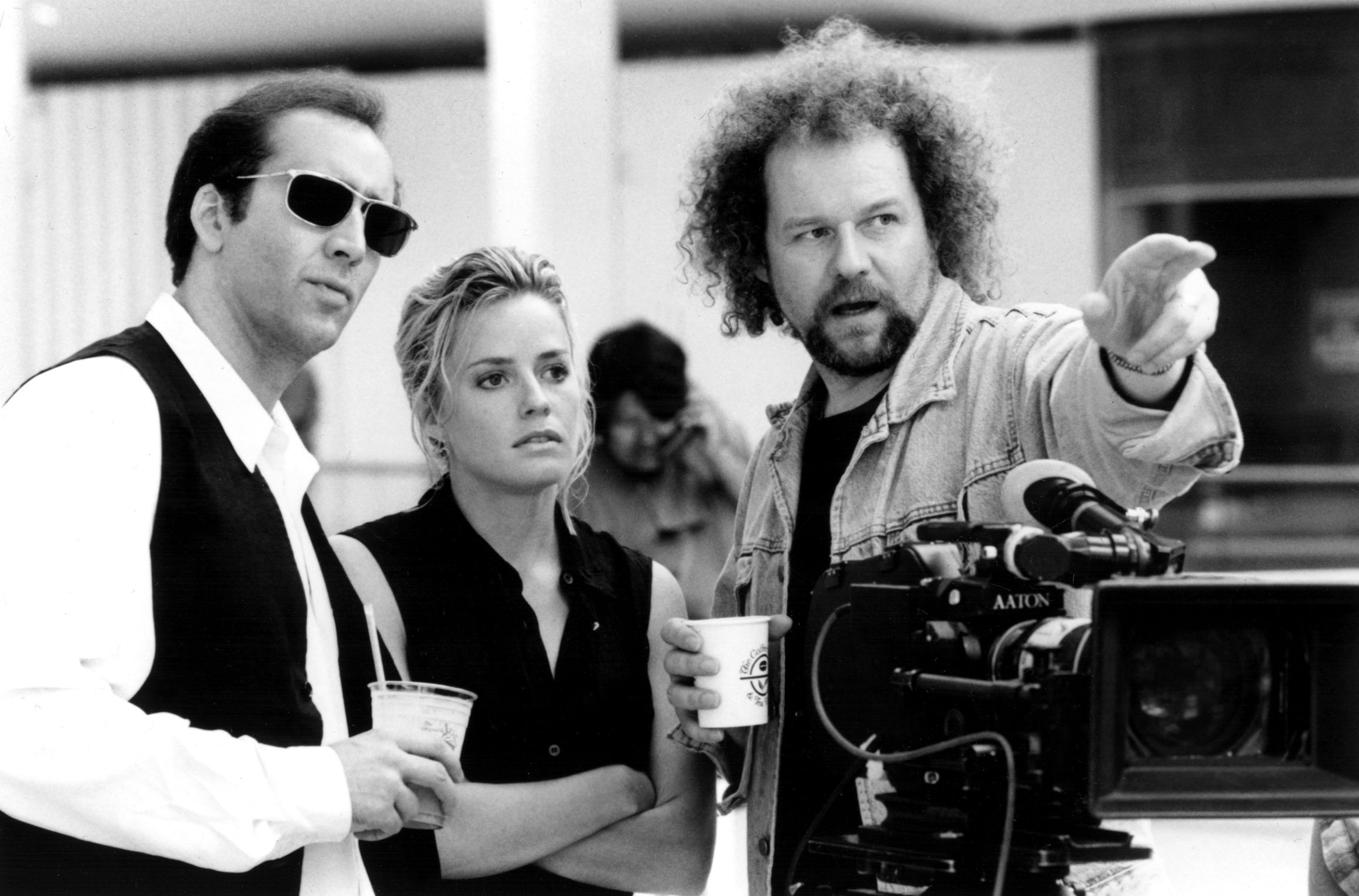
Mike Figgis, who turns 70 today, directs Nicolas Cage’s Oscar-winning performance and Elizabeth Shue’s Oscar-nominated performance on the set of Leaving Las Vegas in 1994:

Actor in the Spotlight:

Speaking of people in Leaving Las Vegas, the latest edition of No Small Parts focuses on the career of Lady Bird Oscar nominee Laurie Metcalf:

[embedded content]

Filmmaker in Focus:

Stanley Kubrick isn’t known as a comedic director, but this Fandor video essay by Philip Brubaker highlights the filmmaker’s dark humor:

[embedded content]

Screenwriting Lesson of the Day:

The latest edition of Lessons from the Screenplay focuses on Get Out and how it offers a new perspective in horror:

[embedded content]

Song Cover of the Day:

Watch fans cover the Oscar-nominated song “Remember Me” from Coco using various forms of cocoa as percussion:

[embedded content]

Classic Trailer of the Day:

Today is the 65th anniversary of the release of Alfred Hitchcock’s I Confess. Watch the original trailer for the classic crime drama below.

[embedded content]

and

Let’s block ads! (Why?)


No Image

Walmart Announces It Will No Longer Sell Guns, Ammunition To Anyone Under 21

Walmart, the largest retailer in the U.S., announced it will stop selling guns and ammunition to anyone under 21. The decision comes on the same day that Dick’s Sporting Goods said it would stop selling military-style semi-automatic rifles and high-capacity magazines, as well as guns to anyone under 21.

ARI SHAPIRO, HOST:

Since the shooting at Marjory Stoneman Douglas High School in Florida two weeks ago, a number of companies have taken a position in the debate over guns. Many severed ties with the National Rifle Association.

AILSA CHANG, HOST:

Today Walmart said it would raise the age to buy guns and ammunition to 21. That decision came the same day Dick’s Sporting Goods announced it’s no longer selling assault-style rifles like the one used in the high school shooting at any of its stores. That includes all Dick’s stores and Field & Stream stores. It’s not selling high-capacity magazines either, and it’s also setting a minimum age of 21 to buy other firearms.

SHAPIRO: CEO Ed Stack went on ABC’s “Good Morning America” to explain why.

(SOUNDBITE OF TV SHOW, “GOOD MORNING AMERICA”)

ED STACK: We’re staunch supporters of the Second Amendment. I’m a gun owner myself. But we’ve just decided that based on what’s happened and with these guns, we don’t want to be a part of this story. And we’ve eliminated these guns permanently.

SHAPIRO: Some customers today cheered the move. We caught up with Christina Reveir in Boise, Idaho.

CHRISTINA REVEIR: You know, I grew up around guns, and my family has guns. But I definitely don’t think that anyone needs an assault rifle.

CHANG: Others said the company’s announcement wouldn’t stop violent crime. Here’s Bruce Dickinson in Elmira, N.Y.

BRUCE DICKINSON: You can put down on paper anything you want. Somebody wants to get a gun, they’re going to get a gun. If they’re out there, they can find it. They can get it.

SHAPIRO: And other Dick’s customers shrugged. Todd Jameson of Macon, Ga., says he has lots of guns, including multiple assault-style rifles. But…

TODD JAMESON: It’s their opinion. It’s their store. If they want to carry them, great. If not, that’s up to them.

CHANG: Joining us now to talk about these developments today is NPR’s Uri Berliner. Hey, Uri.

URI BERLINER, BYLINE: Hi, Ailsa.

CHANG: So I want to start with this move by Walmart. Do you think Dick’s Sporting Goods’ announcement this morning pressured Walmart to act the very same day?

BERLINER: Well, it’s certainly notable that they did it on the same day. They could have done this at any other time.

CHANG: Sure.

BERLINER: But they did it today right after this very dramatic announcement by Dick’s Sporting Goods this morning.

CHANG: But the news about Walmart is in a way a bigger deal because it has the power to move the market in a way that Dick’s does not, right?

BERLINER: Yeah. I mean, Walmart – whenever Walmart does something, people pay attention. It’s the biggest retailer in America. Walmart has hundreds and hundreds of stores. People shop in Walmart every day. When Walmart speaks, people pay attention. And it’s notable.

CHANG: We should note that three years ago, Walmart had already ended its sales of modern sporting rifles, including the AR-15. Why was that? Why did it do that three years ago?

BERLINER: Well, they said they did it because of softening demand and that they were going to sell more hunting rifles and those kinds of things. But Walmart was also under pressure from a shareholder to stop selling those kinds of assault-style rifles.

CHANG: All right, I want to get to Dick’s Sporting Goods’ announcement, too. After Sandy Hook, Dick’s removed all assault-style rifles from its main stores, but they just ended up selling those guns at Field & Stream stores, which they own. Today, however, Ed Stack, the CEO of Dick’s – he said that the changes that they are making today are going to be across the company and permanent. Why do you think the Parkland shooting was the tipping point and not Sandy Hook?

BERLINER: Well, he directly said that it was about the kids and their response to this horrific violence and their response to gun violence in general. You know, what he said – when we take a look at those kids and the parents and the heroes in the school, what they did, our view was if the kids can be brave enough to organize like this, we can be brave enough to take these out of here. He also said about the kids, we heard you. The nation has heard you.

CHANG: Stack had also said this morning that Dick’s is ready for a backlash. I mean, do you think they should be expecting a backlash from the gun rights side?

BERLINER: That’s likely. Today, though, if you were – they were looking for an investor backlash, they didn’t get it. Dick’s stock price closed up a bit today. So it wasn’t like investors were saying, this company is in a lot of trouble; were selling. That didn’t happen.

CHANG: If that’s the case – that Dick’s maybe doesn’t ultimately see a huge financial loss because of the decision today, are these decisions by both Walmart and by Dick’s business-driven decisions, meaning what’s good politically is ultimately fine for business?

BERLINER: It’s hard to say really what the primary motivation is, but corporate CEOs don’t do things that materially harm their company financially. They just don’t do that. We don’t know exactly how much of Dick’s revenues, its sales come from the sales of firearms. It’s certainly less than half – significantly less than half and assault-style rifles much less than that. So those sales probably aren’t going to have a big impact on the overall bottom line of the company. The question is, is there going to be a backlash from customers, from customers who are NRA members? That’s the key thing.

CHANG: All right, that’s NPR’s Uri Berliner. Thank you, Uri.

BERLINER: Thank you, Ailsa.

CHANG: And special thanks to member station WSKG, Boise State Public Radio and Georgia Public Broadcasting for contributing to this report.

Copyright © 2018 NPR. All rights reserved. Visit our website terms of use and permissions pages at www.npr.org for further information.

NPR transcripts are created on a rush deadline by Verb8tm, Inc., an NPR contractor, and produced using a proprietary transcription process developed with NPR. This text may not be in its final form and may be updated or revised in the future. Accuracy and availability may vary. The authoritative record of NPR’s programming is the audio record.

Let’s block ads! (Why?)


No Image

CEO Of U.S. Olympic Committee Resigns Citing Health Concerns Amid Nassar Fallout

Scott Blackmun, in 2007. He announced Wednesday that he is stepping down as CEO of the U.S. Olympic Committee. On the same day, the USOC announced steps it is taking to protect abuse victims.

Lee Jin-man/AP

hide caption

toggle caption

Lee Jin-man/AP

Under growing pressure to quit, Scott Blackmun, CEO of the United States Olympic Committee, resigned “due to ongoing health issues resulting from prostate cancer,” according to a USOC statement on Wednesday.

Board member Susanne Lyons will step in as the acting CEO until a permanent replacement is named.

The news came at the same time the committee announced steps “designed to protect athletes from abuse and respond quickly and effectively when issues surface.”

Among the reforms and initiatives the USOC said it is implementing are creating an advisory group that will include abuse survivors to safeguard against future abuse in “the Olympic community,” providing more funding to speed up the resolution of cases, and improving support and counseling “for gymnasts impacted by Nassar’s crimes.”

The USOC has been engulfed by the scandal surrounding Larry Nassar, onetime USA Gymnastics doctor, convicted of sexually assaulting minors. Scores of athletes who were in his care have accused him of abuse going back decades. He has been sentenced to hundreds of years in prison.

Two U.S. senators called for Blackmun’s resignation earlier this month, citing a Wall Street Journal report that found he and other USOC officials were aware of abuse allegations against Nassar for months before acting on them.

Sens. Jeanne Shaheen, D-N.H., and Joni Ernst, R-Iowa, questioned Blackmun’s leadership, citing an open letter he wrote in January in which he pledged to uncover how the abuse could have gone on for so long and “who knew what and when.” But the senators said Blackmun failed “to admit his own supposed direct knowledge of allegations that were brought to his attention in July 2015.”

Several former Olympic athletes and advocates also called on Blackmun to step down.

In courtrooms, dozens of wrenching victim impact statements described Nassar as abusing athletes for years under the guise of legitimate medical treatment with seeming impunity.

Rachael Denhollander, a lawyer and one of Nassar’s first accusers, said after a sentencing earlier this month, that victims “wouldn’t be here had the adults and authorities done what they should have done 20 years ago,” according to The Associated Press.

Denhollander added that victims are turning their attention “with even greater force to the institutional dynamics that led to the greatest sexual assault scandal in history.”

Late last month, the entire board of USA Gymnastics announced they will resign.

USOC Chairman Larry Probst said new leadership is needed “so that we can immediately address the urgent initiatives ahead of us. … The USOC is at a critical point in its history.”

In a statement, Blackmun, who has been USOC CEO since 2010, did not mention the Nassar scandal, instead saying his role “has not only been immensely rewarding, it has been an honor and the highlight of my professional life,” He added, “I am proud of what we have achieved as a team and am confident that Susanne will help the USOC continue to embody the Olympic spirit and champion Team USA athletes during this transition.”

Let’s block ads! (Why?)