
How 'Icarus' Accidentally Exposed A Major 'Ocean's Eleven-Style' Doping Scheme

Midway through Icarus, what begins as director Bryan Fogel’s documentation of his own performance-enhancing drug experiment pivots to a far larger tale of state-sponsored doping in Russia.
Netflix
hide caption
toggle caption
Netflix
Nearly every sport has been hit with news of doping — of athletes using illegal performance-enhancing drugs. Perhaps the most famous example is cyclist Lance Armstrong, who denied doping allegations for years and then admitted using performance-enhancing drugs in 2013. That’s where the documentary Icarus begins.
Director Bryan Fogel decided to explore the subject by taking his own regimen of performance-enhancing drugs to prepare for an amateur cycling race. He injected himself in the butt; he framed shots of blood running down his leg. It was, by his own admission, “almost an absurdist comedy.”
“I mean, it was a little ludicrous,” he says in an interview. “But for what I was doing — which was, you know, going on this very, very detailed mission of charting what I was taking and then getting blood tests done every single week and collecting my urine and, you know, there was a very, very large extent to which I was going — but, you know, I was out to make a film. And I was documenting that process. So to that extent, I mean, there was a method and a purpose to the madness.”
But halfway through his film, what began as an experiment on himself turns into something much bigger. One of the film’s main subjects blows the whistle on a massive Russian doping program with links to the highest levels of Russian government. And the film pivots to the tale of Grigory Rodchenkov, the mastermind behind that program, and the man who happened to be guiding Fogel through his own program, and the man now fearing for his life.
And now Icarus has won the Academy Award for best documentary feature. Here are highlights from our 2017 interview with Bryan Fogel.
Interview Highlights
On Fogel’s first impressions of Grigory Rodchenkov

Over the course of Icarus, Grigory Rodchenkov is identified as the mastermind behind a Russian doping scheme — and he decides to tell his story.
Netflix
hide caption
toggle caption
Netflix
Well, Grigory at the time oversaw the testing of all Russian athletes across all sports, and all international competitions in Russia — of all athletes coming to Russia to compete — on top of the Sochi games. And this guy is just this incredibly likable, enigmatic, larger-than-life personality.
Well, I mean, it was beyond strange [that he was simultaneously helping Fogel to dope himself]. And it was jaw-dropping. And it was also why, at that time before, you know, it pivoted, I felt like I still had a really interesting film. The fact that I’ve got this Russian scientist, who was supposed to be catching athletes for doping, breaking every single rule in the book to not only help me dope but to tell me what to do, and then even go so far as to come to Los Angeles to collect all of my urine samples which I had been taking, to bring them back to Moscow to test them in his WADA [World Anti-Doping Agency]-accredited lab — I mean, everything about what he was doing was against the rules.
On what happened after a November 2015 WADA report identified Rodchenkov as the supervisor of a Russian state-sponsored doping program
So, suddenly, this is a crisis. And he’s forced to resign from the lab by Vitaly Mutko, who is the sports minister. And Vitaly Mutko answers to one person and one person only, and that’s Vladimir Putin.
It was a combination of oh-my-God, scared, shocked. Russia’s suspended from world track and field. And then [Vladimir] Putin is on television — on Russia-1 — holding an official press conference not only denying all the allegations of this report, but that if any of this proves to be true, that it will be the individuals that are held accountable and that punishment will be absolute. And at that point, Grigory has two FSB, KGB agents living in his apartment, “guarding him.” And five days after the report, I’m on Skype with Grigory, and Grigory is telling me that he has got word from other of his friends within the KGB, the FSB that they have planned his suicide and that he needs to escape.
This happened so fast. I mean, this is — six days after this report, Russia for whatever reason didn’t have him on the do-not-fly list. And he’s somehow able to get out of the country. I bought the plane ticket — I put it on my credit card. He comes with just a backpack in his hand and three hard drives. And we put them up in a safe house in Los Angeles.
And over the next month, I discover that not only is Grigory involved — Grigory is the mastermind of a spectacular, unbelievable scandal that calls into question every medal ever won in the Olympic Games. And not only that, he oversaw the Sochi Olympics, where Russia won 33 medals, and they did it through this elaborate Ocean’s Eleven-style scheme, where they had literally created holes in the laboratory to slip out the dirty urine samples of all the Russian athletes and swap out their urine with clean urine. And this guy was the only man on planet Earth who had this evidence. And he was able to prove it.
On one reason why Rodchenkov eventually told his story to authorities and to The New York Times
What happened at Sochi he was incredibly upset about, because he had went from being a scientist, meaning his whole life is — yes, it’s doing the exact opposite of what he should be doing, but he was using science to beat the system. There was a differentiation that he made in his mind. But at Sochi, this wasn’t about science. This was just fraud. This was literally like breaking into a bank vault and substituting real money for counterfeit money. It was spiraling out of control. And after Sochi, he was promised it would stop. Instead, he’s doing it for the swimming world championships. He’s doing it for the collegiate athletic world championships. And there’s essentially no end in this. And as you also see in the film, as you see that he’s disposable like so many others that betray the government or whatever.
On where Rodchenkov is now
He is in protective custody. And the reason why is the Department of Justice and FBI has been sitting on this case for the last 14 months. And we’re very, very optimistic that our government is going to continue to protect him because regardless of the wrongs that he did, it was tremendous courage and honesty to come forward with this staggering amount of evidence and let the world know what had happened. And without him, we would still be in the dark about this.
Alexi Horowitz-Ghazi and Ammad Omar produced and edited the audio of this interview for broadcast. Patrick Jarenwattananon adapted it for Web.
Miracle Of Hemophilia Drugs Comes At A Steep Price

Jessica Morris prepares to inject a blood-clotting protein into son Landon’s arm at their home in Yuba City, Calif.
Heidi de Marco/Kaiser Health News
hide caption
toggle caption
Heidi de Marco/Kaiser Health News
When Landon Morris was diagnosed with hemophilia shortly after birth, his mother, Jessica Morris, was devastated. “It was like having your dreams — all the dreams you imagined for your child — just kind of disappear,” she recalled.
Hemophilia, a rare bleeding disorder caused by a gene mutation that prevents blood from clotting properly, is typically passed from mother to son. Morris’ grandfather had it, and she remembered hearing how painful it was. “It was almost like he was bubble-wrapped,” she said. “He was coddled, because his mom didn’t want him to get hurt.”
But Landon’s life turned out to be much different than she expected.
“He’s wild. He’s probably sometimes the roughest of them all,” she said, as she watched the 6-year-old race around a park in Yuba City, Calif., where the family lives. “He leads a totally normal life. He plays T-ball. He’ll start soccer in the fall. He runs and jumps and wrestles with his brothers.”

Landon Morris plays in the pool with his brothers. “He runs and jumps and wrestles with his brothers,” says his mom, Jessica Morris.
Heidi de Marco/Kaiser Health News
hide caption
toggle caption
Heidi de Marco/Kaiser Health News
His active approach to life is made possible by his medication — the kind that wasn’t available in his grandfather’s day. For the Morris family, this type of drug — broadly known as clotting factor — is a miracle, helping Landon’s blood clot normally. And its cost is almost entirely covered by his father’s federal employee health plan.
But for the health care system, such drugs are enormously expensive, among the priciest in the nation. Medications to treat hemophilia cost an average of more than $270,000 annually per patient, according to a 2015 Express Scripts report. If complications arise, that yearly price tag can soar above $1 million. The U.S. hemophilia drug market, which serves about 20,000 patients, is worth $4.6 billion a year, according to the investment research firm AllianceBernstein.
Examining the stubbornly high cost of these medications opens a window into why some prescription drugs the United States — especially those for rare diseases — have stratospheric prices. The short answer: Competition doesn’t do its traditional job of tamping down costs.
Vying For Patients
The market for hemophilia medicines in the United States is flooded with 28 different drugs, with another 21 drugs in development. Blood factor drugs are biological products — in this case, a protein — and there are no cheaper copies, called biosimilars, available. Not only do prices rise steadily as each new product comes on the market, demand is growing — and pushing costs upward — as more and more clotting factor is used to prevent bleeding episodes, not just to treat them.
Yet competition has not brought prices down in the way someone “operating at the level of undergrad Econ 101 would expect,” said Jerry Avorn, a professor at Harvard Medical School who studies prescription drug costs.

Jessica Morris injects son Landon with a blood-clotting factor three times a week.
Heidi de Marco/Kaiser Health News
hide caption
toggle caption
Heidi de Marco/Kaiser Health News
The problem is that companies have no incentive to lower prices. Patients generally don’t push back because insurers pay the bulk of the cost. And insurers tend not to object because the market for the drugs — expensive as they are — is small and the patients are especially vulnerable.
For drug companies, Avorn said, “it’s a magical formula: Lifesaving drug, child at risk of bleeding to death — it kind of casts anybody who looks at costs into the role of some evil Scrooge-like person.”
“The insurers don’t want to end up on the front page of the newspaper saying Little Timmy bled to death because his drug wasn’t covered,” he said.
Also, because prices are high across the hemophilia market, no drug company wants to be the one to blink first. “They don’t want to get a price war started and end up at a super low price point,” said Edmund Pezalla, a consultant to pharmaceutical companies and former executive at Aetna.
So, these drugmakers compete not on price but clinical benefits — such as how long the drugs’ effects last — and through intensive marketing. The pool of potential customers is so valuable that companies often vie directly for individual patients.
Manufacturers, as well as specialty pharmacies that sell the drugs, hire patients and parents as recruiters and advisers, hold dinners and holiday parties, offer scholarships to patients and even run summer camps for children with the disease. The Morris family regularly receives such invitations.
Dr. Jonathan Ducore, a pediatric hematologist-oncologist at the UC Davis Hemophilia Treatment Center in Sacramento, said some of his patients are persuaded by drug company presentations to switch medications. “But the real differences between the drugs are limited,” he said.
Ducore tells his patients if he thinks they are being misled by drugmakers about what a product will do. “But even though the tactics may seem a little smarmy, if it’s the patient’s choice, you have to go with it,” said Ducore, who has been Landon’s doctor since the boy was born.
The first clotting factor products, which came onto the market in the mid-1960s, were derived from human blood plasma, with thousands of donations combined to create one batch. This proved disastrous in the 1980s, when donors unwittingly spread HIV into the blood supply. An estimated 4,000 people with hemophilia — about 40 percent of the patient population in the U.S. — died from AIDS as a result.
In the 1990s, manufacturers introduced a product that did not carry the disease risk of plasma-based drugs — made by cloning human clotting proteins in animal cells. Companies charged a premium for this ever-more-popular “recombinant factor.”
Recombinant factor is difficult and delicate to make, said Steve Garger, a development scientist at Bayer, which produces two popular factor products at its Berkeley, Calif., plant — including Landon Morris’ drug, Kogenate.

Vials of Bayer’s Kogenate, a factor VIII product, at the company’s factory in Berkeley, Calif.
Eric Kayne for Kaiser Health News
hide caption
toggle caption
Eric Kayne for Kaiser Health News
Inside a concrete building on the campus, kidney cells from baby hamsters are grown in stainless-steel vessels called bioreactors, and the clotting factor they produce is then purified in steel tanks kept in cold rooms. Working at full capacity, this factory produces less than a pound of clotting factor each year — but when diluted with other ingredients, it’s enough to treat thousands of patients in 80 countries.
The investment in manufacturing and marketing is only part of the reason for the high cost of the drugs, said Kevin O’Leary, vice president of pricing and contracting at Bayer. Bayer does not simply add up the costs, slap on a profit margin and come up with the price, O’Leary explained.
Instead, he said, the company begins by talking to insurers, doctors and patients to get a sense of what value its products bring to the market, especially compared to drugs already available. Bayer then sets a price based on both its investment and the product’s perceived worth. In the end, he said, “we’re charging a price that’s competitive with the other factor products on the market.”
Bayer’s annual sales from its hemophilia drugs were 1.66 billion euros in 2016, the equivalent of $2 billion in the U.S.
Pushing Back On Costs
In Europe, hemophilia drugs cost less than half what they cost in the U.S. That’s because payers — usually governments — request bids and pick products based on cost and quality.
Without pushback from insurers in the U.S., “the price of any drug in the U.S. is whatever the market will bear as seen by the manufacturer,” said Avorn of Harvard.
Recently, a few insurance companies have quietly started to push back on costs. Bayer’s O’Leary said several insurers have approached the company and demanded rebates in exchange for offering the drug to their customers. O’Leary would not discuss the details because he said the contracts are confidential.
State Medicaid programs, which provide health insurance to low-income Americans and cover about half of hemophilia patients, already receive significant rebates from hemophilia drug manufacturers.
Michelle Rice, a senior vice president at the National Hemophilia Foundation, said she has been working with several insurers to help them manage costs safely. “We understand the need to control costs, but they can’t impede access to the product a patient needs,” she said.
It is not yet clear whether such efforts will work, let alone spread.
Sitting at a picnic bench at a park, Jessica Morris pages through Landon’s insurance documents. Over the past year, his care cost over $120,000. She wonders sometimes what would happen if they lost their coverage.
“How much would you be willing to pay to have your child lead a normal life?” she said. “I don’t think that there’s anything we wouldn’t pay or sacrifice for him.”
It’s a problem she prays they’ll never have to face.
Kaiser Health Newsis a nonprofit news service covering health issues. It is an editorially independent program of the Kaiser Family Foundationthat is not affiliated with Kaiser Permanente.
Nicky Jam And J Balvin Show Off Their Footwork In 'X' Video

Latin music continues to infiltrate the mainstream market at rapid pace and in new incarnations. The cross-cultural successes of J Balvin and Willy Williams’ “Mi Gente” and Luis Fonsi and Daddy Yankee’s YouTube record-breaking “Despacito” last year were undeniable indicators of the trend, and as 2018 unfolds Latinx artists continue to benefit from the increased attention. Puerto Rico and Colombia unite as Nicky Jam drops his latest track “X (Equis)” featuring J Balvin and produced by Afro Brother and Jeon, the first sample from Jam’s upcoming album.
“Y no te puedo mentir / Lo que dicen en la calle sobre mí,” Nicky sings, which translate to: “And I can not lie to you / What they say on the street about me.”
The song’s video is a clean and vivid affair, calling to mind Director X clip like Sean Paul’s “I’m Still In Love With You” or, more recently, Drake’s “Hotline Bling.” The colorful visual was shot in Miami, and directed by Jesse Terrero.
“X (Equis)” has sprinkles of reggaeton, pop and Afrobeat. The track is driven by a simple, sexy, synth-y trumpeted hook. It’s not the first time the Latin stars and real-life friends have collaborated (remixes to 2014’s “Travesuras” and 2015’s “Ay Vamos” are past standouts), but this is definitely the highest their profiles have ever been.
'The Shape of Water' Named Best Picture at the 90th Academy Awards

The Shape of Water won the Oscar for Best Picture at the 90th Academy Awards, one of the few surprises of this year’s ceremony. Additionally, the movie won for Best Production Design, Best Original Score and Best Director, for Guillermo del Toro’s incredible vision. With just four wins, the fantasy drama was the most honored film of the night.
Other big multiple winners included Three Billboards Outside Ebbing, Missouri, which saw Frances McDormand named Best Actress and Sam Rockwell named Best Supporting Actor; Darkest Hour, which won Best Makeup and Hairstyling and Best Actor for Gary Oldman’s lead performance; Coco, which was named Best Animated Feature and recipient of the Best Original Song award for “Remember Me”; Dunkirk, which won for Best Editing, Best Sound Editing and Best Sound Mixing; and Blade Runner 2049, which won for Best Cinematography and Best Visual Effects.
Speaking of the cinematography win for the Blade Runner sequel, that was Roger Deakins finally taking home an Oscar on his record 14th nomination. And speaking of the Makeup and Hairstyling win, Kazuhiro Tsuji became the first Asian person ever to be honored in that category. Jordan Peele, meanwhile, became the first African American to win an Oscar for Best Original Screenplay.
Among the other milestones of the night, a Netflix feature film finally won an Oscar, with Icarus being named Best Documentary Feature (Netflix won its first Oscar last year with the documentary short The White Helmets). Also, Call Me By Your Name screenwriter James Ivory became the oldest winner ever, at age 89.
See all the winners highlighted in bold below.
BEST PICTURE
Call Me By Your Name
Darkest Hour
Dunkirk
Get Out
Lady Bird
Phantom Thread
The Post
The Shape of Water
Three Billboards Outside Ebbing, Missouri
BEST ACTRESS
Sally Hawkins, The Shape of Water
Frances McDormand, Three Billboards Outside Ebbing, Missouri
Margot Robbie, I, Tonya
Saoirse Ronan, Lady Bird
Meryl Streep, The Post
BEST ACTOR
Timothée Chalamet, Call Me By Your Name
Daniel Day-Lewis, Phantom Thread
Daniel Kaluuya, Get Out
Gary Oldman, Darkest Hour
Denzel Washington, Roman J. Israel, Esq.
BEST SUPPORTING ACTRESS
Mary J. Blige, Mudbound
Allison Janney, I, Tonya
Lesley Manville, Phantom Thread
Laurie Metcalf, Lady Bird
Octavia Spencer, The Shape of Water
BEST SUPPORTING ACTOR
Willem Dafoe, The Florida Project
Woody Harrelson, Three Billboards Outside Ebbing, Missouri
Richard Jenkins, The Shape of Water
Christopher Plummer, All the Money in the World
Sam Rockwell, Three Billboards Outside Ebbing, Missouri
BEST DIRECTOR
Christopher Nolan, Dunkirk
Jordan Peele, Get Out
Greta Gerwig, Lady Bird
Paul Thomas Anderson, Phantom Thread
Guillermo del Toro, The Shape of Water
BEST ADAPTED SCREENPLAY
Call Me By Your Name, James Ivory
The Disaster Artist, Scott Neustadter and Michael H. Weber
Logan, Scott Frank, James Mangold, Michael Green
Molly’s Game, Aaron Sorkin
Mudbound, Virgil Williams and Dee Rees
BEST ORIGINAL SCREENPLAY
The Big Sick, Emily V. Gordon and Kumail Nanjiani
Get Out, Jordan Peele
Lady Bird, Greta Gerwig
The Shape of Water, Guillermo del Toro and Vanessa Taylor
Three Billboards Outside Ebbing, Missouri, Martin McDonagh
BEST ORIGINAL SCORE
Dunkirk
Phantom Thread
The Shape of Water
Star Wars: The Last Jedi
Three Billboards Outside Ebbing, Missouri
BEST ORIGINAL SONG
“Mighty River,” Mudbound
“Mystery of Love,” Call Me By Your Name
“Remember Me,” Coco
“Stand Up For Something,” Marshall
“This Is Me,” The Greatest Showman
BEST CINEMATOGRAPHY
Blade Runner 2049
Darkest Hour
Dunkirk
Mudbound
The Shape of Water
BEST PRODUCTION DESIGN
Beauty and the Beast
Blade Runner 2049
Darkest Hour
Dunkirk
The Shape of Water
BEST COSTUME DESIGN
Beauty and the Beast
Darkest Hour
Phantom Thread
The Shape of Water
Victoria & Abdul
BEST VISUAL EFFECTS
Blade Runner 2049
Guardians of the Galaxy Vol. 2
Kong: Skull Island
Star Wars: The Last Jedi
War for the Planet of the Apes
BEST FILM EDITING
Baby Driver
Dunkirk
I, Tonya
The Shape of Water
Three Billboards Outside Ebbing, Missouri
BEST MAKEUP AND HAIRSTYLING
Darkest Hour
Victoria & Abdul
Wonder
BEST SOUND EDITING
Baby Driver
Blade Runner 2049
Dunkirk
The Shape of Water
Star Wars: The Last Jedi
BEST SOUND MIXING
Baby Driver
Blade Runner 2049
Dunkirk
The Shape of Water
Star Wars: The Last Jedi
BEST FOREIGN LANGUAGE FILM
A Fantastic Woman, Chile
The Insult, Lebanon
Loveless, Russia
On Body and Soul, Hungary
The Square, Sweden
BEST ANIMATED FEATURE FILM
The Boss Baby
The Breadwinner
Coco
Ferdinand
Loving Vincent
BEST ANIMATED SHORT FILM
Dear Basketball
Garden Party
Lou
Negative Space
Revolting Rhymes
BEST LIVE-ACTION SHORT FILM
DeKalb Elementary
The Eleven O’Clock
My Nephew Emmett
The Silent Child
Watu Wote/All of Us
BEST DOCUMENTARY SHORT SUBJECT
Edith and Eddie
Heaven Is A Traffic Jam on the 405
Heroin(e)
Knife Skills
Traffic Stop
BEST DOCUMENTARY FEATURE
Abacus: Small Enough to Jail
Faces Places
Icarus
Last Men in Aleppo
Strong Island
Congratulations to all the winners!
Roger Bannister, First Runner To Break 4-Minute Mile, Dies At 88

On May 6, 1954, Britain’s Roger Bannister hits the tape to become the first person to break the 4-minute mile in Oxford, England. His family said Sir Roger Bannister died peacefully in Oxford on March 3 at age 88.
AP
hide caption
toggle caption
AP
In 1954, at the age of 25, Roger Bannister made headlines around the world as the first person to run a mile under 4 minutes.
Bannister’s 3:59:4 mile unlocked the door to what was possible in track — both physically and psychologically.
It had long been thought that a sub 4-minute mile was far from achievable and perhaps deadly for those who tried.
Sir Roger Bannister was a great British sporting icon whose achievements were an inspiration to us all. He will be greatly missed.
— Theresa May (@theresa_may) March 4, 2018
British Prime Minister Theresa May led the tributes to the former athlete, who later became one of Europe’s leading neurologists and was made a knight.
“Sir Roger Bannister was a great British sporting icon whose achievements were an inspiration to us all. He will be greatly missed,” she said on Twitter.
At the same time Bannister was training on the track, he was going to school to become a doctor. At the end of 1954, he retired from sports to pursue his medical career.
Long after his record had been broken, Bannister said he considered his contributions to neurology more satisfying.
Former Associated Press writer Marcus Eliason, shared his memories of interviewing Bannister to mark the 30th anniversary of his historic track achievement.
“In 1984, while stationed in London for The Associated Press, I phoned Roger Bannister to request an interview for the 30th anniversary of his becoming the first man to run a mile in under 4 minutes. His initial response was: “Is there still any interest in this?”
“One has only to look at the worldwide reaction to his death at 88 to grasp what an understatement that was. And the interview remains one of the most enjoyable I ever had.”
Bannister also accomplished another first in 1954: He was picked by Sports Illustrated to be the magazine’s first Sportsman of the Year.
As long as it took to break the 4-minute barrier, Bannister’s record lasted only 46 days. Australian John Landy beat it by running a 3:57:9 mile.
Landy and American miler Wes Santee had been threatening to be the first to break the 4-minute mark.
“As it became clear that somebody was going to do it, I felt that I would prefer it to be me,” Bannister said in an AP interview.
The current record for the mile is 3:43:13. It has been held since 1999 by Morocco’s Hicham El Guerrouj. He is the 13th record holder.
Bannister died Saturday in Oxford, where he lived in a modest home just minutes from the track where he made history.
'Protectionism Harms,' Says Former Ex-Commerce Secretary On Steel Tariff Decision

Steel tariffs aren’t a new idea. Former President George W. Bush briefly enacted steel tariffs. NPR’s Michel Martin speaks with former Commerce Secretary Carlos Gutierrez about the consequences of steel and aluminum tariffs.
MICHEL MARTIN, HOST:
Members of President Trump’s administration have been out and about this weekend, promoting the president’s proposal to impose steep tariffs on imported steel and aluminum. There’s already been considerable pushback from members of their own party, who say that this proposal, which he announced suddenly last week, could trigger a trade war that will hurt American consumers. White House trade adviser Peter Navarro defended the president’s proposal this morning on “Fox News Sunday.”
(SOUNDBITE OF TV SHOW, “FOX NEWS SUNDAY”)
PETER NAVARRO: First of all, the reason why the president is doing this is because if he doesn’t do this, we will lose our aluminum and steel – aluminum industry very quickly and our steel industry very quickly thereafter.
MARTIN: This weekend, we’ve been calling people with different perspectives on this issue. In a few minutes, we’ll hear from someone whose company relies on American steel. But first, somebody who was at the table the last time steel tariffs were in play, Carlos Gutierrez. He was confirmed as President Bush’s commerce secretary after steel tariffs were rolled back in 2002. Carlos Gutierrez was kind enough to come by our studios in Washington, D.C. Mr. Secretary, good to have you on again.
CARLOS GUTIERREZ: Thank you. Always a pleasure. Thank you.
MARTIN: So first of all, can I just ask your initial thoughts about President Trump’s proposal?
GUTIERREZ: I think it’s very unfortunate. It is a – the opening salvo to what could be a trade war. We’re talking about tariffs for all steel and all aluminum imports from everywhere in the world. And the justification for that is a national security mechanism that allows the president to claim that these imports are hurting national security. It’s hard to do that when you realize that the Department of Defense only consumes about 3 percent of what we produce and less if you take into account imports. Our biggest exporter or our biggest source of aluminum and steel happens to be Canada, who’s an ally. So it’s not as if though there is an obvious national security circumstance here, and that just makes the probability of retaliation a lot greater.
MARTIN: Well, let’s talk about a couple of those things that you mentioned. First of all, President Trump, as candidate Trump, has been talking about this for some time now, even before he was a candidate actually. So it’s a promise that he has been making, and he has seemed to imply that, you know, China is the source of this. But as you just pointed out, you know, the U.S. imports – what? – maybe 2 percent of its total imports from China.
GUTIERREZ: Oh, yeah, exactly.
MARTIN: So what would be the point, given that the majority of the imports come from – what? – like, Brazil, Canada, Germany?
GUTIERREZ: Exactly. It really is designed to protect U.S. steel and U.S. aluminum. That’s the theory. What we have learned over the years is that protectionism doesn’t protect. Protectionism actually harms. And this is so much bigger than steel and aluminum because what we’re doing is challenging the world trade system that we played an important part in bringing together. So that’s a problem.
MARTIN: Well, the president seems to agree with that. I mean, he said – he tweeted on Friday morning, for example. The president tweeted that, quote, “trade wars are good and easy to win.” What is your response to that?
GUTIERREZ: I would say trade wars are bad. No one wins. And they’re very difficult to stop. That’s what history has shown us. If we go back to the – probably one of the biggest economic mistakes we made in the 20th century was the Smoot-Hawley Tariff – ironically, also done by a Republican president. And the rationale was if we raise tariffs 25 percent, we will protect our industry. We will protect our jobs. And everything will be fine. What we didn’t expect is that everyone else around the world raised tariffs 25 percent, and the whole global economy went into a recession – actually a depression. So this is not good.
MARTIN: You know, on the other hand, this country has lost thousands of jobs in the steel industry. President Trump has been saying for years that something needs to be done here. If this is a bad idea, what’s the better idea to address that problem?
GUTIERREZ: Well, if there are actors dumping steel into our market or using their excess capacity to be able to do that, then we should be surgical about how we target as opposed to a blanket tariff. And the justification that it’s national security – we can use that justification for a lot of things. The world changes. The world moves on. Let’s remember that, one time, we had an agriculture economy. Yes, steel is important, but steel regrettably is not as important today as it once was. And when someone promises that we’re going to go back to a scenario that existed in the 1980s, I would be a little bit suspicious of that.
MARTIN: That’s former Commerce Secretary Carlos Gutierrez. He was kind of to speak to us from our studios in Washington, D.C. Mr. Secretary, thank you.
GUTIERREZ: Thank you very much, Michel.
Copyright © 2018 NPR. All rights reserved. Visit our website terms of use and permissions pages at www.npr.org for further information.
NPR transcripts are created on a rush deadline by Verb8tm, Inc., an NPR contractor, and produced using a proprietary transcription process developed with NPR. This text may not be in its final form and may be updated or revised in the future. Accuracy and availability may vary. The authoritative record of NPR’s programming is the audio record.
Seun Kuti Furthers His Father's Message On 'Black Times'

The son of Afrobeat icon Fela Kuti, Seun Kuti inherited his father’s band and his preference for political songwriting with infectious grooves.
Alexis Maryon /Courtesy of the artist
hide caption
toggle caption
Alexis Maryon /Courtesy of the artist
Seun Kuti was just 14 when he became the lead singer of Egypt 80 — the Nigerian band that had carried the infectious groove of Afrobeat worldwide under the direction of Seun’s father, Fela Anikulapo Kuti. The musician says keeping the band together after Fela’s death in 1997 was a way of sustaining his message — which often included railing against government corruption and social injustice.
“The way motherland people all over the world are viewed, the way we are led, is based on an elitist, anti-black narrative,” Kuti says. “So the message of Afrobeat music is the counter of that narrative: the pro-black, pro-people, pro-motherland narrative from our own perspective.”
Black Times, Seun Kuti’s latest album with Egypt 80, continues in that vein, examining Africa’s relationship with imperialism and nation-building — and features a legend from his father’s generation, Carlos Santana, on the title track. Kuti spoke with NPR’s Renee Montagne about the making of Black Times; hear more of their conversation at the audio link.
When Opioids Make Pain Worse

Lorenzo Gritti for NPR
When patients arrive in the emergency room, nearly all but those with the most minor complaints get an IV.
To draw blood, give medications or administer fluids, the IV is the way doctors and nurses gain access to the body. Putting one in is quick and simple, and it’s no more painful than a mild bee sting.
Yet for some patients, this routine procedure becomes excruciating. On my shifts as an emergency physician, I began to notice a strange pattern. These hypersensitive patients often had a history of using opioids.
Shouldn’t these patients be less susceptible to pain, instead of more so?
As I looked into it, I found that I was far from the first to notice the paradox of heightened pain sensitivity with opioid use. An English physician in 1870 reported on morphine’s tendency to “encourage the very pain it pretends to relieve.” In 1880, a German doctor named Rossbach described a similar hypersensitivity to pain with opioid dependence.
A century passed before the phenomenon received serious scientific attention. That is when American scientists showed that rats exhibited increased sensitivity to pain after exposure to morphine, a phenomenon that became known as opioid-induced hyperalgesia.
By the 1990s, the evidence of this unusual reaction in animals was strong, but whether it occurred in humans wasn’t clear.
A hint came in 1994, when researchers found that active heroin users were more sensitive to pain than expected. Other investigators took note, and by decade’s end, a half-dozen studies had demonstrated similar results among heroin users as well as among recovering users on methadone.
But had these people used heroin because they had always been more sensitive to pain, perhaps from birth? The studies couldn’t say.
In 2006, a group of Stanford researchers attempted to tease apart this question. The scientists measured pain thresholds in patients with back pain before and after four months of oral morphine. The researchers found that the patients had become significantly more sensitive to pain by the study’s end.
Another way that scientists have tried to approach the problem is by studying opioids used during surgery. Several studies have shown that patients randomized to receive higher doses of opioids during operations have worse pain afterward than patients who received smaller doses or a placebo. Similarly, giving short-acting opioids to healthy volunteers has been found to heighten their sensitivity to pain.
Taken together, these findings do seem to suggest that exposure to opioids can paradoxically increase pain, but Martin Angst, a Stanford anesthesiologist, points out a problem common to all of these studies: Were these patients just becoming tolerant to the painkillers?
“Is this hyperalgesia? Is this tolerance?” he told me. “Nobody can say.”
The questions have plagued much of the research. In pharmacology, tolerance refers to decreasing efficacy of a drug with repeated use. Not all medications are subject to this effect, but opioids certainly are. Over time, they simply don’t work as well, and the original pain returns.
Doctors often increase the dose to counteract this effect, which works until the patient becomes tolerant to the increased amount of medicine. The result can be an upward spiral, with no clear end in sight.
But there is a drawback to this approach. If worsening pain is due to opioid-induced hyperalgesia rather than tolerance, then “increasing the dose will only make the pain worse,” explains Caroline Arout, a scientist at the New York State Psychiatric Institute. While tolerance is characterized by desensitization of neural pain pathways, which can be overcome by higher doses, opioid-induced hyperalgesia is the result of hypersensitization of those pathways, she says.
“This could be a major factor in the opioid crisis,” Arout says. “People have worsening pain, and so their dose is often increased because they are thought to be tolerant.” But the result is that some patients may find themselves taking dangerously high doses while their pain continues to intensify.
So how common is opioid-induced hyperalgesia? “This is the million-dollar question,” Stanford’s Angst answers. “We just don’t know.”
Although the current research isn’t definitive, Angst says opioid-induced hyperalgesia strikes him as a serious problem. Addressing it may require adopting a new perspective on pain.
Pain is a critical adaptation for survival, even in the era of modern medicine. “Think of pain in a different way, as a very useful thing to the body,” he says. Pain in the abdomen can sometimes herald appendicitis, or some other dangerous infection. And chest pain is a cardinal symptom of heart attacks.
“When we overwhelm the system with large doses of opioids — does the system fight back?” Angst asks.
“We have to accept that there are limitations to any biological system, and if you exceed them, then bad things will happen,” he says. “And one of those things may be opioid-induced hyperalgesia.”
Clayton Dalton is a resident physician at Massachusetts General Hospital in Boston.
The Week in Movie News: Kristen Wiig for 'Wonder Woman 2,' Chris Hemsworth for 'Men in Black' and More

Need a quick recap on the past week in movie news? Here are the highlights:
BIG NEWS
Kristen Wiig might be Wonder Woman’s next adversary: Cheetah is expected to be the villain in Wonder Woman 2, and SNL vet Kristen Wiig is the choice to play against Gal Gadot’s superhero in the role in the sequel. Read more here and see an artist’s interpretation of the casting here.
GREAT NEWS
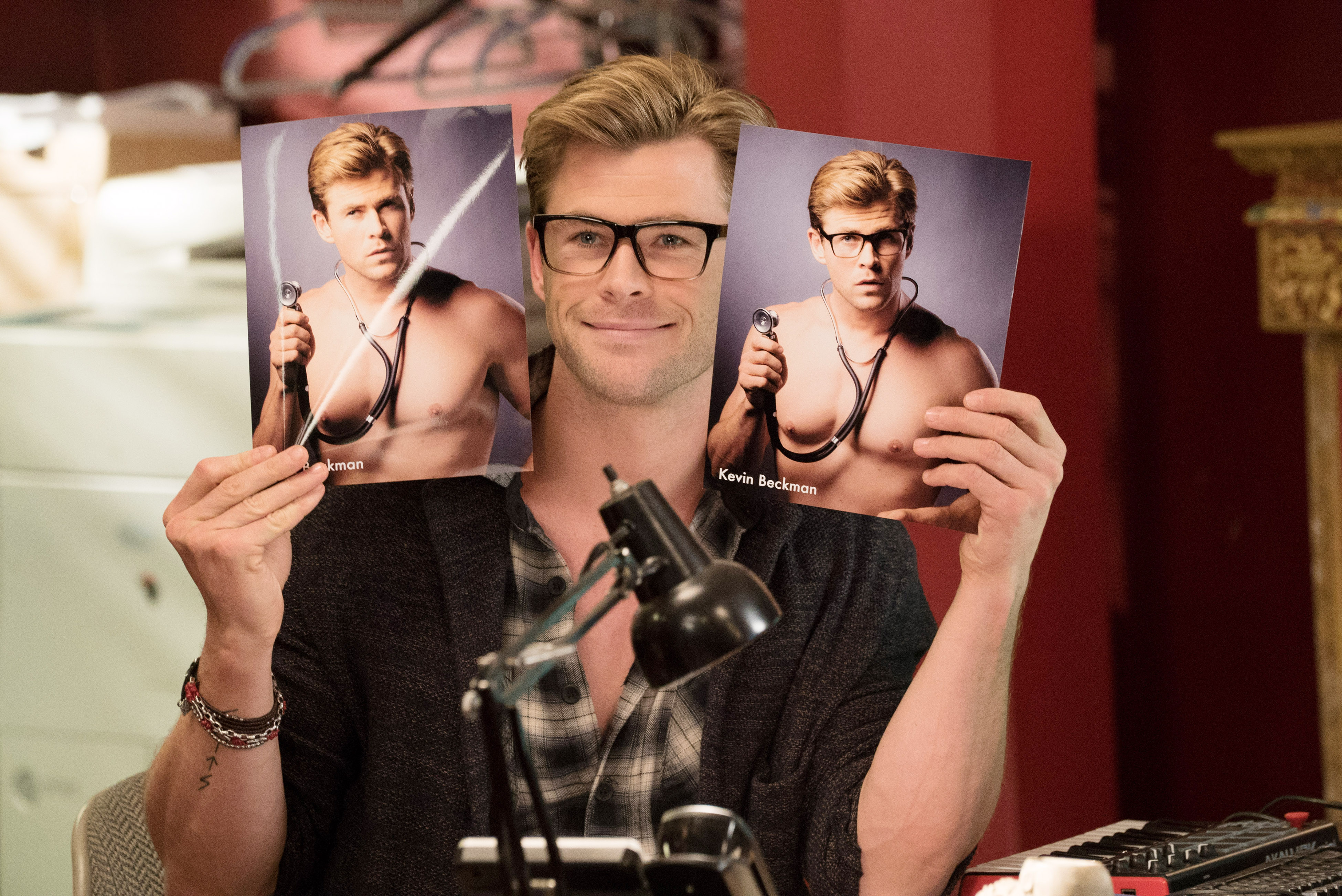
Chris Hemsworth tapped for another franchise: He’s best known as Thor in the Marvel Cinematic Universe, but Chris Hemsworth is about to become famous for another major property: Men In Black. Read more about his possible casting in a planned spin-off here.
SURPRISING NEWS
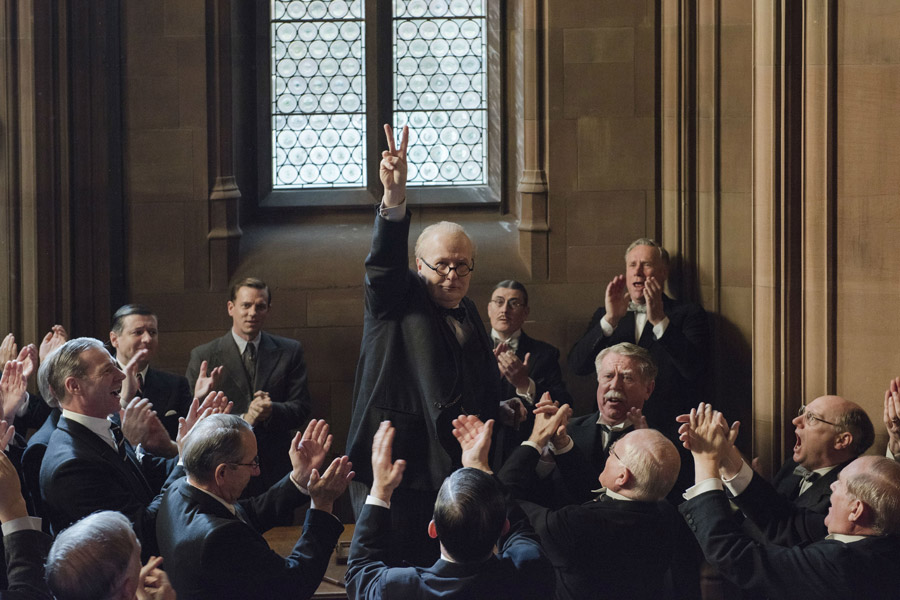
Best Picture Sequels: We’ve heard in the past about potential follow-ups to Call Me By Your Name and Get Out, and now fellow Best Picture nominees Darkest Hour and Lady Bird have joined the mix of possibile sequel spawners. Read more here and here.

EXCLUSIVE BUZZ
Jennifer Lawrence on the Red Sparrow everyone is talking about: We talked to Red Sparrow star Jennifer Lawrence and director Francis Lawrence about the most memorable moment in the movie. Watch their discussion of the scene that will have everyone talking below.
Jennifer Lawrence and director Francis Lawrence break down a #RedSparrow scene that everyone’s gonna be talking about… pic.twitter.com/v9iaITAk7w
— Fandango (@Fandango) March 1, 2018

COOL CULTURE
How to win Best Picture: With the Academy Awards happening this weekend, this week brought a lot of cool Oscars-related videos, including the below Vanity Fair guide to winning the top honor of the night. Find more Oscars supercuts, tributes and nominee showcases here and here and here.
[embedded content]

MUST-WATCH TRAILERS
Wreck-It Ralph 2 lampoons the internet: Disney dropped the first real teaser trailer for Ralph Breaks the Internet: Wreck-It Ralph 2, and it’s filled with lots of silly parodies of ads, games and websites. Watch it below.
[embedded content]

The Endless gets chilly, quickly: We shared an exclusive new trailer for The Endless, a new dramatic thriller from Justin Benson and Aaron Moorhead in which they play brothers revisiting a cult they once escaped. Watch it here:
[embedded content]
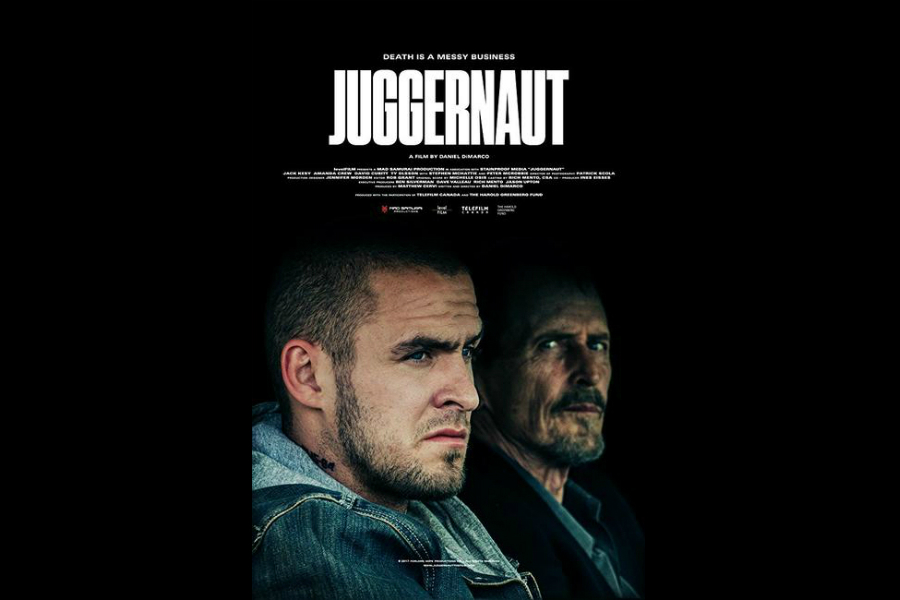
Juggernaut is out for vigilante justice: Death Wish actor Jack Kesy stars in the first trailer for the crime drama Juggernaut, which follows a local outlaw returning home to avenge his late mother. Watch it below.
[embedded content]
and
Ex-Google Recruiter Sues, Alleging Policies Discriminate Against White And Asian Men

A former Google employee is suing the company, alleging that hiring policies hurt white and Asian male applicants.
Marcio Jose Sanchez/AP
hide caption
toggle caption
Marcio Jose Sanchez/AP
Google is facing diverse diversity lawsuits.
A former employee is suing the company for allegedly discriminating against white and Asian male applicants as it tries to boost the number of black, Latino and female staffers.
Arne Wilberg worked for seven years as a recruiter at YouTube, which is owned by Google. His job was to court and hire candidates for engineering and technology positions. In court documents filed in January, he alleges Google’s “quota-based hiring practices” systematically instructed recruiters to “purge” eligible Caucasian and Asian candidates from potential hiring pools. He says they were told to favor applicants from underrepresented groups within the company. That meant interviewing only Hispanic, African-American or female job seekers.
California labor law prohibits employers from making job decisions based on characteristics like race or gender.
The lawsuit describes several instances in which Wilberg says he raised concerns with supervisors and human resources executives only to allegedly be retaliated against. Wilberg claims he and other recruiting team members were made to feel “completely uncomfortable and psychologically unsafe” reporting to their boss, a champion of the diversity policies.
He also alleges Google subjected him “to unsubstantiated performance reviews, performance criticisms and [terminated] his employment.” Wilberg was fired in November 2017.
The court documents recount alleged conversations wherein several employees complained to Google managers about the company’s diversity hiring practices. Although he maintains that Google favored minorities, Wilberg declares that “one recruiter told her peers that she felt the way the team talked about black people in team meetings was like we were talking about black slaves as slave traders on a ship.” In another encounter, Wilberg recalls, “One team member complained that managers were speaking about blacks like they were objects.”
Google has denied the company implemented discriminatory policies toward Caucasian and Asian men. In a statement to Gizmodo, the company said it “will vigorously defend this lawsuit.”
Google added:
“We have a clear policy to hire candidates based on their merit, not their identity. At the same time, we unapologetically try to find a diverse pool of qualified candidates for open roles, as this helps us hire the best people, improve our culture, and build better products.”
Wilberg’s lawsuit is the latest legal attack on Google and its workplace culture.
Just Thursday, Gizmodo reported that a former female software engineer had filed a lawsuit accusing the company of condoning a “bro-culture” that encouraged sexual harassment and turning a blind eye to harmful pranks and physical violence.
In January a woman named Heidi Lamar sued the company on charges that women working as preschool teachers in Google’s child care center were paid lower salaries than male counterparts who had fewer qualifications.
Wilberg’s lawsuit is also the second asserting that the tech giant discriminates against white men. James Damore, who was fired after criticizing Google’s diversity efforts, filed a class-action lawsuit against the company in January. He claimed Google’s top brass discriminated against conservative men.
Finally, a Department of Labor official has also accused Google of practicing “systemic” discrimination against female employees.
