Articles by admin

No Image

Remembering The Impact Of Bush's Short-Lived Steel Tariffs

President Trump isn’t the first to impose steel tariffs in the U.S. NPR’s Michel Martin talks to Trans-Matic Manufacturing President PJ Thompson about how his company adapted to steel tariffs in 2002.

MICHEL MARTIN, HOST:

We’re going to start the program today looking at a couple of the president’s moves this week that upended past policies and shocked even allies and supporters. On Thursday, he signed orders to impose steep new tariffs on imported steel and aluminum, that against the objection of many members of his own party. And in the same day, the president said he had accepted an invitation to meet face-to-face with North Korean leader Kim Jong Un. We’ll look at both of these in turn. And we’re going to start with the tariffs.

Now, this was something President Trump promoted during his campaign, but the steel came as a shock to some allies, the financial markets and even some supporters. Normally a decision like this comes after a long period of negotiation and consultation. So in the absence of that, we’ve been canvassing people who are directly connected to those industries to get their perspectives. We were reminded that President George W. Bush imposed tariffs on steel in 2002, which he then rolled back a year later. We were looking for people who remember the impact of that decision, and we found P.J. Thompson. He is the president and second-generation owner of Trans-Matic Manufacturing. That’s a metal stamping company out of Holland, Mich. We reached him at the Precision Metalforming Association’s annual conference in Tucson, Ariz.

P.J. Thompson, thanks so much for stepping out of the conference to talk to us for a couple minutes.

P.J. THOMPSON: Thanks for having me.

MARTIN: So I have to ask you, speaking from this conference where there are steel manufacturers represented, there are people who buy steel represented, what’s the mood there?

THOMPSON: Well, there’s a lot of uncertainty, really, across the industry right now. My company and many like kind companies, we’re consumers of steel. We purchase steel. We use steel as a raw material in our component parts that we produce, and then we, in turn, we sell those into markets like automotive, other durable goods products and so on. So there’s a lot of concern right now that our primary input to our production process, that being steel, is suddenly going to spike up. I would say that our concerns are not just the increase in price but also the uncertainty about availability of supply.

MARTIN: For people who are unfamiliar with what your company does with metal stamp, would you just describe what your company produces…

THOMPSON: Sure.

MARTIN: …And how the price affects your bottom line?

THOMPSON: Yeah. Yeah, we make component parts that are custom to our customers’ end needs. So, like, if a company is making an automotive system product like an anti-lock brake, we can make the steel sleeves that might go into the control unit. Or if they’re making oxygen sensors, we can make the sensor housings. Anything that requires an engineered form component part is what we make.

MARTIN: So as we mentioned earlier, there was a recent experience with steel tariffs, which was in 2002. Do you remember that time? What happened then?

THOMPSON: That was really one of the first times that many of us experienced something, like, you know, tariffs put on a product like steel that explicitly. And back then many companies like Trans-Matic did in fact experience fairly dramatic increases in the cost of material. That went, you know, both ways – some good, some bad. It also enabled us to present price increases to our customers for a very explicit reason, and we were in an environment where price increases were unheard of. But the negative part is the fact that many of the consumers, a company like Trans-Matic, there’s kind of an asymmetrical relationship between us, the companies that we buy steel from and the companies we sell our parts to. You know, we’re a small, mid-market-sized company. Oftentimes, we don’t have the negotiating power on either end to protect ourselves.

MARTIN: Do you remember any of the details during the course of that year when those tariffs were imposed?

THOMPSON: Sure. Like, our company, we were fortunate in that we were able to capture a large amount of these sudden price increases through increases in prices to our customers. Some companies were not so lucky, either because they didn’t have the leverage with their customer, meaning their customer could simply say, no, I will not accept that price increase and or I’ll just get my part from another supplier. There were also companies who, unfortunately, thought that they could just absorb these cost increases and somehow everything would work out OK. It doesn’t work out OK. When a manufacturer has one of their input costs increase like that, it has to be borne eventually by whoever’s going to be consuming the product, and that would be the customer. And what we foresee, you know, a very real possibility, is that the consumers in the United States will bear a lot of the price of these tariffs.

MARTIN: That’s P.J. Thompson. He’s the president and second-generation owner of Trans-Matic Manufacturing. That’s a company based in Holland, Mich. And, as we mentioned, he was nice enough to step out from the Precision Metalforming Association’s annual conference in Tucson, Ariz.

Mr. Thompson, thanks so much for talking to us.

THOMPSON: Thank you for having me.

Copyright © 2018 NPR. All rights reserved. Visit our website terms of use and permissions pages at www.npr.org for further information.

NPR transcripts are created on a rush deadline by Verb8tm, Inc., an NPR contractor, and produced using a proprietary transcription process developed with NPR. This text may not be in its final form and may be updated or revised in the future. Accuracy and availability may vary. The authoritative record of NPR’s programming is the audio record.

Let’s block ads! (Why?)


No Image

Medical Cargo Could Be The Gateway For Routine Drone Deliveries

The HQ-40 drone, made by Tuscon, Ariz.-based Latitude Engineering, can carry samples for medical testing in a refrigerated container.

Johns Hopkins School of Medicine

hide caption

toggle caption

Johns Hopkins School of Medicine

One shred of solace that surfaced as hurricanes and tropical storms pummeled Texas, Florida and Puerto Rico last fall was the opportunity to see drones realize some of their life-saving potential.

During those disasters unmanned aircraft surveyed wrecked roads, bridges and rail lines. They spotted oil and gas leaks. They inspected damaged cell towers that had left thousands unable to call for help. “Drones became a literal lifeline,” former Federal Aviation Administration chief Michael Huerta told the agency’s drone advisory committee in November.

The drones used needed a special exemption from a set of FAA rules, known as Part 107, that normally require small drones to fly below 400 feet, stay within the operator’s visual line of sight and avoid populated areas.

These regulations make it hard for commercial drones to operate in the United States. But last October the Department of Transportation took a big step: It invited state and local governments to partner with universities and companies on tests to speed the integration of drones into the national airspace. The FAA is reviewing 149 proposals and plans to choose five to 10 by mid-May.

The proposals cover a wide range of applications. Many of them are health-related. “I am confident that one-half or more of all the applicants have put some element of medical support in their proposal,” says John Walker, a Lancaster, Penn.-based aerospace consultant who spent 32 years at the FAA before co-founding the Padina Group, Inc in 2006.

Walker believes early public acceptance of drone delivery networks in urban areas will revolve around hospitals. And once drones can safely and reliably carry blood and medical supplies, that will pave the way to other kinds of drone deliveries. “That linear network where drones can operate between hospitals … would also have Amazon and anyone else that could meet the requirements to operate,” Walker says.

Several companies have approached governments in developing countries about performing medical deliveries in areas with great need, poor roads and less crowded skies.

In late 2016 Zipline, a San Francisco Bay Area-based robotics startup, set up distribution centers in Rwanda, where its drones had made more than 1400 flights carrying on-demand blood and emergency supplies over 62,000 miles as of last fall. This year the company will expand its medical delivery operations by launching a second base in Rwanda and new service in a larger neighboring country, Tanzania.

Last October Swiss Post launched a medical transport network in Lugano, Switzerland, using drones made by another Bay Area company, Matternet. So far the drones have made 350 deliveries, about 5 to 15 per day. Other groups have also brought aircraft abroad to attempt health-related deliveries, but those demo flights have not become sustained operations.

Such efforts face tougher hurdles here in the U.S. where regulations focus on safely integrating drones into already congested national airspace. “We haven’t seen [the FAA] be interested in a one-off approach,” says Susan Roberts, co-founder of AiRXOS, a General Electric subsidiary focused on drone infrastructure technologies. “It doesn’t do anybody any good for a delivery company to be able to fly from two specific points if they can’t then scale that over and over again.”

Beyond blood and medical supply deliveries, drones could transform another key component of healthcare — lab tests. Timely test results help doctors diagnose infections and reduce guesswork in prescribing medications. Some of those decisions have life-or-death implications. For example, newborn babies turn yellow from jaundice as their bodies make bilirubin, a byproduct formed during normal breakdown of red blood cells. But “very high bilirubin can be toxic to babies,” says Dr. Geoff Baird, a clinical pathologist at the University of Washington in Seattle.

Of the millions of blood samples, urine specimens and swabs his team processes each year, most reach central lab facilities by car. “We have cars going seven days a week, many times a day, up and down the state of Washington on freeways, across the passes, in the mountains,” Baird says. The university also does testing for out-of-state hospitals and several clinics in rural communities on the San Juan Islands off the northwest coast of Washington. Getting lab samples from the islands down to Seattle hospitals for testing requires multiple stops by car, plane and ferry — a journey of about 100 miles that often takes more than 24 hours, even longer on weekends.

But samples carried over the Puget Sound on a drone from the San Juan Islands could reach the main lab in Seattle in 90 minutes, Baird says. That’s why the university was eager to put in a bid for the FAA program.

A temperature-controlled container was designed by Johns Hopkins researchers to transport specimens, like these test tubes containing blood samples.

Johns Hopkins School of Medicine

hide caption

toggle caption

Johns Hopkins School of Medicine

The proposed medical deliveries are part of a larger application submitted by Washington’s Department of Transportation, which includes other companies such as Amazon and T-Mobile. If selected, Baird says the San Juan efforts will use drones developed at Tuscon, Ariz.-based Latitude Engineering. Latitude makes the military-grade aircraft that Johns Hopkins researchers used to set a distance record carrying refrigerated blood samples ~160 miles in a 3-hour flight across the desert.

North Carolina’s Department of Transportation also applied to the FAA program wanting to use drones for medical deliveries. Zipline and Matternet are on that application as well as several other undisclosed proposals. Matternet is also partnering with the city of Palo Alto on a proposal to shuttle blood to Stanford hospitals. Flirtey, a drone manufacturer in Reno, Nev., is focusing on using its aircraft for last-mile delivery of defibrillators — devices the company thinks could save hundreds of thousands of lives in America each year, by increasing the chance of survival from out-of-hospital cardiac arrest.

Ultimately, though, what makes or breaks a proposal isn’t likely the whiz-bang drones but rather the underlying infrastructure that ensures they can fly safely alongside commercial jets, helicopters, balloons and everything else in the sky.

Toward that end, at a drone symposium held earlier this week in Baltimore, the FAA stressed its interest in “sense and avoid” technologies to prevent drone crashes, and systems that allow drones to be identified and tracked remotely. GE’s projects cover both areas. “No one company is going to solve everything. We’re taking a holistic approach,” Roberts says. “We need to help the medical deliveries, we need to help the inspectors, we need to help people who are just taking pictures of houses.”

The United Nations Children’s Fund is working to foster this all-inclusive spirit at the global level. Last summer, UNICEF worked with local governments in the African country of Malawi to launch a drone corridor for companies, universities and nonprofits to fly test missions there.

More recently, UNICEF invited groups to transport vaccines in Vanuatu, the South Pacific nation made up of roughly 80 islands east of Australia. The drone corridors run on a barter system, says Chris Fabian, who leads UNICEF’s venture capital arm. “If you come and use our time, create something that’s open-source and useful for everyone else.”


Esther Landhuis is a freelance science journalist in the San Francisco Bay Area. Follow her on Twitter @elandhuis.

Let’s block ads! (Why?)


No Image

Saturday Sports: Paralympics, Tiger Woods, March Madness

We have an update on the Paralympics now underway in South Korea, plus Tiger Woods and college basketball.

DON GONYEA, HOST:

And it’s time now for sports.

(SOUNDBITE OF MUSIC)

GONYEA: Tiger Woods is building another comeback, and the Paralympics are intersecting with global politics. NPR sports correspondent Tom Goldman joins me now. Good morning, Tom.

TOM GOLDMAN, BYLINE: Great to be with you, Don.

GONYEA: OK. You spent nearly a month in Pyeongchang covering the 2018 Winter Olympics. Now the Paralympics are on the move, and we just heard about the U.S. Paralympic curling team. So given all the geopolitical news out of the region, I suppose we shouldn’t be surprised that politics played a role in yesterday’s opening ceremony. What happened?

GOLDMAN: So you remember in the Olympics, South and North Koreans marched in as one team with the unification flag – the flag had the image of the Korean peninsula plus a few offshore islands.

Turns out the islands are a center of dispute between Korea and Japan over who owns them. South Korea wanted to avoid politicizing the flag. They agreed to remove the image of the little island chain. North Korea wanted the islands left on. They haggled. They couldn’t agree, so North Korea marched in separately in its first-ever appearance at the Winter Olympics.

But, Don, just to ensure the spat wouldn’t ruin relations in one evening, a North Korean and South Korean athlete held the Paralympic flame together during the opening ceremony.

GONYEA: So all is well – sort of.

GOLDMAN: Sort of.

GONYEA: OK. So for the rest of the weekend, we have ice hockey, and we have wheelchair curling. Every athlete competing in South Korea has a story about overcoming adversity, but are any of these Paralympic events likely to break through and really kind of grab ahold of an American audience?

GOLDMAN: You know, I think the key to captivating an audience is not comparing to the Olympics and saying, well, you know, these athletes aren’t Mikaela Shiffrin or Marit Bjorgen or Chloe Kim, so I’m not going to watch. If you judge these events on their own, they can be really exciting.

I mean, I watched some alpine skiing last night. They’re moving fast. They’re carving turns. I’m fascinated by the vision-impaired downhillers. Now, imagine going 70 miles an hour essentially blindfolded.

GONYEA: Stop it.

GOLDMAN: And you have to – yeah. And you have to trust your guide, who’s skiing that fast right in front of you. It is terrifying, but these athletes love the speed. They love the adrenaline. It’s impressive stuff.

GONYEA: OK. I hope people will watch.

GOLDMAN: Yeah.

GONYEA: Here is something that is sure to excite kind of the casual sports fan. Tiger Woods is in a PGA Tour event, and he’s tied for second place. Golf fans – they want to believe – right? – that Tiger can get back to his dominant ways. But how real is this comeback?

GOLDMAN: You know, it’s more real than anything we’ve seen in recent years, where he’d play a little, and then his back would betray him. This time, less than a year after back fusion surgery, it appears it’s working. And as a result, his golf’s coming around. In events he’s played this year, his finishes include a 23rd place, 12th place and now this. So he’s moving in the right direction.

GONYEA: People want, want, want so much to see the old Tiger. They have to be going crazy over this – golf fans, at least.

GOLDMAN: You know, when he moved into first place yesterday for a bit by himself, here’s an example of the tweet storm that followed. Tiger Woods on top of the leaderboard. You may officially start freaking out now.

A lot of people want him to bring back the magic of the decade when he dominated golf and sports, really. Now remember, there are still two days to go with this tournament. A lot can happen, good and bad.

Don, his physical game is coming around, but you wonder about the all-important mental game. It’s been nearly five years since his last win. How dormant are those skills that allowed him to perform so well at the end of tournaments when the pressure is really on? If he’s in that position this weekend, can he, you know, kind of reanimate those skills? I think it’s going to be fascinating to watch.

GONYEA: I’ll watch it. I’ll stay calm. NPR’s Tom Goldman, thank you very much.

GOLDMAN: You always do. You’re welcome.

GONYEA: (Laughter) All right.

Copyright © 2018 NPR. All rights reserved. Visit our website terms of use and permissions pages at www.npr.org for further information.

NPR transcripts are created on a rush deadline by Verb8tm, Inc., an NPR contractor, and produced using a proprietary transcription process developed with NPR. This text may not be in its final form and may be updated or revised in the future. Accuracy and availability may vary. The authoritative record of NPR’s programming is the audio record.
Let’s block ads! (Why?)


No Image

The Week in Movie News: Oscar Winners, SXSW Buzz, the Live-Action 'Star Wars' Series and More

Need a quick recap on the past week in movie news? Here are the highlights:

BIG NEWS

The Shape of Water is the Best Picture of 2017: The 90th Academy Awards were held Sunday night with Oscars going to a wide spread of nominees. But the big winner was Guillermo del Toro and The Shape of Water, which won Best Picture and Best Director. See the full list of winners here and see our highlights of the ceremony here and red carpet favorites here.

GREAT NEWS

Jon Favreau will steer the Star Wars series: Lucasfilm announced Iron Man and The Jungle Book director Jon Favreau as the writer and producer of the first live-action Star Wars TV series, which will be found on Disney’s new streaming service. Read more here.

SURPRISING NEWS

Steven Spielberg is passing Robopocalypse to Michael Bay: It’s not surprising that Steven Spielberg would recruit Michael Bay for another collaboration following Transformers, but it is surprising that Spielberg is giving up directing Robopocalypse, which he’s been developing for years. Read more on that and Bay’s next project here.

FESTIVAL BUZZ

SXSW 2018 preview: With the SXSW Film Festival beginning this week, we highlighted all the movies and events that people are already buzzing about. Read the whole guide here.

EXCLUSIVE BUZZ

Marc Forster talks Christopher Robin: We talked to Christopher Robin director Marc Forster ahead of the movie’s teaser debut, and he explained what we can expect from Disney’s live-action take on the Winnie the Pooh characters. Read the whole interview here.

COOL CULTURE

An Unused Oscars Musical Number: The Lonely Island came up with a song to perform at the Oscars last weekend, but the Academy declined to use it. Watch the silly musical number, which involves Thor and Wonder Woman, below.

[embedded content]

MUST-WATCH TRAILERS

Mary Poppins Returns welcomes back an icon: Disney dropped the first teaser trailer for Mary Poppins Returns during the Oscars, and it’s supercalifragilisticexpialidocious. Watch it below.

[embedded content]

Christopher Robin tugs at our heartstrings: Disney also debuted the first teaser for Christopher Robin, which spotlights Ewan McGregor as the now-grown title character and teases a live-action Winnie the Pooh. Watch it here:

[embedded content]

The Seagull lets Saoirse Ronan soar: Saoirse Ronan follows her Oscar-nominated performance in Lady Bird with a starring role in the latest adaptation of Anton Chekhov’s The Seagull with Annette Bening and Elisabeth Moss. Watch it below.

[embedded content]

and

Let’s block ads! (Why?)


No Image

No Go For Idaho: State Will Have To Rethink Its 'Freedom' Health Policies

Idaho Gov. C.L. “Butch” Otter says Thursday’s letter from the Trump administration “was not a rejection of our approach,” but rather an invitation to keep talking about how to make Idaho’s state-based health plans pass muster.

Otto Kitsinger/AP

hide caption

toggle caption

Otto Kitsinger/AP

No, you can’t.

That’s what federal officials told Idaho regulators and the state’s governor late Thursday regarding the state’s plan to allow insurers to sell health plans that fall short of the Affordable Care Act’s requirements.

But the letter from the Trump administration did offer an alternative: Tweak your plan a bit to make them qualify as “short-term” policies. These alternatives, which offer coverage for a limited time, are exempted from ACA rules — including the rule that bars insurers from rejecting people who have pre-existing medical conditions.

“On the one hand, they’re saying they’re going to enforce the ACA,” says Sarah Lueck, a senior policy analyst at the Center on Budget and Policy Priorities. But, Lueck adds, the Health and Human Services Department also seems to say, ” ‘if you want to roll back protections for people with pre-existing conditions, we have some ideas for you.’ And that concerns me.”

Idaho’s approach, announced in January, would have allowed insurers to offer “state-based” insurance plans that did not include some of the ACA’s consumer protections. A few weeks later, Idaho Blue Cross jumped in with five “Freedom Blue” state-based plans it hoped to sell.

Regulators in other states were watching the Idaho situation. Its move was viewed either as a brazen effort to flout federal law or an innovative attempt to stabilize the market. Regardless, Idaho’s action meant the Trump administration had to take a position: Enforce the ACA or look away.

Here are four key takeaways from the administration’s response to Idaho, and how the ruling may play elsewhere.

States and insurance carriers can’t ignore federal law

Although Thursday’s letter from Seema Verma, head of the federal Centers for Medicare & Medicaid Services, commended Idaho’s effort to “address the damage” caused by the ACA, it said that, as proposed, the state-based plans would violate at least eight of the federal health law’s provisions. For example, the ACA forbids insurers from charging sick people more for a policy than it charges those who are considered healthy; it bans the establishment of annual or lifetime coverage caps; and it won’t allow insurers to reject applicants who have pre-existing conditions.

Verma’s letter noted that if plans that don’t meet ACA standards were sold in Idaho, insurance carriers might face significant financial penalties. Health policy specialists say they would be surprised if insurers would want to take that risk.

“It’s one thing for the state to take on the CMS, but quite another for carriers,” says Jan Dubauskas, general counsel for the IHC Group, which sells short-term health insurance nationally. “When I heard that, I thought, ‘This is the end for state-based plans.’ “

But Idaho Gov. Butch Otter, a Republican, has been upbeat, saying the letter from Verma “was not a rejection of our approach,” but “an invitation … to continue discussing … what can and cannot be included in state-based plans.”

Late Friday, Idaho Blue Cross issued a statement expressing disappointment in the CMS decision, but also echoing Otter’s willingness to move forward.

The timetable going forward is not immediately clear, although both federal regulators and state officials say they are willing to talk about alternatives to Idaho’s original proposal. Following Verma’s suggestion to get new short-term plans on the market would also require Idaho’s insurers to consider their options, modify the plans and come up with new premium rates — all of which takes time.

Short-term plans get another boost

Dubauskas and others say the Idaho decision could increase interest in short-term plans.

Such policies have been sold for years, meant as a stopgap for people between jobs. They are less expensive than ACA plans, mainly because they are allowed to reject people who have health conditions (or exclude coverage for such conditions) and have other limitations.

Most short-term plans don’t cover treatment for substance abuse or mental health issues; few cover maternity care and some don’t include prescription drug coverage. They generally can’t be renewed — meaning consumers must reapply and answer medical questions each time their policies expire.

The Obama administration, fearing that short-term plans would suck relatively healthy people out of the ACA market, limited such policies to 90-day terms. The Trump administration, however, has proposed allowing short-term plans to last for up to a year. These final rules aren’t expected for at least another two months.

Ironically, Idaho Insurance Director Dean Cameron had in January promoted the more robust “state-based” plans — like those the Blues insurer wanted to sell in Idaho— as an alternative to short-term coverage.

After getting the CMS letter, Cameron told the Idaho Statesman newspaper that short-term plans might be easier for the Trump administration to handle legally, but could cause consumers more problems than what Idaho had proposed.

Critics fear that consumers will buy such plans without understanding their limitations.

“They might think it’s health insurance like they’re used to,” Lueck says. “But it’s really not. It’s really very bare-bones.”

State reactions will vary widely, creating different rules around the country

Even if the Trump administration’s proposal to extend short-term coverage to a full year is finalized, states can set stricter rules.

A handful of states already do.

New York and New Jersey require many of the same rules as the ACA for policies sold in their states. But insurers won’t sell short-term plans there.

Four states — Arizona, Michigan, Minnesota and Oregon — limit the length of short-term plans sold in their states to 185 days, according to a survey by the Commonwealth Fund and researchers at Georgetown University.

“A small group of largely blue states have some regulation [of short-term plans], but not very many,” says Sabrina Corlette, a research professor at Georgetown University’s Health Policy Institute. “It’s possible that if this rule is finalized we will see more states start to step up and regulate short-term markets.”

Conversely, lawmakers in other states may promote short-term coverage as a lower-cost alternative to the ACA — although people with pre-existing conditions may not be able to buy such plans.

“Politically, short-term plans have some appeal because lawmakers can say now there’s a cheaper option out there,” Corlette notes.

The increased emphasis on short-term plans could increase premiums

Actuaries fear that short-term plans — or state-based plans like those rejected in Idaho — would drive up costs for people who remain in more comprehensive ACA coverage.

That’s because younger and healthier people might be tempted to drop their ACA coverage, leaving only those who are older, sicker and costlier in the remaining pool. That, in turn, drives up premiums — affecting millions of Americans who don’t receive subsidies and already struggle to pay for their health insurance.

But just how many people would jump to new, short-term coverage?

The Trump administration has estimated that about 100,000 to 200,000 people with existing ACA coverage would make the shift, while other specialists in health insurance suggest higher numbers.

Christopher Condeluci, a Washington, D.C., attorney who specializes in employee benefits and previously served as the tax and benefits counsel to the U.S. Senate Finance Committee, says it’s unclear which estimates are correct.

The real issue to keep in mind, Condeluci says, is that an increasing number of people who don’t get subsidies are already choosing to either forgo coverage or pick an alternative, such as a short-term plan.

“People are voting with their feet,” he said. “That cannot be overlooked.”

Kaiser Health News is a nonprofit news service covering health issues. It is an editorially independent program of the Kaiser Family Foundation that is not affiliated with Kaiser Permanente. You can follow KHN senior correspondent Julie Appleby on Twitter @Julie_Appleby.

Let’s block ads! (Why?)


No Image

Martin Shkreli Sentenced to 7 Years For Securities Fraud

Former pharmaceutical CEO Martin Shkreli (left) was sentenced to seven years for securities fraud on Friday.

Elizabeth Williams/AP

hide caption

toggle caption

Elizabeth Williams/AP

Martin Shkreli, the former pharmaceutical executive who has been publicly excoriated for sharply increasing the price of a lifesaving HIV drug and derisively referred to as the “Pharma Bro,” was sentenced on Friday to seven years in prison for defrauding investors in two failed hedge funds and a drug company he once ran.

It’s less than half of the 15 years prosecutors were seeking, but it far exceeds the minimum 18-month sentence Shkreli’s attorneys were hoping to secure for their client, whose 35th birthday is later this month.

Shkreli was found guilty on two counts of securities fraud for duping hedge fund investors in MSMB Capital Management and MSMB Healthcare about the financial performance of the two companies that he operated. And he was convicted of conspiracy to commit securities fraud for manipulating stock shares of Retrophin, a pharmaceutical company he created.

U.S. District Judge Kiyo Matsumoto also ruled Monday that Shkreli must forfeit the money he made from his fraud — nearly $7.4 million — and pay a $75,000 fine. And, as NPR’s Colin Dwyer reported, if Shkreli can’t come up with the funds to pay back the government, he’ll have to hand over a few prized possessions, including a one-of-a-kind Wu-Tang Clan album and a Picasso painting.

Shkreli, who has often appeared defiant both in the courtroom and in interviews, made a sob-filled plea for leniency during the 2 1/2-hour proceedings leading up to Matsumoto’s decision, according to CNBC.

” ‘The one person to blame for me being here today is me,’ a choked-up Shkreli told a judge before she imposed the prison term. ‘Not the government. There is no conspiracy to take down Martin Shkreli.’

” ‘I took down Martin Shkreli with my disgraceful and shameful actions.’

” ‘This is my fault. I am no victim here,’ Shkreli said, before breaking down into tears as he promised not to let his lawyer Benjamin Brafman down in his efforts to contribute to society.

” ‘Do not feel bad for me,’ Shkreli told a packed courtroom that included many of his supporters and family members.

“And he had a message for the investors he duped: ‘I am terribly sorry I lost your trust … You deserve far better.’ “

Shkreli emerged as a public villain in 2015 after raising the price of Daraprim by more than 5,000 percent, from $13.50 to $750 per pill as CEO of Turing Pharmaceuticals. A later offer to pay $5,000 for a strand of Hillary Clinton’s hair — follicle included — after his conviction when he was out on bail, did nothing to rehabilitate his image. In fact, Matsumoto sent him back to jail for the stunt that Shkreli later claimed was a joke.

In a letter to the judge dated Feb. 26, Shkreli wrote:

“I feel I should try to explain my personality.

“I am an irreverant and free-wheeling individual, who has never been shy about speaking my mind. I am an individual who prizes equal rights, scholastic achievement and individuality. Please understand that when I get into a public war of words with someone, my comments do not always reflect my true nature. Sadly, when I get dragged into a mud fight, I often dive in, head first.”

Shkreli has been held in a federal prison in Brooklyn, N.Y., for six months. He said being behind bars is “both the most frightening experience of my life but also an opportunity for me to see a side of the world seldom seen or discussed.”

Let’s block ads! (Why?)


No Image

Today in Movie Culture: How All Coen Brothers Movies Are Connected, a History of the Rom-Com and More

Here are a bunch of little bites to satisfy your hunger for movie culture:

Film History of the Day:

Vanity Fair looks at the history and conventions of the romantic comedy starting with 1931’s City Lights:

[embedded content]

Fake Commercial of the Day:

If Being John Malkovich was real and took place today, customers would book trips inside John Malkovich via AirBnB:

[embedded content]

Alternate Soundtracks of the Day:

This amusing video imagines more literal soundtrack choices for iconic movies scenes based on specific lines of dialogue:

[embedded content]

Video Essay of the Day:

The latest video essay from Renegade Cut looks at the existential themes of Terrence Malick’s The Thin Red Line:

[embedded content]

Vintage Image of the Day:

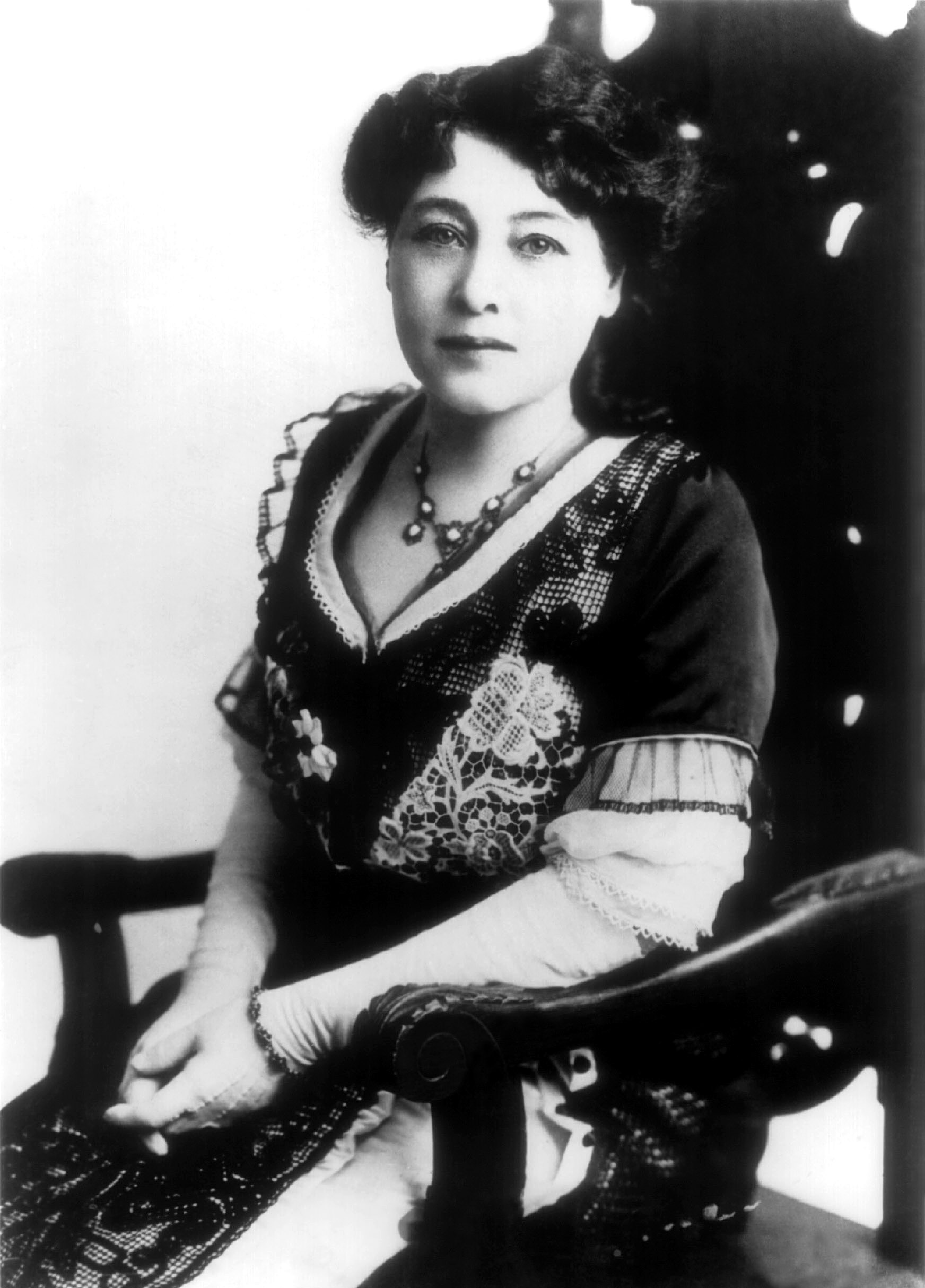
In honor of International Women’s Day, here is a portrait of filmmaking pioneer Alice Guy-Blache in the early 20th century:

Filmmakers in Focus:

In honor of this week’s anniversary of the Big Lebowski release, ScreenCrush shows how every Coen Brothers movie is connected:

[embedded content]

Movie Food of the Day:

Learn how to make the chocolate lava cake from Jon Favreau’s Chef in this edition of Binging with Babish:

[embedded content]

Movie Comparison of the Day:

If only Justice League had copied the better Avengers movie. Couch Tomato shows 24 reasons it’s a basically a remake of Avengers: Age of Ultron:

[embedded content]

Cosplay of the Day:

If Jennifer Lawrence ever drops out of the X-Men movies for good, this clever cosplayer can surely take her place:

Brilliant Mystique cosplay pic.twitter.com/dLbAtZkMkA

— Cosplay (@CosplayHeaven) March 8, 2018

Classic Trailer of the Day:

This weekend marks the 40th anniversary of Brian De Palma’s The Fury. Watch the original trailer for the classic supernatural horror film below.

[embedded content]

and

Let’s block ads! (Why?)


No Image

Steelworker Union Leader On Why He Supports Trump's Tariffs On Imports

In a hotly contested move, President Trump formally ordered tariffs on steel and aluminum imports Thursday. Before the signing, several workers from the industry spoke, including Scott Sauritch, a steelworker union leader in West Mifflin, Pa.

MARY LOUISE KELLY, HOST:

President Trump made good today on his pledge to protect the U.S. steel and aluminum industries. He ordered steep tariffs on imported steel and aluminum, and he invited workers from those industries to watch him sign that order. One of those workers is Scott Sauritch. He’s the leader of the Steelworkers 2227 local union in West Mifflin, Pa.

(SOUNDBITE OF ARCHIVED RECORDING)

SCOTT SAURITCH: My father, during the ’80s, he lost his job due to imports coming into this country. And I just want to tell you what that does to a man with six kids is devastating. So I never forgot that looking into his eyes in my household what that does to a family. You hear about it, but when you’re actually involved and it impacts you, it’s – it’ll never leave you.

KELLY: And Scott Sauritch joins us now. Thank you so much for speaking with us.

SAURITCH: Yes, ma’am, go ahead. How are you?

KELLY: I’m well, thank you. And I thank you for joining us. What was it like to be at the White House and tell that story and have the president respond to it?

SAURITCH: I – it was – I still don’t have words for it. I can tell you it was unexpected. I didn’t plan to be there.

KELLY: Yeah.

SAURITCH: You know, they just – the steelworkers from the International said we were on a mission. And they said, gather up the troops – and I was one of them – we’re going to D.C. You know, it’s a possibility that it could be signed. You know, we didn’t know if it was going to happen or not. And so, hey, I had no idea where I was going to be and how it was going to go down. But, you know, I’m still – I’m tickled pink.

KELLY: Yeah.

SAURITCH: And I’m very, very happy.

KELLY: I gather it was quite the scene – a lot of Cabinet officials and men and women wearing blue jeans…

SAURITCH: Oh, yeah. Absolutely.

KELLY: …And hard hats all packed in. Did they tell you to bring the hard hats or did they pass them out there?

SAURITCH: Well, (laughter) you know, here’s – yeah, we probably could’ve. But, you know, we just brought coming down in regular…

KELLY: Worked itself out.

SAURITCH: …Union attire. Yeah, our union attire.

KELLY: But tell me why you think tariffs like this will help people like you.

SAURITCH: Well, I think if you’ve got the upper 1 percent, they don’t have a clue what the engine of society, the middle-class people, what we do. And with that being said, I can tell you that I’ve seen as I’m – you’re going up and down the valley where we live the compromised communities that all were economically filled with steelworkers that were doing very well. And to see the communities struggling – now you get a shot in the arm like this. It adds more security. And it opens up some great opportunity for many people. Maybe many people with no hope, but especially for Granite City.

KELLY: May I ask you in the short time we have left, what about the the other side? Do you hear the fears that people have raised about – that this could spark a trade war?

SAURITCH: I – you know, let’s face it. Any time there’s something going on in one way you hear stories and propaganda on another source. But I think this all needs action right now. And let me tell you something. For – if anything had to happen, this change in the steel industry, this attention what’s going on right now had to happen.

KELLY: Right. Right. Right. This…

SAURITCH: For the infrastructure and the safety and security it needed to happen.

KELLY: That’s Scott Sauritch. He is head of the Steelworkers 2227 local union in West Mifflin, Pa. Mr. Sauritch, thanks so much.

SAURITCH: Thank you so much for having me.

Copyright © 2018 NPR. All rights reserved. Visit our website terms of use and permissions pages at www.npr.org for further information.

NPR transcripts are created on a rush deadline by Verb8tm, Inc., an NPR contractor, and produced using a proprietary transcription process developed with NPR. This text may not be in its final form and may be updated or revised in the future. Accuracy and availability may vary. The authoritative record of NPR’s programming is the audio record.

Let’s block ads! (Why?)


No Image

Why 1 U.S. Snowboarder Competing In His First Paralympics Is Helping His Competition

Mike Schultz lost his leg in a snowmobile race accident in 2008. Since then, he created a successful business making prosthetic legs and learned to snowboard so well that he’s about to compete in the 2018 Winter Paralympics.

MARY LOUISE KELLY, HOST:

Tomorrow the Winter Paralympic Games begin a 10-day run in South Korea featuring the world’s best athletes with disabilities. U.S. snowboarder Mike Schultz is a medal contender competing in his first Paralympics. And as NPR’s Tom Goldman reports, Schultz is helping others compete as well.

TOM GOLDMAN, BYLINE: Close to 700 athletes are gathered in Pyeongchang for the Paralympics. They’ll take part in six sports, including alpine skiing, biathlon and snowboarding. Most of these athletes have dramatic stories to tell. Mike Schultz has one that’s hard to beat.

MIKE SCHULTZ: December 13, 2008 – yeah, that kind of changed everything a little bit.

GOLDMAN: Schultz, in his understated Minnesota kind of way, recounts the day he nearly died. He was at the time a top pro snowmobile racer nicknamed Monster Mike. But on that day at a race in Michigan, Schultz got bucked off his machine.

SCHULTZ: I landed on my left leg with all my weight.

GOLDMAN: The leg hyperextended at a horrifying angle.

SCHULTZ: Totally bent the wrong way. I kicked myself in the chin with my toe.

GOLDMAN: The accident severed an artery, and he nearly bled to death. Doctors had to amputate his left leg 3 inches above the knee. Mike Schultz had raced snowmobiles and dirt bikes since he was a teenager. Despite his injury, he wasn’t ready to give them up. But he knew he couldn’t get back to his beloved sports with his basic and clunky prosthetic walking leg.

SCHULTZ: Yeah, here’s the original drawings for the Versa Foot.

GOLDMAN: Schultz shows off the beginnings of what would end up changing his life and others, as he recounted in a 2016 appearance on “Conan.”

(SOUNDBITE OF TV SHOW, “CONAN”)

SCHULTZ: I was in the garage fixing things, and I’m like, what better project than building your own leg? And…

(LAUGHTER)

CONAN O’BRIEN: You’re certainly motivated.

SCHULTZ: I was very, very motivated.

(CHEERING, APPLAUSE)

GOLDMAN: He built a leg specifically for sport. The Versa Foot and Moto Knee gave Schultz all-important shock absorption and range of motion. Seven months after his injury, he won an X Games silver medal. In 2010, he started his company BioDapt to make his inventions available to other athletes, like Keith Deutsch.

SCHULTZ: For the purpose of this conversation, Sergeant retired Keith Deutsch.

GOLDMAN: Deutsch lost a leg in 2003 serving in Iraq. He’d been a snowboard instructor and raced in the sport. In 2011, in Colorado, he met Schultz, who lent him the Moto Knee to try.

KEITH DEUTSCH: It’s the most familiar I’ve felt since I lost my leg.

GOLDMAN: Deutsch was joyous. Schultz says giving Deutsch that moment was strong stuff. Their connection was significant for another reason. It got Schultz on a snowboard for the first time.

DEUTSCH: He’s not afraid of going fast. And he picked it up really quickly. The guys in the Olympics – what? – three, four, six years after he started.

GOLDMAN: Seven to be exact.

SCHULTZ: So I’m balancing on a round peg underneath the board. I’ve got a 12-pound medicine ball bouncing on the ground.

GOLDMAN: Schultz works out in a small gym adjacent to his office. It’s all part of a large converted storage shed where Schultz also makes his prosthetic devices. The shed is next to the house in St. Cloud that he shares with his wife and young daughter. One takes it all in – his business, his success in snowboarding – and you wonder. Was that horrible day in 2008 actually a good thing?

SCHULTZ: Not a day goes by my life where I don’t wish I could have my leg back. I wish I could grow my leg back today.

GOLDMAN: Schultz says all the success has been hard earned, and there have been failures along the way. And there are things people don’t see, like the time he was carrying his infant daughter at night and not wearing his prosthetic leg.

SCHULTZ: I tripped. And I had to chuck her across the room so she could land on the bed. Those are the moments I – that are real, you know? I can’t carry my daughter around without worrying about tripping, possibly injuring her.

GOLDMAN: Tomorrow, the public Mike Schultz will be on full display. He’s been chosen to carry the flag and lead the U.S. delegation at the Paralympics opening ceremony. Tom Goldman, NPR News.

Copyright © 2018 NPR. All rights reserved. Visit our website terms of use and permissions pages at www.npr.org for further information.

NPR transcripts are created on a rush deadline by Verb8tm, Inc., an NPR contractor, and produced using a proprietary transcription process developed with NPR. This text may not be in its final form and may be updated or revised in the future. Accuracy and availability may vary. The authoritative record of NPR’s programming is the audio record.

Let’s block ads! (Why?)


No Image

Tattoo You: Immune System Cells Help Keep Ink In Its Place

Make sure that tattoo is one you want to keep.

yulkapopkova/Getty Images

hide caption

toggle caption

yulkapopkova/Getty Images

Last Saturday, while I was visiting Fatty’s Tattoos and Piercings, a college-aged woman in a hoodie walked in and asked for a tattoo, her first, right on the spot.

“I want a red-tailed hawk feather,” she told the artist on duty at the Washington, D.C., tattoo parlor.

He peppered her with questions: How big? What style? She alternated between a blank stare and a furrowed brow: “I … have a photo on my phone of the feather that I like, I could show you that?”

The artist rubbed his beard and told her he didn’t do realistic tattoos. Maybe they should set up an appointment for her sometime next week, with another artist, he offered. Between the lines, he seemed to say, “This will be permanent, so I don’t want to give you the wrong tattoo.”

But considering how many changes skin weathers — burns heal, scars fade and wrinkles set in — it’s sort of unbelievable that tattoos do stick around.

Recently, a group of French scientists looked into how that works, hoping to use the knowledge to improve tattoo removal.

So, first, of course, they gave some mice tattoos.

The mice didn’t get Mom tattoos on their tiny biceps. Instead, they got tail tats — three stripes of green ink — for researchers to study.

“The thing is, the mouse skin can be super fragile, much more fragile than human skin,” says Sandrine Henri, an immunologist at the Centre d’Immunologie Marseille-Luminy.

If you zoom way in on any tattoo, it’s really just a bunch of cells holding tight to ink particles. From the mice’s tail tattoos, Henri and her colleagues identified one type of cell that captured ink particles and stayed in place, the dermal macrophage.

The researchers thought they might be able to disrupt the tattoos by destroying the macrophages that had locked up the ink. So they engineered mice whose macrophages — and only those cells — would shrivel in the face of a specific toxin, and then injected that compound into these special, tattooed mice.

But it didn’t work.

The messed-up macrophages released their ink particles, but the color persisted. It turns out that new macrophages quickly took over the job of holding the tiny flecks of ink in place, and the mice kept their sporty green-striped tails.

But if it were possible, Henri says, to use an ointment, or a drug, to delaythose replacement macrophages,it might improve tattoo removal for mice — and humans. The researchers’ fingings appeared Tuesday in the Journal of Experimental Medicine.

To think about removing ink from human shoulders, rather than mouse tails, it helps to know how tattoos appear. In broad strokes, we understand this process, says Bruce Klitzman, a biomedical engineer at Duke who once worked on creating an erasable tattoo.

As a tattoo artist outlines a yin-yang symbol on someone’s shoulder, a solid needle loaded with ink pierces the tattoo-ee’s skin, or epidermis, and the needle’s exit lets pigment flow into a second layer of skin, the dermis, Klitzman says.

But any self-respecting immune system treats all visitors — including the ink particles meant to create a wolf’s face on your forearm — as unwelcome. So skin cells mount a multilevel attack on the ink particles.

First, the cells that weren’t hit by the tattoo needle block out guests, Klitzman says. Only a fraction of the ink an artist lays down actually makes it into the dermis, and this is also why new tattoos tend to leak ink as they heal.

Newly tattooed skin swells, the same way it would respond to any other wound, and blood and lymph ferry away the smallest bits of ink. For the remaining pigment particles, the next order of the immune system’s business is consuming the foreign invaders, to try to destroy them.

That’s where the macrophages, the cells Henri studied, come in. They’re specialized immune cells — their name means big eater in Greek — and their job is to slurp up interlopers, says Klitzman. “Macrophages can basically swallow many, many tattoo pigment particles, almost like a vacuum cleaner, just go along and suck up all those particles,” he says.

Usually, a macrophage digests the invaders it devours, using acid to rip its enemy apart. It’s a good strategy for killing bacteria and viruses, but not for tattoo pigments. Acid has little effect on the ink ingredients.

That means a macrophage that has gorged on ink has no way to finish its job. Eventually, the pigment-filled macrophages dial back their attack, content to contain the threat, even if they can’t completely neutralize it. “They just sit there like a full vacuum cleaner bag,” says Klitzman.

Another type of cell, called a fibroblast, is also known to take in some ink particles in human skin. Together, the macrophages and fibroblasts bind enough ink for the image of, say, a carrot or feather to appear on your calf.

Those cells and the pigment inside them can hang around for years. But all cells die eventually, which brought Henri and her team to their question: How do tattoos stay put as individual cells die?

Their work confirms that even when macrophages die and release their pigment particles, other macrophages quickly gobble up the ink, keeping it in place.

Even when the researchers grafted one mouse’s tail tattoo onto another mouse’s back, the second mouse’s own macrophages carried the skin graft’s tattoo. “The cells from the graft died and released the ink, and the host mouse’s cells captured it,” Henri says.

All of that, basically, underscores why tattoo removal is really, really difficult.

Laser removal is an option, says Jared Jagdeo, a dermatologist at University of California, Davis. Tuned to a wavelength specific to a tattoo’s colors, “lasers are able to break apart tattoo particles,” he says. The bursts of energy bust ink “from larger boulders into smaller rocks, and then into fine pebbles which then can be swept away by the lymphatic system.”

But laser removal is far from perfect. The process of blurring ink beyond recognition can take many sessions, spaced weeks apart, at a couple hundred dollars a visit.

Laser pulses irritate skin, and people show re-uptake of ink similar to Henri’s mice, Jagdeo says. He uses anti-inflammatory drugs to help tame that response, but it’s really difficult to remove all evidence of a tattoo. “Tattoos are at their baseline permanent, so if [someone gets] a tattoo they should plan on having it for a while,” he says.

Back at the tattoo shop, I don’t know if the woman with the red-tailed hawk feather ever managed to get her tattoo. Either way, I hope she’s happy with her decision. For now, tattoo removal is still a challenge.

Let’s block ads! (Why?)