Articles by admin


No Image

For Aspiring Doctors With Disabilities, Many Medical Schools Come Up Short

Feranmi Okanlami, now a doctor, became partially paralyzed after an accident in 2013. He says adjustments for his disability during his training, like this standing in frame chair, helped him succeed. A new report finds variability in medical institution culture and protocols when it comes to supporting aspiring doctors with disabilities.

Courtesy of Feranmi Okanlami

hide caption

toggle caption

Courtesy of Feranmi Okanlami

Being a medical student or resident is hard enough, but what if you have a disability that adds to the challenge?

One medical resident with a physical disability was about a year and a half into training when the medical institution finally installed an automatic door he needed. Another student faced frustrations when arranging accommodations for taking tests, with it seeming like the medical school was “making up rules along the way.” When another resident with a disability first sought support, the disability representative was allegedly unfamiliar with the Americans with Disabilities Act.

These firsthand experiences are documented in a report issued Tuesday by the Association of American of Medical Colleges and the University of California, San Francisco about the accessibility and inclusion of students and doctors with disabilities in the medical field. The culture and the environment surrounding disabilities varies across the board, it found, with some places doing far better than others.

About 1,500 medical students in the U.S. have disclosed a disability and receive formal accommodations. That’s about 2.7 percent of students, according to the report, and represents a lower percentage than other undergraduate programs, which average at about 11 percent for students who have disclosed a disability. The report found that in medicine especially, many students hide their disability out of a real “fear of judgment, bias, and skewed perception of ability.”

Medicine is an incredibly tough and competitive field where, historically, doctors have been viewed as superhumans, operating at the highest physical and mental capacity at all hours of the day and night, performing miracles and saving lives. There’s an expectation of perfection.

But doctors are human, too.

A lack of understanding about disabilities can create big challenges for otherwise qualified and talented future doctors, says Lisa Meeks, co-author of the report and a disabilities expert at the University of Michigan Medical School. Yet some schools may not even be aware of what they could be doing to foster a more inclusive environment.

“I don’t know of a school that doesn’t want to do the best practice,” says Meeks, who is also co-founder of the Coalition for Disability Access in Health Science and Medical Education, adding that schools might just not have the tools.

For Dr. Geoffrey Young, AAMC’s senior director for student affairs and programs, the nearly 100-page report is a much needed blue print for medical institutions to better understand policies and perceptions of those with disabilities, whether that be the easily identifiable physical kind or lesser seen invisible ones.

“I think we have to do a better job of educating those in the field about what the potential is for those with disabilities, verses what is consumed or assumed to be an automatic inability,” Young says, adding that the culture is shifting in medicine. “We are having this conversation in a very open way.”

The report identifies very clear barriers and considerations schools can take in response. That includes everything from the way disabilities are discussed in the admissions process to having a person within the institution who is well versed in both disability access issues and medical school requirements, to help future doctors better navigate their training.

For Dr. Lina Mehta, associate dean for admissions at Case Western Reserve University School of Medicine in Cleveland, improvements start with changing attitudes and approaches at the onset. Case was sited in the report as an example for the disabilities language it has adopted in its materials.

“In admissions, we sort of dictate the face and function of what medicine is going to look like by virtue of who we bring in,” Mehta says. Having a more diverse future physician population, one that includes those with disabilities, improves the field’s ability to understand and care for patients, she says. “It’s critical we bring in a group of learners and future practitioners who will mirror patient populations that they’re taking care of.”

This story is part of a reporting partnership with NPR, WHYY’s health show The Pulse andKaiser Health News.

Let’s block ads! (Why?)


No Image

Does Your Office NCAA Tournament Pool Offer $1 Million For Life?

Investor Warren Buffett in 2017 gestures on stage at a national conference sponsored by the Purpose Built Communities group that Buffett supports in Omaha, Neb. Buffet says any Berkshire Hathaway employee who correctly predicts all Sweet 16 teams in the men’s NCAA basketball tournament will received $1 million per year for life.

Nati Harnik/AP

hide caption

toggle caption

Nati Harnik/AP

Billionaire CEO Warren Buffett has an NCAA men’s basketball bracket challenge that just may blow other office pools out of the water.

Buffett told CNBC last month that any Berkshire Hathaway employee who accurately predicts all Sweet 16 teams will receive $1 million per year for the rest of his or her life.

The Oracle of Omaha went on to say that “if either Creighton or Nebraska ends up winning the tournament, we’re going to double the prize.”

Buffett, a Nebraska native, is also offering a $100,000 prize to the employee whose bracket stays intact the longest.

Last year, a steel worker from West Virginia correctly predicted 31 of the first 32 games and picked up his six-figure reward.

Berkshire Hathaway owns more than 90 companies, including Geico and Dairy Queen.

Here is a dose of reality that will calm your but-I-don’t-work-for-Berkshire- Hathaway-itis:

USA Today reports the odds of accurately predicting the Sweet 16 are less than one in a million.

Previously, Buffett offered $1 billion for anyone who predicted a perfect bracket.

That feat has never been achieved in the 21-years that ESPN has been doing a bracket challenge.

The odds of predicting a perfect bracket, according to USA Today, are anywhere from one in nine quintillion to about one in two billion.

Let’s block ads! (Why?)


No Image

UConn Is First Overall Seed In NCAA Women's Basketball Tournament

At the American Athletic Conference tournament semifinals earlier this month in Uncasville, Conn., Cincinnati’s Andeija Puckett, left, looks to pass to Sam Rodgers, right, under pressure from Connecticut’s Kia Nurse. Connecticut is the first overall seed in the NCAA women’s basketball tournament that begins on Saturday.

Jessica Hill/AP

hide caption

toggle caption

Jessica Hill/AP

The slots in the NCAA women’s basketball tournament bracket have been filled and Connecticut is the first overall seed.

At 32-0, they are the only team to enter the NCAA tournament unbeaten.

The Huskies are aiming for their 12th national championship. Last season, UConn was the overwhelming favorite but lost to Mississippi State in the Final Four.

This year’s other No. 1 seeds are Notre Dame, Louisville and Mississippi State.

Here’s a printable bracket for the women’s tournament.

There were five teams trying to get into the bracket’s top spots and in the end Baylor lost out.

The Associated Press reports the Bears, who lost just one game all season (31-1), instead get a No. 2 seed in Lexington, a region that includes top-seeded Louisville, Tennessee and Stanford.

“‘We felt there was a razor-thin margin between Baylor and Notre Dame,’ said NCAA women’s basketball committee chair Rhonda Bennett. ‘Notre Dame did have the top strength of schedule in the country and they did have the best strength of schedule in the country and they had nine more top-50 wins than Baylor and those were the reason that the committee put Notre Dame on that one line and Baylor on that two line.’

Baylor coach Kim Mulkey said she doesn’t see it as that big a deal.

‘We’ve won a national championship as a two seed, we’ve won it as a one seed,’ she said. ‘And really what does it matter? Because the one has to play the two. Mississippi State was a two last year and they played for the national championship. We were a two seed in 2005 and we played and won the national championship.'”

The first round of the women’s tournament begins on Saturday. UConn faces St. Francis University of Loretto, Pa.

The men’s NCAA basketball bracket was announced on Sunday.

Let’s block ads! (Why?)


No Image

Today in Movie Culture: Gunship's 'Ready Player One' Music Video, Fan-Made 'Shazam!' Trailer and More

Here are a bunch of little bites to satisfy your hunger for movie culture:

Music Video of the Day:

There are so many classic geek culture references in this animated music video for Gunship’s retro-sounding “Ar3mis & Parzival” from the Ready Player One soundtrack (via /Film):

[embedded content]

Fan-Made Trailer of the Day:

While we wait for Shazam! to finish production and give us a real trailer, here’s a well done fan-made teaser for the DC superhero movie by Stryder HD:

[embedded content]

Fan Art of the Day:

Speaking of Shazam!, star Zachary Levi shared this fan art by Janry Bautista of Levy’s Tangled character, Flynn Rider, as the superhero (via Heroic Hollywood):

Movie Parody of the Day:

Guest host Sterling K. Brown stars in this Saturday Night Live parody of the Djalia scenes from Black Panther:

[embedded content]

Vintage Image of the Day:

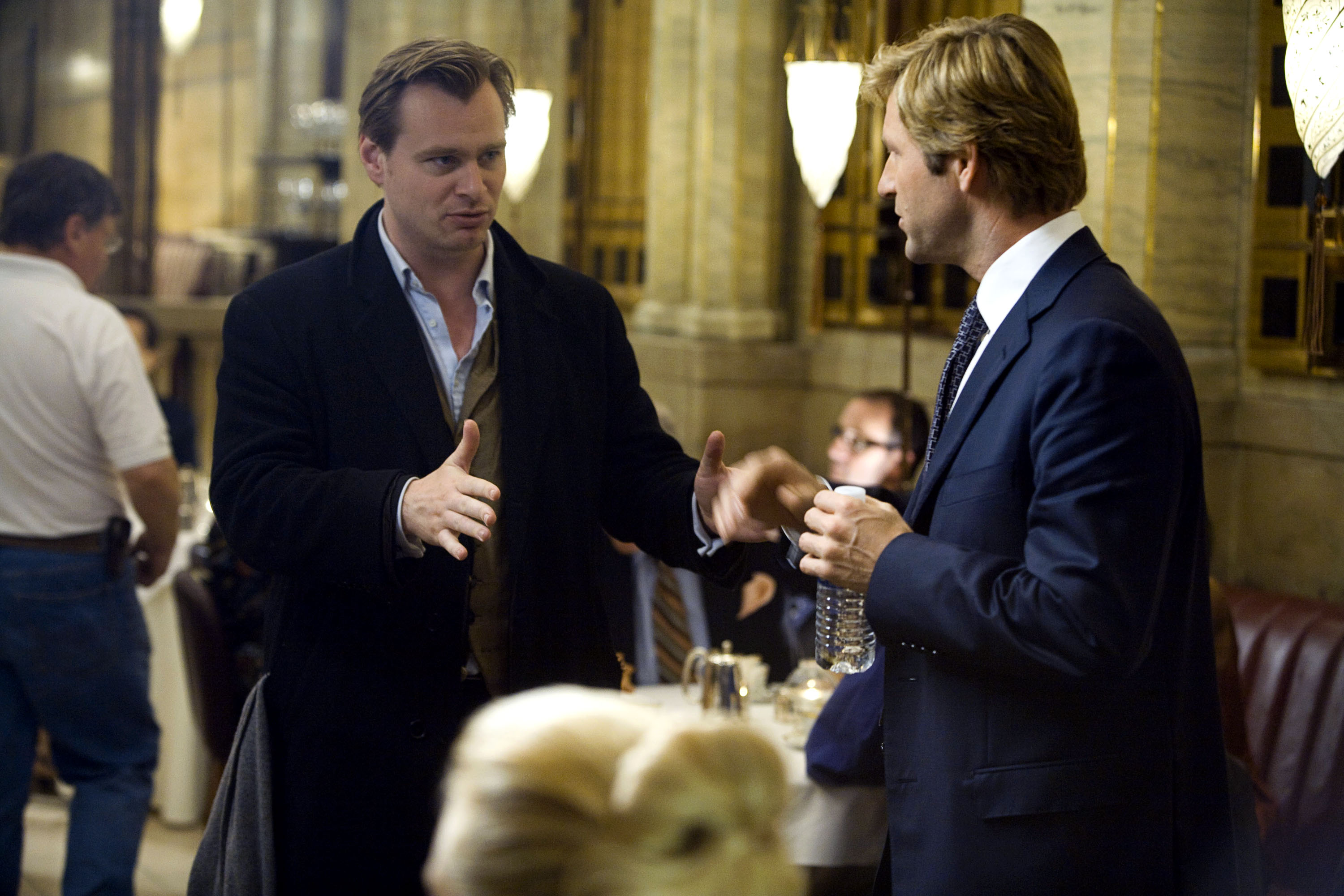
Aaron Eckhart, who turns 50 today, receives direction from Christopher Nolan on the set of The Dark Knight in 2007:

Filmmaker in Focus:

For Fandor, Haroon Adalat showcases A Wrinkle in Time director Ava Duvernay and her many achievements:

[embedded content]

Plot Song of the Day:

Star Wars gets a new Bad Lip Reading in the form of a Death Star-focused plot song called “It’s Not a Moon”:

[embedded content]

Mashup of the Day:

Speaking of Star Wars, Dimitreze combined footage from the end of The Force Awakens and the same sequence from The Last Jedi to create a longer version of the meeting of Rey and Luke:

[embedded content]

Cosplay of the Day:

In anticipation of the reboot hitting theaters this week, here’s some excellent Tomb Raider cosplay:

So @TombRaiderMovie releases this week! Who’s excited? #TombRaider#Cosplaypic.twitter.com/9slG6flDT0

— Samantha (@SamHModel) March 12, 2018

Classic Trailer of the Day:

Today is the 25th anniversary of the release of CB4. Watch the original trailer for the classic rap music satire below.

[embedded content]

and

Let’s block ads! (Why?)


No Image

President Trump Blocks Broadcom's Takeover Of Qualcomm, Citing National Security

Qualcomm.

Justin Sullivan/Getty Images

In an unusual step, President Trump has signed an executive order blocking Broadcom’s $117 billion bid to buy Qualcomm. The order released Monday cited “credible evidence” that led Trump to believe the Singapore-based Broadcom, in purchasing America’s largest mobile chipmaker, “might take action that threatens to impair the national security of the United States.”

“The proposed takeover of Qualcomm by the Purchaser is prohibited,” the president said in his order, “and any substantially equivalent merger, acquisition, or takeover, whether effected directly or indirectly, is also prohibited.”

Trump said his decision was informed by a recommendation from the Committee on Foreign Investment in the United States, an interagency panel that — in its own words — investigates “transactions that could result in control of a U.S. business by a foreign person.” The group evaluates these deals according to their possible effects on national security.

The CFIUS had already openly suggested its concerns with the massive tech merger. Aimen Mir, a top Treasury Department official serving on CFIUS, sent a letter earlier this month voicing those concerns to attorneys representing both companies.

As NPR’s Alina Selyukh reports, those concerns center especially on “the future of mobile connections,” where Qualcomm has been an industry leader.

“Countries around the world have been racing to develop technology for the new generation of wireless called 5G,” she explains. “It will power all the devices that are starting to connect to the Internet — like smart home speakers and even cars.”

Though Broadcom is based in Singapore, the principal worry rests with China. If Qualcomm’s “technological leadership” diminishes, Mir said in his March 5 letter, Chinese tech companies stand to gain in the race to develop 5G.

“Reduction in Qualcomm’s long-term technological competitiveness and influence in standard setting would significantly impact U.S. national security,” Mir wrote. “This is in large part because a weakening of Qualcomm’s position would leave an opening for China to expand its influence on the 5G standard-setting process.”

He also noted that Department of Defense programs rely on access to Qualcomm products.

This weekend, before Trump’s order, Mir wrote the same lawyers again, this time to note that the CFIUS investigation “has so far confirmed the national security concerns” identified in his earlier letter.

Broadcom, for its part, had argued earlier Monday — before the president’s order — that the national security fears were unwarranted because it plans to redomicile to the U.S. by early April.

“Broadcom, which is in all important respects a U.S. company, has been repeatedly approved by CFIUS in its previous acquisitions of U.S. companies,” the company said in its statement, “and has always engaged productively with CFIUS to ensure U.S. national security is protected.”

Trump disagreed with this line of reasoning, however. And he said he has directed Treasury Secretary Steven Mnuchin, to send a copy of his order blocking the merger to Qualcomm and Broadcom.

Let’s block ads! (Why?)


No Image

Fertility Clinic Says Failure May Have Damaged Thousands Of Eggs And Embryos

After a cryogenic tank like the one in this file photo lost a great deal of liquid nitrogen, a fertility clinic began the process of determining the damage to stored embryos and eggs.

Lluis Gene/AFP/Getty Images

hide caption

toggle caption

Lluis Gene/AFP/Getty Images

A San Francisco fertility clinic says that a problem with the liquid nitrogen in one of its storage tanks may have damaged thousands of frozen eggs and embryos, triggering calls and letters to more than 400 concerned patients of the Pacific Fertility Center.

The nitrogen level in one tank fell very low, according to Dr. Carl Herbert, the fertility clinic’s president. Herbert told ABC News that an “emergency filling” immediately took place, and that the tank’s contents were then transferred to a fully functioning tank.

The problem struck on March 4 — the same day that a similar cryogenic tank failure was reported in Cleveland, where the University Hospital Fertility Clinic is investigating “an unexpected temperature fluctuation” that jeopardized its tissue storage bank, where liquid nitrogen preserves eggs and embryos. That incident reportedly affected some 700 patients.

In San Francisco, Dr. Herbert said the clinic is working to determine the effects of the tank failure. Herbert said a “substantial number” of the clinic’s patients had stored embryos for around 8-10 years, according to ABC.

“The good news is, we have viable embryos — we’ve proven that from that tank,” Herbert said. “So my hopes are that for my patients, they’ll be OK. But because there’s an unknown, it’s extremely stressful.”

The clinic’s price for freezing eggs starts at $8,345, and in-vitro fertilization is $11,595, according to its website. The annual cost for tissue storage is $600.

Emotions have run high during calls with affected patients, Herbert told The Washington Post.

“Anger is a big part of the phone call,” Herbert said. “Our goal is to provide all the patients we see with some kind of a family. . . . We need to think: If this tissue doesn’t work, what are the next steps, and have you not feel defeated.”

The Pacific Fertility Center is located in San Francisco’s North Beach region; in the past, it has said that its patients include families of employees at Facebook and other tech companies, many of which pay the costs of fertility treatments as part of their health coverage.

After the Cleveland incident, the American Society for Reproductive Medicine released a statement saying that the cryogenic failure and “potential loss of eggs and embryos at University Hospitals Fertility Center in Cleveland is a tragedy.”

A family that lost embryos in the Cleveland hospital’s nitrogen tank failure has filed a class-action lawsuit, the AP reports.

Let’s block ads! (Why?)


No Image

Brackets For Men's NCAA Basketball Tournament Are Released

Villanova celebrates after an NCAA basketball game win over Providence in the Big East men’s tournament final Saturday in New York. Villanova won in overtime 76-66. Villanova along with Virginia, Kansas and Xavier are the No. 1 seeds in the men’s NCAA basketball tournament.

Frank Franklin II/AP

hide caption

toggle caption

Frank Franklin II/AP

With much fanfare, brackets for the men’s NCAA basketball tournament were released on what has come to be known as Selection Sunday. Virginia, Villanova, Kansas and Xavier are the No. 1 seeds.

The tournament begins Tuesday with opening-round games in Dayton, Ohio, and then gets into full swing Thursday and Friday at eight sites across the country. Final Four action is set for March 31 and April 2 in San Antonio, Texas.

Hard core March Madness participants already know when their office pool brackets are due — most likely by Thursday’s games. That will give newbies and dilettantes plenty of time to study up.

Sports Illustrated reports:

“Murray State was the first team to secure its bid to the Big Dance by winning the Ohio Valley Tournament, and Michigan was the first team from a major conference to lock up a spot by defeating Purdue in the Big Ten Tournament Championship.

The last team to steal a bid into the tournament was Davidson. The Wildcats knocked off Rhode Island in the A-10 Tournament Championship Sunday to secure a spot in the Big Dance, and make the bubble a bit more difficult to navigate. The Selection Committee said Notre Dame was the team that was bumped out because of Davidson.

The ACC has the most teams in the tournament with nine (Virginia, Duke, North Carolina, Clemson, North Carolina State, Virginia Tech Florida State, Miami and Syracuse).

“The biggest snubs of this year’s tournament include Oklahoma State, USC, Saint Mary’s, Louisville and Notre Dame. Syracuse claimed the final spot in the bracket for at-large teams.”

This year’s tournament is being played under a cloud. Shortly after the new championship team is crowned, a commission investigating alleged bribes and payoffs is expected to release its recommendations.

That commission’s investigation, led by former Secretary of Stage Condoleezza Rice, started after the FBI charged assistant coaches, agents, employees of apparel companies and others in a federal bribery and fraud probe.

The Associated Press reports:

“No fewer than a dozen teams in the tournament have been named either in the FBI investigation or in media reports that allege coaches and others have directed payments and improper benefits to recruits and players – thus, breaking rules that go to the core of the amateur-sports code that defines both the NCAA and the ‘student-athletes’ who make this billion-dollar business run.

They range from teams that made it into the tournament off the so-called bubble — Alabama — to one of the best teams in the country. Arizona, a No. 4 seed in the South, has been roiled by a report that wiretaps caught coach Sean Miller discussing a $100,000 payment to freshman Deandre Ayton. Miller has strongly denied the accusation, though the story line figures to follow the Wildcats through what could be a long run in the tournament.”

In media interviews, chairman of the NCAA selection committee Bruce Rasmussen said the investigations did not play a role in the bracket-filling process.

Let’s block ads! (Why?)


No Image

How One Teacher Tweaked Her Lesson Plan For A New Career

Former schoolteacher Liz Stepansky at her new job as a speech pathologist at a hospital in Washington, D.C.

Mette Lutzhoft/Mette Lutzhoft

hide caption

toggle caption

Mette Lutzhoft/Mette Lutzhoft

Growing up, Liz Stepansky, the daughter of two schoolteachers in small town Illinois, thought teaching was the way to a stable, meaningful life.

“My dad would have students that would come back and visit him even years after they had graduated high school,” she said. “And to see him develop relationships like that, it seemed like a pretty important job. I liked that.”

After graduating from college in 2008, Stepansky, now 33, decided to follow in her parents’ footsteps, and was ecstatic when she landed her first job as a public middle school teacher in South Carolina.

“I couldn’t wait,” she recalled. “I had ordered all the books, and planned out my classroom and how I was going to have things organized, and I was ready. I was ready to begin my teaching career.”

But when September rolled around, Stepansky found that she “had no idea” what she was in for. She said her middle school students dialed 911, threw balloons filled with bleach and ink in hallways and constantly pulled the fire alarm.

“Four of those occasions were actual fires started by students,” she said. “Another teacher had a dead mouse put on her chair. I had a student put a frog in my coffee.”

As her frustration with her students’ antics built up, so did the hours she spent at school. Way past the dismissal bell, she was “calling parents, doing lessons preps,” she said. “I’d go home and sometimes I’d spend an hour grading papers. And then I’d go back the next day and do it all over again. … I remember my paycheck being $800 and something every two weeks.”

Stepansky transferred to another school, this one in Virginia, and encountered similar frustrations. After two years of teachingat public middle schools, Stepansky wondered: Was she wasting her time?

Then a re-connection with an old friend brought her back to another childhood interest: Speech pathology, a field of assessing, diagnosing and treating communication and swallowing disorders.

“I got a friend request from someone I was best friends with in fifth grade, and I noticed that she was a speech pathologist,” Stepansky said. “Growing up as a child, I went to a speech pathologist at our school. I couldn’t pronounce my R’s and my S’s. … I started thinking, ‘Maybe that would be an option to consider.’ “

All of the things that attracted Stepansky to teaching in the first place — education, compassion and interest in the progress of others — were present in this job, too, and its prospects were good: Schools and hospitals are in dire need of speech pathologists, and the BLS projects that speech pathologist employment will grow 18 percent from 2016 to 2026, “much faster” than the average for all occupations. Meanwhile, teachers who are college-educated are facing higher wage gaps than ever, according to the EPI.

After scouring the web to learn how to enter the field, Stepansky realized she would need to go back to school. She quit her teaching job, applied to the University of Virginia’s graduate program — and was denied.She took a job at a veterinary clinic, and volunteered at a local hospital and enrolled in prerequisite classes at a community college to strengthen her follow up application.

A year after her first attempt, Stepansky was accepted to UVA. She spent two and a half years taking classes and doing clinical work, and graduated to a fellowship in her favorite clinical placement — working with adults in a hospital.

Now, Stepansky has been working the National Rehabilitation Hospital in Washington, D.C. for just over a year. A standard day involves diagnosing patients and designing treatment strategies, including singing songs and playing card games designed to build patients’ language and communication skills.

“I’ve made a change in the people that I see, but kind of at the heart of it, I’m doing the same thing,” she said. “I’m showing someone how to do something, and eventually do it without me.”

Most of her Stepansky’s patients are persons who are re-adapting to life after experiencing strokes. Stepansky said working to rehabilitate their language and speech abilities is particularly emotional. “They are so much more appreciative, because they know the difference,” she said.

Stepansky said she has no regrets in changing up her career path. “As I was teaching, I kind of was looking at my friends who had established careers and knew what they wanted to do thinking gosh, I wish that was true for me,” she said.

“To be in a job where I love what I’m doing is kind of a gift, and it makes going through this whole process and this whole transition more than worth it.”

Former NPR Story Lab Intern Mette Lutzhoft helped produce this story for broadcast.

Let’s block ads! (Why?)


No Image

The Mysterious Case Of 'Vanishing Bone' And Hip Replacements Gone Wrong

Dr. Joshua Jacobs, an orthopedic surgeon, displays a model of a cementless hip replacement in 2014.

M. Spencer Green/AP

hide caption

toggle caption

M. Spencer Green/AP

Please sign up here to subscribe to WBUR’s CommonHealth newsletter highlighting important stories about health and medicine.

It all began with a single X-ray.

It was 1974, and surgeons had been doing total hip replacements for a dozen years.

“Total hip replacement is an absolutely magnificent operation,” says Dr. William H. Harris, “and we were able to do remarkable things to restore mobility and relief of pain and the joy of life to countless individuals.”

As chief of Massachusetts General Hospital’s joint replacement surgery service, Harris was sent a mystifying patient, a prominent lawyer from San Francisco whose hip replacement had gone badly awry.

“I had never seen anything like this before,” he recalls. “The bone around his prosthesis, around his total hip, had been completely destroyed. It was just astonishing. And I thought it had to be cancer.”

But under the microscope there was no cancer, no recognizable disease of any kind. It was something much stranger.

So begins the twist-filled backstory of disaster averted that Harris tells in his new book, Vanishing Bone: Conquering a Stealth Disease Caused by Total Hip Replacements.

Now 90, Harris holds an endowed professorship of orthopedic surgery at Harvard Medical School. He was chief of joint replacement surgery at MGH for 30 years. And he’s one of the doctors and researchers that grateful recipients of artificial hips may want to thank.

Those patients are legion: At least 3 million Americans have artificial hips, and millions more around the world.

Back to his tale: No visible cancer. The only type of cells to be seen on the ruins of the bone were a sort of cleanup cells, called macrophages. And they were stimulating another kind of cell, called an osteoclast, which means “bone-eater.”

“This was the only cell in the body that could eat bone and it was actively and aggressively eating the bone,” Harris explains. “It became a medical detective mystery: What in the world is this disease and how does it come about? Why is it there?”

The question quickly became even more urgent, because soon it wasn’t just one patient or two whose replacement hips were being attacked by this bone-eating disease. It was thousands — then hundreds of thousands. The longer people had their replacement hips, the higher the risk. In some, their bones became so weak, just walking could make them snap.

“Over time, it began to involve so many people that around the world there were a million people with this condition,” Harris says. “By 1990 it was clear that it was the No. 1 problem in total hip replacement surgery and the No. 1 cause of failure.”

One of the first possible culprits to come under suspicion was the “bone cement” — the glue used to affix the artificial joint to the patient’s skeleton. Tiny bits of the cement seemed to be triggering the odd response by the cleanup cells and the osteoclasts.

One kind of cell “was actively and aggressively eating the bone,” says Harvard orthopedic surgeon Dr. William H. Harris. “It became a medical detective mystery: What in the world is this disease and how does it come about?”

Jesse Costa/WBUR

hide caption

toggle caption

Jesse Costa/WBUR

So Harris and others devised techniques to replace hips without using cement. And they heaved a sigh of relief, he says, thinking they’d solved the problem. Only to find, when he reviewed his first hundred cases of a cementless hip replacement — “Bingo, the very same disease.”

But they were on its trail. The problem wasn’t just the bone cement, they realized, it was that tiny bits of plastic could eventually trigger the osteoclasts to eat bone. And those bits of plastic were coming from the inevitable wear on the plastic at the replacement joint as the patient logged millions of steps.

“This caused a big shift in our thinking, and the problem shifted from being a problem of medical detective work to find out what in the world is going on, to innovation — material science,” Harris says.

Harris and other researchers needed to figure out how to make an artificial hip joint that could take a load of hundreds of pounds, for millions of steps, without wearing down enough to release the particles of polyethylene plastic. And to do that, he decided, he needed a machine that could simulate what happens to hips in the body.

It took three years and plenty of frustration to build an accurate hip simulator. Meanwhile, his team gained a pivotal insight from using a powerful scanning electron microscope to look at the replacement hips of patients who donated them back to his lab after death: It was the process of walking that modified the polyethylene.

The polyethylene plastic on the hip implants was an extraordinarily long molecule. Harris compares it to a very, very long, very, very thin string of spaghetti. And normally, the plastic is like a bowl of spaghetti that is unorganized, with the strands going in all different directions. But not in the hips from the deceased patients.

“We found that all of the strands of the polyethylene were lined up in a row,” he says. “The polyethylene molecules had been changed in their position. They’d been modified by the fact that gait simply goes back and forth, and forth and back. And that lines them up.”

Harris turned to his friend Ed Merrill, a professor emeritus of polymer chemistry at MIT, and asked if he could stop this reorientation from happening.

“He said, ‘Sure,’ and I said, ‘I love it, that’s wonderful, tell me about it. How are you going to do it?’ ‘Well,’ he said, ‘we do that for a lot of molecules. We get them to be fixed in their position by putting in energy, and that energy then links one of the molecules to the next one.’ “

It’s a process called cross-linking, used on many materials. Merrill suggested using an electron beam to cross-link the polyethylene in artificial hips. When Harris and his team tried it, they ran into a few problems at first, the most striking of which was that the plastic exploded.

“Sometimes it didn’t explode, sometimes it just caught fire,” Harris says. “And at other times it simply melted. But clearly we were in a difficult spot. It took a lot of work to figure out what that problem was.”

The problem turned out to be a matter of too much energy. They needed to slow the electron beam down so it wouldn’t “overcook” the plastic. Once they figured that out, they could test it. The results: “We could detect no wear at all. Zero wear. We thought it might reduce wear, it might make it better. It made it almost perfect.”

There’s a lot more to the story in Vanishing Bone. It wasn’t enough to invent the new plastic; it had to be patented and licensed, approved by the Food and Drug Administration, and manufactured — all of those steps involved additional challenges. But in late 1998, the first patient got a hip made with the new plastic.

Fast forward nearly 20 years, “and there are probably now 7 million people around the world walking on this material in total hips and in total knees,” Harris says. “The disease is virtually gone.”

So that’s certainly a happy ending, but what’s the moral of the story? For Harris, it serves as an example of contemporary medical science — “how it works, warts and all, the complexity, the need for persistence.”

And, he says, it highlights the special joy of being a doctor and a scientist: “I loved taking care of patients and I loved going to the operating room, but I also hate failure. And my own failures in the operating room would lead me to say, ‘Let’s take this failure up to the laboratory and see if we can’t unscramble it, unlock it, and find a way to do it better.’ “

So, at age 90, has he replaced a hip?

No, he says, but if he needed to, he’d feel quite relaxed about it. Because he’d know that his new hip could be made of cross-linked polyethylene.


The first version of this story appeared on WBUR’s CommonHealth. Carey Goldberg, who covers health and science, is the host of CommonHealth.

Let’s block ads! (Why?)