Articles by admin

No Image

President Trump Unveils Plan To Fight Opioid Crisis

An estimated 64,000 people died from drug overdoses in the United States in 2016 — the vast majority of those were from heroin or synthetic opioids. New Hampshire is one of the states hardest hit by the epidemic and on Monday President Trump unveiled his plan to fight the crisis.

AILSA CHANG, HOST:

Opioids killed more than 42,000 people in the U.S. in 2016. To put that in perspective, that’s more than the number of people who died of gun-related violence or motor vehicle accidents the same year. Today in New Hampshire, President Trump unveiled his plan to fight the opioid crisis.

NPR justice reporter Ryan Lucas joins us now with the details. Hey, Ryan.

RYAN LUCAS, BYLINE: Hi there.

CHANG: So what is the new White House strategy for fighting opioid addiction?

LUCAS: Well, the administration’s plan rests on kind of three pillars. One is to reduce the demand for opioids. Talked – the president talked about doing this through education about how dangerous these drugs are. He wants a public relations campaign to warn people of the risks of opioids. And he also wants to cut back on overprescription because some of this is abuse of prescription opioids.

CHANG: Right.

LUCAS: His administration has set a goal of cutting opioid prescription fills by one-third within three years. Another pillar is treatment and recovery support services for people who are struggling already with addiction. And then the third aspect is cracking down on the supply of illicit drugs, particularly things like fentanyl, which is this very dangerous synthetic opioid. And one aspect of this that Trump focuses on is seeking the death penalty for drug traffickers. He also talked about having Congress pass new legislation to reduce the amount of drugs needed to trigger mandatory minimum sentences.

CHANG: I want to get to that last aspect, the criminal justice component of all of this. It’s been very controversial since people have been talking about it. What more did the president say about that, especially about the death penalty component?

LUCAS: Well, the death penalty component is really one small part of this plan. But it has grabbed people’s attention, and that really may be the point. The president talked about this at length in a speech today, and here’s part of what he had to say.

(SOUNDBITE OF ARCHIVED RECORDING)

PRESIDENT DONALD TRUMP: We can have all the blue ribbon committees we want, but if we don’t get tough on the drug dealers, we’re wasting our time. Just remember that. We’re wasting our time. And that toughness includes the death penalty.

(APPLAUSE)

LUCAS: Now, Attorney General Jeff Sessions put out a statement after the speech saying the Justice Department will aggressively prosecute drug traffickers and use federal law to seek the death penalty wherever appropriate. But under current federal law, experts say the death penalty can be used in drug cases in which a murder has been committed, but it does not mention the death penalty for someone who traffics in drugs that lead to accidental overdoses.

CHANG: Now, a lot of the opioids that are fueling this crisis comes from overseas. And the president – I mean, did he address any of that at all, that aspect of this problem?

LUCAS: He did. In fact, he called up both China and Mexico. He said he told them, don’t send it, referring to opioids. A lot of the synthetic opioids are produced in labs in China, and then in many cases Americans just order them over the Internet by mail. Justice Department officials have said they’re working with their Chinese counterparts to try to shut down these labs, but there hasn’t been any kind of real public evidence so far that China is indeed cracking down. The U.S. indicted two Chinese nationals last year for allegedly manufacturing and distributing synthetic opioids. They remain in China.

But law enforcement is really just one side of this. A lot of addiction experts say prevention and treatment are just as important if not more so. They say the administration’s strategy includes a lot of the priorities that states and addiction experts have been talking about for a while, so increasing access to treatment and recovery services, making sure hospitals are following the best practices when prescribing opioids. But there are questions about where the money is going to come from to pay for some of these things. And there are also questions about how the Trump – the Trump administration will actually implement all of this.

CHANG: All right, that’s NPR’s Ryan Lucas. Thank you.

LUCAS: Thank you.

Copyright © 2018 NPR. All rights reserved. Visit our website terms of use and permissions pages at www.npr.org for further information.

NPR transcripts are created on a rush deadline by Verb8tm, Inc., an NPR contractor, and produced using a proprietary transcription process developed with NPR. This text may not be in its final form and may be updated or revised in the future. Accuracy and availability may vary. The authoritative record of NPR’s programming is the audio record.

Let’s block ads! (Why?)


No Image

After Years Wandering A Golf Desert, Tiger Woods Stages A Dramatic Comeback

Tiger Woods plays his shot from the 16th tee Sunday during the final round of the Arnold Palmer Invitational at Bay Hill Club and Lodge in Orlando.

Sam Greenwood/Getty Images

hide caption

toggle caption

Sam Greenwood/Getty Images

Northern Ireland’s Rory McIlroy ended his drought in convincing fashion Sunday.

The four-time major tournament winner went on a final-round birdie binge to win the Arnold Palmer Invitational in Orlando, Fla. It was his first victory since 2016. McIlroy pulled away at the end with five birdies on the last six holes for an 8-under par 64.

As dominant as his win was, McIlroy shared the spotlight with Tiger Woods, who finished eight shots back.

It wasn’t long ago that Woods was golf’s greatest player and a global sports icon. His dramatic downfall is well-known, as a sex scandal and injuries knocked him off his pedestal.

Now, for the second week in a row, Woods almost won a tournament. That’s saying a lot when you consider Woods essentially has been wandering in a golf desert for the better part of five years — his legendary career derailed by debilitating back problems.

But since the beginning of this year, he has been mounting a dramatic comeback. And Sunday’s final round gave Woods and his fans more reason for optimism.

Time travel and a charge

There was a moment Sunday that felt like time travel.

Donatella Masson, Chloe Trinh and Lowa Johansson get a tree’s-eye view of Tiger Woods at Bay Hill Sunday as he passes by on the eighth hole.

Tom Goldman/NPR

hide caption

toggle caption

Tom Goldman/NPR

It was at the 13th green on the Bay Hill course, and it started when Woods, wearing his traditional Sunday red golf shirt and black hat and pants, drained a 15-foot putt. The crowd exploded in one of those “Tiger roars” heard all over the golf course. The birdie putt was his second in a row, his third in four holes, and it moved him one shot off the lead.

Woods was making a charge.

It felt like it could’ve been anywhere from 1997, the year he burst on the scene with a dominating win at the Masters, to 2013, the last year he won a PGA Tour event.

As Woods made his way to the 14th tee, it was pandemonium, with many in the gallery chanting “Tiger! Tiger! Tiger!”

His competitors out on the course, like Bryson DeChambeau, felt it too.

“Oh, it was amazing,” DeChambeau said. “I told my caddie, Tim, in the 11th fairway, I’m like, ‘Man, Tiger’s doing it!’ I was incredibly happy for him. At the same point in time I’m still trying to win a golf tournament, right?”

DeChambeau finished second. Woods’ magic moment ended on the 16th hole, when he drove the ball out of bounds.

It was as if the golf gods sent a message to Woods from on high — not yet. Actually, the real reason for his mistake was much less celestial in nature.

Standing on the 16th tee, Woods pondered three possible shots he could hit.

“If I hit a driver I had to fit it with a cut,” he told reporters after his round. “[But also] in the back of my mind [I] said, ‘Why don’t you just bomb it over the top?’ Or just hit a three-wood straight away. And so I’m running through these different scenarios and it’s on me. I didn’t commit to either one of those three shots and I hit a poor one.”

It cost him a stroke and was the start of a shaky finish to an otherwise positive round.

Stephanie Valdez of Orlando, Fla., says she’s been a Tiger Woods fan since 1996. She followed Woods his entire final round Sunday. Valdez is “glad he turned his life around. He’s back in the game.”

Tom Goldman/NPR

hide caption

toggle caption

Tom Goldman/NPR

Woods tied for fifth, one week after tying for second. In his mind, the comeback that even he doubted was possible is moving forward nicely, thanks to a fourth back surgery that seems to have worked.

“If I can play with no pain and I can feel I can make golf swings, I’ll figure it out,” he said Sunday after his round. “I’m starting to piece it together, tournament by tournament. Each tournament’s gotten a little bit crisper and a little bit better.”

His results bear that out. He has gone from 23rd to a missed cut to a 12th-place finish to second and now fifth. With his final round of 3-under-par 69 on Sunday, Woods now has shot 10 straight rounds of par or better stretching back over his last three tournaments.

Augusta bound

Next up for Woods is the Masters in early April.

He hasn’t played his favorite major tournament since 2015 and he says he needs to travel to Augusta, Ga., to reacquaint himself with the course’s special characteristics.

“Playing on overseeded rye [grass]; the different spins that we’re going to encounter there,” Woods said, adding “I’ll figure out what wedge system I want to use for that week, what bounce system, get used to those bunkers. The sand’s very heavy, thick and so I’ve got to do a little bit of work.”

While Woods sweats the details, his fans will be content anticipating more time travel.

To 2005 — the last time he won there.

The idea that Woods can win another major tournament is startling. The debate over whether he could catch and pass Jack Nicklaus’ all-time record of 18 major wins — Woods has 14 — died away as Woods’ career foundered.

It’s foundering no more. And suddenly, the 42-year-old Woods is redefining what’s possible.

Let’s block ads! (Why?)


No Image

More Than A Job: Home Care For A Mom With Alzheimer's Disease

Celina Raddatz and her mother, Guadalupe Pena Villegas, at home in California.

Xavier Vasquez/NPR

hide caption

toggle caption

Xavier Vasquez/NPR

Celina Raddatz quit her job at a nursing home in 2014 when she realized she would have to take care of her mother full-time. Raddatz’s mother, Guadalupe Pena Villegas, 83, suffers from Alzheimer’s and bipolar disorder, a combination that sometimes makes her a danger to herself and others, and thus requires her to be supervised 24 hours a day.

Raddatz and one of her sisters, Rosalia Lizarraga, 61, had been caring for their mother together. But as the Alzheimer’s progressed, the task became too stressful for Lizarraga. The full responsibility fell on Raddatz, who was determined to fulfill a promise she and her siblings had made their mother as children.

“When my mother was sane, she made us promise never to put her in a nursing home. And of course, us young kids said, ‘OK, mom we would never …’ ” Raddatz says. “But we never ever once ever thought that she would get sick like this.”

As the elderly population in the United States grows, an increasing number of people require extra help in their daily lives. Because of this, the Bureau of Labor Statistics predicts employment for home health aides will grow 40% between 2016 and 2026. Hiring private caregivers, however, can be a financial burden for some families who can’t afford to pay an average of $22,170 a year for extra help.

Many families take on the responsibility of caring for their aging relatives. In some cases, like Raddatz’s, it can leave little time for other employment. Luckily, there are federally and state-funded programs across the country that allow elderly individuals like Raddatz’s mother to use Medicaid funds to hire their own personal caregivers – including family members.

“We noticed that she was not right”

Raddatz, 57, was born in Mexico. Her mother, a widow, supported nine children as a food vendor. When Raddatz was 8 years-old, her mother married a U.S. soldier, who immigrated the entire family to the United States, where the couple had two more children.

Raddatz’s mother and stepfather divorced two years after moving to the U.S. in 1971 and the family relocated Los Angeles.

“My mom was a very strong woman,” Raddatz says. Due to gang activity in their east L.A. neighborhood, when Raddatz was growing up, her mother quit her job and began collecting welfare so she could stay home and keep an eye on her children.

“She would take us to school and bring us home. She would not let us walk alone to school.”

Raddatz and her siblings first began to notice their mother changing in 2005 after she had a bad fall while working as a housekeeper.

“She kept telling this story that she fell at work and her head fell in her lap and she picked it up and put it back on her shoulders,” Raddatz says. “We kept telling her, ‘Mom, that’s impossible’ and she would get upset. And that’s when we noticed that she was not right.”

In 2006, Raddatz’s mother was diagnosed with Alzheimer’s disease.

“It’s just constant, constant, work”

At the time, Raddatz was working as an activity director at a nursing home in La Mesa, Calif. Her job was to make sure the residents remained engaged with their community through special outings and social events. “You get close to these people after working there for so many years and we felt like a family. Definitely,” Raddatz says.

It’s a field in which she’d spent more than 30 years working across California, having started out as certified nursing assistant. And she noted, her inspiration to pursue a career caring for the elderly came from tending to her grandmother as a teenager.

So when it became clear that her mother could no longer live by herself, Raddatz’s siblings turned to her as the most qualified to look after the elderly matriarch. Raddatz knew, however, there was a distinction between providing care professionally at a facility and caring for an elderly relative at home.

“It’s a lot easier doing it at work because you get a break,” Raddatz says. “And when you go home and you work taking care of your own parent, you don’t get a break. It’s 24/7, nonstop. It’s just constant, constant, work.”

But nonetheless, she quit her job at the nursing home and moved her mother in with her.

Shortly after leaving her job, Raddatz lost her apartment in El Cahon, Calif. and moved into her sisters’ home in Riverside. She cares for her mother around the clock, preparing her meals, helping her bathe and dress, and keeping her calm and entertained during the day. They also share a bedroom, so Raddatz can assist her mother when she wakes up throughout the night.

“Cash and Counsel” program

For about a year Raddatz cared for her mother without an income until one day in December, 2015, a social worker friend of hers recommended a government program called In-Home Supportive Services (IHSS). IHSS is what is called a “Cash and Counsel” program, which allows disabled and elderly individuals to use federal and state funds to hire their own help as they need it. These caregivers help their employers with anything from getting dressed to cooking meals to making sure they take their medication. Caregivers can be anyone the employer chooses (as long as the person passes a background check), including friends and family.

“I was very excited,” Raddatz says. “I was happy to hear that the government had such a program because we were in so much need.”

Raddatz registered her mother with IHSS and completed her background check. But when a social worker came to their home to evaluate her mother’s level of need, she was only granted 44 hours a month to hire a caregiver for an hourly wage of $10.50.

Programs like IHSS use evaluations to determine how much time a day an individual requires assistance and with what tasks. For the evaluation process, a social worker from San Diego County came to Raddatz’s home and did a physical and mental assessment of her mother. Because her mother is able-bodied and was able to respond to the simple interview questions the social worker asked, it was determined she needed less extensive care.

Raddatz was taken aback by how few hours her mother had been approved for, based on the amount of care she provided her mother every day. She felt the interview portion of her mother’s assessment hadn’t been thorough enough to accurately gauge her mother’s need for care. The social worker only asked two or three simple questions during the interview, to which Raddatz’s mother’s responses didn’t demonstrate the full extent of her dementia.

Caring for her mother “until the very end”

Raddatz had learned about a home care providers’ union, UDW, during her registration with IHSS and reached out to them out to see if they could help. With UDW, Raddatz began the process of appealing the number of hours her mother was given. But even with the lack of paid hours, Raddatz says she is determined to care for her mother until the very end because “it’s more than a job.”

“It’s a family responsibility because of the promises we made her when she was younger,” Raddatz says.

After her mother passes, Raddatz says she intends to return to her old job and when she does, it will be with a greater understanding of the families she serves. It used to pain Raddatz to see families leave their relatives with dementia in a nursing home. Now, she says, she has a personal appreciation for the emotional and physical sacrifices that caring for an elderly loved one involves.

“I can relate more to these families and my heart goes out to them,” says Raddatz says. “Even more so now than before.”

After Raddatz was interviewed for this story, San Diego County conducted another evaluation of her mother’s needs. In November, it was determined her mom was eligible for the maximum number of hours allowed through IHSS, which is 283 hours a month — approximately 70 hours a week. Additionally, Raddatz is paid overtime for every hour she works past 40 a week, is receiving back-pay for hours worked since June, 2017 and was given a small raise at the beginning of the year.

Raddatz says even though her hourly rate is lower than her old job, she is now making more than she did as a nursing home activity director. With the recent improvements to their standard and quality of life, Raddatz and her mother hope to move out of her sister’s house soon and into their own home.

NPR’s Alexi Horowitz Ghazi contributed to this report.

Let’s block ads! (Why?)


No Image

More Than A Job: Home Care For A Mom With Alzheimer's Disease

Celina Raddatz and her mother, Guadalupe Pena Villegas, at home in California.

Xavier Vasquez/NPR

hide caption

toggle caption

Xavier Vasquez/NPR

Celina Raddatz quit her job at a nursing home in 2014 when she realized she would have to take care of her mother full-time. Raddatz’s mother, Guadalupe Pena Villegas, 83, suffers from Alzheimer’s and bipolar disorder, a combination that sometimes makes her a danger to herself and others, and thus requires her to be supervised 24 hours a day.

Raddatz and one of her sisters, Rosalia Lizarraga, 61, had been caring for their mother together. But as the Alzheimer’s progressed, the task became too stressful for Lizarraga. The full responsibility fell on Raddatz, who was determined to fulfill a promise she and her siblings had made their mother as children.

“When my mother was sane, she made us promise never to put her in a nursing home. And of course, us young kids said, ‘OK, mom we would never …’ ” Raddatz says. “But we never ever once ever thought that she would get sick like this.”

As the elderly population in the United States grows, an increasing number of people require extra help in their daily lives. Because of this, the Bureau of Labor Statistics predicts employment for home health aides will grow 40% between 2016 and 2026. Hiring private caregivers, however, can be a financial burden for some families who can’t afford to pay an average of $22,170 a year for extra help.

Many families take on the responsibility of caring for their aging relatives. In some cases, like Raddatz’s, it can leave little time for other employment. Luckily, there are federally and state-funded programs across the country that allow elderly individuals like Raddatz’s mother to use Medicaid funds to hire their own personal caregivers – including family members.

“We noticed that she was not right”

Raddatz, 57, was born in Mexico. Her mother, a widow, supported nine children as a food vendor. When Raddatz was 8 years-old, her mother married a U.S. soldier, who immigrated the entire family to the United States, where the couple had two more children.

Raddatz’s mother and stepfather divorced two years after moving to the U.S. in 1971 and the family relocated Los Angeles.

“My mom was a very strong woman,” Raddatz says. Due to gang activity in their east L.A. neighborhood, when Raddatz was growing up, her mother quit her job and began collecting welfare so she could stay home and keep an eye on her children.

“She would take us to school and bring us home. She would not let us walk alone to school.”

Raddatz and her siblings first began to notice their mother changing in 2005 after she had a bad fall while working as a housekeeper.

“She kept telling this story that she fell at work and her head fell in her lap and she picked it up and put it back on her shoulders,” Raddatz says. “We kept telling her, ‘Mom, that’s impossible’ and she would get upset. And that’s when we noticed that she was not right.”

In 2006, Raddatz’s mother was diagnosed with Alzheimer’s disease.

“It’s just constant, constant, work”

At the time, Raddatz was working as an activity director at a nursing home in La Mesa, Calif. Her job was to make sure the residents remained engaged with their community through special outings and social events. “You get close to these people after working there for so many years and we felt like a family. Definitely,” Raddatz says.

It’s a field in which she’d spent more than 30 years working across California, having started out as certified nursing assistant. And she noted, her inspiration to pursue a career caring for the elderly came from tending to her grandmother as a teenager.

So when it became clear that her mother could no longer live by herself, Raddatz’s siblings turned to her as the most qualified to look after the elderly matriarch. Raddatz knew, however, there was a distinction between providing care professionally at a facility and caring for an elderly relative at home.

“It’s a lot easier doing it at work because you get a break,” Raddatz says. “And when you go home and you work taking care of your own parent, you don’t get a break. It’s 24/7, nonstop. It’s just constant, constant, work.”

But nonetheless, she quit her job at the nursing home and moved her mother in with her.

Shortly after leaving her job, Raddatz lost her apartment in El Cahon, Calif. and moved into her sisters’ home in Riverside. She cares for her mother around the clock, preparing her meals, helping her bathe and dress, and keeping her calm and entertained during the day. They also share a bedroom, so Raddatz can assist her mother when she wakes up throughout the night.

“Cash and Counsel” program

For about a year Raddatz cared for her mother without an income until one day in December, 2015, a social worker friend of hers recommended a government program called In-Home Supportive Services (IHSS). IHSS is what is called a “Cash and Counsel” program, which allows disabled and elderly individuals to use federal and state funds to hire their own help as they need it. These caregivers help their employers with anything from getting dressed to cooking meals to making sure they take their medication. Caregivers can be anyone the employer chooses (as long as the person passes a background check), including friends and family.

“I was very excited,” Raddatz says. “I was happy to hear that the government had such a program because we were in so much need.”

Raddatz registered her mother with IHSS and completed her background check. But when a social worker came to their home to evaluate her mother’s level of need, she was only granted 44 hours a month to hire a caregiver for an hourly wage of $10.50.

Programs like IHSS use evaluations to determine how much time a day an individual requires assistance and with what tasks. For the evaluation process, a social worker from San Diego County came to Raddatz’s home and did a physical and mental assessment of her mother. Because her mother is able-bodied and was able to respond to the simple interview questions the social worker asked, it was determined she needed less extensive care.

Raddatz was taken aback by how few hours her mother had been approved for, based on the amount of care she provided her mother every day. She felt the interview portion of her mother’s assessment hadn’t been thorough enough to accurately gauge her mother’s need for care. The social worker only asked two or three simple questions during the interview, to which Raddatz’s mother’s responses didn’t demonstrate the full extent of her dementia.

Caring for her mother “until the very end”

Raddatz had learned about a home care providers’ union, UDW, during her registration with IHSS and reached out to them out to see if they could help. With UDW, Raddatz began the process of appealing the number of hours her mother was given. But even with the lack of paid hours, Raddatz says she is determined to care for her mother until the very end because “it’s more than a job.”

“It’s a family responsibility because of the promises we made her when she was younger,” Raddatz says.

After her mother passes, Raddatz says she intends to return to her old job and when she does, it will be with a greater understanding of the families she serves. It used to pain Raddatz to see families leave their relatives with dementia in a nursing home. Now, she says, she has a personal appreciation for the emotional and physical sacrifices that caring for an elderly loved one involves.

“I can relate more to these families and my heart goes out to them,” says Raddatz says. “Even more so now than before.”

After Raddatz was interviewed for this story, San Diego County conducted another evaluation of her mother’s needs. In November, it was determined her mom was eligible for the maximum number of hours allowed through IHSS, which is 283 hours a month — approximately 70 hours a week. Additionally, Raddatz is paid overtime for every hour she works past 40 a week, is receiving back-pay for hours worked since June, 2017 and was given a small raise at the beginning of the year.

Raddatz says even though her hourly rate is lower than her old job, she is now making more than she did as a nursing home activity director. With the recent improvements to their standard and quality of life, Raddatz and her mother hope to move out of her sister’s house soon and into their own home.

NPR’s Alexi Horowitz Ghazi contributed to this report.

Let’s block ads! (Why?)


No Image

Snapchat's Stock Sinks After Rihanna Denounces Domestic Violence Ad

Rihanna, photographed in February, denounced an ad on Snapchat that made light of domestic violence. The company’s stock closed down by week’s end.

Mamadou Diop/AP

hide caption

toggle caption

Mamadou Diop/AP

Singer Rihanna denounced an ad that appeared on Snapchat making a game of domestic violence that featured photographs of her and Chris Brown. And the social media app’s stock price went tumbling.

“Now SNAPCHAT I know you already know you ain’t my fav app out there,” Rihanna said in a statement posted Thursday on rival social media platform Instagram, where she has 61 million followers. “I’d love to call it ignorance, but I know you ain’t that dumb! You spent money to animate something that would intentionally bring shame to DV victims and made a joke of it!!!”

The ad was for the mobile game “Would You Rather,” which asks users a series of questions, sometimes offensive. The ad said, “Would you rather slap Rihanna” or “punch Chris Brown.”

In 2009, Brown pleaded guilty to felony assault after Rihanna accused him of beating her and trying to push her out of a car. Photos emerged of her with a bruised face.

Snapchat had already yanked the ad Monday and issued an apology. But the ad reappeared on social media as users circulated it and questioned its content.

If she tells me to delete snapchat I’ll do it @rihannapic.twitter.com/yUW1UOzNc2

— Nicollette Williams (@nicollettemw) March 15, 2018

So am so mad at @Snapchat for that ad ” would you rather slap rihanna or punch chrisbrown” this is literally supporting domestic violence and i support @rihanna for clapping back… this is insane… #snapchatdown

— Mswawasi (@mswawasi) March 17, 2018

Just awful. Awful that anyone thinks this is funny. Awful that anyone thinks this is appropriate. Awful that any company would approve this. Thank you Brittany for calling this out.

— Chelsea Clinton (@ChelseaClinton) March 12, 2018

“Just awful,” Chelsea Clinton tweeted. “Awful that anyone thinks this is funny. Awful that anyone thinks this is appropriate. Awful that any company would approve this.”

Apparently Snapchat agreed.

“This advertisement is disgusting and never should have appeared on our service,” a Snapchat spokesperson said in a statement. “We are so sorry we made the terrible mistake of allowing it through our review process. We are investigating how that happened so that we can make sure it never happens again.”

Snapchat has an automated ad-buying platform. But company policy states, “All ads are subject to our review and approval.” It also says it prohibits “Shocking, sensational, or disrespectful content.”

In her Instagram post, Rihanna went on to say, “This isn’t about my personal feelings, cause I don’t have much of them…but all the women, children and men that have been victims of DV in the past and especially the ones who haven’t made it out yet…you let us down! Shame on you. Throw the whole app-oligy away.”

Investors apparently heeded the call and threw away some stock. Snap Inc’s stock prices fell around 4 percent later Thursday, wiping out nearly $800 million from its market value, reports CNN. By Friday, it had rebounded some, but closed the week with a 1 percent loss.

Snapchat has experience with the kind of influence celebrities can wield. Last month after Snapchat changed its layout, Kylie Jenner, one of its most popular users, tweeted that she was no longer using the app.

sooo does anyone else not open Snapchat anymore? Or is it just me… ugh this is so sad.

— Kylie Jenner (@KylieJenner) February 21, 2018

The company’s stock quickly fell 6 percent, erasing more than a billion dollars from its market value, said CNN.

Let’s block ads! (Why?)


No Image

UMBC's President Talks About His School's Historic Basketball Win

The University of Maryland Baltimore County men’s basketball team beat the No. 1 seed in the NCAA tournament — by a lot. NPR’s Michel Martin talks with UMBC President Freeman Hrabowski about the win.

MICHEL MARTIN, HOST:

And now we bring you news from the world of college basketball, March Madness. Last night saw one of the craziest games ever in the NCAA tournament. For the first time ever in the men’s tournament, a team seated 16th – for tournament purposes that means last – be a No. 1-seeded team. The University of Maryland, Baltimore County knocked off the top ranked team in the country, the University of Virginia, and it wasn’t even close. In fact, it was a 20-point blowout. To talk more about this, we called Freeman Hrabowski III. He is the president of UMBC, and he’s with us now from Charlotte where the game was played. Welcome. Thank you so much for joining us. Congratulations.

FREEMAN HRABOWSKI III: Thank you, Michel. Glad to be with you.

MARTIN: So, Mr. President, we’ve actually spoken with you a number of times to talk about things like STEM education, which is science, technology, engineering and math. And you’ve been known for expanding the number of minority students getting advanced degrees, for example. You’re nationally known for that. I didn’t even think you knew anything about basketball.

(LAUGHTER)

HRABOWSKI III: I know about math, so I’m not going to claim knowing a lot about basketball, but I do know a lot about my students. And my students and colleagues are always advising me on sports and on basketball and things like that.

MARTIN: So how did you – I mean, be honest. Were you expecting this?

HRABOWSKI III: I was expecting my students to give it everything they had. I was expecting them to show the country that you can come from a middle-sized place and be highly, highly competitive if you give it all you have. Who knows what the results would have been? We knew what everybody in the country was saying, but we believed in our players and our coach that they would show just how much they could do, and that’s what they did.

MARTIN: Well, let’s talk about the standout from last night, the player everybody’s talking about, Jairus Lyles. He dropped 28 points. He grabbed four rebounds. He got three assists. And to add to the deliciousness, both of his parents are graduates of the University of Virginia. And I just, you know, have to ask, you know, how is he doing today, and how are his parents doing?

HRABOWSKI III: You know, it’s amazing. His mother is unbelievable in her ability to rise to the occasion to give all of us support, quite frankly, and to work with the coach and others in being supportive of him. And Jairus is – he’s what you want to see in any son. He is with the humility and yet the confidence, the poise. You see it. But he’s also and this is for me really important. He has a 4.0. He is a serious student, and that’s the excitement for us about this win that we’ve worked very hard to balance academics and athletics, and it’s going well.

MARTIN: The Wichita Eagle newspaper put together the total basketball budgets for every team in the tournament. UVA spends about $8.5 million a year. And you probably know this because you’re the president of the university, UMBC spends less than 20 percent of that, and I wonder if that says anything to you?

HRABOWSKI III: Oh, we knew from the beginning that we were up against the richest university, public university, one of the richest and the oldest in the country. And we have great respect for them. And I had said on a panel with my colleague and friend, the president of UVA, that they’ve got all those years, that money. And Mr. Jefferson, what we had and what we still have is that grit that comes from working in middle class and the belief that you can do all things with that hard work and perseverance, quite frankly. So, yes, we all want more money. And we know money does make a difference, make no mistake about that. But there’s something to be said about defying the odds and going against whatever people think would happen and just showing that nobody defines who we are. That’s what’s so inspiring.

MARTIN: That’s Freeman Hrabowski III. He’s the president of the University of Maryland Baltimore County. The school’s basketball team beat the University of Virginia, the No. 1-ranked team on Friday in the first round of the men’s NCAA tournament. That’s never happened before in the men’s tournament. And in addition to being the president of UMBC, Mr. Hrabowski is the author of “Holding Fast To Dreams: From The Civil Rights Movement To STEM Achievement.” Mr. President, thanks so much for talking to us.

HRABOWSKI III: Thank you so much.

Copyright © 2018 NPR. All rights reserved. Visit our website terms of use and permissions pages at www.npr.org for further information.

NPR transcripts are created on a rush deadline by Verb8tm, Inc., an NPR contractor, and produced using a proprietary transcription process developed with NPR. This text may not be in its final form and may be updated or revised in the future. Accuracy and availability may vary. The authoritative record of NPR’s programming is the audio record.

Let’s block ads! (Why?)


No Image

The Week in Movie News: Danny Boyle Confirmed for James Bond, 'Fantastic Beasts 2' Trailer and More

SPECTRE

Need a quick recap on the past week in movie news? Here are the highlights:

BIG NEWS

Danny Boyle confirmed for Bond 25: Following rumors that he was the frontrunner to direct the next James Bond movie, Danny Boyle confirmed he’s indeed working on the untitled installment, which might start filming later this year. Read more here.

GREAT NEWS

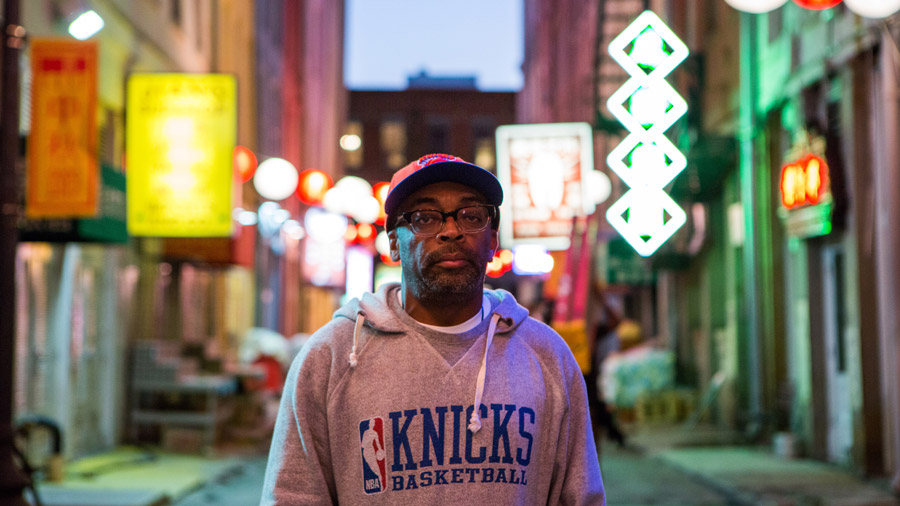
Spike Lee will direct a Spider-Man spin-off: Sony’s next big superhero movie, following the Spider-Verse spin-offs Venom and Silver & Black, will be Nightwatch, based on the African-American Marvel Comics character. And they’ve got Spike Lee at the helm. Read more here.

SURPRISING NEWS

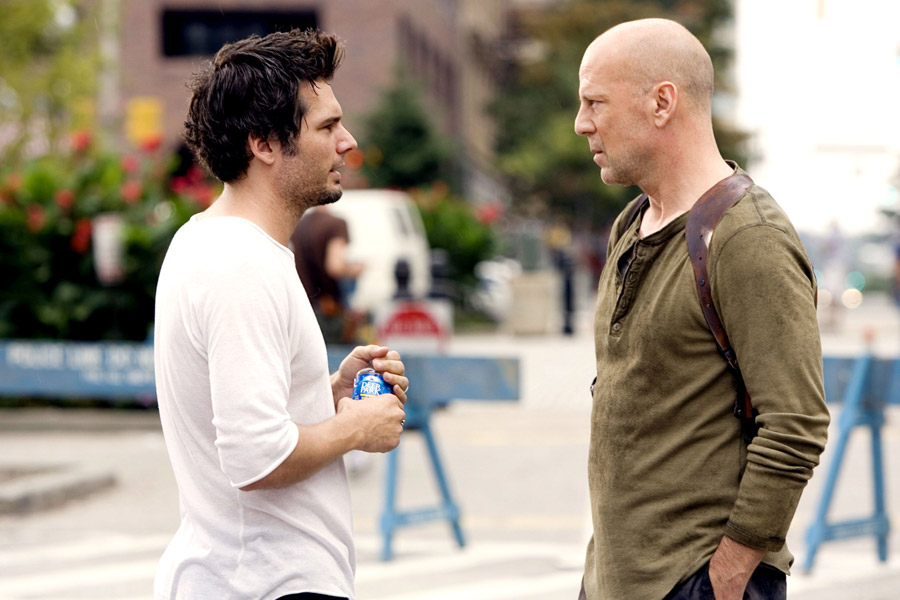
Die Hard 6 moves forward with The Conjuring writers: In case you’ve forgotten, we’re getting another Die Hard movie, this one with a prequel element showcasing young John McClane. And it’s now being scripted by the duo behind the Conjuring horror series. Read more here.

EXCLUSIVE BUZZ

Secrets of Avengers: Infinity War: We visited the set of Avengers: Infinity War last year and learned a lot of secrets about the upcoming Marvel movie from directors Joe and Anthony Russo. Read the whole itemized report here and find more coverage from the set here and here and here.

COOL CULTURE

Ready Player One music video: Not only did Steven Spielberg’s Ready Player One premiere at SXSW this week to positive buzz, but Gunship released a cool pop-culture-filled music video for their soundtrack tune “Art3mis & Parzival,” featuring animated video game-style scenes inspired by the movie. Watch it below.

[embedded content]

MUST-WATCH TRAILERS

Fantastic Beasts: The Crimes of Grindelwald introduces young Dumbledore: Warner Bros. shared the first teaser trailer for the second installment of the Harry Potter prequel series Fantastic Beasts and with it our first look at Jude Law as young Dumbledore. Watch it below.

[embedded content]

Avengers: Infinity War teases the end of the MCU as we know it: Marvel unleashed a second trailer for Avengers: Infinity War and it looks absolutely massive and franchise-changing but also slips in some amusing moments. Watch it here:

[embedded content]

Sorry to Bother You startles with fantastic originality: Sundance hit Sorry to Bother You dropped its first trailer, which features Lakeith Stanfield as a telemarketer who finds success by compromising his own voice. Watch it below.

[embedded content]

Adrift steers a tale of survival: We premiered the first trailer for the true sailing survival tale Adrift starring Shailene Woodley and Sam Claflin as a couple caught in the worst storm in recorded history. Watch it below.

[embedded content]

and

Let’s block ads! (Why?)


No Image

UMBC's Retrievers Put Virginia In A Hole, Then Buried Every Single Bracket

Jairus Lyles, left, and teammate Jourdan Grant of the UMBC Retrievers react Friday night to their 74-54 victory over the Virginia Cavaliers in Charlotte, N.C.

Streeter Lecka/Getty Images

hide caption

toggle caption

Streeter Lecka/Getty Images

The NCAA men’s basketball tournament has included 64 teams every year since 1985, split into four quadrants and seeded 1-16. In all those years — in 135 tries — no 16 seed had ever beaten a top-seeded team.

Until the University of Maryland-Baltimore County beat the stuffing out of Virginia, the best team in the country, 74-54 on Friday night.

All of which is to say, if anyone claims they picked against Virginia in their tournament pool, you should feel comfortable not believing them.

The Retrievers — who made half their three-point shots against easily the best defensive team in the country — were led by 28 points from senior guard Jairus Lyles, and also presumably every four-leaf clover along the shoulders of I-95.

UMBC outscored Virginia 53-33 in the second half, and also outrebounded the Cavaliers despite giving up a lot of height.

Virginia entered today allowing 53.4 PPG.

It allowed 53 points in the 2nd half to UMBC. pic.twitter.com/8RW2cxuzei

— ESPN Stats & Info (@ESPNStatsInfo) March 17, 2018

University of Maryland-Baltimore County advances to play ninth-seeded Kansas State on Sunday.

The Virginia Cavaliers advance to wincing at trivia questions for the rest of their lives.

“I told our guys we had a historic season,” coach Tony Bennett said after the game. “And then we go and make history as the first top seed to lose.”

Let’s block ads! (Why?)


No Image

Landmark Report Concludes Abortion In U.S. Is Safe

A report from the National Academies of Sciences, Engineering, and Medicine says that abortion is safe but that “abortion specific regulations in many states create barriers to safe and effective care.”

Bryce Duffy/Getty Images

hide caption

toggle caption

Bryce Duffy/Getty Images

Abortions in the United States are safe and have few complications, according to a landmark new study by the National Academies of Sciences, Engineering and Medicine.

The report, called “The Safety and Quality of Abortion Care in the United States,” examined the four major methods used for abortions — medication, aspiration, dilation and evacuation, and induction — and examined women’s care from before they had the procedure through their follow-up care.

“I would say the main takeaway is that abortions that are provided in the United States are safe and effective,” says Ned Calonge, the co-chair of the committee that wrote the study. He is an associate professor of family medicine and epidemiology at the University of Colorado and CEO of The Colorado Trust.

Calonge says the researchers found that about 90 percent of all abortions happen in the first 12 weeks of pregnancy. And complications for all abortions are “rare,” the report says.

But the report did find that state laws and regulations can interfere with safe abortions.

“Abortion-specific regulations in many states create barriers to safe and effective care,” the report says.

Calonge says those rules often have no basis in medical research.

Analysis is limited to facilities that had caseloads of 400 abortions or more per year and those affiliated with Planned Parenthood that performed at least one abortion in the period of analysis.

Credit: National Academies of Sciences; Source: Bearak et al., 2017

hide caption

toggle caption

Credit: National Academies of Sciences; Source: Bearak et al., 2017

“There are some requirements that require clinicians to misinform women of the health risks, that say you have to inform a woman that an abortion will increase her risk of breast cancer,” he says.

There is no evidence that breast cancer follows abortion, for example, but five states require doctors to tell women there is a link, according to the Guttmacher Institute, a research group that focuses on reproductive and sexual health.

“There are policies that mandate clinically unnecessary services like pre-abortion ultrasounds, separate inpatient counseling. There are required waiting periods,” Calonge says.

According to Guttmacher, 27 states make women wait at least 24 hours for an abortion and 11 states require women to have an ultrasound before they can terminate their pregnancy.

And there are state laws that dictate who can perform abortions and where they can do them. Some require all abortions to happen in the equivalent of a hospital or surgery center. Others require a doctor to have admitting privileges at a nearby hospital.

The National Academies report says waiting periods and requirements for unnecessary tests can result in long delays because women may have to travel to get care and have trouble getting appointments.

“Delays put the patient at greater risk of an adverse event,” the report says.

Hal Lawrence, the CEO of the American College of Obstetricians and Gynecologists, says the report settles the debate over abortion-restricting laws and regulations.

“Those sorts of laws have been totally debunked,” he says.

He says the study shows most of those laws do nothing to improve women’s health.

“Abortion is safer when it’s performed earlier in gestation,” Lawrence says. “And so delaying and making people wait and go through hoops of unnecessary, extra procedures does not improve the safety. And actually by having them delay can actually worsen the safety.”

The U.S. Supreme Court in 2016 voided some state abortion laws when it ruled that Texas’ strict rules around abortion facilities impose an undue burden on women. But other laws remain in place even without any backing in medical research.

Still, Donna Harrison says there are good reasons for the requirements.

“The tendency to look at abortion as though it were not a serious medical procedure is irresponsible. I mean, we all know that the fetus is killed during an abortion but women can be harmed by irresponsible medical care,” says Harrison, the executive director of the American Association of Pro-Life Obstetricians and Gynecologists.

She says data on complications from abortion is incomplete because doctors and patients don’t always report it accurately, or at all.

There is no good data collection — and when you have garbage in, and you have garbage out,” she says.

And she says waiting periods are important so that women can give fully informed consent before they undergo what she says is a sometimes dangerous, surgical procedure.

The new report — which runs more than 200 pages — addresses most aspects of abortion care, including the use of the abortion pill mifepristone.

For example, it concludes that the strict requirements on how doctors can administer mifepristone may need review. The researchers say the rules may be erecting unnecessary barriers.

The report also says nurse practitioners and physician assistants can perform abortions just as safely as physicians.

Also, abortions have no long-term consequences on women’s physical and mental health, the report says.

Let’s block ads! (Why?)