Articles by admin

No Image

Saturday Sports: Washington Capitals, NBA Conference Finals

Scott Simon checks in with ESPN senior writer Howard Bryant on the week in sports.


SCOTT SIMON, HOST:

And it’s time for sports.

(SOUNDBITE OF MUSIC)

SIMON: Tampa Bay Lightning didn’t quite (imitating spark) spark last night, beaten by the Washington Capitals 4 to 2. And some familiar names in the final four as the NBA begins conference finals tomorrow. Let’s bring in Howard Bryant, author of the book “The Heritage.” Howard, thanks so much for being with us.

HOWARD BRYANT: Good morning, Scott. How are you?

SIMON: Fine, thank you. The Caps are in their first conference finals in 20 years. They finally got past the Pens, didn’t they?

BRYANT: It’s about time. And it’s been a battle that they have been fighting and losing for several years, especially because you’ve got this great battle between two of the very best players of this era, maybe the two best players of this era, Sidney Crosby and Alexander Ovechkin. And we always say about sports, sports – for the most part, it is a best-player-wins game. And obviously that’s very true in basketball. But it’s also true in every sport. So to have a guy like Alexander Ovechkin, to have Ovechkin have never been to a Stanley Cup, this is special. And he’s got an opportunity now to do something he hasn’t done. That fanbase has been starving and waiting for a long time. This is a huge moment, although Tampa Bay is very, very good.

SIMON: And later today, the Winnipeg Jets and the Las Vegas Golden Knights.

BRYANT: (Laughter) Who? Yeah.

SIMON: Yeah. Two good stories there.

BRYANT: Well, exactly. And Winnipeg has never been as well – wonderful team. And they’ve got guys – you know, Paul Stastny. They’ve got Dustin Byfuglien. Byfuglien of course won a Stanley Cup with your Chicago Blackhawks. And then of course you’ve got the – you’ve got the expansion – the expansion Las Vegas Golden Knights because they changed the rules so expansion teams aren’t going to sit and lose for years and years.

But these guys have a chance to go to the Stanley Cup in their first year, which is incredible. But they’ve also got Marc-Andre Fleury, who as we know was a guy who won Stanley Cups with Pittsburgh. So it’s not as though these are players that no one’s ever heard of. These are big guys on big stages with teams that haven’t been there.

SIMON: Cross over to basketball now. LeBron’s – and they are LeBron’s – Cavs meet Brad Stevens’ Celtics Sunday afternoon in Boston. One team with the greatest player in the game and four other guys, the other playing without its two biggest stars. How do you see this series?

BRYANT: After a while, I think you just have to stop betting against the Boston Celtics just as you have to stop betting against LeBron James. I think that people looked at this team this year and saw Cleveland – not a very good team. They traded – the big deal in the in the off-season was getting Isaiah Thomas and getting Jae Crowder and getting those players from the Celtics in exchange for Kyrie Irving. Then they traded those guys. And so Jae Crowder ended up on the Jazz, and Isaiah Thomas ended up on the Lakers. And yet Cleveland’s here again because of the greatness of LeBron James. He’s that good.

And then of course the Boston Celtics aren’t supposed to be here because they didn’t have Gordon Hayward. They lost him on opening night. And then you lose Kyrie Irving. And here they are. And they destroyed Philadelphia. Boston is a really, really tough team. And are we really going to bed at this stage against LeBron James going to the finals for the eighth straight year? It’s incredible.

SIMON: And then Golden State Warriors and the Rockets on Monday night. This is the matchup a lot of fans have been saying all year should really be the championship. What do you look for?

BRYANT: Oh, absolutely. This is what these – these two teams have been geared for each other. They were – the Houston Rockets were built for this. You have Chris Paul, who had never been to a conference final. Now he’s going up against a team that has tortured his old team, the Los Angeles Clippers. Wonderful matchup. These are the two best teams in the NBA. This is what everybody wants. And I’m looking forward to this series so well because as we’ve been talking about on this show for – how long, Scott? – do you see anybody beating the Golden State Warriors four times? Nobody saw it when Cleveland did it.

SIMON: Yep.

BRYANT: I don’t see it happening here. But I think this is going to be a fantastic series, one of – maybe one of the best.

SIMON: Howard Bryant of espn.com and ESPN The Magazine – thanks so much, Howard.

BRYANT: Thank you.

Copyright © 2018 NPR. All rights reserved. Visit our website terms of use and permissions pages at www.npr.org for further information.

NPR transcripts are created on a rush deadline by Verb8tm, Inc., an NPR contractor, and produced using a proprietary transcription process developed with NPR. This text may not be in its final form and may be updated or revised in the future. Accuracy and availability may vary. The authoritative record of NPR’s programming is the audio record.

Let’s block ads! (Why?)


No Image

The $1 Fentanyl Drug Test

Public health experts are encouraging drug users to test their drugs for fentanyl with a $1 strip. NPR’s Scott Simon talks to Traci Green of Brown University about the technology.


SCOTT SIMON, HOST:

Fentanyl is a synthetic opioid that can be a hundred times more powerful than morphine. Dealers mix it with drugs like cocaine and heroin to boost its strength, and that has led to a sharp increase in overdose deaths. Users typically don’t know whether their drugs are laced with fentanyl until it’s too late. That’s why some public health experts want users to test their drugs with a $1 strip.

Traci Green of Brown University’s School of Medicine is one of the lead investigators of a study about drug testing technologies. She joins us now from Providence, R.I. Thanks so much for being with us.

TRACI GREEN: You’re very welcome. Thanks.

SIMON: How do these $1 test strips work?

GREEN: They function much like a pregnancy test, where you expose some small amount of drug, perhaps even something left over in a bag, with a little bit of water, and you find out pretty quickly whether that drug had fentanyl in it or not.

SIMON: And the outcome makes a difference to the people who test it?

GREEN: It does. Knowing that fentanyl is in the drug that someone’s about to use can help them decide when, where, how and even if they use that drug. So this is a way that people can start to prepare for that possible overdose that might happen.

SIMON: I’m sure you anticipate questions like this, are you just making it easier for people to use drugs which are harmful enough without fentanyl?

GREEN: There is always concern that use begets use. The challenge is that opioid addiction is an overwhelming disease and a condition that is totally treatable but can be really hard to find that connection to care. This doesn’t perpetuate use. It actually brings people in and closer, and that’s what we’ve seen with syringe exchange, condom distribution and other means of connecting with people who are at high risk.

SIMON: I’m afraid I have to ask, because I don’t have to tell you, there are so many ideas that have been proposed in recent years to try and affect the opioid epidemic. And, well, let’s put it this way. Far as I know, so many of them fall short. Can you think of an instance where someone who used a test strip is now in the process of getting off opioids successfully?

GREEN: We don’t have a lot of time with these trips just yet in the field, but we have enormous promise and a lot of parallels, for instance, with HIV testing and counseling – opportunities where people who are at high risk of having a disease, and when they learn even the process of going through the testing experience, whether that’s a positive or a negative result, talking with a counselor, talking with someone in a trusted environment has resulted in changes in risk behavior, and it may introduce opportunities for starting drug treatments.

I think some of the research that we’ve done has really shown that people see it as something that should be offered as part of a comprehensive array of services. And the way we convey it can allow us to bring people in further into treatment and further into the kind of services that can help change the tide in this epidemic.

SIMON: Traci Green of Brown University School of Medicine, thanks so much for being with us.

GREEN: You’re very welcome.

(SOUNDBITE OF MUSIC)

Copyright © 2018 NPR. All rights reserved. Visit our website terms of use and permissions pages at www.npr.org for further information.

NPR transcripts are created on a rush deadline by Verb8tm, Inc., an NPR contractor, and produced using a proprietary transcription process developed with NPR. This text may not be in its final form and may be updated or revised in the future. Accuracy and availability may vary. The authoritative record of NPR’s programming is the audio record.

Let’s block ads! (Why?)


No Image

The Week in Movie News: Bill & Ted's Excellent Update, 'Captain Marvel' Adds More Prestige Talent and More

Bill & Ted's Excellent Adventure

Need a quick recap on the past week in movie news? Here are the highlights:

BIG NEWS

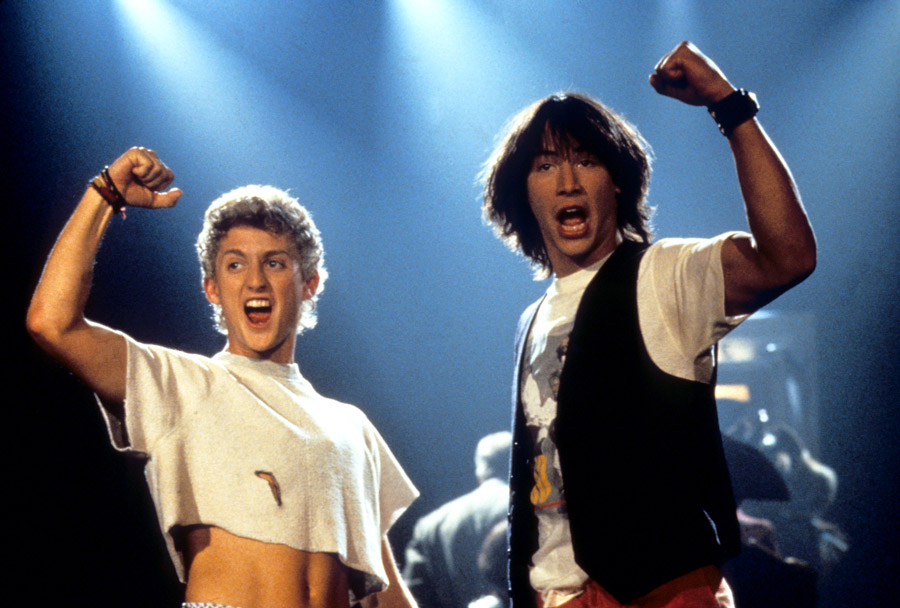
Bill & Ted Face the Music is finally happening: After many years of rumors and developments without guarantee, the third Bill & Ted movie is officially happening with Keanu Reeves and Alex Winter returning to their iconic roles. Read more here and find good news on other long-uncertain projects Rambo V, Sherlock Holmes 3 and Bad Boys for Life& respectively here, here and here.

Lincoln

GREAT NEWS

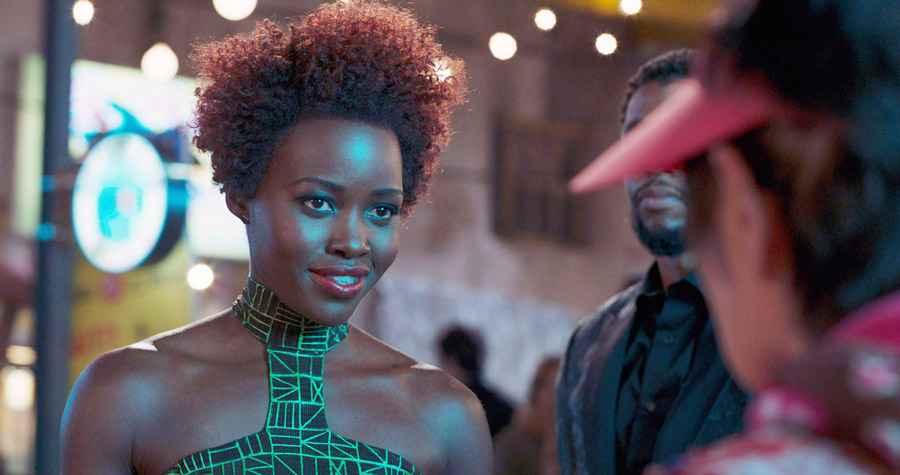
Lupita Nyong’o will star in Jordan Peele’s next movie: Us, Jordan Peele’s follow-up to Get Out, is one of the most anticipated movies in the works right now, and even more exciting is the news that the thriller will star fellow Oscar winner Lupita Nyong’o. Read more here.

Lincoln

SURPRISING NEWS

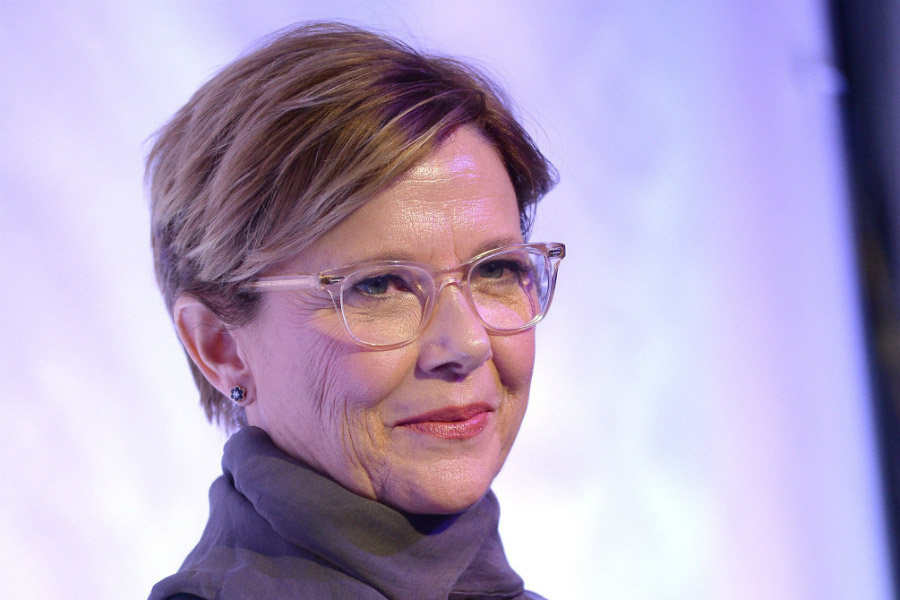
Annette Bening joined the cast of Captain Marvel: As if we needed another reason to look forward to Captain Marvel, which seemed fully cast already, the MCU installment will now feature multi-Oscar-nominee Annette Bening in an undisclosed role. Read more here.

Lincoln

EXCLUSIVE BUZZ

Brad Bird on the potential for more Incredibles: We talked to Incredibles 2 director Brad Bird about the new Pixar sequel, the possibility of more installments and whether he’s ever going to make a Star Wars movie. Read the whole interview here.

COOL CULTURE

Donald Glover Spoofs Star Wars: While we wait to see his franchise debut as Lando Calrissian in Solo: A Star Wars Story, Donald Glover took his hosting gig on Saturday Night Live as an opportunity to parody the general lack of black characters in the Star Wars Galaxy. Watch the sketch:

[embedded content]

MUST-WATCH TRAILERS

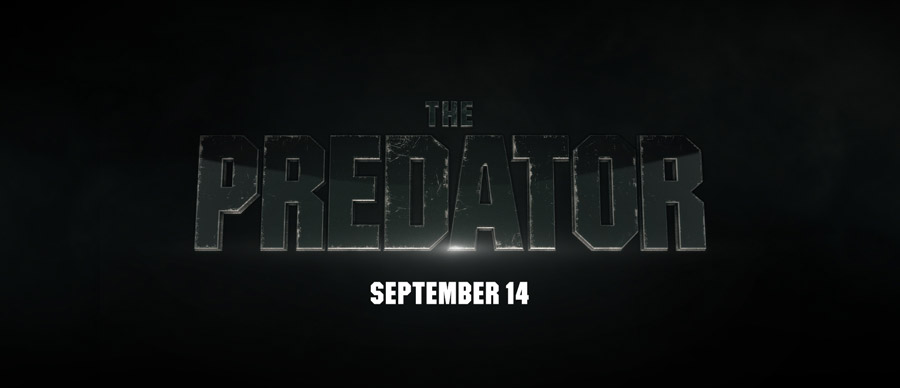
The Predator teases a new setting for the franchise: The first trailer for Shane Black’s The Predator follows our favorite alien hunters as they land in the ‘burbs thanks to the curiosity of a precocious kid, and slaughter ensues. Watch it below.

[embedded content]

Mamma Mia! Here We Go Again hooks us again: The final trailer for the musical sequel Mamma Mia! Here We Go Again looks absolutely charming and magical and we’re definitely still on board. Watch it below.

[embedded content]

Searching showcases an innovative indie: The first trailer for Searching, one of the most talkead about movies at Sundance this year, arrived with a look at the clever thriller, which plays out completely on John Cho’s computer screen. Watch it here:

[embedded content]

and

Let’s block ads! (Why?)


No Image

Episode 841: The Land Of Duty Free

A good haul.

Sergei Bobylev/Sergei Bobylev/TASS

In the 1940s, if you were flying from New York City to London or Paris you would find yourself making a pit stop for fuel on the western coast of Ireland. The Shannon airport at the time wasn’t much to look at, but the passengers arriving there were movie stars and celebrities, basically the super rich. And the people of Shannon realized pretty quickly that they needed to upgrade the local amenities for their wealthy clientele. They hired a man named Brendan O’Regan to make it happen.

Being the quick-thinking entrepreneur that he was, O’Regan convinced the Irish government to create a tax loophole. And thus, duty free stores were born. Today on the show, we follow the surprising origin of duty free, and try to answer the question: Are they really saving you any money?

Music: “Chu Chu” and “Lady Surfing.”

Find us: Twitter / Facebook / Instagram

Subscribe to our show on Apple Podcasts, PocketCasts and NPR One.

Let’s block ads! (Why?)


No Image

Trump Drug Pricing 'Blueprint' Could Take Years To Build

In a speech Friday, President Trump announced a plan that lists dozens of “potential” steps his team may take to lower drug prices, along with many others that were included in his budget proposal and will require congressional action.

Chip Somodevilla/Getty Images


hide caption

toggle caption

Chip Somodevilla/Getty Images

President Trump presented a broad-brush outline of how his administration hopes to stem the decades-long increase in prescription drug prices and spending, in a speech Friday in the Rose Garden of the White House.

The administration also released a 39-page document describing a variety of proposals it is either considering or studying in an effort to lower costs to individuals, corporations, the government and the economy as a whole.

There were few concrete actions taken today. The plan mostly lists dozens of “potential” steps the administration may take, along with many others that were included in the president’s budget proposal and will require congressional action. Several options are “requests for information.”

Nevertheless, the president characterized the proposal as “the most sweeping action in history to lower the price of prescription drugs for the American people.”

“We will have tougher negotiations, more competition and much lower prices at the pharmacy counter and it will start to take effect very soon,” Trump said.

The president was accompanied by Health and Human Services Secretary Alex Azar, who played a major role in developing the plan.

Trump said he wants to eliminate “middlemen” in the drug industry — which includes pharmacy benefit managers and wholesalers — and he criticized industry lobbyists for making a fortune at the expense of taxpayers and patients.

U.S. patients spent nearly $329 billion on prescription drugs in 2016, according to the National Health Expenditures Survey. That’s an increase of about $100 billion in the past 10 years.

Many researchers say the biggest reason behind the rising spending is high prices for prescription drugs. Often, companies are rewarded for setting a high retail price because insurers negotiate discounts off that initial price.

The blueprint released Friday reiterates proposals that were included in the White House budget proposal. Those include allowing Medicare’s prescription drug plans to slim down the number of drugs they pay for to spark price competition among pharmaceutical companies, and capping how much money Medicare patients themselves can spend on drugs each year.

“On the positive side, I will say that HHS does seem to be paying close attention to this issue, given all the issues they bring up in the blueprint document,” says Walid Gellad, director of the Center for Pharmaceutical Policy and Prescribing at the University of Pittsburgh.

“On the negative side, it’s a bunch of questions, not a specific plan for how to proceed.”

Azar, in a briefing following the Rose Garden speech, acknowledged the plan is sweeping and would take years to implement. He said the administration will pursue those ideas it can get done.

“This is a major restructuring of a huge portion of the U.S. economy. One doesn’t do that lightly,” he said.

The plan, like the budget, also proposes limiting price increases Medicare would pay to the rate of inflation and changing some rules around generic drug approvals to prevent companies from blocking new generic competition.

Many of those ideas would require legislation and congressional approval.

Azar, in his briefing, emphasized his desire to change the way pharmacy benefit managers operate — specifically a system where they negotiate rebates off high drug prices.

“We are calling into question today the entire structure of using rebates in the pharmacy channel,” he said.

The president also wants to take steps to ensure foreign governments don’t get lower prices for drugs than do U.S. taxpayers – which he referred to as “global freeloading.”

“It’s unfair, it’s ridiculous, and it’s not going to happen any longer,” he said.

Critics say that proposal is unlikely to help lower prices here in the U.S.

“Lifesaving medicines aren’t more expensive here because they cost less elsewhere,” Jason Cone, executive director of Doctors Without Borders USA, wrote in an article published in The Hill. “They’re priced out of reach everywhere because pharmaceutical corporations are charging exorbitant prices simply because they can—and the U.S. government lets them.”

One thing Trump did not propose was allowing Medicare, the government health care program for the elderly, to directly negotiate lower drug prices for its beneficiaries. That’s a change from his rhetoric during his campaign and transition.

“We’re the largest buyer of drugs in the world and yet we don’t bid properly,” he said at a news conference in early January 2017. “We’re going to start bidding and we’re going to save billions of dollars over a period of time.”

But shortly after Trump moved into the Oval Office he wavered on that commitment, first saying that he didn’t want Medicare to engage in what he called “price fixing” and then, through his former spokesman Sean Spicer, saying once again he favored allowing the federal government program to deal with drugmakers to get lower prices.

Medicare accounts for about one-third of U.S. prescription drug spending. Current U.S. law prohibits Medicare officials from interfering in the negotiations between drugmakers and the insurance companies that administer Medicare’s prescription drug plans.

The only government report that looks at the issue is a 2007 Congressional Budget Office study that concluded it would have a “negligible effect” on prices.

But Gellad says that report was limited, because it looked only at the effect if Medicare were not allowed to exclude drugs from its coverage list.

“There is no evidence that allowing Medicare to negotiate doesn’t help,” says Gellad. “In fact, the CBO said that in certain circumstances, with the right formulary, this type of negotiation could help.”

Let’s block ads! (Why?)


No Image

There's No Surprise In The NBA Final Teams, But There's Still Lots Of Excitement

The NBA is down to its final four teams in the quest for the next champion. There are no surprises, but basketball fans are giddy with excitement about the players and the coaches about to compete for a title.


AUDIE CORNISH, HOST:

Only four teams remain in the NBA playoffs – Golden State, Houston, Boston and Cleveland. And that’s just what fans expected – so no surprises. But plenty of people are excited for the NBA Conference Finals. NPR sports correspondent Tom Goldman joins me now. And, Tom, I won’t hear from my dad until these are over. Are you excited as well?

TOM GOLDMAN, BYLINE: (Laughing) As excited as your dad I think, maybe even more so. These teams are playing so well, Audie. And there are such dynamic players in dramatic storylines. Yes, there is a bit of the usual-suspects feel with these four teams, but we should be seeing some great, hotly contested basketball. And that’s what matters, right?

CORNISH: Pretty much.

GOLDMAN: Yeah.

CORNISH: I want to talk about the Western Conference, something which – unfortunate – you have, like, two of the biggest teams – right? – facing off with each other…

GOLDMAN: Right.

CORNISH: …The Golden State Warriors and Houston Rockets. The Warriors have won 2 out of the last 3 titles, including last year. But a lot of fans think that they’ll be dethroned this time around. How come?

GOLDMAN: Houston’s the No. 1 seed by virtue of the best record in the NBA this season. The explosive guard tandem of James Harden and newcomer Chris Paul has worked brilliantly despite doubts before the season. And Houston has the home-court advantage. And that means the uber-powerful Warriors start the series with two road games. Golden State obviously is good enough to win anywhere. But if the series does go the distance to Game 7 in Houston, that’s where home court could be very valuable.

CORNISH: Does any of this have an effect on the scoring? I mean, these are two high-scoring teams typically.

GOLDMAN: Oh, the two best offensive teams in the NBA – we’re going to see lots of scoring with two distinct styles. If you distill their offensive philosophies down to a word, Golden State would be movement – Houston, space. The Warriors are constantly moving, cutting, always looking to find the best shot even if that means it’s Steph Curry 40 feet from the basket. The Rockets emphasize spacing the floor, putting two or three players out wide beyond the three-point line. Now, this gives more room to operate for those two guys I mentioned, James Harden and Chris Paul. Ball and player movement aren’t as big a deal with Houston. The Rockets want to shoot a ton of three-pointers or get layups but not much in between.

CORNISH: All right, I want to tackle the East side now…

GOLDMAN: Yeah.

CORNISH: …My home town up against Cleveland, second straight year they’re going to meet up. But I gather it’s like an uphill battle basically. This has been a long season.

GOLDMAN: Absolutely. I love your home town. Boston got to the conference final without its two best players, Gordon Hayward and Kyrie Irving out with injuries. But Boston has shown itself to be incredibly tough and resilient like you, Audie Cornish.

CORNISH: I’ll take it (laughter).

GOLDMAN: Very young players have played like veterans. Role-players have stepped up and played much bigger roles, all of this orchestrated by a very talented young coach, Brad Stevens, whose reputation grows with each game. But Cleveland, after suffering from injuries and a roster makeover in February – you wouldn’t know that now. We’re running out of ways to describe LeBron James’ greatness. He’s playing his best basketball at 33. And very important here – he’s finally getting the help from teammates that was often missing this season.

CORNISH: That’s NPR sports correspondent Tom Goldman. Tom, thanks so much.

GOLDMAN: You’re welcome, Audie.

Copyright © 2018 NPR. All rights reserved. Visit our website terms of use and permissions pages at www.npr.org for further information.

NPR transcripts are created on a rush deadline by Verb8tm, Inc., an NPR contractor, and produced using a proprietary transcription process developed with NPR. This text may not be in its final form and may be updated or revised in the future. Accuracy and availability may vary. The authoritative record of NPR’s programming is the audio record.

Let’s block ads! (Why?)


No Image

New Music Friday: May 11

Pop juggernaut Charlie Puth’s Voicenotes is one of our picks for the essential albums coming out May 11.

Benjamin Lennox/Courtesy of the artist


hide caption

toggle caption

Benjamin Lennox/Courtesy of the artist

All Songs Considered’s Robin Hilton takes a quick run through May 11’s essential album releases with NPR Music’s Felix Contreras, Jewly Hight, Tom Huizenga, Lyndsey McKenna and Stephen Thompson. Featured albums include the irresistible pop of Charlie Puth, classical pianist Simone Dinnerstein, early folk recordings from The Grateful Dead’s Jerry Garcia, infectious guitar rock from Illuminati Hotties and more.

Featured Albums

1. Charlie Puth: Voicenotes
2. Jerry Garcia: Before The Dead
3. Brent Cobb: Providence Canyon
4. Simone Dinnerstein: Circles
5. Illuminati Hotties: Kiss Yr Frenemies
6. Los Texmaniacs: Cruzando Borderes
7. Arctic Monkeys: Tranquility Base Hotel & Casino

Other Notable Releases For May 11

Marian Hill: Unusual; Mark Kozelek: Mark Kozelek; Beach House: 7; Ry Cooder: The Prodigal Son; The Sea And Cake: Any Day; Ski Mask The Slump God: Beware The Book Of Eli; Ashley Campbell: The Lonely One

[embedded content]

Let’s block ads! (Why?)


No Image

Today in Movie Culture: How 'It' Should Have Ended, the Science of Thor's New 'Infinity War' Weapon and More

Here are a bunch of little bites to satisfy your hunger for movie culture:

Alternate Ending of the Day:

The kids from It get some help from Batman and the Ghostbusters in this funny animated look at how the Stephen King adaptation should have ended:

[embedded content]

Alternate Posters of the Day:

Designer Eileen Steinbach’s latest tribute posters offer beautiful alternatives for A Quiet Place, Under the Silver Lake, Lean on Pete and L.A. Confidential:

April/May have been good to me creatively. #tributeart pic.twitter.com/Cgn69VaBT7

— SG Posters (@SG_Posters) May 9, 2018

Movie Science of the Day:

In the latest Because Science, Kyle Hill examines the science behind the forging of Thor’s new Stormbreaker weapon in Avengers: Infinity War:

[embedded content]

Director Commentary of the Day:

For Vanity Fair, filmmaker Ben Falcone is joined by his wife and star for a discussion of a scene from their new movie Life of the Party:

[embedded content]

Vintage Image of the Day:

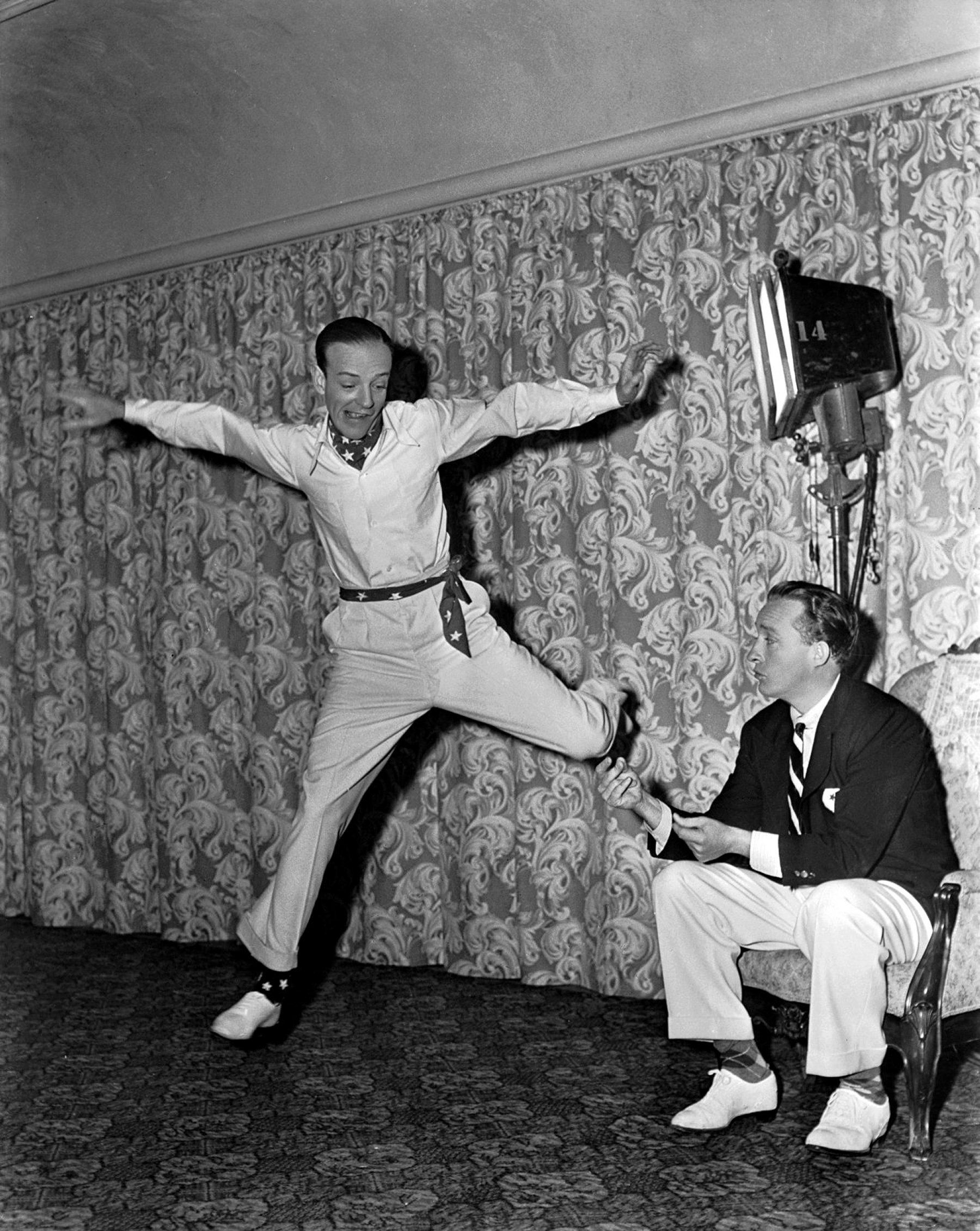
Fred Astaire, who was born on this day in 1899, shows co-star Bing Crosby his moves on the set of their 1942 classic Holiday Inn:

Filmmaker in Focus:

Editor Isaac Rivadulla highlights the faces of the movies of Xavier Dolan, who earns our empathy through their expressions:

[embedded content]

Movie Comparison of the Day:

Dimitreze compares scenes from the biopic I Saw the Light with the footage of the real Hank Williams side by side:

[embedded content]

Fan Build of the Day:

Wired presents a look at an awesome lifesize replica build of the cockpit of the Millennium Falcon:

[embedded content]

Fan Art of the Day:

Artist Lucas Bischoff imagines Star Wars villains as if they were monsters with faces shaped in the form of their helmets. See the Stormtrooper below and click through for Darth Vader and Boba Fett.

Vader, Stormtrooper And Boba Fett Helmets Reimagined As Monster’s Heads https://t.co/leu8MqIC81 pic.twitter.com/uxE8W3IV8y

— Geekologie (@geekologie) May 10, 2018

Classic Trailer of the Day:

This weekend is the 80th anniversary of the release of The Adventures of Robin Hood. Watch an old re-release trailer for the classic adventure film below.

[embedded content]

and

Let’s block ads! (Why?)


No Image

Why A Scramble To Top Search Results Ends With Random Packages On Doorsteps

Strange unordered packages are showing up on doorsteps across the country. Often, they are the byproduct of an e-commerce scheme to influence search results rankings.


MARY LOUISE KELLY, HOST:

People across the country are finding packages they haven’t ordered inside their mailboxes. Nick Fountain from our Planet Money podcast investigates.

NICK FOUNTAIN, BYLINE: When did you first get a weird package?

CELINA SALAS: About three years ago.

FOUNTAIN: This is Celina Salas – Chicago resident, retail worker and strange package recipient. The first thing she noticed about the package was that the shipping label was written in Chinese. Like, the box had come all the way from China, which wasn’t that weird. She had ordered stuff from China before.

SALAS: So I open the box, and it’s just this watch wrapped in some plastic.

FOUNTAIN: A watch that she hadn’t ordered, but it was addressed to her – weird.

SALAS: Maybe my mom sent me this as a joke to, like – time to grow up. Get a watch.

FOUNTAIN: She checked. It wasn’t her mom, and that was just the start of the strange deliveries. A few months later, another package.

SALAS: And inside is, like, a braided friendship bracelet.

FOUNTAIN: Like you would do in first grade or…

SALAS: Yes.

FOUNTAIN: …Something like that?

SALAS: Yep.

FOUNTAIN: She got a package with a little ring, a headphone case with no headphones, a fluffy key chain, a piggy bank and some Silly Putty.

SALAS: Oh, there was Silly Putty. I completely forgot about that. When did that come? That came after the piggy bank.

FOUNTAIN: Salas isn’t the only person getting a bunch of random packages. This is happening all over the country – all over the world. And Salas has a lot of questions.

SALAS: Who, when, where, why? Why me? Why these things? Who are you, and where is it coming from?

FOUNTAIN: Hey, Mark. Are you in the office right now?

MARK NATKIN: I am.

FOUNTAIN: Looking for some answers, I called up Mark Natkin. He’s an investment adviser in Beijing, and I told him all about the strange packages full of random junk showing up on people’s doorsteps.

What does that sound like?

NATKIN: (Laughter) I mean, it sounds like, you know, somebody who’s gaming a system.

FOUNTAIN: Natkin says there’s a war going on out there on e-commerce sites to be at the top of the search results.

NATKIN: If your company is showing up on page 20, you might as well not be showing up at all.

FOUNTAIN: There are a few ways to up your ranking, but one way to do it – and this is what Natkin thinks might be happening here – is when vendors fake entire transactions. Natkin says in China, there’s even a word for this. It’s called brushing.

Do you think if we tried to talk to brushers, they would talk to us?

NATKIN: (Laughter) I mean, I guess I suspect it’d be difficult.

FOUNTAIN: Fair enough.

We knew that it would be a long shot to find a brusher, but we asked our Beijing bureau to take a look into it. And just a few days later…

MA HA QIAN: Hello, can you hear me?

FOUNTAIN: Yeah. Is this Qian?

QIAN: Yes.

FOUNTAIN: This is Ma Ha Qian – goes by Qian for short. She lives near Shanghai and works in tech. But in her free time, she’s a brusher.

What sort of items have you bought and given reviews for?

QIAN: (Through interpreter) Mostly clothing and shoes – sometimes cosmetics.

FOUNTAIN: Talking to Qian really opened up this crazy world. She does 10 or 15 of these a month, gets paid about a dollar per job. And the job is she’s supposed to buy a product, the sellers will reimburse her and sometimes she’s supposed to review it. But e-commerce sites are trying to crack down on this. They are looking out for fraudulent activity. So Qian tries to look like a regular shopper – like an indecisive shopper.

QIAN: (Through interpreter) I search the keyword and randomly click into several different links and scroll down the page, then go back, then click the right link.

FOUNTAIN: And then they ship something to her – not the thing she ordered. That would be a real purchase – something cheap and small because if the sellers don’t send it, it’s not a verified purchase. Qian can’t write a verified review. Sellers like this, who want to do business in the United States, have to get their packages overseas. And they might not have a partner here, so they might send stuff to unsuspecting recipients like Celina Salas. This is the world of e-commerce right now – a scramble to get to the top of the search results to get five-star ratings. And sometimes there is some sketchy stuff that goes down in that scramble – some sketchy stuff that means you might just come home to a random package on your doorstep. Nick Fountain, NPR News.

(SOUNDBITE OF WYNTON KELLY’S “PORTRAIT OF JENNY”)

Copyright © 2018 NPR. All rights reserved. Visit our website terms of use and permissions pages at www.npr.org for further information.

NPR transcripts are created on a rush deadline by Verb8tm, Inc., an NPR contractor, and produced using a proprietary transcription process developed with NPR. This text may not be in its final form and may be updated or revised in the future. Accuracy and availability may vary. The authoritative record of NPR’s programming is the audio record.

Let’s block ads! (Why?)


No Image

For Every Woman Who Dies In Childbirth In The U.S., 70 More Come Close

Alicia Nichols holds her daughter Diana in her home in February. After the birth of Diana, Nichols suffered unusual postpartum blood loss that she feels was not taken seriously by her doctor.

Kayana Szymczak for NPR


hide caption

toggle caption

Kayana Szymczak for NPR

Samantha Blackwell was working her way through a master’s degree at Cleveland State University when she found out she was pregnant.

“I was 25, in really good health. I had been an athlete all my life. I threw shot put for my college, so I was in my prime,” she says with a laugh.

Though it wasn’t planned, Blackwell’s pregnancy was embraced by her large and loving family and her boyfriend, who would soon become her husband. Her labor was quick, and she gave birth to a healthy baby boy.

Samantha Blackwell poses with her husband, DeVon, and their son, DeVon. Blackwell’s pregnancy went well, but just days after delivery, she was in a medically induced coma.

Courtesy of Samantha Blackwell


hide caption

toggle caption

Courtesy of Samantha Blackwell

Yet just days after she was discharged, Blackwell was back in the hospital, in a medically induced coma, fighting a runaway infection that left her hovering between life and death.

“It was like ‘I fell asleep at that hospital and woke up the next day’ kind of thing,” she says. She was in a coma for more than a month.

Blackwell’s story of reaching the brink of death is one that happens much too often, say researchers.

Over the past year, NPR and ProPublica have been investigating why American mothers die in childbirth at a far higher rate than in all other developed countries.

A mother giving birth in the U.S. is about three times as likely to die as a mother in Britain and Canada.

In the course of our reporting, another disturbing statistic emerged: For every American woman who dies from childbirth, 70 nearly die. That adds up to more than 50,000 women who suffer “severe maternal morbidity” from childbirth each year, according to the Centers for Disease Control and Prevention. A patient safety group, the Alliance for Innovation on Maternal Health, came up with an even higher figure. After conducting an in-depth study of devastating complications in hospitals in four states, it put the nationwide number at around 80,000.

“It’s referred to as the tip of the iceberg because for every woman we lose, there are lots of other women that we come very close to losing,” says obstetrician Peter Bernstein, the director of the Maternal-Fetal Medicine division at Montefiore Medical Center in New York.

But surviving can come with a cost.

“An experience that we would hope and expect would be natural, beautiful, uplifting, becomes one that’s terrifying,” Bernstein says. “Women can wind up losing their uterus and therefore becoming infertile. They can wind up with kidney problems. They can have heart attacks. They can have brain damage from all the blood that they’ve lost.”

[embedded content]

Every year, more than 50,000 women in the United States nearly die in childbirth. Here are three of their stories.


NPR
YouTube

Watch the video here.


And that is just a partial list of what can go wrong. Also on that list: Women develop pregnancy-induced high blood pressure known as pre-eclampsia, which can lead to a stroke and organ failure; parts of the placenta can be left behind, which can lead to infection; and a woman giving birth is more prone to blood clots that can be life-threatening.

The cost, though, is not just medical. The treatment for these complications can become an ongoing financial burden, and the trauma suffered from physical complications can lead to persistent emotional and psychological pain.

It is still rare for childbirth to involve truly severe complications, but in the U.S., say researchers, many of these worst-case scenarios need not have happened at all.

Samantha Blackwell doesn’t remember much about her ordeal. It began 11 days after giving birth, when she sat up in bed with a terrible pain. By the time she got to the emergency room, her medical records show, she was in septic shock from a massive infection. For weeks, her doctors couldn’t promise her family that she would live.

“They just knew that it was bad,” she says, “to a point of ‘expect the worst. We don’t know if she’s going to come out of this.’ “

When Blackwell did emerge from her coma, she discovered she had undergone an emergency hysterectomy, a last-ditch effort to stop the infection that had originated in her uterus.

Samantha Blackwell was in a coma for more than a month. During that time, she underwent an emergency hysterectomy to stop an infection that had originated in her uterus.

Courtesy of Samantha Blackwell


hide caption

toggle caption

Courtesy of Samantha Blackwell

“I don’t think I’m the type to overreact”

In the U.S., the rate of severe complications from childbirth has been rising faster than the rate of women who died. The rate of women nearly dying almost tripled between 1993 and 2014, according to the CDC. To help explain those dire statistics, experts point to risk factors that have increased in recent years: American women are giving birth at older ages and are more likely to have problematic conditions like obesity, high blood pressure and diabetes.

Early in our reporting, NPR and ProPublica launched an online call-out asking for stories of deaths and near deaths due to childbirth, and the tales of catastrophic complications and deaths poured in, ultimately more than 5,000 in all.

Alicia Nichols was among the thousands who wrote about their own experience. At 39, she and her husband had been trying hard to have a baby. She finally succeeded in getting pregnant through in vitro fertilization and gave birth in March 2017, just after she turned 40.

At her home outside of Boston, in a spacious, airy room strewn with baby toys, Nichols spoke of an easy pregnancy. It was how many stories we heard began. The birth, though, was different: a painful 42 hours of labor, until the baby’s “failure to descend” led to an emergency cesarean section.

Then, after healing well for four weeks, she was surprised to feel a gush of blood.

“I was rocking Diana in my rocking chair here in the living room, and when I stood up, blood [had] soaked through me onto the chair,” she says.

Her first reaction was to call an ambulance. “I don’t think I’m the type to overreact. It was just so foreign to me,” she says.

In the emergency room, the obstetrics resident who came over quickly chalked it up to natural postpartum bleeding, something that didn’t merit the ultrasound Nichols was requesting.

“I felt that she was just dismissing me, annoyed, a new mother being paranoid of some blood. I felt like she was not listening at all,” Nichols says.

Throughout our NPR/ProPublica investigation, we heard many variations on the perception by postpartum mothers that their physical concerns were not taken seriously. In Nichols’ case, she was familiar with a medical environment. She worked as an aesthetician and office administrator for a plastic surgeon in the same building as her obstetrician.

In the weeks following her first scare, her obstetrician assured Nichols — in both an office visit and on phone calls — that the episodes of bleeding were most likely the beginning of her menstrual period.

For her part, Nichols pointed out to her doctor that she had never experienced a period like that.

“I had no cramping,” she says. “It was just bright red blood. And, we all know, we’re women. I don’t want to be graphic, but we know it’s different.”

“Denial and delay”

A few months after giving birth, Alicia Nichols hemorrhaged and ultimately lost nearly half the blood in her body.

Kayana Szymczak for NPR


hide caption

toggle caption

Kayana Szymczak for NPR

It was before dawn two months after giving birth, that Nichols — up with baby Diana — had another episode of sudden bleeding.

By chance, her own doctor was on call that early morning and picked up the phone. She remembers him saying, “You’re going to be fine. Check back later in the day if this continues.”

Instead, she went to his office right after it opened.

“I got on the elevator, and the minute the elevator door opened, that’s when I began to hemorrhage,” she says.

The obstetrician immediately called an ambulance, but Nichols was already in the midst of a life-threatening emergency.

“I remember putting my hand down, and when I lifted up my hand, it was just, my whole left hand. I remember seeing my wedding ring, just blood. My left hand was soaked with blood,” she says.

According to her medical records, Nichols lost nearly half the blood in her body.

As a last resort — as in the case of Samantha Blackwell in Cleveland — Nichols’ doctors in Boston performed an emergency hysterectomy.

In an addendum attached to Nichols’ records 24 hours later, her obstetrician stuck with his original theory about her bouts of bleeding. He wrote “patient came to office with onset of first period that seemed heavier than average,” and she “suddenly hemorrhaged.”

Though NPR received written permission for Nichols’ obstetrician to share details of her case, he declined to be interviewed for this story.

But a pathology report included in her records found an entirely different cause for Nichols’ on-and-off bleeding. The pathologist’s diagnosis was placental site vessel subinvolution, or VSI.

That essentially means that the enlarged blood vessels in the lining of the uterus, which had sent nutrition and oxygen to the developing fetus, had failed to return to their pre-pregnancy state. They stayed enlarged and intermittently bled into Nichols’ uterus.

Though rare, VSI can be detected early with a scan and treated before leading to a life-threatening hemorrhage.

Obstetrician Elliott Main, a national leader in the movement to reform maternal health care, says that because most mothers do well during and after pregnancy, obstetricians and nurses strongly tend to expect the best and often are not prepared for the worst.

“That sets up the opportunity for what we call the twin demons of denial and delay. Denial that it’s actually something serious,” says Main, “leading to delay before you get the care that’s going to make the difference.”

Indeed, NPR and ProPublica found a medical system that bases care on the idea that it’s rare for a woman to die in childbirth. It’s a system in which funding and resources are dedicated mostly at saving babies.

The price tag of life-threatening complications

Severe complications due to childbirth are not common in the U.S., where nearly 4 million babies are born each year.

Yet bringing down the rate of these complications would not only spare tens of thousands of mothers from nearly dying, but it would also bring down the cost of health care, points out obstetrician Barbara Levy. She oversees health policy at the American College of Obstetricians and Gynecologists.

“Severe morbidity is expensive. ICU care is expensive. Transfusions are expensive. Dialysis is expensive,” she says. “We can actually save money by putting processes in place that reduce risk.”

The cost of Samantha Blackwell’s long hospital stay, rehabilitation and home care soared to nearly $540,000.

Because she was younger than 26, she was covered by her mother’s insurance, which paid for most of that.

Cynthia Murphy (left) took a two-month leave from work to stay with her daughter, Samantha Blackwell. “Samantha was my No. 1 priority,” Murphy says.

Courtesy of Samantha Blackwell


hide caption

toggle caption

Courtesy of Samantha Blackwell

But the experience was still financially devastating.

Blackwell couldn’t return to her job at Men’s Wearhouse for months. Her husband, DeVon, spent so much time at the hospital that he lost his job at a car dealership. And Samantha Blackwell’s mother never left her bedside. Cynthia Murphy is still thankful that the K-Mart distribution center where she worked gave her a two-month leave, even though it was unpaid.

“I would have moved from my house, lived on the street. I really would not have cared at that time,” Murphy says. “Samantha was my No. 1 priority.”

Alicia Nichols, whose hemorrhage led to an emergency hysterectomy, measures her financial burden by what she estimates it would take to have another baby via surrogate: at least $80,000.

No single study has tallied the total cost of America’s high rate of severe complications. But there are clues that it runs into the billions. A report in the American Journal of Obstetrics and Gynecology found the cost of caring for mothers suffering from pre-eclampsia is more than a billion dollars each year.

And the federal Agency for Healthcare Research and Quality put a dollar figure on the average cost of a hysterectomy related to childbirth complications: In 2014, it was more than $95,000.

“I was just a wreck”

And then, of course, there is the human cost.

“I have a lot of anger. I do. I know that my obstetrician feels terrible that things went this way, but it just makes me so angry,” says Alicia Nichols, “because I know I’m not the only one. There are so many women out there.”

In Nichols’ case, her troubles did not end with the massive hemorrhage. Just days later, while she and her baby were resting at her parents’ home in Cape Cod, Nichols began feeling dizzy.

And this time, at a local hospital, the doctor paid close attention to her complaint.

“He knew my history, and he said something’s not adding up,” she recalls.

The results of a test that helps identify the presence of blot clots worried this new doctor enough to call for a CT scan, which proved his suspicion.

Alicia Nichols, with daughter Diana, said her pulmonologist told her she is lucky to be alive after she suffered severe complications after childbirth.

Kayana Szymczak for NPR


hide caption

toggle caption

Kayana Szymczak for NPR

“He came back, and he’s like, ‘I’m sorry, you’re not going home, you have multiple pulmonary emboli in both your right and left branches,’ ” she says.

Nichols remembers her shock at looking at the scan: “It was like someone splattered paint into my lungs.”

Six days later, Nichols left the hospital with an anti-clotting drug, and a new fear: anticoagulants come with a risk of bleeding, leading her to imagine a nightmare scenario in which she hemorrhaged again.

“So I was just a wreck at that point,” says Nichols, who is now being treated for post-traumatic stress disorder.

“It’s funny, I remember speaking with the critical care pulmonologist, and I was sort of having a pity party and was just devastated,” she says. “I said I’m so unlucky. And he said, ‘No, you should go buy a lottery ticket, because you shouldn’t be alive right now.’ “

It is a common theme among the thousands of women we’ve heard from: Their trauma, both physical and emotional, is hard to shake and impossible to forget.

And that anxiety radiates out to the families who also survived a terrible time.

Two full years after Samantha Blackwell’s son was born, she spoke of how she is continually reminded of the high fever from the raging infection that nearly killed her. That reminder comes from her mother, who nearly lost a daughter.

“My mom, I make fun of her, because she checks my temperature with her hand,” says Blackwell. “Every time she hugs me goodbye, her hand is on my forehead.”

ProPublica’s Nina Martin and NPR’s Meg Anderson contributed to this report.

Let’s block ads! (Why?)