
What Does Trump's Proposal To Cut Planned Parenthood Funds Mean?

Planned Parenthood’s affiliated clinics, like this one in Chicago, provide wellness exams and comprehensive contraceptive services, as well as screenings for cancer and sexually transmitted diseases for both women and men.
Scott Olson/Getty Images
hide caption
toggle caption
Scott Olson/Getty Images
The planned revival of a policy dating to Ronald Reagan’s presidency that was slightly retooled and quietly submitted for federal budget review Friday may finally present a way for President Trump to fulfill his campaign promise to “defund” Planned Parenthood.
Or at least to evict it from the federal family planning program, where it provides care to more than 40 percent of that program’s 4 million patients.
Congress last year failed to wipe out funding for Planned Parenthood, because the bill faced overwhelming Democratic objections and would not have received the 60 votes needed to pass in the Senate. But Trump’s move Friday could potentially accomplish what Congress could not.
According to administration officials, the proposed rules they have submitted to the Office of Management and Budget would require facilities receiving federal family planning funds to be physically separate from those that perform abortion; would eliminate the requirement that women with unintended pregnancies be counseled on their full range of reproductive options; and would ban abortion referrals.
All those changes would particularly affect Planned Parenthood.
Planned Parenthood, which provides a broad array of reproductive health services to women and men, also provides abortion services using nonfederal funds. Cutting off funding has been the top priority for anti-abortion-rights groups, which supported candidate Trump.
“A win like this would immediately disentangle taxpayers from the abortion business and energize the grassroots as we head into the critical midterm elections,” Marjorie Dannenfelser, president of the Susan B. Anthony List, a group that opposes abortion, said in a written statement.
In a conference call with reporters, Planned Parenthood officials said they would fight the new rules.
“We’ve been very clear, Planned Parenthood has an unwavering commitment to ensuring everyone has access to the full range of reproductive health care, and that includes abortion,” said Dawn Laguens, executive vice president of the Planned Parenthood Federation of America.
Here is a guide to what the proposal could do and what it could mean for Planned Parenthood and the family planning program:
What is Title X?
The federal family planning program, known as “Title X,” is named for its section in the federal Public Health Service Act. It became law in 1970, three years before the Supreme Court legalized abortion in Roe v. Wade. The original bill was sponsored by then-Rep. George H.W. Bush, R-Texas, and signed into law by President Richard Nixon.
The program provides wellness exams and comprehensive contraceptive services, as well as screenings for cancer and sexually transmitted diseases for both women and men.
In 2016, the most recent year for which statistics have been published, Title X served 4 million patients at just under 4,000 sites.
Title X patients are overwhelmingly young, female and low-income. An estimated 11 percent of Title X patients in 2016 were male; two-thirds of patients were under age 30; and nearly two-thirds had income below the federal poverty line.
What is Planned Parenthood’s relationship to Title X and Medicaid?
Planned Parenthood’s affiliates account for about 13 percent of all Title X sites but serve an estimated 40 percent of its patients. Only about half of Planned Parenthood affiliates perform abortions, although the organization in its entirety is the nation’s leading abortion provider.
Planned Parenthood also gets much more federal funding for services provided to patients on the Medicaid program (although not for abortion) than it does through Title X. Eliminating Medicaid funding for Planned Parenthood has proved more difficult for lawmakers opposed to the organization because the federal Medicaid law includes the right for patients to select their providers. Changing that also would require a 60-vote majority in the Senate. So that particular line of funding likely is not at risk.
While opponents of federal funding for Planned Parenthood have said that other safety-net clinics could make up the difference if Planned Parenthood no longer participates in Title X, several studies have suggested that in many remote areas Planned Parenthood is the only provider of family planning services and the only provider that regularly stocks all methods of birth control.
Texas, Iowa and Missouri in recent years have stopped offering family planning services through a special Medicaid program to keep from funding Planned Parenthood. Texas is seeking a waiver from the Trump administration so that its program banning abortion providers could still receive federal funding. No decision has been made yet, federal officials say.
Why is Planned Parenthood’s involvement with Title X controversial?
Even though Planned Parenthood cannot use federal funding for abortions, opponents of abortion rights claim that federal funding is “fungible” and there is no way to ensure that some of the funding provided for other services does not cross-subsidize abortion services.
Planned Parenthood has also been a longtime public target for forces that oppose abortion rights because it is such a visible provider and vocal proponent of legal abortion services. In the early 1980s, the Reagan administration tried to separate the program from its federal funding by requiring parental permission for teens to obtain birth control.
That was followed by efforts to eliminate abortion counseling. Starting in 2011, in an effort to get the organization defunded, undercover groups accused the organization of ignoring sex traffickers and selling fetal body parts. Planned Parenthood denied the allegations, which were proved false in court.
What happened the last time an administration tried to move Planned Parenthood out of Title X?
In 1987, the Reagan administration proposed what came to be known as the “gag rule.” Though the Trump administration’s new proposal is not yet public, because the details are still under review by the federal Office of Management and Budget, the White House released a summary, saying the new rule will be similar although not identical to the Reagan-era proposal.
The original gag rule would have forbidden Title X providers to offer abortion counseling or refer patients for abortions. It would have required physical separation of Title X facilities from those that provide abortions and would have forbidden recipients to use nonfederal funds for lobbying, distributing information or in any way advocating or encouraging abortion. (The Planned Parenthood Federation of America, the umbrella group for local affiliates, has a separate political and advocacy arm, the Planned Parenthood Action Fund.)
Those rules were the subject of heated congressional debate through most of the George H.W. Bush administration and were upheld in a 5-4 Supreme Court ruling in 1991, Rust v. Sullivan. Even then, the gag rule did not go into effect because subsequent efforts to relax the rules somewhat to allow doctors (but not other health professionals) to counsel people about the availability of abortion created another round of legal fights.
Eventually the rule was in effect for only about a month before it was again blocked by a U.S. appeals court. President Bill Clinton canceled the rules by executive order on his second day in office, and no other president has tried to revive them until now.
How is the Trump administration’s proposal different from earlier rules?
According to the summary of the new proposal, released Friday, it will require physical separation of family planning facilities from those that provide abortions, will repeal current counseling requirements, and will ban abortion referrals.
One of the biggest differences, however, is that the new rules will not explicitly forbid abortion counseling by Title X providers.
But Planned Parenthood officials say that allowing counseling while banning referrals is a distinction without a difference.
“Blocking doctors from telling a patient where they can get safe and legal care in this country is the definition of a gag rule,” said Kashif Syed, a senior policy analyst for Planned Parenthood.
What happens next?
All proposed rules are reviewed by the OMB. Sometimes they emerge and are published in a few days; sometimes they are rewritten, and it takes months.
Meanwhile, Planned Parenthood officials say they will not know whether they will take legal action until they see the final language of the rule. But they say they do plan to use the regulatory process to fight the proposed changes that have been made public so far.
Kaiser Health News is a nonprofit news service and an editorially independent program of the Kaiser Family Foundation. It is not affiliated with Kaiser Permanente. KHN’s coverage of women’s health care issues is supported in part by The David and Lucile Packard Foundation.
Time Bandits

Time theft happens when companies get employees to work hours for which they are not paid. A new study from the University of Oregon says it’s happening more and more and workers are losing billions of dollars in wages every year.
This often happens through mandated breaks that workers can’t actually take or through timekeeping software that rounds to the nearest quarter hour.
Music: “Shifty Looking Characters”
Theme Music by Drop Electric.
Subscribe to our show on Apple Podcasts, PocketCasts and NPR One.
White House To Ban Federal Funds For Clinics That Discuss Abortion With Patients
Today in Movie Culture: How 'Black Panther' Should Have Ended, Dream Casting a Ms. Marvel Movie and More

Here are a bunch of little bites to satisfy your hunger for movie culture:
Alternate Endings of the Day:
See different ways Black Panther could have gone instead with this animated parody depicting how the movie should have ended:
[embedded content]
Dream Casting of the Day:
Kevin Feige has hinted about a Ms. Marvel movie, so BossLogic imagines Stranger Things‘ Linnea Berthelsen as Kamala Khan:
Today I had some fun creating Ms. Marvel (kamala khan) I spent a while looking for the perfect cast for her atm I have yet to find but I do love the look of @linnea_bert so I did a piece on her for some fun #msmarvel @Kevfeige @MarvelStudios pic.twitter.com/S00gHyz6AK
— BossLogic (@Bosslogic) May 17, 2018
Movie Food of the Day:
Get ready for the release of Deadpool 2 with Nerdist’s tutorial on how to make Deadpool-themed hot queso dip:
[embedded content]
Movie Science of the Day:
Speaking of Deadpool, Kyle Hill scientifically explains whether the Merc with a Mouth could really slice bullets with his blades:
[embedded content]
Franchise Recap of the Day:
Also for Deadpool 2, here’s the title character parodying the MCU by recapping the decade history of his movies:
[embedded content]
Vintage Image of the Day:
The late, great Bill Paxton, who was born on this day in 1955, with director Ron Howard and co-stars Tom Hanks and Kevin Bacon on the set of Apollo 13 in 1994:
Cinematographer Showcase of the Day:
For Fandor, David R.L. and Marta Fuenar celebrate the work of Oscar-nominated cinematographer Bradford Young (Arrival, Solo: A Star Wars Story) in this video essay:
Should cinematographers be given auteur status for creating the visual language behind a film? What would these films look like without the style and presence of Bradford Young behind the camera? pic.twitter.com/awaBCnRtKu
— Fandor ?? (@Fandor) May 17, 2018
Fan Theory of the Day:
That Film Theory tackles the idea that Quentin Tarantino’s Django Unchained is really just a metaphor for a dentist fighting sugar:
[embedded content]
Cosplay of the Day:
In honor of the latest adult Losers’ Club casting for It: Chapter Two this week, here’s some awesome Pennywise cosplay:
THIS IS DOPE ??
•
cosplay: terrifiespennywise#pennywise#ITmovie pic.twitter.com/lRfwW6qmvK— ?????????????702? (@PFCPaLit_NJoY) May 16, 2018
Classic Trailer of the Day:
With Deadpool 2 hitting theaters tonight, let’s look back at the original trailer for the first movie from two years ago:
[embedded content]
and
Frozen Food Fan? As Sales Rise, Studies Show Frozen Produce Is As Healthy As Fresh

Frozen vegetables are displayed for sale at an Aldi supermarket in Hackensack, N.J.
Bloomberg/Bloomberg via Getty Images
hide caption
toggle caption
Bloomberg/Bloomberg via Getty Images
Americans are rediscovering the coldest aisle in the supermarket.
According to a new report, sales of frozen foods, including vegetables and prepared foods, are now on the rise following a multi-year slump.
The uptick is new — and modest. But growth “is accelerating as consumers begin to see freezing as a way to preserve food with fewer negatives,” concludes a report from RBC Capital Markets.
At a time when two-thirds of Americans say they want to eat more vegetables, 85 percent of consumers fail to eat the minimum recommended amount. It’s “one of the widest disconnects in the world of eating,” concludes the RBC report. Perhaps innovations in the frozen aisle could help narrow this divide.
Frozen produce already has several factors going for it: “its affordability and its convenience,” says Phil Lempert, editor of Supermarketguru.com. And given that the typical American family tosses out $1,500 worth of food yearly — normally after it goes bad in the fridge — frozen foods, which have a much longer shelf life, could help cut back on waste. “People are more concerned about waste than ever before,” Lempert says.
Big food companies are offering up new options in the frozen aisle. The RBC report points to the development of products such as veggie tots, an alternative to carbohydrate-heavy tater tots, and veggie rice, which is seen as a healthier alternative to white rice, which is a refined starch that can spike blood sugar.
Pinnacle Foods, which owns Birds Eye, has launched new pastas made from vegetables. And Green Giant, owned by B&G Foods, has introduced Veggie Spirals, made from beets, butternut squash, zucchini and carrots. Options like these may help “increase vegetable eating occasions” — and help maintain the growth momentum for frozen foods, the report concludes.
But, there are still headwinds facing the frozen food sector. Many Americans have heard the message that fresh is best. And the texture of frozen vegetables turns some people off.
“Fresh and local is what they say tends to be healthier,” shopper Olivia Mitchell told me as she shopped the aisles of a Trader Joe’s with her baby in tow. Mitchell says she prefers to buy fresh produce, and she recently joined a CSA, so she’s looking forward to deliveries of local produce this summer.
However, with two kids and a busy schedule, Mitchell acknowledges the convenience of frozen food. “I buy frozen peas and okra,” she says. She also buys frozen entrees that her husband takes for lunch.
As for the assumption that fresh is healthiest, it turns out that frozen produce can pack a punch when it comes to nutrition.
When you freeze fruits and vegetables, it locks in nutrients, and several studies have shown that this helps retain high levels of vitamins.
“You can store them in the freezer for a year and the nutrient level pretty much stays the same,” says plant scientist Hazel MacTavish-West, who is a food industry consultant.
She says many factors influence the nutritional content of fruits and vegetables, but frozen produce tends to hold up pretty well.
Food scientists at the University of California, Davis, designed a study to compare the nutritional value of fresh and frozen produce. They measured the nutrients in samples of eight different kinds of fresh and frozen fruits and vegetables — including carrots, broccoli, spinach, peas and berries.
“We were quite surprised to find there were no significant differences,” says study author Diane Barrett, an emerita professor in the Department of Food Science & Technology at UC Davis.
“Overall, the frozen was as good as fresh, and in some cases the frozen fruits and vegetables were better than fresh,” Barrett says. For instance, most of the frozen fruits and vegetables had higher levels of vitamin E.
That study was funded by the Frozen Food Foundation, part of the American Frozen Food Institute. However, Barrett says the foundation did not dictate any of the parameters of the study. “I designed the study, determined which analytical procedures to use, and interpreted the results,” Barrett explains.
Barrett says frozen produce does lose some nutrients during processing, when it’s blanched or steamed. But she says part of the reason the nutrition holds up well in frozen fruits and vegetables can be explained by how quickly it’s frozen after harvest. “Typically, the freezing facilities are very close to where the vegetables are grown, so within hours, [the vegetables] are frozen,” she says.
Today in Movie Culture: 'Solo: A Star Wars Story' Starring Harrison Ford, Deadpool Takes Over the Movies and More
Here are a bunch of little bites to satisfy your hunger for movie culture:
Recast Movie of the Day:
For those who can’t buy another actor as Han Solo, here’s a trailer for Solo: A Star Wars Story with Harrison Ford back in the role (via Live for Film):
[embedded content]
Promotion of the Day:
In anticipation of Deadpool 2, the Merc with a Mouth has taken over the DVD/Blu-ray covers for many movies, including other X-Men titles, Predator and Office Space, at Wal-Mart:
Have you seen these new #Deadpool variant Blu-ray slipcovers for a bunch of different movies? I stopped at Walmart to buy Office Space and they were so awesome I bought the entire set of 16 Blu-rays! #podernfamily #TuesdayThoughts @deadpoolmovie pic.twitter.com/VkARhf3zx4
— The MoviePass Pod??? (@themoviepasspod) May 15, 2018
Franchise Recap of the Day:
Ahead of the release of Deadpool 2, Screen Crush reminds us what has happened in the X-Men movies so far:
[embedded content]
Cosplay of the Day:
After Deadpool 2 comes out, everyone will be cosplaying as the Zazie Beetz version of Domino, but here’s a cosplayer as the original version of the character:
Cosplay vs Character ?? pic.twitter.com/ilvI2WqWnr
— Lucky Bonez ?? (@LuckyBonez) May 11, 2018
Supercut of the Day:
A fan compiled all of Iron Man’s suit up scenes from his Marvel Cinematic Universe appearances (via Geekologie):
[embedded content]
Movie Comparison:
Dimitreze compares scenes from the biopic I’m Not There to footage of the real Bob Dylan side by side:
[embedded content]
Vintage Image of the Day:
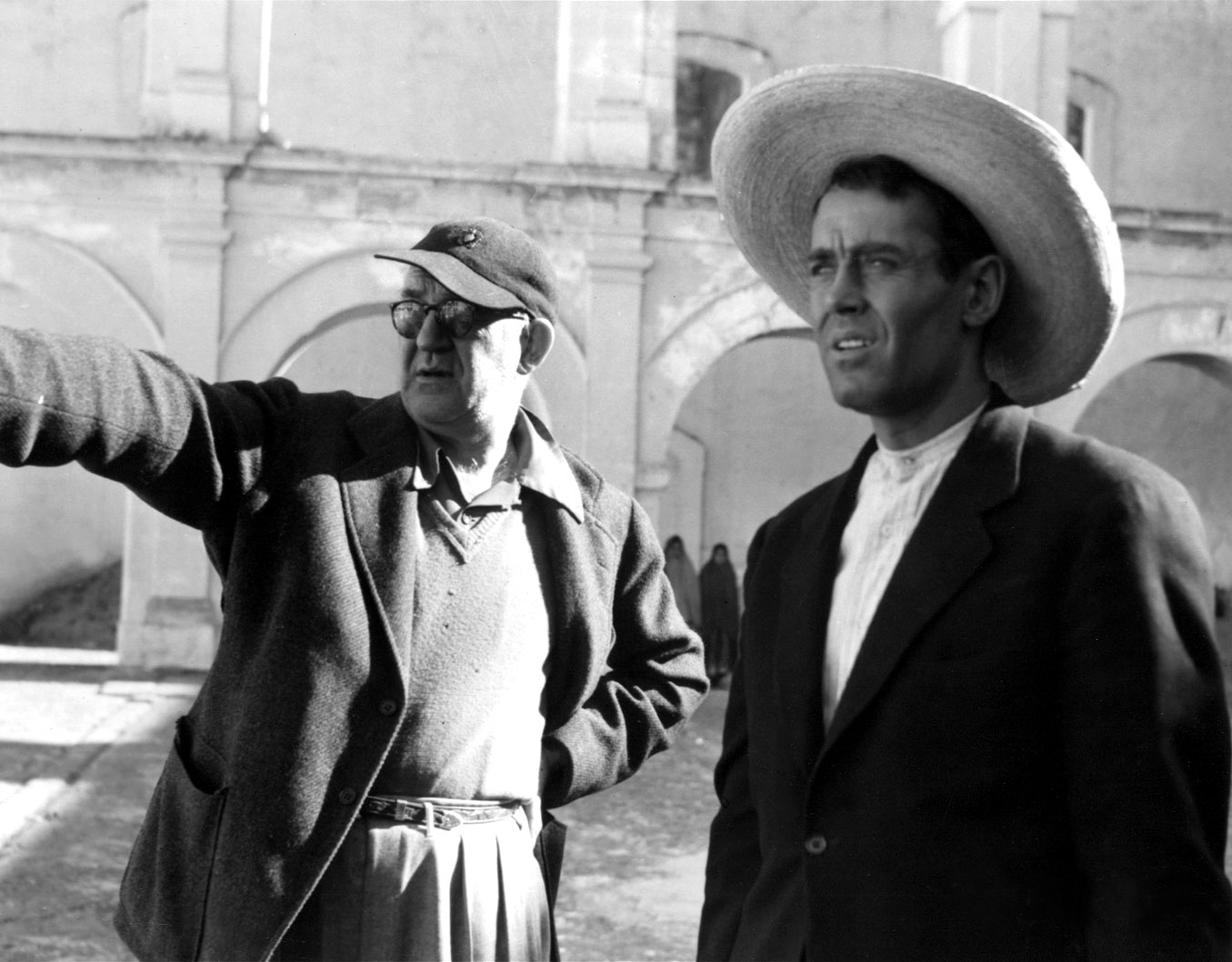
Henry Fonda, who was born on this day in 1905, receives direction from John Ford on the set of the 1947 classic The Fugitive:
Actor in the Spotlight:
In honor of his birthday this week, Robert Pattinson career reinvention is celebrated in this video by Jacob T. Swinney for Fandor:
[embedded content]
Character in Close-Up:
In the latest Awesome Bad Guys showcase for IMDb, Patrick Epino pays tribute to HAL 9000 from 2001: A Space Odyssey:
[embedded content]
Classic Trailer of the Day:
This week is the 15th anniversary of the release of The Matrix Reloaded. Watch the original trailer for the sequel below.
[embedded content]
and
MSU Settlement In Nassar Case 'A Great Victory,' Abused Gymnast Says

Michigan State University, which failed to adequately monitor USA Gymnastics team doctor Larry Nassar, on Wednesday settled a lawsuit by 300 gymnasts, including Jeanette Antolin, for $500 million.
ARI SHAPIRO, HOST:
Gymnast Jeanette Antolin is one of more than 300 sexual abuse victims of the U.S. national team physician Larry Nassar. In 1999, she competed at the Pan American Games, where she helped the U.S. win a team silver medal in the World Artistic Gymnastics Championships. Now she is part of the group that today won a $500 million settlement with Michigan State University, for whom Nassar worked. Jeanette Antolin joins us now. Welcome.
JEANETTE ANTOLIN: Thank you so much.
SHAPIRO: What does this decision today, this settlement mean to you?
ANTOLIN: I think it – I mean, it feels like a great victory for me and my sister survivors. It means that there was an organization that failed all of us, and finally they’ve stepped up and settled the case.
SHAPIRO: Have you and other survivors been talking today? What have you heard from them?
ANTOLIN: Yeah, we’ve talked amongst ourselves – a few of us. And we just feel empowered all over again. It’s, like – I feel like for so many months, like, people didn’t believe us and didn’t take us seriously. And finally we’ve gotten our justice.
SHAPIRO: I know that this happened to you a long time ago. In addition to the Justice and sense of closure, has there been a sense of pain of having to relive so much of this?
ANTOLIN: Extreme amount of pain and frustration of just retelling the story over and over again and having to relive our experiences with Larry and not just with Larry but USA Gymnastics and our experience on the national team. I don’t think people realized how traumatic of an experience that it was. And so to have to tell your story to be believed and have some action taken – it’s completely trying. And for me, it’s almost been two years of this. So it’s encouraging that it’s coming to an end. And with MSU settling, it’s a small weight off my shoulders. But we still have work to do. We still need USA Gymnastics and the USOC to follow in the footsteps of MSU.
SHAPIRO: And as you say, the settlement doesn’t address the claims against USA Gymnastics. What do you want to see from them?
ANTOLIN: I want them to take responsibility ’cause they’re just as much at fault as MSU. I feel like they were there all along. They had knowledge of what was happening, and they didn’t take action to protect the other athletes that could have been protected. I mean, I have sister survivors that were abused after they were told of the abuse. So they need to step up and take responsibility for that.
SHAPIRO: Given the number of different fields where perpetrators are being held accountable and victims are speaking out across the United States and beyond right now, are you optimistic that future generations of young women are not going to have to go through what you went through?
ANTOLIN: Absolutely. I think it’s a long road. I think us going through this in the last couple years has empowered a lot of women to stand up and use their voice. It’s a wave of women realizing that their voice matters, and they can take their power back. And I think a lot of us sister survivors – we want to see a lot more change in not just USA Gymnastics but amateur sports across the country. We want awareness to be brought to school systems and children and parents so that – we know that obviously we can’t catch every single predator, but it will make it a lot harder for them to get away with things like this.
SHAPIRO: That’s Jeanette Antolin, a former artistic gymnast who was a member of the U.S. national team from 1995 to 2000. Thank you so much for talking with us today.
ANTOLIN: Of course. Thank you
Copyright © 2018 NPR. All rights reserved. Visit our website terms of use and permissions pages at www.npr.org for further information.
NPR transcripts are created on a rush deadline by Verb8tm, Inc., an NPR contractor, and produced using a proprietary transcription process developed with NPR. This text may not be in its final form and may be updated or revised in the future. Accuracy and availability may vary. The authoritative record of NPR’s programming is the audio record.
Federal Agency Investigates Tesla Crash; Driver Says Car Was On Autopilot

The driver of the Tesla Model S told police the car was in Autopilot mode as it rammed into a Utah fire department truck on May 11 in South Jordan, Utah.
AP
hide caption
toggle caption
AP
The National Highway Traffic Safety Administration announced Wednesday it has launched an investigation into a rear-end collision involving a Tesla in South Jordan, Utah, the Associated Press reported. It marks at least the third investigation into crashes involving the company’s cars since March.
The driver of the Tesla Model S told police the car was in Autopilot, a semi-autonomous mode, and that she was staring at her phone when the sedan plowed into the back of a Utah fire department truck stopped at a red light. The 28-year-old driver, who said she was going about 60 mph, sustained a broken ankle while the truck’s driver suffered minor injuries.
“Consistent with NHTSA’s oversight and authority over the safety of all motor vehicles and equipment, the agency has launched its special crash investigations team to gather information on the South Jordan, Utah, crash. NHTSA will take appropriate action based on its review,” the agency said, as quoted by CNBC.
Car company owner, Elon Musk said in a tweet Tuesday, “It’s super messed up that a Tesla crash resulting in a broken ankle is front page news and the ~40,000 people who died in US auto accidents alone in past year get almost no coverage.”
It’s super messed up that a Tesla crash resulting in a broken ankle is front page news and the ~40,000 people who died in US auto accidents alone in past year get almost no coverage https://t.co/6gD8MzD6VU
— Elon Musk (@elonmusk) May 14, 2018
Minutes later he added, “What’s actually amazing about this accident is that a Model S hit a fire truck at 60mph and the driver only broke an ankle. An impact at that speed usually results in severe injury or death.”
The electric car company cautions drivers to keep their hands on the wheel and remain vigilant even while the vehicle is in semi-autonomous mode.
Just last week, the agency opened investigation into a Florida crash where the same model Tesla caught fire, trapping and killing two men and injuring a third after ramming into a concrete wall.
“The vehicle immediately caught on fire, becoming fully engulfed in flames. The speed of which the vehicle was traveling is believed to have been a factor in the crash,” Fort Lauderdale Police said in a statement.
Meanwhile, NHTSA investigators are still scrutinizing the conditions leading to fatal wreck in March in California, where Tesla’s Autopilot system was in use. In that case, the Model X SUV collided head-on into a roadside barrier and caught fire. The driver was pulled out of the car but did not survive.
What Explains The Rising Overdose Rate Among Latinos?

From left to right: Felito Diaz, Julio Cesar Santiago, Richard Lopez and Irma Bermudez meet at Casa Esperanza, a treatment and transitional housing program in Roxbury, Mass.
Jesse Costa/WBUR
hide caption
toggle caption
Jesse Costa/WBUR
The tall, gangly man twists a cone of paper in his hands as stories from nearly 30 years of addiction pour out: the robbery that landed him in prison at 17; never getting his GED; going through the horrors of detox, maybe 40 times, including this latest, which he finished two weeks ago. He’s now in a residential unit for at least 30 days.
“I’m a serious addict,” says Julio Cesar Santiago, 44. “I still have dreams where I’m about to use drugs, and I have to wake up and get on my knees and pray, ‘let God take this away from me,’ because I don’t want to go back. I know that if I go back out there, I’m done.”
Santiago has some reason to worry. Data on opioid addiction in his home state of Massachusetts shows the overdose death rate for Latinos there has doubled in three years, growing at twice the rate of whites and blacks.
Opioid overdose deaths among Latinos are surging nationwide as well. While the overall death toll is still higher for whites, it’s increasing faster for Latinos and blacks, according to data from the Centers for Disease Control and Prevention. Latino fatalities increased 52.5 percent between 2014 and 2016 as compared to 45.8 percent for whites. (Statisticians say counts for Hispanics are typically underestimated by 3 to 5 percent.) The most substantial hike was among blacks — 83.9 percent.
The data portrays a changing face of the opioid epidemic.

Rates of fatal opioid overdoses per 100,000 across the U.S. from 2014-2016. Deaths rose 45.8% for Whites, 52.5% for Hispanics and 83.9% for Blacks, according to the CDC.
Source: CDC; Credit:NPR
hide caption
toggle caption
Source: CDC; Credit:NPR
“What we thought initially, that this was a problem among non-Hispanic whites, is not quite accurate,” says Robert Anderson, mortality statistics branch chief at the CDC’s National Center for Health Statistics. “If you go back into the data, you can see the increases over time in all of these groups, but we tended to focus on the non-Hispanic whites because the rates were so much higher.”
There’s little understanding about why overdose deaths are rising faster among blacks and Latinos than whites. Some physicians and outreach workers suspect the infiltration of fentanyl into cocaine is driving up fatalities among blacks.

A resident walks into the Casa Esperanza’s Men’s Program in Roxbury, Mass.
Jesse Costa/WBUR
hide caption
toggle caption
Jesse Costa/WBUR
The picture of what’s happening among Latinos has been murky, but interviews with nearly two dozen current and former drug users and their family members, addiction treatment providers and physicians reveal language and cultural barriers and even fear of deportation could be limiting the access of Latinos to life-saving treatment.
Few bilingual treatment options
Irma Bermudez, 43, describes herself as a “grateful recovering addict.” She’s living in the women’s residential unit at Casa Esperanza, a collection of day treatment, residential programs and transitional housing in Boston’s Roxbury neighborhood.
Bermudez says the language barrier keeps anyone who can’t read English out of treatment from the start, as they try to decipher websites or brochures that advertise options. If they call a number on the screen or walk into an office, “there’s no translation — we’re not going to get nothing out of it,” Bermudez says.

Rates of fatal opioid overdoses per 100,000 from 2014-2016 in Massachusetts.
Source: Massachusetts Dept. of Health; Credit:NPR
hide caption
toggle caption
Source: Massachusetts Dept. of Health; Credit:NPR
Some of the Latinos interviewed for this story describe sitting through group counseling sessions, part of virtually every treatment program, and not being able to follow much, if any, of the conversation. They recall waiting for a translator to arrive for their individual appointment with a doctor or counselor and missing the session when the translator is late or doesn’t show up at all.
SAMHSA, the federal Substance Abuse and Mental Health Services Administration, maintains a Find Treatment website which includes listings of treatment offered in Spanish. But several Massachusetts providers listed there could not say how many translators they have or when they are available. The SAMHSA site is only available in English, with Spanish-language translators only available by phone.
At Casa Esperanza, 100 men are waiting for a spot in the male residential program, so recovery coach Richard Lopez spends a lot time on the phone trying to get clients into a program he thinks has at least one translator.
After battling with voicemail, says Lopez, he’ll eventually get a call back; the agent typically offers to put Lopez’s client on another waiting list. It frustrates him.

Recovery Coach Richard Lopez helps Latinos find addiction treatment with Spanish translation.
Jesse Costa/WBUR
hide caption
toggle caption
Jesse Costa/WBUR
“You’re telling me that this person has to wait two to three months? I’m trying to save this person today,” he says. “What am I going to do, bring these individuals to my house and handcuff them so they don’t do nothing?”
Casa Esperanza Executive Director Emily Stewart says Massachusetts needs a public information campaign via Spanish-language media that explains treatment options. She’d like that to include medication-assisted treatment, which she says is not well understood.
Some research shows Latino drug users are less likely than others to have access to or use the addiction treatment medicines, methadone and buprenorphine. One study shows that may be shifting. But, Latinos with experience in the field say, access to buprenorphine (which is also known by the brand name Suboxone) is limited because there are few Spanish-speaking doctors who prescribe it.
Cultural barriers — ‘It’s not cool to call 911’
Lopez has close ties these days with health care providers, the police and EMTs. But that has changed dramatically from when he was using heroin. On the streets, he says,”It’s not cool to be calling 911,” when a person sees someone overdose. “I could get shot, and I won’t call 911.”
It’s a machismo thing, says Lopez.
“To the men in the house, the word ‘help,’ sounds like degrading, you know?” he says. Calling 911 “is like you’re getting exiled from your community.”
Santiago says not everyone feels that way. A few men called EMTs to help revive him. “I wouldn’t be here today if it wasn’t for them,” he says.
But Santiago and others say there’s growing fear among Latinos they know of asking anyone perceived as a government agent for help — especially if the person who needs the help is not a U.S. citizen.
“They fear if they get involved they’re going to get deported,” says Felito Diaz, 41.
Bermudez says Latino women have their own reasons to worry about calling 911 if a boyfriend or husband has stopped breathing.

Executive Director Emily Stewart, left, and Director of Programs Anna Rodriguez standing in the lobby of the Casa Esperanza Familias Unidas Outpatient Services.
Jesse Costa/WBUR
hide caption
toggle caption
Jesse Costa/WBUR
“If they are in a relationship and trying to protect someone, they might hesitate as well,” says Bermudez, if the man would face arrest and possible jail time.
Ties in the community
Another reason some Latino drug users say they’ve been hit especially hard by this epidemic: A 2017 DEA report on drug trafficking noted that Mexican cartels control much of the illegal drug distribution in the United States, selling the drugs through a network of local gangs and small-scale dealers.
In the Northeast, Dominican drug dealers tend to predominate.
“The Latinos are the ones bringing in the drugs here,” says Rafael, a man who uses heroin and lives on the street in Boston, close to Casa Esperanza. “The Latinos are getting their hands in it, and they’re liking it.”
NPR agreed not to use Rafael’s last name because he uses illegal drugs.
Some Spanish-speaking drug users in the Boston area say they get discounts on the first, most potent cut. Social connection matters, they say.
“Of course, I would feel more comfortable selling to a Latino if I was a drug dealer than a Caucasian or any other, because I know how to relate and get that money off them,” says Lopez.
The social networks of drug use create another layer of challenges for some Latinos, says Dr. Chinazo Cunningham, who treats many patients from Puerto Rico. She primarily works at a clinic affiliated with the Montefiore Medical Center in the Bronx, in New York City.
“The family is such an important unit — it’s difficult if there is substance use within the family for people to stop using opioids,” Cunningham says.
The burden of poverty
Though Latinos are hardly a uniform community, many face an additional risk factor for addiction: poverty. About 20 percent of the community lives in poverty, compared to 9 percent of whites according to the Kaiser Family Foundation. In Massachusetts, four times as many Latinos live below the poverty line as do whites. The majority of Casa Esperanza clients were recently homeless. The wait time for one of the agency’s 37 individual or family housing units ranges from a year to a decade.
“If you’ve done all the work of getting somebody stabilized and then they leave and don’t have a stable place to go, you’re right back where you started,” says Casa Esperanza’s Stewart.
Cunningham says the Latino community has been dealing with opioid addiction for decades and it is one reason for the group’s relatively high incarceration rate. In Massachusetts, Latinos are sentenced to prison at five times the rate of whites.
“It’s great that we’re now talking about it because the opioid epidemic is affecting other populations,” Cunningham says. “It’s a little bit bittersweet that this hasn’t been addressed years before. But it’s good that we’re talking about treatment rather than incarceration, and that this is a medical illness rather than a moral shortcoming.”
Nationally, says the CDC’s Anderson, there’s no sign that the surge of overdose deaths is abating in any population.
“We’ve already had two years of declining life expectancy in the U.S. and I think that when we see the 2017 data we’ll see a third year,” says Anderson. “That hasn’t happened since the great influenza pandemic in the early 1900s.”
The death numbers for 2017 are expected out by the end of this year.
This story is part of a reporting partnership with NPR, WBUR and Kaiser Health News.
Today in Movie Culture: The Weirdest 'Deadpool 2' Promotion Yet, Honest 'Black Panther' Trailer and More
Here are a bunch of little bites to satisfy your hunger for movie culture:
Marketing Stunt of the Day:
To promote Deadpool 2 in South Korea, Ryan Reynolds wore a unicorn mask and costume and performed “Tomorrow” on the singing contest show King of Masked Singer:
He is singing one of Admin’s favorite song!! Who might this be??? TAKE A GUESS!! #KOCOWA #The_King_of_Mask_Singer #MBC #???? pic.twitter.com/uusko2E30W
— KOCOWA OFFICIAL (@kocowa_official) May 14, 2018
Truthful Marketing of the Day:
Honest Trailers finds the faults in Black Panther but blames them mostly on it just being a Marvel movie:
[embedded content]
Remade Movie Scene of the Day:
Speaking of Black Panther, watch the scene where Thor arrives in Wakanda from Avengers: Infinity War redone in Lego:
[embedded content]
Transplanted Character of the Day:
When he’s not protecting the Sanctums, he enjoys waterslides, wave pools, splash pads and other refreshing water park attractions:
I took every shot from behind-the-scenes featurettes where Dr. Strange is in front of a greenscreen, and edited him into a waterpark. pic.twitter.com/kiD8JTZLgH
— Jesse McLaren (@McJesse) May 15, 2018
Reworked Movie of the Day:
FBE imagines what an R-rated Harry Potter and the Chamber of Secrets in this animated parody:
[embedded content]
Vintage Image of the Day:
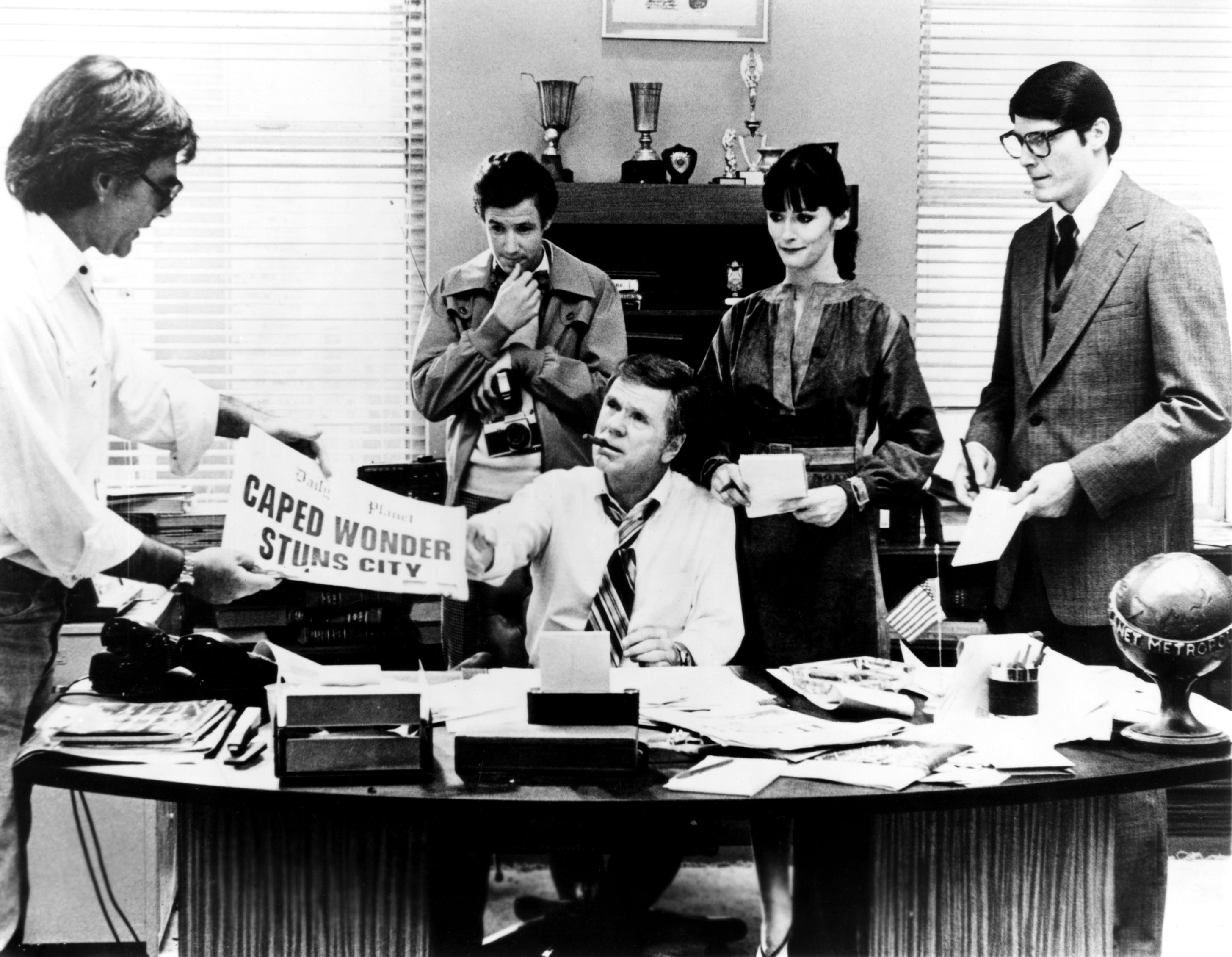
Margot Kidder, who passed away this week at 69, with director Richard Donner and co-stars Christopher Reeve, Jackie Cooper and Marc McClure on the set of 1978’s Superman:
Actor in the Spotlight:
In honor of her birthday this week, Cate Blanchett is the focus of Jacob T. Swinnery’s latest video for Fandor:
[embedded content]
Movie Comparison of the Day:
Dimitreze compares scenes from Foxcatcher to footage of the actual people as seen in the documentary Team Foxcatcher side by side:
[embedded content]
Cosplay of the Day:
Indy Mogul showcases Gordon Tarpley and his incredible, possibly world’s-best DIY C-3PO costume:
[embedded content]
Classic Trailer of the Day:
Today is the 25th anniversary of the Cannes premiere of Jane Campion’s The Piano. Watch the original trailer for the classic drama touting its Palme d’Or win below.
[embedded content]
and
