
Sports

No Image

Baseball Players On Track To Hit More Home Runs Than Ever This Year

Strikeouts and home runs are both up in Major League Baseball. Sports Illustrated‘s Tom Verducci joins host A Martinez to talk about what that means for fans and the pace of the game.

A MARTINEZ, HOST:

This summer, the bats are hot in ballparks around the country.

(SOUNDBITE OF BASEBALL COMMENTARY MONTAGE)

UNIDENTIFIED COMMENTATOR #1: Deep right centerfield – gone to souvenir city.

UNIDENTIFIED COMMENTATOR #2: Oh, my – put into orbit.

GARY THORNE: That thing went over the popcorn wagon in the concourse, I think.

UNIDENTIFIED COMMENTATOR #3: Way back and goodbye, home run.

UNIDENTIFIED COMMENTATOR #4: And that baby’s gone – even further than the last two.

MARTINEZ: That is happening a lot this season. Major League Baseball players are on track to hit more home runs than ever – more than 6,000 if the numbers hold up. But as exciting as homers can be, they’re actually part of the problem with the sport. This week on Out Of Bounds – long shots, strikeouts and the slowing pace of baseball.

Tom Verducci is senior baseball writer for Sports Illustrated, and he joins me now from Princeton, N.J. Tom, welcome.

TOM VERDUCCI: Thanks for having me.

MARTINEZ: All right, so let’s start with those home runs. People are hitting more and more of them, and the ball is going further. Why?

VERDUCCI: (Laughter) Well, let’s look at it from two perspectives. First, from the hitters’ perspectives – there is more of an emphasis on power, so they don’t mind striking out at the risk of just swinging for the fences because a lot of guys now get paid on not how much they get on base, how often they get on base, but how much damage that they do. And that comes with the home run ball.

Now when you talk to the pitchers, they go directly to the favorite conspiracy theory, that it must be about the baseball itself – that the baseball is actually tighter than in previous years and the seams are lower. Lower seams mean less drag on a baseball. Less drag means more carry. And of course, more carry means more home runs.

MARTINEZ: What about drug testing? I know that Major League Baseball is trying to test a lot more.

VERDUCCI: Well, absolutely. They are. And especially this year, their incidents of tests, off-season and in-season, have gone way up. But listen, with the amount of money that’s in the game, there are certainly incentives still for someone to try to beat tests and get that extra edge. But baseball will tell you that it’s much more difficult to circumvent these tests than they were, say, even five years ago because they are much more sophisticated.

MARTINEZ: Tom, I’m a big baseball fan. I’ve been a baseball fan my whole life. It’s like pizza for me. I will eat it and consume it however it’s served up. So I don’t mind the home runs and the strikeouts, but I can see how a fan might think this is boring. What’s going on that got us here if maybe fans aren’t so in tune to the in-between?

VERDUCCI: Yeah. Well, certainly love home runs – they literally bring people to their feet. And even the home run – the game literally stops so someone can take a jog around the bases. So when you factor in the fact that strikeouts now are for the 12th consecutive year going up to a record level, it’s the yawning gaps in between the excitement in the game that have people concerned.

MARTINEZ: Which fans suffer the most with this? Is it the ones that are watching on TV or the ones that are at the ballpark?

VERDUCCI: I think it’s the viewer experience at home that is the one that concerns baseball because we have so many distractions available to us. And I think when we get these gaps in between pitches or the ball being put in play, it’s very easy for someone to get disengaged from the game that they’re watching on television or a phone, however. But it really is about – how do we as baseball attract and keep viewers, especially the younger ones?

MARTINEZ: Are they struggling getting these younger viewers? Or – how are baseball ratings in general?

VERDUCCI: The ratings last year for the World Series were the highest in 25 years, a quarter of a century. That was primarily due to the Cubs. And even if you weren’t a Cubs fan, you wanted to see if they could break a 108-year drought. As far as the regional sports network goes, their ratings are actually very strong. I think the concern, based on polling that MLB has done, is that the audience does tend to skew a little older. So they’re looking at the polling and saying, hm, you know, where are our next generation of fans? And that’s what they’re seeing, some erosion in the younger demographic.

MARTINEZ: Tom Verducci, senior baseball writer for Sports Illustrated. Tom, thanks a lot.

VERDUCCI: Thanks for having me.

Copyright © 2017 NPR. All rights reserved. Visit our website terms of use and permissions pages at www.npr.org for further information.

NPR transcripts are created on a rush deadline by Verb8tm, Inc., an NPR contractor, and produced using a proprietary transcription process developed with NPR. This text may not be in its final form and may be updated or revised in the future. Accuracy and availability may vary. The authoritative record of NPR’s programming is the audio record.

Let’s block ads! (Why?)


No Image

Saturday Sports: Venus Williams And Tennis, Tour De France

We discuss the latest news about Wimbledon and Venus Williams, and talk about a nasty crash during the Tour de France and competitive imbalance in the NBA.

(SOUNDBITE OF MUSIC)

SCOTT SIMON, HOST:

And it’s time for sports.

(SOUNDBITE OF MUSIC)

SIMON: Wimbledon is in full swing. Whap (ph). Venus Williams faces challenges off and on the court. And the Tour de France is marred by a nasty crash and questionable call. NPR’s Tom Goldman joins us. Good morning, Tom.

TOM GOLDMAN, BYLINE: Hello, Scott.

SIMON: Venus Williams has been playing some terrific tennis. But she’s been playing under stress and a cloud. Has that been lifted?

GOLDMAN: Yeah, well, a little bit. You know, she was involved in a car crash a month ago. And a passenger in the car that hit Williams’ car died a couple of weeks later. Now, initially, police said Williams was at fault. But just yesterday police released a video that showed the accident. And because of the video, police retracted that initial statement that she was at fault. But the crash is still under investigation.

The family of the victim has filed a wrongful death lawsuit against Williams. So she’s carrying all that while playing and, as you say, playing well. She appears able to compartmentalize. Although, she did break down earlier in the week when asked about the accident at a press conference.

SIMON: She plays a fourth round match on Monday. So does Nadal on the men’s side. And he seems to be staging a comeback.

GOLDMAN: Yeah. Oh, a great one. Before this season, his last gold – glam – sorry – grand slam title…

SIMON: It’s early. It’s early where you are, Tom.

GOLDMAN: It really is. His last Grand Slam title was in 2014. And it looked like illness and injuries were going to derail his career only in his 20s. But here he is 31. He got to the finals of the Australian Open early this year. He won the French Open last month. And he’s playing great. And he’s only three Grand Slam singles titles behind another fantastic geezer, 35-year-old Roger Federer.

SIMON: Yeah. Let’s cross the channel and ask about the Tour de France. This week, Peter Sagan – not to be confused with Peter Segal, whose program follows ours in many markets. We’re talking about the great Slovak cyclist. He was disqualified – accused of causing a crash on the sprint to the finish the other day. Mark Cavendish was injured and sent to the hospital. You’ve seen the video. I’ve seen the video. Did that look like an intentional elbow to you?

GOLDMAN: Before I answer that, if it were Peter Segal instead of Sagan, the video would have shown him leaning over and cracking a joke sending Cavendish to the pavement or one of those…

SIMON: But no – but no beer – no, you know, beer company is going to pay to see that, yeah.

GOLDMAN: I will defer to the experts who fairly unanimously say Sagan shouldn’t have been disqualified. Those final wild sprints can be rough and physical. And slow motion does seem to show Cavendish trying to squeeze through too small an opening and Sagan moving his elbow out after Cavendish starts to go down almost as a steadying move. But the race organizers are serious about cyclists safety. And they made their decision.

SIMON: Back here to the United States, and NBA players have just been going back and forth between trades and free agency. By the way, anybody sign BJ Leiderman yet, who writes our theme music?

GOLDMAN: Not yet. But stay by the wires.

SIMON: All right. Boy, there’s a lot of money being passed around. Where is it come from in basketball?

GOLDMAN: You and me because we like to watch and talk about the NBA. And multiply our interest by tens of millions of people and that’s made networks willing to pay billions of dollars to the NBA to broadcast games. The current TV contract is 24 billion over a number of years. And that ends up – that money ends up going to players partly because, remember, if you are put off by Steph Curry’s 40 million a year or Gordon Hayward’s 30 million plus a year, I talked to two sports economists – Andrew Zimbalist, David Barry – who pointed out, A…

SIMON: And you have Andrew Zimbalist on your speed dial, don’t you? So do I.

GOLDMAN: Absolutely, yeah. These players generate as much, if not more, value as their contracts are worth. And, B, the salaries are only about half of what those players should make because players and owners split revenues about 50/50. Barry points out the players generate most, if not all, of the NBA revenue but only get half.

SIMON: And what’s your cut of that, Tom?

GOLDMAN: Not much.

SIMON: (Laughter) Well, that’s not fair. NPR’s Tom Goldman, thanks so much for being with us.

GOLDMAN: You’re welcome, Scott.

Copyright © 2017 NPR. All rights reserved. Visit our website terms of use and permissions pages at www.npr.org for further information.

NPR transcripts are created on a rush deadline by Verb8tm, Inc., an NPR contractor, and produced using a proprietary transcription process developed with NPR. This text may not be in its final form and may be updated or revised in the future. Accuracy and availability may vary. The authoritative record of NPR’s programming is the audio record.

Let’s block ads! (Why?)


No Image

Tennis Pros Complain Of Unsafe Conditions At Unusually Hot Wimbledon

Conditions at Wimbledon have been unusual this year. Unusually warm weather has led to players complaining of unsafe court conditions and, for a few hours this week, swarms of flying ants descended on players and spectators alike.

ROBERT SIEGEL, HOST:

This week, while many Americans were celebrating Independence Day on the Fourth of July, many people in the U.K. were also marking a special occasion. Wednesday was Flying Ant Day.

DAVID WALDSTEIN: I was standing outside, and a couple of flying ants landed on my phone. And I didn’t think much of it. And then I was looking at Twitter. I saw somebody make reference to Flying Ant Day. And I put two and two together (laughter).

KELLY MCEVERS, HOST:

That’s David Waldstein. He’s a sports correspondent for The New York Times, and he’s currently in London covering Wimbledon.

SIEGEL: Yes, Flying Ant Day happens once a year, usually in July. That’s when the urge to breed strikes and the flying ants swarm.

WALDSTEIN: It’s the first day of their mating season. And it can vary how intense it is. But for a while, it was a pretty big one.

MCEVERS: Usually, it’s just an annoying thing people in the U.K. deal with. British websites offer plenty of tips on how to get rid of them.

SIEGEL: But Flying Ant Day is getting worldwide attention this year because a swarm happened right in the middle of Wimbledon.

WALDSTEIN: They were all over the courts. And some of the players said that they were getting in their eyes while they were serving, going up their noses and into their (laughter) equipment bags and pretty much everywhere.

SIEGEL: Photos and videos posted online show grass courts crawling with the bugs, players and umpires swatting them away.

MCEVERS: Here’s what British tennis player Johanna Konta told the BBC.

(SOUNDBITE OF ARCHIVED RECORDING)

JOHANNA KONTA: There was quite an army of flying ants, wasn’t there? And I think I’ve definitely taken home a few as a souvenir in my belly and in my bags (laughter). I’ve definitely ate a few.

MCEVERS: As with all things, Flying Ant Day had to come to an end. The New York Times’ David Waldstein says it didn’t last very long.

WALDSTEIN: I’d say about three hours later, they were pretty much gone, not to have been seen since.

SIEGEL: And Waldstein says aside from being a nuisance, he doesn’t think the ants caused too many problems for the players at Wimbledon.

WALDSTEIN: I don’t think anybody lost because of it. But it was certainly distracting for a while. And I think (laughter) – I don’t know. I guess they’re all just sort of happy that it came and went.

MCEVERS: Now the players can focus on more important things like beating their next opponent.

(SOUNDBITE OF JAMES CLARKE’S “SECOND CUT”)

Copyright © 2017 NPR. All rights reserved. Visit our website terms of use and permissions pages at www.npr.org for further information.

NPR transcripts are created on a rush deadline by Verb8tm, Inc., an NPR contractor, and produced using a proprietary transcription process developed with NPR. This text may not be in its final form and may be updated or revised in the future. Accuracy and availability may vary. The authoritative record of NPR’s programming is the audio record.

Let’s block ads! (Why?)


No Image

Miami's Marlins Park Will Host Baseball's 2017 All-Star Game Next Week

The Major League Baseball season will pause for its All-Star break. Rachel Martin talks to ESPN’s Jessica Mendoza, who breaks down the season. The Houston Astros are sending five players to the game.

RACHEL MARTIN, HOST:

The Major League Baseball season is a grind. It’s about six months, 162 games. So now that we’re about halfway through, these guys deserve a few days rest, right? They’re getting it. Next week, it’s the All-Star break, and the brightest stars from the National and American Leagues face off Tuesday night in Miami. This year, the Houston Astros are sending five players to the All-Star Game. That’s a lot of players. That’s a big deal. It is a historic turnaround.

The Astros have had a terrible record for years. They lost 111 games in 2013 alone. This year, they have turned the tables. They are the top team in baseball with the LA Dodgers on their heels. Now I have to confess, I don’t watch a whole lot of baseball, so I called Jessica Mendoza to explain. She is a former Olympic softball player and now a broadcaster for ESPN. And she says the Astros managed to turn those rough years into an advantage. In Major League Baseball, the worst teams get first dibs on bright young players in the draft.

JESSICA MENDOZA: So what the Astros were able to do is, because they were bad for so long, they went and got them a Dallas Keuchel, who’s their starting pitcher and has been ridiculous – Carlos Correa, who is probably the best young shortstop in a huge fleet of young players that have been stars.

MARTIN: Switching gears a bit, the All-Star game, as we mentioned, is coming up, and the rosters for that game have been announced. This is, like, the best of the best who play each other. So who were some of the other players – you mentioned a few that you’re watching from the Astros – but who are some other players who are having breakout seasons?

MENDOZA: Aaron Judge who’s on the Yankees. I mean, first of all, he’s the biggest player that we’ve ever seen in the sport. OK? So this guy is 6-foot-7, 280 pounds. We have never had someone this size and weigh this much be able to play the game. But what’s impressive about him is the fact that he’s been able to adjust his swing and change from where he was last year – struggling, not able to make a lot of contact – to now being the most powerful home run hitter we’ve seen since pretty much Babe Ruth.

MARTIN: All right, you’re winning me over. I might have to tune into this thing.

MENDOZA: (Laughter).

MARTIN: But there is a change, though, to how the All-Star Game works this year. In the past, the teams competed for what was a pretty big prize. The team that won – the league that won would have home-field advantage in the World Series. That is going away this year, so what are these guys playing for, just pride and glory?

MENDOZA: Of course. I mean, you have to remember, too – high-level athletes – I mean, if you’ve been around, I mean, pretty much anybody that’s competitive (laughter), you’re going to want a win. But I like that they’ve made this change because you think about it – the majority of the players that are on the field aren’t going to compete in the World Series. The reason I like the All-Star Game is you see the stars be able to kind of let loose a little bit, you know. Like, it’s actually fun. You want to see them compete, but you see them compete every time they’re on the field. I like to see them actually joke around with each other, be able to pick each other’s brains. I mean, that’s the stuff you really get into.

MARTIN: That’s when you want those mics that pick up those conversations…

MENDOZA: Right?

(LAUGHTER)

MARTIN: …That happen between those two players in that moment.

MENDOZA: Yes.

MARTIN: Jessica Mendoza of ESPN, thank you so much.

MENDOZA: Thanks, Rachel.

(SOUNDBITE OF PUBLIC SERVICE BROADCASTING SONG, “THE PIT”)

Copyright © 2017 NPR. All rights reserved. Visit our website terms of use and permissions pages at www.npr.org for further information.

NPR transcripts are created on a rush deadline by Verb8tm, Inc., an NPR contractor, and produced using a proprietary transcription process developed with NPR. This text may not be in its final form and may be updated or revised in the future. Accuracy and availability may vary. The authoritative record of NPR’s programming is the audio record.

Let’s block ads! (Why?)


No Image

NBA: Free Agency, Steph Curry And More

The Golden State Warriors Steph Curry just signed a $200 million deal — the largest in league history. NPR’s Michel Martin speaks with Washington Post columnist Jerry Brewer about the latest in NBA.

MICHEL MARTIN, HOST:

Let’s talk basketball for a few minutes. Sure, you’re probably watching baseball or tennis or NASCAR or cycling right now, but this is the time of year when the business side of hoops kicks into high gear. This weekend marked the start of free agency. That means that players who are eligible for free agency are signing huge contracts. The Golden State Warriors’ Steph Curry just signed a $200 million deal, the richest in league history.

But here’s a thing that’s also getting a lot of attention, some players are taking less money to play for teams they prefer, teams that they think can better set them up for championship contention. Think LeBron James, Dwyane Wade and Chris Bosh in Miami. Jerry Brewer just wrote about this for The Washington Post where he’s a columnist, and he’s with us now via Skype. Jerry Brewer, thanks so much for speaking with us.

JERRY BREWER: Thanks for having me.

MARTIN: So first, let’s talk about the money because the numbers seem staggering. How is it that players are able to command such high salaries?

BREWER: Well, when the NBA did their new television deal, it was a mega-billion-dollar deal. And salary is a function of revenue, so the salary cap in the NBA has shot up. It was $70 million in 2015. It’s shot up to 94 for the 2016-’17 season. And now for the ’17-’18 season, it’s going to go up to 99 million. So salaries are rising because the salary cap is going up.

MARTIN: But you also pointed out in your column that money isn’t everything for these players. I mean, for example, that, you know, Los Angeles Clippers just traded Chris Paul – their star point guard – to the Houston Rockets. He actually took less money to play for what he hopes might be the latest super team. And I just want to read a line from your column.

You said, (reading) the modern NBA superstar is the most powerful genre of athlete in American professional team sports history. Those elite players have it all – the riches, the platform, the influence, the savvy about the league’s business and the audacity to use everything for their own good no matter the consequences. The latter two things, the know-how and the nerve, frighten and intrigue at once. It’s an uneasy feeling because it’s unfamiliar.

Uneasy to who?

BREWER: I think it’s uneasy for fans who would like there to be a little more competitive balance. I think it’s uneasy for – definitely owners. The NBA has a super-max system now that they’re trying to do something where if you have a star, you can pay him more to stay with you than to take less to go. But the stars are saying, you know what? That’s very nice that you’re offering me $42 million a year. Let me think about it.

Which is just unprecedented. These guys make so much money off the court in terms of shoe deals and endorsements, so they have a lot of power because they have the power to say no and change a system which is designed for the guy to just take the most money and be happy.

MARTIN: Is the issue here for fans that if just a few teams would command all of the attention that that somehow would be bad for the league on the whole?

BREWER: That is the argument. I mean, what’s the point in following a league for six months of regular season and two months of the playoffs just when we know that it’s going to be Cleveland and Golden State again? I would argue, though, that the intrigue of the NBA has never been about widespread parity. It’s always been about super teams and dominance.

It’s interesting now, though, the difference is is that it’s not just big-market team doing the dominating. It is Golden State, which went 40 years without a championship before they put this team together. It’s Cleveland, which has had a really tough run until LeBron James came. It’s not just about the market anymore, it’s about which organizations are going to have the competence to help me reach my goals.

MARTIN: That’s Jerry Brewer. He’s a columnist for The Washington Post. We reached him via Skype. Jerry, thanks so much for speaking with us.

BREWER: Anytime.

(SOUNDBITE OF JOHN TESH’S “ROUNDBALL ROCK”)

Copyright © 2017 NPR. All rights reserved. Visit our website terms of use and permissions pages at www.npr.org for further information.

NPR transcripts are created on a rush deadline by Verb8tm, Inc., an NPR contractor, and produced using a proprietary transcription process developed with NPR. This text may not be in its final form and may be updated or revised in the future. Accuracy and availability may vary. The authoritative record of NPR’s programming is the audio record.

Let’s block ads! (Why?)


No Image

Not My Job: Former Flyers Goalie Bernie Parent Gets Quizzed On (Cake) Icing

Bernie Parent, of the Philadelphia Flyers Alumni team, wearing his original protective equipment, waits for the start of the Winter Classic Alumni hockey game on Dec. 31, 2011 in Philadelphia.

Tom Mihalek/AP

There was a saying in Philadelphia in the 1970s: “Only the Lord saves more than Bernie Parent.” The legendary goaltender won two consecutive Stanley Cups with the Flyers, and is now a member of the Hockey Hall of Fame.

We have no doubt that Parent understands all the intricacies of hockey rule known as “icing.” But what about the kind of icing you put on a cake?

Click the listen link above to see how he does.

PETER SAGAL, HOST:

And now the game where heroes join us to show us their secret vulnerabilities. It’s called Not My Job. So back in the ’70s, Philadelphia was a hockey-mad town. Everybody loved the Flyers. And on that team…

(APPLAUSE)

SAGAL: …Nobody was loved more than the goalie. As they say around Philly, only the Lord saves more than Bernie Parent.

(APPLAUSE)

SAGAL: He’s a member of the Hockey Hall of Fame and an ambassador for the Philadelphia Flyers. Bernie Parent, welcome to WAIT WAIT… DON’T TELL ME!

(APPLAUSE)

BERNIE PARENT: Thank you. Thank you. Thank you.

SAGAL: I’m going to say I don’t like to comment on people’s physical appearance, but you are a much more handsome man than I would expect from a guy who had a career as a hockey goalie.

PARENT: I was hoping you’d say that. Yes. Thank you.

SAGAL: I was particularly admiring your full set of teeth.

(LAUGHTER)

PARENT: Yeah, well, by the way, it cost me about $40,000.

(LAUGHTER)

SAGAL: Now, you are Quebecois, right? You’re from Montreal.

PARENT: Yes, from Montreal. Yeah.

SAGAL: And then – and you came down to play hockey in America at a pretty young age, right?

PARENT: In 1967, quickly – first of all, before this I had played two years for Boston and there were only 6 teams in the league. Don’t hold this against me now. But now, the expansion came in ’67. And I was up in Montreal hitting some golf balls, and a friend of mine comes up to me and says, hey, you got drafted. I said, really. By whom? He said Philadelphia. At the time, I said, where’s Philly at?

(LAUGHTER)

SAGAL: Really?

PARENT: Yeah. And then they put us on the float. Twenty-four players got drafted, and we went through Broad Street to introduce us to this…

SAGAL: Right down the center of Philadelphia.

PARENT: And we had more people on the float than we had watching us.

(LAUGHTER)

PARENT: But, you know, it’s a good story because, seven years later, we won the Stanley Cup and we had 2 million people.

(LAUGHTER)

SAGAL: So you’re acclaimed – and that’s why you’re in the Hall of Fame – as being one of the greatest goalies of all time. What is the secret to being a great hockey goalie?

PARENT: Have a good team in front of you.

SAGAL: Really?

(LAUGHTER)

SAGAL: One thing I’ve always loved is that – I don’t know much about hockey, but I know that when the shot goes between the legs, that’s called the five hole.

PARENT: Never happened to me.

PARENT: No, of course not.

(LAUGHTER)

SAGAL: I’ve always wondered, is that terrifying to be there, knowing that that puck could be flying at your head at 100 miles an hour at any moment?

PARENT: (Laughter) It does. It does. But, you know, when you’re playing the game, and you have – you’re performing in front of 20, 22,000 people – you know, at that age, you’re mid-20s, late 20s, you don’t think about this. You just go out and challenge them.

SAGAL: Really?

PARENT: There’s no fear.

BILL KURTIS: I’m just wondering if the people in back can see the flash from both rings.

SAGAL: Yeah. Yeah.

PARENT: There you go, folks.

(APPLAUSE)

SAGAL: So wearing that.

KURTIS: They must be so heavy.

PARENT: I – by the way, I have a little story about the rings.

SAGAL: Let me say it. Of course, Bernie is wearing his two championship rings. That was Stanley Cup ’73 and ’74.

PARENT: ’74, ’75.

SAGAL: ’74 – excuse me.

PARENT: Yeah.

SAGAL: One on each hand. So tell me the story.

PARENT: Yes. The story is I was upstate New York, signing autographs session. And this beautiful young lady, about 17 years old, comes up to me. She said, can I have a picture for my brother? I said, sure. Then I’m signing. She says, championship ring? Yeah. And then we have our names on this, right? Parent. But she had no clue. 17-year-old kid – she looks at the name she goes, man, this is cool. You know, a 17-year-old kid. I said, what is so cool about it? She said, they even made one for their parents, too.

(LAUGHTER)

PARENT: That brings you down.

SAGAL: You must have been very proud of your son.

(LAUGHTER)

SAGAL: Hey, we have always heard that part of the tradition of the Stanley Cup is that every player on the winning team gets to take the actual Stanley Cup – the trophy – home for, like, a day.

PARENT: Yeah.

SAGAL: What did you do with your day?

PARENT: I put mine in the swimming pool.

(LAUGHTER)

SAGAL: You what?

PARENT: In the swimming pool in the deep end, so people had to dive in and kiss the cup, right?

SAGAL: Wait a minute. So you had a swimming pool at your house.

PARENT: Yes.

SAGAL: And you took the Stanley Cup…

PARENT: Yeah.

SAGAL: …One of the most, you know, legendary, you know, trophies in sports.

PARENT: Yeah.

SAGAL: The Stanley Cup.

PARENT: Stanley Cup. Yeah.

SAGAL: The Stanley Cup itself.

PARENT: Yes.

SAGAL: And you dropped it into the deep end of your swimming pool…

PARENT: Yeah.

SAGAL: …And you invited your friends over to say dive in and kiss it.

PARENT: Yeah, it was fine until about 2 in the morning. Then it got dangerous.

SAGAL: Yeah, well…

(LAUGHTER)

SAGAL: You don’t keep it up for eight or nine hours because someone’s going to get hurt.

(LAUGHTER)

PARENT: Oh, Lord.

SAGAL: Yeah. And the Stanley – the people – like, the National Hockey League didn’t get mad at you for doing that?

PARENT: If they get mad, it’s their problem.

SAGAL: There you go.

(LAUGHTER)

TOM BODETT: I think there’s been worse things than that.

SAGAL: Yeah. No, that is a Philadelphia attitude.

PARENT: Definitely.

SAGAL: Yeah.

(APPLAUSE)

SAGAL: It occurs to me, speaking of Philadelphia, this is where – did you learn English here? When you came here, you were a French speaker originally. Of course, you still are.

PARENT: Just when I got drafted, again, with Boston, I was 17. I had to go to Niagara Falls, Ontario, and I couldn’t speak English. I picked up my suitcase and went to Niagara Falls. It was scary.

SAGAL: Yeah.

PARENT: But a – you know, you get bored. Listen. When you are hungry, you learn how to speak a language.

SAGAL: Oh, yeah.

(LAUGHTER)

SAGAL: Oh, yeah. Je voudrais une cheese steak.

(LAUGHTER)

PARENT: That was good.

SAGAL: Thank you.

(LAUGHTER)

SAGAL: Well, Bernie Parent, it is a pleasure to talk to you – an honor to meet you. But we’ve asked you here today to play a game we’re calling…

KURTIS: It’s Your Turn to Figure Out What the Hell Icing Is.

(LAUGHTER)

SAGAL: Icing is this rule in hockey that no one outside of hockey understands. We’re confident several NHL players probably don’t get it either, so we’re going to ask you three questions about the other kind of icing, the kind you find OM a cake. Answer two out of three questions right. You’ll win our prize for one of our listeners – the voice of Carl Kasell on their voicemail. Bill, who is Bernie Parent playing for?

KURTIS: Lauren Spivack of Philadelphia, Penn.

SAGAL: Must be a fan.

(APPLAUSE)

SAGAL: All right. You’re going to be good at this. Three questions, three periods, you know?

PARENT: Oh, definitely.

SAGAL: Absolutely. So first question. One of the best uses of icing we know about is German chocolate cake. Which of these is a true interesting fact about German chocolate cake? A, it was once used to smuggle a nail file into Rikers Island, but the recipient was so excited about German chocolate cake that he swallowed it; B, after a salmonella outbreak in 1956, it was commonly referred to as a while as Germy chocolate cake or C, it has nothing to do with Germany. It was named after a man who was named Sam German.

PARENT: Really?

SAGAL: Yeah. Well…

PARENT: Next question, please.

(LAUGHTER)

SAGAL: Nice block.

(LAUGHTER)

PARENT: I’ll take the third answer.

SAGAL: Well, that’s the right one.

(SOUNDBITE OF BELL)

PARENT: Oh, how about that?

(APPLAUSE)

SAGAL: There was a guy in the 19th century who invented a baking bar called German chocolate bar. And that became German chocolate cake. And now it’s German chocolate cake. There you go.

(APPLAUSE)

SAGAL: Next question – legendary baseball player Sparky Lyle used to love to prank his teammates whenever it was their birthday, and icing played a role. What did he do? A, he stole their glove and baked it into their birthday cake; B, quote, “chewing-tobacco-flavored icing” or C, he would sneak into the locker room and put his butt print in the cake?

PARENT: You know what? That’s exciting. How about the third one?

SAGAL: Yes. You know athletes.

(SOUNDBITE OF BELL)

SAGAL: I’m sure you know professional athletes. Is he more likely to take the time to bake a cake or just sit on one?

(LAUGHTER)

SAGAL: And you were right. That’s the answer.

ROXANNE ROBERTS: And what kind of impression did it leave?

(LAUGHTER)

KURTIS: A deep one.

SAGAL: A shapely one.

PARENT: Yeah.

SAGAL: Last question. Unsurprisingly, there is a Trump administration scandal involving a cake. Is it A, the president sent a giant birthday cake to Vladimir Putin; B, the president plagiarized his inauguration cake design from President Obama or C, the president just recently slashed apart his 72nd birthday cake looking for the girl he expected to jump out of it?

PARENT: Knowing Trump, I take the third one.

(LAUGHTER)

SAGAL: I like that you picked that. So I’m just going to let you go with that, but it was actually two – the second one.

(APPLAUSE)

SAGAL: The Trump inaugural committee, instead of having their own cake design, just went to a bakery with a photo of Obama’s inaugural cake and said, we want that. Bill, how did Bernie Parent do on our quiz?

KURTIS: Well, let’s call it three.

SAGAL: Yeah, I know.

KURTIS: He got two out of three. It doesn’t make any difference.

(LAUGHTER, APPLAUSE)

SAGAL: Bernie Parent is a two-time Stanley Cup winner, will be participating in the Philly Flyers Charity Classic on July 16. You can find more on the Flyers website or bernieparent.com. Bernie Parent, thank you so much.

(APPLAUSE)

SAGAL: In just a minute, slather up the sunscreen. It’s our Listener Limerick Challenge. Call 1-888-WAITWAIT to join us on the air. We’ll be back in a minute with more WAIT WAIT… DON’T TELL ME! from NPR.

Copyright © 2017 NPR. All rights reserved. Visit our website terms of use and permissions pages at www.npr.org for further information.

NPR transcripts are created on a rush deadline by Verb8tm, Inc., an NPR contractor, and produced using a proprietary transcription process developed with NPR. This text may not be in its final form and may be updated or revised in the future. Accuracy and availability may vary. The authoritative record of NPR’s programming is the audio record.

Let’s block ads! (Why?)


No Image

Former NFL Player Ryan O'Callaghan Looks Ahead After Sharing Story Of Drug Abuse

Last week, former NFL player Ryan O’Callaghan told the world his harrowing story of drug abuse and planned suicide as he struggled with being a closeted gay man. Now he hopes his story helps others.

ARI SHAPIRO, HOST:

Former NFL player Ryan O’Callaghan came out to the world last week with a dramatic story. In an interview with outsports.com, he described harrowing experiences he had as a closeted gay man and said his fear of being discovered drove him to drug addiction and a planned suicide. O’Callaghan told NPR’s Tom Goldman that he shared his story with hopes of helping others avoid the pain he lived with for so long.

TOM GOLDMAN, BYLINE: A week later, the calls for interviews are still coming in.

RYAN O’CALLAGHAN: I am great. How are you?

GOLDMAN: Ryan O’Callaghan is sitting on a couch in his home in his hometown of Redding, Calif. When the call’s done, I ask about the thousands of messages that have poured in since the Outsports article. He scrolls through his phone.

O’CALLAGHAN: OK, well, here’s a good one to read. It says, hi, Ryan. I think you saved my life today. I’m gay, and I’ve been living this lie for as long as I can remember. So he’s married, has children.

GOLDMAN: The man tells O’Callaghan he’s been in therapy and has come to terms with who he is. But he needs advice on how to move forward.

O’CALLAGHAN: And like me, he’s also thought about ending things.

GOLDMAN: It’s that dark subject that’s made Ryan O’Callaghan’s story resonate. A gay pro athlete coming out isn’t as huge a story as it once was, but O’Callaghan was a gay pro athlete who planned to kill himself because in his mind, no one would ever accept him – not family, not friends, not the NFL.

O’CALLAGHAN: I was just going to shoot myself. It was the easy way. I didn’t look at it as being selfish. You know, I used to think, you know, we all have the right to disappear. It’s our body.

GOLDMAN: But before disappearing, Ryan O’Callaghan planned to be very public.

(SOUNDBITE OF ARCHIVED RECORDING)

UNIDENTIFIED REPORTER: Ryan O’Callaghan voted the best offensive lineman in the Pac-10 by the other players in the conference.

GOLDMAN: A football career that started in high school as a way to stay connected to friends evolved into something much more in college. At Cal Berkeley, 6-foot-6, 340-pound O’Callaghan fully devised his plan to hide behind the sport. Football, in his words, became his beard, his cover, an uber-masculine world where his sexuality wouldn’t be questioned.

O’CALLAGHAN: Football to me was deadly serious.

GOLDMAN: So was the suicidal end of the plan once football finished. But the end would have to wait. O’Callaghan was good at what he did on the field. After Cal, he played in the NFL for six seasons with New England and Kansas City. His career was cut short by injuries. As the end of his career and, in his mind, the end of his life approached, he started abusing the painkillers he’d been taking. Kansas City’s head athletic trainer David Price noticed O’Callaghan’s erratic behavior and connected O’Callaghan with Susan Wilson. She was part of the network of psychologists the NFL employs nationwide.

SUSAN WILSON: If Dave Price hadn’t referred him to therapy, he may not be with us today.

GOLDMAN: In her 15 years working with the NFL, Wilson counseled other gay players who hid their sexual orientation. But she says O’Callaghan was the only one who wanted to kill himself because he was gay. When he finally came out to her, Wilson understood the depths of his despair.

WILSON: Even when he told me, he said, and you don’t hate me? And I’m like, Ryan, of course I don’t hate you.

GOLDMAN: Wilson advised O’Callaghan to test his fear that everyone would reject him. So several years ago, O’Callaghan started coming out to those he was closest to – family, friends, Kansas City Chiefs general manager Scott Pioli. The positive responses from all shocked him. Still, he needed time to fully emerge.

O’CALLAGHAN: I spent 29 years not planning on living. I was a junkie on pain meds. You don’t go from that to perfectly fine overnight. You know, I didn’t even date I think the whole first year after I came out. I just – I worked on figuring out how to love myself and clean up my life.

GOLDMAN: Once he figured that out, it was time to come out to the world.

O’CALLAGHAN: I’m a real good example of what not to do. If I can stand up and say, hey, look at all this dumb stuff I did because I was gay; don’t do it, I can save a lot of people a lot of heartache.

GOLDMAN: The reaction to his announcement has, again, been positive. Some of O’Callaghan’s former football teammates sent notes of encouragement. Psychologist Susan Wilson thinks O’Callaghan is helping pave the way for a famous, active, gay NFL player to come out. And he’s showing closeted LGBT people from all backgrounds the value of overcoming fear. But Wilson warns there’s also a danger in O’Callaghan’s experience.

WILSON: Some people hear about his story and think, oh, I could come out, and it’s going to be a field of roses when we know some people are not in situations where that will be the case.

GOLDMAN: Ryan O’Callaghan says after so many years of hiding, he’s ready to do what he can for those who still feel trapped. He hopes to write a book about his experiences and raise money for LGBT charities and revel in living a life in full view. Tom Goldman, NPR News.

(SOUNDBITE OF TULPA’S “THE BIRDS AND BEES”)

Copyright © 2017 NPR. All rights reserved. Visit our website terms of use and permissions pages at www.npr.org for further information.

NPR transcripts are created on a rush deadline by Verb8tm, Inc., an NPR contractor, and produced using a proprietary transcription process developed with NPR. This text may not be in its final form and may be updated or revised in the future. Accuracy and availability may vary. The authoritative record of NPR’s programming is the audio record.

Let’s block ads! (Why?)


No Image

Florida Police Blame Tennis Star Venus Williams For Fatal Car Accident

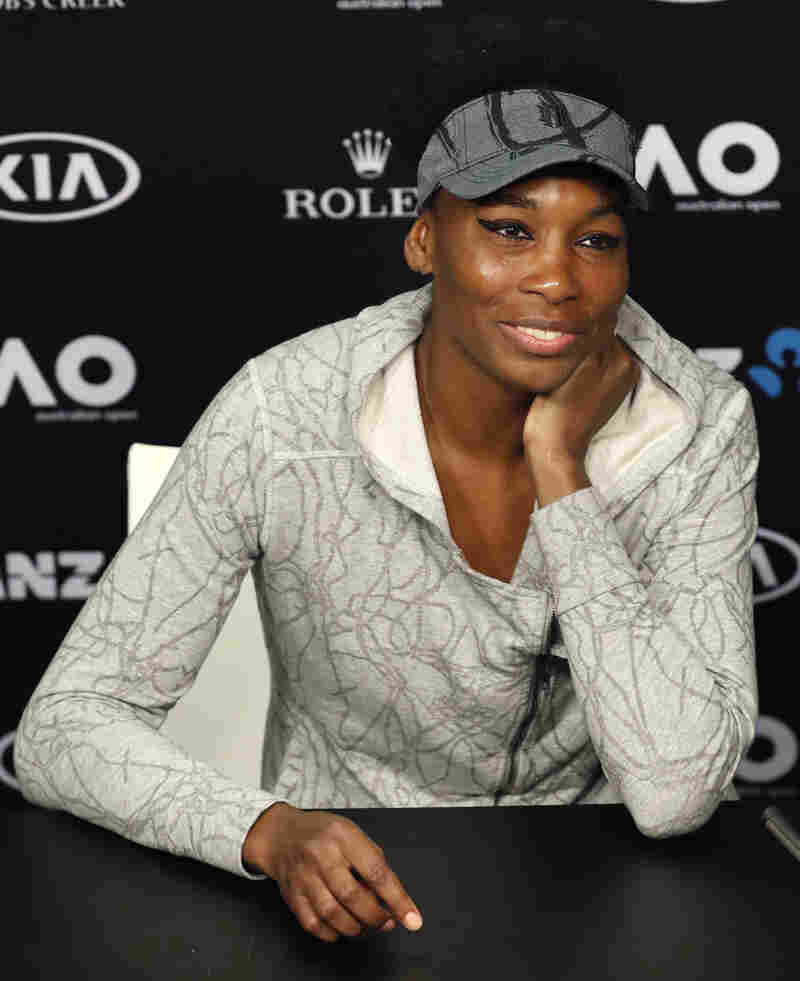
Venus Williams answers questions at a news conference following her loss to sister Serena in the women’s singles final at the Australian Open tennis championships in January.

Kin Cheung/AP

hide caption

toggle caption

Kin Cheung/AP

Police in Palm Beach Gardens, Fla., say Venus Williams was at fault in a June 9 car crash that led to the death of the passenger in another vehicle.

The Associated Press reports:

“Palm Beach Gardens police say witnesses told investigators that Williams ran a red light in her 2010 Toyota Sequoia SUV, causing a June 9 crash that injured 78-year-old Jerome Barson, who died two weeks later.

“The report says a 2016 Hyundai Accent driven by Barson’s wife, Linda, crashed into the side of Williams’ SUV. Linda Barson told investigators that she was approaching the intersection when her light turned green and that she was unable to stop in time. Linda Barson suffered unspecified moderate injuries. Williams, who turned 37 on June 17, was not hurt.

“She [Williams] told investigators she had entered the six-lane intersection on a green light but had been forced to stop midpoint by traffic ahead of her. She said she did not see the Barsons’ car when she crossed into their lanes.”

The police report says Williams, who has a residence in Palm Beach Gardens, was not under the influence of drugs or alcohol.

Williams’ attorney Malcolm Cunningham issued a statement:

“Ms. Williams entered the intersection on a green light. The police report estimates that Ms. Williams was traveling at 5 miles per hour when Mrs. Barson crashed into her. Authorities did not issues Ms. Williams with any citations or traffic violations. This is an unfortunate accident and Venus expresses her deepest condolences to the family who lost a loved on.”

Williams was cited in Palm Beach County, Fla., for driving without proof of insurance in 2011 and for driving with a suspended license in 2013, according to The New York Times.

The crash was first reported by TMZ.

Let’s block ads! (Why?)


No Image

After Abuse Scandal, USA Gymnastics Says It Will Take Steps To Protect Athletes

USA Gymnastics announced Tuesday that it will adopt all 70 of the recommendations in an independent review of its policies about reporting abuse. An investigation by The Indianapolis Star last year found that at least 368 gymnasts have alleged they were sexually assaulted by adults working in the sport.

“Even one instance of child abuse is one too many,” USA Gymnastics said in a statement on its website. “USA Gymnastics is very sorry that anyone has been harmed during his or her gymnastics career, and we offer our deepest regrets to any athlete who suffered abuse or mistreatment while participating in the sport. By working together, we can move the sport forward to better prevent the opportunity for abuse to occur.”

The organization’s board unanimously adopted the report’s recommendations on Monday night, the Associated Press reports. But some say USAG’s pledge to do better isn’t enough.

“The same people who have groomed this environment and didn’t catch it to begin with, and now all of a sudden you’re telling us overnight this is going to be fixed?” Olympic gold medalist Dominique Moceanu told the Star.

Attorney John Manly, whose firm represents more than 100 people who allege abuse by former team doctor Larry Nassar, called the report “a public relations facade,” according to the AP.

“The report calls for a change in culture but those who created the toxic culture remain in charge of the organization,” said Manly in a statement, the AP reports. “The lack of any real investigation, facts or accountability for those who failed thousands of boys and girls victimized by Nassar and others in the report is disturbing.”

Late last year, USA Gymnastics hired Deborah Daniels, a former federal prosecutor and current partner at an Indianapolis-based law firm, to conduct an independent review of its bylaws, policies, procedures and practices related to handling sexual misconduct matters, and to make recommendations on how to improve.

That report was released yesterday, and its overarching recommendation is a “cultural shift” at both the organization and its member clubs. “USA Gymnastics has never felt it had the ability to exert influence over the club,” Daniels told the AP. “You can use membership to enforce the policies.”

One of Daniels’ recommendations is reducing the power of the organization’s president. “A president who was not inclined to take reports of misconduct seriously, or who was concerned about tarnishing the reputation of the organization, or who was a friend of the respondent in the matter, would have the authority to dismiss the complaint, or choose not to pursue it, without the involvement of others.”

The group’s former president and CEO, Steve Penny, resigned in March under pressure that followed the Star‘s investigation. USA Gymnastics expects to hire Penny’s replacement by the fall, the newspaper reports.

USA Gymnastics staff received “little, if any, formal training” relating to the dynamics or prevention of child abuse, according to Daniels’ report, and it also had no staff dedicated to child protection. The organization says it is “in the final stages” of hiring a Director of Safe Sport, who will be charged with driving the importance of athlete safety and creating education and training plans for athletes, parents and coaches.

The Daniels report describes the specific qualities of women’s gymnastics that increase its athletes’ risk of sexual abuse and harassment: the young age of athletes, long hours of training that prevent athletes from receiving typical socialization, an emphasis on toughness and not complaining, physical contact as a coaches “spot” an athlete or correct her form, and an emphasis on obedience. “Everything about this environment, while understandable in the context of a highly competitive Olympic sport, tends to suppress reporting of inappropriate activity,” the report says.

And parents of elite gymnasts often defer to coaches, the report explains: “[P]arents learn that they must turn their child’s upbringing and discipline over to the coach during the training portions of her day, and even beyond. If the coach orders no desserts, the parent is doing the child a disservice by taking her out for ice cream. … And generally, the parents are not themselves gymnasts, so they are uncertain of the propriety of actions that may be taken by coaches. They want their child to succeed, so they tend to defer to the authority figures in the sport and not question them.”

The report recommends USA Gymnastics create a database of coaches who are dismissed from member clubs, so that coaches suspected of abuse do not move from one club to another. The AP reports that such a database is planned.

USA Gymnastics listed a number of policies it would introduce to decrease “opportunities for grooming and other inappropriate interactions.” Those policies include prohibiting adult members from being alone with minor gymnasts, sharing or being alone in a sleeping room with gymnasts, or having “out-of-program” contact with gymnasts via email, text or social media.

“What we’ve recommended can’t happen overnight, it will take thoughtful and strategic planning to implement,” Daniels told the AP on Tuesday. “If USA Gymnastics adopts recommendations and implements them, it is poised to be in the forefront.”

Let’s block ads! (Why?)


No Image

Supreme Court To Consider New Jersey's Bid To Legalize Sports Betting

New Jersey’s bid to offer legalized sports betting is going to the Supreme Court. The state wants to allow legal sports betting in its casinos and racetracks, but major league sports are united in their opposition.

ARI SHAPIRO, HOST:

New Jersey has been pushing to legalize sports betting at casinos and racetracks, and today the Supreme Court announced it would hear the case. It could be the undoing of a federal ban on sports betting in most states that goes back to 1993. Charles Lane of member station WSHU says the sports and gaming industries are watching this case closely and preparing for a future that might look very different.

CHARLES LANE, BYLINE: Ted Taylor works in a pub in Connecticut that is perfectly positioned if sports betting is legalized.

TED TAYLOR: They can watch whatever they want, including about 30 different sports channels on the television. And there’s a little pad there. If they don’t want to move, they can just place their bets on the pad.

LANE: Taylor is an executive at Sportech, a British gambling company that bought 16 off-track betting parlors in Connecticut and is poised to do the same in California. OTBs are a struggling industry, but this one is built to be a sports fan’s paradise. It’s all dark wood walls, saloon-style doors, 197 TVs and plenty of cashiers nearby for betters. Right now Taylor only takes bets on racing and highline, but he’s ready for traditional sports.

TAYLOR: When it’s legal, this would be a natural place for that to happen. But I’ve got to emphasize how important it is that everybody feels that that’s got to be regulated properly.

LANE: It’s not just betting parlors, either. Seven states have already moved legislation in preparation for legal sports betting even though the Supreme Court has only just decided to consider it. But from the gaming industry perspective, repealing the ban is a foregone conclusion. Geoff Freeman is president of the American Gaming Association.

GEOFF FREEMAN: Sports leagues, the casino gaming industry, the state’s broadcasters and many others have said it’s time to take a different approach to this complex issue.

LANE: Sport leagues have been the traditional opponent to repealing the ban. John Holden is a legal scholar at Florida State University who studies sports. He says leagues have been concerned about the integrity of their games.

JOHN HOLDEN: Legalized gambling might increase instances of match fixing or gambling corruption.

LANE: But leagues have increasingly begun to soften their stance and form partnerships that could capitalize on legal sports betting. The NFL, NHL, NBA – all of them have deals with data companies that watch for suspicious bets.

HOLDEN: However, these companies also provide the data that sportsbooks use to set lines. So while they provide sort of this integrity monitoring service, they’re also helping those operate betting businesses.

LANE: He says it’s not inconceivable that a sports team could own its own sportsbook. More likely, though, we’ll see new entrants into the sports gambling market. David Katz is a gaming analyst for Telsey Advisory Group. He says businesses like the horseracing company Churchill Downs or the investment bank Cantor Fitzgerald already have products ready to go.

DAVID KATZ: The technology that they use is translatable into a sports betting platform quite easily.

LANE: There’s even more surprising possibilities. Microsoft has technology that has been learning how to bet on sports, and the videogame division of Sony has a gambling patent which has some speculating if betting on video game sports could be legal as well. For NPR News, I’m Charles Lane, WSHU news.

Copyright © 2017 NPR. All rights reserved. Visit our website terms of use and permissions pages at www.npr.org for further information.

NPR transcripts are created on a rush deadline by Verb8tm, Inc., an NPR contractor, and produced using a proprietary transcription process developed with NPR. This text may not be in its final form and may be updated or revised in the future. Accuracy and availability may vary. The authoritative record of NPR’s programming is the audio record.

Let’s block ads! (Why?)