Business

No Image

U.S. Markets Move Higher On Otherwise Slow Day

On an otherwise slow trading day, both the Nasdaq and Dow Jones indexes made notable gains. The Nasdaq closed at a record 5,487 points while the Dow inched closer to a 20,000 high. Mark Lennihan/AP hide caption

toggle caption

Mark Lennihan/AP

Boosted by technology stocks and housing, major U.S. Stock indexes closed higher despite slow post-holiday trading.

The Nasdaq ended the day breaking a record. By the market’s close, it had reached 5,487 points, a gain of 0.45 percent.

The Dow moved closer to a record 20,000 high reaching 19,945 by the time of the bell.

The Associated Press notes that despite these gains, it was an otherwise slow day for the markets. In fact, the news service says it was the lightest trading day since October 2015. At the same time, signs point to an altogether healthy year for U.S. markets.

“Markets are moving toward 20,000 and bond yields are up; there’s a little bit of buoyancy in oil prices,” chief investment officer at Wells Fargo Private Bank, Erik Davidson, told the news service.

Reuters adds that consumer and housing data, along with technology gains, pushed markets higher:

“Tuesday data showed American consumers’ confidence shot to its highest in more than 15 years in December as they saw more strength ahead in business conditions, stock prices and the job market, while house prices continued their steady recovery in October.

“U.S. equities have been riding a post-presidential election rally, feeding on optimism that Donald Trump’s plans for deregulation and infrastructure spending could bolster the economy. With the market priced for positive outcomes in various scenarios, some see the end-year rally as an opportunity to cash-in gains. …

“About 4.13 billion shares changed hands on U.S. exchanges, below the 7.27 billion daily average over the last 20 sessions. Volume this week last year averaged 5 billion stocks daily.

“The largest percentage gainer on the S&P 500 and Nasdaq 100 was Nvidia Corp, which rose 6.9 percent and boosted the chipmakers.

“Amazon rose 1.4 percent to $771.40. The online retailer said it shipped over 1 billion items to Prime members during the holiday season.”

Article continues after sponsorship

Let’s block ads! (Why?)


No Image

After 8 Decades And Countless Pastrami Sandwiches, New York's Carnegie Deli Folds

Customers dine at Carnegie Deli in New York City. The iconic deli, known for its large pastrami and corned beef sandwiches, announced it will close at the end of the year. Drew Angerer/Getty Images hide caption

toggle caption

Drew Angerer/Getty Images

One of the most famous delicatessens in New York will slice its last sandwich this week.

The Carnegie Deli opened in 1937 on Seventh Avenue across from Carnegie Hall. But it didn’t’ achieve notoriety until decades later — around the time that director Woody Allen filmed a table full of off-duty comedians there in his movie, Broadway Danny Rose.

There’s still a “Woody Allen” sandwich on the menu at the Carnegie Deli: half pastrami, half corned beef. But the real star is that pastrami.

“People love my pastrami so much, it’s like a human being,” says owner Marian Harper. “It’s overwhelming to me.”

Harper inherited the Carnegie Deli from her father, Milton Parker, who took over the restaurant with partner Leo Steiner in 1976. Back then, the Carnegie was just another deli in the theater district. Then a reviewer from The New York Times listed its pastrami among the best in the city. Ever since, Harper says, it’s been tough for customers to get a table.

Marian Harper is the owner of the iconic deli. She inherited the restaurant from her father. David Verdini/Courtesy of Carnegie Deli hide caption

toggle caption

David Verdini/Courtesy of Carnegie Deli

“They know to come here hungry,” says Harper. “They love the big portions. My father called it gargantuan sandwiches, he used that name.”

Article continues after sponsorship

The deli’s oversized portions and over-the-top attitude made it an essential New York experience.

“The Carnegie is really the New York Jewish deli,” says Ted Merwin, professor of history at Dickinson College, and the author of Pastrami on Rye: An Overstuffed History of the Jewish Deli. “It’s a symbol for what I call the ethos of excess.”

Merwin says restaurants like the Carnegie Deli and its longtime rival, the Stage Deli, played an important role in American Jewish culture.

For Jews, an important part of their becoming American was being able to eat in delis that were in and around the theater district, says Merwin. “So the celebrity culture was something they participated in very avidly.”

Pictures of movie stars and famous people who have dined at the deli hang on the restaurant’s wall. /Courtesy of Carnegie Deli hide caption

toggle caption

/Courtesy of Carnegie Deli

The walls of the Carnegie Deli are still lined with photos of Broadway stars. But most of them are forgotten now. And most of the patrons don’t bat an eye at the Christmas music being piped into the dining room. They’re mainly tourists, hungry for a nostalgic New York experience.

“I’m sorry to see it go,” says John Sinnott, who was dining with his wife and two children. The family lives in the Hudson Valley and visits New York City every year during the holiday season. Sinnott says it’s an annual family tradition to see the Christmas tree at Rockefeller Center, and stop at the Carnegie Deli for lunch.

“It’s another part of New York that’s gone forever,” he says. “You have to move forward. But some things you don’t want to leave behind.”

The Carnegie Deli has been struggling lately. It closed for 10 months after workers reported a gas leak. A court ordered the restaurant to pay its employees more than $2 million in back wages.

Customers wait in line outside for a table at the Carnegie Deli. Drew Angerer/Getty Images hide caption

toggle caption

Drew Angerer/Getty Images

Marian Harper went through a nasty divorce from her husband, who allegedly stole the deli’s prize pastrami and cheesecake recipes, and shared them with his mistress. But Harper says none of that is responsible for the closing of the deli’s Manhattan outlet at the end of the month.

“I’m at that certain age where I want to enjoy my life, and I want to do certain things,” says Harper. “And all good things must come to an end.”

The Carnegie Deli will still have outposts in Las Vegas and Bethlehem, Pa. But if you’re looking for that table full of comedians in the back, you’ll have to watch Broadway Danny Rose.

Let’s block ads! (Why?)


No Image

For Global Investors, 'Uncertainty' Over Business Climate Under Trump

The Trump International Golf Club in Dubai is part of the president-elect’s real estate empire. Trump has said his sons would run his companies while he’s president. Karim Sahib/AFP/Getty Images hide caption

toggle caption

Karim Sahib/AFP/Getty Images

It can take decades for a country build up a name as a good place to do business, and the U.S. consistently ranks among the best. But some economists say its reputation for trustworthiness could be challenged if President-elect Trump makes good on threats to rip up international agreements.

“The U.S. is consistently among the top five, the top 10 countries in the world in terms of the environment for doing business. And this is mostly because of the rule of law and the transparency of government,” says Simeon Djankov, a senior fellow at the Peterson Institute for International Economics and former chief economist at the World Bank.

He warns that America’s solid reputation could quickly disappear if President-elect Trump carries through with some of his campaign promises. He points to the Paris climate accord, signed by world leaders a year ago. Djankov says there was an underlying expectation in the global business community that an international contract would be honored when the next U.S. president took office.

“Suddenly the president-elect says, ‘Well, I don’t like this agreement, I may not abide by it,’ ” he says. “This business is thrown into panic, already they have spent maybe hundreds of thousands or even millions of dollars abiding by this new regulation, now it’s for nothing, so to speak.”

Article continues after sponsorship

Scuppering such agreements can erode trust with international investors, says Ray Fisman, a professor of economics at Boston University.

“If there’s one thing that deters investment, it is uncertainty,” he says. “And we’re seeing uncertainty. You don’t quite know what you’re in for if you consider doing business in the U.S.”

It’s still unclear whether there will be a bright line between Trump’s business dealings and the White House. His children have sat in on meetings with world leaders and advisers. Trump has said his sons would run his companies while he’s president — but he could still make money off his name used on properties across the world.

“We should not forget that perceptions are important,” says Alejandro Salas, a director at Transparency International, which produces an index every year looking at the impact of perceived corruption on international investment in more than 160 countries.

Salas says the higher level of corruption, the less attractive a country is to investors, and vice versa. The U.S. ranked 16th last year, tied with Austria. Salas says that may change because Trump appears to disregard many rules and regulations.

“The fact that there could be so much conflict of interest, the fact that he says as far as the conflict of interest laws don’t apply to the president, that’s very dangerous,” Salas says.

The American system of checks and balances will help hold the government accountable, Salas says. For now, investors will give the new president time and latitude to settle into the job. Meanwhile, the stock market is going gangbusters.

Let’s block ads! (Why?)


No Image

The Economy Trump Will Inherit

Donald Trump calls the impact of trade deals on the US a “disaster.” But what kind of economy is he really inheriting and how might he affect it? Economics blogger Megan McArdle weighs in.

LINDA WERTHEIMER, HOST:

This is WEEKEND EDITION from NPR News I’m Linda Wertheimer. During his presidential campaign, Donald Trump hammered away at the troubles of the American economy. But if you look at the numbers, the economy doesn’t seem to be doing so badly. The unemployment rate is now 4.6 percent – half what it was when Obama first took office. Home sales are up. Energy prices are stable. The stock market is soaring. To talk more about what kind of economy Trump is inheriting and what happens next, we invited Bloomberg View columnist Megan McArdle into our studios. Thank you very much.

MEGAN MCARDLE: Thanks for having me.

WERTHEIMER: So many of the numbers we look for as indicators of our economy’s health are positive. I want to ask you for your take on them. Do you – let’s start with unemployment – 4.6. Is that – that is a good number, isn’t it?

MCARDLE: It is a pretty good number, but you have to qualify that because one thing that we have seen since this recession is that, unlike earlier recessions, we haven’t seen employment recover the way we would normally expect to. So the unemployment rate is low. What we haven’t seen is labor force participation is about three percentage points lower than it was in 2007. And if you have fewer people looking for work, you can get a low unemployment rate, but that doesn’t necessarily mean that things are healthy because people may have dropped out because they can’t find a job, and they just say, you know what? I’m not even looking anymore.

WERTHEIMER: President-elect Trump also talked a lot about international trade agreements, and it was his view that some of these agreements have hurt the sort of American workers you were just talking about. Do you think he’ll be able to renegotiate trade agreements, and if he does, will it help those people?

MCARDLE: The president does actually have extraordinary latitude on trade agreements and on foreign policy more generally much more than he does on domestic policy. So he could throw any number of monkey wrenches into the operation of our international trade agreements. But you have to ask, first of all, whether he will because it’s easy to talk about those things in abstract. But then when you start actually doing it, you know, there’s lots of interest groups that are going to be descending on Washington saying, please, please, please, don’t do this. He may want to get re-elected.

And then the more complicated question is does that help American workers? Because I think that, you know, 10 years ago when I was working for The Economist, I would have said, look, trade’s great for everyone. It’s win-win. It, you know, rising tide lifts all boats. And I think that we’ve actually decided there was an emerging consensus among economists that that actually hasn’t been the case. First of all, because some of the trade adjustment things we wanted to do, like retraining, haven’t worked out that well but also because China itself, such a huge economy, so many people, was such a shock to the system that normally over the course of a decade we would lose some jobs to trade. And some people would be hurt by it, but then other things would compensate.

The dislocations were too big for the economy to absorb as readily. That doesn’t, though, mean that undoing it is actually going to fix the problem. You know, there are things – you can’t – if you break a jar of mustard, you can’t put it back together and put the mustard back into the jar, right? It’s broken. And that I think is similar with a lot of these things that have happened. And those factories went and they’re not coming back no matter what we do.

WERTHEIMER: Mr. Trump is promising 4 percent GDP growth, which is up from the current 2 or so. Is that possible?

MCARDLE: It is theoretically possible, certainly for a few quarters anyway. But, you know, the president just doesn’t have that much control over the economy. And I think that actually, you know, all presidents promise that they’re going to make it grow. They’re going to do all these things. The good news is that they don’t have that much control over our economy.

WERTHEIMER: Which is also the bad news.

MCARDLE: It is somewhat the bad news, but if you think about it, if a president could come in and make the economy grow at 4 or 5 percent because he wanted to, that would also mean that a bad president could come in and give you a recession of negative 5 or negative 10 percent. You know, you can really screw up an economy if you want to. I think Venezuela is a good example of that right now. But in general, within the limits of the U.S. political system, the president has maybe a few tenths of a percentage point impact on our GDP growth. Most of it is Americans deciding to do things more efficiently, to create jobs, to invent things. President Trump can’t make that happen. No one else can either.

WERTHEIMER: Megan McArdle is a columnist with Bloomberg View. Thank you very much for coming in.

MCARDLE: Thanks for having me.

Copyright © 2016 NPR. All rights reserved. Visit our website terms of use and permissions pages at www.npr.org for further information.

NPR transcripts are created on a rush deadline by Verb8tm, Inc., an NPR contractor, and produced using a proprietary transcription process developed with NPR. This text may not be in its final form and may be updated or revised in the future. Accuracy and availability may vary. The authoritative record of NPR’s programming is the audio record.

Let’s block ads! (Why?)


No Image

'Wall Street Journal' Raises Possible Conflicts Of Interest For Rep. Tom Price

A report in the Wall Street Journal is raising questions about possible conflicts of interest for Rep. Tom Price, Donald Trump’s choice to be Secretary of Health and Human Services. According to the newspaper, Price traded medical stocks while also working on health legislation in Congress. NPR’s Robert Siegel talks to Michelle Hackman of the Wall Street Journal.

ROBERT SIEGEL, HOST:

A new report raises questions about the financial dealings of one of Donald Trump’s top Cabinet picks. Trump chose Congressman Tom Price of Georgia for secretary of Health and Human Services. According to The Wall Street Journal, Price has been active in trading medical stocks, and he’s done so even while working on health legislation in Congress, legislation that could affect those stock prices. Michelle Hackman wrote about this for the paper and she joins us from New York. Welcome to the program.

MICHELLE HACKMAN: Thank you for having me.

SIEGEL: How heavily invested is Congressman Price in these health-related stocks?

HACKMAN: Tom Price, you know, by background is an orthopedic surgeon. So it’s probably fair to start off by saying this man is deeply interested in health care. This is his background and so it makes sense that he’d also, you know, know more about health-related stocks than other companies. As of the most recent filings, he has ownership in about 40 different companies that add up to – and this is probably a conservative estimate – but about $300,000 at least.

SIEGEL: You reported that well price was actively making trades, he was also actively shaping health legislation. Tell us first about the case of the 21st Century Cures Act and Price’s stake in the company in Innate Immuno.

HACKMAN: Mr. Price was on the committee that wrote this law that among other things speeds up the process by which drugs and other medical devices can be approved. That really impacts companies that Mr. Price was also buying stock in at the same time that he was writing and passing this legislation, like Innate Immunotherapeutics, which has a drug. It’s a multiple sclerosis drug that stands to benefit from accelerated passage through the FDA.

SIEGEL: Did the stock price increase?

HACKMAN: The stock price doubled after he invested it in August.

SIEGEL: And he was investing in other companies as well that were affected by the 21st Century Cures Act?

HACKMAN: Yes, he does. So he has stocks and several other pharmaceutical companies including Pfizer, who’s also a campaign donor to him.

SIEGEL: He has been reporting this activity, do I understand that?

HACKMAN: Yes.

SIEGEL: Yeah. And what kind of laws or regulations govern members of Congress in the stock market when they do report their investments?

HACKMAN: Until about four years ago, members of Congress weren’t required to even disclose their stock holdings. And four years ago, there was this public outrage in which a different congressman was sort of using his insider knowledge from his job to buy stocks and make a profit. And so they passed this law called the Stock Act – Stop Trading on Congressional Knowledge – where they required all members of Congress to file every trade they made within 45 days, made it explicitly illegal to buy or sell stocks on knowledge that they obtained as members of Congress.

SIEGEL: Did you hear anyone characterize his conflict of interest or potential conflict rising to the level of insider trading?

HACKMAN: No, we can’t make that characterization for sure. I mean, there are some trades that he made that the timing is definitely questionable but I think the work of looking into whether he actually had insider knowledge is something that Senate committees would have to look into.

SIEGEL: If he’s confirmed as secretary of Health and Human Services, Congressman Price would have to divest himself.

HACKMAN: That’s true. So members of Congress are allowed to do this. Members of the administration have much stricter ethics rules.

SIEGEL: What did you hear back from either Congressman Price or the Trump transition team about the Wall Street Journal story?

HACKMAN: We called Congressman Price on Wednesday and he immediately referred us to the Trump transition. The Trump transition team told us naturally that Mr. Price is concentrated on being confirmed and that if he is, he will follow all ethics rules and divest from all these stocks.

SIEGEL: Reporter Michelle Hackman of The Wall Street Journal. Thanks for talking with us.

HACKMAN: Thank you.

Copyright © 2016 NPR. All rights reserved. Visit our website terms of use and permissions pages at www.npr.org for further information.

NPR transcripts are created on a rush deadline by Verb8tm, Inc., an NPR contractor, and produced using a proprietary transcription process developed with NPR. This text may not be in its final form and may be updated or revised in the future. Accuracy and availability may vary. The authoritative record of NPR’s programming is the audio record.

Let’s block ads! (Why?)


No Image

Despite Pledges To Cut Back, Farms Are Still Using Antibiotics

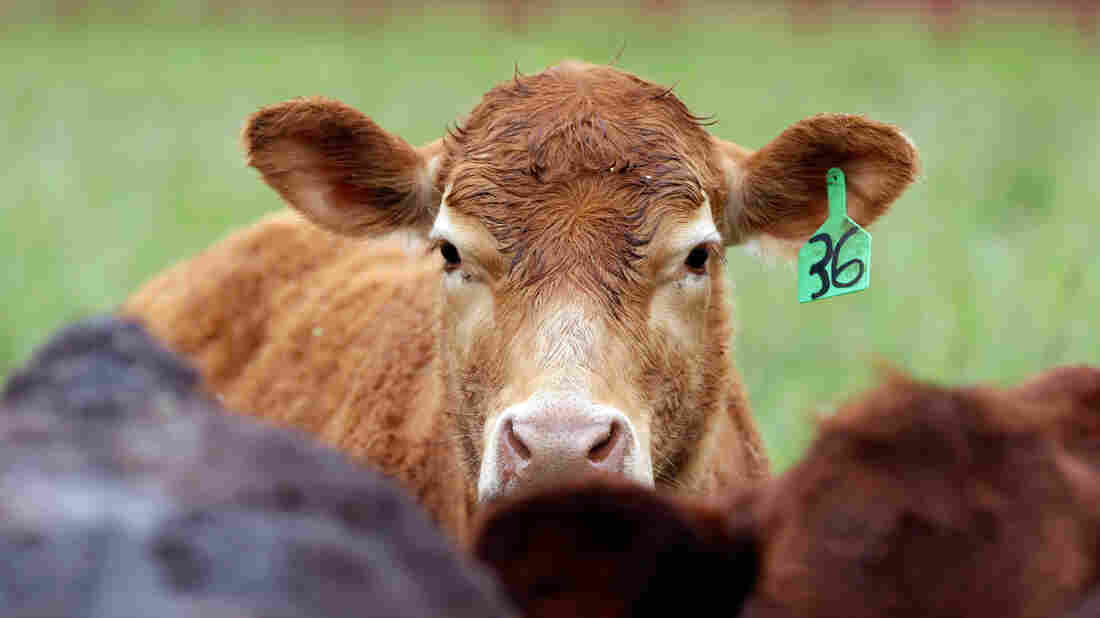
Antibiotic- and growth-hormone-free cattle gather at a farm in Yamhill, Ore. Despite farmers pledging to reduce or stop antibiotics use, a new report finds that sales of antibiotics for use on farms are going up. Don Ryan/AP hide caption

toggle caption

Don Ryan/AP

It’s a continuing paradox of the meat industry. Every year, more restaurants and food companies announce that they will sell only meat produced with minimal or no use of antibiotics. And every year, despite those pledges, more antibiotics are administered to the nation’s swine, cattle and poultry.

According to the latest figures, released this week by the U.S. Food and Drug Administration, antibiotic sales for use on farm animals increased by 1 percent in 2015, compared to the previous year. The increase was slightly greater – 2 percent — for antibiotics used as human medicine.

The FDA and other public health agencies have been pushing farmers to rely less on these drugs. Heavy use of antibiotics both in human medicine and in agriculture has led to the emergence of drug-resistant bacteria, complicating the task of treating many infections.

But the FDA finds a glimmer of good news in the latest figures, pointing out that the rate of increase has slowed. In the previous year, antibiotic use had increased by 4 percent, and a total of 22 percent from 2009 to 2014.

Article continues after sponsorship

The poultry industry has made the most ambitious promises to reduce antibiotic use. Perdue Farms says that 95 percent of its chickens already are raised with no antibiotics at all. Tyson Foods, the largest producer, has announced that it is “striving” to end the use of antibiotics that also are used in human medicine. Tyson will continue to deploy a class of antibiotics called ionophores, which can’t be used on humans. The new report, however, doesn’t shed any light on the impact of these moves, because it doesn’t show how much of each drug is used on cattle, swine or poultry.

In a statement, David Wallinga, from the Natural Resources Defense Council, said that “this report further underscores how urgently we need more and stronger government action” to reduce antibiotic use.

Ron Phillips, from the Animal Health Institute, which represents veterinary drug manufacturers, says that the FDA’s data on drug sales tell us little about what’s most important — whether the use of those drugs is leading to more drug-resistant bacteria. He says that another recent government report, from the National Antimicrobial Resistance Monitoring System, shows “very encouraging trends.” According to that report, bacteria found on meat at slaughter have not shown increasing resistance to most antibiotics in recent years.

There are some concerning trends, however. Some species of bacteria found on cattle have shown increasing levels of resistance to ciproflaxin, and turkey samples showed a big increase in Salmonella that’s resistant to several different drugs.

Let’s block ads! (Why?)


No Image

Uber Stops Self-Driving Test In California After DMV Pulls Registrations

Devin Greene sits in the front seat of an Uber driverless car during a test drive in San Francisco on Dec. 13. Eric Risberg/AP hide caption

toggle caption

Eric Risberg/AP

Uber will have to park its self-driving cars in California for now.

California’s Department of Motor Vehicles on Wednesday said it had revoked the registrations of 16 autonomous vehicles owned by the ride-hailing company.

“We have stopped our self-driving pilot in California as the DMV has revoked the registrations for our self-driving cars,” an Uber spokesperson said. “We’re now looking at where we can redeploy these cars but remain 100 percent committed to California and will be redoubling our efforts to develop workable statewide rules.”

The DMV said the registrations for 16 Uber cars were improperly issued because they weren’t marked as test vehicles. The department said it’s inviting Uber to “seek a permit so their vehicles can operate legally in California.”

Earlier this month, Uber started offering rides in self-driving cars in San Francisco without a permit for autonomous vehicles — defying state regulators. Uber’s self-driving Volvos, which were operated with a “safety driver” behind the wheel, have already been deployed in Pittsburgh.

Article continues after sponsorship

Uber had said that because the cars’ programming is “not ready” to drive without a person behind the wheel monitoring the automobile, the company didn’t need a self-driving car permit. Uber contended that its vehicles operate in the same way as those equipped with “advanced driver assist technologies” such as Tesla’s autopilot.

The DMV said Wednesday that “Uber is welcome to test its autonomous technology in California like everybody else, through the issuance of a testing permit that can take less than 72 hours to issue after a completed application is submitted.”

Let’s block ads! (Why?)


No Image

Obama Designates Atlantic, Arctic Areas Off-Limits To Offshore Drilling

Walruses rest on the shores of the Chukchi Sea, the vast majority of which was designated off-limits to drilling on Tuesday. Ryan Kingsbery/AP hide caption

toggle caption

Ryan Kingsbery/AP

President Obama has indefinitely blocked offshore drilling in areas of the Atlantic Ocean and in Arctic waters, a move aimed at advancing environmental protection during his final days in office.

The Arctic protections are a joint partnership with Canada. “These actions, and Canada’s parallel actions, protect a sensitive and unique ecosystem that is unlike any other region on earth,” the White House said in a statement.

“They reflect the scientific assessment that, even with the high safety standards that both our countries have put in place, the risks of an oil spill in this region are significant and our ability to clean up from a spill in the region’s harsh conditions is limited,” the White House added. “By contrast, it would take decades to fully develop the production infrastructure necessary for any large-scale oil and gas leasing production in the region — at a time when we need to continue to move decisively away from fossil fuels.”

This map shows the Atlantic areas that have been designated off-limits to oil and gas explorations and development activity. White House hide caption

toggle caption

White House

Obama’s action designates 31 Atlantic canyons “off limits to oil and gas exploration and development activity,” totaling 3.8 million acres, according to the administration. It provides the same protections to much of the Arctic’s waters, covering the “vast majority of U.S. waters in the Chukchi and Beaufort Seas,” totaling 115 million acres. Canada is doing the same to “all Arctic Canadian waters,” the joint statement adds.

Article continues after sponsorship

Obama took these actions by invoking a law called the Outer Continental Shelf Lands Act, which gives the president the authority to withdraw lands from oil and gas leases. But as NPR’s Jeff Brady and Jennifer Ludden report, major questions remain about what will happen if the incoming Trump administration attempts to reverse this action.

The Arctic is a critical and irreplaceable part of our world. Let’s make sure we protect it for future generations: https://t.co/y7cHx5GW2l pic.twitter.com/IiJevST12f

— The White House (@WhiteHouse) December 20, 2016

“The White House says the president is acting within his authority, that Presidents of both parties have done this in the past, and trying to reverse such an order would be unprecedented if Trump tried to do this,” Jeff said on All Things Considered.

There is no legal precedent for reversal, Jeff reports. “So if there’s a legal challenge, and I’m not going to be surprised if there is one, it’s really not clear what a court would decide.”

This map shows the area that the U.S. has designated as indefinitely off-limits to offshore oil and gas leasing. White House hide caption

toggle caption

White House

As Bloomberg reports, the “statute doesn’t include a provision for reversal and that action may take years to work its way through court.”

Environmental groups such as Oceana are celebrating the designation. “President Obama has taken a key step in protecting important areas of the Atlantic Ocean from offshore drilling,” as Jacqueline Savitz, the group’s senior vice president for the United States, said in a statement. “The people of the Atlantic coast refused to allow their way of life to be compromised and we commend their hard work making their voices heard in Washington.”

Representatives of the oil and gas industry are unhappy about the news. “We think it’s a very shortsighted decision to take these areas off-limits,” Andy Radford, senior policy adviser for offshore issues at the American Petroleum Institute, told Jeff. The action poses “great risk to our energy security going forward and eliminates the opportunity to create jobs and help small businesses throughout the country. “

Earlier this year, the Obama administration reversed course on a plan that would have allowed Atlantic offshore drilling after uproar from local communities and environmentalists.

Then, the administration designated the first national marine monument in the Atlantic Ocean. Last week, the National Oceanic and Atmospheric Administration announced that it has protected an Atlantic area about the size of New Jersey from deep-sea commercial fishing.

Let’s block ads! (Why?)


No Image

Board Decides To Keep Lagarde As IMF Chief After Conviction

Managing Director Christine Lagarde thanked the IMF Executive Board for the vote of confidence “in my ability to do my job.” Zach Gibson/AFP/Getty Images hide caption

toggle caption

Zach Gibson/AFP/Getty Images

The International Monetary Fund’s executive board expressed its “full confidence” in IMF Managing Director Christine Lagarde on Monday, hours after she was found guilty of negligence for improperly overseeing a 2008 case when she was France’s finance minister.

Lagarde has led the IMF since 2011.

“The Executive Board took all relevant factors into account in its discussions, including the Managing Director’s outstanding leadership of the Fund and the wide respect and trust for her leadership globally,” the board said.

U.S. Treasury Secretary Jack Lew said, “We have every confidence in her ability to guide the Fund at a critical time for the global economy.”

The case stemmed from Lagarde’s role in “settling a legal battle between the French state and business tycoon Bernard Tapie,” The Wall Street Journal reported. Lagarde, who was part of then-President Nicolas Sarkozy’s administration at the time, was accused of succumbing to political pressure in her handling of the case.

She maintained her innocence, saying she might have been unknowingly negligent but that she did her job as well as she could at the time.

Article continues after sponsorship

Lagarde thanked the IMF board for the vote of confidence “in my ability to do my job,” The Associated Press reported. She said she would not appeal the court’s ruling.

The conviction could bolster critics of the IMF, “who could complain about her continued role at the fund,” the Journal said.

“She will be a little — slightly — less credible talking about corruption, but the fund can talk about corruption without her,” Ted Truman, senior fellow at the Peterson Institute for International Economics in Washington, told the Journal.

Let’s block ads! (Why?)


No Image

How One Couple Fought For The Legal Right To Leave A Bad Yelp Review

The Yelp Inc. logo is displayed in the window of a restaurant in New York in 2012.

Scott Eells/Bloomberg via Getty Images

The story of a new law starts with some online Christmas shopping gone wrong.

In the winter of 2008, John Palmer of Layton, Utah decided to buy his wife Jen a couple of holiday tchotchkes. Things like desk toys and keychains.

The order, from the online retailer KlearGear, never arrived.

After a testy back and forth with the company’s customer service, Jen Palmer did what many thousands of consumers do every month: She posted about her negative experience on an online business review site.

“I posted the review and then we forgot about it,” she says.

But four years later, they received an email from the company demanding they take the review down. The company said they had violated a “non-disparagement” clause in the terms of service — a caveat in the fine print that restricts customers from publicly reviewing their experience with the company.

The company said the Palmers would be subject to a $3,500 fine if they didn’t comply.

The Palmers refused to take down the review or pay the fine. A few months later the couple found their credit had taken a major hit — KlearGear had passed the fine on to a collection agency and reported it to several credit bureaus as an unpaid bill.

Article continues after sponsorship

They went to the press and found legal representation from Public Citizen, a consumer rights advocacy group.

“The purpose of a non-disparagement clause is to have a hammer with which to hit consumers who haven’t said anything false,” says Paul Levy, a lawyer with Public Citizen. “But you can make them take it down, and you can seek damages, you can seek attorney’s fees, what might you.”

Levy says gag clauses like these can limit truthful speech and deprive consumers of valuable information when choosing where to spend their money.

After a lengthy legal back and forth, the Palmers won a default judgment in federal court and their credit was restored.

But their case was an extreme example.

“Surely 95 percent of the time consumers simply remove the review, rather than stand behind their words, in order to avoid any potential legal action,” says Eric Goldman, a law professor at Santa Clara University School of Law.

He says it’s likely that the use of these gag clauses is much more widespread than it appears.

“So the number of lawsuits are fairly rare because there’s a much larger group of reviews that have been removed under the threat of lawsuits,” Goldman says.

The KlearGear case attracted media coverage around the country and helped gain the attention of legislators. California passed a law outlawing the use of non-disparagement clauses to limit customer reviews in 2014. Online review platforms like Yelp and TripAdvisor joined the effort to pass federal legislation.

It culminated last week, when President Obama signed the Consumer Review Fairness Act into law after it passed unanimously in the Senate last month. It prohibits businesses from putting non-disparagement clauses into terms of service.

Those clauses “will not work in court. And they will expose the business that tries to use those techniques to potential liability,” Goldman explains. He points out that under the law, businesses will still have the ability to combat false reviews through defamation law.

Not everyone is happy about the new law, however. Joe Sullivan, an Atlanta business attorney who regularly advises businesses on how to deal with negative online reviews, says he’s heard some pushback from businesses, none of whom wanted to speak on the record.

“It wasn’t necessarily a solution in search of a problem,” he says, “but it was something where it wasn’t a widespread practice.” Sullivan says there wasn’t much incentive for companies to use this kind of fine print to sue customers.

He says some businesses view the law as an effort by consumer review sites to grow their customer base.

Despite the concerns of some businesses, Jen Palmer is happy that the new law means customers like her will not face legal retaliation in the future.

“I’m very glad to hear that this seems to be the one thing that Congress can agree on,” she says. “I’d definitely call it the best Christmas present of all, to make sure that nobody else has to go through this.”

Let’s block ads! (Why?)