
South Korea Will Interview Thousands Of Athletes After Rape And Abuse Allegations

Shim Suk-hee (front left) races during the women’s 1,500-meter finals at a World Cup short track speedskating event at the Utah Olympic Oval on Nov. 13, 2016, in Kearns, Utah.
Rick Bowmer/AP
hide caption
toggle caption
Rick Bowmer/AP
South Korea’s human rights commission is launching a sprawling investigation into sexual abuse and violence in sports, following multiple allegations that coaches mistreated and attacked athletes.
The National Human Rights Commission of Korea plans to interview thousands more athletes, including children and adults, about possible mistreatment.
“Physical and sexual harassment in the sports community take place repeatedly within a structured system, rather than accidentally,” the commission’s chief Choi Young-ae told a news conference in Seoul last week. “Violence is exonerated in the performance-centered culture.”
The commission, an independent body set up by the government, says it is assembling a team to carry out the interviews for one year, after which it might recommend further investigation and possible prosecution.
Earlier this month, three government ministries in charge of gender equality, education and sports pledged to coordinate action to make sure offenders, and those who ignore or cover up abuse, are prosecuted.
“From now on, we will make sure that victims of sexual abuse can call on the authorities without having to fear backlash,” Lee Sook-jin, vice minister of gender equality and family, told reporters on Thursday.
South Korea’s Olympic medal counts have ranked in the top 10 in recent years. But the new abuse accusations reveal entrenched problems in the competitive training culture of one of Asia’s rising sports powers, sports and human rights experts say.
The first case that appeared to lead a series of survivors to come forward was short track speedskater Shim Suk-hee, who went missing from the national team’s training camp in early 2018 — weeks before she competed in last year’s Pyeongchang Winter Olympics.
A Sports Ministry investigation found that Shim, a two-time Olympic gold medalist, was beaten by her coach Cho Jae-beom the day she went missing. Cho was fired and convicted of abusing four athletes, including Shim. He was sentenced to 10 months in jail last September.
Shim testified at Cho’s appeal hearing last month. Speaking to reporters outside the courthouse, she said, “I mustered my courage to come here today because I hope there will be no more victims like myself in the sports world and because I want to do what I can, not just for myself, but for the future.”
This month Shim went further, accusing Cho of repeatedly raping her since she was 17. She’s now 21.
Cho, who is 37, has denied the sexual abuse charges through his lawyer but admitted to physically abusing Shim and three other athletes.
As the scandal grabbed headlines, a petition on the presidential office’s website calling for harsher sentencing of Cho got more than a quarter of a million signatures.
Government officials and lawmakers promised to get tough on sexual abuse in sports.
“Recent allegations of physical and sexual violence in sports reveal a shameful side hidden beneath the shiny facade of South Korea as a sports powerhouse,” President Moon Jae-in told his aides in a speech this month.
Also in January, a former judo athlete as well as a taekwondo trainee stepped forward to accuse their coaches of physical and sexual violence.
But some observers say the recent series of accusations are just a drop in the bucket.
“Still, the numbers are low, and we all know why,” says Chung Yong-chul, a professor of sports psychology at Seoul’s Sogang University and an activist against abuse in sports. “Because of all the threats, [abused athletes] are afraid to talk about it.”
Sports and Olympics authorities say the government has taken disciplinary action in 124 cases of physical, sexual and verbal abuse against athletes in the past five years, including 16 incidents of sexual abuse.
Chung says the government has been promising to crack down further on abuse for the past decade, but because of a culture of impunity, little has changed.
Some of this culture, he notes, has roots in South Korea’s Confucian traditions, in which a teacher’s authority is just like a father’s: It must be obeyed and not challenged.
“That’s part of the reason why it’s so hard for athletes to speak out,” he says, “because you’re actually accusing a father-like figure, accusing him as an aggressor.”
That’s also why sports authorities who have the power to punish abusers often shield them, Chung says. He adds that athletes are suspicious of the help centers and hotlines set up for them, and that they fear the services may be working against them and protecting coaches and trainers.
Athletes also face limited educational and career prospects after they retire from sports, Chung notes, so they are often afraid of risking their futures by speaking out.
He acknowledges that the current scandal in South Korea bears some superficial resemblance to the case of Larry Nassar, the former USA Gymnastics national team doctor.
But Chung points out that Nassar was sentenced to a total of more than 300 years in prison for multiple sex offenses. In addition, USA Gymnastics’ entire board of directors resigned, as did the interim president of Michigan State University, where Nassar worked as a physician.
“That didn’t happen in Korea,” Chung says. Although the head of the Korean Sport and Olympic Committee apologized to victims and the public, officials have not resigned or lost their posts as a result of the allegations.
Chung adds that if the snowballing scandal and public outrage don’t force an overhaul of a system that has allowed such abuses, then perhaps nothing will.
“So I think this could be the last chance for Korean sports to actually eradicate all the problems,” he warns.
He hopes South Korea will accept a reduced gold medal haul at next year’s Tokyo Olympics, in exchange for an increase in athletes’ human rights.
NPR News Assistant Se Eun Gong contributed reporting.
Chinese, Taiwanese Restaurants Drop 'Golden' And 'Dragon' To Take On Mandarin Names

More Chinese and Taiwanese restaurants in the U.S. are embracing Mandarin to name their businesses.
MICHEL MARTIN, HOST:
Restaurants serving Chinese or Taiwanese food in the U.S. often use the same few words in their names. Think golden and dragon. But NPR’s Hansi Lo Wang has been noticing a different trend in New York City.
HANSI LO WANG, BYLINE: Down underground in a Manhattan subway station, a wok full of napa cabbage and carrots are stir-frying in Edward Huang’s first restaurant. Slow-braised beef noodle soup and rice bowls topped with minced five-spice pork are all served from this galley kitchen crammed inside a bustling food court. Huang says the dishes were inspired by visits to his family in Taiwan, and so was the restaurant’s name – Zai Lai.
EDWARD HUANG: My family’s parting words are always zai lai – come back soon, literally. But it’s, like, a see you soon, come back soon sort of idea.
H. WANG: At first, though, spelling out that Mandarin phrase in English letters – Z-A-I L-A-I – was not what Huang had in mind for branding his Taiwanese restaurant.
HUANG: People come, and they say, oh, is it Zay Lay (ph)? We had – you know, some of our employees in the beginning had trouble pronouncing it. And I wanted to avoid that headache.
HONGYUAN DONG: Well, I guess the only difficult sound here is the Z.
H. WANG: Hongyuan Dong teaches Chinese at the George Washington University in D.C. Here’s how he coaches his students on pronouncing that Z sound in Mandarin.
DONG: So it’s similar to Ds in English. So it’s not zai (ph) – it’s dsai (ph).
H. WANG: Dong says he’s seen other new restaurants with Mandarin names written in pinyin. It’s a system of transliterating Chinese characters using the Roman alphabet. Pinyin was first adopted by the Chinese Communist Party, and now it’s an international standard that’s popping up even on restaurant signs in Washington, D.C.
DONG: Actually, I noticed a new restaurant called Lao Ban. There’s no English because lao ban (ph) means the boss in Chinese.
H. WANG: That’s another sign, Dong says, of how much more common Mandarin is in U.S. culture today.
HEATHER LEE: I think it means that we’re ready to engage mainland China. We’re speaking in the language of mainland China.
H. WANG: Heather Lee is a historian at New York University Shanghai. She’s researched the history of Chinese restaurants in the U.S., including when names in Cantonese rather than Mandarin were often spelled out using English letters. Over the years, many other restaurants have adopted some common keywords in their English names like panda and Great Wall. Lee says the transition towards Mandarin names marks a shift in who’s running the restaurants and the kinds of customers they’re trying to attract.
LEE: They’re linking up with a wealthier professional population from mainland China. A lot of them seem to have connections to Taiwan as well.
H. WANG: For Jason Wang, it was a connection to the city of Xi’an in northwest China that he wanted to preserve right in the name of his family’s restaurant chain in New York – Xi’an Famous Foods. The first part of the name is spelled with an X-I. It’s one of the hardest sounds to pronounce for many non-Mandarin speakers. And Wang says putting that X on his restaurant storefronts has helped the business grow.
JASON WANG: Let’s just keep things authentic. You know, let’s keep the X. Let’s keep the spice in the food. Let’s not make it too easy for people. People like discovering stuff, you know. They don’t really like everything handed to them on a platter.
H. WANG: Wang adds it’s also a matter of taking pride in his Chinese heritage.
J. WANG: Why are we ashamed of the stuff that we call our food or what we call our restaurants? I think that is also why we’ve become more confident in presenting the actual names versus trying to hide it behind some sort of euphemism of a name.
H. WANG: Back underground in the subway station at Zai Lai, Patrick Dixon (ph) is waiting for his order – a steamed pork bun.
PATRICK DIXON: You know, if I wanted, like, authentic Chinese cuisine, I’d consider the place that actually has, like, Chinese words in it before a place that has, like, just panda, you know?
H. WANG: Dixon’s a frequent customer at this restaurant. He says part of the draw is its name – Zai Lai.
You know what it means?
DIXON: No. I have no clue. What does it mean?
H. WANG: It means come again in Mandarin.
DIXON: Oh, that makes sense.
H. WANG: Especially since he’s planning to Zai Lai again and again.
Hansi Lo Wang, NPR News, New York.
Copyright © 2019 NPR. All rights reserved. Visit our website terms of use and permissions pages at www.npr.org for further information.
NPR transcripts are created on a rush deadline by Verb8tm, Inc., an NPR contractor, and produced using a proprietary transcription process developed with NPR. This text may not be in its final form and may be updated or revised in the future. Accuracy and availability may vary. The authoritative record of NPR’s programming is the audio record.
Kendall Coyne Schofield Makes History As First Woman To Compete In NHL Skills Competition
Kendall Coyne Schofield became the first woman to compete in the NHL All-Stars Skills Competition this past week. She subbed in for Nathan MacKinnon who couldn’t compete because of a bruised foot.
LULU GARCIA-NAVARRO, HOST:
It all began with a tweet. Colorado Avalanche Center Nathan MacKinnon was all set to compete in the National Hockey League’s All-Star Skills Competition, but he got a bruised foot. So he had to pull out. But McKinnon had another player in mind to fill in. And his team tweeted out an invitation to Kendall Coyne Schofield. She’s a forward for the U.S. women’s national team, which took the gold medal at last year’s Olympics. Her first thought, she said, was, I can do this. And so she did. In the fastest skater event, she posted a time of 14.346 seconds, which placed seventh among some of the NHL’s top players. And it made her the first woman to ever compete in the NHL All-Stars Skills Competition. Obviously, I was a little nervous, Coyne Schofield told ESPN. But she said, I knew it was a moment that was going to break a lot of barriers and a moment that would change the perception of our game.
Copyright © 2019 NPR. All rights reserved. Visit our website terms of use and permissions pages at www.npr.org for further information.
NPR transcripts are created on a rush deadline by Verb8tm, Inc., an NPR contractor, and produced using a proprietary transcription process developed with NPR. This text may not be in its final form and may be updated or revised in the future. Accuracy and availability may vary. The authoritative record of NPR’s programming is the audio record.
Journalists Raise Money, Post Jobs And Buy Beers For Peers After A Week Of Layoffs

Members of the BuzzFeed News team work at their desks at BuzzFeed headquarters on Dec. 11, 2018.
Drew Angerer/Getty Images
hide caption
toggle caption
Drew Angerer/Getty Images
It’s been a tough week in the journalism industry.
On Wednesday, BuzzFeed announced plans to lay off 15 percent of its overall workforce. The layoffs are expected to affect around 200 employees — many in the company’s news division.
The same day, The Wall Street Journal reported that Verizon’s media group — which includes AOL, Yahoo and HuffPost — will lay off 7 percent of its staff. The layoffs include the entire HuffPost opinion and health sections.
Also on Wednesday, the newspaper giant Gannett started slashing jobs. For Gannett, the company behind USA Today and prominent local newspapers like The Indianapolis Star and The Arizona Republic, this week’s layoffs are part of years of downsizing and cuts for the company.
Many laid off journalists quickly took to Twitter to announce the loss of their jobs.
“Like so many talented and lovely journalists, I was laid off today,” tweeted HuffPost deputy opinion editor Chloe Angyal.
“I’m in shock. Not how I wanted 35 year journalism career to end,” tweeted longtime Indianapolis Star columnist Tim Swarens.
“If you’re hiring, my DMs are open,” tweeted BuzzFeed News investigative reporter Chris McDaniel.
For those who are wondering, @HuffPost Opinion — the entire section — is being eliminated. The beautiful, diverse, inclusive baby we built from scratch is gone.
— Chloe Angyal (@ChloeAngyal) January 24, 2019
I was told a few minutes ago that @indystar has laid me off. I’m in shock. Not how I wanted 35 year journalism career to end.
— Tim Swarens (@tswarens) January 23, 2019
Hey guys, I’m one of the many reporters laid off from BuzzFeed News today. I’m proud of the work I’ve done here, alongside some of the best investigative reporters there are. If you’re hiring, my DMs are open.
— Chris McDaniel (@csmcdaniel) January 25, 2019
On and on it continued.
But amid the Twitter storm of bad news, some supportive tweets emerged.
Following the lead of journalists in Chicago who started a beer fund for laid off colleagues in 2017, BuzzFeed News copy editor Emerson Malone decided to do the same for his own colleagues.
On Friday he tweeted, “A lot of my BuzzFeed News colleagues — and friends — are losing their jobs today. Please buy them a beer.”
Malone started a plumfund page to raise money, which brought in more than $7,800 in a 24-hour time span from hundreds of donors.
“I didn’t anticipate it,” he said. “The support system is so affirming.”
Some BuzzFeed staff in Los Angeles went out for drinks on Friday, but Malone said they plan to use the beer fund money when the group goes out again on Monday, which is many people’s last day.
BuzzFeed LA drowning our tears in beers on a sad lay-off day. ? ? pic.twitter.com/eY0XRmfeoV
— Ken Bensinger (@kenbensinger) January 25, 2019
Since BuzzFeed is an international organization, Malone said he also plans to spread the wealth evenly with laid-off BuzzFeed journalists in other locations. He said the layoffs affected a wide swath of people in his company.
“You could start a new newsroom on Monday with the amount of talent being lost,” he said.
In Washington, D.C., the National Press Club announced that it would offer free drinks and tacos for journalists who lost their jobs on Friday night.
Executive Director of the National Press Club, Bill McCarren, said the intention was to give journalists not only a little relief, but also an opportunity to network and stay optimistic.
“Just because you’re laid off someplace doesn’t mean you can’t get something somewhere else,” he said.
Cheers to new friend @LaurenWeberHP – recently laid off from @HuffPost who came for tacos! Current and potential NPC members – the Club is a great resource for networking and job searching…and a way to get out of the house! Join! #supportjournalists pic.twitter.com/YhSMRIm2j8
— National Press Club (@PressClubDC) January 26, 2019
When looking for their next job, recently laid off journalists might have a little help from supporters. Hundreds started posting on Twitter, creating job posting threads and using #journalismjobs to advertise open positions.
Others took it a step further. Chelsea Cirruzzo, a reporter at Inside Health Policy, decided to create a spreadsheet of jobs that people could add to.
She remembered how it felt when she was looking for a job a few months ago.
“It felt really draining to put in applications again and again and not hear back,” she said.
What helped her keep track of all her applications were spreadsheets. She hopes her spreadsheet can similarly help other journalists. BuzzFeed Senior Manager Kaye Toal also started a spreadsheet of her own, which included both journalism and other media industry jobs.
Many of those offering support for laid off journalists were journalists themselves. McCaren said he isn’t surprised by this, and spoke to a sense of solidarity within the struggling industry.
“A lot of people who are working have been through something like this at some time in their career,” he said.
Naomi Osaka Of Japan Secures Her Second Grand Slam Title With Australian Open Victory

Japan’s Naomi Osaka reacts to her victory over Petra Kvitova of the Czech Republic in the women’s singles final at the Australian Open tennis championships in Melbourne.
Mark Schiefelbein/AP
hide caption
toggle caption
Mark Schiefelbein/AP
Naomi Osaka walked off the court at the Australian Open with her second consecutive Grand Slam victory, cementing her rise to the top of the women’s tennis world.
She defeated Petra Kvitova of the Czech Republic on Saturday, edging out a victory after losing the second set — a hitch that nearly derailed the 21-year-old player.
After winning the first set 7-6 (2), a visibly frustrated Osaka put her face in her hand during the second set, then covered her head with a towel as she walked off the court after losing 5-7. But she returned with renewed determination, sealing her victory with a 6-4 win in the third set.
“I felt like I didn’t want to have any regrets,” the Japanese player told reporters in Melbourne. “I think if I didn’t regroup after the second set, then I would have looked back on this match and probably cried or something.”
Saturday’s victory in the women’s singles final will catapult Osaka, ranked 72nd in the world this time last year, to number one in the Women’s Tennis Association rankings.

Naomi Osaka and Petra Kvitova embrace following Osaka’s victory in the match.
Cameron Spencer/Getty Images
hide caption
toggle caption
Cameron Spencer/Getty Images
That will make her the first Asian woman to top the rankings, according to the Australian Open, and the first Japanese player of either gender. She’ll also be the youngest woman to reach No. 1 in nearly a decade, following then 20-year-old Caroline Wozniacki’s rise to the top in 2010, the Associated Press reports.
Osaka’s last Grand Slam win — her defeat of Serena Williams at the U.S. Open in September — stirred controversy among fans. The referee issued a point penalty for Williams after she broke a racket, then a game penalty for arguing with him. Spectators booed.
Although that win marked the first Grand Slam singles victory to go to a Japanese player, the victory was bittersweet for Osaka, who idolized Williams. (Williams was eliminated in the quarterfinals of the Australian Open last Wednesday, dashing hopes of a rematch with Osaka.)
This time around, there were no jeers. ESPN’s Howard Bryant says Saturday’s contest saw a meeting of two champions.
“This was a match that … you didn’t want to see anybody lose,” Bryant told NPR’s Scott Simon.
Kvitova, who was playing in her first Grand Slam final since surviving a knife attack in her home in 2016, delivered a gracious and grateful speech during the trophy ceremony.

Petra Kvitova plays against Naomi Osaka in the Australian Open.
Kelly Defina/Getty Images for Tennis Australi
hide caption
toggle caption
Kelly Defina/Getty Images for Tennis Australi
“To my team, thank you for everything, but mostly thank you for sticking with me even [as] we didn’t know if I would [be] able to hold a racket again,” she said, fighting back tears amid booming applause.
“We didn’t even know if I would be able to hold the racquet again.”@Petra_Kvitova‘s comeback story is one in a million ?#AusOpen pic.twitter.com/XLz2tc703i
— #AusOpen (@AustralianOpen) January 26, 2019
“You’ve been through so much,” Osaka told Kvitova in her address. “You’re really amazing, and I’m really honored to have played you in the final of a Grand Slam.”
Osaka broke the top 10 in the WTA rankings just last September and made her top five debut the next month. The Florida-based player’s meteoric rise has been met with enthusiasm from Japanese fans, who see her as an inspiration.
“I never imagined in my lifetime that a Japanese player would reach No. 1,” one fan, Daisuke Aizawa, told the AP. “Tennis is already popular here, but this will just add to its popularity and I’m sure more young people will take up the sport now.”
Japanese Prime Minister Shinzo Abe even tweeted his congratulations, along with a picture of the victorious player.
Osaka was born in Japan to a Japanese mother and Haitain father and moved to New York at age 3, the AP reports. After her win, she laughed with reporters and admitted to being shocked by her own victory, but said she’s not focused on the ratings.
“Maybe if I see my sister, you know, I can be like, guess who’s the number one tennis player? Me,” she joked.
Nicola Cruz Merges Electronic And Folk Music With The Use Of Cave Acoustics

Electronic musician Nicola Cruz’s new album, Siku, releases on Jan. 25.
Hanna Quevedo/Courtesy of the artist
hide caption
toggle caption
Hanna Quevedo/Courtesy of the artist
Nicola Cruz is not afraid to experiment. Well-known in South America and based in Ecuador, the electronic musician released his latest album, Siku, on Jan. 25.
Not only does he mix in the folklore and roots from around South America, Cruz also creates vivid soundscapes using various instruments including wood flutes, percussion and small guitars.
“Living in a place like Ecuador, it just feels natural,” Cruz says. “All around, folklore and roots are quite present. You turn on the radio and you listen to folkloric music.”
When Cruz started to make techno music, he decided to slow down the BPM (beats per minute) and investigate music from there. Never thinking about whether or not it would sell, it led him to create a song called “Sanación,” which he released four years ago on his debut album, Prender el Alma.
“That really made me take a step back and realize what what I was doing,” Cruz says. “It really felt magical. It felt powerful.”
Now, he’s out with his second album Siku, which Cruz says is a reference to a wind instrument from the Andes. “But at the same time Siku means an Andean tradition which means playing in pairs,” Cruz says, “Not necessarily playing like in the physical form, but really being connected with one another while playing.”
Cruz tries to be as “experimental as possible,” which he believes is an advantage of electronic music. In many of his songs, he likes to record outside of a conventional studio where things can be “a bit more chaotic.”
YouTube
“So ‘Arka’ was recorded in this cave in this volcano near me,” Cruz says. “It’s not an active volcano, but pretty much all the mountains around here were once a volcano.”
“Arka” was done in collaboration with Esteban Valdivia, a specialist on the world’s ethnic flutes and the study of pre-Columbian aerophones.
“We always wanted to do a song together, and so we thought these caves which are near our homes was the perfect place to to experiment,” Cruz says.
By mixing electronic music with elements from his homeland, Cruz hopes to change the perception of pop music in Latin America. “I, at least, know I’m doing my music with quality and intention,” Cruz says. “I really hope it gets heard and it replaces our concept of popular music.”
Producer Monika Evstatieva assisted with the audio editing of this story.
Fear Of Deportation Or Green Card Denial Deters Some Parents From Getting Kids Care

Children of Mexican immigrants wait to receive a free health checkup inside a mobile clinic at the Mexican Consulate in Denver, Colo., in 2009. The Trump administration wants to ratchet up scrutiny of the use of social services by immigrants. That’s already led some worried parents to avoid family health care.
John Moore/Getty Images
hide caption
toggle caption
John Moore/Getty Images
As U.S. immigration enforcement becomes stricter under the Trump administration, more immigrant families are cutting ties with health care services and other critical government programs, according to child advocates who work with these families.
In Texas, researchers studying the issue say it’s a major reason why more children are going without health insurance.
Ana, who lives in Central Texas with her husband and two children, has been increasingly hesitant to seek help from the government. In particular, she’s worried about getting help for her 9-year-old daughter, Sara, who was diagnosed with autism a few years ago.
Ana entered the country without documentation about 10 years ago, which is why NPR has agreed not to use her last name. Both her children were born in the U.S. and have been covered by Medicaid for years. But ever since President Trump took office, Ana has only been using the program for basics — such as checkups and vaccinations for the kids.
This decision to forgo care comes at a cost. Managing Sara’s behavior has been challenging, even after the diagnosis brought some clarity about what was going on. Sara acts out and has tantrums, sometimes in public places. Ana finds it difficult to soothe her daughter, and it’s become more awkward as Sara grows.
“To other people, Sara just seems spoiled or a brat,” Ana says.
After the diagnosis, Ana felt unsure about her next steps. She eventually went to a nonprofit in Austin that guides and supports parents whose children have disabilities. It’s called Vela (“candle” in Spanish).
At Vela, Ana learned about a range of services Sara could get access to via her Medicaid plan — including therapy to help the child communicate better.
However, the thought of asking for more government services for her daughter increased Ana’s anxiety. “I am looking for groups who are not associated with the government,” Ana explains.
Ana is in the middle of the long, expensive legal process of applying for permanent resident status, known informally as a “green card.” Recently, the Trump administration announced that it may tighten part of this process – the “public charge” assessment. The assessment scrutinizes how many government services a green card applicant currently uses — or might use later in life. If a person uses many government services, they could pose a net financial burden on the federal budget — or so goes the rationale. The government’s algorithms are complex, but “public charge” is part of the determination for who gets a green card and who doesn’t.
The rule change proposed by the Trump administration — which may not come to pass — has already led many applicants, or would-be applicants, to be wary of all government services, even those that wouldn’t affect their applications.
“I am afraid they will not give me a legal resident status,” Ana says.
Her husband already has a green card, and the couple is determined to not jeopardize Ana’s ongoing application. So they have decided — just to be safe — to avoid seeking any more help from the government. That’s even though their daughter, who is a citizen, needs more therapy than she’s getting right now.
“I feel bad that I have to do that,” Ana says.
She says she would love to treat her daughter’s autism, but has decided that there is nothing more important than getting that green card, in order to keep the family together in the U.S.
“I’m running into families that, when it’s time for re-enrollment or reapplication, they are pausing and they are questioning if they should,” says Nadine Rueb, a clinical social worker dealing with Ana’s case at Vela.
Reub says a range of fears are behind immigrants avoidance of government services. Some are staying under the radar to avoid immediate deportation. Others are more like Ana — they just want to be in the best position possible to finally get permanent legal status and move on with their lives.
“The climate of fear is so pervasive at this point, and there is so much misinformation out there,” says Cheasty Anderson, a Senior Policy Associate with the Children’s Defense Fund in Texas.
Anderson thinks the parents’ fears have led to an uptick in children going without health coverage in Texas.
A recent study from Georgetown University’s Center for Children and Families found that one out of every five uninsured kids in the U.S. lives in Texas. And a big percentage of those uninsured children are Latino.
The report shows that after years of steady decline, the number (and percentage) of uninsured children in the U.S. increased in 2017, the first year of Trump’s presidency. Nationally, 5 percent of all kids are uninsured — and in Texas the rate rose to 10.7 percent, up from 9.8 percent in 2016.
Joan Alker, the author of the Georgetown report, says the Trump administration’s effort to crack down on both legal and illegal immigration is one of many factors driving up the uninsured rates. And it’s especially perceptible in Texas, where a quarter of children have a parent who is either undocumented, or who is trying to become a legal resident.
“For these mixed-status families, there is likely a heightened fear of interacting with the government, and this may be deterring them from signing up their eligible children up for government-sponsored health care,” Alker said in a phone call with reporters in November, when the report was released.
Anderson says the repercussions fall hardest on kids with disabilities — kids who need services.
“Texas is proud to be Texas in so many ways, but this is one way in which we are failing ourselves,” she says.
From the perspective of Reub, a disability rights specialist, timing is an essential issue for these children.
“The sooner you catch [the diagnosis or condition], the sooner you support the child [and] the sooner you support the family,” Reub says. “I think it’s just a win-win for everybody. You are supporting the emotions of the family, and then that supports the child.”
For now, Ana says she’s relying on the services offered by her daughter’s public school — which aren’t counted in the federal government’s “public charge” assessment. And she’ll keep doing that until she gets that green card.
This story is part of NPR’s reporting partnership with KUT and Kaiser Health News.
The Week in Movie News: Oscar Nominations, Sundance Preview and More

Need a quick recap of the past week in movie news? Here are the highlights:
BIG NEWS
91st Oscar nominations announced: The Academy of Motion Picture Arts and Sciences announced the nominees for this year’s Oscars, with Roma and The Favourite tying for most categories with 10 each. Also, a little movie called Black Panther became the first superhero movie nominated for Best Picture. Read more trivia and see the full list of nominees here.

FESTIVAL BUZZ
What to see at the 2019 Sundance Film Festival: We are at Sundance this weekend, and ahead of heading out to Park City, we shared a list of 10 movies we’re most looking forward to at the festival, including Dan Gilroy’s Velvet Buzzsaw, the Mindy Kaling-scripted Late Night and the semi-autobiographical Shia LaBeouf movie Honey Boy. Read about all our picks here.
BEHIND-THE-SCENES REPORT
How Shazam! stands apart and fits in: We visited the set of Shazam! and learned all about how the movie stands alone within the DC Extended Universe and also how it continues a certain superhero movie trend of late. Read everything we learned from the filmmakers and cast, including star Zachary Levi, here and here.

EXCLUSIVE BUZZ
Phil Lord and Chris Miller on The Lego Movie 2: The Second Part: We talked to Phil Lord and Chris Miller again, this time about The Lego Movie 2: The Second Part, which they co-wrote and produced. And in addition to all the awesome things they said about how awesome their movie is, we also shared an awesome new clip from the animated sequel. Watch that and read our full interview here.

COOL CULTURE
Spider-Man: Far From Home as an animated feature: Now that we know how great an animated Spider-Man movie can be, thanks to Spider-Man: Into the Spider-Verse, maybe Spider-Man: Far From Home should also be an animated feature. Or, maybe not, but at least Darth Blender recreated the new trailer for the Homecoming sequel using old cartoons so we could see what it’d look like. Watch it here:
[embedded content]
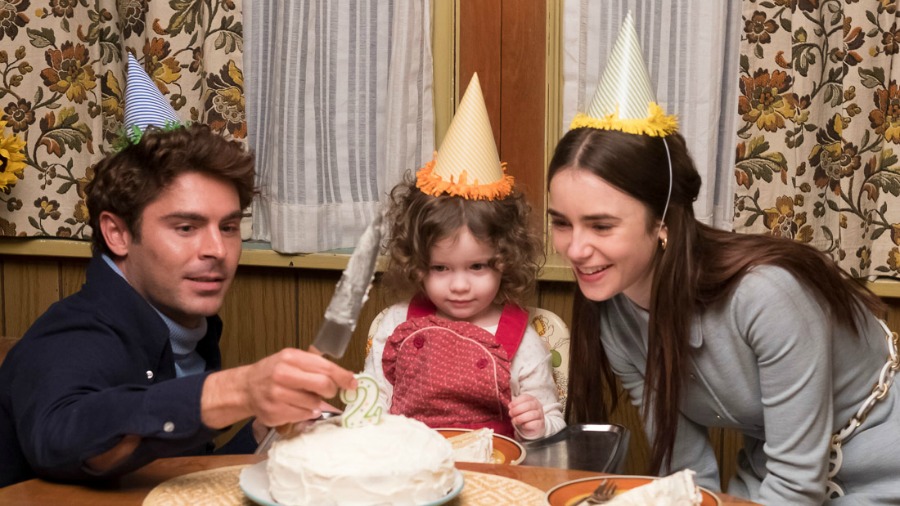
MUST-WATCH TRAILERS
Extremely Wicked, Shockingly Evil and Vile looks anything but: The first trailer arrived for the Ted Bundy biopic Extremely Wicked, Shockingly Evil and Vile, which stars Zac Efron as the notorious serial killer, and it looks extremely well-made, expectedly well-acted and just plain great. Watch the spot for the movie, which premieres at Sundance this weekend, below.
[embedded content]
and
The End Of The Shutdown?

Courtesy of Jon Carnill
Today, President Trump announced the end of the federal government shutdown. For a few weeks, anyway. The government will reopen until February 15, as negotiations on border security continue. Today on the Indicator, we talk to one forest service worker – who was furloughed – about how he fared through the shutdown, and how he feels now that it’s over.
OR IS IT!?!???? (Dun Dun duuunnhnhnnnnh!!!)
Music by Drop Electric. Find us: Twitter/ Facebook.
Subscribe to our show on Apple Podcasts, PocketCasts and NPR One.
Steep Climb In Benzodiazepine Prescribing By Primary Care Doctors

The drugs clonazepam and diazepam are both benzodiazepines; they’re better known by the brand names Klonopin and Valium. The drug class also includes Ativan, Librium and Halcion.
Bloomberg/Getty Images
hide caption
toggle caption
Bloomberg/Getty Images
The percentage of outpatient medical visits that led to a benzodiazepine prescription doubled from 2003 to 2015, according to a study published Friday. And about half those prescriptions came from primary care physicians.
This class of drugs includes the commonly used medications Valium, Ativan and Xanax. While benzodiazepines are mostly prescribed for anxiety, insomnia and seizures, the study found that the biggest rise in prescriptions during this time period was for back pain and other types of chronic pain. The findings appear online in JAMA Network Open.
Loading…
Don’t see the graphic above? Click here.
And while benzodiazepines are best for short-term use, according to physicians, the new study found that long-term use of these drugs has also risen. From 2005 to 2015, continuing prescriptions increased by 50 percent.
Long-term use of the drugs can cause physical dependence, addiction and death from overdose.
“I don’t think people realize that benzodiazepines share many of the same characteristics of opioids,” says Dr. Sumit Agarwal, an internist, primary care physician and researcher at Brigham and Women’s Hospital in Boston, and one of the authors of the new study.
“They are addictive,” he says. “They cause you to have slower breathing; they cause you to be altered in terms of mental status. And then, eventually, [they] can cause overdose and deaths.”
Previous studies have shown a nearly eightfold rise in mortality rates from overdoses involving benzodiazepines — from 0.6 in 100,000 people in 1999 to 4.4 in 2016.
“That’s somewhere around 10,000 to 12,000 deaths at the hands of benzodiazepines,” says Agarwal. “This rise is happening quietly, outside of the public eye.”
And according to a recent report by the U.S. Centers for Disease Control and Prevention, the overdose mortality rate involving benzodiazepines for women between the ages of 30 and 64 has increased by 830 percent between 1996 and 2017.
“Women are more likely to be prescribed these medications,” Agarwal says. “Women are more likely to come in to the clinic to be treated for anxiety and depression, and benzodiazepines tend to be one of the medications we reach to.”
“The study highlights that we have a very serious problem with benzodiazepines,” says Anna Lembke, an associate professor of psychiatry and medical director of addiction medicine at Stanford University School of Medicine. She wasn’t involved in the new study.
“I am concerned that our national focus on opioids has hidden the problem related to benzodiazepines — that’s our next frontier,” says Dr. Joanna Starrels, as associate professor at the department of medicine at the Albert Einstein College of Medicine. She wasn’t involved in the new study, but co-authored a 2016 study that found a rise in prescription rates and overdose deaths from this class of drugs between 1996 and 2013.
Lembke notes that the biggest rise in outpatient visits that led to benzodiazepine prescriptions were from primary care physicians and not psychiatrists.
“I think the big message here is that primary care doctors are really left with burden of dealing, not only with chronic pain and opioid prescription, but also benzodiazepine prescriptions,” she says.
The trends, she adds, reflect “the incredible burden of care on primary care physicians, who are given little time, or resources” to handle a high volume of pain patients with complex conditions.
“That’s partly what got us into the opioid epidemic in the first place,” Lembke notes.
“Generally speaking, primary care physicians have not received the training that they need to prescribe medications that have such high risk for addiction or overdose,” says Starrels.
“Primary care doctors,” she says, “are the frontline providers. “And in many settings, particularly in rural areas, we may be the only providers. So we end up needing to treat conditions where specialists may be better trained — like chronic pain, addiction and anxiety.”
Given the rise in benzodiazepine prescriptions for back pain and chronic pain, “it may be that benzodiazepines are taking the place of opioids,” says Lembke.
However, Starrels cautions that the new study couldn’t determine whether the patients who were treated for back or chronic pain were prescribed a benzodiazepine for their pain. It’s also possible they were prescribed these medications for anxiety or insomnia in addition to being treated for pain.
The new study also found that the co-prescribing of benzodiazepines with opioids has risen during this time period. But that’s not necessarily a bad thing, says Lembke.
Loading…
Don’t see the graphic above? Click here.
“What we don’t want doctors to do is cut patients off of opioids,” she says. “That’s neither humane nor medically the right path. Some of these co-prescribing may be because doctors are tapering patients off of opioids.”
But co-prescribing these two kinds of medications can be dangerous. “They both slow down the central nervous system in complementary ways [that] increase the risk of overdose deaths,” says Starrels. “It is dangerous — and generally advised not to prescribe together.”
In 2016, the U.S. Food and Drug Administration warned doctors about the dangers of prescribing opioids and anxiety medications together.
Agarwal says that warning may have had a positive effect on prescription rates of these anxiety meds. “Next couple of years of data will be very telling,” he says.
Starrels notes that benzodiazepines have not been shown to be effective for chronic pain. And there’s more effective treatment for insomnia, she says.
For example, a form of talk therapy has been shown to be one of the most effective treatments for insomnia. And simply practicing better sleep hygiene can make a big difference, she says.
Physicians who want to move patients off their long-term use of benzodiazepines should do it slowly over time, Starrels cautions. “It has to be slow and medically monitored over time,” she says, because “sudden withdrawal can be fatal.”
She says primary care doctors should get better guidelines for prescribing these drugs, just as there are CDC guidelines for opioid prescription.
“People have started calling this ‘our other prescription drug problem’ — the first one being opioids, but this one’s flying under the radar,” Agarwal says. “It would be great if we address it before it becomes an epidemic — if there isn’t already one.”
