
Ending HIV In Mississippi Means Cutting Through Racism, Poverty And Homophobia

Shawn Esco brings his dog Nibbler to a park in Jackson, Miss. He’s was diagnosed with HIV 11 years ago and has stayed healthy, but the same can’t be said of many of the other HIV-positive people in his life.
L. Kasimu Harris for NPR
hide caption
toggle caption
L. Kasimu Harris for NPR
Ending HIV transmission in America within the next decade — a stated goal of the Trump Administration — isn’t a question of coming up with new medication. The medicines to prevent and treat HIV infections already exist.
But the road to eliminating HIV and AIDS runs through the deep South, where racism, poverty, and homophobia can be formidable obstacles to testing and treatment, particularly for black gay men. According to a Centers for Disease Control and Prevention report in 2017, more than half the new HIV diagnoses in the U.S. were in Southern states, where gay and bisexual black men make up a disproportionate share of people with HIV.
Shawn Esco lives and works in Jackson, Miss. — a city with one of the highest HIV rates in the country.
Esco remembers the moment he realized he was HIV positive. Eleven years ago, he went to a clinic to get a routine HIV test. Workers there invited him into a private room for the results, and he says he knew — before they even said a word.
“When they opened the door,” Esco says, “there was all this new literature that said ‘HIV this,’ ‘AIDS that.’ And you could tell it was there for me.”

The Supreme Court of Mississippi in Jackson, Miss. The city has one of the highest HIV rates in the United States.
L. Kasimu Harris for NPR
hide caption
toggle caption
L. Kasimu Harris for NPR
Esco is now 37, and lives in an apartment with an affectionate pit bull named Nibbler. He’s stayed healthy in the time since his diagnosis, but the same can’t be said of many of the other HIV-positive people in his life.
In 2011, after good HIV treatments were available, Esco’s best friend from high school died of AIDS-related causes.
“I was extremely pissed off at him,” Esco says,” Because it could have been avoided. All he had to do was want to live.”
Esco says the death of that friend was the hardest to endure, but not his only loss. One of Esco’s exes also died of an AIDS-related condition. And another friend took his own life after he got his diagnosis — out of fear his family would find out.
A few years ago CDC researchers estimated that, at current infection rates, about half of all black men who have sex with men (and 25 percent of Latino gay and bisexual men) in the U.S. will be diagnosed with HIV in their lifetime.

In 2011, Esco’s best friend from high school died of AIDS-related causes. One of Esco’s exes also died of an AIDS-related condition. And another friend took his own life after he got his diagnosis — out of fear his family would find out.
L. Kasimu Harris for NPR
hide caption
toggle caption
L. Kasimu Harris for NPR
When Esco considers the possibility of ending the epidemic in the next 10 years, he takes into account issues like homophobia, racism, lack of education and stigma, and is blunt: “Given the way things are now, that’s not going to happen.”
In the South, many gay and bisexual black men don’t know the extent of the HIV problem, he says. And, if they do, they may not have access to the tools to prevent and treat the disease.
These are problems that Dr. Leandro Mena tries to solve. He’s an HIV researcher and clinician, and a professor of population health science at the University of Mississippi. Mena also works with My Brother’s Keeper, a community-based nonprofit working to eliminate health disparities in underserved populations.
“Science has given us the tools to end the HIV epidemic,” Mena points out. “The challenge that we have is that we need to make sure those tools can reach those who actually need it most.”
HIV seems easy to keep in check, he says: There’s a daily pill that can keep someone who is infected with the virus healthy.
But things can get complicated fast if you’re poor.

The memorial grove behind Grace House, in Jackson, Miss., where the ashes of more than 45 former residents now rest. Grace House was once a hospice for people dying of AIDS. Today the organization offers hundreds of people in Jackson financial assistance for housing.
L. Kasimu Harris for NPR
hide caption
toggle caption
L. Kasimu Harris for NPR
“What are the chances that you may remember to take a medicine that you have to take every day,” he says, “if, this morning, you wake up and you don’t have electricity or you don’t have any money to feed your family?”
Getting access to good health care of any kind — let alone lifesaving medicine — can be especially difficult for people living in rural parts of the south, Mena says. And Mississippi is the poorest state in the country.
Some people in Mississippi who are living with HIV wind up on the doorstep of Grace House, which was once a hospice for people dying of AIDS. Today the organization offers hundreds of people in Jackson financial assistance for housing, and also provides rooms for a few dozen people facing particularly severe challenges, such as addiction or mental health issues.
The Grace House compound in Jackson consists of a cluster of several homes, with a shared backyard and a garden.
It also includes a memorial grove, where statues of angels stand around the base of a tree, memorializing people whose deaths were AIDS-related.

Catherine Sullivan is executive director of Grace House, a Jackson nonprofit that offers transitional and semi-permanent housing and support services for homeless men and women living with HIV/AIDS and women recovering from substance abuse.
L. Kasimu Harris for NPR
hide caption
toggle caption
L. Kasimu Harris for NPR
Catherine Sullivan, executive director of the organization, says the ashes of more than 45 people have been spread in the grove — “some of whom were with us at Grace House when they died; some of whose families wouldn’t pick them up from the morgue. And so we buried them.”
Just four months ago, a Grace House resident named Donna died of an AIDS-related illness. She had spent her life struggling to live openly as a transgender woman.
Sullivan keeps photos from Donna’s funeral on her phone: Donna lying peacefully in a coffin, impeccably made up, in a long white gown.
“It makes me really sad,” Sullivan says, looking at the photos. “Because, in death, who she was is honored in a way that got lost in life most of the time.”

Jeremy Williams got HIV before there was a daily pill to prevent infection in people who are at high risk. That pill is known as PrEP — pre-exposure prophylaxis. A lot of gay and bisexual men in the South are not on PrEP, doctors say, either because they don’t know it exists, or because they can’t afford it.
L. Kasimu Harris for NPR
hide caption
toggle caption
L. Kasimu Harris for NPR
Those sorts of stories are familiar to many at Grace House, where residents now are able to live openly and get access to care.
Jeremy Williams, 32, got HIV from his college boyfriend. Williams grew up in rural Mississippi, where HIV treatment was hard to come by.
“You have to drive like an hour or two or three for quality care,” he says.
Williams got HIV before there was a daily pill to prevent infection in people who are at high risk. That pill is known as PrEP — pre-exposure prophylaxis. A lot of gay and bisexual men in the South are not on PrEP — either because they don’t know it exists, or because they can’t afford it. It can cost up to $1,600 a month without insurance. Mississippi has fought against expanding Medicaid, which could have given more people access to HIV prevention and treatment.
Williams says the cost of treatment was kept in check when he was first diagnosed, because he was on his father’s insurance. “But once I got over a certain age, I couldn’t be on his insurance no more, and I couldn’t afford the treatment,” he says.
Today, a daily HIV treatment pill, paid for by the state-administered AIDS Drug Assistance Program, has made his viral load undetectable. So it’s extremely unlikely that he could infect anyone else.

Dating back to the early 1900s, Farish Street was once an epicenter of black life and commerce in Jackson, Miss.
L. Kasimu Harris for NPR
hide caption
toggle caption
L. Kasimu Harris for NPR
Williams says there’s another issue that makes it hard for him and many other young gay or bisexual black men to protect their sexual health: He was raised in a church that tried to convert gay people to heterosexuality. Shame was part of his daily life.
“The words that people say, they linger,” Williams says. “They linger on for years. And you just — it was like a repeated broken record over and over again. You know: ‘You’re not good enough.’ ‘You’re never going to have anybody.’ ‘No one is going to love you because you have this disease.’ I was just carrying it, you know, like it’s a garment — like all of my shame and stuff.”
There’s also a lack of specialized HIV/AIDS knowledge among too many doctors in the South, says Sandra Melvin, the chief operating officer at Jackson’s Open Arms Health Clinic, where HIV-positive patients can receive care. She says many physicians in the region don’t know about PrEP. And that goes to a broader issue.
“In some cases, I think the training has something to do with it,” Melvin says. “Medical schools don’t focus on certain things — cultural competence, how to deliver health care in rural areas. Those are all things that I think in medical school need to be a focus for young and upcoming physicians or health care providers.”

Tiffany West, a medical assistant with the Open Arms Mobile Health Clinic, prepares to administer HIV tests to students at Tougaloo College, north of Jackson.
L. Kasimu Harris
hide caption
toggle caption
L. Kasimu Harris
Attitudes among Mississippi’s elected leaders are also part of the problem, Melvin believes.
“I think that part of what has to happen in this state is that we have to start electing people who reflect the demographics of our society,” she says.
People working to fight the HIV epidemic in Mississippi point to one recent example of a law that they believe promoted homophobic values that could increase the stigma around HIV. In 2016, the state passed a bill into law that allows doctors to refuse to serve certain patients, based on the doctor’s religious beliefs — even if those beliefs seem to be anti-gay.
While there’s no public evidence yet of a doctor refusing to treat a gay patient, critics of the law fear it could deter many people from seeking health care.
One of the Republican sponsors of the bill, Rep. Dan Eubanks, says those fears are misguided.

Hip-hop plays inside the Open Arms Mobile Health Clinic, as a way to help the students at Tougaloo College feel more comfortable while they await testing for HIV or other STDs.
L. Kasimu Harris for NPR
hide caption
toggle caption
L. Kasimu Harris for NPR
“I think it’s reaching to try and say that this bill is going to make it worse for people with AIDS, because that was never the intention of the bill,” Eubanks says. “The intention of the bill was to protect people’s First Amendment right to adhere to the tenets of the faith — which is guaranteed in our Constitution.”
Eubanks believes that ending HIV requires education, including education about abstinence and about personal responsibility.
“If you know that participating in unprotected sex is dangerous, but yet you do nothing to try and alleviate that, you greatly increased your odds and chances of contracting a disease,” Eubanks says. “So there’s a certain amount of personal responsibility — and that has nothing to do with sexual preference.”
The Open Arms Health Care clinic operates a mobile clinic that visits college campuses so students can get tested for HIV and other sexually transmitted diseases.
DeAndré Steward, 20, showed up for the clinic when it came to Tougaloo University, outside of Jackson. Steward is black and gay, and he’s aware of the soaring infection rates in his demographic.
“It is honestly very scary,” Steward says. “We’re all sexual creatures, so we’re going to have sex.”

Gerald Gibson (left), manager of the Open Arms Mobile Health Clinic talks with Javier Heniquez, a student at Tougaloo College, as he leaves the clinic.
L. Kasimu Harris for NPR
hide caption
toggle caption
L. Kasimu Harris for NPR
Condoms are cheaper than PrEP, and also effective at preventing HIV transmission. Steward knows this but he also knows another reality.
“You need to always use protection,” he says. “But people don’t, which is why they’re scared half to death when they’re going to get tested.”
Steward faces many of the same challenges that Esco and Williams do, but he’s from a younger generation. When asked whether he thinks the HIV epidemic can become a thing of the past, he’s optimistic.
“Absolutely,” he says. “The older generations, they still weren’t as educated on AIDS as they should have been. You know, their minds aren’t that open — our generation’s minds are.”
Steward tested negative for HIV at the clinic, and he plans to stay that way. But one of the best ways to do so would be to get on PrEP. He’d like to do so, he says, but it costs too much.
Editor’s note: In the audio version of this story, which first aired Feb. 14, Jeremy Williams’ last name was not used at his request. He has since decided he is comfortable having NPR using his full name and photograph for this digital version.
The Chieftains Shares Sounds Of Ireland With The World

VuHaus
- “Medley”
- “Here’s A Health To The Company”
- “Cotton-Eyed Joe”
- “Full Of Joy”
- “Medley: “Mo Ghile Mear (“Our Hero)”, “Rocky Road To Dublin”, “The Kerry Reel”
When Paddy Moloney formed The Chieftains in 1962, he wanted to take the sounds he loved from his Irish upbringing and share them with the rest of the world. Little did he know things would go so well that eventually, The Chieftains would help take the sounds of Ireland to outer space. In 2010, the band sent instruments with NASA astronaut Cady Coleman to the international space station.
In this session, Moloney tells the story of how The Chieftains ended up being the first Western band to play on the Great Wall of China and explains what Irish traditional music has in common with traditional American music. He continues to share tales about working with The Rolling Stones at Dublin’s Windmill Lane Recording Studios — the very same spot where we recorded this session — and reflects on touring at 80 years old.
While Paddy played whistle and pipes, he assembled a seven-person team for this session: Seán Keane on fiddle, Redmond O’Toole on guitar, Triona Marshall on harp, Kevin Conneff on bodhrán, Matt Molloy on flute, Nathan Pilatzke dancing and Alyth McCormack as lead singer.
Hear it all in the player.
Brown's Trade For Odell Beckham Jr. Excites Cleveland Fan

After the Browns signed receiver Odell Beckham Jr., one fan ran around his neighborhood screaming “We got Odell” so loudly and uncontrollably, a neighbor called 911 and kept her kids in the car.
DAVID GREENE, HOST:
Good morning. I’m David Greene. NFL fans know when your team signs a star player, it’s exciting – right? – especially if it’s the Cleveland Browns, who have not won anything in forever. After the Browns signed receiver Odell Beckham Jr., one fan ran around his neighborhood screaming, we got Odell – so loudly and uncontrollably a neighbor called 911 and kept her kids in the car. Police didn’t arrest the guy. They simply explained to the woman who called that the Browns got Odell.
Copyright © 2019 NPR. All rights reserved. Visit our website terms of use and permissions pages at www.npr.org for further information.
NPR transcripts are created on a rush deadline by Verb8tm, Inc., an NPR contractor, and produced using a proprietary transcription process developed with NPR. This text may not be in its final form and may be updated or revised in the future. Accuracy and availability may vary. The authoritative record of NPR’s programming is the audio record.
'Tampon Tax' Repeal Benefits Women But Comes At A Cost To States
Most U.S. states have a sales tax on menstrual products. But some states have repealed the tax on the grounds that it’s unfair to women. But the repeals come at a cost to consumers and state revenues.
RACHEL MARTIN, HOST:
Those of you who don’t have to buy tampons may not know that in many states, you pay a sales tax on menstrual products. Several states, though, have either eliminated that tax or are considering doing so. Stacey Vanek Smith and Constanza Gallardo from Planet Money’s The Indicator have been adding up the costs of the so-called tampon tax.
STACEY VANEK SMITH, BYLINE: Sales tax – most people in this country pay sales tax on most of the things they buy. It’s a big source of state revenue. Some items like food or water that are seen as, like, necessary to survival are not subject to this tax.
CONSTANZA GALLARDO, BYLINE: Prescription and nonprescription drugs are also exempt – medicines like aspirin, DayQuil or Viagra – also medical equipment and supplies, which can be things like ChapStick or gauze.
VANEK SMITH: But tampons, pads, cups and all of the menstrual hygiene products do not fall into the medical supply category in many states. And a lot of people argue that’s not fair.
GALLARDO: Zoe Salzman is one of the lawyers that filed a lawsuit in New York to eliminate the sales tax on menstrual products back in 2016. Salzman and her team argued these products are a medical supply, and they should be tax-exempt.
ZOE SALZMAN: And one example the department of tax gave was things like bandages, gauze and dressings. And so those are items that are used to staunch the flow of blood from the human body. And tampons and pads, as well as cups and panty liners – those are used to staunch the flow of blood from the uterus. So again, clearly, you know, these items have to fit within that definition.
VANEK SMITH: Zoe made her case, and the New York Legislature took notice and, in fact, passed a bill back in 2016 to exempt feminine products in New York from sales tax. So that extra cost here in New York – we do not pay it anymore.
GALLARDO: Yeah. But many other women in other states do pay it. And over time, that cost adds up. And a study published this year by the American College of Obstetricians and Gynecologists found that 2 out of 3 low-income women in the U.S. couldn’t afford mental products at least once a year. And nearly half of them struggled to buy both food and menstrual hygiene products over the last year. In fact, there’s economic research that the tax break on tampons really benefits low-income people. That’s based on consumer data after New Jersey’s tampon tax was repealed back in 2005. Research showed that by eliminating the tax, it made products cheaper and more accessible to lower-income women.
VANEK SMITH: But some people say the tampon tax needs to stay.
NICOLE KAEDING: When you start moving into this world of exemptions, you start adding complexity because you have to define what is and is not a qualified good under the exemption.
VANEK SMITH: Nicole Kaeding is with the Tax Foundation, a think tank that studies tax policy. She says sales tax exemptions can be problematic because they can mean that states don’t have enough money to fund public policies or programs, and as a result, states may have to increase other types of taxes to get that funding back.
GALLARDO: Back in 2016, California Governor Jerry Brown vetoed a bill that planned to eliminate the state’s tampon tax. He argued that by not taxing menstrual products, California could lose up to $20 million in annual taxes.
VANEK SMITH: And the governor has a point. Here in New York, where we eliminated the tax on menstrual products, we’re losing about $14 million a year in lost tax revenue. Of course, this isn’t just an economic issue. It’s a political issue, too. Last year, for example, Nevada voted to make menstrual products tax-exempt.
GALLARDO: And this year, Michigan, Georgia, Ohio and California are pushing for legislation to repeal the tampon tax.
VANEK SMITH: Stacey Vanek Smith.
GALLARDO: Constanza Gallardo, NPR News.
Copyright © 2019 NPR. All rights reserved. Visit our website terms of use and permissions pages at www.npr.org for further information.
NPR transcripts are created on a rush deadline by Verb8tm, Inc., an NPR contractor, and produced using a proprietary transcription process developed with NPR. This text may not be in its final form and may be updated or revised in the future. Accuracy and availability may vary. The authoritative record of NPR’s programming is the audio record.
Trump Administration Cuts The Size Of Fines For Health Violations In Nursing Homes
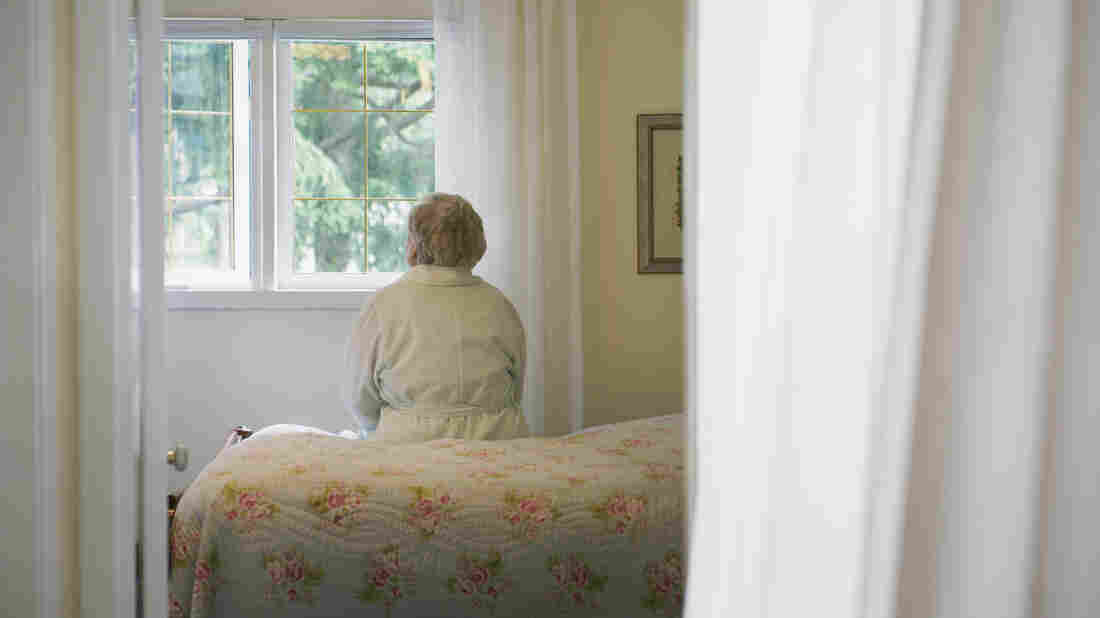
Federal records show that the average fine for a health or safety infraction by a nursing home dropped to $28,405 under the Trump administration, down from $41,260 in 2016, President Obama’s final year in office.
Fancy/Veer/Corbis/Getty Images
hide caption
toggle caption
Fancy/Veer/Corbis/Getty Images
The Trump administration’s decision to alter the way it punishes nursing homes has resulted in lower fines against many facilities found to have endangered or injured residents.
Federal records show that the average fine dropped to $28,405 under the current administration, down from $41,260 in 2016, President Obama’s final year in office.
Loading…
Don’t see the graphic above? Click here.
The decrease in fines is one of the starkest examples of how, in response to industry prodding, the Trump administration is rolling back Obama’s aggressive regulation of health care services.
Encouraged by the nursing home industry, the Trump administration switched from fining nursing homes for each day they were out of compliance — as the Obama administration typically did — to issuing a single fine for two-thirds of infractions, the records show.
That reduces the impact of the penalty, critics say, giving nursing homes less incentive to fix faulty and dangerous practices before someone gets hurt.
“It’s not changing behavior [at nursing homes] in the way that we want,” says Dr. Ashish Jha, a professor at the Harvard T.H. Chan School of Public Health. “For a small nursing home, it could be real money, but for bigger ones, it’s more likely a rounding error.”
Since President Trump took office, the administration has heeded complaints from the nursing home industry about zealous oversight. It granted facilities an 18-month moratorium from being penalized for violating eight new health and safety rules. It also revoked an Obama-era rule barring the facilities from pre-emptively requiring residents to submit to arbitration to settle disputes rather than go to court.
The reduction in total fines occurred even as the Centers for Medicare & Medicaid Services issued financial penalties 28 percent more frequently than it did under Obama. That increase in the frequency of citations with financial consequences arose because of a policy begun near the end of Obama’s term that required regulators to punish a facility every time a resident was harmed, instead of leaving it to their discretion.
While that policy increased the number of smaller fines, larger fines became less common. The total amount collected under Trump fell by 10 percent compared with the total in Obama’s final year — from $127 million under Obama to $114 million under Trump. (We compared penalties during 2016, Obama’s last year in office, with penalties under Trump from April 2017 through March 2018, the most recent month for which federal officials say data is reliably complete.)
CMS says it has revised multiple rules governing fines under both administrations to make its punishments fairer, more consistent and better tailored to prod nursing homes to improve care. “We are continuing to analyze the impact of these combined events to determine if other actions are necessary,” CMS said in a written statement.
The move toward smaller financial penalties is broadly consistent with the Trump administration’s other industry-friendly policies in the health care sector. For instance, the administration has expanded the role of short-term health insurance policies that don’t cover all types of services, has given states more leeway to change their Medicaid programs and has urged Congress to allow physicians to open their own hospitals.
Beth Martino, a spokeswoman for the American Health Care Association, a trade group for nursing homes, says the federal government has “returned to a method of applying fines in a way that incentivizes solving problems” rather than penalizing “facilities that are trying to do the right thing.”
Penalty guidelines were toughened in 2014 when the Obama administration instructed officials to favor daily fines. By 2016, that approach was applied in two-thirds of cases. Those fines averaged $61,000.
When Trump took over, the nursing home industry complained that fines had spun “out of control” and had become disproportionate to the deficiencies. “We have seen a dramatic increase in [fines] being retroactively issued and used as a punishment,” Mark Parkinson, president and CEO of the American Health Care Association, wrote in March 2017.
CMS agreed that daily fines sometimes resulted in punishments that were determined by the random timing of an inspection rather than the severity of the infraction. If inspectors visited a home in April, for instance, and discovered that an improper practice had started in February, the accumulated daily fines would be twice as much as if the inspectors had come in March.
But switching to a preference for per-instance fines means much smaller penalties, since fines are capped at $21,393 whether they are levied per instance or per day. Nursing homes that pay without contesting the fine receive a 35 percent discount, meaning they currently pay at most $13,905.
Those maximums apply even to facilities found to have committed the most serious level of violations, which are known as immediate jeopardy because the nursing home’s practices place residents at imminent risk of harm. For instance, a Mississippi nursing home was fined $13,627 after it ran out of medications because it had been relying on a pharmacy 373 miles away, in Atlanta. CMS also reduced $54,600 in daily fines to a single fine of $20,965 for a New Mexico home where workers hadn’t been properly disinfecting equipment to prevent infectious diseases from spreading.
On average, per-instance fines under Trump were below $9,000, records show.
“These are multimillion-dollar businesses — $9,000 is nothing,” says Toby Edelman, a senior policy attorney at the Center for Medicare Advocacy, a nonprofit in Washington.
Big daily fines, averaging $68,080, are still issued when a home hasn’t corrected a violation after being cited. But even in those cases, CMS officials are allowed to make exceptions and issue a single fine if the home has no history of substantial violations.
The agency cautioned that comparing average fines is misleading because the overall number of inspections resulting in fines increased under Trump, from 3.5 percent in 2016 to 4.7 percent. The circumstances now warranting fines that weren’t issued before tend to draw penalties on the lower side.
However, Kaiser Health News found that financial penalties for immediate jeopardies were issued in fewer cases under Trump. And when they were issued, the fines averaged 18 percent less than they did in 2016.
The frequency of immediate-jeopardy fines may decrease even more. CMS told inspectors in June that they were no longer required to fine facilities unless immediate-jeopardy violations resulted in “serious injury, harm, impairment or death.” Regulators still must take some action, but that could be ordering the nursing home to arrange training from an outside group or mandating specific changes to the way the home operates.
Barbara Gay, vice president of public policy communications at LeadingAge — an association of nonprofit organizations that provide elder services, including nursing homes — says that nursing homes “don’t feel they’ve been given a reprieve” under Trump.
But consumer advocates say penalties have reverted to levels too low to be effective.
“Fines need to be large enough to change facility behavior,” says Robyn Grant, director of public policy and advocacy at the National Consumer Voice for Quality Long-Term Care, a nonprofit based in Washington, D.C. “When that’s not the case and the fine is inconsequential, care generally doesn’t improve.”
Kaiser Health News is an editorially independent news service supported by the nonpartisan Kaiser Family Foundation. KHN is not affiliated with Kaiser Permanente. You can follow Jordan Rau on Twitter: @jordanrau.
The Evolution Of Antitrust Laws In America
With presidential candidates talking about breaking up big companies, NPR’s Planet Money looks at the origins of America’s antitrust laws.
ARI SHAPIRO, HOST:
When Senator Elizabeth Warren called for the breakup of some big tech companies last week, our Planet Money team sprang into action. They have been studying the evolution of antitrust law in America. One of the most important antitrust cases in this country started with a teenage girl who grew up to take on one of the richest men on Earth. Julia Simon reports.
JULIA SIMON, BYLINE: One hundred and fifty years ago, Titusville, Pa., was a booming oil town – lots of nice houses, including this wood house with a glass tower where a teenage girl used to look down on the horses and wagons carrying oil. Her name was Ida Tarbell. Tarbell became a journalist. And biographer Kathleen Brady explains that around 1900, Tarbell was hanging out with her editor, thinking about story ideas.
KATHLEEN BRADY: They decided to take up the trust, the question of the trust, which they regarded as the question of the age.
SIMON: Trusts were a bunch of smaller companies legally stitched together, and they were everywhere. There was a sugar trust, a meat trust, a rope trust. Tarbell knew one trust particularly well.
BRADY: And Ida was saying, well, it’s got to be something like what happened in the oil industry.
SIMON: Her own recollections.
BRADY: Her own recollection of the oil industry.
SIMON: Tarbell’s editor was like, yes, you will write about one of the biggest trusts around – Standard Oil. And you will profile the head of it, one of the richest men in the world – John D. Rockefeller. At this point, Rockefeller controlled at least 90 percent of oil refining in America.
BRADY: And Ida thought, piece of cake because there are all these court records.
SIMON: She thought she’d just find the records from some Standard Oil cases and use that for her writing, but that’s not what happened. The records had disappeared.
BRADY: Standard Oil had bought up all the copies of this man.
SIMON: Oh, man. Had they burned them or, like, just kept them?
BRADY: I don’t know what they did with them, but they – I would assume they did. They didn’t want them in circulation.
SIMON: But she finally finds this record that she thought had been destroyed that helps her understand how Rockefeller conquered the oil industry. Rockefeller got big enough that he had gone to the railroads and said I ship a lot of oil, if you want my business, I want a discount. But let’s make this look like I get the same rate as everybody else, then give me money back later.
And also he said I’m not so crazy about you carrying my competitors’ oil. I’ll let you do it, but every time, you need to pay me too. These were bombshell details. It meant Standard Oil had a secret, possibly unfair advantage over its competition. Rockefeller would say to rival refineries, you can either join me or you have to compete with me. And if you do that, I will crush you. Tarbell started publishing her stories.
Everybody’s reading this around America.
BRADY: Everybody’s reading it. Everybody’s reading this around America. It was an enormous success.
SIMON: So successful that it reached the desk of President Theodore Roosevelt. The Department of Justice filed a lawsuit against Standard Oil, and in 1910, they ended up before the Supreme Court. It was an important test of this law called the Sherman Antitrust Act that had been around but that people hadn’t used that much because it was so broad and confusing.
The Sherman Antitrust Act said trusts that were in restraint of trade were illegal, but until this point, the country hadn’t worked out exactly what restraint of trade meant. The justice said, well, some of the things that Ida Tarbell uncovered like making secret deals with the railroads that force your competitors out of business, that’s restraint of trade. The Supreme Court ordered the breakup of Standard Oil into 34 companies.
Today, antitrust types are talking about Ida Tarbell again. This time, it’s not big oil, it’s big tech. But they’re asking the same question – if, yet again, it’s time for another big company breakup. Julia Simon, NPR News.
Copyright © 2019 NPR. All rights reserved. Visit our website terms of use and permissions pages at www.npr.org for further information.
NPR transcripts are created on a rush deadline by Verb8tm, Inc., an NPR contractor, and produced using a proprietary transcription process developed with NPR. This text may not be in its final form and may be updated or revised in the future. Accuracy and availability may vary. The authoritative record of NPR’s programming is the audio record.
A Marriage Proposal For Memphis Fans
At an NBA game, a woman was delighted when her boyfriend asked into a microphone, “Will you Grit N Grind with me forever and ever babe?” It’s the slogan for the Memphis Grizzlies.
DAVID GREENE, HOST:
Good morning. I’m David Greene. Proposing at a game – risky. I mean, maybe your spouse wanted something more romantic than – will you marry me? – on the Jumbotron. But at an NBA game, a woman was delighted when her boyfriend asked into a microphone, will you grit and grind with me forever and ever babe? “Grit and Grind” is the slogan for the Memphis Grizzlies. Deadspin reports the couple are big fans – apparently loyal in good times and in bad because the team this year is just awful.
Copyright © 2019 NPR. All rights reserved. Visit our website terms of use and permissions pages at www.npr.org for further information.
NPR transcripts are created on a rush deadline by Verb8tm, Inc., an NPR contractor, and produced using a proprietary transcription process developed with NPR. This text may not be in its final form and may be updated or revised in the future. Accuracy and availability may vary. The authoritative record of NPR’s programming is the audio record.
For Boeing, Costs Of Grounding Jets Have Only Just Begun

A Norwegian Air Boeing 737 Max 8 is parked on the tarmac at Helsinki Airport on Wednesday after the airplane model was grounded in most of the world.
Lehtikuva/Heikki Saukkomaa/Reuters
hide caption
toggle caption
Lehtikuva/Heikki Saukkomaa/Reuters
With its fastest-selling plane grounded in the U.S. and around the world, Boeing faces potential hits to its bottom line as well as to its reputation. A lengthy delay could cut Boeing’s revenues by billions, some analysts say.
On Wednesday, the United States followed Europe, China and other countries in grounding the Boeing 737 Max airplane after a plane crash in Ethiopia last weekend killed all 157 people on board.
Investigators are still working to determine exactly what went wrong, but this was the second 737 Max 8 to crash in nearly five months — a Lion Air crash killed 189 people off the coast of Indonesia in October. And there are similarities between the crashes which prompted the planes to be grounded.
From rebookings to refunds, from jetliner parking to pay for idled flight crews, plane groundings are pricey.
About 370 of the jets are grounded around the world.
“This is costing millions of dollars per day,” says Phil Seymour, who runs an aviation consultancy called IBA.
And it’s not just the airlines on the hook. Boeing may have to pay up, too.
“Typically, once an airline takes the aircraft, Boeing makes some guarantees in terms of the performance of that aircraft, and one of them is that the aircraft should be airworthy,” says Chris Higgins, an analyst at Morningstar.
And if it’s not, airlines will demand compensation.
Norwegian Air CEO Bjorn Kjos said his company, for one, plans to do so. “We will send this bill to those who produce this aircraft,” he said.
“I would like to apologize to those customers who have been affected by the temporary grounding of our 737 MAX aircraft. Our customers are our main priority now,” says Norwegian’s CEO Bjørn Kjos. #flynorwegian pic.twitter.com/xZLmKTIa0A
— Norwegian (@Fly_Norwegian) March 13, 2019
And Seymour says it’s important that Boeing keep those airlines happy: They’re repeat customers, after all.
It’s unclear how much those payments will be. But there are clues from the last time the FAA grounded an airplane in the U.S. — in 2013, when the Boeing 787 Dreamliner had a problem with lithium-ion batteries catching fire.
“Boeing had to pay out airline compensation for that grounding,” Higgins says. “They never disclosed how much it was, but guesstimates at the time put it around $500 million.”
And that was with a much smaller fleet of airplanes affected.
There’s another way the 737 Max groundings could hurt Boeing. The company has a lot of future deliveries lined up and airlines might refuse or delay those deliveries. Boeing says it has received more than 5,000 orders for the fuel-efficient plane from more than 100 customers worldwide.
Analysts at Jefferies estimated as the groundings began on Monday that a two-month halt in deliveries could cost Boeing $5 billion in revenue.
Boeing can afford to take a hit. Last year its revenue topped $100 billion and it has been raking in profits.
But Higgins notes there’s more at stake.
“A worst-case scenario, if you see deliveries kind of level out, there’s a lot of implications beyond Boeing,” he says.
Boeing makes planes, but other companies make the engines, the seats, the landing gear and fuselage.
“Seventy percent, 80 percent of most aircraft that’s done by the supply chain, not by Boeing,” Higgins says. “There are thousands and thousands of jobs and hundreds of companies that are supplying into Boeing’s final assembly lines.”
The ripple effects of the groundings could hurt Boeing’s suppliers across the U.S. and around the world.
Why An ER Visit Can Cost So Much — Even For Those With Health Insurance
Vox reporter Sarah Kliff spent over a year reading thousands of ER bills and investigating the reasons behind the costs, including hidden fees, overpriced supplies and out-of-network doctors.
TERRY GROSS, HOST:
This is FRESH AIR. I’m Terry Gross. You wouldn’t believe what some emergency rooms charge, or maybe you would because you’ve gotten bills. For example, one hospital charged $76 for Bacitracin antibacterial ointment. One woman who fell and cut her ear and was given an ice pack but no other treatment was billed $5,751. My guest, Sarah Kliff, is a health policy journalist at vox.com who spent over a year investigating why ER bills are so high even with health insurance and why the charges vary so widely from one hospital to the next.
Through crowdsourcing, she collected over a thousand ER bills from around the country. She interviewed many of the patients and the people behind the billing. She’s reported her findings in a series of articles on Vox. She’s also spent years reporting on the battle over health insurance policy. We’ll get some updates on the state of Obamacare a little later in the interview.
Sarah Kliff, welcome back to FRESH AIR. Why did you want to do an investigation into emergency room billing?
SARAH KLIFF: You know, I wanted to do this because the emergency room is such a common place where Americans interact with the health care system. There are about 140 million ER visits each year. It’s a place where you can’t really shop for health care. You can’t make a lot of decisions about where you want to go. So I think that is big-picture what got me interested.
Small picture was actually a bill that someone sent me almost three years ago now, where they took their daughter to the emergency room. A Band-Aid was put on the daughter’s finger, and they left. And they got a $629 bill. And they said – you know, they – the parents sent this to me, saying, how could a Band-Aid cost $629? And I said, I don’t know, but I’m going to find out. And that kind of opened up the door to this, you know, multi-year project I’ve been working on right now. It started with trying to figure out why a Band-Aid would cost $629.
GROSS: OK. So let’s get to that $629 for treatment that was basically a Band-Aid placed on a finger. You investigated that bill.
KLIFF: Yes.
GROSS: Why’d it cost so much?
KLIFF: So what cost so much was really the facility fee. So this is a charge I hadn’t heard about before as a health care reporter. This is a charge that hospitals make for just keeping their doors open, keeping the lights on, the cost of running an emergency room 24/7. So if you look at that particular patient’s bill, the Band-Aid – you know, I hesitate to say only – but the Band-Aid only cost $7, which, as anyone who’s bought Band-Aids knows, is quite expensive for a single Band-Aid.
But the other $622 of that bill were the hospital’s facility fees for just walking in the door and seeking service. And these fees are not made public. They vary wildly from one hospital to another. And usually patients only find out what the facility fee of their hospital is when they receive the bill afterwards, like that patient, you know, that sent me this particular bill.
GROSS: And does the facility fee vary from facility to facility?
KLIFF: It does significantly. You know, I’ve seen some that are in the low hundreds. I’ve seen some that are in the high thousands. And it’s impossible to know what facility fee you’re going to be charged until you actually get the billing documents from your hospital. And if you try and call up a hospital and ask what the facility fee is, usually you won’t get very far.
So it’s this fee that, from all the ER bills I’ve read, is usually the biggest line item on the bill. But it’s also one that is very, very difficult to get good information about until you’ve already been charged.
GROSS: So you’re paying the facility fee to basically share in the cost of running the emergency room.
KLIFF: Yes, that’s how hospital executives would describe the fee.
GROSS: But you don’t know that when you’re going to the emergency room.
KLIFF: You don’t, no. And you don’t know how much it’ll be. You don’t know how it’s being split up between different patients. You don’t know any of that.
GROSS: So is this also why one bill had $60 for the treatment of ibuprofen and another $238 for the treatment of eyedrops?
KLIFF: Yeah. And, you know, this is something I see all the time reading emergency bills – I’ve read about 1,500 of them at this point – is that things you could buy in a drugstore often cost significantly more in the emergency room. And the people I talked to who run hospitals will say this is because they have to be open all the time. They have to have so many supplies ready.
But I think one of the things that I find pretty frustrating is, you know, patients aren’t usually told, we can give you an ibuprofen here, or you can pick some up at the drugstore if you leave, and the cost will be a fraction of what we would charge you here. That information often isn’t conveyed to patients who are well enough, you know, to go to a drugstore on their own. But it’s just huge variation for these simple items.
One place I see this a lot is pregnancy tests. If you’re a woman who’s of childbearing age, you go to the emergency room, they will often want to check if you’re pregnant. I’ve seen pregnancy tests that cost a few dollars in emergency room. The most expensive one I saw was over $400. I believe that was at a hospital in Texas. It’s just widespread variation for, you know, some pretty simple pieces of medical equipment.
GROSS: I want to get back to the $60 ibuprofen. Is that – does that include the facility fee? Or is that just for the ibuprofen, and the facility fee is separate?
KLIFF: That’s just for the ibuprofen. The facility fee is totally separate.
GROSS: So how do they justify that?
KLIFF: They say they have to stock, like, a wide array of medicine, so they have to have everything on hand from ibuprofen, from, you know, expensive rabies treatments – I’ve talked to a lot of people who’ve been to the emergency room for exposure to bats and raccoons – and that they need to have all these things in stock. And, you know, one of the things you pay for at the emergency room is the ability to get any medication at any hour of the day right when you need it. I don’t necessarily buy that explanation, to be clear. That’s what I’ve heard from hospital executives.
I think it’s pretty telling that ibuprofen has a very, very different price depending on which emergency room you go to. The fact that there’s so much widespread price variation suggests to me that it’s not just the cost of doing business driving it, that there’s also business decisions being made behind ibuprofen that are driving the prices different hospitals are setting.
GROSS: Now, of course, trips to the emergency room aren’t always as simple as getting a Band-Aid or ibuprofen or some eyedrops. I want you to describe the case of a young man who was hit by a pole on a city bus in San Francisco.
KLIFF: Yeah. So this patient, his name is Justin. He was a community college student in northern California, was walking down a sidewalk in downtown San Francisco one day. And there was a pole hanging off the back of the bus that wasn’t where it’s supposed to be. It essentially flew off the back of the bus, hit him in the face and knocked him unconscious.
And the next thing he knows, he’s waking up at Zuckerberg San Francisco General, which is the only Level I trauma center in the city. He ends up needing a CT scan to check out some brain injuries. He needs some stitches. And then he’s discharged. He ends up with a bill for $27,000.
But, you know, as I began figuring out through my reporting, San Francisco General does not contract with private insurance, and they end up pursuing him for the vast majority of that bill. He has $27,000 outstanding. And somewhat ironically, San Francisco General, it is the city hospital. It is run by the city of San Francisco. So this student is hit by a city bus, taken by an ambulance to the city hospital and ends up with a $27,000 bill as a result.
GROSS: So did he have insurance?
KLIFF: He did. He had insurance through his dad.
GROSS: So why doesn’t Zuckerberg San Francisco General Hospital contract with private insurers?
KLIFF: So what they have told me when I’ve talked to some spokespeople there is that they are a safety net hospital, and that is, you know, definitely true. They generally serve a lower-income, often indigent population in San Francisco that would have trouble getting admitted and seeking care at other hospitals in the city. So they have told me that their focus is on serving those patients and that therefore, you know, they’re not going to contract with private insurance companies.
The thing I found a little bit confusing about that, though, is there are lots of public hospitals, say, that, you know, also serve low-income populations. And some of them for their inpatient units, you know, for their scheduled surgeries, they’re not going to contract with private insurance because they want to make sure beds are available for the publicly insured folks and people on Medicaid and Medicare.
But when it comes to the emergency room, you know, every other public hospital I was in touch with would contract with private insurers there because people don’t decide if they’re going to end up in the emergency room. So, you know, that’s the justification they offered, that it is a hospital meant to serve those with public insurance. But it is not something you see public hospitals typically doing.
GROSS: Isn’t – I think legislation was proposed in California to change that. Did that pass?
KLIFF: It’s still pending in the California State Assembly. And the hospital has also promised to reform its billing practices, although we haven’t seen what exactly their new plan is yet.
GROSS: So the position that Justin was in is that, like, he’s unconscious. He’s not asking to be taken anyplace. (Laughter) But he’s unconscious. He’s taken to the emergency room and ends up getting this $27,000 bill. I mean, that just seems so unfair, especially since he has insurance.
KLIFF: Yeah.
GROSS: Like, it’s supposed to cover him for things like that (laughter).
KLIFF: Yeah. You know, there’s one other patient who kind of makes this point really well who was also seen at San Francisco General. Her name is Nelly. And she fell off a climbing wall and, somewhat amazingly, you know, turns out she had a concussion. But one of the first things she does is she calls her insurance’s nursing hotline to ask, should I go to the ER?
And they say yes. And she says, can I go to Zuckerberg San Francisco General? It’s the closest. They say, no, don’t go there. It’s not in network. Go to another hospital. She gets to the other hospital, but the other hospital won’t see her because she’s a trauma patient. She fell from a really high height. And San Francisco General is the only trauma center in San Francisco. So she tries to go to an in-network hospital. She’s then ambulance-transferred to Zuckerberg San Francisco General, and she ends up with another bill over $20,000 that the hospital was pursuing from her until I started asking questions from it, and the hospital ultimately dropped the bill.
But I think it’s just such a frustrating situation for someone like Justin, for someone like Nellie (ph). They’re either shopping for this good unconscious, they’re really trying to do the right thing, and the health care system is just so stacked against the patient. It’s so stacked for the hospital to be able to bill the prices that they want to bill.
GROSS: So apparently, the moral of the story is if you want to challenge your emergency room bill, you should get Sarah Kliff to write about you. (Laughter).
KLIFF: It’s – (laughter). That’s what some people have said. But there’s only one of me, and there’s about 2,000 bills in our database. And, you know, we have had over $100,000 in bills reversed as a result of our series. But I don’t think it’s a great way to run a health care system where we just, you know, the people who get their bills reversed are those who are lucky enough to have a reporter write a story about them.
GROSS: Yes. Agreed. Let me reintroduce you. If you’re just joining us, my guest is Sarah Kliff. She’s a senior policy correspondent at Vox, where she focuses on health policy. She also hosts the Vox podcast, “The Impact,” about how policy actually affects people.
So we’re going to take a short break, and then we’ll talk more about emergency billing. And then later, we’ll talk about what’s left of Obamacare, and what the president and Congress and candidates are saying about health care, after this break. This is FRESH AIR.
(SOUNDBITE OF ALEXANDRE DESPLAT’S “SPY MEETING”)
GROSS: This is FRESH AIR. And if you’re just joining us, my guest is Sarah Kliff. We’re talking about emergency room billing and why it’s so unpredictable and often so incredibly high. She’s a senior policy correspondent at Vox, where she focuses on health policy. She also hosts the Vox podcast, “The Impact,” about how policy affects people.
So we were talking about the hidden facility fee, which most people don’t know exists, and is responsible for a large chunk of a lot of emergency room bills. There’s also, like, a trauma unit fee. It’s a similar hidden fee in hospitals that have trauma centers in their emergency rooms. So explain the trauma fee and how that kicks in.
KLIFF: Yeah. This is something I also had never heard of till I started reading a lot of emergency room bills, and this is the fee that trauma centers charge for essentially assembling a trauma team to meet you when you’re coming in and those folks out in the field, maybe the EMTs, for example, have determined that you meet certain trauma criteria.
So I’ve talked to people who have been charged trauma fees who were in serious car accidents. One case was a baby who fell from more than 3 feet, and that’s considered to trigger a trauma activation. So this is essentially the price for having a robust trauma team – a surgeon, an anesthesiologist, nurses – all at the ready to receive you when you get to the hospital.
And again, these fees can be pretty hefty. San Francisco General, which, I’ve done the most reporting on their billing, you know, they can charge up to $18,000 for their trauma activation services. I wrote about one family who was visiting San Francisco from Korea when their young son rolled out of the hotel bed. They were nervous. They didn’t know the American health care system well. So they called 911, which sent an ambulance, brought him over to the hospital. Turns out, he was fine. They gave him a bottle of formula. He took a nap and went home.
And then a few months later, they get an $18,000 charge for the trauma team that assembled for when that baby came to the hospital. And these are another, you know, pretty significant fee that, again, you don’t really know about. You have no idea that the trauma team is assembling to meet you when you’re coming into the hospital. You just find out after the fact. And you also have no say in the decision to assemble trauma. That’s really left up to the hospital, not the patient.
GROSS: So I’m going to have you compare two possibilities. You go to an emergency room, and the bill is very high. There’s two people who have the same problem who go to the emergency room. One of them has a copay. One of them has a high deductible that they haven’t paid off yet. How are they treated differently, in terms of what they’re billed for the emergency room visit?
KLIFF: Well, the person with the deductible will likely be billed significantly more. You know, if they’re just, let’s say, at the start of the year, they are going to essentially have to bear the costs of that emergency room visit up until the point they hit their deductible and the insurance kicks in, whereas the person who has a co-payment, they’re just going to have to pay that flat fee and, you know, probably not worry about paying more, but there’s often surprise bills lurking in the corner that could affect both of those patients as well.
GROSS: Like what?
KLIFF: So one of the most common things we see is out-of-network doctors working at in-network emergency rooms. So you know, you have an emergency, you look up a hospital, you see their ER is in network, so you go there. It turns out that emergency room is staffed by doctors who aren’t in your insurance. There’s pretty compelling academic research that suggests 1 in 5 emergency room visits involves a surprise bill like that one.
GROSS: That seems so unfair. How are you to know – if you’re choosing a hospital that’s in network, how are you to know whether the doctor treating you is in network or not?
KLIFF: You know, you really – there isn’t a great way to tell, to be honest. This is – you know, when I had to go to the emergency room over the summer, you know, this is something I worried about. You know, I was seeing a doctor who worked for the hospital, but they were sending off my ultrasound to be read by a radiologist who I was never going to meet. I couldn’t ask them if they were in-network. I just kind of had to cross my fingers and hope for the best, and luckily, I didn’t get a surprise bill.
But I’ve talked to multiple patients who, you know, tried to do their research, who thought they were in network, only to get a bill, often for thousands of dollars, after leaving the emergency room, from someone who, you know, never mentioned to them, hey, I’m not in your network like this hospital is.
GROSS: So the bill that you’d get would be for the difference between what you pay when somebody is – when a doctor’s in network and what you pay when they’re not in network?
KLIFF: Yeah, often it’s just what that out-of-network doctor wants to charge. So a good example of this is a patient I wrote about in Texas named Scott (ph), who was attacked in downtown Austin, left on the street unconscious, some bystander called him an ambulance, and he woke up at a hospital. And one of the first things he does, because this is the United States, is he gets on his phone and tries to figure out which hospital he is at, and, you know, is that in his insurance network? And he finds out – good news – it is. And a surgeon comes by, tells him he’s going to need emergency jaw surgery because of the attack that happened.
So he says, OK. You know, he’s not really in a place to go anywhere. Gets the surgery. Goes home. A few weeks later, he gets an $8,000 bill from that oral surgeon, who the insurance companies paid a smaller amount. The oral surgeon didn’t have a contract with the insurance and said, you know, I think my services are worth a lot more, so pursued the balance of the bill from Scott.
GROSS: I have to say, I mean, that does seem unfair to the patient because they haven’t been informed. They can’t make a choice about it if they don’t know. And, like, $8,000 is a lot of money.
KLIFF: Yeah. And I think, you know, even more, let’s say he did say he was out of network. It kind of puts the patient in an unfair situation, too. You know, one of the things we talk about a lot in health policy is, what if we had more transparency? What if we let patients know the prices? What if we let patients know who is in and out of network? And that – it would be a good step.
But, you know, I think with someone like Scott, sitting in a hospital with a broken jaw, there’s not much you can do with that information. He doesn’t have, you know, the ability to go home, like, research, like, make an appointment with a new surgeon. So, you know, it’d be great if he knew that the doctor was out of network. It’d be even better if he had some kind of protections against those type of bills.
GROSS: What kind of protection could there be?
KLIFF: So we’re actually seeing a lot of action on this in Congress. There’s some pretty strong bipartisan support for tackling this specific issue and essentially holding the patient harmless. When there is a situation like Scott’s, for example, where there’s this $8,000 bill, that’s really a dispute between a health insurance company and a doctor, where the doctor says, I want more money, the insurer says, I want to pay you less money. And what Congress wants to do – what a few states have already done with their laws – is said, you can’t go to the patient for that money. You, the hospital, and you, the health insurance company, you have to get down to a table and work things out together.
And some state laws will set certain amounts that are allowed to be charged, other ones will force the insurance company and the hospital into an arbitration process. But the general concept is to take the patient out of this billing situation because, like you said, Terry, they really aren’t in a position to negotiate. They aren’t in a position to shop. They shouldn’t be the ones who are left holding the bag at the end of the day.
GROSS: My guest is Sarah Kliff. She covers health policy for Vox. After a break, we’ll talk more about why ER bills can have some unpleasant surprises, and she’ll give us an update on Obamacare. And Maureen Corrigan will review two books about forgotten stories from Hollywood. I’m Terry Gross, and this is FRESH AIR.
(SOUNDBITE OF JESSICA WILLIAMS TRIO’S “KRISTEN”)
GROSS: This is FRESH AIR. I’m Terry Gross. Let’s get back to my interview with journalist Sarah Kliff, who covers health policy and how it affects people for Vox. For the past year and a half, she’s been writing about why emergency room visits can be so expensive and the pricing so secretive and mysterious, as well as inconsistent from one hospital to the next. She collected over 1,000 bills and tracked down stories behind the billing. She interviewed many of the patients and the people behind the billing to decipher why ER bills can have some surprise costs.
Here’s another surprise that often awaits people who go to emergency rooms – some insurance plans only cover true emergencies, and whether it is a true emergency is sometimes determined after the diagnosis is made. So how are you supposed to know before the diagnosis whether you’re going to be categorized as a true emergency or not? Like, if you go to the hospital, you don’t know if you have a broken bone or not.
KLIFF: Right.
GROSS: Somebody needs to X-ray it and tell you.
KLIFF: Right. The whole point you go to the emergency room is to help them figure out what the emergency is and what treatment you need. This is a policy that the insurance company Anthem has been pioneering for a few years. It’s been in Kentucky. It’s been in Georgia – a few other states. And, you know, I wrote about one patient out in Kentucky named Brittany, who – she was having really severe abdominal pain. She called her mom who is a nurse, and the nurse said, that might be appendicitis. You’ve got to get to the emergency room. Turns out it wasn’t appendicitis. It was an ovarian cyst. She got it treated elsewhere later down the line.
And Anthem, you know, sent her a letter saying, we’re not going to cover that visit because it was not a true emergency. She appealed it. Her appeal was denied. This is another one where, once I started asking them about it, the bill suddenly disappeared. But – and it seems like as Anthem has gotten more attention for this policy – they haven’t announced it publicly, but some pretty compelling data The New York Times got their hands on suggest they’ve backed off this policy.
But it’s just, you know – there are so many traps you can fall into going into an emergency room. It just feels like you’re walking into this minefield, and this is kind of one of those mines that’s lurking in there.
GROSS: Hospital pricing and emergency room pricing seems to vary so much from hospital to hospital. Are there, like, national guidelines that help determine what a hospital or a hospital emergency room charges for services? I mean, who decides, and why is there such a variation?
KLIFF: So hospital executives get to decide, and I think that is why there is such variation. There aren’t really guidelines that they’re following. You know, one thing you could do as a hospital executive – you could look at what Medicare charges – those prices are public – and, you know, maybe use that as a benchmark. There are some databases. There’s one called FAIR Health, for example, where you could look and see, you know, some information on what local prices typically are. But in terms of, you know, what you want to charge, that’s kind of up to you as someone running a hospital.
One of the things that’s really, really unique about the United States, compared to our peer countries, is that we don’t regulate health care prices. Nearly every other country in the developed world – they see health care something as, you know, akin to a utility that everyone needs, like electricity or water. It’s so important that the government is going to step in and regulate the prices. That doesn’t happen in the United States. You know, if you’re a hospital, you just choose your prices. And, you know, that is, I think, why you see so much variation and why you see some really high prices in American health care.
GROSS: So what advice do you have for people who actually need an emergency room and don’t want to get hit with a shocking bill afterwards?
KLIFF: Yeah, this is, you know, one of those questions – it just makes me a little frustrated that – ’cause this is the most common question I get – right? – is, how do I – how do we – how do I prevent a surprise bill? And I find it kind of upsetting that, you know, it has to be on the patient because honestly, there really isn’t a great way to do this. I’ve talked to so many patients who tried so hard to avoid a big medical bill and weren’t able to.
You know, there’s certain things, yes, you can do. You can look up the network status of your hospital. You can try and badger each doctor you see about whether they are in network. You can try to be a really proactive patient, but I think that’s just such a huge burden on people who are in, like, really emergent situations. And some people don’t have that opportunity, you know, like Justin Zanders, the guy we were talking about earlier who was taken to a hospital while he was unconscious. I cannot think of anything he could’ve done to avoid that bill. It just was not possible.
GROSS: So your advice is, good luck.
KLIFF: Short of that, I mean, good luck. You know, I’m actually in the middle of reporting a story right now about people who have successfully negotiated down their bills. And, you know, you can certainly – if you do end up with a surprise bill, you can call up the hospital, see if there’s a discount. Sometimes there will be. Sometimes there won’t. You can call again. Customer service representatives – different ones – often offer you different discounts, I’ve learned from interviewing patients. You can ask for a prompt pay discount if you pay right away.
You can – you know, one health attorney who negotiates these a lot on behalf of patients – he says one of his favorite tactics is to choose the amount you want to pay; send a check with that amount; and in the note, write, paid in full; and hope they don’t come after you after that. I have no idea if that works or not, but he says it works for his patients. But it’s a mixed bag. And at the end of the day, the hospital has all the power. You can ask for discounts. You can ask nicely. You can ask angrily. It’s up to the hospital if they want to grant you that or not.
GROSS: So what is the status of Obamacare now? You know, Republicans promised to repeal and replace. That didn’t work out. So have Republicans given up on repeal and replace?
KLIFF: For the time, it seems pretty clear that repeal and replace is dead on arrival, especially with Democrats taking control of the House this year. Those proposals aren’t being talked about as much. They’re not really going anywhere. The one big thing we did see Republicans succeed at is repealing Obamacare’s individual mandate, the requirement that all of us carry health insurance. That happened as part of the big tax package that passed at the end of 2017.
So we’ve seen, you know, President Trump, for example, essentially declare victory, declare that repealing the individual mandate is repealing Obamacare, so we’re good on that goal. But, you know, generally, Obamacare is still standing. There are millions of people getting their coverage through the Affordable Care Act still today.
GROSS: So now that there’s no individual mandate, conservative attorney generals are challenging Obamacare – the Affordable Care Act – and saying it’s no longer constitutional after Congress’s repeal of the individual mandate. Could you explain that?
KLIFF: Yeah, so this is a challenge that’s come up through the courts in the past few months. Obamacare is constantly being challenged in court. It’s been through multiple Supreme Court suits. This one – you know, it’s a multiple-part argument, so I’ll try my best to walk through it.
GROSS: OK.
KLIFF: So essentially, it starts with the fact that the individual mandate – they weren’t quite able to repeal it for boring technical reasons. But what they were able to do is change the fee for not having health insurance from $700 to $0. So it – in all practical terms, it feels like repealing it because there is no fee for not carrying health insurance. The individual mandate was upheld as a tax when the Supreme Court said, yes, this is constitutional. The government has a right to tax people. Now that there is no fee associated with not carrying health insurance, the conservative attorneys general who are bringing this case argue that it’s not a tax anymore, and therefore, it is not constitutional. That whole defense that John Roberts wrote in 2012 is moot. So that’s the first part of it.
They go even further and say the individual mandate is so core to the Affordable Care Act, it is not severable. And if you, the courts, rule the individual mandate unconstitutional, then you need to rule all of Obamacare unconstitutional. And the first judge who heard this case – he is a, you know, judge in a district court in Texas. He agreed with them. He agreed that – first step – that the individual mandate is no longer constitutional. And second step, that means that the entirety of Obamacare has to fall. This is now being appealed up to the 5th Circuit Court of Appeals.
And I will say there are a lot of critics of this case. There are a lot of people who were parties to previous Supreme Court challenges to Obamacare who think this is a bad legal argument and that it will not succeed. But it is already, you know, gone through the district court level. It’s moving up to the appellate court level. It is something that is in the mix that could become a threat to the Affordable Care Act.
GROSS: Well, if it goes to the Supreme Court, it would be very interesting to see what Justice Roberts says since he voted for the ACA, saying that the individual mandate was a tax.
KLIFF: Yeah. You know, and I think where some legal scholars would see it shaking out is that the – someone like John Roberts, he might agree, OK, yeah, the individual mandate is unconstitutional, but would not make the leap to the second half of this, that the rest of the law has to fall.
I think one of the most compelling arguments against this case is that Congress knew what they were doing when they repealed the individual mandate. You know, they had the opportunity to repeal Obamacare. They didn’t. They’d specifically took aim at this one specific part. So it feels like it might be a bit of a reach to argue that what Congress really meant to do was repeal all these other parts of the Affordable Care Act. But, you know, the Supreme Court is changing. We have a new justice. You know, we have a lot in the mix. So it’s always an open question of how a decision like this could go.
GROSS: So correct me if I’m wrong here – the Department of Justice has sided with the conservative attorneys general who are challenging Obamacare, saying it’s no longer constitutional, and I think that the Justice Department is also asking the judge to strike down the ACA’s mandatory coverage of pre-existing conditions.
KLIFF: Yeah, that’s right. So it’s a kind of unusual situation. Usually, it’s the Justice Department that is going to defend a federal law in court. But, you know, given the Trump administration’s opposition to the Affordable Care Act, they have decided to side with the conservative attorneys general. They have a slightly different argument. They don’t think all of Obamacare should fall if the mandate falls, but they do think some big parts, like you mentioned, the protections for pre-existing conditions, should be ruled unconstitutional if the mandate falls.
So this has led to a bit of an unusual situation where you’ve had this coalition of Democratic attorneys general step in and take over the case, basically saying that the federal government is going – is not going to defend the Affordable Care Act. We are going to defend the Affordable Care Act. So you have this coalition of Democratic attorneys general, led by the attorney general of California, stepping in and, you know, offering a defense as this case works its way up through the court system.
GROSS: Let’s take a short break here, and then we’ll talk some more. If you’re just joining us, my guest is Sarah Kliff. She’s senior policy correspondent at Vox, where she focuses on health policy. And she hosts the Vox podcast “The Impact,” about how policy actually affects people. We’ll be right back. This is FRESH AIR.
(SOUNDBITE OF THE WEE TRIO’S “LOLA”)
GROSS: This is FRESH AIR. And if you’re just joining us, my guest is Sarah Kliff, senior policy correspondent at Vox, where she focuses on health policy.
Do you think health insurance is shaping up to be a big issue in the 2020 campaign?
KLIFF: I do, and I think it’s going to be a big issue both in the primary, where you’re already seeing candidates get pressed on, should we still have private health insurance, and giving pretty different answers to that question.
And then I think one of the things you’re also going to see is whoever is the Democratic nominee is probably going to run on Obamacare. They are going to point at the fact that President Trump tried to repeal the Affordable Care Act. That’s pretty different than, you know, the 2012 election, where Democrats were pretty scared to run on Obamacare. It still wasn’t popular. The benefits hadn’t rolled out. In this past midterm and now again in the 2020 election, it seems pretty clear that Democrats are pretty excited to point out that Republicans wanted to repeal Obamacare. So I think it really will come up.
GROSS: What are some of the biggest falsehoods you’ve heard from politicians about health insurance costs or health insurance policy?
KLIFF: You know, one of the ones that’s come up a lot is actually around the role of private health insurance. So I’ve – I don’t know if it counts as a falsehood, but I think it’s a bit of a misunderstanding of how health insurance often works is, you know, when I talk to single-payer supporters, most of them want to eliminate private insurance completely. They just don’t think there is a role for it in the health care system.
And one of the things I think that’s actually pretty interesting, when you look at any other country – you look at Canada, you look at the U.K., you look at France, which all have national health care systems – all of them have a private health insurance market, too. There are always some kind of gap in the system that the public insurance can’t cover, where the government step – where the private industry steps in and offers coverage. In Canada, for example, their public health plan doesn’t cover prescription drugs, so two-thirds of Canadians take out a private plan, often through their employer, like us, to cover prescription drugs, to cover their eyeglasses, to cover their dental. So I think that’s a confusion I see a lot in the “Medicare for All” debate coming up right now.
I think the other thing I see a lot of confusion around – and we’ve talked about this a little bit with emergency room billing – is the role of transparency in health care. I see a lot of, you know, if we just made the prices public, like, that is what we need to do to fix the system, and I think that really misses the fact that, even if the prices were public, health care is so different from everything else we shop for. It might be – I think it is the only thing we purchase when we are unconscious.
GROSS: (Laughter).
KLIFF: And when you’re unconscious, you’re not really going to be great at price shopping. So I see that as, you know, a halfway solution that I often hear talked about here in Washington that would be great but is not going to suddenly result in, you know, prices dropping because they’ve been exposed in a spotlight.
GROSS: Is there a country that you think has a good health care model that we could borrow?
KLIFF: Oh, yeah. I’ve been thinking about this a lot lately actually. So I’ve gotten very interested in the Australia health care system, which is a little far away. But I think they’re a really interesting model because they have a public system, everyone’s enrolled in it, but they also really aggressively try and get people to buy a private plan, too, and that private plan will get you sometimes faster access to doctors, maybe a private room at a hospital.
It’s really hard for me to see the U.S. creating a health care system, similar to Canada’s actually, where you can’t buy private insurance, where if you’re rich or you’re poor, everyone waits in the exact same queue, you can’t jump to the front of the line. Because I think wealthier Americans have gotten so used to having really good access to health care that they would be very upset with a system like that.
I think Australia is a kind of interesting hybrid between, you know, where we’re at in the U.S. right now and what Canada is like, where it says, yes, we’re going to create a public system for everybody, but we’re also going to have these private plans that compete against the public system. So I’ve become increasingly, you know, interested in how Australia’s system works. And they have – about 47 percent of Australians are buying a private plan to cover the same benefits that the public plan does.
GROSS: So it’s not supplemental. It’s instead of.
KLIFF: Right. So it’s very different from Canada. So in Canada, you can buy complementary insurance, you know, to cover the benefits the public plan doesn’t but the government expressly outlaws supplemental insurance. You know, like, what people buy here to cover the gaps in Medicare, that is not allowed. You cannot buy your way to the front of the line in Canada.
One of my favorite sayings about the Canadian health care system is from a doctor in a book I read about Canadian health care is they said, you know, we’re fine waiting in lines for health care in Canada as long as the rich people and the poor people have to wait in the exact same line. Their system is all about equality. And I just don’t know that we’re at a place as a country where we value the same sort of equality in our health care system.
GROSS: Is there any developed country around the world that has a system similar to ours with all these competing insurance companies and, you know, some government plans and, like, a thousand different bureaucracies that doctors have to deal with and that patients have to deal with?
KLIFF: Absolutely not. There’s nothing like it. I mean, our system is so unique. I’d say the closest but it’s not even close are a few countries that have national health care systems, but they do it through tightly regulated private health insurance plans. So if you look at, like, Netherlands or Israel, there isn’t a government-run plan. Instead, in both countries, you actually have four tightly regulated health insurance plans that compete against each other for the citizens’ business. I guess that’s the closest, but that is so different from what we have here right now. There’s really nothing like it in any developed country.
GROSS: Sarah Kliff, thank you so much for talking with us.
KLIFF: Well, thank you for having me.
GROSS: Sarah Kliff covers health policy for Vox, where you’ll find her series about emergency room bills. After we take a short break, Maureen Corrigan will review two books about forgotten stories from Hollywood. This is FRESH AIR.
(SOUNDBITE OF GEORGE FENTON AND PHILHARMONIC ORCHESTRA’S “MISS SHEPHERD’S WALTZ”)
Copyright © 2019 NPR. All rights reserved. Visit our website terms of use and permissions pages at www.npr.org for further information.
NPR transcripts are created on a rush deadline by Verb8tm, Inc., an NPR contractor, and produced using a proprietary transcription process developed with NPR. This text may not be in its final form and may be updated or revised in the future. Accuracy and availability may vary. The authoritative record of NPR’s programming is the audio record.
Westbrook-Fan Incident May Spur NBA To Do More To Shield Players
David Greene talks to William C. Rhoden, who writes for ESPN’s website The Undefeated, about how some basketball fans abuse players, and whether greater protections need to be put in place.
DAVID GREENE, HOST:
When you’re a sports fan, there are times when you’re in your living room. It’s just you, your TV and the game. Yell at players – no one hears you. Or you might be in a stadium or an arena where everyone can see and hear you, even the athletes. Things got pretty out of control Monday night at an NBA basketball game in Salt Lake City. A Utah Jazz fan started harassing Russell Westbrook, who plays for Oklahoma City. Westbrook lashed out at the fan and his wife.
(SOUNDBITE OF ARCHIVED RECORDING)
RUSSELL WESTBROOK: You think I’m playing. I swear to God. I swear to God. I’ll [expletive] you up. You and your wife. I’ll [expletive] you up.
GREENE: Westbrook said, after the game, he was not going to stand for what he thought was a racial insult.
(SOUNDBITE OF ARCHIVED RECORDING)
WESTBROOK: Young man and his wife in the stands told me to get down on my knees like you used to. And for me, that’s just completely disrespectful to me. I think it’s racial.
GREENE: Now, the fan, Shane Keisel, described things differently to ESPN.
(SOUNDBITE OF ARCHIVED RECORDING)
SHANE KEISEL: I just told him – I’m like, just sit down and ice your knees, bro. And he turned to me, and he’s like, that’s heat. That’s heat. And I’m like, well, you’re going to need it.
GREENE: Whatever happened, Westbrook was fined $25,000. The fan was banned permanently by the Utah Jazz. William C. Rhoden writes for ESPN’s The Undefeated, and he told me that fans have long believed a ticket gives them license to become an entirely different person inside that arena.
WILLIAM C. RHODEN: Somebody who’s normally quiet and intelligent becomes a sort of moron, where, you know, you paint your face or you curse or you scream. And you insult things, you say things to athletes that you never would even dream of saying if you met them before. But I think now, particularly with Westbrook being involved in a couple of incidents, we’ve reached either a tipping point or a point at which a combination of stadium management and teams have to really set down new guidelines for what that ticket allows you to say and allows you to do.
GREENE: Do they need to put teeth behind it? I mean, can the NBA or, like, arena officials actually threaten fans and enforce this?
RHODEN: Oh, yeah. People have been ejected, just like in New York with the Knicks, with James Dolan. Somebody just simply said, sell the team, and they kicked this guy out of the stadium.
GREENE: Wow.
RHODEN: So if you could kick a guy out of a stadium for simply telling the owner, sell the team, you could certainly kick fans out of the arena for conduct that crosses the line.
GREENE: What does cross the line? I mean, in this case, it’s – I mean, this fan claims that he didn’t really do anything, even though Westbrook has made some very serious allegations that he was very racist. But, like, where would you draw the line?
RHODEN: Well, I’d draw the line – for example, there’s an instance with Marcus Smart, who now plays for the Boston Celtics. When he was at Oklahoma State, there was a fan who cursed at him and actually, I think, used the N-word. Clearly, that crosses the line.
GREENE: Sure.
RHODEN: Something that crosses your line may not cross my line.
GREENE: You brought the example of saying, sell the team. I, as a sports fan, have probably said things worse, screaming and yelling, that were worse than, sell the team, even though I feel like I’ve never crossed a line.
RHODEN: (Laughter).
GREENE: So I mean, can they go too far in enforcing this?
RHODEN: Well, you know, because it does get into freedom of speech, and it gets into what does that $150 ticket allow you to say? I mean, I’m always stunned with how could somebody – I don’t know, maybe if you and I sit together, and I say, come on, man. You kidding me? (Laughter) You know, but…
GREENE: I mean, I’m an angry, angry Pittsburgh fan. I will use – I hate to admit it to my listeners – but, like, expletives and things that – you know, it never gets personal. But it’s like, when I’m angry, I’m angry.
RHODEN: But let me ask a question. How close are you to the field where Ben Roethlisberger, you know, can actually…
GREENE: Yeah. No, we don’t have – it’s not the intimacy of a basketball arena.
RHODEN: Right. First of all, you’re right; basketball is much more intimate. Maybe we have to have a proximity rule – if you are in shouting distance where the coach can hear you. And maybe we should just say that if the players to whom this is directed are offended, then, you know, you’ve got a problem.
GREENE: Well, can I just step back? Like, you say we’re at a tipping point. Like, has something changed in sports? Like, is this moment in 2019 different than three, five, 10 years ago? Or…
RHODEN: I think the tipping point actually happened with POTUS 45.
GREENE: (Laughter).
RHODEN: When he gets to the…
GREENE: You’re talking about Donald Trump. I guess – I know you don’t – you’re not saying that name, but I should just let our listeners know.
RHODEN: I’m not saying the name. I refuse. But when you get to that point, and he’s in Huntsville, Ala., and he whips up this crowd of white supporters. And this is during the whole – you know, when players were protesting, and that then translates into in-stadium behavior. I think we’re in this period of time where being uncivil has become the new norm. And what better place to totally be uncivil is in these basketball arenas, when, frankly, you have large numbers of white fans and large numbers of young black men and women as the participants.
And that’s always a very combustible relationship, particularly when most white people, I’d say, don’t really have this kind of intimate contact with a lot of young black men, except when they go to these games. And a lot of times, all this sort of racial insensitivity just kind of pours down, you know, in this kind of language, which is why I think this is probably a perfect time, and Westbrook is the perfect person to bring up a new code of conduct.
GREENE: Bill, thanks so much. Really nice talking to you.
RHODEN: Oh, pleasure’s mine.
GREENE: William C. Rhoden, longtime columnist for The New York Times, writer-at-large for ESPN’s The Undefeated.
Copyright © 2019 NPR. All rights reserved. Visit our website terms of use and permissions pages at www.npr.org for further information.
NPR transcripts are created on a rush deadline by Verb8tm, Inc., an NPR contractor, and produced using a proprietary transcription process developed with NPR. This text may not be in its final form and may be updated or revised in the future. Accuracy and availability may vary. The authoritative record of NPR’s programming is the audio record.
