Articles by admin

No Image

IRS: 7.5 Million Americans Paid Penalty For Lack Of Health Coverage

The IRS released preliminary figures that show about three-quarters of taxpayers indicated they had qualifying health insurance in 2014.

The IRS released preliminary figures that show about three-quarters of taxpayers indicated they had qualifying health insurance in 2014. Carolyn Kaster/AP hide caption

itoggle caption Carolyn Kaster/AP

About 7.5 million Americans paid an average penalty of $200 for not having health insurance in 2014 — the first year most Americans were required to have coverage under the Affordable Care Act, the Internal Revenue Service said Tuesday.

By contrast, taxpayers filing three-quarters of the 102 million returns received by the IRS so far this year checked a box indicating they had qualifying insurance coverage all year.

Counting another 7 million dependents who weren’t required to report their coverage but also filed returns, the proportion with qualifying insurance rises to 81 percent, the IRS said.

The government had estimated in January that from 3 million to 6 million households would have to pay a penalty: 1 percent of their annual income or $95 per adult in 2014, whichever is greater.

Final figures for the tax year aren’t available yet. The IRS has so far processed about 135 million of the estimated 150 million returns expected. IRS Commissioner John Koskinen said the agency was reporting preliminary figures because it has received “numerous requests” from members of Congress.

In addition to penalty totals, the IRS reported Tuesday on tax subsidies the health law provided for people who were buying coverage through the state or federal online exchanges and who qualified based on income. People had a choice of filing for credits in advance — money the government paid to their insurers — or when filing tax returns.

About 2.7 million taxpayers claimed approximately $9 billion in subsidies, reporting an average subsidy of $3,400. About 40 percent claimed less than $2,000, 40 percent claimed $2,000 to $5,000, and 20 percent claimed $5,000 or more.

Among taxpayers who claimed a subsidy, about 1.6 million, or half of taxpayers who claimed or received a subsidy, had to pay money back to the government because their actual income was higher than projected when they applied for the subsidy. The average amount repaid was about $800.

When looking at the individual mandate, the report said the vast majority of people automatically satisfied the individual mandate because they were insured last year. Another 12 million had exemptions, including people whose incomes were too low and Native Americans.

In all, the IRS said it has collected $1.5 billion from the individual mandate penalty included in the health law. About 40 percent of taxpayers who paid a penalty paid less than $100.

About 300,000 taxpayers who made an individual mandate penalty payment should have claimed an exemption but did not, the government said. The agency is sending letters to these taxpayers telling them they generally have three years to file an amended tax return.

More than 5 million taxpayers did not check the box on their tax form saying had coverage, claim a health care coverage exemption, or pay a penalty. “We are analyzing these cases to determine their status,” the government said.

This entry passed through the Full-Text RSS service – if this is your content and you’re reading it on someone else’s site, please read the FAQ at fivefilters.org/content-only/faq.php#publishers.

No Image

Los Angeles Angels Blow Dry Their Wet Field With A Helicopter

0:29

Download

There may be a drought in California, but the Los Angeles Angels had a home game rained out Sunday, their first in 20 years.

They needed to dry the field on Monday, so they called in a helicopter to hover overhead.

The field was blow-dried, but Angels manager Mike Scioscia was unimpressed.

He recalls a youth league game years ago when wet base paths were doused in gasoline and set on fire.

Presuambly the fire went out before the game began.

This entry passed through the Full-Text RSS service – if this is your content and you’re reading it on someone else’s site, please read the FAQ at fivefilters.org/content-only/faq.php#publishers.


No Image

Today in Movie Culture: The Original Ant-Man, 'Star Wars' Toys That Won't Fit In Your Home and More

Here are a bunch of little bites to satisfy your hunger for movie culture:

Vintage Summer Movie Preview of the Day:

Was 1982 the best summer for movies? It looks that way in retrospect looking at this sneak preview of the season’s offerings of 33 years ago, but let’s remember that a lot of these releases, such as Blade Runner and Tron were box office disappointments.

[embedded content]

Vintage Image of the Day:

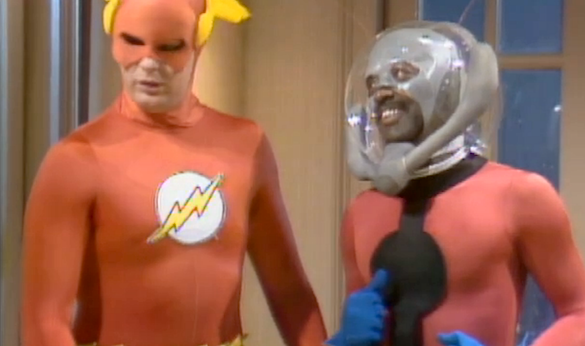
Garrett Morris as Ant-Man in a Saturday Night LIve sketch beside Dan Aykroyd as The Flash. It’s because of this sketch (watch it here) that Morris got a cameo in the new Ant-Man movie.

Easter Eggs of the Day:

In addition to the Garrett Morris cameo in Ant-Man, Mr. Sunday Movies humorously points out all the Marvel, Disney and Star Wars Easter Eggs to be found in the new superhero movie (via Devour):

[embedded content]

Fan Art of the Day:

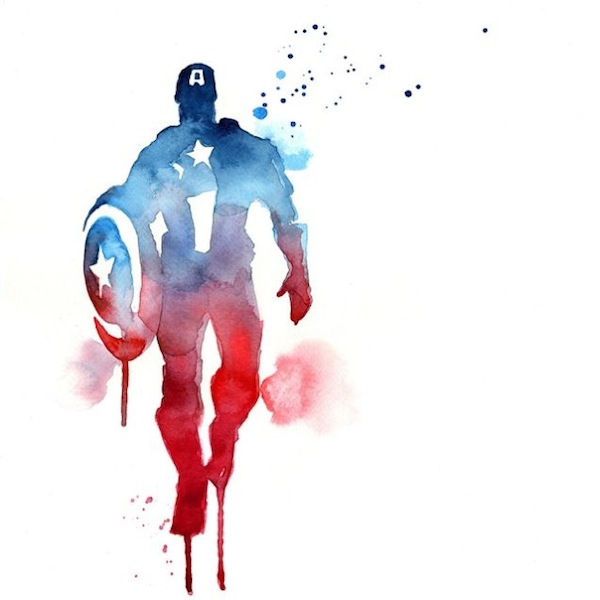
More Marvel! French artist Blule makes some incredible splatter paintings for various superheroes, including most of the Avengers (see Captain America below) and Batman, plus James Bond and Django. See more at Design Taxi.

Cosplay of the Day:

Speaking of The Avengers, here’s Ashlynne Dae doing a twist on the movie’s villain, Loki (via KamiKame):

Supercut of the Day:

Ever notice all the crucifixion posturing in the movies of Martin Scorsese? If not, Milad Tangshir has compiled them for you in this supercut (via Montage Creators):

[embedded content]

Filmmaker in Focus:

Lars von Trier is the latest focus of the auteur-centered video essay series Cinemasters (via Cinematic Montage Creators):

[embedded content]

Celebrity Cosplay of the Day:

Yes, we’ve got two different cosplays of the day today because this one is very different and special, more about who is doing the cosplay than how the costumes related to movies. Christopher Guest and Jamie Lee Curtis took their kids to the tournament-game convention Evo 15 and the whole family dressed up as Street Fighter characters. Curtis needed to go incognito as Vega, but apparently Guest isn’t famous enough to need a mask at a public event (via Fashionably Geek).

Star Wars Toy of the Day:

If you have the room to hold this 18ft by 12 ft Millennium Falcon from Hot Toys, you’ll presumably also have enough money for however much it will cost (via Geek Tyrant):

Classic Trailer of the Day:

30 years, Tom Hanks was riding on the breakout success of Splash and even Bachelor Party for the marketing of his subsequent release, The Man With One Red Shoe, which bombed when it opened this week in 1985. Watch the comedy’s original trailer, which looks pretty entertaining in retrospect:

[embedded content]

Send tips or follow us via Twitter:

and

This entry passed through the Full-Text RSS service – if this is your content and you’re reading it on someone else’s site, please read the FAQ at fivefilters.org/content-only/faq.php#publishers.


No Image

With Ad Blocking Use On The Rise, What Happens To Online Publishers?

The rise of ad blockers threatens the business model that drives much of the Internet economy.
7:56

Download

The rise of ad blockers threatens the business model that drives much of the Internet economy. Danae Munoz/Ikon Images/Getty Images hide caption

itoggle caption Danae Munoz/Ikon Images/Getty Images

Advertising is the basic business model of the Internet. It’s one reason we can view online content free of charge.

Millions of Web surfers already download software to block ads online, and that number is growing. Soon, Apple could be making mobile ad blocking easier.

When the All Tech Considered team tested out the popular ad blocker, Adblock Plus, YouTube videos started without a commercial first, and on newspaper websites, the ads disappeared.

As you can well imagine, that doesn’t sit well with sites that sell online advertising. Google gets 90 percent of its revenue from online ads, and mobile ads make up 73 percent of Facebook’s ad revenue.

So, how is the freedom to choose not to see ads faring in the Web economy? And how are publishers fighting back?

To gauge what blocking ads could mean for the online advertising industry, NPR’s Robert Siegel spoke with Business Insider’s global advertising editor Lara O’Reilly; Tim Schumacher, chairman of Adblock Plus; and Ben Barokas of Sourcepoint, a firm trying to counter ad blockers.

How Big Is Ad Blocking Use?

“According to some estimates, 144 million people globally used an ad blocker last year, and that was up 70 percent year on year,” O’Reilly says. “So it’s definitely on the rise, but it’s not necessarily a large proportion of the Internet population. It tends to be the more technically advanced user, skewed toward males, gamers and so on.”

Apple To Join The Block

According to Apple’s prereleased developer documentation for new versions of its iOS and OS X operating systems, which run on the iPad, iPhone and Macs, the company plans to bring content blocking extensions to the Safari Web browser.

Apple is being ambiguous as to why it’s introducing ad blocking.

“What they’re saying is that they will allow developers — people that build apps — to build extensions that block content on Safari,” O’Reilly says. “And it does stipulate that that could include ads. And Apple hasn’t confirmed what it means by this yet. What we can assume is that you can say, I want to block pop-up ads but I don’t want to block banner ads or video ads.”

What It Means For Publishers

How threatened are publishers, search engines and social media sites if readers can opt out of the ads?

After installing Adblock Plus to the Chrome browser, Wired.com, for example, greets users with a message where the ads would otherwise be: “Please do us a solid and disable your ad blocker. … Add us to your whitelist.”

A whitelist, in this case, is a list of certain websites that the user allows to pass through the ad blocker filters to serve ads.

“Depending on how far you go, the doomsayers say this could be the end of the free Internet as we know it if ad blocking becomes mainstream,” O’Reilly says. “Every time you go to a free Internet site, whether you could’ve realized it or not, a transaction takes place. You’re viewing content for free, and in exchange, the publisher serves you ads.”

Adblock Plus is the most-downloaded ad blocking software for desktops, with 400 million installations, and draws 50 million to 60 million monthly users.

Companies that depend on advertising online say there will be a lot less content on the Web if there’s a lot less ad revenue, which means there will be a lot more places you have to pay for access to view the content.

On this possibility, Adblock Plus Chairman Tim Schumacher says, “I think those companies are right and that’s exactly why Adblock Plus actually has a different way of being an ad blocker. Now, first of all of course, people love to block annoying ads. Especially video ads, pop-ups, Flash banners, everything which is really getting into the way of reading content online. Now, at the same time, publishers’ interests are really important and so, we’ve come up with what we call ‘acceptable ads,’ and those are ads which are non-annoying. Small text ads, small pictures, anything which is not interrupting the viewer’s flow and they still help financing the Web and that’s what we believe the Web needs to be.”

These “acceptable ads,” from any advertiser, can pass through the Adblock filter on any site without having to pay to be whitelisted, Schumacher says.

“The most important thing is really if ads are meeting the community-set criteria. And if they do, they get whitelisted,” he says. “Ninety percent of companies and individual blogs get whitelisted for free. Our model really is just that the big companies, they need to pay and they basically need to finance that model for everyone else — and that’s about 10 percent of companies.”

An ad blocking arms race could occur when software is developed to block the ad blockers.

If that happens, Schumacher says, “we’re up for the challenge, but we don’t welcome it because we don’t think it’s the right thing to stick advertising to users who’ve actually made a conscious choice of not wanting to have advertising. We actually think it’s better to tone down advertising for those users, appeal to those users and have a dialogue with those users as opposed to just sticking the ads down their throat.”

Schumacher, who worked in online advertising previously, says he “saw what has been going wrong. That’s why we started Adblock Plus and said, ‘Let’s make this better.’ “

Blocking The Ad Blockers

Ben Barokas, who has worked in the world of online advertising since the 1990s — most recently for Google — wants to counter the trend toward ad blocking.

His company, Sourcepoint, is a “content compensation platform” that gives the user less of an all-or-nothing ad viewing option.

“We believe that any user has a choice of whether or not they want to consume advertising, or that they’re able to subscribe,” Barokas says. “We believe that users would love to surf from site to site, device to device without hitting pay walls and consuming unnecessary ads.”

He says, “We find it necessary to punch through the ad blocker or circumvent it — however you want to say it — in order to provide the revenue to the publisher.”

Barokas says the “acceptable” ads distinction in Adblock Plus should be a consumer choice.

“I would say, one person’s trash is another person’s treasure,” he says. “Some people would rather watch a one-minute video ad once a day; others are OK with banners and buttons. But that’s something that an individual user can decide and not a company like Adblock Plus.”

This entry passed through the Full-Text RSS service – if this is your content and you’re reading it on someone else’s site, please read the FAQ at fivefilters.org/content-only/faq.php#publishers.


No Image

American Zach Johnson Wins British Open In Historic 3-Way Playoff

3:12

Download

NPR’s Robert Siegel talks to Ron Sirak of Golf Digest about how Jordan Spieth could have been the first golfer since 1953 to win the Masters, U.S. Open and the British Open in the same year.

This entry passed through the Full-Text RSS service – if this is your content and you’re reading it on someone else’s site, please read the FAQ at fivefilters.org/content-only/faq.php#publishers.

No Image

More Health Plan Choices At Work. What's The Catch?

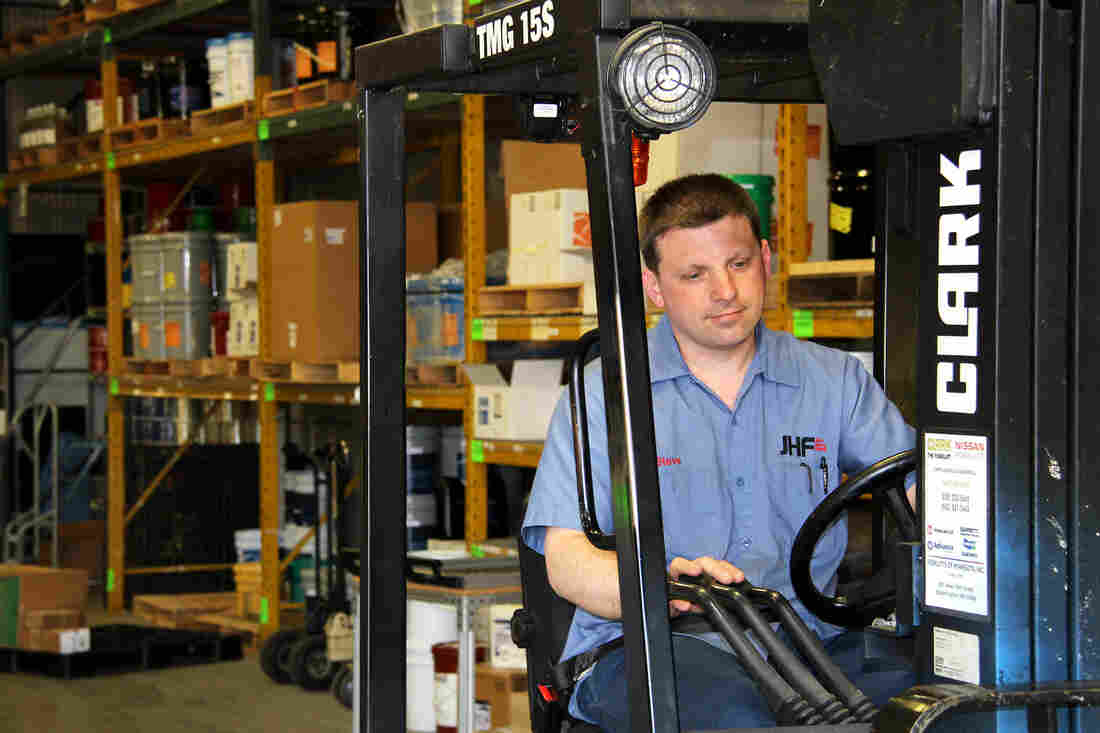
Steve Heller has worked for Minnesota's John Henry Foster company for 15 years. He says he likes the greater choice of health plans he now has because of the private exchange.
4:33

Download

Steve Heller has worked for Minnesota’s John Henry Foster company for 15 years. He says he likes the greater choice of health plans he now has because of the private exchange. Mark Zdechlik/MPR hide caption

itoggle caption Mark Zdechlik/MPR

Until recently, John Henry Foster, an equipment distribution firm based in Eagan, Minn., offered its employees only a couple of health plans to choose from. That’s common in companies across the United States.

“They just presented what we got,” says Steve Heller, a forklift operator who has worked at John Henry Foster for 15 years.

But these days the company’s employees have dozens of choices. And something else is new: Each worker now receives money from the company (from $350 to $1,000 a month, depending on whether Heller and his co-workers are buying insurance for a single person, a couple or a family) to buy a health plan.

Employees are then directed to an online exchange — a private, secure website that offers the selection of plans for side-by-side comparison. Workers can choose high-deductible plans with relatively low monthly premiums or they can pay more each month to have more of their care and medications covered.

Just as before, the company determines the insurance companies listed, and the scope of the treatments and procedures covered by each plan.

Three years after the switch, Heller says he’s happy with his insurance and the exchange. The company’s managers are happy with it, too.

In 2012, the company was facing a big increase — 30 percent in its costs for employee medical benefits. “Unlike anything we had ever seen before,” says Jan Hawkins, co-owner of John Henry Foster.

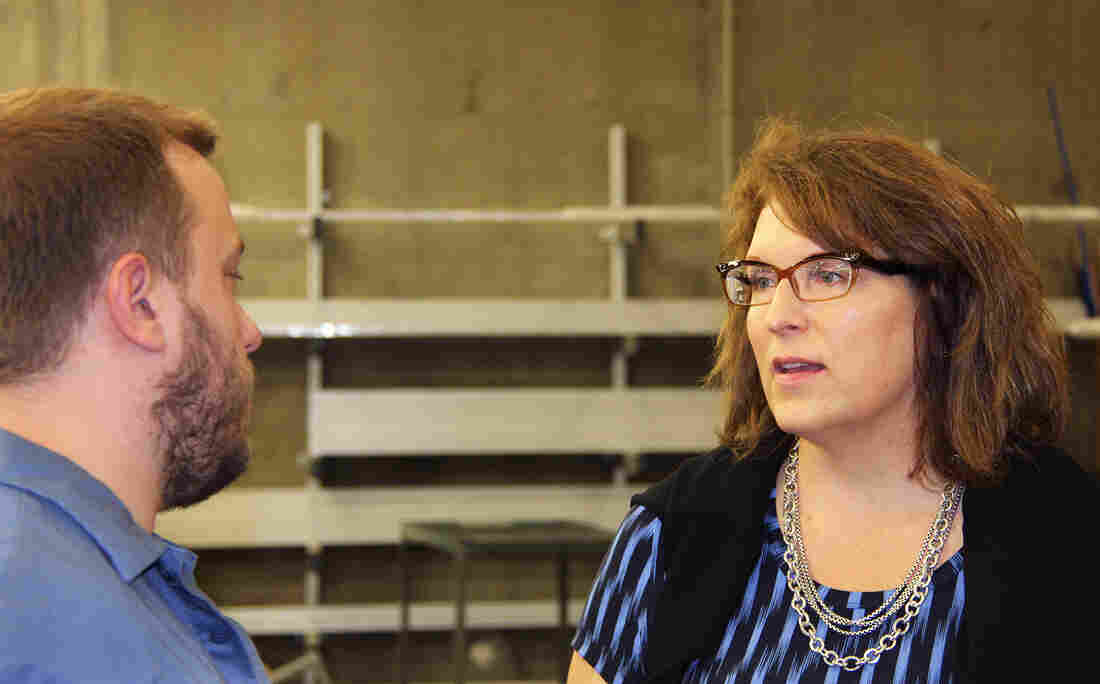
Jan Hawkins, one of the co-owners of the equipment distribution firm John Henry Foster, says going to a private exchange has given the company much more flexibility in budgeting for health care costs.

Jan Hawkins, one of the co-owners of the equipment distribution firm John Henry Foster, says going to a private exchange has given the company much more flexibility in budgeting for health care costs. Mark Zdechlik/MPR hide caption

itoggle caption Mark Zdechlik/MPR

So, Hawkins says, company leaders decided to sign up for a private exchange run by Medica, a Minnesota insurer, because they could choose to spend only about 10 percent more on health benefits in the first year, instead of that 30 percent increase projected under the old plan.

Since then, the firm has increased the money it gives employees to spend on health insurance by roughly 10 percent each year.

“I think it definitely helps us from an operational budget standpoint,” Hawkins says. “We’ve just seen only positives from this.”

Despite the benefits to a company’s bottom line, and more choices for employees, John Henry Foster is one of relatively few businesses using a private health insurance exchange. According to research by the Kaiser Family Foundation, last year only 3 percent of employers (excluding the federal government) insure their employees this way.

But it’s a trend that some experts expect to pick up steam soon. “I would say a majority of the companies will switch to private exchanges,” says Dr. Jim Bonnette, with the health care consulting firm The Advisory Board Co.

Bonnette thinks that employees under this sort of system are likely to choose high-deductible plans and be much more motivated than in the past to search out the best value for care. That could finally force consumers to pay attention to the price of health care, he says, a goal that has eluded health policymakers for decades.

“We can’t afford the trend — that is, the increase in cost per year — that we currently have,” Bonnette says. “So how do you get people to think differently about how they receive care and what it costs?”

But shopping wisely for health care is almost impossible says Sara Collins from the Commonwealth Fund, a health policy research organization.

It’s often difficult for consumers to find out how much a doctor visit or a particular procedure costs. And, Collins says, studies show that people with high-deductible plans often forgo care to save money; they’ll even avoid free preventive care because they don’t understand how their health insurance works.

“The idea that people who have such low understanding of what is included or excluded in their deductible can actually go out and price-shop for their health services, I think, really stretches the imagination,” she says.

Kim Wagner, a benefits consultant, says predictions of a big shift to private exchanges are overblown. Although some employers are adding more health plan choices for workers, she says, giving employees a set amount to buy insurance on an exchange could alienate workers and increase turnover.

The practice of giving employees a limited amount of money to purchase their own insurance has been around for a while, Wagner says, but “hasn’t taken off, particularly in the large employer space, because truly it’s a cost shift.”

Workers suddenly asked to shoulder more of the cost of their health care may be more likely to look for a job elsewhere — opting for companies that offer better benefits.

Nonetheless, firms that now use generous benefits as a selling point to lure top talent may soon be more motivated to set up these sorts of private insurance exchanges, too. Beginning in 2018, companies that offer health insurance packages the government deems too generous will start having to pay a 40 percent tax on those packages.

It’s called the “Cadillac” tax (meant to reduce health spending by discouraging luxurious health plans), but it is not as exclusive as its name implies. Towers Watson, a consulting firm, predicts that 48 percent of employers will have to pay the tax in its first year.

This story is part of NPR’s reporting partnership with Minnesota Public Radio and Kaiser Health News, an editorially independent program of the Kaiser Family Foundation.

This entry passed through the Full-Text RSS service – if this is your content and you’re reading it on someone else’s site, please read the FAQ at fivefilters.org/content-only/faq.php#publishers.

No Image

Written Then, Heard Now: Reimagining Old Texts Through Global Songs

On her album Dallëndyshe, Albanian singer Elina Duni takes up folk songs once used as propaganda by the Communist regime in her home country and reimagines them as modern-day jazz.
9:00

Download

On her album Dallëndyshe, Albanian singer Elina Duni takes up folk songs once used as propaganda by the Communist regime in her home country and reimagines them as modern-day jazz. Nicolas Masson/Courtesy of the artist hide caption

itoggle caption Nicolas Masson/Courtesy of the artist

Words don’t have to stay on the page, and music doesn’t have to stay in the time of its creation. The four artists collected by DJ Betto Arcos, a frequent All Things Considered guest who hosts Global Village on KPFK in Los Angeles, know this.

On this visit to the program, Arcos showcases musicians from Algeria, Mali, Italy and Albania who have infused historic poems, stories and folk tunes with new music and new meaning. Hear the conversation with host Arun Rath at the audio link, and listen to the songs below.

Reimagining Old Poems and Songs

cover

cover cover hide caption

itoggle caption cover

Ibrahim Maalouf & Oxmo Puccino

  • Song: Jamais quand il faut
  • From: Au Pays d’Alice
[embedded content]
  • Add to Playlist
  • Embed
    Embed <iframe src="https://www.npr.org/player/embed/421500012/421527878" width="100%" height="290" frameborder="0" scrolling="no">
  • Purchase Music
cover

cover

Souad Massi

  • Song: Ayna
  • From: Mtakallimun (Masters of the World)
[embedded content]
  • Add to Playlist
  • Embed
    Embed <iframe src="https://www.npr.org/player/embed/421500012/421517939" width="100%" height="290" frameborder="0" scrolling="no">
  • Purchase Music
cover

cover

Elina Duni Quartet

  • Song: Sytë
  • From: Dallëndyshe
[embedded content]
  • Add to Playlist
  • Embed
    Embed <iframe src="https://www.npr.org/player/embed/421500012/421515258" width="100%" height="290" frameborder="0" scrolling="no">
  • Purchase Music
cover

cover cover hide caption

itoggle caption cover

Ludovico Einaudi

  • Song: Taranta
  • From: Taranta Project
[embedded content]
  • Add to Playlist
  • Embed
    Embed <iframe src="https://www.npr.org/player/embed/421500012/421524212" width="100%" height="290" frameborder="0" scrolling="no">
  • Purchase Music

This entry passed through the Full-Text RSS service – if this is your content and you’re reading it on someone else’s site, please read the FAQ at fivefilters.org/content-only/faq.php#publishers.


No Image

Apocalypse, Storm and Psylocke Get Colorful in First Look at the Next 'X-Men' Movie

When Bryan Singer’s X-Men hit theaters in 2000, one of the big issues among fans was how the movie more or less abandoned all of the character costume designs from the comic books, trading their vibrant colors for shiny black costumes that were all the rage thanks to The Matrix. It’s not that Wolverine looked bad in black, he just didn’t look exactly like he did in the comics.

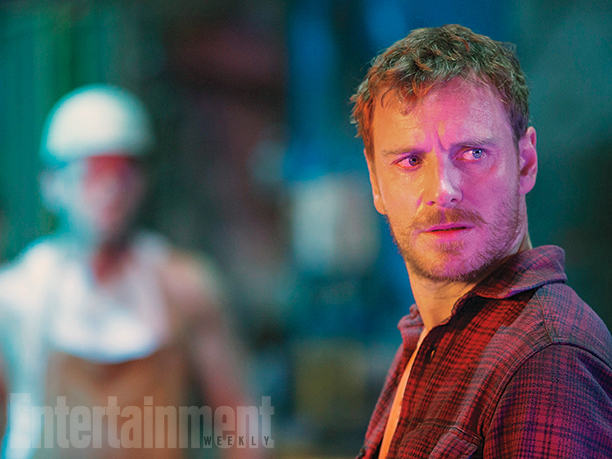
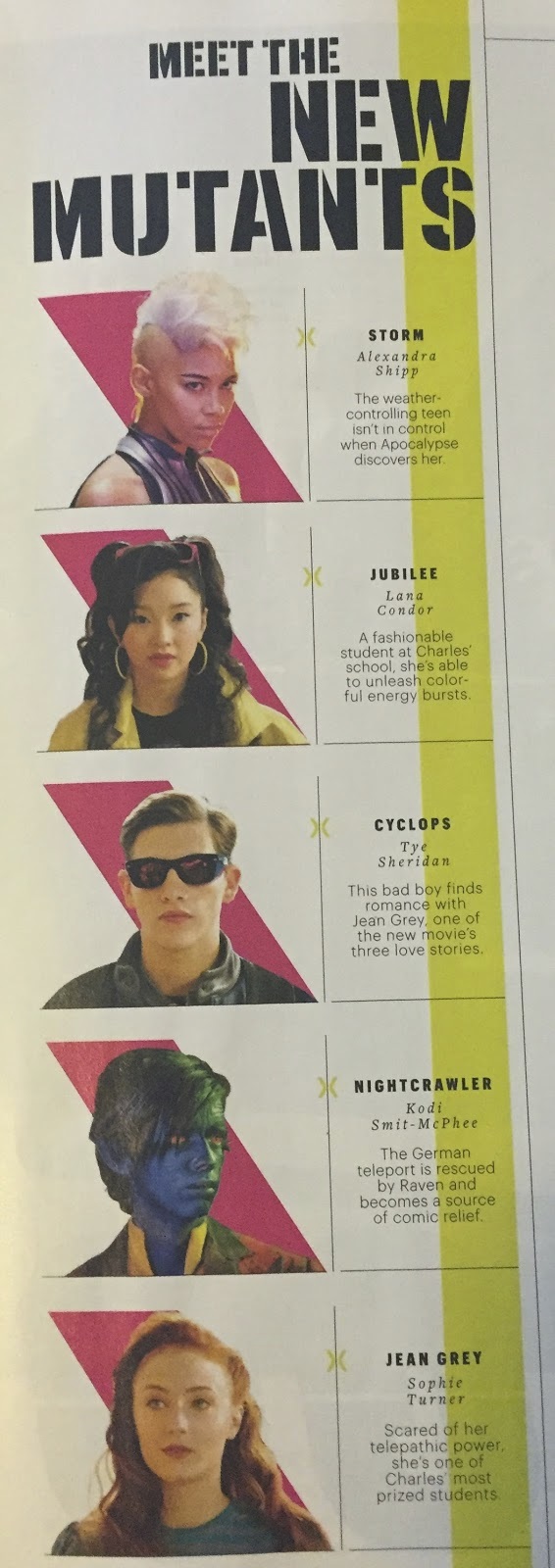
Now we’ve seemingly come full circle, with the next issue of Entertainment Weekly offering a first look at the new characters in Singer’s X-Men: Apocalypse. Their costumes aren’t afraid to be colorful and weird and, in some cases, remarkably faithful to their comic counterparts. And as a result, they may look a little, well, weird and colorful, but it’s cool because that’s kind of how the ’80s were, which is when Apocalypse takes place.

Above you’ll see Alexandra Shipp as Storm, Oscar Isaac as Apocalypse, and Olivia Munn as Psylocke. Apocalypse may not be the instantly intimidating badass fans are expecting, but we’re sure that’ll change as soon as you see him in the actual movie. But at least Shipp is rocking that Storm mohawk hard.

Not everyone is colorful, though. Here we’ve got a shot of Raven and Quicksilver wearing the fairly standard black designs, looking like they’re aboard the Blackbird.

And if you want to see a first look with some better coloring, here’s the actual EW cover.

X-Men: Apocalypse hits theaters on May 27, 2016.

Follow @PeterSHall Follow @MoviesDotCom

This entry passed through the Full-Text RSS service – if this is your content and you’re reading it on someone else’s site, please read the FAQ at fivefilters.org/content-only/faq.php#publishers.


No Image

Webcast: Sports And Health In America

Pamela Moore/iStockphoto/Harvard T.H. Chan School of Public Health

Pamela Moore/iStockphoto/Harvard T.H. Chan School of Public Health

The vast majority of kids in America play sports.

But while about three-quarters of adults played sports when they were younger, only 1 in 4 still plays sports today. Among them, men are more than twice as likely as women to play.

Why do we tend to give up sports as we grow older? A poll conducted by NPR, the Robert Wood Johnson Foundation and the Harvard T.H. Chan School of Public Health offers fresh insights into how and why adults and kids play sports, and also why they don’t.

What are the obstacles that keep adults off the field? How can sports help keep kids and adults in good health? What are the best ways to encourage more widespread participation, particularly among women and lower-income adults? And what role do parents play in helping children become active and stay that way?

As part of our series “Sports and Health in America,” Harvard presented a webcast Thursday in collaboration with NPR and the Robert Wood Johnson Foundation to explore these questions and more.

Joe Neel, deputy senior supervising editor on NPR’s Science Desk, moderated a discussion with:

  • Robert Blendon, professor of health policy and political analysis, Harvard T.H. Chan School of Public Health and Harvard Kennedy School
  • Elizabeth Matzkin, chief of women’s sports medicine, Brigham and Women’s Hospital, Boston
  • Caitlin Cahow, former member of the U.S. Women’s National Ice Hockey Team and current member of the President’s Council on Fitness, Sports & Nutrition
  • Ed Foster-Simeon, president and CEO, U.S. Soccer Foundation
  • Cobi Jones, three-time World Cup U.S. men’s soccer player

Update 1:35 ET: The webcast is over. We’ll add an archived video when it becomes available.

This entry passed through the Full-Text RSS service – if this is your content and you’re reading it on someone else’s site, please read the FAQ at fivefilters.org/content-only/faq.php#publishers.


Download

Cottage cheese peaked in the early 1970s, when the average American ate about 5 pounds of it per year, according to the U.S. Department of Agriculture. iStockphoto hide caption

itoggle caption iStockphoto

As you know, here at The Salt we’ve been a little obsessed with yogurt lately.

But there’s a flip side to the story of the yogurt boom. What about that other product made from fermented milk that had its boom from 1950 to 1975, and has been sliding into obscurity ever since?

Cottage cheese took off as a diet and health food in the 1950s.

It makes a cameo in the show Mad Men, that time capsule of the 1960s, as poor Betty Draper describes her last meal before going to the hospital to give birth: “Toast, cottage cheese, pineapple,” she tells her unsympathetic nurse.

On the day that he announced his resignation, Richard Nixon ate this meal of cottage cheese and pineapple slices.

On the day that he announced his resignation, Richard Nixon ate this meal of cottage cheese and pineapple slices. Robert Knudson/Nixon Library hide caption

itoggle caption Robert Knudson/Nixon Library

Cottage cheese peaked in the early 1970s, when the average American ate about 5 pounds of it per year, according to the U.S. Department of Agriculture. Richard Nixon apparently ate even more.

The same hidden tape recorders that helped bring down our 37th president also recorded him repeatedly ordering cottage cheese, often with pineapple.

Since then, though, Americans have cut their cottage cheese consumption in half. For comparison, per capita consumption of yogurt has increased sevenfold over that time.

Nobody can be sure of the exact reasons for this.

Tim Noll, who worked for decades as plant manager for a now-shuttered cottage cheese manufacturer called Bancroft Dairy in Madison, Wis., thinks it’s partly due to the difficulty of making cottage cheese of consistently high quality. “I think it’s safe to say that in just about every plant that makes cottage cheese, it’s regarded as the hardest product to make,” he says.

Robert Bradley, who’s taught cheese-making at the University of Wisconsin, Madison, for 50 years, agrees. “It takes personal attention. It’s a very fragile product,” he says.

Making cottage cheese starts with milk and bacteria, as yogurt does, although the two products use different types of bacteria. A semi-solid curd forms, and just at the right moment, you have to cut the curd into small cubes. Then the curd is cooked and washed. Sometimes cream is added. It all takes careful handling.

A USDA poster promoting cottage cheese.

A USDA poster promoting cottage cheese. U.S. Department of Agriculture hide caption

itoggle caption U.S. Department of Agriculture

“We don’t have the degree of dedication to this manufacture that we used to have,” Bradley says.

As a result, quality varies. Bradley says that sometimes the product doesn’t taste quite right.

Noll, though, points to another difficulty that has nothing to do with manufacturing. The people who run big food companies these days seem to feel that cottage cheese is a little old-fashioned. “I haven’t heard anybody on the marketing side trying to do anything exciting with cottage cheese in quite a while,” he says.

That, of course, is very different from yogurt.

When I recently visited the dairy aisle of one supermarket, I found five whole sections of shelves filled with Greek yogurt, Australian-style yogurt and yogurt with all different flavorings. Off in the corner, there was one set of shelves with generic-looking cottage cheese.

Gerry Berman, a shopper, says there’s lots of marketing about how “Greek yogurt is so good for us.” Cottage cheese doesn’t have the same marketing behind it. “Nobody talks about it anymore.”

“When we were younger, it was really promoted for your salad,” says her friend Madeline Anglin.

“Cottage cheese and peach slices!” says Berman. “And a hamburger patty!”

A younger shopper, Mary Scott Bogatz, tells me that she hasn’t tasted cottage cheese in years. “It’s really good for you, I know, but I just don’t like the chunky and the creamy; the texture freaks me out,” she says.

She walks off with a big container of plain yogurt.

But then, a few minutes later, she comes back. Just talking about cottage cheese got her thinking about it, she says. She’s ready to try some again.

Maybe there’s hope for cottage cheese after all.

This entry passed through the Full-Text RSS service – if this is your content and you’re reading it on someone else’s site, please read the FAQ at fivefilters.org/content-only/faq.php#publishers.