Articles by admin

No Image

Professional Wrestling World Mourns Longtime Star 'Rowdy' Roddy Piper

"Rowdy" Roddy Piper, clad in his trademark kilt, speaks in 2009 at the WrestleMania 25th anniversary press conference at Hard Rock Cafe in New York City. Piper fought in the main bout at the first WrestleMania in 1985, losing a tag-team match to Hulk Hogan and Mr. T.

“Rowdy” Roddy Piper, clad in his trademark kilt, speaks in 2009 at the WrestleMania 25th anniversary press conference at Hard Rock Cafe in New York City. Piper fought in the main bout at the first WrestleMania in 1985, losing a tag-team match to Hulk Hogan and Mr. T. Andrew H. Walker/Getty Images hide caption

itoggle caption Andrew H. Walker/Getty Images

Wrestler Hulk Hogan prepares to slam “Rowdy” Roddy Piper down on the mat during the first WrestleMania in March 1985 at New York’s Madison Square Garden. Ray Stubblebine/AP hide caption

itoggle caption Ray Stubblebine/AP

“Rowdy” Roddy Piper, a premier wrestler in the now-WWE during the 1980s and 1990s who fought Hulk Hogan and Mr. T in the main event at the first WrestleMania in 1985, has died, the company reports. He was 61.

“Roddy Piper was one of the most entertaining, controversial and bombastic performers ever in WWE, beloved by millions of fans around the world,” said WWE Chairman & CEO Vince McMahon. “I extend my deepest condolences to his family.”

Born Roderick Toombs, Piper joined the company after years in smaller circuits and quickly developed a reputation as trash-talking “heel,” reports the Associated Press:

“Piper became a household name because of his rivalry with Hogan, and the involvement of pop star Cyndi Lauper and her friend Captain Lou Albano, also a wrestler. The feud led to an MTV special “The War to Settle the Score” in 1985. Piper was cast as the villain, and his disqualification led to Hogan claiming the WWF championship. A brawl at the end of that fight led to the first WrestleMania.”

Despite being born in Canada, he usually appeared in a kilt, and often played the bagpipes.

He went on to star in John Carpenter horror film They Live, the AP notes, in which he delivered the classic line “I have come here to chew bubblegum and kick ass — and I’m all out of bubblegum.”

[embedded content]

Wrestlers and others posted their memories of Piper on Twitter on Friday.

There was no better natural, TV wrestling villain than the late @R_Roddy_Piper. He was #elite. #RIPRoddyPiper

— Jim Ross (@JRsBBQ) August 1, 2015

RIP legend. I first met this wrestling icon when I was 12yrs old when he was wrestling my pops the WWE. For weeks and weeks after that meeting I would have my mom set up a video camera in the kitchen as I would “become” Hot Rod and mimmic and emulate his every word, style, swag, heat, cool cockiness and all delivered with his classic smile (and my awful 12yr old afro).He was a huge influence on me as a kid and an even bigger one when I became The Rock in the WWE. Thank you Roddy for all the talks, all the stories (especially the crazy ones about my grandfather and grandmother?) all the advice and most importantly.. all the memories of you entertaining us fans. You’re missed my friend. Heaven just got a lil’ rowdier… Rest in love ~ DJ #JustWhenTheyThinkTheyHaveAllTheAnswers #HotRodChangesTheQuestions

A photo posted by therock (@therock) on Jul 31, 2015 at 4:36pm PDT

Sad to hear about Roddy Piper.He once worked 91 nights w/out a day off.WWE wouldn’t be what it is today w/out him.Wonderful athlete & friend

— Jesse Ventura (@GovJVentura) July 31, 2015

I’m devastated by the passing of my friend Roddy Piper. Great wrestler, underrated actor, dear friend. Rest in peace, Rod.

— John Carpenter (@TheHorrorMaster) July 31, 2015

I STAND BEHIND THE RODDY PIPER WHEN WE BOTH MAKE IT TO HALL OF FAME. FOREVER HE MY BROTHER. pic.twitter.com/Q8S8OtR6XT

— The Iron Sheik (@the_ironsheik) July 31, 2015

This entry passed through the Full-Text RSS service – if this is your content and you’re reading it on someone else’s site, please read the FAQ at fivefilters.org/content-only/faq.php#publishers.


No Image

Planned Parenthood Controversy Raises Questions About Fetal Tissue Research

4:10

Download

A series of sting videos targeting Planned Parenthood is raising questions about the field of fetal tissue research. Companies who buy and sell such tissue defend their work.

Transcript

AUDIE CORNISH, HOST:

A federal judge in California has temporarily banned the release of anymore videos featuring members of an abortion-provider group. The National Abortion Federation had sued, saying a series of sting videos by anti-abortion activists had placed its members in danger. The anti-abortion group Center for Medical Progress has used the videos to accuse Planned Parenthood of illegally selling fetal tissue. The U.S. Senate plans to vote next week on a bill to cut off funds for Planned Parenthood which denies it did anything illegal. This has all created a new focus on fetal tissue research. NPR’s Jennifer Ludden reports.

JENNIFER LUDDEN, BYLINE: The anti-abortion activists who made the videos pose as insiders. In this clip, one pretends to be a broker looking to buy fetal tissue from Planned Parenthood and then sell it to researchers.

(SOUNDBITE OF ARCHIVED RECORDING)

UNIDENTIFIED WOMAN: So I don’t want to sound like a salesman here, but I’m going to. So we return a portion of our fees to the clinics.

LUDDEN: The highly edited videos give an impression of cutthroat competition over big-time profit.

LINDA TRACY: I cringe every time I hear the words sell or buy when it comes to human tissue of any kind.

LUDDEN: Linda Tracy is a real insider. She heads Advanced Bioscience Resources, a nonprofit in Northern California. In 2013, public records show the organization had net income of just over a million dollars.

TRACY: I began ABR as an altruistic endeavor because I believe in the research. And I have striven to keep the cost to the researchers as low as possible and still maintain my business.

LUDDEN: She says ABR procures fetal tissue from hospitals and clinics that perform abortions, paying $30 to $100 a specimen. By law, that amount is meant to only cover costs. ABR isolate cells for researchers who are working on everything from HIV and AIDS to cancer, diabetes and more. She says researchers then typically pay between $340 and $550 for the material. Again, Tracy says her fees only cover costs which can be considerable.

TRACY: Any processing required, preservation, quality control, supplies, equipment.

LUDDEN: But not all middlemen are nonprofit. A sting video released this week features a former employee of the company Stem Express. Holly O’Donnell disparages her ex-boss.

O’DONNELL: The owner, Cate Dyer – she used to be a procurement tech, and then she went and started her own business. And now she’s making a lot of money.

LUDDEN: Dyer declined to speak. A crisis communications consultant hired by the company says Stem Express nets about $2.2 million a year, but with 37 employees, he says, you do the math. The federal law regulating fetal tissue research dates to 1993. It’s not clear how much research today is still bound by it.

ALTA CHARO: Technically, this only applies to research that’s been financed by NIH.

LUDDEN: Alta Charo teaches law and bioethics at the University of Wisconsin. She says the National Institutes of Health funds about $70 million a year in such research, but there’s much more than that.

CHARO: For example, there are some states that finance research. There are private foundations and patient groups that finance research. And technically, they are not required to follow these rules, but in practice, they do.

LUDDEN: Including, she says, Planned Parenthood when it provides companies with tissue from aborted fetuses. The organizations we spoke with – ABR and Stem Express – also say they’re monitored by the FDA, outside review boards and auditors. Still, some question how much oversight there is. Robert Klitzman of Columbia University thinks it’s good that Congress is looking into the field.

ROBERT KLITZMAN: As science has advanced, up come all these opportunities for making money, and people are quick to step in. And it’s important to think about what the ethical issues are.

LUDDEN: Planned Parenthood itself is calling for a blue-ribbon commission on fetal tissue research. It would not be the first. Legal scholar Charo says a series of commissions starting in the 1970s have weighed the ethical concerns of fetal tissue research. All, she says, have found the potential benefits are worth it. Jennifer Ludden, NPR News.

Copyright © 2015 NPR. All rights reserved. Visit our website terms of use and permissions pages at www.npr.org for further information.

NPR transcripts are created on a rush deadline by a contractor for NPR, and accuracy and availability may vary. This text may not be in its final form and may be updated or revised in the future. Please be aware that the authoritative record of NPR’s programming is the audio.

This entry passed through the Full-Text RSS service – if this is your content and you’re reading it on someone else’s site, please read the FAQ at fivefilters.org/content-only/faq.php#publishers.


No Image

Today in Movie Culture: Mission: Impossible's Craziest Stunts, A Non-Human 'Lego Movie' Fan and More

Here are a bunch of little bites to satisfy your hunger for movie culture:

Stunts Showcase of the Day:

With Mission: Impossible – Rogue Nation opening this weekend, io9 presents a look at all of Tom Cruise‘s crazy stunts from the movie series:

[embedded content]

Actor Profile of the Day:

Speaking of the Mission: Impossible series, here’s a video showing us how to be Tom Cruise, specifically as Ethan Hunt (via Montage Creators):

[embedded content]

Vintage Image of the Day:

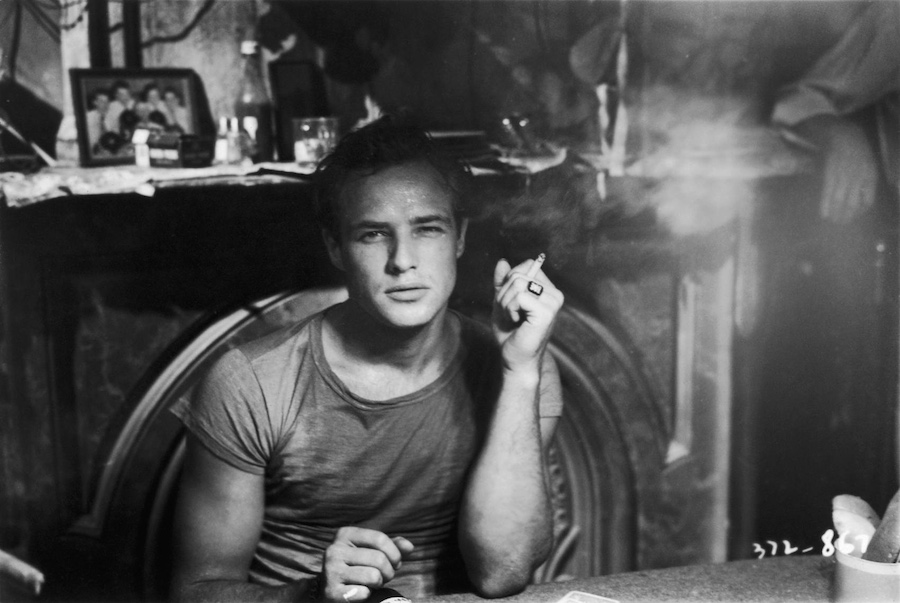
Marlon Brando on the set of A Streetcar Named Desire. The still is now being repurposed to promote the acclaimed new documentary Listen to Me Marlon, which opened in theaters this week.

Movie Fan of the Day:

There’s a chance the voice we hear singing “Everything Is Awesome” in the following video is not in fact the parrot on screen but some faker off camera, but we want to believe this bird is truly a fan of The Lego Movie (via Nerd Approved):

[embedded content]

Classic Cartoon of the Day:

Today is the 80th anniversary of the release of the animated short Sinbad the Salor, based on the legendary tales and directed by Ub Iwerks. Watch it in full below.

[embedded content]

Fan Photoshop of the Day:

Did you notice that McDonald’s in the background during Mad Max: Fury Road? The Tumblr High Street Shops in Sci Fi Films wants us to see product placement that doesn’t exist in movies such as Moon, The Thing and Harry Potter and the Goblet of Fire.

Movie Mashup of the Day:

Speaking of Mad Max: Fury Road, the latest fan mashup of that movie and something else stars Batman and The Joker (via Live for Films):

Retrospective Review of the Day:

Oliver Harper packs a lot of detail into this 30-minute video essay/review/history lesson/analysis of Back to the Future (via The Playlist):

[embedded content]

Cosplay of the Day:

Taco Bell is probably crazy enough to somehow turn this clever Beauty and the Beast cosplay into a new menu item, if only Disney would approve (via Reddit):

Classic Trailer of the Day:

This weekend is the 30th anniversary of the release of the John Hughes teen fantasy Weird Science. Watch the original trailer, which must have really appealed to any early Bill Paxton fans, below.

[embedded content]

Send tips or follow us via Twitter:

and

This entry passed through the Full-Text RSS service – if this is your content and you’re reading it on someone else’s site, please read the FAQ at fivefilters.org/content-only/faq.php#publishers.


No Image

Kazakhstan Promises 'Real Winter Wonderland' In Bid To Host 2022 Games

2:42

Download

The International Olympic Committee will decide Friday whether to accept the bid by Kazakhstan’s largest city, Almaty, to stage the 2022 Winter Games, or instead offer it to rival contender Beijing.

Transcript

CORY FLINTOFF, BYLINE: This is Cory Flintoff in Almaty, Kazakhstan. Supporters of Almaty’s Olympic bid are touting the legacy for the future too, promising that the games will put this nation on the world tourist map and jumpstart an industry based on the country’s natural attractions. Some Americans may think of Kazakhstan only as the made up homeland of “Borat” in the 2006 movie comedy by Sacha Baron Cohen. In fact, Kazakhstan is a very real place – an oil-rich stretch of mountains and steppes in the heart of Central Asia. Its 17 million people are famous for their hospitality, one of the qualities that’s featured in this slickly produced promotional video.

(SOUNDBITE OF ARCHIVED RECORDING)

UNIDENTIFIED MAN: Surrounded by snowy peaks that almost reach down to the city streets, Almaty provides a metropolitan haven amidst a real winter wonderland.

FLINTOFF: The slogan for the country’s Olympic bid is, keeping it real, a reference to the fact that Almaty gets plenty of real snow in contrast to China’s proposed winter venues which might have to rely on man-made white stuff for the Alpine events. Almaty’s supporters say that all the Olympic events could be held at a compact area with no venue more than about 12 miles from the city center. And when the games are over, they say, the city will benefit from new housing, new recreational opportunities and new infrastructure.

Not so fast, say the proposal’s detractors, such as Dosym Satpayev, head of the Kazakhstan Risk Assessment Group. Satpayev says the Olympic bid has support from the country’s political elite, but a lot of ordinary people are worried about the cost of such an expensive project.

DOSYM SATPAYEV: Because a lot of ordinary people in Kazakhstan – they asked why we should organize for expensive Olympic Games because in Kazakhstan now we have a lot of local problems.

FLINTOFF: Those problems, he says, include Kazakhstan’s deteriorating education and healthcare systems. Satpayev says many people see the Olympic Games as an opportunity for greedy public officials to skim more of the country’s oil wealth. It’s not just the costs, says Sergei Kuratov, a founder of the local environmental group Green Salvation.

SERGEI KURATOV: Another problem is that this is area where some very rare so-called endangered species, and the most famous animal is Snow Leopard.

FLINTOFF: Kuratov says Olympic development would encroach on a wildlife refuge and threaten the leopard’s habitat. The winner of the bid – Almaty or Beijing – will be announced tomorrow. Corey Flintoff, NPR News, Almaty, Kazakhstan.

Copyright © 2015 NPR. All rights reserved. Visit our website terms of use and permissions pages at www.npr.org for further information.

NPR transcripts are created on a rush deadline by a contractor for NPR, and accuracy and availability may vary. This text may not be in its final form and may be updated or revised in the future. Please be aware that the authoritative record of NPR’s programming is the audio.

This entry passed through the Full-Text RSS service – if this is your content and you’re reading it on someone else’s site, please read the FAQ at fivefilters.org/content-only/faq.php#publishers.


No Image

Kazakhstan Promises 'Real Winter Wonderland' In Bid To Host 2022 Games

2:42

Download

The International Olympic Committee will decide Friday whether to accept the bid by Kazakhstan’s largest city, Almaty, to stage the 2022 Winter Games, or instead offer it to rival contender Beijing.

Transcript

CORY FLINTOFF, BYLINE: This is Cory Flintoff in Almaty, Kazakhstan. Supporters of Almaty’s Olympic bid are touting the legacy for the future too, promising that the games will put this nation on the world tourist map and jumpstart an industry based on the country’s natural attractions. Some Americans may think of Kazakhstan only as the made up homeland of “Borat” in the 2006 movie comedy by Sacha Baron Cohen. In fact, Kazakhstan is a very real place – an oil-rich stretch of mountains and steppes in the heart of Central Asia. Its 17 million people are famous for their hospitality, one of the qualities that’s featured in this slickly produced promotional video.

(SOUNDBITE OF ARCHIVED RECORDING)

UNIDENTIFIED MAN: Surrounded by snowy peaks that almost reach down to the city streets, Almaty provides a metropolitan haven amidst a real winter wonderland.

FLINTOFF: The slogan for the country’s Olympic bid is, keeping it real, a reference to the fact that Almaty gets plenty of real snow in contrast to China’s proposed winter venues which might have to rely on man-made white stuff for the Alpine events. Almaty’s supporters say that all the Olympic events could be held at a compact area with no venue more than about 12 miles from the city center. And when the games are over, they say, the city will benefit from new housing, new recreational opportunities and new infrastructure.

Not so fast, say the proposal’s detractors, such as Dosym Satpayev, head of the Kazakhstan Risk Assessment Group. Satpayev says the Olympic bid has support from the country’s political elite, but a lot of ordinary people are worried about the cost of such an expensive project.

DOSYM SATPAYEV: Because a lot of ordinary people in Kazakhstan – they asked why we should organize for expensive Olympic Games because in Kazakhstan now we have a lot of local problems.

FLINTOFF: Those problems, he says, include Kazakhstan’s deteriorating education and healthcare systems. Satpayev says many people see the Olympic Games as an opportunity for greedy public officials to skim more of the country’s oil wealth. It’s not just the costs, says Sergei Kuratov, a founder of the local environmental group Green Salvation.

SERGEI KURATOV: Another problem is that this is area where some very rare so-called endangered species, and the most famous animal is Snow Leopard.

FLINTOFF: Kuratov says Olympic development would encroach on a wildlife refuge and threaten the leopard’s habitat. The winner of the bid – Almaty or Beijing – will be announced tomorrow. Corey Flintoff, NPR News, Almaty, Kazakhstan.

Copyright © 2015 NPR. All rights reserved. Visit our website terms of use and permissions pages at www.npr.org for further information.

NPR transcripts are created on a rush deadline by a contractor for NPR, and accuracy and availability may vary. This text may not be in its final form and may be updated or revised in the future. Please be aware that the authoritative record of NPR’s programming is the audio.
This entry passed through the Full-Text RSS service – if this is your content and you’re reading it on someone else’s site, please read the FAQ at fivefilters.org/content-only/faq.php#publishers.


No Image

50 Years Ago, Medicare Helped To Desegregate Hospitals

4:18

Download

The law creating a national health insurance program for older Americans was signed in 1965 after a long political battle. Renee Montagne talks to Edith Mitchell of the National Medical Association.

Transcript

RENEE MONTAGNE, HOST:

Medicare turns 50 years old today. The law creating a national health insurance program for older Americans was signed in 1965 after a long political battle. One big opponent was the American Medical Association. The AMA famously signed up then-actor Ronald Reagan to campaign against Medicare.

(SOUNDBITE OF AMERICAN MEDICAL ASSOCIATION AD)

RONALD REAGAN: Write those letters now. Call your friends, and tell them to write. If you don’t, this program, I promise you, will pass just as surely as the sun will come up tomorrow. And behind it will come other federal programs that will invade very area of freedom as we have known it in this country. Until, one day, as Norman Thomas said, we will awake to find that we have socialism. And if you don’t do this and if I don’t do it, one of these days, you and I are going to spend our sunset years telling our children and our children’s children what it once was like in America when men were free.

MONTAGNE: Well, of course, that ad did not stop the bill from being passed. And when he signed it into law, President Lyndon Johnson made a point of not inviting the AMA to the ceremony. He did invite the National Medical Association. That was the organization for black doctors. They’d long supported the bill. They saw the potential for Medicare to help desegregate health care for patients and professionals.

EDITH MITCHELL: I think that Medicare actually contributed to a new day.

MONTAGNE: Edith Mitchell is the president-elect of the National Medical Association.

MITCHELL: They had access to health care in a way that it had not been provided before. And no longer did individuals have to go through the door that said colored only.

MONTAGNE: Medicare became a force for civil rights because the Civil Rights Act was signed just a year before, and it now barred federal funding for institutions that discriminated on the basis of race. For hospitals, the fear of losing federal funds became a powerful motivator.

DAVID BARTON SMITH: The money and the holding of the dollars to hospitals really created a rather dramatic and amazing transformation in a very short period of time.

MONTAGNE: Temple University professor David Barton Smith is writing a book on Medicare and the Civil Rights Movement. But he says it wasn’t just how the law was written, it was how it was enforced. After the signing, a tiny understaffed team of official inspectors was bolstered by hundreds of volunteers.

SMITH: Most of them had already been involved in civil rights activities. They were all very passionately committed people. Early on, they were making sure that all of the white and colored signs were removed. But then, they would go back and insist that hospital employees and patients not self-segregate in the waiting rooms. They were pretty fierce about it. And they had an invisible army in the sense of local civil rights groups that would guide them in their inspections, including a lot of black health workers that helped in providing the eyes and ears for making sure that the hospitals were not just trying to cover everything up.

MONTAGNE: Within a few months, Smith says 2,000 hospitals had desegregated. Dr. Edith Mitchell is from the South. And soon after Medicare was implemented, her grandmother went to the hospital for the first time.

MITCHELL: My grandmother was in the first group of individuals to receive a Medicare card. And it was the first time that my grandmother had ever been admitted to a hospital, although she had given birth to five children. She had a chronic condition, and she was in a hospital room with a Caucasian patient, who we knew, who my grandmother knew. And just to be able to lay in the bed in a room where another Caucasian patient was in the room was something that never happened before.

MONTAGNE: That’s National Medical Association President-elect Edith Mitchell. We spoke to her for this 50th anniversary of Medicare.

Copyright © 2015 NPR. All rights reserved. Visit our website terms of use and permissions pages at www.npr.org for further information.

NPR transcripts are created on a rush deadline by a contractor for NPR, and accuracy and availability may vary. This text may not be in its final form and may be updated or revised in the future. Please be aware that the authoritative record of NPR’s programming is the audio.

This entry passed through the Full-Text RSS service – if this is your content and you’re reading it on someone else’s site, please read the FAQ at fivefilters.org/content-only/faq.php#publishers.


No Image

Today in Movie Culture: The Stares of Tom Cruise, A Better Ending to 'Inside Out' and More

Here are a bunch of little bites to satisfy your hunger for movie culture:

Movie Comparison of the Day:

In honor of the release of Mission: Impossible – Rogue Nation, Couch Tomato amusingly presents 24 reasons Mission: Impossible – Ghost Protocol is the same movie as If Looks Could Kill.

[embedded content]

Supercut of the Day:

Speaking of Tom Cruise movies, here’s a new clip compilation from Jacob T. Swinney for Slate of the actor staring intensely:

Fan Art of the Day:

Artist Dave Pollot continues to add pop culture characters to paintings he finds in thrift stores, such as this one with Groot and Rocket Raccoon from Guardians of the Galaxy. See more at Geek Tyrant.

Movie Takedown of the Day:

Inside Out could have ended much, much earlier than it did. But that might not have been good for Riley. Watch a video of how the Pixar feature should, or could have ended:

[embedded content]

Movie Analysis of the Day:

Here’s another celebration of how well Mad Max: Fury Road is directed, analyzing two scenes to show how George Miller keeps our eyes focused in the midst of many things going on at once:

[embedded content]

Vintage Image of the Day:

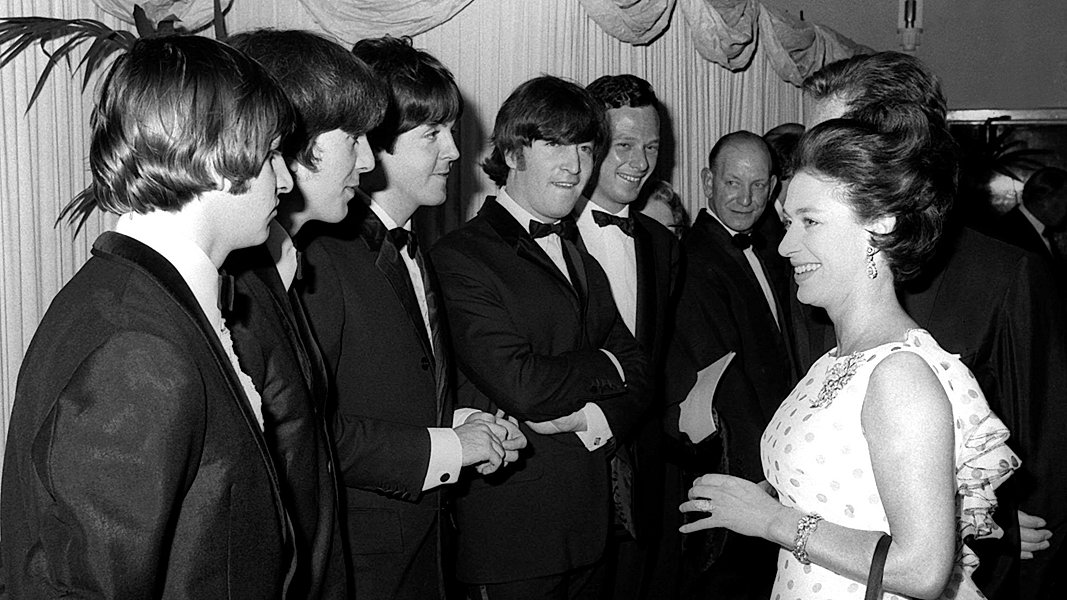
The Beatles meet Princess Margaret at the Royal World Premiere of Help! on this day 50 years ago:

Video Essay of the Day:

Don’t take doors in movies for granted. Inspired by parts of Foxcatcher, Darren from Must See Films explores all the different things doors and doorways can do and mean in cinema:

[embedded content]

Filmmaker in Focus:

See all of Hayao Miyazaki’s movies and characters come together in a wonderful tribute to the animation legend (via The Film Stage):

[embedded content]

Cosplay of the Day:

As usual, Sneaky Zebra has found and compiled some really great cosplay, this time from this month’s London Film & Comic Con:

[embedded content]

Classic Trailer of the Day:

Not only is a new Vacation movie out in theaters today, but the original National Lampoon’s Vacation opened exactly 32 years ago on this date. Watch the original trailer from 1983 below.

[embedded content]

Send tips or follow us via Twitter:

and

This entry passed through the Full-Text RSS service – if this is your content and you’re reading it on someone else’s site, please read the FAQ at fivefilters.org/content-only/faq.php#publishers.


No Image

Debris In The Indian Ocean May Have Come From Vanished Airliner

A piece of a wing, apparently from a Boeing 777, has been found on Reunion, an island the Indian Ocean. It's not clear yet whether the debris from the Malaysia Airlines jet that disappeared from radar during a flight last year.

A piece of a wing, apparently from a Boeing 777, has been found on Reunion, an island the Indian Ocean. It’s not clear yet whether the debris from the Malaysia Airlines jet that disappeared from radar during a flight last year. YANNICK PITOU/AFP/Getty Images hide caption

itoggle caption YANNICK PITOU/AFP/Getty Images

Authorities on the French island of Réunion in the Indian Ocean have found debris that may be from a missing Malaysia Airlines jet.

A source familiar with the investigation tells NPR’s Geoff Brumfiel that the debris appears to have come from a large passenger aircraft, but it remains unclear whether it’s from Malaysia Airlines flight 370, which vanished from radar on March 8, 2014.

The Boeing 777 took off from Kuala Lumpur, Malaysia, and was flying to Beijing, China, with 239 people on board. About an hour after departure, the flight crew made a final radio transmission and was never heard from again.

As Geoff reported for our Newscast unit:

“Up until now, the only lead in the search for the plane were brief transmissions it sent to an orbiting satellite in the hours after it disappeared. Based on that signal, investigators believed the aircraft flew to the Southern Indian Ocean near Australia, before it ran out of fuel and crashed.”

Investigators have found a 9-foot by 3-foot section of a white wing. It appears to be a part called a “flaperon” which combines flaps (the trailing edge of the wing that help planes during takeoff and landings) and ailerons (which turn the aircraft). Several media outlets are quoting senior Boeing officials who say the debris is consistent with a 777.

Similitudes incroyables entre le flaperon d’un #B777 et le débris retrouvé ce matin à #LaReunion#MH370 ? pic.twitter.com/GDkzRLwi2h

— Xavier Tytelman (@PeurAvion) July 29, 2015

Pictures show the wing part has likely been in the water for a while. There will be serial numbers on the flaperon that investigators will use to definitively say whether this debris came from the missing plane.

Models by the Australian Transport Safety Bureau suggest the debris could have reached Réunion within this timeframe, and that is “consistent with the drift modeling.” In addition to the French investigators, officials from Malaysia are also heading to the island.

This entry passed through the Full-Text RSS service – if this is your content and you’re reading it on someone else’s site, please read the FAQ at fivefilters.org/content-only/faq.php#publishers.


No Image

Michel Platini Is Running For President Of Scandal-Plagued FIFA

Michel Platini of Fance announced his campaign for FIFA president and is considered a strong candidate.

Michel Platini of Fance announced his campaign for FIFA president and is considered a strong candidate. Shaun Botterill/Getty hide caption

itoggle caption Shaun Botterill/Getty

A new candidate has tossed his name in the hat for FIFA President.

France’s Michel Platini is currently the president of the European soccer’s governing body, UEFA, and a FIFA vice president. He wrote that he wanted “to give FIFA back the dignity and the position it deserves,” in a UEFA press release.

According to The New York Times, Platini became a “heavy favorite” in the election, simply by announcing his campaign. Also, England’s Football Association (FA) quickly announced it supported him: “We have a good relationship with him and hope he can gain the necessary global backing to lead a new FIFA during the most difficult period in its history,” FA Chairman Greg Dyke said in a statement.

The presidential contest follows a major corruption scandal, and the decision by FIFA’S longtime president Sepp Blatter to resign.

A former player for France himself, Platini joined FIFA’s executive committee in 2002, writes the BBC. What’s his reputation like?

“Platini can fairly lay claim to being ‘a football man’, his status as a genuine great former player a rarity in Fifa’s corridors of power, earning him respect and admiration,” says [BBC sports editor Dan Roan.]

“However, he has been accused of tarnishing the qualification process for the European Championships by meddling with the competition to increase it to 24 teams.

“He has also been criticised for his pan-European vision for Euro 2020, while his stubborn opposition to goal-line technology also makes it hard for him to present himself as a reform candidate.

“Most importantly, despite his recent opposition to Blatter, he is associated with the outgoing president’s regime.”

As we reported previously on The Two-Way, the election will take place February 26, 2016 after former FIFA President Sepp Blatter announced his resignation in June.

You can read more about Sepp Blatter’s resignation here.

This entry passed through the Full-Text RSS service – if this is your content and you’re reading it on someone else’s site, please read the FAQ at fivefilters.org/content-only/faq.php#publishers.


No Image

Health Insurers Face Little Enforcement Of Federal Mental Health Parity Law

5:52

Download

Insurers are supposed to cover mental health treatment as they cover other illnesses but they don’t always comply. They are improving, but the U.S. does not appear to actively enforce the federal law.

Transcript

AUDIE CORNISH, HOST:

The federal mental health parity law was supposed to protect patients from discrimination by insurance companies. But in the seven years since it was passed, the U.S. government has not taken a single public enforcement action against an insurer or employer for violating the law. And some patients still find it difficult to get the mental health treatment they need. Jenny Gold has this story of a father who is suing his insurance company over the treatment given to his son.

JENNY GOLD, BYLINE: Michael Kamins remembers when he first opened the letter from his insurer in 2012.

MICHAEL KAMINS: When I got that letter, there was steam coming out of my ears. This is my kid’s life. This is my kid’s well-being.

GOLD: According to his lawsuit, his 20-year-old son had attempted suicide a year before as a freshman at an Ivy League college. Since then, he’d been diagnosed with bipolar disorder and hospitalized twice; most recently just a few months before. He thought his son was getting better, but now, his suit alleges, the insurer was cutting his son’s visits with the psychiatrist to just twice a month.

KAMINS: I’m seeing progress and what do they tell me? Oh, no, you can’t have 13 sessions. You can only have two.

GOLD: Kamins and the psychiatrist filed several appeals to the insurer Optum, which is a subsidiary of United Health Group, but they were denied. Eight months later, his son was back in a psychiatric ward, according to the lawsuit.

KAMINS: I’ll make the analogy of somebody drowning who finally gets to the surface of a lake. His head comes out, he gasps for air, and what does Optum do? They shove him down again.

GOLD: Kamins, who’s a professor in New York, decided to sue. The federal parity law is supposed to guarantee people with mental illnesses the same access to treatment as patients with diseases like cancer or diabetes. And most insurers have dropped the higher copayments and separate deductibles they used to charge for mental health. But Kamins’s lawyer, Meiram Bendat, says some insurers have continued to limit treatment in subtle ways.

MEIRAM BENDAT: Insurers have become much more crafty at finding protocols that are not expresed numerically that are more difficult to spot.

GOLD: For example, the lawsuit alleges that Optum required Kamins’s son to get prior authorization to see his psychiatrist, something not required for other kinds of illnesses. And the insurer claimed his visits weren’t medically necessary, despite the psychiatrist’s orders, according to the complaint. The federal law doesn’t allow people with insurance plans like Kamins’s to bring private lawsuits to enforce it. So instead, he had to sue under New York state law. Optum would not comment on the specifics of the case and has asked that the suit be dismissed. But Bendat says the real problem is that state and federal governments aren’t doing enough.

BENDAT: The implementation and enforcement of parity has been rather lacking across the board.

GOLD: But Clare Krusing disagrees. She’s a spokeswoman for America’s Health Insurance Plans – the industry’s main trade group.

CLARE KRUSING: The idea that there is limited enforcement of mental health parity is a misperception.

GOLD: Krusing says insurers are working behind the scenes with federal and state agencies to make sure they’re providing proper mental health coverage. But that isn’t easy.

KRUSING: It’s not a math formula. A treatment plan for diabetes or a chronic heart disease is very different from a treatment plan for a patient that’s seeking care for depression or another mental illness.

GOLD: Especially when insurers are also trying to hold down costs by preventing unnecessary care, she says. Former Congressman Patrick Kennedy helped write the parity legislation. He describes the government’s enforcement record as slow and sparse, and he says the timing of the Affordable Care Act is partly to blame.

PATRICK KENNEDY: The parity law kind of got kicked down the tracks until the Obama administration could get the ACA on track.

GOLD: And he says enforcing the laws against insurance companies has been delicate politically.

KENNEDY: Insurance companies were part of the coalition that helped bring the ACA to life. And so the administration feels an enormous debt of gratitude to insurers. So it’s a challenge politically to then step on the toes of those that brought them to the dance.

GOLD: Since 2010, the Department of Labor, which is the main federal agency in charge of parity, has found 140 instances in which a patient’s parity rights were violated. A spokesman for the department says all those issues were resolved voluntarily, but no insurer has been fined, and none of the results are public. Carol McDaid, of the Parity Implementation Coalition, says that’s made it difficult for advocates like her to help other consumers.

CAROL MCDAID: Our problem with that that these investigations are all kept secret. They’re not putting it on a website. They’re not releasing it to us.

GOLD: She says few patients even know they have legal protection. Michael Kamins is one of just a handful of consumers to bring a lawsuit, a costly and time-consuming endeavor. He says he owes it to his son.

KAMINS: I’m his dad. I do love him. He’s a wonderful kid. He’s a wonderful kid and I’m going to give him every opportunity to achieve everything that he can achieve, you know? And I think any father would do the same.

GOLD: His lawsuit is still pending. Meanwhile, the family has a new insurance company, which, so far, has given his son more access to treatment. Now 23, he’s doing better and is scheduled to graduate from college next year. For NPR News, I’m Jenny Gold.

CORNISH: Jenny Gold is with our partner, Kaiser Health News, a nonprofit news service.

Copyright © 2015 NPR. All rights reserved. Visit our website terms of use and permissions pages at www.npr.org for further information.

NPR transcripts are created on a rush deadline by a contractor for NPR, and accuracy and availability may vary. This text may not be in its final form and may be updated or revised in the future. Please be aware that the authoritative record of NPR’s programming is the audio.

This entry passed through the Full-Text RSS service – if this is your content and you’re reading it on someone else’s site, please read the FAQ at fivefilters.org/content-only/faq.php#publishers.