Articles by admin

No Image

Astros' Dallas Keuchel and Cubs' Jake Arrieta Win Cy Young Awards

Chicago Cubs pitcher Jake Arrieta throws during the first inning of Game 2 of the National League Championship Series against the New York Mets on Oct. 18 in New York.

Chicago Cubs pitcher Jake Arrieta throws during the first inning of Game 2 of the National League Championship Series against the New York Mets on Oct. 18 in New York. Julie Jacobson/AP hide caption

toggle caption Julie Jacobson/AP

Updated 9:15 p.m. ET

The Houston Astros’ Dallas Keuchel and Chicago Cubs’ Jake Arrieta won the Cy Young Awards for best pitchers in Major League Baseball for 2015.

Keuchel received enough votes to squeak past second-place finisher David Price in the American League. Arrieta handily beat runner-up Zack Greinke in the voting for the National League.

Houston Astros starting pitcher Dallas Keuchel pitches in the first inning of the American League wild card game against the New York Yankees at Yankee Stadium on Oct. 6.

Houston Astros starting pitcher Dallas Keuchel pitches in the first inning of the American League wild card game against the New York Yankees at Yankee Stadium on Oct. 6. Kathy Willens/AP hide caption

toggle caption Kathy Willens/AP

Keuchel, who has been with the Astros for four seasons, led the American League in innings pitched with 232 and finished with a second-best earned run average of 2.48. He struck out 216 batters — good for fifth in the league.

In the National League, Arrieta finished second in innings pitched with 229 and posted a 1.77 ERA, second to Greinke, whose ERA was 1.66. Arrieta had a solid first half of the season, but he caught fire down the stretch, helping the Cubs to the playoffs for the first time since 2008. Here’s a stat that speaks for itself: In his last 15 starts, Arrieta posted a minuscule 0.75 ERA.

Here’s how the voting broke down, from the Baseball Writers Association of America.

American League

1. Dallas Keuchel, 186 points (22 first-place votes)

2. David Price, 143 points (8)

3. Sonny Gray, 82 points (1 second-place vote)

4. Chris Sale, 30 points (3 third-place votes)

5. Chris Archer, 29 points (10 fourth-place votes)

National League

1. Jake Arrieta, 169 points (17 first-place votes)

2. Zack Greinke, 147 points (10)

3. Clayton Kershaw, 101 points (3)

4. Gerrit Cole, 40 points (2 third-place votes)

5. Max Scherzer, 32 points (13 fourth-place votes

This entry passed through the Full-Text RSS service – if this is your content and you’re reading it on someone else’s site, please read the FAQ at fivefilters.org/content-only/faq.php#publishers.


No Image

OECD Nations Agree To Cut Funding For Overseas Coal Power Plants

The U.S., Japan and other major economies have agreed to restrict public financing for coal-burning power plants built in other countries.

The agreement limits — but doesn’t entirely eliminate — export financing for coal plants. (Export financing includes a variety of loans and programs to help companies doing business abroad.)

And it comes at a symbolically important moment: Major climate change talks are scheduled to begin in Paris at the end of the month, and the pact signals at least some international commitment to reducing carbon emissions.

The 34 countries of the Organization for Economic Cooperation and Development signed on to the compromise, which was reached Tuesday.

Public financing for coal power plants abroad has been the subject of a long-standing dispute between the U.S. and Japan, the Associated Press reports:

“The Obama administration announced in 2013 that it would end U.S. financing for overseas coal power plants and has been pressuring others to join. Japan was among those opposed to the move, arguing that its high-efficiency power plant technology is the best option for developing countries that need affordable energy.

“Under the agreement, which takes effect in 2017, financing would still be allowed for the most advanced ‘ultra-supercritical’ plants and for some other plants in the very poorest countries.”

Counting those exceptions, the agreement would cut off funding for 85 percent of currently proposed coal plants, the Washington Post reports.

China, which has supported coal power plants abroad, is not a member of the OECD. But the Post reports that China has separately agreed to cut back on financial support for coal-burning power plants in developing countries:

“The Chinese government agreed to strictly control its support for overseas projects with high carbon emissions as part of its most recent climate agreement with the U.S. in September, which allowed Japan and the U.S. to forge a compromise proposal.”

This entry passed through the Full-Text RSS service – if this is your content and you’re reading it on someone else’s site, please read the FAQ at fivefilters.org/content-only/faq.php#publishers.


No Image

In Tennessee, Giving Birth To A Drug-Dependent Baby Can Be A Crime

Brittany Crowe just completed an addiction treatment program that helped her regain custody of her children. Here she holds Allan, who was born with neonatal abstinence syndrome, as her son James stands behind them.
6:54

Download

Brittany Crowe just completed an addiction treatment program that helped her regain custody of her children. Here she holds Allan, who was born with neonatal abstinence syndrome, as her son James stands behind them. Ari Shapiro/NPR hide caption

toggle caption Ari Shapiro/NPR

In the United States, a baby is born dependent on opiates every 30 minutes. In Tennessee, the rate is three times the national average.

The drug withdrawal in newborns is called neonatal abstinence syndrome, or NAS, which can occur when women take opiates during their pregnancies.

In the spring of 2014, Tennessee passed a controversial law that would allow the mothers of NAS babies to be charged with a crime the state calls “fetal assault.” Alabama and Wisconsin have prosecuted new mothers under similar laws, and now other states are also considering legislation.

Supporters of the laws say they can provide wake-up calls to women dependent on drugs and encourage them to get help. The Tennessee law says that getting treatment for drug use is a valid defense against fetal assault charges. But critics say criminalizing the effects of a woman’s drug dependence on her newborn child makes it less likely for her to seek help when it could do the most good.

The problem of NAS is growing nationwide. Nearly 6 in 1,000 babies born in the U.S. in 2012 were diagnosed with NAS, according to a study published in the Journal of Perinatology in August. That’s nearly double the level seen in 2009.

In Tennessee, billboards on the side of highways declare, “Your baby’s life shouldn’t begin with detox,” with an image of a newborn baby’s foot attached to a medical monitor. The signs are strategically placed in areas with the biggest substance abuse problems, like Oak Ridge — a town surrounded by poor, rural communities in northeastern Tennessee.

On a drizzly Monday afternoon in Oak Ridge, a group of women sits in a circle in a low brick building. Some of these women have their babies — bouncing on their knees or rocking gently in car carriers. These women are all in recovery, and some are recently out of prison for fetal assault. The group is called Mothers and Infants Sober Together, or MIST, and provides outpatient treatment for mothers addicted to drugs.

Each woman takes her turn checking in with Michelle Jones, who runs the MIST program. The women talk about their challenges and triumphs, their cravings. One pregnant woman admits to feeling guilty for being on a medicine prescribed by her doctor to ease her cravings for opiates.

“Can I say something? Don’t feel guilty,” another woman pipes up, “because it’s going to help you right now.”

Jones sits in the circle with them, week after week, asking questions and prompting them to open up. It’s not an easy task. Many of them were afraid to talk at first.

Avoiding Prenatal Care Out Of Fear

Brittany Crowe used to be one of those women. Now, she shares her story.

“I could have gone [to] a baby doctor at first, but I was scared because of the new law,” Crowe tells the group. When she was pregnant with her youngest son, she was addicted to prescription drugs and knew that if she went to a doctor, a drug test would come back positive. So she stayed away. She had no prenatal care through her entire pregnancy. She was so afraid of going to jail and losing custody of her children that she considered giving birth at home.

“I worry about that a lot now,” she told us later. “I wonder how many babies are not known about because the mothers are afraid to get help, and then they’re born at home and nobody ever knows about these babies. If they’re going through withdrawal so bad, they’re going to pass away.”

Crowe finally went to the hospital 10 minutes before she gave birth. Her son was born with neonatal abstinence syndrome. The Department of Children’s Services took him and her older children away and put them in foster care. Crowe enrolled in the MIST program to get clean.

One mother details her journey with addiction in a group therapy session at Mothers and Infants Sober Together.

One mother details her journey with addiction in a group therapy session at Mothers and Infants Sober Together. Mallory Yu/NPR hide caption

toggle caption Mallory Yu/NPR

Crowe’s experience points to one reason medical professionals and social workers oppose the fetal assault law: They worry that the law will keep women from getting medical care. Dr. Jessica Young, an OB-GYN at Vanderbilt University who specializes in addiction during pregnancy, says the law has made her patients afraid.

“So now they’re making decisions on medical care out of fear rather than out of science or what is best for them and their baby’s health,” she says. “Fear makes people make rash unsafe decisions without the consultation or guidance of a physician.”

State Rep. Terri Lynn Weaver, a Republican who co-sponsored the bill, argues that critics misunderstand its intent.

“We want to get these women help,” she says. They “weren’t getting help — not going to prenatal care anyway. Their mindset is not on prenatal care. The mindset is on the next drug.” She hopes the law can act as a wake-up call to addicted women that will motivate them to seek help.

Some of the mothers at MIST told us the law did scare them into getting help. When Jessica Roberts got pregnant, the law drove her to enroll in rehab twice, but it didn’t make her quit. She relapsed both times, injecting herself with opiates.

“What finally broke me was, I was 31 weeks. I had tied off to hit myself. And I put my arm on my stomach. And [the baby] kicked my arm off. And that broke me,” she says. “To me, it was like my baby saying ‘Mom, you can’t do this anymore. I need you.’ And it hurt.”

Treatment Slots Hard To Find

When Roberts wanted help quitting cold turkey, she had a hard time finding it. Not many rehab clinics will detox a pregnant woman, and the few that do have long waiting lists. Doctors disagree on whether detoxing a pregnant woman is really best for mothers and their babies. Instead, most physicians recommend a gradual tapering of less harmful medications like methadone, paired with a comprehensive addiction treatment program. Those programs are scarce, however, and often have long waiting lists of their own.

Young’s clinic at Vanderbilt, for instance, has a waiting list of up to eight weeks, and the majority of her patients have to drive over an hour to see her.

At the state Department of Children’s Services, Connie Gardner says it feels like Tennessee is “drowning in the drug problem,” and nobody has thrown the state a life preserver. She understands why mothers view her office with distrust and fear. The department makes the decision about when babies should be taken from a mother and put into foster care.

“None of these mothers wakes up and says, ‘I’m going to abuse my child today,’ ” Gardner says. “None of them wakes up and says, ‘I’m going to be a bad mother.’ What I have to remember is that they do. They can get better. What’s frustrating, what’s disappointing is that we don’t have the tools to help them get better.”

Even the law’s advocates acknowledge that there isn’t enough help for the women who want it. Barry Staubus, the district attorney for Sullivan County in the northeast corner of Tennessee, has prosecuted more than 20 drug-using mothers this year.

“Of course I’m for funding programs and making those programs available,” he says. “There’s always the call for more funding, but we can’t let that get in the way of a good idea … or an effective program.”

Staubus believes that there need to be real consequences to women who chronically abuse powerful prescription drugs while pregnant. He says the threat of jail time would scare even the most defiant women, who had been previously unwilling to get into a program.

The Tennessee law is set to expire next year, unless state legislators renew it. So its effectiveness is under close scrutiny.

Births Of Addicted Babies Up In Nashville

At Vanderbilt Hospital’s Neonatal Intensive Care Unit in Nashville, the persistent squealing cry of newborns going through drug withdrawal provides an audible reminder that this problem is far from solved. In the year and a half since this law took effect, the numbers of NAS babies have not gone down, says Dr. Stephen Patrick, who researches neonatal abstinence syndrome at the hospital. He saw 100 cases last year, and the hospital is on track to see at least that many this year. He doesn’t think punishment is the right way to solve this problem.

NAS is a treatable condition in newborns, he says, and there isn’t enough research to know what its long-term effects on a child might be. “There was a lot of concern about the cocaine epidemic and Time magazine calling it a ‘lost generation.’ I think we should be really cautious in how we frame this moving forward,” he says. “The evidence really doesn’t support that for neonatal abstinence syndrome. And, in fact, we know that other substances, legal substances such as alcohol, are far more harmful long-term to infants.”

On a warm fall afternoon, Crowe and her children are at the park. Her older kids play in a stream as she holds her youngest on her hip. He’s 9 months old, with big blue eyes and a tuft of blond hair.

One of her boys runs up to her, a mischievous smile on his face.

“Don’t you splash me,” she warns, but there’s amusement in her voice.

He giggles and Mom gets a faceful of muddy water. She laughs as she wipes it from her eyes. He splashes her again.

Is she having second thoughts about having her children back?

“I think it’s a little too late,” she says, laughing. “I can honestly say a year ago I wouldn’t have been here.” She’s grateful to be here now. Free of drugs, and finally reunited with her children.

This is the first story in a series that was produced by All Things Considered in collaboration with Nashville Public Radio reporter Blake Farmer.

This entry passed through the Full-Text RSS service – if this is your content and you’re reading it on someone else’s site, please read the FAQ at fivefilters.org/content-only/faq.php#publishers.


No Image

Today in Movie Culture: 'The Hunger Games' Redone With Kittens, Honest Trailer for 'Star Wars' and More

Here are a bunch of little bites to satisfy your hunger for movie culture:

Movie Series Recap of the Day:

Before you see The Hunger Games: Mockingjay – Part 2, you’ll need to watch this very punny and not quite faithful retelling of the Hunger Games series starring a kitten named Catniss:

[embedded content]

Movie Trivia of the Day:

Also to help prepare you for the new, final Hunger Games movie, here are seven things you might not know about The Hunger Games: Mockingjay – Part 1:

[embedded content]

Cosplay of the Day:

It’s a gekko cosplaying as an AT-AT from The Empire Strikes Back rather than trying to sell you car insurance (via Fashionably Geek):

Gecko AT-AT in glorious battle

Movie Takedown of the Day:

In anticipation of Star Wars: The Force Awakens, Honest Trailers makes the original Star Wars seem as bad as the prequels:

[embedded content]

Vintage Image of the Day:

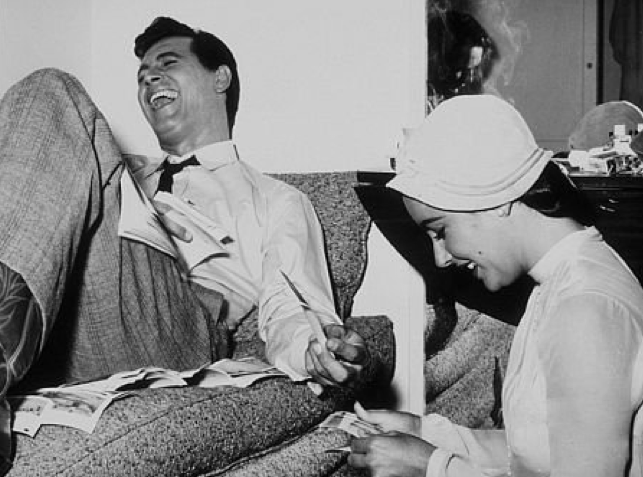
Rock Hudson, who was born on this day 90 years ago, has a laugh with Elizabeth Taylor on the set of Giant in 1955:

Movie-Inspired Motivation of the Day:

Here’s a video of Billy Zabka, who plays the bad guy Johnny in The Karate Kid (joined by co-star Rob Garrison) giving an anti-bullying speech to a bunch of kids (via Geek Tyrant):

[embedded content]

Fan Build of the Day:

The fan-built Lego creation below represents all four movies in the Jurassic Park series, including this year’s Jurassic World, side by side. See more photos of the clever set at /Film.

Recut Movie of the Day:

Can you make a comprehensive silent film out of a movie as talky as 12 Angry Men? Thanks to Sidney Lumet‘s knack for visual storytelling underneath the dialogue, apparently so (via Cinematic Montage Creators):

[embedded content]

Movie Poster Mashups of the Day:

There’s all kinds of movie character chaos going on in the latest episode of the movie posters in motion series Poster Fever:

[embedded content]

Classic Trailer of the Day:

Today is the 20th anniversary of the theatrical release of GoldenEye, the first James Bond installment starring Pierce Brosnan in the role. Watch the original trailer for the movie, which had the release slated for Christmas, below.

[embedded content]

Send tips or follow us via Twitter:

and

This entry passed through the Full-Text RSS service – if this is your content and you’re reading it on someone else’s site, please read the FAQ at fivefilters.org/content-only/faq.php#publishers.


No Image

2 Air France Flights From U.S. To Paris Diverted After Threats

Two Air France flights bound for Paris from the U.S. had to be diverted Tuesday night because of anonymous threats received after they had taken off, but both planes landed safely in North America, officials said.

One plane, Air France Flight 65 from Los Angeles International Airport to Charles de Gaulle Airport in Paris, was diverted to Salt Lake City International Airport, Air France said in a statement. At about the same time a second flight, Air France 55, took off from Dulles International Airport outside Washington and was diverted to Halifax on Canada’s East Coast, officials said.

Passengers got off both planes safely and were taken to terminals. Authorities in both the U.S. and Canada were preparing to search the planes with dogs, officials said.

The FBI was taking over the investigation of the Salt Lake City plane, which was diverted because of a threat received by phone after takeoff, Salt Lake airport spokeswoman Bianca Shreeve said.

Keith Rosso of Santa Monica, California, a passenger on the flight from Los Angeles with his fiancee, said “everything was smooth, everything was great, everything was going swell” for the first two hours of the flight, then things changed.

“The flight attendants quickly came by and cleared plates, then there was an announcement that we were making an emergency landing and that the flight attendants were trained exactly for situations like this,” Rosso told The Associated Press by phone from the airport in Salt Lake City.

He said he looked at the flight monitor at his seat and saw that “we had made a pretty sharp right turn – we had been almost near Canada – toward Salt Lake City.”

Rosso said an FBI agent interviewed the passengers after the landing.

In Halifax, the Royal Canadian Mounted Police were leading the investigation.

RCMP Constable Mark Skinner said there were 262 people onboard that plane, which also received an anonymous threat. No further details on that threat were released.

“We received a complaint of a bomb threat and we responded to it,” Skinner said. “They have to go to through the plane. I don’t think there is any timeline on when that plane might get back in the air.”

The threats came after last week’s attacks in Paris that killed 129 people and heightened security concerns around the world.

This entry passed through the Full-Text RSS service – if this is your content and you’re reading it on someone else’s site, please read the FAQ at fivefilters.org/content-only/faq.php#publishers.


No Image

France And England Play Friendly Match, Two Other Soccer Games Canceled

The famous arch at London's Wembley Stadium was illuminated in the colors of the French flag before the soccer game between England and France.

The famous arch at London’s Wembley Stadium was illuminated in the colors of the French flag before the soccer game between England and France. AP hide caption

itoggle caption AP

France and England played their friendly match at London’s Wembley Stadium as scheduled Tuesday night, with England winning 2-0, but other soccer matches in Europe were canceled over security concerns.

NPR’s Newscast reported that in Hanover, Germany, officials citing “concrete information” about a possible terrorist plot canceled the game between Germany and the Netherlands hours before it was supposed to begin and evacuated anyone already in the stadium.

Dirk Tietenberg, the sports editor for the Neue Presse, who was at the stadium when it was evacuated, spoke to the BBC:

“The minister of the interior of Germany, Thomas de Maiziere, told us it was a really dangerous situation and they were forced to cancel the match,” he said. “So we don’t really know what was going on there.”

Members of the German government including Chancellor Angela Merkel were scheduled to attend.

On Monday, Belgian soccer officials postponed a friendly against Spain that was scheduled for Tuesday night in Brussels, owing to increased security concerns following the attacks in Paris.

Elsewhere in Europe, other games took place as scheduled.

Notably, Turkey and Greece played a friendly in Istanbul, the first time the neighboring countries with a hostile past have met on the field in eight years. The teams drew 0-0.

The match, billed as a symbol of reconciliation between the nations, was marred by fans who disrupted the moment of silence for the victims in the Paris attacks. According to Reuters and other reports, Turkish fans booed during the moment of silence before the start of the game.

video of disruption during moment of silence for Paris at Turkey vs Greece,(no allahuakbar chants in this one) https://t.co/8MLGiElXOB

— Ece Toksabay (@ecetoksabay) November 17, 2015

The pre-match moment of silence before England and France’s game, however, was uninterrupted and followed the collective singing of France’s national anthem. Many fans in the stands held signs and banners in support of the victims of the Paris attacks, and the famous arch above Wembley was lit up in the colors of the French flag.

England’s prime minister, David Cameron, and Prince William were also in attendance at the game.

Special moment as Wembley unites to sing the French national anthem. pic.twitter.com/qur21bVxQV

— Richard Conway (@richard_conway) November 17, 2015

This entry passed through the Full-Text RSS service – if this is your content and you’re reading it on someone else’s site, please read the FAQ at fivefilters.org/content-only/faq.php#publishers.


No Image

Now There's A Health Plan That Zeros In On Diabetes Care

People with diabetes who sign up for an Aetna insurance plan focused on diabetes care can get blood sugar meters and test strips free of charge.

People with diabetes who sign up for an Aetna insurance plan focused on diabetes care can get blood sugar meters and test strips free of charge. iStockphoto hide caption

itoggle caption iStockphoto

Talk about targeted. Consumers scrolling through the health plan options on the insurance marketplaces in a few states this fall may come upon plans whose name — Leap Diabetes Plans — leaves no doubt about who should apply.

Offered by Aetna in four regions, the gold-level plans are tailored for the needs of people with diabetes. They feature $10 copays for the specialists diabetes patients need such as endocrinologists, ophthalmologists and podiatrists, and offer free blood sugar test strips, glucose monitors and other diabetic supplies. A care management program with online tools and coaching helps people manage their condition day-to-day.

The plans also offer financial incentives, including a $50 gift card for getting an A1C blood test twice a year to measure blood sugar and a $25 card for hooking up a glucometer or biometric tracker to the Aetna site.

“It was a good time to design a product that was a little more personalized, as opposed to generic,” says Jeff Brown, vice president of consumer product, network and distribution at Aetna. “We saw diabetes as a compelling need, and a growing need.”

Aetna is debuting the diabetes plans, effective next year, in four markets: Charlotte, N.C., Phoenix, Ariz., Northern Virginia and southeastern Pennsylvania. The coverage is part of a new Aetna line called leap plans, aimed at helping the insurer build its retail business. The company says the plans are simpler to use than traditional plans and will have more personal customer service.

It’s unclear whether the diabetes plans are a good buy for people with diabetes. The cut rates for specialist visits only apply if they’re related to diabetes care, not for other conditions someone may have.

Meanwhile, coverage for medications, which may cost consumers hundreds of dollars every month, is no different in the diabetes plans than in other gold plans.

In Arlington, Va., for example, the Aetna Innovation Health Leap Gold Diabetes plan with a $3,500 deductible for an individual has an estimated monthly sticker price of $379. Specialist visits not related to diabetes cost $100, preferred brand-name drugs $50 and the out-of-pocket maximum is $3,500.

Is that a better buy than the $371 Kaiser Permanente gold plan with a zero deductible and $6,350 out-of-pocket maximum, where all specialist visits are $40 and preferred brand-name drugs cost $30? That will depend on the individual. (Kaiser Health News, an independent service of the nonprofit Kaiser Family Foundation, isn’t affiliated with the health insurance company Kaiser Permanente.)

“The American Diabetes Association encourages individuals with diabetes shopping for a health insurance plan to ask if the plan covers the diabetes supplies, services and particular medications they need and look at all costs including the premium, deductibles and copayments or coinsurance in deciding what plan has the most favorable coverage,” ADA spokesman Samantha Boyd said in an email.

Premiums for the diabetes plans generally fall in the middle range of gold plans in an area, except in Phoenix, where they’re among the most expensive of the 20 plans available.

Gold plans pay 80 percent of medical expenses, on average, and the consumer pays 20 percent. Silver plans, the most popular plans on the marketplaces, pay 70 percent of medical bills. Most people receive subsidies that help reduce their premiums, but since subsidies are tied to silver-level plans they don’t have as much impact on gold plans.

People with diabetes are relatively expensive to insure. Per capita health care spending in 2013 on people with diabetes averaged $14,999, more than $10,000 higher than the $4,305 spent on people without diabetes, according to an analysis by the Health Care Cost Institute.

Brown says that in designing the plans they focused on helping people get better access to specialists.

“A big part of what we’re trying to do is to lower the financial barriers for seeing their care team,” he says, including primary care physicians and specialists.

Doesn’t he worry that Aetna will lose money offering plans that try to attract people with higher-than-average medical costs? Brown says it’s an experiment, and they don’t expect to make a lot of money.

Aetna wants to create a “long-term value proposition” with people, Brown says. “We’re not only hoping to have these people for 18 months.”

And for the record, you don’t have to have diabetes to sign up.

Kaiser Health News is an editorially independent news service supported by the nonpartisan Kaiser Family Foundation. Email questions: KHNHelp@KFF.org. Michelle Andrews is on Twitter: @mandrews110

This entry passed through the Full-Text RSS service – if this is your content and you’re reading it on someone else’s site, please read the FAQ at fivefilters.org/content-only/faq.php#publishers.


No Image

Today in Movie Culture: 'The Hunger Games' in 1992, Imperator Furiosa in 'Fallout 4' and More

Here are a bunch of little bites to satisfy your hunger for movie culture:

Alternate Timeline Movie of the Day:

What if The Hunger Games had come out in 1992? Vulture shows us with a fake VHS trailer:

[embedded content]

Fan Casting of the Day:

For ComicBook.com, BossLogic shows us what Emilia Clarke could look like as Mera in the Aquaman and Justice League movies:

Fan Poster of the Day:

Speaking of the DC Extended Universe, MessyPandas created this Batman v Superman: Dawn of Justice international poster in the style of Olly Moss:

Star Wars of the Day:

Luke Skywalker may be a good guy, but he sure is responsible for the dethas of a lot of people as shown in this kill count video:

[embedded content]

Genre Mixup of the Day:

Without all the scenes showing us the lovable talking emotions inside Riley’s head, Pixar‘s Inside Out becomes a serious psychological thriller (via Geek Tyrant):

[embedded content]

Vintage Image of the Day:

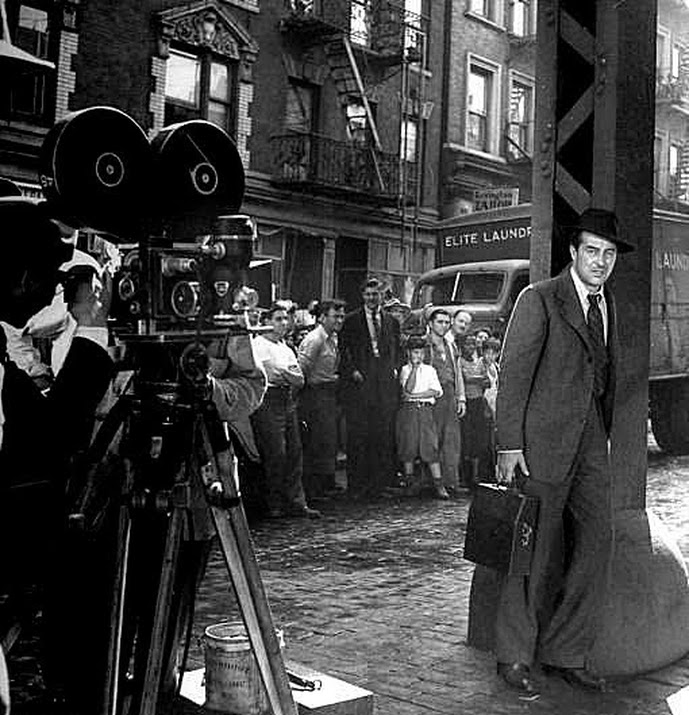
Director Billy Wilder and actor Ray Milland shooting The Lost Weekend, which turns 70 years old today, on location in New York City:

Movie Mashup of the Day:

This video shows just how similar Ridley Scott‘s Alien and John Carpenter‘s The Thing are, which makes sense since they’re both heavily inspired by The Thing from Another Planet (via Live for Films):

[embedded content]

Supercut of the Day:

Burger Fiction gets us all riled up and inspired with this montage of movie coach speeches:

[embedded content]

Cosplay Within a Video Game of the Day:

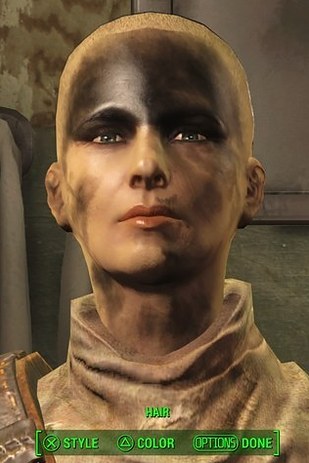
For all of you Mad Max: Fury Road fans playing Fallout 4, BuzzFeed shows how to play as Furiosa, as pictured here:

Classic Trailer of the Day:

Today is the 25th anniversary of the release of Home Alone, which would go on to be the highest-grossing movie of 1990. Watch the original trailer for the home invasion comedy, starring Macaulay Culkin, below.

[embedded content]

Send tips or follow us via Twitter:

and

This entry passed through the Full-Text RSS service – if this is your content and you’re reading it on someone else’s site, please read the FAQ at fivefilters.org/content-only/faq.php#publishers.


No Image

After Paris Attacks, Encrypted Communication Is Back In Spotlight

CIA Director John Brennan made this case against encryption on Monday at the Center for Strategic and International Studies in Washington, D.C.
7:44

Download

CIA Director John Brennan made this case against encryption on Monday at the Center for Strategic and International Studies in Washington, D.C. Win McNamee/Getty Images hide caption

itoggle caption Win McNamee/Getty Images

How do terrorists communicate to hide from investigators?

We know little about the means used by those involved in the deadly attacks in Paris, but intelligence and security officials have already launched a new wave of chatter about encryption.

First, The New York Times reported that anonymous European officials were saying they believed the Paris attackers had used some kind of encrypted communication, “but offered no evidence.”

Now NBC News is citing unnamed officials as suggesting “the ISIS geek squad is teaching terrorists how to use encryption and communication platforms like Silent Circle, Telegram and WhatsApp.”

There was even a Forbes story that suggested the terrorists talked over Sony PlayStation 4, that has now been invalidated.

One thing is clear: The investigation into the attacks is ongoing, and no specific evidence of encrypted or other communications has been confirmed.

Yet it has renewed the debate about encryption and the headaches that intelligence and law enforcement officials say it’s created for their investigations.

What we’re talking about is not your emails or Web searches, photos or social network posts. Those things get encrypted on your laptop and then decrypted and stored on a big corporate data server. There, law enforcement officials have the technical and legal ability to get access to the content, for instance, with a subpoena.

What’s raising the concerns is so-called end-to-end encryption: when data gets encrypted on one device and only gets decrypted when it reaches the recipient’s device. Think Apple iMessage, WhatsApp or FaceTime.

And for a while now, the law enforcement and intelligence communities in the United States, and to some extent in Europe, have been asking tech companies (which are pushing back) to give them basically a back door into these kinds of encrypted communications.

“From the law enforcement perspective, we describe this experience of going dark, that we no longer can penetrate the darkness to conduct our investigations,” New York Police Commissioner Bill Bratton tells NPR’s Ari Shapiro. “It’s a very significant negative effect on our ability to detect and disrupt terrorist-related activity.”

Safer With Or Without Back Doors?

CIA Director John Brennan made this case against encryption on Monday at the Center for Strategic and International Studies in Washington:

“There has been a significant increase in the operational security of a number of these operatives and terrorist networks as they’ve gone to school on what it is that they need to do in order to keep their activities concealed from the authorities. And as I mentioned, there are a lot of technological capabilities that are available right now that make it exceptionally difficult both technically as well as legally for intelligence security services to have the insight they need to uncover it.

“In the past few years because of a number of unauthorized disclosures and a lot of hand-wringing over the government’s role in the effort to try to uncover these terrorists, there have been some policy and legal and other actions that are taken that make our ability, collectively, internationally to find these terrorists much more challenging. And I do hope that this is going to be a wake-up call.”

The hand-wringing of course refers to the fallout of the Edward Snowden leaks, which showed, among other things, how the National Security Agency tapped into data centers and otherwise dealt with tech companies. That prompted a bigger push toward end-to-end encryption that would limit the companies’ role in the surveillance process.

After months of debate, in October, the Obama administration appeared to back down from the push for encryption back doors.

Some of the considerations were these: If America asked for back doors, what would stop China, Russia or any other country from demanding the same kind of access? Or, in light of massive hacks of government data, what would convince the companies that the federal agencies could properly protect the keys they’d be given?

“The reality is that if you have an open door in your software for the good guys, the bad guys get in there, too,” Apple CEO Tim Cook told NPR’s Robert Siegel in October. “I don’t support a back door for any government, ever.”

In fact, the notion of law enforcement “going dark” in the face of new technology has floated since the 1990s and the dawn of the Internet, when law enforcement organizations pushed for access to communications services.

A group of computer scientists and security experts that had studied the topic then, reviewed it again in recent months and found high risk of unanticipated, hard-to-detect security flaws.

“We have found that the damage that could be caused by law enforcement exceptional access requirements would be even greater today than it would have been 20 years ago,” they wrote in the abstract of their July paper for the Massachusetts Institute of Technology.

Encryption Whack-A-Mole

Tech companies and privacy advocates also argue that the government doesn’t need encryption back doors to carry out terrorism surveillance.

“Most consumer-oriented encryption systems that are deployed today protect the content of a message. They do no protect the metadata — they do not hide who is talking to whom,” says Moxie Marlinspike, founder of Open-Whisper Systems that created TextSecure, the open-source encryption tool adopted by WhatsApp last year.

“So if you have a network of terrorists communicating with a known ‘home base,’ intelligence agencies will still be able to see that,” he says.

Nate Cardozo, a lawyer on the civil liberties team at the Electronic Frontier Foundation, went even further, suggesting that the back-door push by the intelligence and law enforcement community is less about terrorism and more about collecting as much information as possible. He accused the CIA’s Brennan of political opportunism — using the Paris tragedy to push for an existing agenda.

“We are in a golden age of surveillance. Right now it is easier for the CIA, the NSA, the FBI to surveil anyone, anytime, anywhere than it ever has been, even despite encryption,” Cardozo tells All Tech.

“If we learned anything from the Snowden revelations, it’s that the NSA and intelligence agencies around the world, including in France, are not suffering from the lack of information, rather they’re suffering from the exact opposite. They have so much data that they’re collecting, they have trouble filtering the signal from the noise.”

And ultimately, he says, even if all existing encrypted devices got a back door, there would always be ways of circumventing those back doors — all it takes is a new app to restart the whack-a-mole.

“Trying to regulate encryption is like trying to regulate an idea,” Marlinspike says. “It’s going to be very difficult if not impossible to do.”

Rep. Adam Schiff, the ranking Democrat on the House Intelligence Committee, summed it up this way:

“It’s too early, I think, to say in terms of the attack in Paris to what extent these terrorist may have used encrypted communications,” he told NPR on Monday. “Even with the best of intelligence resources, there are still vulnerabilities and ultimately it’s going to require us to eliminate that sanctuary in Iraq and Syria.”

This entry passed through the Full-Text RSS service – if this is your content and you’re reading it on someone else’s site, please read the FAQ at fivefilters.org/content-only/faq.php#publishers.


No Image

Emergency Doctor: Paris Hospital Saw Unanticipated Number Of Gunshot Victims

4:48

Download

NPR’s Robert Siegel talks to an emergency doctor who was on the front line of dealing with casualties from the Paris attacks. He says on a normal weekend his ER will usually handle injuries from a car crash, and maybe once a year they will handle a gunshot victim. Friday night, he had 27 patients with gunshot wounds. All of his patients survived that evening.

Transcript

ARI SHAPIRO, HOST:

Our colleague Robert Siegel is in Paris. He has been talking with people there as they take stock of what they’ve been through. Now we’re going to hear his conversation with a doctor who take care of some of those who were shot in the attacks.

ROBERT SIEGEL, BYLINE: Right next to the sight of several of the shootings on Friday night in Paris is the Hopital Saint Louis – the Saint Louis Hospital. And the head of the emergency department here, Dr. Jean-Paul Fontaine, was working Friday night when this emergency room saw more gunshot victims than any French hospital could ever expect to see on a single night.

JEAN-PAUL FONTAINE: Usually in the emergency department in France, you may have a car crash. Sometime, one gun but not that type of number of patients was of gun.

SIEGEL: Normally, here, just one gun shot on the weekend, or…

FONTAINE: One per year.

SIEGEL: Per year?

FONTAINE: In Paris, that’s not like in the USA, you know?

SIEGEL: And Friday night?

FONTAINE: Twenty-seven patients. The first patients we had – members of emergency team who took stretcher.

SIEGEL: You mean by foot. They took a stretcher…

FONTAINE: Yeah.

SIEGEL: …And ran around…

FONTAINE: Yeah.

SIEGEL: …Outside the hospital walls. And what were you thinking during all this? What were you – what was going through your mind as the emergency doctor?

FONTAINE: I can tell you, you don’t think. I can tell you that you don’t see the end of it. That was very strange. When will it all stop? Patients, stretchers, patients, stretchers, surgeon – you don’t know the intensity of it, the number of it.

SIEGEL: Did all of the patients who came here to this hospital – did they all survive the night?

FONTAINE: Yeah.

SIEGEL: Were they all gunshot wounds?

FONTAINE: All – all of them.

SIEGEL: I assume this was unlike any other night you’ve had…

FONTAINE: Sure.

SIEGEL: …As an emergency doctor in Paris.

FONTAINE: Sure, sure.

SIEGEL: Now that you’ve had a day or two to digest what went on and not as a doctor, but as a Parisian, as a French citizen, what do you make of what happened?

FONTAINE: They’re on different levels. First of all is, what I could not imagine before was the silence on the Friday night in an emergency department with that kind of event, and especially from the patients.

SIEGEL: Silence.

FONTAINE: Yeah – no scream, no cry, no shout, like if the patients were shocked, deftly shocked – first. Second, if you had the time to speak with them, every one of them were able to tell you their special story of the event. And I explained this silence from them like, sure, I got a gun wound, but I’m still alive. And I think of one of these image I will keep will be that silence.

After that, as a Parisian or citizen, the trouble is when you have kids. You can’t imagine your kids could be there. But if you are near, you don’t know what it’s out. You don’t listen to your phone. You have something other to do. After that, the next day, you see the number of message, the number of names. Is it fine? Are the kids OK and all that.

SIEGEL: Do you think it changes the way you think about everyday life in Paris or in this neighborhood?

FONTAINE: No.

SIEGEL: No.

FONTAINE: No, no. And I hope that it will be the same for the Parisian people. Paris is a living city. You can’t imagine there were no football game, no movies, no concerts, no music, no bars. That’s impossible. And you have to keep on having this atmosphere. So we are not afraid.

SIEGEL: Well, Dr. Fontaine, thank you very much for talking with us.

FONTAINE: Au revoir.

SHAPIRO: That’s our colleague Robert Siegel in Paris speaking with Jean-Paul Fontaine, head of the emergency department at Saint Louis Hospital.

Copyright © 2015 NPR. All rights reserved. Visit our website terms of use and permissions pages at www.npr.org for further information.

NPR transcripts are created on a rush deadline by a contractor for NPR, and accuracy and availability may vary. This text may not be in its final form and may be updated or revised in the future. Please be aware that the authoritative record of NPR’s programming is the audio.

This entry passed through the Full-Text RSS service – if this is your content and you’re reading it on someone else’s site, please read the FAQ at fivefilters.org/content-only/faq.php#publishers.