Articles by admin

No Image

Native American Tribe Bets On Olive Oil

The Yocha Dehe tribe grows, mills and markets its own extra-virgin olive oil. The tribe's mill uses top-of-the-line equipment imported from Florence, Italy.
3:56

Download

The Yocha Dehe tribe grows, mills and markets its own extra-virgin olive oil. The tribe’s mill uses top-of-the-line equipment imported from Florence, Italy. Courtesy of Lisa Morehouse hide caption

toggle caption Courtesy of Lisa Morehouse

The bucolic Capay Valley is about an hour outside Sacramento, Calif., and its ranches, alfalfa fields and small, organic produce farms have earned it a reputation as an agricultural gem. It’s pretty serene, except for the cacophony inside the valley’s most lucrative business, the Cache Creek Casino.

That casino — and the huge crowds it attracts on any given night — has been a source of tension between local farmers and the tiny California Indian tribe which runs it, the Yocha Dehe Wintun Nation. But it’s because of the casino’s success that the Yocha Dehe can fund its newest venture, across the highway: the tribe’s own brand of olive oil — bottled in a state-of-the-art facility.

It’s harvest time, and at one small farm in the valley, workers rake olives off branches on to a net which they dump into bins. The fruit is trucked just down the road and pressed into oil at the Yocha Dehe’s olive mill, in equipment imported from Florence, Italy. About 40 growers from the region process their olives here.

About a decade ago, former Tribal Chairman Marshall McKay visited the olive center at nearby University of California, Davis.

“They had this fascinating tale of quality and quantity and the healing benefits of good fresh oil,” he says, “and [that] it may be a burgeoning market in California.”

Now the Yocha Dehe tribe is at the forefront: It’s growing, milling and marketing extra-virgin olive oil. Though only in its fifth year of production, the olive oil is used in over 200 restaurants – including the famed Chez Panisse. A premium version of the oil, called Seka Hills, is sold in specialty shops and upscale farmers markets.

Olive trees belonging to the Yocha Dehe Wintun Nation, with their Cache Creek Casino in the background.

Olive trees belonging to the Yocha Dehe Wintun Nation, with their Cache Creek Casino in the background. Courtesy of Lisa Morehouse hide caption

toggle caption Courtesy of Lisa Morehouse

The olives are new, but the Yocha Dehe and other Native American groups thrived in villages here for thousands of years before European contact.

McKay says, “People, outsiders came into the valley: Gold Rush prospectors, cattle ranchers, soldiers.” His ancestors fled to the hills, but many were still massacred.

“We were in the way, so we were removed,” he says. “It was genocide. It just hasn’t been talked about in history.”

Those who survived were relocated to barren land, a way of slowly killing the tribe, according to McKay.

“I grew up in severe poverty,” says James Kinter, Yocha Dehe’s tribal secretary. “Growing up here on the reservation, we used to go pick walnuts on the side of the road for dinner sometimes. My mom, she used to work in the fields, worked as a waitress. She was a single mom, raising three children, and everybody was kind of in that situation in the tribe.”

In the 1980s, laws regulating Indian gaming began to loosen, and the tribe opened a bingo hall. Kinter was 5 years old. “It was great, just to see people get excited about something, and it brought us together as a tribe,” he says.

They expanded, eventually opening the casino — which averages 2,000 visitors daily, swelling traffic on the valley’s two-lane highway, and reportedly earning hundreds of millions of dollars a year for the tribe.

McKay says to keep the approximately 100 tribal members grounded and engaged despite their newfound wealth, they receive higher incomes if they’ve graduated from high school, or work, or attend college full-time. Or, as he puts it, “Are you doing something for yourself instead of just waiting for a handout?”

At a neighboring farm in the Capay Valley, workers dump just-picked olives into a bin. They'll be milled within hours at the Yocha Dehe mill just down the road.

At a neighboring farm in the Capay Valley, workers dump just-picked olives into a bin. They’ll be milled within hours at the Yocha Dehe mill just down the road. Courtesy of Lisa Morehouse hide caption

toggle caption Courtesy of Lisa Morehouse

But casino development made waves with some neighbors. When the casino expanded in 2002, protesters drove tractors up and down the valley’s small highway, citing concerns about increased traffic on rural roads.

Tom Frederick and his wife own Capay Valley Vineyards and Winery, right next door to the casino. As farmers, he says, the tribe is doing a great job. “They do the best of everything,” he says, adding,” I don’t begrudge them that.”

But he is frustrated that, because they’re a native sovereign nation, some Yocha Dehe operations — like the casino and its adjoining golf course — operate under different regulations than the rest of the valley. “It’s a concentration of money and power, so we just seek some kind of balance,” Frederick says. He and his wife are part of a group voicing concerns about the possibility of more casino-related development in the future, and how that could impact the agricultural character of the valley.

Down the valley at Capay Organics, co-owner Thaddeus Barsotti has a different take. He grew up going to school with tribe members, in tougher times. “I think it’s a cool story anytime you see people not having a lot and taking advantage of the opportunities they’re given and ending with more than they had. That’s the American dream, right?” he says.

Former tribal chairman Marshall McKay says with the Yocha Dehe opening up the olive oil mill, and working in agriculture, tensions with their farming neighbors in the Capay Valley have eased. After all, they’re all in the same line of work now.

“That wasn’t like that a few years ago,” he says. “People weren’t looking at us in the eye. We weren’t looking at them in the eye, and now that’s changed.”

This entry passed through the Full-Text RSS service – if this is your content and you’re reading it on someone else’s site, please read the FAQ at fivefilters.org/content-only/faq.php#publishers.


No Image

Wladimir Klitschko's Heavyweight Reign Ends With Loss To Tyson Fury

Britain's Tyson Fury celebrates after winning in a world heavyweight title fight for Ukraine's Wladimir Klitschko's WBA, IBF, WBO and IBO belts in the Esprit Arena in Duesseldorf, western Germany.

Britain’s Tyson Fury celebrates after winning in a world heavyweight title fight for Ukraine’s Wladimir Klitschko’s WBA, IBF, WBO and IBO belts in the Esprit Arena in Duesseldorf, western Germany. Martin Meissner/AP hide caption

toggle caption Martin Meissner/AP

In a stunning upset, Tyson Fury defeated the world heavyweight champion Wladimir Klitschko Saturday night.

Fury, an undefeated British boxer, was taking on the man who had been heavyweight champion of the world since 2006 — and who hadn’t lost since 2004.

As The Associated Press reports, emotions ran high during the match, which Fury won by unanimous decision:

After a bruising encounter that ended with cuts near both of Klitschko’s eyes, referee Tony Weeks went to the judges’ scorecards.

Cesar Ramos and Raul Caiz Sr. scored it 115-112 each, while Ramon Cerdan had it 116-111 in favor of the undefeated Briton (25-0, 18 KO).

Fury, 12 years younger than the 39-year-old Klitschko, taunted and baited the champion at various stages, prompting jeers from fans at the 55,000-seat soccer stadium in Duesseldorf.

Before the loss, some had wondered if the long-reigning Ukrainian might someday become an undisputed champion. He had only been missing one major title — the WBC, which had belonged to his older brother Vitali before he decided to focus on his political career.

But before he had a chance to unify the titles, Klitschko gave up his IBF, WBO and WBA belts, as well as titles from the IBO and The Ring.

After the match, Fury told the crowd Klitschko had been “a great champion,” Reuters reports:

“Tonight is that start of a new era. I will be the most charismatic champion since Muhammad Ali,” he said before serenading his wife in the crowd with a song by American band Aerosmith.

“I worked for six months for this in the gym, it’s a dream come true,” Fury said while draped in his new world title belts and unable to hold back the tears.

This entry passed through the Full-Text RSS service – if this is your content and you’re reading it on someone else’s site, please read the FAQ at fivefilters.org/content-only/faq.php#publishers.


No Image

Barbershop: Black Friday, Black Lives Matter And Social 'Cuffing'

11:14

Download

The talk in the Barbershop this week is about Black Friday, Black Lives Matter and social “cuffing.” Wesley Lowery, national reporter at The Washington Post, Katie Notopoulos, a senior editor at Buzzfeed, and Jozen Cummings, an editorial associate at Twitter, join the conversation.

Transcript

MICHEL MARTIN, HOST:

Now it’s time for our weekly trip to the Barbershop. That’s where we gather some interesting folks to hear about what’s on their minds and what’s in the news. Black Friday and Black Lives Matter are some of the things people have been talking about this week. So sitting in the chairs of for a shapeup today are Jozen Cummings. He’s an editorial associate at Twitter and creator of the blog untilIgetmarried.com. He hosts a weekly podcast with WNYC called the Empire Afterparty. And he joins us from New York’s Radio Foundation studio. Hi, Jozen.

JOZEN CUMMINGS: Hi, Michel.

MARTIN: Also in New York is Katie Notopoulos. She’s a senior editor at BuzzFeed, and co-host of the podcast Internet Explorer. Katie, glad you’re here.

KATIE NOTOPOULOS: Thanks for having me.

MARTIN: And also with us is Wesley Lowery in Washington, D.C. Thanks for taking the metro across town.

WESLEY LOWERY: Oh, of course, anytime.

MARTIN: He’s a national reporter at The Washington Post. And I hope everybody had a happy Thanksgiving. We are hearing that fewer people are out and about doing the Black Friday thing. Were any of you out and about? Katie, were you out?

NOTOPOULOS: I was. I was actually out with my in-laws right around Rockefeller Center in Midtown yesterday. And there was definitely, I mean, just a ton of people out on the street. I wouldn’t have wished it on my worst enemy.

MARTIN: Yeah, it doesn’t sound like that fun. Jozen, what about you? Did you rally and rise? Did you get any bargains? What were you up to?

CUMMINGS: Absolutely not. I was in bed on my mobile device, looking through my email for great deals and kind of making a list.

MARTIN: Sounds sane. Wesley, what about you?

LOWERY: Nothing. I didn’t do any shopping at all. I sat there and looked at all my emails. And by the time I to do it, it was, like, 1:00 a.m., and I couldn’t do it anymore.

MARTIN: You probably could’ve gone some place. You could’ve gotten some vitamins for someone. But, you know, I’m told that – well, we know that Black Friday had been targeted by Black Lives Matter protesters in cities like Chicago and Seattle and Portland and Chicago. The demonstrators marched down the Magnificent Mile – the very ritzy shopping district – and they were able to shut down parts of the street for a few hours. And on social media, there were a lot of people calling for shoppers to boycott Black Friday altogether. And I’m just interested – Jozen, maybe you want to start. What do you think about this? I mean, do you think that this is a good use of people’s time and attention?

CUMMINGS: I do. I think that there is a lot of value in protesting in these valuable areas in these spaces where people would normally just go about doing their normal holiday traditions and disrupting that because these issues – people see it on TV – more people see it on TV than they probably see it in person. And they probably think that that’s not something that they have to deal with or be exposed to. But these protests become really – grow in importance when you see people take up the courage to actually go into places like the Magnificent Mile. That, to me, takes guts. I’ve marched; I’ve protested, and whenever you’re going into very public spaces, there’s always – you know, your heart beats a little bit faster. And to see these people line up in front of stores and not care what the spectators thought, not – I think that that what was very courageous of them.

MARTIN: Wes, what do you think? I know you were just in Minneapolis. You were covering – there was actually a shooting…

LOWERY: Yes.

MARTIN: …Of Black Lives Matter protesters there, and you were covering that. What are your thoughts about this?

LOWERY: Of course, so I was on the ground. One thing – I think it’s really interesting about the Black Friday protests this year in Chicago and in a few other places is that they tried – they made the same attempt last year. So last year, if you remember the Darren Wilson grand jury decision came two or three days before Thanksgiving. And so there was this big push in St. Louis – let’s boycott Black Friday; let’s show them, this’ll be a thing. And they couldn’t quite get it together. And so it’s very interesting that the difference a year makes, where, you know, the Laquan McDonald decision – or the videos were released the same day as the anniversary of the Darren Wilson grand jury decision. It had been exactly one year. And here we saw two or three days later, these massive protests and Black Friday protests. So it was really – to me, it was really interesting. I mean, I think that it makes obvious sense – if you’re going to be an activist, you want to affect people, and you kind of want to inconvenience people who otherwise wouldn’t pay attention to your activism or your issues. And so showing up and screwing up their brunch or screwing up their shopping is a pretty good way to do that.

MARTIN: Well, and the question, though, Katie is does it cause more resentment than it does – does it attract or does it repel? That’s the question I would have, Katie. Do you have an opinion?

NOTOPOULOS: Hard to say – I’m sure that if I was there trying to get 40 percent off Kenneth Cole and I was barred from entering the store, I’d be very annoyed and upset. But, you know, that’s also at the end of the day not very important. And the idea that you’re stopping this mindless consumerism with something a little bit more mindful is I think a good thing net overall.

MARTIN: All right, well, let me change gears now. We’re talking about the holiday season. I’m not going to lie, I just heard about this, the whole question of whether it makes sense to have a special relationship for the season, cuffing season. I’m sorry, I mean, I feel so far behind. I’m so ashamed. But, you know, I have been married for quite some time, so maybe it’s a good thing I didn’t know about this. But Jozen, you were – as I mentioned, you founded this blog. Do you say enough with this, don’t do this.

CUMMINGS: Yes.

MARTIN: You said don’t do it. This is not the time. Tell me about it.

CUMMINGS: I don’t think that cuffing season should actually come during these winter months. I think if you’re single going into the holidays, consider yourself lucky, all right? Just, you know, that’s one less gift you have to get. There’s an excitement – there’s the excitement of being single on New Year’s Eve. Who knows what can happen? That’s the night that you can – that you can meet someone. And I also think that the spring and the summer is a very under – very underrated season to have someone. There’s just so much to do, so many, like, outdoor activities and great weather to enjoy that it’s actually nice to enjoy it with someone else.

MARTIN: All right.

CUMMINGS: You know, for the winter months, the colder months, get together with some friends, put on some ugly sweaters and see what happens.

MARTIN: And see what happens – Katie, did you know about this? How did this term come about?

NOTOPOULOS: I don’t know exactly how it came about. But I think it makes total sense. I mean, I think the summertime is a way better time to be single or meeting people. You know, everyone’s wearing a little bit less clothing, you look great. The winter time, you’ve got a big bulky coat on walking around. You can’t, like, look at other people on the street and be, like, hello, you know?

MARTIN: I don’t know, I look pretty good in a sweater.

(LAUGHTER)

MARTIN: Bathing suit, not so much. I’m just being honest, just saying.

NOTOPOULOS: I think it makes perfect sense. You just want to – it’s cozy, you just want to stay at home in a snowstorm and snuggle and watch Netflix.

MARTIN: Wes, where are you, cuff or not to cuff…

LOWERY: Oh, yeah, no, totally…

MARTIN: …That’s the question.

LOWERY: …Cuff. And that’s where it comes from. It comes from handcuffing, right, so this idea of, like, locking somebody down for the winter.

MARTIN: I thought it came off like muff – or cuff, like muff…

CUMMINGS: Oh, no. Oh, no…

MARTIN: See, I should just stop talking now. I need to stop talking. I just should stop talking.

LOWERY: It’s not about winter wear. You know, it’s about the handcuffs.

MARTIN: I was hoping it had to do with…

LOWERY: It’s, like, I’m locking you down for the winter because I need someone to come to the holiday party with me. I mean, like, Jozen’s out of his mind. He wants to be single for New Year’s Eve. Like, that’s totally not fun at all.

CUMMINGS: I just want to encourage people to stay strong.

LOWERY: Oh, no. Oh, no, no, no, no…

CUMMINGS: You know, you’re single, you can do it. You can do it.

LOWERY: No, the winter is Netflix time. It is, like, it’s cold outside. I’m not trying to go outside. I’m trying to have you come over. Maybe I’ll go over there if I really have to. I have to go to this terrible work holiday party, maybe you could come and talk to me and give me an excuse to leave early. That is the time I want to have a girlfriend. Summer – you know, there’s all types of stuff going on. People are day drinking, there are parties, there’s the beach – much better time to be single.

MARTIN: I think we have a split decision here – cuff or not to cuff…

CUMMINGS: Well, I think – yeah, I think I’m outvoted.

MARTIN: All right, now to the uncuffing. If you’ve ever had the challenge of what to do about your ex on social media, Facebook is rolling out a new tool. It’s called Take A Break, and it helps you see less of your ex. You don’t have to unfriend or block them. Facebook will filter them out for you. Again, I should just stop talking because I didn’t know about this. I didn’t know about this either.

LOWERY: Because you’ve been cuffed for too long. Because you…

MARTIN: Thank you. I like it, actually. So OK, is anybody else going to take advantage of this new feature? Wes, are you uncuffing? Are you undoing…

LOWERY: Am I un…

MARTIN: Un-something – taking a break right this minute on your phone?

LOWERY: You know, right now, in the studio, my phone, exactly. No – so I don’t know that I’m actually going to use this, although I’ve thought about it with some exes. You know, these are really dramatic. I don’t think a lot of people, especially people, you know, maybe who’ve been married who maybe didn’t have to go through dating and social media can quite comprehend how miserable it can be. Like, Facebook works on an algorithm. So I’m dating you, it means I’m checking your page every day. I’m making sure other guys aren’t trying to talk to you. I’m looking at photos of us. Like, every day I’m probably interacting with you on Facebook. Well, Facebook remembers that. And so that means your photos show up more in my feed. It means your statuses show up more in my feed. So we have a dramatic, terrible breakup, I don’t ever want to see you again. And for months, I will see nothing but everything you’re doing. And so I do think it actually is a really…

MARTIN: Even if you unfriend somebody?

LOWERY: Well, you unfriend them. But see, that gets a little drastic.

CUMMINGS: That’s dramatic.

MARTIN: That’s dramatic.

CUMMINGS: That’s very dramatic.

LOWERY: The etiquette’s a little gray. Can I unfriend you? Should I block you? Can I – so this would be a good step to try to untangle it a little bit.

MARTIN: Untangle – Katie, what about you?

NOTOPOULOS: I mean, I’m totally in favor of people using this. I think this is also perfectly timed because this weekend is historically when all college freshmen break up with their high school…

LOWERY: Yes.

NOTOPOULOS: …Sweetheart that…

CUMMINGS: That’s very true.

NOTOPOULOS: …They tried to stay together with. So it comes out at, like, a perfect time when all these people actually need this feature in their lives to block out their old ex.

MARTIN: Wow.

CUMMINGS: It’s also…

MARTIN: Jozen…

CUMMINGS: It’s also good that – at least Facebook recognizes, you know, relationships take place online as much as they do in real life. And it can be tricky navigating that space. So I think that this is a great tool for those of us who don’t want to be dramatic with the whole – with the whole unfriending thing because that does make a huge statement and maybe a louder statement than you really want. And so…

MARTIN: But if you’re not seeing – this is – OK, help me here, I’m confused because you’re right, I’ve been married for a long time. And this predates the whole thing. If you’re breaking up with somebody, why don’t you just unfriend them? I don’t get – why is that – that’s just – is that rude?

CUMMINGS: Because it’s supposed…

NOTOPOULOS: Then they win.

CUMMINGS: Yeah, it’s supposed to…

(LAUGHTER)

CUMMINGS: It’s not supposed to be that deep, right, like, we already broke up. That’s as deep as it’s supposed to go. Now you want to unfriend me, which is basically saying you can’t stand to see my – a picture of my brunch? How dare you?

MARTIN: Oh, dear. OK, well, thanks for schooling me on that.

CUMMINGS: So – yeah, so it can go like that. It’s…

MARTIN: Glad I don’t need, but thanks for letting me know what’s what.

CUMMINGS: Yeah, it’s the same thing on Twitter when you could just mute somebody instead of unfollowing them.

MARTIN: All right, that’s…

CUMMINGS: It’s, like, a great tool.

MARTIN: All right, that’s Jozen Cummings, writer and host of WNYC’s Empire Afterparty podcast. Wesley Lowery, national reporter at The Washington Post and Katie Notopoulos, senior editor at BuzzFeed and co-host of the podcast Internet Explorer. Thanks, everybody.

LOWERY: Thank you.

NOTOPOULOS: Thank you.

CUMMINGS: Goodbye.

Copyright © 2015 NPR. All rights reserved. Visit our website terms of use and permissions pages at www.npr.org for further information.

NPR transcripts are created on a rush deadline by a contractor for NPR, and accuracy and availability may vary. This text may not be in its final form and may be updated or revised in the future. Please be aware that the authoritative record of NPR’s programming is the audio.

This entry passed through the Full-Text RSS service – if this is your content and you’re reading it on someone else’s site, please read the FAQ at fivefilters.org/content-only/faq.php#publishers.


No Image

End Of Medicare Bonuses Will Cut Pay To Primary Care Doctors

“I’ve come for your Medicare bonus.” Laughing Stock/Corbis hide caption

toggle caption Laughing Stock/Corbis

Many primary care practitioners will be a little poorer next year because of the expiration of a health law program that has been paying them a 10 percent bonus for caring for Medicare patients. Some say the loss may trickle down to the patients, who could have a harder time finding a doctor or have to wait longer for appointments. But others say the program has had little impact on their practices, if they were aware of it at all.

The incentive program began in 2011 and was designed to address disparities in Medicare reimbursements between primary care physicians and specialists. It distributed $664 million in bonuses in 2012, the most recent year that figures are available, to roughly 170,000 primary care practitioners, awarding each an average of $3,938, according to a 2014 report by the Medicare Payment Advisory Commission.

Although that may sound like a small adjustment, it can be important to a primary care practice, says Dr. Wanda Filer, president of the American Academy of Family Physicians. “It’s not so much about the salary as it’s about the practice expense,” she explains. “Family medicine runs on very small margins, and sometimes on negative margins if they’re paying for electronic health records, for example. Every few thousand makes a difference.”

Doctors in family medicine, internal medicine and geriatrics are eligible for the bonuses, as are nurse practitioners and physician assistants.

Medicare generally pays lower fees for primary care visits to evaluate and coordinate patients’ care than for procedures that specialists perform. The difference is reflected in physician salaries. Half of primary care physicians made less than $241,000 in 2014, while for specialists the halfway mark was $412,000, according to the Medical Group Management Association’s annual provider compensation survey.

The effect the bonus program is larger on practices with more Medicare patients. Dr. Andy Lazris estimates 90 percent of the patients that his five-practitioner practice in Columbia, Md., treats are on Medicare.

“When the bonus payments started, it was a pretty big deal for us,” Lazris says. The extra $85,000 they received annually allowed them to hire two people to deal with the administrative requirements for being part of an accountable care organization and to help the practice incorporate two new Medicare programs related to managing patients’ chronic diseases or overseeing their moves from a medical facility to home.

Next year, if they can’t make up the lost bonus money by providing more services, it’ll mean a pay cut of $17,000 per practitioner, Lazris says.

The incentive program was an effort to address shortcomings in Medicare’s system of paying providers mostly a la carte for services, which tends to undervalue primary care providers’ ongoing role in coordinating patients’ care.

The expiration of the Medicare incentive program comes on the heels of a similar bonus program for Medicaid primary care services that ended in 2014, says Dr. Wayne J. Riley, president of the American College of Physicians, a professional organization for internists.

“There will be some physicians who say they can’t take any more Medicare patients,” Riley predicts.

An attorney for an advocacy group for Medicare beneficiaries says they support the bonus payments and hope physicians won’t shut them out.

“We don’t have any evidence to show that primary care docs will stop seeing Medicare beneficiaries without the payment bump,” says David Lipschutz, a senior policy attorney at the Center for Medicare Advocacy.

The vast majority of nonpediatrician primary care doctors accept patients who are covered by Medicare, according to a national survey by the Commonwealth Fund and the Kaiser Family Foundation. But while 93 percent take Medicare, a smaller percentage, 72 percent, accept new Medicare patients. [Kaiser Health News is an editorially independent program of the nonprofit Kaiser Family Foundation.]

Not all primary care practitioners will miss the incentive program, according to the Commonwealth/KFF survey.

Only a quarter of those surveyed said they received a bonus payment; half didn’t know the program existed.

Of physicians who were aware of and received Medicare bonus payments, 37 percent said it made a small difference in their ability to serve their Medicare patients, and 5 percent said it made a big difference. However, nearly half—48 percent—said it made no difference at all.

This entry passed through the Full-Text RSS service – if this is your content and you’re reading it on someone else’s site, please read the FAQ at fivefilters.org/content-only/faq.php#publishers.


No Image

Best of the Week: 'Captain America: Civil War' Trailer, First Look at 'Wonder Woman' and More

The Important News

First Looks: Gal Gadot in Wonder Woman. Chris Hemsworth revealed stunning weight loss for In the Heart of the Sea.

Remake Report: Kenneth Branagh will star in his own redo of Murder on the Orient Express. Angelina Jolie might star in a remake of Bride of Frankenstein. Chef will be remade in India.

Franchise Fever: Tom Cruise may star in The Mummy and more Universal Monsters movies.

Sequelitis: Men in Black 4 will feature a female lead as a Woman in Black.

New Directors/New Films: Jennifer Lawrence will make her directorial debut with Project Delirium. Martin Scorsese might direct an Evel Knievel biopic.

Casting Net: Ryan Gosling might star in a Neil Armstrong biopic.

Sequelitis: Alien 5 would pass the torch and had Newt be the lead.

Box Office: The Hunger Games: Mockingjay – Part 2 had the worst opening of the series.

Reel TV: Vin Diesel’s Riddick franchise is going to be a TV show. Kevin Bacon will star in a new Tremors TV series.

Festival Fare: Sundance will premiere new movies by Kevin Smith and Rob Zombie.

Awards Seasoning: The Indie Spirit Award nominees include Spotlight and It Follows.

The Videos and Geek Stuff

New Movie Trailers: Captain America: Civil War, Zootopia, Central Intelligence, Barbershop: The Next Cut, The Other Side of the Door, The Big Short and The Little Prince.

TV Spots: Star Wars: The Force Awakens.

Movie Clips: Star Wars: The Force Awakens.

See: New Star Wars: The Force Awakens magazine cover action shots. And Google’s Star Wars Easter egg.

Watch: Emma Stone and Jon Hamm audition for Star Wars: The Force Awakens. And R2-D2 and C-3PO meet BB-8.

See: The U.S. Navy parodies Star Wars: The Force Awakens. And Star Wars: The Force Awakens as a rom-com.

Learn: Why Skyfall was originally much darker.

Watch: The singer of Creed reviews the movie Creed.

Learn: How Michael B. Jordan was really knocked out while making Creed.

Watch: Neil deGrasse Tyson discusses the science of The Good Dinosaur.

Learn: How Google tried to make Star Trek communicators a reality.

Watch: A video essay on Buster Keaton and the art of the gag.

Learn: How to survive the Hunger Games.

See: Doctors diagnose the injuries in Home Alone.

Watch: An honest trailer for Fantastic Four.

Hear: Kevin Smith on everything wrong with Star Wars.

Our Features

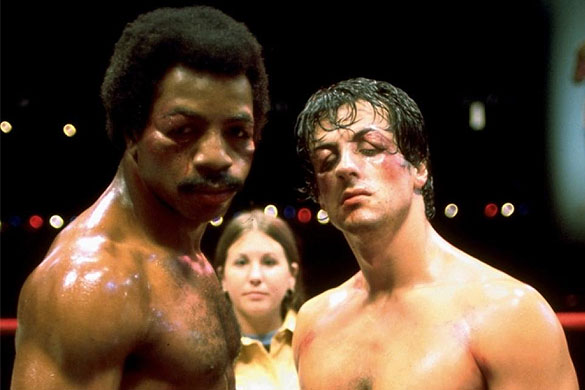
Movie Franchise Guide: The most iconic Rocky moments. And a brief history of Apollo Creed. And the whole series recapped by our comic artist. The story of the Rocky franchise in comic strip form.

Animation Movie Studio Guide: The 10 most perfect Pixar moments.

Geek Movie Guide: 8 geeky things to be thankful for this year.

Horror Movie Guide: Genre goods we’re thankful for this year.

Classic Movie Guide: Remembering The Crying Game.

List: All the times humans and dinosaurs coexisted in movies.

Home Viewing: Here’s our guide to everything hitting VOD this week.

and

MORE FROM AROUND THE WEB:

This entry passed through the Full-Text RSS service – if this is your content and you’re reading it on someone else’s site, please read the FAQ at fivefilters.org/content-only/faq.php#publishers.


No Image

After Two Years As Losers, A Football Team Attempts A Major Turnaround

4:02

Download

Some college football teams play to sold-out crowds in colossal stadiums. Then there’s the Columbia University Lions, a squad that lost every game for two years straight. This fall, a new coach has been trying to help the Lions start winning again.

Transcript

ARI SHAPIRO, HOST:

The Columbia University Lions lost every football game they played for two years straight. This fall, “The Season” podcast from member station WNYC has been tracing a new coach’s efforts to help the Lions start winning again. Reporter Ilya Marritz tells us how they did.

ILYA MARRITZ, BYLINE: It’s hard to overstate how awful Columbia football has been for the last two years. The Lions were losing games by blowout margins – 49-7, 45-0.

KRISTYN BRUNDIDGE: Teams had stop playing competitively against Columbia.

MARRITZ: Kristyn Brundidge is a senior who does play-by-play for the college radio station WKCR.

BRUNDIDGE: They would play their starters for a quarter-and-a-half, two quarters maybe, and then clear out the bench.

MARRITZ: Enter new head coach Al Bagnoli. Physically, he’s a small guy, but he has gravitas. He looks like a Roman Senator. In 23 years at Penn, Bagnoli won nine Ivy League titles and then decided he was ready for a different kind of challenge – a turnaround.

AL BAGNOLI: What we’re trying to do here is no different than a company that’s gone bankrupt and it’s been bought by somebody and they’re coming in there with a new management team.

MARRITZ: His approach – attention to detail, study what’s not working and make football fun again. In their first game against Fordham, the Lions show signs of brilliance, including a 98-yard kickoff return for a touchdown. But then, they crumble. And in the next two games, the team seems to lose its fight after setbacks. At every loss, coach Bagnoli says almost the exact same words.

BAGNOLI: Yeah, I mean, this was a disappointment, I think, to us all.

MARRITZ: We need to make fewer errors, he says, and eventually we’ll get a break.

(APPLAUSE)

MARRITZ: It finally comes in game four against Wagner College. The Lions come out of the gate fast, scoring two touchdowns in the first quarter, and never let up. Final score – Columbia, 26, Wagner, three. Seniors who haven’t won a game since they were freshmen are singing at the top of their lungs in the locker room.

UNIDENTIFIED SINGERS: (Singing) Y’all going to make me lose my mind up in here, up in here.

UNIDENTIFIED MAN: I think it was just chaos in there.

(LAUGHTER)

BAGNOLI: It should be. That’s good. That’s the best I’ve heard all day. That’s good.

MARRITZ: a 24-game losing streak ended and finally a new storyline. A few weeks later, Columbia beats Yale. And even though the Lions lose to Dartmouth and Harvard, those teams’ coaches say they have new respect for the team. The final game of the season is at home against Brown, and the first 21 seconds prove to be disastrous for the Lions. They give up two touchdowns in the time it takes to tie your shoes. But the Lions fight back. With under three minutes left in the game…

(SOUNDBITE OF ARCHIVED RECORDING)

BRUNDIDGE: Columbia’s got 70 yards to go. They need six points.

MARRITZ: Kristyn Brundidge is calling the game for WKCR. What happens next is thrilling. It’s a two-minute drill. And in seven straight passes, Columbia advances to the Brown five-yard line. With just seconds left on the clock, quarterback Skyler Mornhinweg needs to throw a touchdown.

(SOUNDBITE OF ARCHIVED RECORDING)

BRUNDIDGE: He takes the snap, looks to his left. He fires this one into the end zone. And that one’s picked off in the end zone by a Brown corner.

MARRITZ: It’s Brown’s ball – game over. Columbia went 2-8 this fall. They’re tied for last place in the Ivy League. But they’re losing by much smaller margins. So how does coach Bagnoli grade this season? He says this is just year one.

BAGNOLI: We’re making progress. It just never comes as fast or as seamless as you want it to come.

MARRITZ: After Thanksgiving, it’s back to work. Recruiting is already underway for the freshman class of the 2016 Lions. For NPR News, I’m Ilya Marritz in New York.

SHAPIRO: For more on what it takes to fix a failing team, check out “The Season” on iTunes or wherever you get your podcasts.

Copyright © 2015 NPR. All rights reserved. Visit our website terms of use and permissions pages at www.npr.org for further information.

NPR transcripts are created on a rush deadline by a contractor for NPR, and accuracy and availability may vary. This text may not be in its final form and may be updated or revised in the future. Please be aware that the authoritative record of NPR’s programming is the audio.

This entry passed through the Full-Text RSS service – if this is your content and you’re reading it on someone else’s site, please read the FAQ at fivefilters.org/content-only/faq.php#publishers.


No Image

Fantasy Sports As Day Job: Meet One Of The Industry's Top Winners

3:58

Download

Is daily fantasy sports a game of skill or one of chance? Just ask one of the industry’s top winners, a Bostonian who treats daily fantasy sports as his day job.

The 27-year-old math and econ grad says he puts more than $100,000 at stake each day, and that he’s up a cool three million so far this year. On a morning ahead of a day full of sports competitions, he analyzes his fantasy rosters, assesses his risk and submits multiple entries in a bid to beat everyone else who thinks they can put together a better fantasy team.

This entry passed through the Full-Text RSS service – if this is your content and you’re reading it on someone else’s site, please read the FAQ at fivefilters.org/content-only/faq.php#publishers.


No Image

After The Cranberries And Pie, Take Time To Talk About Death

What seemed like a burden can become a gift.

What seemed like a burden can become a gift. iStockphoto hide caption

toggle caption iStockphoto

Two years ago my mom fell at home and ended up being admitted to the ICU with four broken ribs and internal injuries. She was lucky. After two weeks in the hospital and a few more in a rehab unit she was back home, using her new blue walker to get around.

I think of that each Thanksgiving as I make pies just the way she taught me, grateful that she’s still with us and that she’s told us how she wants to die

Before she was discharged, Mom signed a POLST form, short for a Physician Order for Life-Sustaining Treatment. I’d heard of advance directives, which spell out the kind of medical care a person would want if they become too ill to communicate those wishes. But I’d never heard of POLST.

In Oregon, where my mother lives, it’s a one-page piece of pink paper that bluntly asks if you want to have CPR performed if your heart stops and you’re not breathing. Three other check boxes ask how much medical intervention you want: going to the hospital and an intensive care unit; perhaps the hospital but no ICU; or skip the hospital altogether. A third question asks if you want to be fed through a tube. That’s it.

Because it’s signed by a doctor or other provider, a POLST has teeth. It overrides the legal obligation of an EMT or a hospital to provide CPR and other emergency care that for old and sick people can lead to a long, miserable hospital stay.

“It’s not for healthy people,” says Dr. Susan Tolle, director of the Center for Ethics in Health Care at Oregon Health Science University. Instead, it’s for someone who is aware that they may soon die.

“We would encourage doctors to reach out to patients if they would not be surprised if they died in the coming year,” Tolle says, “or if they had advanced frailty. The little old lady hunched over their walker, that’s the definition of frailty.”

That’s also the definition of my 92-year-old mom. She can still beat me handily at hearts, but she’s physically weaker each time I see her. “Do everything” is the default mode for American medicine, but that all-out approach often doesn’t serve the very old well.

CPR works only about 10 percent of the time in the general population, Tolle told me, and it’s even less successful in a frail old lady.

First, if someone at that age collapses, it’s usually because there’s a serious medical problem like a heart attack or stroke. And performing CPR on someone with osteoporosis breaks ribs rather than circulating blood. “That isn’t walking off the film set looking good with your hair nicely combed,” Tolle says. “That’s going to the ICU on a ventilator.”

In studies, Tolle, who helped develop the POLST form, has found that just about 12 percent of permanent nursing home residents would want to go to an ICU. “Most say, ‘I want to go to the hospital to get the easy things fixed, but I don’t want the ICU. I don’t want CPR.’ “

POLST forms work well in nursing homes, where they’re often taped on a resident’s bathroom door. But they can be harder to put in force when people are still living in the community.

Oregon has an electronic POLST registry that EMTs and hospitals can check remotely. But only 18 states have POLST programs in place, though many more have them in the works. Most have no registry, meaning that someone intent on having the directions on their POLST form followed would need to wear a medical alert bracelet.

Some members of the disability community have questioned whether POLST is being too broadly applied. Rather than give people more control over end-of-life medical care, they say, it could mean interpreting “disabled” to mean “on death’s door”.

[embedded content]

This video helps explain who’s too healthy to sign a POLST form.

Oregon POLST YouTube

“Our concern is that it’s being used with non-terminal people,” says John Kelly, a 54-year-old quadriplegic who lives in Boston. He was taken aback when a nurse showed up with Massachusetts’ version of the form, called a MOLST. “I joke that I’ve got my pink MOLST on the fridge, and I’m afraid that the firemen will come in and glance at the refrigerator and say, OK, he’s got [a do-not-resuscitate order]. They interpret it as meaning no treatment at all.”

POLST is almost certainly inappropriate for someone disabled but otherwise healthy, Tolle says. “People are handing out the form a little too early sometimes, and we want to push back on that,” she says. “It’s for people who we can say are in the winter of their lives. They have advanced illness and frailty. They have declining health.”

Since her fall my mom has been quite clear about what treatments she doesn’t want. I realize that her desires may change and that the POLST form should then change, too. And I know we’ll be talking about this more, even though I have a hard time thinking about it without tearing up.

Family gatherings like Thanksgiving can be a good time for adult children to ask aging parents about their wishes for end-of-life care, and whether those wishes would be best expressed through an advance directive or a POLST. A number of groups offer crib sheets with questions that aren’t entirely scary, like “Would you rather die at home or in a hospital?”

It’s also a good time for parents to speak their minds if the kids don’t ask.

“Lean into it, step up to the plate,” Tolle says. “On Thanksgiving after dinner, tell your children what you want. You really will lift a burden.”

An earlier version of this story ran on Nov. 28, 2013.

This entry passed through the Full-Text RSS service – if this is your content and you’re reading it on someone else’s site, please read the FAQ at fivefilters.org/content-only/faq.php#publishers.


No Image

Holiday Shoppers Get A Head Start On Thanksgiving

Black Friday used to kick off the holiday shopping season, but now Thanksgiving Day is the new tradition for some shoppers.

Macy’s officials said about 15,000 people were at the 6 p.m. opening at its flagship store in Manhattan. An hour and a half before the Toys R Us in New York’s Times Square opened at 5 p.m., about 40 people stood in line.

And at the 24-hour Wal-Mart store in Naperville, Ill., the aisles were clogged with people and carts by 6 p.m., when employees began pulling shrink wrap off palettes of merchandise to mark the official start of Black Friday deals.

Outside, the scene was much the same. With the parking lot filled to capacity, drivers circled slowly looking for spaces, causing a backup of traffic trying to pull into the lot. Some gave up and parked in the near-empty lot of a fitness center and a Starbucks across the street.

“It’s the worst wonderful time of the year!” an employee laughed as he collected shopping carts.

Shopper Julie Desireau snagged a $10 crockpot and the last $10 deep fryer and promptly hid them under a rack of women’s flannel pajamas. Then the 29-year-old from Chicago called her husband, who was in the toy department with their cart, and told him to come pick her up.

“There’s no way I’m going back there,” she said.

After opening earlier and earlier on the holiday, this year, most of the more than dozen major retailers like Macy’s, Target and Kohl’s opened around the same time they did last year — about 5 p.m. or 6 p.m.

One big exception: J.C. Penney, which is opening two hours earlier at 3 p.m. on the holiday. Staples has reversed course and will close on the holiday. Sporting goods chain REI, which was always closed on Thanksgiving, is bowing out of Black Friday altogether and is asking employees and customers to spend time outdoors and not go shopping.

Still, stores aren’t waiting around to push discounts on holiday goods until the official weekend. Increasingly, they’ve been discounting holiday merchandise earlier in the month. In fact, according to the National Retail Federation, the nation’s largest retail trade group, nearly 60 percent of holiday shoppers have already started holiday shopping as of Nov. 10.

That should take a bite out of the sales this weekend, though Black Friday should still rank as either number one or two in sales for the year.

Overall, the National Retail Federation estimates that about 135.8 million consumers will be shopping this weekend, compared with 133.7 million last year. The trade group expects about 30 million will be shopping on Thanksgiving, compared with 99.7 million on Black Friday.

The group also expects a 3.7 percent increase in sales this year to $630.5 billion for the season. But grabbing those dollars will be tough.

While the economy has been improving, shoppers remain tight-fisted. Unemployment has settled into a healthy 5 percent rate, but shoppers still grapple with stagnant wages that are not keeping pace with rising daily costs like rent. Stores also are contending with an increasing shift to researching and buying online.

In response, Wal-Mart and Target made all deals available later in the stores online Thanksgiving morning. New this year at Target: shoppers who spend $75 or more on Friday will receive a 20 percent discount to use toward a future purchase on any day between Dec. 4 and Dec. 13.

Target CEO Brian Cornell told reporters on a conference call Thursday night that early results show that the discount chain is seeing higher traffic at its stores than last year and shoppers are buying items across the store, from clothing to electronics to toys. He also said that he has been pleased with strong results in online sales. Among some of the most popular doorbuster deals is a Westinghouse TV, marked down to $249.99, a savings of $350, he said. Target also offered 40 percent off of all fashion and accessories.

“This is the start of a really good shopping season,” he said.

Some shoppers came out for the first time on the holiday. Maria Garcia-Chavez, who lives in Denver, stood in line in the snow with her husband and four children to get into J.C. Penney. She came looking for women’s boots, on sale for $19.99

“This is my first time shopping on Thanksgiving. I want the deals,” she said. “You have to come the first day. If we come back tomorrow, you can maybe get the same price — if you’re here at 6 a.m. I’m not going to get up that early. I’d rather sleep.”

But not everyone is impressed with the Thanksgiving lines. By about an hour before Toys R Us in Times Square opened the line swelled to over 100.

“Black Friday isn’t what it used to be,” said Keith Nelson, 54, who works in security in the Brooklyn and was third in line after arriving about 2:15. “Lines used to be longer, people would be sleeping and bringing lounge chairs out here.”

Lisa Gutierrez of Aurora, Illinois, thought her strategy of waiting to go shopping until after kickoff of Thursday night’s Chicago Bears vs Green Bay Packers game was a good one. Until she arrived at the Target near her home and found out the flat screen TVs she had her eye on were sold out almost immediately after the store opened at 6 p.m.

“That’s a bummer,” she said. On the bright side, “at least it’s not a total madhouse in here.”

The Naperville, Ill., Target was busy but calm about two hours after opening. Most but not all checkout lanes were open and lines were short. Parking was readily available.

This entry passed through the Full-Text RSS service – if this is your content and you’re reading it on someone else’s site, please read the FAQ at fivefilters.org/content-only/faq.php#publishers.


No Image

The Geek Beat: 8 Geeky Things To Be Thankful For This Year

It’s the time of year for giving thanks, and Hollywood has given geeky movie fans a lot to be thankful for this year.

Not only did 2015 give us some of the biggest blockbusters in cinematic history, but it also provided more than a few nice surprises that reminded us why movies can be so amazing. In honor of Thanksgiving, here are eight things to be thankful for that hail from the geekier corners of Hollywood.

Sequels

Just a few years ago, it seemed like bad sequels might end up being the death of good movies. This year has been an altogether different story, though. Of the films generating the most buzz in geeky circles this year, the vast majority are sequels.

[embedded content]

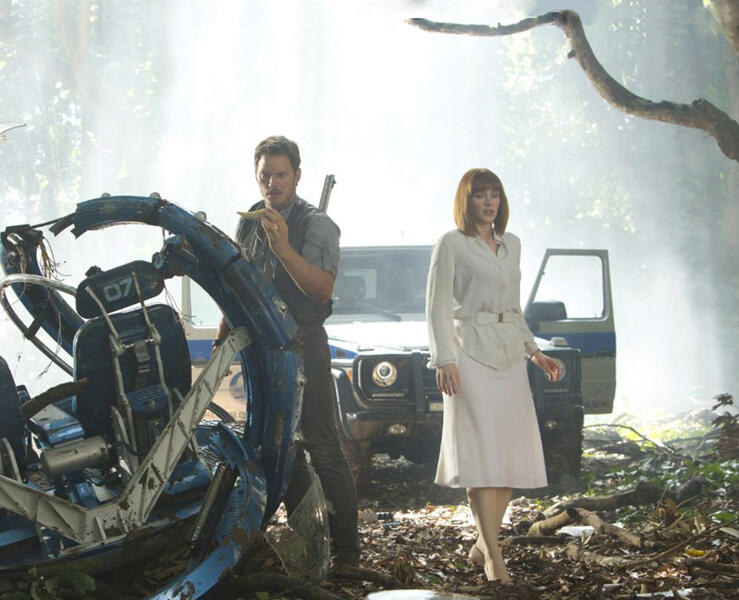
That list includes such notable films as Jurassic World, Mad Max: Fury Road, Furious 7, Avengers: Age of Ultron, Spectre, Mission: Impossible – Rogue Nation, and the upcoming Star Wars: Episode VII – The Force Awakens, among others. Sequels also account for four of the five highest-grossing films of the year worldwide so far. Sure, this could be the exception to the rule, but there’s no denying that sequels were a big part of what’s making 2015 so good for geeky movies.

Vin Diesel

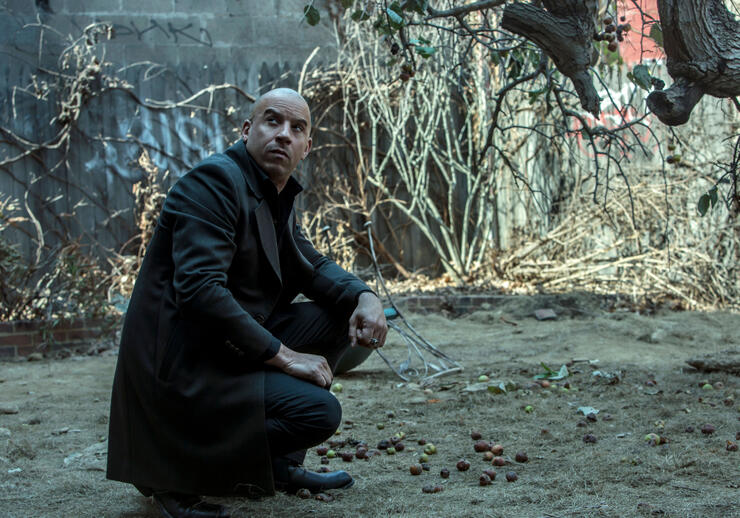
In just a few short years, Furious 7 star Vin Diesel has become one of the most entertaining actors to keep on your radar – especially for fans of geeky movies. Along with keeping the Fast & Furious franchise rolling along at high speeds, Diesel has worn his geek cred on his sleeve while promoting The Last Witch Hunter – a movie based on a character he role-played in Dungeons & Dragons campaigns – and spoken at length about his own, well-established fondness for sci-fi and fantasy fare.

Sure, he’s an action hero, but he also seems like one of us – and it’s difficult not to cheer for the guy and look forward to more Richard B. Riddick, Groot, Dom Toretto, or any other characters he brings to the screen.

Nostalgia

Our fondness for the the movies and pop culture of days gone by can be a powerful force, and that’s been particularly evident this year. Back in June, Jurassic World made us all remember what it was like to catch our first glimpse of a brontosaurus in the original Jurassic Park, and just a few months ago we got all caught up in Back to the Future madness as part of the franchise’s 30th anniversary.

[embedded content]

Right now, Star Wars has just about everyone feeling like a kid again thanks to its generation-spanning appeal, and we’re still a month away from the premiere of The Force Awakens. This year, everything old has indeed become new again when it comes to geeky movies, and that’s been a very, very good thing.

Surprises

They’re few and far between in the modern movie marketing environment, but surprises can still be found in sci-fi, superhero, and fantasy fare – it just takes a little luck, a lot of willpower, and in some cases, clever publicity teams. While Terminator: Genisys opted to spoil one of its biggest twists, quite a few other films arrived in theaters this year with some of their biggest secrets intact.

Of course, if you’re the sort who seeks out every piece of news regarding your most-anticipated movies, you’re probably going to end up knowing more of the plot going into the film than the director intended. Fortunately some of this year’s biggest movies were able to keep some of their big moments under wraps. The appearance of Jurassic World‘s Indominus Rex and the relationship between Chris Pratt’s character and his velociraptor pals, for example, were cool elements made even cooler by learning about them as the film unfolded. Similarly, much of the plot of The Force Awakens remains unknown at this point, and we’re probably not alone in hoping it stays that way until we’re sitting in the theater next month.

Deadpool

Given the number of perfectly valid reasons why this film might have never been made, it’s nothing short of a holiday miracle that Marvel’s mouthy mercenary is getting his own “R”-rated solo movie. From the film’s necessary rating to the character’s wasted debut in X-Men Origins: Wolverine to the general lack of mainstream awareness of Deadpool, everything seemed to be working against this pipe dream of a project.

[embedded content]

And yet here we are now, mere months from taking a seat in a theater and watching Ryan Reynolds crack jokes while shooting, slicing, and otherwise dismembering bad guys, clad in the iconic colors of one of Marvel Comics’ most popular – and most irreverent – characters to come out of the ’90s. Is this the real world? Because I’m still not sure.

Ridley Scott

The director of Alien, Blade Runner, Legend, and so many other films that form the foundation of any good geeky movie collection has been back at it lately, pushing ahead with new projects like the current blockbuster The Martian and keeping the world of Alien in motion with his desire to connect the prequel film Prometheus to the rest of the Aliens franchise.

Add to all of that a Blade Runner sequel that Scott seems confident enough about to discuss whenever the subject comes up, and this year has been a busy one for the visionary filmmaker’s sci-fi endeavors. Consequently, it’s also been a good year for fans of the Alien franchise and Blade Runner, and for all great sci-fi.

Mad Max: Fury Road

Where to even start with Fury Road, one of this year’s best movies? It’s the sequel we didn’t know we wanted, but now that we’ve seen it, we can’t imagine this year’s movie landscape without it. Imperator Furiosa. The Warboys. Max. Those cars. Those amazing, wonderful, glorious cars. Heck, we even love the chrome spraypaint. WITNESS THIS!

The Hype Machine

The pitfalls of the modern movie marketing machine are well documented, particularly when it comes to the ever-present threat of spoilers. Still, this year has given us quite a bit to like about the hype – but only if you relax and let yourself get caught up in it.

While some fans might be hesitant in the lead-up to a potential blockbuster (since it could end up being terrible, after all), others throw caution to the wind and embrace the hype, immersing themselves in the unfiltered joy of something new on the horizon. This year featured a lot of opportunities for the latter, with massive, long-running promotional campaigns for films like Furious 7, Jurassic World, and Avengers: Age of Ultron that encouraged you to let yourself be carried away by the positive buzz and channel that inner child who’s easily excited about, well… anything.

We’re currently in the midst of exactly that sort of scenario with The Force Awakens, and if you’re the sort who’s happy to get caught up in all of the toys and teasers and such, it’s a very cool time to be a fan.

Question of the Week: What geeky things are you thankful for this year?


Rick Marshall is an award-winning writer and editor whose work can be found at Movies.com, as well as MTV News, Fandango, Digital Trends, IFC.com, Newsarama, and various other online, print, and on-air news outlets. He’s been called a “Professional Geek” by ABC News and Spike TV, and his personal blog can be found at MindPollution.org. You can find him on Twitter as @RickMarshall.

This entry passed through the Full-Text RSS service – if this is your content and you’re reading it on someone else’s site, please read the FAQ at fivefilters.org/content-only/faq.php#publishers.