Articles by admin

No Image

Why Is The Fed Chair So Difficult To Understand? Here's A Translation

2:14

Download

Have you ever heard an announcement from the Federal Reserve and felt like you are way under qualified to understand a word of it? That’s no accident.

Transcript

ARI SHAPIRO, HOST:

Being able to speak like the chair of the Federal Reserve is an art. Equally impressive – being able to understand what the fed chief is saying. Here’s Federal Reserve Chair Janet Yellen today.

(SOUNDBITE OF ARCHIVED RECORDING)

JANET YELLEN: The committee judged that a modest increase in the federal funds rate target is now appropriate, recognizing that even after this increase, monetary policy remains accommodative.

SHAPIRO: Translation – here’s why we decided to raise interest rates today for the first time in seven years. By the way, we’ll hear more about the implications of that decision elsewhere on the program.

AUDIE CORNISH, HOST:

Right. But can we just talk about this language for a second? I mean, we’ve gotten used to hearing this kind of economic jargon, but that doesn’t mean it gets easier to understand. Remember Ben Bernanke?

(SOUNDBITE OF ARCHIVED RECORDING)

BEN BERNANKE: Consequently, the committee must remain exceptionally alert and flexible, prepared to act in a decisive and timely manner and in particular, to counter any adverse dynamics that might threaten economic or financial stability.

SHAPIRO: Woof – or how about Alan Greenspan?

(SOUNDBITE OF ARCHIVED RECORDING)

ALAN GREENSPAN: As yet, the protracted period of monetary accommodation has not fostered an environment in which broad-based inflation pressures appear to be building.

SHAPIRO: You know, Audie, it’s like I know it’s important, but I don’t know why.

CORNISH: And that is by design, says Caroline Baum.

CAROLINE BAUM: The fed uses these catchphrases – you know, gradual, considerable period – they’re very vague terms. Why? They don’t want to be pinned down. The opposite of being clear is you maintain flexibility.

CORNISH: Baum is a freelance writer. She’s covered the economy for three decades and she wrote about the fed’s jargon for MarketWatch.

SHAPIRO: And she says the other thing about the way fed chairs speak is that it is vague – also on purpose.

BAUM: You cannot be transparent about what you’re going to do when you don’t know. And I don’t know why more people don’t get this. I don’t know why the fed doesn’t get it.

CORNISH: And if the fed doesn’t get it, will anyone step in to help clear things up?

BAUM: (Laughter) I’m waiting for my phone to ring.

SHAPIRO: Well, at least we found a translator.

Copyright © 2015 NPR. All rights reserved. Visit our website terms of use and permissions pages at www.npr.org for further information.

NPR transcripts are created on a rush deadline by a contractor for NPR, and accuracy and availability may vary. This text may not be in its final form and may be updated or revised in the future. Please be aware that the authoritative record of NPR’s programming is the audio.

This entry passed through the Full-Text RSS service – if this is your content and you’re reading it on someone else’s site, please read the FAQ at fivefilters.org/content-only/faq.php#publishers.


No Image

Soccer Star Abby Wambach To Play Final Game Tonight

4:07

Download

Abby Wambach will play her final game for the U.S. Women’s National Soccer Team Wednesday night. NPR talked to her former coaches, fans and the star herself on what she’s meant to the game.

Transcript

AUDIE CORNISH, HOST:

It’s retirement day for the top goal scorer in international soccer. Abby Wambach plays her last game in New Orleans tonight. NPR’s Shereen Marisol Meraji has this appreciation of the star forward of the U.S. women’s soccer team.

SHEREEN MARISOL MERAJI, BYLINE: If you’ve never seen Abby Wambach’s awesomeness, go to YouTube and type in Wambach Brazil 2011. It’s the World Cup, the U.S. is down a goal against Brazil, down a player and has seconds to tie things up or get knocked out of the competition. High pressure is an understatement.

(SOUNDBITE OF ARCHIVED RECORDING)

UNIDENTIFIED MAN: Now U.S. – they have it.

MERAJI: The U.S. takes possession of the ball. Megan Rapinoe gets the pass and races down the field. Wambach’s on the other side barreling toward the goal. She waves to Rapinoe who boots the ball across almost the entire width of the field. Wambach leaps head first and rockets it into the goal to tie up the game.

UNIDENTIFIED MAN: Abby Wambach has saved the USA’s life in this World Cup.

MERAJI: It was voted the greatest goal in FIFA Women’s World Cup history. A goal many of her teammates call their favorite Wambach moment. Wambach’s coach at the University of Florida, Becky Burleigh – her favorite story?

BECKY BURLEIGH: Am I allowed to cuss on NPR?

MERAJI: Yes, yes, we can beep it out.

BURLEIGH: (Laughter) OK.

MERAJI: It’s the national championship game against UF’s fiercest rival at the time, the North Carolina Tar Heels. The Gators are up 1-0. During a commercial break, the team huddles up before heading back on the field.

BURLEIGH: One of the players like, come one, we got this, you know? And other players are like, let’s go. And Abby says, we’re not [expletive] losing to these [expletive]. And I was like, OK. Well, there you go. Let’s go.

MERAJI: The Gators went on to win the team’s first and only national championship. It was 1998 and Wambach was a freshman. Burleigh says her outspoken and outrageous personality even at that age helped motivate her teammates. The youngest of seven, Wambach says when she was a little girl, she knew she had to be loud and tough to stand out. Her mom, Judy, put her on a boys’ soccer team at 9 to challenge her.

JUDY WAMBACH: And come to find out, many of the young women that were on the U.S. national team played boys during their early years. I did something right and didn’t know I did it (laughter).

MERAJI: You could say that again. Her daughter went on to win two Olympic gold medals, a World Cup title and has inspired the next generation.

TATIANA SMALL: I’m Tatiana Small (ph), I’m 13 and I want to be a professional soccer player.

MERAJI: I met up with Tatiana near Los Angeles practicing soccer after school with a private coach. She says Wambach is her idol…

TATIANA: She’s my favorite player.

MERAJI: …And points to her scoring record as one of the reasons – 184 goals in international play – more than any other woman or man, for that matter.

TATIANA: That is just amazing and FIFA needs to realize that women can do more than men and can do the same as men. So, like, we should get the same equal value as men do.

MERAJI: Gender equity is something Wambach has been using her star power and her loud, extroverted personality to fight for on a global stage. Most recently, she and others sued FIFA and the Canadian Soccer Association for gender discrimination. The 2015 Women’s World Cup was played on artificial turf rather than grass. Turf is much harder on the body and the men never play the World Cup on it.

ABBY WAMBACH: There is still a lot of room to grow.

MERAJI: In a press conference before her final game, Wambach said she’ll keep fighting for fairness.

A. WAMBACH: We have been so imprinted on the fact that women make less money, get fewer opportunities, that people that have different skin color get less money and fewer opportunities. I want to make it not just, like, a talked about something.

MERAJI: She says she wants to make it equality – something real in her next chapter. But before that, she’s going to celebrate the end of an amazing career with her parents, six siblings and closest friends after her final game tonight in New Orleans.

A. WAMBACH: Watch out Bourbon Street, it’s going to be a fun night.

MERAJI: Shereen Marisol Meraji, NPR News, New Orleans.

Copyright © 2015 NPR. All rights reserved. Visit our website terms of use and permissions pages at www.npr.org for further information.

NPR transcripts are created on a rush deadline by a contractor for NPR, and accuracy and availability may vary. This text may not be in its final form and may be updated or revised in the future. Please be aware that the authoritative record of NPR’s programming is the audio.

This entry passed through the Full-Text RSS service – if this is your content and you’re reading it on someone else’s site, please read the FAQ at fivefilters.org/content-only/faq.php#publishers.


No Image

Obamacare Enrollment Extended To Accommodate Last-Minute Demand

The deadline to buy health insurance under Obamacare has been extended for two days after high demand clogged the federal government’s exchange.

The Department of Health and Human Services announced Tuesday night, just hours before the original deadline of midnight Dec. 15, that consumers would have 48 hours more to buy a health plan.

Wait times to log in to HealthCare.gov or to get help on the telephone were so long earlier this week that officials said anyone who left a message or email address would be contacted after Tuesday’s deadline and would still be able to get insurance that goes into effect on Jan. 1.

By Tuesday, more than a million people had left telephone messages, so Department of Health and Human Services decided to give people more time.

Andy Slavitt, acting administrator of the Centers for Medicare and Medicaid Services, which oversees HealthCare.gov, said on Twitter that 185,000 people were simultaneously shopping for insurance late Monday.

People may be motivated by higher penalties that kick in next year for not having insurance.

In 2016, an individual who doesn’t buy insurance will owe at least $695 when filing taxes for that year. The fines increase based on income, and can go up to $2,085 for an individual.

This entry passed through the Full-Text RSS service – if this is your content and you’re reading it on someone else’s site, please read the FAQ at fivefilters.org/content-only/faq.php#publishers.


No Image

'Star Wars: The Force Awakens' Is Exactly the Movie You Want It To Be

Note: The following does not include any major spoilers for Star Wars: The Force Awakens.

2015 has saved its best for last.

It might be the most anticipated movie in your lifetime, and it’s most definitely the most anticipated movie of the year, but does Star Wars: The Force Awakens live up to these Death Star-sized expectations?

It does. And here are a few reasons why…

It’s like a “greatest hits” of Star Wars movies

Are there nerdy references? Of course there are nerdy references. Are there lines from other Star Wars movies reused in different ways? Of course there are! As much as The Force Awakens is very much the beginning of a new trilogy of movies, it also functions as kind of a reboot of the very first Star Wars movie.

Just like A New Hope, the film’s central premise is pinned to a hidden map that’s valuable to both the good guys and the bad ones. In the first movie this map helped our heroes defeat the Death Star. In The Force Awakens, this map holds the key to locating the galaxy’s last remaining Jedi.

Can you guess who that is?

BB-8 is your new everything

No, it’s not BB-8… although BB-8, like R2-D2 in the original movie, may have something to do with that map.

There’s a reason why BB-8 has already become this beloved character, and you’ll be happy to know the movie is a constant reminder that your love for this droid will only continue to grow from here. Unlike C-3PO and R2-D2, whose amusing frenemy shtick supplied much of the comic relief throughout the first six movies, BB-8 comes off as a strong, reliable, wiser-than-you’d-think puppy dog.

Your desire to “awww shucks” the droid will be at odds with your need to high-five the tiny baller at every turn.

And that’s just it — the key to BB-8’s charm is in the boops and beeps, yes, but it’s really all about the turns. BB-8 delivers heaps of emotion with a simple turn of the head. Its characters like this that simultaneously deliver more of what you already love so much about Star Wars to begin with while also teasing an evolving galaxy that still has a lot of surprises up its sleeves.

Daisy Ridley awakens

For example, the film’s biggest surprise is Daisy Ridley. Not only is Rey the most dynamic and compelling character to be introduced in a Star Wars movie since the original trio of Luke, Leia and Han, but this relatively unknown actress also steals the film away from its old-schoolers at every turn.

She’s daring and dangerous, and when she’s not upstaging her male counterparts (yes, even Han Solo), she’s fiercely defending her new friends and experiencing her own kind of awakening.

Does she know who she really is? And does she even want to know? Let’s just say Rey deals with a lot of complex ideas and reveals throughout the film, and it’s her journey that we’re invested in most.

John Boyega’s Finn is the film’s most revealing character
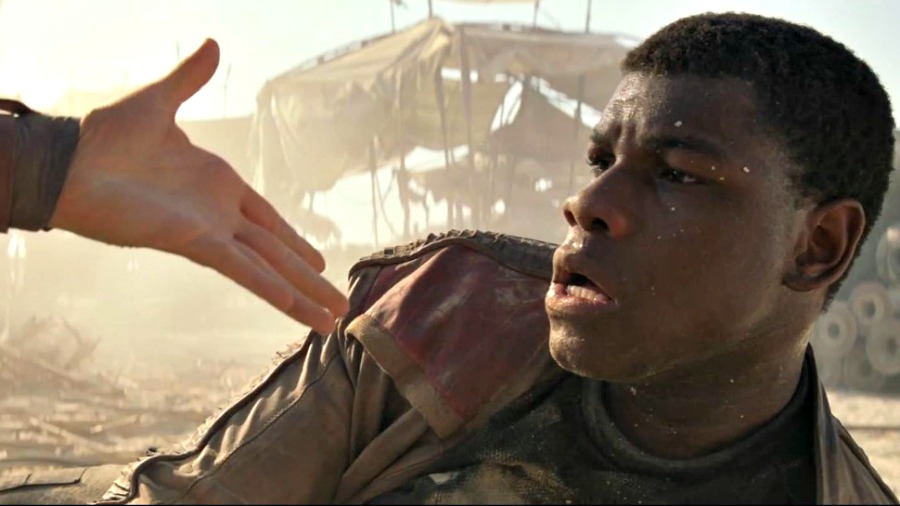
You might be invested in Rey’s journey most, but Finn offers up what might be the film’s freshest storyline.

Since his story starts with him as a Stormtrooper, we learn a lot about the franchise’s most famous unassuming bad guys. From the way they strategize to where they come from to what happens when they take their helmets off — there’s a lot of new territory to explore when it comes to Finn, with answers to questions you’ve probably had for decades.

Like how Stormtroopers are probably pretty messed up in the head.

Kylo Ren is unlike any Star Wars villain we’ve seen yet

And speaking of characters who could probably use a batch of free therapy sessions, the villainous Kylo Ren is way more than meets the eye. He’s got a little bit of a man crush on Darth Vader (hence the helmet and voice), but is he as strong and intimidating as Darth Vader?

Not quite.

He’s got power, but he doesn’t always know the best way to use it. He wants to be a triumphant leader, but he doesn’t really know what it takes. He’s all guts, no glory, and he’s fascinating to watch. Each moment he’s on screen, another layer is peeled back. There’s definitely a bit of an Anakin Skywalker vibe going on with Kylo Ren in terms of how volatile and unpredictable he is, but he utilizes his powers in ways no other Star Wars character has before.

And he’s really pissed off at our heroes.

Han Solo and Chewbacca

Yup, you could say these two are on Kylo Ren’s sh** list.

How do you even write about the return of Han Solo without shedding some dude tears? I mean, Han Solo is the ultimate dude – one of the greatest dudes who ever lived on the silver screen — and Harrison Ford comes off as if he’s having the most fun as an actor in years.

So much of what makes Han Solo who he is are his facial expressions. The way he smirks, the way he looks at people like they have a million screws loose upstairs. The grunts, the glances, the amusing shorthand he has with Chewbacca – it’s all in there. Ford seamlessly steps back into what’s arguably his most iconic character, and though it may feel like a “greatest hits” kind of performance, it’s so great to watch.

The lightsaber fights rock

Know what else is great to watch? The lightsaber fights.. J.J. Abrams has said the fights this time around are a little more raw and visceral, and that’s exactly what the movie serves up. The saber duals are harsh and sort of amateur, in terms of style. These aren’t master Jedis or Siths wielding those famous blades — these are characters who fight with it like you and I would.

They fight with it in any way they know how.

And moreso than in any previous Star Wars movie, the lightsaber handled brilliantly in terms of how much time it’s on screen, by the way — feels like a physical piece of crazy laser-fire that’s ridiculously destructive and, ya know, hurts when it strikes.

Plus, there aren’t many of them. Kylo Ren has his, and the other belongs to another guy you might know…

So where in the galaxy is Luke Skywalker?
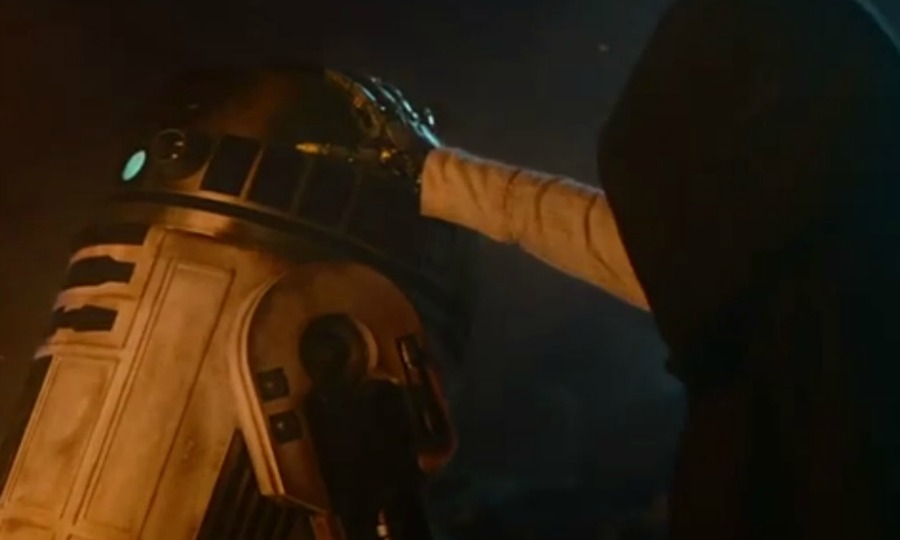
More like who in the galaxy is Luke Skywalker? Much has been said about Luke’s absence in all of the marketing materials, and there’s a very good reason for that… but we’ll let the movie explain.

That said, the entire story revolves around Luke, his actions post-Return of the Jedi and the consequences born from them. What consequences?

You’ll see.

Star Wars: The Force Awakens hits theaters on December 18.

[embedded content]

This entry passed through the Full-Text RSS service – if this is your content and you’re reading it on someone else’s site, please read the FAQ at fivefilters.org/content-only/faq.php#publishers.

No Image

House Plans Vote On Year-End, Must-Pass Tax And Spending Deal

House Speaker Paul Ryan announced late Tuesday that negotiators had reached a deal on two sweeping pieces of legislation: a $1 trillion spending bill and more than $600 billion bundle in tax breaks.

Republicans are unhappy with the spending bill, and Democrats don’t like the tax bill — but combined, there is enough in this deal for both parties to claim a win.

In the more than $1 trillion spending bill, Democrats successfully brushed back Republican efforts to stop Syrian refugees from entering the U.S., roll back Wall Street regulations, defund Planned Parenthood and repeal campaign finance regulations.

In the tax bill, Republicans scored concessions on making many tax breaks permanent and delaying new taxes under the Affordable Care Act.

The House will vote separately on the two measures, which will be combined into one package in the Senate. Those votes are expected on Thursday. The White House has indicated that the president will sign the bill when it reaches his desk.

This entry passed through the Full-Text RSS service – if this is your content and you’re reading it on someone else’s site, please read the FAQ at fivefilters.org/content-only/faq.php#publishers.


No Image

Hepatitis Drug Among The Most Costly For Medicaid

Sovaldi can cure hepatitis C, but the medicine carries a list price of $1,000 a pill. The typical 12-week course of treatment would cost $84,000.

Sovaldi can cure hepatitis C, but the medicine carries a list price of $1,000 a pill. The typical 12-week course of treatment would cost $84,000. Bob Ecker/MCT/Landov hide caption

toggle caption Bob Ecker/MCT/Landov

A drug that can cure hepatitis C was one of the top pharmaceutical costs in most states’ Medicaid budgets in 2014.

All told, 33 states spent more than $1 billion to treat the disease with Gilead Sciences’ Sovaldi, according to data released Tuesday by Sens. Charles Grassley, R-Iowa, and Ron Wyden, D-Ore. Still, the money spent was enough to treat only 2.4 percent of Medicaid patients infected with the virus.

New York spent the most by far. That state’s Medicaid program shelled out more than $360 million for Sovaldi to treat about 4,000 of its nearly 60,000 Medicaid recipients who have hepatitis C.

Pennsylvania was next, spending $98 million last year to treat 1,059 Medicaid recipients with hepatitis C. Another 30,000 Pennsylvanians are infected, the data show.

In a letter to the senators, Pennsylvania’s secretary of human services said the state was suffering from “sticker shock” and said the price affected the state’s decision about whether to treat patients with the hepatitis drug.

“Treatment guidelines recommended prioritizing treatment for the ‘sickest’ patients due to potential costs and access issues,” said Secretary Theodore Dallas in the letter.

Many states also spent smaller amounts on Harvoni, Gilead’s other hepatitis drug, which was approved near the end of 2014.

When Sovaldi was approved in December 2013, it was the first drug that could effectively cure hepatitis C, a virus that attacks the liver and can lead to cirrhosis, cancer and the need for a transplant.

The Centers for Disease Control and Prevention estimated that 2.7 million people in the U.S. had chronic hepatitis C infections in 2013.

Sovaldi became the center of controversy when Gilead set the price at $1,000 a pill, or $84,000 for a course of treatment. Harvoni is even pricier.

In early December, Grassley and Wyden released a report from an 18-month investigation showing that Gilead was fully aware its pricing strategy would be controversial, but decided to stick with it to maximize revenue.

That report said sales of the two drugs since they were launched reached $20.6 billion as of September.

This entry passed through the Full-Text RSS service – if this is your content and you’re reading it on someone else’s site, please read the FAQ at fivefilters.org/content-only/faq.php#publishers.


No Image

The Sports (And Teams) Whose Fans Made The Fewest Grammatical Mistakes In 2015

Fans of the Memphis Grizzlies, seen here celebrating with Jeff Green, made only 2.47 grammar mistakes for every 100 words according to a new study.

Fans of the Memphis Grizzlies, seen here celebrating with Jeff Green, made only 2.47 grammar mistakes for every 100 words according to a new study. Frederick Breedon/Getty Images hide caption

toggle caption Frederick Breedon/Getty Images

Fans of the Memphis Grizzlies can exult, after ranking first in a new national study. And there’s a good chance they’ll spell “exult” correctly: The team’s fans were found to make the fewest grammatical mistakes in a review of comments about three of America’s major sports.

NBA fans made the fewest mistakes, with NFL fans making the most. And while MLB fans were in the middle, a poor showing by the Philadelphia Phillies’ followers was blamed for the city’s fall from fifth to 24th place in the rankings of 42 cities with major sports teams.

The 2015 Grammar Power Rankings come from Grammarly, the auto-correcting app, which collected and reviewed 100 comments from the teams’ official websites, as well as sports sites such as SBNation. The survey does not include the NHL or MLS.

Among cities, the rankings give No. 1 Memphis a particular reason to brag over No. 42 Nashville, whose fans were judged to be the least reliable users of the English language. While Memphis fans made only an average of 2.47 mistakes for every 100 words they wrote, their Nashvillian peers committed more than 11 errors.

Among individual teams, the most errors came from fans of the Washington Redskins, whose rate of 16.5 mistakes per 100 words was unrivaled. No other team surpassed 14 mistakes per 100 words in Grammarly’s review.

But perhaps that proclivity for errors is catching: Instead of calling Washington’s baseball team by its correct name, the Nationals, Grammarly wrote the name as “Nations” in an early news release about the study.

A news release from Grammarly's rankings of cities' sports fans included a misspelling of its own.

A news release from Grammarly’s rankings of cities’ sports fans included a misspelling of its own. Grammarly hide caption

toggle caption Grammarly

We don’t mention that to be snarky. Rather, it reminds us that grammar, and the mechanics of typing, humble us all (including your correspondent).

When we asked Grammarly where fans could improve their grammar game, analyst Michael Mager responded, “The most common errors tended to be punctuation. In particular, the comma tends to be misused the most.”

Other takeaways from the rankings:

  • Archrivals Boston and New York tied at No. 31.
  • Sacramento, San Antonio, and Orlando — like Memphis, cities that have an NBA team but no NFL or MLB franchise — rounded out the top four.
  • In Milwaukee, Bucks fans had the fewest errors, with 2.43 per 100 words. But Brewers fans had more than twice that many, so the city ranked fifth nationally.

The full results are at the bottom of this post.

If you’re wondering about the criteria, it seems that conscientious users of the serial comma can, as usual, simmer in their own rage.

Here’s how Grammarly explains its methodology:

“For the purposes of this study, we counted only black-and-white mistakes such as misspellings, wrong and missing punctuation, misused or missing words, and subject-verb disagreement. We ignored stylistic variations such as the use of common slang words, team and player nicknames, serial comma usage, and the use of numerals instead of spelled-out numbers.

“Finally, we calculated the average number of mistakes per one hundred words by dividing the total word count of the comments by the total number of mistakes for each team.”

Here’s the full list:

Sports Fan Cities Grammar Ranking Infographic

This entry passed through the Full-Text RSS service – if this is your content and you’re reading it on someone else’s site, please read the FAQ at fivefilters.org/content-only/faq.php#publishers.


No Image

Today in Movie Culture: 'Star Wars: Episode I – The Phantom Menace' Edition

Here are a bunch of little bites to satisfy your hunger for Star Wars movie culture:

We’re counting down the days to the release of Star Wars: The Force Awakens by devoting a week’s worth of movie culture roundups to the seven live-action installments of the Star Wars Saga, continuing today with the fourth installment (first episode), The Phantom Menace, and further in release order through next Thursday.

See More Star Wars Movie Culture:

Star Wars: Episode IV – A New Hope
Star Wars: Episode V – The Empire Strikes Back
Star Wars: Episode VI – Return of the Jedi

Classic Trailer of the Day:

We got our first look at the first new Star Wars movie in 16 years on November 18, 1998. That’s when the original trailer for The Phantom Menace arrived in theaters attached to Meet Joe Black and other releases. Watch that trailer below.

[embedded content]

Honest Trailer of the Day:

More than a decade later, The Phantom Menace was re-released in 3D, and Screen Junkies used the opportunity to give the prequel an Honest Trailer. This was before they had the epic trailer voice guy so, appropriately, it’s not as good as later episode, either.

[embedded content]

Alternative Poster of the Day:

Artist Travis English has done a lot of stylish yet minimalist poster designs for The Phantom Menace, including the one below. See others, including character posters here.

Movie Defense of the Day:

Not everyone hates The Phantom Menace, not entirely. Here is a fair list of everything good in the first prequel:

[embedded content]

Cosplay of the Day:

If you want to see a lot more people who don’t hate The Phantom Menace, just go to any fan convention and you’ll find a good amount of Darth Maul cosplay. Here’s one example with another guy dressed as Qui-Gon Jinn:

Fan Theory of the Day:

One of the craziest fan theories of all time is a recent one arguing that Jar Jar Binks was a Sith Lord. This is one video explaining the idea in depth:

[embedded content]

Vintage Image of the Day:

Ahmed Best doing stand-in performance for his character, Jar-Jar Binks, meeting Jake Lloyd as young Anakin Skywalker in front of a blue screen with actual set to be filled in later.

Music Video of the Day:

The lyrics of “Weird Al” Yankovic‘s “The Saga Begins” serves as both a parody and recap of The Phantom Menace, set to the tune of Don McLean’s “American Pie.” Watch the video, in which Yankovic sports some Jedi cosplay, below.

[embedded content]

Movie Adaptation of the Day:

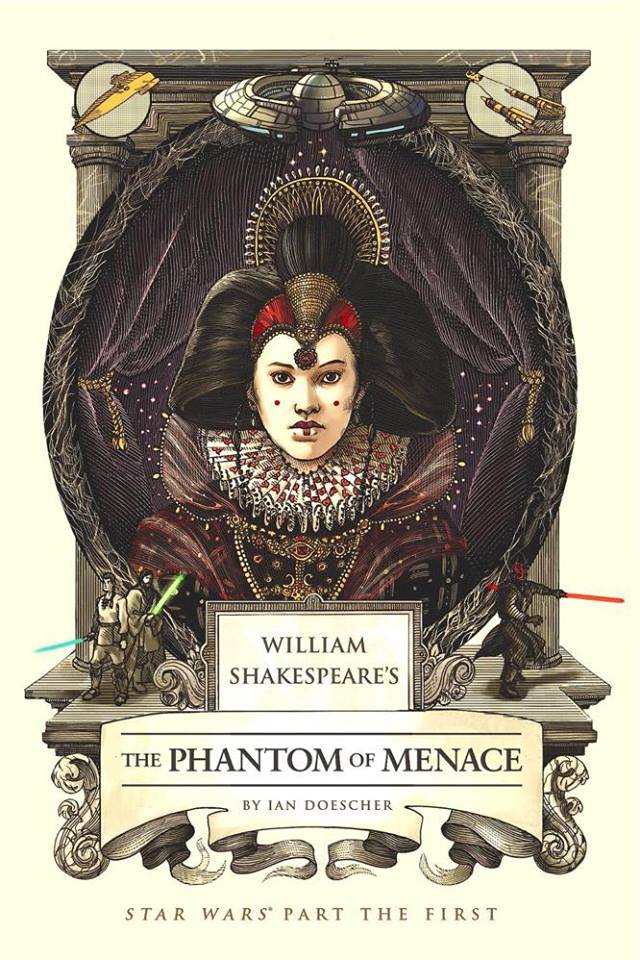
The best way to appreciate and become a fan of The Phantom Menace is to pretend it was written by William Shakespeare. Below is the cover to the ingeniuous mashup/adaptation. Watch author Ian Doescher discuss the series at New York Comic-Con here.

Alternate Endings of the Day:

Those of you who dislike The Phantom Menace might have preferred the prequel if it was much shorter. Here are a few ways it could have ended earlier:

[embedded content]

and

This entry passed through the Full-Text RSS service – if this is your content and you’re reading it on someone else’s site, please read the FAQ at fivefilters.org/content-only/faq.php#publishers.


No Image

Serena Williams Wins Sportsperson Of The Year; Poll Favored American Pharoah

Serena Williams is Sports Illustrated's 2015 Sportsperson of the Year.

Serena Williams is Sports Illustrated’s 2015 Sportsperson of the Year. Bullit Marquez/AP hide caption

toggle caption Bullit Marquez/AP

Serena Williams, one of the greatest athletes in the world, had one of the greatest years in sports. For this, Sports Illustrated named her the 2015 Sportsperson of the Year. The article highlighted some of her achievements:

“Williams, 34, won three major titles, went 53–3 and provided at least one new measure of her tyrannical three-year reign at No. 1. For six weeks this summer—and for the first time in the 40-year history of the WTA rankings—Williams amassed twice as many ranking points as the world No. 2; at one point that gap grew larger than the one between No. 2 and No. 1,000. Williams’s 21 career Grand Slam singles titles are just one short of Steffi Graf’s Open-era record. Such numbers are reason enough for Sports Illustrated to name Serena Williams its 2015 Sportsperson of the Year.”

Williams is the first black woman to win the award solo.

Normally, that’s where the story would end. Instead, horse-racing fans made themselves heard, complaining that the Triple Crown-winning thoroughbred American Pharoah was snubbed. Here’s a sampling from those who felt the horse should have won Sportsperson of the Year:

@SInow @SI_ChrisStone @serenawilliams American Pharoah is the winner-hands down. You people are ridiculous.

— Looise (@Looise1) December 14, 2015

Very disappointed to see Sport’s Illustrated editors ignored the fans vote, and chose Serena Williams over American Pharoah – Article coming

— Brian Zipse (@Zipseatthetrack) December 14, 2015

Total BS @SInow @SITimLayden Why have a poll if you totally ignore it? Serena FAILED at winning the Grand Slam. AP once in a lifetime horse

— Justin Zayat (@JustinZayat) December 14, 2015

Much of the online outrage centered on the fact that Sports Illustrated had polled readers about whom they thought deserved the award, and American Pharoah received the most votes. In reality, the poll had no bearing on who would actually be honored.

The disagreement ballooned from there. The Los Angeles Times wrote an article called “Are fans right to be upset that Serena Williams beat American Pharoah for SI Sportsperson of the Year?” in which it earnestly dissected the criteria for winning the award:

“SI states that the sportsperson of the year award goes to ‘the athlete or team whose performance that year embodies the spirit of sportsmanship and achievement.’ That puts American Pharoah at a clear disadvantage since horses can’t really display sportsmanship.”

Implicit in the discussion about who deserved to win the award is the disconcerting comparison between a black woman and a horse. It’s an offensive and ill-advised comparison, but one that was made explicitly throughout the day:

Serena Williams or American Pharoah: Who’s the real sportsperson of 2015? Vote in our poll https://t.co/l4A51SPUlP pic.twitter.com/dssxaGFbAn

— Los Angeles Times (@latimes) December 14, 2015

The comparison also harkens back to the 1940s when black Olympic athlete Jesse Owens raced against horses to make money.

This reminds me of when Jesse Owens was made to race a horse to earn living expenses: https://t.co/XypyJCPyom. https://t.co/1L2fV9dAYR

— stacia l. brown (@slb79) December 14, 2015

#JesseOwens, w/4 gold medals still had to race vs a #horse to entertain & justify his talent. “What was I supposed to do?” @Semhar @latimes

— Maaza Mengiste (@MaazaMengiste) December 14, 2015

The Bismarck Tribune wrote about Owens in 2013:

“At the 1936 Olympics, he brought pride to America and shattered Adolf Hitler’s claim of Aryan superiority by winning four gold medals in track and field. However, racism existed in America, and there were no endorsements and very few meaningful job opportunities for Owens, an African American. He found that he needed to turn to carnival-like gimmicks to earn a living.”

On Monday, Sports Illustrated published another article, explaining that the decision to choose Williams was based not just on her impressive record but also on her endeavors off the court, including her willingness to confront social issues.

“We are honoring Serena Williams too for reasons that hang in the grayer, less comfortable ether, where issues such as race and femininity collide with the games. Race was used as a cudgel against Williams at Indian Wells in 2001, and she returned the blow with a 14-year self-exile from the tournament. She returned to Indian Wells in ’15, a conciliator seeking to raise the level of discourse about hard questions, the hardest ones, really.”

That is something American Pharoah could never do.

This entry passed through the Full-Text RSS service – if this is your content and you’re reading it on someone else’s site, please read the FAQ at fivefilters.org/content-only/faq.php#publishers.


No Image

Rout Continues In Junk Bond Market After 2 Funds Are Liquidated

The gloom deepened in the high-yield debt market on Monday, with bonds issued by dozens of companies losing ground, and concerns mounting about how long the rout will last.

Bonds issued by lower-rated companies such as Dynegy, Charter Communications, Chesapeake Energy and Oasis Petroleum have taken a tumble, as have investment funds that trade in such debt.

“It could get pretty ugly this week,” Bank of America strategist Michael Contopoulos said, in an interview with Bloomberg News.

The downturn in the high-yield debt, or junk bond, market has intensified in recent days after two high-yield funds announced they were suspending investor withdrawals, because of losses.

Junk bonds have performed well in recent years, in part because central banks such as the U.S. Federal Reserve have kept interest rates so low. As a result, a lot of investors plowed their money into junk bonds, which pay better but are also riskier.

Now, however, the Fed is poised to raise interest rates, and the flow of money into the sector appears to be reversing.

Meanwhile, concern is building about the slowing global economy, and investors are worried that a lot of companies that borrowed in the junk bond market won’t be able to pay back what they owe. Oil and gas companies are especially threatened.

Jeff Tjornehoj, head of Americas research at Thomson Reuters Lipper, told The Wall Street Journal that “investors remained disappointed by returns” in the high-yield market:

“There hasn’t been a whole lot of great news as far as the economy or yields. The shocks to the system have more than offset the trickle of good news.”

Last week, the U.S. investment firm Third Avenue liquidated its Focused Credit Fund and told investors it was suspending redemptions, meaning investors were temporarily barred from getting their money back. The company fired its chief executive, David Barse.

The hedge fund Stone Lion Capital Partners also said it was barring redemptions from one of its funds.

“The closures highlight an area of growing concern: the impact of investor flows on bond prices and the ability of companies to raise finance,” noted The Financial Times. It added:

“High-yield mutual funds, which face the first year of widespread losses since 2008, must return capital on demand. So the risk is that a need to sell bonds to meet redemptions pushes down prices, prompting further fund redemptions.”

With so much uncertainty in the market, Lucidus Capital Partners, a high-yield hedge fund, said Monday that it has liquidated its entire portfolio and will return the $900 million it has under management to investors next month.

“The risk is that this is going to cascade into something bigger,” Scott Minerd, global chief investment officer at Guggenheim Partners, told Bloomberg News on Friday. As investors worry about getting their money back, 10 to 15 percent of junk bond funds could face high withdrawals, he said.

“If we’re going to see contagion, the most vulnerable funds are going to be the ones that are down significantly,” said Minerd.

This entry passed through the Full-Text RSS service – if this is your content and you’re reading it on someone else’s site, please read the FAQ at fivefilters.org/content-only/faq.php#publishers.