Articles by admin

No Image

Chinese Stocks Plunge; Trading Halted For Second Time In A Week

China halted stock trading Thursday, its second daylong trading suspension this week, after prices plunged in the latest spasm of investor panic on its volatile markets.

Chinese markets have lurched up and down as regulators gradually withdraw emergency measures imposed after the main stock index plunged in June following an explosive rise.

A similar price plunge Monday triggered a sell-off on Wall Street and other global markets.

On Thursday, trading was suspended after a market index, the CSI 300, nose-dived 7 percent a half-hour after markets opened, triggering a “circuit breaker” that was introduced Jan. 1.

Financial analysts have warned Chinese markets are likely to see extreme volatility for a few more months as they seek a stable level following last year’s rout.

The “circuit breaker” requires a 15-minute pause in trading if the CSI 300 falls 5 percent within 30 minutes. Trading halted only 13 minutes into the morning session Thursday. Stocks plunged further after trading resumed 15 minutes later, triggering the daylong trading freeze.

The benchmark Shanghai Composite Index fell 7.3 percent to 3,115.89. The Shenzhen Composite Index for China’s smaller second exchange slumped 8.3 percent to 1,955.88.

Also Thursday, a six-month ban on sales by shareholders who own more than 5 percent of a company was due to expire. Regulators announced this week that to avoid fueling further volatility, such sales will be limited to private transactions.

The Shanghai benchmark more than doubled between late 2014 and its June 12 peak as millions of novice investors bought shares.

Prices plunged 30 percent after that, triggering a panicked response by Beijing. Regulators banned large sales, cut interest rates, canceled initial public stock offerings and ordered state companies to buy shares.

Chinese leaders had encouraged the public to buy in hopes of raising money to overhaul state industry. The market rout alienated small investors who were left holding shares worth less than they paid.

Authorities say shares bought by state companies will be transferred to China’s sovereign wealth fund to avoid depressing prices by selling them in the open market. The ban on new IPOs was lifted in November.

This entry passed through the Full-Text RSS service – if this is your content and you’re reading it on someone else’s site, please read the FAQ at fivefilters.org/content-only/faq.php#publishers.


No Image

Griffey Jr., Piazza Headed For Baseball's Hall Of Fame

Ken Griffey Jr. (left) hugs his father, Ken Griffey, in 2014, after Griffey Jr. joined him in the Cincinnati Reds Hall of Fame. Now Griffey Jr. has been elected to the Baseball Hall of Fame.

Ken Griffey Jr. (left) hugs his father, Ken Griffey, in 2014, after Griffey Jr. joined him in the Cincinnati Reds Hall of Fame. Now Griffey Jr. has been elected to the Baseball Hall of Fame. Al Behrman/AP hide caption

toggle caption Al Behrman/AP

There will be two new members of the Baseball Hall of Fame. Outfielder Ken Griffey Jr. and catcher Mike Piazza are being awarded the sport’s highest individual honor.

“Junior,” who hit 630 home runs, had one of the game’s sweetest hitting strokes, and his energy and enthusiasm for the game earned him the nickname “the Kid.” He is the son of slugger Ken Griffey Sr.

Griffey Jr. played in 13 All-Star games over his 22-year career with the Seattle Mariners, Cincinnati Reds and Chicago White Sox. His election was nearly unanimous; he was selected on 99.3 percent of the ballots cast.

Former New York Met Mike Piazza celebrates last year after throwing out the first pitch in Game 3 of the World Series. He's been elected to the Baseball Hall of Fame.

Former New York Met Mike Piazza celebrates last year after throwing out the first pitch in Game 3 of the World Series. He’s been elected to the Baseball Hall of Fame. Brad Penner/AP hide caption

toggle caption Brad Penner/AP

He’s joined by slugger Mike Piazza, a 12-time All-Star who may have been the best-hitting catcher the game has ever seen. He hit better than .300 for nine consecutive seasons and slugged 427 home runs. Piazza was selected by 83 percent of Hall of Fame voters.

Players are selected by members of the Baseball Writers Association of America. Griffey was elected in his first appearance on the ballot. Piazza made it on his fourth-time chance.

Piazza and Griffey will be officially inducted into the Hall in Cooperstown, N.Y., on July 24.

This entry passed through the Full-Text RSS service – if this is your content and you’re reading it on someone else’s site, please read the FAQ at fivefilters.org/content-only/faq.php#publishers.


No Image

House To Vote On Bill Repealing Affordable Care Act

3:37

Download

The U.S. House will vote Wednesday on a bill to repeal the Affordable Care Act. The Senate has already passed it, but President Obama has vowed to veto it.

Transcript

AUDIE CORNISH, HOST:

With a vote this afternoon, Congress is sending a bill to repeal Obamacare and defund Planned Parenthood to the president’s desk. The House has just passed the measure. The Senate has already passed a version. In doing so, many Republican lawmakers are making good on their campaign promises. And yet, no one expects the bill to become law. Joining us to talk about this is NPR’s Congressional correspondent Ailsa Chang. Hey there, Ailsa.

AILSA CHANG, BYLINE: Hey there.

CORNISH: So as we mentioned here, President Obama has vowed to veto this bill. And yet, Republicans spent a great deal of time and energy getting it through Congress. What’s the point?

CHANG: The point of all of this is symbolism, pure and simple. Republicans want a direct confrontation with the president, and putting a bill repealing the health care law on his desk, forcing him to veto it and therefore making him defend the Affordable Care Act and Planned Parenthood, for that matter – that is the end game. What Republicans are trying to do is highlight the contrast between their party and Democrats and to make it clear to voters this year how life might be different under a Republican president with a Republican-led Congress. This is totally about messaging.

CORNISH: Right. But this is not an entirely new message, right? I mean, Republicans have voted dozens of times to repeal the health care law.

CHANG: Yes, but they’ve never been able to show their constituents that they can get the bill to the president’s desk until now. You’re right. In the House, Republicans have voted more than 50 times the last five years to repeal all or parts of the Affordable Care Act, but it’s never been so easy in the Senate because in the Senate, you need 60 votes to pass most legislation. And Republicans have never had that, neither before nor after they took control of the chamber.

But in 2015, what Senate Republicans did have at their disposal was a special legislative process called reconciliation. It’s a procedural tool that allows certain kinds of legislation to get through the Senate with only 51 votes instead of the usual 60. This is actually one of the tools Democrats used to pass the health care law in the first place. Ad now Senate Republicans are using it to repeal the law.

CORNISH: Meanwhile, you know, if President Obama plans to veto this bill, voters aren’t actually going to get to see, like, an alternative health care regime – right? – like, something that Republicans have come up with and put into action.

CHANG: That’s right. Neither the House nor the Senate has ever debated any bill to replace the Affordable Care Act. So what would that replacement look like? You know, Senate majority leader Mitch McConnell famously said that he wants to repeal Obamacare root and branch. But he’s from a state – Kentucky – that’s shown significant improvement to health care access because of Medicaid expansion under this law. In fact, a number of Republican lawmakers are from states that have chosen to expand Medicaid, so the question is, could voters actually stomach it if Republicans really wiped away Obamacare?

CORNISH: All right, Ailsa, so what kind of Republican health care proposals are we likely to see out of Congress this election year?

CHANG: Well, that’s the question that still needs to be answered. House speaker Paul Ryan gave a speech last month at the Library of Congress. And in that speech, he promised to unveil a plan that would replace every word of Obamacare. It would be a plan that’s more driven by free market principles, but so far, no plan has been set forth. Ryan says Republicans can’t just be the party of opposition. They can’t just let the presidential candidates dictate the Republican agenda. But so far, he’s been skimpy on details about what that new agenda would look like. And maybe next week we’ll have some better idea. Republican lawmakers will be meeting in Baltimore for their annual retreat, and perhaps some concrete ideas will be hashed out then.

CORNISH: That’s NPR’s congressional correspondent Ailsa Chang. Ailsa, thanks so much.

CHANG: You’re welcome.

Copyright © 2016 NPR. All rights reserved. Visit our website terms of use and permissions pages at www.npr.org for further information.

NPR transcripts are created on a rush deadline by a contractor for NPR, and accuracy and availability may vary. This text may not be in its final form and may be updated or revised in the future. Please be aware that the authoritative record of NPR’s programming is the audio.

This entry passed through the Full-Text RSS service – if this is your content and you’re reading it on someone else’s site, please read the FAQ at fivefilters.org/content-only/faq.php#publishers.


No Image

Today in Movie Culture: Honest 'The Martian' Trailer, Trailer for the Movies of 2016 and More

Here are a bunch of little bites to satisfy your hunger for movie culture:

2016 Movie Preview of the Day:

Burger Fiction created an epic trailer for the whole year in movies ahead:

[embedded content]

Efficient Franchise Viewing of the Day:

If you still haven’t seen Star Wars: The Force Awakens because you need to watch the other six installments first, here’s an efficient way to do so, all of them overlaid:

[embedded content]

Music Video of the Day:

The guys at Bad Lip Reading have made a very silly music video out of their very silly song “Bushes of Love” from their bad lip reading of Star Wars (via Geek Tyrant):

[embedded content]

Movie Takedown of the Day:

Honest Trailers schools the s**t out of Best Picture hopeful The Martian and all its boring math scenes:

[embedded content]

Vintage Image of the Day:

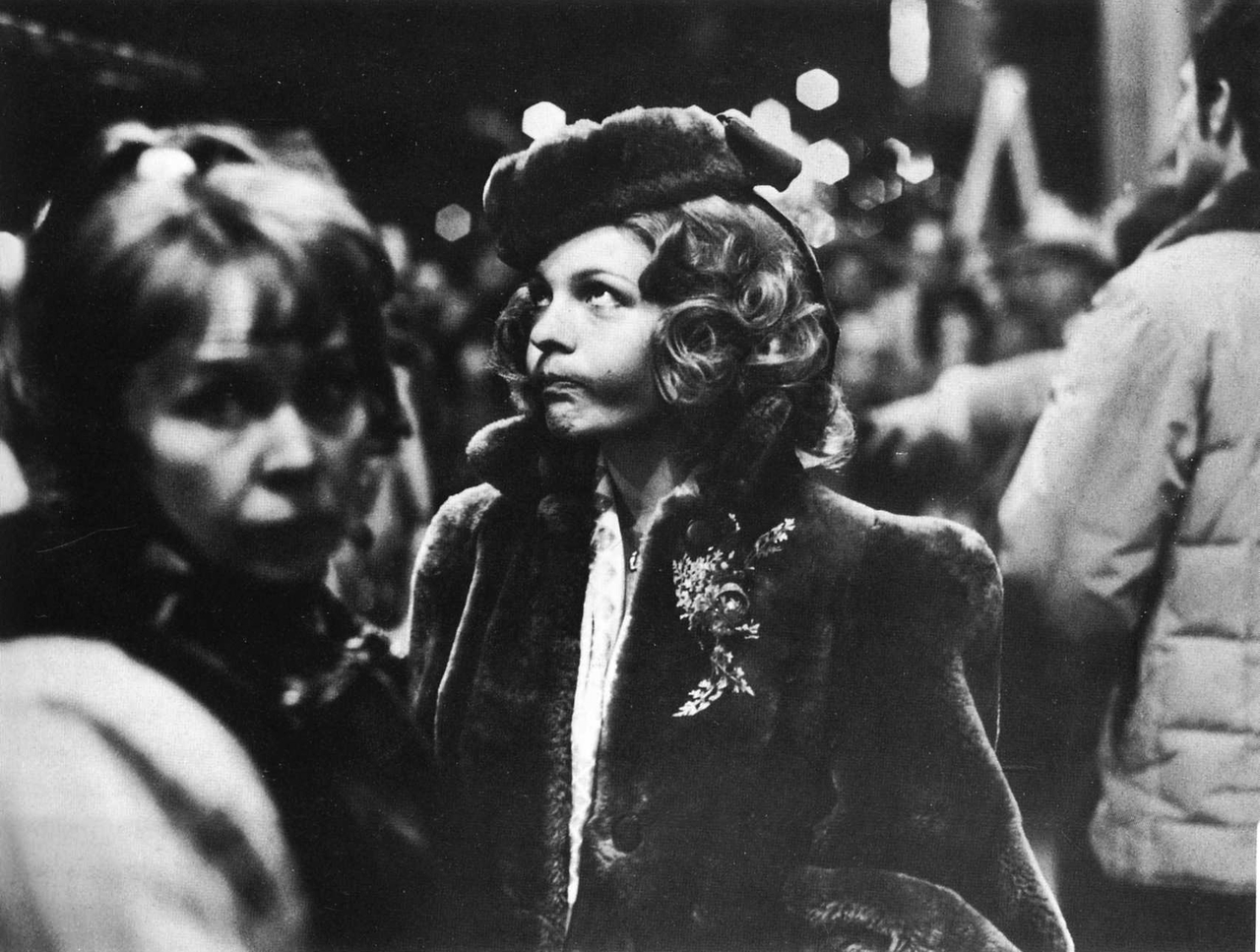
Diane Keaton, who turns 70 today, makes a face on the set of The Godfather in 1971:

Filmmaker in Focus:

This video essay supercut by Marc Anthony Figueras focuses on Stanley Kubrick‘s use of color in his films (via Cinematic Montage Creators):

[embedded content]

Cosplay of the Day:

This is my idea of Thor cosplay, via Adventures in Babysitting cosplay (via Fashionably Geek):

Movie Science of the Day:

For Nerdist, Kyle Hill explores the science of the rocket car from Men in Black:

[embedded content]

Supercut of the Day:

It’s a bit early for Valentine’s Day, but just bookmark this movie romance montage to share with your love next month (via Geek Tyrant):

[embedded content]

Classic Trailer of the Day:

In honor of today being Hayao Miyazaki‘s 75th birthday, watch the original 1988, pre-Disney release trailer for his best movie, My Neighbor Totoro:

[embedded content]

Send tips or follow us via Twitter:

and

This entry passed through the Full-Text RSS service – if this is your content and you’re reading it on someone else’s site, please read the FAQ at fivefilters.org/content-only/faq.php#publishers.


No Image

Troubles Are Up In The Middle East, But Oil Prices Are Down. Huh?

Prices, as seen at a gas station in Woodbridge, Va., on Tuesday, are 21 cents a gallon cheaper than this time last year. The drop violates the historic rule that tension such as that currently between key producers Saudi Arabia and Iran causes the cost of a barrel of oil to rise.

Prices, as seen at a gas station in Woodbridge, Va., on Tuesday, are 21 cents a gallon cheaper than this time last year. The drop violates the historic rule that tension such as that currently between key producers Saudi Arabia and Iran causes the cost of a barrel of oil to rise. Saul Loeb/AFP/Getty Images hide caption

toggle caption Saul Loeb/AFP/Getty Images

Oh, the irony.

Historically, when political tensions increased in the Middle East, the price of oil rose too. Buyers of oil worried that conflicts could interrupt drilling or interfere with oil-tanker access to waterways. In theory, when risks rise, so do prices.

But in recent days, even as tensions have been growing between two key oil producing nations — Iran and Saudi Arabia — oil prices have been falling. They slipped below $36 a barrel on Tuesday.

Why?

Experts explain it this way: The two countries are both in OPEC but now are on such bad terms that they’d be unlikely to agree on anything — including a plan to reduce drilling. OPEC members are supposed to reach a consensus before changing production policies, and right now, the OPEC policy is to maintain existing high levels of pumping.

“If they can’t agree on an output level and some way to control prices, then everybody will just keep all-out pumping and try to raise as much money as possible for their countries,” said Daniel Katzenberg, senior energy analyst at Robert W. Baird & Co.

And there’s another big reason for the low global oil prices: America’s abundant supplies.

On Tuesday, American Petroleum Institute President Jack Gerard, after delivering his annual State of American Energy address, told reporters that low oil prices reflect the new U.S. role in energy markets.

These days, even when Middle Eastern supplies face possible disruptions, oil buyers don’t panic; they know U.S. producers can fill any supply gaps, he said.

“The geopolitics of energy has changed significantly over the last decade,” Gerard said. “The United States is now the world’s No. 1 producer of oil and natural gas.”

Those U.S. oil supplies are “taking out a lot of the risk that we have seen historically” in OPEC-dominated energy markets, he said.

“Our production in the United States today is around 9 million barrels a day; that’s almost doubled over the last five or six years,” Gerard said. “So the global market today is very different.”

All of that is good for U.S. consumers, he said, noting that the U.S. Energy Information Administration says the average U.S. household saved nearly $700 on cheaper gasoline last year, compared with 2014.

And 2016 may be even better for household budgets. The nationwide average price for a gallon of regular is now $1.99, according to AAA, the auto club. That’s 21 cents cheaper than a year ago.

NPR correspondent John Ydstie contributed to this report.

This entry passed through the Full-Text RSS service – if this is your content and you’re reading it on someone else’s site, please read the FAQ at fivefilters.org/content-only/faq.php#publishers.


No Image

Foundation In Austin, Texas, Subsidizes Mental Health Care For Musicians

5:52

Download

Musicians who are dealing with mental health and substance abuse problems in Austin, Texas, can get help from an organization there that provides reduced cost care —basically whatever the musicians can afford to pay— from cooperating doctors and therapists.

Transcript

AUDIE CORNISH, HOST:

A musician’s life can be difficult. Perhaps no place knows this better than the city of Austin, Texas. It’s where thousands of musicians have launched their careers. And for the last 20 years, the city’s community of artists has subsidized mental health care for Austin musicians and their families through something called the SIMS Foundation. It’s named for one of Austin’s young musicians who took his own life. From Austin, NPR’s Wade Goodwyn has more.

(SOUNDBITE OF MUSIC)

WADE GOODWYN, BYLINE: It’s a sold-out show at the KLRU studio. Some of Austin’s finest musicians are here, on the same soundstage where “Austin City Limits” was filmed for decades. It’s a labor of love. They’re donating their time to raise money for an organization that attends to their psychological well-being.

(SOUNDBITE OF SONG, “CROSSFIRE”)

SONYA MOORE: (Singing) Day by day, night after night, blinded by the neon lights.

GOODWYN: Sonya Moore can turn a Stevie Ray Vaughan song into a runaway train of Memphis blues.

(SOUNDBITE OF SONG, “CROSSFIRE”)

MOORE: (Singing) Oh, I got stranded, yeah, caught in the crossfire.

GOODWYN: This astonishing assembly of talent has the power to amaze even veteran Austin musicians like Jimmie Dale Gilmore.

JIMMIE DALE GILMORE: Great music – some of these guys I haven’t heard before – amazing.

(APPLAUSE)

GOODWYN: A country boy from Lubbock, Jimmie Dale Gilmore arrived in Austin back in the early 1970s with his Roy Orbison-like voice and not much else. As tough as it was back then, Gilmore says it’s even harder to make it as a musician today.

GILMORE: Especially because Austin has become more difficult place to live in for musicians ’cause it’s so expensive.

GOODWYN: A 2013 survey revealed that the median income for an Austin musician is around $10,000 a year. That’s where the SIMS foundation comes in. A team of 70 musician-friendly therapists, psychologists and psychiatrists provide mental health services to 600 Austin musicians and their families every year. The providers have lowered their fees to just $50 a session. The musicians pay what they can and SIMS pays the rest. Gilbert Ramos is a SIMS therapist.

GILBERT RAMOS: When I see folks who are starting off in the business, they often come in because there’s some depression, there’s some anxiety, usually related to music life, not getting what it is that they want to get out of the music career.

GOODWYN: Ramos says substance abuse issues are ubiquitous. Bands play in bars. Musicians who sell a lot of drinks get invited back.

RAMOS: Musicians make money the more drinks they sell, and often in order to sell their drinks they have to have something in their hand to drink. It encourages the crowd to do so. That’s one of the little tricks out there.

GOODWYN: Then there are the fans who show their appreciation by offering a hit of this or a line of that. If the crushing poverty and anonymity doesn’t murder a musician’s morale and self-esteem when they’re starting out, perhaps fame and fortune will do the trick.

Austin singer-songwriter Nakia Reynoso, who goes by his first name, had a star run competing on the TV show “The Voice.” He’s ridden this roller coaster for two decades. His song at the SIMS benefit tells his story.

(SOUNDBITE OF NAKIA REYNOSO SONG)

NAKIA REYNOSO: (Singing) I shifted from left to right and back again, searching for my song. But there’s a hole in my heart, got no shape at all. I stuffed with lust and drugs or anything but what really belongs.

GOODWYN: Nakia began seeing a SIMS counselor in 2002 after he’d attempted suicide.

REYNOSO: You know, SIMS saved my life and SIMS keeps me alive.

GOODWYN: Nakia says the therapy he gets every week has kept him from becoming depressed when things go badly. And of course go badly they sometimes do. Nakia says walking out on stage means revealing your most vulnerable self to a judgmental world.

REYNOSO: Here’s my soul. Do you love me? Do you accept to me? Do you want me? I think most of us find ourselves in that position where we’re there to give, but, you know, we want it back.

GOODWYN: A musician’s insecurity is often the touchstone, the driving force of his or her ambition. And the industry feeds off it. Jimmie Dale Gilmore says SIMS speaks to a different set of values – that the making of music is sacred and the makers themselves divine.

GILMORE: The musicians are taking care of each other. It’s really a beautiful thing.

(SOUNDBITE OF MUSIC)

GOODWYN: Wade Goodwyn, NPR News, Austin.

(SOUNDBITE OF SONG, “ANOTHER COLORADO”)

GILMORE: (Singing) Down by the banks of the Colorado, my true love and I one night did lie and we laughed and played and made fun of the entire world spinning ’round the sun down by the banks of the Colorado. Down by the banks of the Colorado, night watchmen stood guard ’round the wagon yard…

Copyright © 2016 NPR. All rights reserved. Visit our website terms of use and permissions pages at www.npr.org for further information.

NPR transcripts are created on a rush deadline by a contractor for NPR, and accuracy and availability may vary. This text may not be in its final form and may be updated or revised in the future. Please be aware that the authoritative record of NPR’s programming is the audio.

This entry passed through the Full-Text RSS service – if this is your content and you’re reading it on someone else’s site, please read the FAQ at fivefilters.org/content-only/faq.php#publishers.


No Image

Today in Movie Culture: Make Your Own BB-8 Baked Goods, Channing Tatum Does 'Frozen' and More

Here are a bunch of little bites to satisfy your hunger for movie culture:

Fan Build of the Day:

Watch a guy make his own DIY replica of the Stormtrooper TR-8R “stun baton” from Star Wars: The Force Awakens (via Geek Tyrant):

[embedded content]

Fan-Made Baked Goods of the Day:

Now watch and learn how to make your very own Star Wars: The Force Awakens-inspired BB-8 cake pops (via That’s Nerdalicious):

[embedded content]

Cosplay of the Day:

Well, it’s not so much cosplay as beardplay, but this guy’s Star Wars-inspired facial hair is pretty cool (via Fashionably Geek):

Fan Edit of the Day:

In one of the craziest fan-edit projects ever, The Wizard of Oz has been recut so every word of dialogue is now in alphabetical order (via Geek Tyrant):

[embedded content]

Shortened Movie of the Day:

Here’s another, more sane fan edit showing what Inside Out looks like with all of the “inside” stuff deleted. It’s just a 15-minute animated short about a girl growing up, but still pretty touching (via Design Taxi):

[embedded content]

Classic Cartoon of the Day:

Today is the 80th anniversary of the classic Walt Disney animated short Mickey’s Polo Team. See cartoon versions of 1930s Hollywood stars, including Clark Gable and Harpo Marx, join Mickey, Goofy and Donald in the full short below.

[embedded content]

Celebrity Lip Sync Performance of the Day:

On this Thursday’s episode of Lip Synch Battle, Channing Tatum acts out your child’s favorite song from 2013. Watch a preview of him lip syncing to “Let It Go” from Frozen below.

[embedded content]

Movie Science of the Day:

Speaking of potatoes, The Film Theorists tackle the scientific plausibility of using your own poop for outer space farming a la Matt Damon‘s garden in The Martian:

[embedded content]

Supercut of the Day:

Get your new year off right with this epic supercut of people landing, mostly falling, onto vehicles in movies:

[embedded content]

Classic Trailer of the Day:

The latest film by Todd Haynes, Carol, is one of the most acclaimed movies of the year. His feature debut, Poison, turns 25 this year, having premiered at the Sundance Film Festival, where it received the Grand Jury Prize, in January 1991. Watch the original trailer for the film below.

[embedded content]

Send tips or follow us via Twitter:

and

This entry passed through the Full-Text RSS service – if this is your content and you’re reading it on someone else’s site, please read the FAQ at fivefilters.org/content-only/faq.php#publishers.


No Image

Black Monday: A Look At Coach, GM Firings In The NFL

4:29

Download

NPR’s Audie Cornish speaks with Emily Kaplan, who writes about the NFL for Sports Illustrated, about the league’s 2015 season and Black Monday firings.

Transcript

AUDIE CORNISH, HOST:

It’s Black Monday, the day after the end of the regular NFL season when teams that had disappointing seasons start firing coaches. We’re going to talk about this and more with Emily Kaplan. She covers the NFL for Sports Illustrated, where she’s a staff writer. Hey there, Emily

EMILY KAPLAN: Hey. How are you?

CORNISH: Good. So let’s start with what’s being describe as the end of an era. New York Giants’ coach Tom Coughlin stepped down. And this is a guy who’d been with the team for 12 years, two Super Bowl titles under his belt, right? What happened?

KAPLAN: Yeah. Well, Tom Coughlin – yeah, it was a – kind of a long time coming, or everyone kind of knew it. He’s 69 years old, and the bottom line is that six out of the last seven years, the Giants haven’t been in the playoffs. And they kind of need to cut the cord, so it was a mutual parting.

CORNISH: Meanwhile, a team sort of jumping the gun on Black Monday – the Philadelphia Eagles, right? They’re coaching change came early last week. Tell us what happened.

KAPLAN: Sure. They fired Chip Kelly, who, when he was hired three years ago, was the hot candidate. Everyone wanted him. He came from a super successful program at the University of Oregon and was seen as this offensive wizard. So them cutting ties with him kind of just admits that maybe they didn’t have the patients to see if he could make it work.

CORNISH: Now, how much of a surprise is any of this, right? I mean, there are teams like the Cleveland Browns where there’s, like, perennial change, and there’s always speculation.

KAPLAN: Yeah. Well, you mentioned the Browns, and they’re a model of inconsistency under owner Jimmy Haslam over the last three years. They’ve fired two presidents-slash-CEOs, three GMs and three head coaches. Then, on the other end of the spectrum, you have the Giants, who had a coach for 12 years and also a longstanding GM. So I think kind of what Black Monday always reminds us, is that, there really – it’s so rare to have a happy ending in the NFL. It’s just such a frail, you know, line of work, and you know, turnover’s really high.

CORNISH: In order for all this to work, there needs to be a pipeline of editors, right? There needs to be applicants. In this gets to the idea of diversity in coaching, which is something the NFL’s been talking about for a few years now. Give us the update. How well is the league doing on that note?

KAPLAN: Yeah. A couple years ago, they instituted something called the Rooney Rule, which really is affirmative action. It means that every NFL team with a head coaching vacancy must interview at least one minority candidate. Now, you’ll never hear teams go out and, you know, kind of announce that, this is our Rooney Rule applicant, but sometimes, it’s a little bit obvious. I think that we are seeing a little bit more diversity than we definitely have, especially before this rule was instituted. Earlier this year, you know, for the entire season, six out of the 32 NFL head coaches were minorities, either black or Hispanic. And I think that, you know, if you look at the reflection of the league, I think that that number should be probably higher.

CORNISH: Just to take a step back for a moment, I mean, for sports fans, people treat Black Monday kind of, you know, like an event, like the draft, and it can be funny, play for laughs. But for coaches, can this be traumatic? I mean, have you ever heard of coaches talking about what this experience is like going through this day?

KAPLAN: I think it’s absolutely traumatic because the think about NFL coaches is that, you know, it’s their life on the line. It’s their career. But they’re also responsible for a lot of people. When you hear about coaching trees, that means that there’s a head coach, and they have five or six assistants under them who travel with them. So you know, when they’re getting fired, it’s not only their job and their family that has to uproot. They’re responsible for five or six other men. And so if you think of how many lives are affected, that’s a lot. So you know, I think this is a really high time of anxiety and a really stressful time for so many people.

CORNISH: Now, this is also the day that football fans basically digest the playoff matchups, right? They’re either feeling really happy or probably bummed out by this point. What have been the highlights? What are the highlights for you, looking forward?

KAPLAN: Looking forward, I think that the NFC and AFC paint two really diverse pictures. The NFC has some of the most, you know, dominant teams all season. That’s the Carolina Panthers, who almost went undefeated, and the Arizona Cardinals, who just have an absolutely fantastic offense and defense. Meanwhile, in the AFC, you have some teams that came in hot – Pittsburgh Steelers, the Kansas City Chiefs. Both come in on really ridiculous hot streaks. So there’s going to be kind of a clash of a titans going forward.

CORNISH: That’s Emily Kaplan. She covers the NFL for Sports Illustrated. Emily, thanks so much.

KAPLAN: Thanks for having me.

Copyright © 2016 NPR. All rights reserved. Visit our website terms of use and permissions pages at www.npr.org for further information.

NPR transcripts are created on a rush deadline by a contractor for NPR, and accuracy and availability may vary. This text may not be in its final form and may be updated or revised in the future. Please be aware that the authoritative record of NPR’s programming is the audio.
This entry passed through the Full-Text RSS service – if this is your content and you’re reading it on someone else’s site, please read the FAQ at fivefilters.org/content-only/faq.php#publishers.


No Image

Justice Department Files Lawsuit Against Volkswagen Over Emissions Software

1:40

Download

On Monday, the Department of Justice, acting on behalf of the Environmental Protection Agency, filed a civil complaint in federal court in Detroit against Volkswagen. The DOJ alleges that nearly 600,000 diesel engine vehicles had illegal defeat devices installed that impaired emission control systems and caused emissions to exceed EPA’s standards, resulting in harmful air pollution.

Transcript

KELLY MCEVERS, HOST:

Volkswagen would probably like to start the new year with a clean slate, but that is not going to happen. Today, the Justice Department filed a civil lawsuit against VW for allegedly violating the U.S. Clean Air Act. The company faces billions in penalties. NPR’s Sonari Glinton reports.

SONARI GLINTON, BYLINE: The Volkswagen scandal where the company admitted to installing software that cheated during emissions tests? That part of the story may be unprecedented, but it’s a part of a larger industry narrative. General Motors had its ignition scandal, Toyota, unintended acceleration and Takatas, faulty airbags. Carl Tobias with the University of Richmond School of Law says the Justice Department has become expert at dealing with car company misdeeds.

CARL TOBIAS: This is meant to send a message to the company and other companies that the U.S. government takes very seriously these defeat devices, and I think is meant to move VW to some resolution.

GLINTON: Volkswagen says it will continue to cooperate with the various criminal and civil investigations. Tobias says speed is of essence for VW.

TOBIAS: The longer it lingers, the worse it is because it drags the reputation of the company down.

GLINTON: Meanwhile, Steve Byars teaches ethics and corporate communications at the USC Marshall School of Business.

STEVE BYARS: The ethical hit to the company’s reputation will outstrip even billions of dollars in fines or liabilities that might be assessed against the company over the years to come.

GLINTON: And if recent past is prologue, the monetary hit will likely be in the billions. Sonari Glinton, NPR News.

Copyright © 2016 NPR. All rights reserved. Visit our website terms of use and permissions pages at www.npr.org for further information.

NPR transcripts are created on a rush deadline by a contractor for NPR, and accuracy and availability may vary. This text may not be in its final form and may be updated or revised in the future. Please be aware that the authoritative record of NPR’s programming is the audio.

This entry passed through the Full-Text RSS service – if this is your content and you’re reading it on someone else’s site, please read the FAQ at fivefilters.org/content-only/faq.php#publishers.


No Image

A Palliative Care Doctor Weighs California's New Aid-In-Dying Law

Van Zyl and Garcia Flores hold hands as van Zyl promises to do everything she can to ease his pain and control symptoms.
4:29

Download

Van Zyl and Garcia Flores hold hands as van Zyl promises to do everything she can to ease his pain and control symptoms. Heidi de Marco/Kaiser Health New/Heidi de Marco/Kaiser Health News hide caption

toggle caption Heidi de Marco/Kaiser Health New/Heidi de Marco/Kaiser Health News

When she first heard that California’s new aid in-dying law was signed, Dr. Carin van Zyl was relieved to hear that assisted death would be an option for her if she ever needed it herself. But as a palliative care doctor at the University Of Southern California Keck School Of Medicine, she’s worried the law might lead people to consider lethal medications over other options that may better accommodate their wishes.

“Patients feel as though their choices are between untreated suffering or physician-assisted suicide,” she told NPR’s Renee Montagne. “Palliative medicine, when it’s applied skillfully and at the right time, often relieves most of the suffering that prompts people to ask for [death] in the first place,” she says.

Van Zyl is head of palliative care medicine at Los Angeles County-USC Medical Center.

Van Zyl is head of palliative care medicine at Los Angeles County-USC Medical Center. Heidi de Marco/Kaiser Health New/Heidi de Marco/Kaiser Health News hide caption

toggle caption Heidi de Marco/Kaiser Health New/Heidi de Marco/Kaiser Health News

But palliative care, which is focused on managing symptoms and relieving pain, isn’t available to everyone, van Zyl says. There are smaller hospitals that don’t have palliative medicine teams, and it may be hard to get treatment even in urban areas. Van Zyl thinks more work should be done to make palliative medicine more accessible. “I worry that we make [lethal medication] available before we put the necessary effort forward,” she says.

Not everyone can be helped with palliative care, van Zyl says, and some people truly would have benefited from the aid-in-dying law had it been passed earlier. “I think about those patients all the time. I do recall a patient who understood that his death would be sudden and unpredictable and likely quite painful.”

He had a cancer that had spread and become intractable. A tumor developed in his neck that was swelling into both an artery and his windpipe; eventually it would connect the two. “This gentleman with very little warning might have his airways flooded with blood, and he would drown,” van Zyl says. “He asked if it would be possible to shorten his life before that.”

The care team was able to administer pain medication that would ease his death when it happened, which worked, van Zyl says, but he wasn’t able to die in the way he wanted — at home, surrounded by his family. Aid in dying would have offered more control over his situation, van Zyl says.

Still, the reasons why people choose aid in dying can be complicated. “You’ll notice in the Oregon data, many people chose this option not because of physical suffering. It was the loss of dignity, control and independence,” she says. “I would imagine writing a prescription for somebody for whom palliative sedation is not an option or would not relieve intolerable physical distress. I struggle with emotional and existential requests.” Times like that, van Zyl says she would rather administer palliative care.

Dr. Carin van Zyl talks to patient Jose Garcia Flores about his treatment options for his advanced stage colon cancer in October.

Dr. Carin van Zyl talks to patient Jose Garcia Flores about his treatment options for his advanced stage colon cancer in October. Heidi de Marco/Kaiser Health New/Heidi de Marco/Kaiser Health News hide caption

toggle caption Heidi de Marco/Kaiser Health New/Heidi de Marco/Kaiser Health News

Choosing the best course of action is a conversation that van Zyl says she’ll continue to have with her patients. “Palliative medicine discussions are about learning the story of the person, helping this patient navigate choices. If [death] is an option that gets them closest to the things they hold dearest, then we will explore those things honestly.”

This entry passed through the Full-Text RSS service – if this is your content and you’re reading it on someone else’s site, please read the FAQ at fivefilters.org/content-only/faq.php#publishers.