The Planet Money team takes a look at how ambulances use principles of economics to get to patients fast.
Transcript
ARI SHAPIRO, HOST:
When you need an ambulance you need it now, but having enough ambulances at the ready can cost a lot of money. As Audrey Quinn of our Planet Money team reports, a former high school English teacher seems to have solved this ambulance problem with economics.
AUDREY QUINN, BYLINE: It was a busy intersection in Jersey City, rush hour, pouring rain. The light changes, and a pickup truck turns suddenly, according to the police report. It sideswipes a sedan in the next lane. The driver is 61. She sits motionless. A bystander calls 911. And just three minutes and 47 seconds later, first responder Sabrine Elcomey (ph) was at the car window.
SABRINE ELCOMEY: Hello, are you OK? It’s EMS, we’re here.
QUINN: In a lot of cases, response time is the difference between life and death. And three minutes and 47 seconds is fast. Elcomey’s an EMT with Jersey City Medical Center. Ten years ago, their average response time was twice as long. Twice as many patients died from cardiac arrest.
At the scene, Elcomey checks the woman – no blood, but she’s shaken up, so Elcomey drives her to the hospital just to be safe. Elcomey’s swift response came not because she drove fast but because her ambulance had been waiting just a few blocks away, right where her dispatchers told her to be.
UNIDENTIFIED MAN: You fell – Wells Fargo – 40 Journal Square – OK. All right. We’re on our way. Seven, head over to Journal Square at the west park (unintelligible).
QUINN: They sit in a dark room on the upper floor of the hospital. A screen in front of them looks kind of like a satellite weather map over Jersey City. The darker parts of what seem like a cloud are where history says the next call is most likely to happen. That’s where ambulances should wait. Often, they choose a coffee shop. Lorraine Mallis has worked in this dispatch room since the ’90s. She has a name for the system.
LORRAINE MALLIS: I call this Hal. I don’t know if you ever saw that sci-fi movie…
QUINN: “2001: A Space Odyssey.”
MALLIS: Yeah, that’s it. That’s it. That’s how smart they – he is very smart. They should be proud of this system. It’s very good.
QUINN: They would be Jack Stout. He started thinking about ambulance response in the early ’80s. Back then, he says it was a total mess.
JACK STOUT: It was very, very difficult to hook up the person with the nearest ambulance to the person that needed it.
QUINN: Ambulances sat at station houses in one location, and when calls came in, they drove real fast.
STOUT: That’s right. That was the best tool they had.
QUINN: He’d gotten into ambulances through a winding career path. English teacher, government consultant and then the University of Oklahoma offered him two jobs at once – Emergency medical systems researcher and part-time professor of economics.
STOUT: Then that kind of tipped me off really looking here about supply and demand, which is the foundation of microeconomics.
QUINN: Staffed ambulances were the supply and 911 calls were the demand. So he started plotting out on a blackboard the pattern of that demand.
STOUT: You could look up there and you could say, oh, this is Tuesday 4 p.m. to 8 p.m.. Here’s where the calls tend to come from, and this is how many of them there tend to be.
QUINN: Stout said take the ambulances out of the station houses, put them near where the calls are going to come from, have fewer ambulances during quiet hours, more during busy. Stout’s style of ambulance response systems was a radical idea at the time. He spent decades spreading it around the country.
STOUT: And we did about half of the United States.
QUINN: How’d you get it around so fast?
STOUT: Well, it wasn’t fast. I’m old (laughter).
QUINN: Most of the places where Stout first brought his system saw immediate improvement in their ambulance response. But Stouts says a lot of departments liked the way they were doing things, all waiting together at the station. It was only in the last few years with trust in data on the rise that Stout’s method has become the norm. Audrey Quinn, NPR News.
NPR transcripts are created on a rush deadline by a contractor for NPR, and accuracy and availability may vary. This text may not be in its final form and may be updated or revised in the future. Please be aware that the authoritative record of NPR’s programming is the audio.
This entry passed through the Full-Text RSS service – if this is your content and you’re reading it on someone else’s site, please read the FAQ at fivefilters.org/content-only/faq.php#publishers.
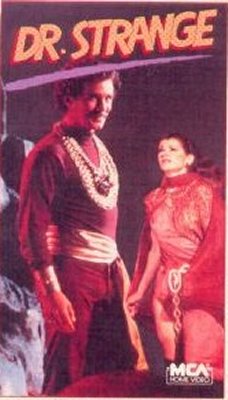
“There is a barrier that separates the known from the unknown. Beyond this threshold lies a battleground, where forces of good and evil are in eternal conflict. The fate of mankind hangs in the balance and awaits the outcome. In every age and time, some of us are called upon to join the battle…Dr. Strange.”
Thus begins the first Dr. Strange live-action movie, a noble-but-forgotten attempt to get the Sorcerer Supreme out of the pages of Marvel Comics and onto TV screens across the U.S. We’re getting a do-over in 2016, here all these years later, as part of the fabric of the Marvel Cinematic Universe and studded with an all-star cast (including Benedict Cumberbatch as the doctor). Meanwhile, the original version has grown increasingly difficult to see for yourself. The last official VHS release was in 1995, and the film has fallen out of rotation on cable.
Even those who grew up in the heydey of CBS’s Marvel TV productions like The Incredible Hulk and the less popular Amazing Spider-Man have trouble recalling the details of Dr. Strange. One oft-repeated anecdote is that it was trounced in the ratings by Roots (Roots aired in Jaunary 1977; Dr. Strange in September 1978). Still others confuse 1992’s Doctor Mordrid (starring Jeffrey Combs as a Stephen Strange knock-off) for the original Dr. Strange film (Doctor Mordrid was reworked from a Dr. Strange film treatment by B-movie mavens Charles and Albert Band).
Looking at the film now, it’s curious how many elements of Dr. Strange come right over from the comics, especially looking at his live-action peers – Spider-Man didn’t even get to talk on his show and Hulk’s fights were mostly with brick walls and car bumpers. Here, we get Strange as the cocky surgeon put on the path to becoming Sorcerer Supreme after mystic battles on the astral plane. Wong, Clea, The Ancient One, The Nameless One all make appearances, and the demons Asmodeus and Balzeroth are brought to life on a TV budget. Before you get too excited, these superheroic bits are just a fraction of a much more dry movie experience.
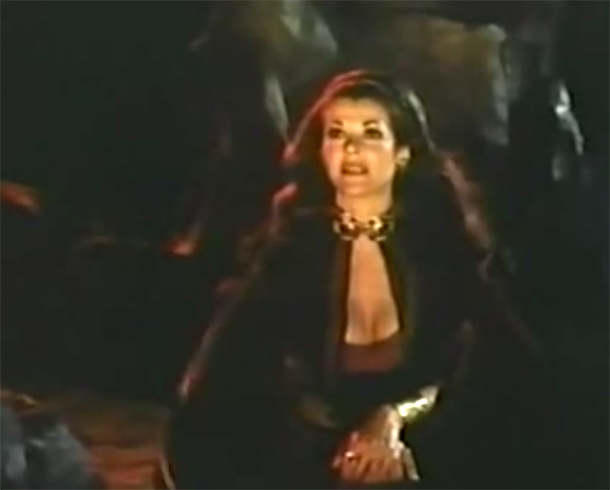
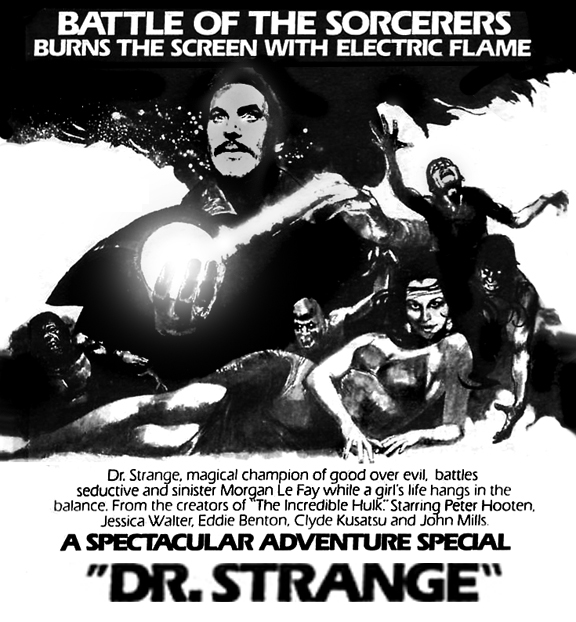
The film opens with Morgan LeFay (Arrested Development‘s Jessica Walter) being charged by the Nameless One to defeat the current Sorcerer Supreme (John Mills as Thomas Lindmer) in just three days. LeFay possesses a young woman (Clea, played by 80’s TV and movie staple Anne-Marie Martin) and manipulates her into shoving Lindmer off an overpass.
Shockingly, Lindmer survives. Clea returns home in a fog, reliving the attempted murder by in her dreams. LeFay tracks down Clea to her home, causing a dazed Clea to run out into the street where she’s almost run down by a cab. The cabbie takes her to the hospital where Dr. Stephen Strange (Peter Hooten) works. LeFay follows and spots Strange’s ring, a mystic artifact that’s a total secret to Stephen Strange.
Strange argues with his hospital supervisors over the best treatment for their new Jane Doe, who is suffering from terrible nightmares. Strange wants to keep her awake, but the hospital, against Strange’s advice, induces sleep with heavy sedatives. At this point, Lindmer uses sorcery to get into the hospital and into a one-on-one meeting with Strange, where he tells him that the woman’s name is Clea Lake and that her soul is currently being drawn into the high astral plane. The film isn’t big on details like “how does he know this?” but here we are anyway.
Lindmer intimates that Strange could help Clea if he was truly willing, and Strange, though a skeptic, feels the magical bond between Lindmer and himself. After an attempt on his life by Morgan LeFay (a bus almost runs him over out of nowhere), he seeks out Lindmer. Lindmer, it seems, knew Strange’s father and the ring Strange wears was passed on through his family as a mystical totem. Strange will need to rely on the artifact and more if he’s to enter the astral plane and bring Clea back.
In the astral plane, which looks a lot like classic Dr. Who opening credits, Dr. Strange fights Belzeroth (“In the name of Ryal, Scourge of Demons, I command you – be gone!”) and retrieves Clea pretty handily. Morgan blames her failure on lust, “I am still a woman and the man attracted me. I would feel the warmth of a man’s arms again after all these years alone.” The Nameless One ain’t down with that. He tells Morgan she has another chance to try again or he’ll make sure she’s old and barren until the end of time.
Strange and Clea hit it off pretty well back on the Earthly plane, and Strange turns down the opportunity to study under Lindmer. As a doctor, he feels he can not allow himself to believe the unbelievable things he’s seen. On his way out, Strange lets a black cat into Lindmer’s house, and you can probably see where that’s going. The cat transforms into Morgan, who conjures Asmodeus to take Lindmer to the astral plane. Wong (Clyde Kusatsu) gets a mystic bolt fight scene with LeFay, but she proves more powerful.
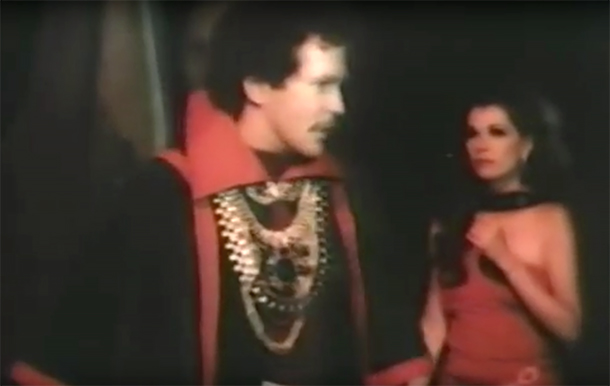
LeFay, not content to leave well enough alone, appears at Clea’s apartment and transports her and Dr. Strange back to the astral plane (bad plan, really). She tries to seduce him into taking off the ring by giving him a costume very close to the one we know from the comics and then getting frisky in a big astral bed. She has the upper hand until she decides to show Strange Lindmer’s captured body. Strange snaps out of it and uses his ring to channel the mystic energy to defeat LeFay and return his friends to Earth.
The Nameless One keeps good on his promise to turn LeFay into an old crone and Dr. Strange finally decides to study the mystic arts. After a brief communion with a glowing light known as The Ancient One, Strange gains an all-new (and not as good) costume and the remaining mystic energy of Lindmer. Wong likens Strange to a child with a loaded gun and makes himself available to assist Strange with his tutelage on the path to becoming Sorcerer Supreme.
I don’t know how you go back to a day job after all that, but Strange does. Doctor’s gotta doctor. The film has a few baffling codas stacked on top of each other, including the news interviewing a restored Morgan LeFay, who’s promoting the “LeFay Method” which “unlocks the hidden potential within you.” Clea’s response? “This is really dumb.” Clea chalks everything – the attempted murder, the hospital stay, the journey to the astral plane on demonic horseback – up to studying too hard. Strange doesn’t correct her. Instead, he walks past a street magician where he turns the magician’s intended trick into a dove. Dumb, indeed.
As a film, it’s barely diverting. The astral plane bits are hokey for the most part, though punctuated with little moments of cool, like The Nameless One or Asmodeus. Large swaths of the story are spent in the hospital with Strange being treated like he’s barely competent by the other hospital staff. There are tidbits of characterization (Strange is horny in that oh-so-70’s way), but the production is pretty bone dry for something that should be memorably gonzo.
You can see where they might’ve gone, week after week, with Morgan LeFay showing up to deceive some unsuspecting someone, and Dr. Strange trying to learn new tricks to keep up with her antics. Is that a compelling television show? It’s barely a compelling pilot. On the plus side, Walter is the only actor on screen who seems to have the right approach to the material here. She’s about an inch away from camp villainy, and Hooten looks like a stiff in comparison.
It’s a curious pilot, from a moment in time when Marvel didn’t turn everything it touched into gold, but ultimately Dr. Strange is for completists only. The plot holes, sleepy performances, and cheesy effects are just too big to forgive. Actually, on second thought, we forgive the cheesy effects. We don’t want to see them executed like this in the new Doctor Strange film, but they kept us awake in what was otherwise a snoozer of a Marvel movie.
Doctor Strange, a Scott Derrickson film starring Benedict Cumberbatch and Rachel McAdams, opens November 4. There are 297 days until release.
This entry passed through the Full-Text RSS service – if this is your content and you’re reading it on someone else’s site, please read the FAQ at fivefilters.org/content-only/faq.php#publishers.
NPR’s Weekend in Washington session at the Willard InterContinental Hotel in Washington, D.C., on Oct. 31, 2015. Allison Shelley for NPRhide caption
toggle captionAllison Shelley for NPR
We don’t always act like we’re supposed to. We don’t save enough for retirement. We order dessert when we’re supposed to be dieting. We use the tickets we bought to a concert even though we’re sick. In other words: We misbehave.
That’s the title of Richard Thaler’s new book: Misbehaving: The Making of Behavioral Economics. If you’ve read Thaler’s previous book, Nudge, you know he’s is an economist who studies why people predictably don’t act the way traditional economists say they will.
Shankar Vedantam sat down with Thaler a few months ago for an event at the Willard InterContinental Hotel in Washington, D.C. This episode, we bring you the best parts from that conversation: They talk about why it’s so hard to find a cab on a rainy day, how marshmallows can predict the future and why where we get our money influences how we spend it.
The Hidden Brain Podcast is hosted by Shankar Vedantam and produced by Kara McGuirk-Alison and Maggie Penman. Max Nesterak is our News Assistant. Follow us on Twitter@hiddenbrain, @karamcguirk,@maggiepenman, and@maxnesteraklisten for Hidden Brain stories every week on your local public radio station.
This entry passed through the Full-Text RSS service – if this is your content and you’re reading it on someone else’s site, please read the FAQ at fivefilters.org/content-only/faq.php#publishers.
Lionel Messi of Argentina and Barcelona FC waves after winning the FIFA Ballon d’Or in Zurich, Switzerland. Philipp Schmidli/Getty Imageshide caption
toggle captionPhilipp Schmidli/Getty Images
For the fifth time in seven years, Barcelona and Argentine international striker Lionel Messi has won the FIFA Ballon D’Or for best soccer player. Messi received more votes than Real Madrid and Portuguese international Cristiano Ronaldo, and Barcelona teammate and Brazilian international Neymar to set the record for most Ballon D’Or wins.
Messi was dominant this year, scoring 48 goals for club and country. His 43 goals for Barcelona made him the second-highest scorer in La Liga and he also notched 21 assists, helping the club win three major titles during the 2014-2015 season — La Liga, the Copa del Rey and the Champions League.
“It is a very special moment for me to be back here on this stage, winning again another Ballon d’Or after being there in the audience watching Cristiano win,” Messi said.
Between them, Messi and Ronaldo have won the Ballon D’Or for the past eight years, with Ronaldo winning the award for 2008, Messi winning from 2009 – 2012, and Ronaldo winning again in 2013 and 2014.
Journalists, national team coaches and team captains vote for the winners. Messi received 41.33 percent of the votes, Ronaldo finished with 27.76 percent and Neymar drew 7.86 percent, according to the BBC.
Messi’s highlight reel from the past season is nothing short of magical, but one goal stands out from the others. In the second half of the first leg of Barcelona’s Champions League semifinal against Bayern Munich in May 2015, Messi seamlessly dribbled around a defender and chipped the ball over the keeper. Watch the goal (complete with commentator Ray Hudson’s hilarious reaction) here.
[embedded content]
YouTube
On the women’s side, United States and Houston Dash midfielder Carli Lloyd, who scored a hat-trick in the World Cup final, won the award.
Lloyd beat out former Germany striker Celia Sasic, who finished second, and Japan midfielder Aya Miyama who helped her team to the World Cup final, where they lost to the U.S.
“It has been a dream ever since I started with the national team. Keep your dreams and just go after them,” Lloyd said.
Carli Lloyd embraces U.S. women’s national team head coach Jill Ellis after winning the award. Ellis won the award for FIFA World Coach of the Year for Women’s Football. Philipp Schmidli/Getty Imageshide caption
toggle captionPhilipp Schmidli/Getty Images
This entry passed through the Full-Text RSS service – if this is your content and you’re reading it on someone else’s site, please read the FAQ at fivefilters.org/content-only/faq.php#publishers.
The mammography debate heated up once again in April 2015, when the U.S. Preventive Services Task Force issued a draft of its latest breast cancer screening recommendations.
Now, after the public had a chance to comment, the influential task force has finalized the advice, reiterating that women ages 50-74 ought to receive a screening mammogram every two years. The USPSTF says that women between 40 and 49 don’t get as much benefit from screening as do older women, so they should make an individual decision on when to start based on how they view the benefits and harms. (Women with a family history of breast cancer may benefit more from starting screening before age 50.)
“Our recommendations support the entire range of decisions available to women in their forties,” Kirsten Bibbins-Domingo, a physician and vice chair of the USPSTF, told Shots. Some women may choose to begin at 40 or soon after, deciding they want to lower their cancer risk as much as possible and can handle the chance of false positive results or possible overdiagnosis, when cancer is discovered that never would have been harmful to health.
Other women, she says, may opt to wait until later in their 40s or until they turn 50.
The task force’s supporting materials include statistical models estimating the lifetime consequences of screening women from ages 50-74 and from 40-74. For each 1,000 women screened, the model finds that starting screening at 40 means an estimated one additional breast cancer death averted (deaths drop from eight to seven), with 576 additional false positive tests (1,529 vs. 953), 58 extra benign biopsies (204 vs. 146) and two additional overdiagnosed cases of breast cancer (21 vs. 19).
The task force also says there’s not enough evidence to say whether or not women 75 and older benefit from routine screening for breast cancer. The recommendations were published Monday in the Annals of Internal Medicine.
Since the draft was made public last spring, the American Cancer Society changed its advice for breast cancer screening, saying that average-risk women don’t need to begin annual mammograms until age 45 and can start screening every other year beginning at age 55. Other medical groups still recommend annual screening starting at 40.
While mammography guidelines differ, “it’s important for women and physicians to understand how much convergence there is,” says Bibbins-Domingo. The groups agree that mammography has value as a screening tool, and that the value of screening generally rises with age.
The Affordable Care Act guarantees private insurance coverage of preventive services without out-of-pocket costs for consumers if the evidence supporting the test has an A or B grade from the task force.
But Congress requires full coverage of mammography in women in their forties, despite the C grade, which indicates there is “at least moderate certainty that the net benefit is small.” In an editorial, the task force says that “coverage decisions are the domain of payers, regulators, and legislators” and that the group “cannot exaggerate our interpretation of the science to ensure coverage for a service.”
Just to be clear, this ongoing debate is over screening mammography, which means looking for signs of breast cancer in healthy women who have no symptoms of the disease. No matter your age, or whether or not you’ve started regular screening, if you have symptoms, you need to see a doctor.
Katherine Hobson is a freelance health and science writer based in Brooklyn, N.Y. She’s on Twitter:@katherinehobson.
This entry passed through the Full-Text RSS service – if this is your content and you’re reading it on someone else’s site, please read the FAQ at fivefilters.org/content-only/faq.php#publishers.
The Revenant and The Martian came out on top at the 2016 Golden Globe Awards, with plenty of wild surprises and naughty bleepin’ moments to gossip about around the water cooler this week. Check out the full list of movie winners, along with some highlights, below.
The Golden Globe Moments Everyone Is Talking About
1. Yo Rocky!
Sylvester Stallone wins Best Supporting Actor 40 years after he lost the Golden Globe for playing the same character, Rocky Baloboa. How great is that?
2. Meet Your Oscar Locks
Leonardo DiCaprio and Brie Larson win Best Actor (Drama) and Best Actress (Drama), respectively, solidifying their very strong frontrunner status for the Oscar. Really, who’s beatin’ them?
3. Bestie Snubs
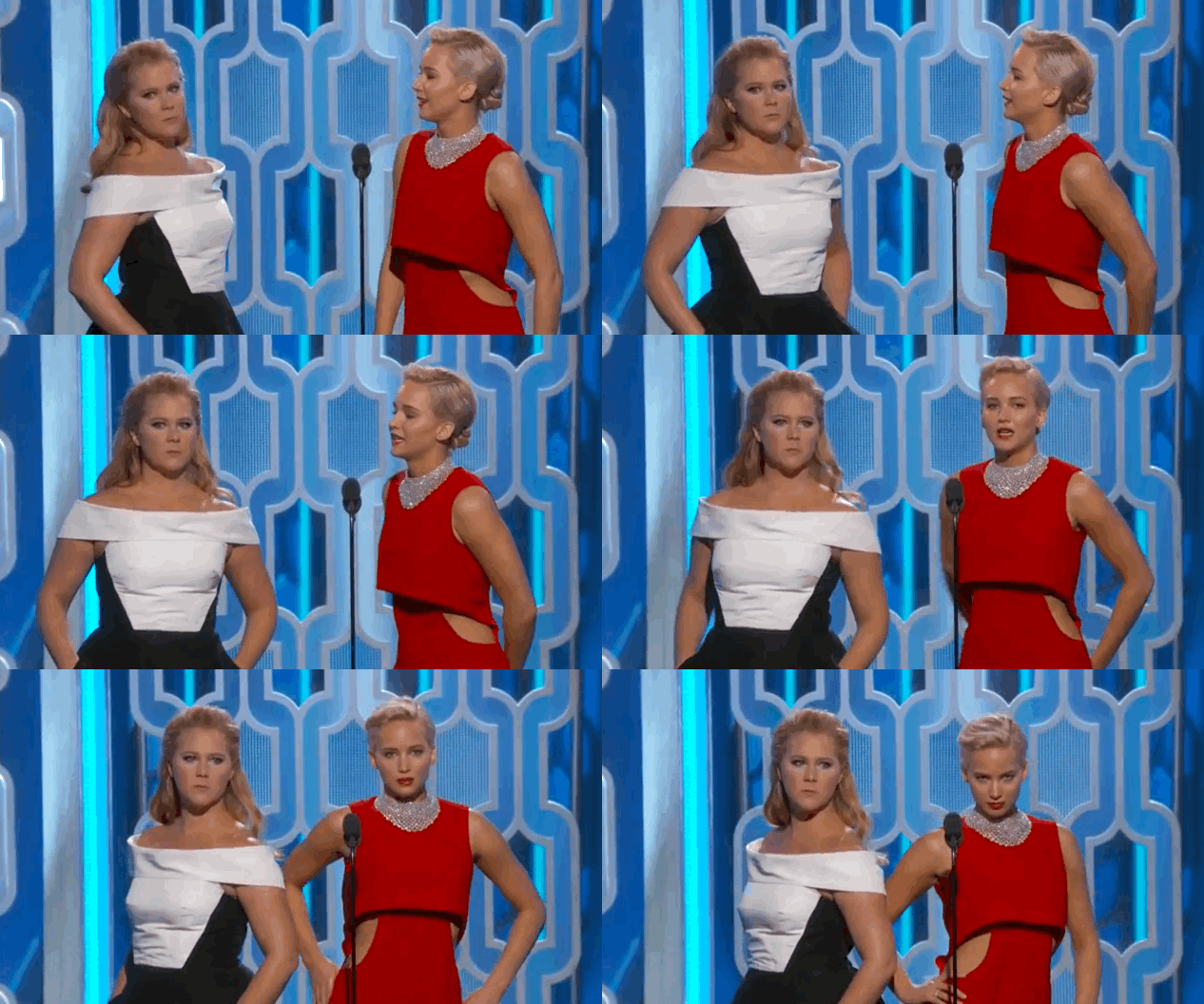
Biggest snub? Maybe it’s Amy Schumer losing to bestie Jennifer Lawrence, who won her third Golden Globe for Joy. (Yeah I’ll say it — Schumer was ROBBED!)
Be that as it may, when the duo took the stage to tout their movies (Joy and Trainwreck), they instantly became our choice to host the show next year.
4. The Nice Surprise
Give it up for Kate Winslet for stealing that Best Supporting Actress trophy for Steve Jobs. What a great, overlooked performance for a film that deserves more awards praise than it’s been getting. Nice to also see Aaron Sorkin walk away with the Golden Globe for Best Screenplay, too.
5. The Award That Made History
When Son of Saul won Best Foreign Language Movie, it became the first film from Hungary to ever win a Golden Globe.
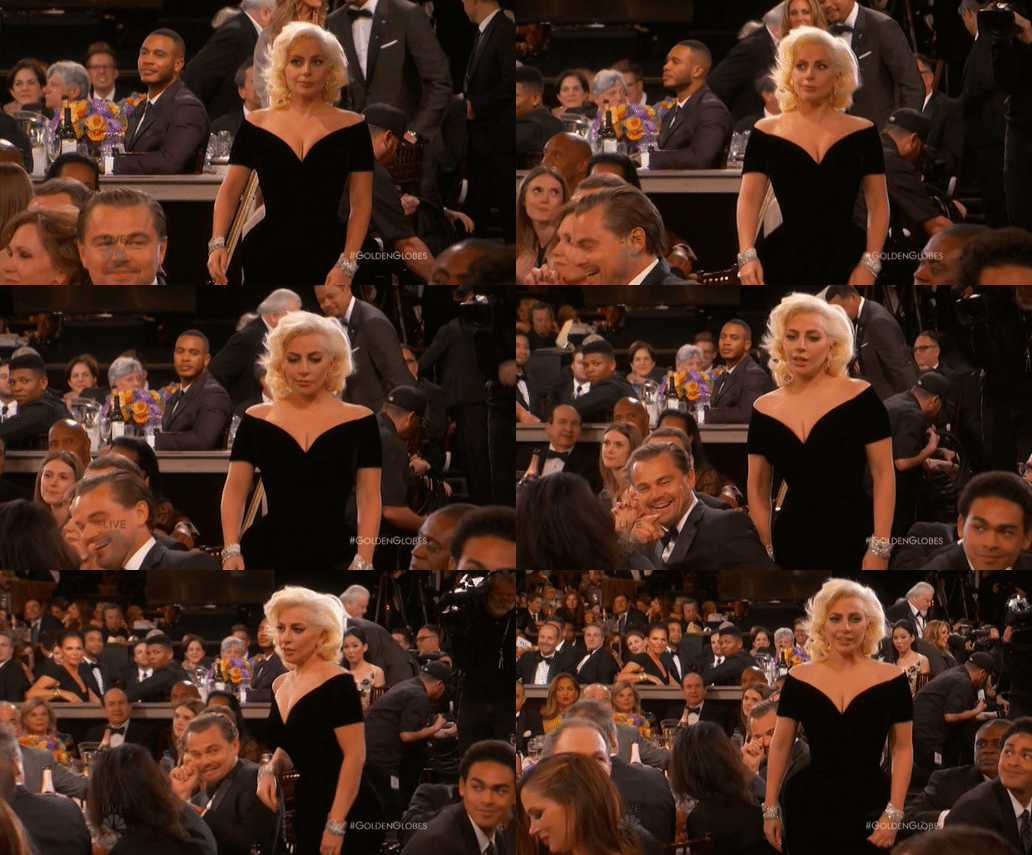
6. Whatever Is Going On Between Leonardo DiCaprio and Lady Gaga right here.
Was Leo laughing at Gaga winning the Globe? Did she pick up on it? And that eyebrow raise!
7. The Oscar Frontrunner
Gotta go with The Revenant after its wins tonight. The film not only took home Best Picture (Drama), but Leonardo DiCaprio won Best Actor (Drama) and Alejandro González Iñárritu took home Best Director. So is Spotlight now out of the…well, spotlight?
8. The Golden Globes Are Still the Naughtier Alternative to the Oscars
There was so much bleepin’ going on tonight, we kinda want to see the unrated version of this year’s Golden Globes right about now
.[embedded content]
From a boozy Ricky Gervais (in full roast form) to an awkward exchange between Mel Gibson and Gervais to the TV folks being called out numerous times for being rowdy in the back, this was most definitely a room we’d want to hang out in for awhile. The show was fun and lively — and, yeah, the jokes were dark at times — but kudos to the Globes for forever keeping this show entertaining.
But seriously, you gotta get J-Law and A-Shoo to host next year. That petition starts here!
Best Motion Picture — Drama
Carol
Mad Mad: Fury Road
The Revenant — WINNER
Room
Spotlight
Best Motion Picture — Comedy
The Big Short
Joy
The Martian — WINNER
Spy
Trainwreck
Best Actor in a Motion Picture — Drama
Bryan Cranston, Trumbo
Leonardo DiCaprio, The Revenant — WINNER
Michael Fassbender, Steve Jobs
Eddie Redmayne, The Danish Girl
Will Smith, Concussion
Best Actress in a Motion Picture — Drama
Cate Blanchett, Carol
Brie Larson, Room — WINNER
Rooney Mara, Carol
Saoirse Ronan, Brooklyn
Alicia Vikander, The Danish Girl
Best Actor in a Motion Picture — Comedy/Musical
Christian Bale, The Big Short
Steve Carell, The Big Short
Matt Damon, The Martian — WINNER
Al Pacino, Danny Collins
Mark Ruffalo, Infinitely Polar Bear
Best Actress in a Motion Picture — Comedy/Musical
Jennifer Lawrence, Joy — WINNER
Amy Schumer, Trainwreck
Melissa McCarthy, Spy
Maggie Smith, The Lady in the Van
Lily Tomlin, Grandma
Best Supporting Actor in a Motion Picture
Paul Dano, Love and Mercy
Idris Elba, Beasts of No Nation
Mark Rylance, Bridge of Spies
Michael Shannon, 99 Homes
Sylvester Stallone, Creed — WINNER
Best Supporting Actress in a Motion Picture
Jane Fonda, Youth
Jennifer Jason Leigh, The Hateful Eight
Helen Mirren, Trumbo
Alicia Vikander, Ex Machina
Kate Winslet, Steve Jobs — WINNER
Best Director
Todd Haynes, Carol
Alejandro G. Iñarritu, The Revenant — WINNER
Tom McCarthy, Spotlight
George Miller, Mad Max: Fury Road
Ridley Scott, The Martian
Best Screenplay from a Motion Picture
Room
Spotlight
The Big Short
Steve Jobs — WINNER
The Hateful Eight
Best Original Score from a Motion Picture
Carol
The Danish Girl
The Hateful Eight — WINNER
The Revenant
Steve Jobs
Best Original Song from a Motion Picture
“Love Me Like You Do,” “Fifty Shades of Grey”
“One Kind of Love,” “Love & Mercy”
“See You Again,” “Furious 7”
“Simple Song #3,” Youth”
“Writing’s on the Wall,” Spectre” — WINNER
Best Foreign Language Film
The Brand New Testament
The Club
The Fencer
Mustang
Son of Saul — WINNER
Best Animated Feature Film
Anomalisa
The Good Dinosaur
Inside Out — WINNER
The Peanuts Movie
Shaun the Sheep
This entry passed through the Full-Text RSS service – if this is your content and you’re reading it on someone else’s site, please read the FAQ at fivefilters.org/content-only/faq.php#publishers.
Some critics are calling last night’s football game between the Cincinnati Bengals and the Pittsburgh Steelers a new low in sportsmanship. Tracy Wolfson of CBS Sports explains what went wrong.
Transcript
MICHEL MARTIN, HOST:
In other football action, last night, the NFL witnessed one of the greatest collapses in playoff history. We’re talking about the Cincinnati Bengals, a team with a long history of woe, but last night may be a new low. They had all but sealed up a win against their rivals, the Pittsburgh Steelers. Just one minute, 36 seconds left in the game, and they had the ball. They could not lose, but they did in spectacular fashion. And not only that – critics are calling the whole thing a new low in a sportsmanship. Tracy Wolfson of CBS Sports was on the sidelines for that game, and she’s on the line now. Hi, Tracy. Thanks for joining us.
TRACY WOLFSON: You got it. How are you?
MARTIN: Good. And do you want to take it from there?
WOLFSON: (Laughter) Yeah. You know what? It was pretty insane. I’ve got to be honest. I mean, we knew that there would be some sort of physicality and a lot of emotions brewing with a rivalry like this. But, you know, to be honest, I didn’t expect it to get to that level. The fumble by Jeremy Hill, then the personal fouls, then the helmet-to-helmet hit from Vontaze Burfict and – you know, like you said, next thing you know, that’s it. You know, they handed over to the Steelers.
MARTIN: Talk about that hit, please. That’s the thing that a lot of people are talking about today. And certainly, the commentators after the game were talking about where Burfict launched himself into the head of Pittsburgh receiver Antonio Brown. I mean, what was that like to be there when that happened? I know people at home were gasping.
WOLFSON: Yeah, you know, it – there were so much chaos going on at that time to begin with, and, yes, it was a gasp. You see the hit. And especially when you see a hit to the head like that of that magnitude, it comes from a guy like Vontaze Burfict, where you know he makes those vicious hits to begin with. He has knocked out several players. And not saying that they were not legal hits in the past, but he has been fined for hits in the past. You know, and that’s where you have to draw the line – I mean, those helmet-to-helmet hits. But it is a scary, scary situation down there when that takes place.
MARTIN: You know, speaking of that, during the pregame warm-ups, the referees basically formed a wall at the 50-yard line…
WOLFSON: Yeah.
MARTIN: …To prevent the teams on either side from starting fights with each other. And then a few weeks ago, New York Giants fans watched as their star receiver Odell Beckham lost his mind, committed one penalty after another against Carolina Panthers’ defensive back Josh Norman. Look, is there something going on here with people being unable to control their behavior on the field? Is something going – is there something in the atmosphere now that we need to be thinking about?
WOLFSON: I don’t know if it’s something in the atmosphere. I mean, sports in general bring out those kind of emotions. It’s about controlling the emotions. It’s about having the right people on the field to control their emotions if that person or player cannot handle their emotions themselves. I thought what the officials did yesterday by creating that no-fly zone – I thought was very smart. I actually thought that the officials did a good job for the situation that they were put in. But I will say that I think I believe there should be a rule more so like in college where – you know, two personal fouls, and you’re out. Or – you know, that’s where the officials maybe need to step in more. Or a coach should step in and say, this is going to hurt our team. It was very obvious, and I reported it during the game that Vontaze Burfict was out of control. And it was just going to escalate. You could see it in his eyes, and you could see it standing down there. And every one of his teammates could see it and so could the officials. And still he was allowed to continue to play throughout and thus, in the end, basically loses the game for his team.
MARTIN: Tracy Wolfson reports for CBS Sports. Tracy, thanks so much for speaking with us.
NPR transcripts are created on a rush deadline by a contractor for NPR, and accuracy and availability may vary. This text may not be in its final form and may be updated or revised in the future. Please be aware that the authoritative record of NPR’s programming is the audio.
This entry passed through the Full-Text RSS service – if this is your content and you’re reading it on someone else’s site, please read the FAQ at fivefilters.org/content-only/faq.php#publishers.
Eva Salina’s new album is called Lema Lema: Eva Salina Sings Saban Bajramovic. Deborah Feingold/Courtesy of the artisthide caption
toggle captionDeborah Feingold/Courtesy of the artist
Eva Salina has Dutch and Jewish roots and hails from a quiet California beach town — but musically, she’s traveled a path far afield from her upbringing. The Santa Cruz native says she was headed in quite a different direction when she stumbled into a love for traditional Balkan vocal music.
“I was interested, always, in other cultures, and someone gave me a tape of some Yiddish songs,” she says. “I was 7 years old, and I taught myself all of those songs. My parents, in their desire to encourage my interest, looked around for someone who might be able to teach me, and when the search for a Yiddish singing teacher came up dry, they stumbled upon a young woman who grew up in Hawaii and had been singing Balkan music for 15 years at that point.”
Salina grew up into a modern interpreter of Balkan styles. Her new album, Lema Lema: Eva Salina Sings Saban Bajramovic, pays tribute to a late musician whose story is shrouded in mystery and urban legend. She joined NPR’s Rachel Martin to talk about it; hear more of their conversation at the audio link.
This entry passed through the Full-Text RSS service – if this is your content and you’re reading it on someone else’s site, please read the FAQ at fivefilters.org/content-only/faq.php#publishers.
NPR’s Rachel Martin spoke with Brad Duke a few years ago about his $220 million lottery win in 2005. We called him back this week because numbers for the biggest Powerball jackpot were drawn Saturday.
Transcript
RACHEL MARTIN, HOST:
Imagine it. You’re going about your life, and then – bam – you win the jackpot. Yesterday’s Powerball drawing reached almost $950 million. Now, of course, taxes can eat up about half of that. But come on, that’s still a whole lot of money. This record lottery made me think back to a conversation I had a couple years ago with Brad Duke. He won a $220 million Powerball jackpot in 2005. Brad Duke is a former exercise instructor from Star, Idaho. And in our conversation, he remembered that moment when he won.
(SOUNDBITE OF ARCHIVED BROADCAST)
BRAD DUKE: I had the ticket in a visor of a rental car at the time, and I had to stop and get fuel. I thought it would be a good time to check the tickets. So, I took the ticket in, let the gals behind the counter run the ticket through. And the machine made a bunch of weird noises, and they started jumping up and down and jumping in circles. And I was trying to actually pluck the ticket out of their hand ’cause my first instinct was just to kind of get out of there.
MARTIN: Here’s what happened next.
DUKE: I thought maybe that I had won 10 or 20 thousand, but I didn’t confirm it. I went on with my day just daydreaming of what I could do with five, 10, 15, 20 thousand, whatever it may be.
MARTIN: So, that’s day one, and it’s confirmed that you win. What happens a couple days later when you wake up and the reality of this really starts to sink in?
DUKE: You know, it didn’t sink in for a couple of days, you know, probably a couple of weeks. I knew the first thing that I wanted to do was decide what I wanted to do with the money and where I wanted to go with this whole thing. So I didn’t tell anybody. I kept working. I continued with my daily routines. I had made one phone call to my father. And I told him – it’s a funny story. I said, dad, sit down and prepare for some life-changing news. And he says, oh, you’re getting married. And I said, nope. And he goes, oh, well, then you’re the guy that won the lottery.
MARTIN: No way.
DUKE: Yeah, true story, absolutely true story. And I said yeah. And he goes, far out. I’ll be right down. So, you know, he came down. And then over the course of that couple of weeks, we kind of talked about what to do. I kept it under wraps for close to four or five weeks.
MARTIN: Wow. Wasn’t that hard? I mean, didn’t you kind of just want to tell everyone?
DUKE: Oh, it was fun. Oh, it was fun. It was fun fantasizing about being the guy and then realizing that you’re the guy. And you have that reality-fantasy combination starting to come together. Turned out, it was really important that I did do that because that did give me time to put together a team of people around me that were going to help me do what I wanted to do.
MARTIN: Yeah. Who were they? What did you need them to do for you?
DUKE: Well, in the process of setting goals, I wanted to grow the wealth, so obviously needed to have a really good tax attorney and a corporate business attorney. I knew that we were going to do some publicity to try and generate more opportunity, so I needed a publicist and a banker. And I still have that same team around me today.
MARTIN: So, you said you had done some daydreaming. You’d let yourself kind of fantasize about what it would be like to win 10,000, $20,000. What did those dreams look like, and then how did they change when all of the sudden you were handed a check for millions of dollars?
DUKE: The thing that I was thinking about was what kind of new bike I can buy. I’m into cycling, and one of my fantasies is just getting a really high-end road bike and a really high-end mountain bike.
MARTIN: Yeah, $220 million would do it.
DUKE: Yeah. And that really was the first thing that I did. I stayed in my house, drove a used car for, you know, up to three years afterwards. The more I started to fantasize about what I could do with the money, the more I felt like I should try and keep my feet on the ground and change as little as I could.
MARTIN: Why did that occur to you?
DUKE: You know, I’m not sure. I’m a goal-oriented person. One of the goals that I had put out there for myself after this was try and make the most of this opportunity and not squander the gift that’s been given to me and try to grow into something I can leave behind, leave a legacy behind. And once I started to believe in that goal that I set for myself, it kind of dictated some of my decisions.
MARTIN: So did you quit your job?
DUKE: I did not. I continued on as long as I could. It was crazy. Everybody had the greatest ideas since sliced bread. I got proposals for time machines, flying cars, and eventually I had to quit ’cause it was disrupting the business. I continued to stay on and teach my morning spin class for about two and a half years after.
MARTIN: Did anyone in your life start treating you differently?
DUKE: Oh sure, yeah. Yeah, there’s definitely a preconceived notion, whether it’s good or bad, and that does change your surroundings. And, you know, for sure, it – something like that amplifies everything around you.
MARTIN: Did you have to end any relationships because of how your life changed with this money?
DUKE: You know, I’m pretty fortunate that way. I never had to end a relationship. I had some dating trouble, but that was expected. But (laughter) as far as…
MARTIN: You’d think it would be a boon for your dating life.
DUKE: Yeah, too much of a boon. But as far as loved ones and people that were in my life at the time, I have been pretty fortunate.
MARTIN: There has been, as you probably know, some terribly tragic stories over the years of lottery winners who kind of detached from reality and lose their friends, go bankrupt. How did you avoid all of that, and what is your advice for future lottery winners?
DUKE: I knew the statistics. I knew 6 out of 10 people that won 10 million or less were bankrupt in less than five years. And that’s one thing that I really wanted to not become. The biggest piece of advice I can give somebody that gets put into that, you really have to define what’s important to you, and develop a plan around it. And then get people to help you do what you’re not so good at doing as part of that plan.
MARTIN: Do you still have that mountain bike that you bought?
DUKE: Yeah. I have that mountain bike plus about another 10.
MARTIN: (Laughter) Good for you.
That’s Brad Duke of Star, Idaho. He won $220 million in the Powerball lottery back in 2005. So we checked back in with him this past week, when the Powerball reached nearly a billion dollars. He’s now in a long-term relationship. He still loves cycling and still travels economy class. He’s kept his circle of friends and the team of advisers he hired after winning. And he’s building up the nonprofit he created to donate money to charitable groups in Idaho. Now, about that ridiculously huge Powerball lottery jackpot. Americans gathered around their televisions last night to watch the official drawing.
(SOUNDBITE OF ARCHIVED RECORDING)
UNIDENTIFIED MAN: Next number down is 19. That’s followed by 57. And we’re going to wind it up for you tonight with the number 34.
MARTIN: Hours after the drawing, the lottery officials announced there was no winner. And you know what that means. The pot gets richer. There will be another drawing Wednesday, and the prize is now $1.3 billion, which is a ridiculous amount of money. But the odds are crazy low. Reuters quoted a statistics professor at the University of Buffalo who said an American is roughly 25 times more likely to become the next president of the United States than to win at Powerball. But hey, a girl can dream.
NPR transcripts are created on a rush deadline by a contractor for NPR, and accuracy and availability may vary. This text may not be in its final form and may be updated or revised in the future. Please be aware that the authoritative record of NPR’s programming is the audio.
Lottery winner Brad Duke says he’s always been fascinated by the lottery, and even thought he won once before, when he was 18. Davies Moore/hide caption
toggle captionDavies Moore/
Each week, Weekend Edition Sunday host Rachel Martin brings listeners an unexpected side of the news by talking with someone personally affected by the stories making headlines.
In 2005, Brad Duke of Star, Idaho, hit a huge jackpot: $220 million in the Powerball lottery. It took a couple days, even a couple of weeks, for the magnitude of his win to hit. He didn’t tell anyone, and went about his daily routines while he tried to figure out what he wanted to do next.
As a regular lottery player, Duke had let himself fantasize about what it might be like to win thousands of dollars someday. As a cyclist, he’d always daydreamed about owning a high-end road bike and a high-end mountain bike, which his actual windfall would certainly cover.
But Duke didn’t go on a spending spree. “I stayed in my house, I drove a used car for up to three years afterwards,” he tells NPR’s Rachel Martin. “The more I started to fantasize about what I could do with the money, the more I felt like I should try to keep my feet on the ground and change as little as I could.”
BRAD DUKE: I had the ticket in a visor of a rental car at the time, and I had to stop and get fuel. I thought it would be a good time to check the tickets. So, I took the ticket in, let the gals behind the counter run the ticket through. And she made a bunch of weird noises and they started jumping up and down and jumping in circles, and I was trying to actually pluck the ticket out of their hand ’cause my first instinct was just to kind of get out of there.
RACHEL MARTIN, HOST:
This is Brad Duke, an exercise instructor from Star, Idaho. Duke won a $220 million Powerball jackpot in 2005. And as you might expect, life changed. Winning the lottery forced him to reevaluate his priorities, his expectations, even some relationships. We began by talking about the day he went out and bought that particular lottery ticket. Brad Duke is our Sunday Conversation.
DUKE: I thought maybe that I had won 10 or 20 thousand, but I didn’t confirm it. I went on with my day just daydreaming of what I could do with five, 10, 15, 20 thousand, whatever it may be.
MARTIN: So, that’s day one and it’s confirmed that you win. What happens a couple of days later when you wake up and the reality of this really starts to sink in?
DUKE: You know, it didn’t sink in for a couple of days, you know, probably a couple of weeks. I knew the first thing that I wanted to do was decide what I wanted to do with the money and where I wanted to go with this whole thing. So I didn’t tell anybody. I kept working. I continued with my daily routines. I made one phone call to my father and I told him – it’s a funny story – I said, dad, sit down and prepare for some life-changing news. And he says, oh, you’re getting married. And I said nope. And he goes, well, then you’re the guy that won the lottery.
MARTIN: No way.
DUKE: Yeah, true story, absolutely true story. And I said yeah. And he goes far out. I’ll be right down. So, you know, he came down and over the course of that couple of weeks, we kind of talked about what to do. I kept it under wraps for close to four or five weeks.
MARTIN: Wow. Wasn’t that hard? I mean, didn’t you kind of just want to tell everyone?
DUKE: Oh, it was fun. Oh, it was fun. It was fun fantasizing about being the guy and then realizing that you’re the guy and you have the reality-fantasy combination starting to come together. Turned out it was really important that I did do that because that did give me time to put together a team of people around me that were going to help me do what I wanted to do.
MARTIN: Yeah. Who were they? What did you need them to do for you?
DUKE: Well, in the process of setting goals, I wanted to grow the wealth, so obviously needed to have a really good tax attorney and a corporate business attorney. I knew that we were going to do some publicity to try and generate more opportunity, so I needed a publicist and a banker. And I still have that same team around me today.
MARTIN: So, you said you had done some daydreaming. You let yourself kind of fantasize about what it would be like to win $10,000, 20,000. What did those dreams look like and then how did they change when all of the sudden you were handed a check for millions of dollars?
DUKE: The thing that I was thinking about was kind of bike that I can buy. I’m into cycling, and one of my fantasies is just getting a really high-end road bike and a really high-end mountain bike.
MARTIN: Yeah, $220 million would do it.
DUKE: Yeah. And that really was the first thing that I did. I didn’t spend money. I stayed in my house, drove a used car for, you know, up to three years afterwards. The more I started to fantasize about what I could do with the money, the more I felt like I should try and keep my feet on the ground and change as little as I could.
MARTIN: Why did that occur to you?
DUKE: You know, I’m not sure. I’m a goal-oriented person. One of the goals that I had put out there for myself after this was try and make the most of this opportunity and not squander the gift that’s been given to me and try to grow it something I can leave behind, leave a legacy behind. And once I started to believe in that goal that I set for myself, kind of dictated some of my decisions.
MARTIN: So, did you quit your job?
DUKE: I did not. I continued on as long as I could. It was crazy. Everybody had the greatest ideas since sliced bread. I got proposals for time machines, flying cars, and eventually I had to quit ’cause it was disrupting the business. I continued to stay on and teach my morning spin class for about two and a half years after.
MARTIN: Did anyone in your life start treating you differently?
DUKE: Oh sure, yeah. Yeah, there’s definitely a preconceived notion, whether it’s good or bad, and that does change your surroundings. And, you know, for sure, when something like that amplifies everything around you.
MARTIN: Did you have to end any relationships because how your life changed with this money?
DUKE: You know, I’m pretty fortunate that way. I never had a serious casualty like that where I’ve had to end a relationship. I had some dating trouble, but that was expected.
MARTIN: You think it would be a boom for your dating life?
DUKE: Yeah, too much of a boom. But as far as loved ones and people that were in my life at the time, I have been pretty fortunate.
MARTIN: There has been, as you probably know, some terribly tragic stories over the years of lottery winners who kind of detached from reality and lose their friends, go bankrupt. How did you avoid all of that and what is your advice for future lottery winners?
DUKE: I knew the statistics. I knew six out of 10 people that won 10 million or less were bankrupt in less than five years. You know, so I knew the statistic and that’s one thing that I really wanted to not become. You know, the biggest piece of advice I can give somebody that gets put into that, you really have to define what’s important to you, and develop a plan around it and then get people to help you do what you’re not so good at doing as part of that plan.
MARTIN: You still have that mountain bike that you bought?
DUKE: Yeah. I have that mountain bike plus about another 10.
(LAUGHTER)
MARTIN: Good for you. Brad Duke. He won $220 million in a Powerball lottery eight years ago. Brad, thanks so much for talking with us.
NPR transcripts are created on a rush deadline by a contractor for NPR, and accuracy and availability may vary. This text may not be in its final form and may be updated or revised in the future. Please be aware that the authoritative record of NPR’s programming is the audio.
This entry passed through the Full-Text RSS service – if this is your content and you’re reading it on someone else’s site, please read the FAQ at fivefilters.org/content-only/faq.php#publishers.
A machine prints Powerball lottery tickets at a convenience store in Washington, D.C. on Thursday. Saturday’s jackpot has risen to $900 million. Saul Loeb./AFP/Getty Imageshide caption
toggle captionSaul Loeb./AFP/Getty Images
One number has everybody’s attention this afternoon. But why stop at one?
Here’s the prize jackpot, plus a few other lottery stats worth knowing:
$900,000,000
The eye-popping, record-breaking Powerball jackpot value, as of Saturday afternoon. If no one wins tonight, the jackpot could crack a billion.
That’s based on a single winner selecting the annuity option, which pays out over three decades. Alternately …
$558,000,000
The cash payout that rarely gets the boldfaced headline treatment, but it’s the more likely winning amount. The vast majority of jackpot winners choose the cash payout, even though it’s always significantly smaller than the jackpot.
You could hypothetically benefit from choosing the upfront payout — provided you invest the money instead of spending it. Which of course is exactly what you’d do, right?
$220,968,000
The tax man cometh. If you win and choose the lump-sum payment, expect to pay north of $200 million in federal taxes, at the 39.6 percent top income bracket — not counting state income tax.
1 in 292,201,338
One in 292 million. Those are your odds of winning the jackpot.
Not one in a million, not one in 10 million … one in 292 million.
Here’s a way to more viscerally experience the long odds. The Los Angeles Times put together a demonstration of playing the Powerball odds, in chunks of $100 or $1,000 or more — tallying up your total losses over time.
You can plug in truly enormous amounts of money and watch probability at work all afternoon, if that sounds like fun. So far, this reporter is down 104 grand.
That was the range, as of 2012, of total payouts by U.S. states, as Steve Tripoli reported for NPR in 2014. That is, of all the dollars paid for lottery tickets, that’s the percentage paid back to winners.
West Virginia claimed the 15 percent, Massachusetts the 73 percent, while most states were in the 50 to 70 percent range. (You can look up your own state in our chart).
For the record: Those are all abysmal rates by gambling standards. Most casino games pay back more than 90 percent, Tripoli says; the house still wins, of course, but it doesn’t win by nearly as much as state lotteries do.
44 states (plus D.C., Puerto Rico and the U.S. Virgin Islands)
The vast majority of American states offer a lottery these days. Alabama, Alaska, Hawaii, Nevada, Utah and Mississippi are holdouts, refusing to participate in either Powerball or Mega Millions. Some states cite religious objections, while in Nevada, the powerful gambling industry views lotteries as competition.
Residents of those states can still play the lottery — but they have to travel to a participating state to do it.
(Puerto Rico has Powerball but not Mega Millions. Now you know.)
Of course, the cost isn’t distributed equally, he notes. There’s geographic variation — with annual spending north of $700 in Rhode Island, South Dakota and Massachusetts, based on state populations, while well under $100 per capita in other states.
There’s also variation based on income. Study after study has found low-income communities spend more of their money on lotteries than high-income communities, Thompson writes.
That economic variation is why people call state lotteries regressive taxes — that is, a way of funding the state that disproportionately takes money from the poor.
On Saturday, Vox pointed out an intriguing decade-old study suggesting that lotteries become less regressive as the jackpot size increases — that is, richer people are more likely to buy tickets for big prizes, lessening the disproportionate impact on the poor. Economist Emily Oster, then a graduate student at Harvard, suggested that a jackpot of $806 million would actually be progressive instead of regressive.
At the time, that jackpot size was theoretical — but not any more.
27 cents
According to the lottery industry’s own trade magazine, for every dollar spent on the lottery, an average of 27 cents goes to the “beneficiaries” — the oft-touted government spending programs supported by a lottery, usually in areas like education or recreation.
A cut goes towards administering the lottery (which is far more expensive than collecting a tax — one analysis by a conservative think tank found lotteries are up to 50 times more costly than tax collection). A chunk, of course, goes towards the winners. Some goes to retailers, some to the companies that design and operate the lottery systems. What’s left goes into state coffers.
The average might be 27 cents to state expenses, like the industry says, but it can be as low as 11 cents to the dollar, NBC News reports.
Zero
That’s the impact of a lottery win on net happiness, at least at first.
A famous 1978 study found that major lottery winners were no happier than ordinary folks, and actually got less joy from daily activities. A 2008 Dutch study found winning the lottery doesn’t make a household happier.
Now, a caveat: Two studies out of England suggest that it is possible to win the lottery and be content — but only eventually.
“No researcher has ever found that people are happier in the first year after winning the lottery,” one of the researchers told The New YorkTimes
And the Times’ social science reporter suggests that it might take longer and longer to find contentment the larger your win is. So, about that $900 million …
Even numbers higher than 31
OK, if you insist: You can’t increase your odds of winning the lottery, but you can increase the chance that — if you do win — you won’t have to split the jackpot.
People tend to include birthdays and other dates in their lottery numbers, mathematician Aaron Abrams told NPR’s Robert Siegel in 2012, which means more numbers between 1 and 31. And people have a bias towards odd numbers.
So, for best results: Even numbers higher than 31.
But have we mentioned? One in 292,201,338.
This entry passed through the Full-Text RSS service – if this is your content and you’re reading it on someone else’s site, please read the FAQ at fivefilters.org/content-only/faq.php#publishers.