Articles by admin

No Image

$1 Billion Health Care Fraud Took Advantage Of Medicare In Florida, Agents Say

The Justice Department calls it the largest criminal health care fraud case ever brought against individual suspects: Three people are accused of orchestrating a massive fraud involving a number of Miami-based health care providers.

The three facing charges are all from Florida’s Miami-Dade County; they include Philip Esformes, 47, owner of more than 30 Miami-area nursing and assisted living facilities; hospital administrator Odette Barcha, 49; and physician assistant Arnaldo Carmouze, 56, the Justice Department says.

“Medicare fraud has infected every facet of our health care system,” U.S. Attorney Wifredo Ferrer said as indictments against the three were announced Friday.

The indictments accuse Esformes of leading “a complex and profitable health care fraud scheme that resulted in staggering losses — in excess of $1 billion,” said Special Agent in Charge George L. Piro of the FBI’s Miami field office.

Investigators say Esformes used his access to thousands of Medicare and Medicaid beneficiaries to perpetrate a fraud:

“Many of these beneficiaries did not qualify for skilled nursing home care or for placement in an assisted living facility; however, Esformes and his co-conspirators nevertheless admitted them to Esformes Network facilities where the beneficiaries received medically unnecessary services that were billed to Medicare and Medicaid.”

More money was in play, investigators say, in the form of kickbacks Esformes and his co-conspirators received in return for “steering beneficiaries to other health care providers — including community mental health centers and home health care providers — who also performed medically unnecessary treatments that were billed to Medicare and Medicaid.”

In addition to charges of conspiracy, money laundering and health care fraud, Esformes and Barcha were also charged with obstructing justice.

Let’s block ads! (Why?)


No Image

Today in Movie Culture: 'Star Trek' Kill Count, a Famous Fake Kristen Wiig Movie Gets a Poster and More

Here are a bunch of little bites to satisfy your hunger for movie culture:

Supercut of the Day:

With Star Trek Beyond out this week, Mr. Sunday Movies tracks all of Captain Kirk’s kills in movies over the decades:

[embedded content]

Fake Movie Poster of the Day:

Started as a joke at Sundance this year by entertainment writer Mike Ryan, now that Kristen Wiig has finally addressed and joked about making AbracaDeborah, there’s a fan-made poster for the fake movie (via Twitter):

Cosplay Tutorial of the Day:

Just in time for Comic-Con, here’s a video showing how to make your own Leeloo costume from The Fifth Element:

[embedded content]

Abridged Movie of the Day:

Ranker cuts The Karate Kid down to just two minutes of people fighting, saying each other’s names and yelling “banzai!”:

[embedded content]

Vintage Image of the Day:

Ernest Hemingway, who was born on this date in 1899, talks to actor Spencer Tracy on the set of John Sturge’s adaptation of The Old Man and the Sea in 1956:

Custom Car of the Day:

Hot Wheels made a life-size race car designed after the X-wing Fighter from Star Wars (via /Film):

[embedded content]

Home Furnishing of the Day:

Speaking of Star Wars, you don’t need a coffee table book to appeal to guests when your Boba Fett escaping from the Sarlacc Pit coffee table is attention-getting enough (via Geekologie):

Film Studies Lesson of the Day:

Court of Source explores the significance of color representation of good and evil in movies (via Geek Tyrant):

[embedded content]

Filmmaking Tip of the Day:

For RocketJump Film School, filmmaker Kevin Klauber, highlights the importance of test screenings and revisions:

[embedded content]

Classic Trailer of the Day:

Today is the 10th anniversary of the release of Monster House, which holds a significant place in the history of modern 3D cinema. Watch the original trailer for the animated feature below.

[embedded content]

and

Let’s block ads! (Why?)


No Image

NBA Will Pull 2017 All-Stars Game From Charlotte Over N.C. 'Bathroom Bill'

The NBA is relocating the 2017 All-Star Game from Charlotte, N.C., because of a state law that limits civil rights protections for LGBT people.

The NBA is relocating the 2017 All-Star Game from Charlotte, N.C., because of a state law that limits civil rights protections for LGBT people. Bruce Yeung/Getty Images hide caption

toggle caption Bruce Yeung/Getty Images

The NBA will be relocating the 2017 All-Star Game from Charlotte because of HB2, North Carolina’s controversial state law limiting civil rights protections for LGBT people.

The league says that the Charlotte Hornets and the city of Charlotte “have been working diligently to foster constructive dialogue and try to effect positive change.”

But the local support for LGBT rights couldn’t overcome “the climate created by HB2” in North Carolina, the NBA said in a statement.

The league says the city might host an All-Star Game in 2019, if the situation changes.

The location for the 2017 All-Star Game hasn’t yet been announced.

As we’ve reported, HB2 excludes LGBT people from North Carolina’s nondiscrimination laws and prevents local governments from offering discrimination protections that go beyond the state’s. It also requires schools, government offices and other public institutions to ensure that multiple occupancy bathrooms are “designated for and only used by persons based on their biological sex” as stated on their birth certificates.

After the NBA’s announcement, North Carolina Gov. Pat McCrory issued a statement Thursday accusing “the sports and entertainment elite, Attorney General Roy Cooper and the liberal media” of misrepresenting the law, and writing that “most people believe boys and girls should be able to use school bathrooms, locker rooms and showers without the opposite sex present.”

“American families should be on notice that the selective corporate elite are imposing their political will on communities in which they do business, thus bypassing the democratic and legal process,” he wrote.

Charlotte has been at the center of the debate over the bill since the very start. Early this year, the city passed a measure protecting gay, lesbian, bisexual and transgender people from being discriminated against by businesses. It included a provision allowing trans people to use bathrooms corresponding to their gender.

Shortly before that measure was due to go into effect, the state’s General Assembly called a special session and over the course of 12 hours, introduced, debated and passed HB2 to override the Charlotte ordinance.

The new state law nullified a half-dozen other anti-discrimination ordinances as well. Citizens in the state are deeply divided over the law, with supporters feeling drowned out by the condemnation of the measure, as Emily McCord has reported for NPR.

Reaction from outside the state was indeed swift and intense, with several states banning non-essential travel to North Carolina by government employees. Paypal also nixed plans for an operations center in Charlotte.

President Obama has said the law should be overturned. The Justice Department has sent McCrory a letter warning him that the law violates the Civil Rights Act, and the state and the DOJ are currently suing each other over the issue.

The NBA began discussing the possibility of moving the 2017 All-Star Game shortly after HB2 was passed. “We have been guided in these discussions by the long-standing core values of our league. These include not only diversity, inclusion, fairness and respect for others but also the willingness to listen and consider opposing points of view,” the league writes.

“… While we recognize that the NBA cannot choose the law in every city, state, and country in which we do business, we do not believe we can successfully host our All-Star festivities in Charlotte in the climate created by HB2.”

Let’s block ads! (Why?)


No Image

Rehab Hospitals May Harm A Third Of Patients, Report Finds

The physical therapy workouts a rehabilitation facility offers can be a crucial part of healing, doctors say. But a government study finds preventable harm — including bedsores and medication errors — occurring in some of those facilities, too.

The physical therapy workouts a rehabilitation facility offers can be a crucial part of healing, doctors say. But a government study finds preventable harm — including bedsores and medication errors — occurring in some of those facilities, too. Andersen Ross/Blend Images/Getty Images hide caption

toggle caption Andersen Ross/Blend Images/Getty Images

Patients may go to rehabilitation hospitals to recover from a stroke, injury or recent surgery. But sometimes the care makes things worse.

In a government report published Thursday, 29 percent of patients in rehab facilities suffered a medication error, bedsore, infection or some other type of harm as a result of the care they received.

Doctors who reviewed cases from a broad sampling of rehab facilities say that almost half of the 158 incidents they spotted among 417 patients were clearly or likely preventable.

“This is the latest study over a long time period now that says we still have high rates of harm,” says Dr. David Classen, an infectious disease specialist at the University of Utah School of Medicine who developed the analytic tool used in the report to identify the harm to patients.

“We’re fooling ourselves if we say we have made improvement,” Classen says. “If the first rule of health care is ‘Do no harm,’ then we’re failing.”

The oversight study, from the office of the inspector general of the U.S. Department of Health and Human Services, focused on rehabilitation facilities that were not associated with hospitals. Rehab facilities generally require that patients be able to undergo at least three hours of physical and occupational therapy per day, five days a week. Patients at these facilities are presumed to be healthier than patients in a more typical hospital or a nursing home.

Still, the findings echoed those of previous studies that found that more than a quarter of patients in hospitals and a third in skilled nursing facilities suffered harm related to their care.

“It’s important to acknowledge that harm can occur in any type of inpatient setting,” says Amy Ashcraft, a team leader for the rehabilitation hospital study. “This is one of the settings that’s most likely to be underestimated in terms of what type of harm can occur.”

For the purposes of the study, doctors and nurses identified harm by reviewing the medical records of 417 randomly selected Medicare patients who stayed in U.S. rehabilitation facilities in March 2012. The events they identified varied in severity, ranging from a temporary injury to something that required a longer stay at the facility or that led to permanent disability or death.

Almost a quarter of the harmed patients had to be admitted to an acute care hospital, at a cost of about $7.7 million for the month analyzed, the study shows.

The physicians who reviewed the cases for the OIG say substandard treatment, inadequate monitoring, and failure to provide needed care caused most of the harm. Almost half the cases, 46 percent, were related to medication errors and included bleeding from gastric ulcers due to blood thinners and a loss of consciousness linked to narcotic painkillers.

That high number indicates there’s lots of room for improvement, says Dr. Eric Thomas, director of the UT Houston-Memorial Hermann Center for Healthcare Quality and Safety.

“We know a lot about preventing medication errors,” Thomas says.

An additional 40 percent of the cases in which patients were harmed were traced to lapses in routine monitoring that led to bedsores, constipation or falls. These problems almost never contributed to a patient’s death but could mean extra days or weeks of recovery, a loss of independence or permanent disability, says Lisa McGiffert, director of the Consumers Union Safe Patient Project.

“It is a domino effect for any person who has had an adverse event,” says McGiffert, who was not involved in the study.

The inspector general is recommending that Medicare and the Agency for Healthcare Research and Quality work together to reduce harm to patients by creating a list of adverse events that occur in rehab hospitals. In their responses to the report, the agencies have pledged to follow that suggestion.

Officials from the American Medical Rehabilitation Providers Association, the trade group that represents rehab facilities, say they have not yet seen the report and decline to comment for now.

ProPublica is interested in hearing from patients who have been harmed while undergoing medical care, through its Patient Harm Questionnaire and Patient Safety Facebook Group.

Let’s block ads! (Why?)


No Image

Former Attorney General Will Work With Airbnb To Address Discrimination

The logo of online lodging service Airbnb is shown on a screen in the Airbnb offices in Paris in 2015.

The logo of online lodging service Airbnb is shown on a screen in the Airbnb offices in Paris in 2015. Martin Bureau/AFP/Getty Images hide caption

toggle caption Martin Bureau/AFP/Getty Images

Airbnb, the popular site that lets people rent rooms and houses, is hoping to fight racism and discrimination on its platform — and it’s recruited former Attorney General Eric Holder to help.

The company has spent more than a month reviewing its policies, after widespread reports of a pattern of bias against people of color looking to rent rooms.

The review is still ongoing, the company said in a blog post Wednesday, but they’ve already started taking some steps to address the problem, including bringing in Holder and other experts to help write a new anti-discrimination policy.

The site also plans to offer training about “unconscious bias” to more hosts, and hire employees “whose full-time job will be to detect and address instances of discrimination.”

This spring, NPR’s Hidden Brain explored the issue of racial bias on Airbnb. Quirtina Crittenden, a user on the site, described getting declined for room after room — until she changed her profile image to a landscape photo, and shortened her name to “Tina.” After that, getting a room was no problem.

Researchers have found a widespread pattern of racial discrimination on Airbnb. Here’s Hidden Brain:

“Michael Luca and his colleagues Benjamin Edelman and Dan Svirsky at Harvard Business School … sent out 6,400 requests to real AirBnb hosts in five major American cities—Baltimore, Dallas, Los Angeles, St. Louis, and Washington.

“All the requests were exactly the same except for the names they gave their make-believe travelers. Some had African American-sounding names like Jamal or Tanisha and others had stereotypically white-sounding names like Meredith or Todd.

Luca and his colleagues found requests with African American sounding names were roughly 16 percent less likely to be accepted than their white-sounding counterparts. They found discrimination across the board: among cheap listings and expensive listings, in diverse neighborhoods and homogenous neighborhoods, and with novice hosts as well as experienced hosts. They also found that black hosts were also less likely to accept requests from guests with African American-sounding names …

“In a separate study, Luca and his colleagues have found that guests discriminate, too, and black hosts earn less money on their properties on Airbnb.”

Another study found that Asian-American hosts make less money than white ones.

When NPR’s Code Switch reached out to individual Asian-American hosts, they said they didn’t feel like race played a factor in their room prices. But researchers examining the issue — like researchers looking into bias against black Airbnb users — noted that subconscious bias can play a powerful role in decision-making.

In the company’s Wednesday blog post on the issue, Airbnb co-founder Brian Chesky opened by mourning the recent shootings in Minnesota, Louisiana and Texas, and expressing support for both the Black Lives Matter movement and for police officers. He continued:

“We aren’t so naïve to think that one company can solve these problems, but we understand that we have an obligation to be honest about our own shortcomings, and do more to get our house in order. That’s why we’ve been talking more openly about discrimination and bias on our platform, and are currently engaged in a process to prevent it. …

“We will not simply ‘address the issue’ by doing the least required for liability and PR purposes. I want us to be smart and innovative and to create new tools to prevent discrimination and bias that can be shared across the industry.”

Former Attorney General Holder will be assisting as outside counsel, working with civil rights attorney John Relman to help write a new anti-discrimination policy.

In a statement, Holder said he’s looking forward to helping Airbnb “craft policies that will be the model for companies who share Airbnb’s commitment to diversity and inclusion.”

Airbnb says they will require all users to read and commit to the policy.

Chesky also admits that the company has failed on this issue in the past — with inadequate transparency, and with a “lack of urgency” on addressing discrimination.

“Joe [Gebbia], Nate [Blecharczyk], and I started Airbnb with the best of intentions, but we weren’t fully conscious of this issue when we designed the platform,” Chesky wrote. “I promise you that we have learned from the past and won’t repeat our prior mistakes and delays.”

Let’s block ads! (Why?)


No Image

It's Impossible To Guarantee That The Rio Games Will Be Drug Free

In this age of drug-tainted Olympic champions, sports commentator Kevin Blackistone thinks there’s a lesson to be learned from a university commencement ceremony.

Transcript

RENEE MONTAGNE, HOST:

A World Anti-Doping Agency report this week confirmed what many had long suspected – for years, the Russian government ran a widespread doping program for its Olympic athletes. And that got commentator Kevin Blackistone thinking about some changes that could be made to the Olympic medal ceremony.

KEVIN BLACKISTONE, BYLINE: Before a university colleague of mine announces the seniors preparing to walk across the graduation stage, she says, will all students who believe they are here to accept their diploma please come forward – believe? Not until after grades have been calculated, she told me, are diplomas delivered. After all, what institution wants to validate what supposedly took years of sacrifice and hard work if it was unearned? The Olympics, that’s what.

The latest tradition of the Olympics, which return next month in Rio, is the stripping of medals won through ill-gotten means, such as performance-enhancing drugs, and the re-rewarding of them to deserving athletes. We’re familiar with many Olympic traditions – the Parade of Nations. We follow, though not as uncomfortably as we should, the Torch Relay, an idea birthed by Hitler’s 1936 Summer Games. We know the Olympic flame. We anticipate the medal ceremony, when the elite are draped in gold, silver and bronze.

And now, we expect the announcements of shame, which often come after everyone’s gone home. There were at least 11 medal-winners from London 2012 stripped of their honors because they were caught doping. One was a Russian who blew the whistle on her country’s systematic program of misappropriating drugs for athletic performance enhancement. As a result, Olympic bosses banned the Russian track and field team from the Rio Games. A total Russian ban could soon follow. But Russia’s absence doesn’t guarantee that the Rio Games will be drug-free.

Drug-cheating is universal among countries that can afford it. At least eight medal winners from six countries were stripped of their awards from the 2008 Beijing Games because of drugs. The 2004 Athens Games saw 13 athletes asked to return their medals because of doping, including Americans Tyler Hamilton and Crystal Cox. So the list has gone since 1968, when the Olympics first started testing.

What is particularly worrisome about Rio is that, last month, the World Anti-Doping Agency deemed its testing lab as being below standards. If the lab isn’t up to snuff, athletes’ samples will be shipped elsewhere, making the process more complicated and in danger of being compromised, which brings me back to the solution suggested by college graduations. Announce that the winners and runner-ups are, as we say, in political season parlance, presumptive. Give them an Olympic receipt for medals to be redeemed later, once their grades are in and proven to be clean.

MONTAGNE: Kevin Blackistone is a columnist for The Washington Post and teaches journalism at the University of Maryland.

Copyright © 2016 NPR. All rights reserved. Visit our website terms of use and permissions pages at www.npr.org for further information.

NPR transcripts are created on a rush deadline by Verb8tm, Inc., an NPR contractor, and produced using a proprietary transcription process developed with NPR. This text may not be in its final form and may be updated or revised in the future. Accuracy and availability may vary. The authoritative record of NPR’s programming is the audio record.

Let’s block ads! (Why?)


No Image

Today in Movie Culture: Ultimate Honest 'Batman v Superman' Trailer, Matt Damon Teaches How to Fight and More

Here are a bunch of little bites to satisfy your hunger for movie culture:

Movie Takedown of the Day:

Just when you think nobody can beat the movie up more than it has been, here’s Honest Trailers v Batman v Superman: Dawn of Justice: The Ultimate Edition:

Mashup Fan Build of the Day:

What if you want a time machine but love Back to the Future and Hot Tub Time Machine equally? You make a hot tub (time machine) out of a Delorean:

[embedded content]

Cosplay of the Day:

We have to keep the little girl Ghostbusters cosplay going or the haters win (via Fashionably Geek):

She asked for this costume to be made when she was 3 1/2, so she’s literally waited half her life for a new GB! pic.twitter.com/kpz4dDKU8p

— Joyce Chin (@TJoyceChin) July 17, 2016

Supercut of the Day:

With a new Ghostbusters in theaters, Slate presents a chronological evolutionary supercut of slime in the movies:

[embedded content]

Filmmaking Lesson of the Day:

In anticipation of Jason Bourne, Matt Damon shows us how to pull of a fake fight (via Geek Tyrant):

[embedded content]

Vintage Image of the Day:

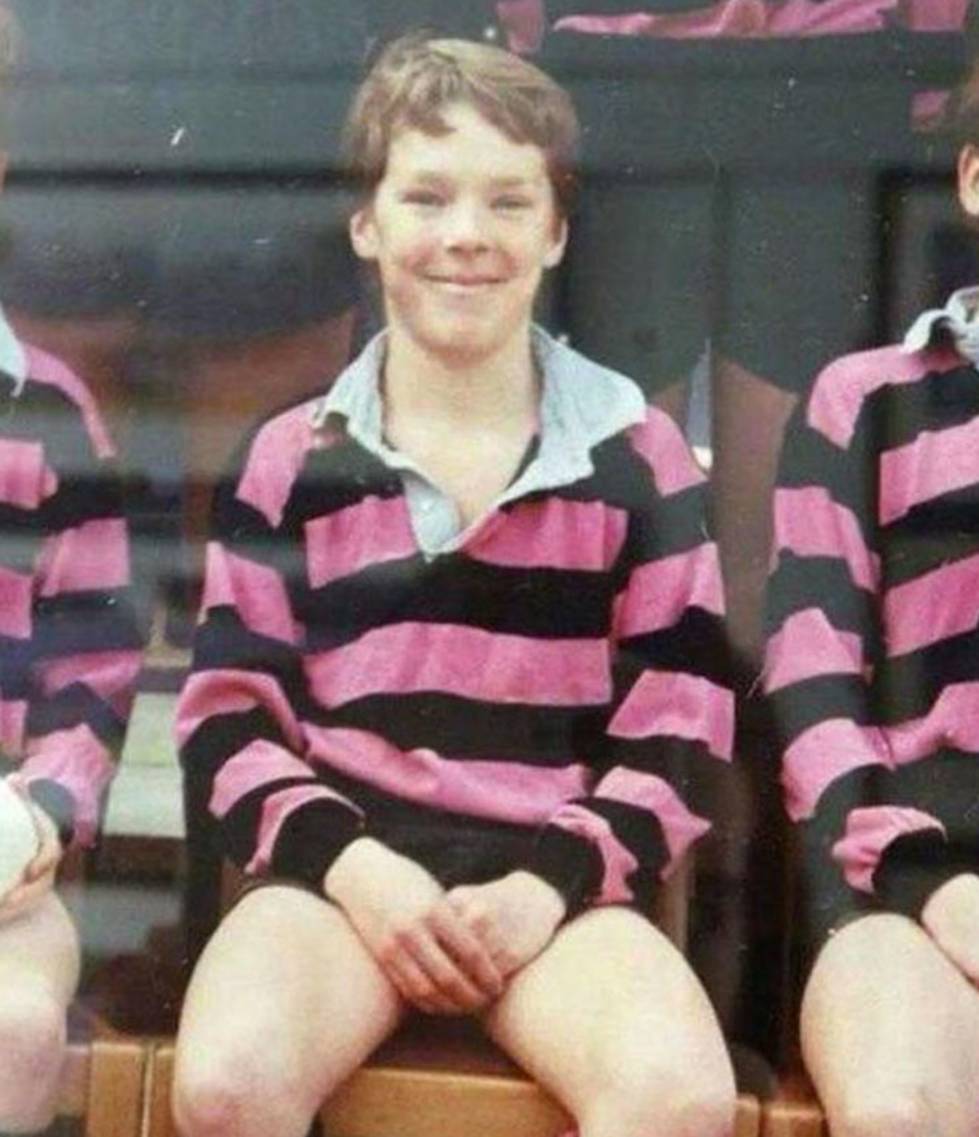
Benedict Cumberbatch, who turns 40 today, is pictured below at age 12, which is when he made his debut on the stage as Titania in a school production of A Midsummer Night’s Dream.

Actor in the Spotlight:

The new (NSFW) episode of No Small Parts focuses on late character actor Pete Postlethewaite:

[embedded content]

Filmmaker in Focus:

Jorge Luengo showcases Pedro Almodovar’s obsession with art with a side by side look at shots and the paintings they pay homage to:

[embedded content]

Genre Study of the Day:

Frame by Frame looks at Japanese horror cinema and explains how those specific movies scare us:

[embedded content]

Classic Trailer of the Day:

Today is the 25th anniversary of the release of Bill & Ted’s Bogus Journey. Watch the original trailer for the excellent sequel below.

[embedded content]

and

Let’s block ads! (Why?)


No Image

Sources: Murdochs Moving To Oust Roger Ailes After Sexual Harassment Allegations

Negotiations are underway to oust Fox News Channel Chairman and CEO Roger Ailes, NPR's David Folkenflik reports.

Negotiations are underway to oust Fox News Channel Chairman and CEO Roger Ailes, NPR’s David Folkenflik reports. Wesley Mann/Fox News/Getty Images hide caption

toggle caption Wesley Mann/Fox News/Getty Images

The Murdoch family is moving to oust the chairman of Fox News Channel after multiple women have accused him of sexual harassment, NPR’s David Folkenflik reports.

Roger Ailes is the co-founder, chairman and CEO of the news channel. Multiple sources at Fox News tell David that the Murdochs, who are controlling owners of parent company 21st Century Fox, are moving to push Ailes out of his prominent, powerful role.

21st Century Fox released this statement: “Roger is at work. The review is ongoing. The only agreement that is in place is his existing employment agreement.”

As we’ve reported, former Fox news anchor Gretchen Carlson sued Ailes for sexual harassment earlier this month. Ailes has denied the allegations.

Carlson says in the suit that she attempted to complain to Ailes about sexist treatment from her colleagues on Fox & Friends, to which Ailes replied, “I think you and I should have had a sexual relationship a long time ago.”

She alleges that Ailes repeatedly ogled her and commented on her body and that she was punished professionally for refusing Ailes’ advances.

David describes the charges as “a textbook example of quid pro quo sexual harassment.”

[embedded content]

Ailes denies the charges and accuses Carlson of retaliating against the end of her contract, as David reported last week. Ailes maintains that Carlson’s contract ended because of her ratings — not because she resisted his sexual overtures.

In her lawsuit, Carlson implied that other women at Fox News have been treated similarly and remained silent to protect their careers. Since her lawsuit became public, a half-dozen have come forward with similar allegations, which Ailes also denies.

New York Magazine reports that high-profile Fox News anchor Megyn Kelly, too, may have been harassed and might be involved with an outside investigation into Ailes’ behavior.

“If Megyn Kelly is testifying to this outside inquiry conducted by a major New York City law firm, Paul, Weiss, and she says he sexually harassed her, I think it’s ballgame over,” David said on NPR’s Here and Now earlier Tuesday.

David has more on the major players involved in the negotiations over Ailes’ future:

“Ailes, 76, is the visionary behind the channel’s winning formula. It is an Ailesian alchemy of conservative ideology, fast-paced reporting, highly sexed and confrontational presentation of debate, patriotic fervor and grievance.

“Rupert Murdoch is the man who founded it, and he is in the slow process of transitioning the control of the parent company over to his sons. Lachlan and James serve as News Corp. co-chairman and CEO of 21st Century Fox, respectively, and they have little affection for Ailes, who treated them with contempt earlier in their careers. …

“There is no clear successor to run the network once Ailes leaves. Shine, the senior programming executive, does not command the same level of respect from the Murdochs, while the former top news executive, Michael Clemente, was recently sidelined by Ailes. James Murdoch in particular is known to favor a model more like the Murdochs’ Sky News in Britain, which is lively but less openly political. And the Murdoch sons would like the company to reflect what they believe are more 21st century values.”

Let’s block ads! (Why?)


No Image

Maryland Switches Opioid Treatments, And Some Patients Cry Foul

A demonstration dose of Suboxone film, which is placed under the tongue. It is used to treat opioid addiction.

A demonstration dose of Suboxone film, which is placed under the tongue. It is used to treat opioid addiction. M. Spencer Green/AP hide caption

toggle caption M. Spencer Green/AP

Maryland Medicaid officials have made what appears to be a small change to the list of preferred medications to treat opioid addictions. The agency used to pay for the drug in a dissolvable film form. Now it’s steering patients to tablets, which some doctors say are not as effective for their patients.

Those doctors say the change is having a profound effect on some people struggling to stay clean.

Starting on July 1, Maryland’s Medicaid program removed Suboxone film — a drug that can be used by people addicted to opioids to keep their cravings at bay — from the state’s list of preferred drugs and replaced it with a tablet form of the medication called Zubsolv.

State officials say the change was made to stop the illicit flow of the drug into jails and prisons.

“Those Suboxone strips were diverted and smuggled into jails and later were sold or traded in criminal activity that was happening in jails,” says Shannon McMahon, deputy secretary of Maryland’s Department of Health and Mental Hygiene. “The numbers were frankly staggering, the amount of diversion that was happening in the jails.”

So far this year more than 2,300 hits of Suboxone have been seized in Maryland jails and prisons, according to Gerald Shields of the state’s Department of Public Safety and Correctional Services. That’s about 40 percent more than at this time last year, Shields says.

The drug helps people control their opioid habit. But it is also an opioid itself. It doesn’t produce a high as strong as many opioid painkillers that have turned into popular street drugs, but it does stave off cravings and can create a mild sense of euphoria.

It comes as a tiny, dissolvable film — about the size of a Listerine breath mint strip — that’s transparent and easy to hide.

“They have been cut up into multiple different pieces,” McMahon tells Shots. A single strip can be worth as much as $50 on the street and they are often divided into several “hits” that are sold individually, she says.

“They were coming into prisons through letters — backs of stamps, corners of folks’ eyeglasses,” she says. McMahon says the strips were causing problems in prisons because of illegal sales and trade.

So at the recommendation of the Department of Corrections, along with a panel that advises the state’s Medicaid program on medications, officials decided to replace the Suboxone strip with Zubsolv, made by a Swedish company called Orexo AB.

The choice is raising eyebrows because Maryland’s health secretary Van Mitchell used to work for Manis Canning & Associates, the lobbying firm that represents Orexo. Mitchell’s spokeswoman says he left the firm before Orexo became a client.

Mitchell and Steven T. Moyer, Maryland’s secretary of Public Safety and Correctional Services, argued in an article in the Baltimore Sun that the change would save lives. They said Maryland’s correctional system, since 2010, “has seen 13 fatal overdoses.” However, a spokeswoman for the state’s health department acknowledged that those were overdoses on opioids in general, and not specifically overdoses on Suboxone film.

Doctors say Suboxone film, as well as the Zubsolv pill that replaces it, actually protect against overdoses because they contain both the opioid Buprenorphine and a drug called naloxone that reverses the effects of an overdose. Naloxone is used by emergency responders to revive people who overdose.

The change has drawn broad opposition from doctors who treat people with substance abuse problems and from advocates for people who are recovering from addictions. Those include the Behavioral Health System of Baltimore, a nonprofit that oversees the city’s behavioral health system, and the Maryland Association for the Treatment of Opioid Dependence.

The change has wreaked havoc on some people with substance abuse problems who, until a few days ago used Suboxone film, says Adrienne Breidenstine, vice president for policy and communications at the Behavioral Health System of Baltimore.

One of them is Nicole, a mother of two who has been in recovery for about eight years. Nicole became addicted to painkillers after she was injured in a car accident. She was stable on Suboxone strips but switched to Zubsolv 10 days ago. She asked NPR not to use her full name because her history of addiction is not common knowledge.

“When I got on Suboxone I didn’t even have custody of my son,” she says. “After I got clean, I got put on Suboxone. I’ve got both my kids now, we have our own house, I’m working, they’re doing good in school, I finished school, and that’s why it’s so scary to me that they completely switched me over.”

Since the change, she says, she’s been feeling sick, having trouble sleeping, having cravings and symptoms of withdrawal.

“It hasn’t been working for me,” she says. “I don’t know what I’m going to do if they don’t cover it again. I just don’t want to go back to that life and I don’t want my kids to go there.”

Nicole’s doctor, Michael Fingerhood, has a primary care practice at Johns Hopkins Bayview Medical Center in Baltimore. His practice, which overlooks downtown Baltimore from across the water, welcomes people with substance abuse problems. The group treats about 450 patients who, until this month, were using Suboxone strips.

He says just two weeks into the change many of his patients, like Nicole, are struggling.

“This is taking patients who are stable, who are doing really well, and saying we’re going to do something to disturb how well you’re doing,” he tells Shots.

Fingerhood says Zubsolv is supposed to be the equivalent of Suboxone. But not all patients react the same to different medications. Many, like Nicole, have been clean for years and for the first time, they’re feeling sick again and some, he says, are in real danger.

Feeling even the slightest bit of withdrawal symptoms can be awful for someone in recovery, he says.

“In the midst of addiction people are searching for a high, they’re having withdrawal, they’re running the streets. Their lives were horrible,” Fingerhood says. “Having withdrawal brings back all those memories of how terrible life had been and it’s a terrible feeling to be in withdrawal.”

Shaking up all the Suboxone patients across the state to keep a relatively safe drug away from a handful of inmates doesn’t make sense, Fingerhood says. And the numbers are indeed pretty small.

If those 2,300 Suboxone hits seized in prison were whole strips — and prison officials say they weren’t — that’s still only the equivalent of about 10 prescriptions from January through last week.

Instead, Fingerhood says, “We should be providing treatment in the prison system.”

He says if someone who was on Suboxone gets arrested, it makes sense that family members or friends would try to get them the drugs in prison.

The only place in Maryland that inmates can legally get any medication to help get or keep them off opioids is in the Baltimore City Jail, according to Shields, the Department of Corrections spokesman. He says the system provides methadone to some inmates to help wean them off opioids before moving them to another prison.

State officials say Medicaid patients can still get Suboxone if they really need it. Doctors just fill out a form requesting a waiver, known as a prior authorization, and get an answer the next day.

Fingerhood made that request for Nicole. Five days later, he still had no response.

Let’s block ads! (Why?)