
Articles by admin

No Image

Shorter Enrollment Period For Obamacare Proposed By Administration

With Tom Price now at the helm of the Department of Health and Human Services, the administration has made its first regulatory proposal to change how people would sign up for Obamacare coverage.

Tom Williams/CQ-Roll Call Inc.

hide caption

toggle caption

Tom Williams/CQ-Roll Call Inc.

President Trump has promised to repeal and replace the Affordable Care Act without taking insurance away from the millions of people who gained coverage under the law.

On Wednesday his Department of Health and Human Services made its first substantive proposals to change the marketplaces for individual coverage, commonly known as Obamacare.

The proposed rules aim to keep insurers in the market during a transition to a new system. One way is to tighten up when people can sign up for coverage.

Insurers like Aetna. The company’s CEO, Mark Bertolini, said Wednesday that Obamacare is failing.

“It’s in a death spiral,” he said at a conference sponsored by The Wall Street Journal. “And in the first look at this quarter it’s not going to get any better. It’s getting worse.”

Bertolini hinted that Aetna may follow insurance giant Humana, which said Tuesday it was dropping out of the ACA exchanges altogether because not enough healthy people are buying insurance.

HHS’s proposed changes are designed to make the individual health care market less vulnerable to gaming by consumers. Insurance companies have complained that many people delay signing up until they’re sick and then drop coverage after getting care.

Article continues after sponsorship

The administration’s proposals include cutting the annual open enrollment period to about six weeks instead of three months — to reduce the number of people who buy a policy because they find out about a health issue during that time.

HHS will also require people who want to sign up for coverage during so-called special enrollment periods to first prove they qualify because of a life change like losing a job or getting divorced.

“The overall effect of many of the policies here would actually, over time, I think, actually shrink enrollment, not grow enrollment,” says Sabrina Corlette, a research professor at Georgetown University’s Center on Health Insurance Reforms.

The rules would make it harder to enroll, and adding more paperwork will just turn off more people, she says, citing research into Medicaid and other public benefit programs.

And the people who leave are likely to be the healthier ones, making the situation even worse for insurance companies. “Your healthy people are the ones who are going to be more likely to say, ‘Oh, this is too much of a pain in the neck. I’m not going to go through with this,’ ” Corlette says

Still, Caroline Pearson, senior vice president at consulting firm Avalere, says some change is needed. “The special enrollment periods are a real problem in the market,” she says.

Her research shows that people who buy insurance during special enrollment periods incur a disproportionate share of money spent on health care.

The HHS proposal also allows insurers to increase deductibles and copayments, by loosening the standards of coverage. Right now plans are rated in terms of what proportion of the costs a customer pays. The new rules would widen the band by 2 percentage points, so that a plan that’s marketed as covering 60 percent of health costs could actually pay for as little as 56 percent of those.

The proposal also says insurance companies can demand consumers pay off any missed premiums before they get a new policy.

Today, a consumer can enroll in a plan, pay for just one month and then continue coverage for 90 days before getting cut off. The following year, the insurance company has to write a new policy even if the person hasn’t paid for those three months.

“In total, I think that the rule is helpful for insurers but probably not enough to change plans’ minds in how to approach the exchange markets,” Pearson says. “Plans that were going to leave the market will probably still leave the market and plans that were inclined to stay in will probably stay in, albeit a little happier.”

Humana is, therefore, unlikely to rethink its decision because of these changes.

As HHS tried to stabilize Obamacare while Congress debates its ultimate fate, the IRS is relaxing its plans to enforce the ACA’s tax penalty.

The agency had planned to reject tax returns of people who didn’t say whether they had health insurance during the tax year. But the IRS changed that policy in response to Trump’s executive order directing all federal agencies to ease the burden of the health care law.

Taxpayers may still owe the penalty if they don’t have coverage, however.

“Legislative provisions of the ACA law are still in force until changed by Congress, and taxpayers remain required to follow the law and pay what they may owe,” the IRS said in an emailed statement.

Pearson at Avalere says the combined actions by HHS and the IRS could lead healthy people to drop their insurance coverage.

“In total, I actually think the exchange market is going to shrink in size, dramatically, as a result of both the rule and the IRS move.”

Let’s block ads! (Why?)


No Image

NFL Players Union Works To Block Illinois Workers' Comp Bill

The NFL players union says it will tell members not to sign with the Chicago Bears if a state workers’ comp bill passes. The bill reduces benefits for professional athletes injured during a game.

ROBERT SIEGEL, HOST:

Here are two things you can count on in professional sports – careers on average are very short, and within that small window of time athletes get hurt. Those two realities have collided in the Illinois legislature on the issue of workmen’s compensation. Lawmakers are considering a bill that would reduce workers’ comp benefits for pro athletes in the state. NPR’s Tom Goldman reports.

TOM GOLDMAN, BYLINE: Illinois is a place of distinction. It has the most nuclear power plants of any state. Twinkies were invented in Illinois. And it’s the only state in the union where professional athletes can claim a workers’ compensation wage differential until the age of 67. OK, about that last one. Here’s what it means.

In Illinois, if you get injured on the job and you’re forced to take a lower-paying job, workers’ comp law says you can collect about two thirds of the difference between what you made before the injury and after. That’s the wage differential. Illinois allows injured workers to claim it until the age of 67. That’s considered the average end to a working life – most working lives.

PATTY SCHUH: Everyone knows a professional athlete does not work in that career till the age 67.

GOLDMAN: Patty Schuh is a spokeswoman for Illinois Republican Senator Christine Radogno. Radogno is sponsoring Senate Bill 12. It singles out pro athletes and says sorry, guys. Since you don’t work in your job until 67, we’re not going to pay that wage differential until you’re 67. We’ll pay until you’re 35. The major pro sports teams in Illinois, all in Chicago, wrote a letter supporting the bill and noting that pro athletes in the NFL, NBA, baseball and hockey play on average three to five years.

This means many are done well before 35, which makes the proposed cutoff at 35 seem kind of generous until you talk to the NFL Players Association. The NFLPA hates Senate Bill 12. Remember, football players are very likely to get injured and need workers’ comp. George Atallah is a union executive.

GEORGE ATALLAH: Let’s just call it what it is. They are trying to set a limit on the ability of professional athletes to gain and earn a benefit for an injury that they suffered at work. And that’s not something that, frankly, the union takes kindly to.

GOLDMAN: The union is ready to act on its anger. Here’s NFLPA President DeMaurice Smith on Chicago’s “670 The Score.”

(SOUNDBITE OF RADIO SHOW, “670 THE SCORE”)

DEMAURICE SMITH: I will tell you from the bottom of my heart that this union will tell every potential free agent player, if this bill passes, to not come to the Bears.

GOLDMAN: Smith and the union say Senate Bill 12 will cut off injured athletes’ medical benefits at 35. Not true, says Chicago Bears general counsel Cliff Stein. Injury care will not change. But Stein says reducing the wage payments to athletes will tighten up an overly generous workers’ comp system.

CLIFF STEIN: Since 2005, no other teams in any other state have paid more money in workers’ compensation claims, settlements and awards than the teams in the state of Illinois.

GOLDMAN: Adding to this, some athletes who play and are injured in Illinois but don’t live there still make workers’ comp claims in the state. Cliff Stein can’t provide an exact number, but he says it’s been growing. Reducing workers’ comp wage payments for pro athletes will save teams money. The Chicago Tribune reports it could be as much as $1.7 million per athlete. But the Bears’ Cliff Stein says if the teams only cared about that they’d push to completely get rid of the athletes’ payments. Michigan did that. A handful of other states set workers’ comp limits for athletes.

Senate Bill 12 remains a work in progress, a small part of a comprehensive package of proposed reforms. NFL teams can start negotiating with free agents next month. Tom Goldman, NPR News.

Copyright © 2017 NPR. All rights reserved. Visit our website terms of use and permissions pages at www.npr.org for further information.

NPR transcripts are created on a rush deadline by Verb8tm, Inc., an NPR contractor, and produced using a proprietary transcription process developed with NPR. This text may not be in its final form and may be updated or revised in the future. Accuracy and availability may vary. The authoritative record of NPR’s programming is the audio record.

Let’s block ads! (Why?)


No Image

Today in Movie Culture: 'Beauty and the Beast' Wishes You a Happy Valentine's Day, Honest 'Batman Begins' Trailer and More

Here are a bunch of little bites to satisfy your hunger for movie culture:

Movie Promo of the Day:

To promote Disney’s upcoming live-action Beauty and the Beast remake, the movie’s cast members personally wish fans a happy Valentine’s Day on social media (click to see the video and more):

Celebrate love with #BeautyAndTheBeast! Choose who sends you a #BeOurGuest message. ?????? https://t.co/WIDUJjXeXY

— Beauty and the Beast (@beourguest) February 13, 2017

Movie Scene Reenactment of the Day:

Speaking of Disney movies, for the holiday, Oh My Disney got strangers to attempt to recreate the iconic spagetti dinner scene from Lady and the Tramp:

[embedded content]

Supercut of the Day:

Perfect for the holiday, here is a collection of great couples in movies, including Manhattan, Titanic, The Princess Bride and La La Land by Alejandro Villarreal:

[embedded content]

Screenwriting Lesson of the Day:

With a classic romantic comedy for Valentine’s Day, Lessons from the Screenplay looks at how When Harry Met Sally breaks genre conventions:

[embedded content]

Vintage Image of the Day:

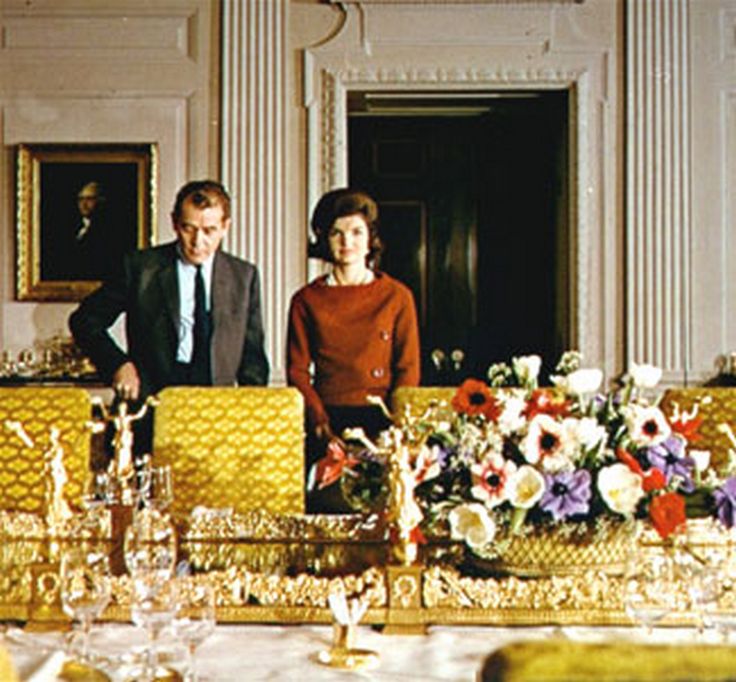
Jacqueline Kennedy with TV journalist Charles Collingwood during the filming of A Tour of the White House with Mrs. John F. Kennedy, which aired on this day in 1962 and is reenacted in the new movie Jackie:

Movie Takedown of the Day:

Batman Begins is taken down a notch by some real Jokers with the latest Honest Trailer:

[embedded content]

Movie Trivia of the Day:

Speaking of the Caped Crusader, since there’s a new movie starring him in theaters, here’s some trivia about the 1989 Batman:

[embedded content]

Alternate Ending of the Day:

And one more Batman thing, here’s an animated depiction of how the title fight in Batman v Superman: Dawn of Justice really would have gone down:

Video Essay of the Day:

For Fandor Keyframe, Jacob T. Swinney explores the term “Oscar bait” and whether it should be considered derogatory:

[embedded content]

Classic Trailer of the Day:

Today is the 25th anniversry of the release of Wayne’s World. Watch the original teaser for the comedy classic below.

[embedded content]

and

Let’s block ads! (Why?)


No Image

Indian IT Outsourcers Anxious Over Potential Changes To H1-B Visas

Members of the Indian media watch Rajiv Bansal, then the CFO of Infosys, during the announcement of the company’s first quarter results in July 2014 in Bangalore. Indian software services firms draw tens of billions of dollars in revenue from U.S. contracts each year, and that’s partly reliant exporting computer science talent on H1-B visas.

Manjunath Kiran/AFP/Getty Images

hide caption

toggle caption

Manjunath Kiran/AFP/Getty Images

With the Trump administration vowing to tighten rules for skilled workers entering the United States, India’s software services companies are worried. Indian IT giants outsource tens of thousands of tech specialists to the United States each year, and limiting the visa program that brings them in could disrupt their multibillion-dollar industry.

Congress and the White House have targeted what is arguably the most coveted of U.S. visas: the H1-B. It’s “a kind of temporary work visa that allows professionals from other countries to work in the United States for a designated U.S. employer,” explains Stephen Yale-Loehr, a Cornell University immigration law professor.

Yale-Loehr says that with the economy strengthening, the program is in particularly big demand. Last year, U.S. companies that sought to bring highly skilled workers to the U.S. filed 236,000 petitions that went into a lottery for just 85,000 H1-B visas, the legal cap. The bulk of the winners: Indian computer specialists, many of them graduates of U.S. universities.

Yale-Loehr says that places like Europe and Australia have special visas to attract such talent, but that the United States doesn’t.

Article continues after sponsorship

“We have to shoehorn high-tech workers into categories like the H1-B, and it’s getting more difficult every year,” he says.

For many H1-B holders, the temporary work visa — issued for a maximum of six years — has been a stepping stone to obtaining a green card. That grants permanent residence in the U.S., and in turn provides a path to citizenship.

But newly introduced legislation in Congress and drafts of executive orders reportedly circulating in the Trump White House that could limit the H1-B program.

Executives from the software services firms will travel to Washington this month to lobby against measures that threaten one of India’s most successful industries — which last year earned 60 percent of its $108 billion in export revenues from the U.S.

One bill proposes more than doubling the minimum wage of H1-B holders, which by law is set at $60,000. Critics argue the H1-B has been misused to displace American workers, and that there has been an incentive to prefer Indian IT workers because they are cheaper.

Shailesh Chitnis, with the data mining and analysis company Compile, says that while the median salary for all H1-B holders is $71,000, most but not all Indian outsourcers pay below that. If they had to double salaries, Chitnis says, Indian IT companies would have to change their 20-year-old business model.

“Because these organizations are not going to be bringing in people at $120,000 to fill those jobs — it would simply be too expensive,” he says. “They’ll have to look at some other alternatives.”

But Shevendra Singh with India’s National Association of Software Services Companies, or NASSCOM, refutes allegations that Indian companies are dislocating American workers or supplying low-paid labor. Singh says there is demand in the U.S. for Indian technical talent because of a severe shortage of qualified Americans with degrees in science, technology, engineering and math.

“The crux of the issue is the STEM skill shortage in the U.S.,” Singh says.

In its 2012 report, the U.S. president’s Council of Advisors on Science and Technology found that “fewer than 40-percent of students who enter college intending to major in a STEM field complete a STEM degree.” The council concluded that by 2022, economic forecasts suggested a need to produce “approximately 1 million more college graduates in STEM fields than expected under current assumptions.”

R. Chandrashekhar, president of NASSCOM, says that if the skills aren’t available in the U.S. — and companies can’t bring workers in — the jobs either won’t get done or they will go out of the country and be done remotely.

“Talent has become more important than investment or trade,” he says. “And those who consciously cut themselves off from the global supply chains of talent are depriving themselves of a good thing.”

Chandrashekhar notes that the intermingling of American and Indian ingenuity helped build Silicon Valley, and saysprotectionist impulses could weaken the United States, and what makes it unique.

“America is No. 1,” Chandrashekhar says. “What has really helped them to rise, absolutely, to the top, is that they have attracted talent from across the world. … It would be really a pity if that was reversed without thinking it through.”

Immigration expert Yale-Loehr, co-author of a 21-volume treatise on immigration law, agrees that the United States faces a crisis in maintaining its innovative and competitive edge, and says it should be inviting more, not less, IT talent to its shores.

“In a globalized economy, the best and the brightest want to work in the best places — and if they’re unable work in the United States, or it takes too long or is too difficult, they’ll find a place in Canada or Europe or India where their talents can be appreciated,” he says.

If implemented, Yale-Loehr says the draft executive order would initiate a review of the H1-B program but likely have no direct, immediate impact.

However, he says “it sends a strong signal that we no longer like foreign workers — we’re all about only U.S. workers.

“That is eventually going to hurt us.”

Let’s block ads! (Why?)


No Image

Congress Moves To Overturn D.C. 'Death With Dignity Law'

Protesters in favor of Washington, D.C’s assisted suicide law outside of congressional office buildings on Feb. 13, 2017.

Martin Austermuhle/WAMU

hide caption

toggle caption

Martin Austermuhle/WAMU

A version of this story was originally published by member station WAMU.

With the GOP fully in control of the federal government for the first time since 2006, Congressional Republicans are taking their first steps to assert their power over the District of Columbia’s local government.

After an impassioned debate, the House Oversight and Government Reform Committee voted Monday evening to block a D.C. law giving District physicians the right to prescribe lethal medication to terminally ill patients who have less than six months to live.

Committee chair Jason Chaffetz and other Republican conservatives have argued that the D.C. law should be nullified because it runs counter to ethical prohibitions against suicide. Most of the Republicans on the committee framed their opposition as a “pro-life” stance, with a number expressing concerns that the D.C. law could leave vulnerable dying patients at the mercy of physicians and relatives eager to hasten their exit.

“I worry that assisted suicide will create a marketplace for death,” Chaffetz said.

Rep. Darrell Issa R-Calif., who represents one of six states that already have enacted legislation similar to D.C.’s right-to-die bill, was the only Republican to vote against the measure. Issa argued that given Congress’ failure to stop such legislation nationally, he didn’t think interference in D.C. affairs was justified.

Article continues after sponsorship

In a statement after the committee vote, Mayor Bowser called it “a signal to DC residents that Congress has zero respect or concern for their will or the will of their elected officials.”

Though the District gained an elected mayor and legislature in 1973, Congress retained broad authority over the city. That included the right to disapprove of bills — or, in simpler words, block bills passed by the D.C. Council from taking effect. But that right has been used sparingly: Congress has only formally blocked three D.C. bills over the last 45 years.

The panel voted 22-14 in favor of sending to the House floor the bill to the House floor. However that may be as far as it goes.

Unless conservative Republican backers of the manage to get the committee-passed “resolution of disapproval” through the House and Senate and signed by President Donald Trump by the end of the week — an exceedingly uphill battle given the normal pace of Congress — the law appears likely to take effect as passed by D.C. Council and signed into law by Mayor Muriel Bowser.

The bill becomes law if it is not blocked within 30 legislative working days of being sent Congress. By the D.C. City Council’s calculations, time is up for opponents of the Death With Dignity bill on or about Saturday.

That leaves an almost impossibly narrow window for floor votes in the House and Senate. Moreover, it is not even certain that Trump would sign a disapproval resolution. White House press secretary Sean Spicer refused to say what the president might do when asked about the Death With Dignity law at a press briefing last week.

The audience at the committee meeting, which lasted until past 7:30, included activists in the right-to-die movement, including at least one who considers herself a potential beneficiary: Mary Klein, a 69-year-old D.C. resident who is dying of cancer. In an earlier interview with WAMU, Klein described the measure’s passage, by an 11-2 D.C. Council vote in November, as “a great relief.” Dan Diaz, the widower of Brittany Maynard, a young woman who wrote about her decision to end her life after a long battle with brain cancer, also turned up “to support D.C.,” he said.

Let’s block ads! (Why?)


No Image

UConn Women Win Historic 100th Game In A Row

Connecticut’s Napheesa Collier, (center) celebrates with teammates (from left) Crystal Dangerfield, Saniya Chong and Gabby Williams in Storrs, Conn., after beating South Carolina 66-55 — the Huskies’ 100th win.

Jessica Hill/AP

hide caption

toggle caption

Jessica Hill/AP

Pushing their win streak to a new level — triple digits — the University of Connecticut’s women’s basketball team achieved a milestone Monday, beating No. 6 South Carolina, 66-55, for their 100th win.

No other basketball team, male or female, has neared the mark in the NCAA.

As of Monday night, the last time UConn lost a game was 818 days earlier — back in November of 2014, when another No. 6 team — Stanford — got the better of the Huskies in overtime. That was a road game for UConn; last night’s game was a home win, and former Huskies stars such as Sue Bird, Maya Moore and Breanna Stewart turned out to watch Coach Geno Auriemma’s latest run at history.

Putting the team’s feat in perspective, Christine Brennan of USA Today tells Morning Edition that the only attainment left for UConn to pursue might be the one that Wayland Baptist University set in the 1950s, when they won 131 straight.

“That was in the days of the AAU,” Brennan says, “so I guess UConn has one more streak to go.”

Article continues after sponsorship

She notes that the legendary UCLA men’s team under John Wooden won 88 games in a row.

“Bottom line,” she says, is that in the NCCA, “no one’s ever done this.”

Two of UConn’s four consecutive national championships happened during the streak. More than a quarter of their 100 wins came against ranked opponents, the NCAA says — but only two games ended with a margin of fewer than 10 points.

“There haven’t been too many stressful games for the Huskies faithful to watch,” the NCAA adds.

In last night’s game in Storrs, Conn., South Carolina worked to slow the pace and keep the game close in the first half and trailed by only three points in the third quarter. But the Huskies responded with stifling defense and strong rebounding to build on the 35-29 lead it had amassed at halftime.

And even though UConn’s leading scorer, Katie Lou Samuelson, being held to under 10 points, junior Gabby Williams stepped up with a career-high 26 points and 14 rebounds — along with four steals and two blocks — to help the Huskies reach the 100-win mark.

Let’s block ads! (Why?)


No Image

Today in Movie Culture: 'Fatal Attraction' Political Parody, 'Deadpool II' Fan Poster and More

Here are a bunch of little bites to satisfy your hunger for movie culture:

Movie Parody of the Day:

Beck Bennett plays Jake Tapper and Kate McKinnon is Kellyanne Conway in Saturday Night Live‘s new Fatal Attraction-inspired political sketch:

[embedded content]

Fictional Event Anniversary of the Day:

Today is the day that Joel began erasing Clementine from his memory in Eternal Sunshine of the Spotless Mind. Here’s a video about the event from IMDb:

Fan-Made Poster of the Day:

This poster for the forthcoming Deadpool II pays tribute to another Ryan Reynolds movie, Buried (via /Film):

Deadpool 2 Fan Poster

Cosplay of the Day:

Speaking of Deadpool, here’s a fan dressed up as the antihero but with a suit made of scaly armor (via Fashionably Geek):

Scale Armored Deadpool

Oscars Montage of the Day:

For Fandor Keyframe, Philip Brubaker looks into black filmmakers represented at the Academy Awards:

[embedded content]

Supercut of the Day:

For no special reason, here is a very well-edited supercut of car scenes in movies by Filippo Lorenzi (via Cinematic Montage Creators):

[embedded content]

Vintage Images of the Day:

Kim Novak, who turns 84 today, with Alfred Hitchcock and James Stewart in photos from the set of Vertigo in 1957:

Alfred Hitchcock, James Stewart and Kim Novak behind the scenes of Vertigo pic.twitter.com/zIAHfg4jiF

— GoldenAgeHollywood (@ClassicalCinema) May 9, 2015

Filmmaker in Focus:

Art of the Film puts the spotlight on the movies of Danny Boyle with focus on their cinematography (via Live by Films):

[embedded content]

Filmmaking Lesson of the Day:

While many videos celebrate the visuals of David Fincher’s Fight Club, here’s Film Radar on the beauty of its sound design:

[embedded content]

Classic Trailer of the Day:

Today is the 30th anniversary of the release of Mannequin. Watch the original trailer for the comedy classic below.

[embedded content]

and

Let’s block ads! (Why?)


No Image

UConn Achieves 100th Consecutive Win, Beats South Carolina 66-55

Connecticut head coach Geno Auriemma, right, reacts as Connecticut’s Gabby Williams (15) is congratulated by associated head coach Chris Dailey and embraced by assistant coach Marisa Moseley at the end of an NCAA college basketball game against South Carolina, Monday night in Storrs, Conn. UConn won their 100th straight game, 66-55.

Jessica Hill/AP

hide caption

toggle caption

Jessica Hill/AP

Add 100 consecutive wins to the UConn Huskies’ long list of milestones.

Given the team’s glitzier numbers linked to national championships, 11 titles and counting, it may seem ho-hum with no added significance. Geno Auriemma’s squad already owns the longest winning streak in Division I college basketball history. UConn beat its own record of 90 consecutive wins earlier this season with little fanfare.

Getting No. 100 was a little tougher than many of the previous 99, which UConn won by an average 38.7 points. Gabby Williams scored a career-high 26 points and Napheesa Collier added 18 to help the top-ranked Huskies beat No. 6 South Carolina 66-55 on Monday night in front of a sellout crowd of 10,167 that included past greats Sue Bird, Maya Moore, Tina Charles and Breanna Stewart, who helped the Huskies to the first 75 wins of this streak.

“Feels good to carry on the legacy they started,” Collier said. “Hope we are doing them justice.”

The current group of Huskies (25-0) had to work for this win. South Carolina (21-3) used its stellar interior game of A’ja Wilson and Alaina Coates to take a 29-28 advantage late in the first half. The Huskies responded scoring the final seven points before the break. Collier and Williams had all of them, including a steal and layup by Collier with 3 seconds left that made it 35-29.

“They are opportunistic,” South Carolina coach Dawn Staley said. “They wait for you to make the mistakes and don’t foul a whole lot. … You have to execute it for 40 minutes, if you don’t they’ll make you pay.”

South Carolina cut its deficit to 40-37 midway through the third quarter, but Williams had consecutive layups to start an 11-2 run to close the period and basically seal the win.

“We just tried to stay poised and keep our composure, and just be more confident than the other team,” Williams said.

After the game ended, fake hundred dollar bills dropped from the roof of the arena with Auriemma’s face on them. The student section spelled out 100.

Auriemma never thought his team would come close to reaching the century mark, let alone break the previous record set by the Huskies from 2008-10. The Hall of Fame coach set up the most difficult non-conference schedule in the country, playing five of the top eight teams in the AP before Monday, including road games at No. 2 Maryland, No. 4 Florida State and No. 7 Notre Dame.

UConn came away victorious in each one. The game against the Gamecocks may be the Huskies’ last challenge before the NCAA Tournament. They are 75-0 in the American Athletic Conference since joining in 2013.

Considering they most likely won’t leave the state of Connecticut until the Final Four in Dallas with the first two rounds on campus and then a regional in Bridgeport, the streak may not end anytime soon.

NPR thanks our sponsors

Let’s block ads! (Why?)


No Image

Episode 754: I'm So Happy For You!

Valentine’s Day candy.

Melissa Deakin Photography/Getty Images

hide caption

toggle caption

Melissa Deakin Photography/Getty Images

Regret. Self-loathing. Jealousy. Love. Happy Valentine’s Day! We have it all.

When we’re not making podcasts, we’re reading and watching and listening to stories on other podcasts and magazines and websites. And when we love something, we always ask, “Why didn’t we do that?”

Today on the show, we bring you the little stories that we love so much we wish we had thought of them ourselves.

Our valentines go out to:

  • Ann Wroe, The Economist’s obituary writer, who reveals the secret of distilling a life into a page.
  • Timothy W. Martin’s story about a pension fund manager who does nothing all day, and is beating everyone.
  • Ernie Smith, the founder of Tedium, who makes the boring fascinating.
  • Ryan Staake, who directed the video for Young Thug’s ‘Wyclef Jean’out of more or less, nothing.
  • Tanner Braungardt, a young, Kansas-based YouTube star who has built a miniature media empire out of his friends and his obsession with back flips and trampolines.
  • Reductress, a satirical women’s magazine. Kind of like The Onion meets Cosmo.
Article continues after sponsorship

*Note: We got the whole idea from Bloomberg BusinessWeek’s annual “Jealousy List.” Yeah, we were jealous of it.

Music: “Hep Cat“, “Run for the Levee” and “Move On.” Find us: Twitter/ Facebook.

Let’s block ads! (Why?)


No Image

Trump Navigates The Hazard Of Presidential Golf Outings

President Trump and Japan’s Prime Minister Shinzo Abe play golf at Trump National Golf Club in Jupiter, Fla., on Saturday.

JIJI PRESS/AFP/Getty Images

hide caption

toggle caption

JIJI PRESS/AFP/Getty Images

President Trump played golf this weekend, but he wanted to make it clear that he was not just kicking back and relaxing.

“The President enjoyed hosting Prime Minister Abe on the golf course today, which was both relaxing and productive,” the White House said in a statement. “They had great conversations on a wide range of subjects.”

Played golf today with Prime Minister Abe of Japan and @TheBig_Easy, Ernie Els, and had a great time. Japan is very well represented!

— Donald J. Trump (@realDonaldTrump) February 11, 2017

Japanese Prime Minister Shinzo Abe joined Trump at his Mar-a-Lago Club in Palm Beach, Fla., for the weekend, and the two played a round with South African golfer Ernie Els at the Trump National Golf Club in Jupiter, Fla., on Saturday.

The press was not allowed to cover Trump’s outing, though the Washington Post obtained some cellphone video of the president appearing to tee off on Saturday.

[embedded content]

It’s important for Trump to let it be known that his golf outing is a working golf outing, lest he be charged with hypocrisy.

Tee times have been a source of partisan attacks on presidents in recent years. Trump himself was a vocal critic of the amount of time President Obama played golf, falsely suggesting in 2015 that Obama played 250 rounds in one year. Politifact noted that the figure was Obama’s golf record over seven years.

Article continues after sponsorship

“I don’t have time for that. I love golf, I think it’s one of the greats, but I don’t have time,’ Trump said at the time.

Throughout Obama’s term, Trump would tweet often when his predecessor was out on the course, which Obama was fairly regularly on weekends and while away from Washington on vacation — as Trump critics were quick to point out this weekend.

.@realDonaldTrump You criticized Obama for golfing A LOT. pic.twitter.com/UOaGKFLoPj

— Jordan Uhl (@JordanUhl) February 11, 2017

Obama spoke of using sports for relaxation in 2014. “When I need to relax and clear my head, I turn to sports. Whether it’s a pick-up basketball game — and I’m much slower than I was just last week — or more sedate pastimes like golf,” Obama said.

Obama’s golf habit was once defended by President George W. Bush, who faced his own criticism over playing golf during war time.

Bush told the Golf Channel in 2013 that it was “good” for Obama to play golf. “I know the pressures of the job, and to be able to get outside and play golf with some of your pals is important for the president. It does give you an outlet,” Bush said.

[embedded content]

President Bush stopped playing golf altogether during the first year of the Iraq War, though Bush’s claim of exactly when he stopped playing was later questioned.

“I don’t want some mom whose son may have recently died to see the commander-in-chief playing golf,” Bush explained to Politico in 2008.

Bush said he decided to stop playing golf after word of a particularly devastating bombing in Baghdad that claimed the life of a senior U.N. official came to him on a Texas golf course in August of 2003, though his last recorded round as president was two months later.

As for Trump, he’s golfing sooner into his term than either of his two immediate predecessors — though neither owned their own golf resorts, to be fair. Politico recounted recently that Obama didn’t golf until four months into his presidency and Bush waited more than five months.

Trump spent several hours at Trump International Golf Club in West Palm Beach, Fla., last weekend, though the White House declined to say whether he was actually playing golf.

Following his outing with Abe on Saturday, Trump went to Trump International on Sunday.

But the White House took care to put out a schedule of meetings that the president was taking, ensuring that no one was under the impression he had time for 18 more holes.

Let’s block ads! (Why?)