Articles by admin

No Image

Serena Williams Is Pregnant, Due In The Fall

Serena Williams holds her trophy after defeating her sister Venus during the women’s singles final at the Australian Open tennis championships in Melbourne, Australia in January.

Dita Alangkara/AP

hide caption

toggle caption

Dita Alangkara/AP

Tennis star Serena Williams, the highest paid female athlete in the world, is expecting her first child sometime this fall.

Speculation about her pregnancy began earlier Wednesday when Williams posted a picture of herself on Snapchat. She was wearing a one-piece bathing suit with a caption reading “20 weeks.” The photo was later deleted.

Williams’ spokeswoman, Kelly Bush Novak, ended any doubts in an email to the Associated Press. “I’m happy to confirm Serena is expecting a baby this Fall.”

Last month the 35-year-old Williams pulled out of California’s BNP Paribas Open due to a knee injury. She last played in late January, winning the Australian Open by beating her sister Venus Williams and capturing her 23rd Grand Slam title. She was likely two months pregnant at the time.

Williams is engaged to Reddit co-founder Alexis Ohanian.

Her sponsorship deals rake in about $20 million and business analysts say her impending motherhood would likely enhance her popularity among corporate sponsors.

Let’s block ads! (Why?)


No Image

Young Women Make Economic Strides As Young Men Fall Behind In U.S.

Here’s the good news about young adults in the U.S. over the past four decades: More of them are working full time and year-round.

In 1975, close to 67 percent of adults from ages 25 to 34 were employed full time, and that share increased to 77 percent by 2016, according to a new report on young adults by the U.S. Census Bureau.

A closer look at the numbers, though, reveals a gender divide — with young women making economic strides and young men falling behind.

The percentage of young men in the U.S. workforce has not shifted much from just under 85 percent in 1975. But the share of young women working full time has jumped from just shy of one-half (49 percent) to more than two-thirds (70 percent) over the past four decades. And more of them are moving into higher income brackets: The share of young women earning $60,000 or more (in 2015 dollars) increased from around 2 percent to 13 percent.

In fact, young female workers have been driving the growth of the young workforce in the U.S. since 1975.

Their male counterparts, on the other hand, appear to be on the economic decline.

“They are falling to the bottom of the income ladder,” says Jonathan Vespa, a demographer at the Census Bureau who wrote the report.

The share of young men making less than $30,000 a year, he writes in the report, has “swelled” from 25 percent in 1975 to around 41 percent in 2016. There have also been a drop in the share of young men making $30,000 to $59,999 — from almost half (49 percent) to more than a third (35 percent).

“It is little surprise then that those still living with parents are disproportionately young men,” writes Vespa, adding that today young men are more likely to be idle — not in school and not working — than 40 years ago.

Despite these shifts, a gender gap in young men’s favor remains. While young women have seen a $6,000 jump in their median income (from $23,000 to $29,000), it is still $11,000 lower than the median income of young men.

Let’s block ads! (Why?)


No Image

Many Veterans Gained Health Care Through The Affordable Care Act

Medicaid expansion has helped low-income veterans gain health insurance, a report finds.

ERproductions Ltd/Blend Images RM/Getty Images

hide caption

toggle caption

ERproductions Ltd/Blend Images RM/Getty Images

Almost half a million veterans gained health care coverage during the first two years of the Affordable Care Act, a report finds.

In the years leading up to the implementation of the ACA’s major coverage provisions, from 2010 to 2013, nearly 1 million of the nation’s approximately 22 million veterans didn’t have health insurance. Almost half of all veterans are enrolled in the VA health system; others get health care through employers or Medicare. But some don’t quality for those options, and others don’t know that they have them.

Two years after the ACA’s implementation, 429,000 veterans under the age of 65 gained coverage, which is a 40 percent drop in vets without insurance from 2013 to 2015. The vets were covered for the most part through Medicaid expansion, privately purchased plans and marketplace coverage, according to the report.

The number of insured veterans rose across demographics like age, gender, race and education level. “The gains in coverage were really broad,” says Jennifer Haley, a research associate at the Urban Institute, a research group based in Washington, D.C., who was an author on the report.

Veterans with the lowest incomes saw the greatest increase in coverage, especially in states that adopted Medicaid expansion. Vets with incomes up to 138 percent of the federal poverty level, or $16,394 a year for an individual, became eligible for Medicaid in expansion states, the report notes.

In 2015, just 4.8 percent of veterans were uninsured in states that participated in Medicaid expansion, compared to 7.1 percent in states that did not.

One in 5 uninsured vets live in states that did not expand Medicaid and would have been eligible for coverage had their state chosen to expand the program, the report found. Haley says these are key data points when considering changes to policy.

“If states would adopt the expansion, more vets would qualify for publicly supported coverage,” she says. Currently, 31 states and the District of Columbia have expanded Medicaid programs, including California, New York, Pennsylvania and Illinois. Another 19 states, including Florida and Texas, have not expanded access to the program.

Veterans weren’t the only ones to benefit from expanded insurance access. Their family members had access to more coverage, too, and by a similar margin.

The overall rate of uninsurance among relatives sank from 9.2 percent in 2013 to 4.5 percent in 2015. For children, the rates fell from 4.5 to 2.9 percent. Overall, 730,000 fewer vets and their family members were lacking health insurance from 2013 to 2015.

The report, published by the Urban Institute, used data from the American Community Survey, which is performed annually by the U.S. Census Bureau. It surveys around 100,000 veterans and 100,000 family members of veterans. The report also considered data from the National Health Interview Survey which is conducted by the Centers for Disease Control and Prevention’s National Center for Health Statistics.

A repeal of the ACA or a rollback of Medicaid could negate these coverage increases and leave more vets without health insurance coverage, the authors note in their report. The VA health system continues to struggle with delays in delivery of services to veterans.

On Wednesday, President Donald Trump signed a law extending the Veterans Choice program, which allows some vets get health care from private providers paid for by the VA and was created to help improve access to timely care.

The $10 billion program has been riddled with problems, as Montana Public Radio’s Eric Whitney reports, including long waits, a confusing, complicated system and delayed payments to providers.

Let’s block ads! (Why?)


No Image

Pink Martini On Mountain Stage

Pink Martini returns to Mountain Stage, recorded live at the Clay Center in Charleston, W.Va. Originally founded in 1994 as a performance ensemble to liven up political fundraisers, the Oregon-based group has since grown into an international sensation with its cosmopolitan mix of classical, lounge and pop-jazz. The group has collaborated with a range of artists and styles over the years, whether it’s recreating nightclub magic with Carol Channing, singing German lullabies with the von Trapps or starting singalongs with the original cast of Sesame Street.

After sitting in with over 500 orchestras around the world and performing at (if not selling out) opera houses and music halls, the critically-acclaimed “little orchestra” makes its third appearance on Mountain Stage with a mix of new favorites and old standards from its multilingual, multi-genre repertoire.

Pink Martini’s ninth studio release is Je Dis Oui!, out now on the band’s own label, Heinz Records, and featuring guest vocals from fashion guru Ikram Goldman, multi-instrumentalist Rufus Wainwright and NPR’s own Ari Shapiro.

SET LIST

  • “Amado Mio”
  • “The Butterfly Song”
  • “Joli Garçon”
  • “Ov Sirun Sirun”
  • “Je Ne Veux Pas Travailler”
  • “Askim Bahardi”
  • “Yo Te Quiero Siempre”
  • “Una Notte A Napoli”
  • “Hey Eugene”
  • “Pata Pata”
  • “Malaguena”
  • “Brasil”

Let’s block ads! (Why?)


No Image

Today in Movie Culture: Rob Liefeld Draws Josh Brolin as Cable, Behind the Cars of 'Fast and the Furious' and More

Here are a bunch of little bites to satisfy your hunger for movie culture:

Casting Rendition of the Day:

Cable creator Rob Liefeld drew Josh Brolin as the character, whom the actor be playing in Deadpool 2:

Cable. #robliefeld #marvel #xforce #robliefeldcreations #cable #deadpool

A post shared by RobertLiefeld (@robliefeld) on Apr 17, 2017 at 3:24pm PDT

Craftwork of the Day:

Watch Dennis McCarthy explain every vehicle that he built for the Fast and the Furious movies in this video for Wired:

[embedded content]

Movie Takedown of the Day:

With Split out on video today, Honest Trailers put it all together that M. Night Shyamalan still isn’t completely great again:

[embedded content]

Bad Film Analysis of the Day:

Find out the hidden meaning of Arrival from an alien in the future in the latest Earthling Cinema:

[embedded content]

Vintage Image of the Day:

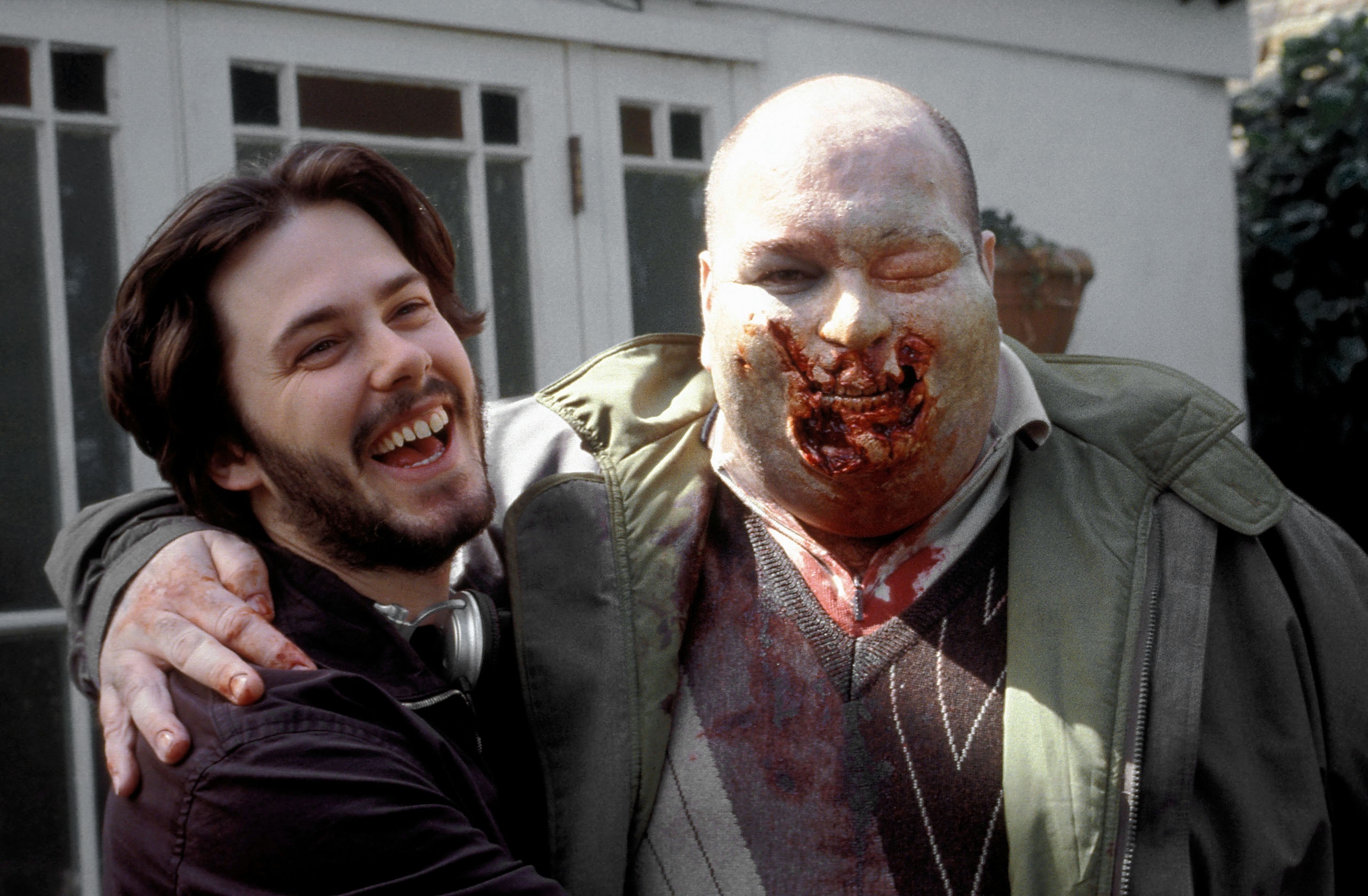
Edgar Wright, who turns 43 today, with zombie extra Mark Donovan on the set of 2004’s Shaun of the Dead:

Filmmaker in Focus:

Candice Drouet highlights the beautiful set design of Wes Anderson movies in her new Really Dim video:

[embedded content]

Actor in the Spotlight:

For Fandor Keyframe, Philip Brubaker shows us what it is to be Michael Caine:

[embedded content]

Cosplay of the Day:

We may never get Ron Perlman as Hellboy again, but we will always have great cosplayers in the role, like this one (via Fashionably Geek):

Supercut of the Day:

When one art showcases another, here’s a supercut of architecture in cinema by editor Jorge Luengo:

[embedded content]

Classic Trailer of the Day:

This week is the 30th anniversary of the release of Project X starring Matthew Broderick, Helen Hunt and a bunch of chimpanzees. Watch the original trailer for the movie below.

[embedded content]

and

Let’s block ads! (Why?)


No Image

Episode 765: The Holiday Industrial Complex

#NationalCaramelDay

AJ Mast/Invision for Werther’s Original via AP

hide caption

toggle caption

AJ Mast/Invision for Werther’s Original via AP

Today, we want to wish you a happy Pet Owners Independence Day! And, a static-free International Amateur Radio Day! Also, a calming National Stress Awareness Day. Today is all of that and more. There are too many holidays to count.

It seems like there are legions of people inventing holidays to get people to buy more things. But even more of them are just… weird. So we figured if we could follow the events that got one of these questionable holidays on TV, then maybe there was a way to find out who is running the holiday machine.

We picked National Splurge Day. It was easy enough to find coverage about it. But few people wanted to talk about how it wound up on their television shows.

Today on the show, we journey to the center of the holiday industrial complex. And we go on a trip that takes us from harried TV news bookers to the halls of Congress to a storage locker in Chicago.

Music: “Baiser Fatal” and “Big Black Boots.” Find us: Twitter / Facebook.

Subscribe to our show on iTunes or PocketCast.

Let’s block ads! (Why?)


No Image

Secret Data On Hospital Inspections May Soon Become Public

Medical errors are a leading cause of death and injuries in U.S. hospitals, according to the Institute of Medicine.

VILevi/Getty Images/iStockphoto

hide caption

toggle caption

VILevi/Getty Images/iStockphoto

The public could soon get a look at confidential reports about errors, mishaps and mix-ups in the nation’s hospitals that put patients’ health and safety at risk, under a groundbreaking proposal from federal health officials.

The Centers for Medicare and Medicaid Services wants to require that private health care accreditors publicly detail problems they find during inspections of hospitals and other medical facilities, as well as the steps being taken to fix them. Nearly nine in 10 hospitals are directly overseen by those accreditors, not the government.

There’s increasing concern among regulators that private accreditors aren’t picking up on serious problems at health facilities. Every year, CMS takes a sample of hospitals and other health care facilities accredited by private organizations and does its own inspections to validate the work of the groups. In a 2016 report, CMS noted that its review found that accrediting organizations often missed serious deficiencies found soon after by state inspectors.

In 2014, for instance, state officials examined 103 acute-care hospitals that had been reviewed by an accreditor in the past 60 days. The state officials found 41 serious deficiencies. Of those, 39 were missed by the accrediting organizations. This disparity “raises serious concerns regarding the [accrediting organizations’] ability to appropriately identify and cite health and safety deficiencies” during inspections, CMS officials wrote when they released draft regulations including the proposed change on Friday.

The move follows steps CMS took several years ago to post government inspection reports online for nursing homes and some hospitals. ProPublica has created a tool, Nursing Home Inspect, to allow people to more easily search through the nursing home deficiency reports; the Association of Health Care Journalists has done the same for hospital violations.

Those government inspection reports do not identify patients or medical staff, but they do offer a description—often detailed—of what went wrong. This includes medication errors, operations on the wrong patient or the wrong body part, and patient abuse.

But private accrediting organizations, the largest of which is The Joint Commission, have not followed suit, creating a patchwork of disclosure in which some inspections are public and others are not. CMS’ proposed rules are designed to fix this.

“We believe it is important to continue to lead the effort to make information regarding a health care facility’s compliance with health and safety requirements” publicly available, CMS officials wrote.

“It’s huge, absolutely,” says Rosemary Gibson, a patient safety expert who wrote a book, Wall of Silence, about medical errors. “Right now the public has very little information about the places where they’re putting their life on the line, and that’s just not acceptable. If you’re a good place, what are they afraid of?”

Medical errors are a leading cause of death and injuries in U.S. hospitals. A 1999 report by the Institute of Medicine estimated that up to 98,000 people a year die because of mistakes in hospitals; subsequent reports have said the number is much higher.

To qualify for federal funding, health facilities have to meet minimum requirements, known as Medicare conditions of participation. If a health facility has problems and doesn’t fix them, it stands to lose its Medicare funding. Though this rarely happens, it can be crippling for an institution and could force it to close.

State health departments get funding from CMS to inspect facilities to ensure they comply with these requirements. But the law also allows hospitals, ambulatory surgery centers, home health agencies and hospices to pay private, national accrediting organizations for such oversight. The Joint Commission conducts unannounced inspections at hospitals at least once every 39 months, and more often if complaints arise.

Though accreditors have to be approved by the secretary of Health and Human Services, they rarely take punitive action against the organizations they oversee. Of the 4,018 hospitals listed on the The Joint Commission’s website, more than 99 percent have full accreditation and only seven are on track to lose their “gold seal of approval.”

The Joint Commission said it is reviewing the CMS proposal and couldn’t comment further. A smaller competitor, the Healthcare Facilities Accreditation Program, said it supports the goal of transparency but is studying what the change would mean in practice, both in terms of staffing and costs. “We haven’t talked to our hospital partners,” says Gary Ley, its executive director. “It would be a major change for them also. It’s hard not to support the goals but we have to look at the execution.”

For its part, the American Hospital Association said it supports providing the public “useful information” about hospital quality, but has doubts that detailed inspection reports fit that description.

“It’s important that the information shared with consumers has a clear purpose, is transparent and is readily understood by folks from all walks of life, not just those with deep expertise in health care,” says Nancy Foster, AHA’s vice president of quality and patient safety, in a statement. “We are concerned that sharing a detailed report may not be the most useful or effective strategy for informing the public.”

Foster says it might be more useful to provide a one- or two-page “accurate summary” of inspection findings, with “key takeaways” and why they are important. “This summary could also draw from the plan of correction the hospital creates and summarize how the hospital plans to address the findings,” Foster says.

For years, accreditors have been accused of putting the interests of the facilities that pay them ahead of patient safety. In 2002, the Chicago Tribune reported how The Joint Commission gave its seal of approval to “medical centers riddled by life-threatening problems and underreporting of patient deaths due to infections and hospital errors.”

Last week, BuzzFeed News reported how an Oklahoma psychiatric hospital was named a “Top Performer in Key Quality Measures” by The Joint Commission even though police records, state inspection reports and lawsuit records showed that it “is a profoundly troubled facility where frequent violence endangers patients and staff alike, where children as young as 5 are separated from their parents and held in dangerous situations, and where wards lack adequate staffing and staff lack adequate training.”

In a response to BuzzFeed, the company that runs the hospital, Universal Health Services, said it “is proud of the care it provides patients at Shadow Mountain Behavioral Health.”

On its website, The Joint Commission allows users to check the accreditation status of hospitals but provides scant information of what went wrong, even when hospitals are described as receiving a “preliminary denial of accreditation.” For one hospital, the explanation is: “Existence at time of survey of a condition, which in The Joint Commission’s view, poses a threat to patients or other individuals served.” The threat itself is not disclosed.

Consumers Union’s Safe Patient Project and other patient safety organizations have been pushing for years for more information about hospital inspections. Lisa McGiffert, who directs the Safe Patient Project, hopes this may be the opportunity for change. “The information that’s available now is so minimal and would not really inform anyone about real quality of a hospital,” she says.

Comments on the proposal may be submitted from April 28 to June 13 through the CMS website.

Disclosure: Ornstein was previously president of the Association of Health Care Journalists. While he served in that position, AHCJ called for The Joint Commission to make its inspection reports public. The Joint Commission declined to do so. Have you complained about a hospital to The Joint Commission or another accrediting body? We’d like to hear from you. Email Charles.ornstein@propublica.org. ProPublica is an independent nonprofit newsroom based in New York.

Let’s block ads! (Why?)


No Image

Today in Movie Culture: 'Star Wars: The Last Jedi' Parodies and Easter Eggs, 'Inception' Score at Coachella and More

Here are a bunch of little bites to satisfy your hunger for movie culture:

Trailer Reaction of the Day:

Darth Blender had Darth Vader watch the new Star Wars: The Last Jedi trailer. He had some expected responses:

[embedded content]

Movie Poster Parodies of the Day:

Speaking of The Last Jedi, fans are having a lot of fun changing the poster, including one for Masters of the Universe II below. See more at the designated hashtag.

DC and Warner, thank me later. #MakeTheLastJediPosterBetter pic.twitter.com/cib5BBxLkg

— Audel Ross Almazan (@Aurozan) April 15, 2017

Easter Eggs of the Day:

Also, here’s Mr. Sunday with the essential look at Easter eggs and other things you may have missed in the Last Jedi trailer:

[embedded content]

Movie Comparison of the Day:

Also, here’s the Last Jedi trailer side by side with similar imagery from Star Wars: The Force Awakens:

[embedded content]

Reworked Trailer of the Day:

Finally, here’s the obligatory Lego version of the Last Jedi trailer from Huxley Berg Studios:

[embedded content]

Vintage Image of the Day:

Olivia Hussey, who turns 66 today, rides a bicycle in costume on the set of Franco Zeffirelli’s Romeo and Juliet:

Cosplay of the Day:

Now for something related to another Star Wars movie, here are some cosplayers at Star Wars Celebration spontaneously re-creating the final Darth Vader scene in Rogue One: A Star Wars Story (via Fashionably Geek):

Fans at @SW_Celebration do a most impressive recreation of THAT scene from #RogueOnepic.twitter.com/HiZpsK9igg

— Star Wars UK (@StarWarsUK) April 15, 2017

Live Music Performance of the Day:

Hans Zimmer and an orchestra performed his music from the score for Christopher Nolan’s Inception (via Geek Tyrant):

[embedded content]

Craftwork of the Day:

Ironhead Studio founder Jose Fernandez shows off costumes they did for Batman v Superman, Goosebumps and more:

[embedded content]

Classic Trailer of the Day:

Today is the 25th anniversary of the release of The Babe. Watch the original trailer for the classic biopic below.

[embedded content]

and

Let’s block ads! (Why?)


No Image

New Trump Order Extends 'Buy American' And 'Hire American' Rules

Wipro Ltd. employees walk inside the company’s compound in January during a break at their headquarters in Bangalore, India. Top Indian IT companies are in the crosshairs of proposed changes to U.S. H-1B visas, including an executive order President Trump is expected to sign Tuesday.

Aijaz Rahi/AP

hide caption

toggle caption

Aijaz Rahi/AP

President Trump is trying to put more muscle into his campaign slogan of “Buy American and Hire American” and is preparing to sign an executive order Tuesday aimed at strengthening existing government policies to support domestic products and workers.

Trump is expected to sign the order during a visit to the Snap-on tool company in Kenosha, Wis.

“The capability of the American middle class to make things and keep them running has been at the base of our nation’s strength since its founding,” Snap-on CEO Nicholas T. Pinchuk said in a statement. “We believe the President’s visit emphasizes the need to nurture such manufacturing strength.”

The “Buy American” portion of the executive order calls for stricter enforcement of laws requiring the federal government to buy American-made products when possible. Administration officials complain that those laws have been watered down over the years and often are sidestepped with government waivers.

“Buy American” provisions also may run afoul of free trade agreements, though the White House wants to conduct a full review before seeking adjustments to those trade agreements.

The “Hire American” part of the order aims to crack down on what the administration calls “abuses” of government guest-worker programs. The biggest target is the H-1B visa program, which is designed to help technology firms fill jobs requiring special skills but which critics say often is used to replace American workers with lower-paid foreign competitors.

“The H-1B visa program is commonly discussed as being for when employers have a labor shortage,” said Daniel Costa, director of immigration law and policy research at the Economic Policy Institute. “The reality of it is that employers are not required to recruit and try to hire U.S. workers before they hire an H-1B worker.”

The government issues 85,000 H-1B visas annually. In recent years, many of those visas have been snapped up by outsourcing firms that offer low-cost IT support to American corporations.

“A very big share of the visas are actually going to IT outsourcing companies,” Costa said. “We do know that many of the companies that have this business model are the ones that are paying the lowest wages to H-1Bs.”

The executive order calls on the departments of Commerce, Labor, Homeland Security and State to more strictly police the visa program. It also proposes changes, such as awarding H-1B visas to guest workers with the best skills and highest potential wages, rather than through a random lottery as is done now.

“The latest data that I’ve seen showed that 80 percent of the H-1Bs who were coming in came in below the local average wage,” Costa said.

Some of the changes the White House wants would require cooperation from lawmakers.

“There’s some things that the Trump administration could do at the margins that might help clean up some of the worst abuses in the program,” Costa said, but “legislation is going to be required to really fix the program.”

Although H-1Bs are the main focus of the order, other guest worker programs could also come under scrutiny.

The president himself has relied on guest workers with a different kind of visa — H-2B — to help staff his Mar-a-Lago resort, according to the Palm Beach Post. During the campaign Trump defended his use of foreign workers, saying it’s difficult to find Americans willing to accept seasonal employment.

Let’s block ads! (Why?)


No Image

First Woman To Wear A Boston Bib Races Again, 50 Years Later

In 1967, Kathrine Switzer was spotted early in the Boston Marathon by race director Jock Semple, who tried to rip the number off her shirt and remove her from the race. Switzer’s friends intervened, allowing her to make her getaway to become the first woman to “officially” run the Boston Marathon.

Paul Connell/Boston Globe via Getty Images

hide caption

toggle caption

Paul Connell/Boston Globe via Getty Images

Kathrine Switzer, the first woman to officially enter the Boston Marathon, returned to the course 50 years after she made history — finishing in 2017 with a time of 4:44:31.

When Switzer ran in 1967, she was 20, and entered as “K.V. Switzer” — so none of the race organizers would know she was a woman. When she was discovered, after the marathon had already started, the race director tried to rip her bib numbers off her back.

Switzer finished anyway, and came back eight more times. In her later races, no subterfuge was necessary. And in 2017 Switzer, now 70, was cheered, not met with rage.

[embedded content]

At the point where she was once confronted by that race official, she posted a Facebook Live video — smiling as she ran, with her bib number, 261, pinned safely in place.

Before the race, Switzer spoke with NPR about the day she made history.

She noted that a woman had already run the course once — without entering. Bobbi Gibb hid in the bushes by the starting line and snuck into the mass of runners as they passed, finishing in 3:21:40.

Still, despite proof that women could clearly complete marathons, the athletic world generally assumed that women “couldn’t run and didn’t want to run” that far, Switzer says.

The longest distance women were allowed to run in the Olympics at that time was 800 meters.

“It was feared that anything longer was going to injure women, that they wouldn’t be able to have children or they somehow turned into men,” she told NPR.

” ‘You’ll never have children,’ they said. ‘You’re going to get big legs. You’re going to grow hair on your chest.’ It was hilarious, the myths.

“And, of course, when people hear myths, they believe them — because to try otherwise might mean damaging yourself. So people were afraid and they just went about their lives that way and restricted themselves.”

Switzer’s coach in 1967 was a 15-time Boston Marathoner and didn’t think a woman could do it — which energized Switzer to try. (She changed his mind as she was training for the race, when she ran 31 miles during one session, SB Nation reports.)

So she entered the marathon, following all the proper procedures and just, well, neglecting to mention she was female.

Switzer told NPR’s Lulu Garcia-Navarro what happened when she was discovered:

“At about a mile and a half into the race, the press truck went by us, and they saw that I was a woman in the race wearing numbers and they began taking pictures. And alongside of the photographer’s truck came the officials’ press truck. And the race director [Jock Semple] was on the truck and the guys were teasing him.

“And he got so angry that there was a girl in the race that he stopped the bus and jumped off it and ran after me and attacked me in the race and tried to pull off my bib numbers, screaming at me, ‘Get the hell out of my race and give me those numbers.’

“And I was just blindsided by this. I was terrified. I was scared. And my boyfriend came along with a full streak and gave the official a cross-body block and sent him out of the race instead. You know, we laugh about it now because it’s so funny when a girl is saved by her burly boyfriend. But … I said to my coach immediately after the incident: ‘I have to finish this race now because if I drop out of this race, nobody’s going to believe that women are serious.’ “

Switzer finished the race in four hours and twenty minutes.

As the years went on she advocated for women to be admitted as full competitors — and kept running more and more marathons. She won the New York City marathon in 1974. And she competed in Boston several more times, placing second in the women’s race in 1975 with a time of 2:51, her personal best.

Spitzer said her return to the race in 2017 was a way to, “celebrate the fact, first of all, that I can run — that I’m capable of doing it, amazingly enough, and I’m very, very grateful for that.

“And I’m also very grateful for the opportunity to thank a city and the streets that changed my life,” she said, “and help to empower millions of women all around the world and change the face of the sport.”

Let’s block ads! (Why?)