Articles by admin

No Image

Wearing A Hijab, A Young Muslim Boxer Enters The Ring

16-year-old Amaiya Zafar (left) spars in the Circle of Disclipline gym in Minneapolis earlier this month. USA Boxing has granted Zafar a religious exemption to fight in one bout while wearing hijab.

Sarah O’Keefe-Zafar

hide caption

toggle caption

Sarah O’Keefe-Zafar

In November, young boxer Amaiya Zafar traveled from Minnesota to Florida to fight her first competitive bout.

But before Zafar even had her gloves on, officials called off the fight – they told the 16-year-old she had to remove the hijab she wore or forfeit the match. A devout Muslim, Zafar refused, and her 15-year-old opponent was declared the victor.

USA Boxing, the sport’s national governing body, has dictated that athletes fight in sleeveless jerseys and shorts no longer than the knee. Zafar adds long sleeves, leggings, and a sporty hijab to the uniform.

The organization appears to be shifting its policy, and last week it granted Zafar a religious exemption to compete wearing the hijab so she can fight this weekend in Minneapolis.

USA Boxing, in an email to NPR, says it is “in the process of amending our domestic competition rules specifically to accommodate the clothing and grooming mandates of our boxers’ religions. … USA Boxing will consider exemptions on an individual basis per USA Boxing’s policy for non-advancing domestic competitions.”

This weekend will be Zafar’s first competitive match, three and a half years after she took up the sport.

Her dad had suggested she might enjoy fencing. But Zafar had other ideas.

“I would rather get punched in the face than have someone stick swords at me,” she told him.

“Okay, then box,” he replied.

At 13, she started working out in her garage, learning the punches, and studying fight videos. And once she set foot in a real boxing gym, she says, “I was like dang, that’s it. I’m in love.”

But it’s hard to find girls her age and weight to box. And then there’s the uniform issue.

USA Boxing had previously cited safety reasons in barring Zafar from wearing the hijab in competition. In 2015, Michael Martino, who was then the organization’s executive director, told Minnesota Public Radio:

“There’s a safety issue involved. If you’re covering up arms, if you’re covering up legs, could there be preexisting injury? And then if someone got hurt during the event, the referee wouldn’t be able to see it.” …

“We have 30,000 amateur boxers in the United States,” Martino said. “So if you make allowances for one religious group, what if another comes in and says we have a different type of uniform we have to wear? You have to draw a line some place.”

[embedded content]

In this National Geographic video from January, Amaiya Zafar doesn’t pull any punches.

National GeographicYouTube

Zafar said USA Boxing had never given her a reason why she couldn’t wear the hijab. She pointed out that in training, male boxers routinely wear long sleeves, pants, and hats as they strive to make weight.

She thinks the episode in Florida was one of the reasons USA Boxing granted her the exemption, which is expected to be formally adopted in June.

Her opponent in that match, Aliyah Charbonier, thought the forced forfeiture was unfair, and she gave the prize belt to Zafar.

“It’s not really a distraction for me what she’s wearing,” Charbonier told The Washington Post. “She still had on gloves and headgear. I felt really bad for her. They didn’t give her a chance to fight. … It wasn’t right.”

“[Charbonier] giving [the belt] to me – it showed that what happened wasn’t fair, and we’re not going to let it slide, together, as girls in sport,” Zafar says. “That really showed USA Boxing that I’m not just some girl that wants to fight one time. I’m in this for real.”

The 2020 Olympics in Tokyo are three years off, and Zafar has her sights set on competing in the 115-pound category. “I think it’s definitely in reach,” she says. “There’s not a lot of girls that box, especially in my weight class.”

To get there she would need AIBA, boxing’s international governing body, to change its rules to allow the hijab. “I hope that they will, and I think that they don’t lose anything,” she says. “I feel like they gain something by letting me [compete], because it’s making the sport more inclusive.”

Other governing bodies have recently modified their policies to account for the religious needs of athletes. The Council on American-Islamic Relations, which said in a statement that it welcomed USA Boxing’s religious exemption, notes that soccer’s FIFA and the International Weightlifting Federation have lifted their bans on religious headgear, including hijabs.

“The [international] rule has to change eventually,” says Zafar. “Even if I don’t get to compete in the next Olympics, I’m still young enough to compete in the one after that, and the one after that. … I’m only 16, so it’s not like my time is almost up. But if I don’t get a chance to compete, the little girls that I’m coaching right now — they’ll get a chance.”

So is she ready for her first bout this weekend? “I’m pretty confident,” she says. “I’ve been working for years, so I think I’m as ready as I’ll ever be. … I’m just really excited.”

Let’s block ads! (Why?)


No Image

Changes To Federal Insurance Plans Could Hurt Families Of Chronically Ill Kids

Roughly 2 million of the kids covered by the Children’s Health Insurance Program have a chronic health condition, such as asthma.

LSOphoto/Getty Images/iStockphoto

hide caption

toggle caption

LSOphoto/Getty Images/iStockphoto

Kids with chronic conditions are especially vulnerable to health insurance changes, relying as they often do on specialists and medications that may not be covered if they switch plans. A recent study finds that these transitions can leave kids and their families financially vulnerable as well.

The research, published in the April issue of Health Affairs, examines the spending impact of shifting chronically ill kids from the Children’s Health Insurance Program (CHIP) to policies offered on the marketplaces established under the federal health law. The out-of-pocket costs to these children’s families would likely rise — in some cases dramatically — following a change to marketplace coverage, the study finds.

The research comes at a time when health insurance issues are on the front burner in Congress. Republican lawmakers are pushing for fundamental changes to the marketplaces and to the Medicaid program. At the same time, Congress must soon decide whether to extend CHIP when its funding ends in September.

Together the state-federal Medicaid and CHIP programs insure 46 million low-income children. CHIP covers kids whose family income is low, but too high to qualify for Medicaid.

The eligibility levels vary by state. Half of states set the upper income eligibility limit at 255 percent of the federal poverty level or higher (about $52,000 for a family of three). Both programs provide comprehensive coverage for children with little or no out-of-pocket cost to families.

Since passage of the Affordable Care Act in 2010, some policy analysts have advocated moving children who are enrolled in CHIP into marketplace plans and dismantling the CHIP program. But earlier evaluations found, as does this study, that CHIP coverage is better and cheaper than marketplace coverage, said Joan Alker, executive director of the Georgetown Center for Children and Families.

CHIP is much smaller than Medicaid, with more than 8 million children enrolled. Roughly 2 million have one of six chronic health conditions, including asthma, attention deficit hyperactivity disorder, diabetes, epilepsy, mood disorders and developmental disorders such as autism, according to the study.

Using data compiled from state CHIP programs and marketplace plans for 2016 and health care use data from the federal Medical Expenditure Panel Surveys from 2008 to 2013, researchers simulated the annual out-of-pocket costs for children with these six chronic conditions if they were enrolled in CHIP versus one of the plans sold on the marketplaces operated by the federal government.

The spending differences were stark. For every chronic condition and at every income level, cost sharing was higher for children enrolled in marketplace plans than for those in CHIP.

Take the case of asthma, the most common condition that researchers modeled. For a child with asthma, whose family income was between 100 and 150 percent of the federal poverty level (about $20,000 to $30,000 for a family of three), annual out-of-pocket spending on deductibles and copays would be $284 in a marketplace plan, compared with $27 in CHIP — a difference of $257.

At higher incomes, the out-of-pocket spending differences were greater. Families with incomes between 251 and 400 percent of the federal poverty level (about $51,000 to $81,000 for a family of three) would pay $1,227 out-of-pocket annually if they were enrolled in a marketplace plan but just $84 in the CHIP program — a difference of $1,143 for the year.

“The lowest income families were relatively well protected by cost-sharing reductions” in marketplace plans, said Amy Davidoff, who is a senior research scientist in the Department of Health Policy and Management at the Yale School of Public Health and one of the study’s co-authors.

Those cost-sharing subsidies (which reduce a plan’s deductible, copayments and coinsurance) are available to marketplace customers with incomes up to 250 percent of the federal poverty level (about $51,000 for three people).

These Obamacare subsidies are now the subject of a lawsuit, however, and their fate is unclear.

As family income rises, the gap between the out-of-pocket costs for the two different types of coverage increases and becomes quite substantial, Davidoff said. “For these families, it would be huge barrier,” she said.

The deductible — the amount that people have to pay on their own before insurance covers most services — was a significant factor in the cost differences. The average deductible in marketplace plans for families with incomes between 251 and 400 percent of poverty was $3,126. None of the CHIP programs for families at that income level had deductibles, the study found.

Noting that CHIP has a history of strong bipartisan support, Alker said she is hopeful that federal lawmakers will extend the program.

“I think it would be very hard for Congress to let CHIP expire,” she said, “and put those children into the marketplace, when according to their leaders it’s about to fold.”

Kaiser Health News is an editorially independent news service that is part of the nonpartisan Henry J. Kaiser Family Foundation. You’ll find Michelle Andrews on Twitter @mandrews110.

Let’s block ads! (Why?)


No Image

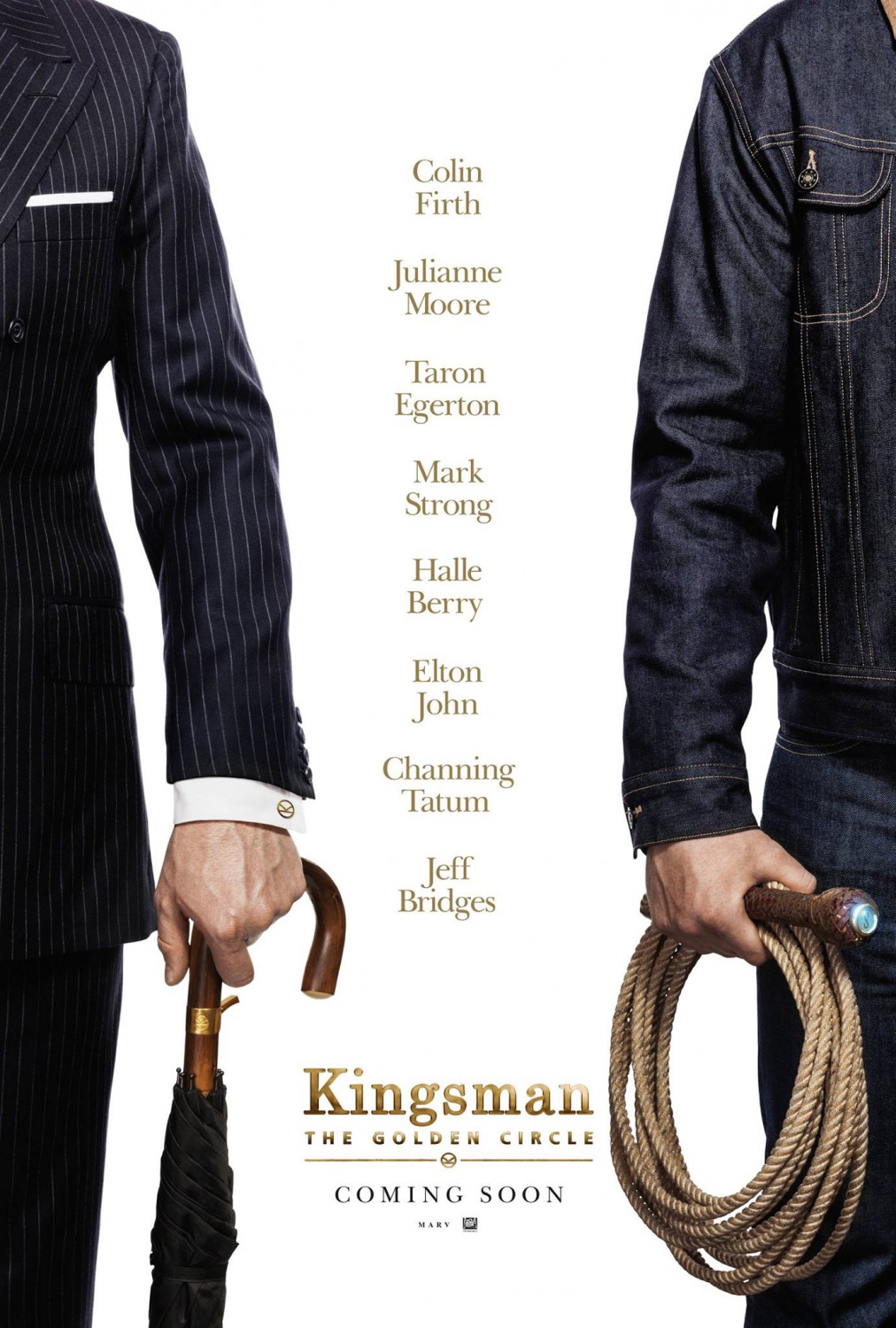
The Smashing First Trailer for 'Kingsman: The Golden Circle' Teases Channing Tatum and Halle Berry

Kingsman: The Golden Circle

Nearly two years ago, Matthew Vaughn said he would only make a sequel to Kingsman: The Secret Service if the screenplay was good enough. That was not a disingenuous statement.

The original movie was inspired by a six-issue comic book series by Mark Millar and Dave Gibbons. Vaughn and Jane Goldman collaborated on the script, which used the premise and then invented new characters and scenarios. In the past, Vaughn has declined to make sequels to movies he has directed, so the fact that he and Goldman wrote a script that he wanted to direct suggests that he must have impressed himself.

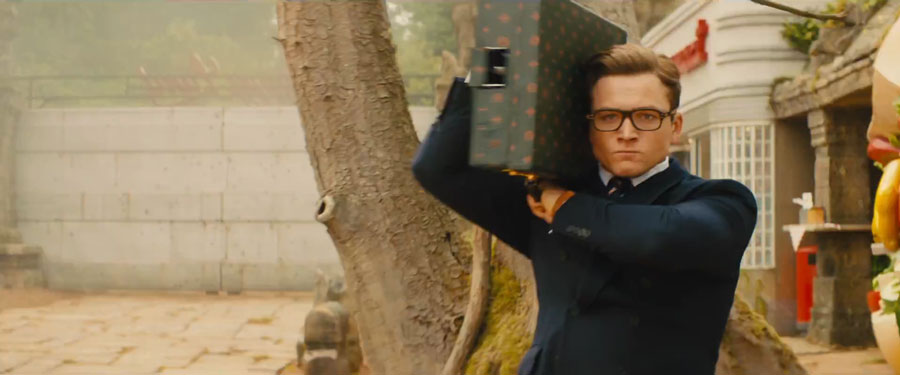
Kingsman: The Golden Circle features the return of stars Taron Egerton and Mark Strong. Colin Firth is also returning, which is a surprise for anyone who saw the first installment, though we don’t know in what capacity and what type of role it will be.

Watch the smashing first trailer below.

[embedded content]

As expected, the action is frenzied and fun. The independent, international intelligence agency known as Kingsman has suffered the destruction of their headquarters and also learned that the world is being held hostage. They must band together with a spy organization in the U.S. known as Statesman in order to save the world from an enemy they hold in common.

Joining the fun this time around are Julianne Moore as a villainous character, Halle Berry as the head of the CIA and Channing Tatum as a cowboy spy, along with Pedro Pascal, Vinnie Jones, Jeff Bridges and Sir Elton John.

Kingsman: The Golden Circle will open in theaters on September 29.

Kingsman: The Golden Circle

Let’s block ads! (Why?)


No Image

A New Generation Of Kashmir Rappers Vents Its Rage In The Valley

Guitarist Ali Saifudin (right) collaborates with local rapper Mu’Azzam Bhat.

Syed Shahriyar

hide caption

toggle caption

Syed Shahriyar

Rap music has found an outlet in Kashmir, the border state between India and Pakistan.

The Muslim-dominated Kashmir Valley, tucked in the Himalayas, might not seem the most likely venue for this music. But Roushan Illahi, Kashmir’s leading rapper, says the guns, soldiers and protracted conflict provide the “street reality” that hip-hop is meant to capture.

India and Pakistan have fought three wars over the territory, which bristles with Indian security forces. For months, Kashmiris have come out in the thousands, shedding their fear of batons and bullets. The simmering anger that has burst to the surface has also been expressed in music.

The song “Dead Eyes” addresses the eye injuries that thousands of Kashmiris sustained in the past year, when security patrols fired pellet guns during anti-military demonstrations:

In the broad daylight I got blind
To light darkness, I will abide
I will pelt stones against innocent felony
Yeah, I lost my eyes while fighting tyranny

Aamir Ame, 23, co-wrote the track with two other budding rappers. He says it was his “first political song, an example of survival.” Released Jan. 26 on the occasion of India’s 68th Republic Day, it went viral.

Aamir Ame co-wrote the viral hit “Dead Eye,” a tribute to Kashmiris whose eyesight was damaged by pellet guns used by security forces to quell demonstrations. He calls it his first “political” song.

Syed Shahriyar

hide caption

toggle caption

Syed Shahriyar

Illahi, whose stage name is MC Kash, understands the appeal. At 27, this brooding son of a poet is credited with ushering rap into the Valley with the song “I Protest,” which pulsates with defiance:

I protest!
Against the things you’ve done
I protest!
For a mother who lost her son
I protest!
I will throw stones and never run
I protest!
Until my freedom has come
I protest!
For my brother who’s dead
I protest!
Against the bullet in his head

Illahi published the song online in 2010, at the height of a major Indian army crackdown, when scores of civilians were killed in clashes with military security forces. It has become an anthem of dissent.

“When I came out in 2010, I was very blunt, I was very direct,” Illahi says. “And that’s what another tenet of hip-hop or rapping is. If you talk to any one of us, there is a lot anger. That anger stems from this hopelessness that nothing is going to change or nothing is going happen to Kashmir or that people are still going to get killed. And it’s bound to give birth to dissent.”

“It Shapes … Your Personality”

Many of the Valley’s hip-hop artists were born in the 1990s, when Amnesty International says there were “grave human rights abuses committed by security forces as well as armed opposition groups.” The organization “recorded more than 800 cases of torture and deaths in the custody of army and other security forces in the 1990s,” and it says “there were hundreds of other cases … of enforced disappearances from 1989 to 2013.”

I ask 24-year-old musician Ali Saifudin whether growing up amid all the violence has made his music a form of political expression. He says he wouldn’t go so far as that.

“It’s just a natural sentiment, the sentiments on the streets,” Saifudin says. “I see news of young men being shot, and I feel anger inside me … I put all those feelings into a song.”

A guitarist, Saifudin says he’s been influenced by the music of Neil Young, Bob Dylan and Bob Marley. (He says it was Google that introduced him to their music.) Today, he collaborates with local rapper Mu’Azzam Bhat, also 24, who says he’s watched political turmoil firsthand for as long as he can remember.

“I have seen protests on the streets, and I have seen guys picking up stones and fighting the occupation, fighting the armed forces. That’s what I’ve seen from my childhood up to this point,” Bhat says. “It shapes … your personality.”

In a Srinagar café that is the meeting ground for Kashmiri artists, Saifudin and Bhat give me an impromptu performance of their song “The Time Is Now.” Saifudin says it echoes the sentiments of Bob Marley’s “Get Up, Stand Up.” It goes:

Put your lungs out,
Go on and scream
For that’s how you’ll be heard
This ain’t the time to sleep

Now wake up!
Open your eyes!
Take a deep breath
And realize
The time to talk is over
It is time to do
With whatever you got
You got to make it through

Enough with all the silence
The crimes and violence
The war outside
And the war inside us…
Anger is our voice,
Rage drives us
And we can’t be controlled
There is a beast inside us.

The music of these two master’s students in journalism and mass communication reflects the alienation from the Indian state that many young Kashmiris feel. They find inspiration in everyday experiences: Several weeks back, Bhat says, they were puzzling over the lyrics to this song when they were stopped by police.

“They just ordered us out of the car, they started frisking us and for no reason,” he says. “We were just young guys hanging out. … So that’s when these lyrics came: ‘These men in uniform are as cold as they come / And they will fill your mind with fear, psych you out and hit you up.’ It’s actually a real event that happened to us, and that’s what getting reflected in our music.”

The audience for much of this music is online. Musicians say venues in Kashmir are controlled by the state, and that disqualifies most rappers from performing their non-conformist work in public.

In the song “The Time Is Now,” Bhat raps about picking up guns and setting off bombs. “And it goes without saying I’m not talking literal bombs here,” he says. “What I’m saying is that if you have a pen, and you can write, drop lines that are equivalent to bombs.”

For all of the conflict they have witnessed in their young lives, Bhat and Saifudin evince no cynicism. “I know I am angry,” Saifudin says, “but I have to direct my anger in a proper manner. It should be reflected in my music … but not be all about rage.

“You have to understand,” he goes on, “that we don’t like violence, we don’t support violence. … Nobody wants to pelt stones or stage protests for the heck of it. … It’s for a dignified life … and that is the ultimate goal.”

“You Have To Make Your Own Space”

Roushan Illahi, aka MC Kash, says he’s “proud” of young musicians who are “keeping alive the memories of the Kashmiri people through their music.” Illahi champions “a de-militarized Kashmir” and insists Kashmiris need to be able to “talk and feel free of any harassment or repercussions.”

Illahi’s studio was raided in 2010, an episode he calls “nothing serious.” But this taciturn artist no longer directly talks against the military establishment — he self-censors. “In Kashmir,” he says, “you have to make your own space, and then rely on your luck that you won’t get arrested.”

[embedded content]
YouTube

Today, Illahi’s dissent is subtler. He has most recently teamed up with a rock musician in a piece called “Like A Sufi” that is part dreamy, part heart-pounding. The song captures the mysticism of Sufis, who make up a sect of Islam. But the subtext of the Kashmiri conflict is hard to miss in the opening lines: “I await you / All the fallen / In the garden of remembrance / Like a Sufi.”

The lyrics follow through:“Break free of the chains … Twirling freedom, like a Sufi.”

Let’s block ads! (Why?)


No Image

State Department Removes Webpage Featuring Trump's For-Profit Club, Mar-A-Lago

ShareAmerica.gov, a State Department website, shared an article promoting Mar-a-Lago, President Trump’s golf club and resort in Palm Beach, Fla. The page has since been removed.


Share America/Screenshot by NPR
hide caption

toggle caption


Share America/Screenshot by NPR

Updated at 7:30 p.m. ET

An article on a State Department website about President Trump’s Mar-a-Lago resort has been removed after criticism that it was an inappropriate use of taxpayer funds.

Critics complained that resources were being used to tout the for-profit club, which Trump refers to as the Winter White House. The club, in Palm Beach, Fla., is held in Trump’s trust, of which he is the sole beneficiary.

“The intention of the article was to inform the public about where the President has been hosting world leaders. We regret any misperception and have removed the post,” a State Department official said in a statement that has now replaced the original article.

The ShareAmerica website says it “is part of the Bureau of International Information Programs, which works with U.S. embassies and consulates in more than 140 countries to engage with people around the globe on U.S. foreign policy and American society.”

But on the webpage about Mar-a-Lago, there was no discussion of policy. The page showed photos of the members-only club’s opulent rooms and exterior, and noted that “When he acquired the house, Trump also bought the decorations and furnishings that [original owner Marjorie Merriweather] Post had collected over the years, preserving Mar-a-Lago’s style and taste.”

The website generated attention Monday when Sen. Ron Wyden, D-Ore., and others started tweeting about it. In one tweet, Wyden said: “Yes, I am curious @StateDept. Why are taxpayer $$ promoting the President’s private country club?”

In another tweet, he steered people to the webpage, saying: “Here’s the full post in its kleptocratic glory.”

American Oversight, a watchdog group that includes some lawyers who worked at agencies in the Obama administration, said earlier Monday it would file a complaint with the State Department’s inspector general and the Office of Government Ethics. The group says that “promoting Mar-a-Lago appears to violate Section 2635.702 of the Standards of Ethical Conduct, which prohibits government employees from using their public office to endorse private enterprise.”

American Oversight also had said it would ask congressional oversight committees to conduct an “investigation into how and why the article promoting Trump properties was written and distributed.”

Let’s block ads! (Why?)


No Image

Is It Time For Hearing Aids To Be Sold Over The Counter?

Companies are trying to make hearing aids more chic and less cumbersome.

Kristen Uroda for NPR

Four out of five older Americans with hearing loss just ignore it, in part because a hearing aid is an unwelcome sign of aging. But what if hearing aids looked like stylish fashion accessories and could be bought at your local pharmacy like reading glasses?

That’s the vision of Kristen “KR” Liu, who’s the director of accessibility and advocacy for Doppler Labs, a company marketing one of these devices. She thinks a hearing aid could be “something that’s hip and cool and people have multiple pairs and it’s fashionable.”

Liu, who has severe hearing loss herself, helped design a device designed to let people with hearing loss blend in. One person may be using the technology to stream music or take a phone call, she says. Another may be wearing it to amplify speech and hear the conversation. “And no one is going to know the difference,” Liu says. “So you’re wearing technology in your ear, proudly.”

The device is a small circular instrument that fits snugly in the ear. It can be adjusted to individual hearing using a smartphone app to control volume, cut out background noise or turn up the sound in a theater. “It’s pretty much a hearing aid,” says Liu, except the company isn’t allowed to call it that.

That’s because the Food and Drug Administration, which regulates medical devices, doesn’t allow hearing aids to be sold over the counter. So devices sold directly to consumers are marketed as “personal sound amplification products,” or PSAPs. They range in price from about $250 to $350 and are considerably cheaper than hearing aids, which can cost up to $6,000 and are typically not covered by Medicare or most private insurance companies. Hearing aids are customized by a hearing specialist such as an audiologist, following a hearing test.

PSAPs can only be marketed as sound amplifiers for people with normal hearing who want to make things louder, like music or the sounds of birds chirping. Hearing loss advocates believe this means people with mild to moderate hearing loss who could benefit from the devices don’t know about them. There are dozens of the devices on the market, but their quality varies wildly, as an analysis of 11 of them last year for hearing care professionals shows. And there’s no easy way for potential purchasers to figure out which work best.

The Hearing Loss Association of America, a consumer group, wants Congress to create a new category of aids for people with mild to moderate hearing loss by passing the Over-the-Counter Hearing Aid Act of 2017. (People with severe hearing loss would still need to be seen by a medical professional.) The bill would direct the FDA to come up with safety and effectiveness standards for these new hearing aids.

The FDA is already moving in that direction, and in December said it would no longer require adults to be medically evaluated before buying a hearing aid. Proponents of direct-to-consumer sales hope congressional action would get the FDA moving faster. A 2016 report from the National Academies of Sciences also endorsed allowing over-the-counter sales.

This could be life-changing for people with hearing loss, says Richard Einhorn, a composer of modern classical music who is on the board of the Hearing Loss Association of America.

Early one morning in 2010, he woke up with his ears ringing — a loud, piercing hiss. “I hit the panic button,” Einhorn says. “I jumped out of bed and immediately fell over onto the floor.”

An inner ear infection, likely a virus, had caused him to lose his balance. He went deaf in his right ear. He already had some hearing loss in his left ear. His hearing aids cost $5,000 and were not covered by insurance.

Composer Richard Einhorn, who says paying for hearing aids was a struggle on a musician’s income, supports efforts to gain FDA approval for cheaper devices.

Kevin Rivoli/AP

hide caption

toggle caption

Kevin Rivoli/AP

“I’m a composer, for goodness sake,” Einhorn says. “This is not an easy purchase to scrounge up the money for.”

Opening up the hearing aid market would foster competition and drive prices down, says Einhorn.

It would also encourage companies to come up with new and better products, says Liu. She envisions a future that solves one of the biggest problems for many people — hearing in a noisy environment, like a party or a busy restaurant. She wants a hearing aid that would automatically adjust to different sound environments, so she could hear the person talking to her and not the background distraction.

“Nothing like that exists today,” Liu says. “But I very much see something like that down the road.”

Some audio specialists support rolling back regulations, while others are skeptical.

Hearing loss is complex, says Neil DiSarno, chief staff officer for audiology at the American Speech-Language-Hearing Association. This makes it difficult for consumers to “self-evaluate, self-treat and self-monitor,” he says. If people buy their hearing aids directly over the counter, they’ll miss out on all the skills audiologists can teach them, like how to lip read and how to distinguish high frequency sounds, he says.

The market for over-the-counter hearing aids could be huge. More than 35 million Americans have some degree of hearing loss. And for older Americans, not dealing with the problem can have a big impact on age-related cognitive decline, says Dr. Frank Lin, associate professor of otolaryngology at Johns Hopkins University School of Medicine. Lin has done studies looking at the link between hearing loss and cognitive decline.

“The greater the hearing loss, the greater the risk of loss of thinking and memory abilities over time,” he says, which can lead to feelings of insecurity and social isolation — a known risk factor for dementia.

Lin says his findings should serve as a “wake-up call” for policymakers. If people have easier access to more affordable hearing aids, he says, that could lead to benefits that go far beyond hearing.

Let’s block ads! (Why?)


No Image

From Risking His Life To Saving Lives, Ex-Coal Miner Is Happy To Take The Paycut

After David Wiley was laid off from the grueling day to day of the coal mining industry, he found a new livelihood working for STAT EMS in Pineville, W.V.

Alexi Horowitz-Ghazi/NPR

hide caption

toggle caption

Alexi Horowitz-Ghazi/NPR

Growing up the son of a coal miner in southern West Virginia, David Wiley saw the downside of the profession up close. His father had been injured in the mines, lost several fingers and damaged his knees and back. “He was just really beat up,” Wiley says.

So when it came to find his own line of work, Wiley says he had no desire to work in the coal mines. For a couple of years after high school, Wiley tried his hand at manufacturing and welding jobs in the neighboring state of North Carolina.

But when Wiley decided to return to West Virginia in his early 20s, the job opportunities were few and far between, and when he received a job offer to work in the mines for a starting wage of $22 an hour, the pay was too good to pass up.

“I was excited,” says Wiley, “that’s really good money for anybody. A young kid like me, I’d never made that kind of money.”

Wiley worked the overnight shift, beginning at 11 p.m. and clocking out at 7 a.m. and spent his nights scooping up spilled coal, helping to install structural supports in the tunnel ceilings, and cleaning and maintaining the mine for the next shift. Much of the work was in the dark and it usually involved heavy manual labor.

“Everything in the mines is heavy,” Wiley says. “The lightest thing is a 50-pound bag of rock dust.”

Wiley says that for a while, the high pay made up for difficulty of the work, but he says that he soon began to develop pain in his knees and back, and a falling rock injured his foot. Wiley also notes that the grueling hours meant he had little time to spend with his wife and children.

“You’d come home and sleep all day. You really didn’t have no life,” says Wiley. “You’re just a walking zombie.”

The final straw, Wiley says, was the instability of working in the mines.

“You can tell when the coal market is up, then you can tell when the bottom drops,” he says, “because they start laying people off.”

For more than five years, Wiley says he shuffled between different mining operations in southern West Virginia, as they opened and closed, riding out the off-periods with savings and by signing up for unemployment.

“One mine might work good for a year, then it might shut down,” he says. “Then you go somewhere else and it could work for two years, then it might shut down. I worked at one mine, we had over 500 men there at one time and they shut the doors. Five-hundred people lost their jobs … The last time that I got laid off, the coal market was so down that you couldn’t buy a job.”

Wiley says that the last time he was laid off, he began applying to every minimum wage he could find in the area.

“I was willing to take anything and everything,” Wiley says.

One day, he came across an online job posting for an ambulance driver with STAT Emergency Medical Services in Pineville, W.V. Though he’d never worked in the medical field, Wiley says he was desperate, and decided to apply.

He remembers speaking with the company’s hiring manager on the telephone, “basically crying because my unemployment was getting ready to run out. I had two babies at the time. I couldn’t figure out how I was going to feed them, and he gave me a shot.”

I was a shock at first, he says, going from having made around $30 an hour to minimum wage work at $8.75. But he needed a way to help support his family, and the constant demand for healthcare in the area meant plenty of opportunities to work overtime.

“I’ve come in at 3:00 in the morning and not gotten off until 3:00 in the morning,” Wiley says.

He says he knew within his first month that he’d made the right decision in picking his new line of work.

“I fell in love,” Wiley says. “It’s a steady job. You don’t have to worry about losing your job, because it’s always here.”

In the two years since he was hired on at STAT EMS, Wiley has graduated from ambulance driver to become an Emergency Medical Technician, and he’s currently enrolled in a paramedic science course at a local community college. Wiley plans to continue in the medical field as far as he can. And, despite lower pay, the meaning he derives from his interactions with his patients has made a huge difference in his life.

“You pick up somebody, and they’re on the verge of death. And you drop them off and they’re shaking your hand, saying, ‘You meant a lot to me.’ ” Wiley says, “It makes you feel you’re somebody — that’s enough payment.”

Let’s block ads! (Why?)


No Image

Trump, The Golfer In Chief

Donald Trump plays a round of golf after the opening of The Trump International Golf Links Course on July 10, 2012, in Balmedie, Scotland.

Ian MacNicol/Getty Images

hide caption

toggle caption

Ian MacNicol/Getty Images

Not long ago, both the Economist and the New Yorker magazines featured unflattering cover portraits of President Trump holding a golf club. Both seemed to suggest the president had found himself in a rough patch. While that may be true politically, Trump is very much at home on the golf course — which is not surprising, since he owns 17 of them.

Whatever historians ultimately write on his presidential scorecard, Trump may be the best golfer ever to occupy the Oval Office.

“He’s won club championships. Of course, they’ve all been at his clubs,” says Jaime Diaz, a senior writer at Golf Digest and editor in chief at Golf World.

Diaz, who’s played with Trump on a couple of occasions, says the president golfs the way he governs: largely by instinct. But his swing is not as reckless as it might appear.

“He has this sort of bombastic image, obviously. Well-earned. And you’d expect someone who probably has kind of a sort of a show-offy, ego-driven kind of game. But in fact, it’s a game of control,” Diaz says.

At age 70, Trump typically shoots in the 70s or low 80s. Plaques at his golf clubs say Trump has even hit a couple of holes-in-one. (And that’s not counting his long-shot drive for the White House.)

John F. Kennedy was probably the second-best golfing president, though he didn’t play much in public. Kennedy tried to distance himself from his golf-crazy predecessor, Dwight Eisenhower. The first time Kennedy walked into the Oval Office, he was surprised to find cleat marks on the battered hardwood floor.

“President Eisenhower would pace back and forth with his golf spikes on before he went out to the putting green to chip and putt a little bit in the morning,” says historian Mike Trostel of the United States Golf Association.

Nowadays, that hardwood floor is covered. And that’s not the only way modern presidents try to sweep their golfing habits under the rug.

While Trump spends hours at his own golf courses, aides rarely reveal whom he’s playing with or even confirm that he’s playing at all. Before he was president himself, Trump often criticized President Obama’s time on the links — though he recently told a group of lawmakers that’s only because Obama didn’t use the time to cut deals.

“I always said about President Obama, it’s great to play golf. But play with heads of countries,” Trump said. “Don’t play with your friends that you play with every week.”

Trump recently bonded with Japanese Prime Minister Shinzo Abe over a round of golf. And he tried to sell an Obamcare replacement bill between holes to Sen. Rand Paul, R-Ky.

“We had a great day with the president today,” Paul said afterwards. “We did talk about health care reform. I think the sides are getting closer and closer together. “

Donald Trump plays a round of golf after the opening of The Trump International Golf Links Course on July 10, 2012, in Balmedie, Scotland.

Ian MacNicol/Getty Images

hide caption

toggle caption

Ian MacNicol/Getty Images

Lyndon Johnson also used the golf course as one more venue for arm-twisting, whereas Obama rarely talked politics during a round, except maybe the one time he played with House Speaker John Boehner.

Historian Trostel says in the last century, all but three U.S. presidents have spent time on the golf course. (Herbert Hoover, Harry Truman and Jimmy Carter were the holdouts, although Trostel recently discovered that Carter played some in the military.)

Different presidents exhibit a wide variety of styles. George H.W. Bush raced around the course in less than two hours. A round with Bill Clinton could drag on half the day.

By far the most prolific presidential golfer was Woodrow Wilson, who played nearly every day but Sunday — some 1600 rounds — including all through World War I.

“In the winter time he had Secret Service agents paint golf balls red so he could practice in the snow,” Trostel says.

By comparison, Eisenhower played about 800 rounds during his two terms in office. And Obama played 333, according to Mark Knoller of CBS News, who keeps an unofficial but authoritative tally of all presidential statistics. Trump is on pace to exceed Obama’s golf total, and he could match Eisenhower’s. It’s doubtful, though, that he’ll come anywhere close to Wilson’s record.

For today’s presidents, the golf course is loaded with political sand traps, including accusations that they’re slacking off or isolating themselves in a ritzy country club.

But Golf Digest’s Diaz suspects there are real payoffs too: an opportunity to relax and clear one’s head, and for Trump, a chance to hit the pause button on the constant self-promotion.

“I didn’t sense he needed to tell you how good he was when he played golf,” Diaz says. “I think he was confident about it and he let his actions speak for themselves. In some ways, that might be his best self, out on the golf course.”

Let’s block ads! (Why?)


No Image

Buy A 3-Pack Of Wedding Rings, In Case You Lose One

Brighton Jones co-founded Enso rings — they’re squishy, stretchy and colorful. His is one of many companies now making alternatives to metal wedding bands.

MARY LOUISE KELLY, HOST:

Close your eyes and imagine this scene – you’re out for an evening walk with your beloved when they stop and drop to one knee and ask you to spend eternity with them. A little velvet box appears, and you pull out a purple plastic band?

BRIGHTON JONES: We get a lot of blowback from people finding this morally reprehensible that we would even suggest anything other than a $20,000 diamond.

KELLY: Brighton Jones co-founded Enso Rings. They’re squishy, stretchy, colorful. His is one of many companies now making alternatives to metal wedding bands. They pitch them to weightlifters, to nurses who don’t want to rip their latex gloves and to lovers of the great outdoors like Jones himself.

JONES: So a few years ago, I was rock climbing and I fell. And on the way down, my wedding ring got cut on the rock face. And there was that split second, you know, where, oh, I’m going to lose the finger. And fortunately, the rock actually broke off. And so when I landed on the ground, though, my body was trembling. And it was a very sobering experience, and my resolve at that point was to not wear my wedding ring anymore. It just wasn’t worth it.

KELLY: Eventually, his wife started to wonder why he wasn’t publicly showing his commitment to her – enter the soft $10 polymer ring. You can buy them in three packs. Jones says they are not meant to replace a traditional metal band just something you can slip on when you’re headed to the gym. Still, a little weird to buy a three pack of wedding rings.

(SOUNDBITE OF BLUE CLAW PHILHARMONIC SONG, “PACHELBEL CANON IN D”)

Copyright © 2017 NPR. All rights reserved. Visit our website terms of use and permissions pages at www.npr.org for further information.

NPR transcripts are created on a rush deadline by Verb8tm, Inc., an NPR contractor, and produced using a proprietary transcription process developed with NPR. This text may not be in its final form and may be updated or revised in the future. Accuracy and availability may vary. The authoritative record of NPR’s programming is the audio record.

Let’s block ads! (Why?)


No Image

Saturday Sports: Serena Williams Is Pregnant

NPR’s Mary Louise Kelly speaks with Howard Bryant of ESPN.com and ESPN the Magazine about tennis and Serena Williams’ pregnancy.

MARY LOUISE KELLY, HOST:

And it’s time for sports.

(SOUNDBITE OF MUSIC)

KELLY: Twenty weeks – that was the caption of a photo Serena Williams shared on Snapchat on Wednesday. Her spokeswoman confirmed the news that night. She’s pregnant. I’m joined now by Howard Bryant of ESPN and ESPN The Magazine. Hi there, Howard.

HOWARD BRYANT: Good morning, how are you?

KELLY: I am well, thank you. I’m sitting here doing some back of the envelope math. Serena – she won the Australian Open back in January, less than 20 weeks ago, which means when she won it – when she dominated it, by the way – she didn’t drop a set – she was two months pregnant.

BRYANT: She was, which was – technically, it was a doubles tournament.

(LAUGHTER)

KELLY: On one side of the net at least.

BRYANT: On one side of the net, yes. Who knew that that final between Venus and Serena was actually a family affair – mother, child and aunt.

KELLY: More than we knew. Yeah, I mean…

BRYANT: She’s incredible. It’s absolutely an incredible story for her. And once again, I think when we were on this program, Scott and I talked about this before the Australian Open began, and we took a lot – well, I took a lot of criticism for this because people were asking about what Serena’s prospects for the year were going to be. And I thought that we were going to see a major change. And we were criticized, at least the show was criticized, because she had gotten engaged. And we don’t do that for men.

We don’t say that because a man is being – is about to get married that, suddenly, their entire life is going to change. But if you watch Serena over the past couple of seasons, especially last year, she’d only played eight tournaments. She played the majors. She played the Olympics, and she played a couple of smaller tournaments. And then this year, she gets engaged, and now it turns out that she was pregnant. She has been signaling for a while that there’s a new chapter for her, that this is – that tennis is not forever for her. And she’s made it very clear in a lot of sort of vague ways. But if you’re paying attention to her, you can sort of understand where she’s coming from.

KELLY: OK. But I got to – I’m got a jump on you there because she is 35. As you said, you wouldn’t say this about a man. She’s going to have take maternity leave, but has she said she’s not coming back?

BRYANT: Well, she said she is planning on coming back. However, the difference is that Roger Federer has four children. He never took any time off. Of course, you have to take time off if you want to start a family, and that is the difference. But the one thing that’s been really interesting about Serena is that she hasn’t really hidden the fact that there’s life after tennis for her, and there’s life during tennis for her.

I mean, one of the interesting things for a female tennis player is – Victoria Azarenka is another example who actually did take time off. She had a baby boy, and she’s supposed to come back this year. At 35…

KELLY: Which is what Serena is, yeah.

BRYANT: Which is what Serena’s going to be 36 after having done everything that you could possibly do. Let’s have a little perspective about her, too. She’s been playing tennis since she was four years old. She turned pro in 1995. She’s been doing this her entire life. And my attitude has been that if, indeed, Serena comes back, then it would be an amazing story.

She could be like Kim Clijsters who had a baby at 23, 24 and came back and won two majors. She came back and won the U.S. Open back to back. But if she doesn’t, look at what Serena Williams has done for tennis and for the American story. She has given everybody everything they could ask for and more.

KELLY: We’ve just got a few seconds left. But in those few seconds, Howard, what’s this going to mean for the women’s tour? I mean, Serena has been the ticket – the people – the person people come to see.

BRYANT: Yeah, she’s the main draw, and that’s the big thing. Obviously, Maria Sharapova coming back from suspension – I think the WTA could use that. But let’s face it, both American tennis and the WTA has been dreading the day that Venus and Serena are no longer there because they are what makes the game go. But it’s a great sport.

KELLY: Yeah, we’ll see if there’s baby pics (ph) at the (unintelligible) in a few years. Howard Bryant…

BRYANT: Wouldn’t that be something?

KELLY: Yeah, it would be. Howard Bryant of ESPN, thank you.

BRYANT: Thank you.

Copyright © 2017 NPR. All rights reserved. Visit our website terms of use and permissions pages at www.npr.org for further information.

NPR transcripts are created on a rush deadline by Verb8tm, Inc., an NPR contractor, and produced using a proprietary transcription process developed with NPR. This text may not be in its final form and may be updated or revised in the future. Accuracy and availability may vary. The authoritative record of NPR’s programming is the audio record.

Let’s block ads! (Why?)