Articles by admin

No Image

Looking Into Trump Campaign's Russia Ties, Investigators Follow The Money

The now-closed Trump Taj Mahal casino resort in Atlantic City, N.J., was repeatedly cited by federal officials for having inadequate money-laundering controls.

Jewel Samad/AFP/Getty Images

hide caption

toggle caption

Jewel Samad/AFP/Getty Images

Investigators looking into the Trump campaign’s ties to Russia will be able to pursue leads by tapping into a huge database of suspicious financial transactions maintained by the federal government.

Under the Bank Secrecy Act, financial institutions operating in the U.S. are supposed to inform the Treasury Department’s Financial Crimes Enforcement Network, or FinCEN, when they see transactions that indicate possible money laundering, such as all-cash purchases of expensive real estate.

Senate investigators indicated last week that they would be using the database to begin tracking the financial activities of some of President Trump’s associates.

“Congress has kind of shifted the focus here to the money, and they’re trying to see if there’s a money trail that could link and identify different participants,” says Jimmy Gurulé, a law professor at the University of Notre Dame and a former Treasury Department official.

“It goes to the old adage of ‘follow the money.’ If there was collusion between the Russians and members of the Trump campaign, was it for free or was there some exchange of moneys or payments from foreign governments?” he adds.

Trump made much of his fortune in real estate and gaming, two industries that have been notorious venues for money laundering.

The Trump Taj Mahal in Atlantic City, which opened in 1990 and closed in 2016, was repeatedly cited for having inadequate money-laundering controls, not an unusual charge in the gaming business.

FinCEN fined the casino $10 million in 2015, although Trump had long before declared bankruptcy and had little real involvement in the property.

In more recent years, FinCEN has focused on the real estate business, looking for unusual purchases of properties that indicate money laundering is taking place.

For drug dealers and corrupt government officials, there’s often no better way to conceal their funds from regulators and tax collectors than by buying high-end properties in places such as New York, Miami and San Francisco, says Mark Hays, who heads the anti-money-laundering campaign at the nonprofit Global Witness.

“These make for attractive landing pads, if, say, you’re a suspicious person wanted for criminal activity in your home country and you actually need a place to cool your jets,” Hays says.

Such purchases can be easily hidden by using shell corporations and secret bank accounts, making it harder for regulators to track them, he notes.

“You make the purchase [and the] real estate person says, ‘Who owns this company?’ It’s so-and-so LLC. ‘Well, who owns that?’ That’s not on the record. No one knows that,” Hays says.

That makes connecting the dots in money-laundering investigations more difficult. Still, FinCEN’s records of suspicious activities could provide Senate investigators with real investigative leads, Gurulé says.

“If I was involved with some criminal wrongdoing related to this investigation, this would make me very nervous,” he says.

Let’s block ads! (Why?)


No Image

Automakers Feeling Squeeze From Investors Despite Strong Sales

Hyundai Motor Co. vehicles sit on display for sale on the lot of in the Van Nuys neighborhood of Los Angeles, California, U.S.

Patrick T. Fallon/Bloomberg via Getty Images

hide caption

toggle caption

Patrick T. Fallon/Bloomberg via Getty Images

After seven years of growth, the auto market is seeing weakness.

In April, sales were off by 4.7 percent. That’s despite the continued robust sales of highly profitable SUVs and trucks. That’s no big deal for an industry that just got off of two record seasons, but not so for investors.

The pain is being felt across the auto world.

This week, Ford CEO Mark Fields took heat for the company’s stagnant share price at the company’s annual meeting. While the company is the number one seller of trucks and SUVs, investors have been upset over the stock price given the market.

Bill Ford Jr., the executive chairman of his namesake’s company, tried to reassure shareholders, according to The Detroit News.

“We’re as frustrated as you are by the stock price,” said Ford Jr. “Most of (the Ford family’s) net worth is tied up in the company, and stock price matters a lot to us. We’re frustrated, but our business is performing well. We’re making investments both for today and for tomorrow, and I believe that’s the right thing to do.”

Ford has spent billions investing in new technology to prepare for the advent of autonomous vehicles, along with most of its top rivals. Michelle Krebs with AutoTrader says the industry is feeling the squeeze as it tries to anticipate change.

The problem, Krebs says, is that carmakers like Ford “have to continue to operate the current business, and set the company up for the future by making some investments, but who knows when the pay day will come.”

The problems go beyond Ford

Volkswagen continues to be under investigation. Most recently, the company came under fire for payments to a labor union leader. And the company appears to be on the verge of another round of layoffs as VW tries to overcome years of scandal and billions in settlement payouts.

Executives at global giant Toyota are predicting a profit decline for the second year in a row.

“In an environment where sales are stagnating, it’s tough that we need to invest in areas which won’t generate profits due to paradigm shifts,” said Akio Toyoda, the company’s president last week.

Toyota has been hurt, in part, as it shifts to build more trucks and SUVs, as well as invest in billions in artificial intelligence and other technology in preparation for autonomous vehicles.

General Motors is facing a challenge by activist investor David Einhorn, the founder of Greenlight Capital. Einhorn, a major GM shareholder, has complained about the company’s performance. He’s proposing to split the company’s common stock:

“GM’s shares are barely trading above their 2010 IPO price despite an equity bull market, and there is a significant gap between the intrinsic value of GM and its stock price. Accordingly, GM has failed to create much long-term shareholder value. GM can fix this!”

The criticism from Einhorn discounts that GM has been consistently profitable, partly because of the billions the company has been bringing in selling highly profitable pickup trucks. GM’s CEO Mary Barra has been praised by the industry despite the apparent weakness of her company’s shares. Joann Muller of Forbes writes of Barra on the company’s stock price:

“GM shares don’t show it — they’re stuck at 2010’s post-bankruptcy IPO level — but General Motors is a different company under Barra. Gone are the empty promises and arrogant bluster. With Barra at the helm, there’s a quiet confidence that if GM just sticks to its plan, good will eventually come. It’s a classic case of under-promising and over-delivering, as in the first quarter, when GM soundly beat Wall Street’s expectations with a 33% jump in net income.”

Why all the shade from Wall Street? While truck profits are the present, autonomous or self driving car profits are somewhere in the future.

“This has happened before”, says AutoTrader’s Krebs. “There’s always been the question of profits now or investing in the future. But what happens when Apple, or Tesla upends the industry.”

She says when, or if, that happens, who was profitable this quarter will seem quaint.

Let’s block ads! (Why?)


No Image

Pentagon Disrupts Path For College Athletes Hoping To Be Drafted By The Pros

NPR’s Lulu Garcia-Navarro asks the Denver Post’s Nicki Jhabvala about a change in policy that will no longer waive the active duty requirement for students drafted into professional sports leagues.

LULU GARCIA-NAVARRO, HOST:

For college students who are also top-level athletes, it’s the dream path – graduate straight from college to the likes of the NBA and the NFL. And until recently, that included students at American service academies – the Army’s West Point, the Naval Academy in Annapolis and the Air Force Academy in Colorado Springs. Jalen Robinette, a wide receiver for the Air Force, had a shot at the dream in 2017.

(SOUNDBITE OF ARCHIVED RECORDING)

UNIDENTIFIED ANNOUNCER: End zone, it’s caught, touchdown, Robinette.

UNIDENTIFIED REPORTER: So don’t be surprised if Robinette becomes the first Falcon drafted in almost 20 years.

JALEN ROBINETTE: This could be something that happens. And if it doesn’t, then I have a pretty good plan B, which is being an officer in the greatest air force there is in the world.

GARCIA-NAVARRO: That plan B became a bit more likely when the Pentagon reversed a policy that allowed players drafted into the pros to substitute two years of reserve duty for the normal two years of active service. In this edition of Out of Bounds, graduating to the pros instead of military service. Nicki Jhabvala reports for The Denver Post, and she’s been following this story.

Welcome to the program.

NICKI JHABVALA: Hi. Thank you for having me.

GARCIA-NAVARRO: How important was this waiver to these students?

JHABVALA: Very important. This is part of a 2016 policy. It didn’t create any guarantees for them. But, you know, once guys like Jalen Robinette realized they had a shot at the pros, they spent a lot of time, money, energy preparing for life as both an Air Force grad and a potential NFL player.

GARCIA-NAVARRO: Do we know the reason for the Pentagon changing course?

JHABVALA: They say they’re in the business of developing service members. This affects really only about three athletes across all sports at all service academies. So to take that away from those three athletes, there had to be a good reason. But right now, they’re just saying it’s because they’re more focused on developing service members than professional athletes.

GARCIA-NAVARRO: Let’s take a little bit of a look at the history here. This isn’t the first time a policy like this has been rescinded. Do we know their thinking on this?

JHABVALA: Well, I think that’s a question these athletes want answered, too. From the players I talk to, they don’t have an issue with the policy. It’s certainly the Department of Defense’s right to enact any policy it feels is best for these service members. And they knew when they committed to one of these service academies that they would be required to fulfill some sort of active duty. But the timing has become the big issue, the timing after these athletes were told they would have a chance to possibly go pro – to have it taken from them is concerning in many ways because of the time and the money they put forward. But they don’t have any clear answers right now other than the fact that the DOD simply can change the policy whenever it feels it’s necessary.

GARCIA-NAVARRO: So let’s talk about Jalen Robinette. He’s the reason this is in the news. Tell us about him and where his NFL future is at right now.

JHABVALA: So Jalen Robinette was projected to be a mid-round pick before they reversed course. He’s the Air Force’s all-time leading receiver and was one of the most sought-after prospects in the area really. But no team has signed him yet. And if they do – if this policy is still in place, he will have to be put on a reserve military list for a couple years while he serves his active duty, and then he might have a chance to return. But it’s a big risk for an NFL team, and it really puts his future in the NFL in a very, very tough spot right now.

GARCIA-NAVARRO: Why is it a big risk for an NFL team to do that?

JHABVALA: Because if they were to draft a guy that they couldn’t use for two years, in their mind it would be somewhat of a waste of a draft pick. He is in his prime right now. Two years down the road, when he’s been out of the game, it’s not guaranteed that he will be.

GARCIA-NAVARRO: Could this have effectively ended his career, his hopes of joining the NFL?

JHABVALA: He says it hasn’t ended his hopes. But being away from the game for two years – if that’s, you know, what ends up happening, it certainly reduces his chances. But it’s not impossible. Players have done it before. Many players in the past, like Ben Garland, an offensive lineman who is now with the Atlanta Falcons, did it. So it’s certainly not impossible, but it is much tougher.

GARCIA-NAVARRO: What next? I mean, are we waiting for a review? Do we think that there’ll be a reversal of the decision?

JHABVALA: It’s a very hard fight going against the Department of Defense, as you can imagine. But Jalen Robinette’s agent, as well as those of some other players who, you know, are dealing with this now, they’re continuing to fight it. They’re asking for their clients to be grandfathered into the old policies since, you know, the timing was just so brutal really. They’re still very hopeful that something can be done, but it is a uphill battle, and there’s no guarantee.

GARCIA-NAVARRO: Nicki Jhabvala reports for The Denver Post. Thanks so much for being with us.

JHABVALA: Thanks for having me.

Copyright © 2017 NPR. All rights reserved. Visit our website terms of use and permissions pages at www.npr.org for further information.

NPR transcripts are created on a rush deadline by Verb8tm, Inc., an NPR contractor, and produced using a proprietary transcription process developed with NPR. This text may not be in its final form and may be updated or revised in the future. Accuracy and availability may vary. The authoritative record of NPR’s programming is the audio record.

Let’s block ads! (Why?)


No Image

Can't Pay Your Student Loans? The Government May Come After Your House

Graduate cap weight pulls a student down a mountain.

James Yang for NPR

On Adriene McNally’s 49th birthday in January, she heard a knock on the door of her modest row-home in Northeast Philadelphia.

She was being served.

“They actually paid someone to come out and serve me papers on a Saturday afternoon,” she says.

The papers were from a government lawsuit that represents something more than just an unwelcome birthday gift — it’s an example of a program the federal government has brought to 19 cities around the country including Brooklyn, Detroit, Miami and Philadelphia: suing to recover unpaid student loans, like the ones McNally owes.

Every day, 3,000 people default on their federal student loans — and those lack of payments amount to an unpaid bill of $137 billion for the federal government. For decades, the government has tried to get borrowers to pay up by hiring debt collection agencies to call and send letters. But now the government is trying this new lawsuit strategy.

McNally filed for bankruptcy in 2006 and cleared out all her creditors — except for student loans, which are nearly impossible to get rid of in bankruptcy. As she and many others have found out, it’s not easy escaping federal student loan debt.

“Your whole body heats up with frustration,” McNally says. “I’m so frustrated over all this. It’s been so many years that they’ve been sending me mail and threatening me on the phone.”

In the last two years, more than 3,300 student loan borrowers have been sued after defaulting, according to the Department of Justice. In nearly every one of those suits, the borrower loses and the government wins.

What does the government win? A lien on the borrower’s assets — meaning that the debt is now attached to his or her most valuable belongings, like a home.

Jennifer Schultz, an attorney with Community Legal Services of Philadelphia, says that a lien traps a person, like house-handcuffs.

“I describe a lien as a kind of marker on the house,” Schultz says. “Any time a person tries to do a transaction involving their house — a new mortgage, a refinance, or if they try to sell it — they’re going to be expected to clear up any debt that’s attached to that house.”

The government has long been able to garnish wages, take income tax returns and divert Social Security and disability benefits. But targeting property is a way of applying even more pressure to get former students to pay up.

“It’s to try to awaken the avoider from their slumber,” says Drew Salaman, a debt-collection attorney in Philadelphia.

Salaman doesn’t work with student loans, but he’s familiar with debt avoidance. He says some of the borrowers are playing “catch me if you can.” These lawsuits ensure that people take responsibility for their debts.

“After all,” he says, “if we don’t have systems in place to recover debts, how can credit be extended?”

The end result of these suits — the liens — can be seriously threatening to borrowers. For many it’s a matter of housing preservation, says Joanna Darcus, an attorney on the student loan team at the National Consumer Law Center.

“For folks already living on the margins financially, the fear of losing that house can be palatable,” Darcus says.

Once a lien is in place, the government can force the sale of a former student’s home. That’s “exceedingly rare,” officials say, but it does sometimes happen.

The federal lawsuit program is expected to keep expanding, and with more than 8 million people currently behind on their federal student loans, it doesn’t look like the private firms will run out of work any time soon.

Let’s block ads! (Why?)


No Image

In Rural Alaska, A Young Doctor Walks To His Patient's Bedside

Dr. Adam McMahan has been practicing medicine in rural Alaska for three years. It’s the kind of intimate, full-spectrum family medicine the 34-year-old doctor loves.

Elissa Nadworny/NPR

hide caption

toggle caption

Elissa Nadworny/NPR

In rural Alaska, providing health care means overcoming a lot of hurdles.

Fickle weather that can leave patients stranded, for one.

Also: complicated geography. Many Alaskan villages have no roads connecting them with hospitals or specialists, so people depend on local clinics and a cadre of devoted primary care doctors.

I followed one young family physician, Dr. Adam McMahan, on his regular weekly visit to the clinic in the village of Klukwan.

It’s a speck of a town alongside the Chilkat River in Southeast Alaska, framed by snowy mountains that loom in the distance.

The village of Klukwan is populated mostly by Alaska Natives of the Tlingit tribe, and has fewer than 100 residents. It sits along the Chilkat River in Southeast Alaska.

Elissa Nadworny/NPR

hide caption

toggle caption

Elissa Nadworny/NPR

The clinic staff drives up to Klukwan twice a week from the bigger town of Haines, 22 miles to the south.

Our Land is a project from special correspondent Melissa Block. She’s spending the next few months traveling the country, capturing how people’s identity is shaped by where they live. Help her decide where to go and who to spend time with by filling out this form.

On our drive, McMahan points out the clouds of dust blowing off sandbars along the river: “Likely today we’ll see somebody with a lung issue because of the sand coming off the river.”

Klukwan is populated mostly by Alaska Natives of the Tlingit tribe, fewer than 100 people in all, with a few hundred more people in the surrounding area.

Over the three years that he’s been practicing medicine in Klukwan, McMahan has come to know his patients well, and that becomes clear as he begins the day’s consultations.

With patient Lani Hotch, along with reviewing her cholesterol and blood sugar levels, McMahan remembers that she has a new dog. “What type of puppy did you get?” he asks her. (A yellow Lab.)

With fisherman Henry Chatoney, he wonders, “Hey, did you find a deckhand?”

And knowing that Everett Simons grows great potatoes and has been put on a low-starch diet for his diabetes, the doctor joshes, “How often are you sneaking a potato?”

The Klukwan clinic is open on Tuesdays and Thursdays, and includes two exam rooms, a dental suite and a small lab for basic diagnostics. It’s part of the Southeast Alaska Regional Health Consortium, or SEARHC.

Elissa Nadworny/NPR

hide caption

toggle caption

Elissa Nadworny/NPR

This is the kind of intimate, full-spectrum family medicine the 34-year-old doctor loves.

“I know that Everett, he’s an amazing potato farmer,” he says. “I know that Henry is full of adventures and has fished Bristol Bay for longer than I’ve been alive. You get to know your patients as human.”

McMahan can trace his inspiration to become a physician back to a striking series of black-and-white photographs he saw in a magazine when he was a teenager. His grandfather was a pediatrician and had a 1948 issue of Life magazine on a shelf in his office. The photo essay by W. Eugene Smith, “Country Doctor,” shows a dedicated general practitioner tending to his patients in rural Colorado: making house calls, taping up broken ribs, stitching wounds.

“Those stills were really captivating,” McMahan says. “I was looking at those the other day and they’re not that different than what we do now here in Alaska.”

Everett Simons and Lani Hotch chat in the waiting room at the health clinic.

Elissa Nadworny/NPR

hide caption

toggle caption

Elissa Nadworny/NPR

The Klukwan clinic is open on Tuesdays and Thursdays. It’s part of the Southeast Alaska Regional Health Consortium, or SEARHC.

The clinic has two exam rooms, a dental suite and a small lab for basic diagnostics.

“A lot of it is doing the best we can in the moment with limited resources,” McMahan says. “I can’t send you down the street to go see a cardiologist. I can’t get a CT [scan] done in 10 minutes.”

On the day we visit, McMahan is seeing mostly elderly patients, including one, a Tlingit elder named Evelyn Hotch, who is confined to her bed after a stroke.

So with stethoscope looped around his neck, McMahan walks down the road to pay her a house call.

Once we’re inside her home, the first thing Evelyn Hotch does is offer all of us a snack: dried red seaweed. “You came to an Indian house,” she says, “and this is what Indians like to eat!”

It’s only after McMahan has shared her seaweed and inquired about the grandchildren whose photos cover just about every inch of her walls that he turns to her medical issues, asking about pain and what supplies she needs. “We’ll see you next week, OK?” he says as he heads out.

McMahan pays a house call on a Tlingit elder named Evelyn Hotch, who is bedridden after a stroke.

Elissa Nadworny/NPR

hide caption

toggle caption

Elissa Nadworny/NPR

The goal with regular primary care like this is to keep people out of the emergency room. But in such a small, remote town, what happens in an emergency? There’s a volunteer ambulance squad that will drive up from Haines, about a half hour away.

Haines doesn’t have a hospital, though, so critically ill or injured patients might need to be medevacked by Coast Guard helicopter from Haines to Juneau.

“The vibratory effect of that, when your heart rate’s beating fast and you’ve got a really sick patient, hearing the helicopter, hearing the blades, is such a relief,” McMahan says.

Once a patient makes it to Juneau, he or she might still need to be flown by air ambulance to bigger hospitals in Anchorage or Seattle, hundreds of miles away.

“The Rubik’s Cube of resource coordination and transport is probably one of our biggest challenges,” McMahan says.

In part because of these complicated logistics, Alaska has some of the highest health care costs in the country.

For people who don’t have health insurance, “it’s often cause for catastrophe, financially,” McMahan says.

McMahan and medical student Jesse Han head back to the clinic after a home visit.

Elissa Nadworny/NPR

hide caption

toggle caption

Elissa Nadworny/NPR

But, he adds, since Alaska expanded its Medicaid program in September 2015 under the Affordable Care Act, he is able to treat patients now who had gone for years without access to primary care.

More than 32,000 Alaskans have gained health coverage through Medicaid expansion.

McMahan worries about what might happen to his patients if the ACA is repealed and replaced by Congress: “I think if the Medicaid expansion is undercut, people will go without care,” he tells me. “They’re not going to be able to afford it.”

Even though the current health care debate is taking place thousands of miles away from his clinic, it hits home.

“It’s amazing how politics impact my day-to-day life when it comes to just getting somebody basic, basic care,” he says.

For now, though, Dr. McMahan turns to his immediate concerns: He has more patients to see, and more stories to hear.

The “Our Land” series is produced by Elissa Nadworny.

Let’s block ads! (Why?)


No Image

Not My Job: We Quiz Olympic Skier Hannah Kearney On Business Moguls

Hannah Kearney competes in the women’s freestyle skiing aerials qualification at the Vancouver Winter Olympics in 2010.

Streeter Lecka/Getty Images

hide caption

toggle caption

Streeter Lecka/Getty Images

Hannah Kearney is one of the greatest mogul skiers of all time. She’s won 43 World Cup mogul medals, three U.S. Championship medals and two Olympic medals.

Kearney is obviously really good at one kind of moguls, so we’ll ask her three questions about another kind: business moguls.

PETER SAGAL, HOST:

And now the game where people who’ve won everything important try to win at something trivial. Hannah Kearney is one of the greatest mogul skiers of all time. She’s won 43 World Cup mogul medals…

(APPLAUSE)

SAGAL: …Three U.S. Championship medals and two Olympic medals, including a gold. Frankly, we are amazed that with all those medals around her neck she can even lift her head. Hannah Kearney, welcome to WAIT WAIT… DON’T TELL ME.

(APPLAUSE)

HANNAH KEARNEY: Thank you so much.

SAGAL: So you live here in Salt Lake City, which, of course, is a winter sports mecca. But you did not grow up here.

KEARNEY: I did not. I grew up skiing on ice in Vermont.

SAGAL: Right.

(APPLAUSE)

SAGAL: And is that why you became a mogul skier, ’cause you couldn’t find a decent groomed run anywhere in Vermont?

KEARNEY: It certainly built character, and it honed my turns. It made skiing in Utah much easier.

SAGAL: Wow. Yeah. I should probably explain because…

MO ROCCA: Yeah, what moguls are.

SAGAL: …Not everybody knows that mogul skiing is. So you’re – basically you’re skiing, you’re going around these many, many, many bumps in the course. And then every now and then you hit a jump, you go flying in the air, you do a somersault or something impressive, you land, you keep going.

KEARNEY: Yep. And then it’s also timed.

SAGAL: Right. So how did you – well, first of all, how old were you when you started skiing?

KEARNEY: I was 2 years old when my parents put my 2-year-old body inside of a horse halter and let me go down the slopes. And I don’t remember learning how to ski.

SAGAL: Really? So, like, you have no memory of yourself before you knew how to ski?

KEARNEY: Correct.

SAGAL: Wow.

ROCCA: You were in the horse halter? Were they riding you?

(LAUGHTER)

KEARNEY: The whip. That’s why I became a good skier. Just kidding, mom and dad.

(LAUGHTER)

ROCCA: So when you get in a car, do you love streets with a lot of potholes when you’re driving? Because they’re sort of the same thing, right?

KEARNEY: Yeah. Those you’d be dodging, moguls you’re going straight over them, but similar.

SAGAL: Yeah. Yeah. Now…

KEARNEY: No backflips in the car.

SAGAL: This is a relatively new competitive sport – right? – because ski racing classically was just downhill and slalom and giant slalom. And when did they start adding these sort of crazy new types of skiing to the international circuit?

KEARNEY: At the Olympic level it was 1992 for our sport. And they’ve been, as you’ve seen, adding more crazier sports year after year. In my sport alone, I was, I think, 16 years old when I had to just start learning backflips because someone – his name was Jonny Moseley – decided he was going to push the sport and make it so that all future generations were going to have to learn crazy flips and maneuvers. They’re not as dangerous as they sound, but I don’t think that’s what my parents thought when they first heard. And certainly nothing I was interested in doing when I signed up for mogul skiing, meeting my dad at Tower Eight (ph) and skiing bumps. I wanted to keep my feet on the ground.

ALONZO BODDEN: Can I ask you something? You keep talking about you didn’t want to do the acrobatics and so on. Was there a point when you realized, like, wow I’m really good at this? I mean, you were the best in the world and you didn’t want to do it. What if you had focused?

(LAUGHTER)

KEARNEY: We might never know.

SAGAL: We might never know.

KEARNEY: I tricked myself into thinking I liked them. I put little Post-its in my room at the Olympic Training Center that said, I love jumping.

SAGAL: Really? That was your…

(LAUGHTER)

KEARNEY: And it’s only now that I would admit that I didn’t really like it, that it’s all over.

SAGAL: That was your self-motivation program?

KEARNEY: It worked.

SAGAL: I thought you guys had, like, you know, multi-thousand-dollar sports psychologists. You know, like…

KEARNEY: Nothing’s better than a Post-it.

SAGAL: Post-it, OK.

ROCCA: It’s like the world’s shortest TED talk.

SAGAL: Exactly.

(LAUGHTER)

SAGAL: Now, you’ve skied in two Olympics, 2010 and – excuse me…

KEARNEY: The first one was so unsuccessful that it would be better off if we just…

SAGAL: Where was that?

KEARNEY: Torino, Italy, in 2006.

SAGAL: Yeah. And then you came back in 2010 and you won gold. Yeah, that was where exactly? That was…

KEARNEY: Vancouver.

SAGAL: Vancouver. That was a final that you were in, right?

(APPLAUSE)

SAGAL: I have heard – we have all heard that the Olympic Village is like an absolute decadent Roman orgy all the time.

(LAUGHTER)

SAGAL: That is what they tell us. And they say, well, you know, young athletes, they’re away from home…

ROCCA: They’re going at it like sled dogs.

SAGAL: Exactly.

(LAUGHTER)

SAGAL: What comment can you make about that, shall we say, stereotype of Olympic villages?

KEARNEY: I can make a couple comments.

SAGAL: All right.

(LAUGHTER)

KEARNEY: I will start with the rumor, which was there’s a bowl of condoms at, like, the health center…

SAGAL: Yes, that’s what we hear about.

KEARNEY: …At the – in the Athlete Village.

SAGAL: Yeah.

KEARNEY: And they disappear quickly, so it’s like, oh, my goodness, these are being put to use. But let me ask you this – if you were at the Olympics and there were Olympic condoms, wouldn’t you take one?

ROCCA: Oh, my God.

(LAUGHTER)

SAGAL: Wait a minute.

(APPLAUSE)

SAGAL: So – (laughter) so they’re Olympic-branded – little five rings on the condoms?

KEARNEY: I never opened it, so I’m not positive.

SAGAL: All right.

(LAUGHTER)

KEARNEY: They come in all the colors of the Olympic rings.

SAGAL: Of course they do.

ROCCA: And there’s a – and they work so well there’s a flame at the tip.

SAGAL: I know.

KEARNEY: You might be on to something.

(LAUGHTER, APPLAUSE)

SAGAL: Hannah Kearney, it is a pleasure to talk to you. We have asked you here to play a game we’re calling…

BILL KURTIS: I am the master of all I survey.

SAGAL: You ski mogul, so we thought we would ask you about the other kind of moguls – business moguls. Answer two out of these three questions correctly, you’ll win our prize for one of our listeners. Bill, who is Hannah playing for?

KURTIS: Kyle Trotter of Salt Lake City, Utah.

SAGAL: All right.

(APPLAUSE)

SAGAL: First question. Ready to do this?

KEARNEY: Ready.

SAGAL: All right. Samuel Goldwyn was one of the great movie moguls. And he was famous for his odd turns of phrase known around Hollywood as Goldwynisms, including, at least allegedly, which of these – A, when told he couldn’t make a movie from a book because it was about lesbians, he said, it’s OK, we’ll make them Hungarians instead?

(LAUGHTER)

SAGAL: Or B, quote, “my own personal theory is that the pyramids were built to store grain”; or C, quote, “people are not as stupid as the media think they are. Many of them are stupid, but I’m talking about overall”?

KEARNEY: C.

SAGAL: You’re going to go for C?

KEARNEY: Yep.

SAGAL: No, that was actually said by Ben Carson, the department…

(LAUGHTER)

SAGAL: The secretary of Housing and Urban Development. The real answer was A, the one about the lesbians.

KEARNEY: Oh, second choice.

SAGAL: Yeah.

ROCCA: So what was it?

SAGAL: No, the – so the first one about Hungarians was – that was Samuel Goldwyn. The other two about the pyramids storing grain and people are often, in fact, stupid, that’s Ben Carson, the secretary of Housing and Urban Development.

BODDEN: He would recognize stupid.

(LAUGHTER)

SAGAL: OK, Hannah, you’ve got two more chances. Here’s your next question. Working for a mogul can be pretty dangerous, as in which of these cases – A, cosmetics mogul Vidal Sassoon required that his employees never wear bike helmets which might cover their silky, lustrous hair; B, in the early days at Ben and Jerry’s, ice cream mogul Ben Cohen used to make employees eat new flavors as fast as possible to test brain freeze; or C, in order to test the quality of his wares, bulletproof clothing mogul Miguel Caballero shoots all of his employees in the chest?

UNIDENTIFIED CROWD: C.

KEARNEY: Well, Ben and Jerry’s is a Vermont company and I’m a Vermonter, and their motto is if it’s not fun, why do it? And that didn’t sound fun. A.

SAGAL: You’re going to go for A, which is that Vidal Sassoon told people they could never wear bike helmets no matter what they were doing?

UNIDENTIFIED CROWD: C.

ROCCA: Ooh, I don’t…

KEARNEY: Can I poll the audience? Is that an option?

SAGAL: You can do whatever the hell you want.

KEARNEY: I already heard – so C.

SAGAL: C it is. Very good.

(SOUNDBITE OF BELL)

SAGAL: Did you know that? It was great.

(APPLAUSE)

SAGAL: All right, last question. You get this right you win. One of the most famous moguls we have today is, of course, Rupert Murdoch. He made his first fortune in Australia, and then he moved to the U.K. in the 1960s, buying the then-struggling tabloid The Sun. He turned its fortunes around by telling its editor what – A, quote, focus on football, footballers’ girlfriends and things that look like footballs; B, if you use a word longer than three syllables you’re fired; or C, I want a paper with lots of boobs in it?

ROCCA: How could you prove he didn’t say any of those things?

(LAUGHTER)

SAGAL: Well…

ROCCA: Like, she could – she’s going to be right whatever she answers.

KEARNEY: I do – I like that option.

SAGAL: I like your thinking.

KEARNEY: They all sound possible, yeah.

SAGAL: They do. But according to…

ROCCA: I mean, is there, like, a transcript of everything he’s ever said?

SAGAL: According to his biography, he said one of those things.

ROCCA: Oh, OK. OK.

KEARNEY: Oh, had I read his biography. Has anyone read his biography?

UNIDENTIFIED CROWD: C.

KEARNEY: Really? That would be absolutely not my choice.

SAGAL: It’s funny. You don’t have to read his biography. You just have to read an issue of The Sun.

(LAUGHTER)

KEARNEY: OK, the audience in my ear is saying C.

SAGAL: And it is C.

(SOUNDBITE OF BELL, APPLAUSE)

KEARNEY: Thank you. Well done.

SAGAL: Bill, how did Hannah Kearney do on our quiz?

KURTIS: Well, of course she won, two out of three.

(APPLAUSE)

KEARNEY: Thanks for the help.

SAGAL: Congratulations. Hannah Kearney is an Olympic gold medal-winning skier who just finished her junior year at Westminster College here in Salt Lake City. Hannah, thank you so much for talking to us on WAIT WAIT… DON’T TELL ME. Give it up for Hannah Kearney.

(SOUNDBITE OF JOHN WILLIAMS’ “BUGLER’S DREAM AND OLYMPIC FANFARE MEDLEY”)

SAGAL: In just a minute, we’ll tell you the hip way to prevent a broken hip in our Listener Limerick Challenge. Call 1-888-WAITWAIT to join us on the air. We’ll be back in a minute with more of WAIT WAIT… DON’T TELL ME from NPR.

Copyright © 2017 NPR. All rights reserved. Visit our website terms of use and permissions pages at www.npr.org for further information.

NPR transcripts are created on a rush deadline by Verb8tm, Inc., an NPR contractor, and produced using a proprietary transcription process developed with NPR. This text may not be in its final form and may be updated or revised in the future. Accuracy and availability may vary. The authoritative record of NPR’s programming is the audio record.

Let’s block ads! (Why?)


No Image

Today in Movie Culture: The Rock Remakes Iconic Movie Scenes, Weird Al's 'Captain Underpants' Theme and More

Here are a bunch of little bites to satisfy your hunger for movie culture:

Fake Sequels of the Day:

Iconic scenes from Goodfellas, Home Alone, The Revenant and Napoleon Dynamite are reworked with Dwayne Johnson in this GQ sketch about other franchises he can join:

[embedded content]

Remade Movie of the Day:

This summer you can see Terminator 2: Judgment Day in 3D in theaters, and right now you can see the sequel remade using Grand Theft Auto footage and the Russian dub audio (via Game Tyrant):

[embedded content]

Alternate Concept Art of the Day:

Here’s a very different concept for how Mantis could have looked in Guardians of the Galaxy Vol. 2 (via /Film):

Music Video of the Day:

“Weird” Al Yankovic did the theme song for Captain Underpants: The First Epic Movie, and here’s its video:

[embedded content]

Movie Takedown of the Day:

Deadpool joins the robots from Mystery Science Theater 3000 to watch and heckle the Deadpool parts of X-Men Origins: Wolverine:

[embedded content];

Vintage Image of the Day:

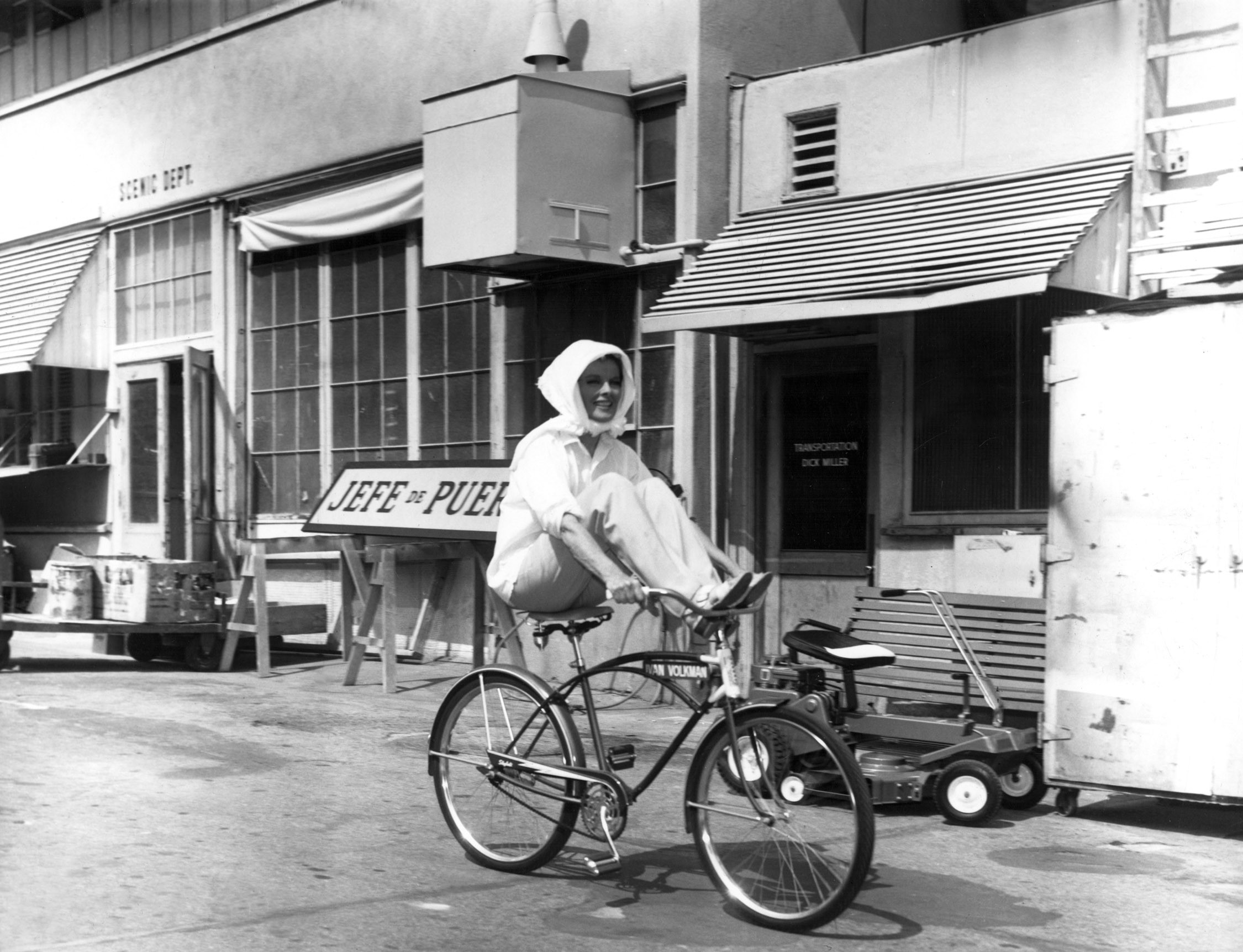
Katharine Hepburn, who was born on this day 110 years ago, rides a bike between takes while making Guess Who’s Coming to Dinner in 1967:

Actor in the Spotlight:

See George Clooney in animated form as he tells of his Uncle Chick in this adaptation of an Esquire interview from 2011

[embedded content]

Filmmaker in Focus:

Alejandro Jodorowsky is celebrated in this video essay titled “Mad Cinema of the Sacred Heart”:

[embedded content]

Filmmaking Rule of the Day:

Fandor illustrates the importance of the 180 degree rule and when it’s been broken well in this video essay:

[embedded content]

Classic Trailer of the Day:

Today is the 30th anniversary of the Cannes premiere of Dirty Dancing. Watch the original trailer for the classic musical drama below.

[embedded content]

and

Let’s block ads! (Why?)


No Image

Episode 771: When India's Cash Disappeared, Part Two

People line up outside a bank to exchange old currency notes with new ones on November 10, 2016 in New Delhi India.

Shams Qari/Barcroft Media via Getty Images

hide caption

toggle caption

Shams Qari/Barcroft Media via Getty Images

This part two of a two part series. Listen to part one here.

A couple of years ago, a mechanical engineer met with Narendra Modi, who would later become India’s Prime Minister. The engineer proposed a bold and radical idea that he said would completely change the Indian economy. The idea is called demonetization, and it happened six months ago. The government suddenly declared most of the paper money in circulation worthless. Citizens had a short time to turn in their stashes of cash for new bills. It was an effort to flush out corruption, get people to join the banking system and in the process, help the poor of India.

In part one of this two-part series, we met the man behind demonetization, the engineer, Anil Bokil. Now in part two, we ask, did demonetization work?

Modi had three problems he wanted to solve if the country relied less on cash:

  • Corruption. Without cash, it’s harder to hide money from the taxman. It’s also harder to ask for a bribe or run a black market business.
  • Businesses could be more competitive and grow faster by using banks and electronic payments.
  • More people would have to use banks, and not keep all their life savings in a drawer. This would keep their money safer.
  • Indian farmers talk beneath a fig tree. Since people couldn't use cash, many farmers couldn't sell their crops.

    Indian farmers talk beneath a fig tree. Since people couldn’t use cash, many farmers couldn’t sell their crops.

    Stacey Vanek Smith/NPR

  • Empty apartment buildings loom tall in the New Delhi suburbs. High rises like these are where most of India's black money is stored.

    Empty apartment buildings loom tall in the New Delhi suburbs. High rises like these are where most of India’s black money is stored.

    Stacey Vanek Smith/NPR

  • Gurdeep Sagoo had missed the deadline to exchange his mother's bills. His mom was in a coma at the time. But the bank said it was too late to exchange it. And there went his mom's life savings.

    Gurdeep Sagoo had missed the deadline to exchange his mother’s bills. His mom was in a coma at the time. But the bank said it was too late to exchange it. And there went his mom’s life savings.

    Stacey Vanek Smith/NPR

1 of 3

But, suddenly removing most of the cash in an economy, is very messy. It hurt. Demonetization has affected different people in a variety of a ways. We talked with farmers who don’t trust credit cards, small shop owners who had to find new ways to sell their goods, and high tech companies trying to cash in.

Today on the show, we evaluate Modi’s demonetization plan … report card style. How did this shock to a cash-dependent economy play out for a country of a billion people?

Music: “Cheeky Tongues,” “Yada Yada,” and “Miss You.” Find us: Twitter/ Facebook.

Subscribe to our show on Apple Podcasts or PocketCast.

Let’s block ads! (Why?)


No Image

Bob Ryan Reflects On Nearly 3 Decades Of ESPN's 'The Sports Reporters'

NPR’s Robert Siegel talks to Bob Ryan what he will do Sunday mornings now that The Sports Reporters roundtable on ESPN is off the schedule.

ROBERT SIEGEL, HOST:

There are several Sunday morning TV roundtables that feature journalists parsing the week’s events and arguing about them – “Meet The Press,” “Face The Nation.” I tend to watch them joylessly as a form of homework, but there has been one Sunday morning roundtable that I’ve watched faithfully and happily, until last weekend when it aired for the last time.

(SOUNDBITE OF TV SHOW, “THE SPORTS REPORTERS”)

SIEGEL: ESPN’s “The Sports Reporters” mixed a kid’s passion for sports with appropriate adult-sized doses of insight, realism and cynicism about the industries that thrive at the expense of gifted athletes. There was a host and a cast of familiar sportswriters, three of them each Sunday. Last week, Mitch Albom, Bill Rhoden and Bob Ryan joined host Mike Lupica for the last go-round.

And as I was wondering what I’m going to be doing without “The Sports Reporters” on Sunday mornings, the question occurred to me – what are they going to be doing? So we’ve called up “Sports Reporters” regular Bob Ryan of The Boston Globe, who joins us from Sarasota, Fla. Hi. Sorry to hear about it.

BOB RYAN: Oh, thank you very much. Well, in the short run, I think we plan on feeling sorry for ourselves.

SIEGEL: (Laughter).

RYAN: That’s – we’ll spend a good portion of Sunday mornings reminiscing and being nostalgic about all the good times we had, and, man, we did have many of them over the course of, in my case, 28 years.

SIEGEL: Twenty-eight. This week you weren’t scheduled to be on the show had there been one, but next Sunday morning?

RYAN: Oh, that is – I’m certain that that is when the withdrawal symptoms will become real.

SIEGEL: This Sunday, they I think would have been talking about perhaps an amazing win by the San Antonio Spurs on the road without their best player playing. Do you miss the chance to hold forth on these things?

RYAN: Positively. We would undoubtedly be marveling at the stunning development in Houston when the Spurs beat them by 39 points on their home court in an epic game 6.

SIEGEL: How different is the beat and the discussion that can be held by, you know, four sportswriters today than it was 30 years ago?

RYAN: So many of the people out there, the public, has access to information that was once our exclusive province, and so it’s easier to misspeak and be called on it than it was 30 years ago.

SIEGEL: (Laughter). And has the range of subjects – has the number of times that you found yourself talking about doping and domestic violence, is it radically different today than it was 30 years ago?

RYAN: Yes. The social issues are a part of the deal, especially in the fall when the National Football League goes about its business, and there is such a disproportionate number of miscreants, people who are unfortunately in the papers for the wrong reasons. I’m not saying that’s the only league where that happens, but I think anyone knows that you don’t get too far away without discussing who’s being suspended in that league.

SIEGEL: The show is unique on ESPN. Do you think it would be harder today to pitch a show where four people talk intelligently and, you know, not always shouting about sports? Is that considered just not an apt idea anymore?

RYAN: What is not considered an apt idea is agreement. What is considered an apt idea is conflict. We weren’t in it to seek conflict. If we had differing opinions, wonderful. It was organic. That was fine. But I have to tell you, and I’m a part of another program on the network, that sometimes we do manufacture issues for the sake of entertainment. And I don’t think for one second we ever thought that way on “The Sports Reporters.”

SIEGEL: By the way, why was “The Sports Reporters” canceled? Was it expensive to bring everybody up to Connecticut every week to do or just low ratings? Or what did they tell you?

RYAN: The only reason we were given – and I am not making this up, and I’m not being hyperbolic, I’m being – quoting verbatim – “we’re going in another direction,” unquote, unquote. So you can take a look at the drift of the nature of some of the programs on the network now, it will tell you what direction that is in. But I don’t see it that I have much of a right to complain about the opportunity that ESPN gave me and as well as the rest of us to have this forum for the last 28 years.

SIEGEL: Well, Bob Ryan, thanks for lots of wonderful Sunday morning half-hours that you and your colleagues and friends provided for me. Good luck, and I’ll be missing you.

RYAN: It’s nice to hear from you. Thank you, Robert.

SIEGEL: Bob Ryan of The Boston Globe was a regular on ESPN’s “The Sports Reporters” which aired for the last time last Sunday.

(SOUNDBITE OF SONG, “PUT ON YOUR SUNDAY CLOTHES”)

UNIDENTIFIED SINGER: (Singing) Put your Sunday clothes. There’s lots of world out there.

Copyright © 2017 NPR. All rights reserved. Visit our website terms of use and permissions pages at www.npr.org for further information.

NPR transcripts are created on a rush deadline by Verb8tm, Inc., an NPR contractor, and produced using a proprietary transcription process developed with NPR. This text may not be in its final form and may be updated or revised in the future. Accuracy and availability may vary. The authoritative record of NPR’s programming is the audio record.

Let’s block ads! (Why?)


No Image

Elizabeth Lesser: Why Is It So Hard To Ask For — And Offer — Forgiveness?

[embedded content]

Part 3 of the TED Radio Hour episode Forgiveness.

About Elizabeth Lesser’s TED Talk

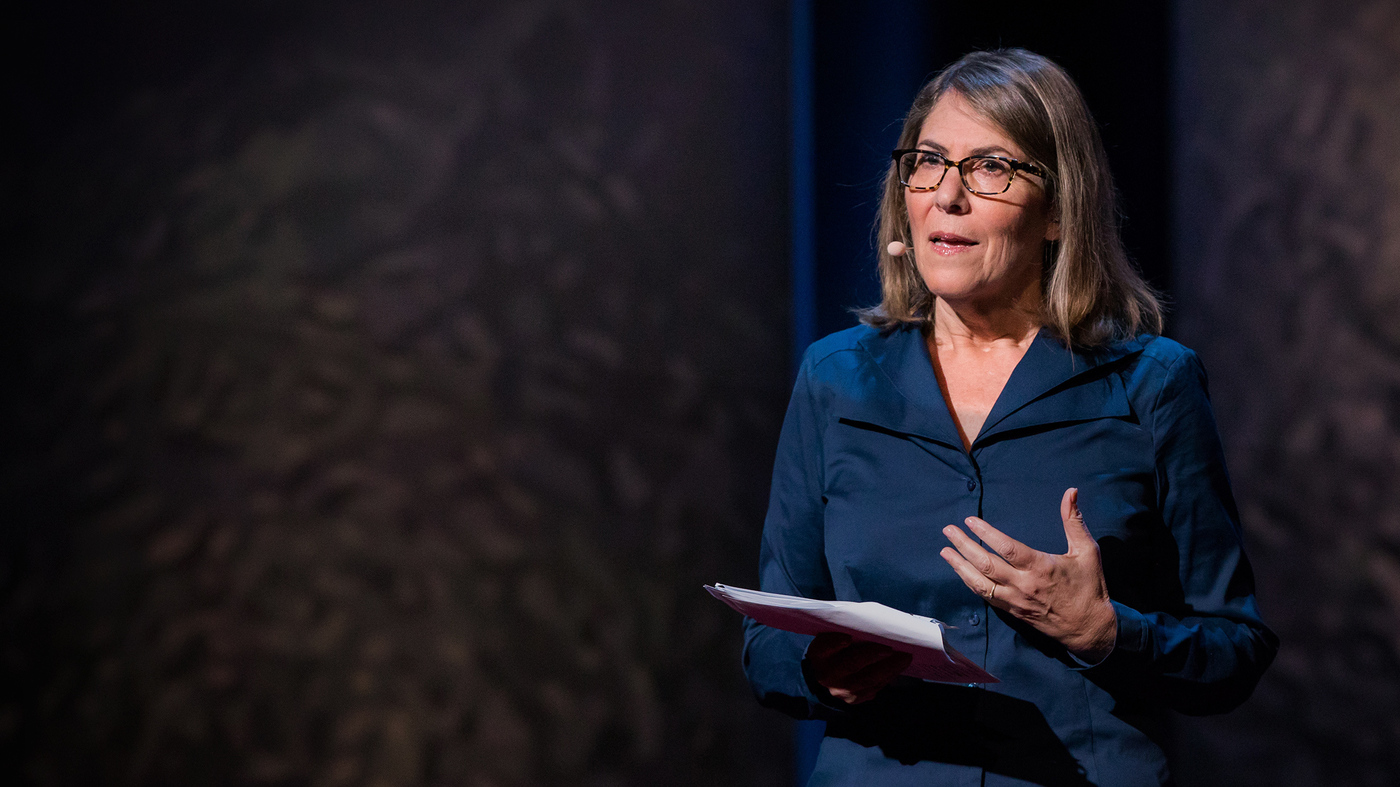
Before donating bone marrow to her sister — Elizabeth Lesser and her sister undertook a process of seeking forgiveness from each other. She says forgiveness is hard but necessary for our well-being.

About Elizabeth Lesser

Elizabeth Lesser is the co-founder of Omega Institute, where she focuses on holistic education, meditation, and cross-cultural understanding. Lesser is also the co-founder of Omega’s Women’s Leadership Center.

She has written several bestselling books. Her latest book is Marrow: A Love Story, a memoir about Elizabeth and her younger sister, Maggie, and the process they went through when Elizabeth was the donor for Maggie’s bone marrow transplant.

Let’s block ads! (Why?)