Articles by admin

No Image

Saturday Sports: It's Time For Baseball

NPR’s Melissa Block talks to Howard Bryant of ESPN about the latest in baseball, including what’s ahead for the Yankees and the Chicago Cubs.

MELISSA BLOCK, HOST:

And it’s time now for sports.

(SOUNDBITE OF MUSIC)

BLOCK: The Golden State Warriors mopped up the Cleveland Cavaliers this week, handily putting an end to the NBA season. But baseball season is in full swing. And Howard Bryant of espn.com and ESPN The Magazine is always game to talk us through it.

Good morning, Howard.

HOWARD BRYANT, BYLINE: Good morning, Melissa. How are you?

BLOCK: I’m great. And let’s start with the American League. And the Yankees, currently on top in the American League East. I gather they are pinning huge hopes on a rookie named Aaron Judge.

BRYANT: Not just any rookie named Aaron Judge, a 6-foot-7, 282-pound, rookie named Aaron Judge who tends (laughter) – you would look at him and think that he belongs on a football field, but he is amazing. And it’s kind of fun, being in 2017, how strange it is for us to actually root for the Yankees, the dreaded 27-time New York Yankees who are kind of…

BLOCK: Not strange for me, Howard. Speak for yourself.

BRYANT: Who are underdogs right now – why are we rooting for the Yankees? That’s unheard of. Well, it’s because baseball needs this. Baseball needs a shot of a dynasty to come back and to have a young player playing in the big city, doing big things. And he is hitting the ball. He hit a – almost a 500-foot home run last week. And he’s everything that people are talking about. It’s good to see the Yankees – Scott and I have this argument all the time about dynasties. I love when big teams are doing great things because they’re the teams you remember, the teams that you circle on the calendar. Teams you hate – it’s what sports is really all about.

And the Yankees have been a very mediocre, average team for the last five years. They haven’t won the World Series since 2009. They haven’t been to the American League Championship since 2012, I believe, or two thousand – yeah, 2012. And so it’s a nice thing to see. And Aaron Judge is doing things that people who you would think are rational people are comparing to Babe Ruth and Lou Gehrig. And it’s, like, well, wait a minute – he’s only been here a couple of months. That’s how exciting he’s been.

BLOCK: No kidding. The Houston Astros are kind of a surprise favorite this season. What’s been going right for them?

BRYANT: They’ve got the best record in baseball right now. And it’s interesting because a couple of years ago, they were the team that people thought were going to be the next new team. They went to the American League Championship Series. They lost to Kansas City. Then last year, they didn’t do so well, and they sort of fell off. And you’d wondered how a team that talented could have such a bad rebound from things.

But this year, they’re back, and they’re playing great. You’ve got Carlos Correa, who’s one of the best players in the game and a wonderful lineup up and down. Jose Altuve, all 5-foot-6 of him, is one of the best hitters in baseball. And they’re playing the Boston Red Sox this weekend, which is a good series for both teams. And you look at Boston, you look at the Yankees, and you look at Houston, and you’ve got some nice stuff happening this year in the American League.

BLOCK: OK. And on the National League side, can the Chicago Cubs…

(LAUGHTER)

BLOCK: …Make Scott Simon happy and repeat as World Series champions?

BRYANT: Repeat as World Series champions? They’re not even – they’re .500. They are an average team.

BLOCK: Oh, man.

BRYANT: And let’s – why don’t we just call this out, Melissa, for what it is? The reason why…

BLOCK: Since Scott Simon isn’t here (laughter).

BRYANT: …Scott Simon is in Europe is because the Chicago Cubs are playing so poorly right now.

BLOCK: He couldn’t stand it.

BRYANT: Last year (laughter) – last year, they were tearing up the National League – and baseball. They won 103 games. This year, they’re 33-33. They’re – you would like to think that they’ve got a big run in them in the second half. They’re still the most talented team in the league. They are an outstanding baseball club. But this is a new year, and it’s one of the hardest things to do in baseball. We like to talk about oh, well, you know, they’re so good. They’re not machines. And it’s a new year, and you hadn’t won since 1908. And the pressure of doing that and the pressure of repeating – and it’s also very hard to do in the National League. The Phillies did it – 2008, 2009. But you got to go back, after that, to the ’70s to Cincinnati – ’75, ’76 – to see a team repeat in the National League. It’s a very difficult thing to do. But if there’s a team out there that has the talent to do it, it’s the Chicago Cubs. And maybe Scott will come back to the country (laughter) when they do.

BLOCK: Well, from your mouth to Scott Simon and other Cubs fans’ ears. Howard Bryant of ESPN, thank you so much.

BRYANT: Thank you.

Copyright © 2017 NPR. All rights reserved. Visit our website terms of use and permissions pages at www.npr.org for further information.

NPR transcripts are created on a rush deadline by Verb8tm, Inc., an NPR contractor, and produced using a proprietary transcription process developed with NPR. This text may not be in its final form and may be updated or revised in the future. Accuracy and availability may vary. The authoritative record of NPR’s programming is the audio record.

Let’s block ads! (Why?)


No Image

Tourism Industry Disappointed In New Cuba Policies

President Trump’s plan to roll back diplomatic and trade openings to Cuba has some business leaders upset. They had positioned their businesses to benefit; now strict limitations are back in place.

MELISSA BLOCK, HOST:

And for American entrepreneurs who looked at Cuba and saw an untapped market of more than 11 million people, Trump’s new policy is disappointing. Charles Lane from member station WSHU reports.

CHARLES LANE, BYLINE: Academics estimated that U.S. companies would’ve grossed about $4.5 billion over the next four years in trade and tourism with Cuba. Most of that is tourism, which is likely to decrease now that Americans can only travel with groups. Augusto Maxwell is a lawyer who advises companies doing business in Cuba. He says American travelers like their freedom.

AUGUSTO MAXWELL: They’re going to be upset that they now have to go with a tour group that is going to control their agenda – versus their ability to go there, stay at an Airbnb and go to a private restaurant and make their own conclusions.

LANE: Six hundred thousand Americans traveled to Cuba last year, the same number who travelled to Australia. Maxwell predicts the number of flights will drop. But the number of cruise-ship passengers will likely remain the same. That’s because cruise-ship passengers often travel in groups.

The big crunch will be on where to sleep. Havana’s official hotel sites are all over-capacity, which opened the door to the room-renting site, Airbnb. They book about 10,000 a year to Americans. Regulators still have to write the rules. So right now it’s unclear how the new policy will be enforced.

What’s also unclear is if the multimillion-dollar hotel deal between the Cuban military and Starwood, which is owned by Marriott, is still viable. The White House said all previously inked deals are still valid. But they also said Americans will not be permitted to stay at military-owned hotels. Overall, Maxwell says the mood in the tourism industry is down.

MAXWELL: In order to promote freedom in Cuba, they’re denying Americans the freedom to travel. And I think that that’s controversial.

LANE: The Trump administration says that America’s long-term partner is the Cuban people, not the Cuban government, which the administration criticizes as oppressive and anti-American. Richard Feinberg says that’s true. He is a professor of international political economy at UC, San Diego. He says even though the current embargo allows for American telecom companies to do business, the Cuban government has been reluctant.

RICHARD FEINBERG: Google actually went down there and said to the Cubans, hey, we will wire the whole island, and we’ll do it free of charge. And the Cubans said, no thanks. We’re scared that an American firm might compromise our security. And we prefer to deal with the Chinese at this point.

LANE: For American entrepreneurs, this is frustrating. Right now we only export about $200 million a year in commodities and humanitarian products. Feinberg says it could be so much more. Trump’s rollback, he says, cedes the head-start advantages to other countries. But just because the U.S. is pulling out, that doesn’t necessarily mean foreign companies will rush into Cuba. Risa Grais-Targow is an analyst at the Eurasia Group.

RISA GRAIS-TARGOW: Because the Helms-Burton Act of 1996 actually allows for the U.S. to punish third parties that do business with Cuba, we’ve actually seen a pretty limited amount of foreign companies doing business on the island.

LANE: Grais-Targow says that when U.S. restrictions were first eased, there was growing excitement from across the global business community to make investments in Cuba. But now she expects that excitement to wane. For NPR News, I’m Charles Lane.

Copyright © 2017 NPR. All rights reserved. Visit our website terms of use and permissions pages at www.npr.org for further information.

NPR transcripts are created on a rush deadline by Verb8tm, Inc., an NPR contractor, and produced using a proprietary transcription process developed with NPR. This text may not be in its final form and may be updated or revised in the future. Accuracy and availability may vary. The authoritative record of NPR’s programming is the audio record.

Let’s block ads! (Why?)


No Image

The Week in Movie News: Here's What You Need to Know

Need a quick recap on the past week in movie news? Here are the highlights:

BIG NEWS

Jennifer Lawrence, Michael Fassbender and James McAvoy Are Still X-Men: If you were worried the core trio of Jennifer Lawrence, Michael Fassbender and James McAvoy were quitting the X-Men franchise, you’ll be happy to learn they’ve signed on for X-Men: Dark Phoenix, due next year. Also, Jessica Chastain is in talks to play the villain. Read more here.

GREAT NEWS

Ethan Hunt’s Wife Returns: If you were worried the Mission: Impossible movies forgot Tom Cruise’s Ethan Hunt was married in part three, since she wasn’t in Mission: Impossible: Rogue Nation, then you’ll be happy to learn Michelle Monaghan is back for the next installment, due next summer. Read more here.

STRANGE NEWS

It Comes At Night Has a Connection to The Witch: Besides sharing a distributor in A24, the new horror movie It Comes At Night has been revealed to have another cool connection to The Witch: a certain increasingly iconic goat. Read more here.

EXCLUSIVE SCOOP

Colin Trevorrow On How Personal His Star Wars Sequel Will Be: We talked to filmmaker Colin Trevorrow about his new movie The Book of Henry and his next one, a little something called Star Wars IX. Read more here.

COOL CULTURE

Ben Stiller and Vince Vaughn Play More Dodgeball: In support of Ben Stiller’s charity, the actor was joined by Vince Vaughn, Justin Long and others from the comedy Dodgeball for a sort of in-character follow-up. See what might be the closest thing we get to a Dodgeball 2 below via Omaze.

[embedded content]

MUST-WATCH TRAILERS

Flatliners is Going to Be Very Timely: Not only did we get our first look at the new Flatliners, we also talked to producer Michael Douglas and actress Nina Dobrev about how this one is going to be different and modern it is. Read more here, and watch the trailer here:

[embedded content]

Daddy’s Home 2 Promises to Be Funnier Than the First One: Will Ferrell and Mark Wahlberg are back for a sequel to their hit comedy Daddy’s Home, and this time John Lithgow and Mel Gibson are on board for the paternal fun. Check out more info on the movie here and watch the first full trailer below.

[embedded content]

Detroit Has Us Gearing Up: The new historical drama from Oscar winner Kathryn Bigelow (The Hurt Locker, Zero Dark Thirty) looks intense and is probably another contender for Best Picture. Check out the new trailer for the movie here:

[embedded content]

Let’s block ads! (Why?)


No Image

Southern Lawmakers Push For Easement Of Trade Barriers With Cuba

Lawmakers in southern states are pushing hard to lift remaining trade barriers with Cuba, so they can sell crops like rice, corn and soybeans to the island. NPR’s Audie Cornish talks with Louisiana Agriculture Commissioner Mike Strain about U.S. exports to Cuba and whether President Trump’s new Cuba policy will be a setback.

AUDIE CORNISH, HOST:

As we just heard, President Trump faced a lot of pressure from the GOP southern Florida delegation to tighten restrictions on travel and trade with Cuba. But not all Republicans want stricter relations with Cuba. Some officials in southern agriculture states have pushed to open trade with the country and embrace the Obama-era thaw in relations.

Mike Strain is one of those Republicans. He’s actually the agriculture commissioner for the state of Louisiana. It’s an elected position. Welcome to the program.

MIKE STRAIN: Thank you.

CORNISH: So talk about why for your state closer ties with Cuba make sense.

STRAIN: Well, when you look at the trade opportunities with Cuba, in 2014, Cuba imported over $6 billion worth of products. Cuba imports 80 percent of their food. And when you look at what’s going on, we can have product there, high-quality agricultural products, at a very competitive price in two days. When they buy rice from Vietnam, they’re buying a lower-quality product. It takes 30 days to get it there.

CORNISH: How will the president’s announced policies today change your relationship with Cuba?

STRAIN: We are being told through our – you know, our different – our conversations with Washington that this will have a minimal impact on the current status of agricultural trade. Now, there are a number of bills going through the Congress in the House and the Senate which would further work to normalize the agricultural sector of trade. And we’re going to be watching those very, very intensely because what it means for my state – if you’re looking at $2 billion in agricultural trade, we fully expect that Louisiana’s share could be over $500 million of that trade. America’s trade could be over a billion dollars of that within a five-year period.

CORNISH: So we hear these big numbers, and we have a good picture here of what this could mean for Louisiana. But as we mentioned, you’re in an elected position. You’re a Republican. What’s it like trying to make this case to those in your party – right? – who say that, no, we should not be dealing with Cuba?

STRAIN: But the issue is, we are wanting to sell them food, not give them food, not give them anything but sell them products. And when you talk about – you know, and I talked to my fellow Republicans and others. This year, Cuban-Americans will send to Cuba, to their relatives $1.8 billion in American cash. That $1.8 billion is being used to buy food products from other areas of the world. Well, that $1.8 billion should be used to buy or be available to buy food from America. If not, there will be other foreign countries there. Specifically, China will be there and others. So when you look at that, you know, if you want to take a strict, hard line – and then you’d have a total embargo – you wouldn’t be sending any assets there.

CORNISH: At the same time, when it comes to politics and the American policy towards Cuba, it hasn’t always been just about economics, right? People have also talked about documented human rights abuses there. What is your reply to that, to people who have concern with doing business with that government?

STRAIN: Well, the thing of it is, if we do business with them, if we can bring them internet, if we can bring them the ability to have cellphones and information – also, if we have Americans that are going there, then that will open up the dialogue and the discussion. I mean we’ve tried isolation since the 1960s. There as isolated as they can get. They’re as poor as they can get. It’s time to have a different approach. And by doing that, I think you will see, you know, a shift in their politics.

CORNISH: Mike Strain is the agricultural commissioner for the state of Louisiana. Mr. Strain, thank you so much for speaking with us.

STRAIN: Thank you.

Copyright © 2017 NPR. All rights reserved. Visit our website terms of use and permissions pages at www.npr.org for further information.

NPR transcripts are created on a rush deadline by Verb8tm, Inc., an NPR contractor, and produced using a proprietary transcription process developed with NPR. This text may not be in its final form and may be updated or revised in the future. Accuracy and availability may vary. The authoritative record of NPR’s programming is the audio record.

Let’s block ads! (Why?)


No Image

Unity At The Ballpark: Lawmakers Come Together After Shooting

Nearly 25,000 people turned out for this year’s Congressional Baseball Game. It was a rare moment of harmony between Republicans and Democrats one day after a gunman shot Rep. Steve Scalise and four others at a practice for the game.

UNIDENTIFIED CROWD: (Singing) Buy me some peanuts and Cracker Jacks. I don’t care if I never get back.

AUDIE CORNISH, HOST:

The Democrats beat the Republicans 11-2 in last night’s Congressional Baseball Game. It was one day after a gunman shot Republican Congressman Steve Scalise and three others at a practice for the game. Nearly 25,000 people turned out last night at Nationals Park. Here are some of their voices.

BROCK WILLIAMSON: My name’s Brock Williamson (ph) and this is Holly Mason (ph). And we’re from – actually from Omaha, Neb. But we’ve been in D.C. for two years.

HOLLY MASON: We love baseball, and I used to work on the Hill. And seeing the Dems and the Republicans play together is fantastic.

UNIDENTIFIED ANNOUNCER: Ladies and gentlemen, please welcome Special Agent David Bailey.

(APPLAUSE)

REMSO MARTINEZ: One madman with a gun is not going to stop Americans from enjoying baseball, especially when it comes to something like this. This is one of the times during the year where people can just crack open a cold beer, meet with their rivals across the aisle and just have a good time. I’m Remso Martinez (ph) from Fairfax, Va.

JACOB PAGE: I’m Jacob Page (ph) from Liberty University.

DENZEL JONES: Denzel Jones (ph). I’m just from Arlington, Va. I think this is the most bipartisanship you’re probably going to see here at the baseball game. But it’s not going to last. You know, it’s turned into more of a shouting match, which is a shame. Instead of, you know, really debating people on ideas and policies, you know, we’re more focused on who can get the, you know, biggest zinger in there that gets media attention. You know, ideally it would be great to, you know, come together and be able to talk openly, but, you know, I doubt that that’s going to actually happen.

UNIDENTIFIED ANNOUNCER: And now for the Democrats.

(CHEERING, BOOING)

DENISE DEGODA: So I’m Denise Degoda (ph). I am from Congressman Jared Huffman’s office. And he’s playing tonight. So yeah, I came to support him.

LINDSAY GRACE: And I’m Lindsay Grace, professor at American University. I love the idea that it’d actually be a little more cooperative instead of competitive. So it’d be wonderful if they were actually on the same team and working toward some other common goal.

UNIDENTIFIED ANNOUNCER: Now batting for the Democrats, representing New York, Hakeem Jeffries.

JONATHAN WILCOX: My name is Jonathan Wilcox (ph).

TERRY WILCOX: Terry Wilcox (ph).

J. WILCOX: And this is Jackson and James.

T. WILCOX: This is their first baseball game.

J. WILCOX: They’re almost 4. And the spirit has been really terrific. And I think that as partisan as things are, you know, there’s really something special in the air. When something like this happens, everybody just goes a little quiet and a little contemplative.

T. WILCOX: Like, you can all sort of look around for at least a little while, and you can connect with somebody no matter whether you agree with them politically or whatever. Just for a minute, it’s nice to kind of have that serenity.

J. WILCOX: And so for one night at least, it’s a united city.

CORNISH: NPR producer Sam Gringlas brought us those voices from yesterday’s Congressional Baseball Game.

Copyright © 2017 NPR. All rights reserved. Visit our website terms of use and permissions pages at www.npr.org for further information.

NPR transcripts are created on a rush deadline by Verb8tm, Inc., an NPR contractor, and produced using a proprietary transcription process developed with NPR. This text may not be in its final form and may be updated or revised in the future. Accuracy and availability may vary. The authoritative record of NPR’s programming is the audio record.

Let’s block ads! (Why?)


No Image

Today in Movie Culture: The Problem With Doctor Strange in Avengers: Infinity War, the Evolution of Pixar and More

Here are a bunch of little bites to satisfy your hunger for movie culture:

Character Parody of the Day:

Mr. Sunday Movies makes us question why The Avengers would recruit Doctor Strange in this animated parody:

[embedded content]

Movie Karaoke Cover of the Day:

Watch characters from 132 movies dance and sing the lyrics to Michael Jackson’s “The Way You Make Me Feel”:

[embedded content]

Studio History of the Day:

In anticipation of the release of Cars 3, Burger Fiction compiled a look at the evolution of Pixar through their shorts and features:

[embedded content]

Animation Celebration of the Day:

Speaking of animated movies, Vox presents a short documentary about how fan films inspired the look of The Lego Movie:

[embedded content]

Franchise Recap of the Day:

In anticipation of Transformers: The Last Knight, Screen Junkies recap the first four movies so you don’t have to watch the again:

[embedded content]

Vintage Image of the Day:

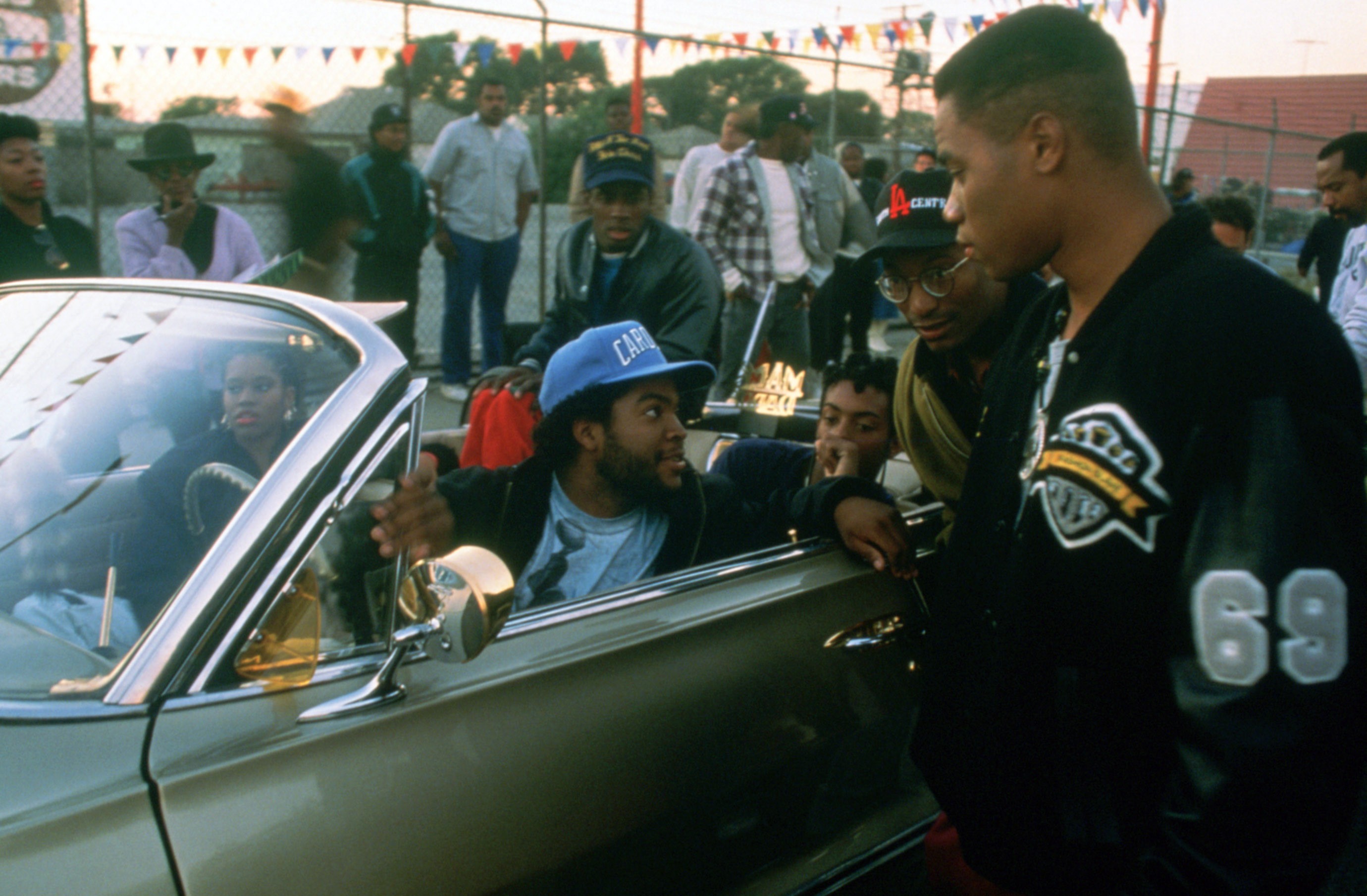
Ice Cube, who turns 48 today, and Cuba Gooding Jr. receive direction from John Singleton on the set of Boyz N the Hood in 1990:

Filmmaker in Focus:

Channel Criswell focuses his latest video essay on Denis Villeneuve and how he crafts “morality through mystery”:

[embedded content]

Film Studies Lesson of the Day:

This video essay from Cue the Music explains what a fugue is in music and why none are really found in film scores:

[embedded content]

Cosplay of the Day:

See fans dressed as Jareth and others at last fall’s Labyrinth-themed masquerade ball at the Center for Puppetry Arts:

[embedded content]

Classic Trailer of the Day:

Today is the 50th anniversary of the release of The Dirty Dozen. Watch the original trailer for the classic action movie below.

[embedded content]

and

Let’s block ads! (Why?)


No Image

Blimp Goes Down At U.S. Open; Pilot Injured

A blimp crashes during the first round of the U.S. Open golf tournament on Thursday near Erin Hills in Erin, Wis.

Charlie Riedel/AP

hide caption

toggle caption

Charlie Riedel/AP

An advertising blimp fell from the sky on Thursday and crashed near the scene of golf’s U.S. Open in Wisconsin, injuring the pilot.

The Washington County Sheriff’s Office described the pilot’s injuries as “serious.” It said in a statement that the pilot was the only person on board.

“The initial investigation reveals the blimp may have experienced mechanical problems prior to the crash,” the sheriff’s office added.

Justin Maynard, a representative of the blimp company AirSign, told The Two-Way that the pilot had been transported to the hospital. He suffered burns but is expected to be “OK,” Maynard added.

The company does not know what caused the crash, which occurred as the blimp was advertising for a client near the U.S. Open, Maynard said.

Two fire departments were at the golf course when the blimp went down at about 11:15 a.m. local time, the sheriff’s office said. They were able to quickly reach the scene, about 1 mile from the tournament.

Video posted by someone attending the tournament shows the dark form of the crumpled blimp rapidly descending, eventually falling from view behind a crowded grandstand.

#USOpen blimp going down on fire. pic.twitter.com/cRAX4apE7R

— Drez (@AaronDrez) June 15, 2017

“It started deflating, and then it started going down,” witness Bryan Rosine told the Milwaukee Journal Sentinel.

“They were trying to give it some throttle and it didn’t go up. … Then there was a bunch of kabooms and smoke clouds.”

Another video, posted by Fox Sports, shows the blimp already on fire in the field when an explosion rips through it.

A manned blimp unaffiliated with FOX Sports or the #USOpen crashed near the course today. We will provide more details as they’re available. pic.twitter.com/QEAk8tiU0K

— FOX Sports (@FOXSports) June 15, 2017

Earlier in the day, AirSign had shared blimp pictures from the U.S. Open, advertising PenFed Credit Union. The PenFed logo is visible in an Associated Press photo of the blimp plummeting to the Earth.

The blimp was airborne for “several hours” before it went down, the sheriff’s office stated. It says the office had been in touch with the Federal Aviation Administration before the crash and “determined the aircraft was lawfully operating at the proper altitude.”

The U.S. Open, played this year in Erin, Wis., is one of the four major tournaments in golf.

Let’s block ads! (Why?)


No Image

The Investor Who Took On Uber, And Silicon Valley

Freada Kapor Klein stands on a staircase at the Kapor Center for Social Impact in Oakland, Calif. She is a high profile investor, who invested early on with Uber. She has used her voice and her money in a decades-long effort to promote more diversity in Silicon Valley.

Talia Herman for NPR

hide caption

toggle caption

Talia Herman for NPR

Uber is a mess — the “bad boy” ethos shattered, a nervous breakdown in its place. This week, the CEO announced he is taking a sudden leave of absence. A former U.S. attorney general released a brutal audit of the startup’s culture. It’s a terrifying moment for many investors who want that $70 billion unicorn to make them rich or richer — not implode.

But there is one Uber investor who stands out for how she decided to speak up. It was not very Silicon Valley-like of her, but Freada Kapor Klein wanted to turn the crisis into a teachable moment. And while this week’s events could lead her to say “I told you so,” she has a different takeaway.

Let’s rewind a few months. Kapor Klein decided to write an open letter to Uber — which she published with her husband — after a young woman shared an explosive account of sexual harassment at Uber headquarters.

Kapor Klein is a venture capitalist, or a VC. That means she makes money by betting on technology startups. Uber is one of those startups. She has committed to “impact investment” — businesses that can turn a profit while also making the world a better place. For too many years, she says, critics would question her on Uber, and she stayed silent. She tried to influence the company from the inside, though she didn’t see a real will among leadership to change. While “Silicon Valley prides itself on pattern recognition,” the letter said, Uber had “toxic patterns” that needed to stop.

Kapor Klein thought she was just saying what insiders knew: This is not a one-off. Turns out, her peers didn’t like that and wanted her to pay for it.

“I could imagine that they wouldn’t love the Uber letter,” Kapor Klein says in an interview with NPR in mid-March. “But then that they would decide the next step they ought to go, is go after our high growth, hot startups and try to get them away from us!”

Anthony Heckman, an associate at Kapor Capital, speaks with Kapor Klein. She wrote an open letter to Uber after an engineer shared an instance of sexual harassment at the ride-hailing startup.

Talia Herman for NPR

hide caption

toggle caption

Talia Herman for NPR

She’s just learned that other VCs are trying to poach one of her hottest investments, and they’re citing the Uber letter to do it, basically saying: this investor throws her own people under the bus.

“I mean, it’s one thing to go pitch them. It’s another to say, ‘Get away from Kapor. See, they’re going to do this to you,’ ” she says.

It may be counterintuitive, but in Silicon Valley, the land that created tweeting, there is a code of silence among the rich. People are here to make money, not to agitate. She violated that code.

But she won’t back down. She tells me I should call a shortlist of her most powerful peers and demand they respond on the record. “Go to Sequoia, go to Benchmark, go to Kleiner, go to Accel, go to Andreessen, go to Khosla,” she names the kings of much-storied Sand Hill Road in Menlo Park, Calif.

She’s sitting inside the Kapor Center for Social Impact — a name that spells out the intent of the place. Kapor Klein and her husband bought this four-story building in central Oakland — what’s become the edge of Silicon Valley as tech expands beyond Cupertino, Mountain View and San Francisco — and it houses an investment arm, research and philanthropic projects.

Kapor Klein is 64 years old, petite with jet black eyes and curly hair to match. She is tense as she recounts the blowback, her folded hands resting on a conference table made of reclaimed wood. Meanwhile her dog is napping by her feet, sprawled on a gray carpet made of recycled fishing nets. (She designed the building to be green.)

Dudley’s snoring breaks her concentration, and she lets out a laugh. He’s a rescue dog, but sometimes she claims he’s a therapy dog. “You can see why. Doesn’t he make you feel better?”

She wakes him up and the two go in search of her husband and business partner, Mitch Kapor. When they find him, he happens to be meeting with the president of Silicon Valley Bank — who is trying to not get in the middle of the couple’s conversation. But Kapor Klein reels him in, telling him about the letter and the response. Greg Becker politely offers his take: “Yeah, people compete … anyway they can, right? That’s — unfortunately it’s human nature … .”

Kapor Klein points to her dog, who is now rubbing his enormous cream coat against the banker’s leg, and she teases: “I thought it was just dogs that did that. Dogs, not humans.” Her husband ends the conversation by saying: “It’s a dog-eat-dog world.”

This is his way of acting as her buffer — she, the one who pushes; he, the one who moderates.

Kapor Klein talks with her husband Mitch Kapor in their shared office space. He founded Lotus, the database company, and is a legend in Silicon Valley.

Talia Herman for NPR

hide caption

toggle caption

Talia Herman for NPR

Mitch Kapor is a bit of a legend, by the way. In the 1980s he founded Lotus, the famous spreadsheet maker. Some compare him to Steve Jobs and Bill Gates.

He pulled Kapor Klein into the tech world when he hired her to fix Lotus’ culture in 1984, to make it the most progressive employer in the U.S. Quite the job description. She would lecture her boss about how he carries himself at work, how he should be “more sensitive” about his power, how he could make or break an employee’s day just with eye contact.

The couple didn’t get together until years later, when she sought him out for career advice; and his first marriage fell apart. He asked her out on a date. He had a son. She was 43 and didn’t have kids. She assumed it was a summer fling and warned him, date two, that she’s not “stepmom material.”

Turns out, it wasn’t a fling.

Her life’s work is to change the culture of Silicon Valley — a place she feels has gone backward in time. There are far fewer women in computer science today than in the 1980s. Blacks and Latinos are missing too. Kapor Klein faults the investor class, which holds on to the myth of meritocracy, that they are the hyper-rational conduits of capital and it so just happens that white men are the most worthy.

She shares a hokey saying she’s heard one too many times: “We don’t care if you’re orange or blue; the only color we care about is green.”

Kapor Klein talks with communications manager Ashleigh Richelle (left) and the summer associates at the Kapor Center for Social Impact. Kapor Klein’s life work is to change the culture of Silicon Valley.

Talia Herman for NPR

hide caption

toggle caption

Talia Herman for NPR

If all Kapor Klein did was critique, she’d be irrelevant here. This place values people who build things. And that is what she is doing. The building feels like an alternate universe — one where tech somehow looks like the rest of America.

On one floor, there’s the investment team. Their portfolio includes Genius Plaza — the hot startup that others now want to poach. It’s an online education platform founded by Ana Roca Castro, a woman from the Dominican Republic (which is exotic in these parts). She’s landed major contracts with national agencies throughout Latin America, and is working to get into more U.S. schools.

Castro, who is based in Albany, N.Y., describes Kapor Klein as “protective,” an early investor who tries to shoo away others who don’t share their values. Asked if that could mean possessive, the tech founder disagrees. “When someone is territorial they want nobody around,” but in multiple instances, Kapor Klein has opened doors she didn’t know to knock. “She’ll be the first to push me, saying, ‘Don’t be afraid.’ “

Kapor Klein keeps an eclectic inner circle. It includes a former head of the NAACP; the woman who filed (and lost) a high-profile sexual harassment lawsuit against a leading venture capital fund; and Ulili Onovakpuri. The 32-year-old advises the health care portfolio, deciding which startups get money. But their relationship started when she was a teenager. Her now long-time mentor gave her a scholarship to UC Berkeley. (Kapor Klein launched the IDEAL Scholars Fund, for high-achieving minority students, after California ended affirmative action in schools.)

Pictures of Kapor Klein’s SMASH scholars and which college they will attend are on display in the office.

Talia Herman for NPR

hide caption

toggle caption

Talia Herman for NPR

Round the corner, social scientists are running data on why people leave tech, looking for holes in the leaky pipeline, so to speak. (They later published this study.)

Downstairs, Gabriel Chaparro — who ran the center’s SMASH math and science program for students of color at Stanford — shares the lesson he wants to drill into young minds.

“You’re going to step into places where there’s a line of people and none of them look like you. But you’ve earned your space. So get in that line, push them aside,” he says. “You can’t just look at that line and say I don’t fit in there. Make your fit.”

It’s a very Silicon Valley way of being. It’s how Uber CEO Travis Kalanick broke the yellow cab industry in city after city.

In some ways, Kapor Klein wants young people who grew up poor to channel Silicon Valley’s sense of entitlement — the idea that it’s OK to fail; that failure is necessary; and that one deserves support anyway. She herself doesn’t come from money. She grew up on a U.S. Air Force base in Biloxi, Miss., and one of her earliest memories was seeing, at age 3, her 7-year-old brother bloodied, beaten for being a Jew. She knew then the world isn’t fair.

The Uber row isn’t her first in Silicon Valley. To some extent, she’s used to it. She is rich (she won’t disclose how rich) and travels in wealthy circles, where people have strong feelings about money. She remembers a billionaire who suggested she’s spending too much on her do-gooder education programs. She recollects telling him, “Well, you probably write a check that’s somewhere between five and 10 times that amount of money for private kindergarten for your child.”

She’s quick to point out, though, that she jabbed because she was asking him to donate. If there wasn’t a specific ask, a concrete step she was advocating, she said she would hold back.

Kapor Klein sits with her rescue dog, Dudley. He acts as the office’s therapy dog and follows her throughout the day.

Talia Herman for NPR

hide caption

toggle caption

Talia Herman for NPR

NPR did approach leading investors (as Kapor Klein suggested) to get their take on Uber, her letter, and what’s the real problem. One was willing to go on the record.

“If you are a shareholder in a company and a stakeholder in a company, you would want to speak with one voice and you would want to work on the problem primarily,” says Jason Calacanis. “To kind of blindside a company with a post like that means now the company not only has to solve the problem, they have to react to that position publicly.”

Calacanis is an influential angel investor, and author of a new book on how to invest. While he respects Kapor Klein’s work with the underprivileged (he’s invited her to speak about it to his startups), he says that the way she spoke out created a “negative atmosphere” — a media circus.

And, Calacanis adds, it takes a hard-charging CEO to build the Uber empire. Soft questions around culture, an inclusive culture — those come later. “After you’ve won, or won a decent amount of market share or won the early fights, I think you have to shift gears a bit. And I think that’s what Uber’s going through.”

Kapor Klein disagrees — and Uber’s monumental meltdown is arguably proof she was right. But when I sit down with her in April, as the drama continues to unfold, she’s become hesitant. Uber reached out to her for help, after her letter. Now, as I ask questions about it, she’s being tight-lipped.

Asked if she is uncomfortable, she says she is, “because my goal now is to help Uber and any other company that really genuinely wants to change. I don’t know what snippets you might use, how they might hear that, and whether that’s going to hamper the efforts.”

Kapor Klein wants the world to understand: Yes, she spoke out when others would not. But no, Uber isn’t the only problem child in Silicon Valley. They just happened to get caught. This week she and her husband issued a statement to that effect, saying “the company deserves some room” to work on itself.

Let’s block ads! (Why?)


No Image

Sen. Tim Kaine Responds To Baseball Shooting

Steve Inskeep talks to Sen. Tim Kaine of Virginia and NPR’s Domenico Montanaro about Senate reactions to the baseball shooting, and reports about President Trump and the Russia investigation.

STEVE INSKEEP, HOST:

We’ve been through another breathtaking 24 hours of news. Yesterday started with a shooting at a Republican congressional baseball practice. It ended with a report by The Washington Post that President Trump faces investigation by a special counsel for possible obstruction of justice. Along the way, Senate Republicans have been trying to focus on health care legislation. Let’s talk all this through with Senator Tim Kaine of Virginia.

Senator, good morning.

TIM KAINE: Good to be with you, Steve. Thanks.

INSKEEP: So a lot of information is out there publicly about what the president did and didn’t do about the investigation into Russian interference. Do you see obstruction of justice?

KAINE: Well, that is a question for the special prosecutor. And I am extremely glad he’s on the case. That gives me comfort that we will get to the bottom of this. But the key issue is he fired the FBI director who was in the middle of investigating folks connected to the White House and then told both CBS News and Russian diplomats that the reason for the firing was the Russia investigation and that the pressure of the Russian investigation would now be off. So once the firing happened and the president essentially acknowledged that it was because of the Russia investigation, I was completely unsurprised to hear that the special prosecutor is looking at that…

INSKEEP: Is it…

KAINE: …And asking whether it’s obstruction.

INSKEEP: Is it fair that we’re told about this because, as you know, the president’s lawyer has denounced this – what’s described as a leak?

KAINE: Whether it’s fair or not, I’m sure that the fact that this has come out was in response to stories that the president was thinking about firing the special prosecutor. You know, that was a shocker. When President Nixon fired the special prosecutor Archibald Cox during the Watergate investigation, it basically set the path in stone toward the end of his presidency in disgrace. That was viewed by all as an admission of guilt. And so when the word was coming out from close associates with the president that he was thinking about firing the special prosecutor, that was probably a bridge too far for some. And they revealed what frankly should not be surprising to anybody – that that is one of the items they’re looking at.

INSKEEP: Oh – which essentially makes it much harder for the president to get away with firing the special prosecutor, should he ever decide to do that.

KAINE: I would think that would be very, very difficult. And it would be viewed by the public accurately as fear of what the investigation was going to uncover.

INSKEEP: Senator, what did yesterday’s shooting outside of Washington, D.C., involving Republican members of Congress say, if anything, about our political environment right now?

KAINE: It was very shocking, Steve. I was in the Wednesday morning weekly Senate bipartisan prayer breakfast, which is a tradition that goes back to the 1950s, where senators of both parties – and former senators – gather every Wednesday morning. When we were – we’d just heard the news before we walked in around 8 o’clock and prayed for our colleagues. We had senators that we like very much who were there. Rand Paul was there; Jeff Flake was there. And we were very worried. When something like that happens, immediately, what everybody up here thinks is, my family at home will hear there’s been a shooting of members of Congress…

INSKEEP: Yeah.

KAINE: …And they will worry that it’s me. And so…

INSKEEP: Better call home.

KAINE: …Everybody was calling their families. And so it was a very, very difficult morning. And I do think, you know, it raises the need for all of us to elevate the quality of our interactions with each other. We shouldn’t be demeaning each other personally. We shouldn’t be demeaning the institutions of government or tearing down the institutions of government.

I had an interview with a secretary of the Treasury the other day, and I asked him a question about whether there could ever be a good shutdown of the government. And he didn’t stand up and say shutting the government of the United States down is always a bad thing. I think we’ve got to elevate what we say about each other and about our institutions. And a day like that or an incident like that probably forces us all to look in the mirror, and that’s not a bad thing.

INSKEEP: Congressman Dave Schweikert was on the program earlier, Republican of Arizona, and he described a particularly toxic political environment that he felt was aimed at Republicans right now. Are things getting a little extreme as people oppose President Trump?

KAINE: I don’t – I think that’s unfair. I think it’s a – you know, we certainly see – I mean, we certainly see a whole lot of just incredible, incredible animosity aimed at Democrats. I’m thinking about the – you know, the Infowars story a few months ago that led somebody to walk into a pizza parlor in D.C. and shoot it up.

So there’s a lot of very extreme rhetoric out there. And for somebody to try to make a partisan point and say, you know, one side is to blame, or the other side is to blame – that is itself a move that’s about division and sometimes even inspiring anger. We should be above that.

INSKEEP: Very briefly…

KAINE: But I – but we’re going to – you know, we’ll get more facts on the shooting. But I do think this sort of toxic stew of sharp rhetoric and emotions, easy access to guns, mental health issues – that they tend to combine, and they probably all play a part in something like this. And all of those are things that we should be looking at.

INSKEEP: Very briefly, Senator – I know that Senate Republicans are moving closer to voting on health care legislation that’s being designed in secret, so to speak. Can you stop it, though?

KAINE: We’re going to do everything we can because anything designed in secret without hearing from patients, doctors, (inaudible) and without allowing Democrats to at least make proposed amendments is destined to be bad for the American public. We should be having an open process. And I introduced a bill yesterday with a number of Democrats to try to stabilize the individual insurance market using a tool that is a bipartisan tool, reinsurance that we currently do under Medicare Part D with the support of both parties. And that helps hold Medicare Part D costs down. I’m proposing a similar mechanism to hold health care costs down in the individual market.

There are solutions that are bipartisan, but we’re waiting for the Republicans to open the door to allow both the public and Democrats to participate in crafting those solutions.

INSKEEP: Virginia Senator Tim Kaine, Democrat – thanks very much. Really appreciate it.

KAINE: Hey – so good to be with you. Thank you, Steve.

INSKEEP: And NPR political editor editor Domenico Montanaro has been listening in to all of that. And Domenico, what strikes you about what the senator said?

DOMENICO MONTANARO, BYLINE: Well, I mean, both sides have, you know, engaged in rhetoric and hyperbole during these campaigns that really is out of control. You know, you see it in your social media feeds. It – regardless of who you are, if you’re public-facing at all, you get some of this targeted at you. And everyone has sort of retreated to their corners and winds up pointing the finger at somebody else. You know, you hear Tim Kaine say that it’s unfair to say that Democrats are being unfair to President Trump and that there are a lot of Republicans who are being unfair toward Democrats. It’s incumbent on both sides to be able to elevate the rhetoric. I’m not sure that it’s going to happen because partisanship has divided so – has gotten so much further apart over the last few years.

INSKEEP: Divided people’s perceptions of what the facts are that they even argue about. Domenico, thanks very much.

MONTANARO: Thank you.

Copyright © 2017 NPR. All rights reserved. Visit our website terms of use and permissions pages at www.npr.org for further information.

NPR transcripts are created on a rush deadline by Verb8tm, Inc., an NPR contractor, and produced using a proprietary transcription process developed with NPR. This text may not be in its final form and may be updated or revised in the future. Accuracy and availability may vary. The authoritative record of NPR’s programming is the audio record.

Let’s block ads! (Why?)


No Image

Today in Movie Culture: 'Dodgeball' Follow-Up for Charity, 'Cars' is the Kid's Version of 'Talladega Nights' and More

Here are a bunch of little bites to satisfy your hunger for movie culture:

Charity Campaign of the Day:

Ben Stiller, Vince Vaughn, Justin Long, Christine Taylor and others reunite for a Dodgeball follow-up for a good cause in this funny video for Omaze:

[embedded content]

Movie Comparison of the Day:

Everyone knows how Cars is like a remake of Doc Hollywood, but Couch Tomato shows it’s also the same movie as Talladega Nights: The Ballad of Ricky Bobby:

[embedded content]

Franchise Recap of the Day:

It’s been a while since the Harry Potter movies were released and you might be hazy about what happens in them, so here’s a rapped recap of the whole series:

[embedded content]

Cosplay of the Day:

Among the movies represented wonderfully in this best cosplay of Colossalcon 2017 video are Moana, Baywatch and Star Wars:

[embedded content]

Vintage Poster of the Day:

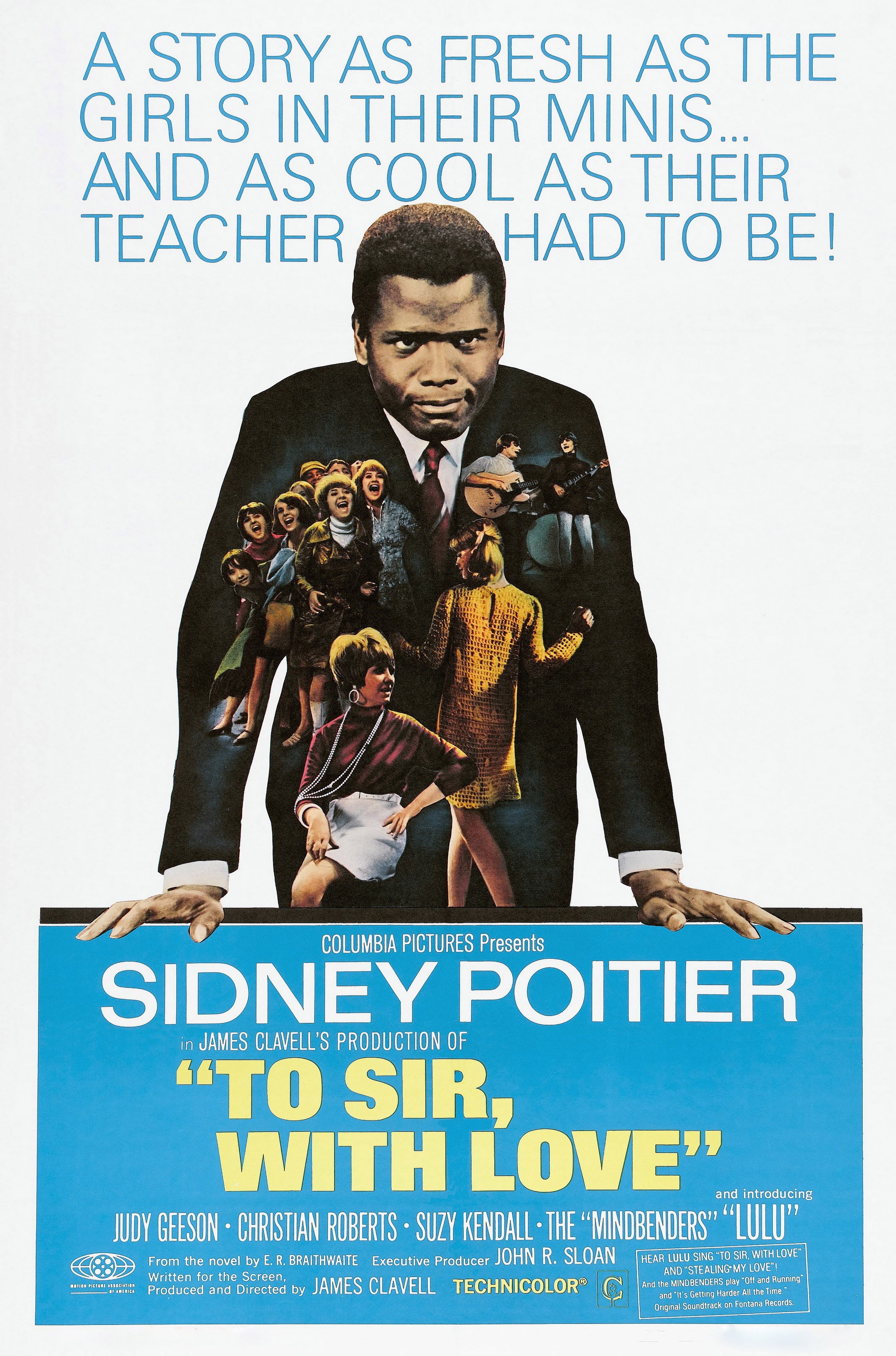
Today is the 50th anniversary of the release of To Sir, With Love starring Sidney Poitier. Here’s the original poster for the movie:

Actors in the Spotlight:

Blank on Blank celebrates the “court jester” actors Gene Wilder, Bill Murray and Robin Williams with animated adaptations of interviews:

[embedded content]

Remixed Movie of the Day:

Eclectic Method has turned another movie — this time The Fifth Element — into an awesome dance track:

[embedded content]

Movie Trivia of the Day:

There’s a new shark thriller in theaters this weekend, so here’s Fandor with a Jaws trivia lesson:

[embedded content]

Supercut of the Day:

In honor of Flag Day, here’s a supercut of people singing “The Star-Spangled Banner” in the movies:

[embedded content]

Classic Trailer of the Day:

Today is the 60th anniversary of the release of Tammy and the Bachelor. Watch the original trailer for the Debbie Reynolds classic below.

[embedded content]

and

Let’s block ads! (Why?)