Articles by admin

No Image

Not My Job: Former Flyers Goalie Bernie Parent Gets Quizzed On (Cake) Icing

Bernie Parent, of the Philadelphia Flyers Alumni team, wearing his original protective equipment, waits for the start of the Winter Classic Alumni hockey game on Dec. 31, 2011 in Philadelphia.

Tom Mihalek/AP

There was a saying in Philadelphia in the 1970s: “Only the Lord saves more than Bernie Parent.” The legendary goaltender won two consecutive Stanley Cups with the Flyers, and is now a member of the Hockey Hall of Fame.

We have no doubt that Parent understands all the intricacies of hockey rule known as “icing.” But what about the kind of icing you put on a cake?

Click the listen link above to see how he does.

PETER SAGAL, HOST:

And now the game where heroes join us to show us their secret vulnerabilities. It’s called Not My Job. So back in the ’70s, Philadelphia was a hockey-mad town. Everybody loved the Flyers. And on that team…

(APPLAUSE)

SAGAL: …Nobody was loved more than the goalie. As they say around Philly, only the Lord saves more than Bernie Parent.

(APPLAUSE)

SAGAL: He’s a member of the Hockey Hall of Fame and an ambassador for the Philadelphia Flyers. Bernie Parent, welcome to WAIT WAIT… DON’T TELL ME!

(APPLAUSE)

BERNIE PARENT: Thank you. Thank you. Thank you.

SAGAL: I’m going to say I don’t like to comment on people’s physical appearance, but you are a much more handsome man than I would expect from a guy who had a career as a hockey goalie.

PARENT: I was hoping you’d say that. Yes. Thank you.

SAGAL: I was particularly admiring your full set of teeth.

(LAUGHTER)

PARENT: Yeah, well, by the way, it cost me about $40,000.

(LAUGHTER)

SAGAL: Now, you are Quebecois, right? You’re from Montreal.

PARENT: Yes, from Montreal. Yeah.

SAGAL: And then – and you came down to play hockey in America at a pretty young age, right?

PARENT: In 1967, quickly – first of all, before this I had played two years for Boston and there were only 6 teams in the league. Don’t hold this against me now. But now, the expansion came in ’67. And I was up in Montreal hitting some golf balls, and a friend of mine comes up to me and says, hey, you got drafted. I said, really. By whom? He said Philadelphia. At the time, I said, where’s Philly at?

(LAUGHTER)

SAGAL: Really?

PARENT: Yeah. And then they put us on the float. Twenty-four players got drafted, and we went through Broad Street to introduce us to this…

SAGAL: Right down the center of Philadelphia.

PARENT: And we had more people on the float than we had watching us.

(LAUGHTER)

PARENT: But, you know, it’s a good story because, seven years later, we won the Stanley Cup and we had 2 million people.

(LAUGHTER)

SAGAL: So you’re acclaimed – and that’s why you’re in the Hall of Fame – as being one of the greatest goalies of all time. What is the secret to being a great hockey goalie?

PARENT: Have a good team in front of you.

SAGAL: Really?

(LAUGHTER)

SAGAL: One thing I’ve always loved is that – I don’t know much about hockey, but I know that when the shot goes between the legs, that’s called the five hole.

PARENT: Never happened to me.

PARENT: No, of course not.

(LAUGHTER)

SAGAL: I’ve always wondered, is that terrifying to be there, knowing that that puck could be flying at your head at 100 miles an hour at any moment?

PARENT: (Laughter) It does. It does. But, you know, when you’re playing the game, and you have – you’re performing in front of 20, 22,000 people – you know, at that age, you’re mid-20s, late 20s, you don’t think about this. You just go out and challenge them.

SAGAL: Really?

PARENT: There’s no fear.

BILL KURTIS: I’m just wondering if the people in back can see the flash from both rings.

SAGAL: Yeah. Yeah.

PARENT: There you go, folks.

(APPLAUSE)

SAGAL: So wearing that.

KURTIS: They must be so heavy.

PARENT: I – by the way, I have a little story about the rings.

SAGAL: Let me say it. Of course, Bernie is wearing his two championship rings. That was Stanley Cup ’73 and ’74.

PARENT: ’74, ’75.

SAGAL: ’74 – excuse me.

PARENT: Yeah.

SAGAL: One on each hand. So tell me the story.

PARENT: Yes. The story is I was upstate New York, signing autographs session. And this beautiful young lady, about 17 years old, comes up to me. She said, can I have a picture for my brother? I said, sure. Then I’m signing. She says, championship ring? Yeah. And then we have our names on this, right? Parent. But she had no clue. 17-year-old kid – she looks at the name she goes, man, this is cool. You know, a 17-year-old kid. I said, what is so cool about it? She said, they even made one for their parents, too.

(LAUGHTER)

PARENT: That brings you down.

SAGAL: You must have been very proud of your son.

(LAUGHTER)

SAGAL: Hey, we have always heard that part of the tradition of the Stanley Cup is that every player on the winning team gets to take the actual Stanley Cup – the trophy – home for, like, a day.

PARENT: Yeah.

SAGAL: What did you do with your day?

PARENT: I put mine in the swimming pool.

(LAUGHTER)

SAGAL: You what?

PARENT: In the swimming pool in the deep end, so people had to dive in and kiss the cup, right?

SAGAL: Wait a minute. So you had a swimming pool at your house.

PARENT: Yes.

SAGAL: And you took the Stanley Cup…

PARENT: Yeah.

SAGAL: …One of the most, you know, legendary, you know, trophies in sports.

PARENT: Yeah.

SAGAL: The Stanley Cup.

PARENT: Stanley Cup. Yeah.

SAGAL: The Stanley Cup itself.

PARENT: Yes.

SAGAL: And you dropped it into the deep end of your swimming pool…

PARENT: Yeah.

SAGAL: …And you invited your friends over to say dive in and kiss it.

PARENT: Yeah, it was fine until about 2 in the morning. Then it got dangerous.

SAGAL: Yeah, well…

(LAUGHTER)

SAGAL: You don’t keep it up for eight or nine hours because someone’s going to get hurt.

(LAUGHTER)

PARENT: Oh, Lord.

SAGAL: Yeah. And the Stanley – the people – like, the National Hockey League didn’t get mad at you for doing that?

PARENT: If they get mad, it’s their problem.

SAGAL: There you go.

(LAUGHTER)

TOM BODETT: I think there’s been worse things than that.

SAGAL: Yeah. No, that is a Philadelphia attitude.

PARENT: Definitely.

SAGAL: Yeah.

(APPLAUSE)

SAGAL: It occurs to me, speaking of Philadelphia, this is where – did you learn English here? When you came here, you were a French speaker originally. Of course, you still are.

PARENT: Just when I got drafted, again, with Boston, I was 17. I had to go to Niagara Falls, Ontario, and I couldn’t speak English. I picked up my suitcase and went to Niagara Falls. It was scary.

SAGAL: Yeah.

PARENT: But a – you know, you get bored. Listen. When you are hungry, you learn how to speak a language.

SAGAL: Oh, yeah.

(LAUGHTER)

SAGAL: Oh, yeah. Je voudrais une cheese steak.

(LAUGHTER)

PARENT: That was good.

SAGAL: Thank you.

(LAUGHTER)

SAGAL: Well, Bernie Parent, it is a pleasure to talk to you – an honor to meet you. But we’ve asked you here today to play a game we’re calling…

KURTIS: It’s Your Turn to Figure Out What the Hell Icing Is.

(LAUGHTER)

SAGAL: Icing is this rule in hockey that no one outside of hockey understands. We’re confident several NHL players probably don’t get it either, so we’re going to ask you three questions about the other kind of icing, the kind you find OM a cake. Answer two out of three questions right. You’ll win our prize for one of our listeners – the voice of Carl Kasell on their voicemail. Bill, who is Bernie Parent playing for?

KURTIS: Lauren Spivack of Philadelphia, Penn.

SAGAL: Must be a fan.

(APPLAUSE)

SAGAL: All right. You’re going to be good at this. Three questions, three periods, you know?

PARENT: Oh, definitely.

SAGAL: Absolutely. So first question. One of the best uses of icing we know about is German chocolate cake. Which of these is a true interesting fact about German chocolate cake? A, it was once used to smuggle a nail file into Rikers Island, but the recipient was so excited about German chocolate cake that he swallowed it; B, after a salmonella outbreak in 1956, it was commonly referred to as a while as Germy chocolate cake or C, it has nothing to do with Germany. It was named after a man who was named Sam German.

PARENT: Really?

SAGAL: Yeah. Well…

PARENT: Next question, please.

(LAUGHTER)

SAGAL: Nice block.

(LAUGHTER)

PARENT: I’ll take the third answer.

SAGAL: Well, that’s the right one.

(SOUNDBITE OF BELL)

PARENT: Oh, how about that?

(APPLAUSE)

SAGAL: There was a guy in the 19th century who invented a baking bar called German chocolate bar. And that became German chocolate cake. And now it’s German chocolate cake. There you go.

(APPLAUSE)

SAGAL: Next question – legendary baseball player Sparky Lyle used to love to prank his teammates whenever it was their birthday, and icing played a role. What did he do? A, he stole their glove and baked it into their birthday cake; B, quote, “chewing-tobacco-flavored icing” or C, he would sneak into the locker room and put his butt print in the cake?

PARENT: You know what? That’s exciting. How about the third one?

SAGAL: Yes. You know athletes.

(SOUNDBITE OF BELL)

SAGAL: I’m sure you know professional athletes. Is he more likely to take the time to bake a cake or just sit on one?

(LAUGHTER)

SAGAL: And you were right. That’s the answer.

ROXANNE ROBERTS: And what kind of impression did it leave?

(LAUGHTER)

KURTIS: A deep one.

SAGAL: A shapely one.

PARENT: Yeah.

SAGAL: Last question. Unsurprisingly, there is a Trump administration scandal involving a cake. Is it A, the president sent a giant birthday cake to Vladimir Putin; B, the president plagiarized his inauguration cake design from President Obama or C, the president just recently slashed apart his 72nd birthday cake looking for the girl he expected to jump out of it?

PARENT: Knowing Trump, I take the third one.

(LAUGHTER)

SAGAL: I like that you picked that. So I’m just going to let you go with that, but it was actually two – the second one.

(APPLAUSE)

SAGAL: The Trump inaugural committee, instead of having their own cake design, just went to a bakery with a photo of Obama’s inaugural cake and said, we want that. Bill, how did Bernie Parent do on our quiz?

KURTIS: Well, let’s call it three.

SAGAL: Yeah, I know.

KURTIS: He got two out of three. It doesn’t make any difference.

(LAUGHTER, APPLAUSE)

SAGAL: Bernie Parent is a two-time Stanley Cup winner, will be participating in the Philly Flyers Charity Classic on July 16. You can find more on the Flyers website or bernieparent.com. Bernie Parent, thank you so much.

(APPLAUSE)

SAGAL: In just a minute, slather up the sunscreen. It’s our Listener Limerick Challenge. Call 1-888-WAITWAIT to join us on the air. We’ll be back in a minute with more WAIT WAIT… DON’T TELL ME! from NPR.

Copyright © 2017 NPR. All rights reserved. Visit our website terms of use and permissions pages at www.npr.org for further information.

NPR transcripts are created on a rush deadline by Verb8tm, Inc., an NPR contractor, and produced using a proprietary transcription process developed with NPR. This text may not be in its final form and may be updated or revised in the future. Accuracy and availability may vary. The authoritative record of NPR’s programming is the audio record.
Let’s block ads! (Why?)


No Image

The Week in Movie News: Here's What You Need to Know

Need a quick recap on the past week in movie news? Here are the highlights:

BIG NEWS

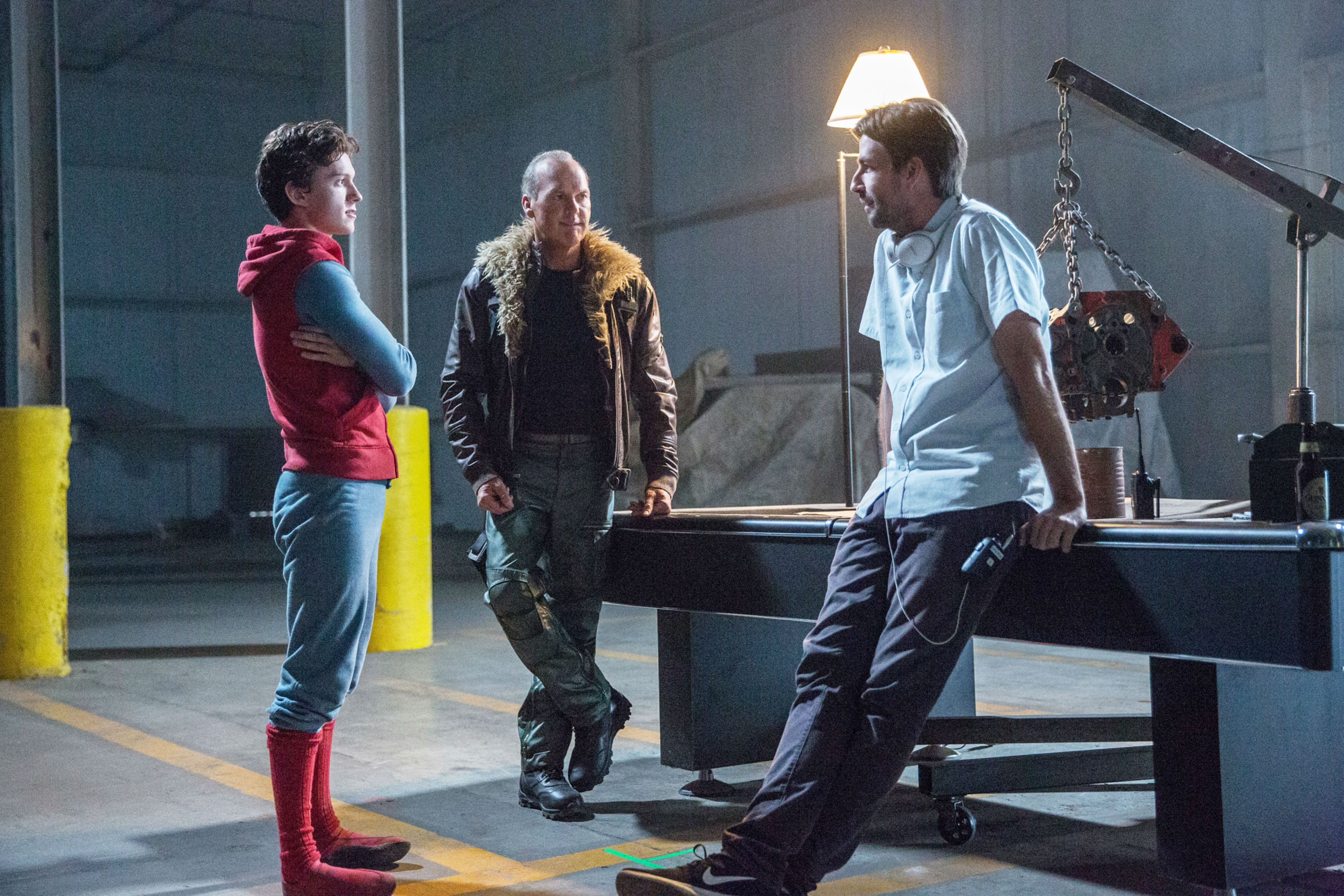
Jon Watt Returns for Spider-Man: Homecoming Sequel: When you see how good Spider-Man: Homecoming is, you’ll be very happy Sony and Marvel has hired director Jon Watts to return for the sequel. Read more here and also read about how the MCU’s Peter Parker was actually in Iron Man 2 here. Also read about how much of Spidey is in Avengers: Infinity War here.

GREAT NEWS

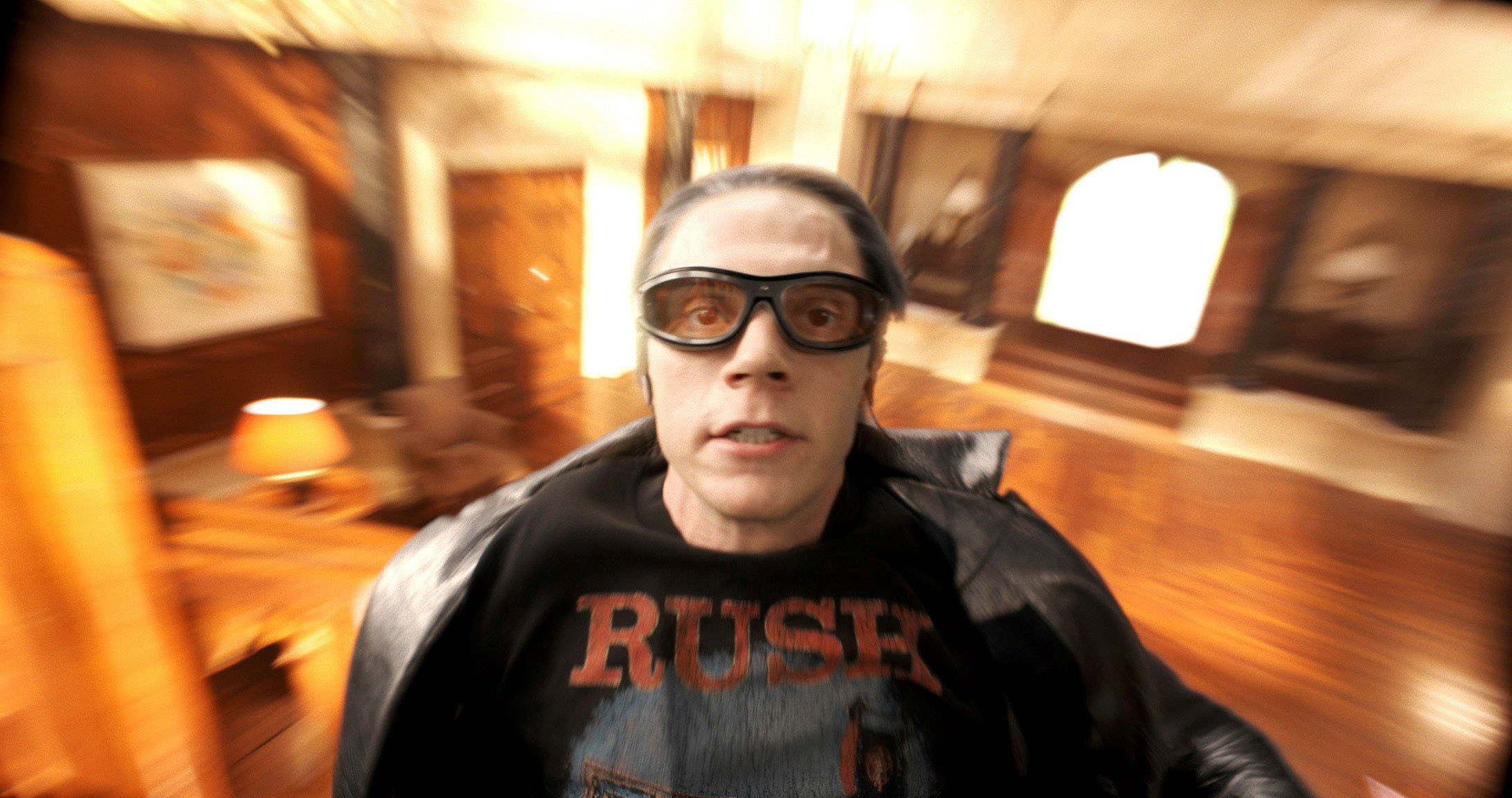
Quicksilver will be back in the next X-Men sequel: One of our favorite mutants will be back for more speedy spectacle, as Evan Peters will reprise his role as Quicksilver in X-Men: The Dark Phoenix. Read more on that and a change to the New Mutants spin-off cast here.

SURPRISING NEWS

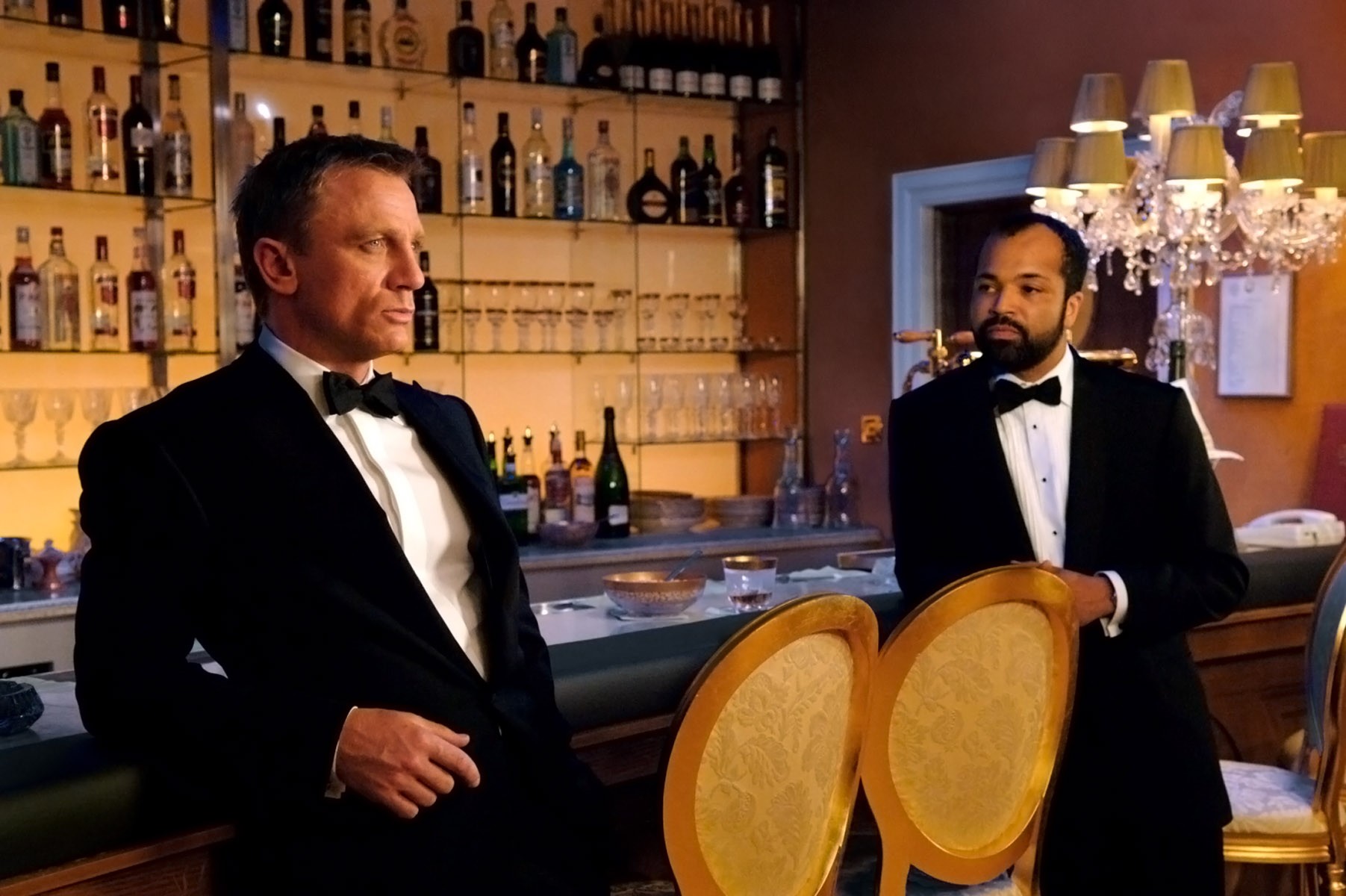
James Bond Might Get a Cinematic Universe: Every movie franchise is looking to expand into a cinematic universe, but the James Bond series might seem the most unlikely. What if they just brought back all the surviving 007 actors? Nah, they’d never. Read more here.

EXCLUSIVE CULTURE

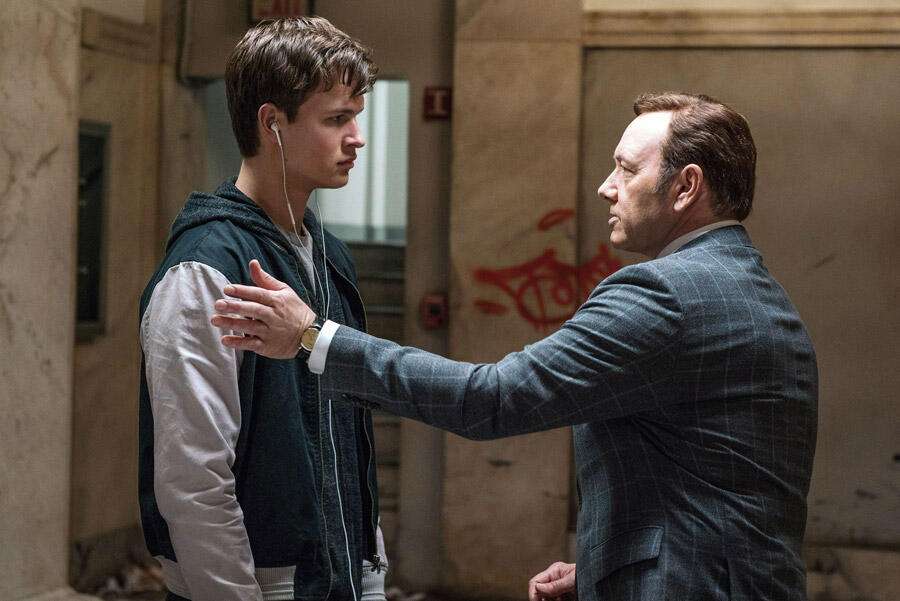
Ansel Elgort and Kevin Spacey’s celebrity impressions: To promote their new movie Baby Driver, actors Ansel Elgort and Kevin Spacey shared with us their impressions of Elvis, Al Pacino and more. Watch below.

[embedded content]

MUST-WATCH TRAILERS

Pitch Perfect 3 Looks A-ca Awesome: The third Pitch Perfect movie is on its way, and the Bellas are as a-ca-amazing as ever in their first spot for the new sequel. Watch the trailer here:

[embedded content]

Jumanji: Welcome to the Jungle Invites Us to an Adventure: The Jumanji reboot teases a funny and magical adventure inside a video game with The Rock, Kevin Hart, Jack Black and Karen Gillan as living avatars. Check out the trailer here:

[embedded content]

The Foreigner Brings Two Action Icons Together: Jackie Chan meets James Bond in the first trailer for a new action-thriller in which a Chinese businessman’s daughter is kidnapped while they’re in London. Watch below.

[embedded content]

The Greatest Showman Will Be a Big Event: Hugh Jackman stars in another musical, this one where he plays iconic circus founder P.T. Barnum with Michelle Williams as his wife and Zac Efron as part of the show. Check out the new trailer here:

[embedded content]

Let’s block ads! (Why?)


No Image

A Total Eclipse Will Sweep The U.S. In August, And People Are Going Nuts For It

A June ad for campsites in the small town of Madras, Ore., anticipates the influx of tourists expected in the prime viewing location for the Aug. 21 total solar eclipse.

Gillian Flaccus/AP

hide caption

toggle caption

Gillian Flaccus/AP

On Monday, Aug. 21, a solar eclipse will be visible across America. The last time the contiguous United States saw a total eclipse was 1979, and it will be the first coast-to-coast solar eclipse in 99 years, reports The Associated Press.

A partial eclipse will be visible throughout the United States, according to NASA. But within a band that the agency is calling the “path of totality” stretching from Oregon to South Carolina, viewers will witness a total eclipse. And in many of those places, an eclipse industry is already booming.

The mayor of Hopkinsville, Ky., says his town has spent more than half a million dollars preparing for the event since learning 10 years ago that the area would be in the path of totality.

The town even has an eclipse coordinator.

“It’ll look like twilight outside. You’ll be able to see stars. Four planets will be visible — Venus, Jupiter, Mars and Mercury. You’ll notice the temperature drop about 5 to 10 degrees,” the coordinator, Brooke Jung, told the AP. “You’ll notice that animals will get a little disoriented. Birds will think that it’s nighttime and go in to roost. Some of the flowers and plants that close up at night will close up.”

“If it’s cloudy, then we’ll just have to deal with that reality as best we can and help people get to other locations,” Mayor Carter Hendricks told the AP. “But, if somehow we overprepare and we’re underwhelmed by the crowd size, that’s a big concern for me.”

A map of the United States shows where and how much of the eclipse will be visible, including path of totality from Oregon to South Carolina.

NASA

hide caption

toggle caption

NASA

Homes on Airbnb that are being rented specifically for the eclipse are going for thousands of dollars a night, like this one, in Casper, Wyo.

Perryville, Mo., is also on the path of total eclipse. “We don’t normally rent out our house because this is not normally a tourist destination,” the town’s public works director, Mark Brown, told the St. Louis-Post Dispatch. He said he had listed his house on Airbnb for $2,500 a night during the eclipse, with a three-night minimum.

“We don’t want to give up our house,” he told the newspaper, “but everybody’s got a number.”

The Charleston Post and Courier reports that a million people are expected to visit South Carolina for the eclipse. Charleston’s visitors bureau has set up a website listing area viewing events and hotel packages. Total eclipse will occur there at 2:48 p.m. ET, according to NASA.

“Highway 17 will be gridlock,” College of Charleston astrophysicist Laura Penny told the newspaper. “If you’re in the path of totality, you’re better off watching it right where you are. But if you’re in an area where the sun is even 99.9 percent covered, it won’t be the same thing. You have to get inside the path of totality to experience the phenomenon of darkness in the middle of the day.”

Oregon will be a major hot spot for eclipse watchers. Viewers there will experience the total eclipse first, with Salem and Corvallis in the path of totality at 10:18 a.m. PT.

Like South Carolina, the state is bracing for a massive influx of visitors. Up to a million people are expected to travel to Oregon for the event, the AP reports, and the area around the small town of Madras is expected to draw 100,000 people — with the potential for out-of-this-world traffic jams.

“Bring extra water, bring food. You need to be prepared to be able to survive on your own for 24 to 48 to 72 hours, just like you would in any sort of emergency,” Dave Thompson, spokesman for the Oregon Department of Transportation, told news service. “This is pretty much a once-in-a-lifetime opportunity, and it’s really worth seeing. But you’ve got to be prepared or you won’t enjoy it.”

Authorities in the state worry that if it gets foggy, people will decide to head east at the last moment, creating chaos on the roads.

The Oregonian reports that all of Oregon’s reservable campgrounds within the path of totality have been booked. The state released an extra 1,000 campsites in April, and those were booked within 90 minutes.

As a result, people without reservations may start showing up at the state’s nonreservable campgrounds two weeks early, the paper reports:

” ‘Don’t just assume that your favorite spot is available,’ Traci Weaver, a fire communications specialist for the forest service and [Bureau of Land Management], said. ‘Don’t just have a plan, but have a plan A, B, C and D.’

“Weaver said her worst case scenario is campers losing patience and getting into verbal or physical altercations over campsites — a situation that could be exacerbated by the August heat. Unprepared travelers are also a concern, especially considering most of the non-reservable campgrounds are remote, and often don’t provide drinking water or toilets. …

” ‘I keep hoping this will be like Y2K,’ [BLM district manager Don] Gonzalez said — a big bust after months of concern. ‘We want everybody to get along … just enjoy your federal lands.’ “

Travel website Atlas Obscura is organizing a festival around the eclipse in eastern Oregon. Although, akin to the ill-fated Fyre Festival, it isn’t revealing exactly where. While it’s clear that scores of people will flock to areas of total eclipse across the country, Atlas Obscura is spinning its fest as a rare chance: “The Path of Totality — where you can experience the eclipse in full — is quite narrow, and our campsite in Eastern Oregon’s high desert is one of the few places in the country with a history of clear weather and where full viewing is anticipated. As a result, existing lodging in this desirable region is already scarce.”

But, it adds, “we obviously can’t guarantee the weather, and no refunds or exchanges will be possible under any conditions.”

And in case you were wondering: Yes, there will be glamping, and no, it won’t be cheap. The Deluxe Canvas Bell Tent for 2 will run you $1,500, not including admission fees.

In Madras, a town of 6,500, local event planner Lysa Vattimo has been hired to be the city’s eclipse planner. She toldThe Oregonian that the town will spend at least $100,000 to manage the throngs eclipse chasers.

“We had to manage this from a safety standpoint,” she said. “The people were coming. We couldn’t stop them.”

Let’s block ads! (Why?)


No Image

GOP Health Bill Could Let Insurers Cap Spending On Expensive Patients

Clara Hardy (middle) with her parents, Robert and Chrissy. Clara, who lives in North Carolina, needed expensive surgery and other procedures right after birth to save her life. The family’s insurance policy paid most of the cost.

Alex Olgin/WFAE

hide caption

toggle caption

Alex Olgin/WFAE

The health care legislation under discussion in the Senate could allow states to remove some of the Affordable Care Act’s consumer protections — including the prohibition that keeps insurers from limiting how much they’ll pay for medically needy, expensive patients. Clara Hardy’s parents worry about the Senate bill for just this reason.

These days, 6-year-old Clara’s biggest struggle is holding her breath long enough to touch the bottom of the neighborhood pool. But immediately after she was born in 2011, she couldn’t even breathe. She had a serious birth defect called a congenital diaphragmatic hernia.

Sitting next to her mom, Chrissy Hardy, Clara reads from a book, made of construction paper, that she wrote and illustrated in crayon. “On day eight, the surgeons cut me open,” Clara reads. “Everything that was in my chest got moved back to my belly. They put a patch to fix the hole in my diaphragm.”

“We were told more than once she would not survive,” her mother adds.

But after many procedures that Chrissy estimates cost more than $1 million, she finally got to cradle her baby.

“She was born two months before I turned 30,” Chrissy says, “and I held her the day before my 30th birthday.”

At the time, the whole family had health insurance through Chrissy’s job as a public school teacher. So their out-of-pocket medical costs were just $10,000.

But under the GOP proposal, the Hardys could be on the hook for a lot more. The bill gives states wiggle room on whether insurance policies sold on the states’ exchanges will be required to include health benefits that the Affordable Care Act defined as “essential.”

Those benefits, under the Affordable Care Act, must be covered by insurers, with no lifetime or annual caps on what insurers chip in to cover a particular patient’s bills. The ACA also sets an annual maximum on the amount of money a patient must contribute to help cover the bills.

Under the proposed Senate bill, if one of the ACA’s “essential benefits” — such as pregnancy and childbirth, prescription drug coverage and mental health services — is no longer deemed essential by a state, that leaves the door open to insurers to charge more for plans that include those benefits. This could even bring back lifetime caps on how much an insurer would pay for such services for a particular patient.

Hospitalization, emergency services and prescription drugs are just some of the 10 benefits that Clara needed — and might need again.

The details of how any change in the federal health law rules would play out in various states and in each health policy are still murky; the GOP Senate bill is still in draft form, and a lot will be left up to the state. But Clara’s dad, Robert Hardy, is worried.

“I don’t really know what the limit would be, but there is probably a good chance that she’s hit it,” he says.

Matt Fiedler, a health care economist with the Brookings Institution, warns that if the GOP bill passes, the problem of lifetime limits on what insurers could be counted on to pay for an insured patient’s care could spread quickly from state to state, because large companies that offer health insurance could choose the list of “essential health benefits” they include in their policies from any state.

“If you are an employer with 150 employees — so you are buying large group market coverage, and you are entirely in Pennsylvania — you can choose Mississippi’s definition of essential health benefits for the purposes of the lifetime limit provision,” Fiedler explains.

While many businesses offer insurance to keep good employees, some may cut costs by offering policies with fewer benefits. And people who buy insurance plans from the exchanges would likely be limited to what their state of residence is willing to cover, says Fiedler.

“If a benefit were no longer [an] essential health benefit, you would probably not have plans that would offer that type of coverage without an annual or lifetime limit,” he says. “People would just have no place to go.”

That means the GOP bill, if passed, could effectively gut protection for pre-existing conditions. If a state can let an insurer opt out of offering prescription drug coverage, for example, people who require medications would probably be paying more to have them covered.

The Hardys now get their health insurance through the North Carolina exchange — they were able to get it despite Clara’s past health problems. Worries about how the cost could climb, if the GOP bill becomes law, keeps her dad up at night.

“I would like to be able to be in a situation where I knew I didn’t have to worry if I was going to have to face a decision to bet my financial security against my child’s health,” Robert Hardy says.

As Clara reads her book, she lifts her pink shirt a little, to reveal a scar that cuts diagonally across her entire stomach.

“My scar on my tummy makes me proud,” she reads. “It is a reminder that I am tough and I can do hard things.”

This story is part of NPR’s reporting partnership with WFAE and Kaiser Health News.

Let’s block ads! (Why?)


No Image

Former NFL Player Ryan O'Callaghan Looks Ahead After Sharing Story Of Drug Abuse

Last week, former NFL player Ryan O’Callaghan told the world his harrowing story of drug abuse and planned suicide as he struggled with being a closeted gay man. Now he hopes his story helps others.

ARI SHAPIRO, HOST:

Former NFL player Ryan O’Callaghan came out to the world last week with a dramatic story. In an interview with outsports.com, he described harrowing experiences he had as a closeted gay man and said his fear of being discovered drove him to drug addiction and a planned suicide. O’Callaghan told NPR’s Tom Goldman that he shared his story with hopes of helping others avoid the pain he lived with for so long.

TOM GOLDMAN, BYLINE: A week later, the calls for interviews are still coming in.

RYAN O’CALLAGHAN: I am great. How are you?

GOLDMAN: Ryan O’Callaghan is sitting on a couch in his home in his hometown of Redding, Calif. When the call’s done, I ask about the thousands of messages that have poured in since the Outsports article. He scrolls through his phone.

O’CALLAGHAN: OK, well, here’s a good one to read. It says, hi, Ryan. I think you saved my life today. I’m gay, and I’ve been living this lie for as long as I can remember. So he’s married, has children.

GOLDMAN: The man tells O’Callaghan he’s been in therapy and has come to terms with who he is. But he needs advice on how to move forward.

O’CALLAGHAN: And like me, he’s also thought about ending things.

GOLDMAN: It’s that dark subject that’s made Ryan O’Callaghan’s story resonate. A gay pro athlete coming out isn’t as huge a story as it once was, but O’Callaghan was a gay pro athlete who planned to kill himself because in his mind, no one would ever accept him – not family, not friends, not the NFL.

O’CALLAGHAN: I was just going to shoot myself. It was the easy way. I didn’t look at it as being selfish. You know, I used to think, you know, we all have the right to disappear. It’s our body.

GOLDMAN: But before disappearing, Ryan O’Callaghan planned to be very public.

(SOUNDBITE OF ARCHIVED RECORDING)

UNIDENTIFIED REPORTER: Ryan O’Callaghan voted the best offensive lineman in the Pac-10 by the other players in the conference.

GOLDMAN: A football career that started in high school as a way to stay connected to friends evolved into something much more in college. At Cal Berkeley, 6-foot-6, 340-pound O’Callaghan fully devised his plan to hide behind the sport. Football, in his words, became his beard, his cover, an uber-masculine world where his sexuality wouldn’t be questioned.

O’CALLAGHAN: Football to me was deadly serious.

GOLDMAN: So was the suicidal end of the plan once football finished. But the end would have to wait. O’Callaghan was good at what he did on the field. After Cal, he played in the NFL for six seasons with New England and Kansas City. His career was cut short by injuries. As the end of his career and, in his mind, the end of his life approached, he started abusing the painkillers he’d been taking. Kansas City’s head athletic trainer David Price noticed O’Callaghan’s erratic behavior and connected O’Callaghan with Susan Wilson. She was part of the network of psychologists the NFL employs nationwide.

SUSAN WILSON: If Dave Price hadn’t referred him to therapy, he may not be with us today.

GOLDMAN: In her 15 years working with the NFL, Wilson counseled other gay players who hid their sexual orientation. But she says O’Callaghan was the only one who wanted to kill himself because he was gay. When he finally came out to her, Wilson understood the depths of his despair.

WILSON: Even when he told me, he said, and you don’t hate me? And I’m like, Ryan, of course I don’t hate you.

GOLDMAN: Wilson advised O’Callaghan to test his fear that everyone would reject him. So several years ago, O’Callaghan started coming out to those he was closest to – family, friends, Kansas City Chiefs general manager Scott Pioli. The positive responses from all shocked him. Still, he needed time to fully emerge.

O’CALLAGHAN: I spent 29 years not planning on living. I was a junkie on pain meds. You don’t go from that to perfectly fine overnight. You know, I didn’t even date I think the whole first year after I came out. I just – I worked on figuring out how to love myself and clean up my life.

GOLDMAN: Once he figured that out, it was time to come out to the world.

O’CALLAGHAN: I’m a real good example of what not to do. If I can stand up and say, hey, look at all this dumb stuff I did because I was gay; don’t do it, I can save a lot of people a lot of heartache.

GOLDMAN: The reaction to his announcement has, again, been positive. Some of O’Callaghan’s former football teammates sent notes of encouragement. Psychologist Susan Wilson thinks O’Callaghan is helping pave the way for a famous, active, gay NFL player to come out. And he’s showing closeted LGBT people from all backgrounds the value of overcoming fear. But Wilson warns there’s also a danger in O’Callaghan’s experience.

WILSON: Some people hear about his story and think, oh, I could come out, and it’s going to be a field of roses when we know some people are not in situations where that will be the case.

GOLDMAN: Ryan O’Callaghan says after so many years of hiding, he’s ready to do what he can for those who still feel trapped. He hopes to write a book about his experiences and raise money for LGBT charities and revel in living a life in full view. Tom Goldman, NPR News.

(SOUNDBITE OF TULPA’S “THE BIRDS AND BEES”)

Copyright © 2017 NPR. All rights reserved. Visit our website terms of use and permissions pages at www.npr.org for further information.

NPR transcripts are created on a rush deadline by Verb8tm, Inc., an NPR contractor, and produced using a proprietary transcription process developed with NPR. This text may not be in its final form and may be updated or revised in the future. Accuracy and availability may vary. The authoritative record of NPR’s programming is the audio record.
Let’s block ads! (Why?)


No Image

Florida Police Blame Tennis Star Venus Williams For Fatal Car Accident

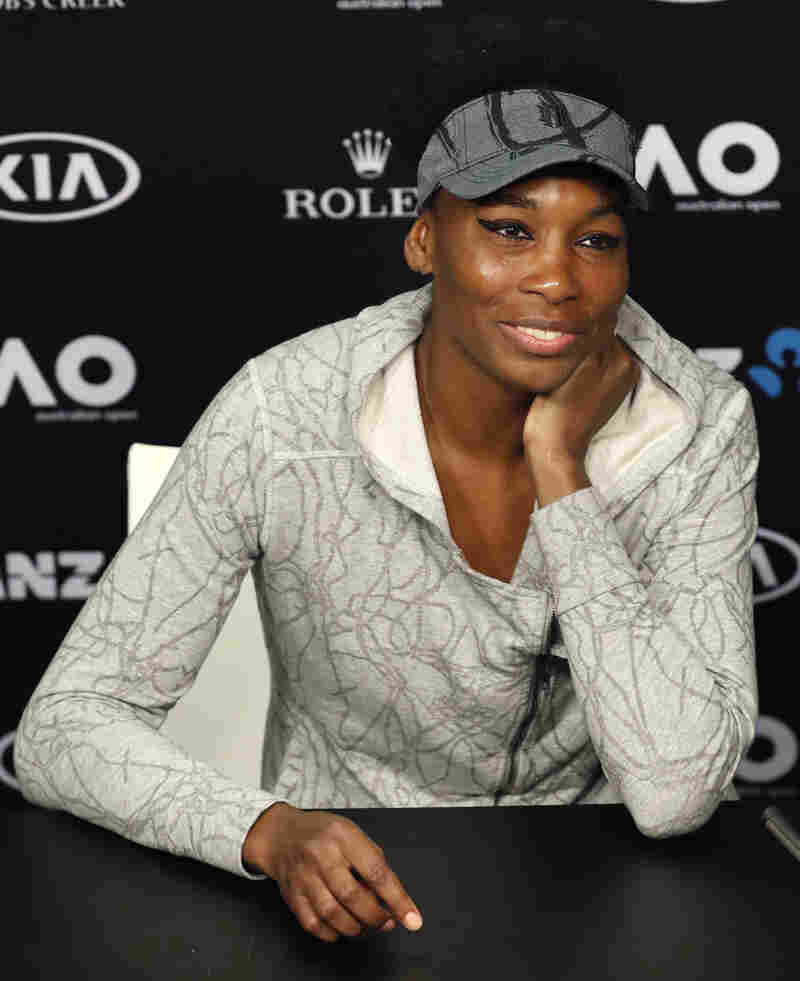
Venus Williams answers questions at a news conference following her loss to sister Serena in the women’s singles final at the Australian Open tennis championships in January.

Kin Cheung/AP

hide caption

toggle caption

Kin Cheung/AP

Police in Palm Beach Gardens, Fla., say Venus Williams was at fault in a June 9 car crash that led to the death of the passenger in another vehicle.

The Associated Press reports:

“Palm Beach Gardens police say witnesses told investigators that Williams ran a red light in her 2010 Toyota Sequoia SUV, causing a June 9 crash that injured 78-year-old Jerome Barson, who died two weeks later.

“The report says a 2016 Hyundai Accent driven by Barson’s wife, Linda, crashed into the side of Williams’ SUV. Linda Barson told investigators that she was approaching the intersection when her light turned green and that she was unable to stop in time. Linda Barson suffered unspecified moderate injuries. Williams, who turned 37 on June 17, was not hurt.

“She [Williams] told investigators she had entered the six-lane intersection on a green light but had been forced to stop midpoint by traffic ahead of her. She said she did not see the Barsons’ car when she crossed into their lanes.”

The police report says Williams, who has a residence in Palm Beach Gardens, was not under the influence of drugs or alcohol.

Williams’ attorney Malcolm Cunningham issued a statement:

“Ms. Williams entered the intersection on a green light. The police report estimates that Ms. Williams was traveling at 5 miles per hour when Mrs. Barson crashed into her. Authorities did not issues Ms. Williams with any citations or traffic violations. This is an unfortunate accident and Venus expresses her deepest condolences to the family who lost a loved on.”

Williams was cited in Palm Beach County, Fla., for driving without proof of insurance in 2011 and for driving with a suspended license in 2013, according to The New York Times.

The crash was first reported by TMZ.

Let’s block ads! (Why?)


No Image

Today in Movie Culture: 'Thor: Ragnarok' Redone Video Game Style, 'Dinosaurs' Meets 'Jurassic Park' and More

Here are a bunch of little bites to satisfy your hunger for movie culture:

Remade Trailer of the Day:

See what Thor: Ragnarok would have looked like as an old school video game in the 8-Bit Cinema redo of its trailer:

[embedded content]

Mashup of the Day:

An artist on Reddit inserted the characters from the old Dinosaurs sitcom into scenes from Jurassic Park:

I photoshopped those “Jurassic Park” and “Dinosaurs” mashups and /u/Nrthnline removed my credit and made it to the top of reddit. Here’s more of them! from pics

Reworked Movie of the Day:

What would My Cousin Vinny look like as a serious drama? Mashable recut the comedy’s trailer to look like a courtroom thriller:

[embedded content]

Stunt Showcase of the Day:

See how they pulled off that amazing warehouse car chase from John Wick: Chapter 2 directly from stunt coordinator Darrin Prescott:

[embedded content]

Video Essay of the Day:

Speaking of John Wick: Chapter 2, the following Mr. Nerdista video essay shows how silent cinema influenced the action sequel:

[embedded content]

Vintage Image of the Day:

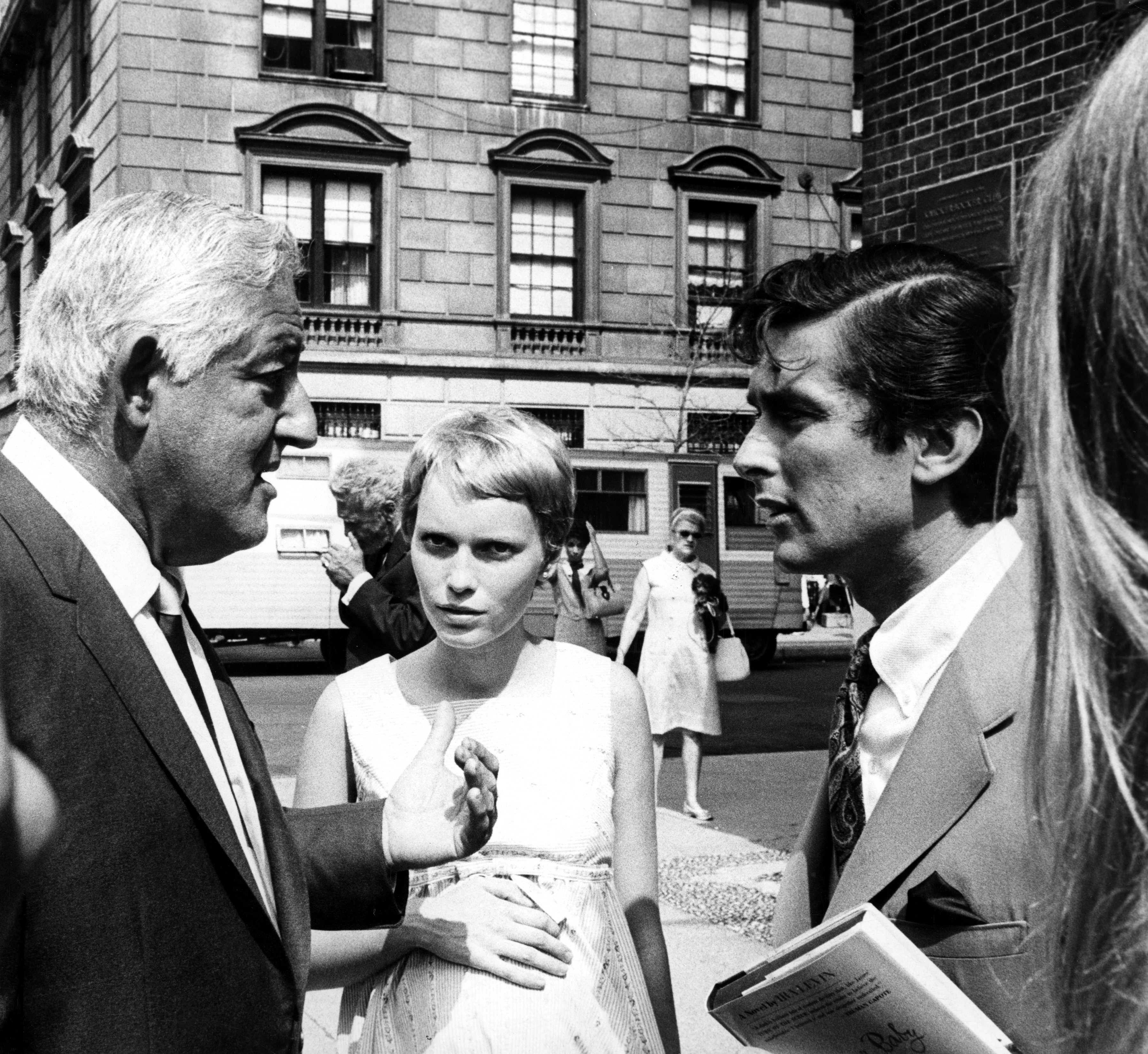
Iconic movie producer Robert Evans, who turns 87 today, with fellow producer William Castle and star Mia Farrow on the set of Rosemary’s Baby in 1967:

Movie Comparison of the Day:

Couch Tomato shows 24 ways Despicable Me 2 is almost like an animated remake of Problem Child 2:

[embedded content]

Screenwriting Lesson of the Day:

Lesson from the Screenplay uses Pixar’s Inside Out to discuss how the writers used real-life experiences as inspiration for the movie:

[embedded content]

Movie Science of the Day:

Could someone really wipe your memory the way they do in Men in Black? Kyle Hill scientifically explains the answer:

[embedded content]

Classic Trailer of the Day:

This weekend is the 30th anniversary of the release of Adventures in Babysitting. Watch the original trailer for the classic comedy below.

[embedded content]

and

Let’s block ads! (Why?)


No Image

Democrats Push Back On Senate Republican Health Care Bill

Many Democrats were encouraged that Republicans had to push off their vote on a Senate bill to repeal and replace the Affordable Care Act, in the midst of vocal opposition from the left.

ROBERT SIEGEL, HOST:

Senators are leaving Washington for a week-long recess, but negotiations over a repeal of the Affordable Care Act continue. The attempts to bring more Republican lawmakers onboard include boosting funding to address the opioid crisis and scaling back some of the tax cuts in the latest version of the bill. As all this happens, Democrats are trying to ramp up pressure against the repeal effort. NPR’s Scott Detrow has more.

SCOTT DETROW, BYLINE: When Senate Republican leaders delayed the vote on the Obamacare repeal, Senate Minority Leader Chuck Schumer was quick to not declare victory.

(SOUNDBITE OF ARCHIVED RECORDING)

CHUCK SCHUMER: We’re not resting on any laurels, nor do we feel any sense yet of accomplishment other than we are making progress because the American people are listening to our arguments.

DETROW: Because this bill will pass or fail based on Republican votes, arguing is the most Democrats can do. Perhaps that’s enough.

MEAGHAN SMITH: Health care in general is a complicated policy, but for people to understand what this bill will do to them has been pretty simple.

DETROW: Meaghan Smith is a strategist at PR firm SKDKnickerbocker. She’s helping coordinate messaging for a number of progressive groups trying to block the health care repeal. Smith says activists are focusing on big-picture ideas like that the Republican bill would increase health care costs for many people.

SMITH: You pay increased premiums, or your out-of-pocket health care costs go up dramatically.

DETROW: As outside groups do that, Schumer and other senators are trying as best as they can to bring their arguments down to a scale people can relate to. At an event this week, every Democrat held up a big poster of a constituent facing a health care challenge.

(SOUNDBITE OF ARCHIVED RECORDING)

SCHUMER: And we ask you – those of you from local papers and outlets – to talk to your senators about the person that they are holding up.

DETROW: As the debate has gone on, Democratic lawmakers keep returning to one main attack point. Here’s New Jersey Senator Cory Booker.

(SOUNDBITE OF ARCHIVED RECORDING)

CORY BOOKER: Massive tax cuts for the wealthiest Americans – and to pay for that, we’re taking away health care for millions and millions of Americans. It’s just – it’s as plain as that.

DETROW: Booker orchestrated one of the Democrats’ more viral moments on Monday. He sat down on the Capitol steps with Georgia Congressman John Lewis…

(SOUNDBITE OF ARCHIVED RECORDING)

BOOKER: Let’s take a seat.

JOHN LEWIS: Take a seat?

BOOKER: Yeah. Why don’t we take a seat up here on the on the top here? And it’s a beautiful day.

DETROW: …And began talking about the health care repeal. Other lawmakers joined in, and soon a crowd did, too.

(SOUNDBITE OF ARCHIVED RECORDING)

UNIDENTIFIED WOMAN: What do we want?

UNIDENTIFIED CROWD: Health care.

UNIDENTIFIED WOMAN: When do we want it?

UNIDENTIFIED CROWD: Now.

UNIDENTIFIED WOMAN: What do we want?

DETROW: In the end, the livestream lasted about three and a half hours. That was followed up by another large Capitol rally, this one organized by Planned Parenthood and other groups. The big question is whether any of this matters. The bill has come this far despite low public opinion numbers. And the bill’s fate comes down to a dozen or so Republican senators. That’s why efforts by people like Stephanie Powell may be more important. Powell lives in Anchorage, Ala. And every morning at around 8 a.m., she calls Senator Lisa Murkowski’s office.

STEPHANIE POWELL: I call her Anchorage office, Juneau office, Fairbanks office, her Washington office. I usually try to call the local number so they know I’m from here.

DETROW: Powell says she voted for Murkowski, one of several key swing votes in the Senate. Powell says her family uses Medicaid. She tells staffers that on the rare moments her calls actually go through.

POWELL: They know more about my health history than maybe my own mother (laughter) at this point because I’ve been very upfront with them on what this means to us.

DETROW: This gets at what’s probably Democrats’ best weapon and something Republicans successfully tapped into for several elections in a row. It’s not hard to oppose a complicated legislative effort by focusing on how it could disrupt voters’ lives. Scott Detrow, NPR News.

(SOUNDBITE OF RUBBLEBUCKET SONG, “MY LIFE”)

Copyright © 2017 NPR. All rights reserved. Visit our website terms of use and permissions pages at www.npr.org for further information.

NPR transcripts are created on a rush deadline by Verb8tm, Inc., an NPR contractor, and produced using a proprietary transcription process developed with NPR. This text may not be in its final form and may be updated or revised in the future. Accuracy and availability may vary. The authoritative record of NPR’s programming is the audio record.
Let’s block ads! (Why?)


No Image

Researchers Analyze Economic Impact Of Climate Change In The U.S.

A team of scientists and economists claims they’ve come up with the most thorough analysis of the cost of climate change in the U.S. Most of the country will suffer economic loss in addition to higher mortality from heat waves and loss of agriculture productivity by 2100. But like all predictions far into the future, this one has a wide range of outcomes and could be overshadowed by new technology still to be invented.

ARI SHAPIRO, HOST:

Climate scientists agree that the 21st century will be warmer. That warming will likely bring economic pain to the U.S., though economists aren’t sure how much. Now, a research team says they can at least tell which parts of the country are likely to suffer the most. NPR’s Christopher Joyce reports on their new study.

CHRISTOPHER JOYCE, BYLINE: The team started with history. How have heat waves and drought affected the economy in the past? Then they applied that metric to various warming scenarios for the future, county by county. They found that if warming continues at recent rates it could shave several percentage points off the country’s gross domestic product by century’s end. But lead researcher Solomon Hsiang says that’s not really the bottom line.

SOLOMON HSIANG: I think the takeaway message that is most striking is that the effects of climate change on the U.S. are not the same everywhere. Where you are in the country really matters.

JOYCE: Colder places like New England might see an economic upturn – lower heating bills, for example. But hot places like the South and Midwest could see huge damage to their local economies – enormous electric bills or dying crops. Maybe that’s not so surprising. But Hsiang, an economist at the University of California, Berkeley, takes it a step further. Climate change will redistribute wealth away from hard-hit regions and mostly toward the North and West. Exactly how much is hard to predict. Hsiang acknowledges that his numbers are uncertain. But he says that’s actually part of the message.

HSIANG: When you start changing the climate, it starts affecting all these aspects of the economy. And it makes the future world harder to predict.

JOYCE: Things like new technologies to help people adapt, for example. With so many uncertainties, why do this kind of exercise? Economist Billy Pizer at Duke University says research like this at least brings a distant threat into focus.

BILLY PIZER: It’s important to figure out – are we talking about something the size of a bread box or the size of an elephant, you know, or the size of a mouse? And I think getting those sorts of magnitudes right is really important. And I think that that’s what this paper does.

JOYCE: And it continues a 10-year effort to determine something called the social cost of carbon, carbon dioxide being the major greenhouse gas. What’s a ton of carbon pollution going to do to the economy? And should polluters pay that cost now? The Trump administration says it’s not interested in the cost of carbon or moving away from carbon-based fuels. Economist Chris Field at Stanford University says, yes, that would be expensive. But he compares it to the space program in the 1960s.

CHRIS FIELD: It cost a lot. But it also unleashed a huge amount of creativity and innovation and really launched the United States on the trajectory to being ready for the 21st century.

JOYCE: The research appears in the journal Science. Christopher Joyce, NPR News.

Copyright © 2017 NPR. All rights reserved. Visit our website terms of use and permissions pages at www.npr.org for further information.

NPR transcripts are created on a rush deadline by Verb8tm, Inc., an NPR contractor, and produced using a proprietary transcription process developed with NPR. This text may not be in its final form and may be updated or revised in the future. Accuracy and availability may vary. The authoritative record of NPR’s programming is the audio record.

Let’s block ads! (Why?)


No Image

Today in Movie Culture: 'Obi-Wan Kenobi: A Star Wars Story' Fan-Made Poster, the Art of the Car Chase and More

Here are a bunch of little bites to satisfy your hunger for movie culture:

Remade Trailer of the Day:

We’ve seen a 16-bit redo of the Star Wars: The Last Jedi trailer, but now here’s a version recreated using an old Apple II computer by artist Wahyu Ichwandardi (via /Film):

Cita-cita waktu masih kecil di th 80an: bikin trailer Star Wars pakai komputer Apple bermonitor monochrome, baru kesampaian sekarang. pic.twitter.com/kUV28VB5pq

— Pinot (@pinotski) June 26, 2017

Dream Movie Poster of the Day:

Speaking of Star Wars, Lucasfilm still hasn’t announced the solo Obi-Wan Kenobi movie everyone wants, but here’s a fan-made poster for it by artist Tom Lathom-Sharp (via THR):

I decided to draw and design my own poster for an Obi Wan Kenobi standalone film – in the style of a Spaghetti Western

Movie History of the Day:

Speaking of George Lucas movies, Cracked recounts the story of how an action figure for Indiana Jones and the Temple of Doom helped to create the PG-13 rating:

[embedded content]

Movie Trivia of the Day:

Edgar Wright’s Baby Driver is now in theaters, so here’s CineFix with more obscure trivia about Wright’s debut, Shaun of the Dead:

[embedded content]

Video Essay of the Day:

Speaking of Baby Driver, the new movie influenced Rossatron to make this video essay on the art of the car chase:

[embedded content]

Vintage Image of the Day:

Mel Brooks, who turns 91 today, with Lorene Yarnell (inside the Dot Matrix costume) on the set of Spaceballs, which just celebrated its 30th anniversary.

Actor in the Spotlight:

This new episode of the character actor showcase No Small Parts focuses on The Mummy‘s Sofia Boutella:

[embedded content]

Movie Character Karaoke:

Watch characters from 168 movies cover “Yakko’s World” from Animaniacs in this well-edited montage from The Unusual Suspect:

[embedded content]

Cosplay of the Day:

In their latest cosplay showcase, Distractotron feaures alternate versions of the women of DC, including Wonder Woman:

[embedded content]

Classic Trailer of the Day:

This week is the 10th anniversary of the release of Pixar’s Ratatouille. Watch the original trailer for the classic animated feature below.

[embedded content]

and

Let’s block ads! (Why?)